
Jan. 29, 2025
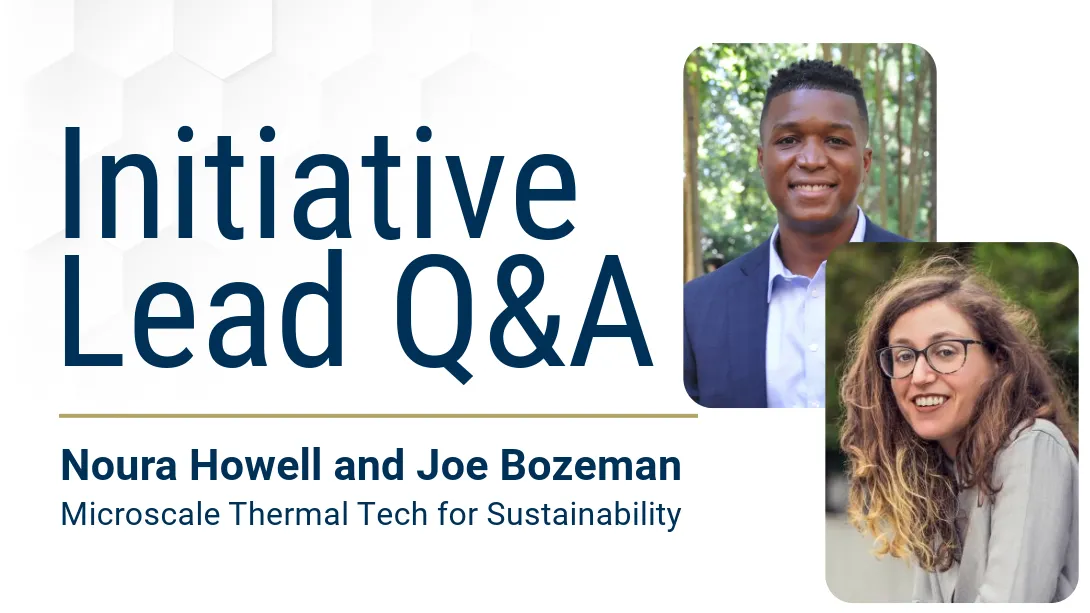
Noura Howell and Joe Bozeman lead the “Microscale Thermal Tech for Sustainability” research initiative for the Institute for Matter and Systems at Georgia Tech. Their research in this role focuses on sustainable thermoregulation strategies for climate change resilience. Howell is an assistant professor of digital media in the Ivan Allen College of liberal Arts, and Bozeman is an assistant professor of Civil and Environmental Engineering.
In this brief Q&A, Howell and Bozeman discuss their research focus, how it relates to Matter and System’s core research focuses, and the national impact of this initiative.
What is your field of expertise and at what point in your life did you first become interested in this area?
Howell's field of expertise is Human-Computer Interaction, particularly embodied interaction design research and design futuring. Embodied interaction design research is about designing interactions with technologies that involve more of humans' bodies beyond just eyes on a screen and hands on a mouse or keyboard. Thermal perception (feeling warmth and coolness) is an important part of human embodied experience, and designing technologies for thermal perception is an exciting area of design research. Design futuring, Howell's other sub-speciality, offers ways to envision, discuss, and debate future scenarios with technology. So, this proposal uses design futuring to explore alternative futures for thermal technologies for sustainability.
Howell has been interested in sustainability ever since she was a kid growing up playing in the woods in Florida, picking wild citrus, watching the lizards, frogs, snakes, armadillos, and birds, helping the tortoises cross the road, and canoeing near gators. Howell has been interested in thermal interactions ever since she was a kid in elementary school on the hot Florida playground, touching a hot metal jungle gym bar, and noticing that it felt so hot that it felt cool. Much later, she learned about thermoreceptors in our skin and that this phenomenon is called paradoxical cold, when some cold receptors in our skin respond to high temperatures.
Bozeman's field of expertise is in sustainable energy development, climate change adaptation/mitigation, and developing equitable solutions for socioecological, urban carbon management, and food-energy-water nexus challenges. Bozeman does life cycle assessment and energy systems modeling for sustainability with a special emphasis on the social receptivity of technological administration.
Bozeman first became interested in this area during his time working for the public sector as a sustainability officer and energy manager. In those roles, he oversaw and addressed many sociotechnical challenges regarding indoor comfort, air quality, and compliance with environmental protection laws. During this period, it became clear to him that more needed to be done in thermoregulation and the systems that facilitate it.
What questions or challenges sparked your current research?
Thermoregulation, or maintaining a healthy body temperature, is essential for survival. Meanwhile, the world is getting hotter, and humans must adapt. When people feel too hot, it can hinder their productivity, and extreme heat can lead to death. HVAC uses too much energy and struggles to accommodate the wide variety of thermal comfort preferences of building occupants, while many people work outdoors.
Our project tackles the challenge of sustainable thermoregulation.
Matter and systems refer to the transformational technological and societal systems that arise from the convergence of innovative materials, devices, and processes. Why is your initiative important to the development of the IMS research strategy?
This proposal combines thermal technology and microscale fabrication to innovate sustainable thermoregulation strategies for climate change resilience. This helps advance IMS research strategy in their interdisciplinary areas of microelectronic technologies, built environment technologies, and human-centric technologies. While this project is only a start, sustainable thermoregulation will require transformational technological and societal systems shifts arising from the convergence of innovative materials, devices, and processes, and so this project is a good fit for IMS, and we are very happy to be working on this project under the auspices of IMS.
What are the broader global and social benefits of the research you and your team conduct?
This proposal convenes transdisciplinary expertise across Georgia Tech and beyond to propose agenda-setting visions for future work to establish the significance of this research nexus on more sustainable ways to support people in maintaining a comfortable, healthy body temperature. This is an essential form of climate change resilience and adaptation. This proposal has the potential to impact science, technology, and society through bringing disparate disciplines together to establish a new research area of sustainable, microscale thermoregulation techniques for climate change adaptation. This research promises to conceptually advance the state-of-the-art via design futuring scenarios, future visions of just-around-the-corner possibilities in this new research area.
What are your plans for engaging a wider Georgia Tech faculty pool with the Institute for Matter and Systems research?
We will convene researchers across Georgia Tech and beyond to exchange expertise, brainstorm wild ideas, and synthesize ideas into design futuring scenarios. Stay tuned for interview and workshop opportunities.
Jan. 21, 2025

George White, senior director of strategic partnerships, has been named a member of the inaugural National Semiconductor Technology Center (NSTC) Workforce Advisory Board (WFAB).
“The appointment to the Natcast Workforce Advisory Board is truly an honor and represents an opportunity for myself and my esteemed colleagues to help increase U.S. competitiveness in this most consequential sector,” said White.
Comprising U.S. leaders focused on growing the semiconductor workforce from the private sector, higher education, workforce development organizations, the Department of Commerce, and other federal agencies, the WFAB will support the efforts of the recently established NSTC Workforce Center of Excellence (WCoE). It will offer critical input on national and regional workforce development strategies to ensure WCoE initiatives are employer-driven, worker-centered, and responsive to real-time industry challenges.
Read the full release from Natcast
Jan. 22, 2025
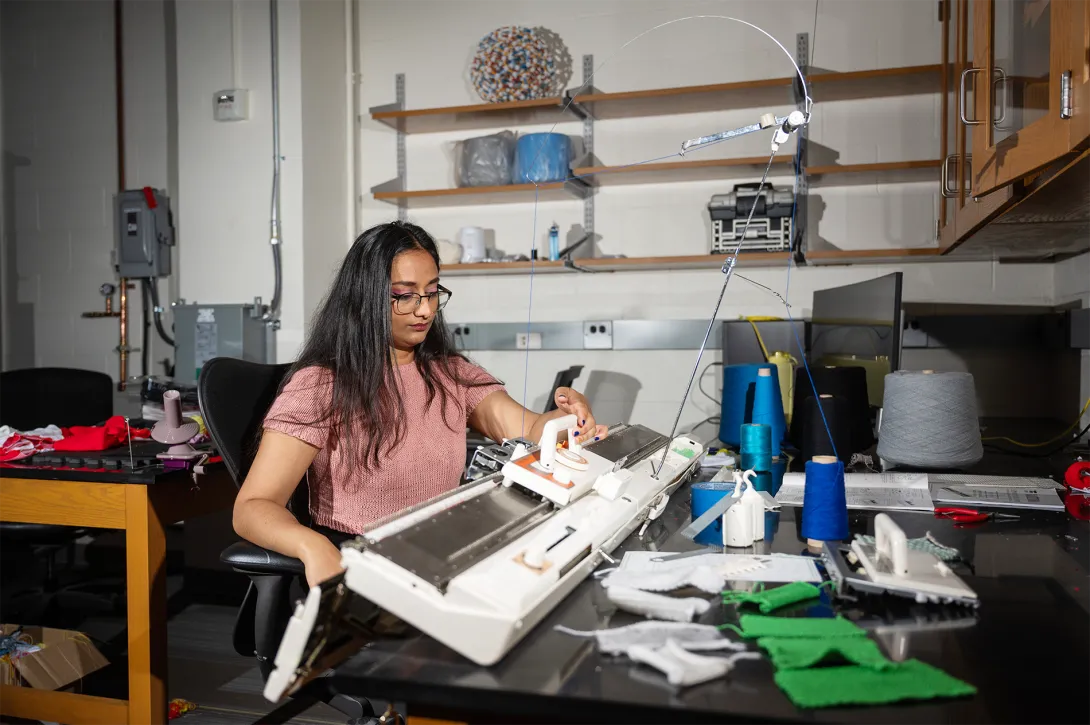
From the physics of knitting to highlighting how batteries work, Georgia Tech photographers captured the impact and breadth of the Institute’s research enterprise. See our best shots and discover unseen gems in this collection.
Jan. 07, 2025
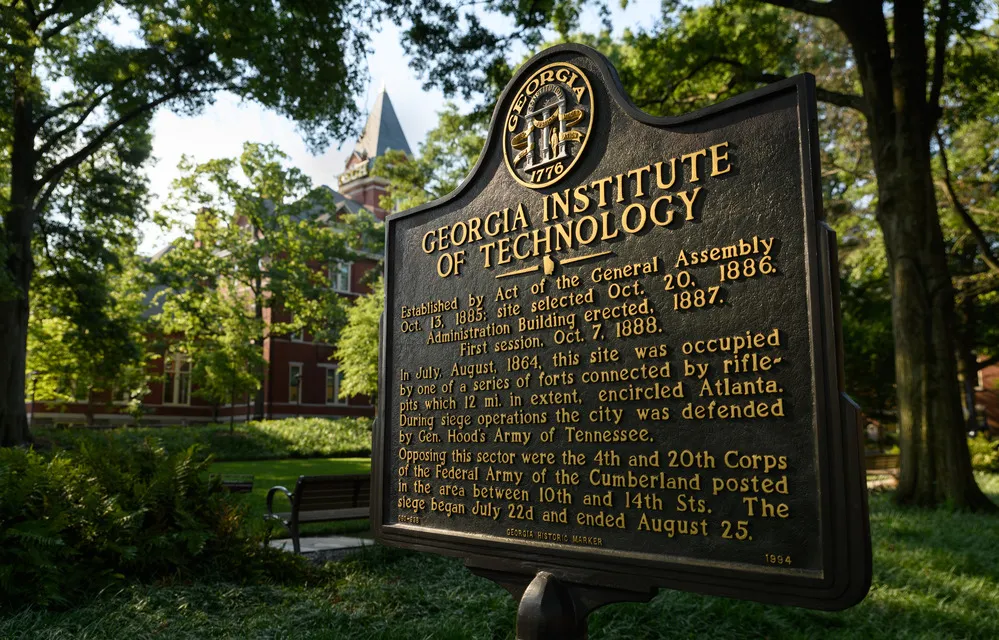
Georgia Tech’s Executive Vice President for Research search committee has selected three finalists. Each candidate will visit campus and present a seminar sharing their broad vision for the Institute's research enterprise. The seminars are open to all faculty, students, and staff across the campus community. Interested individuals can attend in person or register to participate via Zoom (pre-registration is required).
Jan. 07, 2025
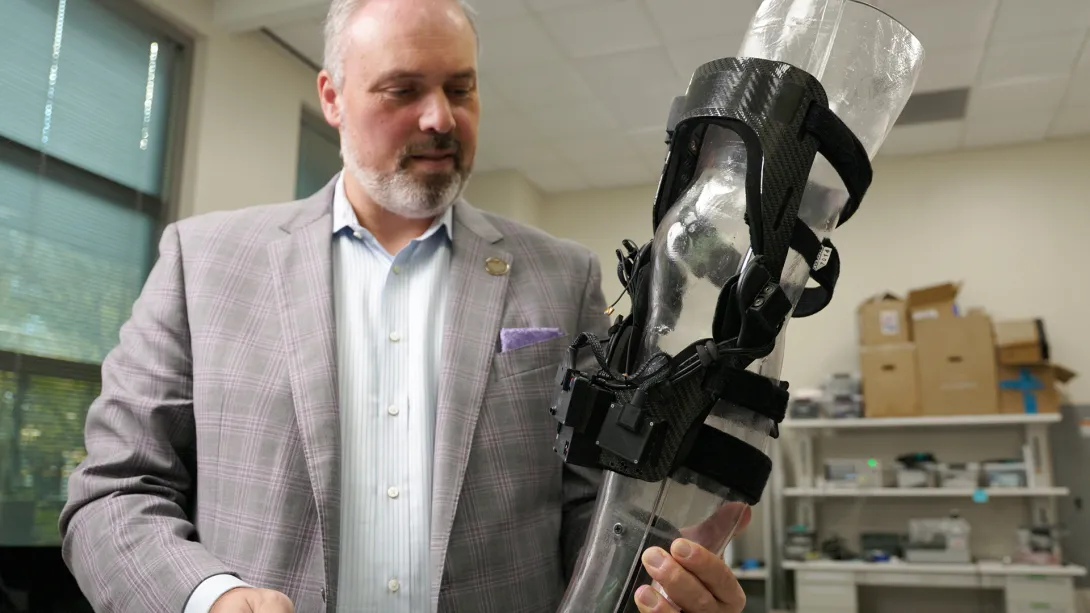
Samer Mabrouk and Omer Inan have been working on a wearable, battery-powered device that monitors joint health and gives personalized strengthening exercises. Inan and Mabrouk’s new company, Arthroba, created a device of the same name that uses electrical sensors to track swelling and tissue damage in the knee, ankle, and other critical joints.
Dec. 12, 2024
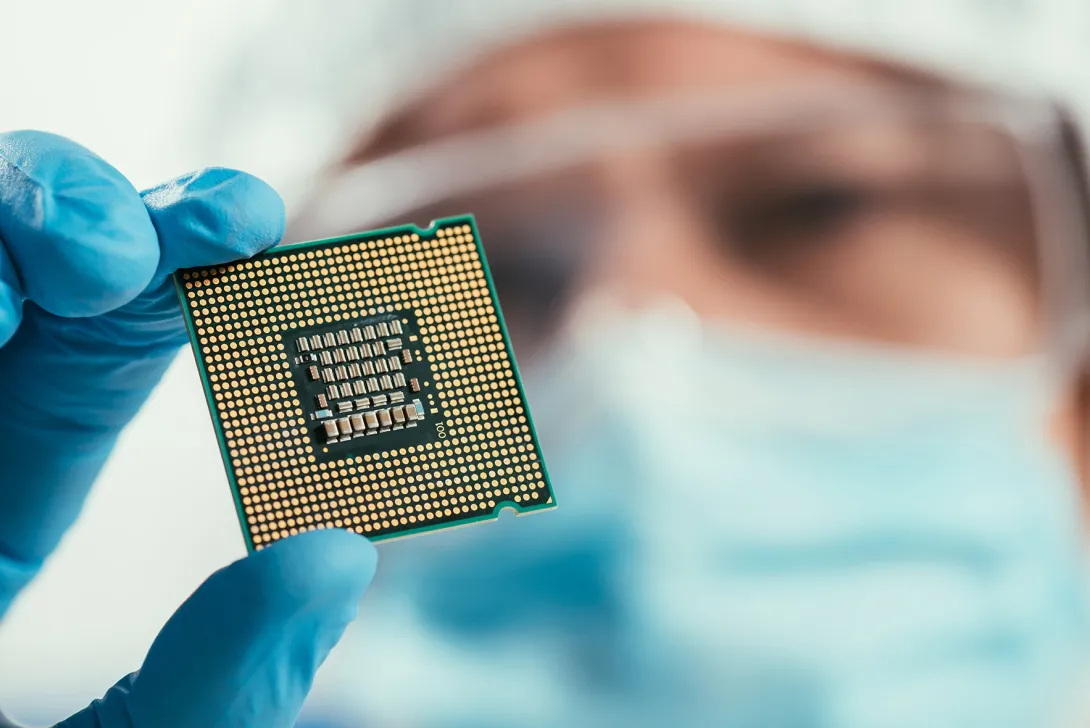
As part of the CHIPS National Advanced Packaging Manufacturing Program (NAPMP), three advanced packaging research projects will receive investments of up to $100 million each. This work will accelerate the development of cutting-edge substrate and materials technologies essential to the semiconductor industry.
NAPMP was developed to support a robust U.S. ecosystem for advanced packaging, which is key to every electronic system. NAPMP will enable leading-edge research and development, domestic manufacturing facilities, and robust training and workforce development programs in advanced packaging.
In partnership with Georgia Tech and the 3D Packaging Research Center (PRC), Absolics will receive $100 million to develop revolutionary glass core substrate panel manufacturing.
“This landmark investment in Absolics is also a transformational investment in Georgia Tech,” said Tim Lieuwen, interim executive vice president for Research. “It will redefine the possibilities of our longstanding partnership by expanding Georgia Tech’s expertise in electronic packaging, which is vital to the semiconductor supply chain. This federal funding uniquely positions us to merge cutting-edge research with industry, drive economic development in Georgia, and create a workforce ready to tackle tomorrow’s manufacturing demands.”
Georgia Tech has a long history of pioneering packaging research. Through a previous collaboration with the PRC, Absolics has already invested in the state of Georgia by building a glass core substrate panel manufacturing facility in Covington.
Georgia Tech’s Institute for Matter and Systems (IMS), home to the PRC, houses specialized core facilities with the capabilities for semiconductor advanced packaging research and development.
“Awards like this reinforce the importance of collaborative research between research disciplines and the private and public sector. Without the research and administrative support provided by IMS and the Georgia Tech Office of Research Development, projects like this would not be coming to Georgia Tech.” said Eric Vogel, IMS executive director.
Georgia Tech is a leader in advanced packaging research and has been working on glass substrate packaging research and development for years. Through this new Substrate and Materials Advanced Research and Technology (SMART) Packaging Program, Absolics aims to build a glass-core packaging ecosystem. In collaboration with Absolics, Georgia Tech will receive money for research and development for a glass-core substrate research center.
“We are delighted to partner with Absolics and the broader team on this new NAPMP program focused on glass-core packaging,” said Muhannad Bakir, Dan Fielder Professor in the School of Electrical and Computer Engineering and PRC director. “Georgia Tech’s role will span program leadership, research and development of novel glass-core packages, technology transition, and workforce development.” Bakir will serve as the associate director of SMART Packaging Program, overseeing research and workforce development activities while also leading several research tasks.
"This project will advance large-area glass panel processing with innovative contributions to materials and processing, modeling and simulation, metrology and characterization, and testing and reliability. We are pleased to partner with Absolics in advancing these important technology areas," said Regents' Professor Suresh K. Sitaraman of the George W. Woodruff School of Mechanical Engineering and the PRC. In addition to technical contributions, Sitaraman will direct the new SMART Packaging Program steering committee.
“The NAPMP Materials and Substrates R&D award for glass substrates marks the culmination of extensive efforts spearheaded by Georgia Tech’s Packaging Research Center,” noted George White, senior director of strategic partnerships and the theme leader for education and workforce development in the SMART Packaging Program. “This recognition highlights the state of Georgia’s leadership in advanced substrate technology and paves the way for developing the next generation of talent in glass-based packaging.”
The program will support education and workforce development efforts by bringing training, internships, and certificate opportunities to technical colleges, the HBCU CHIPS Network, and veterans' programs.
News Contact
Amelia Neumeister | Research Communications Program Manager
Dec. 10, 2024

Ebenezer Fanijo and David Citrin lead the “Waste Materials Processing” research initiative for the Institute for Matter and Systems at Georgia Tech. Their research in this role focuses on creating innovative construction materials from waste streams to reduce carbon emissions in construction. Fanijo is a professor in the School of Building Construction and Citrin is a professor in the School of Electrical and Computer Engineering.
In this brief Q&A, Fanijo and Citrin discuss their research focus, how it relates to Matter and System’s core research focuses, and the national impact of this initiative.
What is your field of expertise and at what point in your life did you first become interested in this area?
Fanijo - My research focuses on sustainable buildings and civil infrastructure, particularly decarbonizing through low-carbon materials and alternative energy sources. I also specialize in in-situ nanoscale quantification of cementitious materials and metals using advanced characterization techniques. My interest in this field grew during my graduate studies and after attending the First International Conference on Sustainable Production and Use of Cement and Concrete.
Citrin - Several years ago, I supervised a masters project using an automated imaging system to identify construction materials. My core interests are in terahertz imaging and applications of machine learning, so the IMS project brought these two together.
What questions or challenges sparked your current research?
Fanijo - Buildings account for 39% of global energy-related CO2 emissions and 35% of energy consumption, primarily due to manufacturing, materials, and transportation. Therefore, advanced research into innovative construction materials derived from waste streams is essential to reduce carbon emissions throughout the building lifecycle.
Citrin - The societal problems of how to reuse construction waste is urgent. Identifying those materials that can be reused and separating them from those that are tainted presents fascinating technical problems and is a tremendous challenge.
Matter and systems refer to the transformational technological and societal systems that arise from the convergence of innovative materials, devices, and processes. Why is your initiative important to the development of the IMS research strategy?
While “construction materials” evokes low tech, in fact, there have been tremendous advances in the materials as well as how they are used. Connecting such advances with the environmental challenges we face with new technological opportunities to mitigate these problems fits squarely in the remit of the IMS research strategy.
What are the broader global and social benefits of the research you and your team conduct?
One of the greatest components by volume filling landfills is construction waste. This waste is typically unsorted by material and tainting by hazardous waste is also common, making recycling prohibitively difficult. By sorting the materials in real time and identifying tainted versus untainted waste, we aim to reduce the quantity of such waste landfilled and to reduce the quantities of new materials made by reusing the old.
What are your plans for engaging a wider Georgia Tech faculty pool with the Institute for Matter and Systems research?
The leads on this project are experts in construction waste and in terahertz imaging. But what we envisage for this program will ultimately involve image processing and machine learning, materials science and chemical engineering, as well as actively recycling these materials for reuse.
News Contact
Amelia Neumeister | Research Communications Program Manager
Dec. 10, 2024

The National Academy of Inventors (NAI) is adding two more Georgia Tech researchers to its roster of innovators: Larry Heck and Younan Xia.
Heck is an artificial intelligence and speech recognition pacesetter who helped create virtual assistants for Microsoft, Samsung, Google, and Amazon. Xia is a nanomaterials pioneer whose inventions include silver nanowires commercialized for use in touchscreen displays, flexible electronics, and photovoltaics.
Election to NAI is the highest professional distinction specifically awarded to inventors. Founded in 2012, the NAI Fellows program has recognized 22 Georgia Tech innovators — 12 in just the last five years. Xia and Heck join a 2025 class of 170 new fellows representing university, government, and nonprofit organizations worldwide.
News Contact
Joshua Stewart
College of Engineering
Nov. 25, 2024

Cybersecurity researchers have discovered new vulnerabilities that could provide criminals with wireless access to the computer systems in automobiles, aircraft, factories, and other cyber-physical systems.
The computers used in vehicles and other cyber-physical systems rely on a specialized internal network to communicate commands between electronics. Because it took place internally, it was traditionally assumed that attackers could only influence this network through physical access.
In collaboration with Hyundai, researchers from Georgia Tech’s Cyber-Physical Systems Security Research Lab (CPSec) observed that threat models used to evaluate the security of these technologies were outdated.
The team, led by Ph.D. student Zhaozhou Tang, found that vehicle technology advancements allowed attackers to launch new attacks, improve existing attacks, and circumvent current defense systems.
For example, Tang’s findings included the possibility for attackers to remotely compromise the computers used in cars and aircraft through Wi-Fi, cellular, Bluetooth, and other wireless channels.
“Our job was to thoroughly review existing information and find ways to protect against these attacks,” he said. “We found new threats and proposed a defense system that can protect against the new and old attacks.”
In response to their findings, the team developed ERACAN, the first comprehensive defense system against this new generation of attackers. Designed to detect new and old attacks, ERACAN can deploy defenses when necessary.
The system also classifies the attacks it reacts to, providing security experts with the tools for detailed analysis. It has a detection rate of 100% for all attacks launched by conventional methods and detects enhanced threat models 99.7% of the time.
The project received a distinguished paper award at the 2024 ACM Conference on Computer and Communications Security (CCS 24) held in Salt Lake City. Tang presented the paper at the October conference.
“This was Zhaozhou’s first paper in his Ph.D. program, and he deserves recognition for his groundbreaking work on automotive cybersecurity,” said Saman Zonouz, associate professor in the School of Cybersecurity and Privacy and the School of Electrical and Computer Engineering.
The U.S. Department of Homeland Security has designated the transportation sector as one of the nation’s 16 critical infrastructure sectors. Ensuring its security is vital to national security and public safety.
“Modern vehicles, which rely heavily on controller area networks for essential operations, are integral components of this infrastructure,” said Zonouz. “With the increasing sophistication of cyberthreats, safeguarding these systems has become critical to ensuring the resilience and security of transportation networks.”
This paper introduced to the scientific community the first comprehensive defense system to address advanced threats targeting vehicular controller area networks.
The CPSec team is putting the technology it has developed into practice in collaboration with Hyundai America Technical Center, Inc., which sponsors the work. Tang hopes ERACAN’s success will raise awareness of these new threats in the research community and industry.
“It will help them build future defenses,” he said. “We have demonstrated the best practice to defend against these attacks.”
Tang received his bachelor’s degree at Georgia Tech, where he first performed security-related work for the automobile industry. While working with Zonouz on his master’s degree, he decided to change course and pursue research initiatives like vehicle security in a Ph.D. program.
“It is interesting how it came full circle,” he said. “I will continue on this path of automobile security throughout my Ph.D.”
ERACAN: Defending Against an Emerging CAN Threat Model, was written by Zhaozhou Tang, Khaled Serag from the Qatar Computing Research Institute, Saman Zonouz, Berkay Celik and Dongyan Xu from Purdue University, and Raheem Beyah, professor and dean of the College of Engineering. The CPSec Lab is a collaboration between the School of Cybersecurity and Privacy and the School of Electrical and Computer Engineering.
News Contact
John Popham
Communications Officer II
School of Cybersecurity and Privacy
Nov. 22, 2024
The Department of Commerce has granted the Semiconductor Research Corporation (SRC), its partners, and Georgia Institute of Technology $285 million to establish and operate the 18th Manufacturing USA Institute. The Semiconductor Manufacturing and Advanced Reseach with Twins (SMART USA) will focus on using digital twins to accelerate the development and deployment of microelectronics. SMART USA, with more than 150 expected partner entities representing industry, academia, and the full spectrum of supply chain design and manufacturing, will span more than 30 states and have combined funding totaling $1 billion.
This is the first-of-its-kind CHIPS Manufacturing USA Institute.
“Georgia Tech’s role in the SMART USA Institute amplifies our trailblazing chip and advanced packaging research and leverages the strengths of our interdisciplinary research institutes,” said Tim Lieuwen, interim executive vice president for Research. “We believe innovation thrives where disciplines and sectors intersect. And the SMART USA Institute will help us ensure that the benefits of our semiconductor and advanced packaging discoveries extend beyond our labs, positively impacting the economy and quality of life in Georgia and across the United States.”
The 3D Systems Packaging Research Center (PRC), directed by School of Electrical and Computer Engineering Dan Fielder Professor Muhannad Bakir, played an integral role in developing the winning proposal. Georgia Tech will be designated as the Digital Innovation Semiconductor Center (DISC) for the Southeastern U.S.
“We are honored to collaborate with SRC and their team on this new Manufacturing USA Institute. Our partnership with SRC spans more than two decades, and we are thrilled to continue this collaboration by leveraging the Institute’s wide range of semiconductor and advanced packaging expertise,” said Bakir.
Through the Institute of Matter and Systems’ core facilities, housed in the Marcus Nanotechnology Building, DISC will accelerate semiconductor and advanced packaging development.
“The awarding of the Digital Twin Manufacturing USA Institute is a culmination of more than three years of work with the Semiconductor Research Corporation and other valued team members who share a similar vision of advancing U.S. leadership in semiconductors and advanced packaging,” said George White, senior director for strategic partnerships at Georgia Tech.
“As a founding member of the SMART USA Institute, Georgia Tech values this long-standing partnership. Its industry and academic partners, including the HBCU CHIPS Network, stand ready to make significant contributions to realize the goals and objectives of the SMART USA Institute,” White added.
Georgia Tech also plans to capitalize on the supply chain and optimization strengths of the No. 1-ranked H. Milton Stewart School of Industrial and Systems Engineering (ISyE). ISyE experts will help develop supply-chain digital twins to optimize and streamline manufacturing and operational efficiencies.
David Henshall, SRC vice president of Business Development, said, “The SMART USA Institute will advance American digital twin technology and apply it to the full semiconductor supply chain, enabling rapid process optimization, predictive maintenance, and agile responses to chips supply chain disruptions. These efforts will strengthen U.S. global competitiveness, ensuring our country reaps the rewards of American innovation at scale.”
News Contact
Amelia Neumeister | Research Communications Program Manager