
Nov. 21, 2024
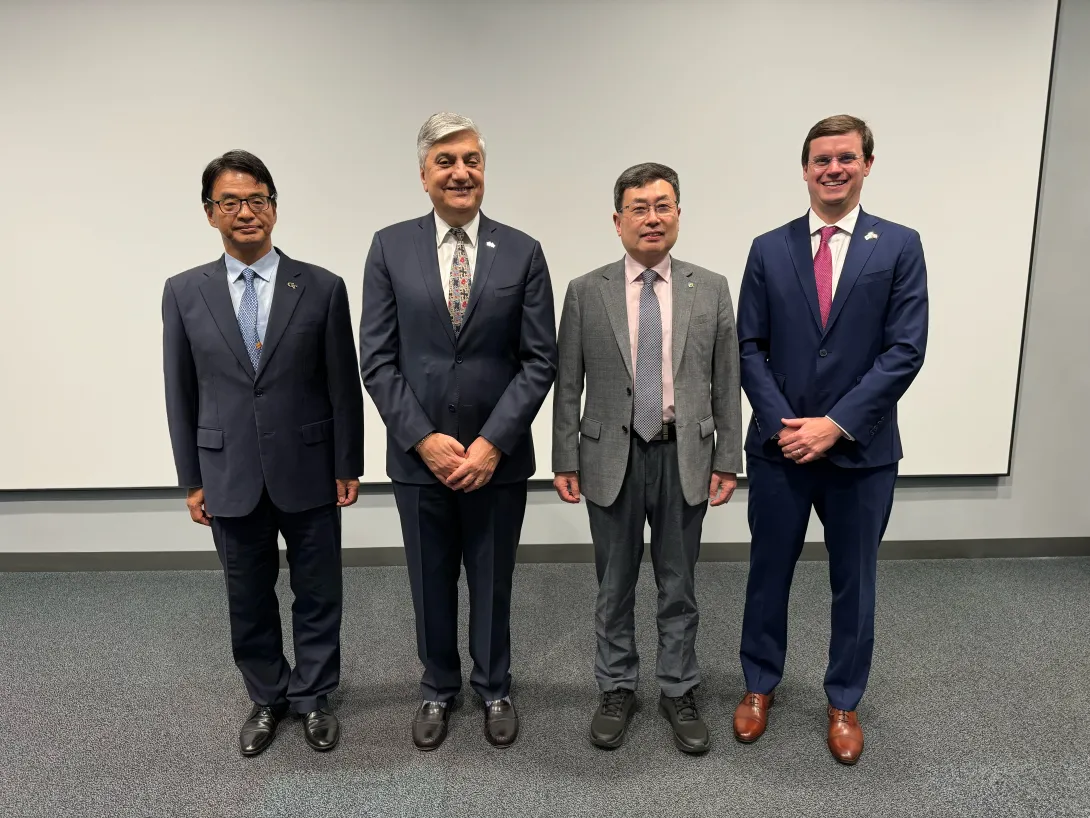
Leadership at the Memorandum of Understanding signing with the Korea Institute of Industrial Technology (KITECH). From left to right: Sangpyo Suh, Consulate General of Korea in Atlanta; Chaouki Abdallah, former executive vice president of Research at Georgia Tech; Sang Mok Lee, president of KITECH; and Barton Lowrey, director of the Georgia Department of Economic Development.
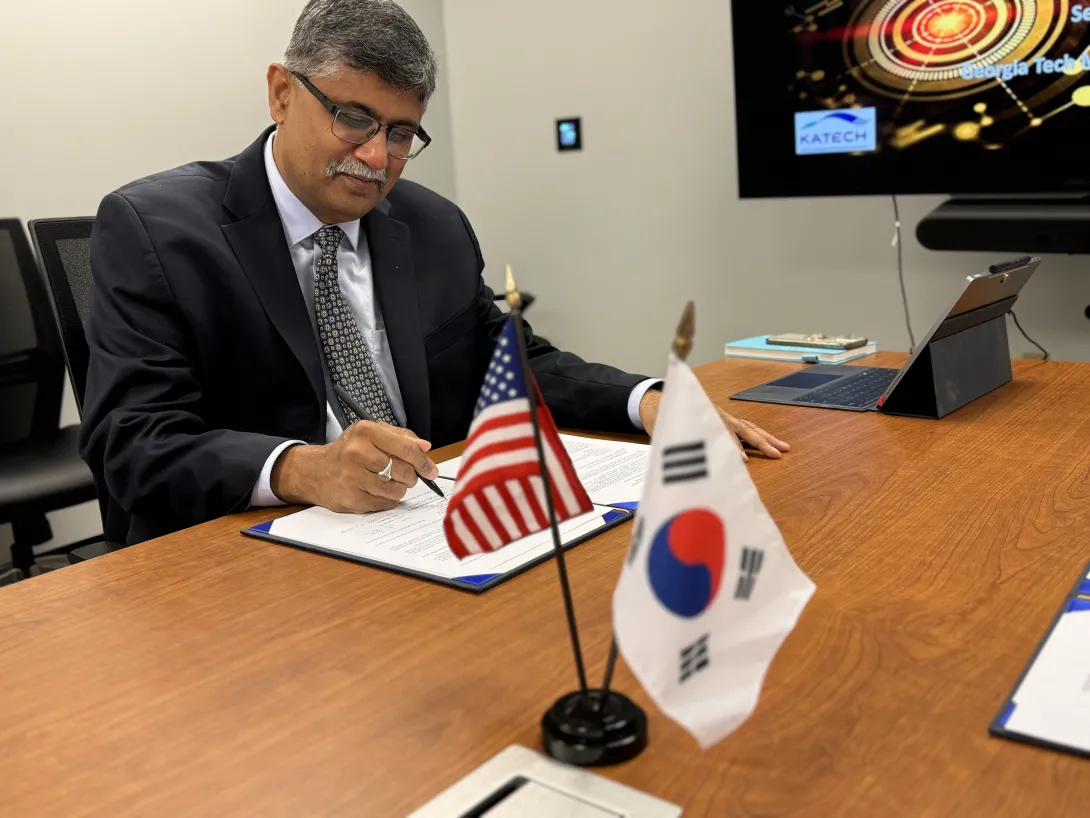
Shreyes Melkote, associate director of the Georgia Tech Manufacturing Institute, signing the Memorandum of Understanding with the Korea Automotive Technology Institute.
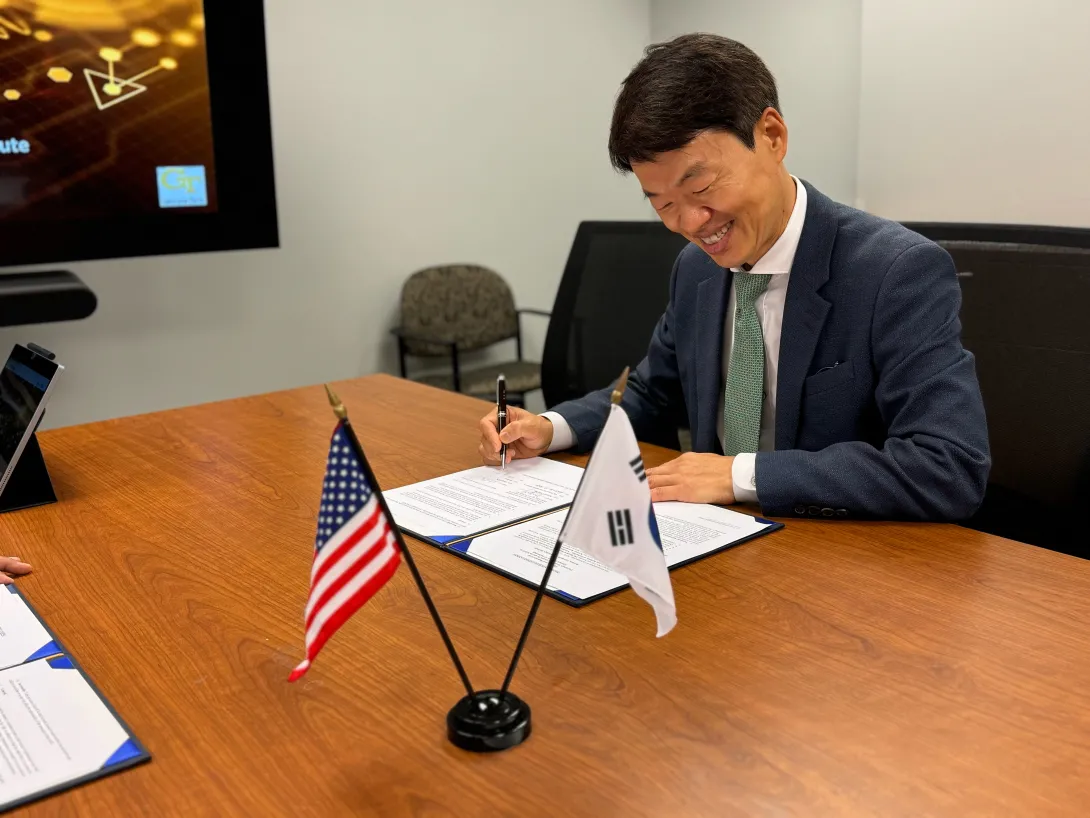
Na-Seung Sik, president of the Korea Automotive Technology Institute, signing the Memorandum of Understanding with Georgia Tech at the Georgia Tech Manufacturing Institute.
In a significant step towards fostering international collaboration and advancing cutting-edge technologies in manufacturing, Georgia Tech recently signed Memorandums of Understanding (MoUs) with the Korea Institute of Industrial Technology (KITECH) and the Korea Automotive Technology Institute (KATECH). Facilitated by the Georgia Tech Manufacturing Institute (GTMI), this landmark event underscores Georgia Tech’s commitment to global partnerships and innovation in manufacturing and automotive technologies.
“This is a great fit for the institute, the state of Georgia, and the United States, enhancing international cooperation,” said Thomas Kurfess, GTMI executive director and Regents’ Professor in the George W. Woodruff School of Mechanical Engineering (ME). “An MoU like this really gives us an opportunity to bring together a larger team to tackle international problems.”
“An MoU signing between Georgia Tech and entities like KITECH and KATECH signifies a formal agreement to pursue shared goals and explore collaborative opportunities, including joint research projects, academic exchanges, and technological advancements,” said Seung-Kyum Choi, an associate professor in ME and a major contributor in facilitating both partnerships. “Partnering with these influential institutions positions Georgia Tech to expand its global footprint and enhance its impact, particularly in areas like AI-driven manufacturing and automotive technologies.”
The state of Georgia has seen significant growth in investments from Korean companies. Over the past decade, approximately 140 Korean companies have committed around $23 billion to various projects in Georgia, creating over 12,000 new jobs in 2023 alone. This influx of investment underscores the strong economic ties between Georgia and South Korea, further bolstered by partnerships like those with KITECH and KATECH.
“These partnerships not only provide access to new resources and advanced technologies,” says Choi, “but create opportunities for joint innovation, furthering GTMI’s mission to drive transformative breakthroughs in manufacturing on a global scale.”
The MoUs with KITECH and KATECH are expected to facilitate a wide range of collaborative activities, including joint research projects that leverage the strengths of both institutions, academic exchanges that enrich the educational experiences of students and faculty, and technological advancements that push the boundaries of current manufacturing and automotive technologies.
“My hopes for the future of Georgia Tech’s partnerships with KITECH and KATECH are centered on fostering long-term, impactful collaborations that drive innovation in manufacturing and automotive technologies,” Choi noted. “These partnerships do not just expand our reach; they solidify our leadership in shaping the future of manufacturing, keeping Georgia Tech at the forefront of industry breakthroughs worldwide.”
Georgia Tech has a history of successful collaborations with Korean companies, including a multidecade partnership with Hyundai. Recently, the Institute joined forces with the Korea Institute for Advancement of Technology (KIAT) to establish the KIAT-Georgia Tech Semiconductor Electronics Center to advance semiconductor research, fostering sustainable partnerships between Korean companies and Georgia Tech researchers.
“Partnering with KATECH and KITECH goes beyond just technological innovation,” said Kurfess, “it really enhances international cooperation, strengthens local industry, drives job creation, and boosts Georgia’s economy.”
News Contact
Audra Davidson
Research Communications Program Manager
Georgia Tech Manufacturing Institute
Nov. 18, 2024

Margaret E. Kosal leads the "Investigating the Future of Metamaterials for National Security and To Avoid Technological Surprise" research initiative for the Institute for Matter and Systems at Georgia Tech. In this role, her research focuses on investigating technical aspects of cutting-edge metamaterials design, synthesis, and development to understand the potential impacts of this type of emerging technology on national security and geopolitics. Kosal is also a professor in the Sam Nunn School of International Affairs.
In this brief Q&A, Kosal discusses her research focus, how it relates to Matter and System’s core research focuses, and the national impact of this initiative.
What is your field of expertise and at what point in your life did you first become interested in this area?
My formal education and background are in the physical sciences (PhD Chemistry); my scholarship, research, teaching, external engagement, and impact are intrinsically interdisciplinary; and I have found a scholarly home and community in the international relations discipline, primarily working in the areas of security and science and technology (S&T) policy.
What questions or challenges sparked your current research?
With one of my PhD students, I’d previously done research on potential disruptive potential of metamaterials, finding them to potentially be a potentially revolutionary innovation to the power of global and regional hegemons. That work found that revisionist actors, primarily non-state actors, likely will benefit disproportionately from acquiring a metamaterial adaptive camouflage (MMAC) capability but will struggle to do so due to the technical challenge of advanced R&D, particularly in the near and mid-term. The implication found was that status quo powers – who are likely to be the first to develop a viable capability – must emphasize parallel development of countermeasures and limit the negative potential of the technology’s proliferation. With this project, I want to dive deeper into the technical aspects of cutting-edge metamaterials design, synthesis, and development to understand the potential impacts of this type of emerging technology on national security and geopolitics.
Matter and systems refer to the transformational technological and societal systems that arise from the convergence of innovative materials, devices, and processes. Why is your initiative important to the development of the IMS research strategy?
In November 2016, US Army Lieutenant General HR McMaster, then-Deputy Commanding General for Army Futures and Director of the Army Capability Integration Center (ARCIC) invoked the concept of invisible tanks at meeting on Ground Combat Platforms at the Institute of Land Warfare. I was speaking at the same meeting and commented in my remarks on the need for new capabilities that shift the approach to survivability from protection via mass (which is limiting) to capabilities for active defense and adaptive responses such as via meta-materials.
Over the last century, the dominant mechanism to achieve parity or asymmetric advantages in land warfare (e.g., maneuver warfare using tanks and other vehicles) has relied on armor and other materials that more effectively absorb kinetic impacts. In the mid-20th Century, the US Air Force shifted to relying on speed and stealth for asymmetric advantage. New conceptual approaches are needed and will have significant implications for conflict, cooperation, and the nature of land warfare. In the case of land warfare (as with air power), materials and systems are fundamental to being able to achieve those asymmetric advantages. The convergence of these innovative materials into existing and new capabilities (vehicles) is likely to result in revolutionary changes to societal systems.
What are the broader global and social benefits of the research you and your team conduct?
My scholarship significantly contributes to a better and more nuanced understanding of the relationships among science, technology, and security, emphasizing the complex interactions among science, technology, geopolitics, knowledge, innovation, governance (laws and treaties), diplomacy, and institutions. My work explains how these phenomena intersect and impact geopolitics by developing and testing novel analytical frameworks.
What are your plans for engaging a wider Georgia Tech faculty pool with the Institute for Matter and Systems research?
I’m going to be reaching out directly to GT faculty and GTRI researchers in Engineering and the Sciences. I am also interested in exploring how my research integrates and might further other IMS Research Initiatives (e.g. “Mechanical Metamaterials” (Rocklin/PHYS) and Research Centers (e.g., the Center for Organic Photonics and Electronics).
Nov. 15, 2024
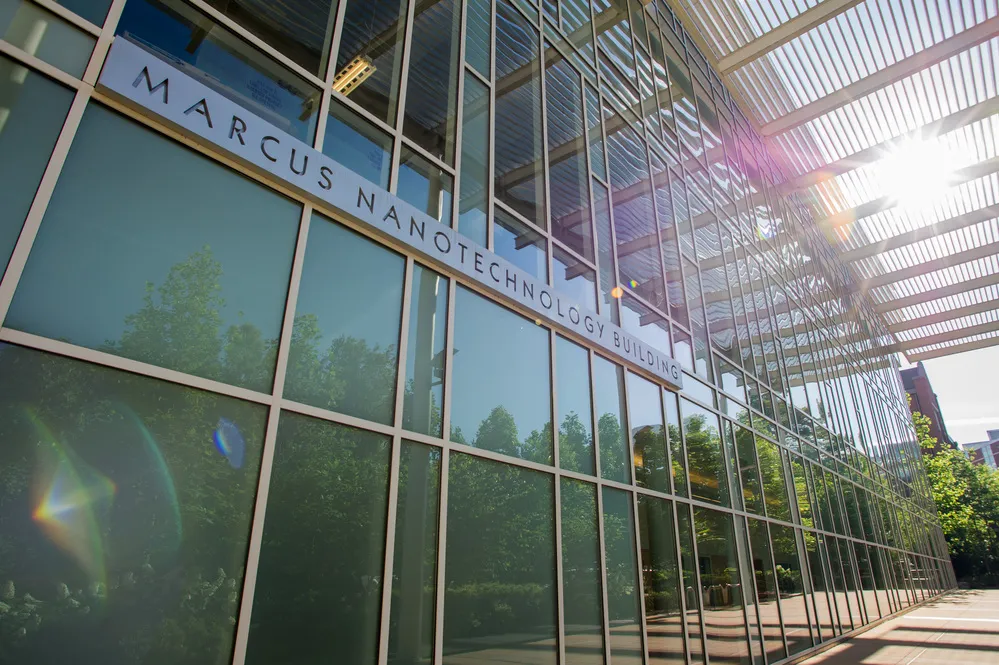
The Institute for Matter and Systems (IMS) at Georgia Tech has announced the fall 2024 core facility seed grant recipients. The primary purpose of this program is to give graduate students in diverse disciplines working on original and unfunded research in micro- and nanoscale projects the opportunity to access the most advanced academic cleanroom space in the Southeast. In addition to accessing the labs' high-level fabrication, lithography, and characterization tools, the awardees will have the opportunity to gain proficiency in cleanroom and tool methodology and access the consultation services provided by research staff members in IMS. Seed Grant awardees are also provided travel support to present their research at a scientific conference.
In addition to student research skill development, this biannual grant program gives faculty with novel research topics the ability to develop preliminary data to pursue follow-up funding sources. The Core Facility Seed Grant program is supported in part by the Southeastern Nanotechnology Infrastructure Corridor (SENIC), a member of the National Science Foundation’s National Nanotechnology Coordinated Infrastructure (NNCI).
The five winning projects in this round were awarded IMS cleanroom and lab access time to be used over the next year.
The Fall 2024 IMS Core Facility Seed Grant recipients are:
Manufacturing of a Diamagnetically Enhanced PEM Electrolysis Cell
PI: Alvaro Romero-Calvo
Student: Shay Vitale
Daniel Guggenheim School of Aerospace Engineering
Biomimicking Organ-On-a-Chip Models
PI: Nick Housley
Student: Aref Valipour
School of Biological Sciences
Single-shot LWIR Hyperspectral Imaging Using Meta-optics
PI: Shu Jia
Student: Jooyeong Yun (School of Electrical and Computer Engineering)
The Wallace H. Coulter Department of Biomedical Engineering
Large-area Three-dimensional Nanolithography Using Two-photon Polymerization
PI: Sourabh Saha
Student: Golnaz Aminaltojjari
George W. Woodruff School of Mechanical Engineering
Effects of Geochemical Constraints on the Redistribution of Rare Earth Elements (REE) during Chemical Weathering
PI: Yuanzhi Tang
Student: Hang Xu
School of Earth and Atmospheric Sciences
Nov. 11, 2024
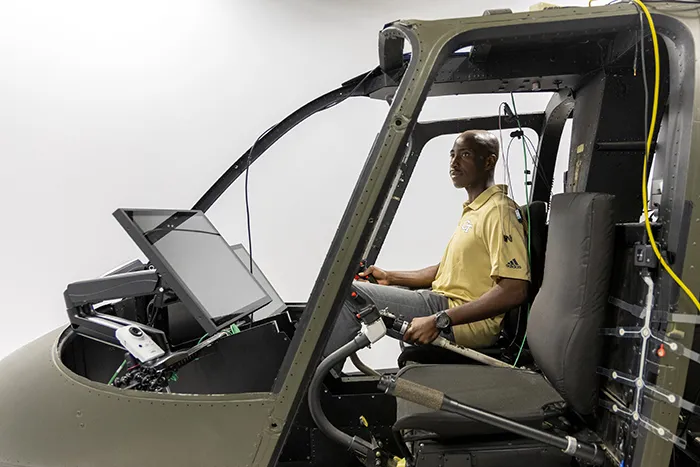
Many people dream of flying into space for NASA, but few achieve it. Georgia Tech has produced 14 astronauts, inspiring current students to pursue this challenging path. Despite long odds, aspiring astronauts apply repeatedly, driven by passion and determination. Their journey, whether successful or not, pushes them to excel and grow personally and professionally.
Nov. 11, 2024

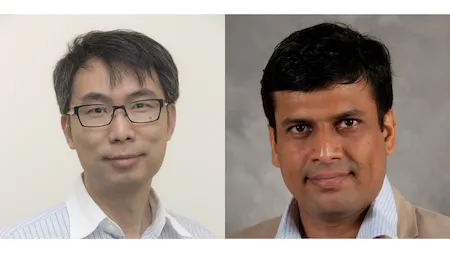

A first-of-its-kind algorithm developed at Georgia Tech is helping scientists study interactions between electrons. This innovation in modeling technology can lead to discoveries in physics, chemistry, materials science, and other fields.
The new algorithm is faster than existing methods while remaining highly accurate. The solver surpasses the limits of current models by demonstrating scalability across chemical system sizes ranging from large to small.
Computer scientists and engineers benefit from the algorithm’s ability to balance processor loads. This work allows researchers to tackle larger, more complex problems without the prohibitive costs associated with previous methods.
Its ability to solve block linear systems drives the algorithm’s ingenuity. According to the researchers, their approach is the first known use of a block linear system solver to calculate electronic correlation energy.
The Georgia Tech team won’t need to travel far to share their findings with the broader high-performance computing community. They will present their work in Atlanta at the 2024 International Conference for High Performance Computing, Networking, Storage and Analysis (SC24).
[MICROSITE: Georgia Tech at SC24]
“The combination of solving large problems with high accuracy can enable density functional theory simulation to tackle new problems in science and engineering,” said Edmond Chow, professor and associate chair of Georgia Tech’s School of Computational Science and Engineering (CSE).
Density functional theory (DFT) is a modeling method for studying electronic structure in many-body systems, such as atoms and molecules.
An important concept DFT models is electronic correlation, the interaction between electrons in a quantum system. Electron correlation energy is the measure of how much the movement of one electron is influenced by presence of all other electrons.
Random phase approximation (RPA) is used to calculate electron correlation energy. While RPA is very accurate, it becomes computationally more expensive as the size of the system being calculated increases.
Georgia Tech’s algorithm enhances electronic correlation energy computations within the RPA framework. The approach circumvents inefficiencies and achieves faster solution times, even for small-scale chemical systems.
The group integrated the algorithm into existing work on SPARC, a real-space electronic structure software package for accurate, efficient, and scalable solutions of DFT equations. School of Civil and Environmental Engineering Professor Phanish Suryanarayana is SPARC’s lead researcher.
The group tested the algorithm on small chemical systems of silicon crystals numbering as few as eight atoms. The method achieved faster calculation times and scaled to larger system sizes than direct approaches.
“This algorithm will enable SPARC to perform electronic structure calculations for realistic systems with a level of accuracy that is the gold standard in chemical and materials science research,” said Suryanarayana.
RPA is expensive because it relies on quartic scaling. When the size of a chemical system is doubled, the computational cost increases by a factor of 16.
Instead, Georgia Tech’s algorithm scales cubically by solving block linear systems. This capability makes it feasible to solve larger problems at less expense.
Solving block linear systems presents a challenging trade-off in solving different block sizes. While larger blocks help reduce the number of steps of the solver, using them demands higher computational cost per step on computer processors.
Tech’s solution is a dynamic block size selection solver. The solver allows each processor to independently select block sizes to calculate. This solution further assists in scaling, and improves processor load balancing and parallel efficiency.
“The new algorithm has many forms of parallelism, making it suitable for immense numbers of processors,” Chow said. “The algorithm works in a real-space, finite-difference DFT code. Such a code can scale efficiently on the largest supercomputers.”
Georgia Tech alumni Shikhar Shah (Ph.D. CSE 2024), Hua Huang (Ph.D. CSE 2024), and Ph.D. student Boqin Zhang led the algorithm’s development. The project was the culmination of work for Shah and Huang, who completed their degrees this summer. John E. Pask, a physicist at Lawrence Livermore National Laboratory, joined the Tech researchers on the work.
Shah, Huang, Zhang, Suryanarayana, and Chow are among more than 50 students, faculty, research scientists, and alumni affiliated with Georgia Tech who are scheduled to give more than 30 presentations at SC24. The experts will present their research through papers, posters, panels, and workshops.
SC24 takes place Nov. 17-22 at the Georgia World Congress Center in Atlanta.
“The project’s success came from combining expertise from people with diverse backgrounds ranging from numerical methods to chemistry and materials science to high-performance computing,” Chow said.
“We could not have achieved this as individual teams working alone.”
News Contact
Bryant Wine, Communications Officer
bryant.wine@cc.gatech.edu
Oct. 28, 2024
The Institute for Matter and Systems (IMS) at Georgia Tech has selected seven new interdisciplinary research initiatives to receive seed funding. This funding is part of the larger IMS effort to identify and support visionary leaders driving groundbreaking research and innovation.
IMS focuses on transformational technological and societal systems that arise where innovative materials, devices and processes converge.
“We are excited to support these researchers and their novel ideas,” said Michael Filler, IMS deputy director for Research and Innovation. “Their work exemplifies the spirit of innovation and excellence that IMS and Georgia Tech are known for, and we look forward to seeing the transformative impact of their research.”
The funded initiatives come from four Colleges and 10 Schools across the Institute, and from GTRI. These initiative leads were selected based on their innovative approaches, potential impact, and alignment with IMS’ mission to push the boundaries of science and technology. The winners will receive $10,000, access to state-of-the-art facilities, and other support from IMS to bring their projects to life.
IMS supports interdisciplinary research both in nationally recognized areas of need and those just emerging. It scaffolds research from the ground up, from seed funding for new initiatives to infrastructure support for research programs and embedded support for research centers. These newly announced initiatives are funded at the lowest level of IMS’ three-tiered model. Successful initiatives can receive further funding and/or be elevated to the program level of support.
The 2024 Initiative Leads:
Quantum Engineering | Yan Wang, George W. Woodruff School of Mechanical Engineering and Asif Khan, Electrical and Computer Engineering, College of Engineering.
Matter and Information | Florian Schafer, School of Computational Science and Engineering, College of Computing.
Metamaterials for National Security | Margaret Kosal, Sam Nunn School of International Affairs, Ivan Allen College of Liberal Arts.
Waste Materials Processing | Ebenezer Fanijo, School of Building Construction, College of Design; and David Citrin, School of Electrical and Computer Engineering, College of Engineering.
Microscale Thermal Tech for Sustainability | Noura Howell, School of Literature, Media, and Communication, Ivan Allen College of Liberal Arts and Joe Bozeman, School of Civil and Environmental Engineering, College of Engineering.
Sports Research, Innovation, and Technology | Jud Ready, Georgia Tech Research Institute.
Incentivizing Breakthrough Science | Usha Nair-Reichert, School of Economics and Richard Barke, School of Public Policy, Ivan Allen College of Liberal Arts.
Oct. 22, 2024
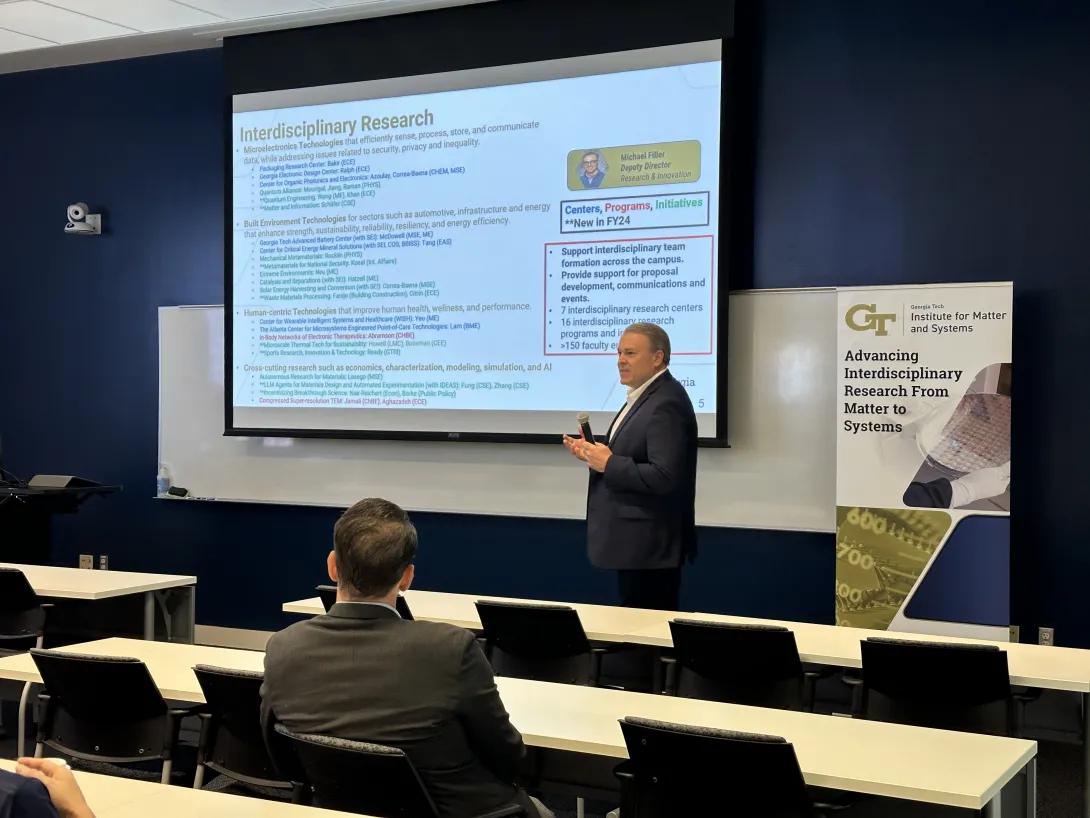
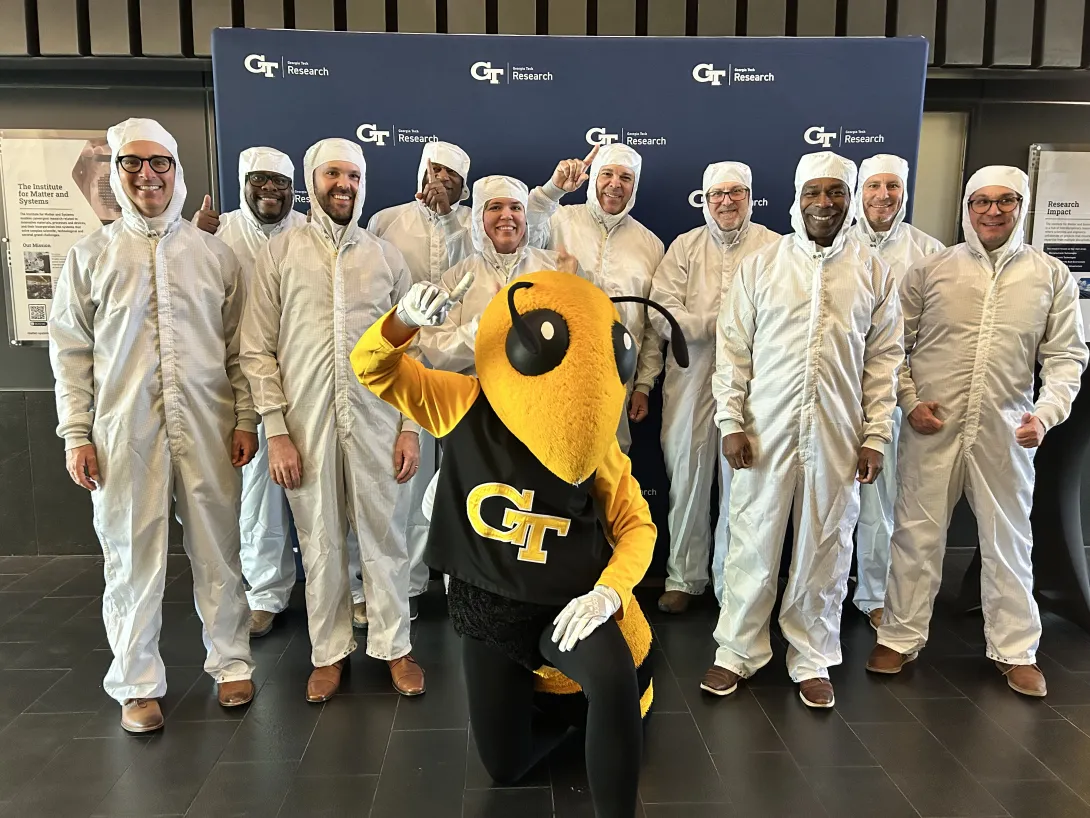
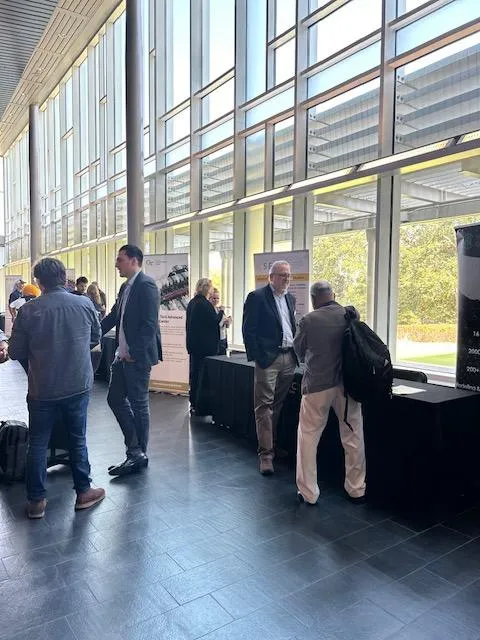
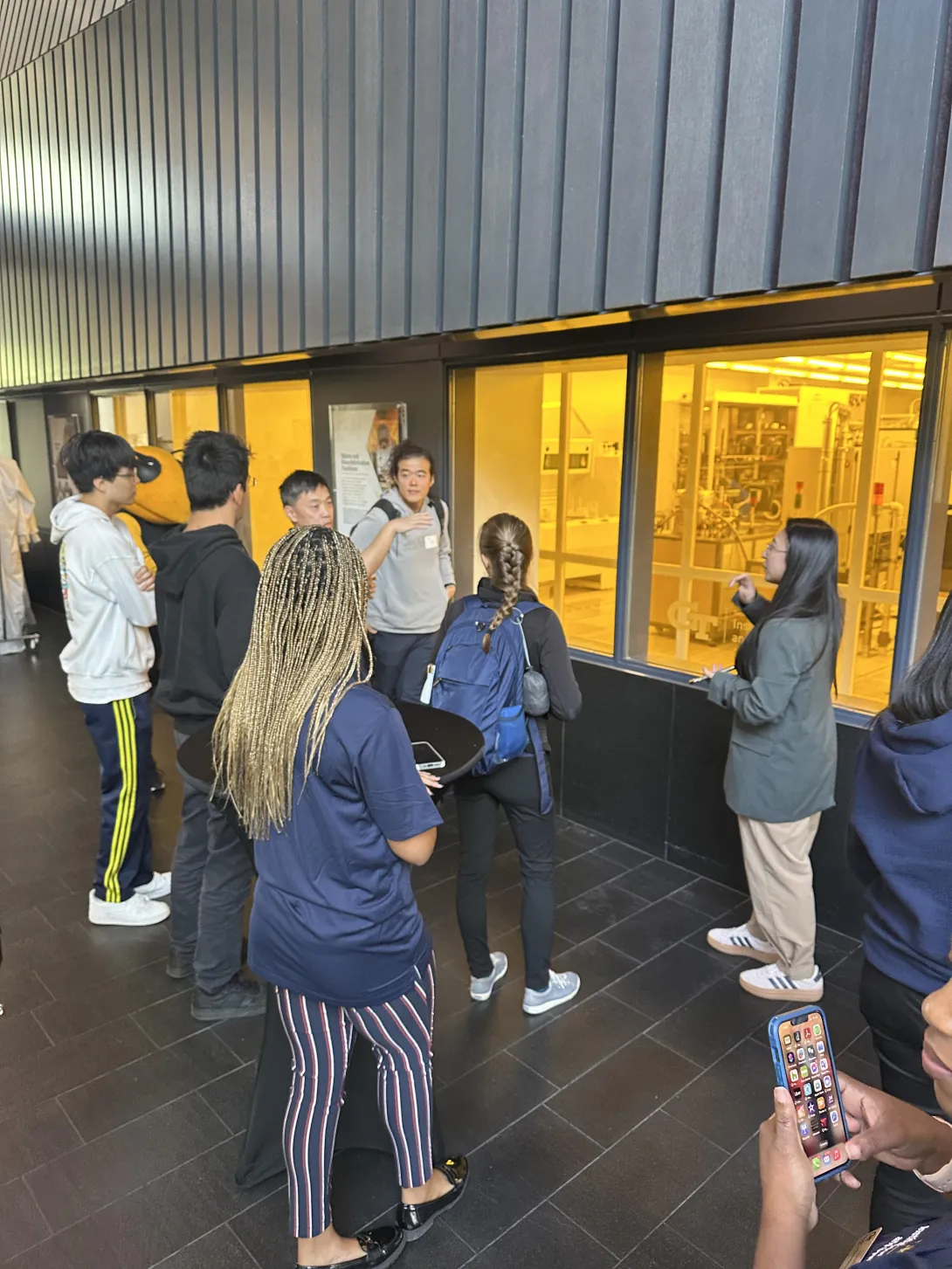
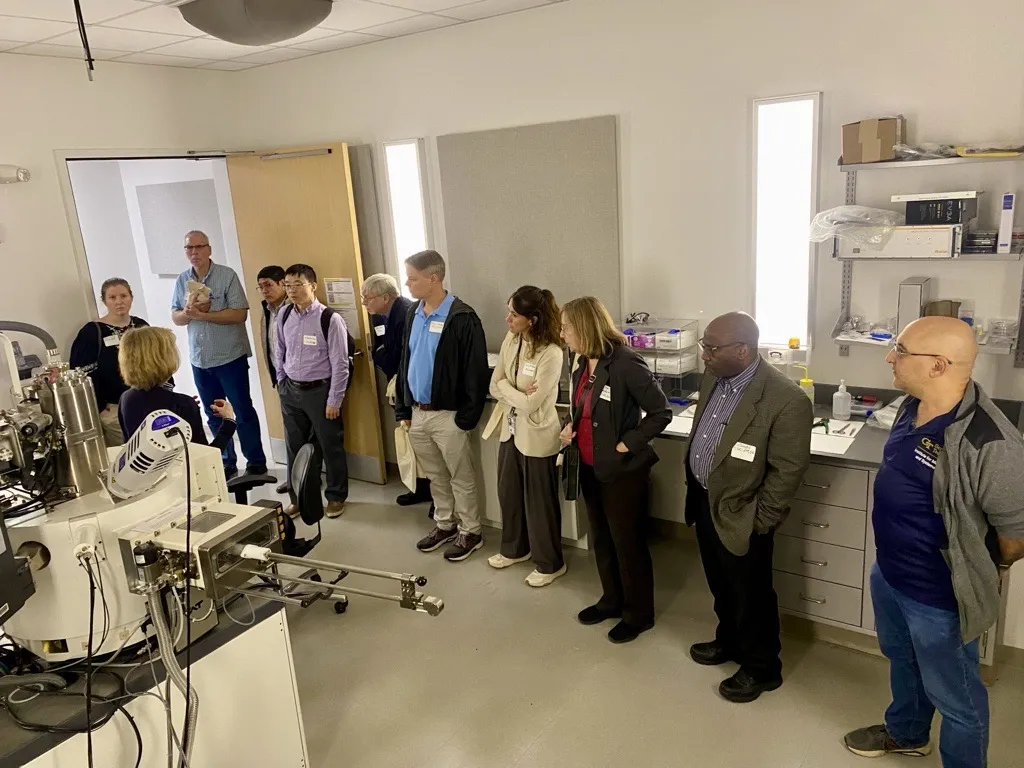
The Institute for Matter and Systems (IMS) held its opening showcase on October 15, 2024, in the Marcus Nanotechnology Building at Georgia Tech.
“We're trying to link people from fundamental science through materials, measurements, modelling software, systems, economics, and public policy,” said Eric Vogel, IMS executive director.
Vogel noted that IMS does this in four ways— through research support, fabrication and characterization core facilities, education and outreach programs and strategic external engagement.
The Institute for Matter and Systems arose from the union of the Institute of Electronics and Nanotechnology and the Institute for Materials. Each of the latter two interdisciplinary research institutes focused on major national priorities — the National Nanotechnology Initiative and the Materials Genome Initiative, respectively. The work done by IMS researchers flies at the intersection of technology, innovation, and science, with a focus on creating technological and societal transformation through devices, processes and components.
The event featured the second annual Oliver Brand Memorial Lectureship on Electronics and Nanotechnology. The lecture was presented by Michael Strano, whose research focuses on micro-robotics.
After the lecture, guests were invited to explore IMS’s research centers and facilities. Walking tours of the micro/nano fabrication cleanroom and material characterization facility showcased the core facilities available to those who engage with IMS. Booths featuring IMS supported research centers allowed guests to explore the breadth of research activities happening within the research institute.
Oct. 22, 2024
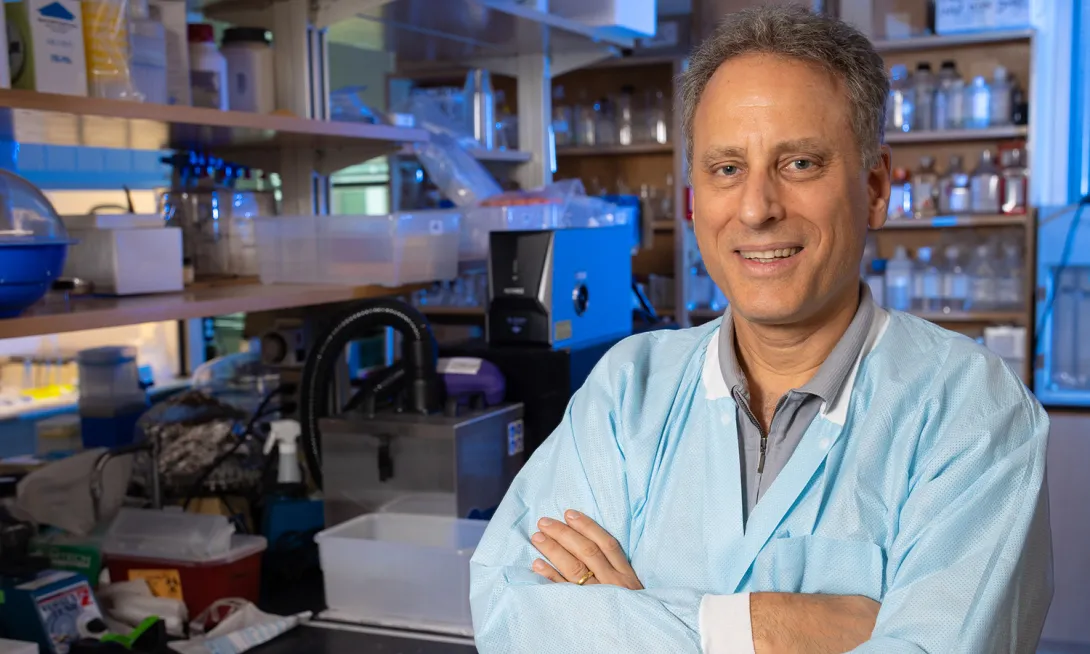
For his work creating new kinds of drug delivery techniques and bringing those technologies to patients, Mark Prausnitz is one of the new members of the National Academy of Medicine (NAM).
The Academy announced his election Oct. 21 alongside 99 others. Membership in NAM is considered one of the highest recognitions in health and medicine, reserved for those who’ve made major contributions to healthcare, medical sciences, and public health. The roster is small: only 2,400 or so individuals have been honored.
“It’s an honor to be elected to the National Academy of Medicine and have the work of our team at Georgia Tech recognized in this way,” said Prausnitz, Regents’ Professor and J. Erskine Love Jr. Chair in the School of Chemical and Biomolecular Engineering.
The Academy cited Prausnitz for innovating microneedle and other advanced drug delivery technologies. He also was honored for translating those methods and devices into clinical trials and products and founding companies to bring the advances to patients. NAM praised Prausnitz for “inspiring students to be creative and impactful engineers.”
News Contact
Joshua Stewart
College of Engineering
Oct. 22, 2024
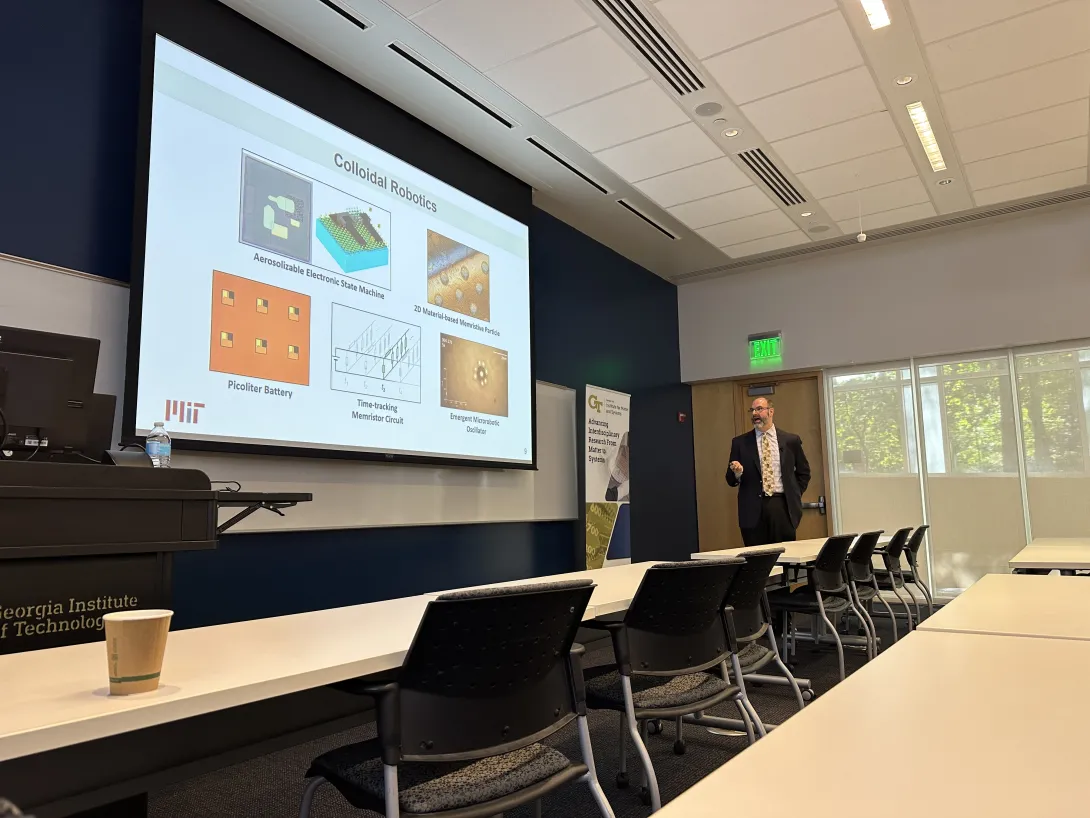
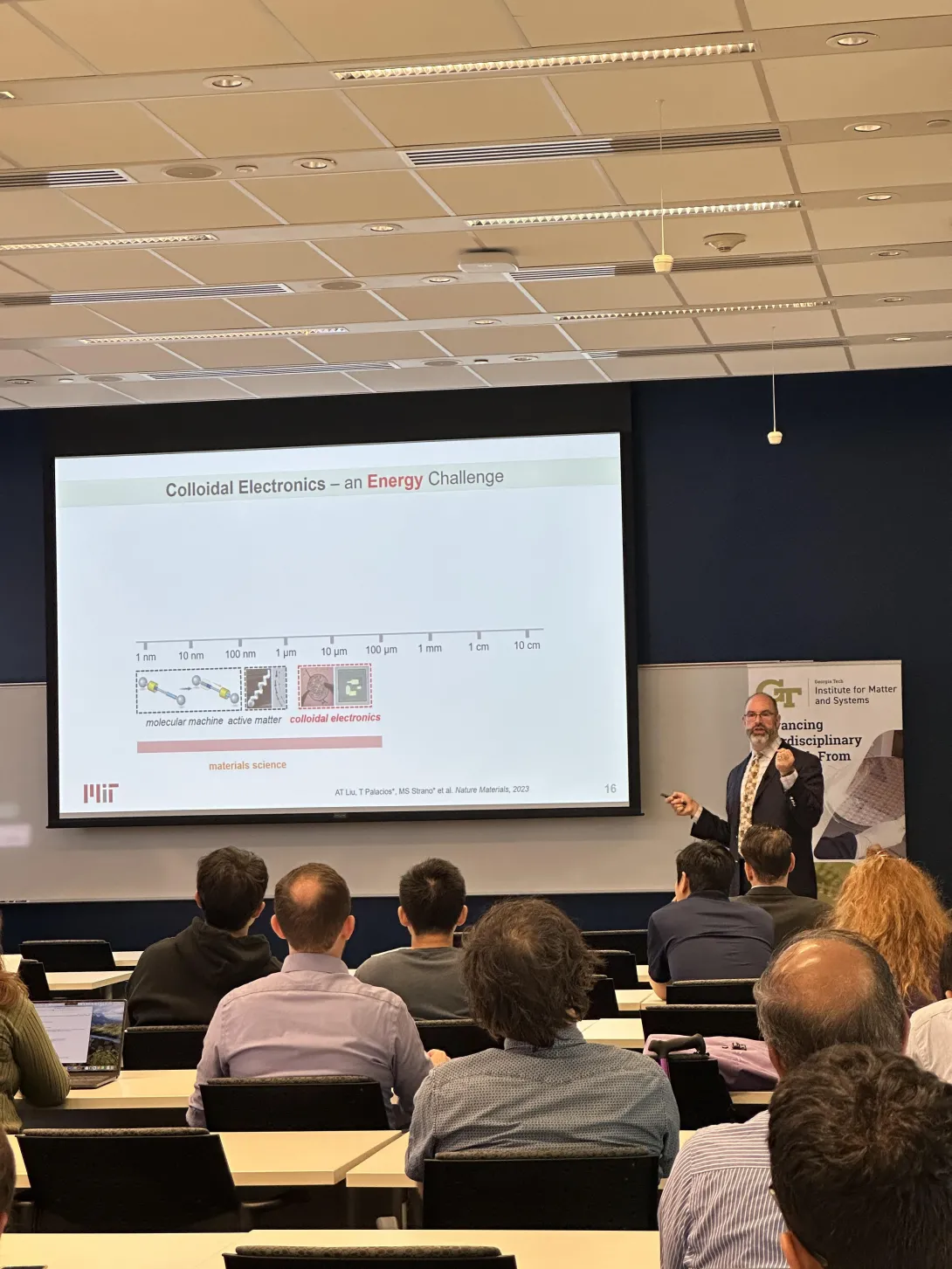
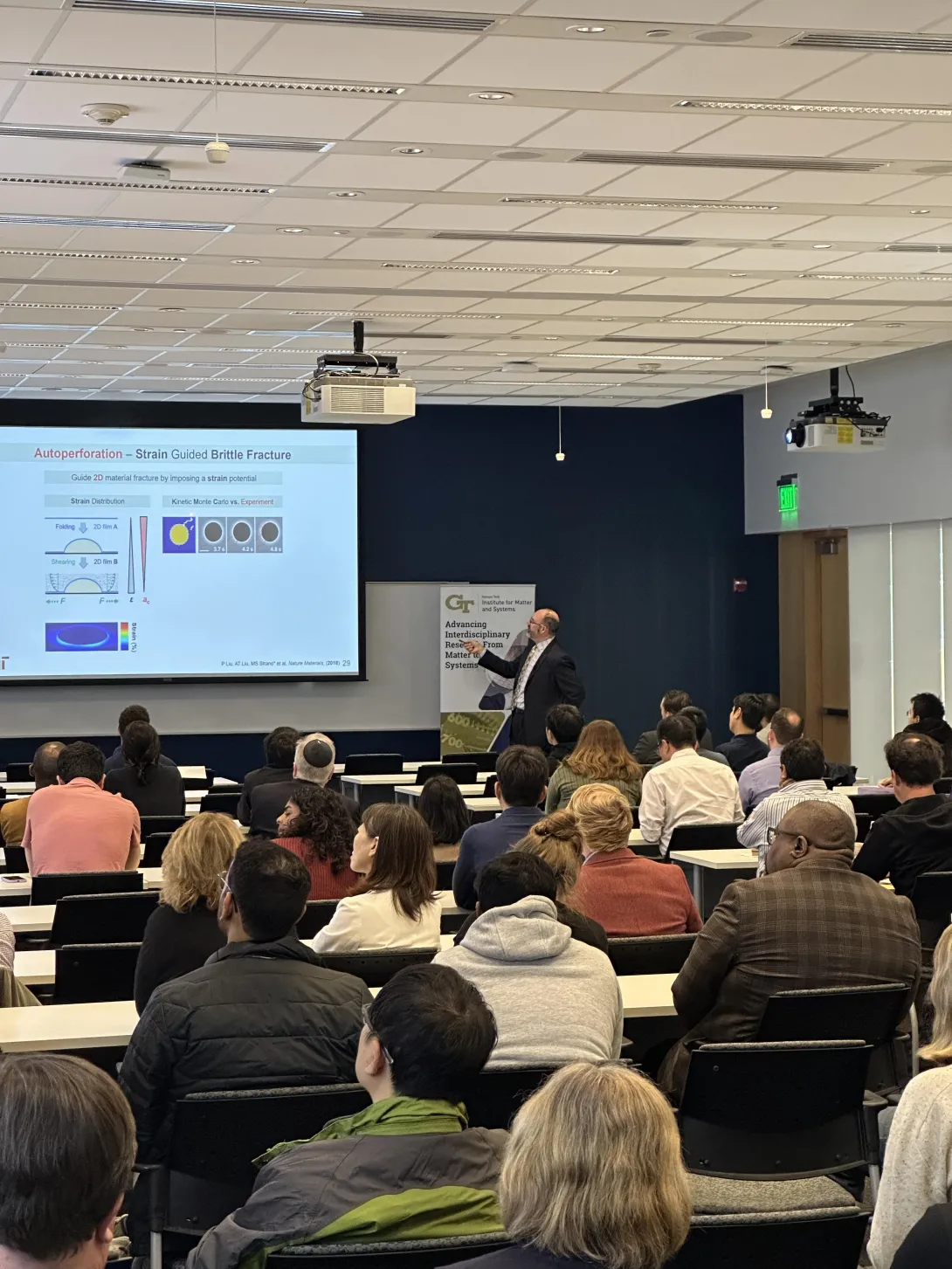
It was a full house in Georgia Tech’s Marcus Nanotechnology Building for the Oliver Brand Memorial Lectureship on Electronics and Nanotechnology on October 15, 2024. The lecture was presented by Michael Strano, Carbon C. Dubs professor of chemical engineering at MIT, on nanoelectronics grafted onto and within colloids for colloidal state machines and micro-robots.
“We have gathered today to remember a remarkable individual, Professor Oliver Brand, and his contributions to Georgia Tech and to the field of electronics and nanotechnology,” said Michael Filler, Institute for Matter and Systems deputy director.
“Beyond his academic success, Oliver was a mentor, a colleague, and a friend,” Filler added. “He was known for his sharp mind, his gentle style, and his unwavering support for those around him. His ability to foster collaboration has left an indelible mark on the community, near and far.”
Strano’s talk was the second annual lecture in honor of Brand who served as executive director of the Georgia Tech Institute of Electronics and Nanotechnology (IEN) from 2014 - 2023.
While he never worked directly with Brand, Strano emphasized Brand’s impact in the field of electronics and nanotechnology as well as his impact during the Covid-19 pandemic.
“I can’t say anything better than what Oliver’s colleagues have already said,” said Strano. “They said he was a pioneer and described him as trans-disciplinary and had an enormous impact. Few can match the magnitude of his influence on campus and during the pandemic.”
Strano highlighted the importance of interdisciplinary work, which is necessary to create anything on the nanoscale, with emphasis on his team’s work creating nanoelectronics for micro-robotics. Strano, a chemical engineer, mentioned multiple times that his work — creating nanoscale electronics — would not exist without collaborating with electrical engineers.
Brand, who died in 2023, as a legacy that lives on through interdisciplinary research at Georgia Tech. He spent more than 20 years as a member of the Institute’s faculty. In addition to leading IEN, he was a professor in the School of Electrical and Computer Engineering, director of the Coordinating Office for the NSF-funded National Nanotechnology Coordinated Infrastructure (NNCI), and director of the Southeastern Nanotechnology Infrastructure Corridor, one of the 16 NNCI sites.
Brand united researchers in the fields of electronics and nanotechnology, fostering collaboration and expanding IEN to include more than 200 faculty members. In addition to his respected work in the field of microelectromechanical systems, he is remembered for his kindness, dedication, and unwavering support for all who knew him.
Oct. 21, 2024

A pair of Smarticle robots from the lab of Prof. Dan Goldman. Earlier research from his group observed the arise of order in active matter from the physics of low rattling. (Photo Credit: Christa M. Ernst)
If you’ve ever watched a large flock of birds on the wing, moving across the sky like a cloud with various shapes and directional changes appearing from seeming chaos, or the maneuvers of an ant colony forming bridges and rafts to escape floods, you’ve been observing what scientists call self-organization. What may not be as obvious is that self-organization occurs throughout the natural world, including bacterial colonies, protein complexes, and hybrid materials. Understanding and predicting self-organization, especially in systems that are out of equilibrium, like living things, is an enduring goal of statistical physics.
This goal is the motivation behind a recently introduced principle of physics called rattling, which posits that systems with sufficiently “messy” dynamics organize into what researchers refer to as low rattling states. Although the principle has proved accurate for systems of robot swarms, it has been too vague to be more broadly tested, and it has been unclear exactly why it works and to what other systems it should apply.
Dana Randall, a professor in the School of Computer Science, and Jacob Calvert, a postdoctoral fellow at the Institute for Data Engineering and Science, have formulated a theory of rattling that answers these fundamental questions. Their paper, “A Local-Global Principle for Nonequilibrium Steady States,” published last week in Proceedings of the National Academy of Sciences, characterizes how rattling is related to the amount of time that a system spends in a state. Their theory further identifies the classes of systems for which rattling explains self-organization.
When we first heard about rattling from physicists, it was very hard to believe it could be true. Our work grew out of a desire to understand it ourselves. We found that the idea at its core is surprisingly simple and holds even more broadly than the physicists guessed.
Dana Randall Professor, School of Computer Science & Adjunct Professor, School of Mathematics
Georgia Institute of Technology
Beyond its basic scientific importance, the work can be put to immediate use to analyze models of phenomena across scientific domains. Additionally, experimentalists seeking organization within a nonequilibrium system may be able to induce low rattling states to achieve their desired goal. The duo thinks the work will be valuable in designing microparticles, robotic swarms, and new materials. It may also provide new ways to analyze and predict collective behaviors in biological systems at the micro and nanoscale.
The preceding material is based on work supported by the Army Research Office under award ARO MURI Award W911NF-19-1-0233 and by the National Science Foundation under grant CCF-2106687. Any opinions, findings, and conclusions or recommendations expressed in this material are those of the authors and do not necessarily reflect the views of the sponsoring agencies.
Jacob Calvert and Dana Randall. A local-global principle for nonequilibrium steady states. Proceedings of the National Academy of Sciences, 121(42):e2411731121, 2024.