
Apr. 10, 2025
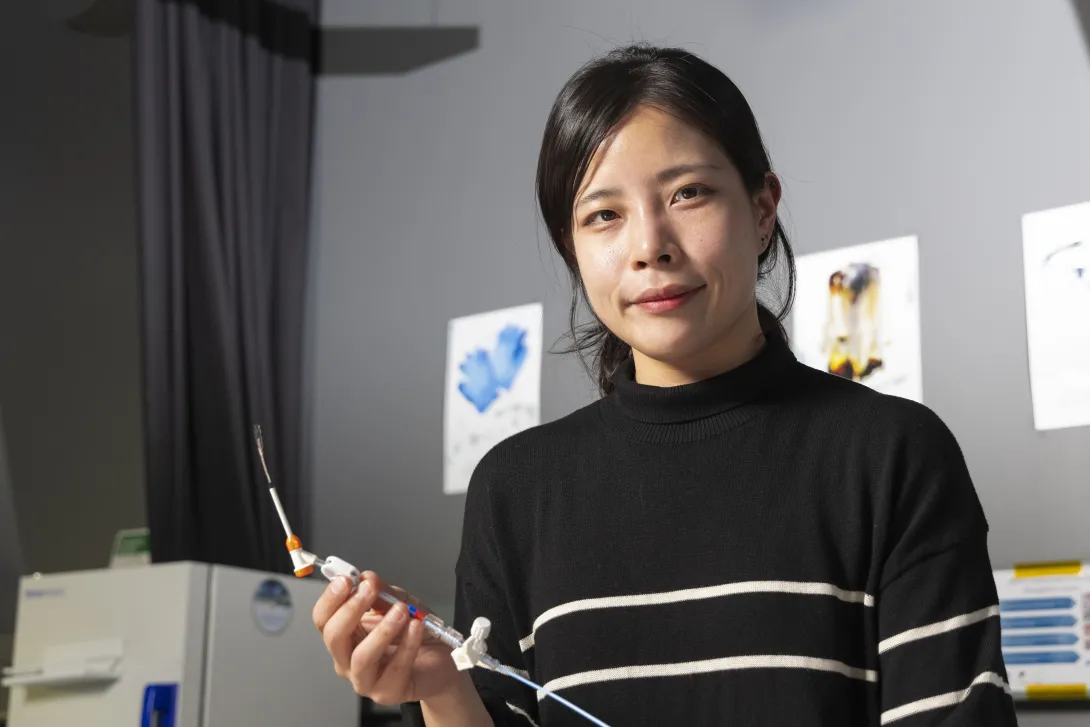
Annually, traumatic brain injuries (TBI) cause half a million permanent disabilities and 50,000 deaths. Monitoring pressure inside the skull is key to treating TBI and preventing long-lasting complications. Most of these monitoring devices are large and invasive, requiring surgical emplacement. But Georgia Tech researchers have recently created a sensor smaller than a dime. The miniature size offers huge benefits.
Mar. 06, 2025
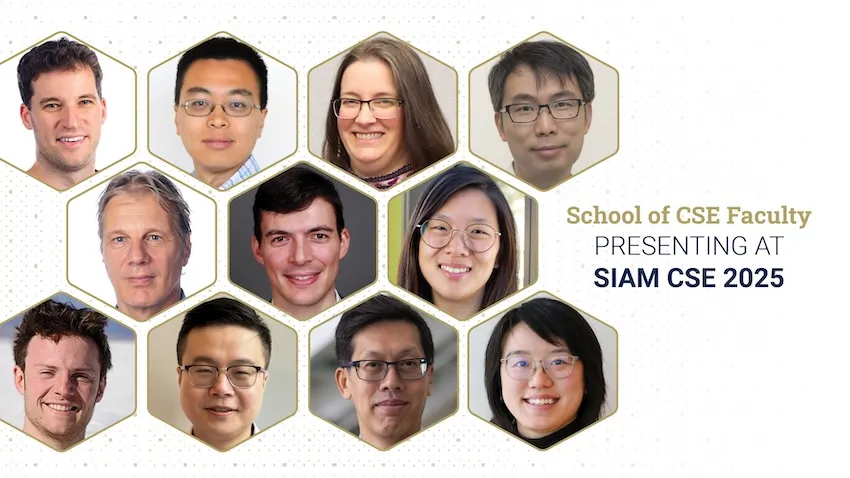
Many communities rely on insights from computer-based models and simulations. This week, a nest of Georgia Tech experts are swarming an international conference to present their latest advancements in these tools, which offer solutions to pressing challenges in science and engineering.
Students and faculty from the School of Computational Science and Engineering (CSE) are leading the Georgia Tech contingent at the SIAM Conference on Computational Science and Engineering (CSE25). The Society of Industrial and Applied Mathematics (SIAM) organizes CSE25, occurring March 3-7 in Fort Worth, Texas.
At CSE25, the School of CSE researchers are presenting papers that apply computing approaches to varying fields, including:
- Experiment designs to accelerate the discovery of material properties
- Machine learning approaches to model and predict weather forecasting and coastal flooding
- Virtual models that replicate subsurface geological formations used to store captured carbon dioxide
- Optimizing systems for imaging and optical chemistry
- Plasma physics during nuclear fusion reactions
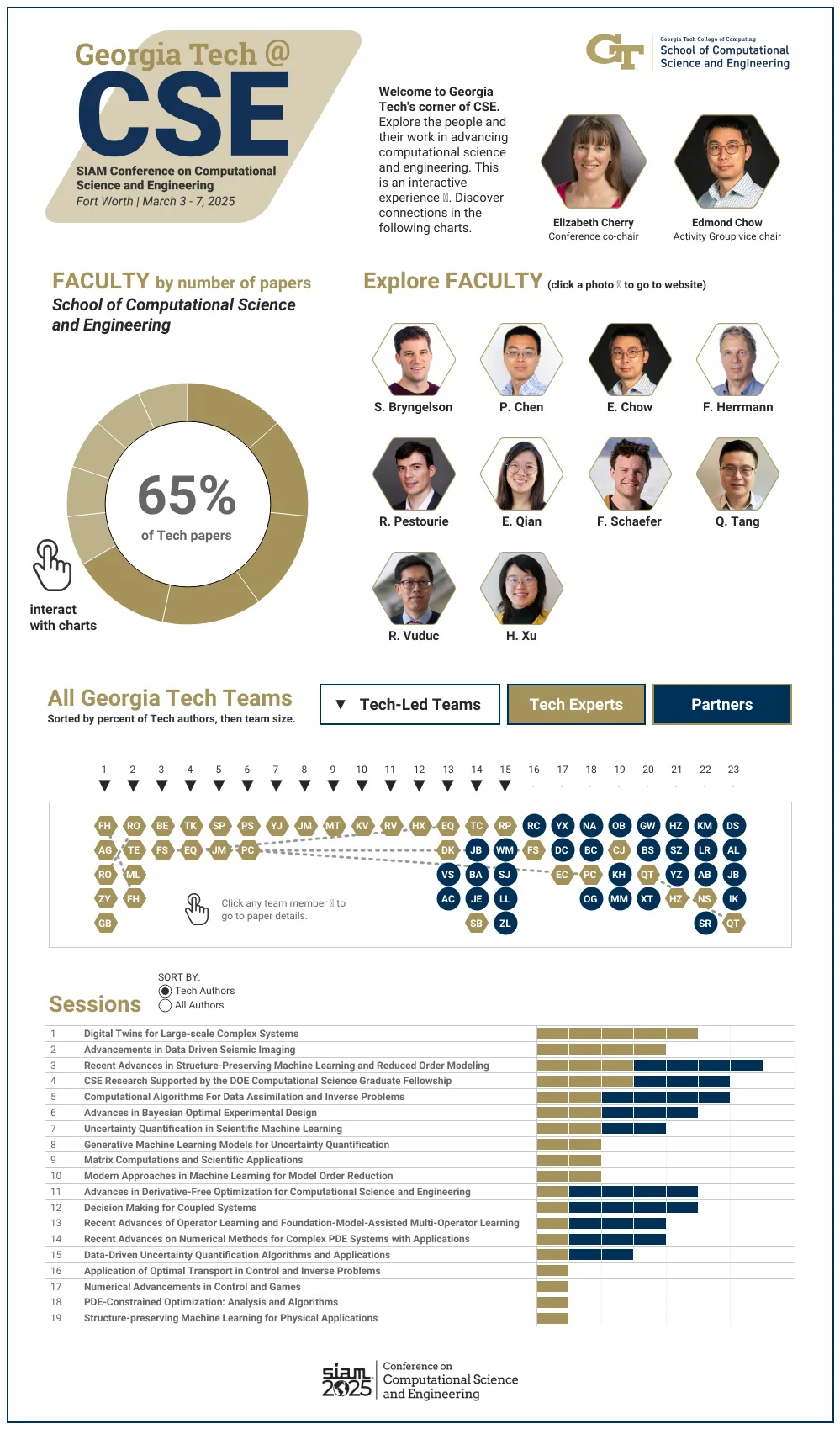
[Related: GT CSE at SIAM CSE25 Interactive Graphic]
“In CSE, researchers from different disciplines work together to develop new computational methods that we could not have developed alone,” said School of CSE Professor Edmond Chow.
“These methods enable new science and engineering to be performed using computation.”
CSE is a discipline dedicated to advancing computational techniques to study and analyze scientific and engineering systems. CSE complements theory and experimentation as modes of scientific discovery.
Held every other year, CSE25 is the primary conference for the SIAM Activity Group on Computational Science and Engineering (SIAG CSE). School of CSE faculty serve in key roles in leading the group and preparing for the conference.
In December, SIAG CSE members elected Chow to a two-year term as the group’s vice chair. This election comes after Chow completed a term as the SIAG CSE program director.
School of CSE Associate Professor Elizabeth Cherry has co-chaired the CSE25 organizing committee since the last conference in 2023. Later that year, SIAM members reelected Cherry to a second, three-year term as a council member at large.
At Georgia Tech, Chow serves as the associate chair of the School of CSE. Cherry, who recently became the associate dean for graduate education of the College of Computing, continues as the director of CSE programs.
“With our strong emphasis on developing and applying computational tools and techniques to solve real-world problems, researchers in the School of CSE are well positioned to serve as leaders in computational science and engineering both within Georgia Tech and in the broader professional community,” Cherry said.
Georgia Tech’s School of CSE was first organized as a division in 2005, becoming one of the world’s first academic departments devoted to the discipline. The division reorganized as a school in 2010 after establishing the flagship CSE Ph.D. and M.S. programs, hiring nine faculty members, and attaining substantial research funding.
Ten School of CSE faculty members are presenting research at CSE25, representing one-third of the School’s faculty body. Of the 23 accepted papers written by Georgia Tech researchers, 15 originate from School of CSE authors.
The list of School of CSE researchers, paper titles, and abstracts includes:
Bayesian Optimal Design Accelerates Discovery of Material Properties from Bubble Dynamics
Postdoctoral Fellow Tianyi Chu, Joseph Beckett, Bachir Abeid, and Jonathan Estrada (University of Michigan), Assistant Professor Spencer Bryngelson
[Abstract]
Latent-EnSF: A Latent Ensemble Score Filter for High-Dimensional Data Assimilation with Sparse Observation Data
Ph.D. student Phillip Si, Assistant Professor Peng Chen
[Abstract]
A Goal-Oriented Quadratic Latent Dynamic Network Surrogate Model for Parameterized Systems
Yuhang Li, Stefan Henneking, Omar Ghattas (University of Texas at Austin), Assistant Professor Peng Chen
[Abstract]
Posterior Covariance Structures in Gaussian Processes
Yuanzhe Xi (Emory University), Difeng Cai (Southern Methodist University), Professor Edmond Chow
[Abstract]
Robust Digital Twin for Geological Carbon Storage
Professor Felix Herrmann, Ph.D. student Abhinav Gahlot, alumnus Rafael Orozco (Ph.D. CSE-CSE 2024), alumnus Ziyi (Francis) Yin (Ph.D. CSE-CSE 2024), and Ph.D. candidate Grant Bruer
[Abstract]
Industry-Scale Uncertainty-Aware Full Waveform Inference with Generative Models
Rafael Orozco, Ph.D. student Tuna Erdinc, alumnus Mathias Louboutin (Ph.D. CS-CSE 2020), and Professor Felix Herrmann
[Abstract]
Optimizing Coupled Systems: Insights from Co-Design Imaging and Optical Chemistry
Assistant Professor Raphaël Pestourie, Wenchao Ma and Steven Johnson (MIT), Lu Lu (Yale University), Zin Lin (Virginia Tech)
[Abstract]
Multifidelity Linear Regression for Scientific Machine Learning from Scarce Data
Assistant Professor Elizabeth Qian, Ph.D. student Dayoung Kang, Vignesh Sella, Anirban Chaudhuri and Anirban Chaudhuri (University of Texas at Austin)
[Abstract]
LyapInf: Data-Driven Estimation of Stability Guarantees for Nonlinear Dynamical Systems
Ph.D. candidate Tomoki Koike and Assistant Professor Elizabeth Qian
[Abstract]
The Information Geometric Regularization of the Euler Equation
Alumnus Ruijia Cao (B.S. CS 2024), Assistant Professor Florian Schäfer
[Abstract]
Maximum Likelihood Discretization of the Transport Equation
Ph.D. student Brook Eyob, Assistant Professor Florian Schäfer
[Abstract]
Intelligent Attractors for Singularly Perturbed Dynamical Systems
Daniel A. Serino (Los Alamos National Laboratory), Allen Alvarez Loya (University of Colorado Boulder), Joshua W. Burby, Ioannis G. Kevrekidis (Johns Hopkins University), Assistant Professor Qi Tang (Session Co-Organizer)
[Abstract]
Accurate Discretizations and Efficient AMG Solvers for Extremely Anisotropic Diffusion Via Hyperbolic Operators
Golo Wimmer, Ben Southworth, Xianzhu Tang (LANL), Assistant Professor Qi Tang
[Abstract]
Randomized Linear Algebra for Problems in Graph Analytics
Professor Rich Vuduc
[Abstract]
Improving Spgemm Performance Through Reordering and Cluster-Wise Computation
Assistant Professor Helen Xu
[Abstract]
News Contact
Bryant Wine, Communications Officer
bryant.wine@cc.gatech.edu
Mar. 20, 2025
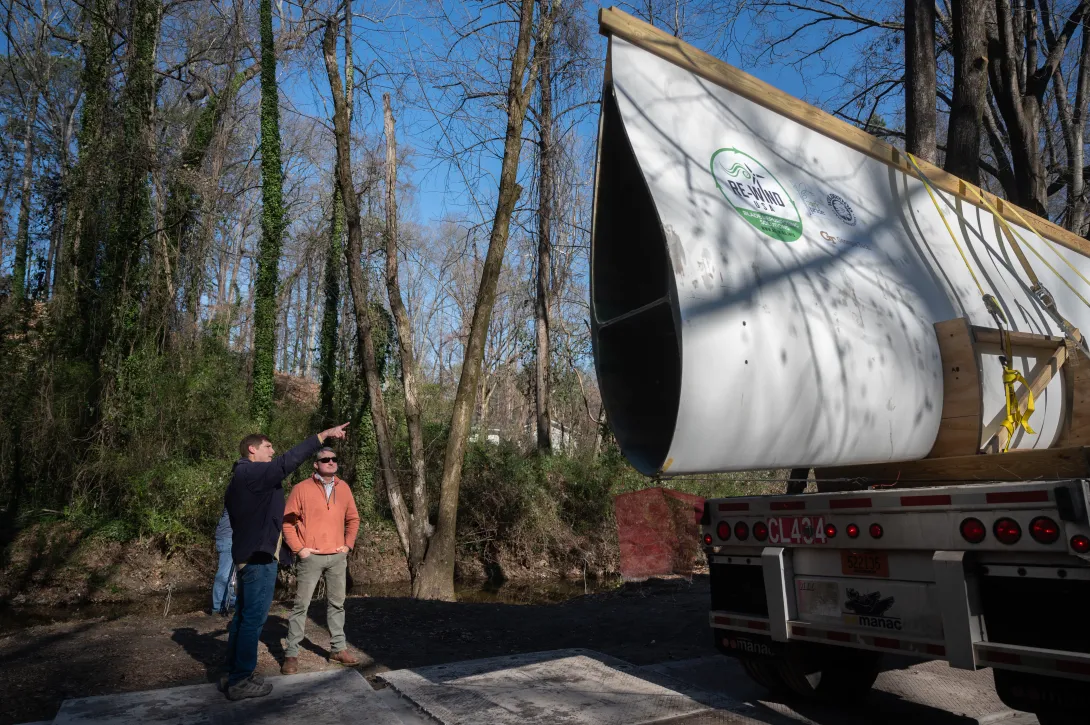

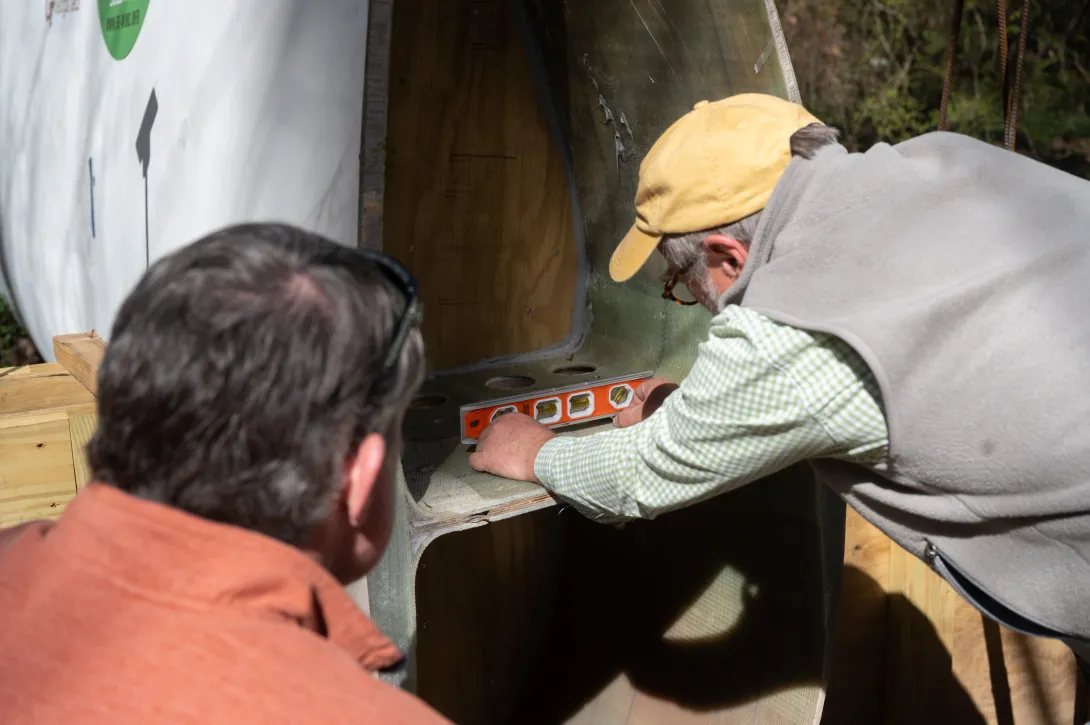
Jud Ready first visited Beaverbrook Park for an adopt-a-stream event as a graduate student. When he moved to the northwest Atlanta neighborhood, he got involved with improvement efforts at the park.
“It was a muddy mess back then. Over time, we added an exercise trail, playgrounds, a gazebo, and ball fields, but we didn't have a place where you could just walk through the woods,” Ready said. The problem? A creek prevented easy passage, and the park lacked a bridge to cross it.
Despite receiving a grant from Park Pride, a nonprofit that helps residents improve their parks, Ready realized it wasn’t nearly enough money to build a bridge over the rushing waters. Then Ready, a principal research engineer at the Georgia Tech Research Institute with a joint appointment in the School of Materials Science and Engineering, learned that one of his colleagues was using decommissioned wind turbine blades for bridges.
For eight years, Russell Gentry, a professor in the School of Architecture and a member of the Re-Wind Network, has explored how to upcycle wind turbine blades into functional infrastructure. Re-Wind, an international organization, has constructed two bridges in Ireland, where wind energy is more prevalent. The Beaverbrook bridge is the first in the U.S., but building it hasn’t been a simple copy-and-paste process from across the Atlantic Ocean.
“It's not recycling because we're not taking the material back to its original state; it's really adaptive reuse,” explained Gentry. “Think of it as the difference between wood and paper. You can take a tree and grind it up finely for paper, but if you leave it in its original form, you have wood. It’s a much more capable material from a structural perspective.”
Like almost everything in America, the blades are bigger than their European counterparts. The 15-meter blade weighs around 7,000 pounds, so moving it from its first home in a Colorado wind farm to a Georgia public park was no easy feat. With funding from the National Science Foundation, the Department of Energy, and wind turbine manufacturer Siemens Gamesa, Ready and Gentry established a team of a dozen Georgia Tech students, researchers, and alumni to bring the blade to Beaverbrook Park.
Cayleigh Nicholson (architecture), Sakshi Kakkad (computing and architecture), who both graduated in 2024, and fourth-year civil engineering student Gabriel Ackall made sure the bridge was engineered well and that it complied with city regulations. Nicholson spent a semester surveying Beaverbrook to determine the best path and placement of the bridge. Kakkad developed software to better understand the geometry of the blade and position it in the bridge. Ackall was involved in the design process, working with the foundation contractor, Cantsink, to calculate stresses and deflections in the BladeBridges.
“We’ve essentially had to design the entire structural system of the bridge from scratch, as existing building and bridge codes do not have much information about either the composite materials used in wind turbine blades or in adaptive reuse for new construction,” Ackall noted. “We used advanced modeling software combined with the knowledge we’ve gained from over a half dozen years of wind turbine blade testing and prototyping to make the bridge a reality and ensure their safety.”
Even alumnus Tierson Boutte, CE 2002, who owns the tree company Boutte Tree, helped make the installation possible. “We’re grateful to be able to give back to the community by pruning the trees for the crane to be able to lift the turbine blades,” he said.
On a sunny day in mid-March, the bridge was installed with a combined crew of 16 from Chappell Construction, led by alumnus Wade Chappell, IE 2000; Williams Erection Company, owned by alumnus Art Williams, CE 1983; and ironworkers from Local 387. Finally, with a little help from an unusual source, a neighborhood can fully enjoy its park.
Video by Maxwell Guberman
Photos by Allison Carter
News Contact
Tess Malone, Senior Research Writer/Editor
tess.malone@gatech.edu
Mar. 19, 2025
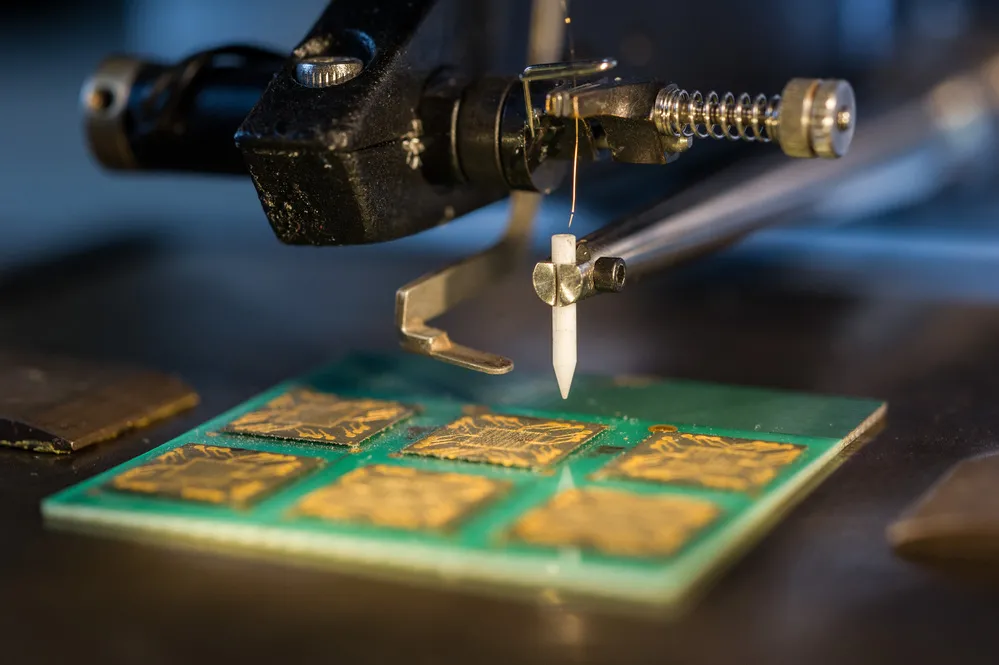
The Georgia Institute of Technology recently joined the National Semiconductor Technology Center (NSTC), a public-private consortium dedicated to supporting and extending U.S. leadership in semiconductor research, design, engineering, and advanced manufacturing. This collaboration aligns with Georgia Tech's commitment to fostering innovation and driving economic growth through cutting-edge research and development.
"Joining the NSTC is a significant milestone for Georgia Tech," said George White, senior director for strategic partnerships. "This partnership will enable us to collaborate with leading experts in the semiconductor field, drive groundbreaking research, and contribute to the advancement of semiconductor technology in the U.S."
The NSTC is operated by Natcast (National Center for the Advancement of Semiconductor Technology) and supported by the Department of Commerce through the CHIPS and Science Act. NSTC brings together key stakeholders from academia, industry, and government to create a robust semiconductor ecosystem. As a member, Georgia Tech will have access to a wide range of benefits, including research grant opportunities, participation in NSTC-led research projects, and access to state-of-the-art facilities and resources.
Georgia Tech's involvement in the NSTC will focus on several key areas, including workforce development, research and development initiatives, and fostering collaboration between academia and industry. By participating in the NSTC, Georgia Tech aims to enhance its research capabilities, support the growth of the semiconductor industry, and contribute to national economic and security goals.
Learn more about CHIPS initiatives at Georgia Tech:
$100M Investment Will Propel Absolics Inc., Georgia Tech’s Advanced Packaging Research
Georgia Tech Joins $840M DoD Project to Develop and Manufacture Next-gen Semiconductor Microsystems
Semiconductor Research Corp. and Georgia Tech Secure $285M SMART USA Institute
News Contact
Amelia Neumeister | Research Communications Program Manager
Mar. 14, 2025
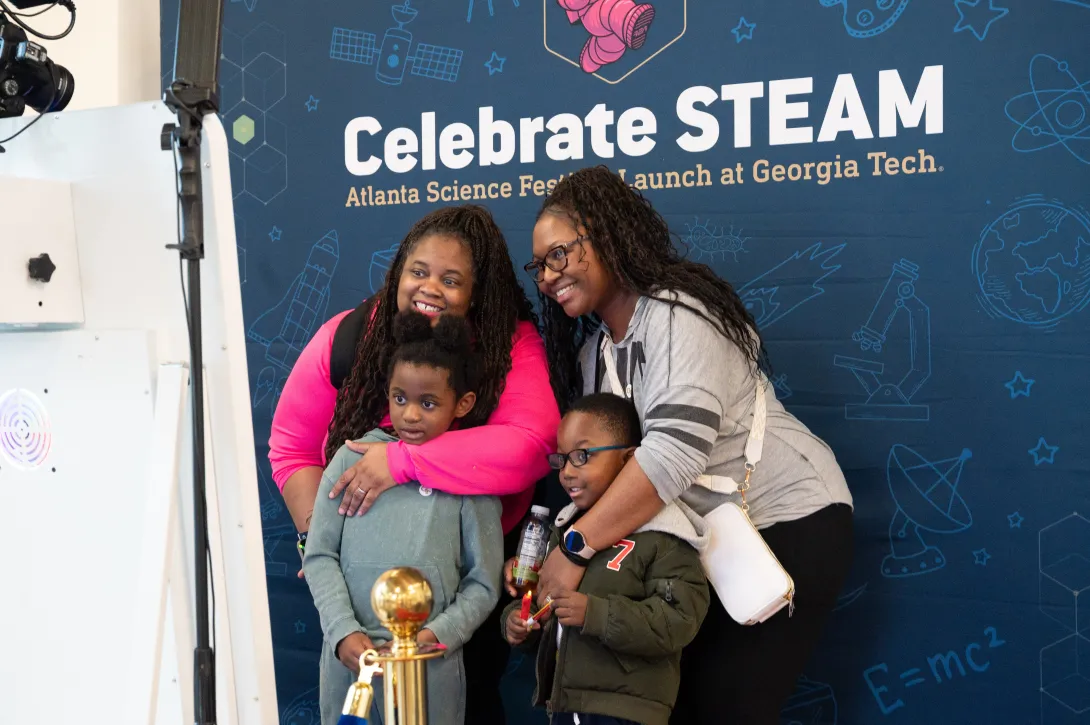
Over 5,000 people attended Georgia Tech's Celebrate STEAM event on March 8, which showcased more than 60 demonstrations in science, technology, engineering, art, and mathematics.
Mar. 13, 2025
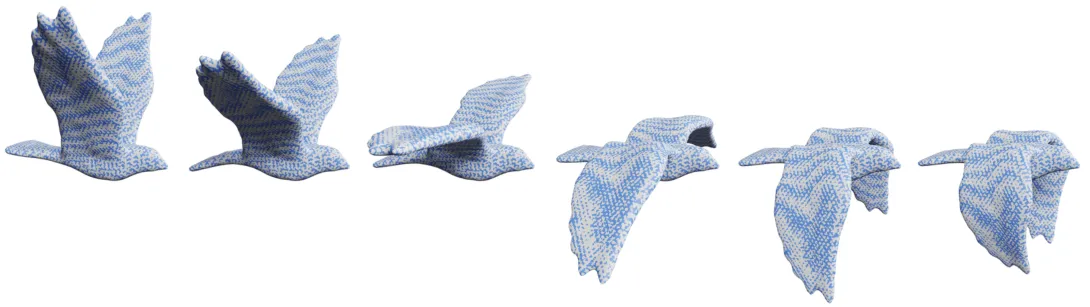
Florian Schäfer leads the “Matter and Information” research initiative for the Institute for Matter and Systems at Georgia Tech. In this role, his research focuses on numerical analysis, computational statistics, multi-agent optimization, and game-theoretic approaches in deep learning. Schäfer is an assistant professor in the School of Computational Science and Engineering.
In this brief Q&A, Schäfer discusses his research focus, how it relates to Matter and Systems’ core research focuses, and the national impact of this initiative.
What is your field of expertise and at what point in your life did you first become interested in this area?
I work on using statistical insights for designing algorithms to design physical systems. I can trace my interest in the interplay between physical systems and information processes all the way to high school times, when I was fascinated by the question of what it is that makes us think of some complex physical systems as "computers," but not of others.
What questions or challenges sparked your current research?
Simulating physics is in many ways like statistical analysis with data produced by computation. My aim is to understand the implications of this perspective for algorithm design in scientific computing.
Matter and systems refer to the transformational technological and societal systems that arise from the convergence of innovative materials, devices, and processes. Why is your initiative important to the development of the IMS research strategy?
An exciting current development is the two-fold convergence of physical and information sciences: The use of statistical /machine learning approaches for physical simulation and of new physical processes for computation. IMS is the perfect environment pursuing this goal.
What are the broader global and social benefits of the research you and your team conduct?
The main societal contribution of my research is the efficient and reliable simulation of complex engineering system to aid the development of improved designs.
What are your plans for engaging a wider Georgia Tech faculty pool with the Institute for Matter and Systems research?
I plan to engage researchers across GT through reading groups and seminars, with the goal of converging on a sufficiently concrete idea for an externally funded project. I hope that this will serve as a nucleus for exploring the use of novel physical processes for computation.
News Contact
Amelia Neumeister | Research Communications Program Manager
Mar. 06, 2025
Many communities rely on insights from computer-based models and simulations. This week, a nest of Georgia Tech experts are swarming an international conference to present their latest advancements in these tools, which offer solutions to pressing challenges in science and engineering.
Students and faculty from the School of Computational Science and Engineering (CSE) are leading the Georgia Tech contingent at the SIAM Conference on Computational Science and Engineering (CSE25). The Society of Industrial and Applied Mathematics (SIAM) organizes CSE25, occurring March 3-7 in Fort Worth, Texas.
At CSE25, the School of CSE researchers are presenting papers that apply computing approaches to varying fields, including:
- Experiment designs to accelerate the discovery of material properties
- Machine learning approaches to model and predict weather forecasting and coastal flooding
- Virtual models that replicate subsurface geological formations used to store captured carbon dioxide
- Optimizing systems for imaging and optical chemistry
- Plasma physics during nuclear fusion reactions
[Related: GT CSE at SIAM CSE25 Interactive Graphic]
“In CSE, researchers from different disciplines work together to develop new computational methods that we could not have developed alone,” said School of CSE Professor Edmond Chow.
“These methods enable new science and engineering to be performed using computation.”
CSE is a discipline dedicated to advancing computational techniques to study and analyze scientific and engineering systems. CSE complements theory and experimentation as modes of scientific discovery.
Held every other year, CSE25 is the primary conference for the SIAM Activity Group on Computational Science and Engineering (SIAG CSE). School of CSE faculty serve in key roles in leading the group and preparing for the conference.
In December, SIAG CSE members elected Chow to a two-year term as the group’s vice chair. This election comes after Chow completed a term as the SIAG CSE program director.
School of CSE Associate Professor Elizabeth Cherry has co-chaired the CSE25 organizing committee since the last conference in 2023. Later that year, SIAM members reelected Cherry to a second, three-year term as a council member at large.
At Georgia Tech, Chow serves as the associate chair of the School of CSE. Cherry, who recently became the associate dean for graduate education of the College of Computing, continues as the director of CSE programs.
“With our strong emphasis on developing and applying computational tools and techniques to solve real-world problems, researchers in the School of CSE are well positioned to serve as leaders in computational science and engineering both within Georgia Tech and in the broader professional community,” Cherry said.
Georgia Tech’s School of CSE was first organized as a division in 2005, becoming one of the world’s first academic departments devoted to the discipline. The division reorganized as a school in 2010 after establishing the flagship CSE Ph.D. and M.S. programs, hiring nine faculty members, and attaining substantial research funding.
Ten School of CSE faculty members are presenting research at CSE25, representing one-third of the School’s faculty body. Of the 23 accepted papers written by Georgia Tech researchers, 15 originate from School of CSE authors.
The list of School of CSE researchers, paper titles, and abstracts includes:
Bayesian Optimal Design Accelerates Discovery of Material Properties from Bubble Dynamics
Postdoctoral Fellow Tianyi Chu, Joseph Beckett, Bachir Abeid, and Jonathan Estrada (University of Michigan), Assistant Professor Spencer Bryngelson
[Abstract]
Latent-EnSF: A Latent Ensemble Score Filter for High-Dimensional Data Assimilation with Sparse Observation Data
Ph.D. student Phillip Si, Assistant Professor Peng Chen
[Abstract]
A Goal-Oriented Quadratic Latent Dynamic Network Surrogate Model for Parameterized Systems
Yuhang Li, Stefan Henneking, Omar Ghattas (University of Texas at Austin), Assistant Professor Peng Chen
[Abstract]
Posterior Covariance Structures in Gaussian Processes
Yuanzhe Xi (Emory University), Difeng Cai (Southern Methodist University), Professor Edmond Chow
[Abstract]
Robust Digital Twin for Geological Carbon Storage
Professor Felix Herrmann, Ph.D. student Abhinav Gahlot, alumnus Rafael Orozco (Ph.D. CSE-CSE 2024), alumnus Ziyi (Francis) Yin (Ph.D. CSE-CSE 2024), and Ph.D. candidate Grant Bruer
[Abstract]
Industry-Scale Uncertainty-Aware Full Waveform Inference with Generative Models
Rafael Orozco, Ph.D. student Tuna Erdinc, alumnus Mathias Louboutin (Ph.D. CS-CSE 2020), and Professor Felix Herrmann
[Abstract]
Optimizing Coupled Systems: Insights from Co-Design Imaging and Optical Chemistry
Assistant Professor Raphaël Pestourie, Wenchao Ma and Steven Johnson (MIT), Lu Lu (Yale University), Zin Lin (Virginia Tech)
[Abstract]
Multifidelity Linear Regression for Scientific Machine Learning from Scarce Data
Assistant Professor Elizabeth Qian, Ph.D. student Dayoung Kang, Vignesh Sella, Anirban Chaudhuri and Anirban Chaudhuri (University of Texas at Austin)
[Abstract]
LyapInf: Data-Driven Estimation of Stability Guarantees for Nonlinear Dynamical Systems
Ph.D. candidate Tomoki Koike and Assistant Professor Elizabeth Qian
[Abstract]
The Information Geometric Regularization of the Euler Equation
Alumnus Ruijia Cao (B.S. CS 2024), Assistant Professor Florian Schäfer
[Abstract]
Maximum Likelihood Discretization of the Transport Equation
Ph.D. student Brook Eyob, Assistant Professor Florian Schäfer
[Abstract]
Intelligent Attractors for Singularly Perturbed Dynamical Systems
Daniel A. Serino (Los Alamos National Laboratory), Allen Alvarez Loya (University of Colorado Boulder), Joshua W. Burby, Ioannis G. Kevrekidis (Johns Hopkins University), Assistant Professor Qi Tang (Session Co-Organizer)
[Abstract]
Accurate Discretizations and Efficient AMG Solvers for Extremely Anisotropic Diffusion Via Hyperbolic Operators
Golo Wimmer, Ben Southworth, Xianzhu Tang (LANL), Assistant Professor Qi Tang
[Abstract]
Randomized Linear Algebra for Problems in Graph Analytics
Professor Rich Vuduc
[Abstract]
Improving Spgemm Performance Through Reordering and Cluster-Wise Computation
Assistant Professor Helen Xu
[Abstract]
News Contact
Bryant Wine, Communications Officer
bryant.wine@cc.gatech.edu
Mar. 04, 2025
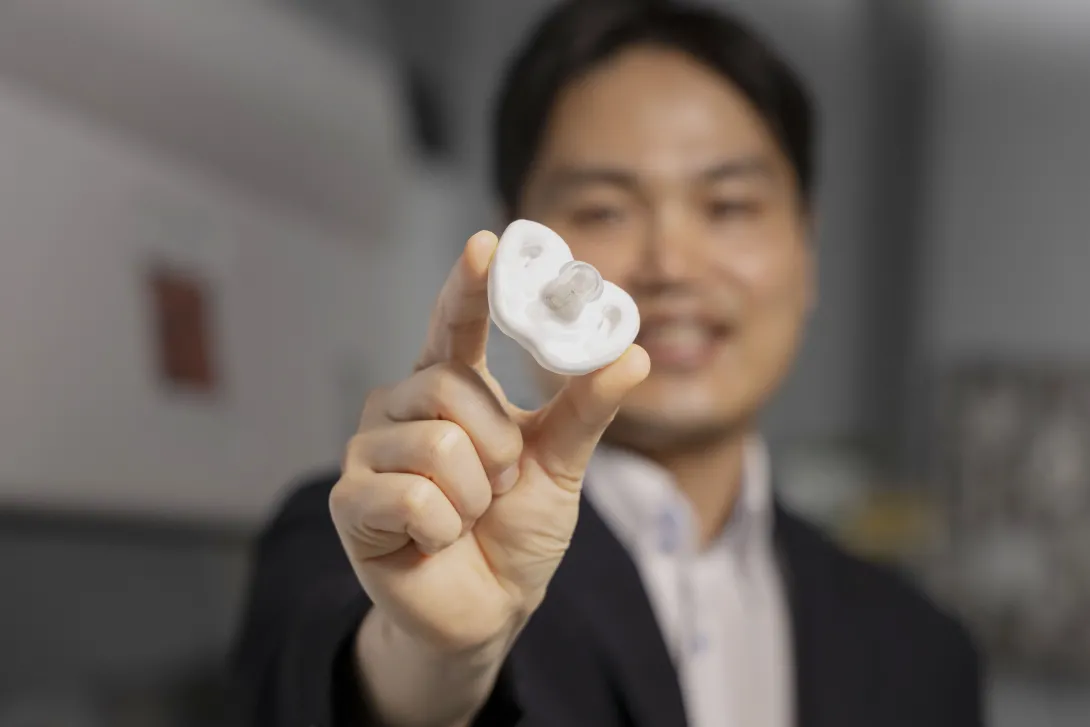
Hong Yeo, associate professor and Harris Saunders Jr. Endowed Professor in the George W. Woodruff School of Mechanical Engineering, came up with the pacifier idea at a pediatric technology conference.
Georgia Tech researchers have developed a pacifier that can constantly monitor a baby’s electrolyte levels in real time, eliminating the need for repeated invasive blood draws.
Feb. 24, 2025
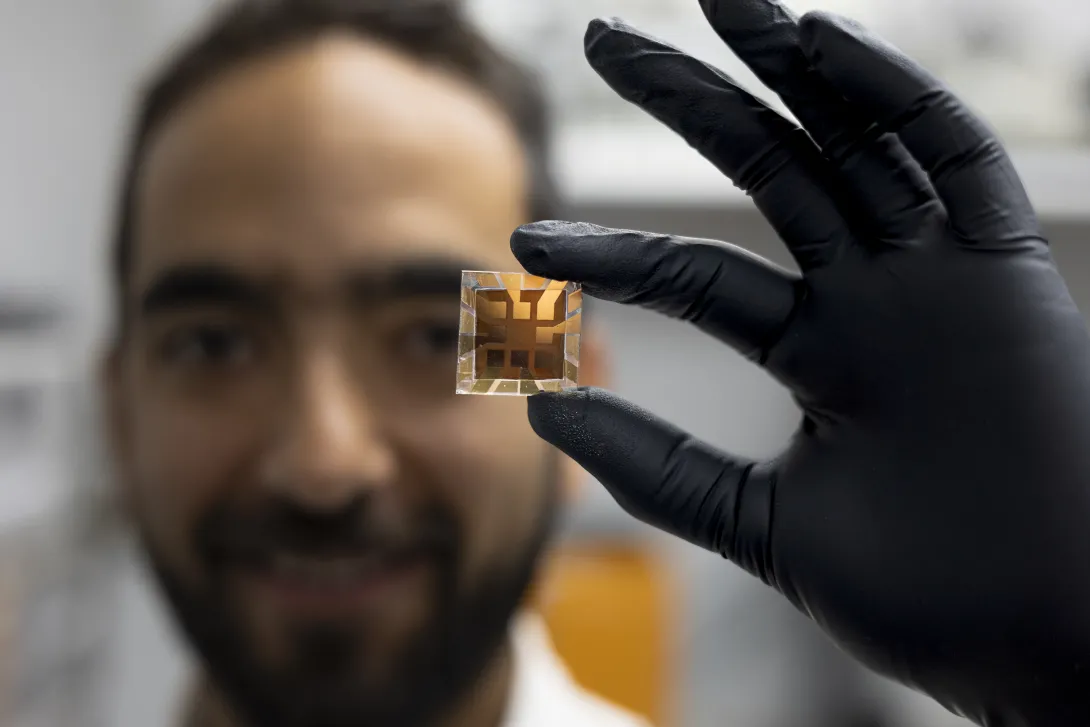
For years, Juan-Pablo Correa-Baena’s research group has explored using perovskite crystals as an alternative to silicon. A promising and prevalent replacement, perovskite is made of iodine atoms, lead, and organic elements. It is also as efficient as silicon.
Solar power as an electricity source is growing in the United States, with 7% of Americans using it to run their homes. But scientists are still trying to make the solar panel production process more efficient.
Feb. 06, 2025
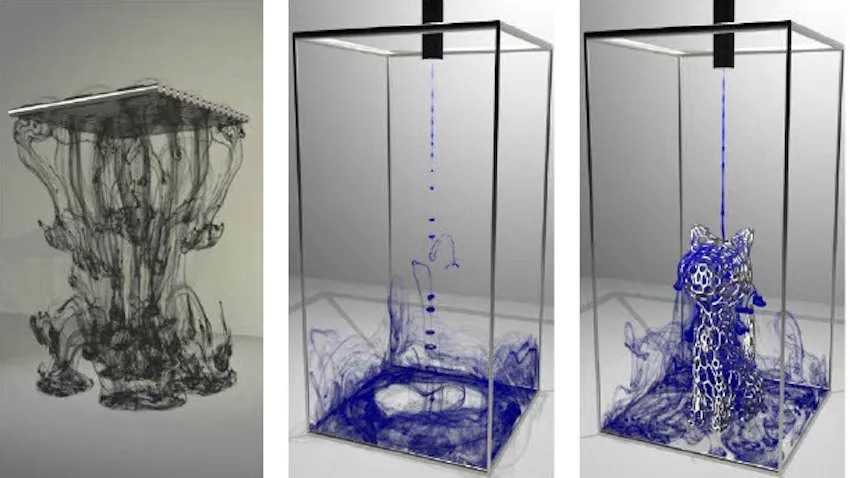
Calculating and visualizing a realistic trajectory of ink spreading through water has been a longstanding and enormous challenge for computer graphics and physics researchers.
When a drop of ink hits the water, it typically sinks forward, creating a tail before various ink streams branch off in different directions. The motion of the ink’s molecules upon mixing with water is seemingly random. This is because the motion is determined by the interaction of the water’s viscosity (thickness) and vorticity (how much it rotates at a given point).
“If the water is more viscous, there will be fewer branches. If the water is less viscous, it will have more branches,” said Zhiqi Li, a graduate computer science student.
Li is the lead author of Particle-Laden Fluid on Flow Maps, a best paper winner at the December 2024 ACM SIGGRAPH Asia conference. Assistant Professor Bo Zhu advises Li and is the co-author of six papers accepted to the conference.
Zhu said they must correctly calculate and simulate the interaction between viscosity and vorticity before they can accurately predict the ink trajectory.
“The ink branches generate based on the intricate interaction between the vorticities and the viscosity over time, which we simulated,” Zhu said. “Using a standard method to simulate the physics will cause most of the structures to fade quickly without being able to see any detailed hierarchies.”
Zhu added that researchers had yet to develop a method for this until he and his co-authors proposed a new way to solve the equation. Their breakthrough has unlocked the most accurate simulations of ink diffusion to date.
“Ink diffusion is one of the most visually striking examples of particle-laden flow,” Zhu said.
“We introduce a new viscosity model that solves for the interaction between vorticity and viscosity from a particle flow map perspective. This new simulation lets you map physical quantities from a certain time frame, allowing us to see particle trajectory.”
In computer simulations, flow is the digital visualization of a gas or liquid through a system. Users can simulate these liquids and gases through different scenarios and study pressure, velocity, and temperature.
A particle-laden flow depicts solid particles mixing within a continuous fluid phase, such as dust or water sediment. A flow map traces particle motion from the start point to the endpoint.
Duowen Chen, a computer science Ph.D. student also advised by Zhu and co-author of the paper, said previous efforts by researchers to simulate ink diffusion depended on guesswork. They either used limited traditional methods of calculations or artificial designs.
“They add in a noise model or an artificial model to create vortical motions, but our method does not require adding any artificial vortical components,” Chen said. “We have a better viscosity force calculation and vortical preservation, and the two give a better ink simulation.”
Zhu also won a best paper award at the 2023 SIGGRAPH Asia conference for his work explaining how neural network maps created through artificial intelligence (AI) could close the gaps of difficult-to-solve equations. In his new paper, he said it was essential to find a way to simulate ink diffusion accurately independent of AI.
“If we don’t have to train a large-scale neural network, then the computation time will be much faster, and we can reduce the computation and memory costs,” Zhu said. “The particle flow map representation can preserve those particle structures better than the neural network version, and they are a widely used data structure in traditional physics-based simulation.”
News Contact
Ben Snedeker, Communications Manager
Georgia Tech College of Computing
albert.snedeker@cc.gtaech.edu