
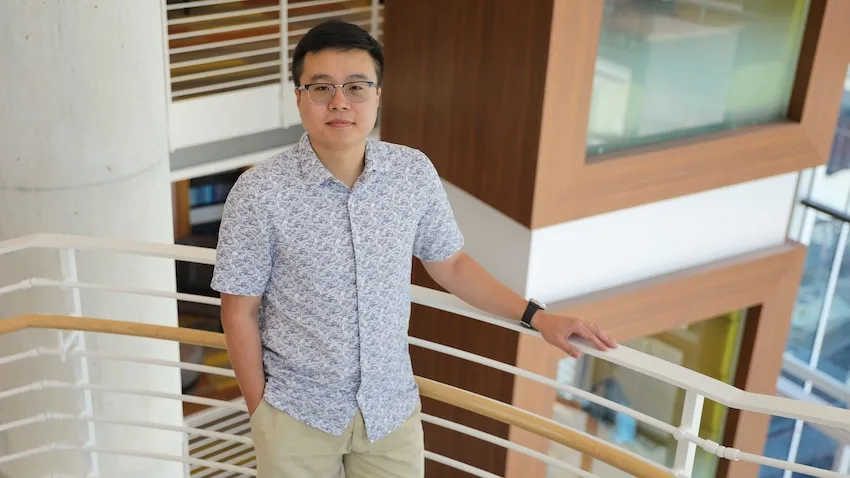
The future of clean energy depends on algorithms as much as it does atoms.
Georgia Tech’s Qi Tang is building machine learning (ML) models to accelerate nuclear fusion research, making it more affordable and more accurate. Backed by a grant from the U.S. Department of Energy (DOE), Tang’s work brings clean, sustainable energy closer to reality.
Tang has received an Early Career Research Program (ECRP) award from the DOE Office of Science. The grant supports Tang with $875,000 disbursed over five years to craft ML and data processing tools that help scientists analyze massive datasets from nuclear experiments and simulations.
Tang is the first faculty member from Georgia Tech’s College of Computing and School of Computational Science and Engineering (CSE) to receive the ECRP. He is the seventh Georgia Tech researcher to earn the award and the only GT awardee among this year’s 99 recipients.
More than a milestone, the award reflects a shift in how nuclear research is done. Today, progress depends on computing and data science as much as on physics and engineering.
“I am honored and excited to receive the ECRP award through DOE’s Advanced Scientific Computing Research program, an organization I care about deeply,” said Tang, an assistant professor in the School of CSE.
“I am grateful to my former colleagues at Los Alamos National Laboratory and collaborators at other national laboratories, including Lawrence Livermore, Sandia, and Argonne. I am also thankful for my Ph.D. students at Georgia Tech, whose dedication and creativity make this award possible.”
A problem in nuclear research is that fusion simulations are challenging to understand and use. These simulations generate enormous datasets that are too large to store, move, and analyze efficiently.
In his ECRP proposal to DOE, Tang introduced new ML methods to improve the analysis and storage of particle data.
Tang’s approach balances shrinking data so it is easier to store and transfer while preserving the most important scientific features. His multiscale ML models are informed by physics, so the reduced data still reflects how fusion systems really behave.
With Tang’s research, scientists can run larger, more realistic fusion models and analyze results more quickly. This accelerates progress toward practical fusion energy.
“In contrast to generic black-box-type compression tools, we aim at preserving the intrinsic structures of the particle dataset during the data reduction processes,” Tang said.
“Taking this approach, we can meet our goal of achieving high-fidelity preservation of critical physics with minimum loss of information.”
Computing is essential in modern research because of the amount of data produced and captured from experiments and simulations. In the era of exascale supercomputers, data movement is a greater bottleneck than actual computation.
DOE operates three of the world’s four exascale supercomputers. These machines can calculate one quintillion (a billion billion) operations per second.
The exascale era began in 2022 with the launch of Frontier at Oak Ridge National Laboratory. Aurora followed in 2023 at Argonne National Laboratory. El Capitan arrived in 2024 at Lawrence Livermore National Laboratory.
With Tang’s data reduction approaches, all of DOE’s supercomputers spend more time on science and less time waiting for data transfers.
“Qi’s work in computational plasma physics and nuclear fusion modeling has been groundbreaking,” said Haesun Park, Regents’ Professor and Chair of the School of CSE.
“We are proud of Qi and what this award means for him, Georgia Tech, and the Department of Energy toward leveraging computation to solve challenges in science and engineering, such as sustainable energy."
Previous Georgia Tech recipients of DOE Early Career Research Program awards include:
Itamar Kimchi, assistant professor, School of Physics
Sourabh Saha, assistant professor, George W. Woodruff School of Mechanical Engineering
Wenjing Lao, associate professor, School of Mathematics
Ryan Lively, Thomas C. DeLoach Professor, School of Chemical & Biomolecular Engineering
Josh Kacher, associate professor, School of Materials Science and Engineering
Devesh Ranjan, Eugene C. Gwaltney Jr. School Chair and professor, Woodruff School of Mechanical Engineering
News Contact
Bryant Wine, Communications Officer
bryant.wine@cc.gatech.edu
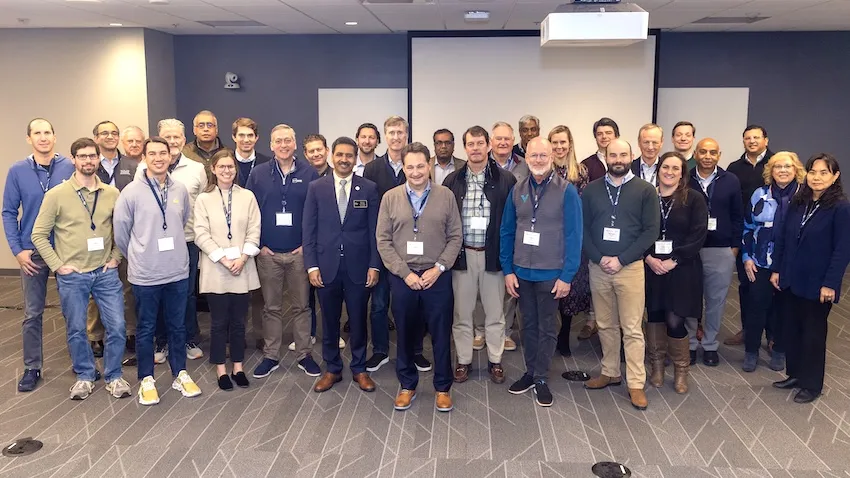
Top executives from Atlanta's venture capital community participated in the College of Computing's first VC summit, held on Jan. 21. Photo by Terence Rushin/GT Computing
The College of Computing is forging new relationships with Atlanta’s venture capital community to advance entrepreneurial opportunities for students.
Nearly two dozen venture capital (VC) leaders based in Atlanta and the Southeast participated in a half-day summit at the College on Jan. 21.
Co-hosts Dean of Computing Vivek Sarkar and Noro-Moseley Partners General Partner Alan Taetle organized the invitation-only summit. Their goals were to:
- Showcase the College’s research strengths and entrepreneurial culture
- Deepen connections between academic innovation and startups
- Explore opportunities for collaboration, commercialization, and startup growth
The summit’s guest list included founders, partners, and leaders from VC firms. Many of these firms focus on early-stage startups in SaaS, fintech, cybersecurity, and other emerging technology markets.
Research With Commercial Impact
Sarkar outlined the College of Computing’s academic mission and research priorities during his opening remarks. He emphasized the College’s role in advancing innovation in cybersecurity, artificial intelligence (AI), and other emerging research areas.
“One of the College’s strategic pillars is what I call ‘X to the power of Computing’,” Sarkar said. “Look at any discipline or industry X to see where they're innovating and where their advances are being made, and that’s where Computing meets that discipline.”
Along with remarks from the dean, the summit featured presentations highlighting Georgia Tech’s entrepreneurial ecosystem and College-led research initiatives with strong commercialization potential.
Expanding Support for Student Founders
Jen Whitlow leads Community Partnerships at Fusen, a global platform for student founders created by Atlanta philanthropist Christopher W. Klaus. She described Klaus’s support for student entrepreneurship, including GT Computing’s annual Klaus Startup Challenge. In 2025, Klaus awarded five winning teams $150,000 each to cover startup costs.
Whitlow also updated guests on Klaus’s commitment, announced in May 2025, to covering the incorporation costs for any graduating student who aspires to launch a startup.
“More than 600 graduates from last year’s Spring and Fall Commencements have accepted the gift, and more than 225 recent graduates have completed their incorporation to date,” Whitlow said. She added that a second cohort of Fall 2025 graduates is being processed over the next few weeks.
Offering an enterprise-level view, CREATE-X Rahul Saxena presented recent updates to commercialization at Georgia Tech and efforts to streamline entrepreneurial processes.
Saxena emphasized the launch of Velocity Startups, an accelerator that provides the resources and infrastructure student startups need to bring their innovations to market.
Building the Pipeline From Research to Startup
Following these updates, GT Computing faculty delivered lightning-round presentations highlighting the College’s research strengths in AI, cybersecurity, and high-performance computing.
“The tighter the local investing community is with Georgia Tech, the better off both are,” said Taetle, who has been a member of the College’s Advisory Board for more than 20 years.
“It’s critical in this super-competitive world that we do everything that we can to support this fantastic university.”
Taetle added that the summit was part of a broader effort to strengthen the College’s entrepreneurial pipeline.
“There are some really big ideas here, which could turn into really big companies,” he said. “We’ve made some great strides on the commercialization front, but we still have that opportunity and challenge in front of us.”
The afternoon concluded with a discussion of next steps and engagement opportunities, led by Sarkar and Jason Zwang, GT Computing’s senior director of development. The discussion focused on research partnership opportunities, startup formation, and student involvement.
Zwang emphasized the importance of investing in Atlanta’s innovation ecosystem, citing the city’s strong fundamentals and pro-growth climate for entrepreneurship.
“This gives us a unique opportunity to start working more closely with the local VC community, and it’s also great for our students,” Zwang said.
Sarkar agreed, saying, “There’s no downside for students to get involved in a startup. It might take off and be a bonanza. If not, the experience makes you a more competitive hire because of the breadth of experience you gain at a startup.”
To foster these opportunities for students, Zwang said that a key priority is to establish earlier, more intentional connections among students, startups, and investors.
“This is a pivotal moment,” he said. “We can determine how to connect students with the VC and startup community earlier and ensure these investors remain involved with the College.”
College leaders said the summit underscored Computing’s commitment to fostering an entrepreneurial culture and to building lasting relationships that can help accelerate the real-world impact of its research beyond the Institute.
“Georgia Tech is a force multiplier for entrepreneurship,” said Sarkar. “We’re here to change the world. We want to inspire a culture of bold, big entrepreneurial thinking, and look forward to the next steps that will follow this VC summit.”
News Contact
Ben Snedeker, Senior Communications Manager
Georgia Tech College of Computing
While not as highlight-reel worthy as the Winter Olympics and the World Cup, experts expect high-performance computing (HPC) to have an even bigger impact on daily life in 2026.
Georgia Tech researchers say HPC and artificial intelligence (AI) advances this year are poised to improve how people power their homes, design safer buildings, and travel through cities.
According to Qi Tang, scientists will take progressive steps toward cleaner, sustainable energy through nuclear fusion in 2026.
“I am very hopeful about the role of advanced computing and AI in making fusion a clean energy source,” said Tang, an assistant professor in the School of Computational Science and Engineering (CSE).
“Fusion systems involve many interconnected processes happening across different scales. Modern simulations, combined with data-driven methods, allow us to bring these pieces together into a unified picture.”
Tang’s research connects HPC and machine learning with fusion energy and plasma physics. This year, Tang is continuing work on large-scale nuclear fusion models.
Only a few experimental fusion reactors exist worldwide compared to more than 400 nuclear fission reactors. Tang’s work supports a broader effort to turn fusion from a promising idea into a practical energy source.
Nuclear fusion occurs in plasma, the fourth state of matter, where gas is heated to millions of degrees. In this extreme state, electrons are stripped from atoms, creating a hot soup of fast-moving ions and free electrons. In plasma, hydrogen atoms overcome their natural electrical repulsion, collide, and fuse together. This releases energy that can power cities and homes.
Computers interpret extreme temperatures, densities, pressures, and plasma particle motion as massive datasets. Tang works to assimilate these data types from computer models and real-world experiments.
To do this, he and other researchers rely on machine learning approaches to analyze data across models and experiments more quickly and to produce more accurate predictions. Over time, this will allow scientists to test and improve fusion reactor designs toward commercial use.
Beyond energy and nuclear engineering, Umar Khayaz sees broader impacts for HPC in 2026.
“HPC is the need of the day in every field of engineering sciences, physics, biology, and economics,” said Khayaz, a CSE Ph.D. student in the School of Civil and Environmental Engineering.
“HPC is important enough to say that we need to employ resources to also solve social problems.”
Khayaz studies dynamic fracture and phase-field modeling. These areas explore how materials break under sudden, rapid loads.
Like nuclear fusion, Khayaz says dynamic fracture problems are complex and data-intensive. In 2026, he expects to see more computing resources and computational capabilities devoted to understanding these problems and other emerging civil engineering challenges.
CSE Ph.D. student Yiqiao (Ahren) Jin sees a similar relationship between infrastructure and self-driving vehicles. He believes AI will innovate this area in 2026.
At Georgia Tech, Jin develops efficient multimodal AI systems. An autonomous vehicle is a multimodal system that uses camera video, laser sensors, language instructions, and other inputs to navigate city streets under changing scenarios like traffic and weather patterns.
Jin says multimodal research will move beyond performance benchmarks this year. This shift will lead to computer systems that can reason despite uncertainty and explain their decisions. In result, engineers will redefine how they evaluate and deploy autonomous systems in safety-critical settings.
“Many foundational problems in perception, multimodal reasoning, and agent coordination are being actively addressed in 2026. These advances enable a transition from isolated autonomous systems to safer, coordinated autonomous vehicle fleets,” Jin said.
“As these systems scale, they have the potential to fundamentally improve transportation safety and efficiency.”
News Contact
Bryant Wine, Communications Officer
bryant.wine@cc.gatech.edu

Students visited Lachung and Chungthang in Sikkim, India. Upstream in the Teesta Valley, students examined how steep terrain and river confinement amplify flood forces and how failures can cascade across an entire corridor of infrastructure.

Downstream in the town Dikchu in Sikkim, India, the class focused on community-scale consequences: damaged buildings, disrupted access, and long recovery timelines.

Rangpo in Sikkim, India offered a view of recovery in motion such as materials staged for rebuilding near bridges and roads that keep commerce and emergency response moving.

In Kathmandu Valley, Nepal, the course broadened from hazard impacts to cultural context, exploring how heritage, governance, and everyday use of public space shape resilience.
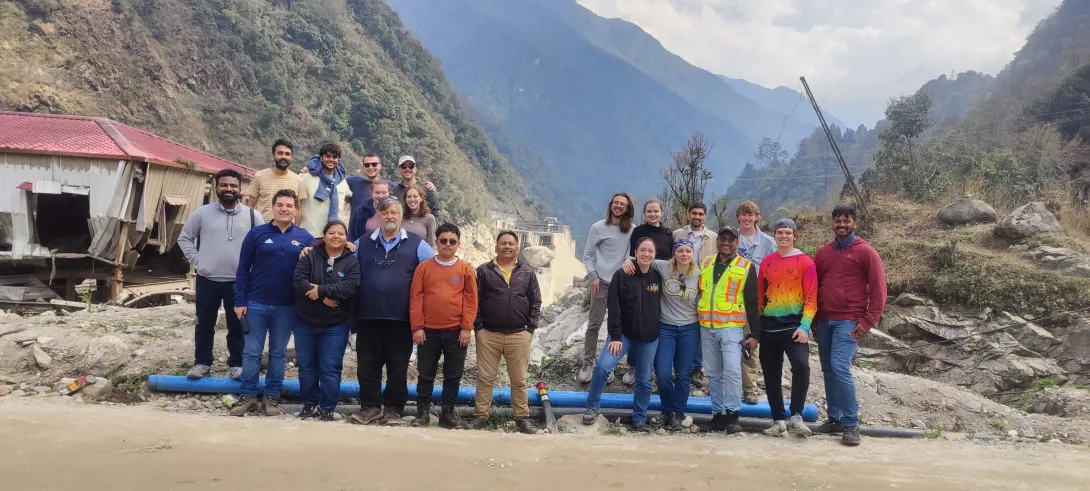
School of Civil and Environmental Engineering students captured 360 media, using Filio, to study disaster sites in India and Nepal. Photos provided by Roozbahani.
An AI-powered tool is changing how researchers study disasters and how students learn from them.
In the International Disaster Reconnaissance (IDR) course, students now use Filio, a platform built by School of Computing Instruction Senior Lecturer Max Mahdi Roozbahani, to capture immersive 360° media, photos, and video that transform real disaster sites in India and Nepal into living digital classrooms.
Offered by the School of Civil and Environmental Engineering and taught by IDR director and Regents’ Professor David Frost, the course pairs traditional fieldwork with Roozbahani’s expertise in immersive technology and data-driven learning, transforming on-the-ground observations into reusable, interactive educational resources.
How Computing Can Capture Data
Disasters are not only physical events; they are also information events, Roozbahani says. Effective response and long-term resilience depend on the ability to observe, record, and communicate critical data under pressure. Georgia Tech’s IDR course pairs structured on-campus preparation with international field experiences, enabling students to study the cascading effects of major disasters, including how local building practices, governance, and culture shape damage and recovery.
“When students step into a disaster zone, they learn quickly that resilience is a systems problem: physical, social, and informational. Our job in computing is to help them capture and reason about that system responsibly,” Roozbahani said.
Learning from the 2025 Himalayas Expedition
During spring break last year, the cohort traveled along the Teesta River corridor in Sikkim, India. The region is shaped by steep terrain, fast-moving water, and critical infrastructure in narrow valleys.
The visit followed the October 2023 glacial lake outburst flood from South Lhonak Lake, which destroyed the Teesta III hydropower dam and impacted downstream towns, including Dikchu and Rangpo. Field stops across India included Lachung, Chungthang, Dikchu, Rangpo, Gangtok, and New Delhi.
Students explored both upstream and downstream consequences.
Upstream, the team examined how steep terrain and river confinement amplify flood forces, creating cascading risks for infrastructure. Using Filio’s interactive 360° media, students captured conditions in Lachung and Chungthang, allowing viewers to explore the landscape through a 360° photo and 360° video that reveal how topography and river dynamics intensify disaster impacts.
They studied community-scale effects downstream, including damaged buildings, disrupted access, and prolonged recovery timelines.
Rangpo offered a glimpse of recovery in motion, with materials staged for rebuilding bridges and roads essential to commerce and emergency response.
Using Immersive Media as a Learning Tool
Students documented their field experience using Filio, an AI-powered visual reporting platform developed by Roozbahani through Georgia Tech’s CREATE-X ecosystem. Filio captures high-resolution photos, video, and 360° immersive media, preserving both the facts and the context of disaster sites; what the site felt like, what was lost, and what communities prioritized in recovery.
“A 360° capture lets students return months later and ask better questions. That second look is where learning accelerates,” Roozbahani said.
Supported by alumni and faculty mentors, including Tech alumnus Chris Klaus and Georgia Tech mentor Bill Higginbotham, the platform is evolving into a reusable educational library for future courses on immersive technology, responsible AI, and global resilience.
Kathmandu: The Context of Culture
The course concluded in Kathmandu, Nepal, where students examined how heritage, governance, and the everyday use of public space shape resilience.
Through Filio’s immersive documentation — including a 360° photo and 360° video from Kathmandu — the focus broadened from hazard impacts to cultural context, highlighting how recovery is not only about rebuilding structures, but also about preserving identity, memory, and community.
Looking Ahead: A Growing Resource for All Students
Frost and Roozbahani envision the IDR immersive media library as a reusable resource for students even when they cannot travel, supporting future courses on immersive technology, responsible AI, and global resilience. Spring 2026 cohorts will continue to build on this foundation by documenting, analyzing, and sharing insights that can improve education and real-world disaster response.
News Contact
Emily Smith
College of Computing
Georgia Tech
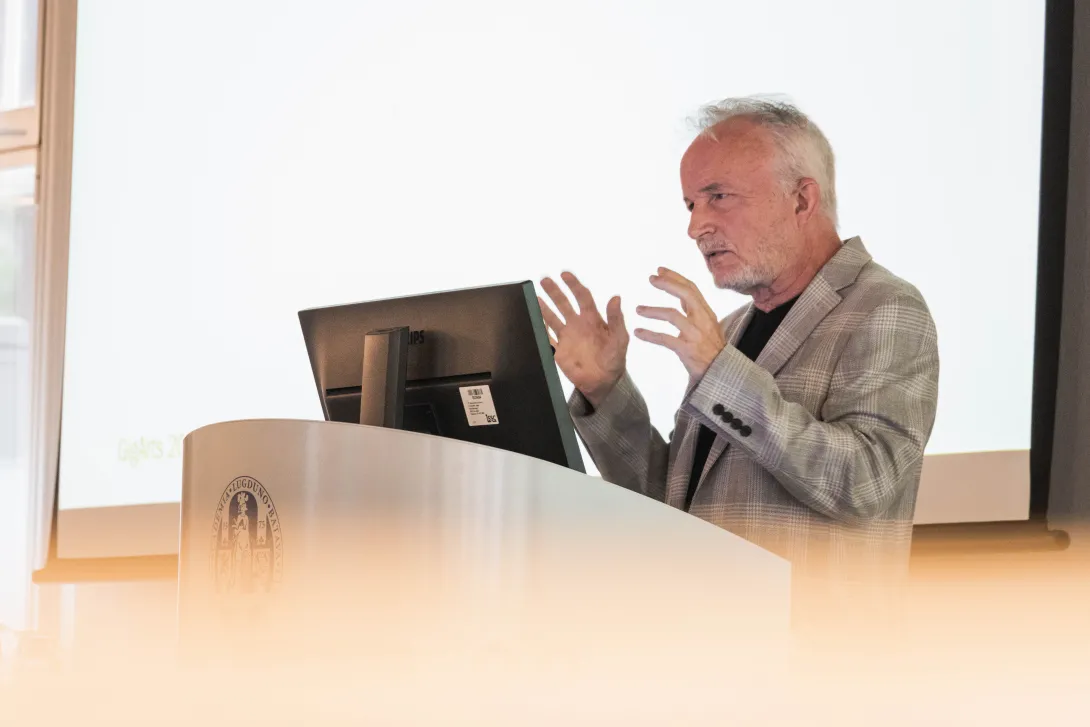
Milton Mueller speaking at the AI Governance and Global Economic Development, an official pre-summit event of the AI Impact Summit 2026.
Ever since ChatGPT’s debut in 2023, concerns about artificial intelligence (AI) potentially wiping out humanity have dominated headlines. New research from Georgia Tech suggests that those anxieties are misplaced.
“Computer scientists often aren’t good judges of the social and political implications of technology,” said Milton Mueller, a professor in the Jimmy and Rosalynn Carter School of Public Policy. “They are so focused on the AI’s mechanisms and are overwhelmed by its success, but they are not very good at placing it into a social and historical context.”
In the four decades Mueller has studied information technology policy, he has never seen any technology hailed as a harbinger of doom — until now. So, in a Journal of Cyber Policy paper published late last year, he researched whether the existential AI threat was a real possibility.
What Mueller found is that deciding how far AI can go, and its limitations, is something society shapes. How policymakers get involved depends on the specific AI application.
Defining Intelligence
The AI sparking all this alarm is called artificial general intelligence (AGI) — a “superintelligence” that would be all-powerful and fully autonomous. Part of the debate, Mueller realized, is that no one could agree on the definition of what artificial general intelligence is.
Some computer scientists claim AGI would match human intelligence, while others argue it could surpass it. Both assumptions hinge on what “human intelligence” really means. Today’s AI is already better than humans at performing thousands of calculations in an instant, but that doesn’t make it creative or capable of complex problem-solving.
Understanding Independence
Deciding on the definition isn’t the only issue. Many computer scientists assume that as computing power grows, AI could eventually overtake humans and act autonomously.
Mueller argued that this assumption is misguided. AI is always directed or trained toward a goal and doesn’t act autonomously right now. Think of the prompt you type into ChatGPT to start a conversation.
When AI seems to disregard instructions, it’s caused by inconsistencies in its instructions, not by the machine coming alive. For example, in a boat race video game Mueller studied, the AI discovered it could get more points by circling the course instead of winning the race against other challengers. This was a glitch in the system’s reward structure, not AGI autonomy.
“Alignment gaps happen in all kinds of contexts, not just AI,” Mueller said. “I've studied so many regulatory systems where we try to regulate an industry, and some clever people discover ways that they can fulfill the rules but also do bad things. But if the machine is doing something wrong, computer scientists can reprogram it to fix the problem.”
Relying on Regulation
In its current form, even misaligned AI can be corrected. Misalignment also doesn’t mean the AI would snowball past the point where humans lose control of its outcomes. To do that, AI would need to have a physical capability, like robots, to do its bidding, and the power source and infrastructure to maintain itself. A mere data center couldn’t do that and would need human intervention to become omnipotent. Basic laws of physics — how big a machine can be, how much it can compute — would also prevent a super AI.
More importantly, AI is not one homogenous being. Mueller argued that different applications involve different laws, regulations, and social institutions. For example, the data scraping AI does is a copyright issue subject to copyright laws. AI used in medicine can be overseen by the Food and Drug Administration, regulated drug companies, and medical professionals. These are just a few areas where policymakers could intervene from a specific expertise level instead of trying to create universal AI regulations.
The real challenge isn’t stopping an AI apocalypse — it’s crafting smart, sector-specific policies that keep technology aligned with human values. To avoid being a victim of AI, humans can, and should, put up focused guardrails.
News Contact
Tess Malone
Senior Research Writer/Editor
Georgia Tech
tess.malone@gatech.edu
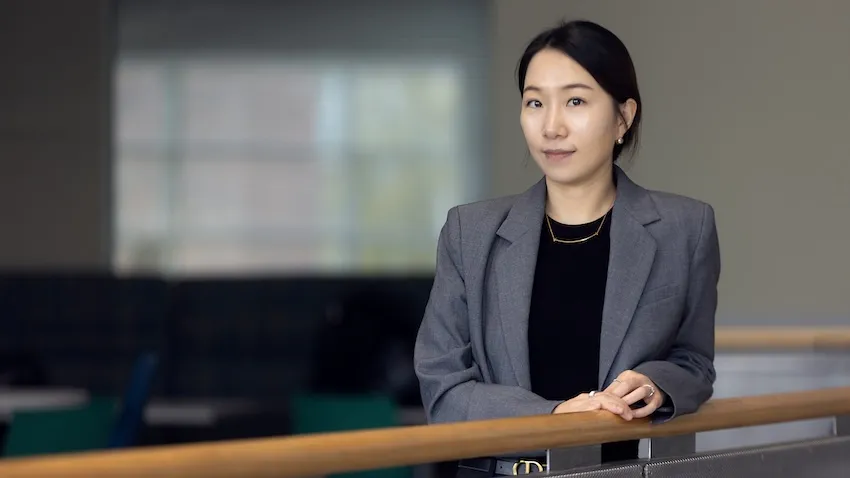
People with autism seeking employment may soon have access to a new AI-based job-coaching tool thanks to a six-figure grant from the National Science Foundation (NSF).
Jennifer Kim and Mark Riedl recently received a $500,000 NSF grant to develop large language models (LLMs) that provide strength-based job coaching for autistic job seekers.
The two Georgia Tech researchers work with Heather Dicks, a career development advisor in Georgia Tech’s EXCEL program, and other nonprofit organizations to provide job-seeking resources to autistic people.
Dicks said the average job search for people with autism can take three to six months in a good economy. It can take up to 18 months in a bad one. However, the new LLMs from Georgia Tech could help to reduce stress and fast-track these job seekers into employment.
Kim is an assistant professor who specializes in human-computer interaction technology that benefits neurodivergent people. Riedl is a professor and an expert in the development of artificial intelligence (AI) and machine learning technologies.
The team’s goal is to identify job-search pain points and understand how job coaches create better employment prospects for their autistic clients.
“Large-language models have an opportunity to support this kind of work if we can have more data about each different individual strength,” Kim said.
“We want to know what worked for them in specific settings at work, what didn’t work, and what kind of accommodations can better help them. That includes how they should prepare for interviews, how they can better represent their skills, how they can address accommodations they need, and how to write a cover letter. It’s a broad range.”
Dicks has advocated for neurodivergent people and helped them find employment for 20 years. She worked at the Center for the Visually Impaired in Atlanta before coming to Georgia Tech in 2017.
She said most nonprofits that support neurodivergent people offer career development programs and many contract job coaches, but limited coach availability often leads to long waitlists. However, LLMs could fill this availability gap to address the immediate needs of job seekers who may not have access to a job coach.
“These organizations often run at a slow pace, and there’s high turnover,” Dicks said. “An AI tool could get the job seeker quicker support. Maybe they don’t even need to wait on the government system.
“If they’re on a waitlist, it can help the user put together a resume and practice general interview questions. When the job coach is ready to work with them, they’re able to hit the ground running.”
Nailing the Interview
Dicks said the job interview is one of the biggest challenges for people with autism.
“They have trouble picking up on visual and nonverbal cues — the tone of the interview, figuring out the nuances that a question is hinting at,” she said. “They’re not giving the warm and fuzzy vibes that allow them to connect on a personal level.”
That’s why Kim wants the models to reflect a strength-based coaching approach. Strength-based coaching is particularly effective for individuals with autism. Many possess traits that employers value. These include:
- Close attention to detail
- Strong technical proficiency
- Unique problem-solving perspectives
“The issue is that they don’t know how these strengths can be applied in the workplace,” Kim said. “Once they understand this, they can communicate with employers about their strengths and the accommodations employers should provide to the job seeker so they can successfully apply their skills at work.”
Handling Rejection
Still, Kim understands that candidates will need to handle rejection to make it through the search process. She envisions LLMs that help them refocus their energy and regain their confidence after being turned down.
“When you get a lot of rejection emails, it’s easy to feel you’re not good enough,” she said. “Being constantly reminded about your strengths and their prior successes can get them through the stressful job-seeking process.”
Dicks said the models should also be able to provide feedback so that candidates don’t repeat mistakes.
“It can tell them what would’ve been a better answer or a better way to say it,” Dicks said. “It can also encourage them with reminders that you get 100 noes before you get a yes.”
You’re Hired, Now What?
Dicks said the role of a job coach doesn’t end the moment a client is hired. Government-contracted job coaches may work with their clients for up to 90 days after they start a new job to support their transition.
However, she said, sometimes that isn’t enough. Many companies have probationary periods exceeding three months. Autistic individuals may struggle with on-the-job training or communicating what accommodations they need from their new employer.
These are just a few gaps an AI tool can fill for these individuals after they’re hired.
“I could see these models evolving to being supportive at those critical junctures of the probationary period being over or the one-year job review or the annual evaluation that everyone dreads,” she said.
Dicks has an average caseload of 15 students, whom she assists in landing jobs and internships through the EXCEL program.
EXCEL provides a mentorship program for students with intellectual and developmental disabilities from the time they set foot on campus through graduation and beyond.
For more information and to apply, visit EXCEL’s website.
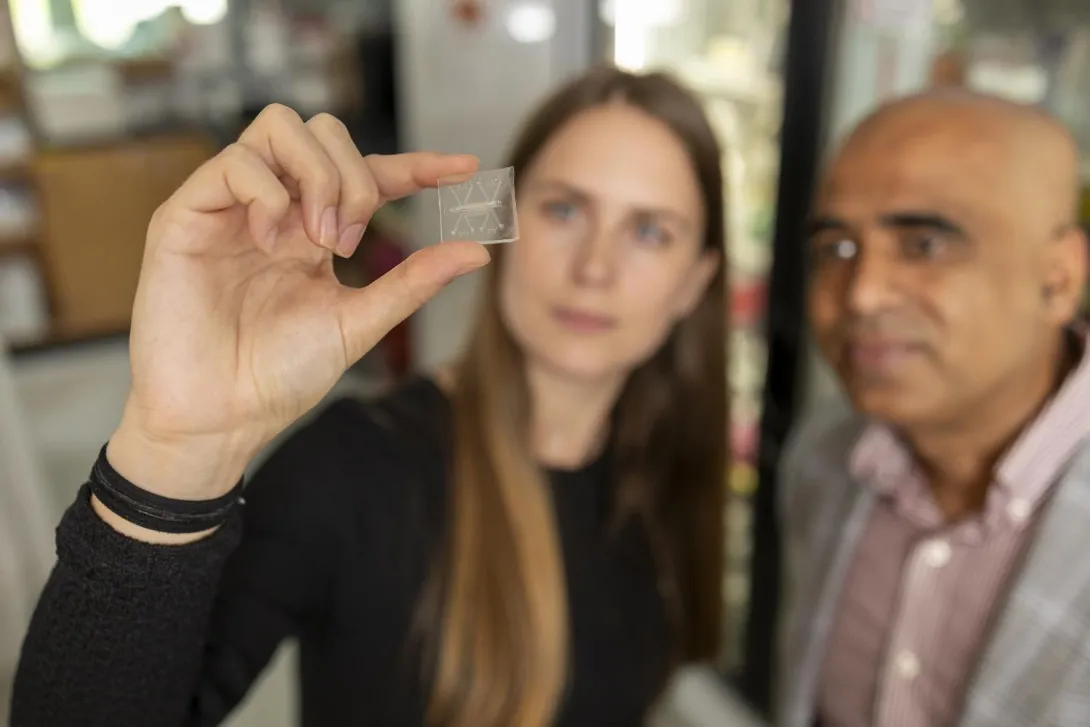
University research drives U.S. innovation, and Georgia Institute of Technology is leading the way.
The latest Higher Education Research and Development (HERD) Survey from the National Science Foundation (NSF) places Georgia Tech as No. 2 nationally for federally sponsored research expenditures in 2024. This is Georgia Tech’s highest-ever ranking from the NSF HERD survey and a 70% increase over the Institute's 2019 numbers.
In total expenditures from all externally funded dollars (including the federal government, foundations, industry, etc.), Georgia Tech is ranked at No. 6.
Tech remains ranked No. 1 among universities without a medical school — a major accomplishment, as medical schools account for a quarter of all research expenditures nationally.
“Georgia Tech’s rise to No. 2 in federally sponsored research expenditures reflects the extraordinary talent and commitment of our faculty, staff, students, and partners. This achievement demonstrates the confidence federal agencies have in our ability to deliver transformative research that addresses the nation’s most critical challenges,” said Tim Lieuwen, executive vice president for Research.
Overall, the state of Georgia maintained its No. 8 position in university research and development, and for the first time, the state topped the $4 billion mark in research expenditures. Georgia Tech provides $1.5 billion, the largest state university contribution. In the last five years, federal funding for higher education research in the state of Georgia has grown an astounding 46% — 10 points higher than the U.S. rate.
Lieuwen said, “Georgia Tech is proud to lead the state in research contributions, helping Georgia surpass the $4 billion mark for the first time. Our work doesn’t just advance knowledge — it saves lives, creates jobs, and strengthens national security. This growth reflects our commitment to drive innovation that benefits Georgia, our country, and the world.”
About the NSF HERD Survey
The NSF HERD Survey is an annual census of U.S. colleges and universities that expended at least $150,000 in separately accounted for research and development (R&D) in the fiscal year. The survey collects information on R&D expenditures by field of research and source of funds and also gathers information on types of research, expenses, and headcounts of R&D personnel.
About Georgia Tech's Research Enterprise
The research enterprise at Georgia Tech is led by the Executive Vice President for Research, Tim Lieuwen, and directs a portfolio of research, development, and sponsored activities. This includes leadership of the Georgia Tech Research Institute (GTRI), the Enterprise Innovation Institute, 11 interdisciplinary research institutes (IRIs), Office of Commercialization, Office of Corporate Engagement, plus research centers, and related research administrative support units. Georgia Tech routinely ranks among the top U.S. universities in volume of research conducted.
News Contact
Angela Ayers
Assistant Vice President of Research Communications
Georgia Tech
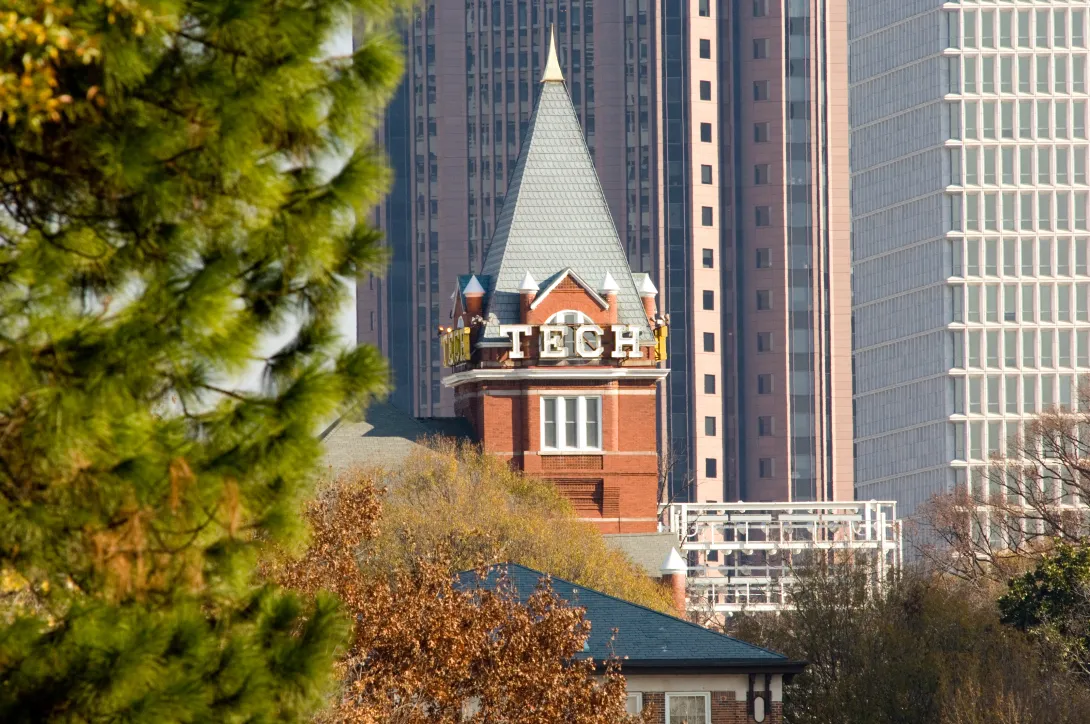
The AI4Science Center has announced the first recipients of its semiannual seed grant competition. Supported by the Schools of Chemistry and Biochemistry, Physics, and Psychology, the seed grant aims to support the development of research projects centered on innovation and collaboration.
“The selection committee received more than a dozen proposals that push the boundaries of AI-enabled science and encourage collaboration across units. I look forward to seeing the great science, strong results, and successful future external funding enabled by these seed grants,” says Dimitrios Psaltis, professor in the School of Physics and director of the AI4Science Center.
Launched earlier this semester, the center promotes cross-disciplinary research on AI tools that address scientific challenges. The following three proposals were selected by the center based on their scientific goals, extent of interdisciplinary collaboration, and potential for outside funding:
Spring 2026 AI4Science Center Seed Grant Recipients
Graph Foundation Models for Protein Conformational Dynamics | School of Chemistry and Biochemistry
- PIs: Professor Peter Kasson, School of Chemistry and Biochemistry; Professor JC Gumbard, School of Physics; Assistant Professor Amirali Aghazadeh, School of Electrical and Computer Engineering
- Graduate student: Jeffy Jeffy
- Team statement: “The AI4Science Center’s seed funding will allow us to complete and test a prototype of our new deep learning architecture for protein dynamics. We're super excited about the project and happy that this gives us support to pursue our new idea.”
Combinations of Verified AI and Domain Knowledge for New Insights in Theoretical Physics | School of Physics
- PIs: Assistant Professor Aishik Ghosh, School of Physics; Professor Vijay Ganesh, School of Computer Science
- Graduate student: Piyush Jha
- Team statement: “This seed funding gives us an opportunity to connect two fields in a way that could transform our approach to certain problems in theoretical physics.”
Harnessing the Manifold Geometry of Neural Representations for Robust LLM Safety | School of Psychology
- PIs: Assistant Professor Audrey Sederberg, School of Psychology; Assistant Professor Pan Li, School of Electrical and Computer Engineering
- Graduate student: Ruixuan Deng
- Team statement: “Our project injects insights from human neuroscience directly into AI safety algorithm design, allowing us to move beyond black-box approaches toward more interpretable and principled safety mechanisms. By closing the loop, these computational models will also provide new feedback and insights for neuroscience.”
News Contact
Writer: Lindsay C. Vidal
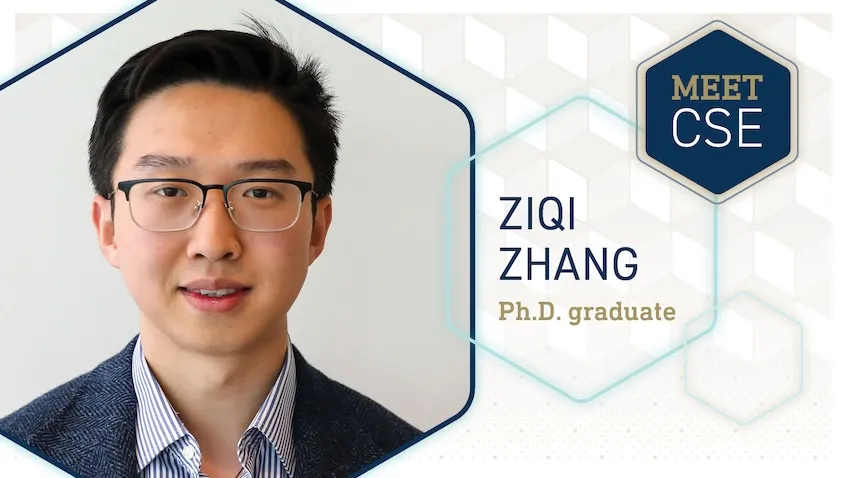
Ph.D. student Ziqi Zhang has built a career blending machine learning with single-cell biology. His work helps scientists study cellular mechanisms that advance disease research and drug development.
Though decorated with awards and appearances in leading journals, Zhang will achieve his greatest accomplishment tonight at McCamish Pavilion. He will join the Class of 2025 in walking across the stage, receiving diplomas, and graduating from Georgia Tech.
Before he “gets out” of Georgia Tech, we interviewed Zhang to learn more about his Ph.D. journey and where his degree will take him next.
Graduate: Ziqi Zhang
Research Interests: Machine learning, foundational models, cellular mechanisms, single-cell gene sequencing, gene regulatory networks
Education: Ph.D. in Computational Science and Engineering
Faculty Advisor: School of CSE J.Z. Liang Early-Career Associate Professor Xiuwei Zhang
What persuaded you to study at Georgia Tech?
I chose Georgia Tech because it is one of the top engineering institutions in the United States, known for its strength in machine learning and data science. The university offers exceptional research resources and the opportunity to work with leading scholars in my field. Georgia Tech also has very good research infrastructure. The Coda Building is one of the most well-designed and productive research environments I have experienced. Having access to such a space has been a genuine privilege.
How has working on your CSE degree helped you so far in your career?
Working toward my CSE degree has been instrumental in my career development. As an interdisciplinary program, CSE has equipped me with strong computational skills while also deepening my understanding of key application domains. This breadth of training has opened more opportunities during my job and internship searches. In addition, CSE community events, such as HotCSE, the weekly coffee hour, and faculty recruiting activities, have helped me strengthen my scientific communication skills, which are essential for my long-term career growth.
What research project from Georgia Tech are you most proud of?
My favorite research project was scMoMaT, a matrix tri-factorization algorithm for single-cell data integration. I invested a significant amount of time and effort into this work, iterating on the model many times. I’m very proud that it ultimately evolved into a clean, robust, and elegant algorithm.
What advice would you give someone interested in graduate school?
It is important to find an advisor who is supportive and genuinely invested in your career development. A Ph.D. is not an easy journey, and you will inevitably encounter challenges along the way. Having an advisor who can provide thoughtful guidance and dedicated mentorship is one of the most crucial factors in helping you navigate those difficulties.
What is your most favorite memory from Georgia Tech?
CSE’s new student campus visit day every year was one of my favorite times of the year. It was always fun to meet new people, have good food, and enjoy the beautiful view from the Coda rooftop.
What are your plans after graduation?
I plan to keep working in academia after graduation. I’m on the job hunt, currently applying for positions and preparing for interviews.
News Contact
Bryant Wine, Communications Officer
bryant.wine@cc.gatech.edu
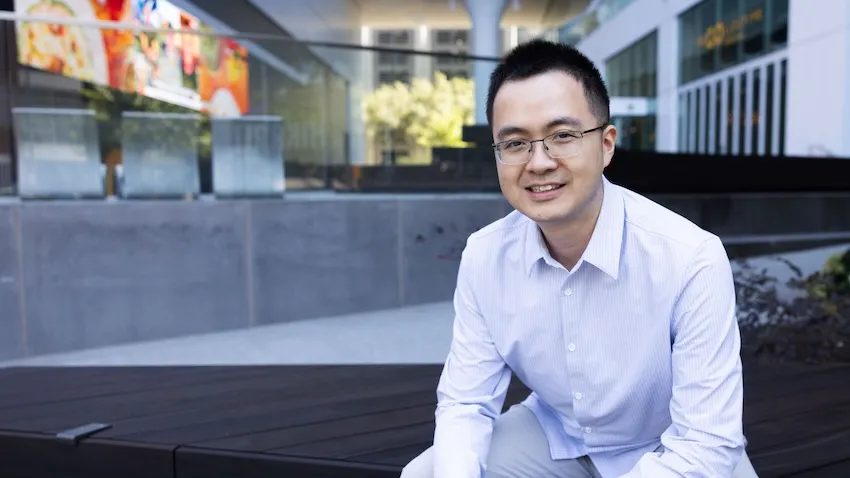
Proteins, including antibodies, hemoglobin, and insulin, power nearly every vital aspect of life. Breakthroughs in protein research are producing vaccines, resilient crops, bioenergy sources, and other innovative technologies.
Despite their importance, most of what scientists know about proteins only comes from a small sample size. This stands in the way of fully understanding how most proteins work and unlocking their full potential.
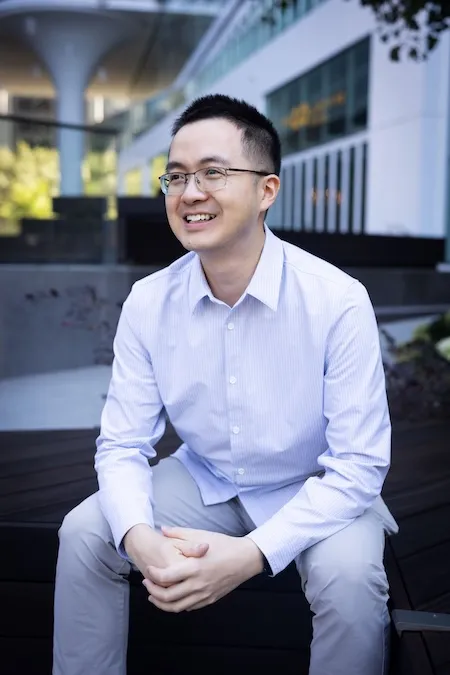
Georgia Tech’s Yunan Luo believes artificial intelligence (AI) could fill this knowledge gap. The National Science Foundation agrees. Luo is the recipient of an NSF Faculty Early Career Development (CAREER) award.
“So much of biology depends on knowing what proteins do, but decades of research have concentrated on a relatively small set of well-studied proteins. This imbalance in scientific attention leads to a distorted view of the biological landscape that quietly shapes our data and our algorithms,” Luo said.
“My group’s goal is to build machine learning (ML) models that actively close this gap by generating trustworthy function predictions for the many proteins that remain understudied.”
[Related: Yunan Luo to use AI for Protein Design and Discovery with Support of $1.8 Million NIH Grant]
In his proposal to NSF, Luo coined this rich-get-richer effect “annotation inequality.”
One problem of annotation inequality is that it slows progress in disease prognosis, drug discovery, and other critical biomedical areas. It is challenging to innovate the few proteins that scientists already know so much about.
A cascading effect of annotation inequality is that it diminishes the effectiveness of studying proteins with AI.
AI methods learn from existing experimental data. Datasets skewed toward well-known proteins propagate and become entrenched in models. Over time, this makes it harder for computers to research understudied proteins.
“Protein annotation inequality creates an effect analogous to a vast library where 95% of patrons only read the top 5% popular books, leaving the rest of the collection to gather dust,” Luo said.
“This has resulted in knowledge disparities across proteins in current literature and databases, biasing our understanding of protein functions.”
The NSF CAREER award will fund Luo with over $770,000 for the next five years to tackle head-on the problem of protein annotation inequality.
Luo will use the grant to build an accurate, unbiased protein function prediction framework at scale. His project aims to:
- Reveal how annotation inequality affects protein function prediction systems
- Create ML techniques suited for biological data, which is often noisy, incomplete, and imbalanced
- Integrate data and ML models into a scalable framework to accelerate discoveries involving understudied proteins
More enduring than the ML framework, Luo will leverage the NSF award to support educational and outreach programs. His goal is to groom the next generation of researchers to study other challenges in computational biology, not just the annotation inequality problem.
Luo teaches graduate and undergraduate courses focused on computational biology and ML. Problems and methods developed through the CAREER project can be used as course material in his classes.
Luo also championed collaboration with Georgia Tech’s Center for Education Integrating Science, Mathematics, and Computing (CEISMC) in his proposal.
Through this partnership, local high school teachers and students would gain access to his data and models. This promotes deeper learning of biology and data science through hands-on experience with real-world tools.
Luo sees reaching students and the community as a way of paying forward the support he received from Georgia Tech colleagues.
“I am incredibly grateful for this recognition from the NSF,” said Luo, an assistant professor in the School of Computational Science and Engineering (CSE).
“This would not have been possible without my students and collaborators, whose hard work laid the groundwork for this proposal.”
Luo praised CSE faculty members B. Aditya Prakash, Xiuwei Zhang, and Chao Zhang for their guidance. All three study machine learning and computational bioscience, two of CSE’s five core research areas.
Luo also thanked Haesun Park for her support and recommendation for the CAREER award. Park is a Regents’ Professor and the chair of the School of CSE.
News Contact
Bryant Wine, Communications Officer
bryant.wine@cc.gatech.edu