
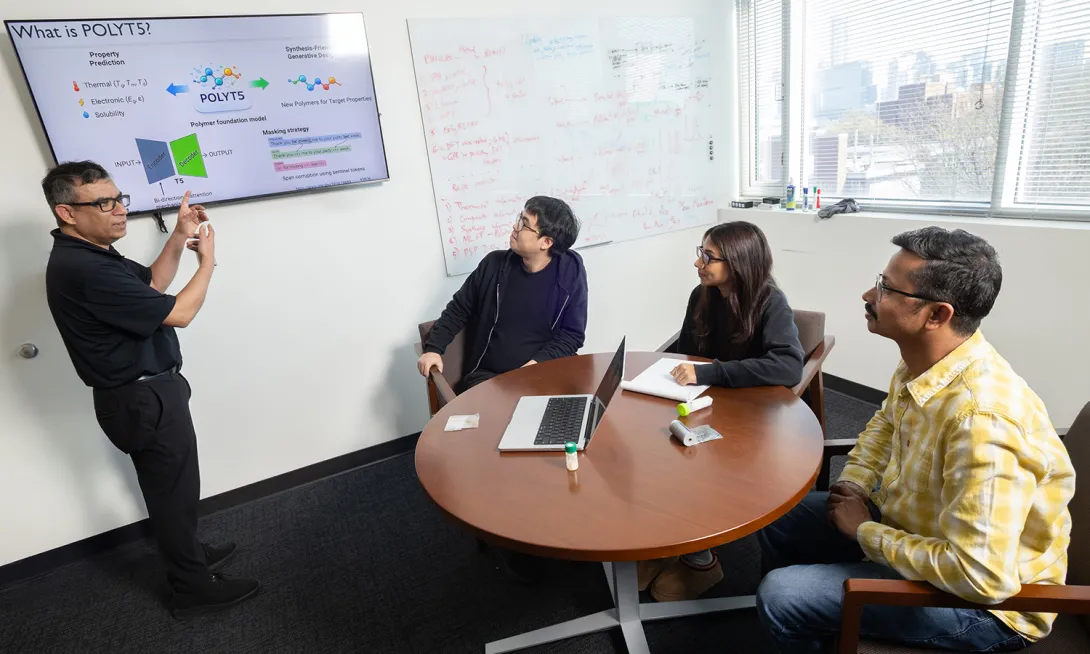
Researchers have created a chemical language AI model to generate new polymer structures based on the properties those polymers need to exhibit. Led by Rampi Ramprasad, standing, the team included postdoctoral scholar Wei Xiong, Ph.D. student Anagha Savit, and research scientist Harikrishna Sahu, who are seated left to right. (Photo: Candler Hobbs)
The words on this page mean something because they are assembled in a particular order and follow the complex rules of grammar and syntax. Creating new chemical polymers follows a similar kind of structure, with rules about what elements and groups of atoms go together and how to assemble them to make sense.
Thinking about polymers in that way has led Georgia Tech materials scientists to create new generative artificial intelligence tools that are like Claude or ChatGPT for new materials.
These are the first foundational models for generative polymer design that have also been validated through physical experiments: users specify the properties they need in a polymer and the model will suggest a chemical structure.
Led by Regents’ Entrepreneur Rampi Ramprasad, the researchers described their latest model this month in the Nature journal npj Artificial Intelligence — including a test material they created and validated in the lab to prove the models work.
News Contact
Joshua Stewart
College of Engineering
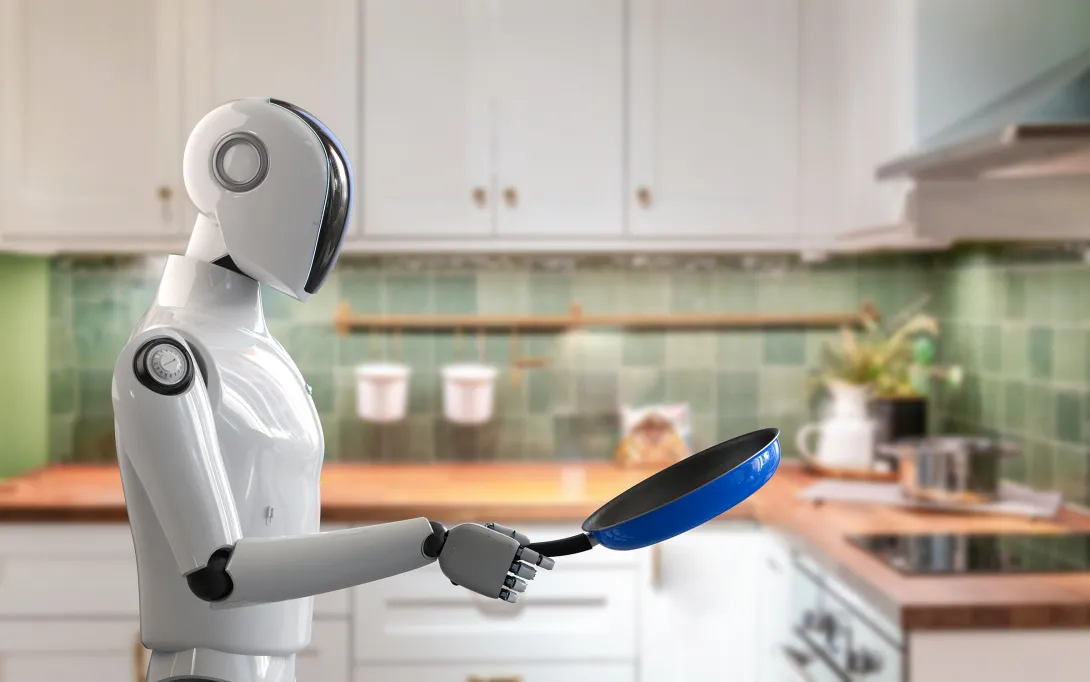
Pancake-flipping robots could be just around the corner thanks to a new robot learning system from Georgia Tech. (Credit: Adobe Stock)
Robots are increasingly learning new skills by watching people. From folding laundry to handling food, many real-world, humanlike tasks are too nuanced to be efficiently programmed step by step.
With imitation learning, humans demonstrate a task and robots learn to copy what they see through cameras and sensors. While at the leading edge of robotics research, this approach is limited by a major constraint: Robots can only work as fast as the people who taught them.
Now, Georgia Tech researchers have created a tool that smashes that speed barrier. The system allows robots to execute complex tasks significantly faster than human demonstrations while maintaining precision, control, and safety.
The team addresses a central challenge in modern robotics: how to combine the flexibility of learning from humans with the speed and reliability required for real-world deployment. The technology could lead to wider adoption of imitation learning in industrial and household applications and even enable robots to execute humanlike tasks better than ever before.
“The thing we’re trying to create — and I would argue industry is also trying to create — is a general-purpose robot that can do any task that human hands can do,” said Shreyas Kousik, assistant professor in the George W. Woodruff School of Mechanical Engineering and a co-lead author on the study. “To make that work outside the lab, speed really matters.”
The new tool, SAIL (Speed Adaptation for Imitation Learning), was born out of a cross-campus, interdisciplinary collaboration that brought together expertise in mechanical engineering, robotics systems, and machine learning. The research team includes Kousik; Benjamin Joffe, senior research scientist at the Georgia Tech Research Institute; and Danfei Xu, assistant professor in the School of Interactive Computing, along with graduate students and researchers from multiple labs.
Speed Without Sacrifice
Teaching robots to work faster than the speed of human demonstrations is challenging. Robots can behave differently at higher speeds, and small changes in the environment can cause errors.
“The challenge is that a robot is limited to the data it was trained on, and any changes in the environment can cause it to fail,” Kousik said.
SAIL addresses this challenge through a modular approach, with separate components working together to accelerate beyond the training data. The system keeps motions smooth at high speed, tracks movements accurately, adjusts speed dynamically based on task complexity, and schedules actions to account for hardware delays. This combination allows robots to move quickly while staying stable, coordinated, and precise.
“One of the gaps we saw was that our academic robotics systems could do impressive things, but they weren’t fast or robust enough for practical use,” Joffe said. “We wanted to study that gap carefully and design a system that addressed it end to end.”
He added, “The goal is not just to make robots faster, but to make them smart enough to know when speed helps and when it could cause mistakes.”
The team evaluated SAIL’s performance across 12 tasks, both in simulation and on two physical robot platforms. Tasks included stacking cups, folding cloth, plating fruit, packing food items, and wiping a whiteboard. In most cases, SAIL-enabled robots completed tasks three to four times faster than standard imitation-learning systems without losing accuracy.
One exception was the whiteboard-wiping task, where maintaining contact made high-speed execution difficult.
“Understanding where speed helps and where it hurts is critical,” Kousik said. “Sometimes slowing down is the right decision.”
While SAIL does not make robots universally adaptable on its own, it represents an important step toward robotic systems that can learn from humans without being constrained by human pace.
By showing how learned robotic behaviors can be accelerated safely and systematically, SAIL brings imitation learning closer to real-world use — where speed, precision, and reliability all matter.
Citation: Ranawaka Arachchige, et. al. “SAIL: Faster-than-Demonstration Execution of Imitation Learning Policies,” Conference on Robot Learning (CoRL), 2025.
DOI: https://doi.org/10.48550/arXiv.2506.11948
Funding: The authors would like to acknowledge the State of Georgia and the Agricultural Technology Research Program at Georgia Tech for supporting the work described in this paper.
News Contact
Catherine Barzler, Senior Research Writer/Editor
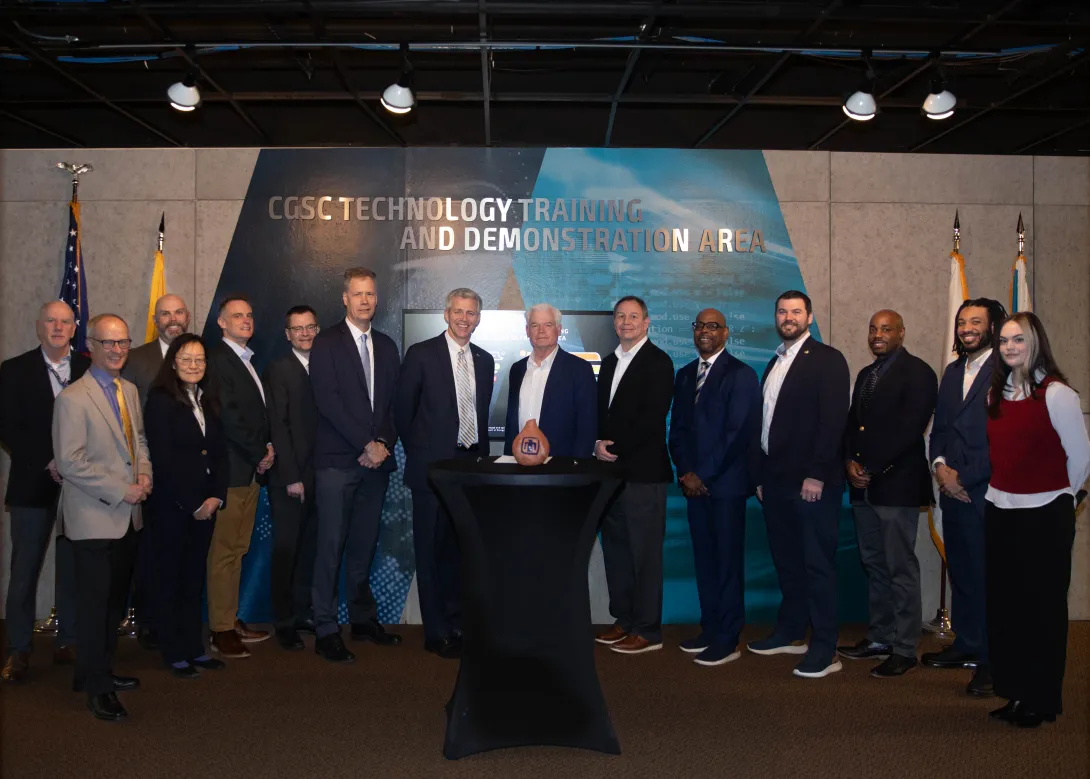
Photo by Alicia Bustillos from Sandia National Laboratories
Since 2020, Georgia Tech has partnered with Sandia National Laboratories, a federally funded research and development center focused on national security. In February, the two institutions renewed their collaboration with a new Memorandum of Understanding (MOU), reaffirming a relationship that has already strengthened research capabilities on both sides.
The partnership has driven progress in areas ranging from hypersonics to bioscience, while also deepening institutional ties beyond research. Joint faculty appointments — such as Anirban Mazumdar, who holds roles at both Sandia and the George W. Woodruff School of Mechanical Engineering — demonstrate how closely the organizations work together. The collaboration has also expanded student talent pipelines, providing more avenues for Georgia Tech students to pursue careers at the national lab.
“At its core, this partnership is about people,” said Tim Lieuwen, executive vice president for Research at Georgia Tech. “Sandia and Georgia Tech share a commitment to discovery and developing the talent, creativity, and collaboration our nation needs.”
The renewed MOU, he said, “strengthens connections between our researchers, opens new doors for our students, and builds meaningful career pathways into national service. When our communities work together to address national priorities, we not only accelerate technological advances — we expand opportunities for the people who will shape the future of our nation’s security.”
Under the new MOU, Sandia and Georgia Tech will focus on integrated research across key national security‑aligned areas, including secure artificial intelligence and computing, quantum technologies, critical minerals, advanced manufacturing, energy and grid resilience, and hypersonics. The partnership emphasizes connecting manufacturing, computation, and systems approaches directly to national security applications.
“Together, we have been solving new and unprecedented challenges in science and engineering, and now we have a great opportunity to develop this partnership,” said Dan Sinars, Sandia’s deputy chief research officer. “Our research benefits both national security and national prosperity, and keeps the country at the forefront of the world.”
With this strengthened connection, the partners aim to grow their shared research footprint through increased funding, publications, and faculty-led startups. Over the long term, Georgia Tech intends to become one of Sandia’s top hiring pipelines, ensuring that talent developed through joint research continues into national security careers.
History of the Partnership
The Institute’s collaboration with Sandia began in the mid‑2010s, when the labs selected Georgia Tech as one of its partner institutions. The first MOU, signed in 2015, formalized the relationship and outlined initial technical focus areas.
In 2018, George White, executive director of strategic partnerships, and Olof Westerstahl, senior director strategic initiatives in the Office of Corporate Engagement, helped expand the partnership. They launched “Sandia Day,” an event designed to introduce Georgia Tech faculty to Sandia researchers and spark new collaborations. By 2020, the organizations signed a second MOU that expanded the partnership’s technical focus areas to include energy and grid security, materials and nanotechnology, advanced electronics, advanced manufacturing, advanced computing, cyber and information security, bioscience, hypersonics, quantum information science, and engineering sciences.
The results have been substantial. Since 2018, Sandia has sponsored $35 million in research collaborations with Georgia Tech. Researchers from both institutions have co-authored 450 publications since 2016. Research activity continues to accelerate, with $1.6 million in new contracts in the past year alone. As of August 2025, Sandia employs 325 Georgia Tech alumni — a testament to the impact of the growing talent pipeline.
“We view our work with Sandia as the model for engagement with other national labs,” said White. “With the new MOU, we will continue to grow the Sandia partnership. I would like to see our footprint double in scope in the next five years.”
News Contact
Tess Malone, Senior Research Writer/Editor
tess.malone@gatech.edu
Georgia Tech Energy Day returns this year on March 19 with an expanded focus and a new collaborative momentum. Cohosted by the Georgia Tech Institute for Matter and Systems (IMS) and the Strategic Energy Institute, (SEI) with plenary session support from the Energy Policy and Innovation Center, Energy Day 2026 convenes leaders from academia, industry, government, and students to address the challenges associated with meeting the rapidly growing electricity demand driven by artificial intelligence (AI) and high-performance computing.
Set in the heart of Tech Square on the Georgia Tech campus, this year’s event explores how energy systems, materials, technologies, supply chains, and policy must evolve in response to AI’s accelerating impact. As digital infrastructure expands and computation intensifies, the need for reliable, resilient, and sustainable power has never been more urgent.
“Energy Day reflects Georgia Tech’s strength in connecting world-class research in materials and components with the infrastructure and partnerships needed to translate discovery into scalable energy technologies that serve industry, society, and the future economy,” said Eric Vogel, executive director of the IMS and the Hightower Professor in Materials Science and Engineering.
Energy Day 2026 also marks an important milestone with the introduction of its first group of corporate sponsors: GE Vernova, Southern Company, Georgia Power, ExxonMobil, Southwire Spark, Gems Setra, and Tektronix. Their support reflects a shared commitment to advancing energy solutions.
“Tektronix is excited to be part of Energy Day because advancing the future of energy starts with precise measurement and trusted insights,” said Christopher Bohn, president of Tektronix. “From power electronics and high voltage systems to grid scale renewables and AI driven control technologies, the breakthroughs discussed here directly align with the innovations we support through our products and solutions. Collaborating with Georgia Tech allows us to engage early with emerging research and the next generation of engineers—critical collaborators in building a cleaner, smarter, and more resilient energy ecosystem.”
The keynote address will be delivered by Vanessa Z. Chan, a nationally recognized leader at the intersection of innovation, commercialization, and emerging technologies. Chan will provide insights on accelerating technological discovery, emphasizing how AI is transforming energy and materials design. She will discuss how commercialization strategies must rapidly evolve across multidisciplinary energy domains from grid modernization to advanced batteries and clean manufacturing.
Building on the themes introduced in the keynote, the program transitions into a fireside chat with Georgia Tech EVPR Tim Lieuwen featuring Amit Kulkarni and Jim Walsh. Kulkarni is vice president of Product Management and Strategy for the Gas Power business within GE Vernova, where he oversees the world’s largest portfolio of power generation equipment. Walsh, vice president of GE Vernova’s Consulting Services, leads teams providing innovative solutions across the full spectrum of power generation, delivery, and utilization.
Next comes a policy-focused panel that will explore the surge in power demand driven by AI, how the United States is addressing today’s most urgent energy challenges, and the long-term implications of today’s decisions for a sustainable energy future. Bringing together leading voices in U.S. environmental and energy policy, the panel features Joe Aldy of Harvard University and former special assistant to the president for Energy and Environment; Al McGartland of New York University’s Institute for Policy Integrity and former Environmental Protection Agency lead economist and director of the National Center for Environmental Economics; and Kevin Rennert, fellow and director of the Comprehensive Climate Strategies Program at Resources for the Future and former staff member on the U.S. Senate Committee on Energy and Natural Resources.
The second panel focuses on critical materials — the foundation of advanced energy systems and digital technologies. As AI, data centers, and advanced energy technologies drive demand for critical materials, securing them now requires integration and coordination across the entire value chain. Panelists include Rachel Galloway, British consul general in Atlanta; Vijay Murugesan, head of Materials Intelligence and Digital Innovation at Amazon; Colin Spellmeyer, executive strategic sourcing leader at GE Vernova; Charles Sims, Tennessee Valley Authority Distinguished Professor of Energy and Environmental Policy at the University of Tennessee; and Nortey Yeboah, principal engineer at Southern Company. Together, they will offer perspectives on the policy and economic frameworks shaping the energy supply chain, from developing raw resources to manufacturing the technologies essential to future energy systems.
In the afternoon, participants can dive deeper into specialized topics through three focused technical tracks.
- “Meeting the Demand for Power” will examine how emerging technologies, advanced nuclear systems, and renewable integration can work together to deliver reliable, resilient electricity.
- “Data Center Infrastructure and Resources” will explore innovations in thermal management technologies, energy-efficient computing, and the broader resource impacts of expanding digital infrastructure.
- “Grid Technologies and Markets” will highlight strategies for strengthening grid capacity, incorporating demand-side management, and optimizing carbon performance as energy systems evolve.
“Meeting the rapidly rising electricity demand driven by AI requires bold ideas, coordinated action, and research that moves at the speed of innovation,” said Yuanzhi Tang, executive director of the SEI. “Energy Day 2026 brings together the people and expertise needed to shape resilient, sustainable energy systems for the future. At Georgia Tech, we see this event as a catalyst for new partnerships, new solutions, and a shared commitment to strengthening the nation’s energy foundation.”
Energy Day 2026 is designed for researchers advancing emerging energy technologies, policymakers navigating shifting regulatory and geopolitical landscapes, industry professionals seeking insight into emerging tools and supply chains, and students preparing to enter one of the most consequential sectors of the decade. It also welcomes anyone interested in AI, sustainability, electrification, and critical materials.
Join us to explore the future of energy. To learn more and register, visit: Energy Day 2026.
News Contact
Priya Devarajan | Communications Program Manager
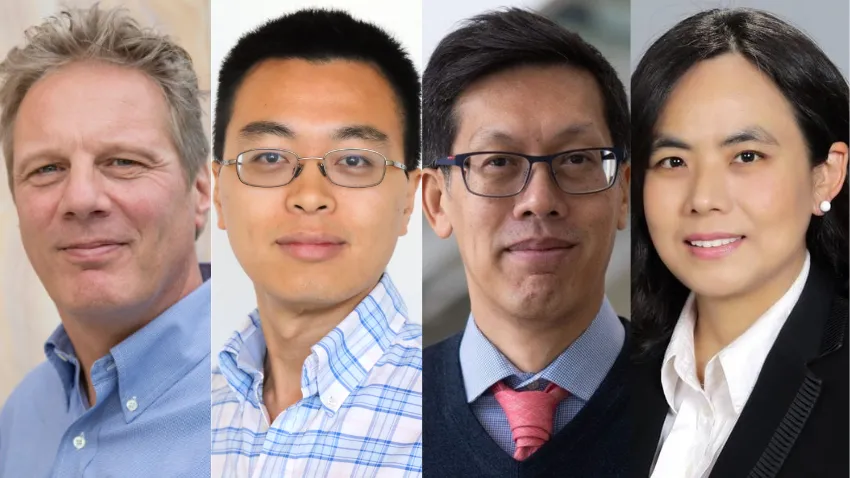
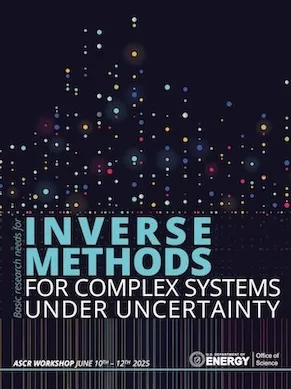
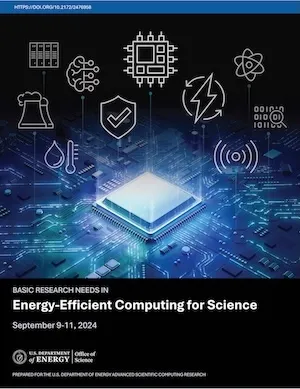
Georgia Tech researchers applied their expertise to a national research program that will shape the future of computing. Their work may yield more energy-efficient computers and better predictions for environmental challenges like carbon storage, tsunamis, wildfires, and sustainable energy.
The Department of Energy Office of Science recently released two reports through its Advanced Scientific Computing Research (ASCR) program. The reports were produced by workshops that brought together researchers from universities, national labs, government, and industry to set priorities for scientific computing.
Professor Felix Herrmann served on the organizing committee for the Workshop on Inverse Methods for Complex Systems under Uncertainty. Assistant Professor Peng Chen joined Herrmann as a workshop participant, contributing expertise in data science and machine learning.
Inverse methods work backward from outcomes to find their causes. Scientists use these tools to study complex systems, like designing new materials with targeted properties and using past wildfires to map vulnerable areas and behavior of future fires.
The ASCR report highlighted Herrmann’s work on seismic exploration and monitoring through digital twins. Founded on inverse methods, digital twins upgrade from static models to virtual systems that accurately mirror their physical counterparts.
Digital twins integrate real-time data sources, including fluid flows, monitoring and control systems, risk assessments, and human decisions. These models also account for uncertainty and address data gaps or limitations.
The DOE organized the workshop to support the growing role of inverse modeling. The group identified four priority research directions (PRDs) to guide future work. The PRDs are:
- PRD 1: Discovering, exploiting, and preserving structure
- PRD 2: Identifying and overcoming model limitations
- PRD 3: Integrating disparate multimodal and/or dynamic data
- PRD 4: Solving goal-oriented inverse problems for downstream tasks
“A digital twin is a system you can control, like to optimize operations or to minimize risk,” said Herrmann, who holds joint appointments in the Schools of Earth and Atmospheric Sciences, Electrical and Computer Engineering, and Computational Science and Engineering.
“Digital twins give you a principled way to consider uncertainties, which there are a lot in subsurface monitoring. If you inject carbon dioxide too fast, you will will increase the pressure and may fracture the rock. If you inject too slow, then the process may become too costly. Digital twins help us make balanced decisions under uncertainty.”
Supercomputers, algorithms, and artificial intelligence now power modern science. However, these tools consume enormous amounts of energy. This raises concerns about how to sustain computing and scientific research as we know them in the decades ahead.
Professors Rich Vuduc and Hyesoon Kim co-authored the report from the Workshop on Energy-Efficient Computing for Science. At the three-day ASCR workshop, participants identified five key research directions:
- PRD 1: Co-design energy-efficient hardware devices and architectures for important workloads
- PRD 2: Define the algorithmic foundations of energy-efficient scientific computing
- PRD 3: Reconceptualize software ecosystems for energy efficiency
- PRD 4: Enable energy-efficient data management for data centers, instruments, and users
- PRD 5: Develop integrated, scalable energy measurement and modeling capabilities for next-generation computing systems
“I’m cautiously optimistic about the future of energy-efficient computing. The ASCR report says, from a technological point of view, there are things we can do,” said Vuduc.
“The report lays out paths for how we might design better apps, hardware systems, and algorithms that will use less energy. This is recognition that we should think about how architectures and software work together to drive down energy usage for systems.”
News Contact
Bryant Wine, Communications Officer
bryant.wine@cc.gatech.edu

Artificial intelligence (AI) systems power everything from chatbots to security cameras, yet many of the most advanced models operate as “black boxes.” Companies can use them, but outsiders can’t see how they were built, where they came from, or whether they contain hidden flaws.
This lack of transparency creates real risks. A model could contain security vulnerabilities or hidden backdoors. It could also be a lightly modified version of an open-source system — repackaged in violation of its license — with no easy way to prove it.
Researchers at the Georgia Institute of Technology have developed a new framework, ZEN, to help solve this problem. The tool can recover a model’s unique “fingerprint” directly from its memory, allowing experts to trace its origins and reconstruct how it was assembled.
“Analyzing a proprietary AI model without identifying where it came from and how it is constructed is like trying to fix a car engine with the hood welded shut,” said David Oygenblik, a Ph.D. student at Georgia Tech and the study’s lead author.
“ZEN not only X-rays the engine but also provides the complete wiring diagram.”
ZEN works by taking a snapshot of a running AI system and extracting information about both its mathematical structure and the code that defines it. It compares that fingerprint against a database of known open-source models to determine the system’s origin.
If it finds a match, ZEN identifies the exact changes and generates software patches that allow investigators to recreate a working replica of the proprietary model for testing.
That capability has major implications for both security and intellectual property protection.
“With ZEN, a security analyst can finally test a black-box model for hidden backdoors, and a company can gather concrete evidence to prove its software license was infringed,” Oygenblik said.
To evaluate the system, the research team tested ZEN on 21 state-of-the-art AI models, including Llama 3, YOLOv10, and other well-known systems.
ZEN correctly traced every customized model back to its original open-source foundation — achieving 100% attribution accuracy. Even when models had been heavily modified — differing by more than 83% from their original versions — ZEN successfully identified the changes and enabled full reconstruction for security testing.
The researchers will present their findings at the 2026 Network and Distributed System Security (NDSS) Symposium. The paper, Achieving Zen: Combining Mathematical and Programmatic Deep Learning Model Representations for Attribution and Reuse, was authored by Oygenblik, master’s student Dinko Dermendzhiev, Ph.D. students Filippos Sofias, Mingxuan Yao, Haichuan Xu, and Runze Zhang, post-doctorate scholars Jeman Park, and Amit Kumar Sikder, as well as Associate Professor Brendan Saltaformaggio.
News Contact
John Popham
Communications Officer II School of Cybersecurity and Privacy

Two research teams within the College of Lifetime Learning are piloting new approaches to online education that integrate artificial intelligence and immersive virtual reality with thoughtful instructional design. More than technology experiments, these projects show how the College refines learning innovations before scaling them across programs.
Research Scientists Eunhye Grace Flavin, Abeera Rehmat, and Jeonghyun (Jonna) Lee are developing an AI-assisted course titled Design of Learning Environments. The course is being piloted within the College to gather feedback and data before broader implementation.
“We want to study how AI can meaningfully support learning,” Flavin said, “and how it can deepen engagement and enhance instructional design rather than distract from it.”
Faculty and staff are contributing in two ways: some are enrolling in the course and participating in AI-supported activities and surveys, while others are reviewing instructional models and providing feedback. Insights from both groups will guide refinements before future rollout.
Meanwhile, Research Scientists Meryem Yılmaz Soylu and Jeonghyun (Jonna) Lee, along with Research Associate Eric Sembrat, are piloting an immersive VR module within the Online Master of Science in Analytics (OMSA) program. The module features case-based scenarios with a virtual agent, enabling students to practice leadership and workplace decision-making in realistic environments.
“Technical expertise alone is no longer enough. Our students need opportunities to practice leadership, navigate conflict, and communicate across stakeholders in realistic settings. Virtual reality allows us to create emotionally resonant, high-stakes scenarios in a safe environment where students can experiment, reflect, and grow,” Yılmaz Soylu said.
The VR experience uses branching 360° scenarios in which students’ communication choices and strategic decisions influence virtual stakeholders’ responses in real time. Insights from the pilot will inform refinements to strengthen usability, instructional alignment, and scalability before broader implementation.
“In many ways, we are building the future of online learning. We’re asking what works and what supports learning. It’s incredibly exciting to be part of a college that embraces this sort of thoughtful experimentation. Innovation like this can help us responsibly design courses for the individuals we serve,” Flavin said.
The VR module is being developed in collaboration with Lifetime Learning colleagues in instructional design, media production, and technology, as well as partners across Georgia Tech, including OMSA leadership and faculty collaborators.
Together, these initiatives reflect the College’s approach to innovation: integrating research, technology, and delivery to improve learning systems. By piloting and refining new models before scaling, the College strengthens its capacity to expand access while preserving quality and meaningful outcomes for learners across career stages.
News Contact
Yelena M. Rivera-Vale (she/her(s)/ella)
Communications Program Manager
C21U, College of Lifetime Learning
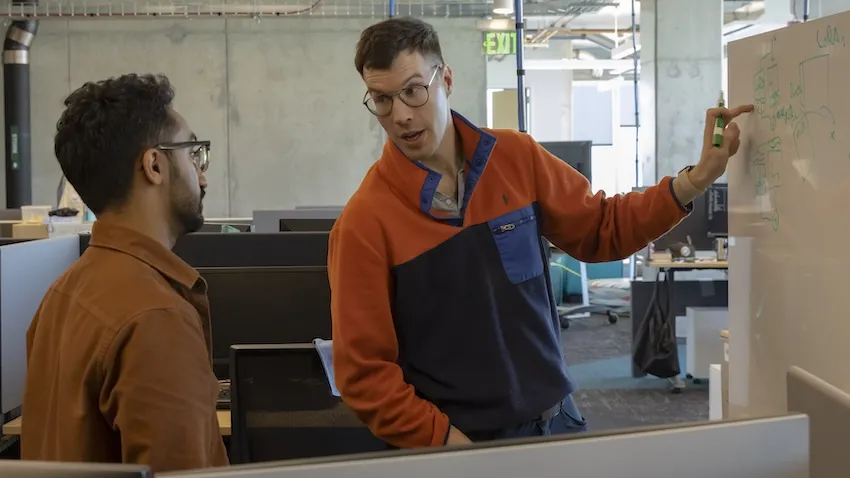
A Georgia Tech Ph.D. candidate is getting a boost to his research into developing more efficient multi-tasking artificial intelligence (AI) models without fine-tuning.
Georgia Stoica is one of 38 Ph.D. students worldwide researching machine learning who were named a 2025 Google Ph.D. Fellow.
Stoica is designing AI training methods that bypass fine-tuning, which is the process of adapting a large pre-trained model to perform new tasks. Fine-tuning is one of the most common ways engineers update large-language models like ChatGPT, Gemini, and Claude to add new capabilities.
If an AI company wants to give a model a new capability, it could create a new model from scratch for that specific purpose. However, if the model already has relevant training and knowledge of the new task, fine-tuning is cheaper.
Stoica argues that fine-tuning still uses large amounts of data, and that other methods can help models learn more effectively and efficiently.
“Full fine-tuning yields strong performance, but it can be costly, and it risks catastrophic forgetting,” Stoica said. “My research asks if we can extend a model’s capabilities by imbuing it with the expertise of others, without fine-tuning?
“Reducing cost and improving efficiency is more important than ever. We have so many publicly available models that have been trained to solve a variety of tasks. It’s redundant to train a new model from scratch. It’s much more efficient to leverage the information that already exists to get a model up to speed.”
Stoica said the solution is a cost-effective method called model merging. This method combines two or more AI models into a single model, improving performance without fine-tuning.
On a basic level, Stoica said an example would be combining a model that is efficient at classifying cats with one that works well at dogs.
“Merging is cheap because you just take the parameters, the weights of your existing models, and combine them,” he said. “You could take the average of the weights to create a new model, but that sometimes doesn’t work. My work has aimed to rearrange the weights so they can communicate easily with each other.”
Through his Google fellowship, Stoica seeks to apply model merging to create a cutting-edge vision encoder. A vision encoder converts image or video data into numerical representations that computers can understand. This enables tasks such as image or facial recognition and generative image captioning.
“I want to be at the frontier of the field, and Google is clearly part of that,” Stoica said. “The vision encoder is very large-scale, and Google has the infrastructure to accommodate it.”
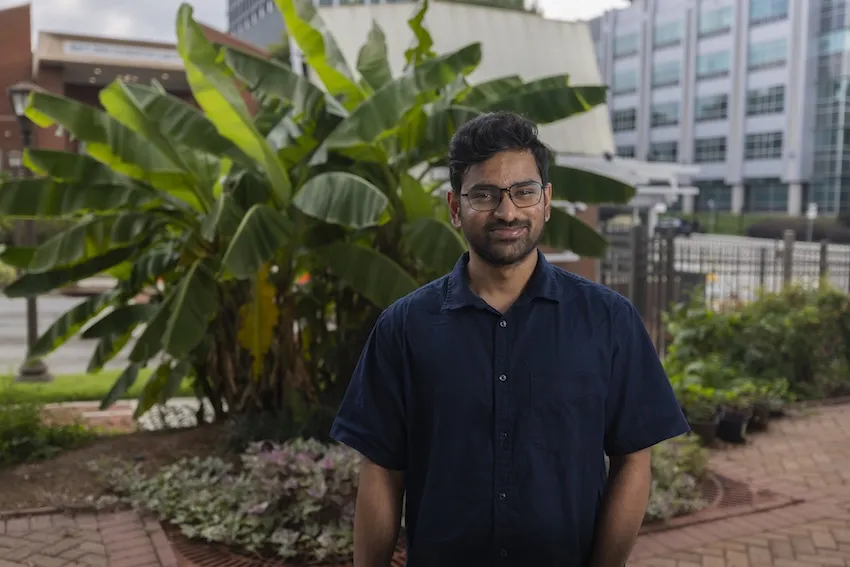
A new robot could solve one of the biggest challenges facing indoor farmers: manual pollination.
Indoor farms, also known as vertical farms, are popular among agricultural researchers and are expanding across the agricultural industry. Some benefits they have over outdoor farms include:
- Year-round production of food crops
- Less water and land requirements
- Not needing pesticides
- Reducing carbon emissions from shipping
- Reducing food waste
Additionally, some studies indicate that indoor farms produce more nutritious food for urban communities.
However, these farms are often inaccessible to birds, bees, and other natural pollinators, leaving the pollination process to humans. The tedious process must be completed by hand for each flower to ensure the indoor crop flourishes.
Ai-Ping Hu, a principal research engineer at the Georgia Tech Research Institute (GTRI), has spent years exploring methods to efficiently pollinate flowering plants and food crops in indoor farms to find a way to efficiently pollinate flower plants and food crops in indoor farms.
Hu, Assistant Professor Shreyas Kousik of the George W. Woodruff School of Mechanical Engineering, and a rotating group of student interns have developed a robot prototype that may be up to the task.
The robot can efficiently pollinate plants that have both male and female reproductive parts. These plants only require pollen to be transferred from one part to the other rather than externally from another flower.
Natural pollinators perform this task outdoors, but Hu said indoor farmers often use a paintbrush or electric tootbrush to ensure these flowers are pollinated.
Knowing the Pose
An early challenge the research team addressed was teaching the robot to identify the “pose” of each flower. Pose refers to a flower’s orientation, shape, and symmetry. Knowing these details ensures precise delivery of the pollen to maximize reproductive success.
“It’s crucial to know exactly which way the flowers are facing,” Hu said.
“You want to approach the flower from the front because that’s where all the biological structures are. Knowing the pose tells you where the stem is. Our device grasps the stem and shakes it to dislodge the pollen.
“Every flower is going to have its own pose, and you need to know what that is within at least 10 degrees.”
Computer Vision Breakthrough
Harsh Muriki is a robotics master’s student at Georgia Tech’s School of Interactive Computing, who used computer vision to solve the pose problem while interning for Hu and GTRI.
Muriki attached a camera to a FarmBot to capture images of strawberry plants from dozens of angles in a small garden in front of Georgia Tech’s Food Processing Technology Building. The FarmBot is an XYZ-axis robot that waters and sprays pesticides on outdoor gardens, though it is not capable of pollination.
“We reconstruct the images of the flower into a 3D model and use a technique that converts the 3D model into multiple 2D images with depth information,” Muriki said. “This enables us to send them to object detectors.”
Muriki said he used a real-time object detection system called YOLO (You Only Look Once) to classify objects. YOLO is known for identifying and classifying objects in a single pass.
Ved Sengupta, a computer engineering major who interned with Muriki, fine-tuned the algorithms that converted 3D images into 2D.
“This was a crucial part of making robot pollination possible,” Sengupta said. “There is a big gap between 3D and 2D image processing.
“There’s not a lot of data on the internet for 3D object detection, but there’s a ton for 2D. We were able to get great results from the converted images, and I think any sector of technology can take advantage of that.”
Sengupta, Muriki, and Hu co-authored a paper about their work that was accepted to the 2025 International Conference on Robotics and Automation (ICRA) in Atlanta.
Measuring Success
The pollination robot, built in Kousik’s Safe Robotics Lab, is now in the prototype phase.
Hu said the robot can do more than pollinate. It can also analyze each flower to determine how well it was pollinated and whether the chances for reproduction are high.
“It has an additional capability of microscopic inspection,” Hu said. “It’s the first device we know of that provides visual feedback on how well a flower was pollinated.”
For more information about the robot, visit the Safe Robotics Lab project page.
News Contact
Nathan Deen
College of Computing
Georgia Tech

ATLANTA — Georgia Tech Arts has announced the recipients of its Spring 2026 Microgrants, supporting student-led, cross-disciplinary artistic projects that enliven Georgia Tech’s campus with creativity.
These grants of up to $1,000 provide undergraduate and graduate students, as well as postdoctoral researchers, support for individual and collaborative projects. All six colleges with on-campus students are represented among the primary proposers, with collaborators ranging from registered student organizations and faculty mentors to Atlanta-based artists.
College of Design
Anthony Cammarota, a musician and Ph.D. candidate in music technology (School of Music), received funding for Guitar Picking Device: Technique as Embodiment of Performance Practice. The project designs a musician-focused guitar performance technology to improve technique through techno-mediated learning, reducing physical strain and inefficient gestural habits.
Rafael Collado, a graduate student in music technology (School of Music), received funding for Bravo, Director. This staged one-man musical showcase uses generative AI to satirically comment on the role of AI in music creation and contemporary creative expression. The performance will take place April 20 in the Black Box Theatre.
Aleksandra Ma, a graduate student in music technology (School of Music), in collaboration with Anthony Cammarota and Jeff Albert, received funding for Human to Human Jazz Improv. The project explores how musicians communicate during improvisation and how those insights can inform new forms of artistic collaboration between human performers and AI.
TeAiris Majors, a Ph.D. candidate in music technology (School of Music), in collaboration with Thais Alvarenga, will create Just Chill, a portable interactive installation inviting students to explore emotional well-being through sound and visual design.
John Parrack, a third-year architecture student (School of Architecture), in collaboration with Molly Pentecost and Nour Khalifa, received funding to support Sandbox, an emerging student-run publication. Exhibitions are scheduled for late April and early May.
Ryan Yin, a third-year architecture student (School of Architecture), will produce two installations: What Makes Something Home and Informality, both designed for high-traffic campus spaces to encourage interaction and reflection on housing disparity and community-driven architecture.
Peyman Salimi, a graduate student in music technology (School of Music), will present Self + Apolide: A Multilingual Spatial Audio Performance, an immersive show using a 12-speaker ambisonics setup.
Ivan Allen College of Liberal Arts
Inha Cha, a Ph.D. candidate in digital media (School of Literature, Media, and Communication), will lead AI-Non Use Tool Kit, a tangible resource for creative professionals exploring the social and ethical implications of AI usage and non-usage.
Chelsi Cocking, a Ph.D. candidate in digital media (School of Literature, Media, and Communication), in collaboration with Raianna Brown, Ta Nycia Wooden and Okorie Johnson, will create Everything Sings, an audio-reactive sculpture visualizing ambient vibrations in performance space.
Olamma Oparah, a Ph.D. candidate in digital media (School of Literature, Media, and Communication), received support for Anyanwu Patterns. The film and textile installation adapts Octavia E. Butler’s Wild Seed and will be showcased at the Butler Symposium at Atlanta Contemporary on Feb. 26.
Allie Riggs, a Ph.D. candidate in digital media (School of Literature, Media, and Communication), in collaboration with Shelly Boehm, received funding for Lichen Meditations: Materializing Queer Entanglements in Sonic Environments. Riggs will present the work at the Atlanta Science Festival on March 14 and Georgia Tech’s Digital Media Demo Day.
Cecile Zhang, a Ph.D. candidate in digital media (School of Literature, Media, and Communication), leads Feminist Mixed Media Photography: Counter Archive x Algorithm, examining the patriarchal history of photography and how emerging technologies can challenge established norms.
College of Computing
Sylvia Janicki, a postdoctoral researcher in interactive computing, will produce Rest Against the Machine, a sonic-textile installation examining AI data centers through a critical disability lens. The work will be featured June 5 and 6 at the Atlanta Public Art Futures Lab.
Catherine Wieczorek-Berkes, a Ph.D. candidate in human-centered computing, leads Materializing Critical Temporalities, which will be presented at the SPARK Lab in TSRB in April.
Ethan Zhao, a graduate student in human-computer interaction, in collaboration with Allen Cai and Emily Zhou, received funding for Sustainability in the DIY Music Community, a community-engaged research initiative supporting Atlanta’s DIY music spaces.
College of Sciences
Ryan Clark, a third-year neuroscience student, received support for Collective Effervescence, an interactive light installation using DMX and motion capture equipment. Clark plans to showcase the work at the Atlanta Science Festival and ImmerseGT.
Scheller College of Business
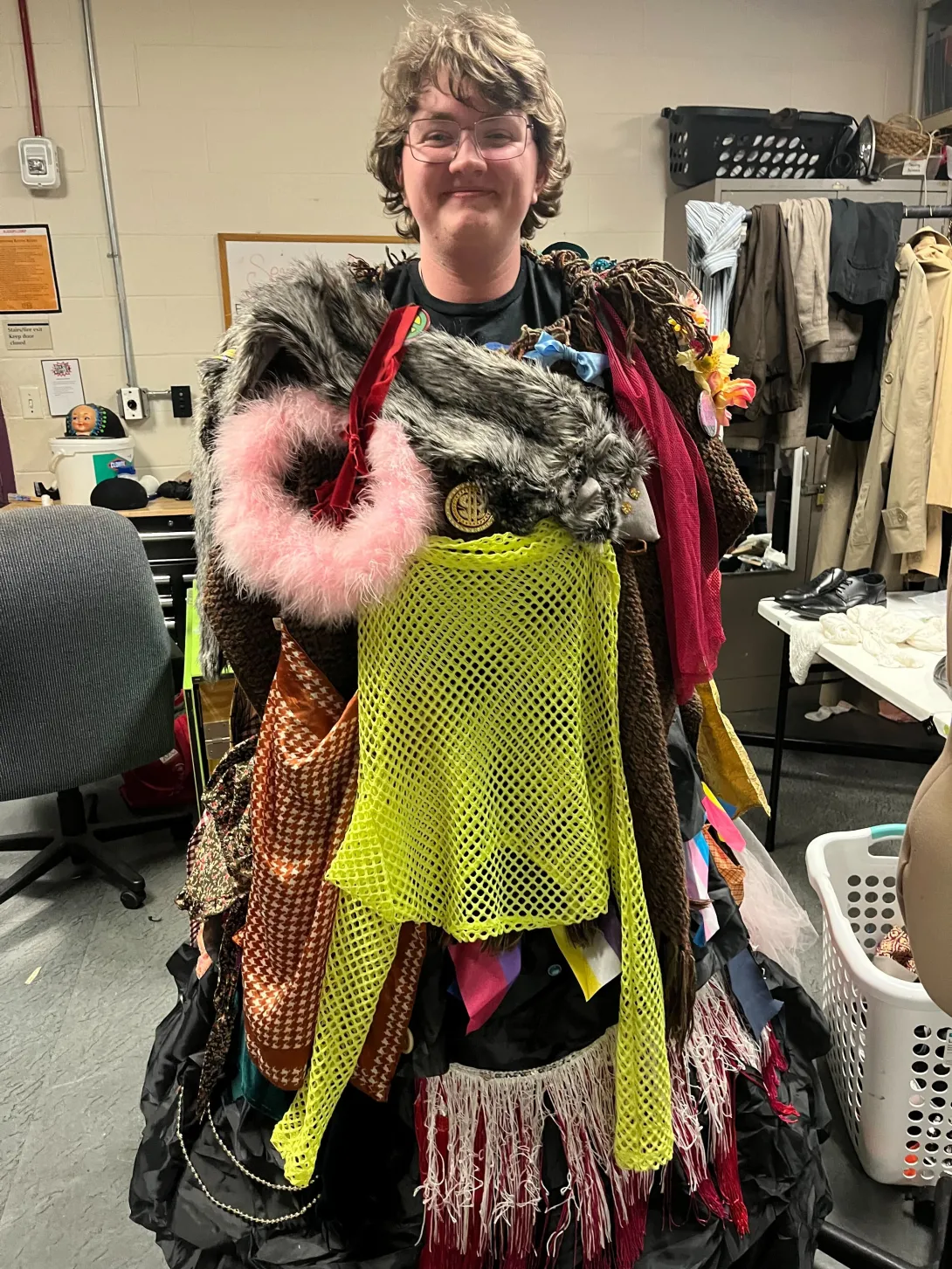
Srihitha Joginapally, a third-year business administration student, received support for GT AfroDance’s Unity Dey. The grant will fund materials for a tie-dye workshop allowing dancers to design their own costumes.
College of Engineering
Lukas Kassatly, a mechanical engineering student and vice president of DramaTech Theatre (School of Mechanical Engineering), will use funds to support DramaTech’s production of Everybody by Branden Jacobs-Jenkins. The performance runs Feb. 20–28 in the Black Box Theatre.
Alexandra Wnuk, a Ph.D. candidate in materials science and engineering (School of Materials Science and Engineering), in collaboration with Ashley Burton and Lucia Lammers, received support for the Textiles Team’s Fashion of the Future on April 17 in the Marcus Nanotechnology Building.
Naugle Writing and Communication Center
Jenessa Kenway, a Marion L. Brittain Postdoctoral Teaching Fellow, in collaboration with Jacqueline Kari, will lead Tender Buttons, Moving Pictures, a course integrating modernism, visual literacy and experimental filmmaking.
For more information about these programs, contact Kailey Albus, student support specialist for Georgia Tech Arts.
News Contact
LaKenya Norris