
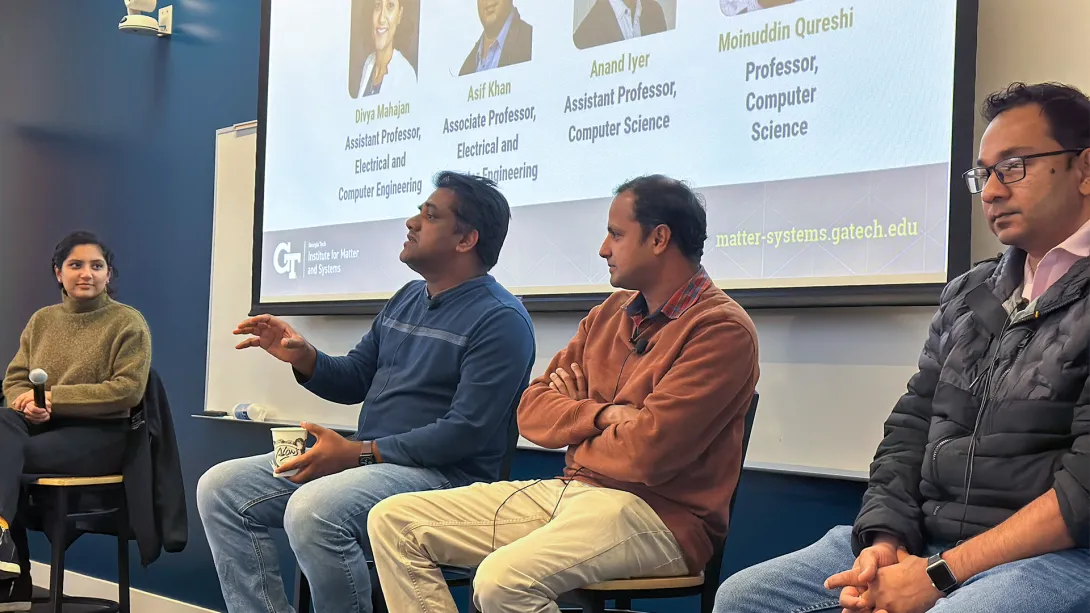
The Institute for Matter and Systems (IMS) hosted the inaugural Boundaries and Breakthroughs panel on Nov. 11, setting the stage for a new era of interdisciplinary dialogue at Georgia Tech. The event, held in the Marcus Nanotechnology building, brought together experts in electrical engineering, computer architecture, and computer systems design to tackle one of today’s pressing challenges: artificial intelligence (AI) scalability and sustainable high-performance computing.
As one of Georgia Tech’s 11 interdisciplinary research institutes, IMS is designed to break down silos between traditional academic units. By operating core user facilities and fostering collaborative research, IMS creates a unique ecosystem where device-level innovation meets systems-level design. This event personified that mission by connecting researchers who typically work on different ends of the stack.
“We’re looking for opportunities to bring people together to have discussions that are both informative and potentially create a little bit of friction in the best possible way around trending topics in science and engineering,” said Mike Filler, IMS deputy director, during opening remarks.
The panel was moderated by Divya Mahajan, assistant professor in the School of Electrical and Computer Engineering, and featured Moinuddin Qureshi, professor of computer science; Anand Iyer, assistant professor of computer science; and Asif Khan, associate professor in electrical and computer engineering.
The discussion explored the dynamics between compute abundance and energy constraints. As AI models scale up, power consumption has become a societal issue, driving up energy demands and even influencing political conversations. The panelists agreed that the bottleneck isn’t compute — a computer’s ability to process and execute tasks — but data movement. Moving data uses 100 to 1,000 times more energy than computation, making memory systems the critical frontier.
The conversation highlighted how breakthroughs in compute must occur at every layer — from individual devices to full computer systems. At the device level, Khan mentioned emerging memory technologies and “beyond CMOS” approaches such as embedding compute within memory and exploring bio-inspired architectures.
From a computer architecture level, Qureshi advocated rethinking interfaces and creating designs optimized for the future of computing. AI needs regular patterns to work optimally, and current patterns are not set up for that.
“If you want efficiency, design systems that make sense for AI,” Qureshi said. “Develop new interfaces, develop new modules, architectures, and organization that make for a specific pattern.”
At the systems level, Iyer stressed practical strategies like near-memory compute and energy-aware scheduling while acknowledging the need for co-design between hardware and software.
“Now in terms of brains or bio-inspired computing, my conjecture is that there is currently no hardware that is capable of doing it,” Khan said. He also noted that right now, there is no computer or algorithm that has the scale of computing comparable to human brain power.
The panelists didn’t shy away from provocative ideas — such as whether graphic processing units are the final solution for AI and whether matrix multiplication alone can lead to artificial general intelligence. While opinions varied, all agreed that organizations like IMS are key to bringing together diverse expertise to tackle these questions collaboratively.
The Boundaries and Breakthroughs series continues in January with a panel on bioelectronics and medical technologies, reinforcing IMS’s commitment to fostering dialogue that spans the full spectrum of innovation.
News Contact
Amelia Neumeister | Research Communications Program Manager
The Institute for Matter and Systems
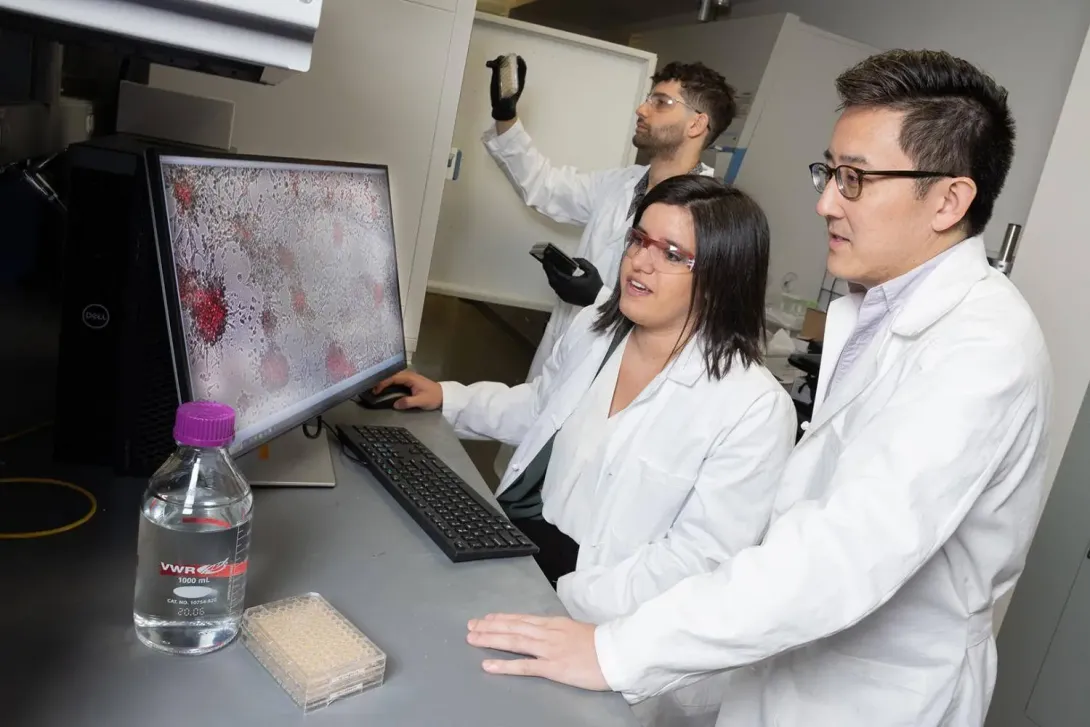
Georgia Institute of Technology has been ranked 7th in the world in the 2026 Times Higher Education Interdisciplinary Science Rankings, in association with Schmidt Science Fellows. This designation underscores Georgia Tech’s leadership in research that solves global challenges.
“Interdisciplinary research is at the heart of Georgia Tech’s mission,” said Tim Lieuwen, executive vice president for Research. “Our faculty, students, and research teams work across disciplines to create transformative solutions in areas such as healthcare, energy, advanced manufacturing, and artificial intelligence. This ranking reflects the strength of our collaborative culture and the impact of our research on society.”
As a top R1 research university, Georgia Tech is shaping the future of basic and applied research by pursuing inventive solutions to the world’s most pressing problems. Whether discovering cancer treatments or developing new methods to power our communities, work at the Institute focuses on improving the human condition.
Teams from all seven Georgia Tech colleges, 11 interdisciplinary research institutes, the Georgia Tech Research Institute, Enterprise Innovation Institute, and hundreds of research labs and centers work together to transform ideas into real results.
News Contact
Angela Ayers
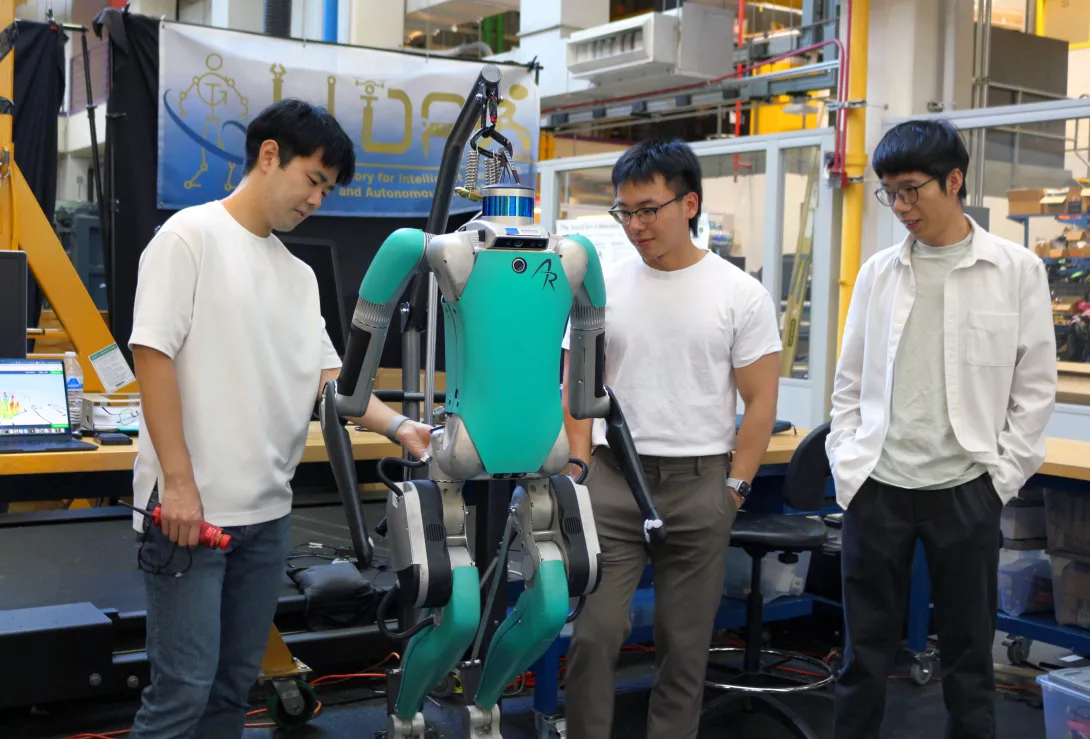
Members of the LIDAR Lab involved with the research with the DIGIT robot used in the trainings.
Viral videos abound with humanoid robots performing amazing feats of acrobatics and dance but finding videos of a humanoid robot performing a common household task or traversing a new multi-terrain environment easily, and without human control, are much rarer. This is because training humanoid robots to perform these seemingly simple functions involves the need for simulation training data that lack the complex dynamics and degrees of freedom of motion that are inherent in humanoid robots.
To achieve better training outcomes with faster deployment results, Fukang Liu and Feiyang Wu, graduate students under Professor Ye Zhao from the Woodruff School of Mechanical Engineering and faculty member of the Institute for Robotics and Intelligent Machines, have published a duo of papers in IEEE Robotics and Automation Letters. This is a collaborative work with three other IRIM affiliated faculties, Profs. Danfei Xu, Yue Chen, and Sehoon Ha, as well as Prof. Anqi Wu from School of Computational Science and Engineering.
To develop more reliable motion learning for humanoid robots and enable humanoid robots to perform complex whole-body movements in the real world, Fukang led a team and developed Opt2Skill, a hybrid robot learning framework that combines model-based trajectory optimization with reinforcement learning. Their framework integrates dynamics and contacts into the trajectory planning process and generates high-quality, dynamically feasible datasets, which result in more reliable motion learning for humanoid robots and improved position tracking and task success rates. This approach shows a promising way to augment the performance and generalization of humanoid RL policies using dynamically feasible motion datasets. Incorporating torque data also improved motion stability and force tracking in contact-rich scenarios, demonstrating that torque information plays a key role in learning physically consistent and contact-rich humanoid behaviors.
While other datasets, such as inverse kinematics or human demonstrations, are valuable, they don’t always capture the dynamics needed for reliable whole-body humanoid control.” said by Fukang Liu. “With our Opt2Skill framework, we combine trajectory optimization with reinforcement learning to generate and leverage high-quality, dynamically feasible motion data. This integrated approach gives robots a richer and more physically grounded training process, enabling them to learn these complex tasks more reliably and safely for real-world deployment. - Fukang Liu
In another line of humanoid research, Feiyang established a one-stage training framework that allows humanoid robots to learn locomotion more efficiently and with greater environmental adaptability. Their framework, Learn-to-Teach (L2T), unlike traditional two-stage “teacher-student” approaches, which first train an expert in simulation and then retrain a limited-perception student, teaches both simultaneously, sharing knowledge and experiences in real time. The result of this two-way training is a 50% reduction in training data and time, while maintaining or surpassing state-of-the-art performance in humanoid locomotion. The lightweight policy learned through this process enables the lab’s humanoid robot to traverse more than a dozen real-world terrains—grass, gravel, sand, stairs, and slopes—without retraining or depth sensors.
By training an expert and a deployable controller together, we can turn rich simulation feedback into a lightweight policy that runs on real hardware, letting our humanoid adapt to uneven, unstructured terrain with far less data and hand-tuning than traditional methods. - Feiyang Wu
By the application of these training processes, the team hopes to speed the development of deployable humanoid robots for home use, manufacturing, defense, and search and rescue assistance in dangerous environments. These methods also support advances in embodied intelligence, enabling robots to learn richer, more context-aware behaviors.Additionally, the training data process can be applied to research to improve the functionality and adaptability of human assistive devices for medical and therapeutic uses.
As humanoid robots move from controlled labs into messy, unpredictable real-world environments, the key is developing embodied intelligence—the ability for robots to sense, adapt, and act through their physical bodies,” said Professor Ye Zhao. “The innovations from our students push us closer to robots that can learn robust skills, navigate diverse terrains, and ultimately operate safely and reliably alongside people. - Prof. Ye Zhao
Author - Christa M. Ernst
Citations
Liu F, Gu Z, Cai Y, Zhou Z, Jung H, Jang J, Zhao S, Ha S, Chen Y, Xu D, Zhao Y. Opt2skill: Imitating dynamically-feasible whole-body trajectories for versatile humanoid loco-manipulation. IEEE Robotics and Automation Letters. 2025 Oct 13.
Wu F, Nal X, Jang J, Zhu W, Gu Z, Wu A, Zhao Y. Learn to teach: Sample-efficient privileged learning for humanoid locomotion over real-world uneven terrain. IEEE Robotics and Automation Letters. 2025 Jul 23.
News Contact

The Georgia Tech Library is proud to show a new piece from Hyojin Kwon and Nix Liu Xin on the Media Bridge, Synthetic Ecologies: AI-Translated Matter in Architectural Media.
The four-minute piece, which went live in November, is playing every hour at the ten-minute mark on Media Bridge, located between Price Gilbert and Crosland Tower.
About Synthetic Ecologies: AI-Translated Matter in Architectural Media
Rather than accelerating images, Synthetic Ecologies asks “how matter thinks.” New Materialism treats matter as an active partner; design emerges where human intention intra-acts with things, datasets, models, and light. Authorship becomes orchestration, and every dataset a canon—a politics of selection. Method, therefore, is ethics.
The project authors a white model first, fixing space, camera, light, and motion as temporal logic. AI then enters as a translator, moving on rails of depth/normal/segmentation with flow consistency. The surface reveals signs of behavior—gloss, scattering, porosity, accretion—rather than mere style. We publish provenance—sources and biases, node graphs and parameters, timelines and versions—so choices are traceable and contestable, transferable to learning, practice, and public decision.
From plastic toward a synthetic ecology, the work declares architecture thinking with media. AI is not authority but a transparent amplifier; authorship is not surrendered.
Spanning the Library, the Media Bridge is a civic threshold of study and routine, a common ceiling shared day and night. Installed overhead, the flow of plastics becomes a sky that prompts daily audiences to reflect on circulation, responsibility, and bias. Open provenance turns the piece into a public manifesto, linking campus AI literacy and circularity agendas to civic practice. The work does more than show images; it proposes a public curriculum where data and decisions, materials and culture, negotiate in view of the community.
Artist Bios
Hyojin Kwon is an Assistant Professor in the School of Architecture at the Georgia Institute of Technology and cofounder of Pre- and Post-, a research-driven design practice based in Atlanta and Boston. Her work explores how digital media — including animation, simulation, and AI-assisted image workflows — can function as both generative and critical tools within architectural design. Situated within a post digital framework, her recent projects investigate material agency and synthetic ecologies, often translating computational processes into civic installations and experimental representations. Her work has been exhibited internationally, including at the Museum of Brisbane, Tokyo Designers Week, Seoul Foundation for Arts and Culture, and Atlanta Contemporary, and supported by institutions such as MacDowell, Art Omi, and Autodesk.
Nix Liu Xin is a spatial computing artist and director, Harvard graduate, and the founder & CEO of OI (Onceness Intelligence), an experiential-AI startup. He envisions a future where 4D–AI interfaces enable everyone to record life moments, relive memories, and design immersive spatial experiences through intelligent 4D media.
He was named to the AACYF 30 Under 30 and has received accolades such as the Harvard Design Studies Domain Award, the CGarchitect 3D Awards, and the MIT AI Film Hack Award for Best Picture.
Additionally, Nix was featured as an artist at the Lianzhou Photography Biennale. He also co-founded the HarvardXR Conference and the Creative.Tech Community.
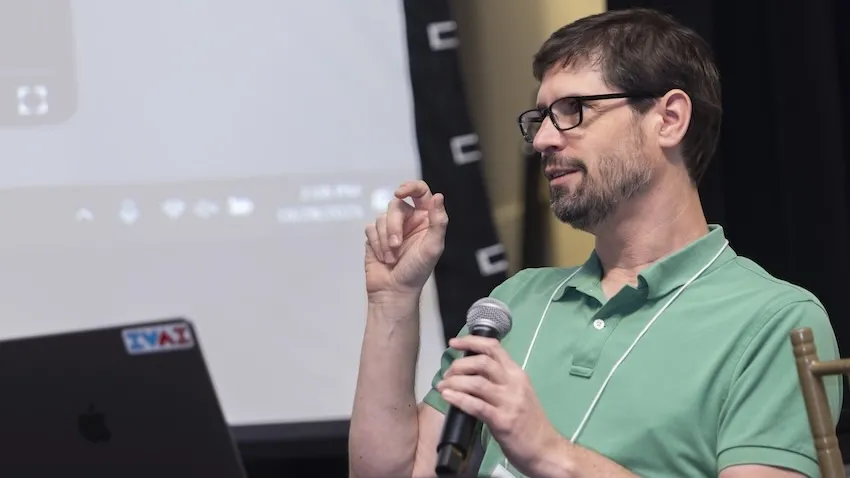
One of the top conferences for AI and computer games is recognizing a School of Interactive Computing professor with its first-ever test-of-time award.
At its event this week in Alberta, Canada, the AAAI Conference on Artificial Intelligence and Interactive Digital Entertainment (AIIDE) is honoring Professor Mark Riedl. The award also honors University of Utah Professor and Division of Games Chair Michael Young, Riedl’s Ph.D. advisor.
Riedl studied under Young at North Carolina State University.
Their 2005 paper, From Linear Story Generation to Branching Story Graphs, highlighted the challenges of using AI to create interactive gaming narratives in which user actions influence the story’s progression.
In 2005, computer game systems that supported linear, non-branching games were widely used. Riedl introduced an innovative mathematical formula for interactive stories ranging from choose-your-own-adventure novels to modern computer games.
“We didn’t use the term ‘generative AI’ back then, but I was working on AI for the generation of creative artifacts,” Riedl said. “This was before we had practical deep learning or large language models.
“One of the reasons this paper is still relevant 20 years later is that it didn’t just present a technology, it attempted to provide a framework for solving a grand challenge in AI.”
That challenge is still ongoing, Riedl said. Game designers continue to struggle with balancing story coherence against the amount of narrative control afforded to users.
“When users exercise a high degree of control within the environment, it is likely that their actions will change the state of the world in ways that may interfere with the causal dependencies between actions as intended within a storyline,” Riedl and Young wrote in the paper.
“Narrative mediation makes linear narratives interactive. The question is: Is the expressive power of narrative mediation at least as powerful as the story graph representation?”
AIIDE is being held this week at the University of Alberta in Edmonton, Alberta. Riedl will receive the award on Wednesday.
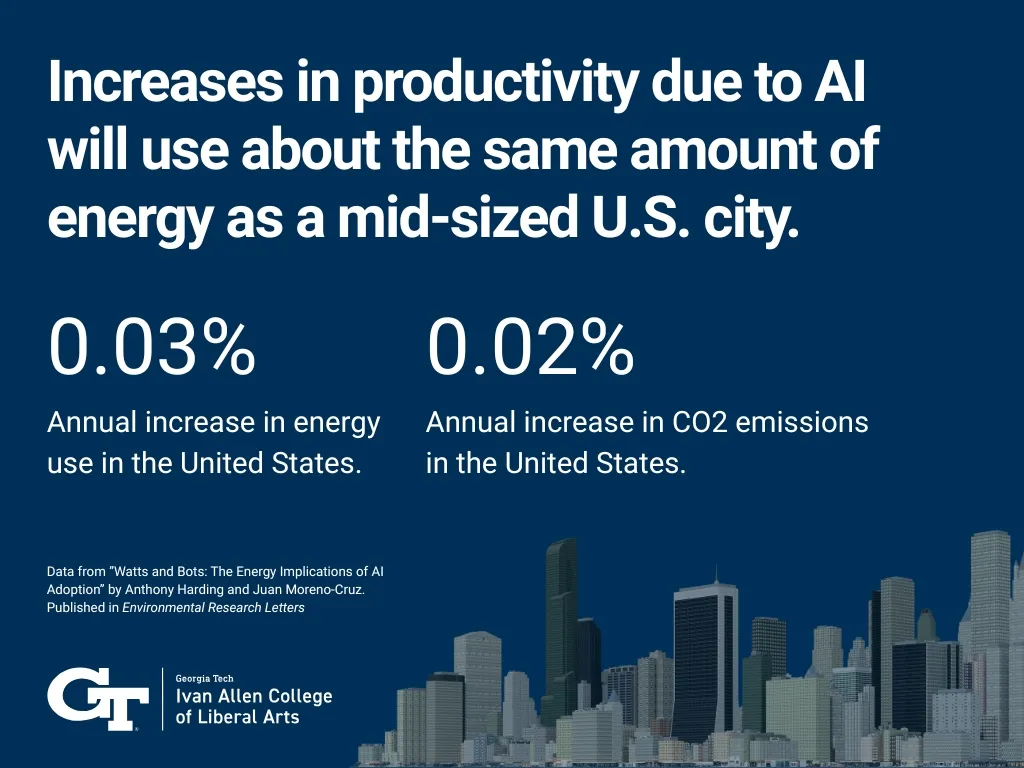
Artificial intelligence doesn’t just consume energy via data centers and hardware. It also increases productivity, which comes with its own energy and emissions costs.
A new study from Georgia Tech’s Jimmy and Rosalynn Carter School of Public Policy is one of the first to estimate how changes in productivity due to AI will affect energy consumption.
The paper, written by Anthony Harding and co-author Juan Moreno-Cruz at the University of Waterloo, suggests that greater productivity due to AI will result in a 0.03% annual increase in energy use in the United States and a 0.02% increase in CO2 emissions. That’s about equal to the yearly electricity use of a mid-sized U.S. city.
“If AI is as transformational as some expect it to be, it makes it even more important to think about the knock-on effects throughout the economy, beyond just the demands of the technology itself,” Harding said. “U.S. energy demand has stabilized since the mid-2000s. There is potential for AI to disrupt this, but there is also large uncertainty.”

Anton Leykin
School of Mathematics Professor Anton Leykin is part of a research team selected to receive support through the AI for Math Fund, a new grant program created to accelerate the development of artificial intelligence (AI) and machine learning tools for mathematics.
“This grant gives me a foothold in a new world where AI can be used in a very concrete way,” says Leykin. “It’s an opportunity to move beyond the hype and develop tools that truly benefit mathematical research.”
With a total of $18 million in inaugural grants to 29 project teams, the AI for Math Fund backs initiatives that create open-source tools, expand high-quality datasets for AI training, and make advanced systems more accessible to mathematicians. The fund received 280 grant applications from researchers and mathematicians worldwide.
Building bridges
Leykin’s global team includes researchers from the University of South Carolina, University of Warwick, and Cornell University. Their project, “Bridging Proof and Computation: For a Verified Lean-Macaulay2 Interface,” aims to connect two powerful systems: Lean, a platform for assisting and formalizing mathematical proofs, and Macaulay2, a computational algebra system widely used in research.
By developing a native interface — a built-in connection that allows the two systems to work together without external tools — and a Lean-based domain-specific language, the project will enable communication between these systems. This will allow Lean users to formulate tactics that involve sophisticated computation done by algorithms implemented in Macaulay2; in return, Macaulay2 users can formalize computer-assisted proofs via Lean with a little help from AI.
“This integration has the potential to transform how mathematicians work,” says Leykin. “It will not only connect Lean and Macaulay2 but also lay the groundwork for a general interface that could benefit other computer algebra systems in the future.”
His goal is to create a robust proof-assistance system where AI can help generate strategies and validate proofs, driving progress in areas that require both computational power and rigorous verification.
About the AI for Math Fund
A joint initiative developed in partnership between Renaissance Philanthropy and founding donor XTX Markets, the AI for Math Fund is one of the largest philanthropic commitments supporting the development of AI and machine learning tools to advance mathematics. Individual grants range up to $1 million for 24 months of work on open-source projects and research.
News Contact
Laura Segraves Smith, writer
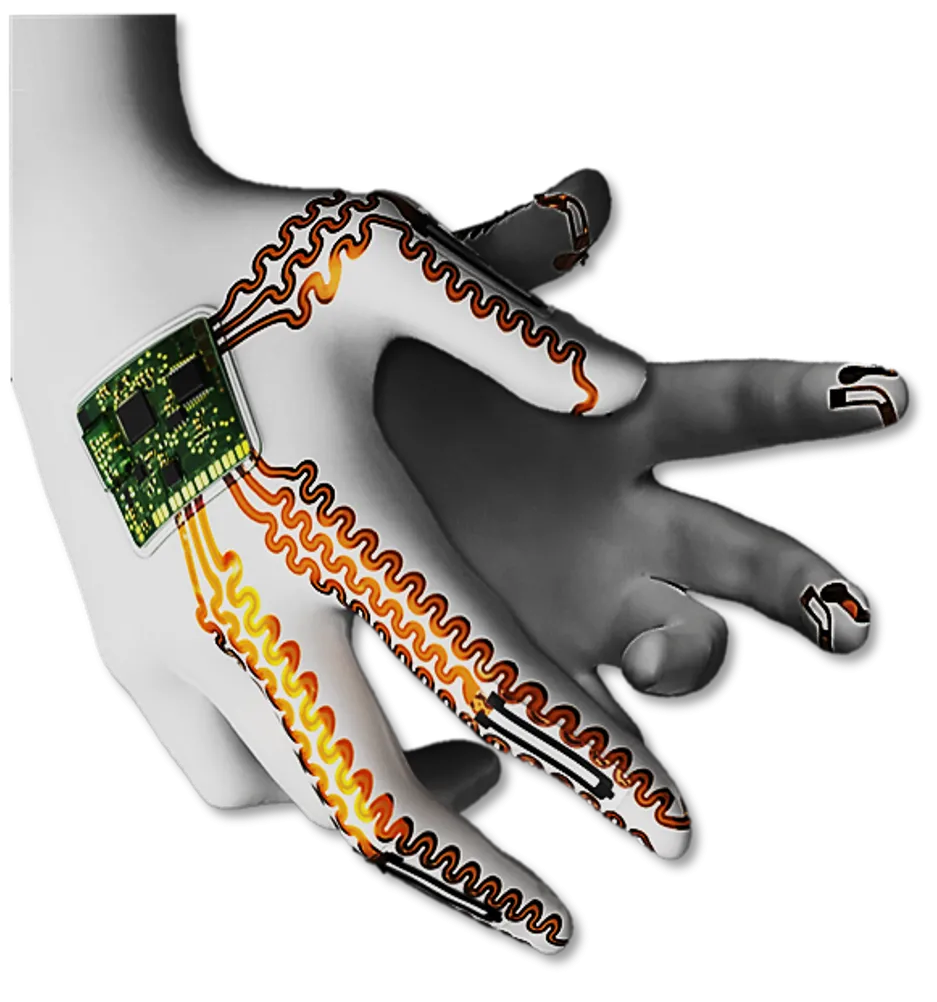
A mock-up of an AI-powered glove with muscles made from lifelike materials paired with intelligent control systems. The technology learns from the body and adapts in real time, creating motion that feels natural, responsive, and safe enough to support recovery.
Pop culture has often depicted robots as cold, metallic, and menacing, built for domination, not compassion. But at Georgia Tech, the future of robotics is softer, smarter, and designed to help.
“When people think of robots, they usually imagine something like The Terminator or RoboCop: big, rigid, and made of metal,” said Hong Yeo, the G.P. “Bud” Peterson and Valerie H. Peterson Professor in the George W. Woodruff School of Mechanical Engineering. “But what we’re developing is the opposite. These artificial muscles are soft, flexible, and responsive — more like human tissue than machine.”
Yeo’s latest study, published in Materials Horizons, explores AI-powered muscles made from lifelike materials paired with intelligent control systems. The technology learns from the body and adapts in real time, creating motion that feels natural, responsive, and safe enough to support recovery.
Muscles That Think, Materials That Feel
Traditional robotics relies on steel, wires, and motors, but rarely captures the nuances of human motion. Yeo’s research takes a different approach. He uses hierarchically structured fibers, which are flexible materials built in layers, much like muscle and tendon. They can sense, adapt, and even “remember” how they’ve moved before.
Yeo trains machine learning algorithms to adjust those pliable materials in real time with the right amount of force or flexibility for each task.
“These muscles don’t only respond to commands,” Yeo said. “They learn from experience. They can adapt and self-correct, which makes motion smoother and more natural.”
The result of that research is deeply human. For someone recovering from a stroke or limb loss, each deliberate movement rebuilds not just strength — it rebuilds confidence, independence, and a sense of self.
A Glove That Gives Freedom Back
One of the first real-world applications is a prosthetic glove powered by artificial muscles (published in ACS Nano, 2025), a device that behaves more like a helping hand than a mechanical tool. Traditional prosthetics rely on rigid motors and preset motions, but Yeo’s design mirrors the natural give-and-take of real muscle.
Inside the glove, thin layers of stretchable fibers and sensors contract, twist, and flex in sync with the wearer’s intent. The glove can fine-tune grip strength, reduce tremors, and respond instantly to the user’s movements, bringing dexterity back to everyday life.
That kind of precision matters most in the smallest tasks: fastening a button, lifting a glass, holding a child’s hand.
“These aren’t just movements,” Yeo said. “They’re freedoms.”
For Yeo, the idea of restoring freedom through movement has driven his research from the very beginning.
A Mission Rooted in Loss
Yeo's work is deeply personal. His path to biomedical engineering began with loss — the sudden death of his father while Yeo was still in college. That moment reshaped his sense of purpose, redirecting his focus from machines that move to technologies that heal.
“Initially, I was thinking about designing cars,” he said. “But after my father’s death, I kind of woke up. Maybe I could do something that helps save someone’s life.”
That purpose continues to guide his lab’s work today, building technologies that help people recover what they’ve lost.
Achieving that vision, however, means tackling some of engineering’s toughest challenges.
Soft Machines, Hard Problems
Creating lifelike muscles isn’t easy. They need to be soft but strong, responsive but safe. And they must avoid triggering the body’s immune system. That means building materials that can survive inside the body — and learn to belong there.
“We always think about not only function, but adaptability,” Yeo said. “If it’s going to be part of someone’s body, it has to work with them, not against them.”
His team calibrates these synthetic fibers like precision instruments — tested, adjusted, and re-tuned until they operate in sync with the body’s natural movements. Over time, they develop a kind of “muscle memory,” adapting fluidly to changing conditions. That dynamic adaptability, Yeo explained, is what separates a machine from a prosthetic that truly feels alive.
From Collaboration to Innovation
Solving problems this complex requires more than one discipline. It takes an entire ecosystem of collaboration. Yeo’s lab brings together experts in mechanical engineering, materials science, medicine, and computer science to design smarter, safer devices.
“You can’t solve this kind of problem in isolation,” he said. “We need all of it — polymers, artificial intelligence, biomechanics — working together.”
That collaborative model is supported by the National Science Foundation (NSF), the National Institutes of Health, and Georgia Tech’s Institute for Matter and Systems. In 2023, Yeo received a $3 million NSF grant to train the next generation of engineers building smart medical technology.
His team now works closely with healthcare providers and industry partners to bring these devices out of the lab and into patients’ lives.
The Future You Can Feel
The future of robotics, according to Yeo, won’t be defined by power or complexity but by feel.
“If it feels foreign, people won’t use it,” he said. “But if it feels like part of you, that’s when it can truly change lives.”
It’s the opposite of The Terminator, where machines replace us. Yeo is designing these machines to help us reclaim ourselves.
News Contact
Michelle Azriel Writer/Editor, Research Communications
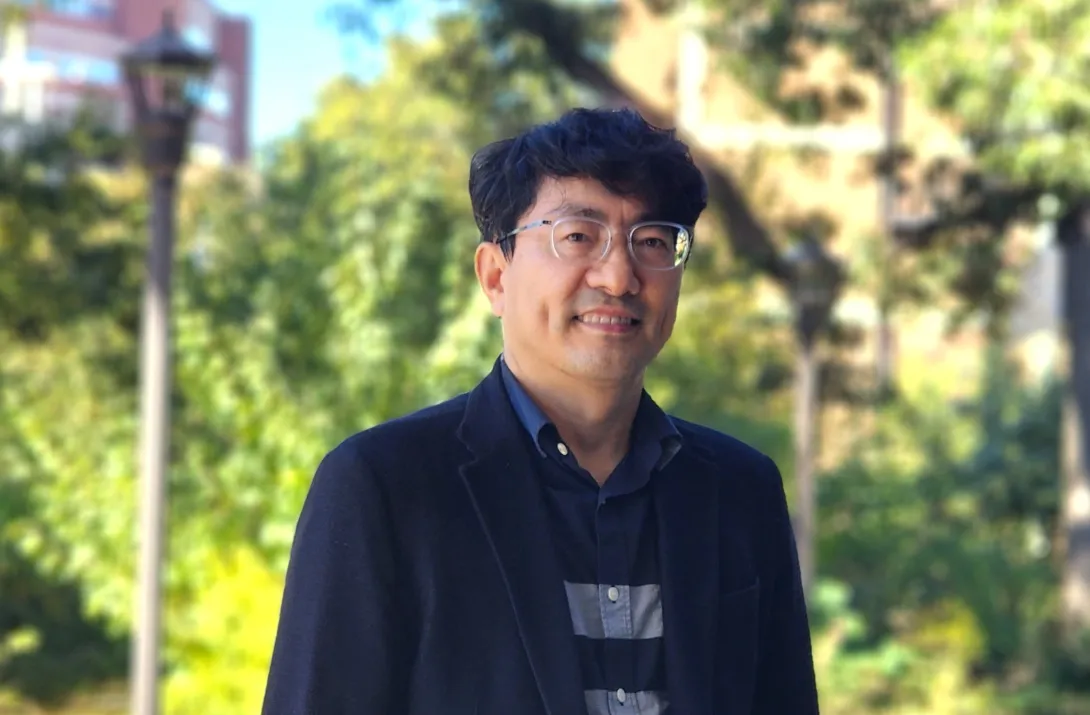
The Center for 21st Century Universities (C21U) is excited to announce that Sanghyun Jang will join Georgia Tech as a C21U visiting research scholar starting on October 20, 2025. He comes from South Korea, where he served as director of the education data center at the Korea Education and Research Information Service (KERIS). For one year, he will be based in Atlanta, Georgia, collaborating with C21U faculty and researchers to develop AI-based learning systems and leverage educational data to improve student outcomes.
“We are pleased to welcome Sanghyun Jang to C21U as our visiting scholar. His leadership and expertise in Korea’s national digital and AI education initiatives offer an invaluable global perspective to our goal of promoting innovation in lifelong learning. His visit will assist us in exploring new models of AI-enabled education that link K–12, higher education, and lifelong learners worldwide,” said C21U Executive Director Stephen Harmon.
Sanghyun has extensive experience leading national education data initiatives in South Korea and collaborating with international organizations like UNESCO and the World Bank. This aligns well with C21U’s mission to promote personalized, data-driven teaching and learning at scale. His expertise highlights our commitment to global collaboration and leadership in AI-powered education.
“I deeply appreciate the opportunity to join C21U and collaborate with Georgia Tech’s outstanding researchers. Their innovative work in AI and lifelong learning provides a strong foundation for meaningful international collaboration and innovation. I am excited that this visiting scholar experience will help build a global network for AI and education research by connecting KERIS, Korean universities, and Georgia Tech,” said Sanghyun Jang.
C21U’s team looks forward to sharing updates on Sanghyun’s work throughout the year. Stay tuned for upcoming events and research highlights.
Sanghyun Jang holds a doctorate in computer engineering from Dongguk University.
News Contact
Yelena M. Rivera-Vale, M.A. (she/her(s)/ella)
Communications Program Manager
C21U, College of Lifetime Learning
Georgia Institute of Technology
Strategic, Learner, Relator, Intellection, Input
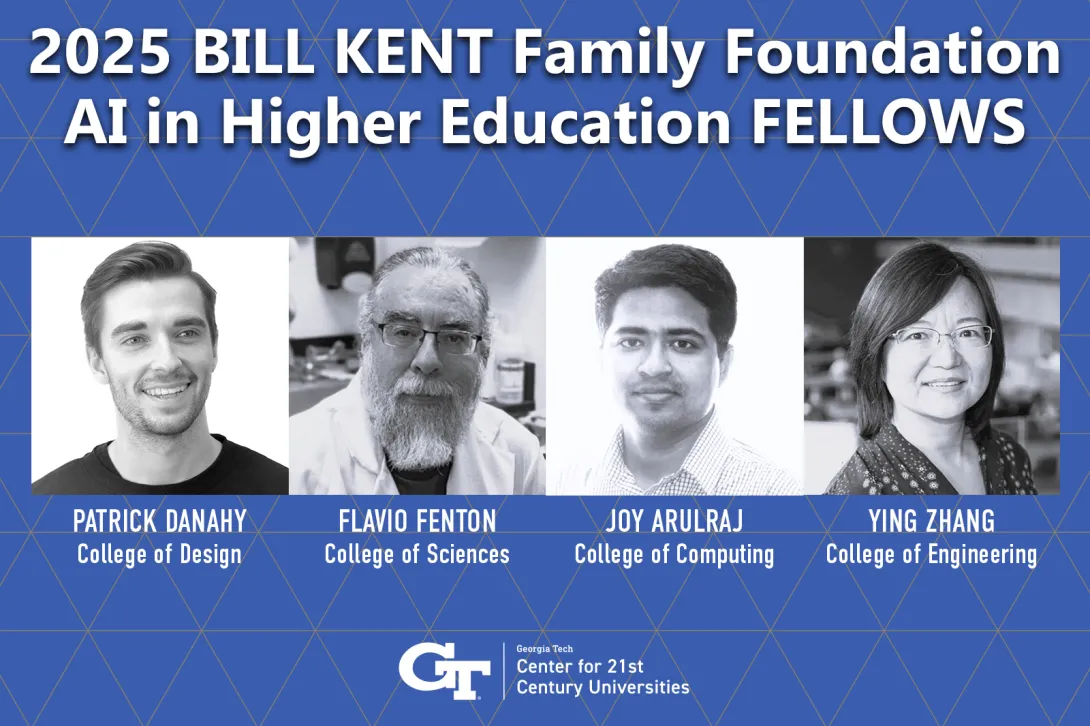
The Center for 21st Century Universities (C21U) has announced the inaugural cohort of Bill Kent Family Foundation AI in Higher Education Faculty Fellows for 2025–26. This C21U-led fellowship program supports faculty projects that explore innovative, ethical, and impactful uses of artificial intelligence in teaching and learning.
The fellows are Professor Flavio Fenton from the College of Sciences, Joy Arulraj from the College of Computing, Patrick Danahy from the College of Design, and Professor and Associate Chair of the School of Electrical and Computer Engineering Ying Zhang, from the College of Engineering. Each fellow will lead a project that advances AI’s role in higher education.
“We deeply appreciate the generosity of the Dr. Bill Kent family in establishing this first philanthropic gift to our new College. Their generous support will allow us to encourage practical applications of AI and foster an appreciation for its ethical use,” said William Gaudelli, inaugural dean of the Georgia Tech College of Lifetime Learning. “This Fellowship will ensure we grow and learn about its use thoughtfully, developing highly innovative and engaging pedagogical experiences for all life’s stages.”
Arulraj’s TokenSmith: Fast, Local, Citable LLM Tutoring introduces a privacy-conscious AI tutoring system for database courses that provides verifiable, course-aligned answers. Fenton’s AI as a Learning Assistant develops AI-enabled instructional modules for physics, neuroscience, and scientific writing to improve conceptual understanding and promote ethical AI use. Danahy’s AI-Enabled Design Ideation and Robotic 3D Printing with Open-Source Platforms integrates AI-driven design and robotic fabrication into architecture education while addressing ethics and sustainability. Zhang’s AI-Enabled Personalized Engineering Education expands personalized learning in large engineering courses through AI tutoring frameworks and integrates AI literacy into the curriculum.
“The Bill Kent Family Fellowship gives our faculty the resources and flexibility to experiment with AI in ways that directly benefit students and inform the future of higher education,” said Stephen Harmon, executive director of C21U.
The fellowship received 21 applications from all seven Georgia Tech colleges, reflecting the educational AI subject-matter experts for their units and the Institute as a whole. Fellows will develop and implement their projects during the 2025–26 academic year and share outcomes through C21U Learning Labs and other campus events.
The Bill Kent Family Foundation partnered with C21U to establish this fellowship and support faculty innovation at Georgia Tech. Through this program, the Foundation invests in projects that explore responsible and impactful uses of artificial intelligence in teaching and learning. By funding this initiative, the Foundation aims to empower educators to develop scalable instructional models, promote ethical AI practices, and prepare students for a future shaped by emerging technologies.
News Contact
Yelena M. Rivera-Vale, M.A. (she/her(s)/ella)
Communications Program Manager
Center for 21st Century Universities
College of Lifetime Learning
Georgia Institute of Technology
Strategic, Learner, Relator, Intellection, Input