
A drone powered by artificial intelligence crashes in a remote field, destroying its onboard computer and leaving investigators without the data needed to determine whether a cyberattack caused the failure.
Researchers at Georgia Tech say they have developed a system to help answer that question.
Known as FIRA, the tool analyzes drone crashes to determine whether they were caused by poisoned machine-learning (ML) models. The team will present its findings at the 35th USENIX Security Symposium in August.
The research addresses a growing safety challenge as drones are increasingly used for deliveries, infrastructure inspections, and agriculture.
As drones rely more on machine learning to navigate and make decisions, they also become vulnerable to model poisoning attacks. In these attacks, adversaries manipulate an AI system during its learning phase, embedding hidden triggers that can cause failures under specific conditions.
“Machine learning drones are making more decisions in flight, which makes ML a safety-critical component of these systems,” said Yizhi Huang, Ph.D. student and lead researcher on the project.
“When something goes wrong, investigators need a way to ask whether the model was responsible, but the model is the part of the system that no one can examine after a crash. FIRA gives investigators a way to investigate these cases by reconstructing what the model was doing during the crash. As more drones run with ML, this kind of forensic capability can help drones be used more effectively and safely.”
When a drone crashes, investigators must determine whether the cause was malicious interference, weather, or mechanical failure. Without reliable forensic tools, accountability is difficult to establish, and safety standards are harder to enforce.
FIRA identifies how drone components interact with machine learning models and monitors those interactions in real time, even with limited bandwidth.
The system functions like a flight recorder, capturing key system activity and reconstructing a timeline after a crash. It then analyzes the model’s behavior to determine whether a malicious trigger was introduced via poisoned ML training data.
In tests across multiple drone platforms and crash scenarios, FIRA identified failure causes and distinguished cyberattacks from environmental or mechanical issues.
The system does not require access to a drone’s source code, making it practical for real-world investigations.
“As commercial drone use expands, tools like FIRA could help improve accountability and trust in AI-powered systems operating in public airspace,” said Huang.
FIRA: Enabling Automatic Forensic Investigation of Unmanned Aerial Vehicles was led by Georgia Tech’s Cyber Forensics Innovation Lab in cooperation with the Cyber-Physical Security Lab. These labs reside in the School of Cybersecurity and Privacy and the School of Electrical and Computing Engineering.
News Contact
John Popham
Communications Officer II at the School of Cybersecurity and Privacy
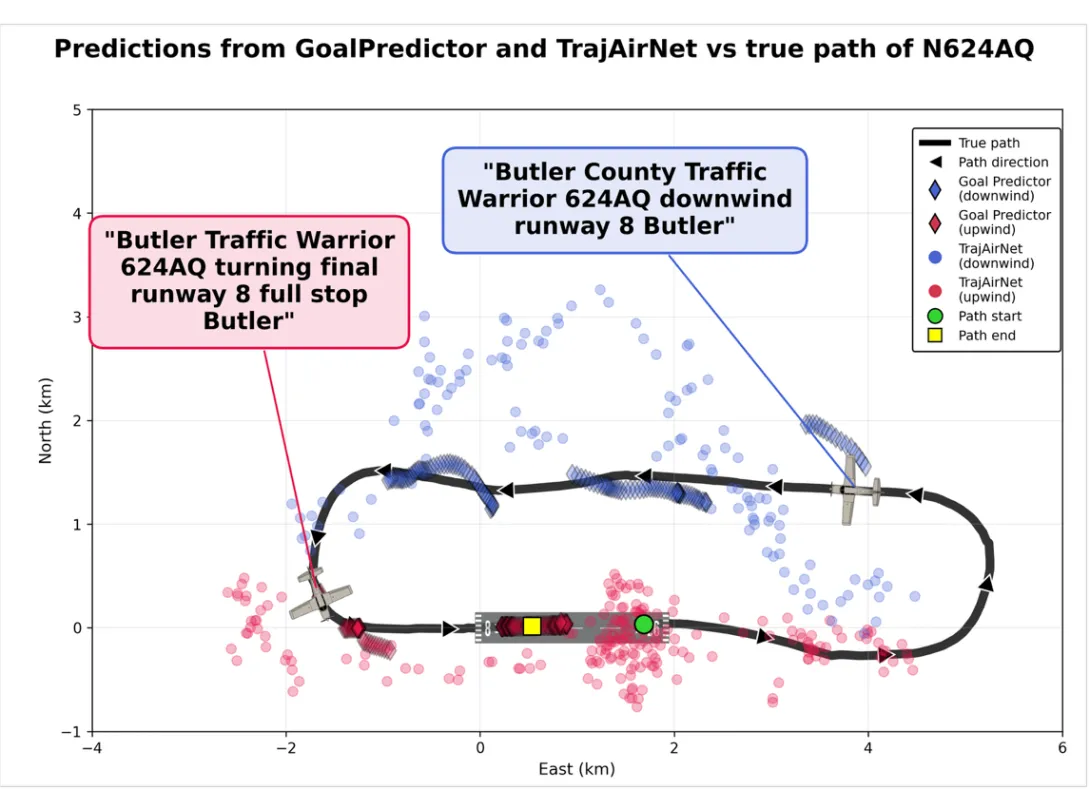
Predictions from GoalPredictor and TrajAirNet vs. true path of N624AQ
As the skies grow more congested, from low Earth orbit to downtown airspace, the need for smarter autonomous systems has never been greater. Collisions in space have become an expensive problem, and urban air mobility is an option worth exploring given the increasing traffic problems plaguing major cities.
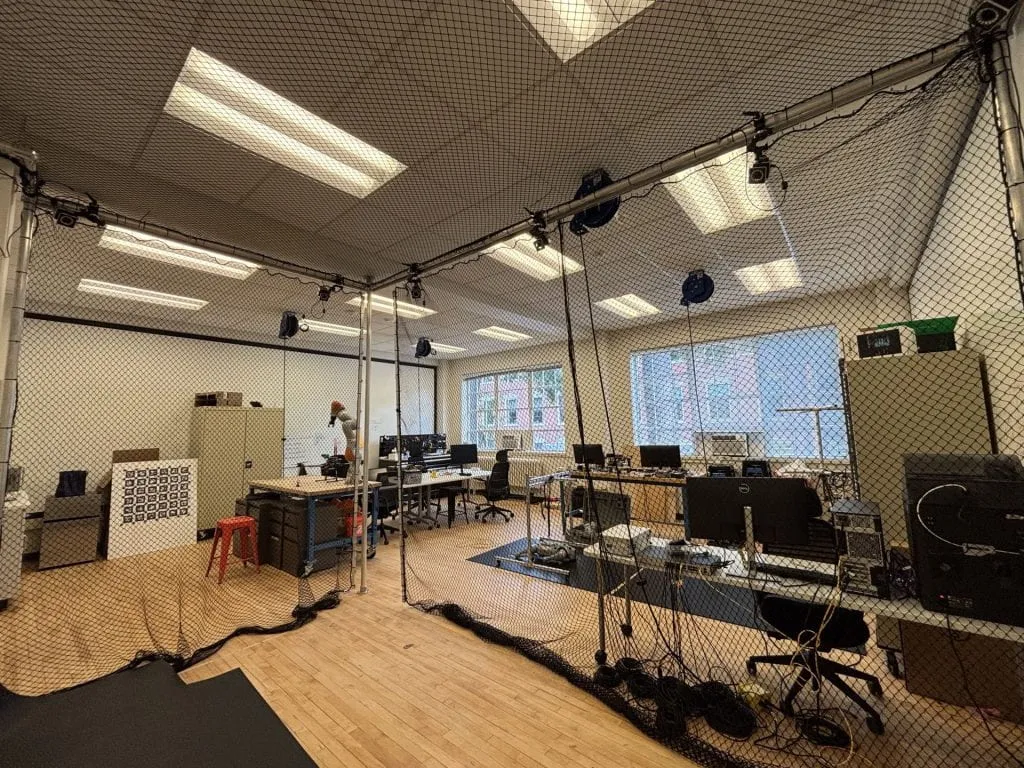
Managing these complexities is a mathematical challenge and the Control, Coordination, and Competition under Uncertainty (C3U) Lab is tackling it head-on. Led by Assistant Professor Sarah H.Q. Li, the lab develops algorithms to help satellites make decisions to avoid orbital conflicts. She‘s developed an algorithm that allows a servicing satellite to assist other satellites that find themselves spinning out of control. Li is exploring airspace management for urban mobility, as well. She specializes in multi-agent systems and in interactive decision-making among autonomous vehicles, humans, and aircraft.
Preventing Debris from Derailing the Mission
Colliding with debris can end a satellite’s mission in an instant, causing significant damage or sending the spacecraft into an uncontrollable spin. With growing congestion in low Earth orbit, other objects in space can put satellites at risk, and a poorly timed maneuver, to avoid space debris or another spacecraft, can be just as dangerous as not maneuvering at all. Li’s research helps autonomous satellites reason through these encounters, coordinate with servicing satellites when needed, and decide when it’s safest to move or hold position.
“Satellite operators haven’t established methods to automate collision‑avoidance maneuvers,” Li said. “A major challenge is the significant uncertainty that space operators must manage. Uncertainty in space exceeds what ground‑based autonomous systems encounter.”
On Earth, autonomous vehicles generally know their precise location, so the problem becomes determining how far or in which direction to move. In space, position estimates can span hundreds of kilometers. Often, operators on the ground simply cannot determine whether two objects will collide. To move or not to move becomes a critical question, especially with large differences in fuel costs. Frequent moves can quickly deplete a satellite’s limited fuel. Li’s algorithm incorporates guidance used for ground‑based autonomous systems that’s modified to account for these challenges. Li’s paper presented at the American Institute of Aeronautics and Astronautics (AIAA) Astrodynamics Specialist 2025 Conference detailing this work.
Beyond collision avoidance, satellites must also survive an impact. When a satellite is hit by debris or accumulates momentum over time, it can begin spinning unpredictably. Once that happens, stabilizing the satellite becomes extremely complicated.
In a recent AIAA SciTech Forum paper, Li and her team demonstrated a momentum‑balanced contact strategy that enables a servicing satellite to safely approach and stabilize a free‑spinning object. They simulated a it equipped with a robotic arm that approaches the spinning object and matches its rotation. Once the two are synchronized, the robotic arm extends and grabs the spinning object and stabilizes its orientation.
They’re approaching this research in multiple stages. The core algorithm is already functional, so the team is building a higher‑fidelity simulation environment to validate their approach. Once they validate the algorithm through additional experiments, they will transition to physical tests using drones.
Navigating City Skyways
In addition, C3U is focused on urban mobility issues with shared air space. As traffic negatively impacts major cities, and supply and demand for goods increases, the airways become a major consideration for transportation in urban areas. Once more urban airways are open, much like highways, there must be a system to avoid collision and confusion.
In shared airspace, multiple drones, each traveling to their own destination, must navigate potential conflicts as they cross one another’s paths. To manage this, Li applies principles from auction theory. In this framework, drones “bid” for access to specific portions of the airspace based on vehicle-specific preferences like specific altitudes, routes and visibility.
“An auctioneer‑like mechanism, similar to an air traffic controller, evaluates these bids and assigns routes accordingly, sometimes granting a preferred path, and other times determining that no safe route is available. The system is designed to encourage each drone to bid truthfully according to its actual needs, preventing both overbidding and underbidding,” Li explained.
By ensuring truthful participation, the mechanism can allocate airspace efficiently and fairly, allowing individually optimal decisions to produce coordinated, system‑wide safety.
“Economic models typically assume a direct link between price and reward, but engineering doesn’t work that way,” Li said. “In our world, everything depends on dynamics—how vehicles move, how routes connect, and how safety constraints interact in real time. Our inputs are acceleration vectors to the drone, which controls how the drone moves through space, and the outputs are where it ends up. Only after that can we determine the true ‘reward.’ Engineering forces us to account for complex physical behavior. Part of my work is figuring out how to bridge those two worlds.”
AI Anticipating Human Intent
C3U is also exploring how large language models (LLMs), advanced systems designed to understand and generate human language, can help autonomous aircraft understand human pilots. They are developing an LLM‑enabled system that can listen to real‑time radio communications and interpret pilot intentions, allowing autonomous aircraft to anticipate pilot in unpredictable environments rather than simply reacting to it.
In a recent paper Li co-authored, she examined how LLMs can predict and improve landings at airports without a control tower.
“We are looking at using LLMs to process information so autonomous systems can infer what pilots are planning,” Li explained. “By converting unstructured audio into structured content, the system allows autonomous aircraft to plan more safely.”
For Li, the project represents another step toward a future where autonomous vehicles can navigate complex, uncertain environments by understanding dynamics and the human language shaping the airspace around them.
News Contact
Monique Waddell
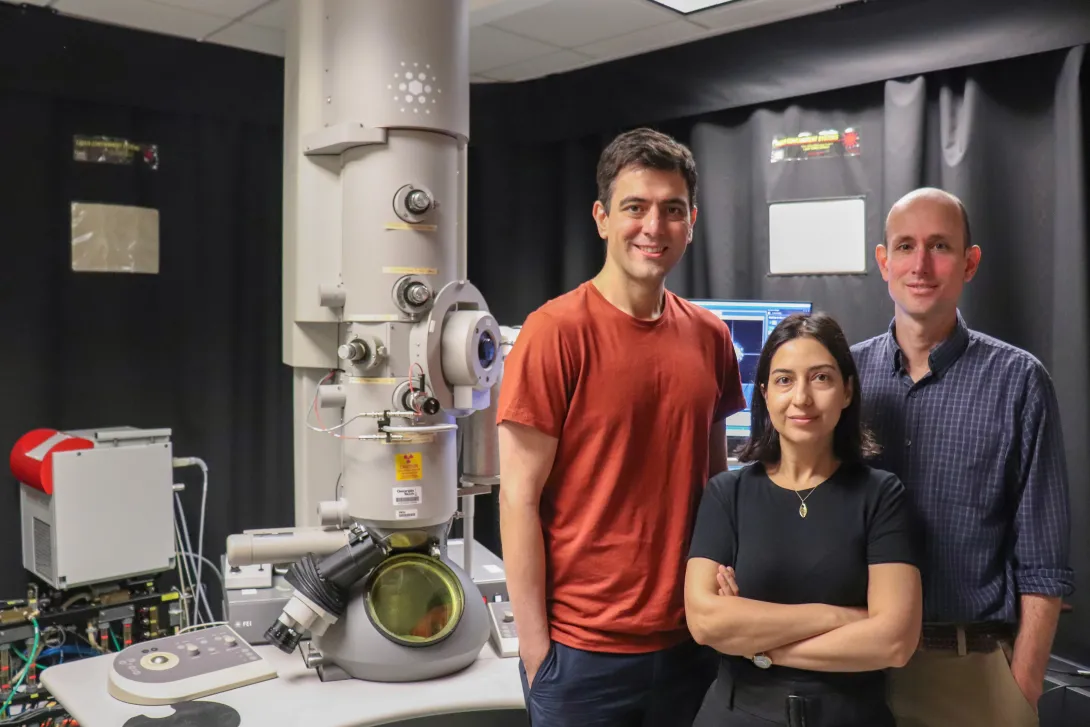
A photo of Vida Jamali, assistant professor the School of Chemical and Biomolecular Engineering; Amirali Aghazadeh, assistant professor in the School of Electrical and Computer Engineering; and Josh Kacher, associate professor in the School of Materials Science and Engineering standing in front of a TEM at Georgia Tech.
Scientific discovery is often portrayed as the result of long hours alone in a lab, but true science is inherently collaborative. The most robust experimental processes are developed through partnerships across multiple areas of research. The need for specialized, multidisciplinary teams slows experiment design, execution, data analysis, and process updates, delaying technological validation and deployment. But if the increasingly automated tools scientists already use in the lab could contribute to this team process of experimental design, the timeline for these goals could be greatly accelerated.
This concept of “lab tool as lab assistant” is the premise of a recent paper in npj | Computational Materials titled “Thinking Microscopes: Agentic AI and the Future of Electron Microscopy,” by Vida Jamali, assistant professor the School of Chemical and Biomolecular Engineering; Amirali Aghazadeh, assistant professor in the School of Electrical and Computer Engineering; and Josh Kacher, associate professor in the School of Materials Science and Engineering.
In the paper, the team introduces the concept of “thinking electron microscopes,” in which agentic AI systems are directly integrated with the instrument. This allows microscopes to move beyond their conventional role as characterization tools and toward functioning as co-scientists for human users.
Drawing on advances in specialized large language models, or LLMs, that demonstrate their ability to collaborate, reason over data, and integrate prior knowledge, the team envisions specialized LLM-based agents assigned to specific roles and areas of knowledge expertise. By explicitly incorporating domain knowledge into specialized agents and distributing information across multiple agents with focused expertise, the approach enables parallel evaluation of competing hypotheses, clearer separation of roles — such as planning, simulation, and critique — and more transparent and robust reasoning.
Within the experimental pipeline, these agents can analyze materials’ properties, physical data, chemical processes, and other relevant parameters. They could also collaborate with an agent that specializes in experimental design, refining iterative closed-loop experimentation, and real-time scientific discovery.
Although the research focuses on AI collaboration, the team notes that human researchers must retain accountability for the accuracy and integrity of both the experimental process and the results reported. This oversight begins with advocating for greater open access to research materials in all formats, building community-driven data repositories, and adopting standardization in how experimental parameters and metadata are reported. Equally important, researchers should be willing to report data from failed experiments as well as successful outcomes. Finally, organizations should work together to standardize secure APIs that enable shared, remote access to infrastructure across distances.
We see this as a step toward scientific instruments that do more than acquire data; systems that can reason over experiments, adapt measurements, and participate in the scientific discovery process alongside researchers. - Vida Jamali, assistant professor the School of Chemical and Biomolecular Engineering
The team is already developing these systems by connecting cloud-based, agentic infrastructures to microscopes at the Institute for Matter and Systems at Georgia Tech. With the addition of agentic AI, the goal is to accelerate discovery and engineering of new nanoscale materials for energy and quantum applications, as well as advance capabilities in cryo-electron microscopy and structural biology. These tools can optimize data collection, link real-time microscope observations with structural models of proteins, and dynamically adjust and prioritize experiments. The team sees this work as the first step toward the next generation of “thinking” electron microscopes, as well as an advancement in scientific discovery across domains.
- Christa M. Ernst
This research is supported by the Institute for Data Engineering and Science and the Institute for Matter and Systems
Original Publication
Jamali, V., Aghazadeh, A. & Kacher, J. Thinking microscopes: agentic AI and the future of electron microscopy. npj Computational Materials 12, 149 (2026). https://doi.org/10.1038/s41524-026-02077-y
News Contact
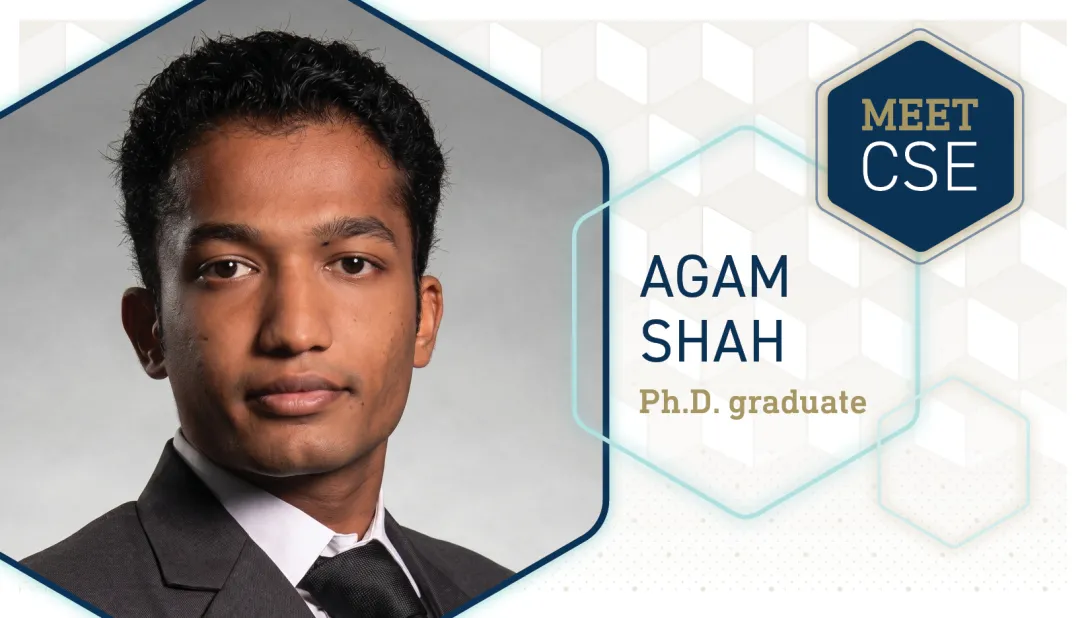
Investment is the best word that summarizes Agam Shah’s journey as a graduate student at Georgia Tech.
That is clearest on the surface, where Shah studied how public statements by businesses and financial institutions shape market behavior. At a deeper level, though, his success was buoyed by support from professors and his mentorship of younger students.
Shah’s ability to connect and invest in others led him to partner with Georgia Tech colleagues and start a financial technology business. He returns to campus this week to officially graduate from Tech, giving us a chance to catch up about his grad school experience and life as an entrepreneur.
Graduate: Agam Shah
Research Interests: Quantitative and computational finance, artificial intelligence, natural language processing, large language models (LLMs)
Education: Ph.D. in Machine Learning, home unit in the School of Computational Science and Engineering (CSE)
Faculty Advisors: Scheller College of Business Professor Sudheer Chava and School of CSE Associate Professor Chao Zhang
What persuaded you to attend graduate school at Georgia Tech?
Georgia Tech’s dedicated College of Computing strongly appealed to me. I was particularly drawn to the interdisciplinary nature of its machine learning Ph.D. program and the School of Computational Science and Engineering, both of which align well with my research interests.
What research project(s) from Georgia Tech are you most proud of and why?
I am proud of all 20-plus research papers I have had the opportunity to contribute to at Georgia Tech. However, if I had to choose one, it would be my work on Federal Open Market Committee (FOMC) text analysis, which was also highlighted in the news.
This work is not only well-cited in academic literature, but the language model developed in the paper is also actively used by economists at many of the world’s top central banks, including researchers at the FOMC and the Bank of England. It is also used by leading financial institutions such as BlackRock and Daiwa Securities. Since its release, the model has achieved over 100,000 downloads on Hugging Face.
What can you tell us more about your startup, ZettaQuant?
ZettaQuant aims to solve one of the biggest challenges in using LLMs and agents: working effectively with massive underlying datasets. We serve as a layer between raw data and LLMs, helping distill billions of tokens into the relevant context that models can use.
As a deep-tech startup, we are actively engaging with industry practitioners to better understand how to design and engineer our system to integrate seamlessly with their evolving AI workflows. Given the complexity of the problem we are tackling, particularly in advancing document intelligence systems, we are currently very focused on research and foundational development.
How did your Georgia Tech education prepare you for starting ZettaQuant?
Not just my education, but my entire experience at Georgia Tech, extending beyond the classroom, prepared me for this journey. I met my co-founders at Georgia Tech, and many of the initial use cases we are exploring at ZettaQuant are built on open-source research I conducted there.
In addition to research, I mentored more than 300 students through the Vertically Integrated Project “NLP for Financial Markets.” This experience taught me how to manage teams and think about building systems with a long-term vision.
What advice would you give someone interested in graduate school?
Most people pursue graduate school after already completing more than 15 years of education. Also, people who are admitted to a top school like Georgia Tech are often already well-positioned to secure strong job opportunities. So, graduate school should provide value beyond what you could learn outside the classroom.
Before deciding, think carefully about what you hope to gain from graduate school that you cannot otherwise. Once you enroll, take full advantage of the faculty, research labs, networks, and seminars. Many students underutilize these opportunities during their undergraduate and graduate years.
I would also like to quote the epilogue of my Ph.D. thesis: ‘Advice is abundant; conviction must be your own.’ Build a strong conviction about what you want to achieve from graduate school before committing to it.
What did you do for fun and relaxation while attending Georgia Tech? Do you still keep up with these now?
This may sound unconventional, but I spent a significant amount of time mentoring and teaching throughout my Ph.D. Many of my mentees went on to gain admission to top graduate programs. This included two students I mentored for all four years of their undergraduate studies who later joined the ML Ph.D. program at Georgia Tech. They are now teaching and mentoring students, completing a full-circle journey.
Working with mentees and supporting their growth gives me a strong sense of fulfillment and serves as a form of relaxation. In addition, I enjoy listening to music, especially while coding, and I continue to do that today.
What is your favorite Georgia Tech memory?
If I had to choose one favorite memory, beyond the many exciting late nights in the lab, it would be proposing to my wife on Tech Green at Georgia Tech. She is also a Yellow Jacket, having completed her undergraduate degree here and currently pursuing her Ph.D. Our home truly is a hive of Yellow Jackets.
News Contact
Bryant Wine, Communications Officer
bryant.wine@cc.gatech.edu
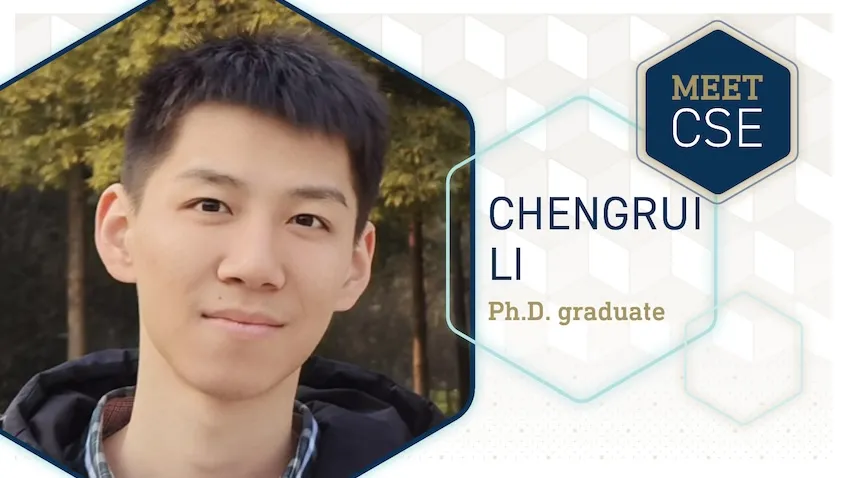
When Chengrui Li walks across the stage this Thursday at Commencement, it will be his final, and perhaps easiest, performance at Georgia Tech.
Between orchestra concerts, magic shows, and yo-yo exhibitions, Li thrives in the limelight. In fact, not much rattles his nerves considering the five years of pressure he endured studying computational neuroscience at Tech.
Before he returns to New York City to continue building brain-interface technologies at Meta, we caught up with Li to learn how he keeps such a cool head at Georgia Tech and beyond.
Graduate: Chengrui Li
Research Interests: Computational neuroscience, eye-tracking experiments and data analysis, statistical machine learning
Education: Ph.D. in Computational Science and Engineering (CSE)
Faculty Advisor: School of CSE Assistant Professor Anqi Wu
What persuaded you to attend graduate school at Georgia Tech?
My undergraduate was at Sichuan University in China. We knew that the most cutting-edge technology and research were in the United States, so I participated in an undergraduate exchange program at the University of Tennessee, Knoxville, during my third year.
I wanted to pursue a Ph.D. in neuroscience while also becoming very proficient in math and computer science (CS). This led me to apply to the CSE Ph.D. program over others. Georgia Tech’s CS ranking is very high, and the CSE program is very interdisciplinary, which matched my expectations super well. I did attain a solid education in math and CS at Georgia Tech. I also advanced my interest in neuroscience and its application by studying mathematical models and algorithms.
What research project from Georgia Tech are you most proud of?
My variational importance sampling paper is a favorite. That one was based heavily on statistical inference. I spent many hours working through complicated derivation calculations, often half-awake and half-asleep after several late nights.
This paper confirmed to me, though, that innovative research requires both hard work and inspiration, and that this endeavor can be rewarding. The paper was selected as a top 5% spotlight paper at ICLR 2024, a world-leading conference on artificial intelligence research.
Could you share more about your role as a research scientist at Meta?
I have been working on Meta’s electromyography (EMG) neural band. This next-generation human-computer interaction device connects with and navigates Meta’s AI glasses.
With the neural band, you can use finger gestures to control the display content you see through the glasses, like swiping your thumb to scroll the screen, or writing on your lap as if you had a pen in your hand to send WhatsApp messages.
How did your Georgia Tech education prepare you for this role?
By pursuing my Ph.D., I am more proficient in critical thinking, math, coding, and presentation. During my interview, I demonstrated these skills and provided my publication records. This helped me land an internship, enabled my success in that role, and led to a full-time position. Additionally, my background in computational neuroscience best matched the work on the EMG neural band team at a big tech company.
What advice would you give someone interested in graduate school?
First, be clear whether a bachelor’s or master’s degree meets your work needs, or if you are truly interested in a scientific research topic. This interest should be based on your own passion, not the current trends. Interest is an important factor in deciding to pursue a Ph.D. because you have to like the topic and like it for a long time. A Ph.D. will require you to dive deep into a subject you must be genuinely curious about.
Second, we are in a new era with rapid advances in information technology. Time is an invaluable resource and is shaped by technology. You have to think more about your time, consider where and how you spend it, and embrace ways to use it more efficiently.
Can you tell us more about your hobbies and how you keep up with them?
I started learning violin when I was five years old, and magic tricks when I was 11. The brain is a supercomputer suitable for functional computation. Our brain is an interface between the objective and subjective, where computation plays a core role in integrating these exact mechanics into interpretations of the world. This realization was one of the important factors that inspired me to pursue my Ph.D. research in computational neuroscience.
Another comparison I’ve learned after playing violin for 23 years is that the cochlea in our inner ear is a fast Fourier Transformer that simultaneously computes the aesthetic of music for us. Performing magic tricks for 17 years taught me that all the occurrences of seemingly low-probability magic phenomena are achieved by either letting it be a certain event or exhausting all possibilities.
I also have other hobbies, like yo-yo balls. I enjoy performing all these skills in front of audiences. Performing brings me satisfaction when I see excitement and happiness from the people I entertain. I am very grateful to my parents for their cultivation and encouragement in doing things that bring me fulfillment. They taught me to be curious and explore my interests, to enjoy pastimes, and instilled the habit to not give up my passions. These were not secondary things that distracted me from coursework or Ph.D. research, but rather complementary parts of my life that bring out the best in me.
What is your favorite Georgia Tech memory?
I have a lot. For my research, I debated frequently with Anqi Wu, my advisor. These often went late into the night to defend my stances. These challenged my beliefs and made me a stronger scholar, for which I am grateful to Anqi for her time and patience.
I also enjoyed performing in the Georgia Tech symphony orchestra with our great conductor, Chaowen Ting. I was involved with the Georgia Tech Chinese Students and Scholars Association, where I showcased magic and yo-yo performances at organization events.
News Contact
Bryant Wine, Communications Officer
bryant.wine@cc.gatech.edu
The Bill Kent Family Foundation AI in Higher Education Fellowship invites Georgia Tech educators to explore how emerging tools can elevate teaching, learning, and student development through hands-on experimentation grounded in real classroom practice.
Offered through the College of Lifetime Learning, the fellowship provides dedicated time and space to test ideas, evaluate outcomes, and help shape how the Institute advances thoughtful, responsible innovation in teaching and learning.
“The Bill Kent Family Foundation’s philanthropic support enables us to turn new ideas about teaching and learning into action. Their investment empowers our fellows to explore—both in theory and in practice—how AI is changing long-standing academic practices and equipping educators with new tools,” Dean Bill Gaudelli said.
During the 2025–26 academic year, fellows Professor Ying Zhang, Patrick Danahy, Joy Arulraj, and Professor Flavio Fenton moved from concept to classroom — piloting AI‑supported tutoring in large engineering courses, integrating AI and robotics into design studios, developing privacy-conscious AI tools for computing courses, and reimagining scientific writing and physics instruction. Their work is sparking interdisciplinary collaboration and informing broader conversations about the future of teaching at Tech.
We encourage Georgia Tech academic professionals, lecturers, professors of practice, and tenure-track faculty who are excited to advance their understanding and application of AI in higher education to apply for the BKFF AI Fellowship.
Please visit the call-for-proposals webpage for more information. The submission period runs from May 1 to June 1, 2026.
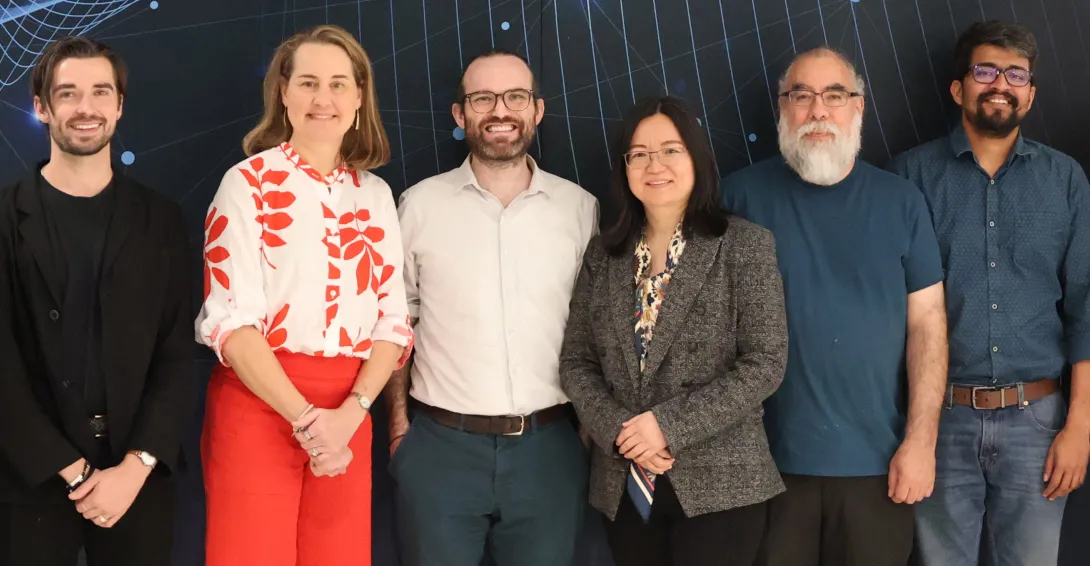
Pictured from left to right: Patrick Danahy, Lesley Baradel (BKFF), Eric Sembrat (College of Lifetime Learning), Ying Zhang, Flavio Fenton, and Joy Arulraj.
News Contact
Communications Program Manager
C21U, College of Lifetime Learning
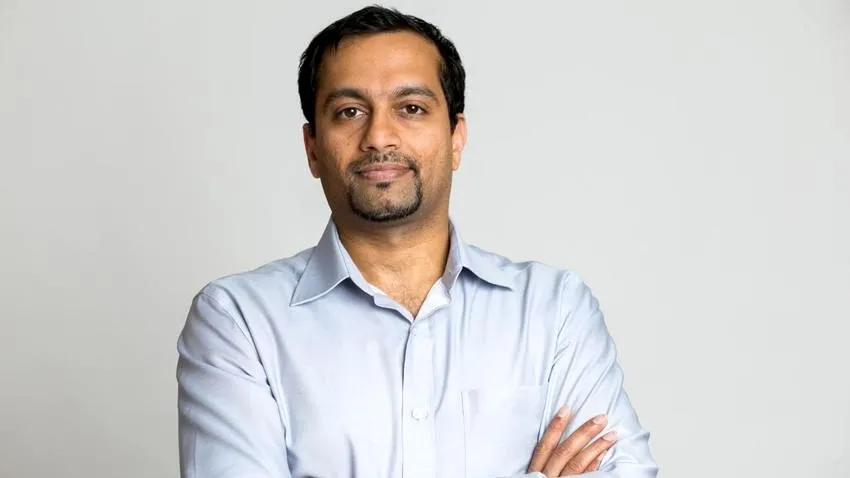
Photo portrait of Vijay Balasubramaniyan (PhD CS 2011), CEO and co-founder of Pindrop Security.
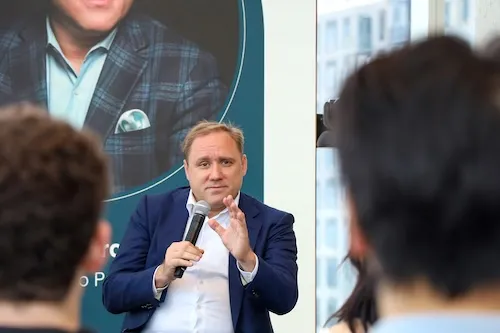
Candid photo of Dmitri Alperovitch (CS 2001, MS InfoSec 2003) speaking to students during a campus visit in 2025.
A global media outlet is spotlighting the success of two software companies founded by faculty and alumni of Georgia Tech's College of Computing (GT Computing).
This week, Time Magazine named CrowdStrike and Pindrop Security among the 10 Most Influential Software Companies of 2026.
CrowdStrike and Pindrop appear on TIME’s new list alongside some of the world’s best-known computing companies, including Adobe, Microsoft, and Palantir. Released on April 27 as part of the outlet’s TIME100 Companies: Industry Leaders series, this recognition underscores their rising influence.
“It’s exciting to see that two out of the ten companies on this list were founded by alumni and faculty from the College of Computing. We are bursting with pride,” said Vivek Sarkar, John P. Imlay Jr. Dean of Computing. “This recognition reflects the strength of our academic and research programs, as well as the impact of our commitment to fostering a vibrant entrepreneurial ecosystem.
"It also highlights how we are empowering our students and faculty to translate bold, innovative ideas into successful ventures. Looking ahead, we will further integrate entrepreneurial thinking with the computational and AI foundations embedded throughout our curriculum.”
Their inclusion on TIME’s list this year is especially notable because both CrowdStrike and Pindrop address the growing cybersecurity threat landscape, including deepfakes.
[RELATED: USNWR Ranks GT Computing No. 2 for Undergraduate Cybersecurity]
GT Computing alumnus Vijay Balasubramaniyan (PhD CS 2011) co-founded Pindrop in 2011 with his doctoral advisor, Mustaque Ahamad, and Georgia Tech alumnus Paul Judge (PhD CS 2002). It commercialized his doctoral research to help call centers determine whether callers are legitimate.
The company has also developed a deepfake protection product and recently raised $100 million in capital funding to expand its deepfake video detection business. During this expansion, the company developed Pindrop Pulse, which TIME named one of the Best Inventions of 2025.
“Identity, consent, and accountability are society’s contracts. Deepfakes erode all three,” Balasubramaniyan told TIME.
Pindrop technology can confirm participants' identities in audio/video conference calls within a few seconds.
“Vijay’s Ph.D. research was of the highest quality, and the Pindrop paper was published in one of the top-tier security conferences,” said Ahamad, Regents' Entrepreneur and interim chair of the School of Cybersecurity and Privacy.
“However, because of his work experience before coming to Georgia Tech, he also focused on the real-world relevance of his research, which led to the launch of Pindrop Security. He is a great example of impactful research that students conduct in our laboratories.”
Like Pindrop, CrowdStrike was founded to counter emerging digital threats and has evolved to combat growing AI-powered security challenges. Dmitri Alperovitch (CS 2001, MS InfoSec 2003) co-founded the company and served as chief technology officer at its 2012 launch.
Alperovitch, recently inducted into the College of Computing Hall of Fame, played a pivotal role in securing more than $150 million in capital investments for the company, helping pave the way for CrowdStrike to become one of the world’s leading cybersecurity companies. In fact, its client list includes nearly 60% of Fortune 500 companies.
“What appealed to me in cybersecurity is that you are never really done,” Alperovitch said during a recent campus fireside chat with students.
“As long as there are human beings out there that want to do you harm, there are always security problems to solve.”
Asked about the founding of CrowdStrike, Alperovitch described investigating a 2010 breach at Google by a nation-state actor as a pivotal moment for him.
“The industry refused to acknowledge this was a widespread problem, and that realization led me to start CrowdStrike,” he said. “You no longer just have to be better than your competitors. You must stay proactive and vigilant.”
Alperovitch is the co-founder and chairman of Silverado Policy Accelerator and the bestselling author of World on the Brink: How America Can Beat China in the Race for the 21st Century.
News Contact
Ben Snedeker
Sr. Communications Manager
Georgia Tech College of Computing
albert.snedeker@cc.gatech.edu
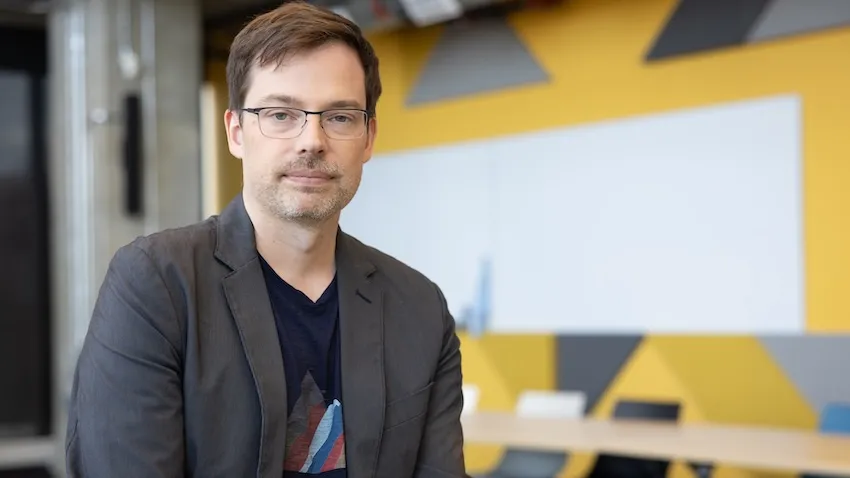
A Georgia Tech School of Interactive Computing professor and his Ph.D. student have been named to the 2026 list of Microsoft Research Fellows and Fellowship Advisors.
Associate Professor Alan Ritter and Ph.D. student Ethan Mendes were awarded fellowships for their work on creating artificial intelligence (AI) agents that function as teammates.
Mendes was named a fellow, while Ritter will serve as his fellowship advisor.
The Microsoft Research Fellowship is open to faculty, students, and postdocs. Ritter said that if Microsoft sees alignment in a project, it gives recipients the opportunity to work even closer with their collaborators by inviting them to join as additional fellows.
That turned out to be the case with Mendes after Ritter listed him as a collaborator in his fellowship proposal.
“I’m delighted to serve as Ethan Mendes’ fellowship advisor,” Ritter said. “He is an exceptionally strong researcher, and I’m excited to see his work recognized through the Microsoft Research Fellowship.”
Through the fellowship, Ritter and Mendes will design AI systems that better support collaboration and decision-making within organizations.
“The goal is to move beyond AI as a tool for a single user and instead study how AI can help groups make more informed, transparent, and coordinated decisions,” Ritter said. “We will focus on methods that bring together information from many different sources, help people reason under uncertainty, and generate analyses that support collective problem-solving in complex work settings.”
Professor Named to Sustainability Cohort
The Purple Mai’a Foundation has selected Associate Professor Josiah Hester to join its Eahou Global Immersion Cohort.
The Purple Mai’a Foundation is a technology education nonprofit headquartered in Aiea, Hawaii, that teaches coding and computer science to Native Hawaiian students.
The 29 members of the Eahou Global Immersion Cohort from 15 countries are leaders from indigenous communities recognized for their contributions to sustainability.
Hester is a Native Hawaiian whose research centers on sustainable and battery-free technology.
The cohort will gather on O’ahu May 1-3 for Eahou Fest, where they will share stories and solutions from research around the world.
“I’m honored to be selected for the Eahou Global Immersion Cohort and to learn alongside such an inspiring group of resilience leaders who come from around the globe,” Hester said.
“Participants are selected for their significant leadership over the past decade and their ability to bring what they learn back to their communities and integrate it into ongoing work and partnerships. I’m excited to connect these experiences with my work and bring these lessons back into research and teaching at Georgia Tech.”
Jill Watson Creator Receives AAAI Lecture Award
Professor Ashok Goel received one of the most distinguished awards from the Association for the Advancement of Artificial Intelligence (AAAI).
Goel was selected as the 20th recipient of the AAAI Robert S. Engel Memorial Lecture Award. Established in 2003, the award is given to those who have demonstrated excellence in AI scholarship, outstanding applications of AI, and extraordinary service to AAAI and the AI community.
Goel received the award in January during the AAAI Conference on Artificial Intelligence in Singapore. According to the awards program, Goel was recognized for contributions to biologically inspired design, case-based reasoning, and application of AI in virtual teaching.
Goel is the inventor of Jill Watson, one of the first AI virtual teaching assistants used in higher education classrooms.
AAAI is also the publisher of AI Magazine, which Goel served as editor-in-chief from 2016 to 2021.
“I am both honored and humbled to receive AAAI's Robert Engelmore Award,” Goel said. “Bob was a long-time editor of AAAI's AI Magazine, and many years after he retired, I became the editor of the magazine. This makes the Engelmore Award special to me.”
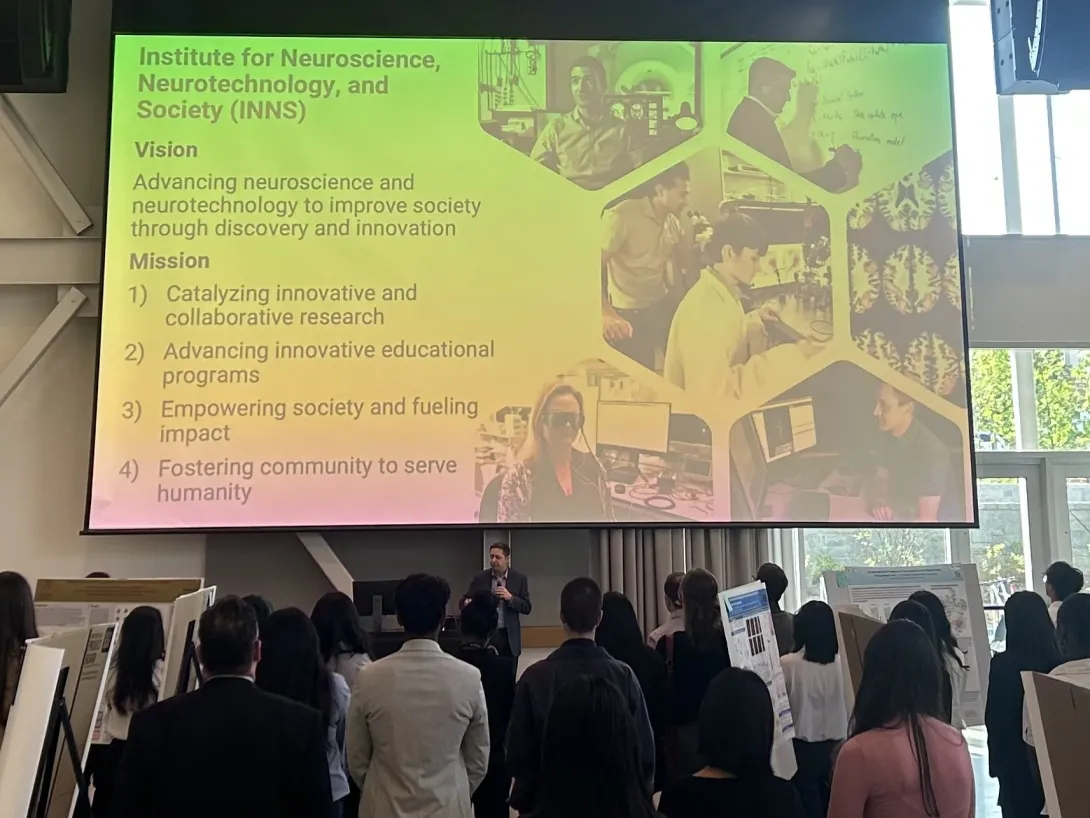
Chris Rozell is giving the opening remarks at the ATL Neuro Networking and Symposium Night.
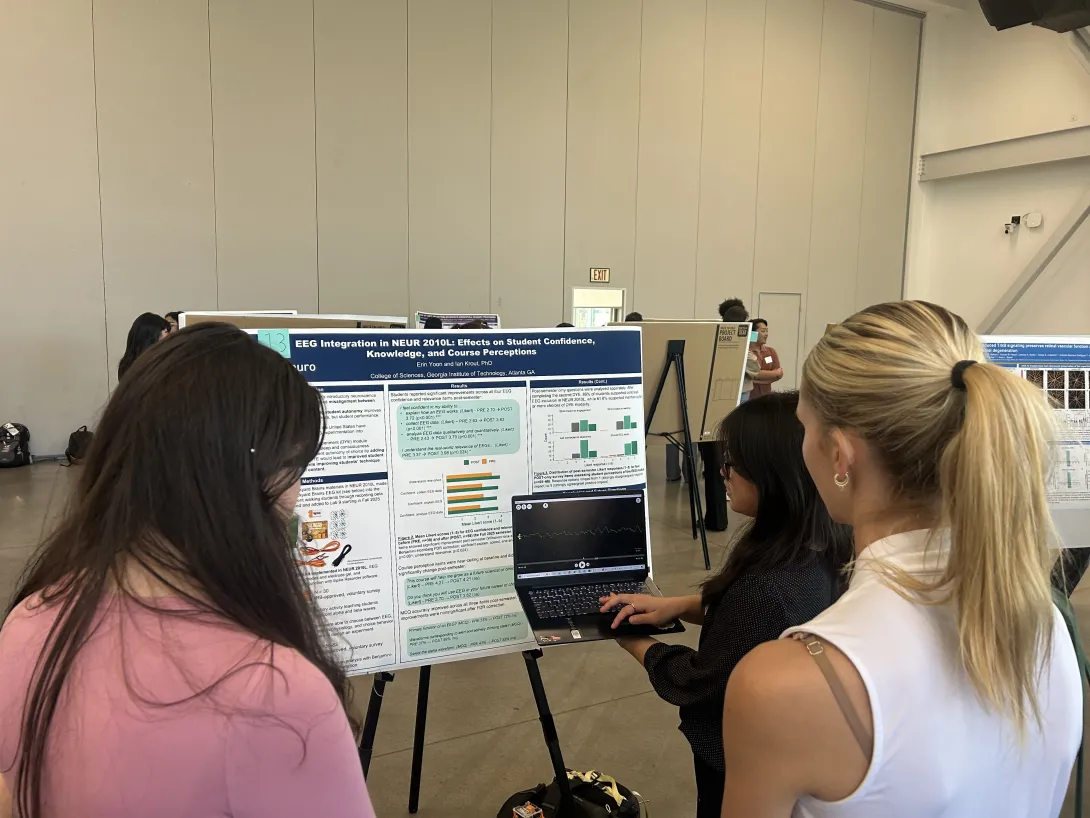
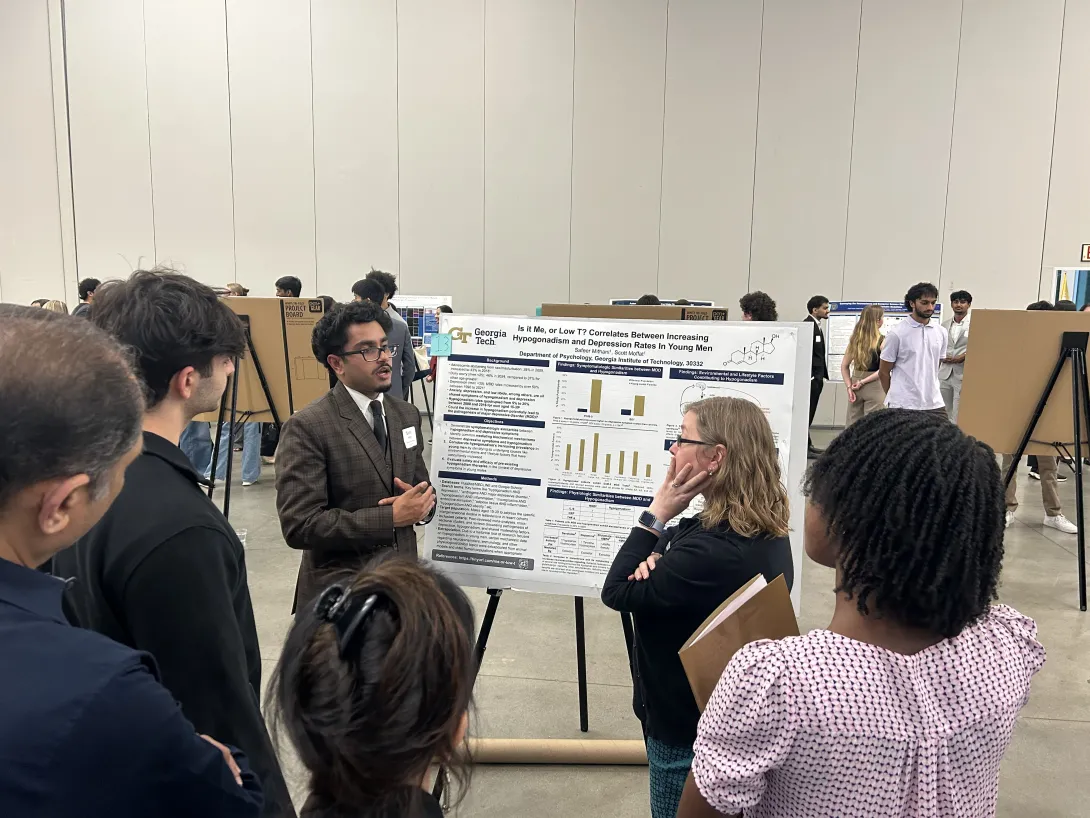
A group of students is discussing a poster, and the presenter is giving an example during the first poster session.
A group of students and faculty is discussing a poster during the second poster session.
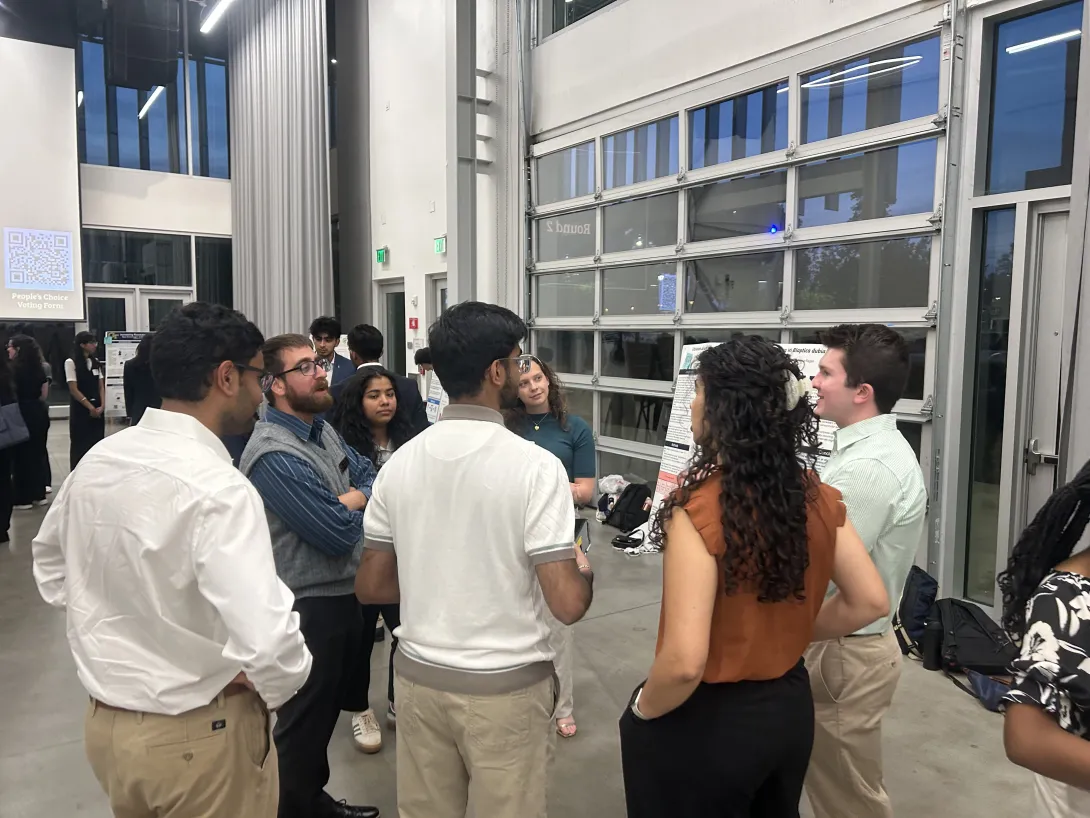
A group of students and faculty is discussing a capstone poster during the second poster session.
At Georgia Tech, undergraduate students are an integral part of the research enterprise – particularly when it comes to neuroscience. That dedication to undergraduate research was on full display on April 8, when more than 100 students from Atlanta-area universities gathered for the annual ATL Neuro Networking and Symposium Night.
This student-run event, hosted by the Georgia Tech Student Neuroscience Association (SNA) and co-sponsored by the Institute for Neuroscience, Neurotechnology, and Society (INNS) and the Neuroscience Undergraduate Program at Georgia Tech, aimed to bring together students and faculty from the broader Atlanta neuroscience community for an evening of data-blitz talks showcasing faculty research, undergraduate poster presentations, and catered networking.
“Our goal was to bridge the gap between Atlanta’s institutions and showcase the diversity of undergraduate research,” says Harshin Vijay, symposium director of SNA. “By bringing these groups together through SNA, we’re fostering an ecosystem where the next generation of scientists can exchange ideas and build collaborative networks essential for future innovation."
The impact of undergraduate neuroscience research is “more than bench to bedside,” said INNS Executive Director Chris Rozell at the event. “It’s about advancing neuroscience and neurotechnology to improve society through discovery and innovation. Undergraduate research catalyzes innovation – invigorating and advancing educational programs through collaboration that empowers society – fueling impact and fostering the community of next-generation scientists.”
Featuring more than 40 undergraduate posters, research topics ranged anywhere from the impact of music on associative memory to the role of taste projection neurons in Drosophila. Some students even examined their own coursework, either as a TA or their involvement with capstone research.
“There are neuroscientists in every College at Georgia Tech, and we have undergraduate neuroscience students performing research all over campus and in the broader Atlanta neuroscience community,” says Katharine McCann, the director of Undergraduate Research for Georgia Tech’s neuroscience program. “Events like this bring those students together to learn from each other and broaden their networks. It is exciting to see so many students passionate about their research.”
Four posters were awarded for their work:
Best Poster Design: “Role of Taste Projection Neurons in Drosophila Taste Processing”
- Hanti Jiang, Emory University
Best Presentation: “Neuroscience and Computer Science Roots of Pattern Recognition”
- Rishi Polepally, Georgia Tech
- Aryan Kumar, Georgia Tech
- Vedanth Natarajan, Georgia Tech
Best 4001 Group: “Evaluating Cognitive Engagement in AI-Generated VS. Human-Created Educational Content”
- Hannah Ammari, Georgia Tech
- Shobini Palaniappan, Georgia Tech
- Rayhan Quraishi, Georgia Tech
- Aryan Shah, Georgia Tech
- Divya Tadanki, Georgia Tech
People's Choice Award: “Vibration as an effective facilitation of sensorimotor learning in Blaptica dubia cockroaches”
- Diana Sethna, Georgia Tech
- Jacob Hayes, Georgia Tech
- Ellie Kate Watson, Georgia Tech
- Arya Oak, Georgia Tech
Esha Panse, Georgia Tech
- Hersh Mathur, Georgia Tech
News Contact
Writer: Hunter Ashcraft
Communications Student Assistant
Institute for Neuroscience, Neurotechnology, and Society
Media Contact: Audra Davidson
Research Communications Program Manager
Institute for Neuroscience, Neurotechnology, and Society
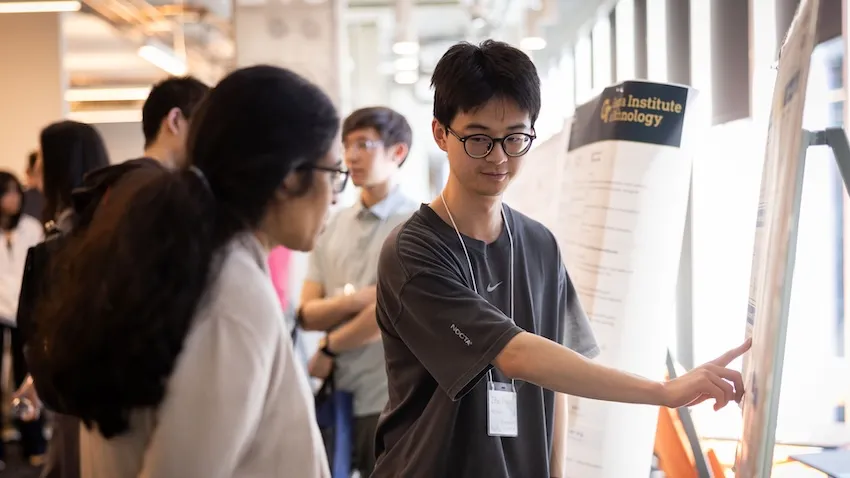
Generative artificial intelligence (AI) is best known for creating images and text. Now, it is helping industries make better planning decisions.
Georgia Tech researchers have created a new AI model for decision-focused learning (DFL), called Diffusion-DFL. Recent tests showed it makes more accurate decisions than current approaches.
Along with optimizing industrial output, Diffusion-DFL lowers costs and reduces risk. Experiments also showed it performs across different fields.
Diffusion-DFL doesn’t just surpass current methods; it also predicts more accurately as problem sizes grow. The model requires less computing power despite these high-performance marks, making it more accessible to smaller enterprises.
Diffusion-DFL runs on diffusion models, the same technology that powers DALL-E and other AI image generators. It is the first DFL framework based on diffusion models.
“Anyone who makes high-stakes decisions under uncertainty, including supply chain managers, energy operators, and financial planners, benefits from Diffusion-DFL,” said Zihao Zhao, a Georgia Tech Ph.D. student who led the project.
“Instead of optimizing around a single forecast, the model evaluates many possible scenarios, so decisions account for real-world risk and become more robust.”
To test Diffusion-DFL, the team ran experiments based on real-world settings, including:
- Factory manufacturing to meet product demand
- Power grid scheduling to meet energy demand
- Stock market portfolio optimization
In each case, Diffusion-DFL made more accurate decisions than current methods. It also performed better as problems became larger and more complex. These results confirm the model’s ability to make important decisions in real-world scenarios with noisy data and uncertainty.
The experiments also show that Diffusion-DFL is practical, not just accurate. Training diffusion models is expensive, so the team developed a way to reduce memory use. This cut training costs by more than 99.7%. As a result, Diffusion-DFL can reach more researchers and practitioners.
“Our score-function estimator cuts GPU memory from over 60 gigabytes to 0.13 with almost no loss in decision quality, reducing the requirement for massive computing resources,” Zhao said. “I hope this expands Diffusion-DFL into other domains, like healthcare, where decisions must be made quickly under complex uncertainty."
Beyond decision-making applications, Diffusion-DFL marks a shift in DFL techniques and in the broader use of generative AI models.
In supply chain management, planners estimate future demand before deciding how much product to stock. In this DFL problem, engineers align ML models with predetermined decision objectives, like minimizing risk or reducing costs.
One flaw of DFL methods is that they optimize around a single, deterministic prediction in an uncertain future.
Diffusion-DFL takes a different approach. Instead of making a single guess, it determines a range of possible outcomes. This leads to decisions based on many likely scenarios, rather than on a single assumed future.
To do this, the framework uses diffusion models. These generative AI models create high-quality data from images, text, and audio.
The forward diffusion process involves adding noise to data until it becomes pure noise. Models trained via forward diffusion can reverse diffusion. This means they can start with noisy data and then produce meaningful insights from training examples.
Real-world data is often noisy and uncertain. Traditional DFL methods struggle in these conditions, but diffusion models are designed to handle them.
Because of this, Diffusion-DFL can explore many possible outcomes and choose better actions. Like image-generation AI, the model works well with complex data from different sources. This enables its use across different industries.
“Diffusion models have achieved significant success in generative AI and image synthesis, but our work shows their potential extends far beyond that,” said Kai Wang, an assistant professor in the School of Computational Science and Engineering (CSE).
“What makes Diffusion-DFL unique is that the specific downstream application guides how the model learns to handle uncertainty.
“Whether we are scheduling energy for power grids, balancing risk in financial portfolios, or developing early warning systems in healthcare, we can explicitly train these highly expressive models to navigate the unique complexities of each domain.”
Zhao and Wang collaborated with Caltech Ph.D. candidate Christopher Yeh and Harvard University postdoctoral fellow Lingkai Kong on Diffusion-DFL. Kong earned his Ph.D. in CSE from Georgia Tech in 2024.
Wang will present Diffusion-DFL on behalf of the group at the upcoming International Conference on Learning Representations (ICLR 2026). Occurring April 23-27 in Rio de Janeiro, ICLR is one of the world’s most prestigious conferences dedicated to artificial intelligence research.
“ICLR is the perfect stage for Diffusion-DFL because it brings together the exact community that needs to see the bridge between generative modeling and high-stakes decision-making for real-world applications,” Wang said.
“Presenting Diffusion-DFL allows us to challenge the traditional training framework of diffusion models. It’s about sparking a broader conversation on how we can align the training objectives of generative AI directly with actual, downstream decision-making needs.”
News Contact
Bryant Wine, Communications Officer
bryant.wine@cc.gatech.edu