
Dec. 12, 2024

- by Benjamin Wright -
Destination tourism has now matched or surpassed pre-Covid levels in many parts of the world. It’s leading to challenges as operators and local governments try to walk the line between inviting visitors and preserving the places tourists want to visit so they can be enjoyed and studied for years to come. The more people who visit a site, the greater the risk of damage from foot traffic and contact with walls and artifacts. Even human breath in enclosed spaces can inflict as much damage as pollution from vehicles.
Enter Associate Professor Danielle Willkens from Georgia Tech’s School of Architecture in the College of Design. Willkens, who is the Sustainable Tourism co-lead for the Brook Byers Institute for Sustainable Systems (BBISS), is using technology to assess historic sites and develop strategies to mitigate damage caused by visitors and the development that frequently occurs when a site becomes popular.
“At a foundational level, a lot of what we do is related to survey work,” explains Willkens. “We are using LiDAR (Light Detection and Ranging), or lasers, to get very high-resolution, three-dimensional images. We end up with a digital record that serves as a snapshot of a building or space at one moment in time, and it becomes invaluable for preservation and rehabilitation planning.”
The advantage of using LiDAR is that it is what Willkens calls a “non-contact invasive” method. It doesn’t damage the structure but can reveal existing weaknesses and flaws that need attention. In a matter of a few days, their process can reveal what could take weeks or months of visual inspection to uncover.
In addition to traveling abroad to examine sites in the Dominican Republic and the famous site of Petra in Jordan, Willkens uses her tools to help protect and preserve places that have played an important role in American civil rights history: W.E.B. Du Bois’ office in Fountain Hall at Morris Brown College, the Penn Center on Saint Helena Island in South Carolina, and the Edmund Pettus Bridge in Selma, Alabama. She is also working with the National Park Service to evaluate the MLK corridor in Atlanta and has projects in historic neighborhoods like Mechanicsville and Pittsburgh.
Where does Willkens’ passion for protecting these places come from?
“I'm the daughter of an educator and two generations of educators beyond that,” she says. “I come from a line of people who are invested in teaching and advocacy — people who love travel and museums and appreciate the power of place.”
One successful project that Willkens is particularly proud of is a scan of the USS Drum, a World War II submarine on display at the USS Alabama Battleship Memorial Park in Mobile, Alabama. By recreating the interior of the submarine digitally, access has been granted to people who cannot visit the ship in person due to mobility limitations, claustrophobia, or distance. The project was launched on Veterans Day of 2024. Since then, 97-year-old Bill Lister, who is the last surviving member of the Drum’s crew, has visited the ship many times from the comfort of his home in Indiana.
A similar project is part of a partnership with Auburn University in which Willkens and her colleagues are developing a digital conflict map of the March 7, 1965, “Bloody Sunday” march in Selma, Alabama.
She sees tremendous value in people being able to visit these historic locations remotely.
“Significant anniversaries are coming up, like the 60th anniversary of the Selma march, and unfortunately, we still have regular reminders that voting access is an ongoing concern. Being able to visit these sites remotely can be very powerful.”
Through grants and her seminar class, Race, Space, and Architecture in the United States, Willkens is training the next generation of architects and preservationists to get involved with their local communities and protect valuable places through technology.
“We’ve been able to take three groups of students down to the Penn Center in South Carolina. We stay in the historic buildings, we do survey and research work on site, and we work with community members. St. Helena Island is at this somewhat precarious intersection of climate change and surrounding development in the Gullah Geechee corridor, and it’s a microcosm of what a lot of historical sites are facing. The community has been very welcoming to us, and we’re excited about the work we’re doing there.”
That work has been funded by a Sustainability Next Seed Grant. She strongly encourages other faculty and students to get involved with the BBISS and the Sustainability Next strategic plan initiative.
“BBISS is a great place to get to know people from across disciplines, and I'm grateful for that,” she explains. “In any discipline, it's easy within a university to stay in your silo. Being part of BBISS has been a great opportunity to meet people from different programs and different parts of Georgia Tech. I love the emphasis on community-engaged work that moves sustainability from an abstract systems level to something tangible that is making a difference locally.”
News Contact
Brent Verrill, Research Communications Program Manager, BBISS
Nov. 07, 2024
- Written by Mandy Luong, BBISS Communications Student Assistant -
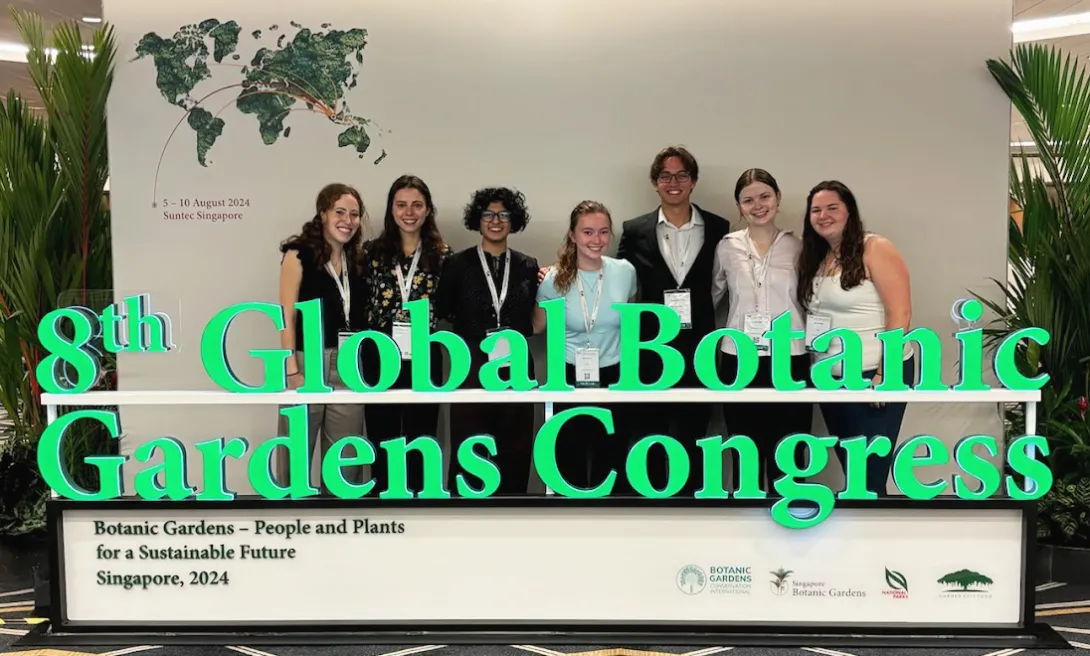
Georgia Tech’s Students Organizing for Sustainability (SOS) recently traveled across the world to Singapore for the 8th Global Botanic Garden Congress. They presented their research on the evaluation of various plants in student living accommodations. The independent research project was initially funded through the Micro Research Grants for Regenerative Built Environments sponsored by The Kendeda Building Advisory Board and the Brook Byers Institute for Sustainable Systems. This feat is uncommon among Georgia Tech student organizations but can serve as a case study for future SOS trips as well as other clubs.
The team found out about the conference by researching various conferences related to urban agriculture initiatives around the world. They specifically sought out conferences that could give them an international experience in a city deemed cutting-edge for urban green spaces, and that would allow them to talk about their research project. After being accepted into the Global Botanic Garden Congress, they needed to find funding to support their travel.
SOS members applied for numerous grants that are available to students around campus, including the School of Civil and Environmental Engineering's International Travel Funding through the Global Engineering Leadership Minor, the President’s Undergraduate Research Travel Award, and the Student Government Association (SGA) Conference Fund. In total, they were able to obtain multiple research and travel grants for over $16,000 to cover the travel expenses of seven members. The students are confident that, had more people been available, they could have received more funding to cover the additional travel expenses.
“There are a lot of opportunities on campus to get funding for a project, travel, or attend conferences, but students just need to know where to look,” says Elaina Render, fourth-year civil and environmental engineering major and SOS project lead for the UrbanAg group.
The group’s itinerary consisted of attending all four days of the conference, the last of which coincided with Singapore’s National Day. At the conference, students presented their research findings to an international audience and made personal connections. They talked with people from across the globe, including botanic garden representatives from Naples, Chicago, and San Diego. Making these connections has introduced them to opportunities for more interactive trips, such as visiting the Naples Botanical Garden to learn about beach plant management. They also hope to attend the 9th Global Botanical Garden Congress in Chicago next year.
“The conference is a great resource for students as they approach graduation because you can network for next career steps, find possible research advisors for graduate school, and be exposed to a range of career possibilities,” says Nicole Allen, fourth-year biomedical engineering major and SOS’s vice president of Finance.
In addition to the conference, they were able to explore the city of Singapore. On their first day, they toured Gardens by the Bay, where they saw famous attractions like the Golden Bay and the Flower Dome. The following day, they visited Singapore University of Technology and Design and met Greenprint, a student group similar to SOS, and talked with students and faculty about their campus sustainability initiatives. On the third day, they traveled to the Sungei Buloh Wetland Reserve, a beautiful mangrove forest. Allen notes that on a hike along the coastal trail, they decided to take a bus across the bridge to Malaysia and have brunch. On the last day of the conference, they visited Singapore’s Botanic Garden, which also houses the National Orchid Garden.
The SOS students report many successes from this experience, both personal and related to their SOS activities. Younger members of SOS, Rachel Bohl and Nikita Takalkar, both second-years, were able to attend the conference. This has inspired younger members to get more involved with on-campus sustainability initiatives. In particular, Takalkar is starting a new SOS project to decrease medical waste at Stamps Health Services. They have also seen an increase in attendance at their meetings and many questions about their trip. They hope the conference will serve as a model for future trips where students can promote their research, network, learn about what new research is happening in the world, and bring this knowledge back to Georgia Tech to inspire their own projects on campus.
“We hope that our project and trip to Singapore can serve as an inspiration to other students and campus organizations. It's possible to start an independent research project and get funding to present at international conferences,” says Render.
Allen adds, “We are implementing some of the ideas our trip inspired as new, student-led sustainability initiatives here at Georgia Tech.”
News Contact
Brent Verrill, Research Communications Program Manager, BBISS
Oct. 24, 2024
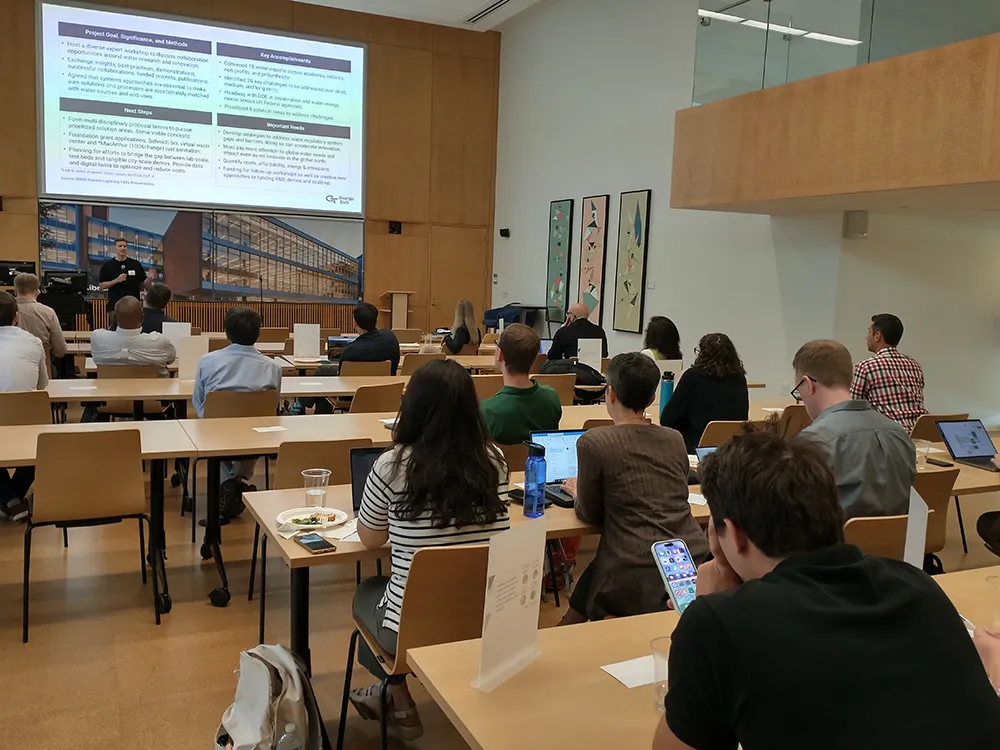
Georgia Tech researchers representing 25 research projects that received Sustainability Next seed grants, presented their work during two lightning talk sessions on August 27 and September 5, 2024, at the invitation of Brook Byers Institute for Sustainable Systems (BBISS). Participants were also offered the opportunity to network, discuss connections to resources and opportunities for collaboration, and engaging with community stakeholders.
Three themes emerged from these sessions:
- Many research teams need access to data sets that are difficult to acquire for logistical or financial reasons.
- Some available data sets are not very extensive, or do not accurately represent the diversity of people and perspectives present within the group or geographical area studied.
- Many research teams engaged with community groups as part of their project, or were looking for community partners to complete or enhance their project.
The networking sessions facilitated numerous connections. Eunhwa Yang’s team studies how environmental factors and building construction methods can impact the sleep quality of people with mild cognitive impairment who live in under-resourced communities. Yang expressed a need for more reliable data collection and transmission systems, given that internet access in the homes of study participants can be unreliable. She connected with Jung-Ho Lewe, whose work often revolves around IoT (internet of things) devices that use free or low-cost low-bandwidth cellular data networks. Yang also connected with the Center for Sustainable Communities Research and Education to look for additional opportunities for community engagement.
The participants also discussed the promise and the hurdles of engaging directly with community partners. Ameet Pinto, BBISS associate co-director for interdisciplinary research and associate professor in the School of Civil and Environmental Engineering, said, “If available datasets are not representative of the communities being served, then community-engaged research can fill those gaps. Such research requires that trust-based relationships be cultivated, and this takes time and resources to foster trust and find common ground.”
Attendees seemed to appreciate the opportunity to talk with their colleagues, not only about their projects, but also about engaging directly with communities. The events were well attended with several people coming to both sessions. Pinto adds, “The Sustainability Next seed grants are not just about helping brilliant ideas get off the ground; they are also about bringing together a community that can coalesce around thematic challenges and make a transformative and lasting societal impact. By hosting these lightning-talk sessions, BBISS helps to bolster such a community.”
News Contact
Brent Verrill, Research Communications Program Manager, BBISS
Oct. 15, 2024
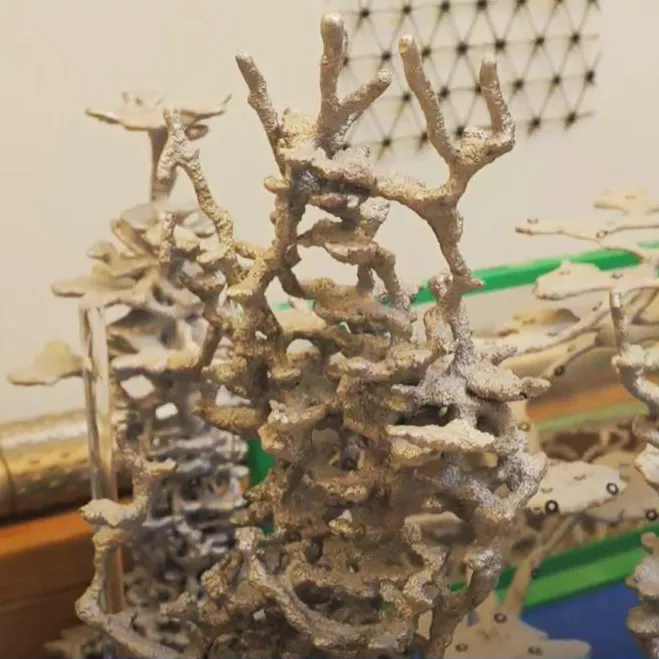
Ant hill cast in molten aluminum to show intricate underground structure of tunnels and chambers, much like the branches of coral.
- Written by Benjamin Wright -
Nature doesn’t waste energy, and nature finds ways to adapt to a changing world. Understanding those two principles led David Frost to his interest in bio-inspired design. Frost, the Elizabeth and Bill Higginbotham Professor in Georgia Tech’s School of Civil and Environmental Engineering, has spent the last dozen years searching for ways to use nature’s efficiency and ingenuity to improve the civil engineering field. His efforts are paying off. In the last year alone, research from his lab has resulted in multiple patent filings, licensing agreements, and product launches — all of which take their inspiration from the biological world.
Many of those research projects have been the subjects of doctoral research by Frost’s students, with support and advisement from Michael Helms, co-director of Georgia Tech’s Center for Biologically Inspired Design (CBID) and the Brook Byers Institute for Sustainable Systems lead for biologically inspired design. The CBID mandate is to encourage researchers to find inspiration in the biological world, where design solutions have been in development for three-and-a-half billion years as life has on Earth has evolved. Building on the concept that nature isn’t wasteful, one of the goals of bio-inspired design is to develop products that are both energy and materially efficient, and therefore more sustainable.
As the subsurface exploration and excavation thrust leader for the National Science Foundation (NSF) Center for Bio-mediated and Bio-inspired Geotechnics (CBBG), Frost focuses on what’s going on below the planet’s surface. His inspiration comes from things like tree roots, earthworms, spider webs, and ant colonies. In fact, ants are what first got him interested in bio-inspired design.
“There are many organism systems that have not been thought of as necessarily the most intelligent systems. But in fact, they are following a set of rules, approaches, or guidelines and are producing things that, in the end, are both energy- and resource-efficient and adaptive,” said Frost. “One of these is ant colonies. We see the hills above ground, but what’s going on below the ground, with the tunnels and chambers, is fascinating.”
Early in his time with CBBG, Frost came across a Florida artist who made metal castings of ant colony structures. Frost acquired some, made more castings of his own, and then built digital models of ant colonies to understand how the structures maintain their strength. He also studied exactly how ants build such complex structures so efficiently.
“They take advantage of capillarity, arching effects, and the strength of spirals,” explained Frost.
Ants dig by carefully and quickly probing each grain of sand or dirt, in the same way a human might test a Jenga piece, before deciding whether it can be safely removed without damaging the tunnel. As a result, ants are extremely energy efficient as they dig, continually removing the least encumbered pieces of material. Based on this information, Frost and his team are exploring ways to improve the effectiveness and energy usage of tunnel-boring machines.
Other bio-inspired projects from Frost’s research that are further along in the development process include building anchors inspired by tree roots, a ground heat-exchange system based on spirals and plant xylem, a geogrid (or stabilization mesh) design based on spiderwebs, a worm-inspired soil probe, and another probe design influenced by a vortex and centipedes that would displace a minimum amount of soil.
“I'm convinced that just about any system in nature we look at will help us think about analogs for things that, as human engineers, we’d like to do — and do better,” said Frost. “The opportunities for inspiration and improvement are endless.”
Take the Root-Inspired Ground Anchor (RIGA), for example. Anchors are an essential element in construction, stabilizing retaining walls and other foundation structures. Traditionally, anchors are straight poles inserted into the ground. Looking at tree roots, Frost wondered if there was a better way. That thought led him to inventing an anchor that can be driven into the ground and then expanded under the surface, similar to the structure of tree roots. The expandable anchor improves load capacity by up to 75% and is about two-thirds as long as a conventional anchor. After years of refinement, the device has been patented, licensed, and is the basis of a startup founded by Ph.D. student John Huntoon.
Frost takes the most pride in the real-world impact of his bio-inspired designs. Since 2023, Georgia Tech has filed, or is in the process of filing, utility patents for five of them. Like the RIGA system, those patents will be available for licensing for commercial use. Companies have already contacted Frost about his heat-exchange and geogrid concepts.
“Civil engineering doesn’t traditionally have a culture of patent-producing research,” noted Frost. “It’s exciting to see these filings and how they can generate energy and enthusiasm for studying natural systems and using what we learn to improve the world. Practical application has always been very important to me.”
Frost is finding that practical application also appeals to the next generation of civil engineers — specifically K-12 students interested in the profession who tour the CBID affiliated labs on campus. The students study nature’s designs and figure out how to apply them, rather than learn traditional construction methods.
“Ants, spiders, and worms are immediately relatable for middle- and high-school students,” Frost said. “They think engineering is all math and science, and that doesn’t sound fun to them. Instead, we show them they can be inspired by anything and then use that to make it about conservation and adaptation and energy minimization. Those are things they are interested in.”
Frost is hopeful that the students of today and tomorrow will continue to take inspiration from nature, enabling humans to adapt to a changing world as effectively as nature has.
News Contact
Brent Verrill, Research Communications Program Manager, BBISS
Oct. 09, 2024

A logo with the words "Georgia Tech Strategic Plan" over "Sustainability Next" with an abstract half-flower with blue, yellow, and gold rectangular petals.
The latest Sustainability Next Research Seed grants have been awarded. The seed grant program is administered by BBISS in collaboration with the Renewable Bioproducts Institute (RBI), the Strategic Energy Institute (SEI), and the Institute for People and Technology (IPaT). The program nurtures promising areas for future large-scale collaborative sustainability research, research translation, and high-impact outreach; provides mid-career faculty with leadership and community-building opportunities; and broadens and strengthens the Georgia Tech sustainability community as a whole.
The call for proposals was modeled after the Office of the Executive Vice President for Research’s (EVPR) “Moving Teams Forward” and “Forming Teams” programs. All told, the work of 49 researchers — from 19 Schools in five Colleges, the Georgia Tech Research Institute (GTRI), and external partners and research professionals from several of Georgia Tech’s Interdisciplinary Research Institutes (IRIs) — will benefit from these grants.
Moving Teams Forward
- Toward a Center on Effective Climate Communication; Bruce Walker (Psych), Susan Lozier (EAS), Claire Arthur (Music), Jessica Roberts (IC), Carrie Bruce (IC), Amy Bower (Woods Hole Oceanographic Inst).
- Moving Teams Forward to Building a Path Toward Community-Owned Resilience Hubs for Ethical Climate Adaptation and Mitigation: An Interdisciplinary and Community-Engaged Approach; Sofia Perez-Guzman (CEE), Allen Hyde (Hist&Soc), Danielle Willkens (Arch), Alexander Robel (EAS), Jennifer Hirsch (SCoRE), Valerie Thomas (ISYE), Joe Bozeman (CEE), Nicole Kennard (BBISS), Jung-Ho Lewe (AE).
- A Digital Twin for Atlanta: Toward a Building Energy Demand/Mobility Nexus; Patrick Kastner (Arch).
- Sustainable Development in Africa: Cropland Expansion, Fire, Climate Change, and Economic Solutions; Yuhang Wang (EAS), Olga Shemyakina (Econ), Kexin Rong (CS).
- Interdisciplinary Program in Transportation; Adjo Amekudzi-Kennedy (CEE), Alexander Robel (EAS), Christopher Wiese (Psych), Kurt Wiesenfeld (Physics), Nimisha Roy (Comp Inst).
- Enabling Disadvantaged Communities to Baseline the Performance of Residential Energy Systems; Jung-Ho Lewe (AE), Scott Duncan (AE), David Solano (AE).
Forming Teams
- Identifying and Amplifying Georgia Tech’s Research Strengths in Conserving Georgia’s Biodiversity in the Face of Rapid Global Change; Jenny McGuire (Biol/EAS), James Stroud (Biol), Emily Weigel (Biol), Lauren Speare (Biol), Saad Bhamla (ChBE), Matthew Swarts (GTRI), Allen Hyde (Hist&Soc), Jennifer Hirsch (SCoRE).
- UrbAdapt CA4: Urban Climate Adaptation for Indigenous Households in Guatemala; Alberto Fuentes (INTA), Gregory Randolph (City Planning), Joshua Ayers (City Planning),Erick Calderón (World Vision Intl), Sara Sywulka (World Vision Intl).
- Mitigating the Risk of Life-Threatening Power Outages During Extreme Weather; Constance Crozier (ISYE), (Brian) Yeokwang An (Pub Policy), Hiba Baroud (Vanderbilt).
- A Sustainability Data Dashboard for the GT Library Media Bridge, Yanni Loukissas (LMC), Emily Weigel (Biol), Alison Valk (Library), Jason Wright (Library), Charles Bennett (Library), Atlas Coltrain (LMC) (Co-funded by IPaT & BBISS).
Joint Initiative
- Modeling the Dispersal and Connectivity of Marine Larvae With GenAI Agents; Annalisa Bracco (EAS), Jacob Abernethy (CS), Xing Zhou (EAS), Renzhi Wu (CS), Guanghui Wang (CS) (Co-funded by IDeAS & BBISS).
News Contact
Brent Verrill, Communications Research Program Manager, BBISS
Oct. 01, 2024

Please visit this page for up-to-date information about the progress of this search.
The Georgia Institute of Technology (Georgia Tech) invites applications and nominations for the Executive Director (ED) position in the Brook Byers Institute for Sustainable Systems (BBISS). BBISS, one of Georgia Tech’s Interdisciplinary Research Institutes (IRIs), brings together researchers from across Georgia Tech, including academic and research units, to support world-class sustainability-focused research, student engagement, and industry, government, and nonprofit collaboration toward achieving systemic change.
The BBISS ED will be a dynamic, collaborative, and entrepreneurial leader who will unite a broad range of stakeholders around a vision to elevate and grow sustainability at Georgia Tech. As a systems thinker and inclusive relationship builder, the ED will expand and enhance BBISS collaborations and partnerships within and beyond Georgia Tech to broaden its sustainability footprint in local, regional, national, and international arenas.
The ED will catalyze the formation of interdisciplinary teams to support high-impact programming and grants in areas such as climate science, solutions, and policy; ecosystem and environmental health; sustainable cities and infrastructure; sustainable resource and material use; just and equitable sustainable development; and the economics and business of sustainability.
Applications, Inquiries, and Nominations
To apply for the Executive Director position in the Brook Byers Institute for Sustainable Systems, candidates are requested to submit the following:
- A curriculum vitae
- A letter of interest (not to exceed four pages) that summarizes your qualifications and includes a brief statement of your vision for BBISS
- Contact information for five references (to be contacted with candidate’s permission at a later date)
Candidates are requested to send their application materials (in Word or PDF) to the AGB Search Portal at this link by November 19, 2024, for best consideration.
Nominations and expressions of interest for this opportunity are encouraged. Please direct them to BBISSGATech@agbsearch.com or to the AGB search consultants listed below.
Monica Burton, Principal
monica.burton@agbsearch.com
C: 917.825.2961
Nancy Targett, Ph.D., Executive Search Consultant
nancy.targett@agbsearch.com
C: 302.233.5202
News Contact
Brent Verrill, Research Communications Program Director, BBISS
Oct. 01, 2024

The Institute for Robotics and Intelligent Machines (IRIM) launched a new initiatives program, starting with several winning proposals, with corresponding initiative leads that will broaden the scope of IRIM’s research beyond its traditional core strengths. A major goal is to stimulate collaboration across areas not typically considered as technical robotics, such as policy, education, and the humanities, as well as open new inter-university and inter-agency collaboration routes. In addition to guiding their specific initiatives, these leads will serve as an informal internal advisory body for IRIM. Initiative leads will be announced annually, with existing initiative leaders considered for renewal based on their progress in achieving community building and research goals. We hope that initiative leads will act as the “faculty face” of IRIM and communicate IRIM’s vision and activities to audiences both within and outside of Georgia Tech.
Meet 2024 IRIM Initiative Leads
Stephen Balakirsky; Regents' Researcher, Georgia Tech Research Institute & Panagiotis Tsiotras; David & Andrew Lewis Endowed Chair, Daniel Guggenheim School of Aerospace Engineering | Proximity Operations for Autonomous Servicing
Why It Matters: Proximity operations in space refer to the intricate and precise maneuvers and activities that spacecraft or satellites perform when they are in close proximity to each other, such as docking, rendezvous, or station-keeping. These operations are essential for a variety of space missions, including crewed spaceflights, satellite servicing, space exploration, and maintaining satellite constellations. While this is a very broad field, this initiative will concentrate on robotic servicing and associated challenges. In this context, robotic servicing is composed of proximity operations that are used for servicing and repairing satellites in space. In robotic servicing, robotic arms and tools perform maintenance tasks such as refueling, replacing components, or providing operation enhancements to extend a satellite's operational life or increase a satellite’s capabilities.
Our Approach: By forming an initiative in this important area, IRIM will open opportunities within the rapidly evolving space community. This will allow us to create proposals for organizations ranging from NASA and the Defense Advanced Research Projects Agency to the U.S. Air Force and U.S. Space Force. This will also position us to become national leaders in this area. While several universities have a robust robotics program and quite a few have a strong space engineering program, there are only a handful of academic units with the breadth of expertise to tackle this problem. Also, even fewer universities have the benefit of an experienced applied research partner, such as the Georgia Tech Research Institute (GTRI), to undertake large-scale demonstrations. Georgia Tech, having world-renowned programs in aerospace engineering and robotics, is uniquely positioned to be a leader in this field. In addition, creating a workshop in proximity operations for autonomous servicing will allow the GTRI and Georgia Tech space robotics communities to come together and better understand strengths and opportunities for improvement in our abilities.
Matthew Gombolay; Assistant Professor, Interactive Computing | Human-Robot Society in 2125: IRIM Leading the Way
Why It Matters: The coming robot “apocalypse” and foundation models captured the zeitgeist in 2023 with “ChatGPT” becoming a topic at the dinner table and the probability occurrence of various scenarios of AI driven technological doom being a hotly debated topic on social media. Futuristic visions of ubiquitous embodied Artificial Intelligence (AI) and robotics have become tangible. The proliferation and effectiveness of first-person view drones in the Russo-Ukrainian War, autonomous taxi services along with their failures, and inexpensive robots (e.g., Tesla’s Optimus and Unitree’s G1) have made it seem like children alive today may have robots embedded in their everyday lives. Yet, there is a lack of trust in the public leadership bringing us into this future to ensure that robots are developed and deployed with beneficence.
Our Approach: This proposal seeks to assemble a team of bright, savvy operators across academia, government, media, nonprofits, industry, and community stakeholders to develop a roadmap for how we can be the most trusted voice to guide the public in the next 100 years of innovation in robotics here at the IRIM. We propose to carry out specific activities that include conducting the activities necessary to develop a roadmap about Robots in 2125: Altruistic and Integrated Human-Robot Society. We also aim to build partnerships to promulgate these outcomes across Georgia Tech’s campus and internationally.
Gregory Sawicki; Joseph Anderer Faculty Fellow, School of Mechanical Engineering & Aaron Young; Associate Professor, Mechanical Engineering | Wearable Robotic Augmentation for Human Resilience
Why It Matters: The field of robotics continues to evolve beyond rigid, precision-controlled machines for amplifying production on manufacturing assembly lines toward soft, wearable systems that can mediate the interface between human users and their natural and built environments. Recent advances in materials science have made it possible to construct flexible garments with embedded sensors and actuators (e.g., exosuits). In parallel, computers continue to get smaller and more powerful, and state-of-the art machine learning algorithms can extract useful information from more extensive volumes of input data in real time. Now is the time to embed lean, powerful, sensorimotor elements alongside high-speed and efficient data processing systems in a continuous wearable device.
Our Approach: The mission of the Wearable Robotic Augmentation for Human Resilience (WeRoAHR) initiative is to merge modern advances in sensing, actuation, and computing technology to imagine and create adaptive, wearable augmentation technology that can improve human resilience and longevity across the physiological spectrum — from behavioral to cellular scales. The near-term effort (~2-3 years) will draw on Georgia Tech’s existing ecosystem of basic scientists and engineers to develop WeRoAHR systems that will focus on key targets of opportunity to increase human resilience (e.g., improved balance, dexterity, and stamina). These initial efforts will establish seeds for growth intended to help launch larger-scale, center-level efforts (>5 years).
Panagiotis Tsiotras; David & Andrew Lewis Endowed Chair, Daniel Guggenheim School of Aerospace Engineering & Sam Coogan; Demetrius T. Paris Junior Professor, School of Electrical and Computer Engineering | Initiative on Reliable, Safe, and Secure Autonomous Robotics
Why It Matters: The design and operation of reliable systems is primarily an integration issue that involves not only each component (software, hardware) being safe and reliable but also the whole system being reliable (including the human operator). The necessity for reliable autonomous systems (including AI agents) is more pronounced for “safety-critical” applications, where the result of a wrong decision can be catastrophic. This is quite a different landscape from many other autonomous decision systems (e.g., recommender systems) where a wrong or imprecise decision is inconsequential.
Our Approach: This new initiative will investigate the development of protocols, techniques, methodologies, theories, and practices for designing, building, and operating safe and reliable AI and autonomous engineering systems and contribute toward promoting a culture of safety and accountability grounded in rigorous objective metrics and methodologies for AI/autonomous and intelligent machines designers and operators, to allow the widespread adoption of such systems in safety-critical areas with confidence. The proposed new initiative aims to establish Tech as the leader in the design of autonomous, reliable engineering robotic systems and investigate the opportunity for a federally funded or industry-funded research center (National Science Foundation (NSF) Science and Technology Centers/Engineering Research Centers) in this area.
Colin Usher; Robotics Systems and Technology Branch Head, GTRI | Opportunities for Agricultural Robotics and New Collaborations
Why It Matters: The concepts for how robotics might be incorporated more broadly in agriculture vary widely, ranging from large-scale systems to teams of small systems operating in farms, enabling new possibilities. In addition, there are several application areas in agriculture, ranging from planting, weeding, crop scouting, and general growing through harvesting. Georgia Tech is not a land-grant university, making our ability to capture some of the opportunities in agricultural research more challenging. By partnering with a land-grant university such as the University of Georgia (UGA), we can leverage this relationship to go after these opportunities that, historically, were not available.
Our Approach: We plan to build collaborations first by leveraging relationships we have already formed within GTRI, Georgia Tech, and UGA. We will achieve this through a significant level of networking, supported by workshops and/or seminars with which to recruit faculty and form a roadmap for research within the respective universities. Our goal is to identify and pursue multiple opportunities for robotics-related research in both row-crop and animal-based agriculture. We believe that we have a strong opportunity, starting with formalizing a program with the partners we have worked with before, with the potential to improve and grow the research area by incorporating new faculty and staff with a unified vision of ubiquitous robotics systems in agriculture. We plan to achieve this through scheduled visits with interested faculty, attendance at relevant conferences, and ultimately hosting a workshop to formalize and define a research roadmap.
Ye Zhao; Assistant Professor, School of Mechanical Engineering | Safe, Social, & Scalable Human-Robot Teaming: Interaction, Synergy, & Augmentation
Why It Matters: Collaborative robots in unstructured environments such as construction and warehouse sites show great promise in working with humans on repetitive and dangerous tasks to improve efficiency and productivity. However, pre-programmed and nonflexible interaction behaviors of existing robots lower the naturalness and flexibility of the collaboration process. Therefore, it is crucial to improve physical interaction behaviors of the collaborative human-robot teaming.
Our Approach: This proposal will advance the understanding of the bi-directional influence and interaction of human-robot teaming for complex physical activities in dynamic environments by developing new methods to predict worker intention via multi-modal wearable sensing, reasoning about complex human-robot-workspace interaction, and adaptively planning the robot’s motion considering both human teaming dynamics and physiological and cognitive states. More importantly, our team plans to prioritize efforts to (i) broaden the scope of IRIM’s autonomy research by incorporating psychology, cognitive, and manufacturing research not typically considered as technical robotics research areas; (ii) initiate new IRIM education, training, and outreach programs through collaboration with team members from various Georgia Tech educational and outreach programs (including Project ENGAGES, VIP, and CEISMC) as well as the AUCC (World’s largest consortia of African American private institutions of higher education) which comprises Clark Atlanta University, Morehouse College, & Spelman College; and (iii) aim for large governmental grants such as DOD MURI, NSF NRT, and NSF Future of Work programs.
-Christa M. Ernst
Sep. 22, 2024
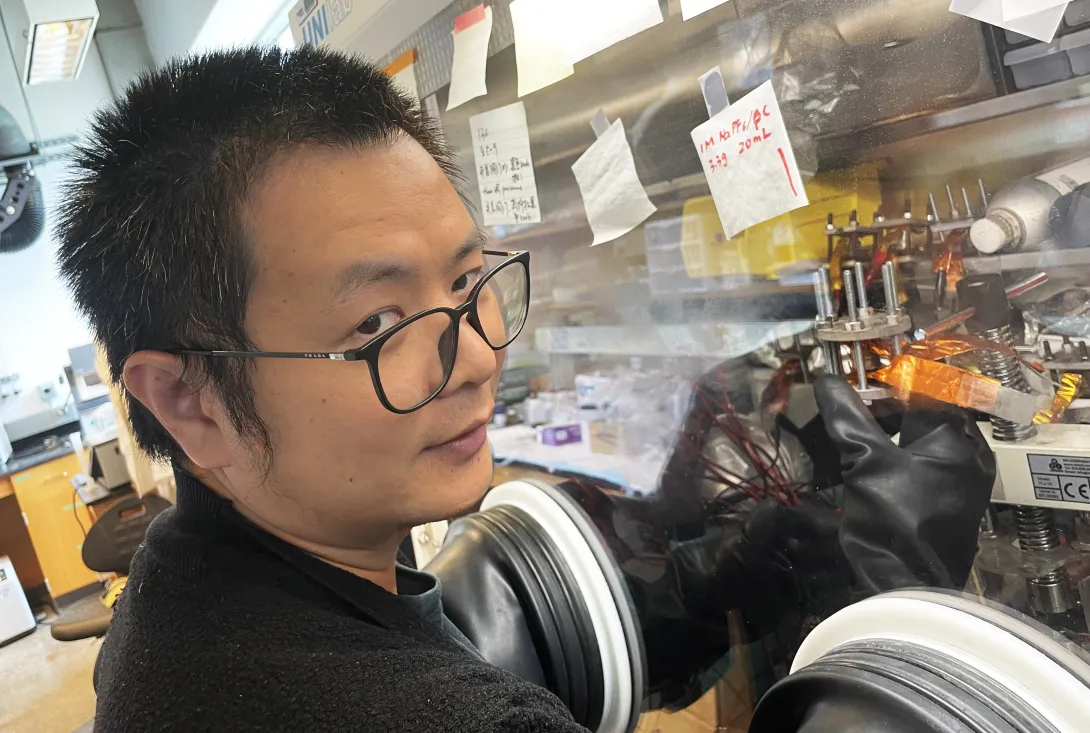
Zhantao Liu with the new low-cost cathode that could revolutionize lithium-ion batteries and the EV industry. Photo by Jerry Grillo
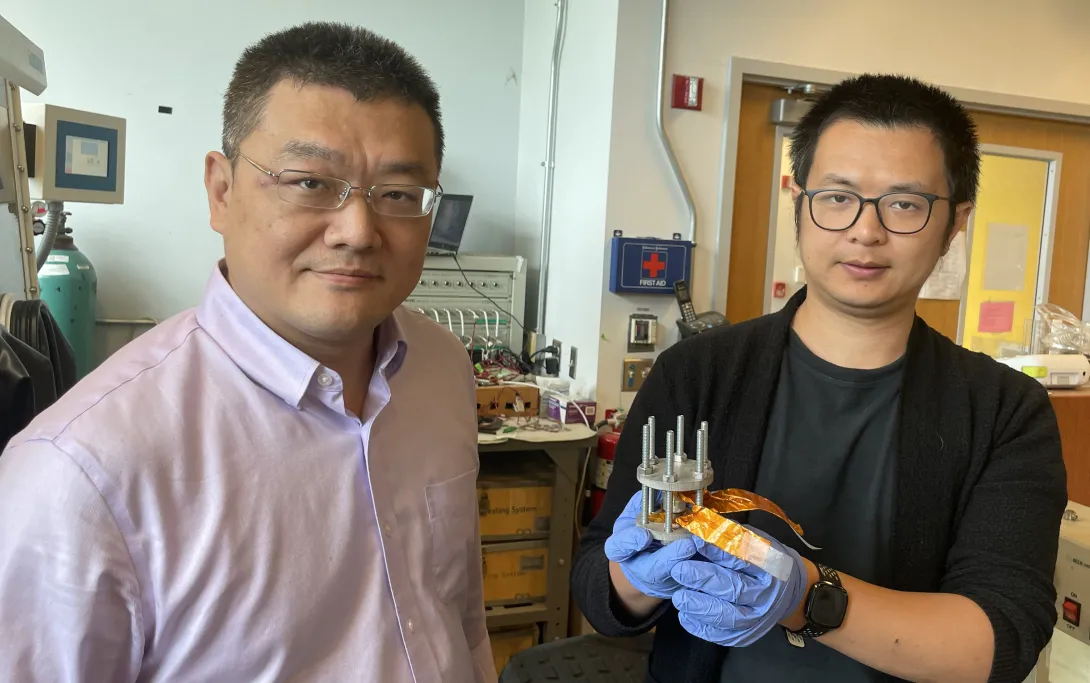
Hailong Chen and Zhantao Liu present a new, low-cost cathode for all-solid-state lithium-ion batteries. Photo by Jerry Grillo
A multi-institutional research team led by Georgia Tech’s Hailong Chen has developed a new, low-cost cathode that could radically improve lithium-ion batteries (LIBs) — potentially transforming the electric vehicle (EV) market and large-scale energy storage systems.
“For a long time, people have been looking for a lower-cost, more sustainable alternative to existing cathode materials. I think we’ve got one,” said Chen, an associate professor with appointments in the George W. Woodruff School of Mechanical Engineering and the School of Materials Science and Engineering.
The revolutionary material, iron chloride (FeCl3), costs a mere 1-2% of typical cathode materials and canstore the same amount of electricity. Cathode materials affect capacity, energy, and efficiency, playing a major role in a battery’s performance, lifespan, and affordability.
“Our cathode can be a game-changer,” said Chen, whose team describes its work in Nature Sustainability. “It would greatly improve the EV market — and the whole lithium-ion battery market.”
First commercialized by Sony in the early 1990s, LIBs sparked an explosion in personal electronics, like smartphones and tablets. The technology eventually advanced to fuel electric vehicles, providing a reliable, rechargeable, high-density energy source. But unlike personal electronics, large-scale energy users like EVs are especially sensitive to the cost of LIBs.
Batteries are currently responsible for about 50% of an EV’s total cost, which makes these clean-energy cars more expensive than their internal combustion, greenhouse-gas-spewing cousins. The Chen team’s invention could change that.
Building a Better Battery
Compared to old-fashioned alkaline and lead-acid batteries, LIBs store more energy in a smaller package and power a device longer between charges. But LIBs contain expensive metals, including semiprecious elements like cobalt and nickel, and they have a high manufacturing cost.
So far, only four types of cathodes have been successfully commercialized for LIBs. Chen’s would be the fifth, and it would represent a big step forward in battery technology: the development of an all-solid-state LIB.
Conventional LIBs use liquid electrolytes to transport lithium ions for storing and releasing energy. They have hard limits on how much energy can be stored, and they can leak and catch fire. But all-solid-state LIBs use solid electrolytes, dramatically boosting a battery’s efficiency and reliability and making it safer and capable of holding more energy. These batteries, still in the development and testing phase, would be a considerable improvement.
As researchers and manufacturers across the planet race to make all-solid-state technology practical, Chen and his collaborators have developed an affordable and sustainable solution. With the FeCl3 cathode, a solid electrolyte, and a lithium metal anode, the cost of their whole battery system is 30-40% of current LIBs.
“This could not only make EVs much cheaper than internal combustion cars, but it provides a new and promising form of large-scale energy storage, enhancing the resilience of the electrical grid,” Chen said. “In addition, our cathode would greatly improve the sustainability and supply chain stability of the EV market.”
Solid Start to New Discovery
Chen’s interest in FeCl3 as a cathode material originated with his lab’s research into solid electrolyte materials. Starting in 2019, his lab tried to make solid-state batteries using chloride-based solid electrolyteswith traditional commercial oxide-based cathodes. It didn’t go well — the cathode and electrolyte materials didn’t get along.
The researchers thought a chloride-based cathode could provide a better pairing with the chloride electrolyte to offer better battery performance.
“We found a candidate (FeCl3) worth trying, as its crystal structure is potentially suitable for storing and transporting Li ions, and fortunately, it functioned as we expected,” said Chen.
Currently, the most popularly used cathodes in EVs are oxides and require a gigantic amount of costly nickel and cobalt, heavy elements that can be toxic and pose an environmental challenge. In contrast, the Chen team’s cathode contains only iron (Fe) and chlorine (Cl)—abundant, affordable, widely used elements found in steel and table salt.
In their initial tests, FeCl3 was found to perform as well as or better than the other, much more expensive cathodes. For example, it has a higher operational voltage than the popularly used cathode LiFePO4 (lithium iron phosphate, or LFP), which is the electrical force a battery provides when connected to a device, similar to water pressure from a garden hose.
This technology may be less than five years from commercial viability in EVs. For now, the team will continue investigating FeCl3 and related materials, according to Chen. The work was led by Chen and postdoc Zhantao Liu (the lead author of the study). Collaborators included researchers from Georgia Tech’s Woodruff School (Ting Zhu) and the School of Earth and Atmospheric Sciences (Yuanzhi Tang), as well as the Oak Ridge National Laboratory (Jue Liu) and the University of Houston (Shuo Chen).
“We want to make the materials as perfect as possible in the lab and understand the underlying functioning mechanisms,” Chen said. “But we are open to opportunities to scale up the technology and push it toward commercial applications.”
CITATION: Zhantao Liu, Jue Liu, Simin Zhao, Sangni Xun, Paul Byaruhanga, Shuo Chen, Yuanzhi Tang, Ting Zhu, Hailong Chen. “Low-cost iron trichloride cathode for all-solid-state lithium-ion batteries.” Nature Sustainability.
FUNDING: National Science Foundation (Grant Nos. 1706723 and 2108688)
News Contact
Aug. 30, 2024

The Cloud Hub, a key initiative of the Institute for Data Engineering and Science (IDEaS) at Georgia Tech, recently concluded a successful Call for Proposals focused on advancing the field of Generative Artificial Intelligence (GenAI). This initiative, made possible by a generous gift funding from Microsoft, aims to push the boundaries of GenAI research by supporting projects that explore both foundational aspects and innovative applications of this cutting-edge technology.
Call for Proposals: A Gateway to Innovation
Launched in early 2024, the Call for Proposals invited researchers from across Georgia Tech to submit their innovative ideas on GenAI. The scope was broad, encouraging proposals that spanned foundational research, system advancements, and novel applications in various disciplines, including arts, sciences, business, and engineering. A special emphasis was placed on projects that addressed responsible and ethical AI use.
The response from the Georgia Tech research community was overwhelming, with 76 proposals submitted by teams eager to explore this transformative technology. After a rigorous selection process, eight projects were selected for support. Each awarded team will also benefit from access to Microsoft’s Azure cloud resources..
Recognizing Microsoft’s Generous Contribution
This successful initiative was made possible through the generous support of Microsoft, whose contribution of research resources has empowered Georgia Tech researchers to explore new frontiers in GenAI. By providing access to Azure’s advanced tools and services, Microsoft has played a pivotal role in accelerating GenAI research at Georgia Tech, enabling researchers to tackle some of the most pressing challenges and opportunities in this rapidly evolving field.
Looking Ahead: Pioneering the Future of GenAI
The awarded projects, set to commence in Fall 2024, represent a diverse array of research directions, from improving the capabilities of large language models to innovative applications in data management and interdisciplinary collaborations. These projects are expected to make significant contributions to the body of knowledge in GenAI and are poised to have a lasting impact on the industry and beyond.
IDEaS and the Cloud Hub are committed to supporting these teams as they embark on their research journeys. The outcomes of these projects will be shared through publications and highlighted on the Cloud Hub web portal, ensuring visibility for the groundbreaking work enabled by this initiative.
Congratulations to the Fall 2024 Winners
- Annalisa Bracco | EAS "Modeling the Dispersal and Connectivity of Marine Larvae with GenAI Agents" [proposal co-funded with support from the Brook Byers Institute for Sustainable Systems]
- Yunan Luo | CSE “Designing New and Diverse Proteins with Generative AI”
- Kartik Goyal | IC “Generative AI for Greco-Roman Architectural Reconstruction: From Partial Unstructured Archaeological Descriptions to Structured Architectural Plans”
- Victor Fung | CSE “Intelligent LLM Agents for Materials Design and Automated Experimentation”
- Noura Howell | LMC “Applying Generative AI for STEM Education: Supporting AI literacy and community engagement with marginalized youth”
- Neha Kumar | IC “Towards Responsible Integration of Generative AI in Creative Game Development”
- Maureen Linden | Design “Best Practices in Generative AI Used in the Creation of Accessible Alternative Formats for People with Disabilities”
- Surya Kalidindi | ME & MSE “Accelerating Materials Development Through Generative AI Based Dimensionality Expansion Techniques”
- Tuo Zhao | ISyE “Adaptive and Robust Alignment of LLMs with Complex Rewards”
News Contact
Christa M. Ernst - Research Communications Program Manager
christa.ernst@research.gatech.edu
Nov. 09, 2023
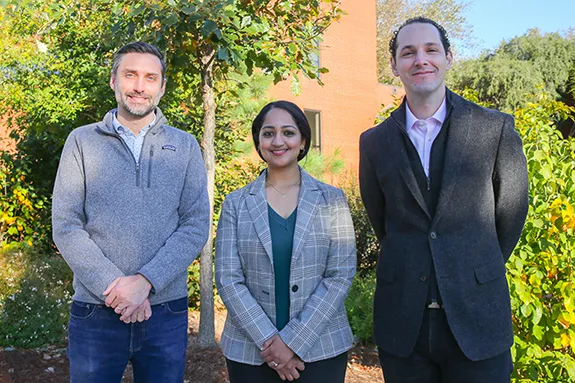
Georgia Tech faculty and researchers are involved in five university-led projects and two new Energy Earthshot Research Centers that are part of a $264 million grant from the U.S. Department of Energy (DOE). The funding includes establishing 11 new Energy Earthshot Research Centers (EERC) led by DOE’s national labs and 18 university research teams addressing one or more of DOE’s Energy Earthshots initiatives focused on industrial decarbonization, carbon storage and removal, offshore wind, and more.
University Projects
University research teams will conduct crosscutting, fundamental research to address knowledge gaps that limit achievement of the Energy Earthshots goals. These teams are focused on scientific challenges spanning the Office of Science research portfolio and complement work done by the EERCs.
Akanksha Menon, assistant professor in the George W. Woodruff School of Mechanical Engineering, has been awarded $3 million in funding to lead a university project titled “Understanding Thermo-Chemo-Mechanical Transformations in Thermal Energy Storage Materials and Composites.” The project will bring together Matthew McDowell, associate professor in the Woodruff School; Claudio Di Leo, assistant professor in the Daniel Guggenheim School of Aerospace Engineering; and Jeff Urban from the Lawrence Berkeley National Laboratory to provide a fundamental understanding of the coupled thermo-chemo-mechanical phenomena in thermal energy storage materials that will enable low-cost and stable storage.
Annalisa Bracco, professor and associate chair; Taka Ito, professor; and Chris Reinhard, Georgia Power Chair and associate professor — all from the School of Earth and Atmospheric Sciences — will join colleagues from Princeton, Texas A&M, and Yale University for an $8 million Earthshot project that will build an “end-to-end framework” for studying the impact of carbon dioxide (CO2) removal efforts. The project, titled “Carbon dioxide removal and high-performance computing: Planetary Boundaries of Earth Shots,” includes creating computer models to measure how well CO2 removal techniques work on land, rivers, and oceans.
Elizabeth Qian, assistant professor in the Guggenheim School and the School of Computational Science and Engineering, will join colleagues from New York University, Los Alamos National Lab, and National Renewable Energy Lab for an Earthshot project titled “Learning reduced models under extreme data conditions for design and rapid decision-making in complex systems (ROME).” The project will develop mathematical foundations and computational methods to support the design and operation of complex systems for carbon removal and renewable energy generation that will be used for simulation, design, and decision-making of the Floating Offshore Wind Shot and the Carbon Negative Shot EERCs.
David Flaherty, professor in the School of Chemical and Biomolecular Engineering will join colleagues from the University of Illinois Urbana-Champaign, Northern Arizona University, Texas State University, and Argonne National Lab to co-lead a project titled “Harnessing Electrostatics for the Conversion of Organics, Water and Air: Driving Redox on Particulate Liquids Earthshot (DROPLETS).” The overall objective of DROPLETS is to explore an approach based on microdroplet-enabled redox reactions (which involve the transfer of electrons between substances) toward H2 production (a clean and renewable energy source), CO2 activation (which can help mitigate greenhouse gas emissions), and the synthesis of redox species for long-duration energy storage.
Guoxiang (Emma) Hu, assistant professor in the School of Materials Science and Engineering, joins colleagues from Georgia State University, Carnegie Melon University, Oak Ridge National Lab, and the University of Utah on a project titled “Atomic Level Compositional Complexity for Electrocatalysis (Atomic-C2E).” Atomic-C2E will integrate fundamental electrochemistry, quantum chemical and multiscale simulations, and materials chemistry to develop an understanding of electrocatalysts that aid in the conversion of CO2 into value-added chemical fuels and hydrogen production via water electrolysis — and address technological bottlenecks challenging them.
National Lab Centers
The DOE national lab EERCs will bring together multi-institutional, multidisciplinary teams to perform energy-relevant research with a scope and complexity beyond what is possible in standard single-investigator or small-group awards. Addressing key research challenges relevant to the Energy Earthshots, the 11 new centers will be housed at eight DOE national laboratories and will receive a combined $195 million over four years.
Of the 11 lab centers, the DEGradation Reactions in Electrothermal Energy Storage (DEGREES) center led by the National Renewable Energy Laboratory consists of Professor Akanksha Menon and Associate Professor Shannon Yee from the Woodruff School. DEGREES is an EERC that will provide fundamental understanding of the science behind complex degradation mechanisms and instabilities that affect the performance of thermal energy storage.
Non-Equilibrium Energy Transfer for Efficient Reactions (NEETER) is the second EERC that will be housed at the Department of Energy's Oak Ridge National Laboratory (ORNL) and involves Georgia Tech. Led by David Sholl, director of ORNL’s transformational decarbonization initiative and professor in the School of Chemical and Biomolecular Engineering, NEETER is focused on developing chemical processes that use sustainable methods instead of burning fossil fuels to radically reduce industrial greenhouse gas emissions to stem climate change and limit the crisis of a rapidly warming planet.
About DOE’s Energy Earthshots Initiative
The Department of Energy launched the Energy Earthshots Initiative to spur decarbonization efforts that will help the United States meet climate and clean energy goals. The initiative connects DOE’s basic science and energy technology offices to accelerate innovations toward more abundant, affordable, and reliable clean energy solutions; seeks to revolutionize many sectors across the United States; and will rely on fundamental science and innovative technology to be successful.
Professor Elizabeth Qian will Serve as Co-PI on DoE Energy Earthshots Project

Qian will develop computing methods to support design and operation of complex systems for carbon removal and renewable energy generation.
Three Earth and Atmospheric Sciences Researchers Awarded DOE Earthshot Funding for Carbon Removal Strategies

Bracco, Ito, and Reinhard will create computer models to measure how well CO2 removal techniques work on land, rivers, and oceans, as part of $264 million in grants.
Assistant Professor Akanksha Menon Awarded $3 Million for Research as part of DOE's Energy Earthshots Initiative

Menon and her team will address two Energy Earthshots to help achieve net-zero carbon by 2050, combat climate crisis.
Professor David Sholl Leading New Energy Earthshot Research Center to Stem Climate Change

The Department of Energy also selected David Flaherty to co-lead a second project designed to lower energy input and reactor cost for complex chemical reactions.
Writer and Media Contact:
Priya Devarajan | priya.devarajan@research.gatech.edu
News Contact
Priya Devarajan, Communications Manager, SEI & RBI