
Feb. 14, 2024
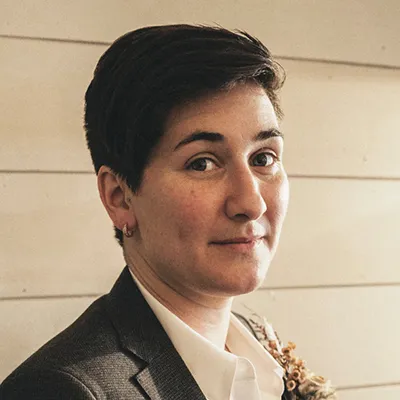
Written by Benjamin Wright
Emma Blandford is the Program & Portfolio Manager for Sustainability Next, an initiative outlined in Georgia Tech’s strategic plan which seeks to establish the Institute as a leader in ethical, economic, and environmental sustainability in Institute operations; sustainable development education; sustainability leadership and transdisciplinary research; culture and organization; climate solutions; and in using the campus as a living learning laboratory. Emma's role is supported by both the Office of Sustainability, where she reports to Associate Vice President of Sustainability Jennifer Chirico, and the Brook Byers Institute for Sustainable Systems (BBISS) where she reports to Interim Executive Director Beril Toktay. She regularly collaborates with members of both organizations and serves as a bridge between them.
As the portfolio manager for Sustainability Next, Emma serves as a facilitator, connecting like-minded people from across campus so they can collaborate while also helping them access available resources. With sustainability being a broad inter and multi-disciplinary field, the opportunities for collaboration are endless, but bringing people from diverse fields can also be a challenge. That is where Emma’s background in team-building and project management comes in.
“It’s my job to make sure that people have what they need to do their jobs,” she says. “They're passionate and they’re incredibly intelligent. In sustainability, it's hard to find people who aren't deeply personally attached to their roles. So my goal is to empower them and help them succeed.”
Emma oversees and supports a variety of teams and projects that are working towards established sustainability goals on campus, tracking their progress, providing access to resources, and removing obstacles when necessary.
On any given day Emma could be talking to researchers, campus communicators, facilities staff, students, or organizational leadership. If their roles touch on sustainability, she wants to hear from them and find ways to help them achieve success while bringing them under the Sustainability Next umbrella. If you are already working in sustainability at Georgia Tech or would like to be, feel free to reach out through the Sustainability Next webpage or to Emma directly.
When she isn’t at work Emma enjoys spending time with her wife, two kids, three dogs, and cat- outdoors when possible. She is originally from Connecticut and holds degrees from UConn and Western New England University.
News Contact
Brent Verrill, Research Communications Program Manager, BBISS
Jan. 26, 2024
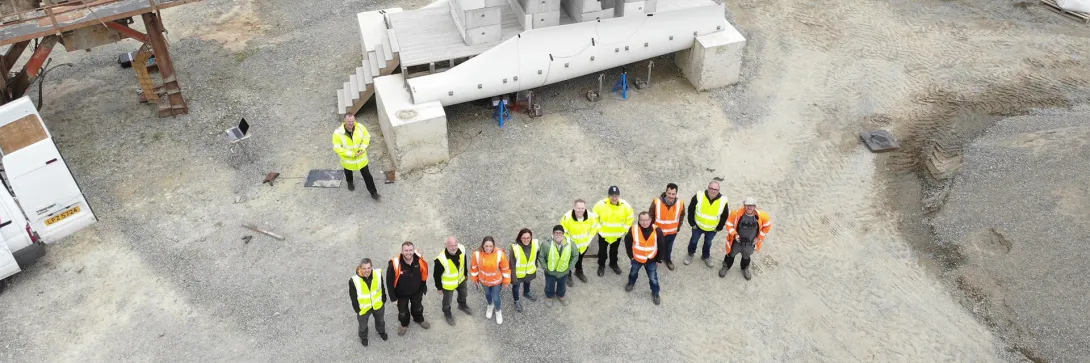
Overhead view of the Re-Wind crew doing structural testing on a decommissioned wind turbine blade bridge on an industrial lot.
Pioneering a new recycling approach led to a big win for Re-Wind USA, a Georgia Tech research team led by Russell Gentry. The team has won the first phase of the Department of Energy's Wind Turbine Materials Recycling Prize, receiving $75,000 and an invitation to compete in the final phase.
"Our innovation for end-of-service wind turbine blades is both simple and elegant – at its core, our technology captures all the embodied energy in the composite materials in the blade," said Gentry, professor in the School of Architecture.
"The Re-Wind Network has pioneered structural recycling, the only of a number of competing technologies that upcycles the material of the blade and preserves the embodied energy from manufacturing," Gentry said.
"Little additional energy is used to remanufacture the blade and the life of the blade, typically 20 years, is extended at least 50 years. This is a win-win solution from an environmental and economic perspective."
Other methods for dealing with decommissioned wind blades involve mechanical grinding and landfilling of subsequent waste, an expensive and energy-intensive process, he said.
Team members include Gentry, Sakshi Kakkad, Cayleigh Nicholson, Mehmet Bermek, and Larry Bank, from the School of Architecture; Gabriel Ackall, Yulizza Henao, and Aeva Silverman, from the School of Civil and Environmental Engineering; and Eric Johansen, a business consultant from Fiberglass Trusses Inc.
The team is part of the Re-Wind Network, a multinational research and development network which develops large-scale infrastructure projects from decommissioned wind turbine blades.
Re-Wind's pedestrian bridges, known as BladeBridges, have already captured media attention. Two more BladeBridges are expected in Atlanta in 2024, Gentry said. Re-Wind has also developed, prototyped, and tested transmission poles made from blade segments. The team's other proposals include culverts, barriers, and floats.
News Contact
Ann Hoevel, Director of Communications, College of Design
Jan. 19, 2024
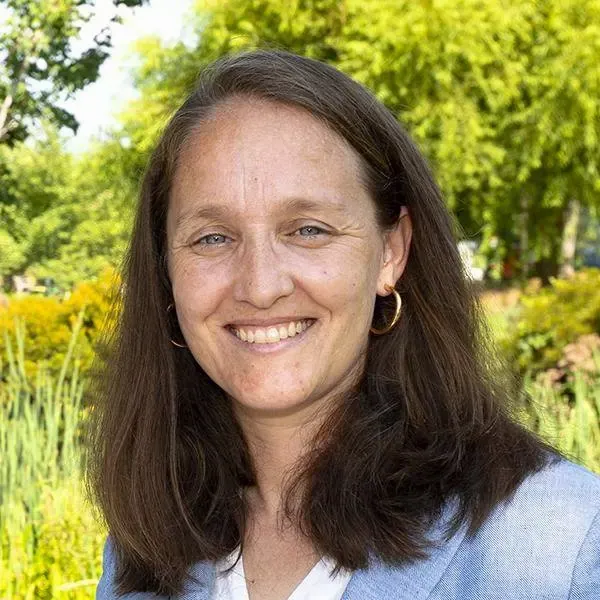
Associate Professor Marta Hatzell has won a 2024 ACS Sustainable Chemistry & Engineering Lectureship Award, which recognizes leading contributions of scientists and engineers active in the general fields of green chemistry, green engineering, and sustainability in the broadest sense of the chemical enterprise.
Hatzell, who holds joint appointments in Georgia Tech's School of Mechanical Engineering and School of Chemical and Biomolecular Engineering, was honored for her multiple contributions that drive the application of electrochemistry to enable critical systems with enhanced circularity.
The ACS Sustainable Chemistry & Engineering Lectureship awards were created to celebrate early to midcareer investigators who completed academic training no more than 10 years prior to nomination. In support of their commitment to nurture and stimulate a global community of outstanding practice. ACS Sustainable Chemistry & Engineering and the ACS Green Chemistry Institute gave three Lectureship Awards to recognize outstanding levels of contribution from The Americas, Europe/Middle East/Africa, and Asia/Pacific.
The award recipients will be honored at a joint plenary session of the 28th Annual Green Chemistry & Engineering Conference in their honor (June 3–5, 2024; https://www.gcande.org/).
News Contact
Brad Dixon, Communications Manager, School of Chemical and Biomolecular Engineering
Dec. 04, 2023
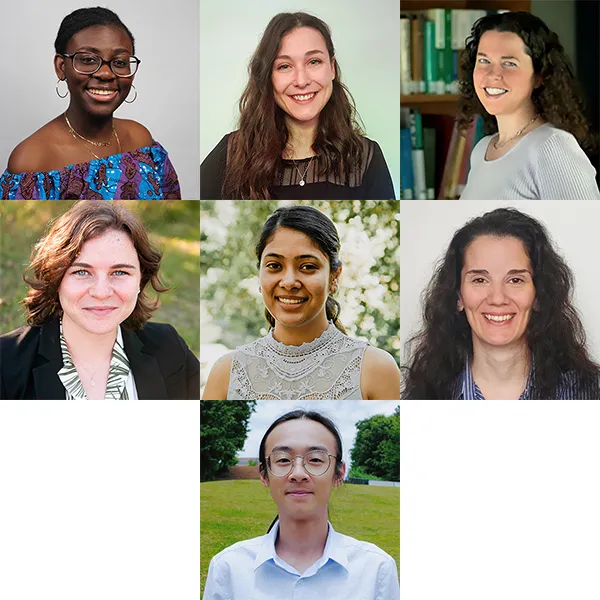
The first cohort of the Brook Byers Institute for Sustainable Systems (BBISS) Graduate Fellows published an article in the open-access, peer-reviewed journal, Elementa: Science of the Anthropocene. The seven Ph.D. students reflected on their two years of working, studying, and training together as an interdisciplinary sustainability research team. In the article, they give their insights into how they benefited from this approach and what steps might be taken to improve graduate level, sustainability-related programs. Further, their paper offers researchers and educators a rare perspective into interdisciplinary research and education from the standpoint of students who are still pursuing their degrees and actively engaged in research for their chosen disciplines.
Citation: McSorley, M, Arkhurst, BK, Hall, M, Zha, Y, Spyrou, IM, Duchesneau, K, Ringania, U, Chang, M. 2023. For graduate students to become leaders in sustainability, we must transcend disciplinary boundaries. Elementa: Science of the Anthropocene 11(1). DOI: https://doi.org/10.1525/elementa.2023.00012
For more information about the Brook Byers Institute for Sustainable Systems Graduate Fellows program, please visit this webpage.
News Contact
Brent Verrill, Research Communications Program Manager, BBISS
Oct. 18, 2023
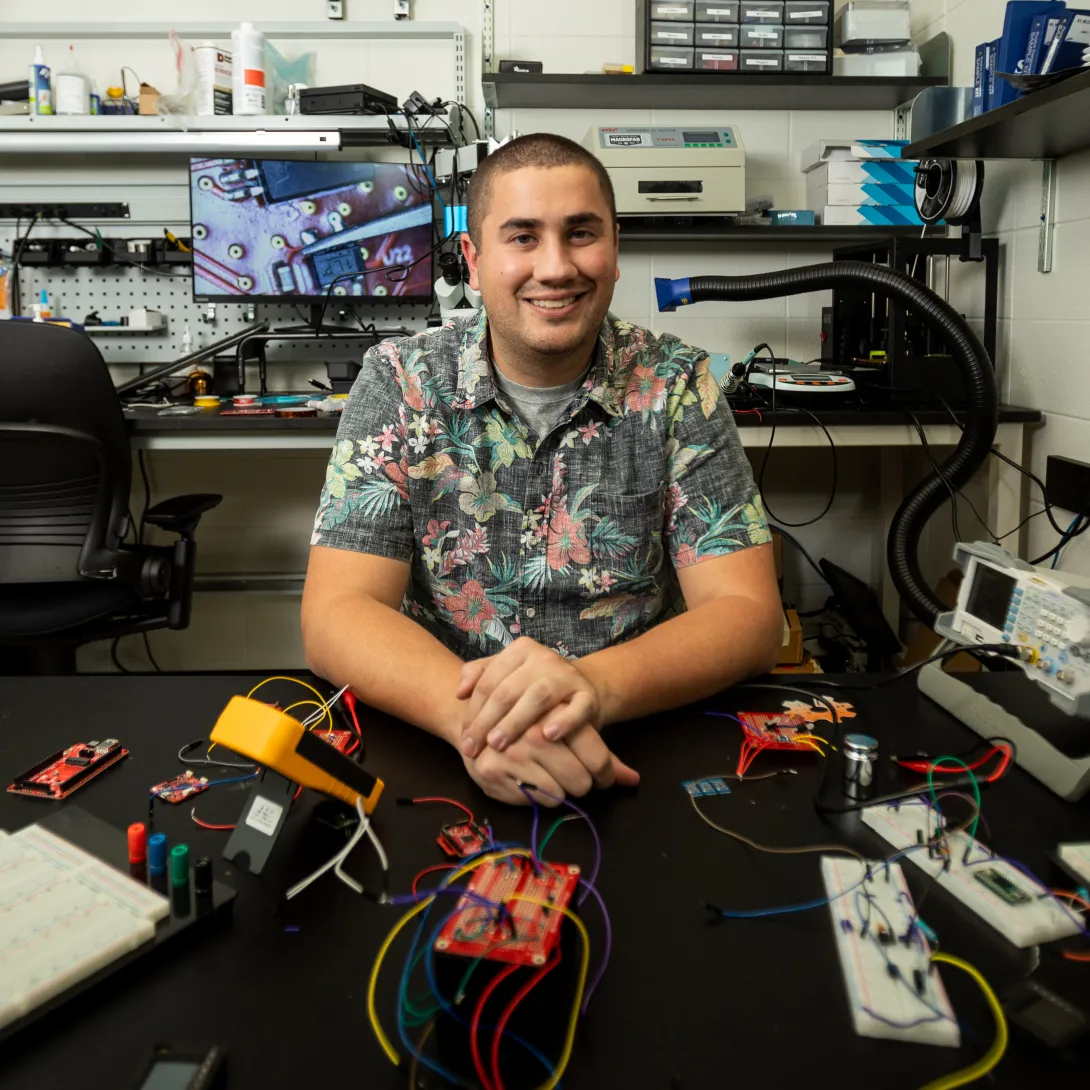
Josiah Hester sits at a desk in an electronics lab at Georgia Tech with an array of prototype projects and test equipment in front of him.
Edge devices, such as wearables, cameras, smartphones, and smart home devices, have become the foundation of our daily interactions with technology. But the exponential growth in the number of these devices comes at a significant environmental cost, currently accounting for more than a third of the 4% of global carbon emissions attributed to information and communication technologies. This ecological impact is projected to worsen as the number of edge devices surges into trillions over the next few decades.
Josiah Hester, associate professor in the College of Computing, along with researchers from Cornell and Harvard Universities, has received a $2 million grant from the newly established Design for Environmental Sustainability in Computing program at the National Science Foundation. The investigators aim to study and mitigate the environmental impact of edge computing devices. Their winning project will make carbon and sustainability a first-order design parameter for future edge computing devices that range from tiny, energy-harvesting Internet of Things devices — often found in manufacturing lines, cars, agriculture, and cities — to higher performance consumer electronics like tablets and smartphones.
As part of the research, investigators will capture a first-of-its-kind dataset on actual emissions and resource usage of complex fabrication processes, build and validate tools for carbon-aware design, and establish an Electronic Sustainability Record for edge devices, similar to nutrition labels for food, or a digital health record, that allows consumers and manufacturers to understand the carbon costs of computing devices and use that in decision-making. The grant proposal was catalyzed through the Brook Byers Institute for Sustainable Systems Initiative Leads program, with additional funds from the Institute for Data Engineering and Science.
“Right now, hardware designers, programmers, and consumers have only a vague idea of the actual carbon cost of the phone, wearable, or smart device they are working with. With rising e-waste and technology’s increasing contributions to climate change, we have to figure out how to do better. This project will lay the foundations for edge devices that can last for decades, or at least have a lifetime commensurate with the carbon cost, potentially reducing e-waste, emissions, and environmental footprint,” said Hester. “Our design tools, new datasets, and carbon models will consider factors like energy, e-waste, and water usage from the manufacturing of computational devices, as well as operational carbon footprint from factors like machine learning and software lifecycles.”
With the grant money, Hester’s team will develop an end-to-end framework that prioritizes environmental impact, while considering user experience, performance, and efficiency when designing edge devices. The framework, which they are calling Delphi, will enable sustainable technological growth by laying out a path for the design of environmentally conscious edge devices with substantially longer lifecycles.
“Eventually, this research could lead to a kind of ‘nutrition label’ for computing devices, like your phone, to empower consumers with data to make more sustainability-friendly purchasing and use decisions,” Hester said. “This could incentivize and enable hardware companies to build lower carbon devices meant to last for many years, versus trading up after a contract renewal. We have a long way to go before this is reality, but this project will lay foundational steps in data collection, model building, and design tools — a sustainable vision of edge computing.”
News Contact
Brent Verrill, Research Communications Program Manager, BBISS
Sep. 06, 2023
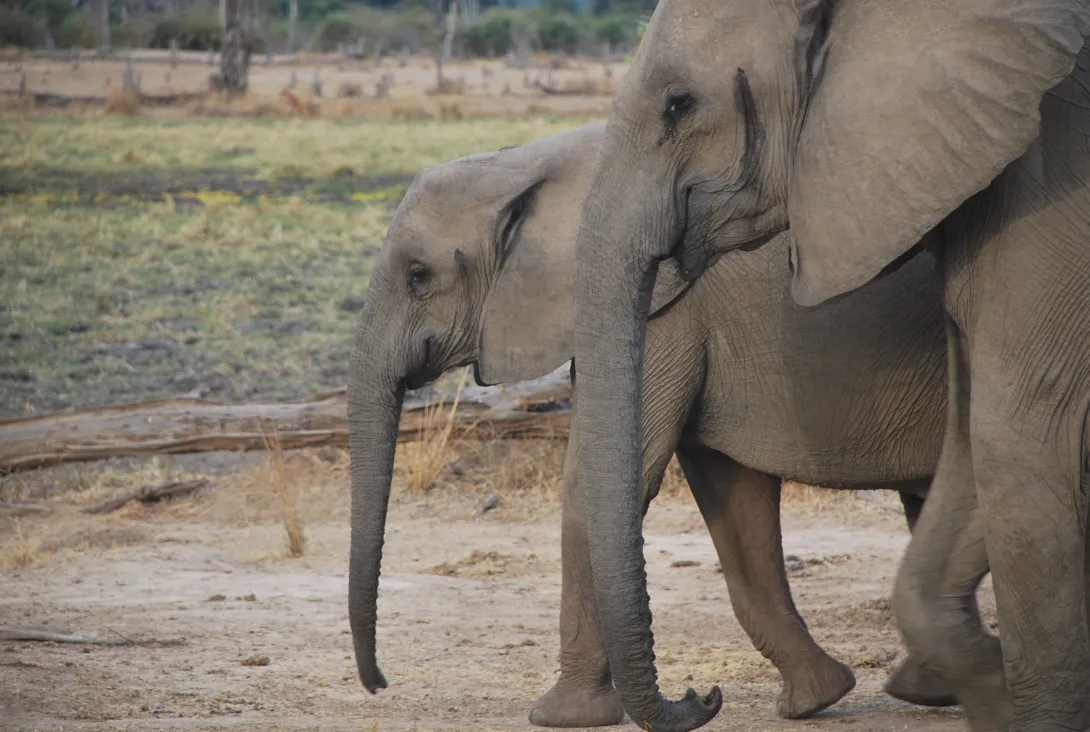
While most species have gone extinct, eastern Africa is home to vibrant natural communities of mammalian megafauna, including elephants, zebras, hippopotamuses, antelope, giraffes, and many others. (Photo: Jess Hunt-Ralston)
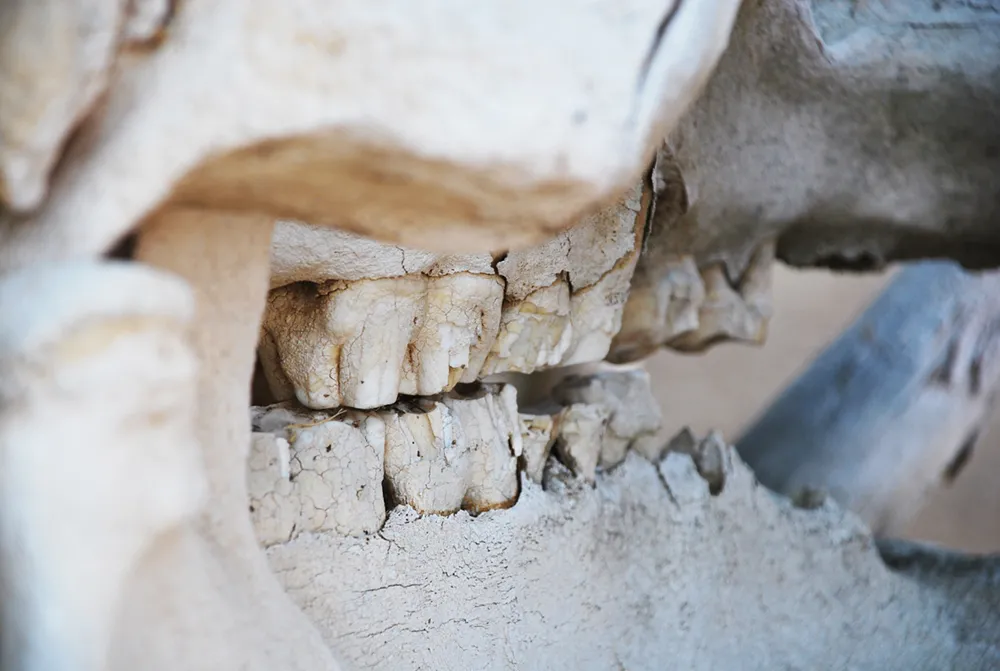
Zebra skull at a wildlife education center in eastern Africa. In places or times with less precipitation, mammal communities overall will have more robust, rugged, resistant teeth. (Photo: Jess Hunt-Ralston)
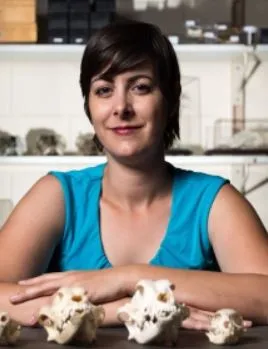
Associate Professor Jenny McGuire

Daniel Lauer, Ph.D. student in Quantitative Biosciences at Georgia Tech.
Large-bodied mammals play crucial roles in ecosystems. They create habitats, serve as prey, help plants thrive, and even influence how wildfires burn. But now, fewer than half of the large mammal species that were alive 50,000 years ago exist today, and those that remain are threatened with extinction from intensifying climate change and human activities.
While mammal extinctions are well-documented, very little research has explored the impact those losses had on the nuanced ways in which mammal communities interact with their environments. Researchers at the Georgia Institute of Technology are using a novel methodology to investigate how mammals’ ability to function in their environments has been threatened in the past, and what challenges they can expect to face in the future.
Jenny McGuire, associate professor in the School of Biological Sciences and leader of the Spatial Ecology and Paleontology Lab, and Daniel Lauer, a graduate student, looked millions of years into the past, observing how and why eastern African herbivores’ relationships with their environments changed across space and time in the face of biodiversity loss. They used a novel approach to build models that show how specific mammal traits — like body mass and tooth shape — evolved with their changing environments over time, revealing the factors that caused the biodiversity losses and how the losses affected the functioning of mammal communities. Their method offers a new strategy for investigating the implications of changing ecologies and prioritizing conservation efforts toward helping mammal communities flourish in the future.
Their research paper was published in the journal Nature Communications.
Combing the Data
The researchers began by diving into a collection of data from 186 sites across eastern Africa. The data contained records of over 200 extinct and 48 modern herbivore species (including the African elephant, giraffe, and hippopotamus), showing where and when each species lived at a given point in time over the past 7.4 million years. The data showed that mammal biodiversity in eastern Africa began to decline around 5 million years ago. It also revealed that aspects of biodiversity decline happened at multiple points, and that extinctions coincided with environmental changes and the emergence of early humans. But McGuire and Lauer wanted to know more.
“We wondered what we would find if we investigated how the mammals’ physical traits changed as their environments changed over time, rather than just looking at patterns in their biodiversity,” Lauer said. “This is important because if a mammal species possesses traits that are well-suited to its environment, it’s better able to contribute to the functioning of that environment. But if that is not the case, environments may not function as well as they could.”
To paint a fuller picture, they needed to examine biodiversity from a different perspective. This required a fresh approach, which led them to adapting a methodology known as ecometrics.
Ecometrics is an approach that looks at the relationships between the environmental conditions where animal communities are found — such as weather and vegetation — and the animal’s functional traits, which are traits that affect its biological performance. The team chose to focus on three traits: body mass, tooth height, and loph count (the number of ridges on molars).
Each of these traits exhibits a relationship based on the degree to which an environment is dominated by grasses versus woody plants. For example, if a species has a taller tooth, it can more durably consume the abrasive grassy vegetation of grasslands. With a shorter tooth, a species is instead suited to consume softer, woody vegetation, like shrubs.
For each of the three traits, they built a model of trait-environment relationships. They used trait data to estimate what the surrounding vegetation was like in each mammal community over time, specifically the percentage of trees and shrubs versus grassland.
“Using our models, we were able to use information about the traits occurring within mammal communities to estimate how the surrounding vegetation looked,” Lauer said. “Because these communities existed at different points in time, this enabled us to observe how consistent the mammals’ relationships with their environments remained through time.”
Analyzing Disruptions
Using their ecometric framework, the researchers uncovered a key difference between the mammal biodiversity declines that occurred before approximately 1.7 million years ago and those that occurred after. While biodiversity began declining around 5 million years ago, trait-environment relationships remained consistent despite that loss.
Their analysis demonstrated that earlier biodiversity losses were a result of species adapting to grassland environments or tracking their preferred environments across geographies. In short, those biodiversity losses didn't necessarily have any sort of negative impact on the ability of mammal communities to function properly in their environments.
But later, around 1.7 million years ago, when climates became more arid and variable and tree cover declined to below 35%, a major shift occurred. Rapid losses in the number and variety of species occurred, along with a significant disruption in trait-environment relationships. The researchers’ findings suggest that, unlike prior biodiversity losses, those occurring over the past 1.7 million years likely threatened the ability for many mammal species to function well in local environmental conditions.
“Our findings fascinated us, because we were able to differentiate between the different biodiversity losses that were happening and their implications,” Lauer said. “This work reinforces the idea that not all biodiversity losses are the same.”
Protecting the Vulnerable
Their findings have important implications for the types of environmental and climatic changes that could affect mammals going forward. In the past, when changes were gradual and wildlife were able to move freely on the landscape, they could readily adapt to these environmental conditions.
Now, fragmentation of wildlife habitats by fences, roadways, and cities has the potential to limit the ability of wildlife to adapt to the rapid environmental changes occurring today. That is exacerbated by both the fast pace and increasing variability of today’s climate, which puts animals at risk of losing their ability to function properly in their local environments.
Moving forward, the team’s analysis can shed light on which mammal communities should be prioritized for future conservation efforts. The study demonstrates that among all the communities that are experiencing biodiversity losses, priority should be given to those most at-risk — the communities for whom future biodiversity losses will profoundly affect their ability to function properly.
“By examining the past, we can get a remarkably clear understanding of how animals have responded to prior environmental changes,” McGuire said. “We plan to work with conservation practitioners to use our findings to develop well-informed strategies for conserving the most at-risk mammal communities.”
***
Co-authors include A. Michelle Lawing (Texas A&M University), Rachel A. Short (South Dakota State University), Fredrick K. Manthi (National Museums of Kenya), Johannes Müller (Leibniz Institute for Evolution and Biodiversity Science), and Jason J. Head (University of Cambridge).
Citation: Lauer, D.A., Lawing, A.M., Short, R.A. et al. Disruption of trait-environment relationships in African megafauna occurred in the middle Pleistocene. Nat Commun 14, 4016 (2023).
DOI: https://doi.org/10.1038/s41467-023-39480-8
Funding: This work was completed as part of a collaborative initiative from NSFDEB-NERC, with funding from NSF 2124836 to A.M.L., F.K.M., and J.M.; NSF 2124770 to J.L.M.; and NERC NE/W007576/1 to J.J.H. R.A.S. was supported by the NSF Postdoctoral Research Fellowships in Biology Program under grant DBI 2010680 and the USDA NIFA Hatch project SD00H787-23 (7004129 and 7004187). J.L.M. was also funded through NSF-CAREER and NSF 1945013.
News Contact
Catherine Barzler, Senior Research Writer/Editor
Institute Communications
May. 25, 2023
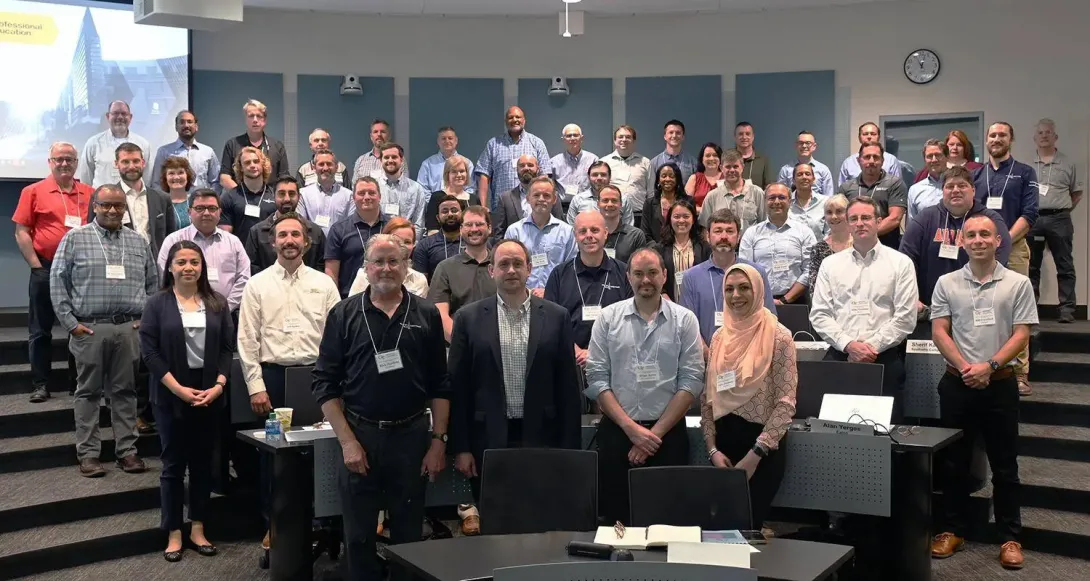
The NEETRAC advisory board meeting on May 17, at Georgia Tech. New NEETRAC Director Joe Hagerman (front row, second to left) was introduced to the board during the meetings.
As the nation's power grid undergoes a transformative shift with historic investment in clean energy, Joe Hagerman understands the importance of this moment for the National Electric Energy Testing, Research and Applications Center (NEETRAC). It presents the center with a distinct opportunity to showcase expertise, drive progress, and actively shape the future of the grid.
NEETRAC, a leading research and testing resource for the electric energy industry, housed under the Georgia Tech School of Electrical and Computer Engineering (ECE), has announced the appointment of Hagerman as its director, starting June 1.
“Under the leadership of former Director Rick Hartlein, NEETRAC has established itself as a trusted authority in testing and research for the electric power industry,” said Hagerman. “Thanks to this reputation, we are now poised to take a leading role in the country's de-carbonization and re-electrification priorities. The potential for strengthening our ties with the Institute, the state of Georgia, and federal entities is a once in a lifetime opportunity.”
Hagerman joins NEETRAC after directing the Energy, Policy, and Innovation Center (EPICenter), a division of the Strategic Energy Institute.
Prior to Georgia Tech, Hagerman served as a section head at the U.S. Department of Energy’s Oak Ridge National Laboratory. He also has served as the deputy chief scientist of the ;National Rural Electric Cooperative Association and as a senior policy advisory at the U.S. Office of Energy’s Energy Efficiency and Renewable Energy.
“As NEETRAC prepares for the next phase of its journey, Joe's passion, visionary approach, and bridge-building abilities will be indispensable for success,” said Arijit Raychowdhury, professor and Steve W. Chaddick School Chair in ECE. “His policy work and technical expertise in grid systems speak for themselves, especially regarding emerging areas like renewables, connected equipment, and cybersecurity. I’m thrilled to have Joe leading the way.”
The Right Time for Growth
The domestic demand for electricity continues to steadily rise because of the government's ambitious renewable and carbon-free energy objectives, the increased electrification of transportation and heating, and the growing demand for digitally connected devices.
Add this to an aging power grid, and incentives and investments for making the grid stronger and more resilient are at an all-time high for the electric power industry.
Hagerman looks to leverage his governmental research reputation and knowledge of the Georgia Tech landscape to enhance NEETRAC's existing strengths and explore new opportunities. He seeks to establish new connections — both inside and outside of the Institute — for the center, enabling it to effectively drive innovation and address the evolving needs of the industry.
“The power grid stands as a remarkable feat of human engineering, and its sheer physical scale is incredible,” said Hagerman. “Incorporating changes is not as simple as flipping a switch. It requires extensive knowledge and countless hours of rigorous testing. Thankfully, NEETRAC and Georgia Tech possess an abundance of expertise — and a world class staff — that can be harnessed to navigate these challenges successfully.”
An Invaluable Industry Resource
For more than 25 years, NEETRAC — located just south of the Atlanta campus, near the Hartsfield-Jackson Atlanta International Airport — has played a vital role in facilitating collaboration between the electric energy industry and academia.
Everything connected to the power grid — even power poles to bucket trucks — can be tested and researched at the center. NEETRAC’s experienced engineers and technicians seek to deliver innovative, effective solutions to all problems related to the transmission and distribution of electric energy.
As a membership-supported center, NEETRAC's member companies comprise utilities that represent around 65% of U.S. electric customers, along with manufacturers who contribute significantly to the products and services offered in the electric utility industry.
“NEETRAC is much more than a testing laboratory to us,” said Sherif Kamel, vice president of New Product Development at Southwire, a NEETRAC member organization. “The deep knowledge and expertise that NEETRAC uses to support our industry’s needs is unparalleled.”
This diverse membership base promotes collaboration and knowledge exchange, keeping NEETRAC at the forefront of industry challenges, advancements, and opportunities.
Sherif, NEETRAC's advisory board chair and a member of the search committee that recommended Hagerman, stated that NEETRAC's staff and facilities aid Southwire in developing, improving, and supporting customers. Additionally, the center enhances the credibility and proficiency of the company's test results. Southwire was founded in 1937 by Roy Richards, a graduate of Georgia Tech, and is a NEETRAC founding member.
Future Potential
Hagerman stressed that with so much uncertainty regarding the future of the domestic power grid, one thing is clear: To evolve NEETRAC will need to enhance its relationship with the industry and scale to help its current and future members throughout North America.
“There’s excitement in not knowing how everything will unfold,” he said. “It’s important for us to be nimble and ready to adapt, but to also use our position to anticipate the needs of our members and provide value and insights to our partners.”
According to Hagerman, the future services of NEETRAC could be driven by several important factors, namely the integration of renewable energy sources, ensuring the security of the grid both in physical and cyber aspects, and harnessing the power of big data.
Investing and expanding in the expertise of NEETRAC's skilled scientists and engineers, its technical staff, and its administrative staff is arguably the most crucial approach to meeting the uncertain demands of the future.
“By nurturing the talents and skills of the team and by incorporating an inclusive approach, we all work toward the shared future of NEETRAC and the Institute. We are all one Georgia Tech,” said Hagerman. “NEETRAC’s role in that future is defined by its cutting-edge evaluations, its world class research, and its continued support of innovation for a resilient and secure domestic power grid for all.”
News Contact
Dan Watson
Jul. 12, 2023
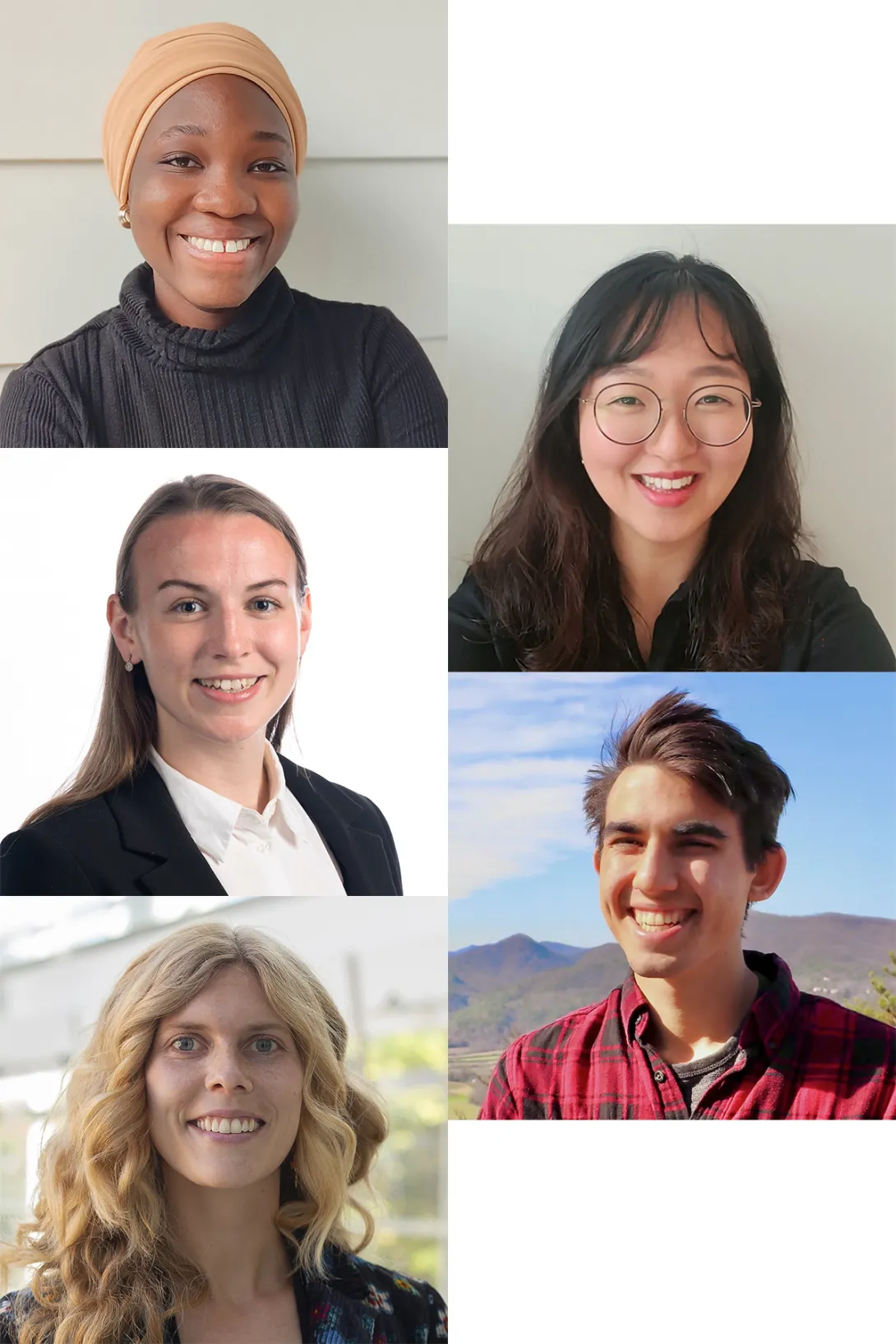
Montage of portraits. R to L, Top to Bottom: Aminat Ambelorun, Min-kyeong (Min) Cha, Allannah Duffy, Eric Greenlee, and Spenser Wipperfurth
The third class of Brook Byers Institute for Sustainable Systems (BBISS) Graduate Fellows has been selected. The BBISS Graduate Fellows Program provides graduate students with enhanced training in sustainability, team science, and leadership in addition to their usual programs of study. Each 2-year fellowship is funded by a generous gift from Brook and Shawn Byers and is additionally guided by a Faculty Advisory Board. The students apply their skills and talents, working directly with their peers, faculty, and external partners on long-term, large team, sustainability relevant projects. They are also afforded opportunities to organize and host seminar series, develop their professional networks, publish papers, draft proposals, and develop additional skills critical to their professional success and future careers leading research teams.
The 2023 class of Brook Byers Institute for Sustainable Systems Graduate Fellows are:
- Aminat A. Ambelorun - Ph.D. student, School of Earth and Atmospheric Sciences, College of Sciences, Advisor: Alex Robel
- Min-kyeong (Min) Cha - Ph.D. student, School of Public Policy, Ivan Allen College of Liberal Arts, Advisor: Daniel Matisoff
- Allannah Duffy - Ph.D. student, George W. Woodruff School of Mechanical Engineering, College of Engineering, Advisor: Srinivas Garimella
- Eric Greenlee, Ph.D. student, School of Computer Science, College of Computing, Advisor: Ellen Zagura
- Spenser Wipperfurth, Ph.D. student, Ocean Science and Engineering, organized by the Schools of Biology, Civil and Environmental Engineering, and Earth and Atmospheric Sciences, MBA, Scheller College of Business, Advisor: Kevin Haas
Additional information about the BBISS Graduate Fellows Program, and about the first class of BBISS Graduate Fellows is available at https://research.gatech.edu/sustainability/grad-fellows-program.
News Contact
Brent Verrill, Research Program Communications Manager, BBISS
Jun. 12, 2023
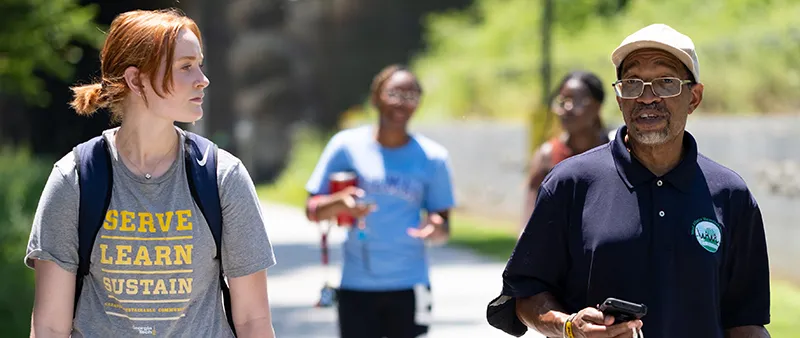
A student wearing a "Serve-Learn-Sustain" tee shirt walks along a campus walkway with a Georgia Tech faculty member. Photo Credit Ben Gray, AJC.
The Vice President for Interdisciplinary Research (VPIR) and the Office of Undergraduate Education (OUE) are excited to announce an institutionalization plan for Serve-Learn-Sustain (SLS) that will advance two of Georgia Tech’s Institute Strategic Plan (ISP) initiatives - Sustainability Next and Transformative Teaching and Learning (TTL) - and strengthen our service learning, community engagement, and sustainability ecosystems at Georgia Tech. Established as Georgia Tech’s last Quality Enhancement Plan (QEP), SLS launched in 2016 as a unit in OUE and concluded its official QEP work in 2021. Its work on the QEP earned Georgia Tech a commendation from the Southern Association of Colleges and Schools Commission on Colleges and established a strong foundation to build on moving forward.
Effective July 1, 2023, the current SLS team will establish a new center, the Center for Sustainable Communities Research and Education (CSCRE), under the VPIR. The Brook Byers Institute for Sustainable Systems (BBISS), which is serving as a hub for coordinating Georgia Tech’s Sustainability Next Strategic Plan initiative, will serve as the administrative home for the new center.
CSCRE will collaborate with the sustainability cluster of the Interdisciplinary Research Institutes (IRIs), including BBISS, the Strategic Energy Institute (SEI), and the Renewable Bioproducts Institute (RBI), as well as Infrastructure and Sustainability, another key Sustainability Next hub, to enhance Georgia Tech’s competitiveness in applying for grants that require meaningful community partnerships as a key component of their research and education plans. It will also continue to support sustainable communities education, in close collaboration with the Center for Teaching and Learning (CTL), OUE, and Education and Learning, to assure the continuity of SLS’s signature programs.
Established as Georgia Tech’s last QEP, Serve-Learn-Sustain launched in 2016 as a unit in OUE and concluded its official QEP work in 2021. Georgia Tech earned a commendation from the Southern Association of Colleges and Schools Commission on Colleges in 2021 for the “exceptional execution” of the 2016 QEP, citing, among other things, that the program “inspired a closer dialogue among faculty regarding research and instructional practices, and thus serves as a model of how a QEP can transform an academic culture.”
To continue advancing and scaling undergraduate service learning and community engagement as a high-impact practice, OUE will establish a new service learning team, as a priority that supports the Transformative Teaching and Learning ISP initiative. Institutionalizing the service-learning functions of SLS within OUE and aligning it with other high impact practices - such as undergraduate research, student innovation programs, first-year seminars, co-op and internships, and learning communities - will position these programs to work collectively in support of the development of Georgia Tech’s next QEP, which will begin in 2025.
Thank you to the SLS staff and to everyone who has collaborated with and supported the work that SLS has spearheaded to make Georgia Tech a better place for our students, our faculty and staff, and our surrounding communities. We look forward to continuing to advance this work, together.
News Contact
Brent Verrill, Research Communications Program Manager, BBISS
May. 30, 2023
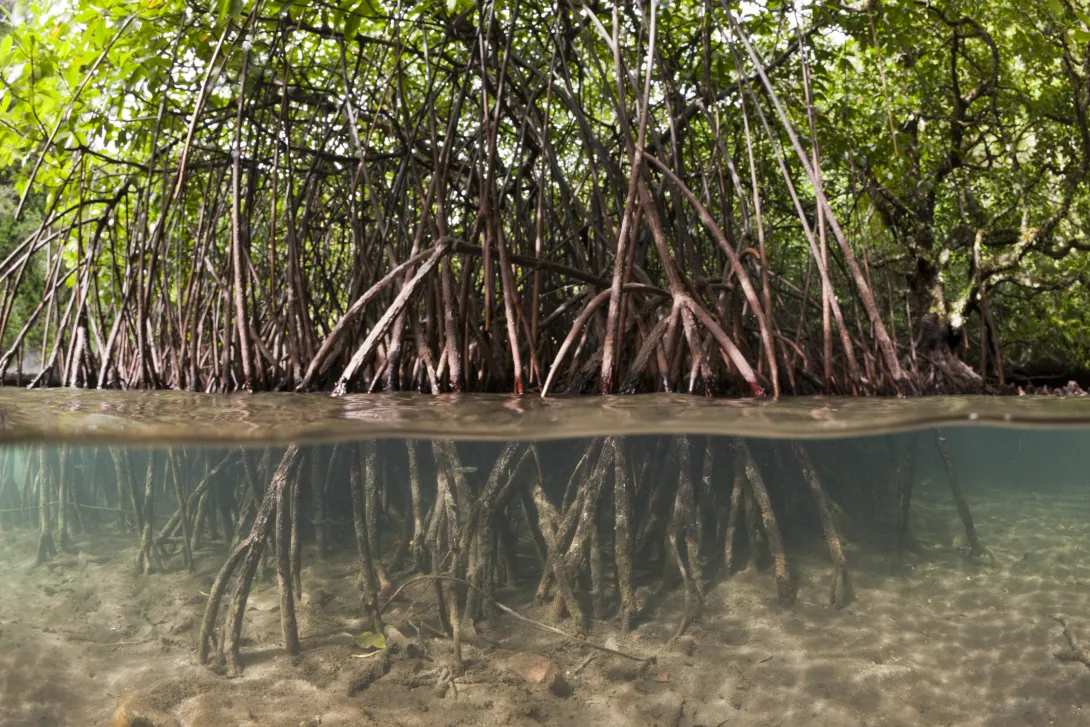
One of the primary drivers of climate change is excess greenhouse gases like carbon dioxide in the atmosphere. Mitigating climate change in the coming century will require both decarbonization — electrifying the power grid or reducing fossil fuel-guzzling transportation — and removing already existing carbon dioxide from the atmosphere, a process called carbon dioxide removal.
Researchers at the Georgia Institute of Technology and Yale University are proposing a novel pathway through which coastal ecosystem restoration can permanently capture carbon dioxide from the atmosphere. Seagrass and mangroves — known as blue carbon ecosystems — naturally capture carbon through photosynthesis, which converts carbon dioxide into living tissue.
“Mangroves and seagrasses extract carbon dioxide from the atmosphere all day long and turn it into biomass,” said Chris Reinhard, an associate professor in the School of Earth and Atmospheric Sciences (EAS). “Some of this biomass can get buried in sediments, and if it stays there, then you’ve basically just removed carbon dioxide from the atmosphere.”
Restoring these ecosystems could potentially benefit local flora and fauna and help to energize coastal economies. But Reinhard and colleagues now suggest that restoring them could also remove additional carbon through a novel pathway while combating increasing acidity in the ocean.
In May, they presented their research in “Ocean Alkalinity Enhancement Through Restoration of Blue Carbon Ecosystems” in Nature Sustainability.
Carbon 101
There are two major types of carbon that cycle through the Earth system: organic carbon and inorganic carbon. Organic carbon is contained in living matter, such as algae, plants, animals, and even humans. This form of carbon can remove carbon dioxide from the atmosphere temporarily, but if it becomes buried in sediments at the seafloor, it can lead to permanent carbon dioxide removal. Inorganic carbon can also be found in many forms, including rocks and minerals, but is present as a significant dissolved component of ocean water. Roughly 30% of the carbon emitted by human activities since the industrial revolution is now stored as dissolved inorganic carbon in the ocean. Although carbon dioxide stored as organic carbon can be disrupted, effectively redistributing carbon dioxide back into the atmosphere, carbon dioxide removal by inorganic carbon is potentially much more durable.
“Even if you change the way a coastal ecosystem restoration project is operating, potentially remobilizing previously stored organic carbon, inorganic carbon capture is largely a one-way street,” said Mojtaba Fakhraee, lead author of the study and former postdoctoral researcher in EAS. “So even if a massive ecosystem disruption in the future undoes organic carbon storage, the inorganic carbon that has been captured will still be in the ocean permanently.”
Capturing Carbon, Counteracting Acidity
Coastal ecosystems naturally remove carbon from the atmosphere and provide a range of environmental and economic benefits to coastal communities, but many human interventions have caused extensive degradation or destruction of natural coastal environments. Planting more mangroves and seagrasses, maintaining them, and protecting the overall ecosystem can restore their functioning and lead to additional carbon removal from the atmosphere. Reinvigorating coastal ecosystems as a technique for mitigating carbon emissions is not a new idea, but past research has focused on carbon removal through organic carbon burial and has not explored the potential for carbon removal through the formation of inorganic carbon.
Another major result of human fossil fuel use beyond climate change is ocean acidification from carbon dioxide in the atmosphere dissolving in the water and driving down the pH of the ocean, which can have severe, negative impacts on many organisms like corals. Storing carbon dioxide as inorganic carbon in the ocean could help mitigate this, because the chemical processes that lead to carbon capture as inorganic carbon involves alkalinizing ocean waters.
“The basic idea here is that you are shifting the acid-base balance of the ocean to drive conversion of carbon dioxide in the atmosphere to inorganic carbon in the ocean,” Reinhard said. “This means that the process can help to partially offset the negative ecological consequences of ocean acidification.”
Modeling Carbon Capture
To explore how effective restoring coastal ecosystems could be for inorganic carbon capture, the researchers built a numerical model to represent the chemistry and physics of sedimentary systems — the complex mixture of solid particles, living organisms, and seawater that accumulates at the seafloor. A key advance of the model is that it specifically tracks the potential benefits of restored mangrove or seagrass ecosystems and their impacts on organic and inorganic carbon cycling. It also calculates the effects of other greenhouse gases, such as methane, that can sometimes be created in the process of restoring mangrove and seagrass ecosystems.
“This model comes up with representations for the rates of carbon transformation in the sediment based on how much mangrove is growing above the sediment,” said Noah Planavsky, senior author on the study and professor of Earth and planetary sciences at Yale. “We found that across an extremely large range of scenarios, restoration of blue carbon ecosystems leads to durable carbon dioxide removal as dissolved inorganic carbon.”
The team hopes this research could provide an impetus to protect current coastal ecosystems and economically incentivize restoration of degraded ecosystems, potentially as a new form of carbon offset.
“Companies that are trying to offset their own emissions could potentially purchase carbon removal through funding restoration of coastal ecosystems,” Reinhard said. “This could help rebuild these ecosystems and all of the environmental benefits they provide, while leading to durable carbon dioxide removal from the atmosphere.”
CITATION: Fakhraee, M., Planavsky, N.J. & Reinhard, C.T. Ocean alkalinity enhancement through restoration of blue carbon ecosystems. Nat Sustain (2023). https://doi.org/10.1038/s41893-023-01128-2
News Contact
Tess Malone, Senior Research Writer/Editor