
Oct. 15, 2024
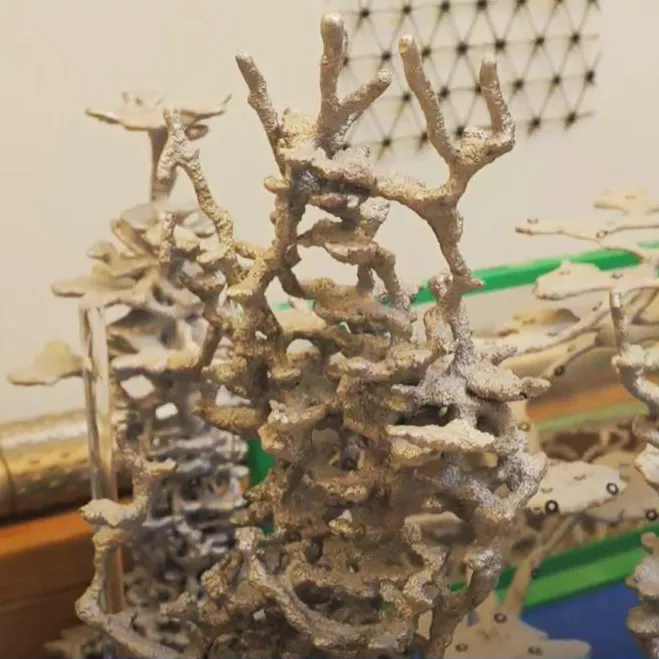
Ant hill cast in molten aluminum to show intricate underground structure of tunnels and chambers, much like the branches of coral.
- Written by Benjamin Wright -
Nature doesn’t waste energy, and nature finds ways to adapt to a changing world. Understanding those two principles led David Frost to his interest in bio-inspired design. Frost, the Elizabeth and Bill Higginbotham Professor in Georgia Tech’s School of Civil and Environmental Engineering, has spent the last dozen years searching for ways to use nature’s efficiency and ingenuity to improve the civil engineering field. His efforts are paying off. In the last year alone, research from his lab has resulted in multiple patent filings, licensing agreements, and product launches — all of which take their inspiration from the biological world.
Many of those research projects have been the subjects of doctoral research by Frost’s students, with support and advisement from Michael Helms, co-director of Georgia Tech’s Center for Biologically Inspired Design (CBID) and the Brook Byers Institute for Sustainable Systems lead for biologically inspired design. The CBID mandate is to encourage researchers to find inspiration in the biological world, where design solutions have been in development for three-and-a-half billion years as life has on Earth has evolved. Building on the concept that nature isn’t wasteful, one of the goals of bio-inspired design is to develop products that are both energy and materially efficient, and therefore more sustainable.
As the subsurface exploration and excavation thrust leader for the National Science Foundation (NSF) Center for Bio-mediated and Bio-inspired Geotechnics (CBBG), Frost focuses on what’s going on below the planet’s surface. His inspiration comes from things like tree roots, earthworms, spider webs, and ant colonies. In fact, ants are what first got him interested in bio-inspired design.
“There are many organism systems that have not been thought of as necessarily the most intelligent systems. But in fact, they are following a set of rules, approaches, or guidelines and are producing things that, in the end, are both energy- and resource-efficient and adaptive,” said Frost. “One of these is ant colonies. We see the hills above ground, but what’s going on below the ground, with the tunnels and chambers, is fascinating.”
Early in his time with CBBG, Frost came across a Florida artist who made metal castings of ant colony structures. Frost acquired some, made more castings of his own, and then built digital models of ant colonies to understand how the structures maintain their strength. He also studied exactly how ants build such complex structures so efficiently.
“They take advantage of capillarity, arching effects, and the strength of spirals,” explained Frost.
Ants dig by carefully and quickly probing each grain of sand or dirt, in the same way a human might test a Jenga piece, before deciding whether it can be safely removed without damaging the tunnel. As a result, ants are extremely energy efficient as they dig, continually removing the least encumbered pieces of material. Based on this information, Frost and his team are exploring ways to improve the effectiveness and energy usage of tunnel-boring machines.
Other bio-inspired projects from Frost’s research that are further along in the development process include building anchors inspired by tree roots, a ground heat-exchange system based on spirals and plant xylem, a geogrid (or stabilization mesh) design based on spiderwebs, a worm-inspired soil probe, and another probe design influenced by a vortex and centipedes that would displace a minimum amount of soil.
“I'm convinced that just about any system in nature we look at will help us think about analogs for things that, as human engineers, we’d like to do — and do better,” said Frost. “The opportunities for inspiration and improvement are endless.”
Take the Root-Inspired Ground Anchor (RIGA), for example. Anchors are an essential element in construction, stabilizing retaining walls and other foundation structures. Traditionally, anchors are straight poles inserted into the ground. Looking at tree roots, Frost wondered if there was a better way. That thought led him to inventing an anchor that can be driven into the ground and then expanded under the surface, similar to the structure of tree roots. The expandable anchor improves load capacity by up to 75% and is about two-thirds as long as a conventional anchor. After years of refinement, the device has been patented, licensed, and is the basis of a startup founded by Ph.D. student John Huntoon.
Frost takes the most pride in the real-world impact of his bio-inspired designs. Since 2023, Georgia Tech has filed, or is in the process of filing, utility patents for five of them. Like the RIGA system, those patents will be available for licensing for commercial use. Companies have already contacted Frost about his heat-exchange and geogrid concepts.
“Civil engineering doesn’t traditionally have a culture of patent-producing research,” noted Frost. “It’s exciting to see these filings and how they can generate energy and enthusiasm for studying natural systems and using what we learn to improve the world. Practical application has always been very important to me.”
Frost is finding that practical application also appeals to the next generation of civil engineers — specifically K-12 students interested in the profession who tour the CBID affiliated labs on campus. The students study nature’s designs and figure out how to apply them, rather than learn traditional construction methods.
“Ants, spiders, and worms are immediately relatable for middle- and high-school students,” Frost said. “They think engineering is all math and science, and that doesn’t sound fun to them. Instead, we show them they can be inspired by anything and then use that to make it about conservation and adaptation and energy minimization. Those are things they are interested in.”
Frost is hopeful that the students of today and tomorrow will continue to take inspiration from nature, enabling humans to adapt to a changing world as effectively as nature has.
News Contact
Brent Verrill, Research Communications Program Manager, BBISS
Oct. 09, 2024

A logo with the words "Georgia Tech Strategic Plan" over "Sustainability Next" with an abstract half-flower with blue, yellow, and gold rectangular petals.
The latest Sustainability Next Research Seed grants have been awarded. The seed grant program is administered by BBISS in collaboration with the Renewable Bioproducts Institute (RBI), the Strategic Energy Institute (SEI), and the Institute for People and Technology (IPaT). The program nurtures promising areas for future large-scale collaborative sustainability research, research translation, and high-impact outreach; provides mid-career faculty with leadership and community-building opportunities; and broadens and strengthens the Georgia Tech sustainability community as a whole.
The call for proposals was modeled after the Office of the Executive Vice President for Research’s (EVPR) “Moving Teams Forward” and “Forming Teams” programs. All told, the work of 49 researchers — from 19 Schools in five Colleges, the Georgia Tech Research Institute (GTRI), and external partners and research professionals from several of Georgia Tech’s Interdisciplinary Research Institutes (IRIs) — will benefit from these grants.
Moving Teams Forward
- Toward a Center on Effective Climate Communication; Bruce Walker (Psych), Susan Lozier (EAS), Claire Arthur (Music), Jessica Roberts (IC), Carrie Bruce (IC), Amy Bower (Woods Hole Oceanographic Inst).
- Moving Teams Forward to Building a Path Toward Community-Owned Resilience Hubs for Ethical Climate Adaptation and Mitigation: An Interdisciplinary and Community-Engaged Approach; Sofia Perez-Guzman (CEE), Allen Hyde (Hist&Soc), Danielle Willkens (Arch), Alexander Robel (EAS), Jennifer Hirsch (SCoRE), Valerie Thomas (ISYE), Joe Bozeman (CEE), Nicole Kennard (BBISS), Jung-Ho Lewe (AE).
- A Digital Twin for Atlanta: Toward a Building Energy Demand/Mobility Nexus; Patrick Kastner (Arch).
- Sustainable Development in Africa: Cropland Expansion, Fire, Climate Change, and Economic Solutions; Yuhang Wang (EAS), Olga Shemyakina (Econ), Kexin Rong (CS).
- Interdisciplinary Program in Transportation; Adjo Amekudzi-Kennedy (CEE), Alexander Robel (EAS), Christopher Wiese (Psych), Kurt Wiesenfeld (Physics), Nimisha Roy (Comp Inst).
- Enabling Disadvantaged Communities to Baseline the Performance of Residential Energy Systems; Jung-Ho Lewe (AE), Scott Duncan (AE), David Solano (AE).
Forming Teams
- Identifying and Amplifying Georgia Tech’s Research Strengths in Conserving Georgia’s Biodiversity in the Face of Rapid Global Change; Jenny McGuire (Biol/EAS), James Stroud (Biol), Emily Weigel (Biol), Lauren Speare (Biol), Saad Bhamla (ChBE), Matthew Swarts (GTRI), Allen Hyde (Hist&Soc), Jennifer Hirsch (SCoRE).
- UrbAdapt CA4: Urban Climate Adaptation for Indigenous Households in Guatemala; Alberto Fuentes (INTA), Gregory Randolph (City Planning), Joshua Ayers (City Planning),Erick Calderón (World Vision Intl), Sara Sywulka (World Vision Intl).
- Mitigating the Risk of Life-Threatening Power Outages During Extreme Weather; Constance Crozier (ISYE), (Brian) Yeokwang An (Pub Policy), Hiba Baroud (Vanderbilt).
- A Sustainability Data Dashboard for the GT Library Media Bridge, Yanni Loukissas (LMC), Emily Weigel (Biol), Alison Valk (Library), Jason Wright (Library), Charles Bennett (Library), Atlas Coltrain (LMC) (Co-funded by IPaT & BBISS).
Joint Initiative
- Modeling the Dispersal and Connectivity of Marine Larvae With GenAI Agents; Annalisa Bracco (EAS), Jacob Abernethy (CS), Xing Zhou (EAS), Renzhi Wu (CS), Guanghui Wang (CS) (Co-funded by IDeAS & BBISS).
News Contact
Brent Verrill, Communications Research Program Manager, BBISS
Oct. 01, 2024
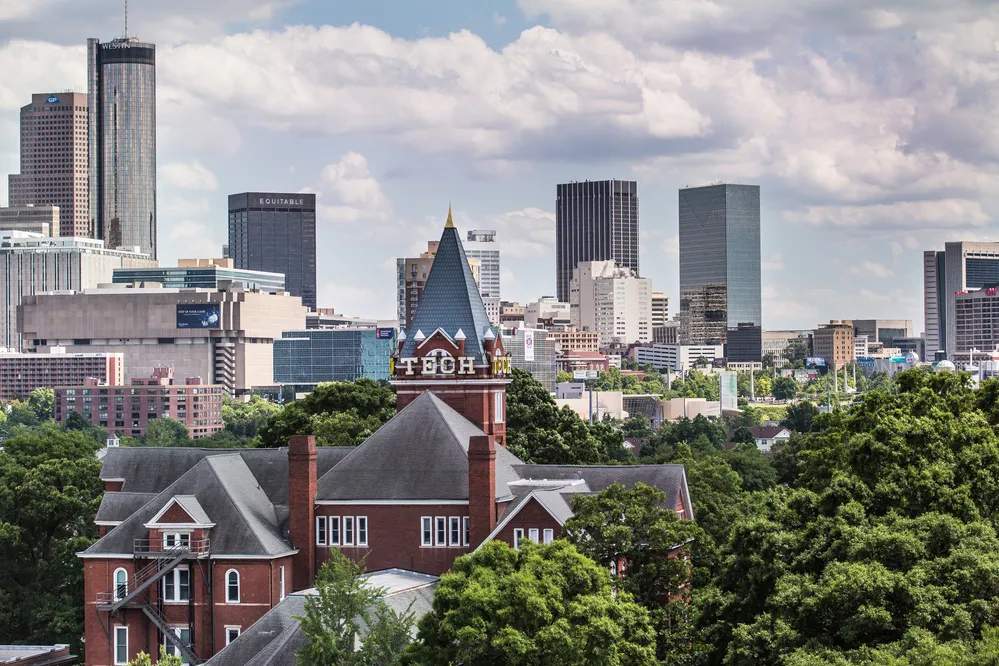
Please visit this page for up-to-date information about the progress of this search.
The Georgia Institute of Technology (Georgia Tech) invites applications and nominations for the Executive Director (ED) position in the Brook Byers Institute for Sustainable Systems (BBISS). BBISS, one of Georgia Tech’s Interdisciplinary Research Institutes (IRIs), brings together researchers from across Georgia Tech, including academic and research units, to support world-class sustainability-focused research, student engagement, and industry, government, and nonprofit collaboration toward achieving systemic change.
The BBISS ED will be a dynamic, collaborative, and entrepreneurial leader who will unite a broad range of stakeholders around a vision to elevate and grow sustainability at Georgia Tech. As a systems thinker and inclusive relationship builder, the ED will expand and enhance BBISS collaborations and partnerships within and beyond Georgia Tech to broaden its sustainability footprint in local, regional, national, and international arenas.
The ED will catalyze the formation of interdisciplinary teams to support high-impact programming and grants in areas such as climate science, solutions, and policy; ecosystem and environmental health; sustainable cities and infrastructure; sustainable resource and material use; just and equitable sustainable development; and the economics and business of sustainability.
Applications, Inquiries, and Nominations
To apply for the Executive Director position in the Brook Byers Institute for Sustainable Systems, candidates are requested to submit the following:
- A curriculum vitae
- A letter of interest (not to exceed four pages) that summarizes your qualifications and includes a brief statement of your vision for BBISS
- Contact information for five references (to be contacted with candidate’s permission at a later date)
Candidates are requested to send their application materials (in Word or PDF) to the AGB Search Portal at this link by November 19, 2024, for best consideration.
Nominations and expressions of interest for this opportunity are encouraged. Please direct them to BBISSGATech@agbsearch.com or to the AGB search consultants listed below.
Monica Burton, Principal
monica.burton@agbsearch.com
C: 917.825.2961
Nancy Targett, Ph.D., Executive Search Consultant
nancy.targett@agbsearch.com
C: 302.233.5202
News Contact
Brent Verrill, Research Communications Program Director, BBISS
Nov. 09, 2023
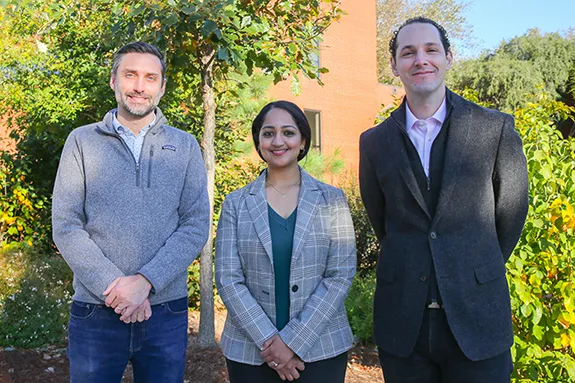
Georgia Tech faculty and researchers are involved in five university-led projects and two new Energy Earthshot Research Centers that are part of a $264 million grant from the U.S. Department of Energy (DOE). The funding includes establishing 11 new Energy Earthshot Research Centers (EERC) led by DOE’s national labs and 18 university research teams addressing one or more of DOE’s Energy Earthshots initiatives focused on industrial decarbonization, carbon storage and removal, offshore wind, and more.
University Projects
University research teams will conduct crosscutting, fundamental research to address knowledge gaps that limit achievement of the Energy Earthshots goals. These teams are focused on scientific challenges spanning the Office of Science research portfolio and complement work done by the EERCs.
Akanksha Menon, assistant professor in the George W. Woodruff School of Mechanical Engineering, has been awarded $3 million in funding to lead a university project titled “Understanding Thermo-Chemo-Mechanical Transformations in Thermal Energy Storage Materials and Composites.” The project will bring together Matthew McDowell, associate professor in the Woodruff School; Claudio Di Leo, assistant professor in the Daniel Guggenheim School of Aerospace Engineering; and Jeff Urban from the Lawrence Berkeley National Laboratory to provide a fundamental understanding of the coupled thermo-chemo-mechanical phenomena in thermal energy storage materials that will enable low-cost and stable storage.
Annalisa Bracco, professor and associate chair; Taka Ito, professor; and Chris Reinhard, Georgia Power Chair and associate professor — all from the School of Earth and Atmospheric Sciences — will join colleagues from Princeton, Texas A&M, and Yale University for an $8 million Earthshot project that will build an “end-to-end framework” for studying the impact of carbon dioxide (CO2) removal efforts. The project, titled “Carbon dioxide removal and high-performance computing: Planetary Boundaries of Earth Shots,” includes creating computer models to measure how well CO2 removal techniques work on land, rivers, and oceans.
Elizabeth Qian, assistant professor in the Guggenheim School and the School of Computational Science and Engineering, will join colleagues from New York University, Los Alamos National Lab, and National Renewable Energy Lab for an Earthshot project titled “Learning reduced models under extreme data conditions for design and rapid decision-making in complex systems (ROME).” The project will develop mathematical foundations and computational methods to support the design and operation of complex systems for carbon removal and renewable energy generation that will be used for simulation, design, and decision-making of the Floating Offshore Wind Shot and the Carbon Negative Shot EERCs.
David Flaherty, professor in the School of Chemical and Biomolecular Engineering will join colleagues from the University of Illinois Urbana-Champaign, Northern Arizona University, Texas State University, and Argonne National Lab to co-lead a project titled “Harnessing Electrostatics for the Conversion of Organics, Water and Air: Driving Redox on Particulate Liquids Earthshot (DROPLETS).” The overall objective of DROPLETS is to explore an approach based on microdroplet-enabled redox reactions (which involve the transfer of electrons between substances) toward H2 production (a clean and renewable energy source), CO2 activation (which can help mitigate greenhouse gas emissions), and the synthesis of redox species for long-duration energy storage.
Guoxiang (Emma) Hu, assistant professor in the School of Materials Science and Engineering, joins colleagues from Georgia State University, Carnegie Melon University, Oak Ridge National Lab, and the University of Utah on a project titled “Atomic Level Compositional Complexity for Electrocatalysis (Atomic-C2E).” Atomic-C2E will integrate fundamental electrochemistry, quantum chemical and multiscale simulations, and materials chemistry to develop an understanding of electrocatalysts that aid in the conversion of CO2 into value-added chemical fuels and hydrogen production via water electrolysis — and address technological bottlenecks challenging them.
National Lab Centers
The DOE national lab EERCs will bring together multi-institutional, multidisciplinary teams to perform energy-relevant research with a scope and complexity beyond what is possible in standard single-investigator or small-group awards. Addressing key research challenges relevant to the Energy Earthshots, the 11 new centers will be housed at eight DOE national laboratories and will receive a combined $195 million over four years.
Of the 11 lab centers, the DEGradation Reactions in Electrothermal Energy Storage (DEGREES) center led by the National Renewable Energy Laboratory consists of Professor Akanksha Menon and Associate Professor Shannon Yee from the Woodruff School. DEGREES is an EERC that will provide fundamental understanding of the science behind complex degradation mechanisms and instabilities that affect the performance of thermal energy storage.
Non-Equilibrium Energy Transfer for Efficient Reactions (NEETER) is the second EERC that will be housed at the Department of Energy's Oak Ridge National Laboratory (ORNL) and involves Georgia Tech. Led by David Sholl, director of ORNL’s transformational decarbonization initiative and professor in the School of Chemical and Biomolecular Engineering, NEETER is focused on developing chemical processes that use sustainable methods instead of burning fossil fuels to radically reduce industrial greenhouse gas emissions to stem climate change and limit the crisis of a rapidly warming planet.
About DOE’s Energy Earthshots Initiative
The Department of Energy launched the Energy Earthshots Initiative to spur decarbonization efforts that will help the United States meet climate and clean energy goals. The initiative connects DOE’s basic science and energy technology offices to accelerate innovations toward more abundant, affordable, and reliable clean energy solutions; seeks to revolutionize many sectors across the United States; and will rely on fundamental science and innovative technology to be successful.
Professor Elizabeth Qian will Serve as Co-PI on DoE Energy Earthshots Project

Qian will develop computing methods to support design and operation of complex systems for carbon removal and renewable energy generation.
Three Earth and Atmospheric Sciences Researchers Awarded DOE Earthshot Funding for Carbon Removal Strategies

Bracco, Ito, and Reinhard will create computer models to measure how well CO2 removal techniques work on land, rivers, and oceans, as part of $264 million in grants.
Assistant Professor Akanksha Menon Awarded $3 Million for Research as part of DOE's Energy Earthshots Initiative

Menon and her team will address two Energy Earthshots to help achieve net-zero carbon by 2050, combat climate crisis.
Professor David Sholl Leading New Energy Earthshot Research Center to Stem Climate Change

The Department of Energy also selected David Flaherty to co-lead a second project designed to lower energy input and reactor cost for complex chemical reactions.
Writer and Media Contact:
Priya Devarajan | priya.devarajan@research.gatech.edu
News Contact
Priya Devarajan, Communications Manager, SEI & RBI
Aug. 21, 2024

Montage of five portraits, L to R, T to B: Josiah Hester, Peng Chen, Yongsheng Chen, Rosemarie Santa González, and Joe Bozeman.
- Written by Benjamin Wright -
As Georgia Tech establishes itself as a national leader in AI research and education, some researchers on campus are putting AI to work to help meet sustainability goals in a range of areas including climate change adaptation and mitigation, urban farming, food distribution, and life cycle assessments while also focusing on ways to make sure AI is used ethically.
Josiah Hester, interim associate director for Community-Engaged Research in the Brook Byers Institute for Sustainable Systems (BBISS) and associate professor in the School of Interactive Computing, sees these projects as wins from both a research standpoint and for the local, national, and global communities they could affect.
“These faculty exemplify Georgia Tech's commitment to serving and partnering with communities in our research,” he says. “Sustainability is one of the most pressing issues of our time. AI gives us new tools to build more resilient communities, but the complexities and nuances in applying this emerging suite of technologies can only be solved by community members and researchers working closely together to bridge the gap. This approach to AI for sustainability strengthens the bonds between our university and our communities and makes lasting impacts due to community buy-in.”
Flood Monitoring and Carbon Storage
Peng Chen, assistant professor in the School of Computational Science and Engineering in the College of Computing, focuses on computational mathematics, data science, scientific machine learning, and parallel computing. Chen is combining these areas of expertise to develop algorithms to assist in practical applications such as flood monitoring and carbon dioxide capture and storage.
He is currently working on a National Science Foundation (NSF) project with colleagues in Georgia Tech’s School of City and Regional Planning and from the University of South Florida to develop flood models in the St. Petersburg, Florida area. As a low-lying state with more than 8,400 miles of coastline, Florida is one of the states most at risk from sea level rise and flooding caused by extreme weather events sparked by climate change.
Chen’s novel approach to flood monitoring takes existing high-resolution hydrological and hydrographical mapping and uses machine learning to incorporate real-time updates from social media users and existing traffic cameras to run rapid, low-cost simulations using deep neural networks. Current flood monitoring software is resource and time-intensive. Chen’s goal is to produce live modeling that can be used to warn residents and allocate emergency response resources as conditions change. That information would be available to the general public through a portal his team is working on.
“This project focuses on one particular community in Florida,” Chen says, “but we hope this methodology will be transferable to other locations and situations affected by climate change.”
In addition to the flood-monitoring project in Florida, Chen and his colleagues are developing new methods to improve the reliability and cost-effectiveness of storing carbon dioxide in underground rock formations. The process is plagued with uncertainty about the porosity of the bedrock, the optimal distribution of monitoring wells, and the rate at which carbon dioxide can be injected without over-pressurizing the bedrock, leading to collapse. The new simulations are fast, inexpensive, and minimize the risk of failure, which also decreases the cost of construction.
“Traditional high-fidelity simulation using supercomputers takes hours and lots of resources,” says Chen. “Now we can run these simulations in under one minute using AI models without sacrificing accuracy. Even when you factor in AI training costs, this is a huge savings in time and financial resources.”
Flood monitoring and carbon capture are passion projects for Chen, who sees an opportunity to use artificial intelligence to increase the pace and decrease the cost of problem-solving.
“I’m very excited about the possibility of solving grand challenges in the sustainability area with AI and machine learning models,” he says. “Engineering problems are full of uncertainty, but by using this technology, we can characterize the uncertainty in new ways and propagate it throughout our predictions to optimize designs and maximize performance.”
Urban Farming and Optimization
Yongsheng Chen works at the intersection of food, energy, and water. As the Bonnie W. and Charles W. Moorman Professor in the School of Civil and Environmental Engineering and director of the Nutrients, Energy, and Water Center for Agriculture Technology, Chen is focused on making urban agriculture technologically feasible, financially viable, and, most importantly, sustainable. To do that he’s leveraging AI to speed up the design process and optimize farming and harvesting operations.
Chen’s closed-loop hydroponic system uses anaerobically treated wastewater for fertilization and irrigation by extracting and repurposing nutrients as fertilizer before filtering the water through polymeric membranes with nano-scale pores. Advancing filtration and purification processes depends on finding the right membrane materials to selectively separate contaminants, including antibiotics and per- and polyfluoroalkyl substances (PFAS). Chen and his team are using AI and machine learning to guide membrane material selection and fabrication to make contaminant separation as efficient as possible. Similarly, AI and machine learning are assisting in developing carbon capture materials such as ionic liquids that can retain carbon dioxide generated during wastewater treatment and redirect it to hydroponics systems, boosting food productivity.
“A fundamental angle of our research is that we do not see municipal wastewater as waste,” explains Chen. “It is a resource we can treat and recover components from to supply irrigation, fertilizer, and biogas, all while reducing the amount of energy used in conventional wastewater treatment methods.”
In addition to aiding in materials development, which reduces design time and production costs, Chen is using machine learning to optimize the growing cycle of produce, maximizing nutritional value. His USDA-funded vertical farm uses autonomous robots to measure critical cultivation parameters and take pictures without destroying plants. This data helps determine optimum environmental conditions, fertilizer supply, and harvest timing, resulting in a faster-growing, optimally nutritious plant with less fertilizer waste and lower emissions.
Chen’s work has received considerable federal funding. As the Urban Resilience and Sustainability Thrust Leader within the NSF-funded AI Institute for Advances in Optimization (AI4OPT), he has received additional funding to foster international collaboration in digital agriculture with colleagues across the United States and in Japan, Australia, and India.
Optimizing Food Distribution
At the other end of the agricultural spectrum is postdoc Rosemarie Santa González in the H. Milton Stewart School of Industrial and Systems Engineering, who is conducting her research under the supervision of Professor Chelsea White and Professor Pascal Van Hentenryck, the director of Georgia Tech’s AI Hub as well as the director of AI4OPT.
Santa González is working with the Wisconsin Food Hub Cooperative to help traditional farmers get their products into the hands of consumers as efficiently as possible to reduce hunger and food waste. Preventing food waste is a priority for both the EPA and USDA. Current estimates are that 30 to 40% of the food produced in the United States ends up in landfills, which is a waste of resources on both the production end in the form of land, water, and chemical use, as well as a waste of resources when it comes to disposing of it, not to mention the impact of the greenhouses gases when wasted food decays.
To tackle this problem, Santa González and the Wisconsin Food Hub are helping small-scale farmers access refrigeration facilities and distribution chains. As part of her research, she is helping to develop AI tools that can optimize the logistics of the small-scale farmer supply chain while also making local consumers in underserved areas aware of what’s available so food doesn’t end up in landfills.
“This solution has to be accessible,” she says. “Not just in the sense that the food is accessible, but that the tools we are providing to them are accessible. The end users have to understand the tools and be able to use them. It has to be sustainable as a resource.”
Making AI accessible to people in the community is a core goal of the NSF’s AI Institute for Intelligent Cyberinfrastructure with Computational Learning in the Environment (ICICLE), one of the partners involved with the project.
“A large segment of the population we are working with, which includes historically marginalized communities, has a negative reaction to AI. They think of machines taking over, or data being stolen. Our goal is to democratize AI in these decision-support tools as we work toward the UN Sustainable Development Goal of Zero Hunger. There is so much power in these tools to solve complex problems that have very real results. More people will be fed and less food will spoil before it gets to people’s homes.”
Santa González hopes the tools they are building can be packaged and customized for food co-ops everywhere.
AI and Ethics
Like Santa González, Joe Bozeman III is also focused on the ethical and sustainable deployment of AI and machine learning, especially among marginalized communities. The assistant professor in the School of Civil and Environmental Engineering is an industrial ecologist committed to fostering ethical climate change adaptation and mitigation strategies. His SEEEL Lab works to make sure researchers understand the consequences of decisions before they move from academic concepts to policy decisions, particularly those that rely on data sets involving people and communities.
“With the administration of big data, there is a human tendency to assume that more data means everything is being captured, but that's not necessarily true,” he cautions. “More data could mean we're just capturing more of the data that already exists, while new research shows that we’re not including information from marginalized communities that have historically not been brought into the decision-making process. That includes underrepresented minorities, rural populations, people with disabilities, and neurodivergent people who may not interface with data collection tools.”
Bozeman is concerned that overlooking marginalized communities in data sets will result in decisions that at best ignore them and at worst cause them direct harm.
“Our lab doesn't wait for the negative harms to occur before we start talking about them,” explains Bozeman, who holds a courtesy appointment in the School of Public Policy. “Our lab forecasts what those harms will be so decision-makers and engineers can develop technologies that consider these things.”
He focuses on urbanization, the food-energy-water nexus, and the circular economy. He has found that much of the research in those areas is conducted in a vacuum without consideration for human engagement and the impact it could have when implemented.
Bozeman is lobbying for built-in tools and safeguards to mitigate the potential for harm from researchers using AI without appropriate consideration. He already sees a disconnect between the academic world and the public. Bridging that trust gap will require ethical uses of AI.
“We have to start rigorously including their voices in our decision-making to begin gaining trust with the public again. And with that trust, we can all start moving toward sustainable development. If we don't do that, I don't care how good our engineering solutions are, we're going to miss the boat entirely on bringing along the majority of the population.”
BBISS Support
Moving forward, Hester is excited about the impact the Brooks Byers Institute for Sustainable Systems can have on AI and sustainability research through a variety of support mechanisms.
“BBISS continues to invest in faculty development and training in community-driven research strategies, including the Community Engagement Faculty Fellows Program (with the Center for Sustainable Communities Research and Education), while empowering multidisciplinary teams to work together to solve grand engineering challenges with AI by supporting the AI+Climate Faculty Interest Group, as well as partnering with and providing administrative support for community-driven research projects.”
News Contact
Brent Verrill, Research Communications Program Manager, BBISS
Aug. 05, 2024

- Written by Benjamin Wright -
Yuanzhi Tang knows firsthand how much of an impact BBISS can make through its programs. The associate professor in the School of Earth and Atmospheric Sciences answered a BBISS call for faculty fellowships, and later seed funding for a project related to sustainable resources. That project grew into a collaboration with Georgia Tech’s Strategic Energy Institute; the Center for Critical Mineral Solutions (CCMS), supported by the College of Sciences and co-sponsored by BBISS; SEI; the Institute for Electronics and Nanotechnology (IEN); and the Institute for Materials (IMat and IEN are now combined into the Institute for Matter and Systems). The goal of the center is to develop sustainable solutions for the grand challenges associated with critical metals and materials essential for the clean energy transition.
During her time as a faculty fellow within BBISS, Yuanzhi became familiar with the people in the organization and had the opportunity to evaluate student and faculty fellow applications. When the opportunity arose to take on the role of associate co-director of interdisciplinary research for BBISS, she was happy to accept so she could help others access resources that had shaped her growth as a researcher at Georgia Tech.
“Being part of a community of people who value interdisciplinary research on sustainability-related topics, I benefited from the interactions and engagement with BBISS and I hope to carry that forward, particularly for young faculty. They are often eager to connect but might not know where to begin. BBISS can be a starting point for them.”
With a background in geochemistry and degrees from Peking University, Stony Brook University, and a postdoc at Harvard, Yuanzhi has gained a breadth of experience that has earned her a variety of awards and recognition. As she joins BBISS in a formal role, she has some advice for early-career colleagues.
“Go to seminars, events, and organized activities, as the best ideas often come through communicating and networking with others, and that’s how you discover that your expertise is needed in other fields. Be confident in who you are as a scholar, but also go out and find ways to collaborate. Georgia Tech places value on interdisciplinary research, and this is a unique strength that you should leverage.”
Away from the office, classroom, and lab, Yuanzhi is a wife and mother of two young children. She enjoys cuddle time with the kids and navigating parenthood in an academically driven household. Her husband is also a Georgia Tech professor and together they juggle the challenges of their careers with spending quality time with the children. “We try to keep work minimal on weekends and get out of the house and enjoy what Atlanta has to offer. We love nature and appreciate that we can be close to campus, close to the city, and still have so many green places to be outside.”
As she embarks on her new role with BBISS, Yuanzhi sees parallels between being a parent, professor, and now an administrator.
“The world is changing rapidly with the explosion of information and technology. It’s a struggle to know what to teach my kids and my students. How do we prepare them for five, 10, or even 20 years from now? This feeling of responsibility connects my work and personal life. It’s challenging, but also very exciting to see how we can help them embrace changes.”
News Contact
Brent Verrill, Research Communications Program Manager, BBISS
Jul. 03, 2024
-Written by Benjamin Wright-
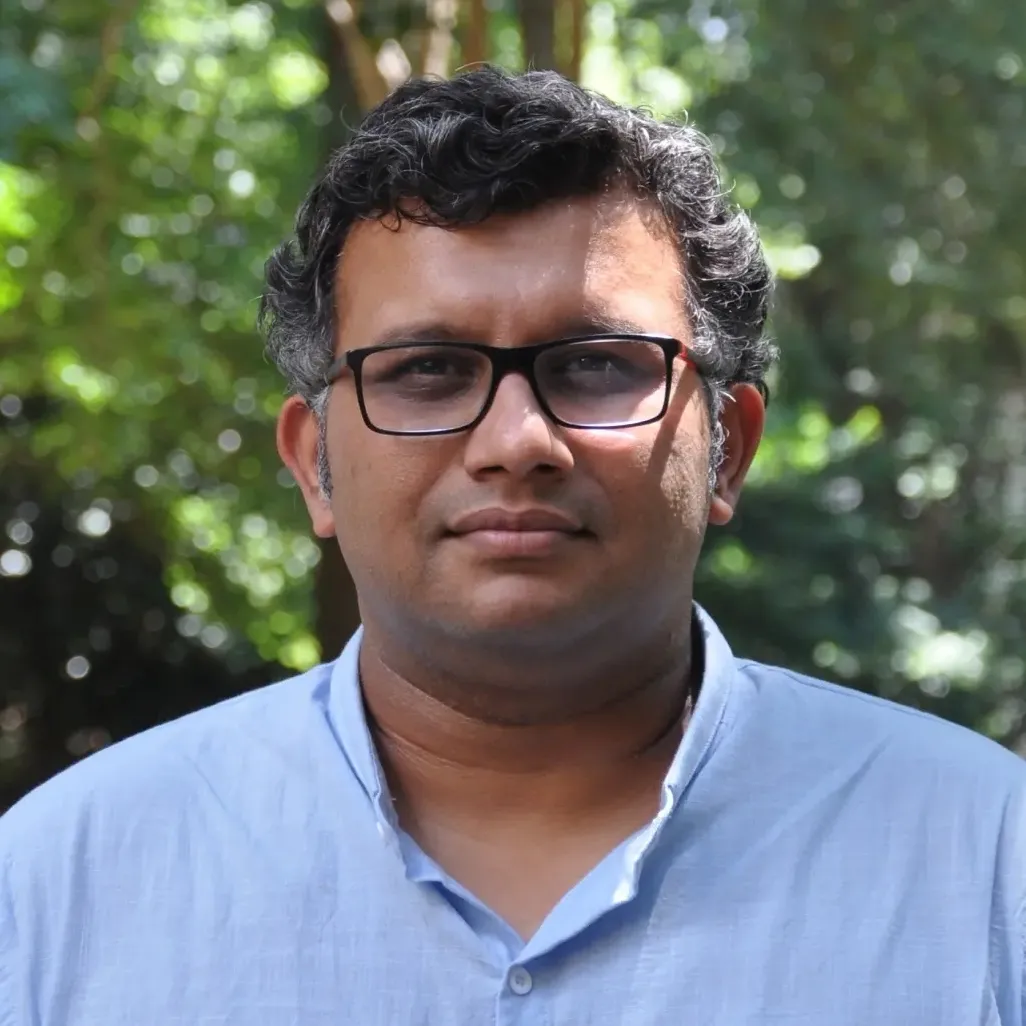
Ameet Pinto, who is the Carlton S. Wilder Associate Professor in the School of Civil and Environmental Engineering, was drawn to Georgia Tech because of the depth and breadth of the research expertise on campus, as well as the collaborative atmosphere.
“I know that if I want to write a research proposal next week for a new idea and I lack expertise in one area, I can find a collaborator on campus with the necessary skillset,” they say. “We have a critical mass of highly skilled researchers across disciplines, and that’s truly amazing.” Helping others tap into that critical mass will be their primary role as one of two associate co-directors for interdisciplinary research in the Brook Byers Institute for Sustainable Systems. Ameet will work with associate professor Yuanzhi Tang from the School of Earth and Atmospheric Sciences to help bring like-minded researchers within the sustainability field together and shepherd them through the grant-writing process.
“My role, as I see it, is to help faculty from across the campus find synergies in their research and then amplify the impact of those synergies by assisting them in going after large thematic proposals with bid support,” says Ameet. “I’m super excited to help make those connections, and where those connections already exist, provide the support to help them take off.”
With degrees in chemical engineering, environmental engineering, and civil engineering and a personal research area that falls under environmental engineering, Ameet is used to working across interdisciplinary lines. Ameet uses their background in chemical engineering to develop sustainable methods to produce drinking water and treat wastewater.
“A major goal for my research group is to look at the microorganisms within the engineered water cycle. We can leverage them, beneficially, to make water treatment, wastewater treatment, and water delivery, both safe and sustainable,” he explains. “If we can use biological processes to remove contaminants, or to produce safe water, then we are not using chemicals.”
After stints teaching at Northeastern University and University of Glasgow, Ameet joined the Georgia Tech faculty in 2021 when the campus community was largely remote during Covid restrictions. Ameet is excited to use this new leadership role within BBISS to connect with others and help build a vibrant community of sustainability researchers.
“My personal vision is closely aligned with BBISS so I was excited to join the leadership team. I know there are other researchers like me looking to make connections with sustainability fields and I know I can help in that area. This is an amazing opportunity to get to know the campus community and connect with like-minded researchers while realizing a shared vision and mission.”
Outside of work Ameet loves to cook. They also have three cats, nine chickens, and their wife is an avid gardener who keeps them fully stocked in fresh produce. Originally from India, Ameet earned a bachelor’s degree in chemical engineering from the Institute of Chemical Technology (University of Mumbai), master’s from the University of Alaska Fairbanks, and Ph.D. from Virginia Tech.
News Contact
Brent Verrill, Research Communications Program Manager, BBISS
Apr. 10, 2024

Written by Benjamin Wright
Tamsin Leavy is a self-described “Australian-born Jersey girl” who has lived in, among other places, Montana, Massachusetts, England, Philadelphia, and in an eco-village in Ithaca, New York. Moving around so much made it hard to put down roots, but now that she’s in Atlanta working as the Georgia Tech community garden coordinator, she’s finding that roots are a big part of her day-to-day.
Tamsin started her career working in anthropology and archaeology before pivoting to teaching social studies and history. While working as a teacher in a New Jersey food desert she was stunned at how little access some of the students had to nutritious food. She had grown up around family gardens and fresh grown produce and saw an opportunity to help students access fresh food. With a rekindled love for gardening and plants Tamsin went back to school to earn a horticulture minor from Oregon State University and then sought out ways to combine education and horticulture.
That’s how she landed at Georgia Tech where she is supervising the care of the recently expanded community garden.
The largely student-run garden is located outside of the Instructional Center, or IC, and has grown from a small plot to a collection of 20 raised beds, nine fruit trees, a shed, an outdoor test kitchen, and ADA compliant pathways between the beds. Half of the beds are reserved for student use while the remainder can be leased by any members of the Georgia Tech community. The growing and harvesting seasons don’t align perfectly with the academic calendar, so Tamsin is responsible for making sure the space is tended to whether students are around or not along with offering professional advice on planting and harvesting techniques and sustainable gardening practices.
“We’re focused on making it a space to learn about permaculture and organic gardening,” says Tamsin. “It’s a relaxing space where anybody can come and hang out, eat their lunch, and pick some fruits and vegetables in season. You can come for five minutes, or you can hang out for five hours and participate or just observe. It truly is a space for everyone.”
The bulk of the produce is picked and kept by Students Organizing for Sustainability (SOS) who tend to the garden, but leftovers go to Klemis Kitchen, Georgia Tech’s campus food bank. Occasionally campus chefs pick some produce to be used in cooking demonstrations.
“I’ve always loved being outdoors, having conversations and getting inspired by nature. And let me tell you, these students are inspiring,” says Tamsin. “They want to make a tea garden, with everything from camellias to lemongrass to marigolds. And why not? Let’s do it. They came up with it and we’re going to work to make it happen. It’s amazing.”
Watching students enjoy the literal fruits (and vegetables) of their labor is one of the best parts of the job for Tamsin.
“We had 30 students harvesting sweet potatoes we grew last fall, and they all took home as many as they wanted. We had wheelbarrows full. They all shared pictures of the dishes they made with them. It’s so rewarding to see them get excited about food they grew themselves, and to share that excitement with friends and family.”
Along with the Community Garden Tamsin also advises the SOS students who take care of the rooftop garden on the Kendeda Building, where they are growing cabbage, broccoli, cauliflower, blueberries, and more. They also plan to add more pollinators to make the rooftop more hospitable for the resident bees.
“Every day I get to talk to really smart students who love nature and are eager to learn more about sustainability,” says Tamsin. “It’s an amazing job. These students really care. I’m getting older and I don’t care as much about what my future looks like. But I want these students to have a bright future and for their kids to have bright futures. If I can help them by passing along my knowledge, that’s amazing.”
News Contact
Brent Verrill, Research Communications Program Manager, BBISS
Mar. 19, 2024

Written by Benjamin Wright
Josiah Hester likes to build things. Specifically, he likes to build tiny, computerized devices that can be used to help people monitor the environment around them. As a Native Hawaiian he grew up with a passion for sustainability and stewardship of the land. He also found himself drawn to computer programming and how it could be used to create games, graphics, music, and tools. Now he melds those two worlds as an associate professor in Georgia Tech’s College of Computing and Interim Associate Director for Community-Engaged Research in the Brooks Byers Institute for Sustainable Systems.
The idea to apply computer science to sustainability came when Josiah was a college student at Clemson, where he earned his B.S. and Ph.D. in computer science, with his dissertation focusing on low-cost, low-impact, battery-less, and wireless embedded sensing systems. He continued that work as an associate professor at Northwestern, partnering with local tribes in the Great Lakes region to measure and monitor changes in their local environments that they had been experiencing for years. Those projects sparked Josiah’s passion for community engagement based on long term relationships.
The length and depth of community partnerships are vitally important to Josiah. “We want our faculty, researchers, students and staff to be able to work effectively with communities on these important climate resilience opportunities and make sure that those relationships and the ways that we work together are sustaining and nurturing for each party,” he says. The last thing he wants to see is a team of researchers dropping in on a community, conducting a quick research project without getting to know the local needs and challenges, and then leaving a few months later never to be heard from again.
“Both parties bring assets to the table that are critically important. Our researchers have specialized skills and interests that allow them to solve complex problems. The local communities often have very in-depth knowledge of their own environment and the changes that are occurring, whether it’s air quality, heat impact, sea level changes, or water scarcity. Our goal is to match those skills with communities that can put them to use to bring about positive change.”
Along with matching researchers and communities, Josiah and his colleagues at BBISS keep an eye on available funding sources to make sure projects are properly resourced. Sometimes a small project that starts with a seed grant can turn into something larger with funding from the EPA, USDA or NSF.
“Those major projects can then lead to actionable science that can inform policy and governance,” says Josiah. “And at the same time faculty are advancing their fields and producing publishable work while helping local communities.”
What Josiah enjoys most about his role as Interim Associate Director for Community-Engaged Research, is seeing researchers who have spent their careers figuring out the science of a subject go into the community and apply it in a practical hands-on way that makes an impact. He is also excited by the students participating in the BBISS Fellowship and how they are approaching community engagement.
“My generation of faculty is getting better at engaging, but the way these students approach it is just next level. The future is in good hands.”
Away from Georgia Tech Josiah has his hands full with three kids, three dogs, and a love for surfing that is hard to satisfy on the Georgia coast. He also enjoys cooking, music, and spending time in parks.
News Contact
Brent Verrill, Research Communications Program Manager, BBISS
Mar. 19, 2024
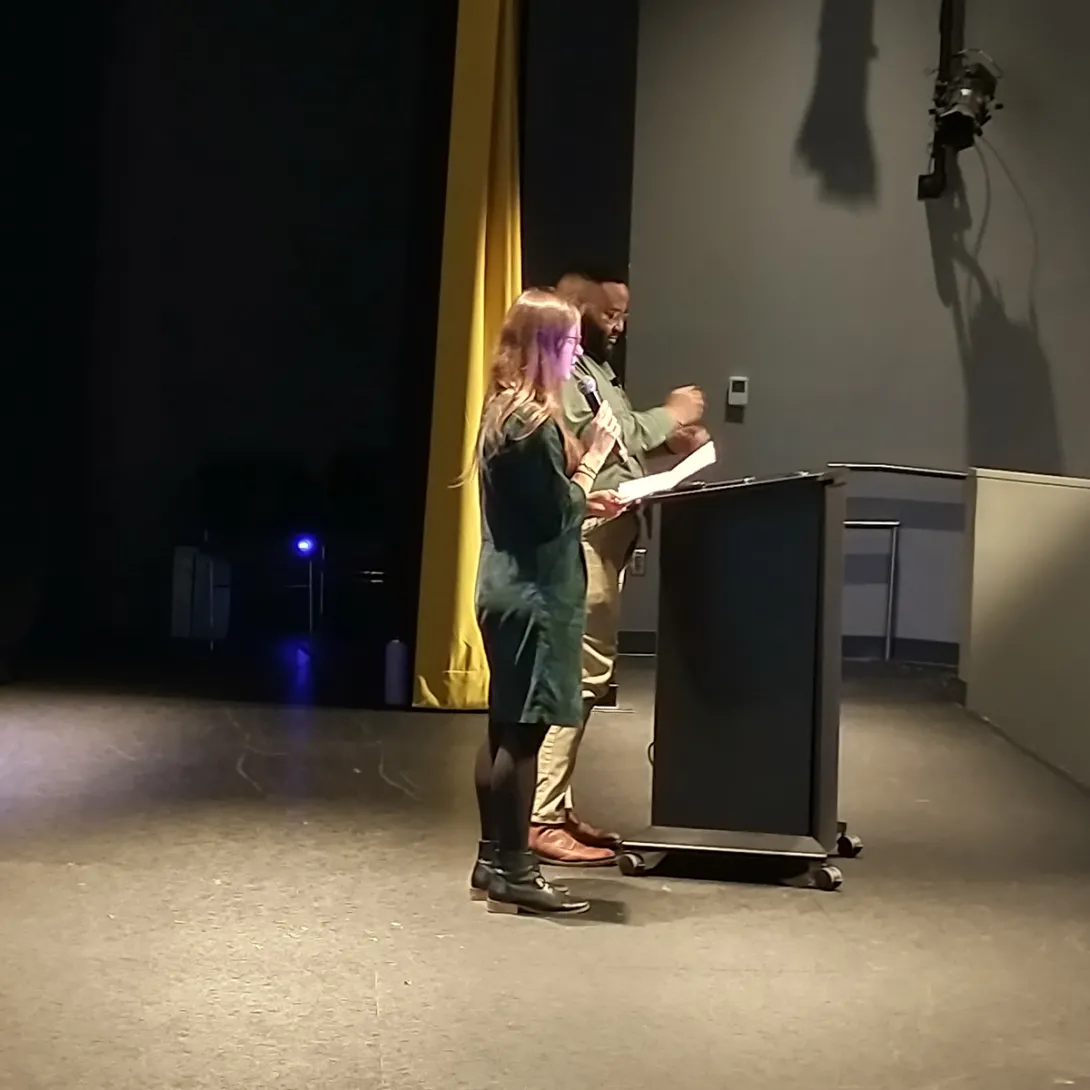
This year’s Georgia Tech Sustainability Showcase, held March 4 – 8 in conjunction with the SDG (Sustainable Development Goals) Action and Awareness Week, was an opportunity for faculty, staff, students, and community partners to demonstrate the depth and breadth of sustainability research happening at Georgia Tech. It was hosted by the Brook Byers Institute for Sustainable Systems with partners from the Office of Sustainability, Strategic Energy Institute, Renewable Bioproducts Institute, Institute for People and Technology, Ray C. Anderson Center for Sustainable Business, the Center for Sustainable Communities Research and Education, The Exchange at Georgia Tech, and other campus partners.
The event featured lightning talk sessions, panel discussions, and an alumni keynote. Participants were afforded with an opportunity to meet their colleagues, learn about each other’s projects, and explore opportunities for collaboration. The lightning talk sessions were five-to-seven-minute presentations, without slides, meant to give the audience a broad view of the diversity of sustainability work underway at Georgia Tech in a short period of time. These talks covered a wide range of topics, reflecting the diverse interests and expertise within the Georgia Tech community.
Panel discussions included “Higher Education and SDG17: Partnerships for the Goals” with Georgia Tech President Ángel Cabrera, a panel on the Georgia Tech Climate Action Plan, and “Innovative Teaching with the U.N. SDGs: Examples From Georgia Tech Faculty.” There were also panels on research/community partnerships, and the role of philanthropy in sustainability research.
The alumni keynote was delivered by Andrew White, CE 2019, a researcher at the Pacific Northwest National Laboratory. He spoke about advancing energy access through strategic collaborations among multiple stakeholders in the landscape of energy producers, distributors, and consumers.
The showcase demonstrated the Georgia Tech sustainability community’s passion and commitment to advancing the Sustainable Development Goals and the Institute’s mission to improve the human condition. It fostered a sense of community and shared purpose among attendees and participants.
The proceedings were recorded, and videos will begin to be uploaded to the BBISS YouTube channel in the coming weeks. More details about the Sustainability Showcase and the lineup of speakers and sessions can be found at https://sustainable.gatech.edu/showcase. Details about SDG Week and related events can be found at https://sustain.gatech.edu/sdg-week/.
News Contact
Brent Verrill, Research Communications Program Manager, BBISS