
Jun. 16, 2025
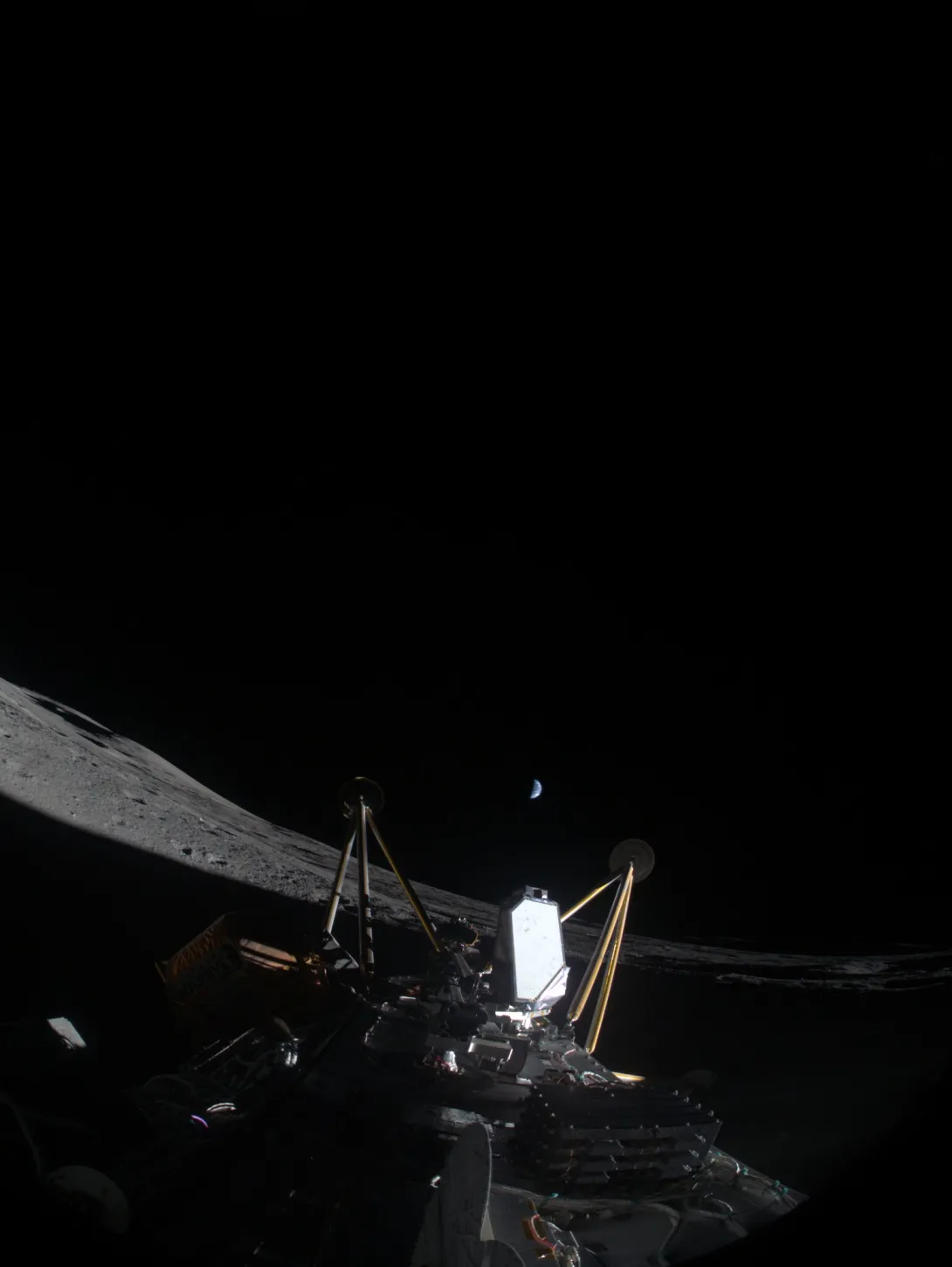
When NASA’s PRIME-1 Mission landed on the moon in March, an Intuitive Machine’s lander named Athena ended up on its side. The faulty landing meant the instruments couldn’t drill into the moon to measure water and other resources, as intended. But the mission wasn’t a total loss: PRIME-1’s The Regolith Ice Drill for Exploring New Terrain (TRIDENT) and Mass Spectrometer Observing Lunar Operations (MSOLO) could still operate and gather some data. The mission, led by Georgia Tech alumni who collaborated with Georgia Tech faculty, is already pivotal to future NASA missions.
PRIME-1, or Polar Resources Ice Mining Experiment-1, is a combination tool of two instruments: TRIDENT and MSOLO. PRIME-1’s objective is to help scientists determine resources available on the moon, with the eventual goal of sending humans to live there. TRIDENT is a space-rated drill designed and built by Honeybee Robotics that can extract lunar soil up to 3 feet deep. MSOLO is a mass spectrometer that can analyze TRIDENT’s soil samples for water and other critical volatiles. Together, this data can show how viable living on and mining from the moon could be.
Two Georgia Tech alumna, Jackie Williams Quinn and Janine E. Captain, led the PRIME-1 team for NASA. They had help with computer modeling of PRIME-1’s mass spectrometer data from Georgia Tech’s Regents’ Professor Thom Orlando and Senior Research Scientist Brant Jones in the School of Chemistry and Biochemistry.
Georgia Tech to the Moon
Georgia Tech’s expertise influenced all areas of developing PRIME-1, but perhaps their biggest contribution was the collaboration across disciplines.
Quinn, a civil engineering graduate, wrote the initial proposal. She also managed TRIDENT’s development, through a contract with Honeybee Robotics, ensuring it was also built to operate in the harsh lunar environment (a process known as ruggedizing). The team worked with Honeybee’s Jameil Bailey, fellow Tech alumnus.
Captain, the MSOLO principal investigator and chemistry Ph.D. graduate, never planned to work at NASA. But her advisor, Orlando, got her interested.
“What drew me to NASA’s In-Situ Resource Utilization team is that I could apply the instrumentation techniques that I learned in my Ph.D. to measuring vital things like oxygen on the moon,” Captain said.
Ruggedization Redux
When it was confirmed in 2008 the moon had water, NASA wondered if humans could one day live there. Having a functional mass spectrometer on the moon was paramount to determining where the water was and how much of it existed. Captain’s team modified a commercial mass spectrometer and tested it in a harsh environment comparable to the moon: Hawaii’s dormant shield volcano, Mauna Kea. Once they demonstrated the mission operation in this environment, they worked to ruggedize an existing one manufactured by instrumentation company INFICON. The team worked with INFICON and through lab tests, they showed that all components of the mass spectrometer functioned in a lunar vacuum environment.
In Orlando’s lab, his team experimented with lunar material to determine how water interacts with lunar soil. From there, they created a theoretical model that simulated how much water they might find from what PRIME-1 sampled.
“To create the model, we used the data of how water sticks to the lunar surface — from controlled experiments carried out in our ultra-high vacuum chambers at Georgia Tech,” Orlando said. “We approached the problem from a surface physics point of view in these lab experiments, but then in our model, we were able to connect to the actual mission activity.”
Once PRIME-1 hardware validation testing was finished, NASA was ready to launch. That’s when things got hairy.
“We don't fully understand everything that happened during the landing, but the fact that PRIME-1 was fully functional is pretty amazing,” Captain said. “We got the data. It was so cool to know that all this work we did was worth it.”
Moon Milestones
Although they didn’t get the chance to drill into the moon as planned, they can still analyze the data PRIME-1 pulled from the lunar atmosphere. This data includes how the spacecraft may have contaminated the local atmosphere.
“PRIME-1 was the only instrument that got to fully run and check out everything because when the lander fell over, the instrument was on top,” Quinn noted. “They were able to extend the drill all the way out a meter. It was drilling into empty space, but we were able to show that the drill got the signal from Earth, fully extended, and was able to auger and percuss. We were also able to fully operate MSOLO and gather data on gases coming off the lander in its final resting orientation.”
News Contact
Tess Malone, Senior Research Writer/Editor
tess.malone@gatech.edu
Apr. 25, 2025
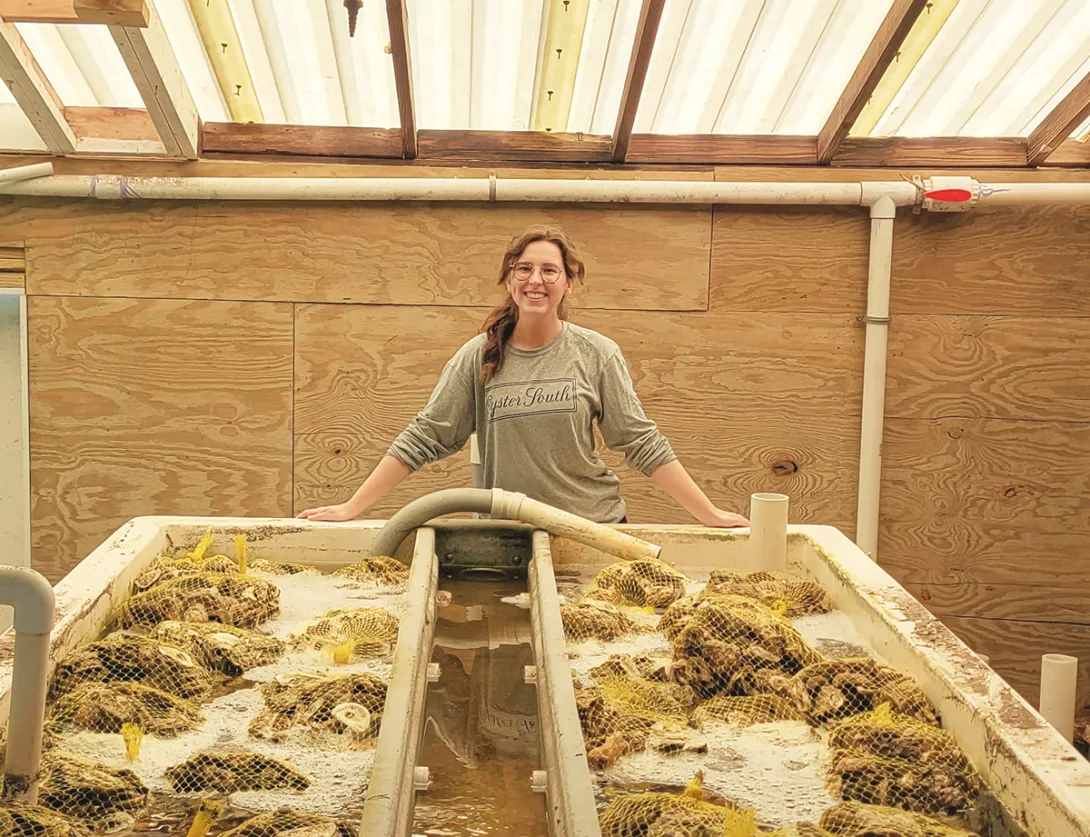
Sarah Roney oversees nursery troughs in the UGA Shellfish Research Lab filled with young oysters growing on shells recycled from restaurants all over Georgia.
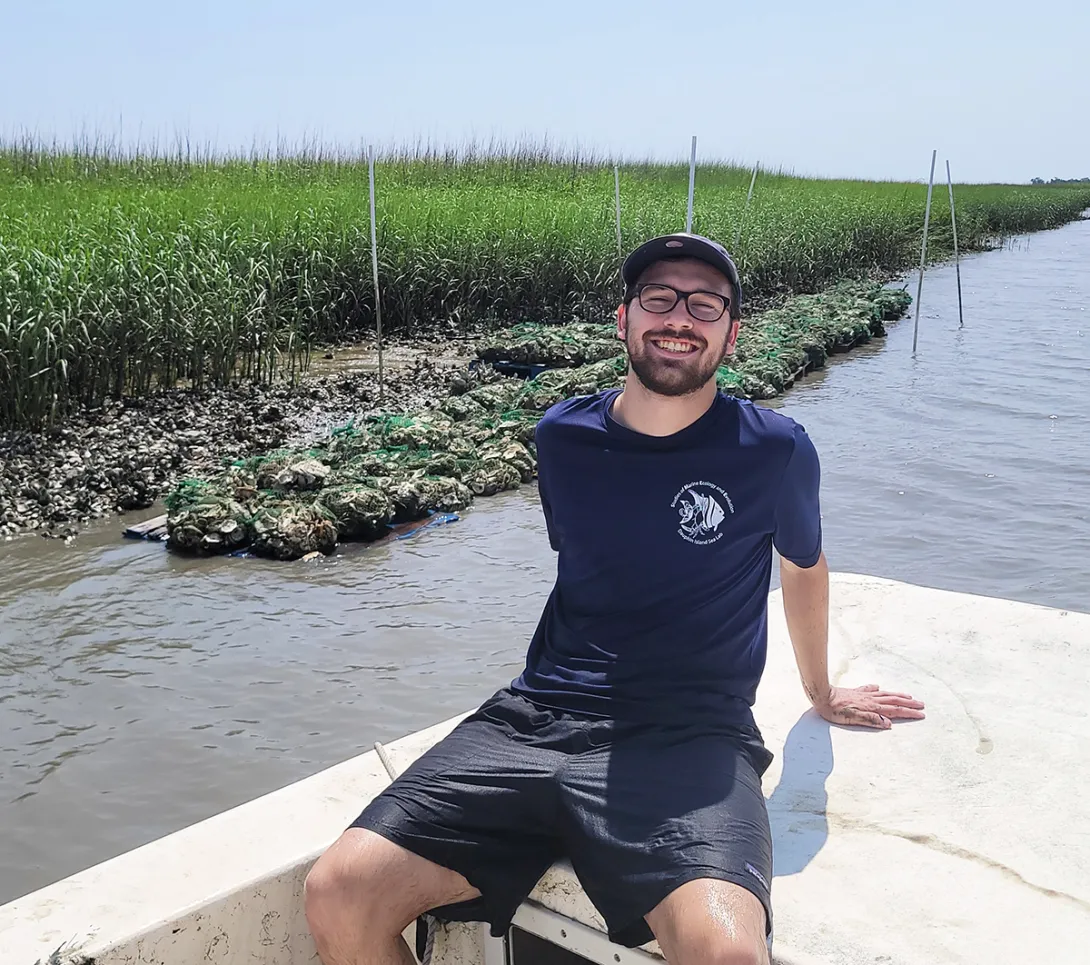
Tanner Lee (Georgia Tech, BS Biology '23) helped construct the oyster reef he observes from a boat as part of an undergraduate research project.
Sarah Roney studies oysters — and coastline restoration, wave energy, erosion, blue crabs, and predator chemical cues. A Ph.D. candidate in Georgia Tech’s Ocean Science and Engineering program and a Brook Byers Graduate Fellow, Roney has spent the past four years studying how strategically placing oyster reefs along Georgia’s coast could yield significant benefits.
Georgia’s coastal ecology is being degraded by several threats. Erosion caused by a combination of traffic from water vessels, sea-level rise, increased storm intensity and frequency, and property development, are negatively impacting both coastal living systems and the state’s economy. Tourism, agriculture, recreation, fisheries, property development, and trade (through the Port of Savannah) all rely on healthy coastlines.
Roney’s interest in coastal ecology and oysters drew her to focus her doctoral thesis on this problem. She divided her project into two parts. The first involved understanding how much oyster reefs reduce the erosion caused by wave energy (ship wake) from water traffic. The second part demonstrated a method for making young oysters resistant to predation — increasing their survival rates and that of the reef colonies they call home. Roney focused her research on two major waterways in the Savannah area. The Intracoastal Waterway and the South Channel of the Savannah River, which leads to the Port of Savannah, are both subject to heavy ship and boat traffic. According to Roney’s collaborators at Georgia Tech, 65% of the wave energy lashing the South Channel’s shores is generated by cargo vessels navigating to and from the Port of Savannah. Because traffic along the Intracoastal Waterway is subject to very few speed restrictions, there is plenty of erosive wave energy there also, even though the vessels are almost exclusively small.
Roney chose one site in each waterway to place her reef structures. Mesh bags of oyster shells were seeded with young oysters by personnel working at a University of Georgia Shellfish Research Lab. Roney created her reef structures by placing these bags in a row 15 to 20 meters long and a meter wide. Once established, Roney found that constructed reefs dissipate 40% of the wave energy before it reaches the marsh edge. “This is an experimental pilot study, so the reefs are on the smaller side,” Roney explained. “Reefs as large as 100 meters long may be necessary to protect certain areas — which sounds like a big investment. But because these are living shorelines, they are self-sustaining, and will keep growing and building on themselves.”
Establishing oyster reefs can be challenging, however, because predators feast on young oysters. Blue crabs are among the most voracious. The second part of Roney’s research was to develop a method that improves adolescent oysters’ chances of surviving to adulthood — when they infrequently succumb to predation. Roney and her collaborators at Georgia Tech identified two compounds found in blue crab urine, called trigonelline and homarine, that induce young oysters to devote more energy toward growing their shells, which become 25-60% stronger than normal. Roney found that after four to eight weeks of exposure to these compounds in hatchery conditions, their overall survival rate improved by 30% once placed in a reef. Her method not only helps constructed reefs to become established, but can also help existing oyster reefs become more resilient by slowing, or reversing, their decline.
While coastal restoration projects are not new in Georgia, the techniques Roney developed are relatively novel. Conventional shoreline restoration projects involve excavation, placing gravel beds, and extensive plantings, mostly with sea grasses. Roney has shown that using living shoreline strategies are less intensive and less expensive to establish and are also effective in reducing wave energy in waterways vulnerable to erosion. Perhaps most significantly, these techniques also restore the foundational functions of the ecosystems in which they are placed. The reefs become nurseries, incubating fish, bird, plant, and crustacean species.
Roney engaged several partners over the four years of her project, many in the communities along Georgia’s coast. Over 35 coastal residents, business owners, citizen scientists, and students volunteered their time and resources to help Roney’s project succeed. Roney said, “I think the most rewarding part of the project has been seeing how many people are truly invested in our coastal resources and want oyster reefs to thrive.”
This project isn’t likely to end once Roney earns her PhD. For living shoreline restoration practices to catch on, several other problems require investigation. Roney wants to devise a way to slowly release predator cue compounds into the water near oyster reefs, so baby oysters won’t need to spend as much time in a hatchery before being placed in the wild. Perfecting such a time-release mechanism could also help rejuvenate naturally occurring oyster reefs under threat from erosion and predation.
Roney also wants to try combining constructed oyster reefs with oyster farms, integrating one of the most sustainable ways that protein can be raised with living shoreline restoration. “As the mariculture industry in Georgia grows, there will be lots of opportunities to investigate the possible intersections between the ecological benefits, engineering benefits, and cultural benefits of oyster farming,” Roney said. “Food might be a continuous byproduct of shoreline restoration projects.”
Roney’s research shows that economic development and preserving, or even regenerating, diverse and productive coastal habitats for future generations don’t have to be mutually exclusive propositions.
Roney’s thesis advisor is Marc Weissburg, Brook Byers Professor in the School of Biological Sciences. Kevin Haas, professor in the School of Civil and Environmental Engineering, helped Roney map and measure the hydrodynamic forces in her study zones. The Coastal Resources Division of the Georgia Department of Natural Resources, the National Parks Service, and the University of Georgia Marine Extension and Georgia Sea Grant program provided access, permitting, funding, and resources.
News Contact
Brent Verrill, Research Communications Program Manager, BBISS
Apr. 01, 2025
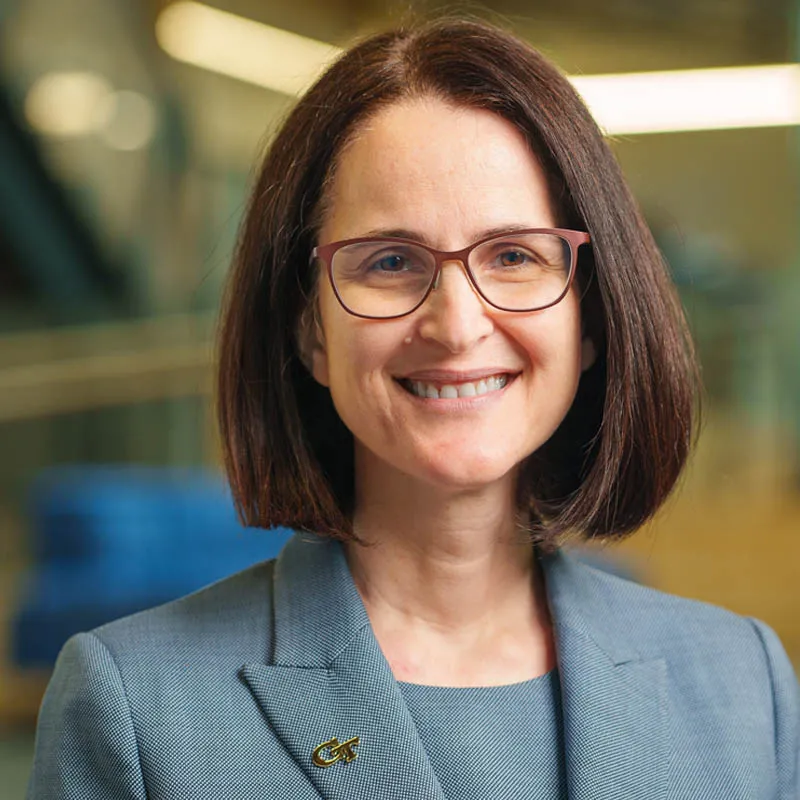
Following a nationwide search, Julia Kubanek, vice president for Interdisciplinary Research at Georgia Tech, has named Beril Toktay as the executive director of the Brook Byers Institute for Sustainable Systems (BBISS). Toktay has served as BBISS interim executive director since September 2022.
“As interim executive director, Beril has built the BBISS community, broadened its scope, and developed new programming to grow cross-disciplinary collaboration, community-engaged research, and entrepreneurship,” Kubanek said. “Faculty and students from the liberal arts, social sciences, design, business, computing, and fundamental science are engaging with BBISS in greater numbers, complementing our engineering community’s involvement. These are areas of strength at Georgia Tech that will help amplify the impact of BBISS.”
Toktay is professor of operations management, the Brady Family Chair, and Regents' Professor at the Scheller College of Business. She is an internationally recognized sustainable operations management scholar whose work has been recognized with multiple best paper awards. She is a Distinguished Fellow of the INFORMS Manufacturing & Service Operations Management (MSOM)Society. Through initiatives such as the Drawdown Georgia Business Compact, she has helped translate research insights into actionable business initiatives while fostering regional economic development.
Her academic leadership includes serving as department co-editor for “Health, Environment, and Society” for MSOM, area editor for “Environment, Energy, and Sustainability” at Operations Research, and special issue co-editor on “Business and Climate Change” for Management Science, as well as “Environment” for MSOM. She serves on the board of the Alliance for Research on Corporate Sustainability and the board of directors of the New York Climate Exchange.
Toktay has been instrumental in advancing sustainability at Georgia Tech, serving as founding faculty director of the Ray C. Anderson Center for Sustainable Business, co-architect of the Serve-Learn-Sustain initiative, and co-chair of the Sustainability Next Institute Strategic Plan Implementation Task Force. Her commitment to Ph.D. student success earned her the 2018 Georgia Tech Outstanding Doctoral Thesis Advisor Award. She also co-developed the Carbon Reduction Challenge, an award-winning interdisciplinary, co-curricular program that engages undergraduate students in climate intrapreneurship.
Toktay holds a Ph.D. in operations research from Massachusetts Institute of Technology, an M.S. in industrial engineering from Purdue University, and a B.S. in industrial engineering and mathematics from Boğaziçi University. She joined Georgia Tech in 2005 after serving as faculty at INSEAD business school in Fontainebleau, France.
Since assuming the interim role, Toktay has significantly strengthened BBISS by expanding the faculty leadership team, securing additional funding, establishing seed grant programs that have benefited over 100 researchers across all Colleges, and transforming the Center for Serve-Learn-Sustain into the Center for Sustainable Communities Research and Education.
"Energy and sustainability continue to be top Georgia Tech research priorities, for which we will need new funding strategies," said Tim Lieuwen, executive vice president for Research. "Philanthropy and business partnerships will grow in importance in the coming years. Beril has considerable experience and vision for maximizing these partnerships, which will serve BBISS and the Institute well into the future."
The Brook Byers Institute for Sustainable Systems is one of Georgia Tech’s interdisciplinary research institutes. The vision of BBISS is to grow and mobilize Georgia Tech’s knowledge assets — people and research — to create a sustainable future for all. BBISS is a key partner in the implementation of Georgia Tech’s Sustainability Next 2023-2030 Strategic Plan, a consensus road map to advance Georgia Tech’s vision to address the biggest local, national, and global challenges of our time. BBISS relentlessly serves the public good, catalyzes high-impact research, develops exceptional leaders, and cultivates partnerships that translate knowledge into practice.
"I'm honored to lead BBISS and build on the momentum we've created to date,” Toktay said. “Our vision is to maximize the collective impact of Georgia Tech's remarkable sustainability research community across all colleges and disciplines. By catalyzing collaborative research and connecting our faculty with key external partners and communities, we are positioning Georgia Tech to be a global thought leader in sustainability and to drive meaningful solutions to some of our most pressing environmental and social challenges."
The campus community is invited to a reception celebrating Toktay's appointment on Thursday, May 1, 2025, at 4:30 p.m. at the Collective Food Hall in the Coda building. Contact Susan Ryan for details.
News Contact
Brent Verrill, Research Communications Program Manager, BBISS
Mar. 20, 2025
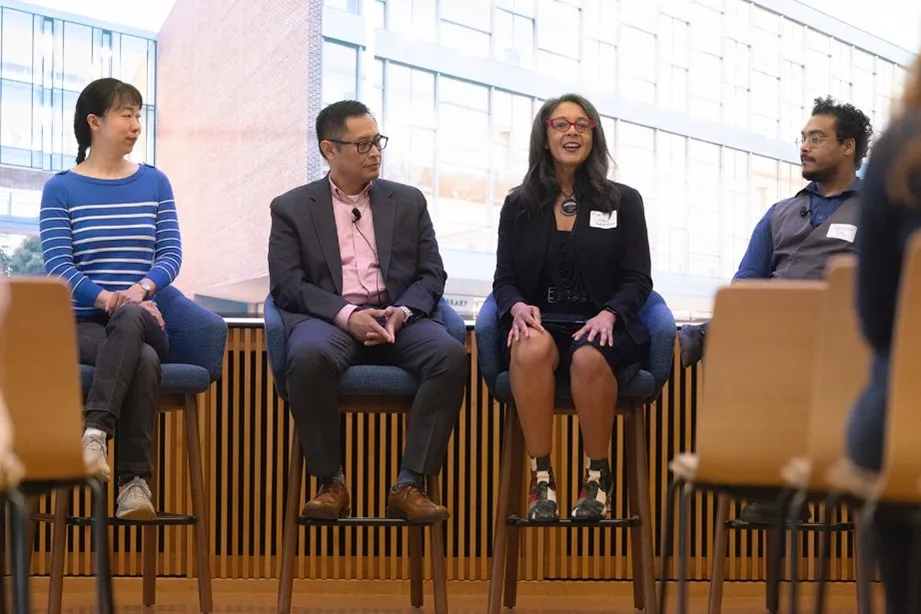
Sustainability Showcase panel discussion, L to R - Iris Tien, Donn Digamon, Ria Aiken, Tejas Kotak, and Jason Stott (not pictured).
In late February, the Brook Byers Institute for Sustainable Systems (BBISS) hosted the Sustainability Showcase in the Scholars Event Theater in Georgia Tech’s Price Gilbert Library. The two days of panel discussions, keynote speeches, and lightning talks were themed around community, ecosystem, and infrastructure resilience. Researchers, faculty, students, staff, and partners demonstrated how they are innovating and collaborating to build a more resilient future as the world rapidly changes.
The first day's morning session framed the discussion with three panels. The first focused on Georgia Tech’s resilience plan, discussing institutional strategies to ensure campus operations and support for the Georgia Tech community in the face of external disruptions. The second panel broadened the discussion to explore resilience strategies for the city of Atlanta. The third panel further expanded the scope to consider the resilience of the southeastern United States.
One of the highlights of the showcase was the alumni keynote address by Laura Solomon, ISyE 2000, co-founder of Tybee Oyster Company. Solomon told her inspiring story about the recent origins of the ocean aquaculture industry in Georgia and the connection between oyster aquaculture, local community engagement, education, and bolstering a thriving and resilient coastal ecosystem. She emphasized the importance of her company’s sustainable practices and shared her experiences in pioneering Georgia's first floating oyster farm. Solomon also underscored the importance of oysters in helping Georgia’s coasts become more resilient against storms, sea level rise, erosion, and poor water quality.
A mainstay of the Sustainability Showcase are the lightning talks, where students, campus organizations, and researchers can bring attention to their sustainability initiatives and research. Lightning talk sessions were interspersed throughout both days of the event and helped to bring a broader contingent of the sustainability community together to learn about each other’s work and make valuable connections.
The last panel discussion of the day, on ecosystem resilience, was moderated by Jenny McGuire, associate professor in the School of Biological Sciences. “A better understanding of ecosystem resilience not only helps us to preserve species for future generations,” she said, “but gives us perspective on how we can better inhabit the ecosystems we rely on for our own well-being.” The day concluded with a networking reception.
The second day began with a panel on infrastructure resilience, which explored the links between infrastructure elements in the built environment, how they interact with each other, and how our communities can recover from disruptions to infrastructure functions.
The event wrapped up with a visioning “unconference” session, where members of the Georgia Tech sustainability community gathered to share their thoughts on how the concept of resilience blends with sustainability, and how Georgia Tech can advance research and education to prepare our communities for the upcoming challenges facing us. It is anticipated that the participants in the unconference will collaborate on a white paper to document what was learned and shared at this final session.
"The Sustainability Showcase exemplified Georgia Tech's commitment to resilience at every level,” said BBISS Interim Director Beril Toktay. “By bringing together diverse perspectives from our campus, city, and region, we created a space for both innovative thinking and practical collaboration. As we navigate increasingly complex sustainability challenges, this collective approach will be essential in building the resilient communities and systems our future requires."
News Contact
Brent Verrill, Research Communications Program Manager, BBISS
Feb. 24, 2025
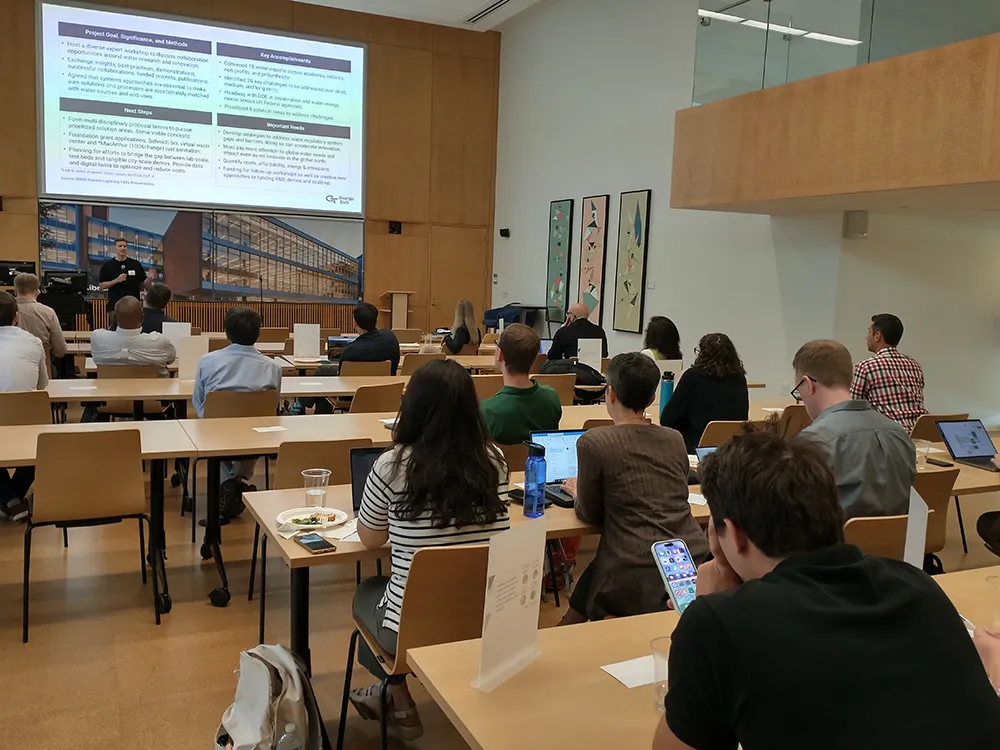
Mark your calendars for February 27 - 28, 2025, as Georgia Tech's Brook Byers Institute for Sustainable Systems (BBISS) hosts the 2025 Sustainability Showcase. This two-day event, held at the Price Gilbert Library Scholars Event Theater, will focus on innovation, collaboration, and inspiration around building a resilient future for our communities, ecosystems, and infrastructure.
Researchers, faculty, students, staff, and partners will explore how we can boost our resilience in the face of a rapidly changing world. With a full agenda featuring lightning talks, panel discussions, and a visioning “Unconference,” attendees will have ample opportunity to engage with cutting-edge research and innovative initiatives.
Event Highlights:
- Networking Breakfast: Start your day by connecting with colleagues over a warm beverage and breakfast refreshments.
- Panel Discussions: Learn from experts about how they view resilience in context with their work and the broader efforts to enhance resilience.
- Alumni Keynote: Laura Solomon will talk about the connection between the oyster aquaculture industry, engaging local communities, and a thriving and resilient coastal ecosystem.
- Lightning Talks: Hear quick, impactful presentations from faculty, students, and staff showcasing their research.
- Resilience Visioning Unconference: Participate in a dynamic, participant-driven meeting to exchange ideas and propose discussions on resilience topics.
Don't miss this opportunity to be part of this annual event and connect with the sustainability community. Whether you're a faculty member or a curious student, whether you can attend a whole day or just one session, the Sustainability Showcase offers something for everyone. Join us and be inspired by the breadth and depth of sustainability work happening at Georgia Tech.
For more information, visit the Sustainability Showcase website.
News Contact
Brent Verrill, Research Communications Program Manager, BBISS
Feb. 19, 2025
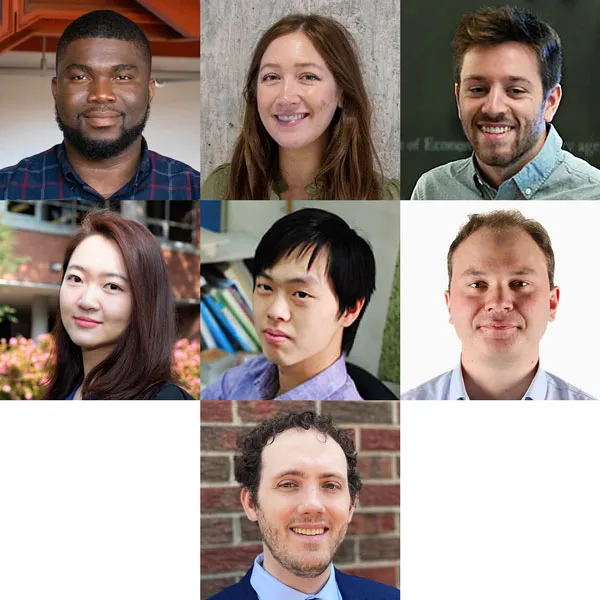
L to R, Top to Bottom: Ebenezer Fanijo, Katherine Graham, Anthony Harding, Yiyi He, Pengfei Liu, Johannes Milz, Micah Ziegler
Seven new Faculty Fellows were appointed to the Brook Byers Institute for Sustainable Systems (BBISS). In addition to their own work, BBISS Fellows serve as a board of advisors to the BBISS; foster the culture and community of sustainability researchers, educators, and students at Georgia Tech; and communicate broadly the vision, mission, values, and objectives of the BBISS. Fellows will work with the BBISS for three years, with the potential for a renewed term.
The BBISS Faculty Fellows program has been in place since 2014. Fellows are drawn from across all seven Georgia Tech Colleges and the Georgia Tech Research Institute (GTRI). BBISS Interim Executive Director Beril Toktay says, "The Fellows' wide-ranging expertise and varied academic paths create exciting opportunities for new partnerships and deeper connections across our sustainability network." The new BBISS Faculty Fellows are:
- Ebenezer Fanijo – Assistant Professor, School of Building Construction
- Katherine Graham – Assistant Professor, School of Civil and Environmental Engineering
- Anthony Harding – Assistant Professor, School of Public Policy
- Yiyi He – Assistant Professor, School of City and Regional Planning
- Pengfei Liu – Assistant Professor, School of Earth and Atmospheric Sciences
- Johannes Milz – Assistant Professor, H. Milton Stewart School of Industrial and Systems Engineering
- Micah Ziegler – Assistant Professor, School of Chemical and Biomolecular Engineering
These faculty members will join the current roster of BBISS Faculty Fellows.
News Contact
Brent Verrill, Research Communications Program Manager, BBISS
Jan. 22, 2025
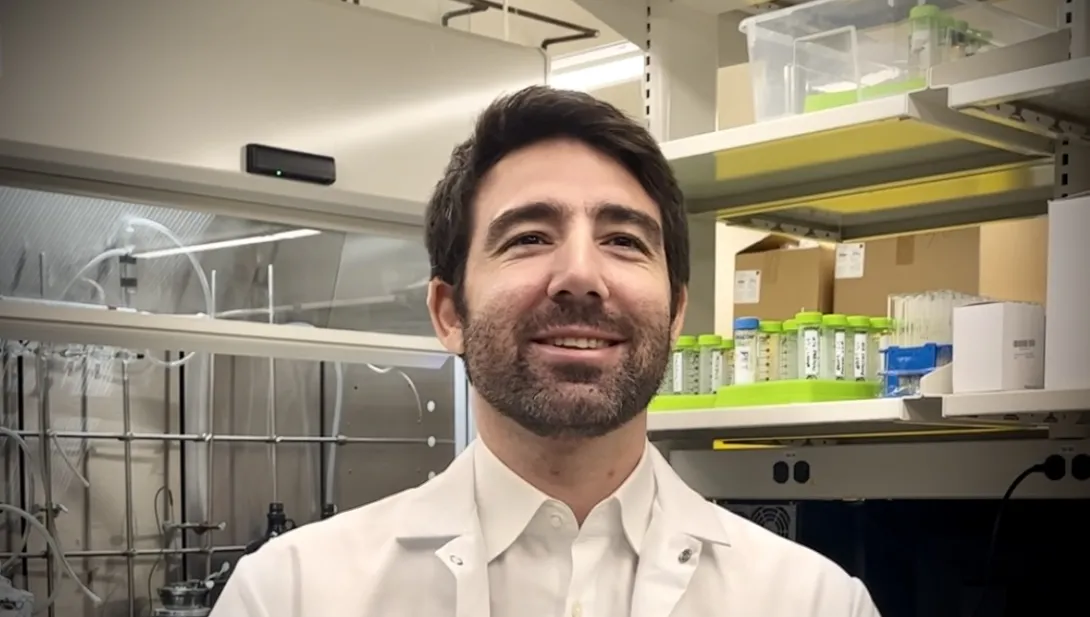
- by Benjamin Wright -
Christos Athanasiou is determined to make life in space as sustainable as possible. After all, getting new materials into space is difficult, energy-intensive, and expensive, so it makes sense to reuse and repurpose as much as possible. Applying the principles of a circular economy in space makes a great deal of sense. But Athanasiou doesn’t want to stop there. If you accept the premise that life in space can be sustainable, why wouldn’t you aim for the same goal on Earth?
Athanasiou, an assistant professor in Georgia Tech’s Daniel Guggenheim School of Aerospace Engineering as well as a faculty fellow at the Brook Byers Institute for Sustainable Systems (BBISS), is calling for the development of a circular, sustainable economy that can be implemented both in space and on Earth in alignment with the United Nations sustainable development goals, particularly goal 12: Ensure sustainable consumption and production patterns.
Athanasiou and his students are developing a framework to revolutionize the testing and evaluation of the mechanical behaviors of sustainable materials. By replacing complex finite element simulations with user-friendly analytical formulas, their approach enables faster, cheaper, and more accessible fracture and fatigue testing. This innovation, just published in the Journal of the Mechanics and Physics of Solids, is particularly crucial for sustainable materials, which often have unique and unconventional properties. By extracting reliable insights from minimal data, the framework allows researchers to directly extract physical laws from datasets, opening the door for the broader adoption of greener composites in construction and manufacturing. His efforts in this area have earned him a National Science Foundation Faculty Early Career Development Award.
Building on this work, Athanasiou and his team are advocating for the democratization of mechanical testing and engineering standards with the help of AI. As he and his colleagues point out in a recent article in the Journal of Applied Mechanics, making low-cost testing available to a wider range of manufacturers and material suppliers is a key step in decentralizing the supply chain for recycled and repurposed plastics and other materials used as feedstock in a circular economy. By addressing the regional nature of supply chains for recycled materials, decentralized standardized testing can accelerate the adoption of these sustainable feedstocks, ultimately reducing the carbon footprint of the entire manufacturing process. Part of these efforts are supported by a Federal Aviation Administration grant that Athanasiou and colleagues were awarded together with the City of Atlanta’s Department of Aviation.
As an educator and engineer, Athanasiou wants to see more of his colleagues step up and make sustainability part of their curriculum and research.
“As engineers, how can we use our expertise to meet sustainability goals, and how can we use our positions to incorporate sustainability-centered thinking into all that we do in our research and our classrooms?” he asks. “It is important for us to find a way to do this, as sustainability will be one of the biggest challenges for young engineers of the future.”
Athanasiou sees a lot of promise in this area, especially at Georgia Tech.
“I think that BBISS will have a very critical role in this area, working across disciplines to instill a sustainability focus in all of our engineering curricula. We need to design processes, systems, and materials to be resilient and design for the long term in a society that does not think that way.”
Athanasiou sees many barriers to adoption standing in the way of establishing a sustainable circular economy — a lack of engineering understanding by policymakers, a culturally ingrained resistance to change, and a general societal skepticism of sustainability efforts.
“We need to properly educate the public on what is possible and how it can help them as individuals.”
Financial motivations are also a major barrier. With so many products designed to become obsolete and replaced, convincing corporations to give up future sales in the interest of making a better world is a challenge.
“There have to be financial incentives for this to happen,” says Athanasiou. “New markets will develop, but they have to make economic sense or change will not happen.” He would like to see companies shift to products with easily swappable parts, low-cost testing, and green construction approaches in everything from electronics to building construction.
“Sustainability and enabling circular economies are not the responsibility of a single actor. It's a coordinated effort between scientists, engineers, policymakers, businesses, and community members of all backgrounds working together.”
One of the challenges, as Athanasiou sees it, is making sure the policies and science are ready at the same time so policymakers don’t overpromise on what is scientifically possible and researchers don’t waste time and resources on solutions that policymakers don’t have the mandate to implement.
“All of these communities need to be talking to each other all of the time. That is the only way for us to move forward to a circular economy.”
News Contact
Brent Verrill, Research Communications Program Manager, BBISS
Dec. 12, 2024
- by Benjamin Wright -
Destination tourism has now matched or surpassed pre-Covid levels in many parts of the world. It’s leading to challenges as operators and local governments try to walk the line between inviting visitors and preserving the places tourists want to visit so they can be enjoyed and studied for years to come. The more people who visit a site, the greater the risk of damage from foot traffic and contact with walls and artifacts. Even human breath in enclosed spaces can inflict as much damage as pollution from vehicles.
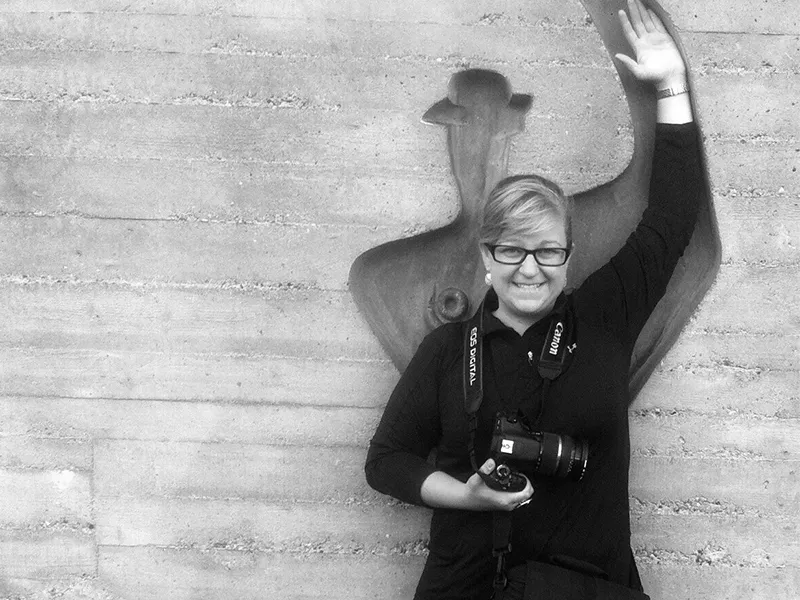
Enter Associate Professor Danielle Willkens from Georgia Tech’s School of Architecture in the College of Design. Willkens, who is the Sustainable Tourism co-lead for the Brook Byers Institute for Sustainable Systems (BBISS), is using technology to assess historic sites and develop strategies to mitigate damage caused by visitors and the development that frequently occurs when a site becomes popular.
“At a foundational level, a lot of what we do is related to survey work,” explains Willkens. “We are using LiDAR (Light Detection and Ranging), or lasers, to get very high-resolution, three-dimensional images. We end up with a digital record that serves as a snapshot of a building or space at one moment in time, and it becomes invaluable for preservation and rehabilitation planning.”
The advantage of using LiDAR is that it is what Willkens calls a “non-contact invasive” method. It doesn’t damage the structure but can reveal existing weaknesses and flaws that need attention. In a matter of a few days, their process can reveal what could take weeks or months of visual inspection to uncover.
In addition to traveling abroad to examine sites in the Dominican Republic and the famous site of Petra in Jordan, Willkens uses her tools to help protect and preserve places that have played an important role in American civil rights history: W.E.B. Du Bois’ office in Fountain Hall at Morris Brown College, the Penn Center on Saint Helena Island in South Carolina, and the Edmund Pettus Bridge in Selma, Alabama. She is also working with the National Park Service to evaluate the MLK corridor in Atlanta and has projects in historic neighborhoods like Mechanicsville and Pittsburgh.
Where does Willkens’ passion for protecting these places come from?
“I'm the daughter of an educator and two generations of educators beyond that,” she says. “I come from a line of people who are invested in teaching and advocacy — people who love travel and museums and appreciate the power of place.”
One successful project that Willkens is particularly proud of is a scan of the USS Drum, a World War II submarine on display at the USS Alabama Battleship Memorial Park in Mobile, Alabama. By recreating the interior of the submarine digitally, access has been granted to people who cannot visit the ship in person due to mobility limitations, claustrophobia, or distance. The project was launched on Veterans Day of 2024. Since then, 97-year-old Bill Lister, who is the last surviving member of the Drum’s crew, has visited the ship many times from the comfort of his home in Indiana.
A similar project is part of a partnership with Auburn University in which Willkens and her colleagues are developing a digital conflict map of the March 7, 1965, “Bloody Sunday” march in Selma, Alabama.
She sees tremendous value in people being able to visit these historic locations remotely.
“Significant anniversaries are coming up, like the 60th anniversary of the Selma march, and unfortunately, we still have regular reminders that voting access is an ongoing concern. Being able to visit these sites remotely can be very powerful.”
Through grants and her seminar class, Race, Space, and Architecture in the United States, Willkens is training the next generation of architects and preservationists to get involved with their local communities and protect valuable places through technology.
“We’ve been able to take three groups of students down to the Penn Center in South Carolina. We stay in the historic buildings, we do survey and research work on site, and we work with community members. St. Helena Island is at this somewhat precarious intersection of climate change and surrounding development in the Gullah Geechee corridor, and it’s a microcosm of what a lot of historical sites are facing. The community has been very welcoming to us, and we’re excited about the work we’re doing there.”
That work has been funded by a Sustainability Next Seed Grant. She strongly encourages other faculty and students to get involved with the BBISS and the Sustainability Next strategic plan initiative.
“BBISS is a great place to get to know people from across disciplines, and I'm grateful for that,” she explains. “In any discipline, it's easy within a university to stay in your silo. Being part of BBISS has been a great opportunity to meet people from different programs and different parts of Georgia Tech. I love the emphasis on community-engaged work that moves sustainability from an abstract systems level to something tangible that is making a difference locally.”
News Contact
Brent Verrill, Research Communications Program Manager, BBISS
Nov. 07, 2024
- Written by Mandy Luong, BBISS Communications Student Assistant -
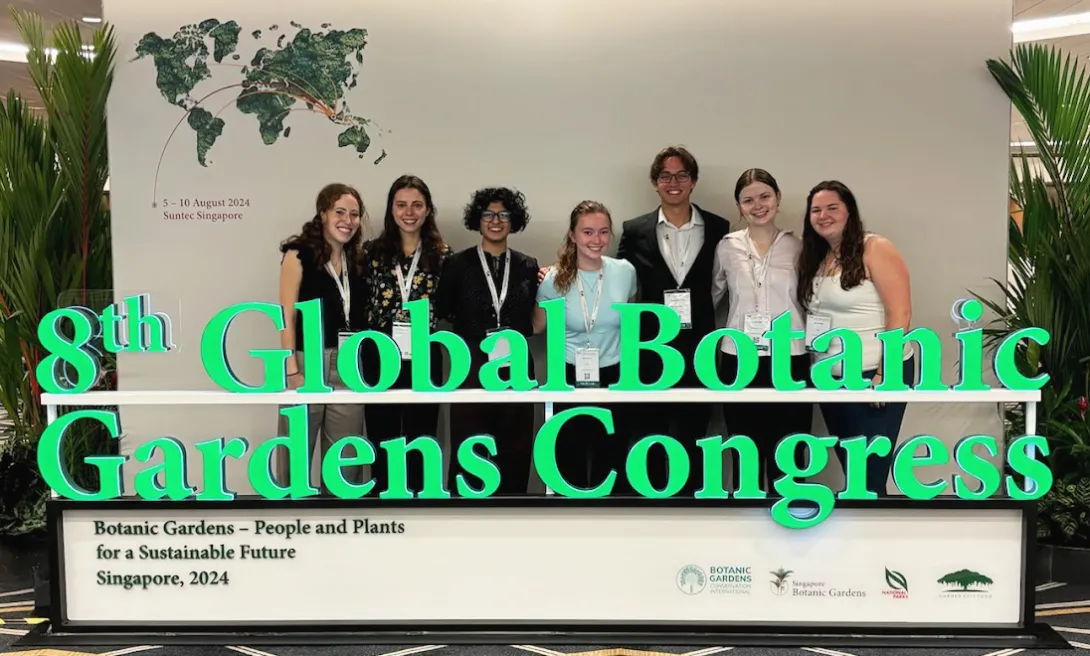
Georgia Tech’s Students Organizing for Sustainability (SOS) recently traveled across the world to Singapore for the 8th Global Botanic Garden Congress. They presented their research on the evaluation of various plants in student living accommodations. The independent research project was initially funded through the Micro Research Grants for Regenerative Built Environments sponsored by The Kendeda Building Advisory Board and the Brook Byers Institute for Sustainable Systems. This feat is uncommon among Georgia Tech student organizations but can serve as a case study for future SOS trips as well as other clubs.
The team found out about the conference by researching various conferences related to urban agriculture initiatives around the world. They specifically sought out conferences that could give them an international experience in a city deemed cutting-edge for urban green spaces, and that would allow them to talk about their research project. After being accepted into the Global Botanic Garden Congress, they needed to find funding to support their travel.
SOS members applied for numerous grants that are available to students around campus, including the School of Civil and Environmental Engineering's International Travel Funding through the Global Engineering Leadership Minor, the President’s Undergraduate Research Travel Award, and the Student Government Association (SGA) Conference Fund. In total, they were able to obtain multiple research and travel grants for over $16,000 to cover the travel expenses of seven members. The students are confident that, had more people been available, they could have received more funding to cover the additional travel expenses.
“There are a lot of opportunities on campus to get funding for a project, travel, or attend conferences, but students just need to know where to look,” says Elaina Render, fourth-year civil and environmental engineering major and SOS project lead for the UrbanAg group.
The group’s itinerary consisted of attending all four days of the conference, the last of which coincided with Singapore’s National Day. At the conference, students presented their research findings to an international audience and made personal connections. They talked with people from across the globe, including botanic garden representatives from Naples, Chicago, and San Diego. Making these connections has introduced them to opportunities for more interactive trips, such as visiting the Naples Botanical Garden to learn about beach plant management. They also hope to attend the 9th Global Botanical Garden Congress in Chicago next year.
“The conference is a great resource for students as they approach graduation because you can network for next career steps, find possible research advisors for graduate school, and be exposed to a range of career possibilities,” says Nicole Allen, fourth-year biomedical engineering major and SOS’s vice president of Finance.
In addition to the conference, they were able to explore the city of Singapore. On their first day, they toured Gardens by the Bay, where they saw famous attractions like the Golden Bay and the Flower Dome. The following day, they visited Singapore University of Technology and Design and met Greenprint, a student group similar to SOS, and talked with students and faculty about their campus sustainability initiatives. On the third day, they traveled to the Sungei Buloh Wetland Reserve, a beautiful mangrove forest. Allen notes that on a hike along the coastal trail, they decided to take a bus across the bridge to Malaysia and have brunch. On the last day of the conference, they visited Singapore’s Botanic Garden, which also houses the National Orchid Garden.
The SOS students report many successes from this experience, both personal and related to their SOS activities. Younger members of SOS, Rachel Bohl and Nikita Takalkar, both second-years, were able to attend the conference. This has inspired younger members to get more involved with on-campus sustainability initiatives. In particular, Takalkar is starting a new SOS project to decrease medical waste at Stamps Health Services. They have also seen an increase in attendance at their meetings and many questions about their trip. They hope the conference will serve as a model for future trips where students can promote their research, network, learn about what new research is happening in the world, and bring this knowledge back to Georgia Tech to inspire their own projects on campus.
“We hope that our project and trip to Singapore can serve as an inspiration to other students and campus organizations. It's possible to start an independent research project and get funding to present at international conferences,” says Render.
Allen adds, “We are implementing some of the ideas our trip inspired as new, student-led sustainability initiatives here at Georgia Tech.”
News Contact
Brent Verrill, Research Communications Program Manager, BBISS
Oct. 24, 2024
Georgia Tech researchers representing 25 research projects that received Sustainability Next seed grants, presented their work during two lightning talk sessions on August 27 and September 5, 2024, at the invitation of Brook Byers Institute for Sustainable Systems (BBISS). Participants were also offered the opportunity to network, discuss connections to resources and opportunities for collaboration, and engaging with community stakeholders.
Three themes emerged from these sessions:
- Many research teams need access to data sets that are difficult to acquire for logistical or financial reasons.
- Some available data sets are not very extensive, or do not accurately represent the diversity of people and perspectives present within the group or geographical area studied.
- Many research teams engaged with community groups as part of their project, or were looking for community partners to complete or enhance their project.
The networking sessions facilitated numerous connections. Eunhwa Yang’s team studies how environmental factors and building construction methods can impact the sleep quality of people with mild cognitive impairment who live in under-resourced communities. Yang expressed a need for more reliable data collection and transmission systems, given that internet access in the homes of study participants can be unreliable. She connected with Jung-Ho Lewe, whose work often revolves around IoT (internet of things) devices that use free or low-cost low-bandwidth cellular data networks. Yang also connected with the Center for Sustainable Communities Research and Education to look for additional opportunities for community engagement.
The participants also discussed the promise and the hurdles of engaging directly with community partners. Ameet Pinto, BBISS associate co-director for interdisciplinary research and associate professor in the School of Civil and Environmental Engineering, said, “If available datasets are not representative of the communities being served, then community-engaged research can fill those gaps. Such research requires that trust-based relationships be cultivated, and this takes time and resources to foster trust and find common ground.”
Attendees seemed to appreciate the opportunity to talk with their colleagues, not only about their projects, but also about engaging directly with communities. The events were well attended with several people coming to both sessions. Pinto adds, “The Sustainability Next seed grants are not just about helping brilliant ideas get off the ground; they are also about bringing together a community that can coalesce around thematic challenges and make a transformative and lasting societal impact. By hosting these lightning-talk sessions, BBISS helps to bolster such a community.”
News Contact
Brent Verrill, Research Communications Program Manager, BBISS