

Lead story image for Scheller News story "Data Centers Are Booming. Who Benefits?" A hazy photo of an electronic board, possibly an internal image of a data center.
Artificial intelligence is reshaping how businesses operate and driving a historic surge in data center construction across the United States. These sprawling facilities, sometimes spanning more than 1,000 acres, represent one of the largest waves of capital investment in American history.
For communities across the country, this growth hits close to home, and not without controversy. What do data centers actually deliver for the local economies that host them?
New research from Daniel Yue, assistant professor of Information Technology Management at Georgia Tech’s Scheller College of Business, and his co-author, Yiyang Zeng, examines how data center openings affect local jobs, wages, business activity, and electricity prices. Their findings suggest that geography plays a decisive role in whether communities see meaningful economic gains.
“Enormous amounts of capital are flowing into specific communities, much of it tied to new construction, while rigorous evidence on the local benefits of these facilities has been thin,” said Yue. “Community pushback has organized rapidly across the country. Our paper begins to fill that gap by providing new evidence using detailed, facility-level data paired with county-level economic indicators.”
A Historic Investment Wave
There are more than 2,500 data centers, either active or under construction, across the United States. Individual hyperscale facilities often cost more than $1 billion to construct and can consume as much electricity as a small city. Is it all worth it?
On average, Yue and Zeng found that when a data center opens, the host county sees a measurable lift: Employment rises by about 3.5%, wages by 5%, business establishments by nearly 5%, and household income by about 2%. Building permits also increase sharply, reflecting construction activity tied to new facilities.
These are real, economically meaningful gains. But Yue and Zeng discovered that these gains are much smaller than what might be expected from a large investment. And they’re not evenly distributed.
Why Metro Areas Benefit More
The researchers’ clearest finding is that metropolitan areas capture most of the economic benefits from data centers, while rural areas see far fewer spillover effects. While metro counties saw increases in employment and new business growth, non-metro counties saw no measurable gains.
The reason comes down to what economists call “agglomeration,” or economic density.
Data centers don’t operate in isolation. They rely on construction contractors, engineers, equipment suppliers, professional services, and a skilled workforce. Those connections are far easier to build in places that already have deep labor markets and established business networks.
Metropolitan areas are well-positioned to absorb the indirect spending that data centers generate. High-wage technical employees support restaurants, retail, and local services. Suppliers and contractors can scale up quickly. These spillover effects amplify the impact of the initial investment.
In rural areas, that amplification is much harder to achieve. Facilities tend to employ relatively few permanent workers — often fewer than 100 — and many specialized services are imported from outside the county. As a result, the broader economic ripple never materializes.
That doesn’t mean rural communities see no benefit at all. The research finds a small but real drop in unemployment rates in non-metro counties, and local governments may still gain tax revenue or infrastructure investments. But the sweeping job and wage growth often promised during local recruitment efforts will not likely arrive on its own.
“Location, not facility size, determines whether the local benefits show up,” Yue said.
The Hidden Cost: Electricity Prices
Yue and Zeng’s research also uncovers an important trade-off. Data centers use a lot of electricity. A single large facility can use as much power as roughly 80,000 homes. In areas where the researchers can cleanly measure price effects, electricity prices rise by about 5% after a data center enters.
“When the benefits to communities are small, even downsides like higher electricity prices that strain infrastructure will be felt by locals,” Yue shared.
Who pays for the increased cost of electricity isn’t straightforward. Yue and Zeng’s research suggests communities should ask specific questions about who pays for new infrastructure and how those costs will be distributed. Local utility companies divide costs differently among homeowners, businesses, and large industrial users, including data centers. Because cost-sharing systems vary by state, each data center development is unique.
What Communities Should Consider
As states and cities work to attract or push back against data center construction, Yue and Zeng hope their research will encourage more evidence-based decision-making.
For metro areas with strong labor markets and dense business ecosystems, data centers can deliver meaningful, though not transformative, economic gains. For rural communities, the positive impact is more complicated.
“In 10 years, communities will likely wish they had pressed harder on the quality of the decision itself, including whether the debate was evidence-based, whether their local economy was equipped to capture the gains, and whether the fine print aligned with residents' long-term interests,” Yue said. “It’s vital that communities look past flashy, headline incentive packages and focus on the details: tax abatement structures, electricity tariff arrangements, and who ultimately pays for infrastructure upgrades.”
As data centers continue to dot the American landscape, understanding where they create shared value — and where they don’t — will be critical for community leaders and policymakers alike.
Read More: The Local Economic Effects of Data Center Entry
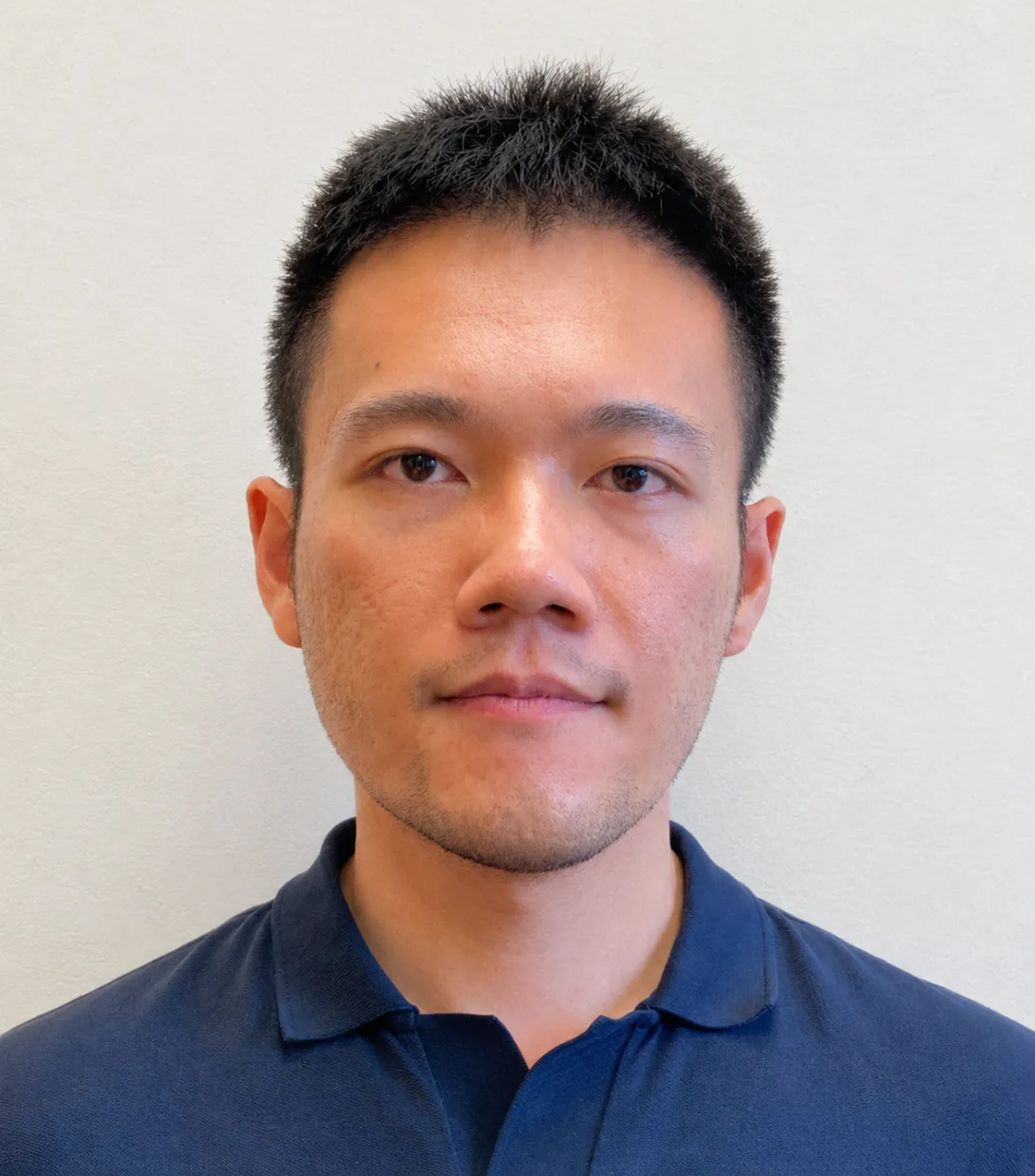
Wei Zhu, assistant professor in the School of Mathematics, has been awarded a five-year, $500,000 CAREER Award from the National Science Foundation (NSF). The CAREER Award, NSF’s most prestigious honor for early-career faculty, helps promising researchers establish a foundation for a lifetime of leadership in their fields. Zhu’s award will support research and education initiatives focused on artificial intelligence (AI).
“I am very honored and excited to receive the NSF CAREER Award,” says Zhu. “This award will support research by my fantastic team of students and post-doctoral researchers and give me the opportunity to carry out education and outreach programs that expand our impact.”
Advancing AI Applications
Since joining Georgia Tech in 2024, Zhu’s research has focused on the mathematical foundations of machine learning and their applications in science and engineering.
With support from the CAREER Award, Zhu and his team will explore the two-way relationship between data and structure in machine learning. They aim to understand how known structures in scientific and engineering problems (e.g., symmetries or physical constraints) can help machine learning models learn more accurately and efficiently from limited data. They will also study how machine learning can uncover hidden structures directly from data, revealing patterns or principles that may not be known in advance.
The project focuses on settings where large amounts of high-quality data are difficult or expensive to obtain, as is often the case in science and engineering. Using mathematical analysis, Zhu and his team will examine how much data is required to accurately learn a model, how structural information can reduce this data requirement, and how much data is needed to reliably identify a model’s underlying structure.
According to Zhu, this approach could reduce the amount of data and time needed to build and test accurate models, leading to more reliable, interpretable, and efficient AI for scientific discovery.
“Such advances align with national AI priorities and help strengthen the mathematical foundations needed for future scientific and engineering applications of AI,” he says.
Expanding AI Literacy
Zhu believes it is important to help students understand AI, noting that they must learn how to interpret and evaluate its outputs rather than accept them uncritically.
“AI has increasingly become incorporated into many fields of study,” he says. “Institutions must determine how to best integrate it into education while also teaching students how it works. The AI education and outreach components of my project aim to help prepare students for careers at the intersection of mathematics, computing, and science.”
Zhu’s CAREER Award will support educational initiatives at multiple levels, including new graduate and undergraduate courses on machine learning. It will also support a machine learning boot camp for high school students, organized by the School of Mathematics in collaboration with Emory University’s Department of Mathematics. The boot camp seeks to introduce students to foundational ideas in AI and machine learning, with an emphasis on the mathematical principles needed to understand and responsibly use these tools.
News Contact
Writer: Lindsay C. Vidal

The house in the distance, with a red, hip-shaped roof and white walls, tells Radu Casapu that this place is probably somewhere in Spain or Portugal.
The surrounding trees resemble those of a eucalyptus forest, which could indicate northern Portugal or the Spanish region of Galicia.
It’s the signposts on the road that give it away. They are flat and wide, which is common in Spain but not in Portugal.
Casapu, a master’s student in Georgia Tech’s School of City and Regional Planning, correctly reasons that the picture of a road he’s looking at is in Galicia.
Give Casapu a photo, and he will likely be able to tell you where it was taken.
“I start with infrastructure clues that are specific to a country, region, state or province,” Casapu said. “They include roads or electricity poles, which often remain consistent throughout a country. Once you narrow down the country, you can use more specific factors like vegetation, specific landscapes, or architecture, because these are very nuanced. It’s a top-down approach.”
This is why Casapu is the reigning GeoGussr World Champion — and the ideal expert to test vision-language models (VLMs) on how good they are at geolocation.
GeoGuessr is a geography browser game launched in 2013 that invites players to guess the location of random Google Street View images. Casapu was already known as one of the top players in the world before he won the third annual GeoGussr World Championship in September.
At the beginning of the spring 2025 semester, School of Interactive Computing professor James Hays reached out to Casapu and invited him to collaborate on a new project. Hays was looking to create a dataset to evaluate VLMs' geolocation ability and reasoning.
“VLMs are surprisingly good at geolocation right out of the box, even when they’re not trained to be good at it,” Hays said.
Hays and his colleagues, associate professors Alan Ritter and Wei Xu, took issue with many AI companies claiming that the VLMs they were releasing were not good at geolocation.
“When Open AI released GPT 4 Vision, there were privacy concerns about the model’s ability to geolocate someone based on photos they’ve shared on the internet,” Ritter said. “Open AI said this wasn’t a concern and claimed the model wasn’t good at geolocation beyond being able to recognize a city or famous monument. We found that wasn’t the case. These VLMs are state-of-the-art at image geolocation tasks.”
Show Your Work
Hays and Ritter enlisted a team of some of the world’s top geolocators. It consisted of Casapu, Joshua Diao, a master’s student in computer science, and Tejas Santanam, a Ph.D. student in industrial engineering. They each received 500 images to geolocate.
Team members recorded their reasons for each of their answers. The result was GeoRC, the first benchmark for VLM geolocation performance, consisting of 800 “ground truth” reasoning chains.
Hays and Ritter gave the same images to GPT 5, Gemini, Llama, and Qwen. The highest-performing model geolocated with 90% accuracy — not far off from the team’s 96% score.
However, a major distinction showed up in the reasoning chains. While Casapu and Diao provided clear explanations for how they deduce each location, the VLMs either couldn’t provide reasoning for their guesses or were vague in their answers.
“The research community has been demanding explanations from these models,” Hays said. “For example, how do they know the location is in Italy?”
Hays has been researching this subject for almost 20 years. As a Ph.D. student at Carnegie Mellon University in 2008, he was the first researcher to take a machine learning approach to geolocation. He introduced a new algorithm that could estimate a geographic location from a single image.
“When experts have audited these reasoning chains, we’ve noted many suspicious or hallucinated attributes,” he said. “When they hallucinate a geographic property, why is it so often consistent with the correct guess?
“I believe they’re not revealing the true reasoning pathway that they used to determine the image was Italy. They’re just implicitly recognizing that it was Italy for many reasons, then hunting for evidence to support that. Some of the things they say are true and supported by the image, and some are fabrications.”
Practice Partner
Casapu said there may be only a handful of GeoGuessr players who can currently outperform some top-tier VLMs in geolocation, and it may not be long before no one can.
“I think it could be more difficult playing against these models than playing against another human because a human has the possibility of making mistakes at the top level,” Casapu said. “If a well-trained model has that level of consistency, that is far beyond a normal person, and it would be much more difficult to beat.”
He added that working with Hays and competing against a machine improved his skill level and provided valuable practice ahead of the world championship.
“It helps to take a step back and see why you’re making the guesses that you are,” he said. “Since then, I’ve taken a more methodical approach to how I practice. Writing these things down is a great way to see what you know and see why you make the guesses that you do. It’s been a great training tool.”
Casapu will defend his title at the 2026 GeoGussr World Championship in September.
Hays, Ritter, Xu, Casapu, Diao, and Santanm are all co-authors of a paper on GeoRC along with lead author Mohit Talrej and Ph.D. students Ethan Mendes and Jim Thannikary. The paper will be presented next week at the 64th Annual Meeting of the Association for Computational Linguistics (ACL) in San Diego.
News Contact
Nathan Deen
College of Computing
Georgia Tech
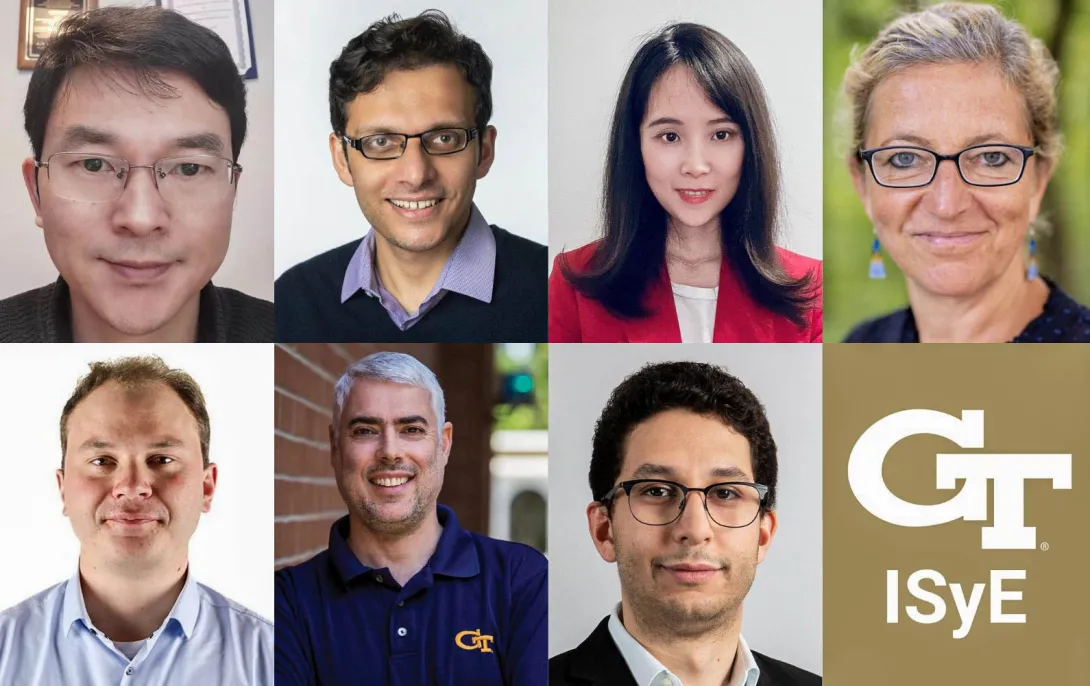
Pictured Left to Right: George Lan, Ashwin Pananjady, Yao Xie, Katya Scheinberg, Johannes Milz, Joel Sokol, and Juba Ziani
Georgia Tech's H. Milton Stewart School of Industrial and Systems Engineering (ISyE) is launching a new undergraduate concentration in Artificial Intelligence and Operations Research (AI/OR) in Decision-Making this fall, formalizing a comprehensive AI and machine learning curricula. The concentration brings together machine learning, optimization, online decision-making, and responsible AI into a structured pathway for students who want to specialize at the intersection of artificial intelligence and operations research; fields that have always been deeply connected and are increasingly inseparable in industry practice.
The concentration was developed under the leadership of A. Russell Chandler III Chair and Professor Guanghui (George) Lan, who served as the named lead on the proposal to the Institute Undergraduate Curriculum Committee, working with a group of ISyE faculty across the AI, optimization, and statistics areas.
The curriculum draws on a portfolio of seven undergraduate courses taught by ISyE faculty, spanning the mathematical and algorithmic foundations of modern AI. Among them is Foundations of AI for Decision Systems, developed and taught by Assistant Professor Johannes Milz, which opens the black box of large language models. Students learn what is actually happening inside the AI systems they use every day from tokenization and attention mechanisms to the training processes that shape model behavior. They will graduate able to explain why outputs vary, why models hallucinate, and when an AI response should be trusted. As Milz has observed, students who enter thinking of AI outputs as either right or wrong leave the course recognizing that hallucination is not a random error but a predictable consequence of how these systems work, a more durable form of AI literacy than any tool-based introduction could provide.
Foundations of Modern Data Science, taught by Gerald D. McInvale Early Career Professor and Assistant Professor Ashwin Pananjady, takes a "looking under the hood" approach to data science — developing the probabilistic modeling, statistical inference, and optimization foundations that make modern data methods coherent. Students engage with everything from generative modeling and Bayesian inference to A/B testing and causal inference, learning to evaluate methods critically rather than apply them as black boxes.
The concentration also draws on Foundations and Applications of Machine Learning (ISYE 4600), developed by Coca-Cola Foundation Chair and Professor Yao Xie and now taught by her and several other faculty. The course introduces senior undergraduates to the core methods of modern machine learning – supervised and unsupervised learning, classification, regression, neural networks, feature selection, and ensemble methods – with an emphasis on mathematical foundations, algorithmic understanding, and practical implementation.
Two additional courses launch alongside the concentration this fall: Responsible AI, taught by Assistant Professor Juba Ziani, which grounds questions of fairness, accountability, and human-aware decision-making in the mathematical tools of machine learning and optimization; and Optimization Foundations for Machine Learning and AI, taught by Coca-Cola Foundation Chair and Professor Katya Scheinberg.
Together with existing courses on modern data science, machine learning, reinforcement learning, online learning, and advanced stochastic systems, the concentration prepares students to understand AI systems from the inside, evaluate their outputs critically, and deploy them responsibly in the complex operational settings where ISyE graduates work: supply chain, healthcare, manufacturing, finance services, and logistics.
The concentration's launch coincides with two new program-wide requirements for all BSIE students taking effect Fall 2026: a Systems Design requirement, ensuring every graduate has experience designing solutions at the systems level rather than optimizing components in isolation; and a Human Factors overlay, reflecting the growing centrality of human-AI interaction across every domain where ISyE graduates contribute.
"The methods that power modern AI from optimization, stochastic modeling, statistical inference to sequential decision-making are the methods ISyE has taught for decades," said Dima Nazzal, Associate Chair for Academic Administration. "What is new is the intentionality with which we are making that connection explicit, and the depth of preparation we are offering students who want to lead in AI-driven industries."
The concentration was developed under the leadership of Professor George Lan, working with a group of ISyE faculty including Ashwin Pananjady, Yao Xie, Katya Scheinberg, Johannes Milz, Joel Sokol, and Juba Ziani, whose collective expertise in optimization, machine learning, and statistical modeling shaped the curriculum.
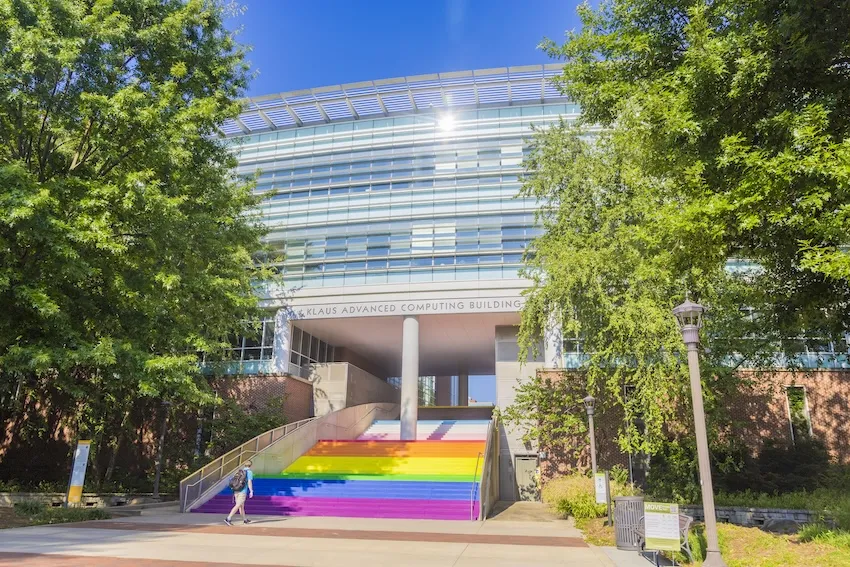
Two A.M. Turing Award Laureates are among global computing experts traveling to Atlanta this summer for the inaugural ACM AI Leadership Summit. The summit is the first event of its kind organized by ACM, the Association for Computing Machinery.
Registration is open for the inaugural ACM AI Leadership Summit, taking place Aug. 31 through Sept. 2 at the Hyatt Regency Atlanta Hotel.
Georgia Tech and Atlanta-area college students, faculty, and others from the tech community interested in AI are invited to attend the summit to explore:
- Emerging AI technologies and agentic systems
- Governance and ethics
- Workforce transformation
- Creative collaboration
In addition to welcoming a wide range of perspectives on AI and society, the summit will serve as a venue for knowledge exchange, cross-sector dialogue, and community building among academia, industry, government, and other AI stakeholders.
“Artificial intelligence is transforming every dimension of human knowledge, creativity, and collaboration,” said ACM President-Elect Elisa Bertino, co-chair of the summit’s organizing committee.
“The ACM AI Leadership Summit will be a milestone event where the global computing community taps into the excitement of the moment while exploring the AI era from a whole range of perspectives.”
GT Computing Helps Lead the Effort
Georgia Tech’s College of Computing plays a key role in the summit. Several faculty members serve on the organizing committee.
GT Computing faculty organizers include Neha Kumar, general organizing co-chair; Mark Riedl, program co-chair; and Naveena Karusala, communications co-chair. Dean of Computing Vivek Sarkar serves as the event’s sponsorship chair.
All are ACM members. Kumar, Riedl, and Karusala are faculty members in the School of Interactive Computing.
“Atlanta is home to one of the nation's most dynamic technology communities, making this summit an unprecedented opportunity for our students, researchers, academics, and technology leaders to help shape the future of AI,” said Kumar.
“By bringing together experts from academic, industry, and governance backgrounds, we're creating a space for exchanging ideas, forming partnerships, and engaging the next generation of AI leaders with the challenges and opportunities that will define the field for years to come.”
In addition to helping organize the summit, the College is hosting a reception on Aug. 30, following a daylong doctoral consortium titled Nurturing Future AI Leaders.
“The summit reflects the growing need for cross-sector collaboration as AI technologies become increasingly influential across every aspect of society,” said Sarkar.
“It is designed to foster dialogue, interdisciplinary collaboration, and practical action that advances AI for the public good.”
Turing Award Laureates and AI Visionaries Take the Stage
ACM A.M. Turing Award Laureates Andrew Barto and Yann LeCun are scheduled to participate in the summit. They’re joined by Regents’ Professor Ellen Zegura and several other distinguished speakers on the summit’s three-day main program.
The program also includes keynotes, panels, and interactive sessions examining frontier AI technologies, governance and ethics, and workforce transformation.
Scheduled sessions include:
- Rethinking the Future: Frontier Models and Technologies for a New Era of AI
- AI and Scientific Discovery
- Responsible and Ethical AI: Governance, Policy, Accountability, and Trust
- AI and the Creative Arts: Human–AI Co-Creation and Cultural Transformation
- AI and the Workforce: Augmentation, Reskilling, and the Future of Work
- AI in the Real World
- Agentic AI: Autonomous Systems that Plan, Reason, and Act
Additional programming will feature special-interest-group (SIG) tracks focusing on AI for infrastructure and systems, software development, societal impact, and education.
Showcasing Georgia Tech’s Expanding AI Leadership
The event coincides with the rapid expansion of AI research at Georgia Tech. College of Computing faculty and students are advancing work in trustworthy and responsible AI, robotics, computer vision, natural language processing, cybersecurity, healthcare applications, scientific discovery, and AI-driven education.
Researchers are also helping shape conversations about the societal implications of AI, including governance, ethics, transparency, and workforce development.
That breadth of expertise aligns with the summit’s mission to connect a spectrum of perspectives on the opportunities and challenges posed by AI.
“By convening experts from multiple disciplines and sectors, the summit aims to build a shared understanding of how AI can be developed and deployed responsibly while expanding human capability and strengthening society,” said Kumar.
News Contact
Ben Snedeker, Sr. Communications Mgr.
Georgia Tech College of Computing
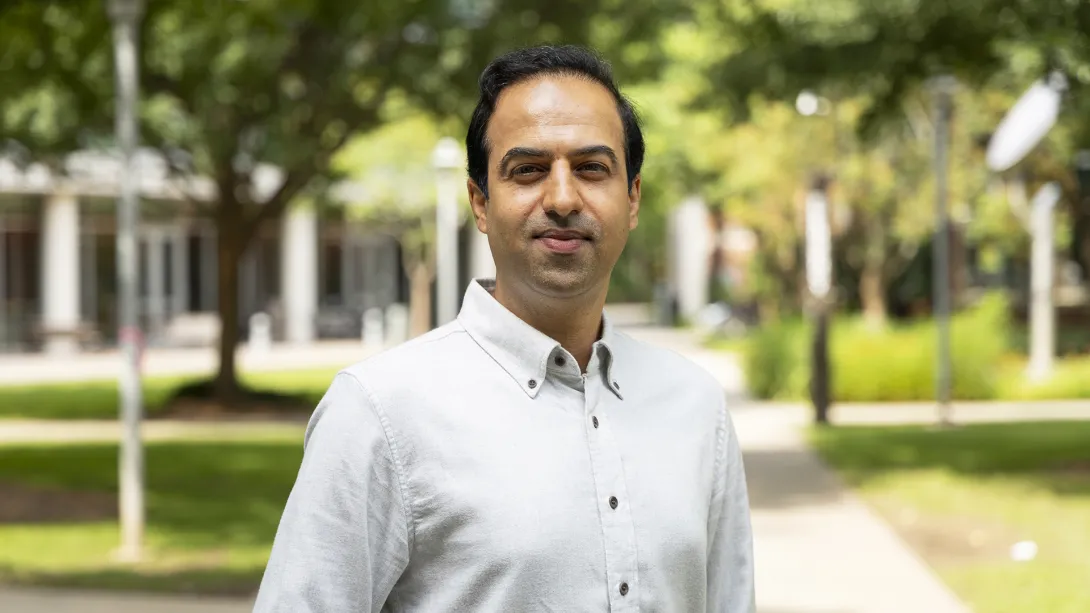
When most people think of hurricanes, they picture howling winds tearing off roofs and snapping trees. But for Ali Sarhadi, a Brook Byers Institute for Sustainable Systems (BBISS) Faculty Fellow, assistant professor in the School of Earth and Atmospheric Sciences, and director of the Climate Risk and Extreme Dynamics Lab, the real killer is often less visible. “People think that hurricanes are about wind, but sometimes that’s not the whole story,” he said. “The majority of fatalities are coming from the water, not the wind.”
Supported by two Sustainability Next Seed Grants, Sarhadi’s work draws on climate science, fluid physics, engineering, and artificial intelligence. He’s using AI-powered, physics-informed models to better anticipate water hazards that can cripple cities and power grids in both coastal and inland communities.
Rethinking Hurricane Risk
Sarhadi focuses on compound flooding, the dangerous interaction between storm surge, torrential rainfall, and river flooding that increasingly defines hurricanes. He points to Hurricane Mitch, which hit Central America in 1998, as a stark example, noting that more than 12,000 people died, “all from freshwater flooding — none from wind,” he said.
His work has shown how climate change and sea-level rise are reshaping flood risk from storms like Hurricane Sandy, which devastated New York and New Jersey in October 2012. In the current climate, a Sandy-level natural disaster has a recurrence period of roughly once every 150 years. But that is changing fast. “Because of climate change and sea-level rise, by the middle of this century, the same level of flooding is likely to occur once every 60 years. By the end of the century, that goes up to once every 30 years,” he says. “Hurricane Sandy caused about $70 billion in damage. Imagine experiencing that kind of destruction every 30 years.”
Since 1970, Sarhadi notes, damage from tropical cyclones has increased by about 380% globally, a trend driven by the combined effect of stronger storms and more people and infrastructure being located in harm’s way.
Physics-Informed AI: Street-Level Flood Warnings
While storm forecasting has improved dramatically in recent decades, Sarhadi argues, “We’re in good shape in terms of track forecasting, and we’re getting better at rapid intensification forecasting. But what is missing is the hazard part, and specifically the water part. That’s the number one killer.”
His lab is developing AI models tightly coupled with physics-based simulations to forecast hurricane-induced flooding at unprecedented resolution.
Using Hurricane Sandy as a test case, his team showed that by integrating physics-based surge and rainfall models with generative AI, they could forecast building-level flood depths three to five days before landfall. “We could predict that a storm was surge-dominant and estimate how much flooding could happen at the level of each building with an accuracy beyond 90%,” he says.
Those extra days, and that level of granularity, could give emergency managers and local leaders the information they need to order earlier evacuations, pre-stage resources, and protect critical infrastructure. “We hope by combining AI and physics-based models we can come up with faster, more accurate modeling, first, to save lives, and then to minimize the economic damage,” Sarhadi says.
Targeting Georgia’s Coastline
Although much of the public’s attention focuses on the Gulf Coast and megacities on the Eastern Seaboard, Georgia’s coastline is also highly vulnerable to surge and compound flooding. Sarhadi is collaborating with Georgia Tech for Georgia’s Tomorrow to model risk in places like Savannah and the surrounding coastal region. “We’re working to come up with good long-term solutions for protecting coastal communities and infrastructure,” he says.
Events like Hurricane Helene in 2024, which triggered extended blackouts in Georgia and lethal flooding in western North Carolina, underscore how far inland these risks can reach. “People think hurricanes are just a problem for coastal areas,” Sarhadi says. “But even if you are far from a coastline, you can be at risk when saturated soils, torrential rain, and river flooding combine.”
Building Climate-Resilient Power Grids and Cities
Sarhadi’s work doesn’t stop at forecasting. A central focus of his research is climate-resilient infrastructure, particularly the power grid. His team is exploring digital twin modeling — virtual replicas of energy and infrastructure systems. “When you have a digital twin of your grid, you can run that hurricane through it and identify which substations or power lines are more vulnerable,” he says, explaining that this knowledge could trigger utility crews to fix or reinforce power lines ahead of storms.
Looking decades ahead, these tools could help utilities and planners prioritize where to upgrade aging infrastructure as hurricanes intensify and water levels rise. “We know hurricanes are getting more intense, and our infrastructure is aging,” Sarhadi said. “By combining engineering, climate science, and AI, we’re trying to design better adaptation plans so our communities and power systems are more resilient in the future.”
News Contact
Brent Verrill, Research Communications Program Manager
Brook Byers Institute for Sustainable Systems
Georgia Tech
Written by Anne Wainscott-Sargent
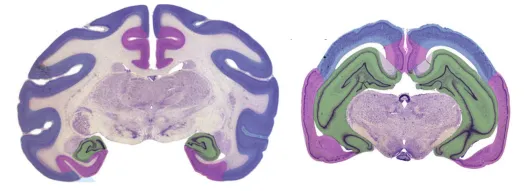
Cross-sections of a squirrel monkey brain (left) and a nine-banded armadillo brain (right) illustrate how different neural systems expand or shrink together across species. The highly visual squirrel monkey has a larger neocortex (blue), while the scent-reliant armadillo has a larger olfactory complex (purple) and memory center (green).
So many of life’s most pivotal decisions come down to one question: Should you listen to your logic or your emotions? Popular culture often frames this tension as a struggle between two minds — a “more evolved” rational layer built atop an ancient “lizard brain” driven by primal instincts.
This battle of the brains has also been playing out over the course of evolution, but not as a simple clash between old and new.
“There was a theory proposed in the ‘50s that the brain evolved in layers starting with basic bodily functions, to emotions in the reptilian brain, leading up to sophisticated reasoning in humans,” explains Nabil Imam, an assistant professor in the School of Computational Science and Engineering and a faculty member with Georgia Tech’s Institute for Neuroscience, Neurotechnology, and Society (INNS). “This is not how an evolutionary biologist would think about the problem.”
Instead of a “new” brain layered over an “ancient” one — or even a logical brain versus an emotional one — research published in Science Advances reveals that brain evolution may come down to wiring.
By studying the architecture of both biological and artificial brains, Imam’s team found that brain evolution is a strategic allocation of limited real estate. They propose a computational tug-of-war between two fundamentally different types of internal wiring — ones established even before birth.
This new understanding not only helps resolve a longstanding mystery in brain evolution but could also help us design more efficient AI systems.
The Problem With the “Lizard Brain”
When we refer to our “logical” or “lizard” brains, we’re really talking about different groups of brain regions. The logical brain is known as the neocortex, the brain’s outer layer responsible for vision, perception, reasoning, and other higher-level functions. For the lizard brain, the story gets a bit complicated.
“The limbic system, sometimes called the ‘reptilian brain,’ controls emotion broadly speaking — but it also has other components with distinct functions,” explains Imam. The system has separate regions for memory, smell, and navigation in addition to emotional regulation. “Why do people group all these different regions into one big system? There hasn’t been a good theory for what is common between these different circuits.”
To investigate, Imam’s team looked beyond individual regions to examine how these systems scale across species. Instead of comparing single areas based on function, the team analyzed how the limbic system and the neocortex change together across evolutionary history.
The result was remarkably consistent. When one component of the limbic system was larger, the others were also larger, while the neocortex was consistently smaller. These regions don’t vary independently. “Rather,” says Imam, “it’s a coordinated expansion of these regions across species.”
This reveals something new: The limbic system behaves not as a loose collection of functions, but as a unified network that expands and contracts as a group across evolution.
But what is driving this coordinated push and pull?
Maps Versus Barcodes
Imam argues that it comes down to how these different parts of the brain are wired before birth.
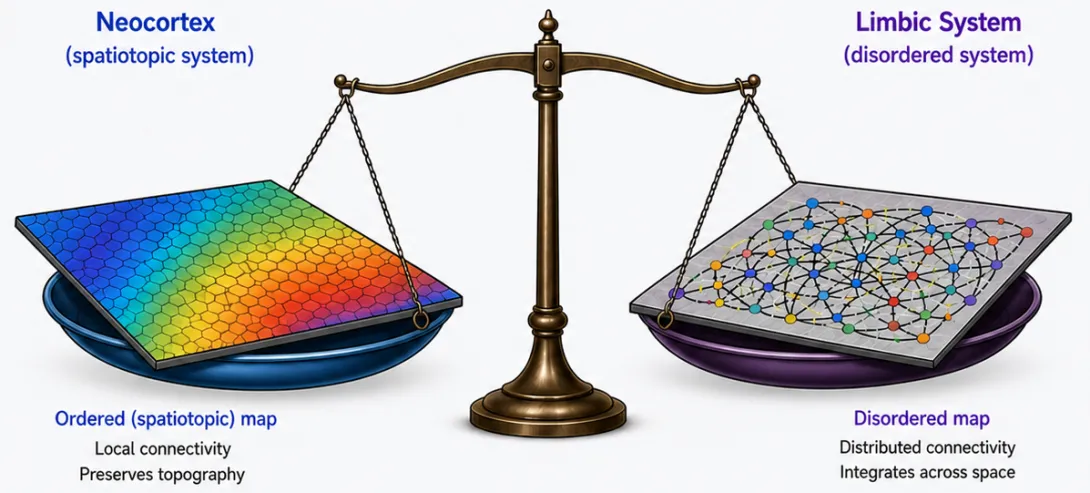
In the neocortex, neural circuits are organized as spatial maps. Areas that process touch in nearby parts of your body, like your index finger and thumb, are physically close to each other in the brain. The same is true for sight and sound.
Wires in the limbic system, however, are not spatially organized. They function more like a bar code, firing in unique, distributed patterns to represent specific scents or complex memories.
To test whether this was an innate trait or acquired through experience, the team developed AI models for different senses. They found that when they pre-wired an AI with localized, spatial connectivity, the network was naturally very good at processing vision, sound, and touch information. Conversely, distributed, “barcode-style” networks were essential for the AI to excel at scent recognition and memory.
The Evolutionary Tug-of-War
The final piece of the puzzle explains how the size of brain components changes predictably across species. Because resources like space and energy are limited, natural selection chooses which system to prioritize.
The team simulated evolution by creating a multimodal network where the spatial and distributed domains competed for “real estate.” When the environment rewarded smell, all areas of the distributed system expanded and the neocortex shrank. When vision was rewarded, the opposite occurred.
This explains why the nine-banded armadillo, which relies on scent, has a massive limbic system, while the highly visual squirrel monkey is dominated by its neocortex. Across the 182 species studied, the research shows that brain evolution is not about adding new layers of "logic," but about strategically reallocating space between different wiring systems to support survival.
By translating this biological architecture to AI systems, engineers could create machines that learn as efficiently as the human brain, requiring far less data and energy.
“Today's artificial neural networks are trained by vast amounts data — it’s about nurture,” says Imam. “But the brain is not a blank slate that gets trained by experience. It is a mix of nature and nurture, and the nature is that pre-wired architecture.”
“We could translate that architecture to AI systems to make it more brain-like, or make it learn or function as efficiently as the brain.”
This work was a collaboration with Cornell University and was supported by the National Science Foundation.
News Contact
Writer
Audra Davidson
Institute for Neuroscience, Neurotechnology, and Society
Media Contact
Bryant Wine
College of Computing
A drone powered by artificial intelligence crashes in a remote field, destroying its onboard computer and leaving investigators without the data needed to determine whether a cyberattack caused the failure.
Researchers at Georgia Tech say they have developed a system to help answer that question.
Known as FIRA, the tool analyzes drone crashes to determine whether they were caused by poisoned machine-learning (ML) models. The team will present its findings at the 35th USENIX Security Symposium in August.
The research addresses a growing safety challenge as drones are increasingly used for deliveries, infrastructure inspections, and agriculture.
As drones rely more on machine learning to navigate and make decisions, they also become vulnerable to model poisoning attacks. In these attacks, adversaries manipulate an AI system during its learning phase, embedding hidden triggers that can cause failures under specific conditions.
“Machine learning drones are making more decisions in flight, which makes ML a safety-critical component of these systems,” said Yizhi Huang, Ph.D. student and lead researcher on the project.
“When something goes wrong, investigators need a way to ask whether the model was responsible, but the model is the part of the system that no one can examine after a crash. FIRA gives investigators a way to investigate these cases by reconstructing what the model was doing during the crash. As more drones run with ML, this kind of forensic capability can help drones be used more effectively and safely.”
When a drone crashes, investigators must determine whether the cause was malicious interference, weather, or mechanical failure. Without reliable forensic tools, accountability is difficult to establish, and safety standards are harder to enforce.
FIRA identifies how drone components interact with machine learning models and monitors those interactions in real time, even with limited bandwidth.
The system functions like a flight recorder, capturing key system activity and reconstructing a timeline after a crash. It then analyzes the model’s behavior to determine whether a malicious trigger was introduced via poisoned ML training data.
In tests across multiple drone platforms and crash scenarios, FIRA identified failure causes and distinguished cyberattacks from environmental or mechanical issues.
The system does not require access to a drone’s source code, making it practical for real-world investigations.
“As commercial drone use expands, tools like FIRA could help improve accountability and trust in AI-powered systems operating in public airspace,” said Huang.
FIRA: Enabling Automatic Forensic Investigation of Unmanned Aerial Vehicles was led by Georgia Tech’s Cyber Forensics Innovation Lab in cooperation with the Cyber-Physical Security Lab. These labs reside in the School of Cybersecurity and Privacy and the School of Electrical and Computing Engineering.
News Contact
John Popham
Communications Officer II at the School of Cybersecurity and Privacy
- by Anne Wainscott-Sargent
As metro Atlanta becomes a magnet for hyperscale data centers, the region faces a twin challenge: securing enough water to cool these facilities while ensuring that wastewater reuse doesn't introduce new public health risks. At Georgia Tech, Katherine Graham, assistant professor of environmental engineering and Brook Byers Institute for Sustainable Systems (BBISS) Faculty Fellow, is working at exactly that nexus, using viruses, bacteria, and advanced analytics to understand how water reuse and cooling systems can support data center growth without compromising community health.
"Data centers are important, and so are their cooling needs. I don't think they're going away," she said. "But there needs to be a lot of investigation to develop guidelines for operating these facilities based on how microbes behave so that we can get the economic benefit and protect the communities where they operate."
Tracing Viruses Across Georgia's Water Systems
Through a Sustainability Next Seed Grant project administered by the BBISS, Graham's lab focuses on water reuse safety, particularly in Georgia communities facing water stress. Her team works with municipal reuse facilities, where, she said, “We look at what comes out of wastewater treatment plants, what exists in the natural waters they discharge treated water into, and what comes into downstream drinking water plants at their intake." Her team is especially interested in pathogens such as viruses and phages.
Phages — viruses that infect bacteria rather than humans — pose no direct human hazard. Still, because they travel through water systems similarly to viruses that can harm people, they serve as powerful ecological markers. "They can be good surrogates for human viruses," she said.
This work builds on Graham's wastewater surveillance experience dating to 2018, which became central during the Covid-19 pandemic. Her lab helped develop actionable public health guidelines to show how wastewater can be used to monitor for mpox outbreaks.
From Cooling Towers to Data Centers: A Proactive Public Health Lens
While Graham's Sustainability Next Seed Grant project isn't exclusively about data centers, the connection to their cooling systems is direct. Data centers need to dissipate massive quantities of heat — typically with water-hungry cooling towers — and are increasingly turning to treated wastewater as a supply.
"Reuse can supply more water of sufficient quality for these cooling systems," Graham said. But beyond the quantity issue lies an underexplored dimension: microbial risk.
Cooling towers have long been linked to Legionnaires' disease, with documented outbreaks occurring miles downwind of a source. "For most healthy people, it may not be a problem," Graham noted, "but for the immunocompromised and elderly, it can be a really big problem." What makes this especially concerning is how little is known. "It's not well quantified. It's not well characterized," she said. "There's been no national study collecting cooling-tower waters and looking at the prevalence of these bacteria."
There is currently no systematic, national effort to characterize the prevalence of Legionella and other opportunistic pathogens in any cooling towers — let alone the potential additional risk of building more cooling systems to accommodate the needs of hyperscale data centers.
BBISS has been central to sharpening her focus here. Exposing Graham to colleagues working on energy and water quantity challenges helped her connect the microbiology dots. "A lot of the data center ideas I've started to think about have been generated by BBISS faculty presenting their own work," she said. "Given that cooling towers are already a problem in pre-AI settings, it seems like a good proactive idea to be aware of the problem going into the age of AI."
Graham is now writing proposals to study microbial communities in cooling towers, analyzing water, air, and biofilms under different operating conditions. Her call to industry is direct: Partner early. "I would be extremely happy to collaborate with anyone interested in this problem. Industry buy-in would be critical — and so helpful — to get it done."
Heat Waves, Infrastructure, and Legionella
Graham's lab also examines how climate-driven extreme heat affects drinking water systems. Working with utilities in the Southwest, her team studies how prolonged heat waves warm distribution-system water, accelerate disinfectant loss, and shape the persistence of microorganisms in drinking water distribution systems.
"We were able to see temperatures above 40 degrees Celsius (105 degrees Fahrenheit) — with a maximum of 52 (126 degrees Fahrenheit) — which is very warm," she said. "Most of the literature refers to testing conducted at much lower temperatures, like room temperature." Such elevated temperatures, combined with nutrients and stagnation, can allow opportunistic pathogens to thrive.
Teaching and Outreach
Graham teaches undergraduate environmental engineering and graduate courses in quantitative microbial risk assessment and public health microbiology. She serves as associate editor for Water Research and has hosted a microbiology outreach workshop for K-12 students through Georgia Tech’s Center for Education Integrating Science, Mathematics, and Computing (CEISMC).
The through line across her work is consistent: science that anticipates risk and informs action. "As we expand this data center infrastructure, a proactive approach should be taken to understanding concerns that, maybe, haven't been fully addressed yet."
In a region and a world betting big on AI, her research offers a timely reminder: Progress depends not just on computing power, but on ensuring that the water that keeps these systems from melting down remains safe for the communities living alongside them.
News Contact
Brent Verrill, Research Communications Program Manager, BBISS
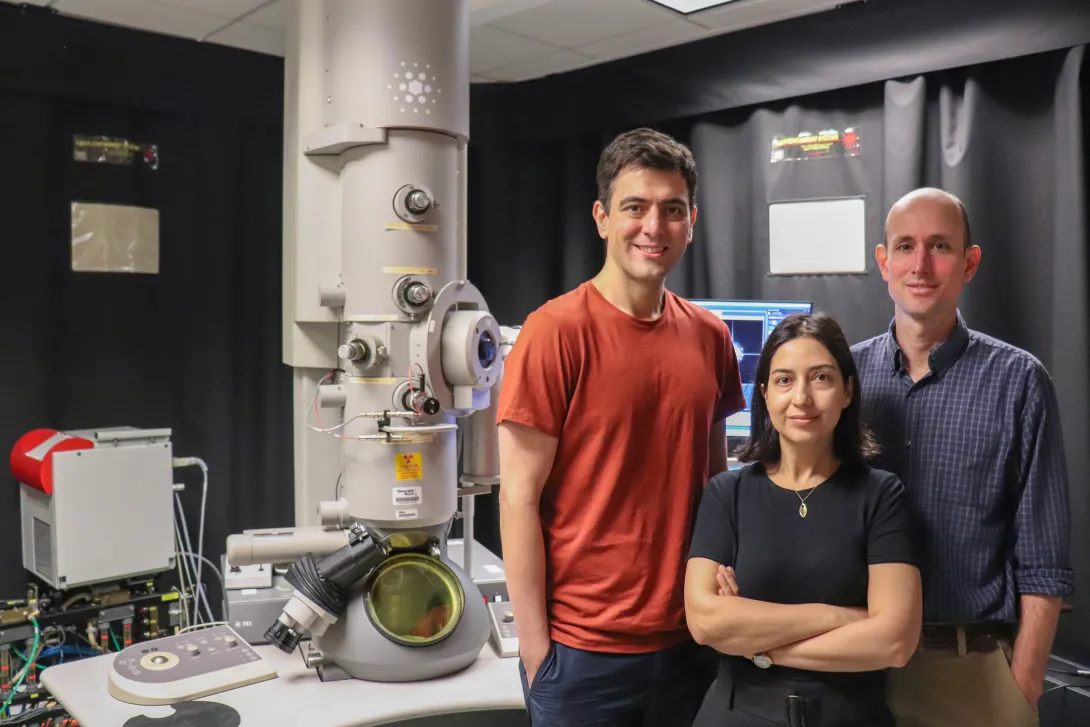
A photo of Vida Jamali, assistant professor the School of Chemical and Biomolecular Engineering; Amirali Aghazadeh, assistant professor in the School of Electrical and Computer Engineering; and Josh Kacher, associate professor in the School of Materials Science and Engineering standing in front of a TEM at Georgia Tech.
Scientific discovery is often portrayed as the result of long hours alone in a lab, but true science is inherently collaborative. The most robust experimental processes are developed through partnerships across multiple areas of research. The need for specialized, multidisciplinary teams slows experiment design, execution, data analysis, and process updates, delaying technological validation and deployment. But if the increasingly automated tools scientists already use in the lab could contribute to this team process of experimental design, the timeline for these goals could be greatly accelerated.
This concept of “lab tool as lab assistant” is the premise of a recent paper in npj | Computational Materials titled “Thinking Microscopes: Agentic AI and the Future of Electron Microscopy,” by Vida Jamali, assistant professor the School of Chemical and Biomolecular Engineering; Amirali Aghazadeh, assistant professor in the School of Electrical and Computer Engineering; and Josh Kacher, associate professor in the School of Materials Science and Engineering.
In the paper, the team introduces the concept of “thinking electron microscopes,” in which agentic AI systems are directly integrated with the instrument. This allows microscopes to move beyond their conventional role as characterization tools and toward functioning as co-scientists for human users.
Drawing on advances in specialized large language models, or LLMs, that demonstrate their ability to collaborate, reason over data, and integrate prior knowledge, the team envisions specialized LLM-based agents assigned to specific roles and areas of knowledge expertise. By explicitly incorporating domain knowledge into specialized agents and distributing information across multiple agents with focused expertise, the approach enables parallel evaluation of competing hypotheses, clearer separation of roles — such as planning, simulation, and critique — and more transparent and robust reasoning.
Within the experimental pipeline, these agents can analyze materials’ properties, physical data, chemical processes, and other relevant parameters. They could also collaborate with an agent that specializes in experimental design, refining iterative closed-loop experimentation, and real-time scientific discovery.
Although the research focuses on AI collaboration, the team notes that human researchers must retain accountability for the accuracy and integrity of both the experimental process and the results reported. This oversight begins with advocating for greater open access to research materials in all formats, building community-driven data repositories, and adopting standardization in how experimental parameters and metadata are reported. Equally important, researchers should be willing to report data from failed experiments as well as successful outcomes. Finally, organizations should work together to standardize secure APIs that enable shared, remote access to infrastructure across distances.
We see this as a step toward scientific instruments that do more than acquire data; systems that can reason over experiments, adapt measurements, and participate in the scientific discovery process alongside researchers. - Vida Jamali, assistant professor the School of Chemical and Biomolecular Engineering
The team is already developing these systems by connecting cloud-based, agentic infrastructures to microscopes at the Institute for Matter and Systems at Georgia Tech. With the addition of agentic AI, the goal is to accelerate discovery and engineering of new nanoscale materials for energy and quantum applications, as well as advance capabilities in cryo-electron microscopy and structural biology. These tools can optimize data collection, link real-time microscope observations with structural models of proteins, and dynamically adjust and prioritize experiments. The team sees this work as the first step toward the next generation of “thinking” electron microscopes, as well as an advancement in scientific discovery across domains.
- Christa M. Ernst
This research is supported by the Institute for Data Engineering and Science and the Institute for Matter and Systems
Original Publication
Jamali, V., Aghazadeh, A. & Kacher, J. Thinking microscopes: agentic AI and the future of electron microscopy. npj Computational Materials 12, 149 (2026). https://doi.org/10.1038/s41524-026-02077-y