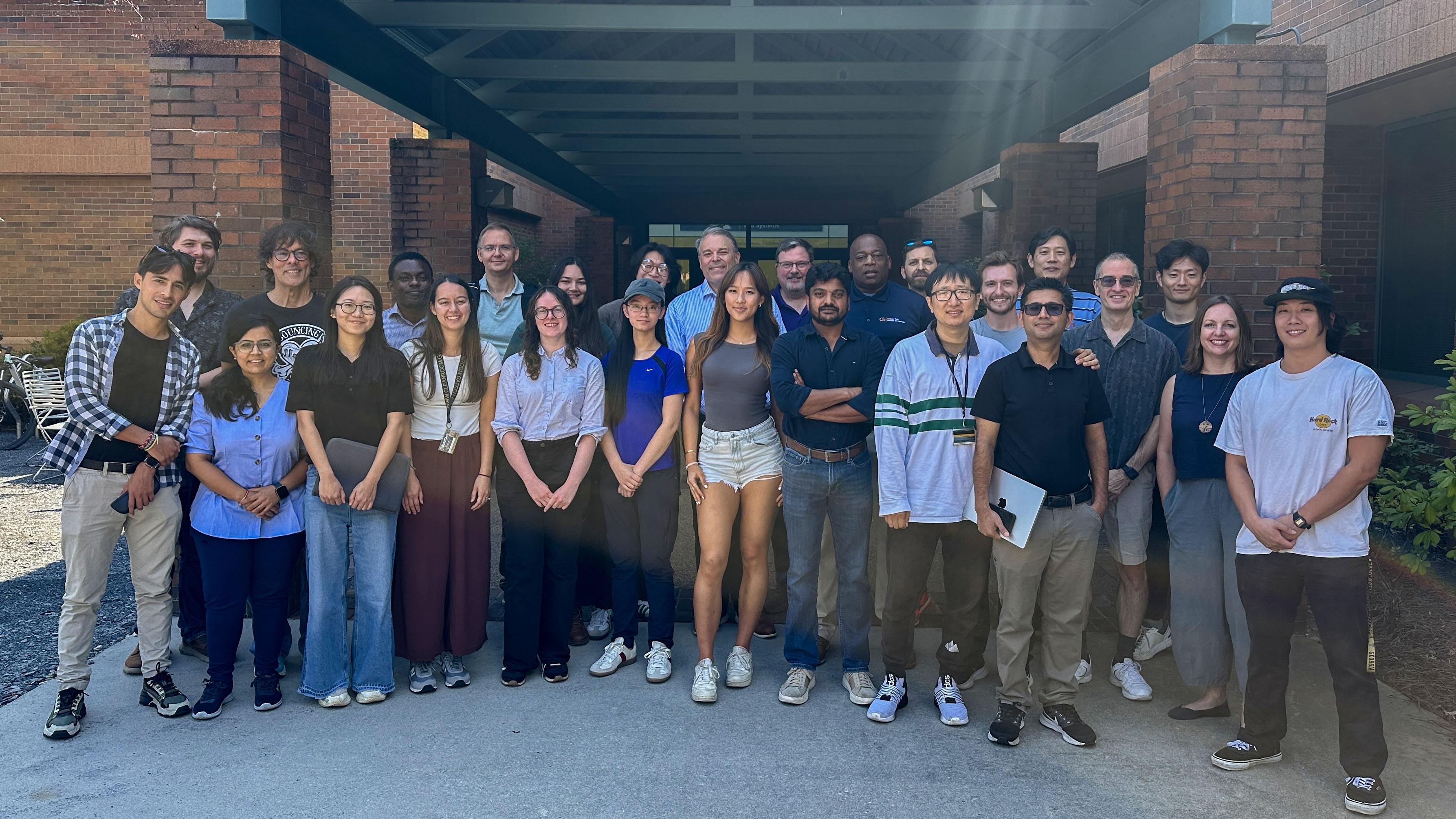
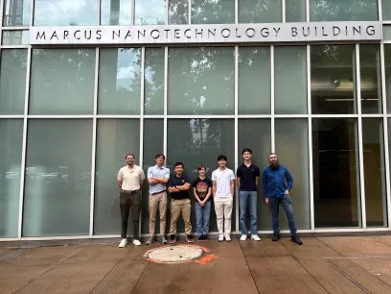
Most high school students spend their summer breaks working part-time jobs or traveling with family. For four rising high school seniors from metro Atlanta, summer was spent at Georgia Tech’s Institute for Matter and Systems (IMS), where they gained hands-on experience with advanced microfabrication technologies.
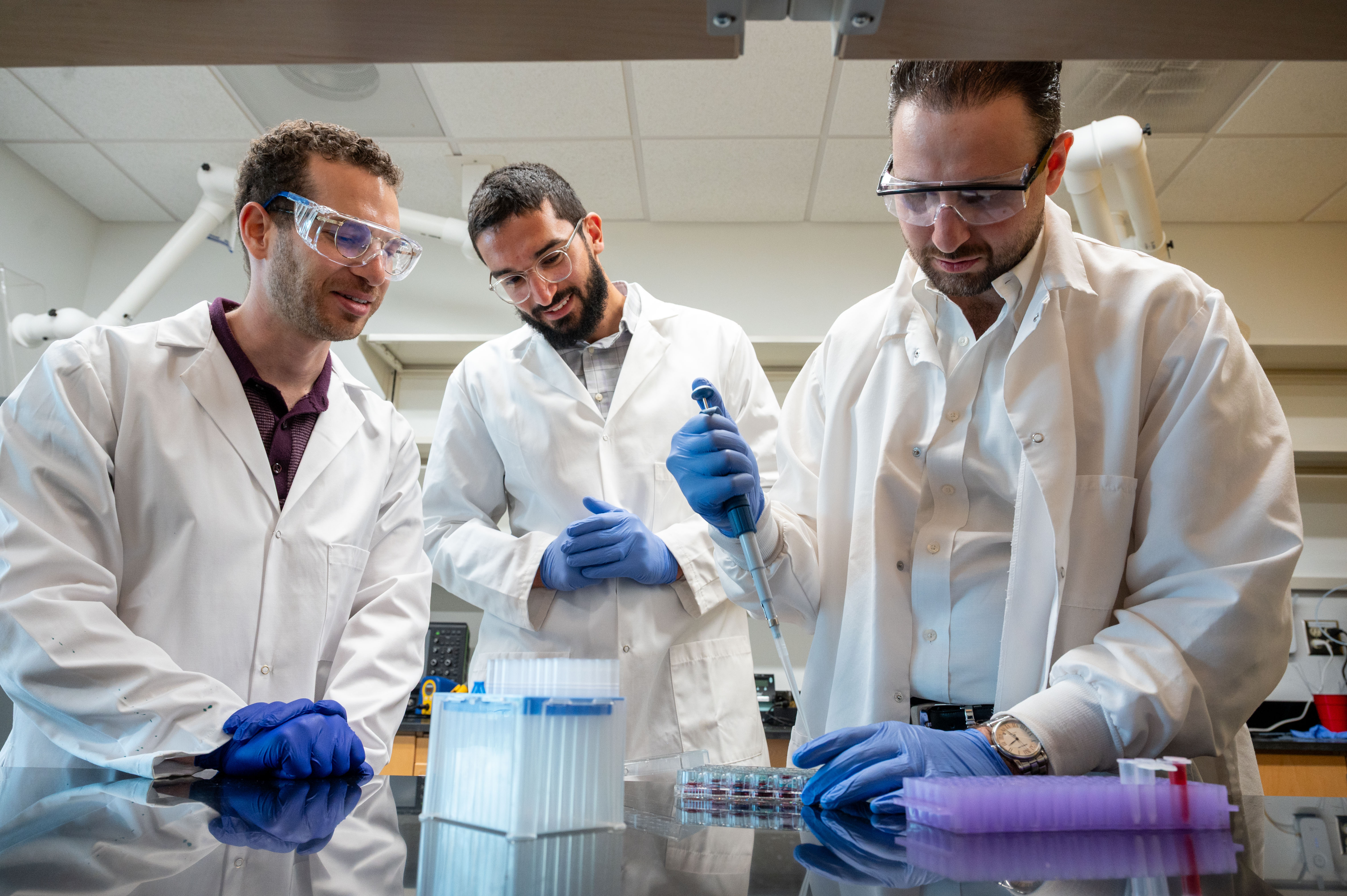
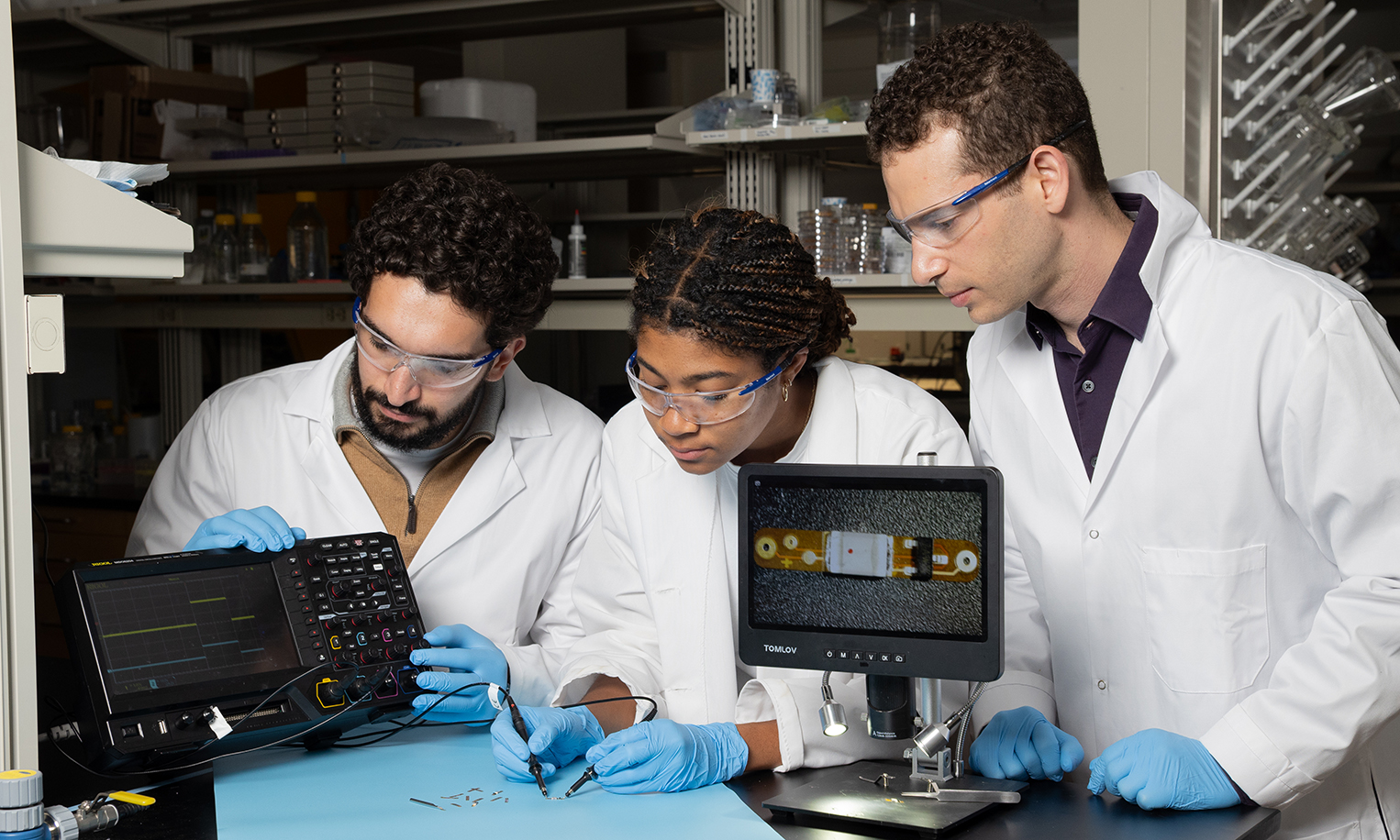
As part of the IMS Summer Internship, the students worked in the IMS Biocleanroom on a special project: creating a microscopic boat in a bottle.
Under the mentorship of Nik Roeske, a process-equipment engineer with IMS, the students experienced every stage of the research process, from design and prototyping to testing.
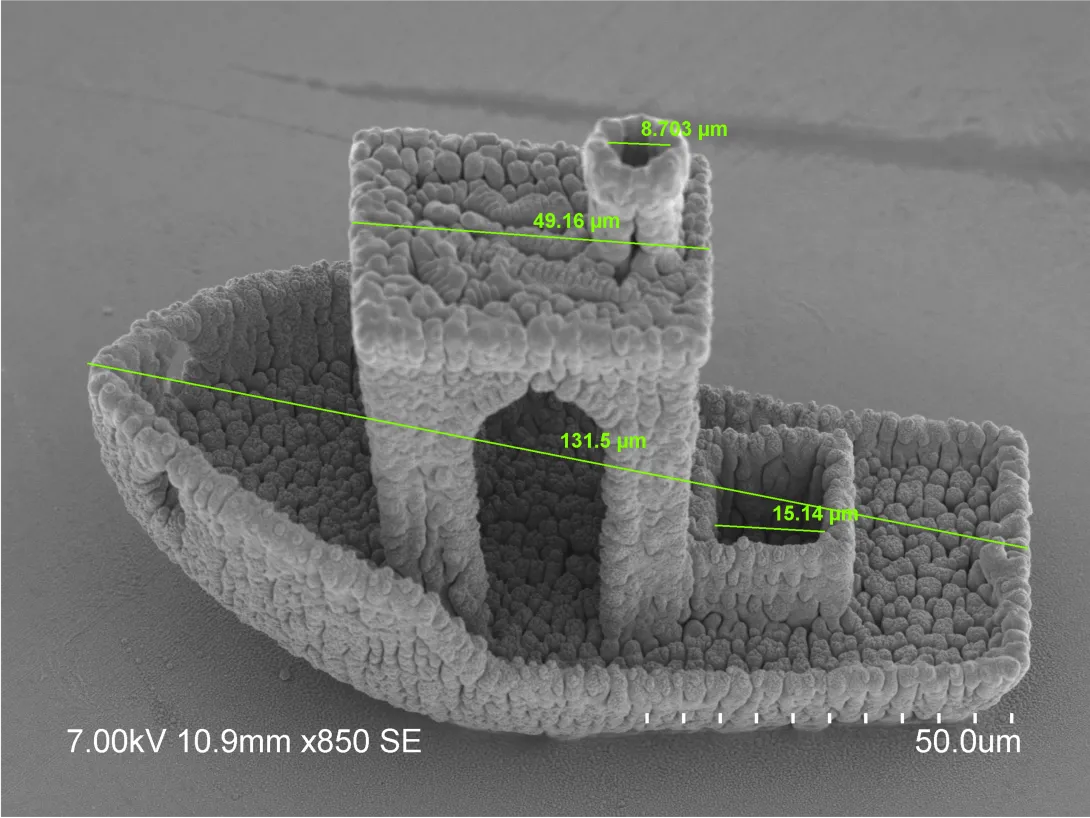
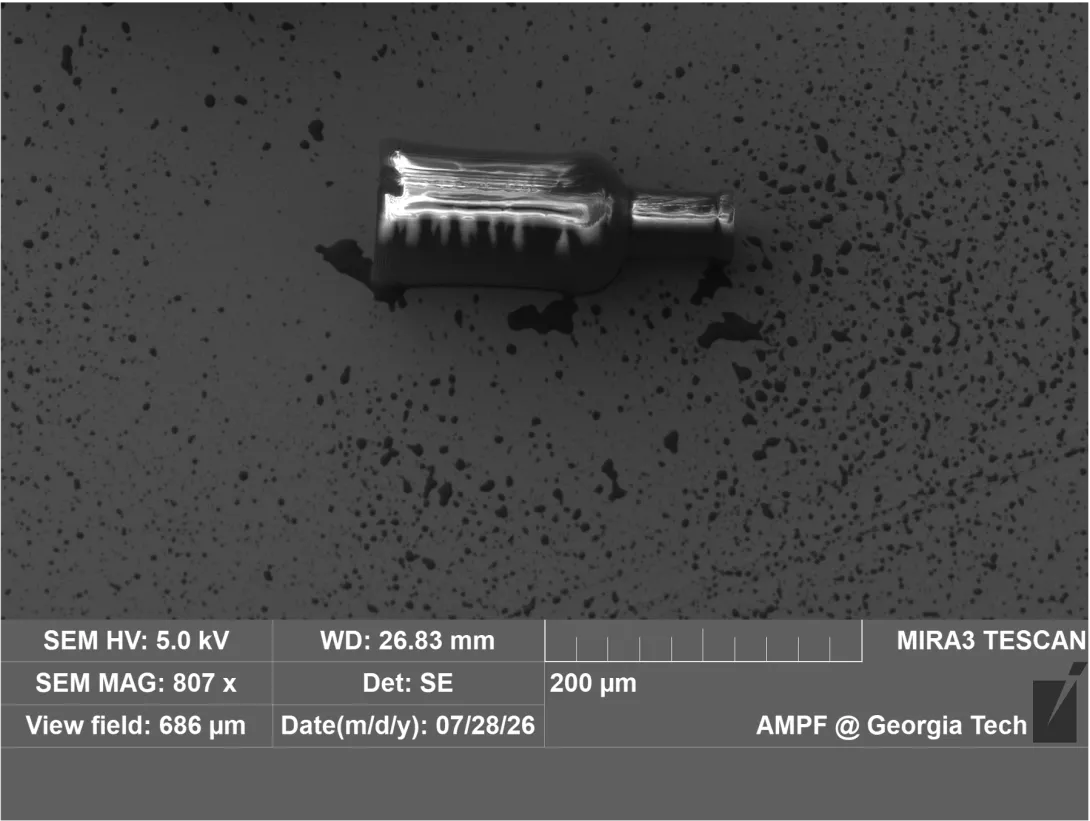
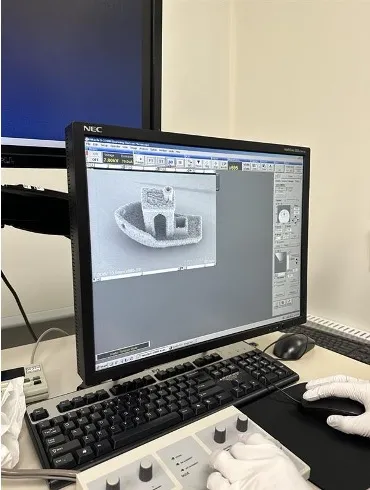
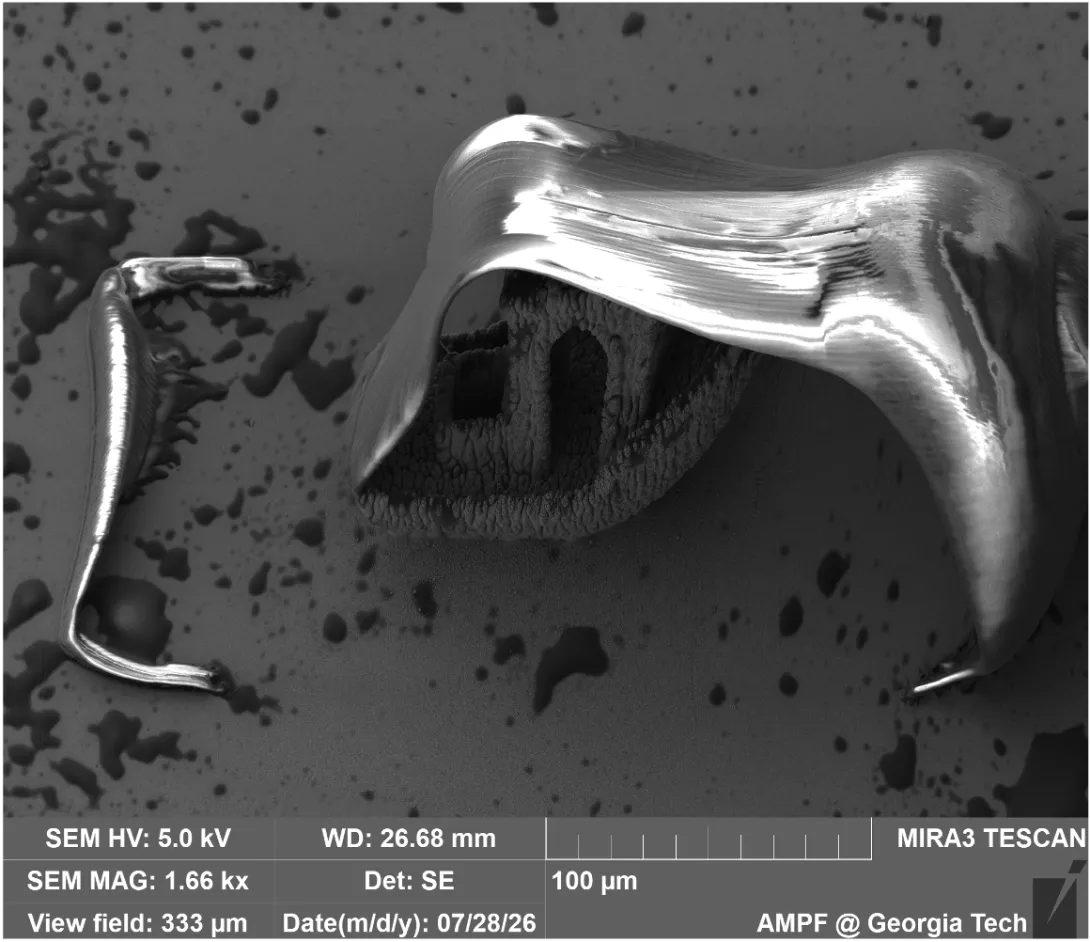
The students learned two microfabrication techniques to create the project. First, they used an Exaddon CERES metal 3D printer to deposit copper ions and build a 3DBenchy, a model designed to test 3D printers. Then they used a Nanoscribe 3D printer to print a polymer enclosure around the boat.
“The ability to comprehend 3rd dimensional space at such a small scale is very impressive,” said Roeske. “The high school students were working at the scale of single microns, approximately 100 times smaller than the width of a human hair. This project serves as a gateway to combining two high-resolution 3D printing systems, which could open the door to research in advanced packaging, MEMS, and biomedical engineering.”
“When we were talking about combining the prints into a ship in a bottle, I suggested we replace the ship inside with a benchy,” said Gabby Sutter, Biocleanroom summer intern and senior student at South Paulding High School. “Both the Exxadon and the Nanoscribe are 3D printers, after all!”
Like many research projects, the work involved multiple rounds of trial and error. Early attempts revealed challenges involving materials, printing alignment, and structural integrity. Rather than seeing the setbacks as failures, the students used each iteration to better understand the manufacturing process, analyze data, identify sources of error, and refine subsequent designs.
“The ship-in-a-bottle model and the Benchy are two separate models that we combined,” said Sutter. “Since they were not designed to be printed at this scale or to fit together, there were several adjustments. We scaled both models down but then realized the Benchy was too tall to fit in the bottle. To solve that problem, we adjusted the scale of the bottle.”
The final boat in a bottle is approximately 200 microns long, making it smaller than grains of table salt. The team has submitted the project for world-record consideration.
Beyond their fabrication project, the interns helped introduce younger students to nanotechnology. Throughout the summer, they led tours of the IMS cleanroom facilities for middle school students in the STEM Gems summer camp. They shared their knowledge and demonstrated how researchers use specialized equipment to address complex science and engineering challenges.
The experience provided technical training while helping students build communication, collaboration, and problem-solving skills. By participating in research projects and engaging with Georgia Tech researchers, they gained firsthand insight into careers in science, technology, engineering, math, and the research environment.
“Working in the cleanroom has only made me more eager to go to Georgia Tech and work in STEM,” Sutter said. “I want to become an engineer at NASA, so it was really exciting to work in a cleanroom like one I could use at NASA.”
By the end of the summer, the interns left with much more than a microscopic boat in a bottle. They gained technical knowledge, professional experience, and confidence in their ability to solve complex problems. They can carry those skills into college classrooms, research laboratories, and, eventually, the workforce.
News Contact
Amelia Neumeister | Communications Manager
The Institute for Matter and Systems