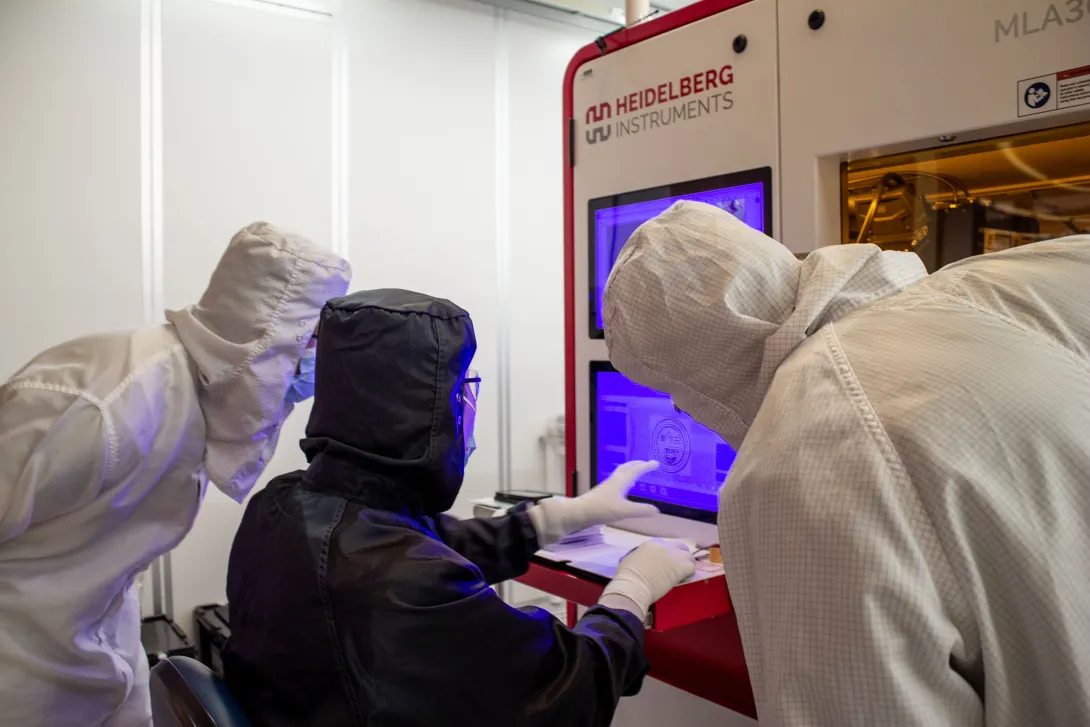
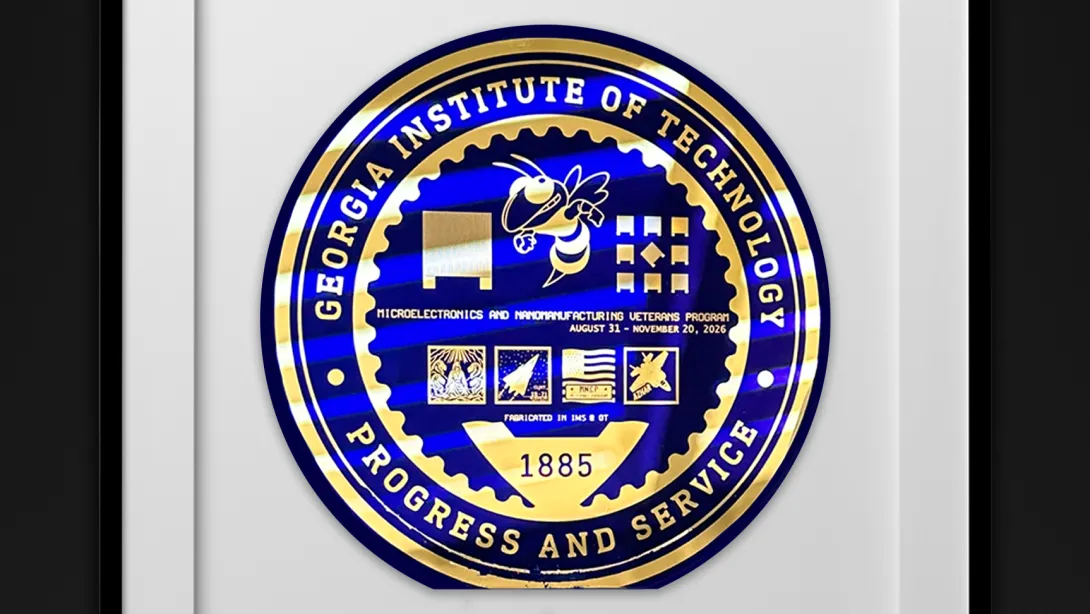
Danny Leal loves anything to do with technology. So much so that every weekend, he drives from his home in Jacksonville, Florida, to Georgia Tech to participate in the Microelectronics and Nanomanufacturing Certificate Program (MNCP) at the Institute for Matter and Systems (IMS).
After 22 years as an aircraft mechanic in the Navy and National Guard, Leal was ready to work on projects at a different scale. A longtime technology enthusiast, he began looking at semiconductors as a possible path for the next chapter of his career.
Once he began working with wafers and samples in the cleanroom, that interest became more tangible.
“When I actually started working on it and saw the progress, I was like, ‘Yeah, this is the kind of stuff that I would like to do,’” Leal said.
The MNCP is a National Science Foundation-funded collaboration between IMS, Georgia Piedmont Technical College, and Pennsylvania State University’s Center for Nanotechnology Education and Utilization. This free course aimed at veterans and their families is supported by the National Science Foundation’s Advanced Technological Education program.
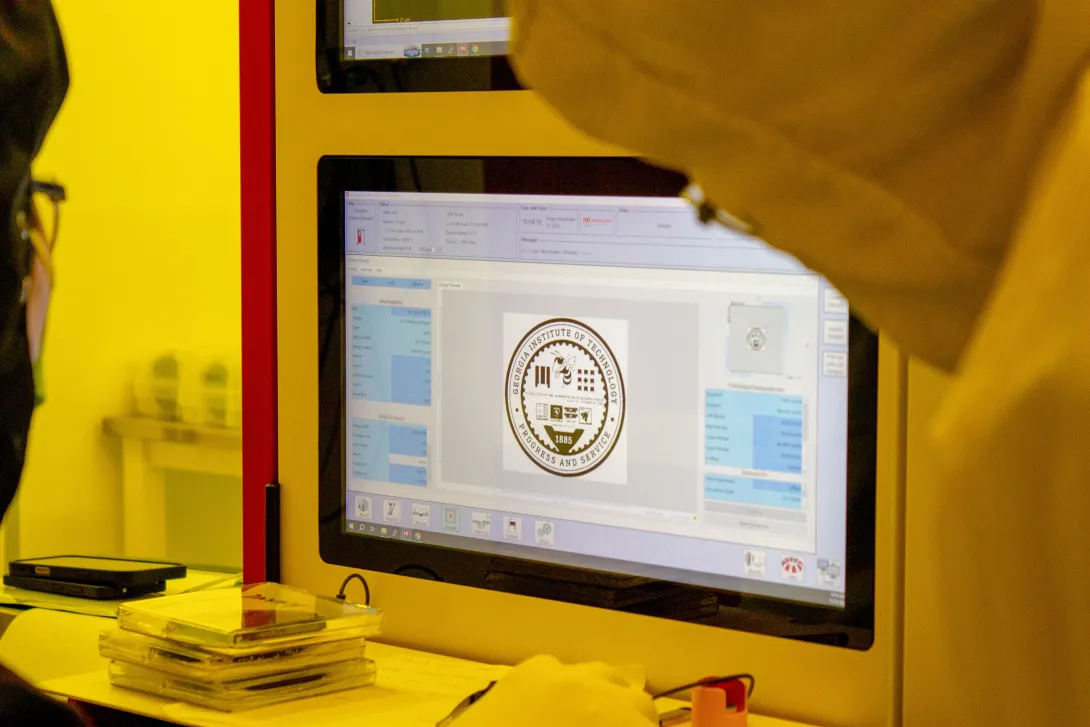
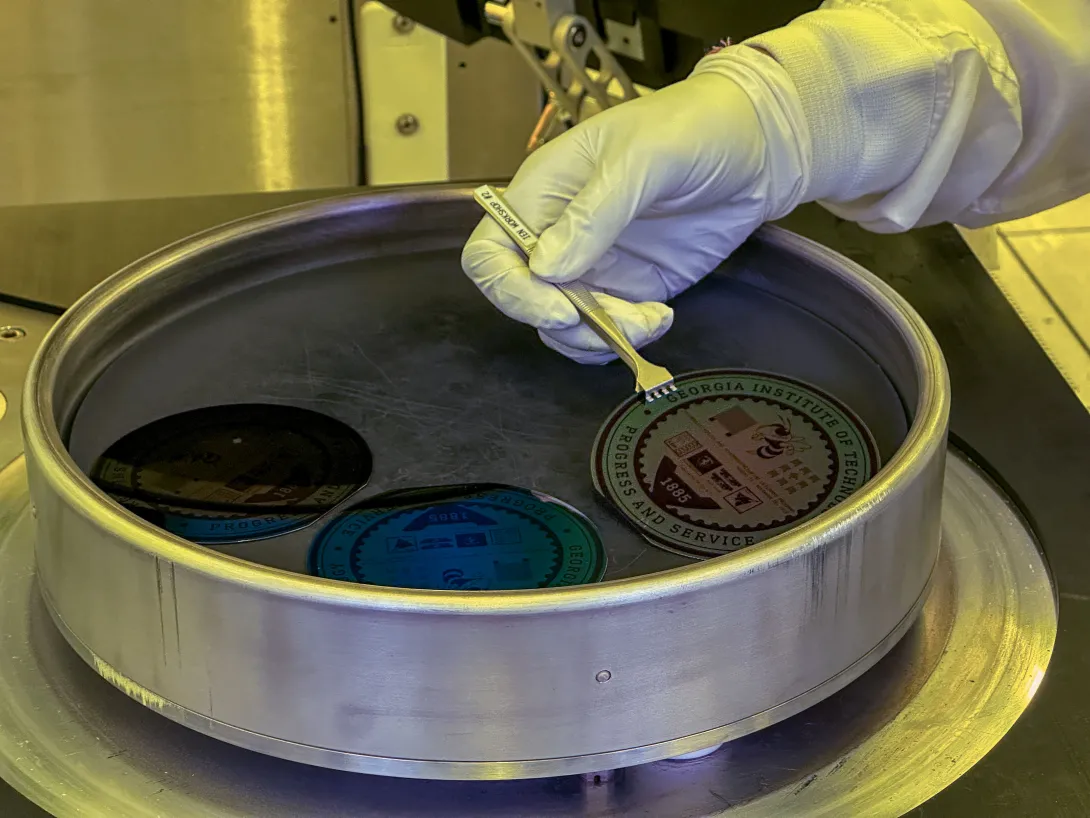
For 12 weeks, participants split their time between online lectures and hands-on training in the Georgia Tech Micro/Nano Fabrication Cleanroom, where they learn advanced microelectronics fabrication techniques. Training includes thin film deposition, photolithography, etching, metrology, laser micromachining, and additive manufacturing.
Although the cleanroom environment differs dramatically from Leal’s military work, he found that many of the skills he developed during his service still apply. As an aircraft mechanic, Leal spent years working with tools and following safety procedures. That same discipline and attention to detail are important when working with chemicals and specialized equipment in a cleanroom.
Although many veterans find connections between the MNCP and their past experience, the program also helps prepare students and veterans for opportunities in the semiconductor workforce.
Opening the Cleanroom to the Next Generation
The MNCP also extends eligibility to veterans’ dependents, giving Georgia Tech students from military families an opportunity to add hands-on microelectronics training to their education.
Jacob Resseguie is one of them. A senior studying industrial engineering, he discovered the MNCP while working as a student assistant in the cleanroom.
After completing the program in Fall 2025, Resseguie returned as a teaching assistant. He now helps lead hands-on lab sections for the next cohort of participants.
“I never really thought I had a passion for education until coming into this program,” Resseguie said. “And then I was like, ‘Whoa, I kind of love this.’”
Becoming a teaching assistant and independently teaching a lab section made Resseguie more confident speaking in front of students, he said, and has even led him to consider teaching someday. He now watches students make some of the same connections he made when he first set foot in the cleanroom.
“You can kind of understand theory, but you don’t fully understand it until you see it. And then that light bulb clicks,” he said. “And I love it when that light bulb clicks.”
One of Resseguie’s students is Austin Frazier, a Georgia Tech junior double majoring in aerospace engineering and electrical engineering. The son of an Air Force veteran, Frazier saw the program as an opportunity to explore connections between semiconductors, electronics, and aerospace.
With classes, an internship, work as a makerspace mentor, and a weekend job, Frazier already has a packed schedule. But the program's combination of online instruction and in-person training made participation possible. The experience also expanded how he thinks about his future.
“I kind of was on the perspective that I would just be working on the software side of things and design and whatnot,” Frazier said. “And now I see there are career options working in a cleanroom or working in a physical lab doing things.”
Theory Meets Practice
Whether participants arrive with decades of military experience or are still completing their undergraduate degrees, hands-on training is a common thread throughout their experiences. For Frazier, it filled a gap that can be difficult to address in a traditional classroom.
“A lot of the traditional classrooms teach you how to do things or a lot of theory behind it, and then we never physically do it,” said Frazier. “So, learning about it during the week, during lectures, and then coming and actually having to do it is a little intimidating, but it really sinks in the knowledge of what we’re taught.”
For Leal, access to specialized equipment is a key part of the experience. Semiconductor fabrication equipment is complex, and operating it gives participants hands-on experience that goes beyond simulation. Working directly with the materials and equipment allows participants to begin building practical skills in the field.
Building New Career Paths
That experience doesn’t always lead in the same direction. Some participants are exploring an entirely new field, while others are using the program to complement technical experience they already have.
For Resseguie, the program has already opened doors beyond the classroom. He said the MNCP helped him secure interviews with semiconductor companies, while his experience teaching has introduced another possibility he had not previously considered.
Frazier now sees hands-on engineering and cleanroom work as possibilities alongside software and design. For Leal, the program is helping him imagine what life could look like after a career spent in aviation.
He hopes to work in the semiconductor industry after retiring from civil service. For now, that means continuing the trip from Jacksonville to Atlanta, putting on a cleanroom suit and getting back to work.
News Contact
Amelia Neumeister | Communications Manager
The Institute for Matter and Systems