Held Sept. 22–25, Space Week brought together researchers, students, government representatives, industry professionals and entrepreneurs. Organized by Georgia Tech’s Space Research Institute (SRI), the gathering drew more than 200 registrants. It featured approximately 100 presentations, posters, keynotes and invited talks, according to Jud Ready, a principal research engineer at GTRI and SRI’s executive director.
“It’s a week-long event celebrating the different types of space research we’ve got going on at Georgia Tech, as well as the entrepreneurship,” Ready said. Ready added that the Institute's and Space Week's reach extends far beyond Georgia Tech. He noted that Space Week's roster of speakers included leading experts from industry and military research organizations such as Aerospace Corp. and the Air Force Research Laboratory (AFRL), as well as academic institutions such as Georgia State University, the State University of New York at Albany, the University of Michigan, San Diego State University, Florida State University, and the University of Maryland.
Ready said that Space Week highlighted the collaborative nature of SRI, as it continuously works with institutions and companies that support the three foundational pillars of SRI:
- Research and Development (R&D).
- Education.
- Commercialization/Entrepreneurship.
Space Week’s sponsors underscored SRI’s ability to bring together a broad network of collaborators extending well beyond Georgia Tech’s Atlanta home. Support came from Amazon; CreationsVC, Mantis Space and Varda Space Industries; Deleon.bio, Reed Smith and the Georgia Center of Innovation; and Nelson Mullins, Qcells and West Coast Solutions. The roster connected Georgia’s space community with companies across the country, including Varda Space Industries and West Coast Solutions, which are based on the other coast in California.
The event highlighted the breadth of research across sensing, materials, computing, policy, and human exploration. Participants examined problems that demand expertise from multiple disciplines. SRI provides a home for those connections, bringing together faculty, staff, and students whose work contributes to space exploration and discovery. Space Week made it visible through research presentations, conversations about new collaborations, and student projects supported by the institute.
GTRI's Role
GTRI, the applied research arm of Georgia Tech, played a significant role during Space Week and in the Institute’s growing contributions to research on the technical challenges of reaching space and operating there.
Michael Peterson, director of GTRI’s Severe Storms Research Center (SSRC), organized the Terrestrial and Space Weather session and presented FulminoSat, a concept examining severe-weather lightning signals as a space-based sensing opportunity for studying ionospheric effects.
Elena Plis, a senior research engineer in the Electro-Optical System Laboratory (EOSL), led a program on the weathering of materials in space, where researchers considered how exposure changes the materials spacecraft depend on. GTRI’s Ryan Gaylo, a senior research engineer in the Aerospace, Transportation and Advanced Systems Laboratory (ATAS), presented SolarWing, a bio-inspired deployment system for solar arrays.
During a track dedicated to hypersonics, GTRI ATAS laboratory researcher and GT Regents' Professor Krish Ahuja spoke on the HyperSat project. Graduate Research Assistant Michael Milone presented on GTRI's experimental hypersonic test capabilities. At the same time, ATAS senior research engineer Alex Forbes discussed hypersonic computational fluid dynamics. Those topics highlighted complementary approaches to understanding flight under extreme conditions.
Ahuja, one of the foremost experts in hypersonics and a pioneer in the field, led the track alongside ATAS laboratory Principal Research Engineer Rob Funk.
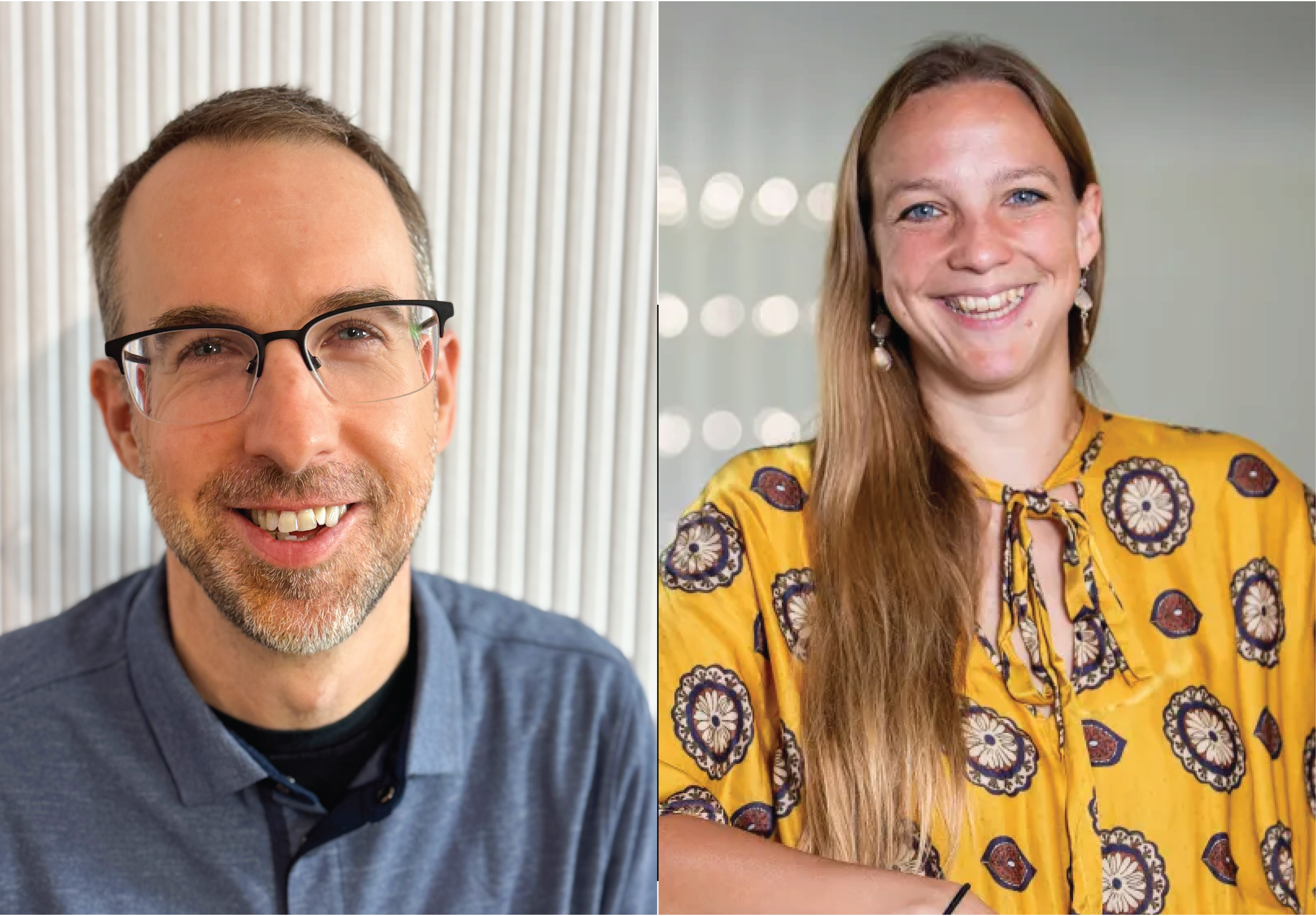
Understanding what surrounds a spacecraft is another essential part of protecting it. That challenge anchored a session organized by Douglas Hope, who moved from GTRI to Georgia Tech’s School of Physics at the end of August.
Hope described space domain awareness as a progression: detect an object, track its orbit, identify it, and use that knowledge to predict its behavior. Distinguishing an operational satellite from debris requires more than knowing where a point of light appears in the sky.
“Essentially, where is it? What is it? What is it doing?” Hope said.
He described an SRI-supported initiative to establish a center for space domain awareness research, connecting expertise in physics, engineering, policy and machine learning. The effort seeks to bring researchers across schools together to pursue opportunities that draw on their combined strengths.
Hope’s own presentation examined the difficult problem of detecting faint objects near bright satellites. Optical sensing and image analysis could help reveal objects that would otherwise be obscured, providing a clearer understanding of a spacecraft’s surroundings. His move to Physics carries that research forward while strengthening connections between GTRI experience and Georgia Tech’s academic community.
Policy discussions explored how those technical capabilities fit within the rules and relationships governing space activity. Mariel Borowitz, an associate professor in the Sam Nunn School of International Affairs and an SRI associate director, emphasized the connections among engineering, policy, and international affairs. Topics included orbital sustainability, commercial activity, and the choices governments make about space programs.
“It’s really those interconnections that give Georgia Tech an edge,” Borowitz said.
Astronauts - Past and Future
Sandra Magnus, a former NASA astronaut and now a Georgia Tech professor of the practice, brought an operational perspective to the evolution of human spaceflight and the changing relationship between government and commercial providers. Her discussion linked decisions about future destinations with the institutions and partnerships needed to reach them.
Space Week also demonstrated that Georgia Tech’s role extends to preparing the people who will build, test, and maintain future aerospace systems. Ready and Stephen Ruffin, interim chair and a professor at the Daniel Guggenheim School of Aerospace Engineering at Georgia Tech and director of NASA’s Georgia Space Grant Consortium, discussed the Southeast Space Technology and Aerospace Readiness Skills initiative (SE-STARS).
Georgia Tech leads the Georgia hub in NASA’s inaugural cohort of seven Aerospace Skilled Technical Workforce Hubs, or NASA State Hubs. Announced in August, the national initiative has awarded approximately $10.5 million across the seven institutions. Georgia Tech’s SE-STARS award provides $1.5 million over three years.
NASA Associate Administrator for STEM Engagement Elaine Ho described the program’s origins and workforce priorities during her Space Week keynote. NASA had convened the inaugural hub leaders in Houston just the previous week, underscoring how early Georgia Tech is helping shape this new effort.
The hubs are designed to connect employers, education providers and workforce organizations around technical careers such as machining, electronics, welding and systems integration. These jobs require substantial expertise, with many offering pathways that do not require a bachelor’s degree.
Ruffin serves as principal investigator for SE-STARS, with Ready among its co-principal investigators. Partners include SRI, the Georgia Space Grant Consortium, the Georgia Tech Manufacturing Institute, the Technical College System of Georgia, Georgia Southern University, and aerospace employers. The Technical College System’s 22 colleges and 88 campuses give the partnership statewide reach.
The goal is to connect education with industry needs through relevant curricula, credentials, and practical experience. For Georgia Tech, leading an inaugural hub creates an opportunity to help develop a model for aerospace workforce preparation while extending access to careers across Georgia and beyond.
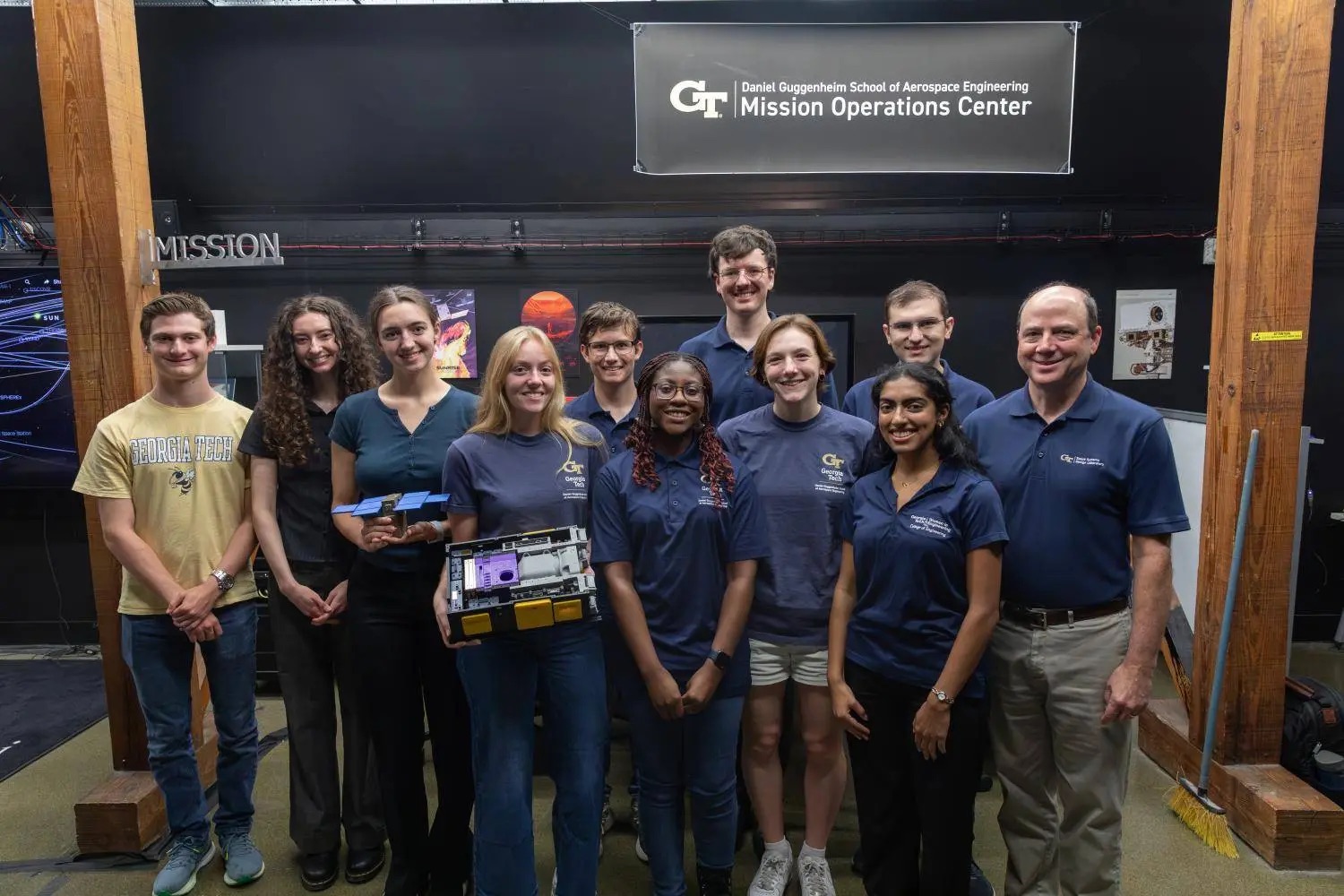
Students at Space Week showed what taking responsibility for a mission can look like well before a first industry job. Georgia Tech aerospace engineering undergraduates Bella Diedrich and Gabriel Buggi presented Southeast Analog, a student-led program that simulates space missions on Earth.
More than 100 students have contributed as mission designers, investigators, analog astronauts, and flight controllers, the presenters said. Early SRI funding helped the team purchase equipment and support selection and training activities, turning an ambitious concept into an operational program.
An August mission placed analog astronauts in Arkansas and flight controllers in Georgia, with a simulated 20-minute communications delay in each direction. That separation required participants to plan carefully, communicate clearly, and make decisions without the convenience of an immediate reply. Students gained experience with the technical and human demands of mission operations while developing a more accessible route into spaceflight-related work.
Their presentation exemplified a point Ready emphasized throughout the event: students were contributing to the research community while also learning from it.
“It’s been great to see the students get involved, both as attendees as well as presenters,” he said.Former NASA astronaut Jeanette Epps offered a real-world view of preparation, describing her training in T-38 jets, robotics, spacewalk procedures, and emergency response. Drawing on her experience during NASA’s SpaceX Crew-8 mission, which included 232 days aboard the International Space Station, she explained the teamwork and adaptability required to operate in demanding environments.
That connection between preparation and practice ran through the four-day Space Week program. Georgia Tech researchers presented work on microgravity systems, lunar resources, robotics and spacecraft design. A poster presentation gave students and researchers opportunities to discuss their projects with visitors from government, industry and academia. Entrepreneurship sessions examined how space companies are financed and built, while a public observatory night extended the event’s reach beyond the research community.
Space Week brought the Institute’s capabilities to the fore for attendees from throughout the nation. Georgia Tech’s academic expertise, GTRI’s applied research, and SRI’s support for collaboration form a common foundation for work already “in flight” and to be “launched."