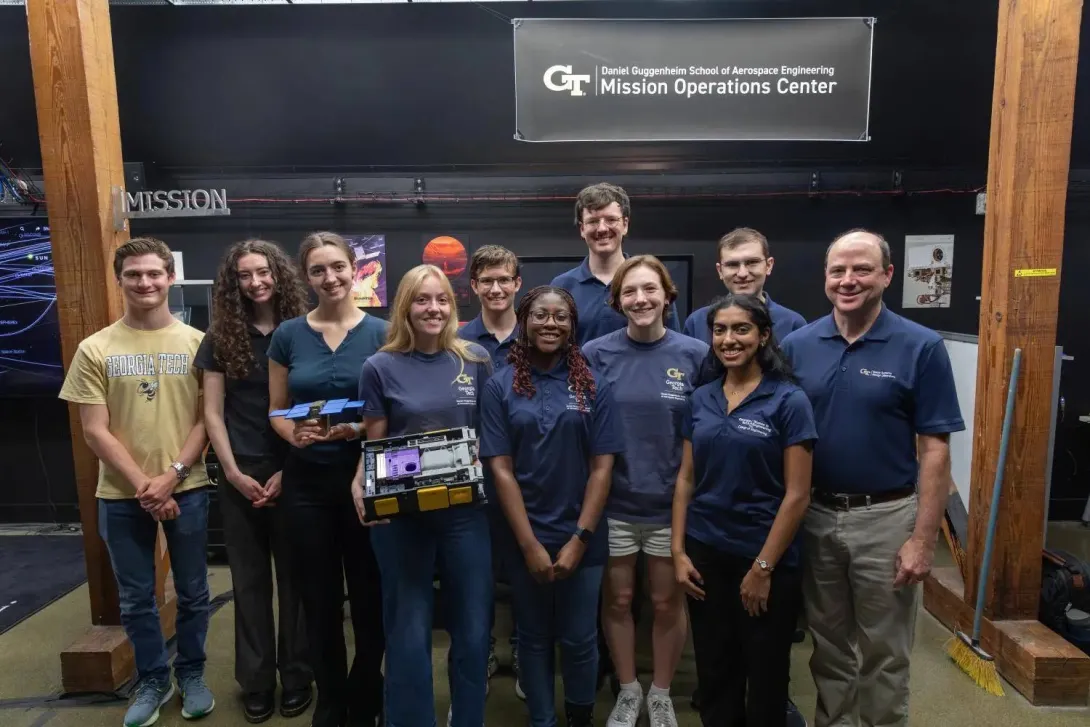
After NASA’s CubeSat reaches orbit in early October, it will spend nine months testing a new kind of propulsion system. And participating in the flight every step of the way will be a group of Georgia Tech students sitting in a mission control center in Atlanta.
The mission is the culmination of three years of designing, building, and testing the small satellite, known as the ASCENT Propulsion Dual Mode spacecraft.
“What makes this mission especially meaningful is that our students have been involved every step of the way,” said Glenn Lightsey, professor and John W. Young Chair in the Daniel Guggenheim School of Aerospace Engineering. “Opportunities to take a spacecraft from concept to flight and perform mission operations are rare, and our students have earned that experience through an extraordinary amount of hard work and dedication.”
The spacecraft is slated to lift off aboard a SpaceX Falcon 9 rocket from Vandenberg Space Force Base in California. It will operate in low Earth orbit at an altitude near 500 kilometers, higher than the International Space Station.
News Contact
Writer and Media Contact:
Monique Waddell