Most people know turbulence as the force that can make airplane flights bumpy. Scientists recognize it as one of the most important, yet unsolved, problems in physics.
Despite decades of research, the chaotic nature of turbulence makes it difficult to predict and control. This challenge impedes more than smoother air travel. Solving the turbulence problem could lead to advances in areas ranging from sustainable energy to training a smarter workforce for the era of artificial intelligence (AI).
To advance understanding of turbulence, the National Science Foundation is establishing a new, $30 million Science and Technology Center (STC) at Michigan State University. Georgia Tech is among eight universities supporting the center.
Assistant Professor Qi Tang will join the STC for Transformative Explorations in Multi-Physics and Engineering of Scientific Turbulence (TEMPEST). TEMPEST, launching on Sept. 1, aims to build trustworthy, predictive models of real-world turbulence.
Tang will lead TEMPEST’s modeling and scientific machine learning (ML) efforts. NSF will fund Tang and Georgia Tech with over $1 million from the center’s five-year, $30 million award.
By understanding and predicting turbulence, TEMPEST can unlock new applications, with a focus on fusion energy and national security. The center will also generate long-term research projects with applications in air and space flight, manufacturing, chemistry, and broaden science education and AI fluency.
“Turbulence has resisted prediction for a century,” said Tang, a faculty member in the School of Computational Science and Engineering (CSE).
“STC TEMPEST aims to develop a unified, predictive science that advances fusion energy, improves hypersonic technologies, and deepens our understanding of how stars created the elements that make up our world and ourselves. For everyday people, the center points toward abundant clean energy and faster, more efficient flight."
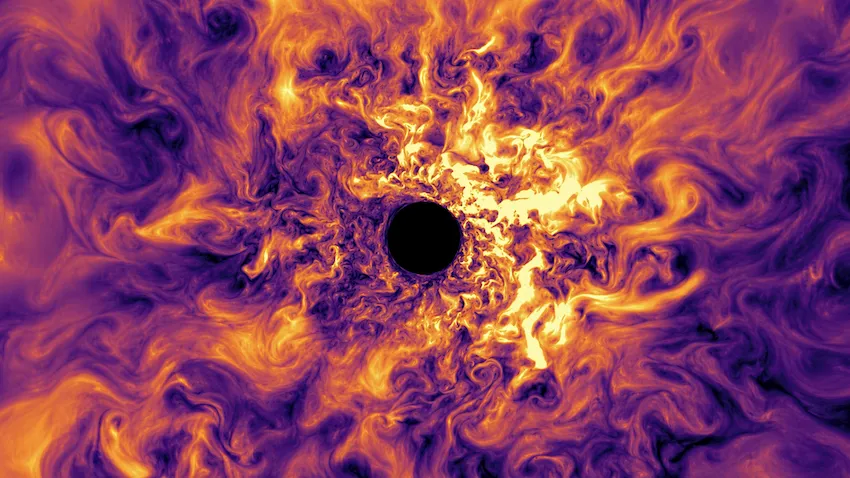
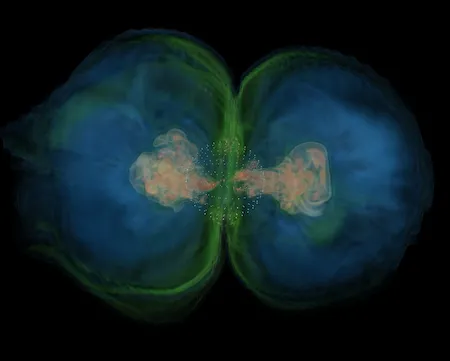
Turbulence is the motion of a fluid characterized by chaotic changes in pressure and speed. Turbulent flows can occur across all scales, from interactions between subatomic particles to astrophysical scales, including supernovas, black holes, and cosmic rays.
While turbulent flows are common and occur naturally, scientists still do not fully understand them. Small changes in a turbulent flow can produce dramatically different outcomes. Combined with the countless interactions across multiple scales of time and space, this makes turbulence extraordinarily difficult to predict.
“Rather than studying individual pieces of this enormously complex problem in isolation, we are bringing together theory, experimentation, computation and artificial intelligence to develop a deeper understanding of turbulence across scales,” said Michael Murillo, an MSU professor and the director of TEMPEST.
“Our goal is not simply to understand turbulence better, but to make it predictable and controllable in ways that will enable new technologies and scientific discoveries.”
The NSF TEMPEST award supports students and researchers at Michigan State University, Auburn University, Baylor University, Georgia Tech, San José State University, Texas A&M University-Corpus Christi, University of Rochester, and Yale University to combine theory, computation, AI techniques, and experimentation to build trustworthy predictive models of real-world turbulence for high-consequence applications.
Additional partners include Los Alamos National Laboratory, Sandia National Laboratories, Lawrence Livermore National Laboratory, Pacific Fusion, and General Atomics.
Together, TEMPEST researchers will build more accurate and reliable physics-grounded models. The center will test new ideas against real-world observations, then use those results to refine the models.
Tang contributes expertise in ML, scientific computing, and plasma physics to STC TEMPEST.
Earlier this year, Tang received an Early Career Research award from the Department of Energy’s Office of Science. He is using the award to build ML and data science tools that help scientists analyze massive datasets from fusion experiments and simulations.
This interdisciplinary approach is intended to move science from understanding why turbulence behaves as it does to predicting how it will behave. Through prediction and simulation, scientists could eventually engineer solutions to control turbulence in real-world scenarios.
The center will make its data and software broadly available and engage the public through museum exhibitions, immersive media, and educational programs that are expected to reach more than 10,000 K-12 students annually. TEMPEST will also help train an AI-fluent scientific workforce prepared to tackle complex problems across disciplines.
“One reason I am excited to work in TEMPEST is because it aligns perfectly with our School of CSE mission. As a discipline, CSE complements theory and experimentation as a mode of scientific discovery,” Tang said.
“We build computational models to simulate scientific and engineering concepts, like turbulence in this case, so that we can test theories that are too difficult, expensive, or risky for physical experiments.”
News Contact
Bryant Wine, Communications Officer
bryant.wine@cc.gatech.edu