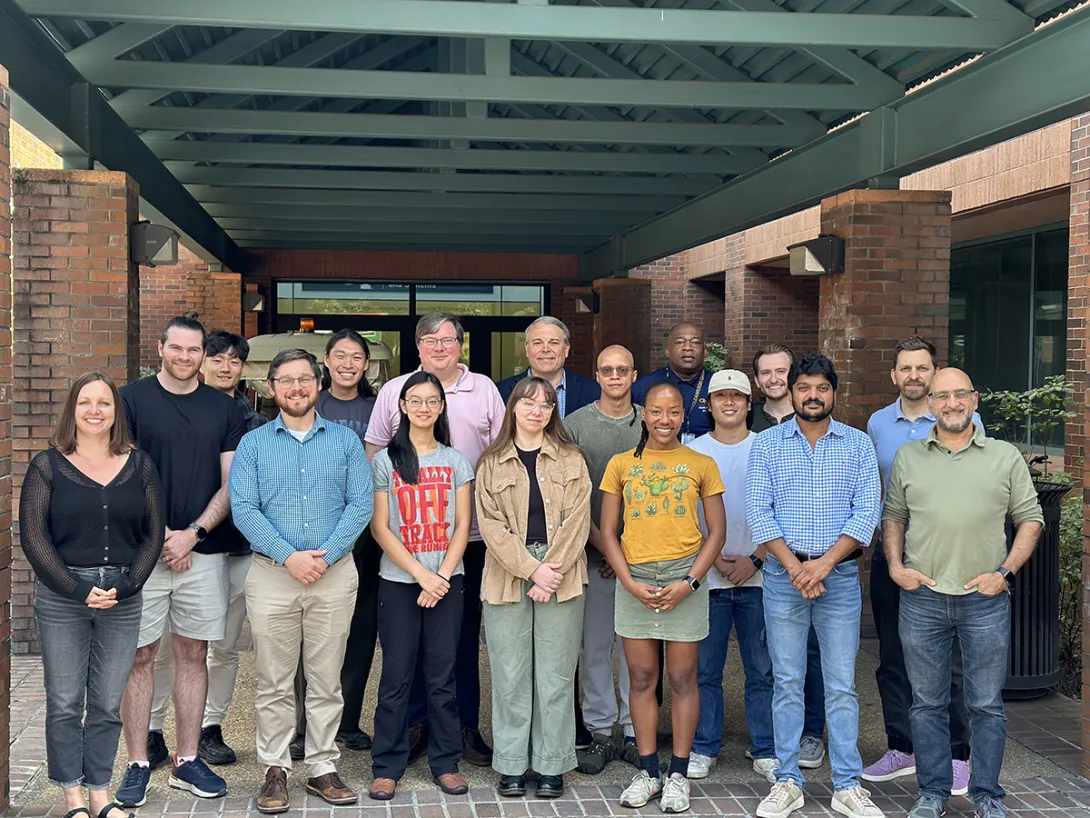
Members of the first IMS Graduate Apprentice cohort gather for a group photo at the program kickoff, including Matthew Kim (back row, second from left), Kayla Chuong (front row, third from left), and Calib Lanier (second row, fourth from right).
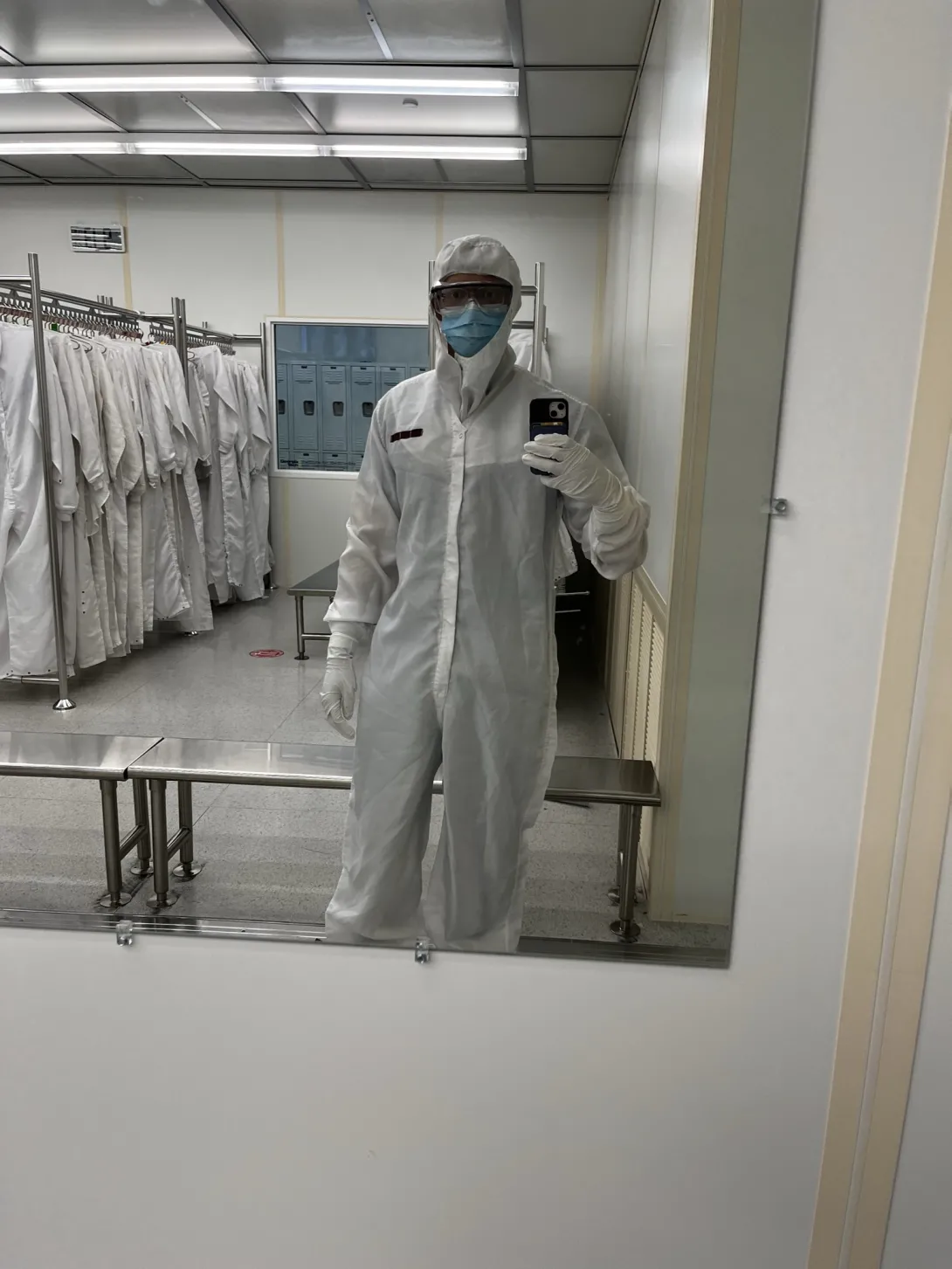
Calib Lanier wears full cleanroom protective gear in the IMS gowning area before entering the cleanroom for research and training activities.
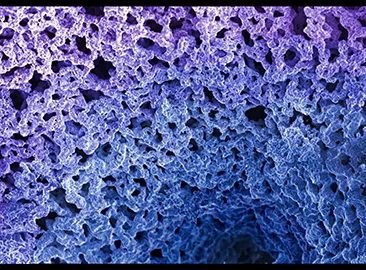
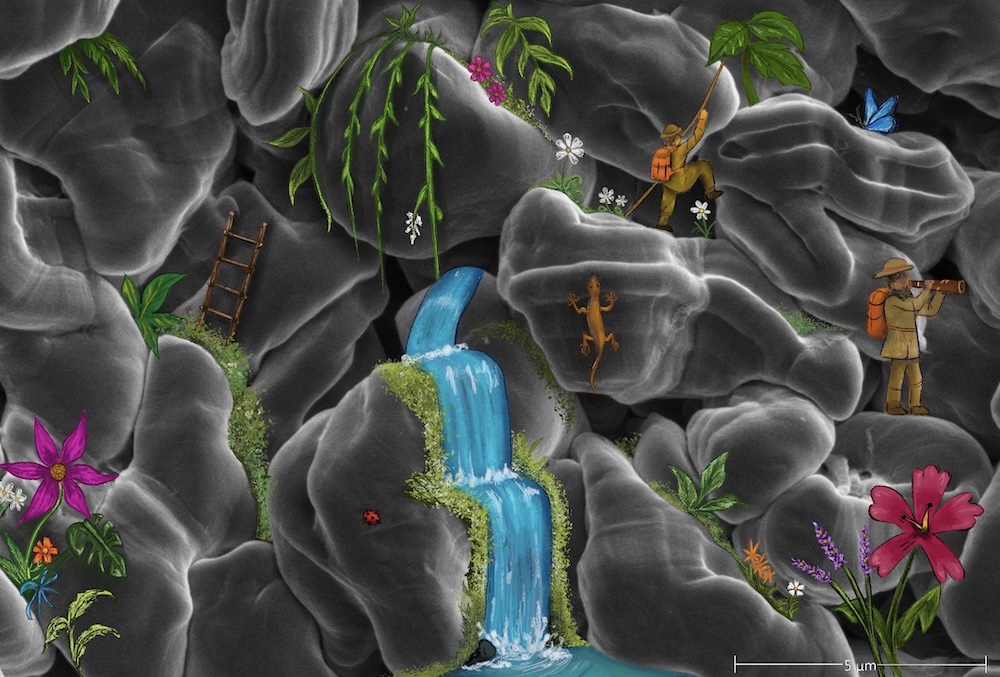
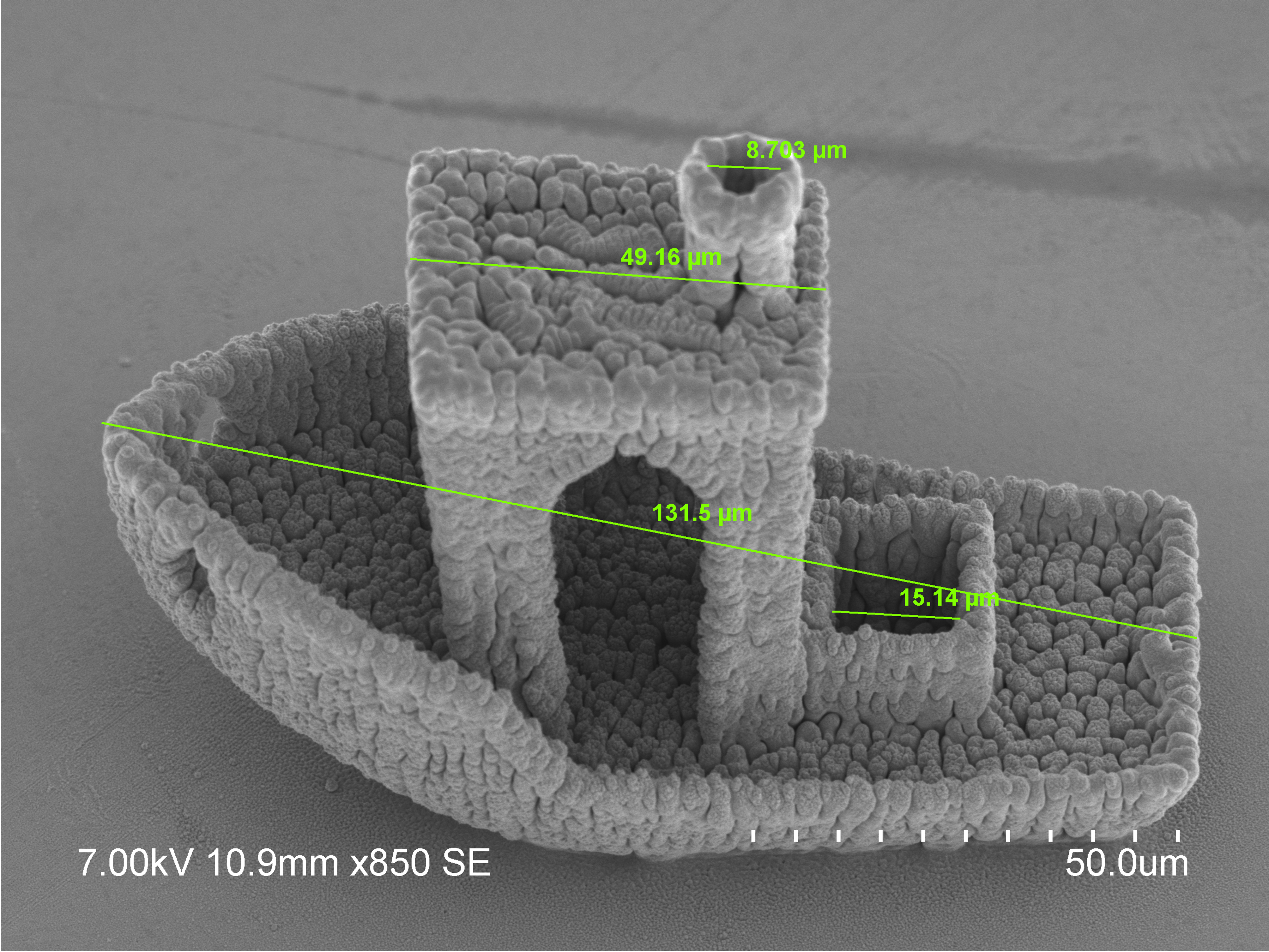
This scanning electron microscope (SEM) image, captured by IMS Graduate Apprentice Kayla Chuong during training on the instrument, was selected as the cover image for Materials Advances.
On the second floor of the Marcus Nanotechnology Building, Calib Lanier operates a rotary-bed reactor unlike any other at Georgia Tech. As the system begins its specialized operations, the doctoral student in the School of Chemical and Biomolecular Engineering watches closely, monitoring temperatures, pressure, and other critical metrics that could define the tool’s success.
Lanier isn’t just using the equipment; he’s helping bring it to life.
Over the last year, he has worked with Institute for Matter and Systems (IMS) staff as part of the IMS Graduate Apprenticeship Program to install a newly designed powder-processing, rotary-bed system. While traditional coating tools are designed to deposit ultra-thin films onto flat surfaces (like silicon computer chips or glass), this tool continuously tumbles a bed of fine powder to ensure a uniform coating of 3D objects with microscopic grains of powder at an atomic scale.
The work has involved more than just running experiments. Lanier has developed operating procedures, established safety protocols, solved technical challenges, and documented processes that future tool users will rely on long after he graduates.
“It’s an opportunity to leave something behind for IMS,” Lanier said. “Once I’m gone, the documentation for this tool will still be there. It’s giving IMS information that will be useful for following students.”
His experience reflects the mission of the apprenticeship program. Launched to provide graduate students with hands-on experience in IMS’s research facilities, the program places graduate students in core facilities with experts. This gives them opportunities to develop technical expertise, support facility operations, and gain professional skills that extend beyond the classroom.
“We wanted to create an experience where everyone benefits,” said Anna Österholm, principal research scientist and IMS Graduate Apprenticeship Program coordinator. “Students gain technical training and professional experience while IMS gains talented and motivated contributors who help develop new capabilities, train users, and improve facility operations.”
Lanier was one of nine students in the inaugural cohort, which represented a wide range of disciplines and research experience. Matthew Kim, another member of the cohort and a master’s student in the School of Electrical and Computer Engineering, came to the program with a mechanical background and a desire to gain hands-on semiconductor experience.
Before the program, much of Kim’s previous exposure to semiconductors and chip packaging came from videos and lectures. Through the apprenticeship, he gained practical experience in the cleanroom, where he taught lab sections for undergraduate integrated circuit fabrication classes. In that role, Kim guided students through the process of creating semiconductors — starting with a blank silicon wafer and ending with a finished product — featuring various designs and structures.
“It was a new experience for me because I was teaching students while learning the material myself,” Kim said. “It really pushed me to learn everything quickly, and I think that benefited me.”
Through the program, Kim both taught and participated in some of the semiconductor fabrication short courses offered by IMS throughout the year.
“A lot of what we learn in class is theory-based,” Kim said. “If you want hands-on experience and want to see semiconductor fabrication with your own eyes, this program is a great way to learn.”
Besides semiconductor design and creation, additional focus areas for the program include materials characterization operations. Kayla Chuong, a doctoral student in the School of Materials Science and Engineering, took her existing experience with materials characterization techniques and expanded it. She entered the program as a user of the Materials Characterization Facility (MCF), having previously conducted research using scanning electron microscopy (SEM) tools.
As part of the program, Chuong now trains campus and industry users on tools throughout the MCF. She conducts check-offs on training sessions and authorizes researchers to use instruments. She may spend an entire day conducting back-to-back instrument training, helping everyone from undergraduate researchers to industry professionals gain access to advanced microscopy tools.
"It's really cool that external users from industry come in and get trained, and I get to meet people from different backgrounds," she said.
While the program provides students with access to advanced research tools and facilities, participants said some of the most valuable lessons happened outside of the lab.
Kim found teaching an unexpected source of growth. As he guided students through cleanroom processes and semiconductor fabrication techniques, he found himself developing confidence as a researcher and as an instructor.
For Chuong, the program expanded her professional network and her base knowledge of SEM beyond what she thought was possible.
Lanier gained a different perspective through regular interactions with IMS staff. By participating in facility staff meetings and working closely with mentors, he was exposed to the challenges of managing complex research infrastructure and learned how experienced scientists approach troubleshooting and process optimization.
"Being able to see how other people look at going about research and what they do to work through troubleshooting and optimization," Lanier said, "it's a really good learning experience for myself as well."
Together, these experiences highlight one of the program's greatest strengths: its ability to immerse students in the broader research ecosystem. Beyond learning how to operate world-class instruments, apprentices gain experience communicating across disciplines, mentoring other researchers, solving complex technical challenges, and contributing to the shared resources that support research across Georgia Tech.
For Chuong, Kim, and Lanier, the apprenticeship provided more than just access to equipment. It offered a chance to become contributors to Georgia Tech's research ecosystem — whether by teaching new users, supporting education, or helping bring new capabilities online. As the program prepares for future cohorts, their experiences illustrate how immersive, hands-on training can accelerate both research and professional growth.
News Contact
Amelia Neumeister | Communications Manager
The Institute for Matter and Systems