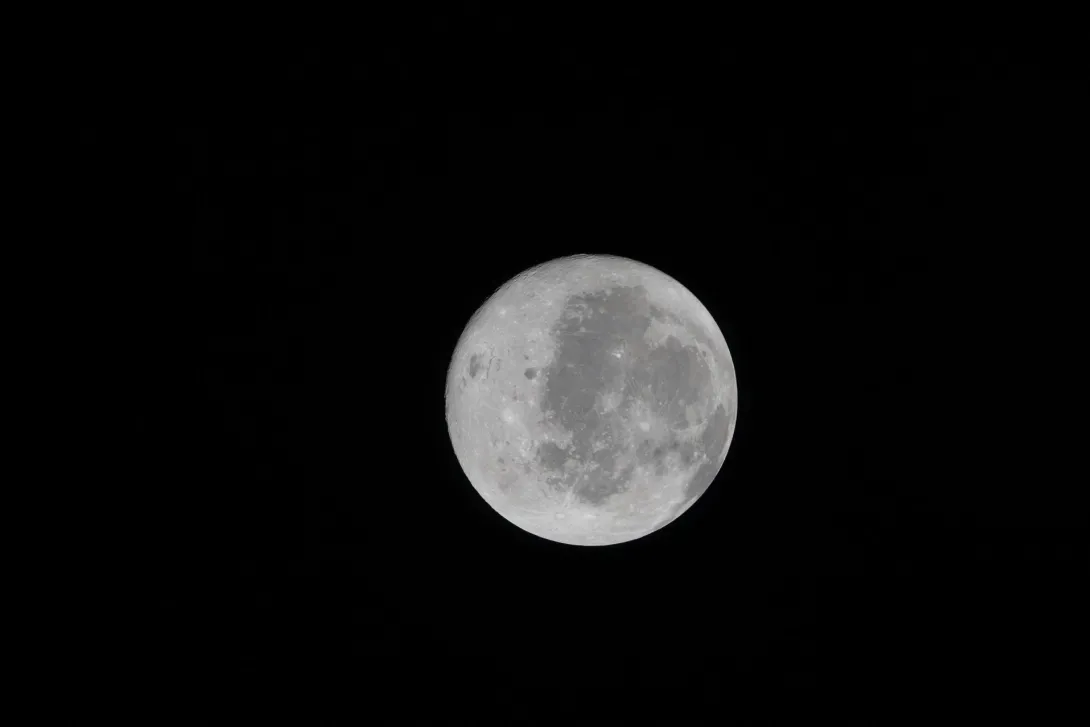
The moon may look unchanged from afar, but its surface is constantly reshaped by microscopic impacts and a steady stream of particles from the sun, a process known as space weathering. Now, Georgia Tech researchers have recreated one of those weathering sources, solar wind, in the lab — offering new insight into how the lunar surface evolves.
Dust-sized meteoroids and solar wind gradually alter lunar soil, producing tiny metallic particles known as nanophase iron. For years, scientists have used sensing data influenced by those particles to estimate the weathering age of the moon’s surface, but they weren’t sure which weather source primarily drives these changes.
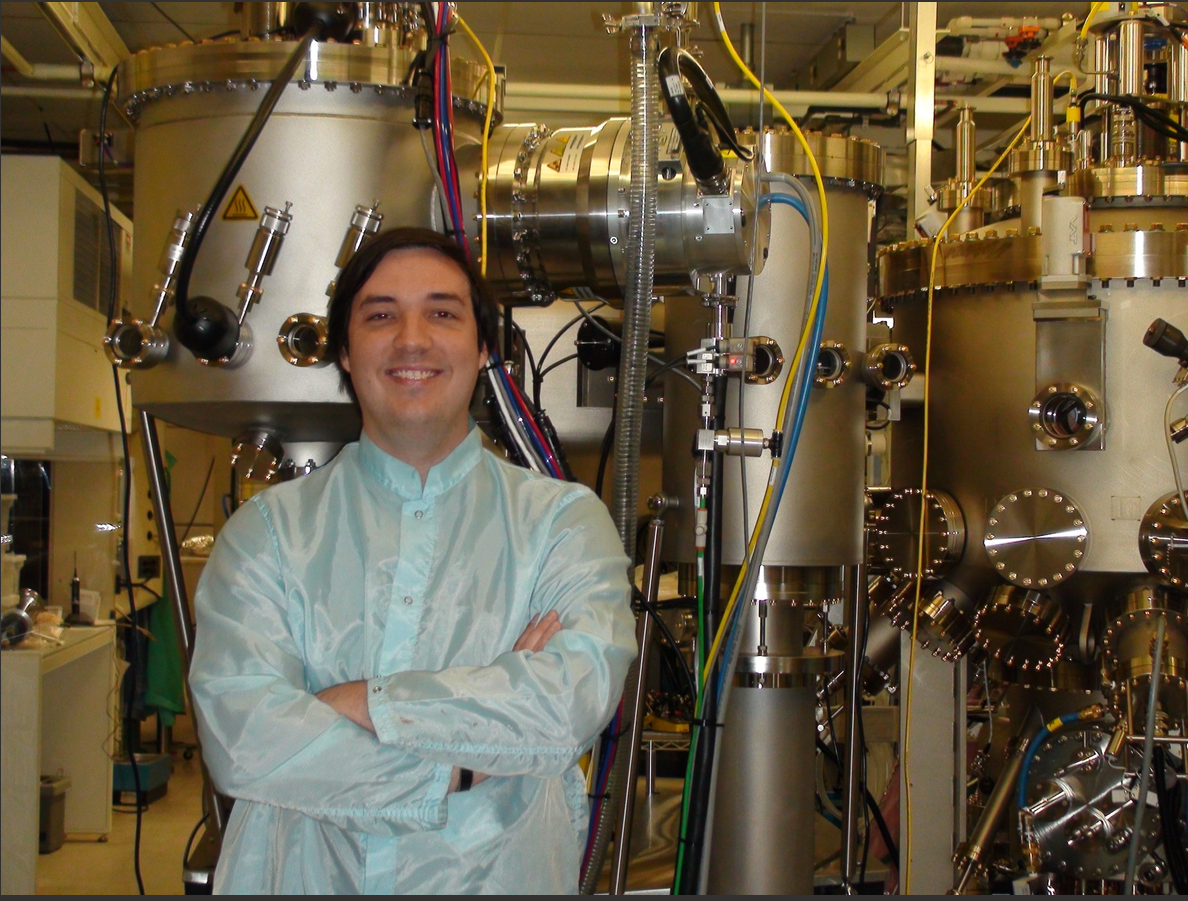
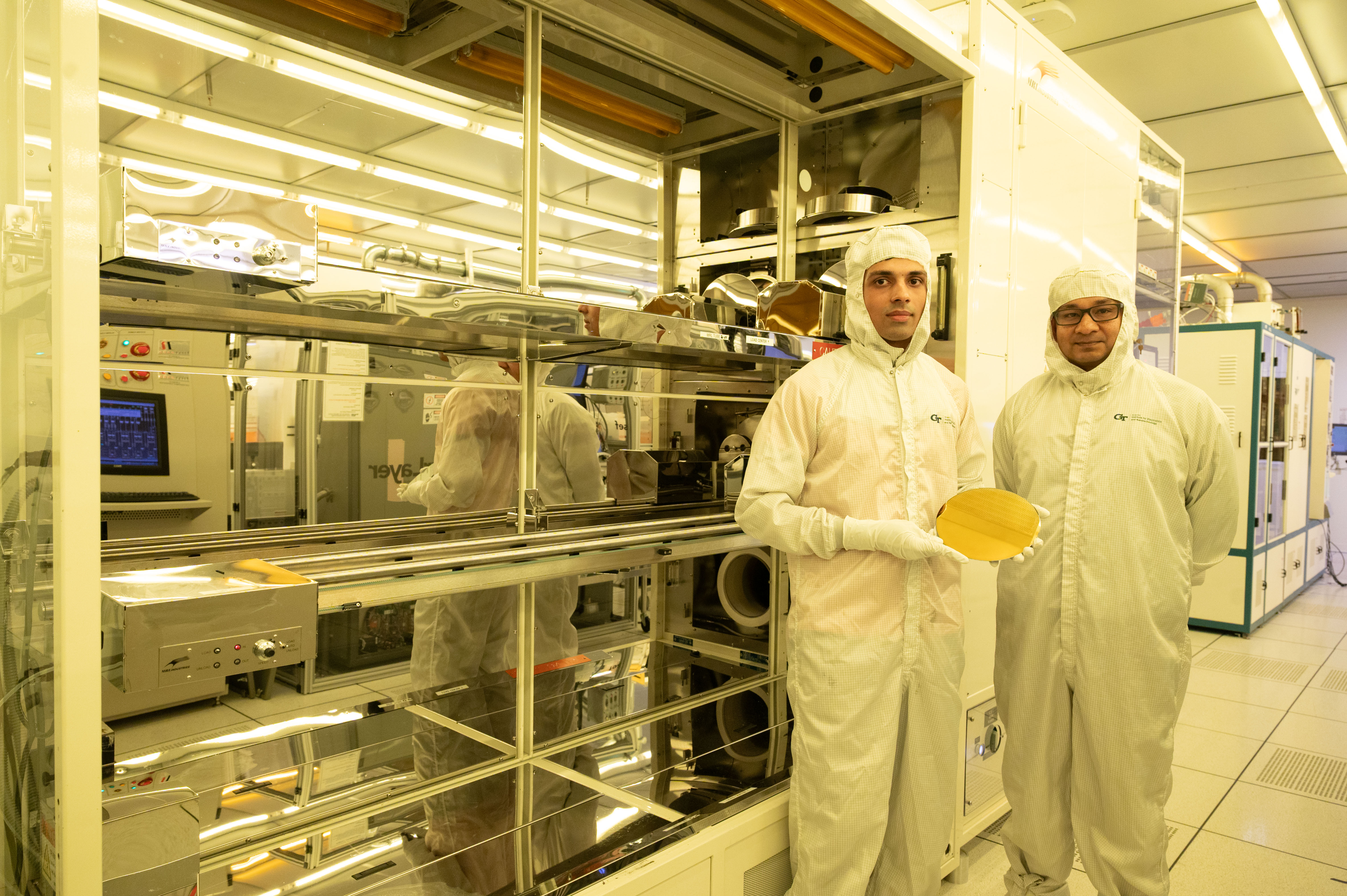
To investigate, physics Ph.D. candidate Roshan Trivedi and Advik Vira, a recent Ph.D. graduate, exposed ilmenite, a common mineral on both the Earth and moon, to a synthetic version of solar wind. The experiment produced nanophase iron under controlled conditions, suggesting that solar wind plays a major role in shaping the lunar surface observed today.
The team presented its findings in “Creation of Lunar-Like Rims in Ilmenite Using Synthetic Solar Wind,” published in The Planetary Science Journal in June. Their work was conducted through the Georgia Tech Center for Lunar Environment and Volatile Exploration Research (CLEVER), a NASA Solar System Exploration Research Virtual Institute (SSERVI) led by Georgia Tech Regents’ Professor Thom Orlando, a co-author of the study. A central aim of CLEVER is to understand the science and effects of space weathering as they pertain to the goals of NASA’s Artemis missions.
By understanding how the moon’s surface morphs on a microscopic level, scientists will be able to better interpret remote sensing data. Soon, we won’t have to rely just on moon missions to learn detailed characteristics of the lunar surface.
The work could also shed light on another longstanding question: how water forms on the moon.
“Water would be a fantastic resource for humans operating on the moon, but scientifically, we are driven simply by the question of how water gets there in the first place,” said Phillip First, a professor in the School of Physics. “Solar wind is potentially one way, because protons in solar wind provide the hydrogen of H2O molecules while oxygen is present in lunar minerals.”
Using a vacuum chamber in Orlando’s lab to simulate solar wind and high-resolution electron microscopy to analyze the samples, the researchers recreated the effects of thousands of years of solar wind exposure.
“Scientists have been doing laboratory radiation experiments for years, but they haven't been able to characterize the results at this level of detail,” said lead author Trivedi.
The team can now simulate a wide range of exposure ages, which may help explain how water forms. In addition to forming nanophase iron, the experiments created tiny voids within the mineral — potential sites where hydrogen from solar wind could bond with oxygen to form water.
“Having the ability to recreate the solar wind and having results look so similar to actual lunar samples is excellent,” said co-lead author Vira.
DOI: 10.3847/PSJ/ae6074
Funding: This work was directly supported by the NASA SSERVI under CLEVER. Sample preparation was performed at the Georgia Tech Institute for Matter and Systems, which is supported by the National Science Foundation. Collaborations between the U.S. Naval Research Laboratory and Georgia Tech for advanced electron microscopy were supported by the Georgia Tech Center for Space Technology and Research.
News Contact
Tess Malone, Senior Research/Writer Editor
Georgia Tech