
Nov. 20, 2025
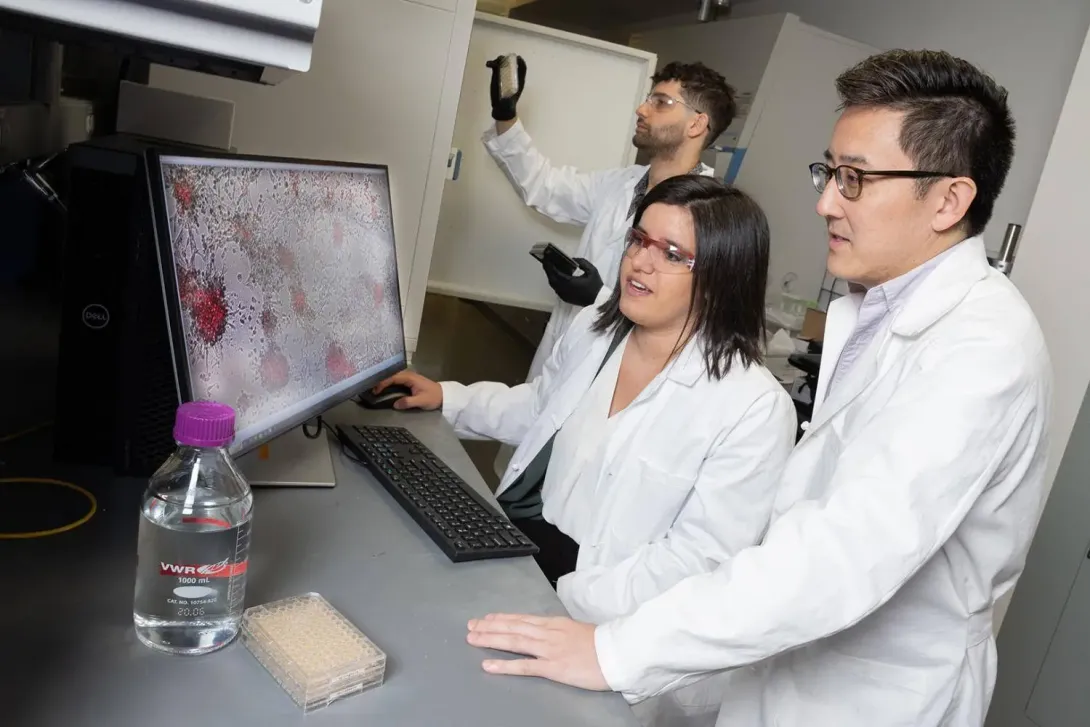
Georgia Institute of Technology has been ranked 7th in the world in the 2026 Times Higher Education Interdisciplinary Science Rankings, in association with Schmidt Science Fellows. This designation underscores Georgia Tech’s leadership in research that solves global challenges.
“Interdisciplinary research is at the heart of Georgia Tech’s mission,” said Tim Lieuwen, executive vice president for Research. “Our faculty, students, and research teams work across disciplines to create transformative solutions in areas such as healthcare, energy, advanced manufacturing, and artificial intelligence. This ranking reflects the strength of our collaborative culture and the impact of our research on society.”
As a top R1 research university, Georgia Tech is shaping the future of basic and applied research by pursuing inventive solutions to the world’s most pressing problems. Whether discovering cancer treatments or developing new methods to power our communities, work at the Institute focuses on improving the human condition.
Teams from all seven Georgia Tech colleges, 11 interdisciplinary research institutes, the Georgia Tech Research Institute, Enterprise Innovation Institute, and hundreds of research labs and centers work together to transform ideas into real results.
News Contact
Angela Ayers
Nov. 05, 2024
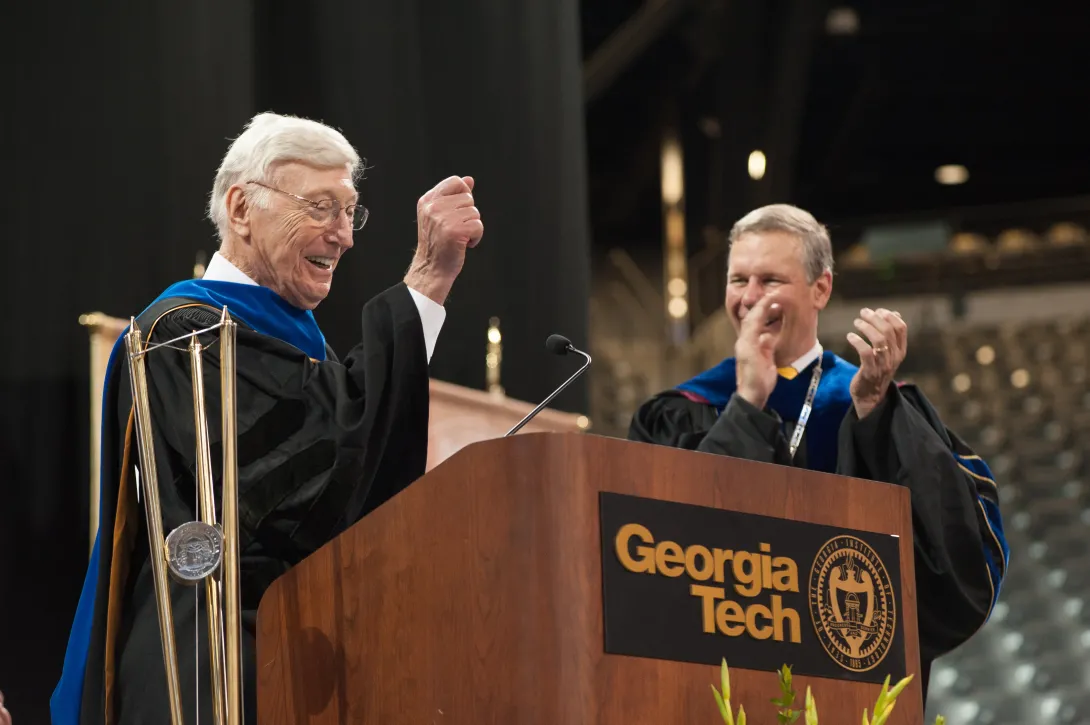
Bernie Marcus, a visionary entrepreneur, philanthropist, and honorary alumnus whose financial gifts have had a transformative impact at Georgia Tech and the Atlanta community, has died.
“The Georgia Tech community mourns the passing of Bernie Marcus,” President Ángel Cabrera said. “His passion for health science and technology, coupled with his confidence in our research vision, has helped solidify Georgia Tech’s reputation in fields such as stem cell bioengineering, nanotechnology, and cancer research, as well as student innovation and entrepreneurship. His philanthropic legacy will continue to bolster the Atlanta community for generations to come.”
Marcus, co-founder of The Home Depot, was a passionate supporter of education, research, and innovation. Over nearly two decades, The Marcus Foundation provided strategic and significant support to Georgia Tech. His most visible contributions are the Marcus Nanotechnology Building, a state-of-the-art facility that features the largest cleanroom laboratory dedicated to the fabrication and assembly of biomedical and semiconductor devices in the Southeast, and the Marcus Center for Therapeutic Cell Characterization and Manufacturing, which has been pivotal in advancing the manufacturing process of cellular medicines, making them more accessible and affordable.
His support also extended to fostering innovation and entrepreneurship among students. The CREATE-X initiative, backed by an investment from The Marcus Foundation, has empowered over 17,000 students to launch more than 500 startups, powered Georgia Tech’s startup culture, and inspired entrepreneurial engagement both nationally and internationally.
In recognition of his profound impact, Marcus was awarded an Honorary Doctor of Philosophy degree by Georgia Tech in December 2015. This honor acknowledged his revolutionary contributions to the home improvement retail industry, his transformative philanthropy, and his advancement of Georgia Tech's research enterprise.
Jun. 29, 2023
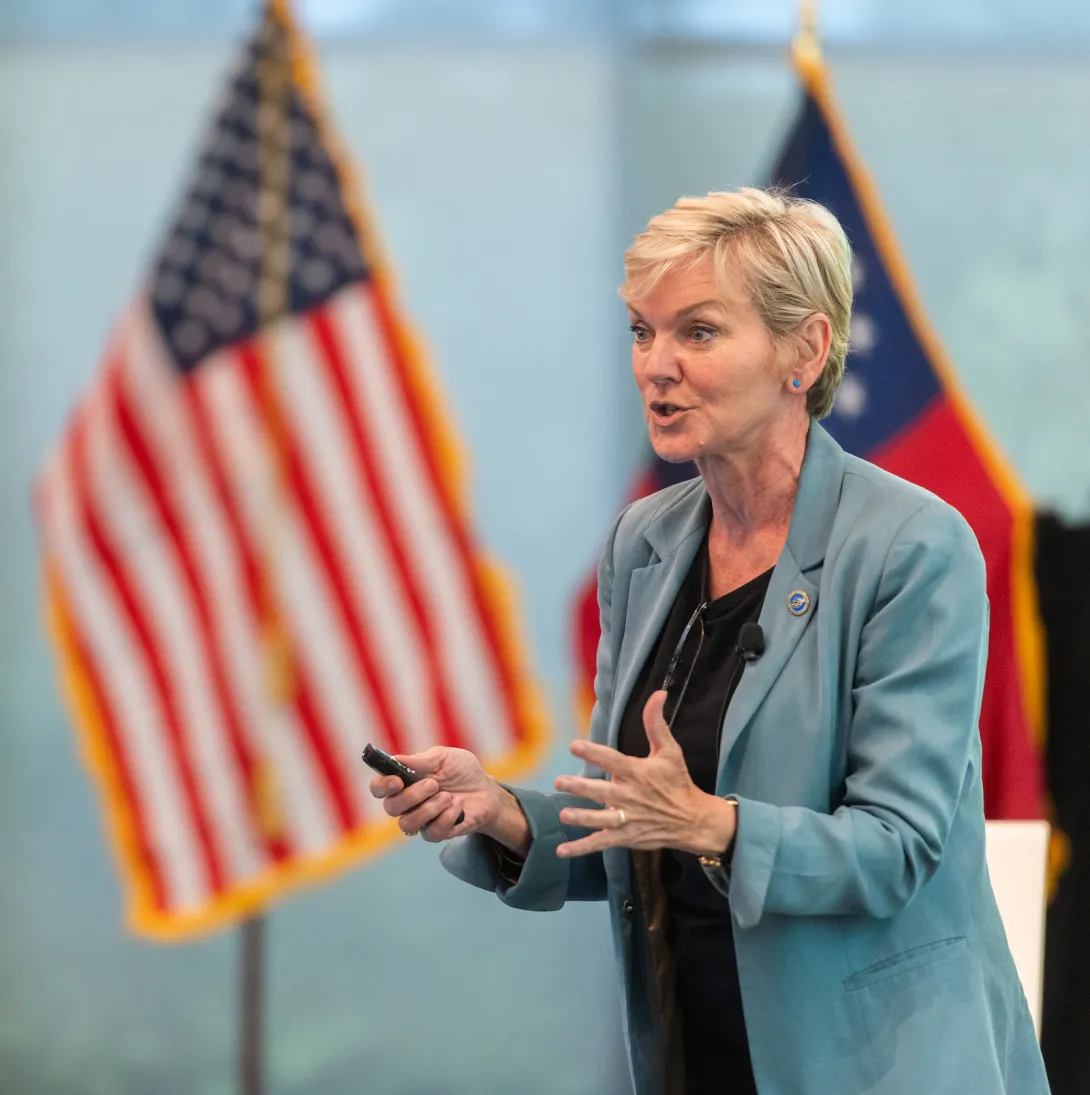
Secretary of Energy Jennifer Granholm visited Georgia Tech to talk about clean energy. (Photo by Allison Carter)
Secretary of Energy Jennifer Granholm visited Georgia Tech Wednesday for an event, co-sponsored by the Atlanta Journal-Constitution, at The Kendeda Building for Innovative Sustainable Design. The stop in Atlanta is part of the administration’s effort to promote the value and promise of a national investment in clean energy.
“One key reason why we should focus on clean energy is to be able to focus on affordability,” she said. “A second reason is because of security. Whether it’s in supply chains or in actual fuel, we want to be able to generate the means to our own energy security, homegrown energy, and that’s why we should be going clean.
“A study from the International Finance Corporation estimates the clean energy sector is going to be worth $23 trillion globally by 2030,” she continued. “That’s a massive amount of money. That is the reason why we want to see economic opportunity here and jobs created because of clean energy.”
Tim Lieuwen, executive director of Georgia Tech’s Strategic Energy Institute, welcomed Secretary Granholm, as well as Assistant to the President and National Climate Advisor Ali Zaidi, Atlanta Mayor Andre Dickens, and guests.
“It is a privilege for us to welcome this great group of energy leaders onto our campus,” Lieuwen said. “We are deeply appreciative of the partnerships that we have with our city, state government, and federal government. We are at the center of a very exciting developing ecosystem in the region. Having our secretary of energy here is a great opportunity to just quickly highlight Georgia Tech’s multidecade partnership with the Department of Energy (DOE) across all the DOE mission spaces. Whether that’s batteries, electric vehicles, hydrogen, nuclear, or carbon capture, or policy, we have over 1,000 people on this campus working across this whole value chain engaging with our community and policymakers.”
Nov. 18, 2022
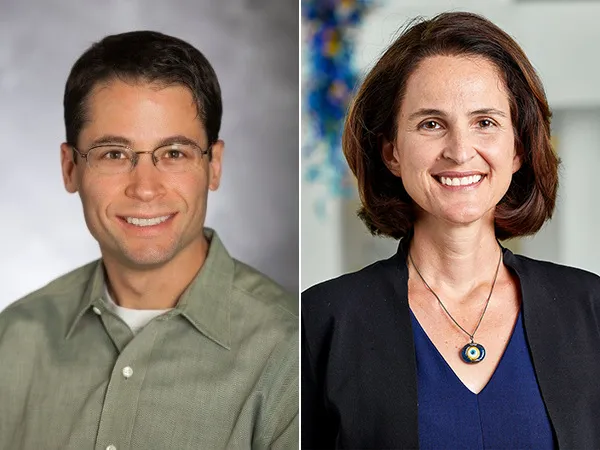
Two Georgia Tech employees are among the 35 faculty and staff members named to the University System of Georgia’s (USG) Executive Leadership Institute (ELI) class for 2022-23.
Josh Rosenberg, senior director of Grants and Contracts Accounting, and Beril Toktay, Brady Family Chair in Management and interim executive director of the Brook Byers Institute for Sustainable Systems, will represent Tech during this training cycle.
Each USG member institution nominates one academic leader and one staff leader to participate. Individuals are selected for the six-month program and participate in a curriculum that includes group learning and assessment, personal reflection, job shadowing and cross-mentoring.
“This is about supporting our own people within the university system,” USG Chancellor Sonny Perdue said. “Many times, the best talent is already among us. We want to give our people the best opportunity to experience this kind of professional development so they can reach their full potential.”
For more than a decade, the USG has hosted ELI for faculty and staff to develop new leaders within the university system and offer professional develop opportunities to help them advance their careers in Georgia.
Apr. 06, 2022

This year marks the 25th anniversary of celebrating Earth Day at Georgia Tech. A four-day schedule of events is planned for this campuswide program to celebrate nature, the preservation of our planet, and the Georgia Tech community’s contributions to campus sustainability. A few events are already collecting items or have opened registration — so get a head start on your Earth Day plans.
The keynote event on Monday, April 18, features Maria Cimilluca, vice president of Infrastructure and Sustainability, who will share the path forward for sustainability at Georgia Tech. The event will also feature the presentation of the Student Sustainability Champion Award. Register here.
If sustainable transportation is your thing, you can join a Group Bike Ride led by President Ángel Cabrera on Tuesday, April 19. The 4.75 mile ride requires registration and will begin in front of the Campus Recreation Center.
If you are more tuned in to understanding campus waste streams, join the Student Government Association’s Sustainability Committee and the Office of Solid Waste Management and Recycling on Tuesday, April 19, to assist with conducting a waste audit of the Clough Undergraduate Learning Commons. You will see firsthand how recycling and composting services support Georgia Tech’s goals to achieve zero waste.
If understanding and protecting nature fits more with your passions, register for a bird walk led by a subject matter expert and learn about which birds prefer to make their homes on campus. In partnership with Georgia Audubon and The Kendeda Building for Innovative Sustainable Design, the walk begins at 9 a.m. on Wednesday, April 20.
The week rounds out with the Sustainability Fair, which showcases student groups and campus departments such as Tech Dining, Landscape Services, and Building Services, highlighting the ways campus operations support sustainable initiatives. The Urban HoneyBee Project and the Georgia Tech Global Change Program will offer opportunities to get involved and be a part of the climate solution. Table registration for the Fair closes Friday, so register for a spot to showcase your organization's work supporting campus sustainability.
The Hard to Recycle Materials Dropoff and the Clothing Swap will take place on the lower level of The Kendeda Building from 10 a.m. to 4 p.m. each day. Clothing can be donated for the swap at Housing locations through Monday, April 11.
Most importantly, the Earth Day planning committee would love your help. Volunteer to help make this 25th anniversary event a success.
News Contact
Cathy Brim
Institute Communications
Apr. 03, 2012

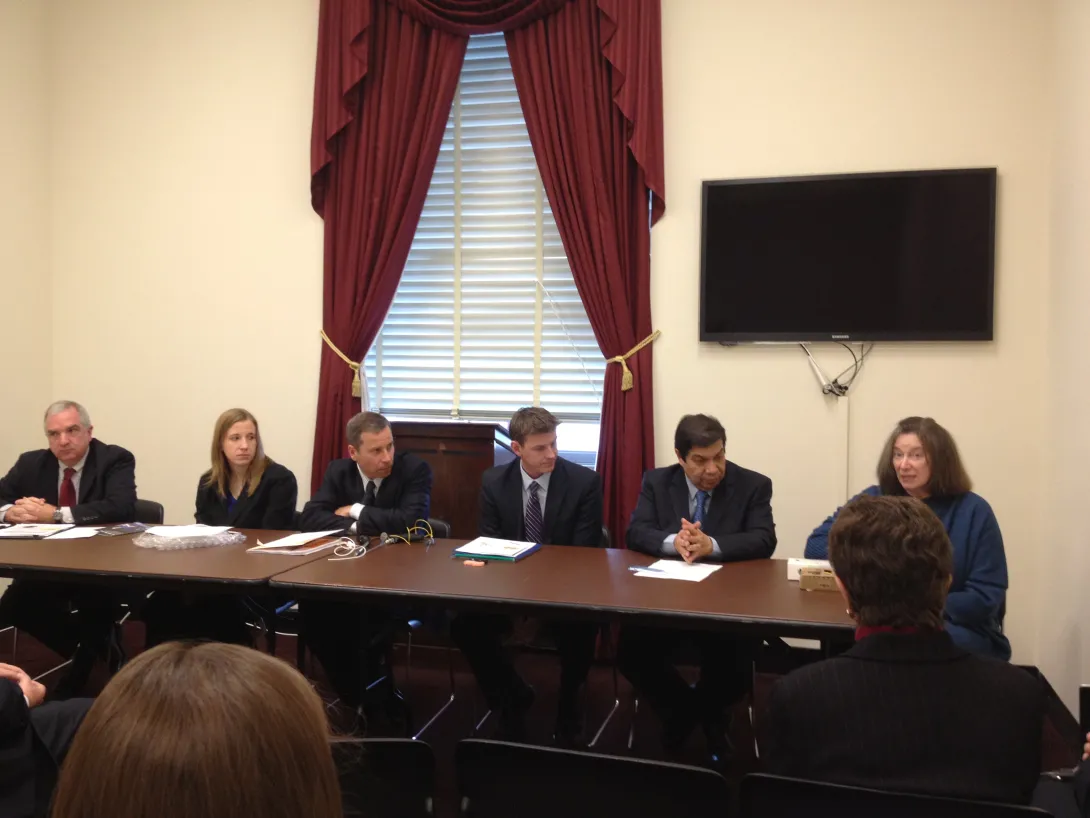
Barbara Boyan, the Price Gilbert, Jr. Chair in Tissue Engineering in the Wallace H. Coulter Department of Biomedical Engineering at Georgia Tech and Emory, and director of the Atlanta Pediatric Device Consortium, traveled to Washington D.C. recently to support legislation that encourages the development of pediatric medical devices.
During her visit in February, Boyan met with several congressmen, urging them to reauthorize “The Pediatric Medical Device Safety and Improvement Act." The law provides grants to fund non-profit pediatric device consortia, such as the Atlanta Pediatric Device Consortium. The grants connect scientists and innovators with device manufacturers, providing them financial resources and regulatory guidance needed to advance the development of devices for children.
“The funding from the FDA has opened many doors and some of our small companies have been able to secure venture capital funding to pursue these devices,” Boyan said.
One of three FDA-sponsored consortia awarded last year, the Atlanta Pediatric Device Consortium is a partnership between Georgia Tech, Children’s Healthcare of Atlanta and Emory University.
The Atlanta Pediatric Consortium provides assistance with engineering design, prototype development, pre-clinical and clinical studies and commercialization for novel pediatric medical devices. It is currently composed of nine projects, three main projects and six pilot projects, which were incorporated from the first Pediatric Device Competition.
“This consortium has brought excitement to the Atlanta Community and strengthened our research partnerships to develop the future of pediatric medical devices,” Boyan said.
Passed in 2007, “The Pediatric Medical Device Safety and Improvement Act" includes important incentives that promote the development of medical devices for children, which currently lags five to 10 years behind those for adults. Significant barriers to pediatric device development exist, including physiological differences in pediatric patients and challenges with recruiting pediatric participants for clinical trial. The law helps to support the creation of more pediatric devices, with 107 device projects developed during the program’s first two years, according to a report by the General Accounting Office.
Boyan was accompanied to D.C. by consortium co-directors Kevin Maher, MD, a cardiologist and researcher specializing in pediatrics with appointments at the Children’s Healthcare of Atlanta Sibley Heart Center and Emory University and Wilbur Lam, MD, PhD, a pediatric hematologist/oncologist and bioengineer with appointments at Emory, the Aflac Cancer Center of Children’s Healthcare of Atlanta and Georgia Tech.
News Contact
Georgia Tech Media Relations
Laura Diamond
laura.diamond@comm.gatech.edu
404-894-6016
Jason Maderer
maderer@gatech.edu
404-660-2926
Mar. 29, 2012

In response to both a critical need for technological innovation and for ways to address the disturbing shortage of minority engineering faculty across the country, the Minority Faculty Development Workshop: Engineering Enterprise and Innovation was held at Georgia Tech from March 15 to 18.
Thanks to a grant from the National Science Foundation, Gilda Barabino, professor of biomedical engineering at Georgia Tech, organized the workshop to bring together distinguished, talented and innovative engineering professionals to address this challenge, which is related to enhanced global competiveness and an improved national economy.
The workshop attracted more than 70 engineering faculty and innovators from Harvard, Stanford, North Carolina A &T State University and other leading institutions. Researchers who attended gained insight, resources and knowledge toward activities that support innovation, entrepreneurial endeavors and ultimately, the economic status of our nation, Barabino said.
As an internationally recognized researcher and educator and the newly elected president of the Biomedical Engineering Society, Barabino has committed herself to her technical career and to impacting the future by developing opportunities for innovation and career success among minority faculty.
“By providing opportunities for professional development linked to a better understanding of research innovation and translation, the [workshop] contributes to the development and retention of a well equipped faculty cadre,” Barabino said. “It broadens the talent pool for translational research that drives company formation, job creation, a healthy economy and global competitiveness.”
Georgia Tech Dean of Engineering Gary May, who was one of the conference sponsors, said the workshop is a positive step toward increasing underrepresented faculty in the STEM fields.
“Faculty are the intellectual life blood of universities, so faculty development is a critical issue,” May said. “This is particularly true for underrepresented faculty in STEM fields, as there are too few of us to allow any to be unsuccessful. I applaud the Minority Faculty Development Workshop for seeking solutions which will contribute to successful, enriched, and fulfilling careers for its participants.”
National Science Foundation Program Director Omnia El-Hakim stressed the importance of attracting more women to engineering.
“Women constitute 50 percent of the U.S. Population, but are not represented fully in the engineering disciplines nor in entrepreneurship,” El-Hakim said. “The NSF believes in broadening participation through these types of programs because diversification in these realms brings important perspectives in solving challenges of national concern while maintaining excellence.”
The NSF Minority Faculty Development Workshop: Engineering Enterprise and Innovation was the sixth in a series that began in 2001 with funding under the NSF Engineering Directorate. The workshop addressed strategic goals of the National Science Foundation and critical needs of the nation related to enhanced global competiveness and an improved national economy.
News Contact
Georgia Tech Media Relations
Laura Diamond
laura.diamond@comm.gatech.edu
404-894-6016
Jason Maderer
maderer@gatech.edu
404-660-2926
Mar. 20, 2012
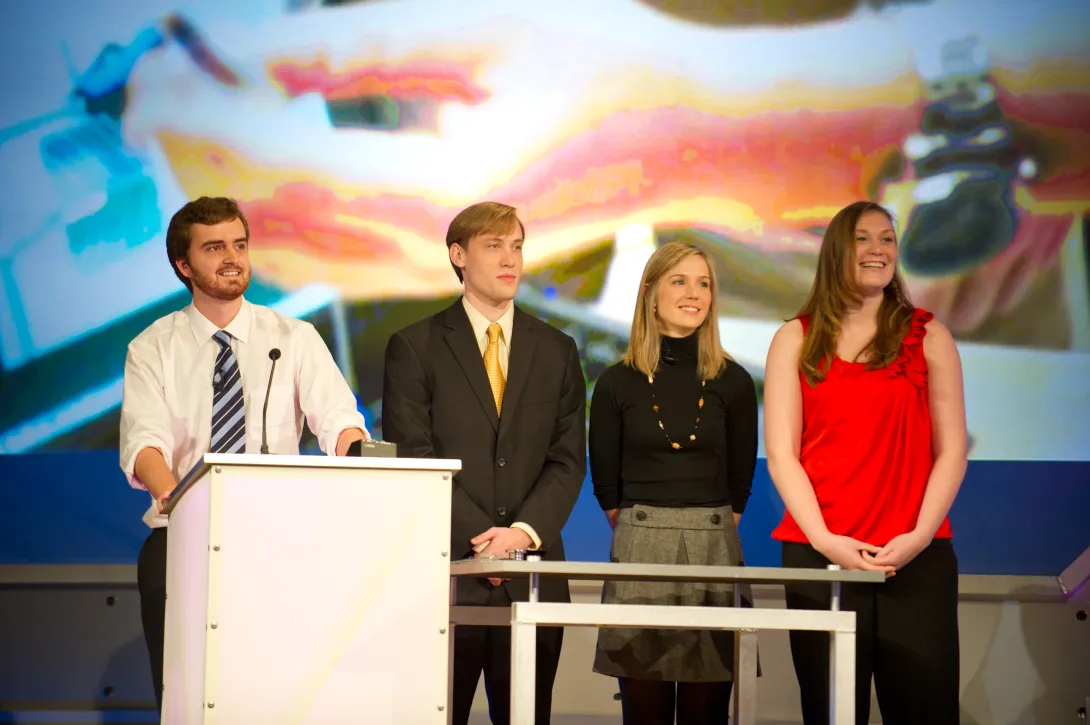
The “MAID” Team (Magnetically Assisted Intubation Device) of biomedical engineering undergraduates swept the Georgia Tech Business Plan Competition finals on March 9.
Team MAID is composed of seniors Alex Cooper, Elizabeth Flanagan, Shawna Hagen and Jacob Thompson. Their plan and presentation won first place in the Undergraduate Competition, 1st Place in the Overall Competition, Most Commercializable Plan and the Alumni Award in the poster session for total winnings of $42,500.
Their win represents the first time a team of undergraduates has won the overall competition, which draws undergraduate and graduate students from across Georgia Tech. The Business Plan Competition is organized annually by Georgia Tech’s College of Management.
MAID is a simplified approach to intubation that utilizes magnets to guide the endotracheal tube into the airway of a patient easily and quickly, with less risk and without the need for visualization. MAID has two components: the single-use magnetic stylet and the reusable guide magnet. The external guide magnet is placed above the cricoid cartilage of the patient. When the endotracheal tube with the magnetic stylet is inserted into the patient’s mouth, it is pulled directly into the airway by the guide magnet, resulting in near effortless intubation.
Last year the team MAID also won second place in Georgia Tech’s InVenture Prize competition, winning $10,000 cash and a patent application by the Office of Technology Licensing. In summer 2011, the Translational Research Institute for Biomedical Engineering & Science awarded the team a seed grant of $25,000 to for further prototype development of the device.
The Saint Joseph Translation Research Institute has tested their functioning prototype on multiple human cadavers with considerable success. The Office of Technology Licensing filed a full non-provisional patent in March 2012. Currently, additional design work is being conducted to improve manufacturability and reliability. The MAID design concept to improve the safety and effectiveness of the intubation procedure began as a team design project in BMED 2300, Projects in Biomedical Engineering. Franklin Bost, Professor of the Practice in biomedical engineering, and Leanne West at the Georgia Tech Research Institute, continue to advise the MAID team.
Kevin Lewis, another biomedical engineering student, whose plan for “Cold Crate” came in third in the Undergraduate Track of the Business Plan competition. Graduate student Melissa Li was a finalist for her team’s CARDIAM device and the winner of a $10,000 services package for Most Innovative Technology. The CARDIAM Team was also a co-winner in the Elevator Pitch Competition.
Written by Adrianne Proeller, Wallace H. Coulter Dept. of Biomedical Engineering.
News Contact
Georgia Tech Media Relations
Laura Diamond
laura.diamond@comm.gatech.edu
404-894-6016
Jason Maderer
maderer@gatech.edu
404-660-2926
Feb. 23, 2012
Younan Xia, an internationally recognized leader in the field of nanotechnology, recently joined the Georgia Institute of Technology as the first Georgia Research Alliance (GRA) Eminent Scholar in Nanomedicine.
Xia is the Brock Family Chair and GRA Eminent Scholar in Nanomedicine in the Wallace H. Coulter Department of Biomedical Engineering at Georgia Tech and Emory University, with a joint appointment in the School of Chemistry and Biochemistry. His research focuses on nanocrystals -- a novel class of materials with features smaller than 100 nm -- as well as the development of innovative technologies enabled by nanocrystals. These technologies span the fields of molecular imaging, early cancer diagnosis, targeted drug delivery, biomaterials, regenerative medicine and catalysis.
“The possible applications of nanotechnology in medicine have only begun to be explored, said Michael Cassidy, President and CEO of the Georgia Research Alliance. “Dr. Xia’s expertise and collaborative vision will lead to vital new scientific discoveries that can be transformed into new tools to help people live healthier lives.”
Xia received his Ph.D. in physical chemistry from Harvard University in 1996, his M.S. in inorganic chemistry from University of Pennsylvania (with the late Professor Alan G. MacDiarmid, a Nobel Laureate in Chemistry, 2000) in 1993. He has received a number of prestigious awards, including AIMBE Fellow (2011), MRS Fellow (2009), NIH Director's Pioneer Award (2006), Leo Hendrik Baekeland Award (2005), Camille Dreyfus Teacher Scholar (2002), David and Lucile Packard Fellowship in Science and Engineering (2000), Alfred P. Sloan Research Fellow (2000), NSF Early Career Development Award (2000) and the ACS Victor K. LaMer Award (1999).
“Dr. Xia is a world-renowned teacher and leader at the forefront of nanomedicine and materials science,” said Larry McIntire, the Wallace H. Coulter Chair of Biomedical Engineering. “His reputation and innovative research in these areas will clearly strengthen our expanding efforts in nanomedicine and biomaterials. We are honored to welcome him to the department and to the Institute.”
News Contact
Adrianne Proeller
Wallace H. Coulter Department of Biomedical Engineering at Georgia Tech and Emory University
404-894-2357
Dec. 13, 2011
Professor Ravi Bellamkonda has been named the first Carol Ann and David D. Flanagan Chair in Biomedical Engineering in the Wallace H. Coulter Department of Biomedical Engineering at Georgia Tech and Emory. The award, made possible by a generous $1.5 million gift from the Flanagans, was recently approved by the Georgia Board of Regents. The award recognizes Bellamkonda’s scholarship and thought leadership in regenerative medicine, nanotechnology and cancer research, and will support his active research program.
Bellamkonda directs the Neurological Biomaterials and Cancer Therapeutics Laboratory, a part of the Laboratory for Neuroengineering in the joint Wallace H. Coulter Department of Biomedical Engineering at Georgia Tech and Emory. He also serves as associate vice president within the Office of the Executive Vice President for Research (EVPR), directs a T32 training grant called Rational Design of Biomaterials, directs a Graduate Leadership Program for BioE/BME graduate students and is a Georgia Cancer Coalition Distinguished Scholar.
Current research projects in the Neurological Biomaterials and Cancer Therapeutics Laboratory include: developing scaffolds for peripheral nerve regeneration and interfacing; developing vehicles for contrast agents and receptor-targeted nano-scale drug delivery for the treatment of malignant tumors; and engineering a system for tumor exvasion. He is also leading a research team exploring interfacing technologies that will better integrate external electronics to the nervous system. In addition to the Flanagan endowment, Bellamkonda’s research is funded by grants from NIH, NSF, the Coulter Foundation, the Georgia Cancer Coalition, and Ian's Friend's Foundation.
News Contact
Adrianne Proeller, Wallace H. Coulter Department of Biomedical Engineering at Georgia Tech and Emory University
404-894-2357