
Aug. 01, 2025
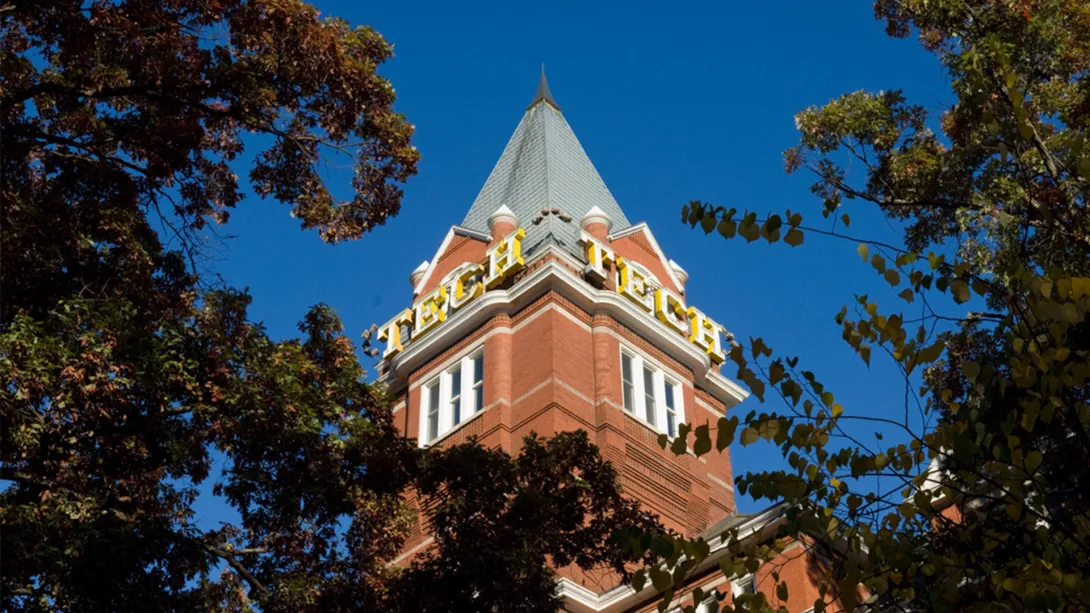
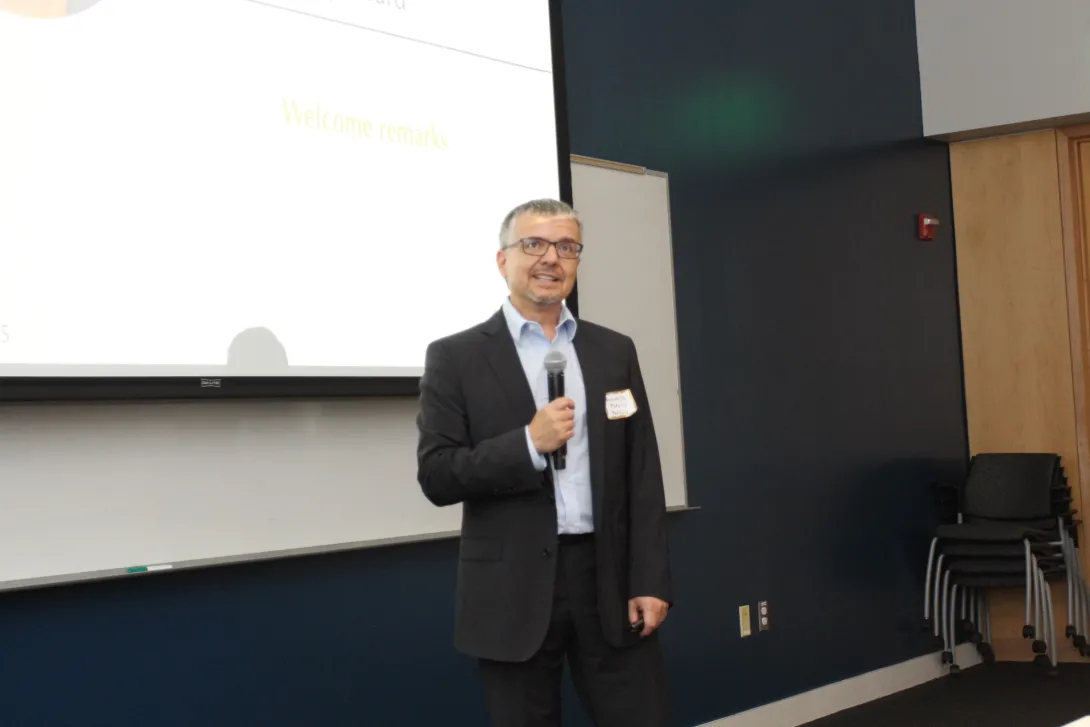
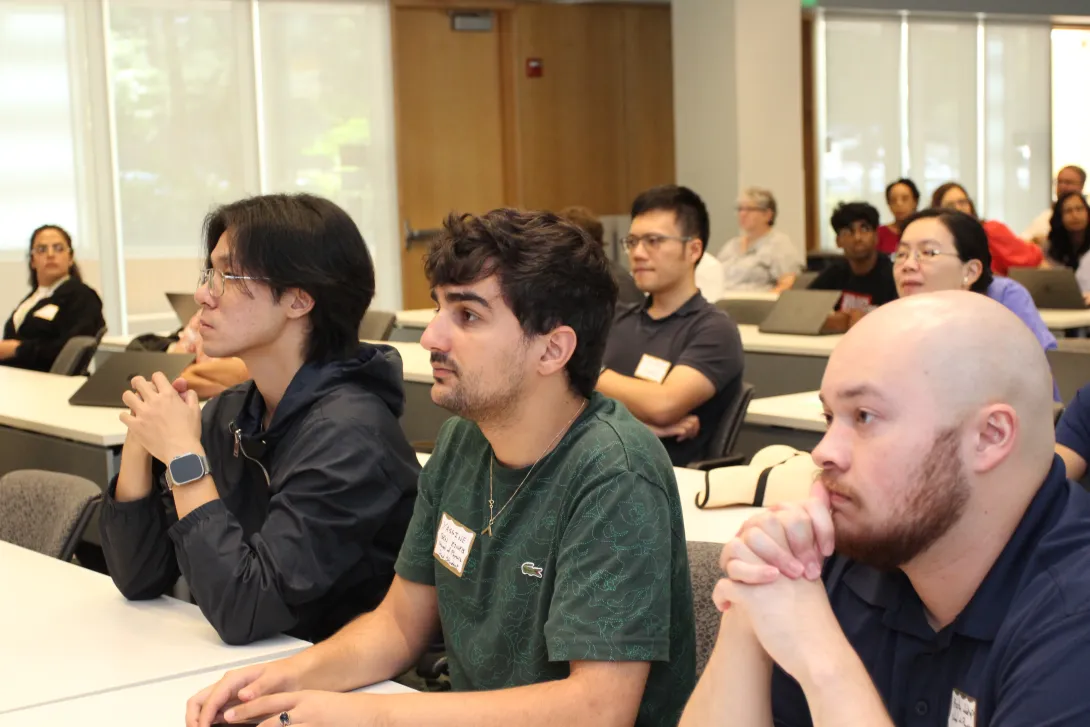

The College of Sciences is pleased to announce the launch of the AI4Science Center. The center will promote research and collaboration focused on using state-of-the-art artificial intelligence (AI) and machine learning (ML) techniques to address complex scientific challenges.
“AI and ML have the potential to revolutionize scientific discovery, but there is a clear need for foundational research centered on AI/ML methodologies and application to scientific problems,” says Dimitrios Psaltis, professor in the School of Physics.
Psaltis will co-lead the center with Molei Tao, professor in the School of Mathematics, and Audrey Sederberg, assistant professor in the School of Psychology.
The new center will combine expertise and resources from various disciplines to foster the creation of robust, reusable tools and methods that can be used across scientific domains. Specifically, the center will organize seminars and an annual conference in addition to providing seed funding for collaborative projects across units.
Nearly 40 faculty members from the College’s six schools have already agreed to participate in activities proposed by the center; additional faculty involvement is expected from across the Institute.
The center builds upon initiatives such as Tech AI, the Machine Learning Center, and the Institute for Data Engineering and Science, which seek to boost Georgia Tech’s leadership in cutting-edge, AI/ML-powered interdisciplinary research and education.
The College’s seed grant program will sponsor the center for three years, starting in fiscal year 2026. Created in 2024, this program funds new centers that seek to increase the College’s research impact and advance its strategic goal of excellence in research through a focus on novel interdisciplinary areas or discipline-specific topics of high impact. The AI4Science Center is the third initiative to be seeded by this program, following the funding of the Center for Sustainable and Decarbonized Critical Energy Mineral Solutions and the Center for Research and Education in Navigation in 2024.
“The AI4Science Center was selected for its approach, timeliness, organization, and strong support from all six of the College’s schools,” says Laura Cadonati, associate dean for Research and professor in the School of Physics. “Faculty enthusiasm about this initiative reflects the growing importance of AI/ML tools in research today and the desire for more interdisciplinary collaboration in this space at the College and beyond.”
News Contact
Writer: Lindsay C. Vidal
Apr. 28, 2025

By unlocking a new type of origami-inspired folding, a recent physics study could lead to advances in everything from heart stents to airplane wings. (Adobe Stock)
Origami — the Japanese art of folding paper — could be at the next frontier in innovative materials.
Practiced in Japan since the early 1600s, origami involves combining simple folding techniques to create intricate designs. Now, Georgia Tech researchers are leveraging the technique as the foundation for next-generation materials that can both act as a solid and predictably deform, “folding” under the right forces. The research could lead to innovations in everything from heart stents to airplane wings and running shoes.
Recently published in Nature Communications, the study, “Coarse-grained fundamental forms for characterizing isometries of trapezoid-based origami metamaterials,” was led by first author James McInerney, who is now a NRC Research Associate at the Air Force Research Laboratory. McInerney, who completed the research while a postdoctoral student at the University of Michigan, was previously a doctoral student at Georgia Tech in the group of study co-author Zeb Rocklin. The team also includes Glaucio Paulino (Princeton University), Xiaoming Mao (University of Michigan), and Diego Misseroni (University of Trento).
“Origami has received a lot of attention over the past decade due to its ability to deploy or transform structures,” McInerney says. “Our team wondered how different types of folds could be used to control how a material deforms when different forces and pressures are applied to it” — like a creased piece of cardboard folding more predictably than one that might crumple without any creases.
The applications of that type of control are vast. “There are a variety of scenarios ranging from the design of buildings, aircraft, and naval vessels to the packaging and shipping of goods where there tends to be a trade-off between enhancing the load-bearing capabilities and increasing the total weight,” McInerney explains. “Our end goal is to enhance load-bearing designs by adding origami-inspired creases — without adding weight.”
The challenge, Rocklin adds, is using physics to find a way to predictably model what creases to use and when to achieve the best results.
Deformable solids
Rocklin, a theoretical physicist and associate professor in the School of Physics at Georgia Tech, emphasizes the complex nature of these types of materials. “If I tug on either end of a sheet of paper, it's solid — it doesn’t separate,” he explains. “But it's also flexible — it can crumple and wave depending on how I move it. That’s a very different behavior than what we might see in a conventional solid, and a very useful one.”
But while flexible solids are uniquely useful, they are also very hard to characterize, he says. “With these materials, it is often difficult to predict what is going to happen — how the material will deform under pressure because they can deform in many different ways. Conventional physics techniques can't solve this type of problem, which is why we're still coming up with new ways to characterize structures in the 21st century.”
When considering origami-inspired materials, physicists start with a flat sheet that's carefully creased to create a specific three-dimensional shape; these folds determine how the material behaves. But the method is limited: only parallelogram-based origami folding, which uses shapes like squares and rectangles, had previously been modeled, allowing for limited types of deformation.
“Our goal was to expand on this research to include trapezoid faces,” McInerney says. Parallelograms have two sets of parallel sides, but trapezoids only need to have one set of parallel sides. Introducing these more variable shapes makes this type of creasing more difficult to model, but potentially more versatile.
Breathing and shearing
“From our models and physical tests, we found that trapezoid faces have an entirely different class of responses,” McInerney shares. In other words — using trapezoids leads to new behavior.
The designs had the ability to change their shape in two distinct ways: "breathing" by expanding and contracting evenly, and “shearing" by deforming in a twisting motion. “We learned that we can use trapezoid faces in origami to constrain the system from bending in certain directions, which provides different functionality than parallelogram faces,” McInerney adds.
Surprisingly, the team also found that some of the behavior in parallelogram-based origami carried over to their trapezoidal origami, hinting at some features that might be universal across designs.
“While our research is theoretical, these insights could give us more opportunities for how we might deploy these structures and use them,” Rocklin shares.
Future folding
“We still have a lot of work to do,” McInerney says, sharing that there are two separate avenues of research to pursue. “The first is moving from trapezoids to more general quadrilateral faces, and trying to develop an effective model of the material behavior — similar to the way this study moved from parallelograms to trapezoids.” Those new models could help predict how creased materials might deform under different circumstances, and help researchers compare those results to sheets without any creases at all. “This will essentially let us assess the improvement our designs provide,” he explains.
“The second avenue is to start thinking deeply about how our designs might integrate into a real system,” McInerney continues. “That requires understanding where our models start to break down, whether it is due to the loading conditions or the fabrication process, as well as establishing effective manufacturing and testing protocols.”
“It’s a very challenging problem, but biology and nature are full of smart solids — including our own bodies — that deform in specific, useful ways when needed,” Rocklin says. “That’s what we’re trying to replicate with origami.”
This research was funded by the Office of Naval Research, European Union, Army Research Office, and National Science Foundation.
Nov. 22, 2024
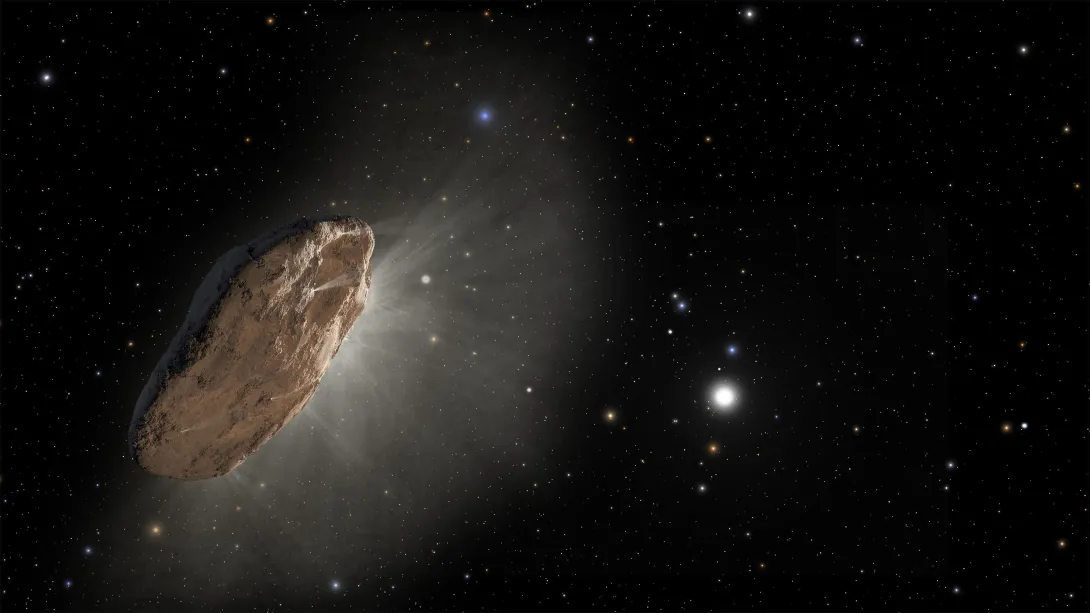
In 2017, a long, oddly shaped asteroid passed by Earth. Called ‘Oumuamua, it was the first known interstellar object to visit our solar system, but it wasn’t an isolated incident — less than two years later, in 2019, a second interstellar object (ISO) was discovered.
“‘Oumuamua was found passing just 15 million miles from Earth — that’s much closer than Mars or Venus,” says James Wray. “But it was formed in an entirely different solar system. Studying these objects could give us incredible insight into extrasolar planets, and how our planet fits into the universe.”
Wray, a professor in the School of Earth and Atmospheric Sciences at Georgia Tech, has just been awarded a Simons Foundation Pivot Fellowship to do just that. Pivot Fellowships are among the most prestigious sources of funding for cutting-edge research, and support leading researchers who have the deep interest, curiosity and drive to make contributions to a new discipline.
Wray has primarily studied the geoscience of Mars. He will leverage knowledge of nearby planets to understand ISOs and planets much farther away. “I want to understand how planets got to be the way they are, and if they could have ever hosted life,” he explains. “Extrasolar planets give us many more places to ask those questions than our solar system does, but they're too distant to visit with spacecraft. ISOs provide a unique opportunity to explore other solar systems without leaving our own.”
The Fellowship will provide salary support as well as funding for research, travel, and professional development. “Seed funds like this are so valuable,” says Wray. “I’m incredibly grateful to the Simons Foundation. I’d also like to thank Georgia Tech for its support,” he adds, sharing that the Center for Space Technology and Research supported a related research effort at the University of Hawaii earlier this year. “My mentor and I were able to spend some of that time improving our Pivot Fellowship proposal, which played a critical role in securing this Fellowship.”
In search of ISOs
Wray will study small solar system bodies like asteroids and comets to decode the processes of planet formation and space weathering, and will analyze data from the 2017 and 2019 ISOs.
He will also work alongside collaborators including Karen Meech of the University of Hawaii, who led the paper characterizing ‘Oumuamua, to conceptualize what an intercept mission might look like.
“We still have a lot of questions regarding ISOs,” he says. “Hundreds of papers have already been written about them, but we still don't know the answers.” One key mystery is the composition of the bodies: both the 2017 and 2019 objects were compositionally different from those in our solar system.
“Are they inherently different from the bodies in our solar system, or did the long journey to our solar system make them that way? Is our solar system different from others?” Wray asks. “We could answer so many questions with even a simple picture of the next ISO that comes close enough for us to intercept with spacecraft.”
A cosmic timeline
While there is no guarantee that another ISO might be spotted in our solar system, the timing is opportune — upcoming telescope surveys are poised to detect such interstellar objects. “In mid-2025, when I will start this Fellowship, the new Rubin Observatory will begin scanning the entire sky,” Wray says. “It has the potential to discover up to several new ISOs per year.”
“ISO visits are always brief,” he adds, “so the research needs to be in place for when one is spotted.” If an interstellar object is detected, Wray and Meech will be poised to leverage specialized telescopes in Hawaii, along with others worldwide, to better understand it, studying its size, shape, and composition — and potentially sending spacecraft to image it.
“We might never find another ISO — or they might be the key to imminent breakthroughs in understanding our place in the galaxy,” Wray adds. “I'm extremely grateful to the Simons Foundation for the flexibility to pursue this research at whatever pace the cosmos allows.”
News Contact
Written by Selena Langner
Apr. 22, 2024
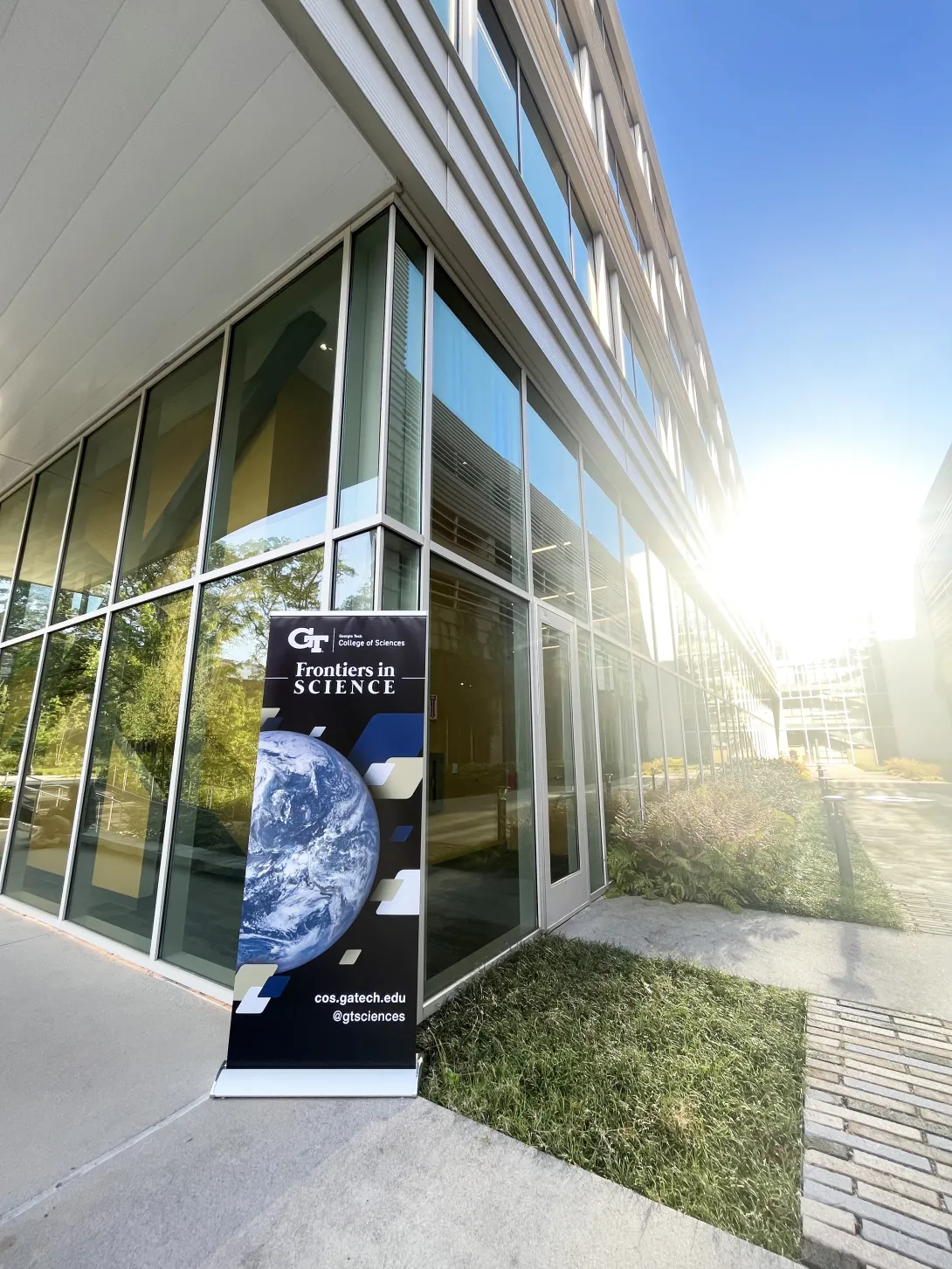
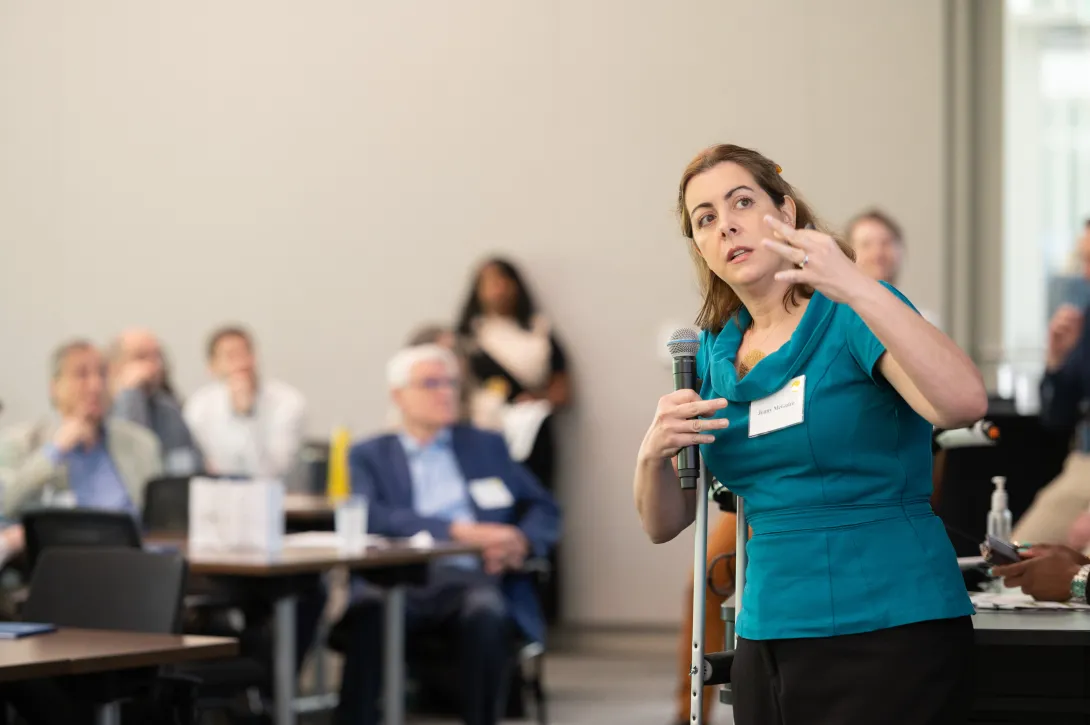
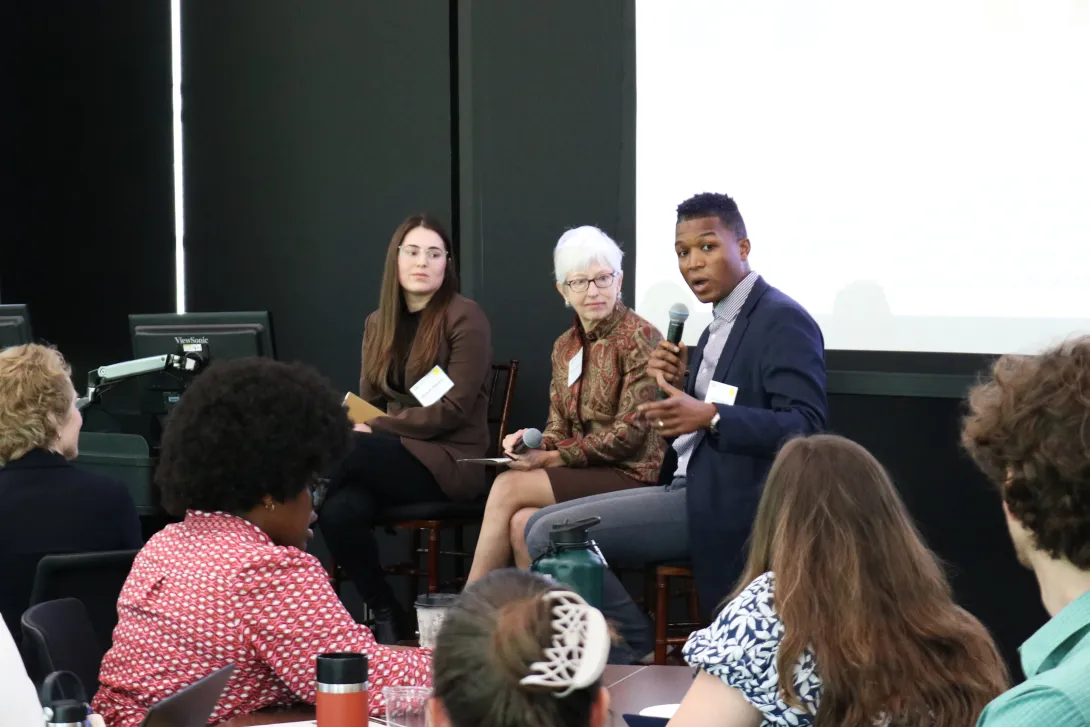
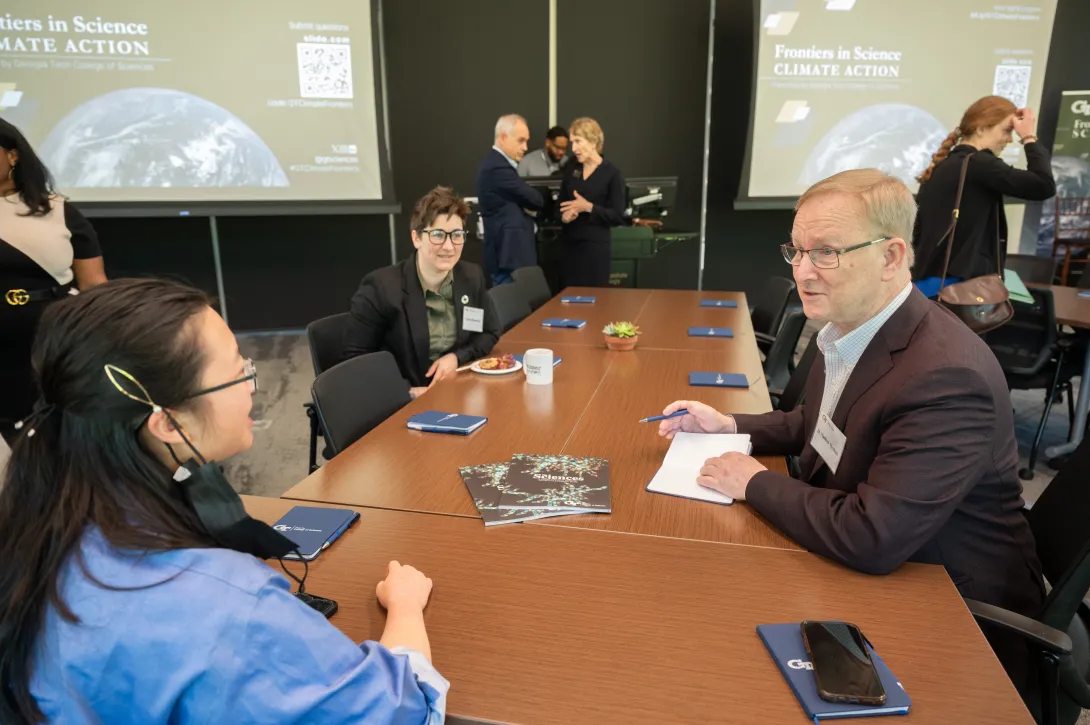
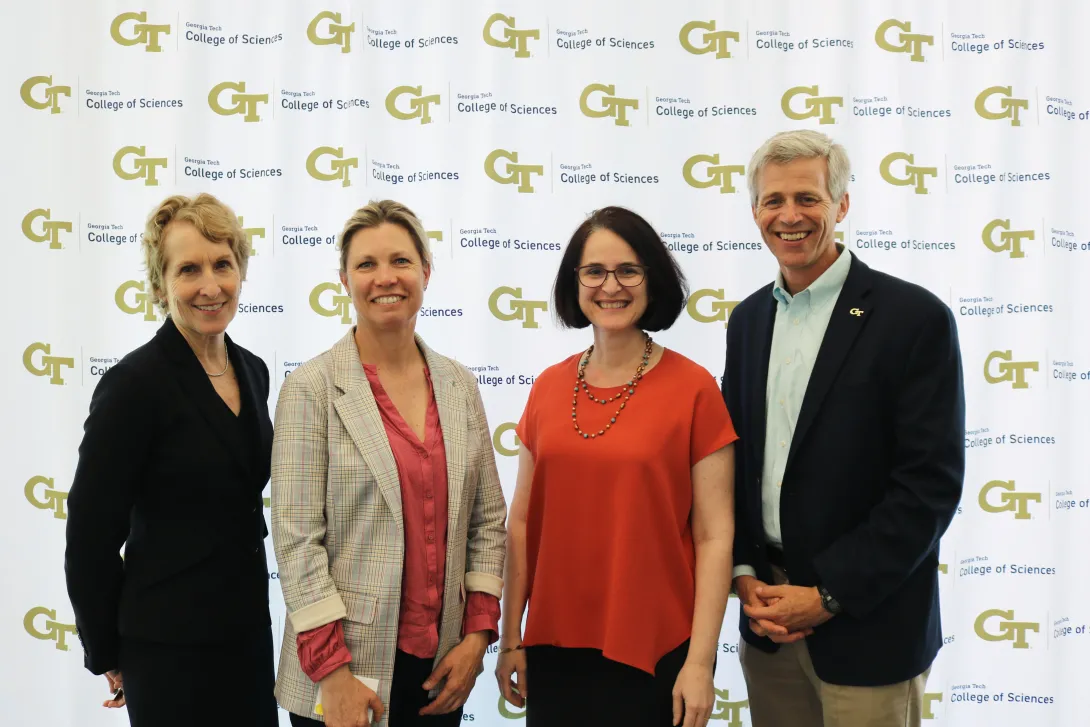
This Earth Month more than 100 campus and community stakeholders gathered near the Georgia Tech EcoCommons for the 2024 Frontiers in Science: Climate Action Conference and Symposium.
On April 18, the College of Sciences hosted more than 20 speakers and panelists from across the Institute and Atlanta community presenting groundbreaking research and discussing innovations and ideas in climate change, challenges, and solutions.
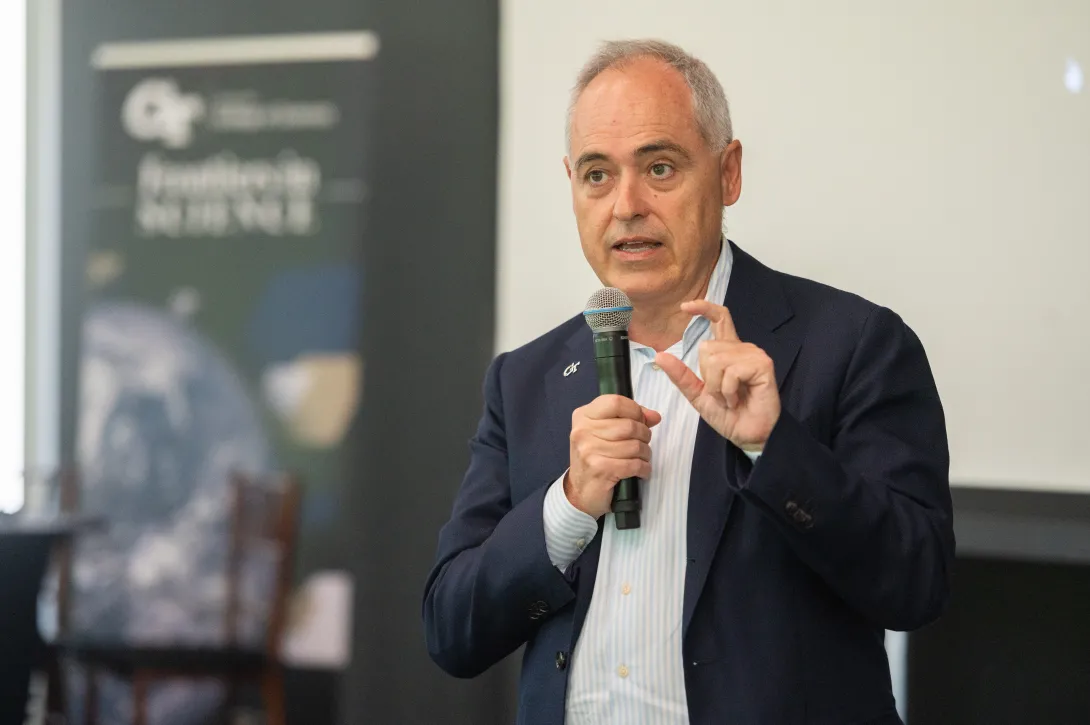
Georgia Tech President Ángel Cabrera (M.S. PSY 1993, Ph.D. PSY 1995) kicked off the morning sessions by highlighting the Institute’s new Climate Action Plan, which outlines the pathway to achieve net-zero emissions by 2050. Cabrera’s remarks focused on Georgia Tech’s role on the frontlines of research and education informing how we respond to climate challenges — and noted that the Institute’s work must extend beyond our laboratories and classrooms.
“It is essential that we not only do the science, but that we also tell that science to the world,” Cabrera says.
Interdisciplinary inquiry
This year, Frontiers in Science featured an array of climate research and initiatives led by the College of Sciences, fellow colleges across Georgia Tech, and the wider Atlanta community.
Following a three-year hiatus of the Frontiers series, the 2024 edition re-envisioned the signature annual event as a research conference and symposium to convene campus experts — and to incubate seed grant proposals to support the work of early career faculty.
Frontiers previously hosted Nobel laureates and invited thought leaders for individual talks across the College’s six schools, and celebrated milestones like the International Year of the Periodic Table of the Chemical Elements.
“This year, we wanted to showcase what we are doing right here in the College of Sciences and throughout the Institute,” says Susan Lozier, dean of the College of Sciences, Betsy Middleton and John Clark Sutherland Chair and professor in the School of Earth and Atmospheric Sciences. “Our faculty are at the forefront of broadening our knowledgebase and uncovering solutions in areas critical to the planet and our well-being. We wanted to uplift that work and see what sort of connections could be made.”
Connections and collaboration were key themes of the day as faculty, staff, students, and alumni participants representing all six Georgia Tech colleges shared research results and ongoing work and discussed collaborative ideas for horizons ahead.
“Scientists alone cannot [create accurate models],” noted Annalisa Bracco, professor in the School of Earth and Atmospheric Sciences and associate chair for Research, who shared her own research alongside Lozier, who presented a version of her 2024 TED Talk on ocean overturning. “Engineers alone cannot do it. We need social scientists, policy makers, communicators.”
The importance of an interdisciplinary approach was reinforced by the Strategic Energy Institute at Georgia Tech (SEI) and Brook Byers Institute for Sustainable Systems (BBISS), which announced an interdisciplinary seed grant funding opportunity for assistant professors with ideas for new climate solutions.
Frontiers in focus
Across three themed sessions, faculty and leadership from the Colleges of Sciences, Engineering, and Design spearheaded talks on the ocean and cryosphere, biodiversity, carbon cycling, coastal wetlands, biofuels production, and beyond.
Panels on climate challenges across community, technological, and policy initiatives were hosted by Georgia Tech Vice President for Interdisciplinary Research and Professor in the School of Biological Sciences and the School of Chemistry and Biochemistry Julia Kubanek.
Following a networking lunch with climate table topics, Georgia Tech Executive Vice President for Research and Professor in the School of Electrical and Computer Engineering Chaouki T. Abdallah (M.S. ECE 1982, Ph.D. ECE 1988) kicked off the afternoon sessions — which also announced the scholarship recipients of a student video competition and featured videos with a pair of alumnae working in meteorology, climate research, and policy.
Afternoon highlights also included discussions on the Georgia Tech Climate Action Plan and Sustainability Next initiative, led by Jennifer Chirico (B.S. MGMT 1997, Ph.D. PUBP 2011), associate vice president of Sustainability for Georgia Tech Infrastructure and Sustainability, and Jennifer Leavey (B.S. CHEM 1995), assistant dean for Faculty Mentoring in the College of Sciences and interim assistant director for Interdisciplinary Education in the Brook Byers Institute for Sustainable Systems.
Although many of the presentations provided a stern outlook of the state of our ecosystems, the conference concluded with a sense of hope. This optimism was grounded in the range of opportunities that exist to address climate challenges — thanks, in part, to the body of knowledge and solutions being tested and explored by Georgia Tech researchers.
At the end of the day, Katie Griffin, a first year undergraduate student in Environmental Science, read Amanda Gorman’s poem Earthrise and provided this reminder:
All of us bring light to exciting solutions never tried before
For it is our hope that implores us, at our uncompromising core,
To keep rising up for an earth more than worth fighting for.
Experience the event in pictures with the College of Sciences’ Flickr account, and discover the highlights through the day’s live tweets on College of Sciences’ X account.
News Contact
By: Lindsay Vidal
Jess Hunt-Ralston
Director of Communications
College of Sciences at Georgia Tech
Apr. 05, 2024
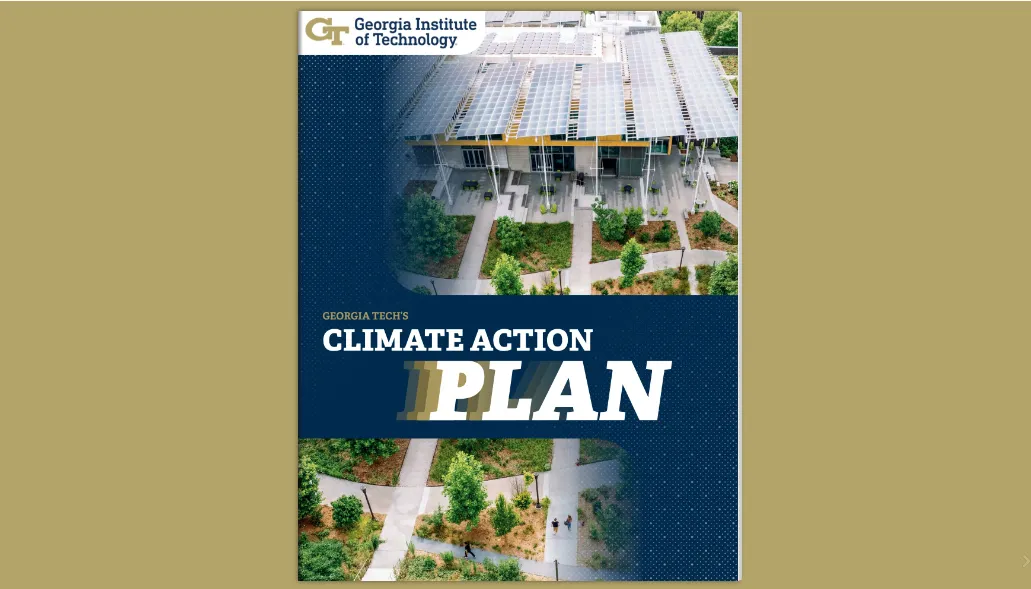
Georgia Tech unveiled its first Climate Action Plan (CAP), an actionable road map for halving Institute emissions by 2030 and reaching net-zero emissions by 2050. It provides strategies for mitigation, adaptation, climate education, and research, while finding ethical, cost-effective solutions.
The CAP is a deliverable of Sustainability Next, Georgia Tech’s 10-year strategic sustainability plan, and it is aligned with the United Nations Sustainable Development Goals, the Institute’s strategic plan, and the Comprehensive Campus Plan.
“As one of the world’s leading research universities, Georgia Tech has the opportunity, and the obligation, to create and share solutions that can help curb climate change and mitigate its harmful impact on our planet and our lives,” said President Ángel Cabrera. “Our Climate Action Plan is bold and ambitious, aiming for 100% clean ground transportation by 2030 and 100% clean energy by 2050. These goals are not easy, but they reflect the seriousness of the challenges before us.”
The CAP was led by Georgia Tech’s Office of Sustainability, with engagement across the campus community. The CAP Advisory Task Force, comprising experts and Institute leadership, helped guide the effort. Nine working groups in key focus areas developed climate action strategies, and additional stakeholder outreach with students, staff, faculty, and the Atlanta community took place at workshops, events, town halls, and webinars.
The plan’s nine focus areas and guiding principles are:
- Community, Ethics, and Accessibility: We seek to ensure that fair and just climate policies and strategies are in place at Georgia Tech and that they prioritize affordable climate change solutions that support our internal and external community.
- Building Energy: We are committed to reaching net-zero emissions by 2050.
- Renewable Energy and Offsets: We prioritize clean energy technologies to eliminate emissions.
- Mobility: We optimize campus mobility through a variety of transportation modes that are accessible, affordable, and low- to no-emissions, considering environmental and human health impacts when determining and implementing transit and land use actions.
- Materials Management: We support a thriving circular economy that focuses on upstream systems for achieving zero waste, ensures sustainable procurement, and supports our local community.
- Water Management: We adapt our water infrastructure to be resilient to the impacts of climate change.
- Education: We prepare all students, regardless of discipline, to address climate-related challenges in their personal and professional lives.
- Research: We expand support for faculty, staff, and students to advance innovative research and projects to address climate-related issues.
- Carbon Sequestration: We leverage the natural and physical resources of our campus to sequester and store carbon dioxide from the atmosphere.
The plan has 30 strategies for reaching net-zero emissions by 2050 and advancing climate research and education. The most ambitious strategies include:
- Transition to electrification of combustion-based heating systems.
- Increase energy efficiency in building operations.
- Increase on-site renewable energy production, and procure energy generated from renewable and zero-emissions sources.
- Transition the campus vehicle fleet to zero-emissions vehicles and increase sustainable and affordable commuting options.
- Implement blackwater reuse systems and increase water efficiency and conversation.
- Become a Zero Waste campus.
- Prioritize climate education across Georgia Tech’s curriculum.
- Identify and shape future climate research opportunities in which Georgia Tech aspires to lead.
“Georgia Tech is committed to sustainability and the environmental stewardship of our campus community,” said Jennifer Chirico, associate vice president of Sustainability and chair of the CAP Advisory Task Force. “The CAP was developed in partnership with leadership and with our own experts from within Georgia Tech. As we move toward implementation, it will require a whole-community approach, and we will continue to work together to reach our goal of net-zero emissions by 2050.”
To read or download the full plan, visit the Office of Sustainability’s webpage here. If you are interested in participating in an implementation committee, please fill out the form on the CAP website.
News Contact
Program and Portfolio Manager
Office of Sustainability
Infrastructure and Sustainability
Mar. 21, 2024
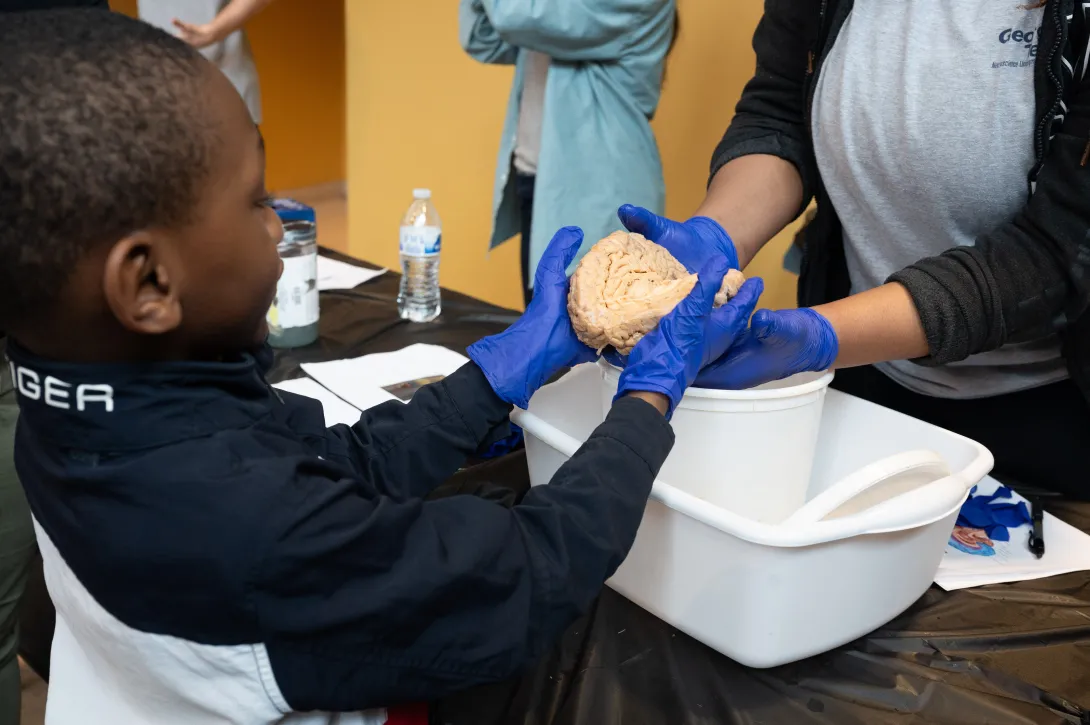
A young investigator holds a human brain. (Credit: Joya Chapman)
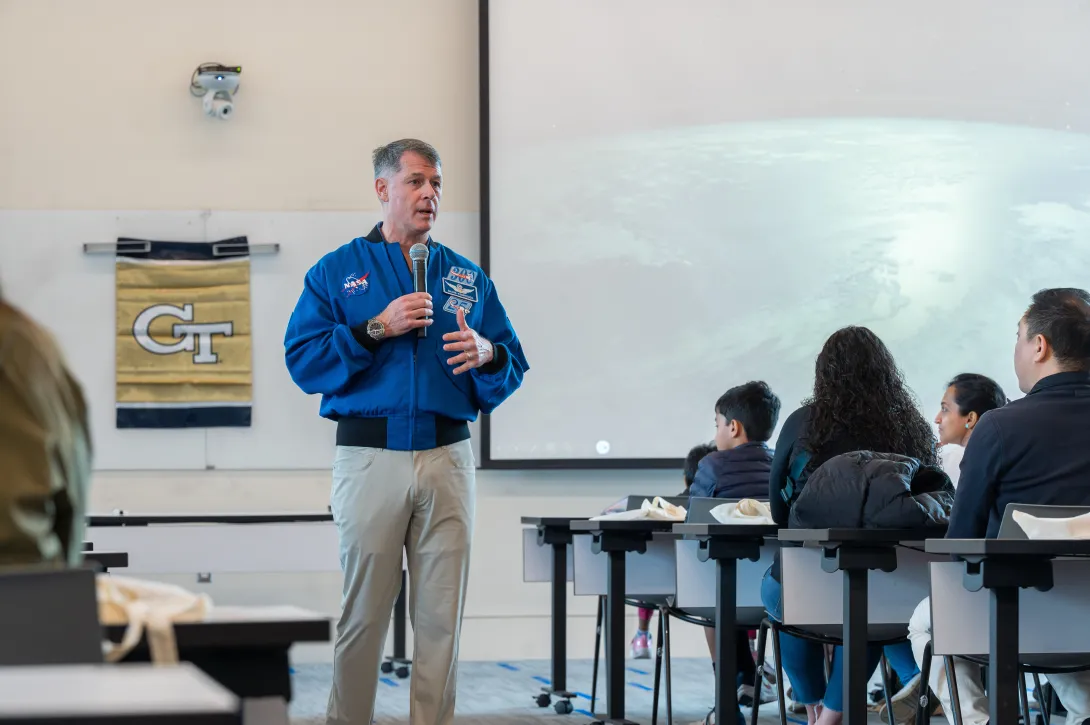
Former astronaut and Tech Alumnus Shane Kimbrough described what it was like to live and work in space to a packed crowd at Science and Engineering Day. (Credit: Joya Chapman)
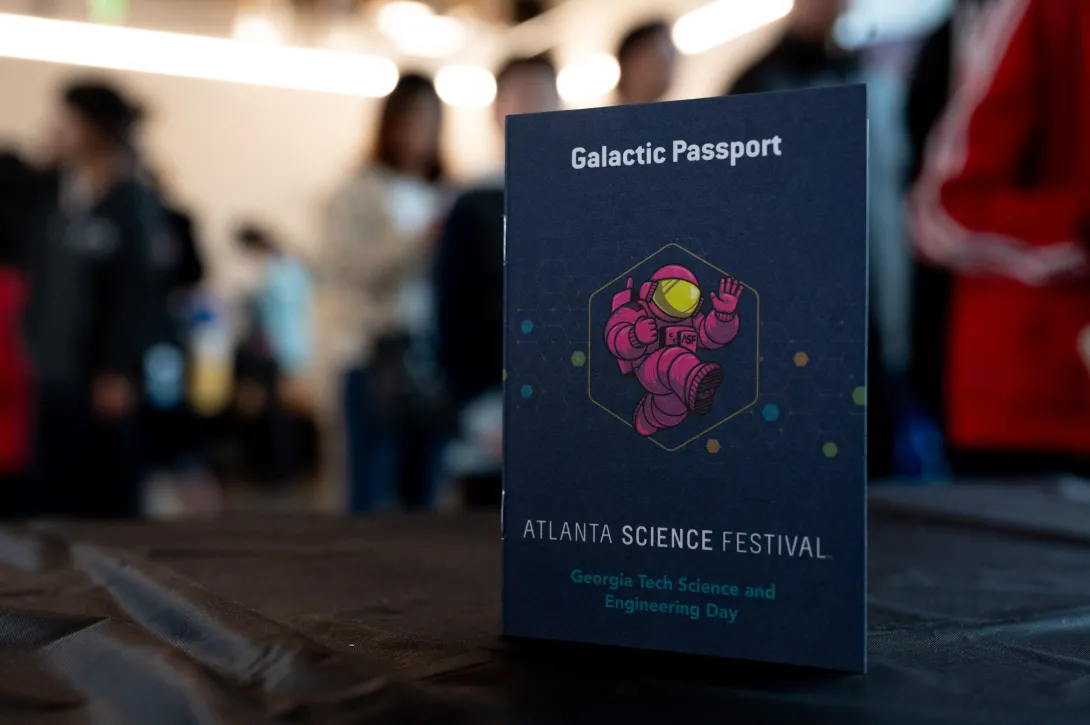
The Atlanta Science Festival Galactic Passport that visitors used to navigate their explorations around Georgia Tech's campus (Credit: Joya Chapman)
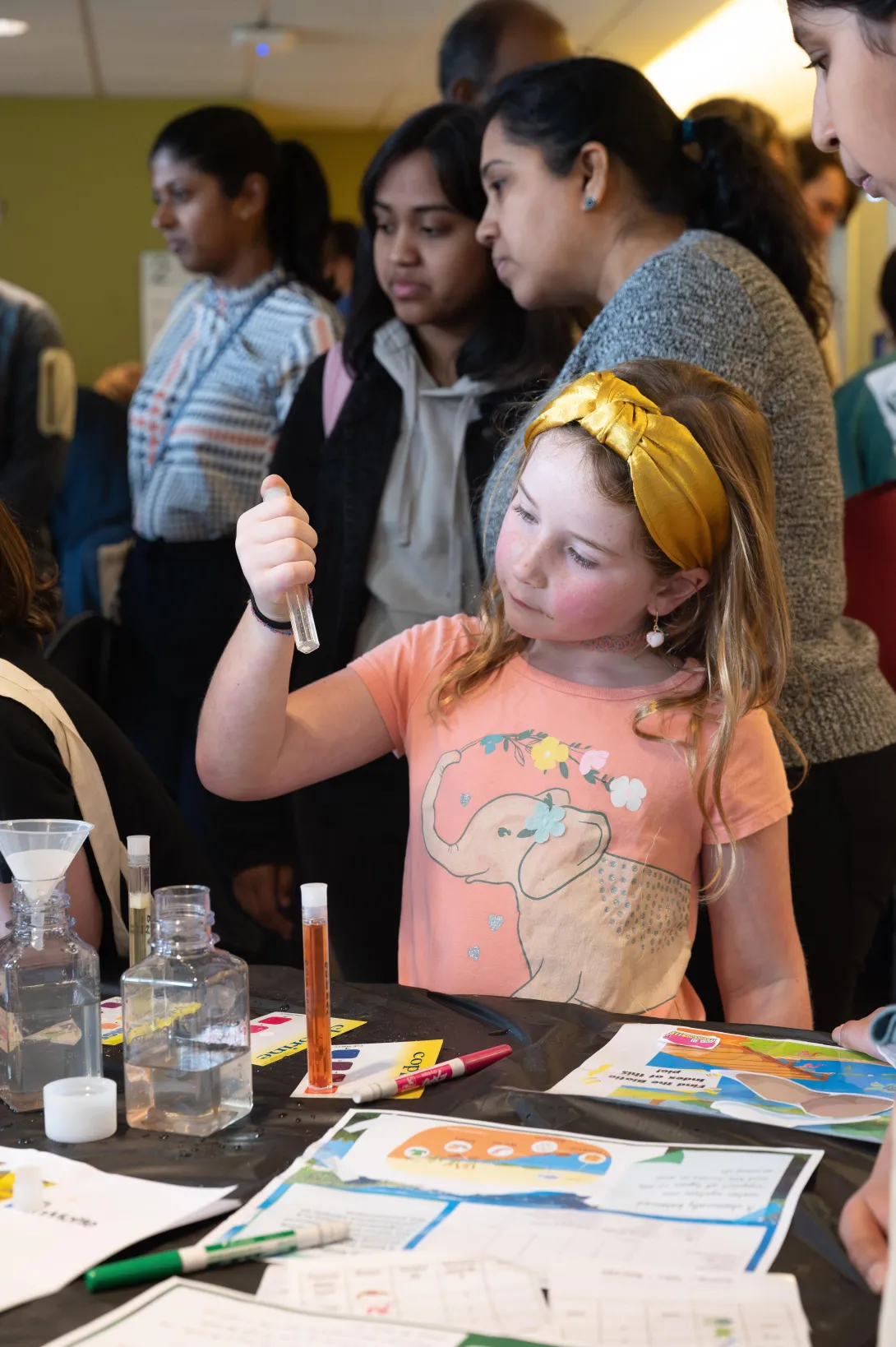
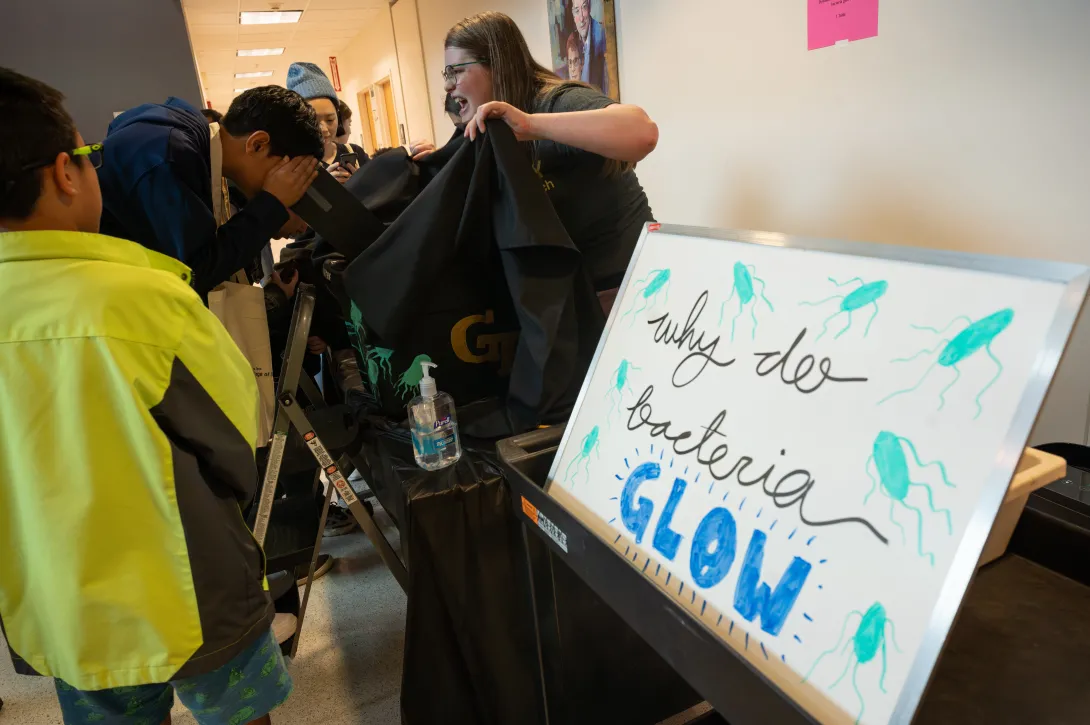
A budding scientist examines bioluminescent bacteria under a microscope. (Credit: Joya Chapman)
Georgia Tech opened the 11th annual Atlanta Science Festival (ASF) with record attendance for Science and Engineering Day. Despite the drizzly weather, about 4,000 people of all ages from throughout metro Atlanta — more than double the number of attendees in 2023 — visited campus on Saturday, March 9, 2024, for the space-themed event. They explored more than 45 exhibitions and hands-on activities related to art, robotics, nanotechnology, chemical and systems engineering, and biology, as well as other STEAM areas.
Visitors began their investigations at “Earth” (the Kendeda Building for Innovative Sustainable Design), where they picked up a galactic passport specially designed to guide them from building to building — each designated with the name of a planet — and the demonstrations housed within.
At “Mars” (Marcus Nanotechnology Building), attendees measured their height in nanometers, experimented with fruit batteries, and took a window-tour of the largest cleanroom in the Southeast, where semiconductors are developed. Inside “Venus” (Parker H. Petit Biotech Building), budding scientists examined bioluminescent bacteria under a microscope and made Play-Doh models of the human brain. When visiting “Saturn” (Ford Environmental Sciences and Technology Building), visitors studied density by making DIY lava lamps and inspected human brain specimens the way a pathologist would.
“Getting to hold a human brain was cool,” said a 12-year-old participant from Alpharetta. “And I also liked comparing it to the brains of a pig and a mouse.”
Other activities included math games and puzzles, the opportunity to build an artificial hand and a gallery display of research-inspired artwork. Georgia Tech faculty, students, and staff hosted all the demonstrations and served as volunteers who helped Science and Engineering Day guests navigate campus and the demonstration sites.
For many participants, the undoubted highlight was the chance to hear a presentation by former NASA astronaut and Georgia Tech alumnus Shane Kimbrough, MS OR 1998. Kimbrough spent 388 days in space over three missions and served as commander of the International Space Station (ISS) in 2016. He captivated the standing-room-only crowd with photos and descriptions of his time living and working aboard the ISS and answered questions from the kids in the audience.
“It’s really exciting to see all the activities around campus today … we’re inspiring the next generation of scientists and explorers for our country,” Kimbrough said afterward.
The event was a resounding success for Georgia Tech and the Atlanta Science Fair.
Lauren Overton-Kirk, who organized the event for the Institute, said, "Georgia Tech Science and Engineering Day 2024 was so wonderful to share with the community. What started years ago as a day for young scientific exploration became an all-ages, space-themed scientific spectacular. You could feel the passion for learning fill the campus in a way only Georgia Tech could do.”
Both the Georgia Tech and the Atlanta Science Festival teams are looking forward to next year’s Science and Engineering Day.
“As one of the founding organizations of the Atlanta Science Festival, Georgia Tech has been deeply invested in sharing the Institute’s innovations with the community,” said Meisa Salaita, ASF co-director. “And that investment was deeply evident on March 9th as they opened their doors to kick off the 11th annual Science Festival. Their students and faculty came out with enthusiasm to showcase science to the public. We couldn't be more thrilled with this partnership — and the many ways Tech has helped us show our community that Atlanta is a science city.”
News Contact
Shelley Wunder-Smith, Institute Communications
Oct. 30, 2023
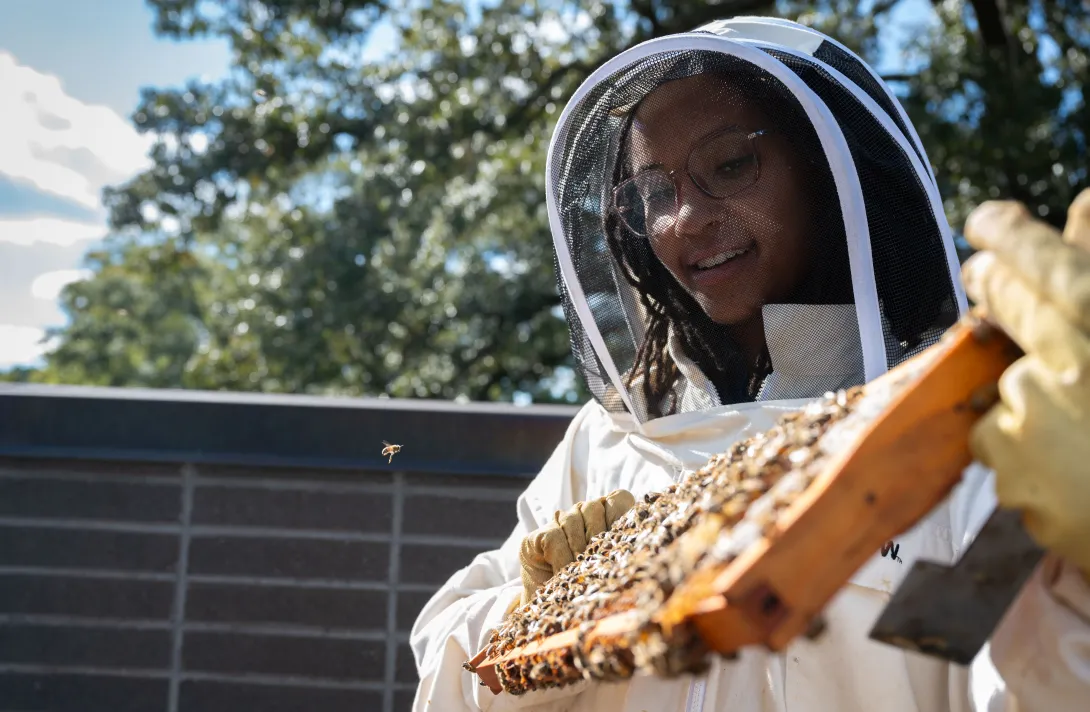
The Urban Honey Bee Project’s new beekeeper in residence is creating art and educating the public with her practice.
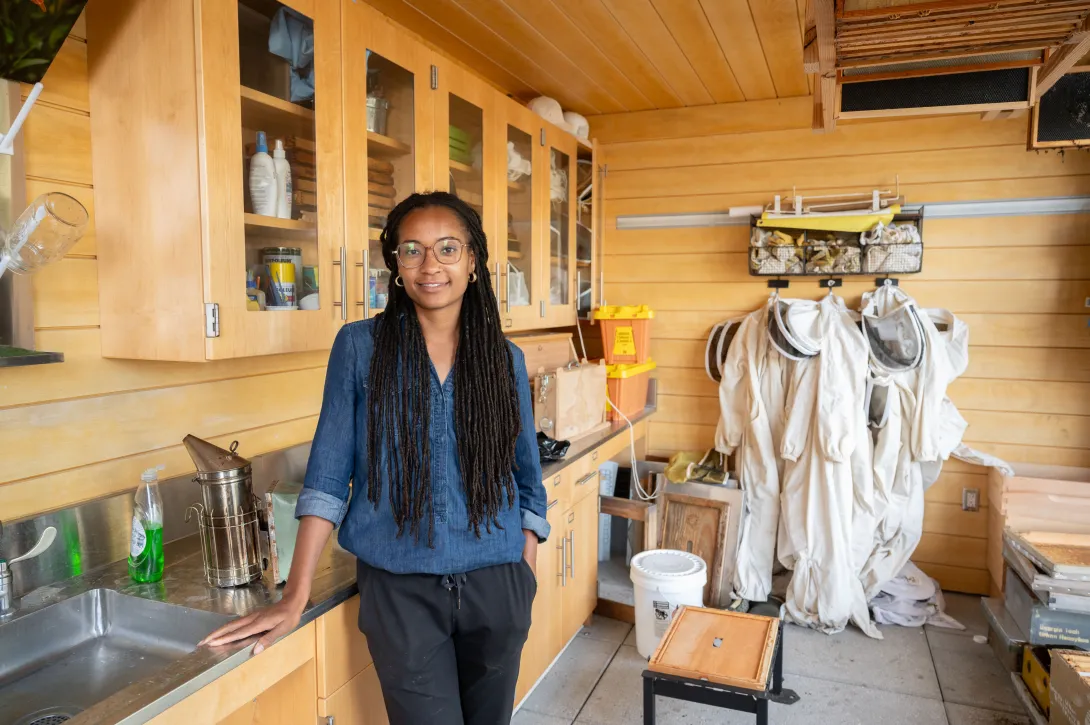
Janelle Dunlap conducts a hive inspection at The Kendeda Building for Innovative Sustainable Design. Photo by Allison Carter.
Hundreds of thousands of honeybees make their home atop The Kendeda Building for Innovative Sustainable Design, and it's up to Janelle Dunlap to make sure the hives thrive.
Dunlap was hired earlier this year as the Urban Honey Bee Project's (UHBP) first-ever beekeeper in residence. Throughout her residency, she'll conduct research into the pollinator's place in our ecosystem and how beekeeping may offer relief to veterans dealing with post-traumatic stress disorder (PTSD), while connecting with the bees through art.
Dunlap had been gardening for over a decade, but in 2016, when she got the urge to find new ways to engage with nature, she recalled a powerful piece of imagery that shaped her childhood — Wu-Tang Clan's music video for “Triumph” and its depiction of the group's members as a powerful swarm of Africanized killer bees.
"The political messaging and tying Africanized killer bees in with the stereotypes and the tropes of African Americans in the media, and the way that that was so poetically tied in, visually stuck with me,” she said. “It was the first time I recognized a political message being articulated through art. For that reason, it stuck with me that bees were a form of strong symbolism tied to resilience."
Living in Charlotte, North Carolina, Dunlap became a certified beekeeper under the Mecklenburg County Beekeepers Association in 2017. She continued practicing as she moved around the country, with stops in Chicago and Denver, eventually landing in Atlanta in 2021. Looking for a way to connect to the local beekeeping community, she attended an April presentation by UHBP Director Jennifer Leavey, who offered Dunlap a chance to get involved at Georgia Tech.
She now handles the inspection of the hives on The Kendeda Building roof, where she monitors for pests and ensures the bees have proper nutrition to sustain their population through the seasons. The UHBP began in 2012 with the goal of educating the Tech community on the importance of these pollinators within the Atlanta ecosystem and beyond — a charge that Dunlap carries on.
Over the next year, she will continue working on her sound art project that examines the frequency at which bees “buzz” and how it, along with the responsibilities of beekeeping, is being used by VA hospitals and programs to ease the effects of PTSD. While the science behind the connection is still being explored, beekeeping was recommended more than a century ago — to soldiers returning home from World War I — according to a CNBC profile of Bees4Vets, a nonprofit based in Nevada.
From the Hive to the Canvas
Whether it was baking sourdough bread or learning a new language, many people, including Dunlap, took the early days of the Covid-19 pandemic to pick up a new hobby. She began a master's program at the School of the Art Institute of Chicago with the goal of using beeswax in encaustic painting, which uses hot wax mixed with pigments. The use of natural materials collected through her beekeeping practice connects Dunlap to her work.
“It's a way of tapping into another level of consciousness. It's a way of articulating the noncommunicable relationship between me and the bees. When there's a language gap between people, we try to fill it in with translation, but without a direct way to translate the language or the sensation that I feel from the bees, this allows me to document my practice in an abstract form,” she said.
By layering the wax and applying heat throughout the process, Dunlap watches the pieces take shape, often with the unpredictability of an active hive, as she says the art “can create itself.” She collects the wax in small amounts, knowing that she can only produce her art if the bees are healthy.
"It's an eco-conscious practice, making sure I don't use more than I need," she explained. “I love the landscape it creates, and it's all about me creating a direct relationship with my medium and knowing that I earned it by developing a relationship with the bees."
As Dunlap continues her year-long residency with the UHBP, she intends to help educate the community, both on campus and around the Atlanta area, in the hopes that more prospective beekeepers will explore their curiosity to unlock the full potential of the practice.
"It's been a practice that keeps unveiling itself to me," she said. "As you get more engaged, you learn there is so much more to it than just the day-to-day hive inspections. There is a lot of beauty to it as well."
Students at Tech have several ways to get involved with research and beekeeping, including the Living Building Science VIP team, the Beekeeping Club, and various classes and workshops hosted by the UHBP.
News Contact
Steven Gagliano - Institute Communications
Jun. 12, 2023
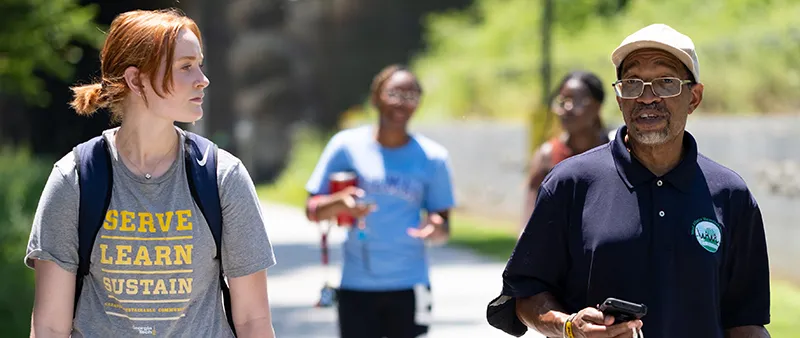
A student wearing a "Serve-Learn-Sustain" tee shirt walks along a campus walkway with a Georgia Tech faculty member. Photo Credit Ben Gray, AJC.
The Vice President for Interdisciplinary Research (VPIR) and the Office of Undergraduate Education (OUE) are excited to announce an institutionalization plan for Serve-Learn-Sustain (SLS) that will advance two of Georgia Tech’s Institute Strategic Plan (ISP) initiatives - Sustainability Next and Transformative Teaching and Learning (TTL) - and strengthen our service learning, community engagement, and sustainability ecosystems at Georgia Tech. Established as Georgia Tech’s last Quality Enhancement Plan (QEP), SLS launched in 2016 as a unit in OUE and concluded its official QEP work in 2021. Its work on the QEP earned Georgia Tech a commendation from the Southern Association of Colleges and Schools Commission on Colleges and established a strong foundation to build on moving forward.
Effective July 1, 2023, the current SLS team will establish a new center, the Center for Sustainable Communities Research and Education (CSCRE), under the VPIR. The Brook Byers Institute for Sustainable Systems (BBISS), which is serving as a hub for coordinating Georgia Tech’s Sustainability Next Strategic Plan initiative, will serve as the administrative home for the new center.
CSCRE will collaborate with the sustainability cluster of the Interdisciplinary Research Institutes (IRIs), including BBISS, the Strategic Energy Institute (SEI), and the Renewable Bioproducts Institute (RBI), as well as Infrastructure and Sustainability, another key Sustainability Next hub, to enhance Georgia Tech’s competitiveness in applying for grants that require meaningful community partnerships as a key component of their research and education plans. It will also continue to support sustainable communities education, in close collaboration with the Center for Teaching and Learning (CTL), OUE, and Education and Learning, to assure the continuity of SLS’s signature programs.
Established as Georgia Tech’s last QEP, Serve-Learn-Sustain launched in 2016 as a unit in OUE and concluded its official QEP work in 2021. Georgia Tech earned a commendation from the Southern Association of Colleges and Schools Commission on Colleges in 2021 for the “exceptional execution” of the 2016 QEP, citing, among other things, that the program “inspired a closer dialogue among faculty regarding research and instructional practices, and thus serves as a model of how a QEP can transform an academic culture.”
To continue advancing and scaling undergraduate service learning and community engagement as a high-impact practice, OUE will establish a new service learning team, as a priority that supports the Transformative Teaching and Learning ISP initiative. Institutionalizing the service-learning functions of SLS within OUE and aligning it with other high impact practices - such as undergraduate research, student innovation programs, first-year seminars, co-op and internships, and learning communities - will position these programs to work collectively in support of the development of Georgia Tech’s next QEP, which will begin in 2025.
Thank you to the SLS staff and to everyone who has collaborated with and supported the work that SLS has spearheaded to make Georgia Tech a better place for our students, our faculty and staff, and our surrounding communities. We look forward to continuing to advance this work, together.
News Contact
Brent Verrill, Research Communications Program Manager, BBISS
May. 16, 2023

Georgia emissions fell 5% from 2017 to 2021, according to the Drawdown Georgia research team led by Regents' Professor Marilyn Brown.
Overall greenhouse gas emissions in Georgia fell by 5% between 2017 and 2021, mostly due to the increased use of natural gas and solar for electricity generation, according to the research team behind the Drawdown Georgia climate initiative. Emissions from agriculture and the average individual carbon footprint also shrank.
The decline in emissions comes against a 10% expansion in the state’s economy, showing the potential for reducing emissions while pursuing economic growth, according to the team.
However, the team’s data also show a stark increase in transportation-related emissions, which now exceed pre-pandemic levels and has become the state’s largest source of climate pollution, according to Marilyn Brown, Regents’ Professor and Brook Byers Professor of Sustainable Systems in the School of Public Policy and the principal investigator on the Drawdown Georgia research team.
“While not all of the numbers are trending in the right direction, these data clearly show significant improvements in many sectors of our economy and also highlight where we have the greatest opportunities, namely transportation,” Brown said.
Track Greenhouse Gas Emissions in Your County
The report shows that while emissions from the electricity sector declined more than 15% between 2017 and 2021, transportation sources including cars and trucks put out 4% more climate-warming emissions in 2021 than five years earlier. Emissions from diesel vehicles spiked 16.1%, likely due to increased demand for delivery services driven by online shopping.
Emissions from Georgia’s agricultural and food sector fell by 7.1% during the study period while the average individual carbon footprint of Georgians declined from 22,092 pounds to 20,253 pounds.
“Based on the collaborations we’re a part of, we’re confident this is only the beginning of Georgia’s carbon reduction trend,” John Lanier, executive director of the Ray C. Anderson Foundation, said in a news release on the findings.
The foundation is a primary funder of Drawdown Georgia.
Brown leads the research team, which spans several Georgia colleges and universities. She is an internationally known climate policy researcher who has dedicated most of her career to helping solve the climate crisis.
The analysis is based on data from the first-of-its-kind Drawdown Georgia Emissions Tracker, which aggregates information from federal Energy Department, Transportation Department, and Environmental Protection Agency reports. The tracker was produced by a team of scientists led by William Drummond in the School of City and Regional Planning.
For a more detailed analysis of the findings, visit the Drawdown Georgia blog.
News Contact
Michael Pearson
Ivan Allen College of Liberal Arts
Apr. 20, 2023
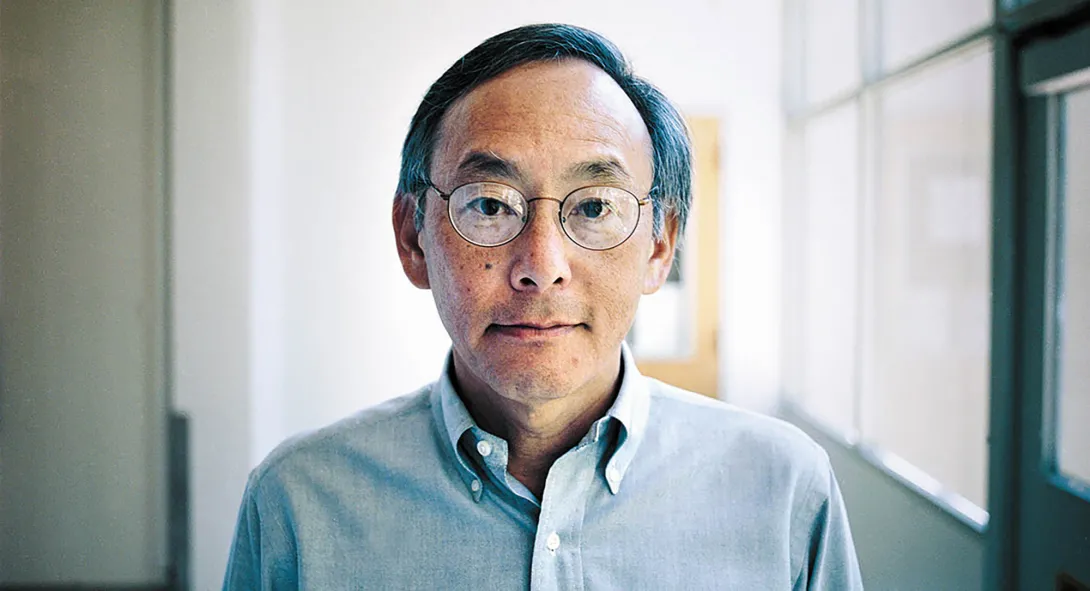

On April 26, 2023, the School of Physics and College of Sciences at Georgia Tech will welcome Stanford University physicist Steven Chu to speak on climate change and innovative paths towards a more sustainable future. Chu is the 1997 co-recipient of the Nobel Prize in Physics, and in his former role as U.S. Secretary of Energy, became the first scientist to hold a U.S. Cabinet position.
About the Talk
The event is part of the School of Physics “Inquiring Minds” public lecture series, and will be held at the Ferst Center for the Arts. The talk is free and open to campus and the Atlanta community, and no RSVP is required. Refreshments begin at 4:30, and the lecture will start at 5 p.m. ET.
“The multiple industrial and agricultural revolutions have transformed the world,” Chu recently shared in an abstract for the lecture. “However, an unintended consequence of this progress is that we are changing the climate of our planet. In addition to the climate risks, we will need to provide enough clean energy, water, and food for a more prosperous world that may grow to 11 billion by 2100.”
The talk will discuss the significant technical challenges and potential solutions that could provide better paths to a more sustainable future. “How we transition from where we are now to where we need to be within 50 years is arguably the most pressing set of issues that science, innovation, and public policy have to address,” Chu added.
The event’s faculty host is Daniel Goldman, Dunn Family Professor in the School of Physics at Georgia Tech.
About Steven Chu
Steven Chu is the William R. Kenan, Jr. Professor of Physics and a professor of Molecular and Cellular Physiology in the Medical School at Stanford University.
Chu served as the 12th U.S. Secretary of Energy from January 2009 until the end of April 2013. As the first scientist to hold a U.S. Cabinet position and the longest serving Energy Secretary, Chu led several initiatives including ARPA-E (Advanced Research Projects Agency – Energy), the Energy Innovation Hubs, and was personally tasked by President Obama to assist in the Deepwater Horizon oil leak.
In the spring of 2010, Chu was the keynote speaker for the Georgia Tech Ph.D. and Master's Commencement Ceremony.
Prior to his cabinet post, Chu was director of the Lawrence Berkeley National Laboratory, where he was active in pursuit of alternative and renewable energy technologies, and a professor of Physics and Applied Physics at Stanford, where he helped launch Bio-X, a multi-disciplinary institute combining the physical and biological sciences with medicine and engineering. Previously he also served as head of the Quantum Electronics Research Department at AT&T Bell Laboratories.
He is the co-recipient of the 1997 Nobel Prize in Physics for his contributions to laser cooling and atom trapping. He is a member of the National Academy of Sciences, the American Philosophical Society, the American Academy of Arts and Sciences, the Pontifical Academy Sciences, and of seven foreign academies. He formerly served as president, and then chair of the American Association for the Advancement of Science.
Chu earned an A.B. degree in mathematics and a B.S. degree in physics from the University of Rochester, and a Ph.D. in physics from the University of California, Berkeley, as well as 35 honorary degrees.
He has published over 280 papers in atomic and polymer physics, biophysics, biology, bio-imaging, batteries, and other energy technologies. He holds 15 patents, and an additional 15 patent disclosures or filings since 2015.
News Contact
Jess Hunt-Ralston
Director of Communications
College of Sciences at Georgia Tech