
Along with the Georgia Tech faculty tapped and reappointed as Regents’ Professors and Researchers at the Aug. 9 University System of Georgia (USG) Board of Regents meeting were five Georgia Tech professors named to the new distinction of Regents’ Entrepreneur.
Georgia Tech faculty named as the first Regents' Entrepreneurs in the USG include Farrokh Ayazi, Ken Byers Professor in Microsystems, School of Electrical and Computer Engineering; Kirk Bowman, professor, Sam Nunn School of International Affairs; Andrei Fedorov, Neely Chair and professor, George W. Woodruff School of Mechanical Engineering and the Petit Institute for Bioengineering and Bioscience; Mark Prausnitz, Regents’ Professor, J. Erskine Love Jr. Chair, School of Chemical and Biomolecular Engineering; and Gleb Yushin, professor, School of Materials Science and Engineering.
Regents’ Professor First-Time Appointments
The Board of Regents approved the title of Regents’ Professor to Facundo Fernández, professor and Vasser Woolley Foundation Chair in Bioanalytical Chemistry, School of Chemistry and Biochemistry; Willie Pearson, professor, School of History and Sociology; Krishnendu Roy, professor, Robert A. Milton Endowed Chair, NSF Engineering Research Center for Cell Manufacturing Technologies, Wallace H. Coulter Department of Biomedical Engineering; and Beril Toktay, professor of Operations Management and Brady Family Chair, Scheller College of Business.
Regents’ Researcher First-Time Appointments
Those named as Regents’ Researchers include Stephen Balakirsky, principal research scientist, Georgia Tech Research Institute (GTRI); Anton Bryksin, principal research scientist, Petit Institute for Bioengineering and Bioscience; Walter Bradley Fain, principal research scientist, School of Public Policy; and Anita Pavadore, principal research engineer, GTRI.
First-Time Reappointments
Receiving a first-time reappointment as Regents’ Professor was Surya Kalidindi, Regents’ Professor, Rae S. and Frank H. Neely Chair, George W. Woodruff School of Mechanical Engineering. Receiving a first-time reappointment as Regents’ Researcher was Margaret Loper, principal research scientist, GTRI.
Other Reappointments
Regents’ Professor and Researcher designations only require Institute approval for second-time reappointments. Second-time Regents’ Professor appointments at Georgia Tech include Sy Goodman, Regents’ Professor, Sam Nunn School of International Affairs; Nicholas Hud, Regents’ Professor, School of Chemistry and Biochemistry; and Vladimir Tsukruk, Regents’ Professor, School of Materials Science and Engineering. Receiving a second-time Regents’ Researcher reappointment was Alexa Harter, director of the Cybersecurity, Information Protection, and Hardware Evaluation Research Laboratory at GTRI.
New Recognition for Entrepreneurship and Innovation
The board approved the Regents’ Entrepreneur designation in their February 2022 meeting to recognize and support faculty entrepreneurship and innovation. The Regents’ Entrepreneur designation may be granted by the Board of Regents to an outstanding full-time tenured faculty member who has an established reputation as a successful innovator and who has taken their research into a commercial setting. The Regents’ Entrepreneur designation is bestowed by the board only upon the unanimous recommendation of the USG institution president, the chief academic officer, and the chancellor, and upon the approval of the Committee on Academic Affairs.
Farrokh Ayazi
Farrokh Ayazi is director of the Georgia Tech Analog Consortium. His main research interest is in integrated micro and nano electromechanical systems and integrated microsystem design. He is the founder and chief technology officer of Qualtré, which was acquired by Panasonic in 2016. He is currently leading StethX Microsystems, an ATDC company, in commercializing advanced wearable sensors for cardiopulmonary applications.
Kirk Bowman
Kirk Bowman is the Rise Up & Care term chair in Global Development and Identity. In 2014, Bowman founded Rise Up & Care, a nonprofit corporation that employs an innovative model of international community development, combining global development research; high-level performance organizations in the Global South to transform youth; powerful documentary films by top local directors; and children's books illustrated by local street artists. He directs a Georgia Tech Vertically Integrated Project on Global Social Entrepreneurship with 18 undergraduate students.
Andrei G. Fedorov
Andrei G. Fedorov’s research covers atomic scale nanomanufacturing; distributed power generation with carbon dioxide management; instrumentation for biomedical research; and thermal management of electronics and medicine. With his students and collaborators, Fedorov started several technology companies to commercialize his inventions in the space of gene/drug delivery; biomarker discovery and quality control in cell therapy manufacturing; and thermal management of high-power generation devices.
Mark Prausnitz
Mark Prausnitz has co-founded seven companies that have together raised more than $350 million for commercialization of microneedle technologies developed in his lab at Georgia Tech. Three of the companies have products for sale, including an FDA-approved treatment of ocular inflammation. His technologies have been studied in more than 20 human clinical trials. He has almost 80 issued or pending U.S. patents, with additional international filings. Prausnitz has published more than 300 journal articles and supervised 50 Ph.D. students among a total of almost 350 graduate, postdoctoral, or undergraduate researchers in his lab.
Gleb Yushin
Gleb Yushin is a pioneer and globally recognized leader in advanced materials for next-generation Li-ion batteries. He is member of the National Academy of Inventors and fellow of three international professional societies. He has been awarded more than 200 patents, while also being one of the most cited Georgia Tech professors since 2019. He co-founded the most economically successful Georgia Tech startup Sila Nanotechnologies ($3.3B valuation). Yushin has served as a founding faculty advisor for the Entrepreneurs Club at Tech and as an advisor to the Georgia Tech startup CellFE.
Regents’ Professorships and Regents’ Researcher titles may be granted for a period of three years by the Board of Regents to outstanding faculty members of Georgia Tech, Augusta University, Georgia State University, the University of Georgia, and, in special circumstances, other USG institutions.
News Contact
Dawn Baunach, Associate Vice Provost for Faculty


A team of researchers at the University of Massachusetts Amherst and the Georgia Institute of Technology has 3D printed a dual-phase, nanostructured high-entropy alloy that exceeds the strength and ductility of other state-of-the-art additively manufactured materials, which could lead to higher-performance components for applications in aerospace, medicine, energy and transportation. The research, led by Wen Chen, assistant professor of mechanical and industrial engineering at UMass, and Ting Zhu, professor of mechanical engineering at Georgia Tech, was published in the August issue of the journal Nature.
Over the past 15 years, high entropy alloys (HEAs) have become increasingly popular as a new paradigm in materials science. Comprised of five or more elements in near-equal proportions, they offer the ability to create a near-infinite number of unique combinations for alloy design. Traditional alloys, such as brass, carbon steel, stainless steel and bronze, contain a primary element combined with one or more trace elements.
Additive manufacturing, also called 3D printing, has recently emerged as a powerful approach of material development. The laser-based 3D printing can produce large temperature gradients and high cooling rates that are not readily accessible by conventional routes. However, “the potential of harnessing the combined benefits of additive manufacturing and HEAs for achieving novel properties remains largely unexplored,” says Zhu.
Chen and his team in the Multiscale Materials and Manufacturing Laboratory combined an HEA with a state-of-the-art 3D printing technique called laser powder bed fusion to develop new materials with unprecedented properties. Because the process causes materials to melt and solidify very rapidly as compared to traditional metallurgy, “you get a very different microstructure that is far-from-equilibrium” on the components created, Chen says. This microstructure looks like a net and is made of alternating layers known as face-centered cubic (FCC) and body-centered cubic (BCC) nanolamellar structures embedded in microscale eutectic colonies with random orientations. The hierarchical nanostructured HEA enables co-operative deformation of the two phases.
“This unusual microstructure’s atomic rearrangement gives rise to ultrahigh strength as well as enhanced ductility, which is uncommon, because usually strong materials tend to be brittle,” Chen says. Compared to conventional metal casting, “we got almost triple the strength and not only didn’t lose ductility, but actually increased it simultaneously,” he says. “For many applications, a combination of strength and ductility is key. Our findings are original and exciting for materials science and engineering alike.”
“The ability to produce strong and ductile HEAs means that these 3D printed materials are more robust in resisting applied deformation, which is important for lightweight structural design for enhanced mechanical efficiency and energy saving,” says Jie Ren, Chen’s Ph.D. student and first author of the paper.
Zhu’s group at Georgia Tech led the computational modeling for the research. He developed dual-phase crystal plasticity computational models to understand the mechanistic roles played by both the FCC and BCC nanolamellae and how they work together to give the material added strength and ductility.
“Our simulation results show the surprisingly high strength yet high hardening responses in the BCC nanolamellae, which are pivotal for achieving the outstanding strength-ductility synergy of our alloy. This mechanistic understanding provides an important basis for guiding the future development of 3D printed HEAs with exceptional mechanical properties,” Zhu says.
In addition, 3D printing offers a powerful tool to make geometrically complex and customized parts. In the future, harnessing 3D printing technology and the vast alloy design space of HEAs opens ample opportunities for the direct production of end-use components for biomedical and aerospace applications.
Additional research partners on the paper include Texas A&M University, the University of California Los Angeles, Rice University, and Oak Ridge and Lawrence Livermore national laboratories.
Story by Melinda Rose, Associate News Editor at UMass Amherst.
News Contact
Catherine Barzler, Georgia Tech
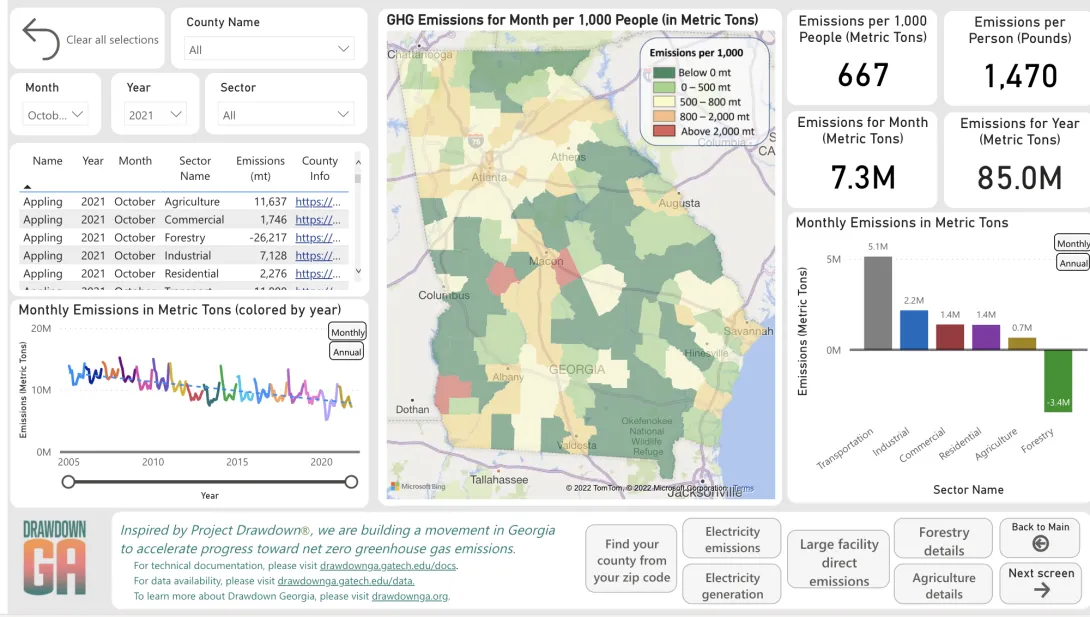
Georgians can now track where greenhouse gas emissions come from thanks to a tool that estimates those emissions at the state and county level.
Developed by Georgia Tech professors, the interactive map allows users to filter publicly available greenhouse gas estimates by county, month, year, and energy sector. Users can specify whether the emissions come from transportation, agriculture, commercial, forestry, residential, or industrial sources and counter with how much carbon is absorbed by trees and soils.
“The purpose of the tracker is to bring technology to bear on climate solutions,” said William Drummond, an associate professor in the School of City & Regional Planning and the lead behind the tracker. “This is the first time there has been effort to downscale emissions to the local level in a dynamic way we can update every month.”
The initiative is part of a trifold effort in Drawdown Georgia, a Ray C. Anderson Foundation–funded project across state universities to decrease reliance on carbon inspired by the national program Project Drawdown. As the first stage, the tracker enables Georgians to understand how the state contributes to emissions. Next, the Scheller College of Business will develop a business compact study to assess the economic impact of less carbon, and then the School of Public Policy will lead solutions activation. The tracker ties everything together by letting researchers measure how effective all the efforts are combined.
Ultimately, the researchers hope to inspire everyday Georgians to get involved in combatting climate change. With the public’s familiarity with Covid-19 case trackers, Drummond believes the tracker is accessible to most users, from regular citizens unsure how to help the environment to high school science students.
“This tracker is designed to be a catalyst for a climate movement across the state of Georgia, so it's important that we include ordinary citizens, advocacy groups, and businesses as partners in working toward climate solutions in Georgia,” Drummond said.
The researchers expect the carbon tracker will grow beyond Georgia. The tool is written in the common coding language R, so other states can replicate it. They also hope to track many other climate elements in the next few years.
“We'll progress as the technologies and markets evolve, and will soon turn to where the solutions are — not just where are the emissions are,” said Marilyn Brown, a Regents' and Brook Byers Professor of Sustainable Systems in the School of Public Policy. “We’re going to tie it all together, and it's all going to be facilitated by this geospatial tracking.”
News Contact
Tess Malone, Research Writer/Editor
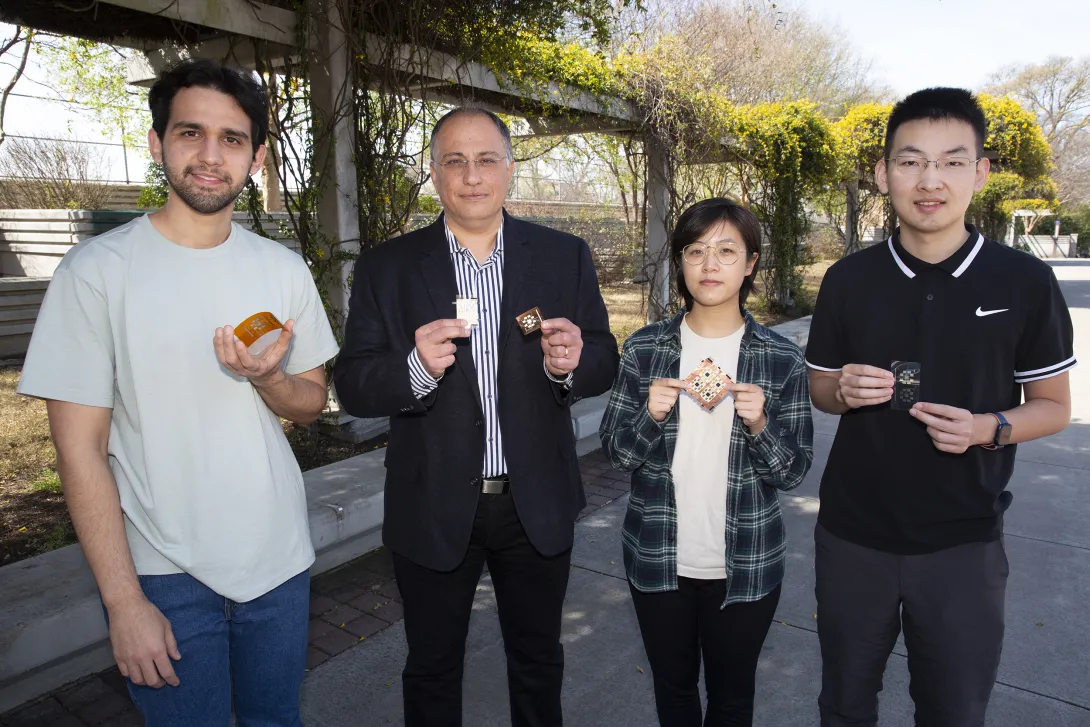


5G+ (5G/Beyond 5G) is the fastest-growing segment and the only significant opportunity for investment growth in the wireless network infrastructure market, according to the latest forecast by Gartner, Inc. But currently 5G+ technologies rely on large antenna arrays that are typically bulky and come only in very limited sizes, making them difficult to transport and expensive to customize.
Researchers from Georgia Tech’s College of Engineering have developed a novel and flexible solution to address the problem. Their additively manufactured tile-based approach can construct on-demand, massively scalable arrays of 5G+ (5G/Beyond 5G)‐enabled smart skins with the potential to enable intelligence on nearly any surface or object. The study, recently published in Scientific Reports, describes the approach, which is not only much easier to scale and customize than current practices, but features no performance degradation whenever flexed or scaled to a very large number of tiles.
“Typically, there are a lot of smaller wireless network systems working together, but they are not scalable. With the current techniques, you can’t increase, decrease, or direct bandwidth, especially for very large areas,” said Manos Tentzeris, Ken Byers Professor in Flexible Electronics in the School of Electrical and Computer Engineering. “Being able to utilize and scale this novel tile-based approach makes this possible.”
Tentzeris says his team’s modular application equipped with 5G+ capability has the potential for immediate, large-scale impact as the telecommunications industry continues to rapidly transition to standards for faster, higher capacity, and lower latency communications.
BUILDING THE TILES
In Georgia Tech’s new approach, flexible and additively manufactured tiles are assembled onto a single, flexible underlying layer. This allows tile arrays to be attached to a multitude of surfaces. The architecture also allows for very large 5G+ phased/electronically steerable antenna array networks to be installed on-the-fly. According to Tentzeris, attaching a tile array to an unmanned aerial vehicle (UAV) is even a possibility to surge broadband capacity in low coverage areas.
In the study, the team fabricated a proof-of-concept, flexible 5×5-centimeter tile array and wrapped it around a 3.5-centimeter radius curvature. Each tile includes an antenna subarray and an integrated, beamforming integrated circuit on an underlying tiling layer to create a smart skin that can seamlessly interconnect the tiles into very large antenna arrays and massive multiple-input multiple-outputs (MIMOs) — the practice of housing two or more antennas within a single wireless device. Tile-based array architectures on rigid surfaces with single antenna elements have been researched before, but do not include the modularity, additive manufacturability, or flexible implementation of the Georgia Tech design.
The proposed modular tile approach means tiles of identical sizes can be manufactured in large quantities and are easily replaceable, reducing the cost of customization and repairs. Essentially, this approach combines removable elements, modularity, massive scalability, low cost, and flexibility into one system.
5G+ IS JUST THE BEGINNING
While the tiling architecture has demonstrated the ability to greatly enhance 5G+ technologies, its combination of flexible and conformal capabilities has the potential to be applied in numerous different environments, the Georgia Tech team says.
“The shape and features of each tile scale can be singular and can accommodate different frequency bands and power levels,” said Tentzeris. “One could have communications capabilities, another sensing capabilities, and another could be an energy harvester tile for solar, thermal, or ambient RF energy. The application of the tile framework is not limited to communications.”
Internet of Things, virtual reality, as well as smart manufacturing/Industry 4.0 — a technology-driven approach that utilizes internet-connected “intelligent” machinery to monitor and fully automate the production process — are additional areas of application the team is excited to explore.
“The tile-architecture’s mass scalability makes its applications particularly diverse and virtually ubiquitous. From structures the size of dams and buildings, to machinery or cars, down to individual health-monitoring wearables,” said Tentzeris. “We’re moving in a direction where everything will be covered in some type of a wireless conformal smart skin encompassing electronically steerable antenna arrays of widely diverse sizes that will allow for effective monitoring.”
The team now looks forward to testing the approach outside the lab on large, real-world structures. They are currently working on the fabrication of much larger, fully inkjet-printed tile arrays (256+ elements) that will be presented at the upcoming International Microwave Symposium (IEEE IMS 2022) – the flagship IEEE conference in RF and microwave engineering. The IMS presentation will introduce a new tile-based large-area architecture version that will allow assembly of customizable tile arrays in a rapid and low-cost fashion for numerous conformal platforms and 5G+ enabled applications.
****
The authors declare no competing interests.
This work was supported in part by the National Science Foundation.
CITATIONS: He, X., Cui, Y. & Tentzeris, M.M. Tile-based massively scalable MIMO and phased arrays for 5G/B5G-enabled smart skins and reconfigurable intelligent surfaces. Sci Rep 12, 2741 (2022). https://doi.org/10.1038/s41598-022-06096-9
K.Hu, G.S.V.Angulo, Y.Cui and M.M.Tentzeris, “Flexible and Scalable Additively Manufactured Tile-Based Phased Arrays for Satellite Communications and 5G mmWave Applications,” accepted for presentation at IEEE International Microwave Symposium (IMS) 2022, Denver, CO, June 2022.
News Contact
Dan Watson
dwatson@ece.gatech.edu
A majority of Georgia residents strongly support new solar and wind power capacity over new coal-fired plants and believe the state should set a carbon emissions reduction goal, according to a new survey conducted for researchers at Georgia Tech and the University of Georgia.
The survey, conducted by polling firm Dynata, found that 60% of Georgia residents back the creation of a state carbon emissions reduction goal. That includes 74% of Democrats and Democratic-leaning independents, 52% of independents, and 45% of Republicans and Republican-leaning independents.
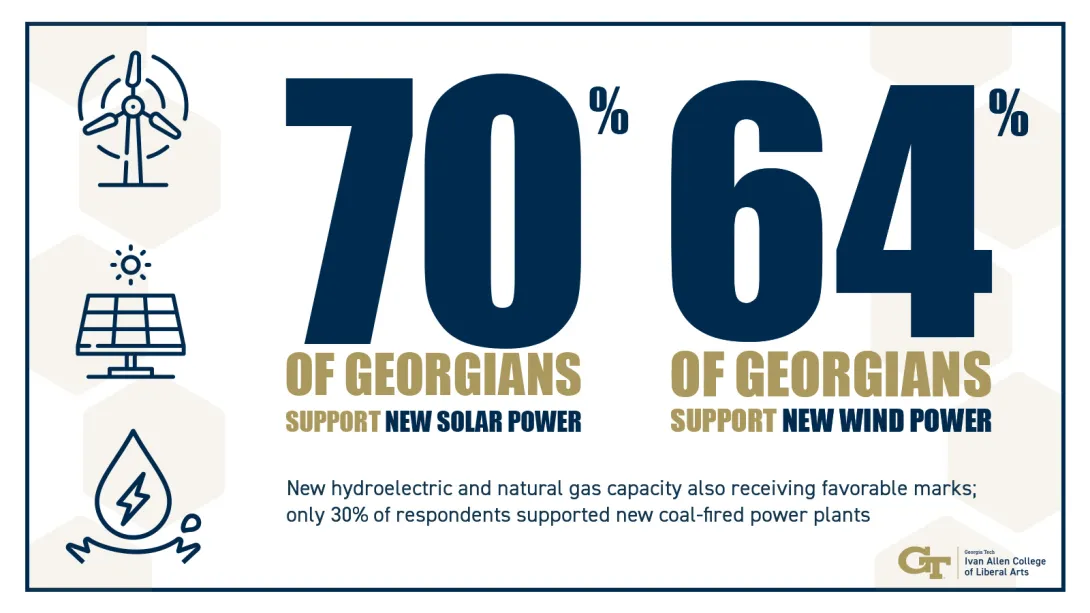
The poll also found that 70% of Georgians support new solar power and 64% support new wind power, with new hydroelectric and natural gas capacity also receiving relatively favorable marks.
The survey found only 30% of respondents supported new coal-fired power plants.
“This survey demonstrates that many Georgians across the political spectrum are in favor of green energy solutions that will benefit the state’s environment, create new jobs, and support our economy,” said Marilyn Brown, Regents Professor and Brook Byers Professor of Sustainable Systems in Georgia Tech’s School of Public Policy.
Cory Struthers, assistant professor in the School of Public and International Affairs at the University of Georgia, and Brown designed the survey with help from graduate students in Georgia Tech’s Climate and Energy Policy Lab (CEPL).
Brown and Struthers are affiliated with Drawdown Georgia, a project of the Ray C. Anderson Foundation, which provided funding to universities and stakeholders across Georgia to identify promising climate solutions for the state. The Foundation provided support for this survey, in addition to other activities to translate research into action, including the Drawdown Business Compact.
“This survey provides important new information about how people in Georgia feel about climate solutions,” said Blair Beasley, the Foundation’s director of climate strategies. “We are pleased to see that the results validate Georgians' support of many high-impact solutions that Drawdown Georgia has identified for their potential to reduce emissions in our state this decade.”
The Busbee Endowment at the University of Georgia and Georgia Tech’s Brook Byers Institute for Sustainable Systems also provided support for the survey.
Support for a Range of Climate Solutions
The survey of 1,788 Georgia residents was conducted online from Aug. 20, 2021, to Sept. 5, 2021.
All survey participants answered a set of common questions about their demographics, energy bills, knowledge of climate solutions, values, and more. The respondents were then divided into three groups, with participants in each answering additional questions that focused on one of three transformational climate solutions: rooftop solar, retrofitting, or electric vehicles.
The survey’s margin of error is plus or minus 2 percentage points for questions in the larger, common, sample and plus or minus 4 percentage points for those in the smaller sample.
Overall, 75% of Democrats, 55% of independents, and 49% of Republicans supported development of a climate resiliency plan for Georgia to prepare for the impacts of climate change.
When asked about new energy infrastructure, new solar panels and wind farms received 70% and 64% support, respectively. In contrast, 36% of those surveyed showed support for new nuclear power plants, somewhat higher than for new coal plants. Seventy-one percent of respondents favored energy efficiency strategies and smart-meter infrastructure.
Climate technologies that individuals can adopt at home were also well-viewed. A majority of respondents either already had residential energy-saving technologies or were interested in adopting them. The highest combined level of interest and adoption was for using LED lights at 93%, followed by efficient HVAC systems (80%), rooftop solar (59%), community solar (59%), and electric vehicles (55%).
Many respondents were also willing to support government funding for financial incentives to go green: 50% said they would support $5,000 rebates for electric vehicles, 55% said they would look favorably on up-front financing for heat pumps, and 64% said they would support a similar strategy for rooftop solar projects.
“These high-impact solutions have the potential to both reduce emissions and increase energy efficiency in Georgia,” Struthers said. “A cleaner, more efficient Georgia means increased air and environmental quality, job creation, and gains in public health.”
Survey Also Reveals Details of Energy Poverty, Low Energy Literacy
The survey findings also shed light on the prevalence of “energy poverty” in Georgia. A household is energy-poor when it spends more than 6% of its income on energy. The survey found that while households with incomes greater than $150,000 spent about 2% of their income on energy bills each month, households with incomes less than $20,000 spent, on average, between 14% and 21% of their monthly earnings on energy.
The survey also found low levels of literacy in regard to climate solutions, energy technology, and policy among respondents. Fewer than 35% of respondents knew the correct answer to questions related to energy and climate, including what energy sources are fossil fuels and the relative cost of operating electric and gasoline-powered vehicles. Only 4% of those surveyed correctly answered that solar panels generate energy in full sunlight, in the shade, and on rainy days.
“We want to use this data to continue to answer questions about the diffusion of, and support for, clean and equitable energy technology transition in Georgia,” Brown said. “How can this data help us overcome ambivalence toward clean energy and design programs that make the energy transition work for all Georgians, especially the most vulnerable? How can it help us to raise knowledge and awareness about the promise of high-impact climate solutions?”
A PowerPoint of the full findings can be downloaded from the CEPL website.
About Georgia Tech
The Georgia Institute of Technology, or Georgia Tech, is a top-10 public research university developing leaders who advance technology and improve the human condition.
The Institute offers business, computing, design, engineering, liberal arts, and sciences degrees. Its nearly 44,000 students, representing 50 states and 149 countries, study at the main campus in Atlanta, at campuses in France and China, and through distance and online learning.
As a leading technological university, Georgia Tech is an engine of economic development for Georgia, the Southeast, and the nation, conducting more than $1 billion in research annually for government, industry, and society.
The Ivan Allen College of Liberal Arts, home of the School of Public Policy, provides innovative, human-centered perspectives at the intersections of humanities, social sciences, arts, and STEM, developing leaders who advance technology and improve the human condition. Nearly 350 tenured, tenure-track, non-tenure track, and permanent research faculty, prepare students to be leaders capable of balancing a richly defined base of expertise with a well-grounded sense of responsibility. Our programs encompass traditional fields as well as unique and professional disciplines. Many of our faculty members engage in ground-breaking, interdisciplinary research to solve complex issues of the world.
About the University of Georgia
Chartered by the state of Georgia in 1785, the University of Georgia is the birthplace of public higher education in America. What began as a commitment to inspire the next generation grows stronger today through global research, hands-on learning, and extensive outreach. A top value in public higher education and research, the University of Georgia tackles some of the world’s grand challenges, from combating infectious diseases and creating a dependable food supply to advancing economic growth and strengthening cyber and global security.
As Georgia’s flagship institution, the university is recognized for its commitment to student excellence through an emphasis on rigorous learning experiences both inside and outside the classroom, including hands-on research and leadership opportunities. These experiences contribute to the university’s exceptional rates in retention, graduation, and career placement. Among public universities, the University of Georgia has been one of the nation’s top three producers of Rhodes Scholars over the past two decades. The university is also home to the Peabody Awards, the most prestigious prize in electronic media.
Since 2001, the School of Public and International Affairs has been dedicated to enhancing civic engagement, public leadership, scholarship on political institutions and policy, and effective governance. Now, more than ever, the nation and the world require scholars and students to focus their attention on the pressing policy and governance issues of the day. Guided by an award-winning teaching faculty and innovative research, the School offers critical training to future public servants and a deep understanding of national and international politics.
News Contact
Michael Pearson
michael.pearson@iac.gatech.edu

Sustainable management of natural resources like water is critical as communities grow - particularly in California, the most populous state in the U.S. where droughts are extremely common.
Surface water, such as rivers, lakes, and wetlands, typically fills most of the state’s needs, while groundwater, such as subterranean aquifers and wells, provides about 40 % of the state’s water. But in drought years (like right now), that can increase to 60 percent. To prevent overdraft of all those wells – when groundwater is pumped out faster than snowmelt or rainfall can replenish it – California passed the Sustainable Groundwater Management Act (SGMA) in 2014.
Five years later, a team of public policy researchers from the Georgia Institute of Technology and the University of Southern California (USC) started examining the progress made and the obstacles stakeholders face as the state aims for sustainable groundwater use.
Georgia Tech’s Brian An, along with researchers William Leach and Shui-Yan Tang from USC’s Sol Price School of Public Policy, recently published their work in two journals. Their work sheds light on how local, regional, and state resource authorities can work effectively together to achieve sustainable outcomes.
“What we discovered is that inclusive and egalitarian rules that protect stakeholders’ autonomy leads to higher confidence in these sustainability efforts and outcomes,” said An, assistant professor in Georgia Tech’s School of Public Policy. “Mandated collaboration is more likely to succeed when the mandate embraces local entities’ autonomy.”
The team’s findings could help inform other states who are now, or eventually will, grapple with resource management and sustainability issues, according to An.
“Our research illustrates that a collaborative approach among resource users with a state top-down mandate can be successful,” he said, adding that such an approach could be relevant to other states, such as Georgia, Alabama, and Florida, that have been engaged in an ongoing Tri-state water war.
While the focus of the research is squarely on California and SGMA, the law has implications for the rest of the country as well – about 80%of California’s water goes to the state’s massive agricultural enterprise, which provides two thirds of the nation’s fruits and nuts.
Under SGMA, local stakeholders, such as municipal governments and irrigation districts, organize Groundwater Sustainability Agencies (GSAs), which are charged with developing sustainability plans that should eliminate overdraft by 2040. An took the lead in developing the survey tools, sketching out the research ideas, and collecting and analyzing the data for both papers, which relied heavily on surveys of nearly 70 GSAs and 140 member agencies across California.
Enticing Participation
An is lead author of the first paper, published in the journal Environmental Science & Policy. In that study, the researchers address concerns local stakeholders may have over losing autonomy. They write, “rules designed to protect autonomy can entice participation,” from a diverse range of stakeholders.
“Specifically, the governing rules should address whether underprivileged groups’ interests are represented,” said An. “Our research illustrates that a mix of collaborative approach among resource users and a state top-down mandate can be successful if the mandate can respect the local actors' autonomy.”
Designers of state or federal laws that mandate local and regional collaborative governance should anticipate this need by allowing member stakeholders to craft protective governing rules, he added.
This first paper serves as a guidebook, providing insights into how organizations can address constitutional issues to improve the collaborative process and environmental sustainability outcomes. An is co-author on the second paper, essentially a progress report of SGMA, published in The Journal of the American Water Resources Association.
The researchers reported that issues such as too many diverse interests and lack of trust among stakeholders have been the main hurdles to forming GSAs, and the most common obstacles to groundwater planning include a lack of financial resources and SGMA’s requirement to coordinate plans among GSAs in a shared basin.
But five years in, the study authors write, “most respondents are optimistic that SGMA will enhance groundwater sustainability locally and statewide. If successfully implemented and fully funded, SGMA could become a model worldwide for sustainable resource governance that combines top-down mandates and local incentives.”
An initially developed the idea for both papers with Tang, and the work was supported by a grant from the John Randolph Haynes and Dora Haynes Foundation. An was a Ph.D. candidate at USC when the research began. Now based in the Southeastern U.S., An believes that jurisdictions here can learn from the SGMA example. For years, he noted, Alabama, Georgia, and Florida have been engaged in a dispute over water allocation rights for two major river basins.
“There hasn’t been an easy answer but there have been efforts to settle these disputes in the courts, just like stakeholders in California traditionally resorted to,” said An. “But our research suggests that regulatory approaches that use incentives for collaboration among resource users, while respecting their autonomy, can be one viable to achieve sustainable management of common natural resources in multi-jurisdictional territories.”
CITATION: B. An, S.Y. Tang, W. Leach, “Managing Environmental Change through Inter-agency Collaboration: Protective Governance in Mandated Sustainability Planning.” (Environmental Science & Policy, Sept. 2021)
https://doi.org/10.1016/j.envsci.2021.08.024
CITATION: W. Leach, B. An, S.Y. Tang, “Evaluating California’s Sustainable Groundwater Management Act: The First Five Years of Governance and Planning.” (Journal of the American Water Resources Association, Nov. 2021)
https://doi.org/10.1111/1752-1688.12967
News Contact
Contact: Jerry Grillo
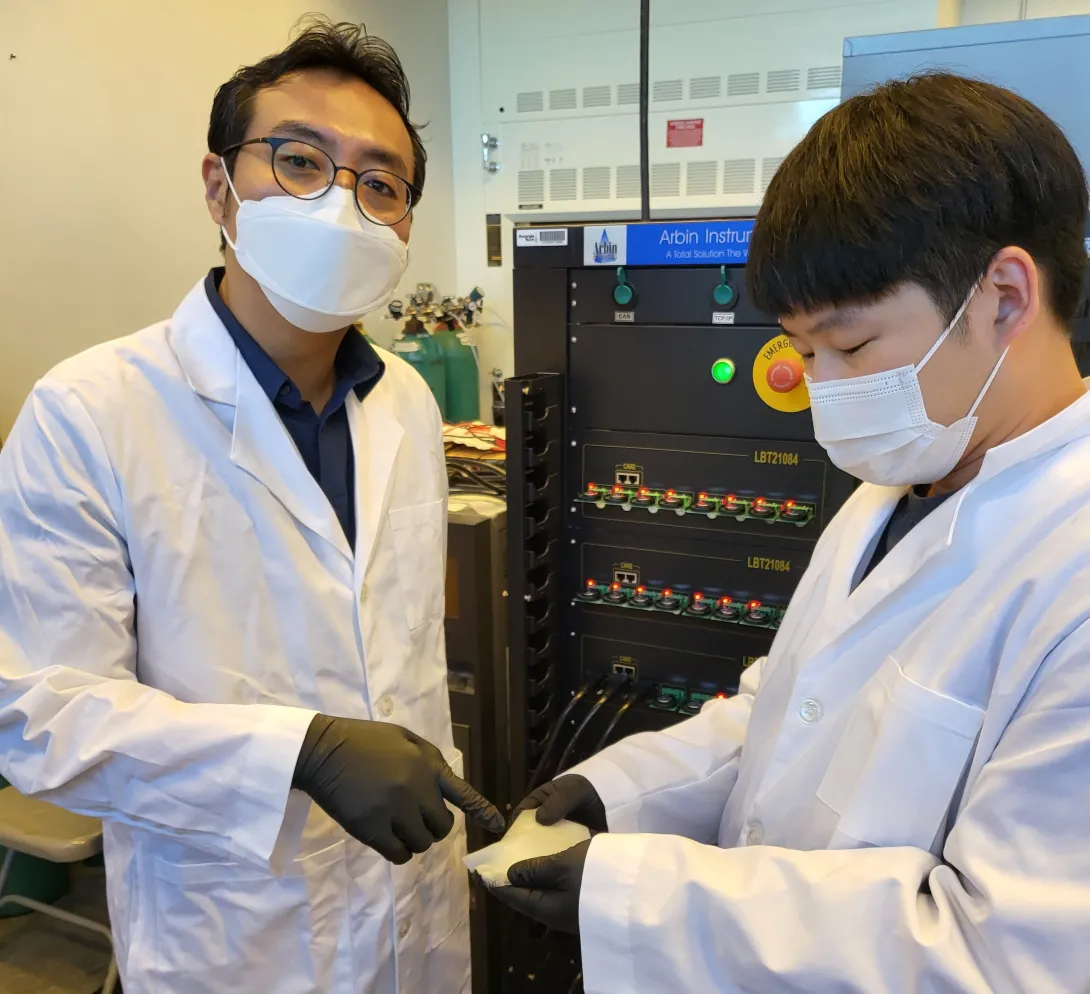

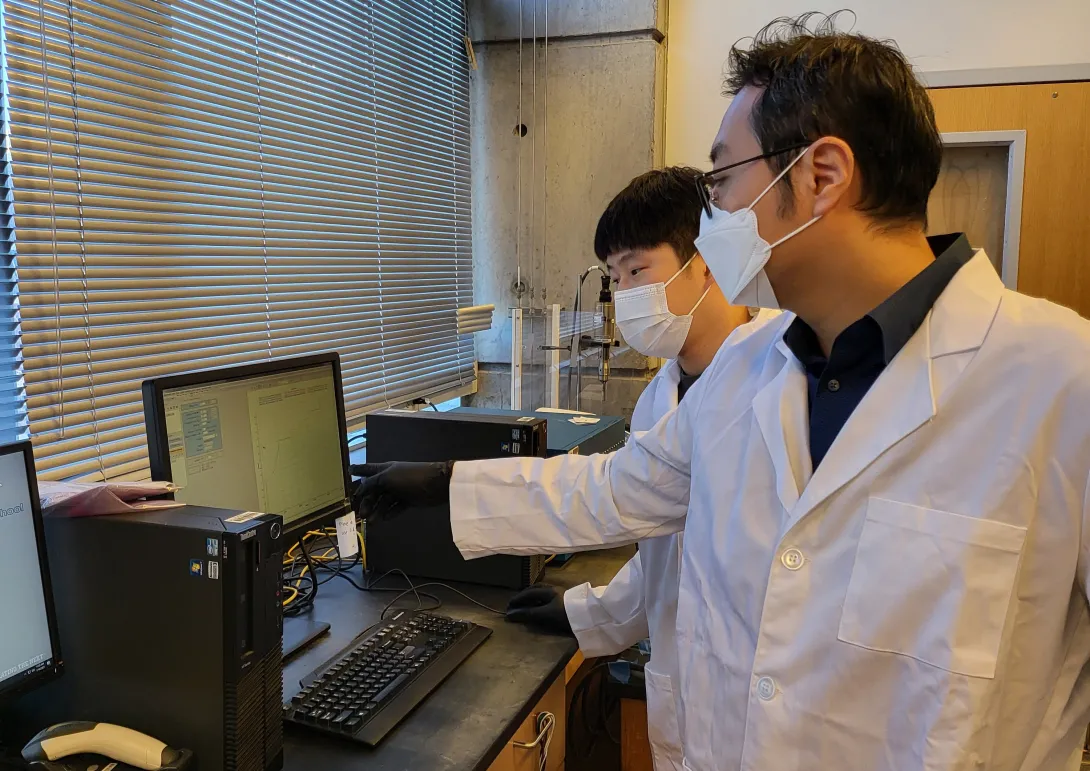
For electric vehicles (EVs) to become mainstream, they need cost-effective, safer, longer-lasting batteries that won’t explode during use or harm the environment. Researchers at the Georgia Institute of Technology may have found a promising alternative to conventional lithium-ion batteries made from a common material: rubber.
Elastomers, or synthetic rubbers, are widely used in consumer products and advanced technologies such as wearable electronics and soft robotics because of their superior mechanical properties. The researchers found that the material, when formulated into a 3D structure, acted as a superhighway for fast lithium-ion transport with superior mechanical toughness, resulting in longer charging batteries that can go farther. The research, conducted in collaboration with the Korea Advanced Institute of Science and Technology, was published Wednesday in the journal Nature.
In conventional lithium-ion batteries, ions are moved by a liquid electrolyte. However, the battery is inherently unstable: even the slightest damage can leak into the electrolyte, leading to explosion or fire. The safety issues have forced the industry to look at solid-state batteries, which can be made using inorganic ceramic material or organic polymers.
“Most of the industry is focusing on building inorganic solid-state electrolytes. But they are hard to make, expensive and are not environmentally friendly,” said Seung Woo Lee, associate professor in the George W. Woodruff School of Mechanical Engineering, who is part of a team of researchers who have uncovered a rubber-based organic polymer superior to other materials. Solid polymer electrolytes continue to attract great interest because of their low manufacturing cost, non-toxicity and soft nature. However, conventional polymer electrolytes do not have sufficient ionic conductivity and mechanical stability for reliable operation of solid-state batteries.
Novel 3D Design Leads to Jump in Energy Density, Performance
Georgia Tech engineers have solved common problems (slow lithium-ion transport and poor mechanical properties) using the rubber electrolytes. The key breakthrough was allowing the material to form a three-dimensional (3D) interconnected plastic crystal phase within the robust rubber matrix. This unique structure has resulted in high ionic conductivity, superior mechanical properties and electrochemical stability.
This rubber electrolyte can be made using a simple polymerization process at low temperature conditions, generating robust and smooth interfaces on the surface of electrodes. These unique characteristics of the rubber electrolytes prevent lithium dendrite growth and allow for faster moving ions, enabling reliable operation of solid-state batteries even at room temperature.
“Rubber has been used everywhere because of its high mechanical properties, and it will allow us to make cheap, more reliable and safer batteries,” said Lee.
“Higher ionic conductivity means you can move more ions at the same time,” said Michael Lee, a mechanical engineering graduate researcher. “By increasing specific energy and energy density of these batteries, you can increase the mileage of the EV.”
The researchers are now looking at ways to improve the battery performance by increasing its cycle time and decreasing the charging time through even better ionic conductivity. So far, their efforts have seen a two-time improvement in the battery's performance / cycle time.
The work could enhance Georgia’s reputation as a center for EV innovation. SK Innovation, a global energy and petrochemical company, is funding additional research of the electrolyte material as part of its ongoing collaboration with the Institute to build next-generation solid-state batteries that are safer and more energy dense than conventional LI-ion batteries. SK Innovation recently announced construction of a new EV battery plant in Commerce, Georgia, expected to produce an annual volume of lithium-ion batteries equal to 21.5 Gigawatt-hours by 2023.
“All-solid-state batteries can dramatically increase the mileage and safety of electric vehicles. Fast-growing battery companies, including SK Innovation, believe that commercializing all-solid-state batteries will become a game changer in the electric vehicle market,” said Kyounghwan Choi, director of SK Innovation’s next-generation battery research center. “Through the ongoing project in collaboration with SK Innovation and Professor Seung Woo Lee of Georgia Tech, there are high expectations for rapid application and commercialization of all-solid-state batteries."
CITATION: M. Lee, et. al, "Elastomeric electrolytes for high-energy solid-state lithium batteries," (Nature, 2022) https://doi.org/10.1038/s41586-021-04209-4
***
The Georgia Institute of Technology, or Georgia Tech, is a top 10 public research university developing leaders who advance technology and improve the human condition. The Institute offers business, computing, design, engineering, liberal arts, and sciences degrees. Its nearly 44,000 students representing 50 states and 149 countries, study at the main campus in Atlanta, at campuses in France and China, and through distance and online learning. As a leading technological university, Georgia Tech is an engine of economic development for Georgia, the Southeast, and the nation, conducting more than $1 billion in research annually for government, industry, and society.
News Contact
Anne Wainscott-Sargent (404-435-5784)

The global supply chain has been rocked by disruptions triggered largely by the coronavirus pandemic, resulting in a cascade of shortages on a host of products ranging from computer chips to medications.
But supply chain disruptions also highlight the potential vulnerabilities in the U.S. manufacturing sector’s critical segments like defense.
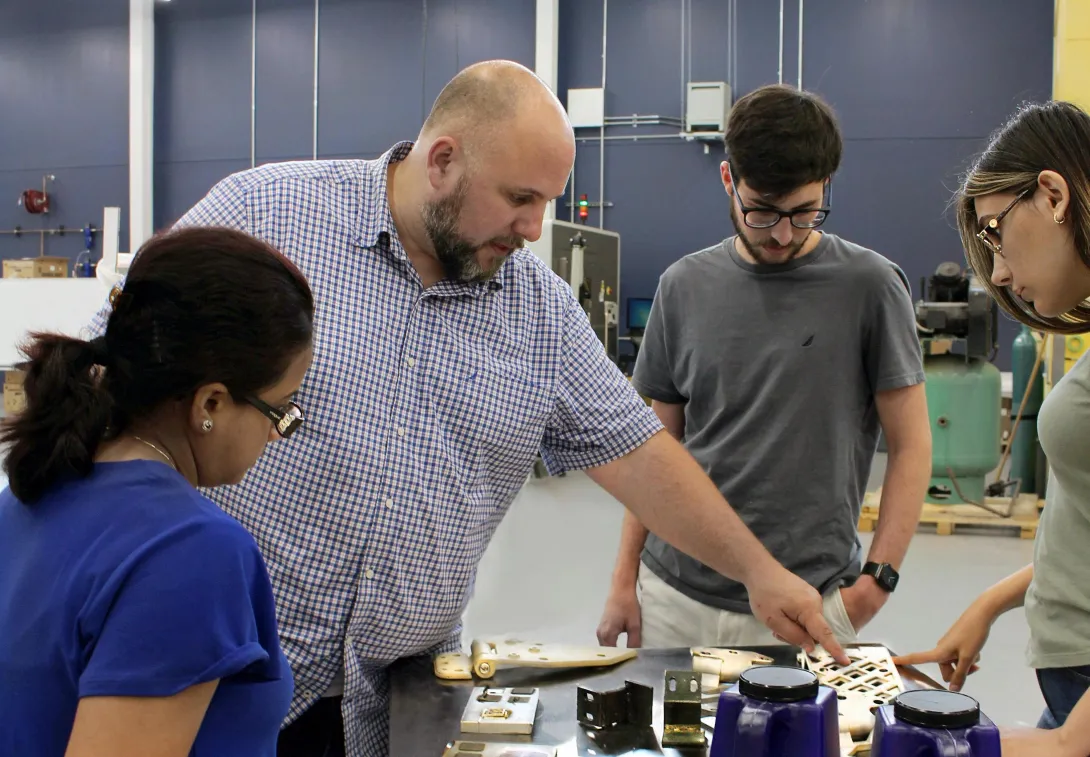
To help manufacturers across the state, the Georgia Institute of Technology has launched the Georgia Manufacturing 4.0 Consortium to work with those businesses in defense and related industries become more resilient and less susceptible to supply chain disruptions. The Consortium, which will begin accepting members in April 2022, will work with Georgia defense manufacturers to incorporate cybersecurity protocols, smart technologies such as sensor packs, machine learning, artificial intelligence, and other best practices under Industry 4.0 technology standards.
Led by Aaron Stebner, associate professor in the George W. Woodruff School of Mechanical Engineering and the School of Materials Science and Engineering, the Consortium is an 18-month pilot funded by a Department of Defense Office of Local Defense Community Cooperation (OLDCC) grant of nearly $1 million. Georgia Tech is working in partnership with Spelman College, the Technical College System of Georgia, and the Georgia Department of Economic Development, under the grant to develop workforce, training manuals, a curriculum, and to support businesses in adapting to economic and technological changes that emerge at a much more rapid pace today.
“It’s a cooperative effort that’s really focused on helping to get modern technologies to these Georgia manufacturers. This is about establishing a community of manufacturers who all want to move forward but don’t have the bandwidth or capabilities do it individually,” Stebner said.
The Consortium has three goals. The first is to increase the manufacturing defense supply chain’s resilience and diversification. That will allow those companies to pivot quickly in response to demand and let non-defense-related industries enter the supply chain at critical junctures. The second goal is to work with Georgia manufacturers in adopting new technologies and address challenges that put those businesses at risk.
Lastly, the Consortium is to be a conduit that helps small- and medium-sized manufacturers test out innovations using Georgia Tech resources such as the Advanced Manufacturing Pilot Facility, connect manufacturers with each other, and potentially unlock new markets and collaboration opportunities.
While the focus is on defense manufacturing, the Consortium is open to all manufacturers.
“We want to help as many manufacturers as we can, to grow a bigger pie that helps everybody, lowers risk, and allows companies to be part of building innovative solutions” Stebner said.
Manufacturing Supports Georgia Economy
National Association of Manufacturers data show that manufacturing accounts for $61.1 billion in economic activity, roughly 10% of Georgia’s total output. The industry includes more than 6,600 firms that employ nearly 400,000.
At $14 billion a year, Georgia is ranked 13th in federal defense spending. Roughly 1,200 manufacturers in the state are in defense or related industries. Those include information technology companies that support cybersecurity, wireless communications, and other innovations that are critically essential to Industry 4.0 in defense manufacturing.
University partners from the Technical College System of Georgia and Spelman College will look to take the Consortium findings and data from the work they do with member companies to create educational programming and workforce training.
Today, there is a need for more workers in machine learning and other aspects of advanced manufacturing, as well as a need to change perceptions of manufacturing, especially in rural parts of the state, Stebner explained.
To that end, the Technical College System of Georgia could develop programming for students within its two-year education curriculum. It also has a mobile manufacturing unit that could be taken to rural parts of the state and used as a tool to highlight opportunities in manufacturing and dispel misconceptions about the industry.
The all-women’s Spelman College, one of the nation’s premier historically black colleges and universities, launched an extended reality program in the fall of 2020. That program aims to integrate art, technology, and narrative on a gaming platform which is familiar and engaging for students. Those students will develop the technical skills to develop games, create immersive virtual experiences, and develop visual simulations for research, education, and training.
For Consortium members, Spelman’s extended reality program can be used to help turn research data gathered from them into workforce training and development modules.
“Spelman has a long history of graduating women in the natural sciences, and that history has recently led the Department of Defense to distinguish the College as a Center of Excellence for educating women in STEM,” said Jerry Volcy, a Spelman professor and co-director of the Spelman Innovation Lab.
The extended reality program furthers Spelman’s goal to increase the technological readiness of its graduates.
“Spelman has a long record of forging pathways for women of color into new spaces. Today, these spaces include extended reality, defense and, to some extent, manufacturing research,” Volcy said. “From the College’s perspective, participation in the Consortium has the dual potential of creating and discovering new pathways into these industries while immediately providing real-world applications laboratory for the developing extended reality program.”
Fulfilling Georgia Tech’s Mission
Within Georgia Tech, the Georgia Manufacturing Extension Partnership and the Georgia Tech Manufacturing Institute will support Consortium efforts.
The Consortium reflects Georgia Tech’s broader mission to further its Advanced Manufacturing Initiative, said George White, Georgia Tech’s interim vice president of Industry Collaboration.
“The anticipated research impact envisioned through the Defense Manufacturing Consortium will strengthen Georgia Tech’s positioning in enabling major public private collaborations,” White said. “The advent of the Consortium represents the opportunity to convene key stakeholders from government, academics, and industry to innovate and solve the most challenging problems in manufacturing.”
News Contact
Writer and media relations contact:
Péralte C. Paul
peralte.paul@comm.gatech.edu
404.316.1210
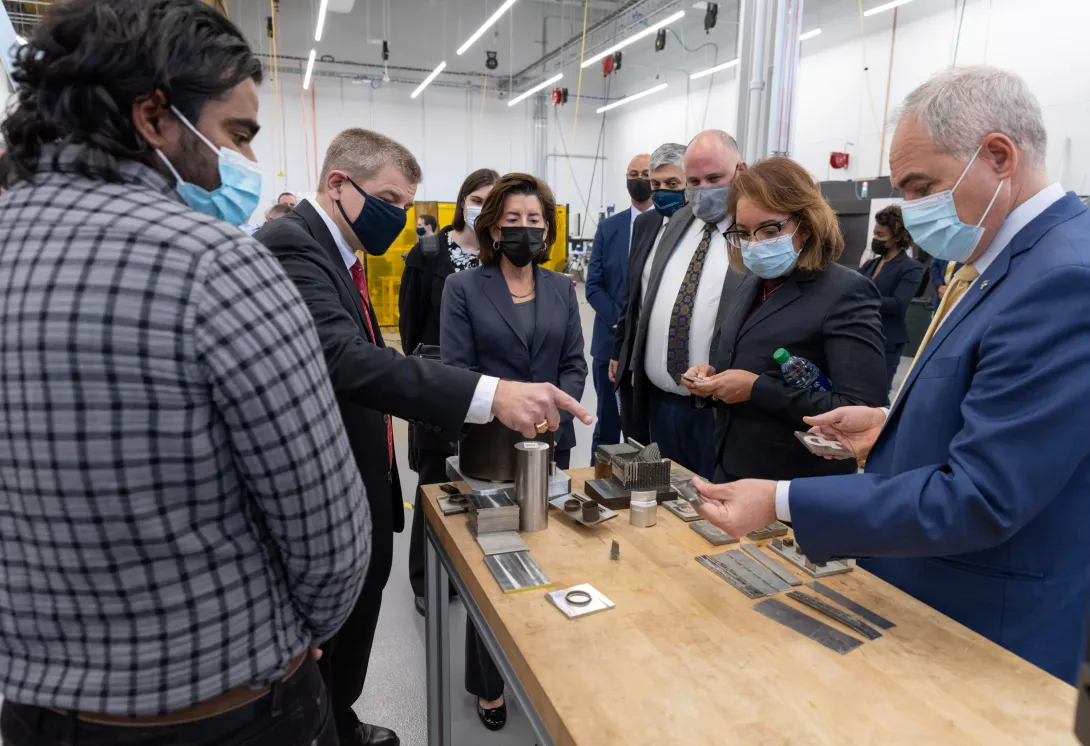
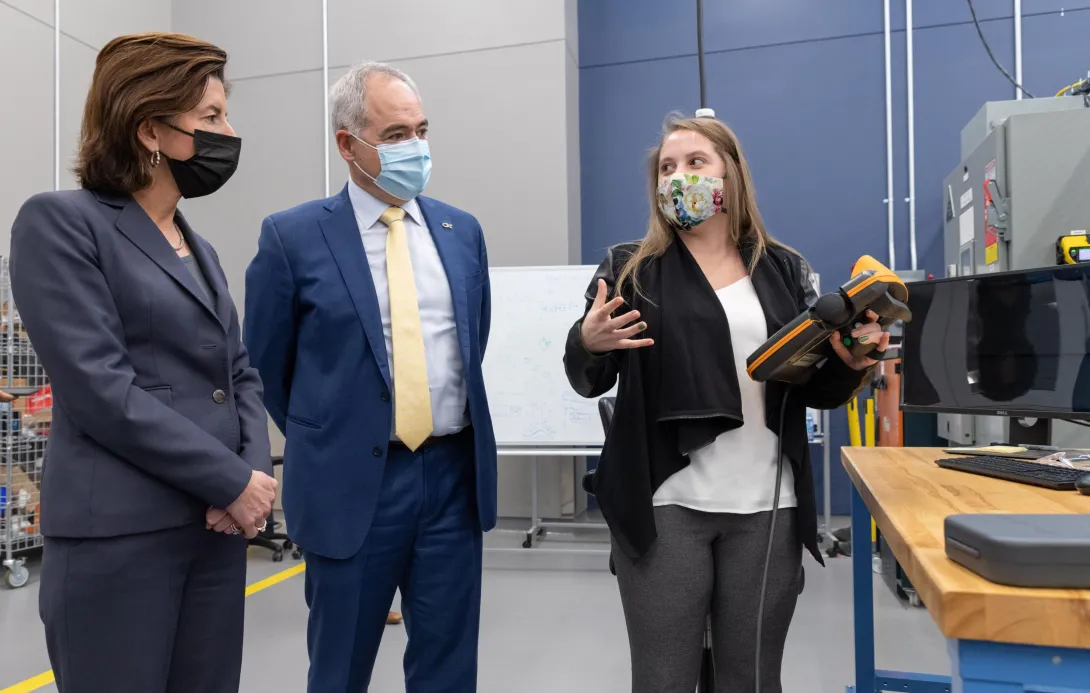
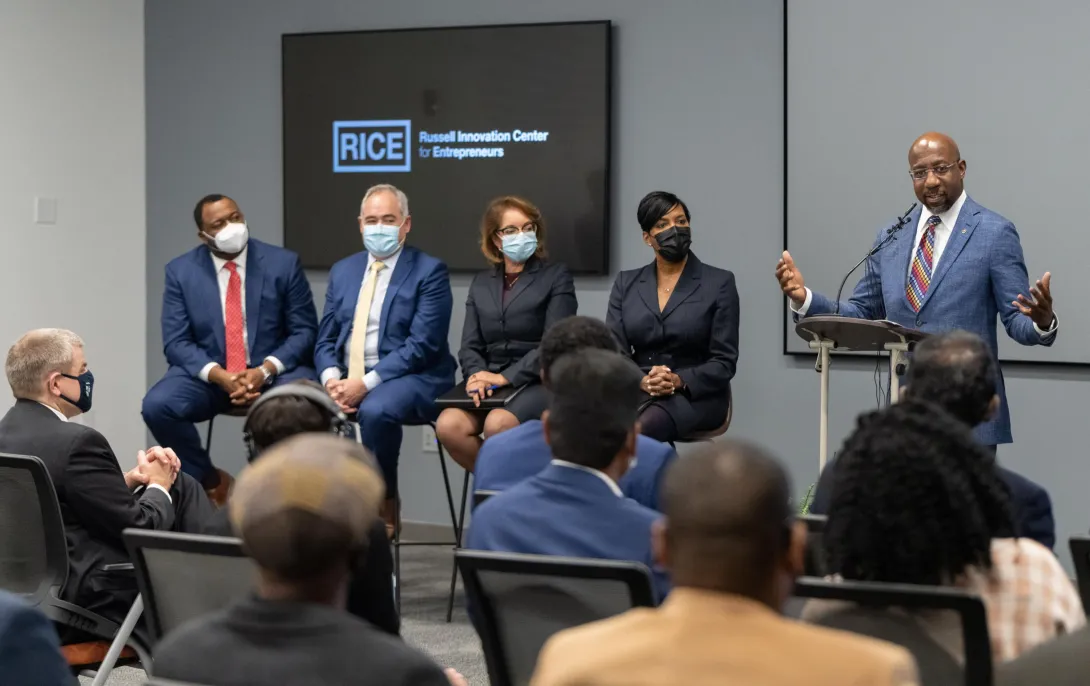
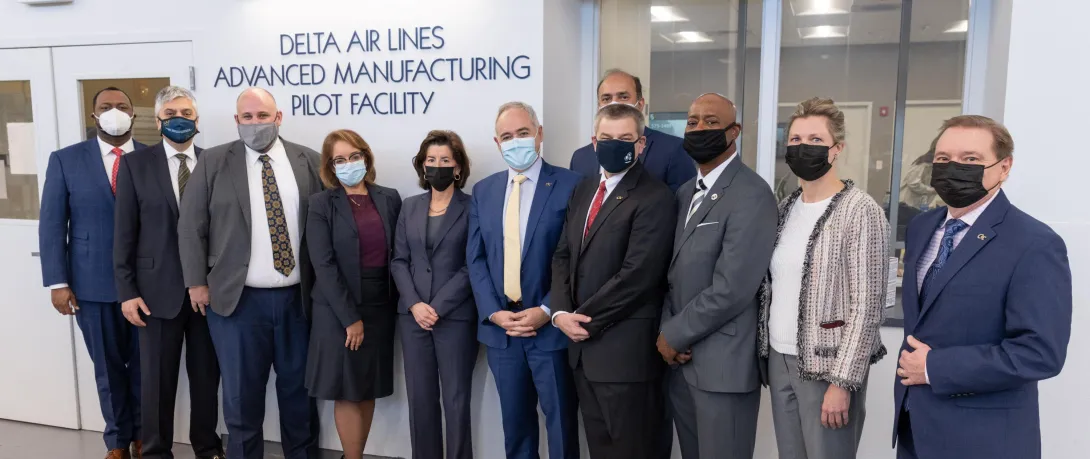
The Georgia Institute of Technology was awarded a grant from the U.S. Department of Commerce’s Economic Development Administration (EDA) as part of its $1 billion Build Back Better Regional Challenge. Georgia Tech is one of 60 entities to be awarded funding to assist communities nationwide in their efforts to accelerate the rebuilding of their economies in the wake of the pandemic.
As a leader in artificial intelligence, manufacturing research, and innovation-led economic development, Georgia Tech will utilize the grant for technical assistance to plan the Georgia Artificial Intelligence Manufacturing Corridor (GA-AIM). Led by Thomas Kurfess and Aaron Stebner in the George W. Woodruff School of Mechanical Engineering and in collaboration with local partners, GA-AIM will fill existing technology gaps, build a technological opportunity framework that includes underrepresented communities and rural Georgia counties, and better secure the state’s manufacturing infrastructure.
Georgia Tech’s partners in the effort include the Russell Innovation Center for Entrepreneurs, Spelman College, the Technical College System of Georgia, and the Georgia Department of Economic Development.
“We are truly honored to be awarded this grant to implement our vision for manufacturing excellence in Georgia with our partners in artificial intelligence research,” said Chaouki T. Abdallah, executive vice president for Research at Georgia Tech. “Alongside these important partners, the grant enables us to collaborate to include diverse backgrounds and perspectives in the process of learning, discovery, and creation, furthering Georgia Tech’s mission to expand access.”
Georgia Tech and its partners will pair artificial intelligence and manufacturing research innovation to better secure the manufacturing ecosystem, expand opportunity to distressed and rural communities and underrepresented groups, and support business growth across the state.
“We are thrilled to help communities work together — in coalitions of government, nonprofits, academia, the private sector, and others — to craft ambitious and regionally unique plans to rebuild their communities,” said Alejandra Y. Castillo, assistant secretary of commerce for the EDA. “These projects will help revitalize local economies and tackle our biggest challenges related to climate change, manufacturing, supply chains, and more. EDA is proud to ignite these plans and help communities nationwide build back better.”
GA-AIM’s partners have created a complementary network of resources that focus on each partner organization’s expertise and mission.
“We have an opportunity to create meaningful impact at the intersection of AI and manufacturing,” said Stebner, who wrote the grant proposal that resulted in the $500,000 grant from EDA.
Kurfess, who serves as the regional economic competitiveness officer for the grant, added, “Bringing together AI and manufacturing will ensure a strong manufacturing base for Georgia that will leverage our well-trained workforce and our strong educational institutions that are participating in this effort. What excites me the most is that AI will augment our workforce, making it more valuable and productive, ensuring job growth for Georgia and the U.S. well into the future.”
The GA-AIM effort takes a multifaceted approach to address its core goals:
Georgia Tech
- Formation of the AI Manufacturing Pilot Facility: Georgia Tech’s Advanced Manufacturing Pilot Facility will be transformed into the AI Manufacturing Pilot Facility. The new facility allows for government pilot trials, cybersecurity games, and workforce training to innovate, transition, and create a workforce for AI manufacturing technologies without exposing the region’s supply chains to risk.
- Center for AI Commercialization: Two of Georgia Tech’s commercialization programs — VentureLab and I-Corps South — will create a center for the commercialization of AI manufacturing technologies into local and regional startups. Those commercialization efforts will occur through a quarterly cohort-based entrepreneurial training program built on the National Science Foundation’s I-Corps curriculum. The center will also provide training for instructors to build a sustainable workforce and will secure investment funding for these startups.
- AI Manufacturing Community Engagement: The Enterprise Innovation Institute, Georgia Tech’s chief economic development arm, will engage in focused outreach and technical assistance to small and mid-sized manufacturers and minority business enterprises through its Georgia Manufacturing Extension Partnership and Georgia Minority Business Development Agency Business Center programs. A third Enterprise Innovation Institute program, the Economic Development Lab, will focus on outreach and engagement in distressed and underserved parts of the state, create workforce development programs and implementation strategies, and attract outside investment.
- AI Manufacturing Rural Supply Chain: The Supply Chain and Logistics Institute will study the impact of automation technologies, build automation solutions tailored for rural manufacturers, and create programs that lower the barrier for rural manufacturers’ access to use the AI Manufacturing Pilot Facility.
- AI InVenture K-12 Experiences: To ensure a technically capable workforce in the coming years, Georgia Tech’s InVenture Prize and the Center for Education Integrating Science, Mathematics, and Computing will expand their emphasis to rural and underserved areas of the state by piloting a rural regional event with a region-specific prize. They will also create supplemental lessons centered on AI and data science that will be part of a K-12 InVenture Prize curriculum website.
Spelman College
- Virtual Reality for AI Workforce Training Innovation: Spelman’s Innovation Lab will develop virtual reality technology for training or retraining the GA-AIM workforce to make workers comfortable with new technologies before deployment in real-world applications.
Russell Innovation Center for Entrepreneurs
- LaunchPad AI Innovation Studio: The Russell Innovation Center for Entrepreneurs will create the 5,000-square-foot LaunchPad AI Innovation Studio to provide prototyping and proof of concept development of physical products. Black entrepreneurs will be given access to equipment, training, and mentoring. LaunchPad AI will also be open to AI InVenture teams from Atlanta’s K-12 public schools, with special programs designed for startup mentoring and seed funding for K-12 entrepreneurs.
Technical College System of Georgia (TCSG)
- AI Manufacturing Technical Workforce Development: As Georgia’s technical college coordinating organization, the TCSG will design, develop, and implement curricula at community colleges that include apprenticeships at AI-MPF and virtual reality modules from Spelman. The TCSG will also provide regional entry points for dual enrollment and traditional students to AI manufacturing technical education at certificate and degree levels. Graduates will have exit points that lead directly to careers in the industry or provide for the continuation of education and higher degree attainment through articulation agreements among GA-AIM members.
With this grant, Tech becomes a finalist for significantly more funding to implement projects that support an industry sector and help communities withstand future economic shocks.
“GA-AIM is in strategic alignment with the EDA’s funding priorities, including manufacturing, workforce development, equity, and technology-based economic development,” said David Bridges, vice president of the Enterprise Innovation Institute at Georgia Tech and co-author of the grant proposal. “With manufacturing employing more than 400,000 people across the state and contributing more than $61 billion in economic activity, it’s critical that we leverage the best ideas and programs through our coalition of partners.”
###
About the Georgia Institute of Technology
The Georgia Institute of Technology, or Georgia Tech, is a top 10 public research university developing leaders who advance technology and improve the human condition. The Institute offers business, computing, design, engineering, liberal arts, and sciences degrees. Its nearly 44,000 students, representing 50 states and 149 countries, study at the main campus in Atlanta, at campuses in France and China, and through distance and online learning. As a leading technological university, Georgia Tech is an engine of economic development for Georgia, the Southeast, and the nation, conducting more than $1 billion in research annually for government, industry, and society.
About the U.S. Economic Development Administration
The mission of the U.S. Economic Development Administration (EDA) is to lead the federal economic development agenda by promoting competitiveness and preparing the nation's regions for growth and success in the worldwide economy. An agency within the U.S. Department of Commerce, EDA makes investments in economically distressed communities in order to create jobs for U.S. workers, promote American innovation, and accelerate long-term sustainable economic growth.
Writer: Péralte C. Paul I peralte.paul@comm.gatech.edu I 404.316.1210
Media contact: Steven Norris | stephen.norris@comm.gatech.edu| 404.281.3343
News Contact
Péralte C. Paul
404.316.1210




Supply chain disruptions are not new, but the current disruptions have not only been persistent but have also impacted several industries – and consumers – at the same time. The result has ranged from empty shelves at retail stores to prolonged lead times for consumer products and automobiles.
We sat down with three Georgia Tech Scheller College of Business faculty experts in operations management: Vinod Singhal, Charles W. Brady Chair; Manpreet Hora, associate professor; and Ravi Subramanian, professor. The discussion centered around overarching causes, financial ramifications, and multi-pronged approaches to mitigate the impact of supply chain disruptions in the coming months and year.
1. What caused the supply chain and logistical issues to arise? What effect did Covid-19 play in all of this? Did the influx of stimulus checks and the extension of additional aid to U.S. citizens (rent deferment, etc.) affect the purchase of goods enough to cause the current situation?
All three experts agree there are several factors on both the supply side and the demand side of the supply chain, and logistical challenges that companies and customers are currently facing.
On the supply side, there are issues in global supply chains that are beyond the control of individual companies. A significant one is the congestion at the ports of Los Angeles and Long Beach in the U.S. Nearly 40 percent of imports into the U.S. flow through these two ports. There are stranded containers that have not been unloaded due to labor shortages, limited unloading capacity, and warehouse space constraints.
For example, a CBS news report on November 11, 2021, indicated that at the ports of Los Angeles and Long Beach, about 80 ships carrying more than half a million containers were waiting to unload. Clearing this backlog will take some time. Another related issue that has added to the congestion is the growing number of empty containers that are sitting on ports to be returned back to exporters.
The congestion at ports is being further exacerbated by trucker shortages that could pose a more persistent and long-term challenge for supply chains.
“Moving products from ports to distribution centers, manufacturing plants, and further downstream to retailers was already a concern for many companies even before the pandemic. Now the combination of port congestion and trucker shortage is further delaying the process of bringing products to the right place at the right time,” said Hora.
Shortages of critical components, such as semiconductor chips, have created additional delays for a range of industries. Shutdowns in chip production during the early stages of the pandemic, coupled with increased demand for products such as computers, smartphones, and automobiles has resulted in fierce competition for acquiring chips across industries. For example, the professors noted that during the initial period of the Covid-19 pandemic, semiconductor companies prioritized chip manufacturing to meet the increasing demand for consumer electronics. This, in turn, diverted supply away from automotive production, resulting in substantial delays in cars rolling off assembly lines
The pandemic either amplified the above-mentioned supply chain and logistical issues or brought in unexpected new ones. It necessitated the closure of borders at the national level, and of plants and warehouses at the company level. These closures, in the initial months of the pandemic, followed by new requirements such as social distancing during the opening of facilities affected and slowed down production, warehousing, distribution, and transportation of products.
On the demand side, explained Subramanian, two phenomena occurred that have led to a surge in demand for goods that were already in short supply.
First, during the pandemic, many people were working from home. This curtailed spending on travel, vacations, and demand for experiential goods and services. People had more disposable income, which they diverted to consumer products that were already in short supply.
Second, the global economy and the US, in particular have been turbocharged by trillions of dollars in stimulus during the pandemic. This stimulus, while necessary to deal with the hardships during the pandemic, enhanced the surge in demand for products.
2. Why are some retailers able to deliver goods without an issue?
“Many large retailers, including Walmart Inc., Home Depot Inc., and Target Corp., do not seem to have supply chain and product shortage issues like their counterparts, because they ordered and took delivery of goods earlier than usual this year. They have not only built-up inventories but have enhanced their inventory management practices. Some retailers have also chartered their own ships to counteract delays in transportation,” said Singhal.
They have also moved the unloading of their goods from the ports on the west coast to other ports in the U.S. that are less congested. These retailers have used their clout and deep pockets to get suppliers and logistics companies to prioritize their orders. Their far-flung supply chain networks can identify and work with several suppliers to find options to source items that are out of stock.
3. What are the financial ramifications to the U.S. and to the world for this supply chain issue?
The professors note that large companies have used their clout to deal with the current supply chain issues. Although their costs of procuring supplies have increased, they may be able to pass on some of the cost increase to customers. Some of these companies may see an increase in total sales and total profits in nominal terms although they may experience thinner profit margins. The stock market seems to have incorporated these factors in the valuations and the rising stock market suggests that large companies are expected to do fine financially. For example, the Dow Jones Index has jumped 18 percent this year, S&P 500 is up 25 percent, and Nasdaq has risen 24 percent.
The financial ramifications to smaller retailers and manufacturing firms may be quite negative. As Subramanian explained, these firms do not have the clout and financial resources to work around the supply issues. Often their sales during the holiday season are critically dependent on receiving a container or two of goods from overseas suppliers. Given the long and uncertain transportation and delivery times, and the high cost of transportation, many small firms may not be able to receive supplies in time for the holiday season and may be left holding unsold inventory or unfinished products. Overall, small firms may take a big hit from the current supply chain issues.
4. Are there any additional issues that consumers may face that they may not be aware of? How will the shortage of goods to retailers affect consumers shopping during the holidays? Is there anything individual consumers can do to help solve the problem?
Consumers can do certain things so that they are not disappointed, said the panel. They should start shopping earlier, expect to pay closer to full price on many products, and not wait for promotions or discounts to make their purchases. They will need to be flexible in their shopping habits and look for substitute products if their desired products are not available. Consumers may also want to prioritize their shopping decisions – for example, ensuring they have the gifts for young children who expect Santa to deliver irrespective of supply chain issues! Likewise, for older parents and relatives, for whom the holiday season is a very special time. For others, they may want to consider giving gift cards.
5. When do you think this issue will be resolved and how?
“Supply chains getting back to normal will be contingent upon the nature of the underlying supply chain issues. Shipping and retail executives indicate that they expect the West Coast port backlogs to clear in early 2022, when the Lunar New Year shuts many factories for a week in February, thus slowing output and shipments from Asia,” said Singhal. However, chip shortages may last until 2022 or even extend into 2023. Many chip manufacturers have announced plans to significantly increase their level of capital expenditure but bringing new capacity online can take several years.
This storm of collective issues has brought the importance of supply chain resilience to the forefront. Companies emerging from the pandemic are revisiting or will have to revisit their past approaches to managing supply chains.
Having flexibility and slack in supply chains has been a persistent strategy for several companies but this strategy will now need to be more holistic. For example, companies will need to re-think where to source their critical and irreplaceable components. Companies are already deliberating to not only near-shore suppliers of their critical components but also expand this supply base. This may also entail carrying more inventory of such components to meet demand variability and hedge against supply chain disruptions. Another development is manufacturers vertically integrating to design and produce critical components in-house.
Even before the pandemic, companies were investing in technology to digitize their supply chains. This long-term imperative will be prioritized even more as companies aspire for more transparency and traceability of products in their supply chains. Moreover, advanced automation in manufacturing plants and warehousing could ease some of the pain of labor shortages.
“Despite the current supply chain issues, we believe that supply chains will remain global and complex, but there will be renewed thinking in companies to recognize that Black Swan events such as the Covid-19 pandemic can create a multitude of interrelated and cascading supply chain issues that have serious financial implications. And companies will need to blend flexibility, adaptability, and efficiency to develop capabilities to mitigate impacts and remain resilient during such supply chain disruptions,” stated Hora.
News Contact
Lorrie Burroughs