

The new image generated by the PRIMO algorithm (EHT / Medeiros et al. 2023)

At left, EHT 2019, the original image of the black hole published in 2019 — and at right, PRIMO: the improved version that uses the researchers’ machine learning algorithm. (Image: Event Horizon Telescope)
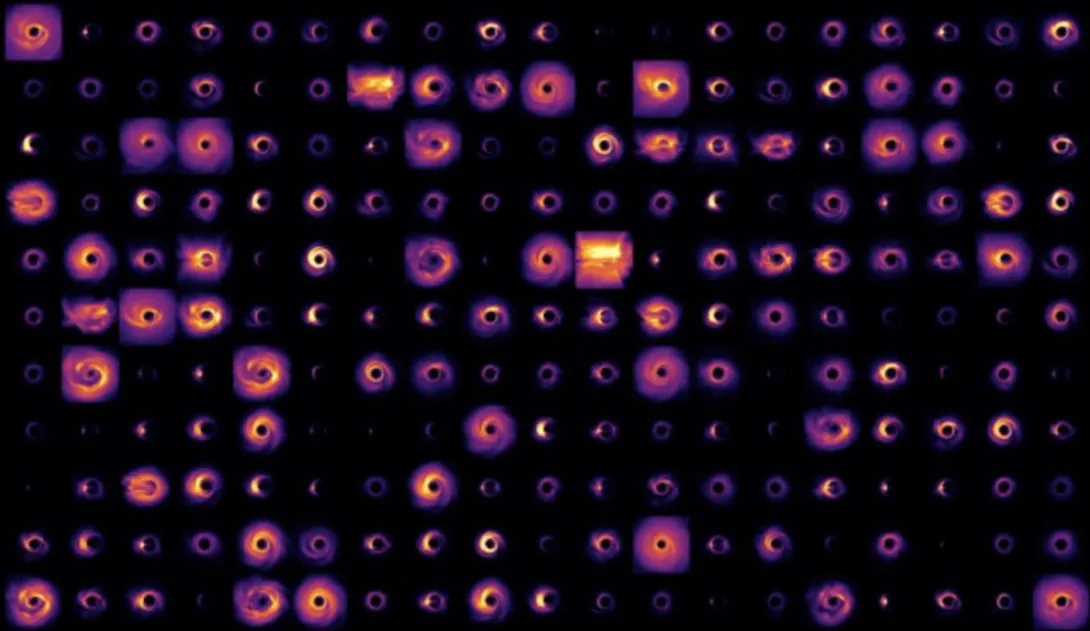
Overview of simulations that were generated for the training set of the PRIMO algorithm (EHT / Medeiros et al. 2023)
This press release is shared jointly with the Institute for Advanced Study (IAS) and NSF’s NOIRLab. It first appeared in the IAS newsroom.
A team of researchers, including astrophysicists from Georgia Tech, the Institute for Advanced Study, and NSF’s NOIRLab, has developed a new machine-learning technique to enhance the fidelity and sharpness of radio interferometric images. To demonstrate the power of their new approach, which is called PRIMO, the team created a new, high-fidelity version of the iconic Event Horizon Telescope's image of the supermassive black hole at the center of Messier 87, a giant elliptical galaxy located 55 million light-years from Earth.
The iconic image of the supermassive black hole at the center of M87—sometimes referred to as the “fuzzy, orange donut”—has gotten its first official makeover with the help of machine learning. The new image further exposes a central region that is larger and darker, surrounded by the bright accreting gas shaped like a “skinny donut.” The team used the data obtained by the Event Horizon Telescope (EHT) collaboration in 2017 and achieved, for the first time, the full resolution of the array.
“The new image of the M87 black hole showcases the remarkable power of the highest-resolution telescope on Earth working in tandem with modern machine learning algorithms; it demonstrates how technology continues to push the boundaries of our understanding of the universe,” said Feryal Özel, professor and chair of the School of Physics at Georgia Tech.
In 2017, the EHT collaboration used a network of seven pre-existing telescopes around the world to gather data on M87, creating an “Earth-sized telescope.” However, since it is infeasible to cover the Earth’s entire surface with telescopes, gaps arise in the data—like missing pieces in a jigsaw puzzle.
“With our new machine learning technique, PRIMO, we were able to achieve the maximum resolution of the current array,” says lead author Lia Medeiros of the Institute for Advanced Study. “Since we cannot study black holes up-close, the detail of an image plays a critical role in our ability to understand its behavior. The width of the ring in the image is now smaller by about a factor of two, which will be a powerful constraint for our theoretical models and tests of gravity.”
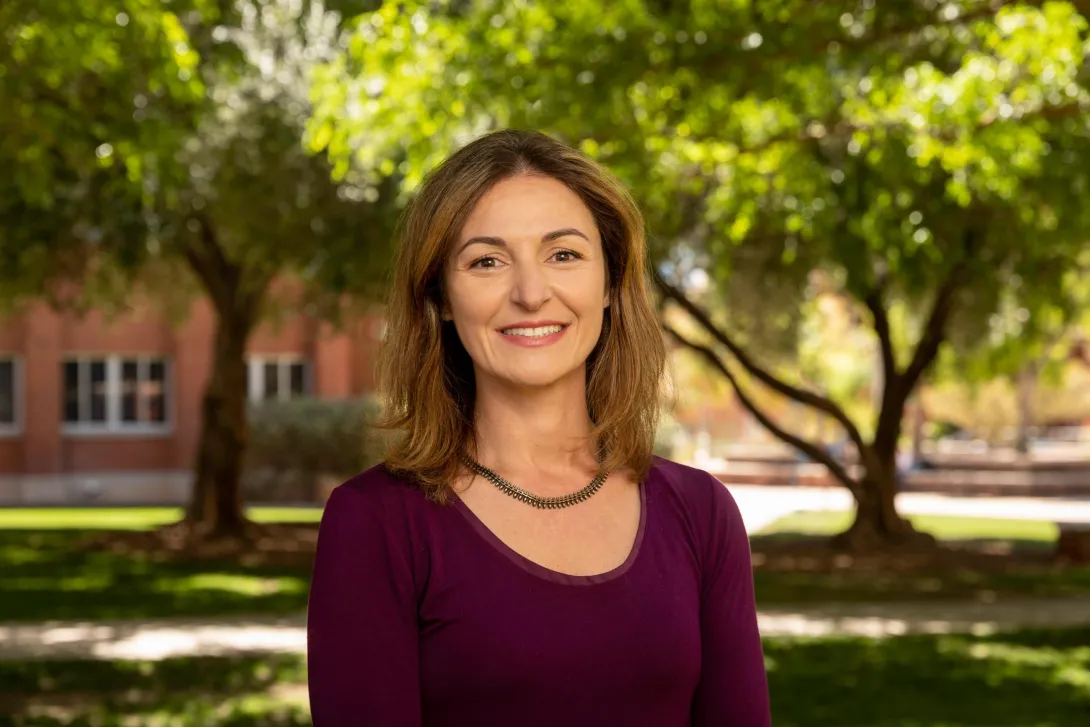
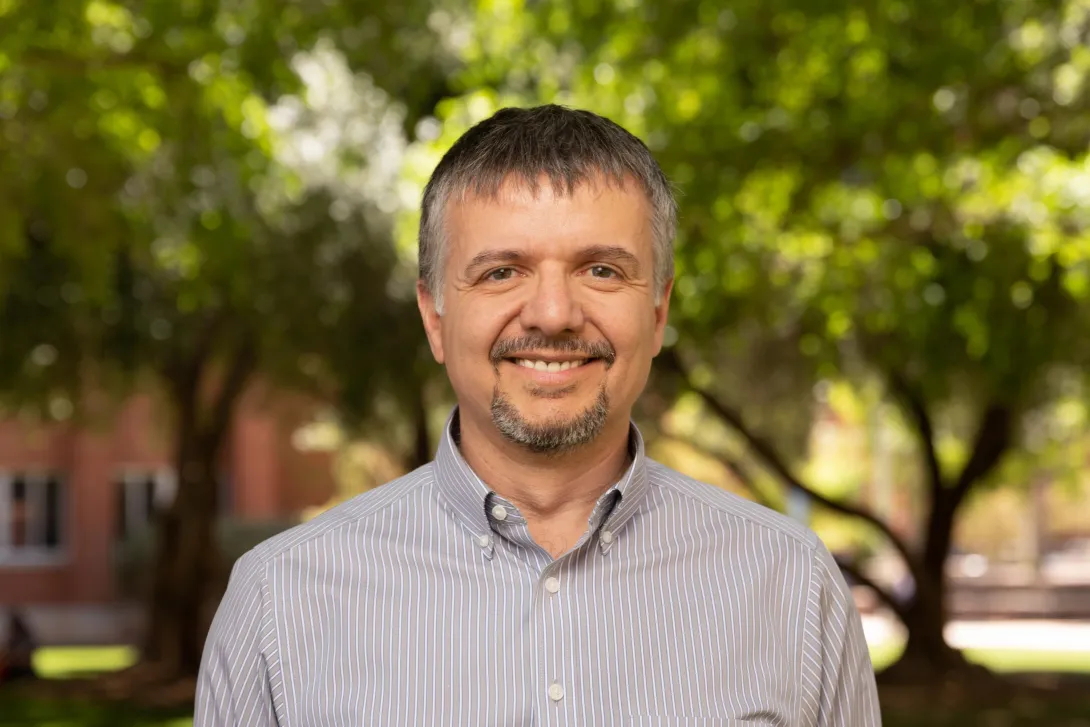
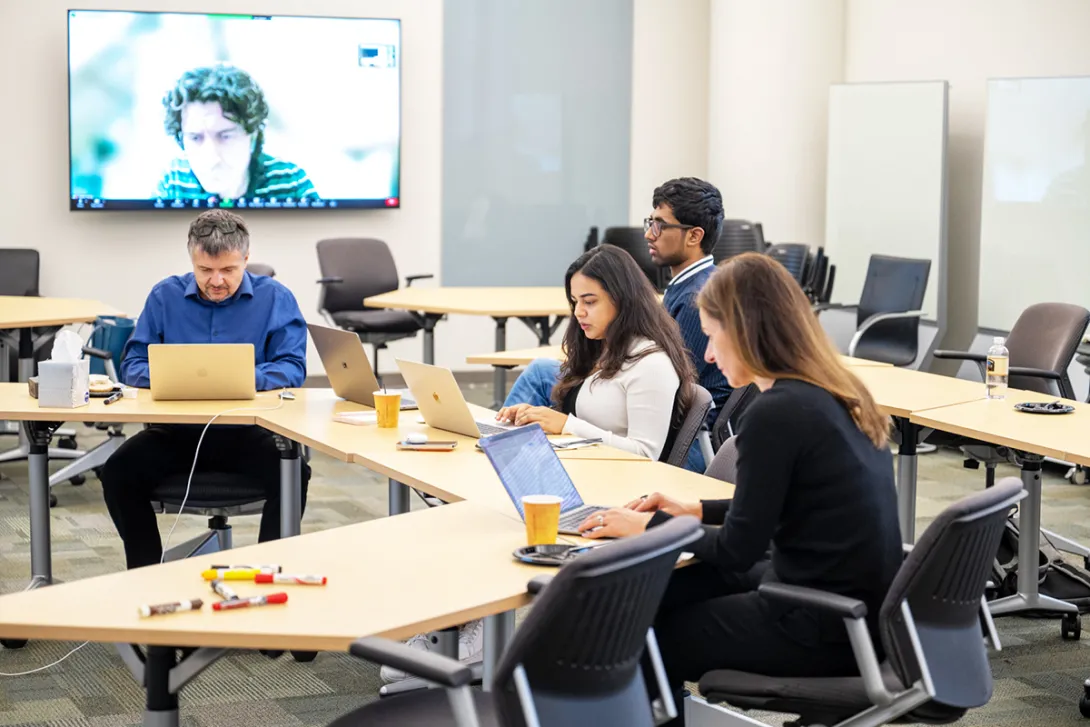
PRIMO, which stands for principal-component interferometric modeling, was developed by EHT members Lia Medeiros (Institute for Advanced Study), Dimitrios Psaltis (Georgia Tech), Tod Lauer (NOIRLab), and Feryal Özel (Georgia Tech). Their publication, “The Image of the M87 Black Hole Reconstructed with PRIMO,” is now available in The Astrophysical Journal Letters.
“PRIMO is a new approach to the difficult task of constructing images from EHT observations,” said Lauer. “It provides a way to compensate for the missing information about the object being observed, which is required to generate the image that would have been seen using a single gigantic radio telescope the size of the Earth.”
PRIMO relies on dictionary learning, a branch of machine learning which enables computers to generate rules based on large sets of training material. For example, if a computer is fed a series of different banana images—with sufficient training—it may be able to determine if an unknown image is or is not a banana. Beyond this simple case, the versatility of machine learning has been demonstrated in numerous ways: from creating Renaissance-style works of art to completing the unfinished work of Beethoven. So how might machines help scientists to render a black hole image? The research team has answered this very question.
With PRIMO, computers analyzed over 30,000 high-fidelity simulated images of black holes accreting gas. The ensemble of simulations covered a wide range of models for how the black hole accretes matter, looking for common patterns in the structure of the images. The various patterns of structure were sorted by how commonly they occured in the simulations, and were then blended to provide a highly accurate representation of the EHT observations, simultaneously providing a high fidelity estimate of the missing structure of the images. A paper pertaining to the algorithm itself was published in The Astrophysical Journal on February 3, 2023.
“We are using physics to fill in regions of missing data in a way that has never been done before by using machine learning,” added Medeiros. “This could have important implications for interferometry, which plays a role in fields from exo-planets to medicine.”
The team confirmed that the newly rendered image is consistent with the EHT data and with theoretical expectations, including the bright ring of emission expected to be produced by hot gas falling into the black hole. Generating an image required assuming an appropriate form of the missing information, and PRIMO did this by building on the 2019 discovery that the M87 black hole in broad detail looked as predicted.
“Approximately four years after the first horizon-scale image of a black hole was unveiled by EHT in 2019, we have marked another milestone, producing an image that utilizes the full resolution of the array for the first time,” stated Psaltis. “The new machine learning techniques that we have developed provide a golden opportunity for our collective work to understand black hole physics.”
The new image should lead to more accurate determinations of the mass of the M87 black hole and the physical parameters that determine its present appearance. The data also provides an opportunity for researchers to place greater constraints on alternatives to the event horizon (based on the darker central brightness depression) and perform more robust tests of gravity (based on the narrower ring size). PRIMO can also be applied to additional EHT observations, including those of Sgr A*, the central black hole in our own Milky Way galaxy.
M87 is a massive, relatively nearby, galaxy in the Virgo cluster of galaxies. Over a century ago, a mysterious jet of hot plasma was observed to emanate from its center. Beginning in the 1950s, the then new technique of radio astronomy showed the galaxy to have a compact bright radio source at its center. During the 1960s, M87 had been suspected to have a massive black hole at its center powering this activity. Measurements made from ground-based telescopes starting in the 1970s, and later the Hubble Space Telescope starting in the 1990s, provided strong support that M87 indeed harbored a black hole weighing several billion times the mass of the Sun based on observations of the high velocities of stars and gas orbiting its center. The 2017 EHT observations of M87 were obtained over several days from several different radio telescopes linked together at the same time to obtain the highest possible resolution. The now iconic “orange donut” picture of the M87 black hole, released in 2019, reflected the first attempt to produce an image from these observations.
“The 2019 image was just the beginning,” stated Medeiros. “If a picture is worth a thousand words, the data underlying that image have many more stories to tell. PRIMO will continue to be a critical tool in extracting such insights.”
Development of the PRIMO algorithm was enabled through the support of the National Science Foundation Astronomy and Astrophysics Postdoctoral Fellowship.
About Georgia Institute of Technology
The Georgia Institute of Technology, or Georgia Tech, is one of the top public research universities in the U.S., with more than 45,000 undergraduate and graduate students who study in person at the main campus in Atlanta, at Georgia Tech-Europe in France, at Georgia Tech-Shenzhen in China, as well as through distance and online learning. Students represent 50 states and more than 148 countries.
Georgia Tech's engineering and computing Colleges are the largest and among the highest-ranked in the nation, and the Institute also offers outstanding programs in business, design, liberal arts, and sciences.
With more than $1 billion annually in research awards across all six Colleges and the Georgia Tech Research Institute (GTRI), Georgia Tech is among the nation’s most research-intensive universities. It is an engine of economic development for the state of Georgia, the Southeast, and the nation.
Georgia Tech’s mission is to develop leaders who advance technology and improve the human condition. Its mission and strategic plan are focused on making a positive impact in the lives of people everywhere. Since 1885, the people of Georgia Tech have dared to imagine and then create solutions for a better future. The innovative culture and leadership continue — Progress and Service for all.
About the Institute for Advanced Study
The Institute for Advanced Study has served the world as one of the leading independent centers for theoretical research and intellectual inquiry since its establishment in 1930, advancing the frontiers of knowledge across the sciences and humanities. From the work of founding IAS faculty such as Albert Einstein and John von Neumann to that of the foremost thinkers of the present, the IAS is dedicated to enabling curiosity-driven exploration and fundamental discovery.
Each year, the Institute welcomes more than 200 of the world’s most promising post-doctoral researchers and scholars who are selected and mentored by a permanent Faculty, each of whom are preeminent leaders in their fields. Among present and past Faculty and Members there have been 35 Nobel Laureates, 44 of the 62 Fields Medalists, and 23 of the 26 Abel Prize Laureates, as well as many MacArthur Fellows and Wolf Prize winners.
News Contact
Jess Hunt-Ralston
Georgia Institute of Technology
jess@cos.gatech.edu
(404) 385-5207
Lee Sandberg
Institute for Advanced Study
lsandberg@ias.edu
(609) 455-4398
Tod Lauer
NSF’s NOIRLab
tod.lauer@noirlab.ed

Top: Rich Simmons, Marilyn Brown, Gleb Yushin
Bottom: Valerie Thomas, Hailong Chen, Tim Lieuwen
Idling at a crossroads no longer, the automotive industry is embracing electrification like never before. With more electric vehicles purchased in 2022 than any year prior, consumers are beginning to follow their lead. Yet, while opportunity abounds, new challenges will require an innovative approach to ensure a sustainable and accessible electric future for all.
With historic investments from major players in the EV space, including Rivian, Kia, and Hyundai, the state of Georgia is uniquely positioned to serve as a leader in this effort. As the state's leading research institute, Georgia Tech is on the cutting edge of the movement.
The transportation sector is the largest greenhouse gas emitter in the U.S. at nearly 30%, with passenger vehicles accounting for around 80% of the sector's total output1 as of 2019. Electric vehicles are widely regarded as a budding solution to reduce emissions, but even as both demand and production continue to increase, EVs currently account for around 1% of the cars on America's roadways.
From the supply chain to the infrastructure needed to support alternative-fuel vehicles alongside consumer hesitancy, achieving the goals set by both the public and private sectors — including the Biden Administration's target of EVs making up at least 50% of new car sales by 2030 — will not be easy. Through research and development, policy, and collaboration, Tech experts are working toward finding solutions that will serve as catalysts during this transitionary period for the environment and the way Americans drive.
News Contact
Steven Gagliano - Communications Officer
Institute Communications
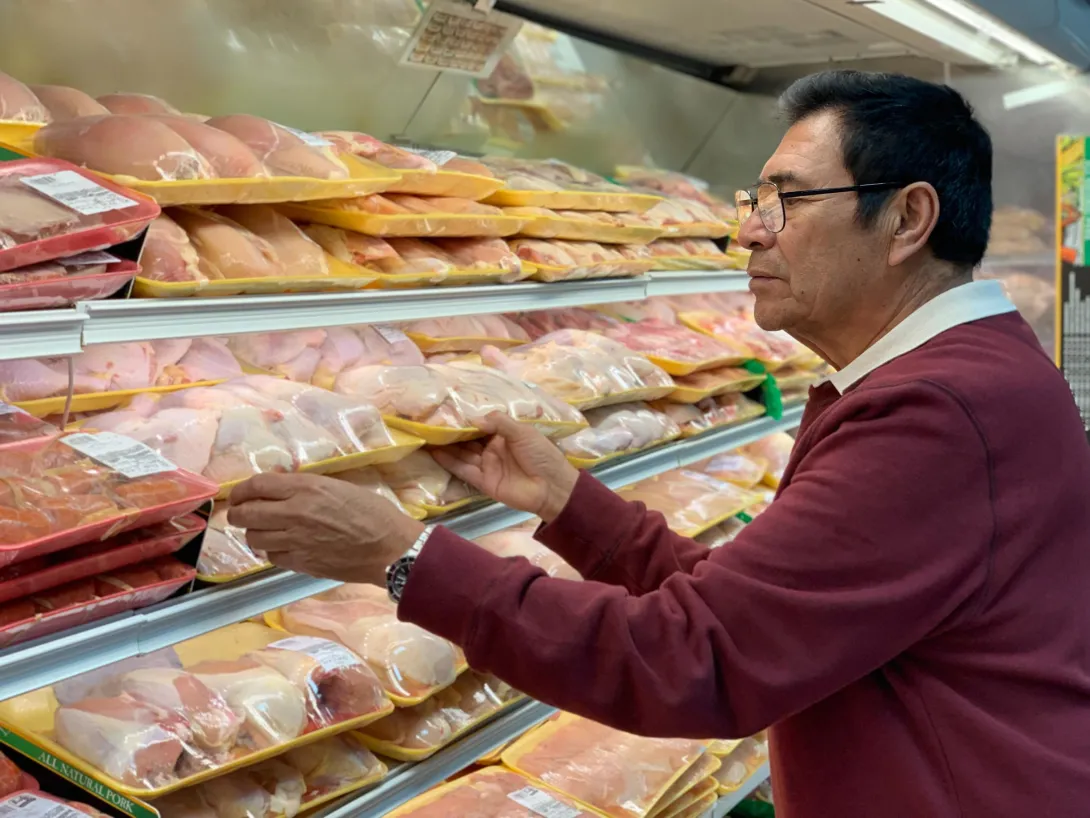
This news release first appeared in the University of Arkansas Division of Agriculture newsroom, and has been tailored for Georgia Tech readers.
Researchers at Georgia Tech, the University of Arkansas System, the University of Nebraska-Lincoln, and Fort Valley State University in Georgia were awarded a $5 million grant to increase use of artificial intelligence and robotics in chicken processing to reduce waste in deboning and detect pathogens.
The grant from the U.S. Department of Agriculture’s National Institute of Food and Agriculture will establish the Center for Scalable and Intelligent Automation in Poultry Processing. The center, led by the University of Arkansas System Division of Agriculture, will join researchers from five institutions in three states in efforts to adapt robotic automation to chicken meat processing.
Douglas Britton, manager of the Agricultural Technology Research Program at the Georgia Tech Research Institute (GTRI), said his team was very excited to work on this project with experts at the four other institutions.
“The ultimate goal is to drive transformational innovation into the poultry and meat processing industry through automation, robotics, AI, and VR technologies,” Britton said. “Building on years of work in the GTRI Agricultural Technology Research Program, we are pleased to see that the USDA-NIFA has chosen this team to continue these efforts.”
Georgia Tech is a major partner in the project, and was awarded $2 million to focus on automating the processing lines that turn chickens into meat, said Jeyam Subbiah, professor and head of the food science department for the Division of Agriculture and the Dale Bumpers College of Agricultural, Food and Life Sciences at the University of Arkansas, and director of the project. The grant is for four years.
The Arkansas Agricultural Experiment Station, the research arm of the Division of Agriculture, will receive $2.2 million from the grant primarily to focus on food safety automation for poultry processing plants.
The remaining grant money will be divided between Julia McQuillan, Willa Cather professor of sociology at the University of Nebraska-Lincoln, and Brou Kuoakou, associate dean for research at Fort Valley State University in Georgia.
Jeff Buhr, a USDA Agricultural Research Service scientist, will contribute his expertise in broiler physiology to guide robotic deboning of meat, Subbiah said.
Georgia is the nation’s top broiler producer. Arkansas is number 3, according to 2021 figures from USDA.
Meeting the challenge
The recent impetus to automate chicken processing began with the Covid-19 pandemic, Subbiah said. The illness spread quickly among workers on the processing line. Since the worst of the pandemic, the poultry industry, like many others, has been having trouble hiring enough workers.
“Poultry processing lines began 70 to 80 years ago,” Subbiah said. “Since then, there have been only incremental changes in technology. Today, there’s a need for transformative change.”
Humans can feel when a knife hits a bone. In contrast, existing automation in poultry processing, like deboners, wastes a lot of meat.
“Human deboners leave about 13 percent of meat on the bones,” Subbiah said. “Automated deboners leave 16 to 17 percent. On an industrial scale, that’s a significant loss in value. We will use artificial intelligence and virtual reality to improve precision and reduce wastage.”
Automation can relieve labor shortages, Subbiah said. It also allows plants to locate in rural areas with a smaller labor force but nearer poultry houses and with lower property costs.
Initially, people working remotely may help advance robotic processing. Subbiah envisions workers logging on from home with virtual-reality goggles and haptics gloves to control robots located miles away.
While working remotely, the labor force will teach artificial intelligence how to cut up chickens of varying sizes and shapes.
“Automated machines right now are programmed to debone or cut up chickens based on an average size and shape. But no chicken is that size or shape,” Subbiah said. “Robot-wielded knives cut meat poorly. The machines have to learn how to adjust to the reality of random sizes and shapes.”
Georgia Tech’s participating scientists are all part of GTRI:
- Douglas Britton, manager of the Agricultural Technology Research Program
- Colin Trevor Usher, senior research scientist and branch head of robotics systems and technology, Agricultural Technology Research Program
- Ai-Ping Hu, principal research engineer, Agricultural Technology Research Program
- Konrad Ahlin, research engineer, Intelligent Sustainable Technologies Division
- Michael Park, research engineer, Intelligent Sustainable Technologies Division
- Benjamin Joffe, research scientist, Intelligent Sustainable Technologies Division
- Shreyes Melkote, the Morris M. Bryan, Jr. Professorship in Mechanical Engineering, associate director of the Georgia Tech Manufacturing Institute and executive director of the Novelis Innovation Hub
“We are thrilled to partner with our colleagues here in the Division of Agriculture, as well as our colleagues at Georgia Tech and the other participating institutions on this exciting project,” said David Caldwell, head of the Division of Agriculture’s poultry science department and director of the Center of Excellence for Poultry Science.
“We expect the findings from these coordinated research projects will be impactful for our stakeholders in the commercial poultry industry here in Northwest Arkansas and throughout the entire industry,” Caldwell said. “This project will help keep moving technology forward in processing and food safety of poultry.”
For more information about the project, see the original press release on the University of Arkansas Division of Agriculture website.
News Contact
Catherine Barzler, Senior Research Writer and Editor
Through its interdisciplinary research, service-based learning, and innovative coursework, Georgia Tech’s School of Civil and Environmental Engineering is a leader in systems-level thinking and technological innovation at the interface of built, natural, information, and social systems. The school aims to not only define the challenges and complex problems facing humanity and the environment, but to catalyze the solutions to solve them.
This installment of the Faces of Research Q&A series is with Joe F. Bozeman III, assistant professor in the School of Civil and Environmental Engineering, the School of Public Policy, and director of the Social Equity and Environmental Engineering Lab (SEEEL).
What is your field of expertise and why did you choose it?
I research and develop equitable climate change adaptation and mitigation strategies anchored in environmental engineering practice. My current focus areas are urbanization, food-energy-water, and circularity (e.g., circular materials and the circular economy). I chose this path because I felt that I could merge my lived experiences, having come from humble beginnings, with the technical aspects of engineering and public policy to realize more equitable infrastructure and policy outcomes.
What makes Georgia Tech research institutes unique?
Georgia Tech’s research institutes have an existing system which allows for collaboration across scientific disciplines and with real community members. This is something that I think is uniquely beneficial for folks like me. That is, for my research to have real-world impact, I need access to faculty and community collaborators who share an equity-centered mindset.
What impact is your research having on the world?
It has been wonderful to see my research enter broader community and academic spaces through mainstream media, scientific publications, regulatory deliberation, and even art. For instance, my work on U.S. food-consumption impacts — for example, greenhouse gas emissions, land, and water impact that come from what we eat — across sociodemographic subgroups (Black, Latinx, white, and socioeconomic status) was featured in a range of media outlets including NPR, the New York Post, Popular Science, Free Speech TV, and political radio programs. Other aspects of my research have established international research priorities for cities, or urban systems, and even inform some of the music you may have heard on network TV and streaming services. My lab, the Social Equity and Environmental Engineering Lab (SEEEL), is exploring other ways to merge equity, engineering, and art in meaningful ways.
What is the most challenging aspect of your research?
For SEEEL activities, acquiring and fairly distributing money, and time resources is the most challenging part. The concept of integrating systemic equity into existing engineering practices is new. This is exciting in many ways. However, it also presents challenges when it comes to developing standards around flexible funding access, community-based research and development, and establishing criteria to evaluate how well systemic equity is being achieved in various domains (e.g., within research labs, within governmental bodies, and for actual community members). Through these types of efforts, I hope to play a role in regaining some of the public’s trust in academia.
If you weren't a researcher, what would you be?
If I weren’t a researcher, I probably would have continued as a music sound engineer, producer, and performer. As I previously mentioned, I hope to leverage my experience in the arts to help translate some of the technical engineering findings into content that all of us can easily digest (e.g., songs, video, film, and physical art). I’d even go as far as to say that I think there is room to make the technical engineering findings, in their original form, more accessible to the broader public. This has compelled SEEEL to master the art of effective writing and presentation delivery.
What was the first thing you remember wanting to be when you were a kid?
As a kid, I first wanted to be a NBA player. Ironically, I listed becoming an engineer as a very close second. Back then, I believe I thought of engineering as a means to video game and sound design.
News Contact
Péralte C. Paul
404.316.1210
peralte.paul@comm.gatech.edu

This news release first appeared in the Chinese Academy of Sciences newsroom, and has been tailored for Georgia Tech readers.
Mycorrhizal symbiosis — a symbiotic relationship that can exist between fungi and plant roots — helps plants expand their root surface area, giving plants greater access to nutrients and water. Although the first and foremost role of mycorrhizal symbiosis is to facilitate plant nutrition, scientists have not been clear how mycorrhizal types mediate the nutrient acquisition and interactions of coexisting trees in forests.
To investigate this crucial relationship, Lingli Liu, a professor at the Institute of Botany of the Chinese Academy of Sciences (IBCAS) led an international, collaborative team, which included School of Biological Sciencesprofessor Lin Jiang. The team studied nutrient acquisition strategies of arbuscular mycorrhizae (AM) and ectomycorrhizal (EcM) trees in the Biodiversity–Ecosystem Functioning (BEF) experiment in a subtropical forest in China, where trees of the two mycorrhizal types were initially evenly planted in mixtures of two, four, eight, or 16 tree species.
The researchers found that as the diversity of species increased, the net primary production (NPP) of EcM trees rapidly decreased, but the NPP of AM trees progressively increased, leading to the sheer dominance (>90%) of AM trees in the highest diversity treatment.
The team's analyses further revealed that differences in mycorrhizal nutrient-acquisition strategies, both nutrient acquisition from soil and nutrient resorption within the plant, contribute to the competitive edge of AM trees over EcM ones.
In addition, analysis of soil microbial communities showed that EcM-tree monocultures have a high abundance of symbiotic fungi, whereas AM-tree monocultures were dominated by saprotrophic and pathogenic fungi.
According to the researchers, as tree richness increased, shifts in microbial communities, particularly a decrease in the relative abundance of Agaricomycetes (mainly EcM fungi), corresponded with a decrease in the NPP of EcM subcommunities, but had a relatively small impact on the NPP of AM subcommunities.
These findings suggest that more efficient nutrient-acquisition strategies, rather than microbial-mediated negative plant-soil feedback, drive the dominance of AM trees in high-diversity ecosystems.
This study, based on the world’s largest forest BEF experiment, provides novel data and an alternative mechanism for explaining why and how AM trees usually dominate in high-diversity subtropical forests.
These findings also have practical implications for species selection in tropical and subtropical reforestation—suggesting it is preferable to plant mixed AM trees, as they have a more efficient nutrient-acquisition strategy than EcM trees.
This study was published as an online cover article in Sciences Advances on Jan. 19 and was funded by the Strategic Priority Research Program of CAS and the National Natural Science Foundation of China.
News Contact
Georgia Tech Editor: Audra Davidson
Communications Officer II
College of Sciences
The $1.1 billion Research enterprise at Georgia Tech is the embodiment of a commitment the advancement of technology and betterment of the human condition. Georgia Tech's Research enterprise through offerings such as the Enterprise Innovation Institute, the Georgia Tech Research Institute, Commercialization, and Interdisciplinary Research Institutes, to solve the most pressing challenges in a host of sectors, including computing, engineering, design, the sciences, liberal arts, and business.
This installment of the Faces of Research Q&A series is with Chaouki T. Abdallah, Executive Vice President for Research at Georgia Tech.
What is your field of expertise and why did you choose it?
My field of expertise is Systems Theory, and my degrees are all in Electrical Engineering. I chose it because it was heavily mathematical but can also be applied across multiple fields (aerospace, chemical, mechanical, electrical, biology, etc.).
What makes Georgia Tech research institutes unique?
Our IRIs (Interdisciplinary Research Institutes) connect research across colleges but what makes them even more impactful is their intra-connectivity. Problems that are even too big for one IRI, are being solved by researchers across multiple ones.
What impact is your research having on the world?
My own research impact has been mostly through my students. However, I did use my research in systems and network science to study and improve the complexity of college curricula, leading to 150% improvement in the four-year graduation rate and tens of millions of dollars in savings for students.
What is the most profound advice you ever received?
Pick the hill you’re willing to die on.
What is something you wished you knew as a budding researcher that everyone considering research as a career should know?
The joy of knowing something is eclipsed by the joy of explaining it to others.
What song or album best describes you?
"With a Little Help From My Friends" by The Beatles.
News Contact
Péralte C. Paul
404.316.1210
peralte.paul@comm.gatech.edu
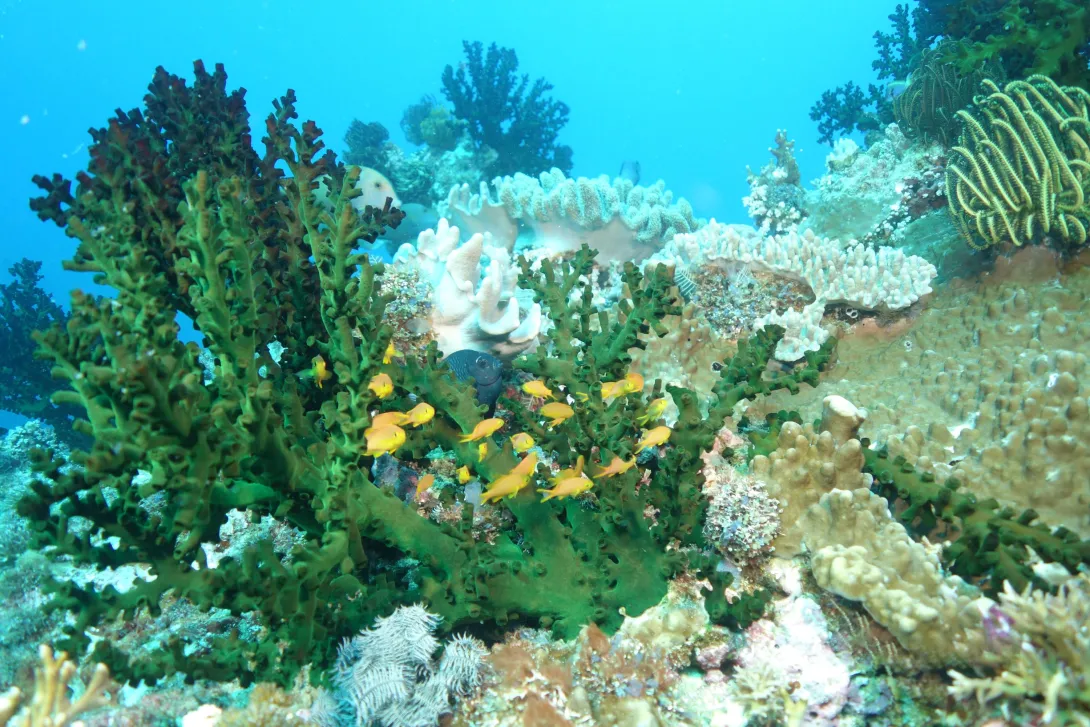
Coral reef conservation is a steppingstone to protect marine biodiversity and life in the ocean as we know it. The health of coral also has huge societal implications: reef ecosystems provide sustenance and livelihoods for millions of people around the world. Conserving biodiversity in reef areas is both a social issue and a marine biodiversity priority.
In the face of climate change, Annalisa Bracco, professor in the School of Earth and Atmospheric Sciences at Georgia Institute of Technology, and Lyuba Novi, a postdoctoral researcher, offer a new methodology that could revolutionize how conservationists monitor coral. The researchers applied machine learning tools to study how climate impacts connectivity and biodiversity in the Pacific Ocean’s Coral Triangle — the most diverse and biologically complex marine ecosystem on the planet. Their research, recently published in Nature Communications Biology, overcomes time and resource barriers to contextualize the biodiversity of the Coral Triangle, while offering hope for better monitoring and protection in the future.
“We saw that the biodiversity of the Coral Triangle is incredibly dynamic,” Bracco said. “For a long time, it has been postulated that this is due to sea level change and distribution of land masses, but we are now starting to understand that there is more to the story.”
Connectivity refers to the conditions that allow different ecosystems to exchange genetic material such as eggs, larvae, or the young. Ocean currents spread genetic material and also create the dynamics that allow a body of water — and thus ecosystems — to maintain consistent chemical, biological, and physical properties. If coral larvae are spread to an ecoregion where the conditions are very similar to the original location, the larvae can start a new coral.
Bracco wanted to see how climate, and specifically the El Niño Southern Oscillation (ENSO) in its phases — El Niño, La Niña, and neutral conditions — impacts connectivity in the Coral Triangle. Climate events that move large masses of warm water in the Pacific Ocean bring enormous changes and have been known to exacerbate coral bleaching, in which corals turn white due to environmental stressors and become vulnerable to disease.
“Biologists collect data in situ, which is extremely important,” Bracco said. “But it’s not possible to monitor enormous regions in situ for many years — that would require a constant presence of scuba divers. So, figuring out how different ocean regions and large marine ecosystems are connected over time, especially in terms of foundational species, becomes important.”
Machine Learning for Discovering Connectivity
Years ago, Bracco and collaborators developed a tool, Delta Maps, that uses machine learning to identify “domains,” or regions within any kind of system that share the same dynamic. Bracco initially used it to analyze domains of climate variability in models but also suspected it could be used to study ecoregions in the ocean.
For this study, they used the tool to map out domains of connectivity in the Coral Triangle using 30 years of sea surface temperature data. Sea surface temperatures change in response to ocean currents over scales of weeks and months and across distances of tens of kilometers. These changes are relevant to coral connectivity, so the researchers built their machine learning tool based on this observation, using changes in surface ocean temperature to identify regions connected by currents. They also separated the time periods that they were considering into three categories: El Niño events, La Niña events, and neutral or “normal” times, painting a picture of how connectivity was impacted during major climate events in particular ecoregions.
Novi then applied a ranking system to the different ecoregions they identified. She used rank page centrality, a machine learning tool that was invented to rank webpages on the internet, on top of Delta Maps to identify which coral ecoregions were most strongly connected and able to receive the most coral larvae from other regions. Those regions would be the ones most likely sustain and survive through a bleaching event.
Climate Dynamics and Biodiversity
Bracco and Novi found that climate dynamics have contributed to biodiversity because of the way climate introduces variability to the currents in the equatorial Pacific Ocean. The researchers realized that alternation of El Niño and La Niña events has allowed for enormous genetic exchanges between the Indian and Pacific Oceans and enabled the ecosystems to survive through a variety of different climate situations.
“There is never an identical connection between ecoregions in all ENSO phases,” Bracco said. “In other parts of the world ocean, coral reefs are connected through a fixed, often small, number of ecoregions, and if you eliminate this fixed number of connections by bleaching all connected reefs, you will not be able to rebuild the corals in any of them. But in the Pacific the connections are changing all the time and are so dynamic that soon enough the bleached reef will receive larvae from completely different ecoregions in a different ENSO phase.”
They also concluded that, because of the Coral Triangle’s dynamic climate component, there is more possibility for rebuilding biodiversity there than anywhere else on the planet. And that the evolution of biodiversity in the Coral Triangle is not only linked to landmasses or sea levels but also to the evolution of ENSO through geological times. The researchers found that though ENSO causes coral bleaching, it has helped the Coral Triangle become so rich in biodiversity.
Better Monitoring Opportunities
Because coral reef survival has been designated a priority by the United Nations Sustainable Development Goals, Bracco and Novi’s research is poised to have broad applications. The researchers’ method identified which ecoregions conservationists should try hardest to protect and also the regions that conservationists could expect to have the most luck with protection measures. Their methodology can also help to identify which regions should be monitored more and the ones that could be considered lower priority for now due to the ways they are currently thriving.
“This research opens a lot of possibilities for better monitoring strategies, and especially how to monitor given a limited amount of resources and money,” Bracco said. “As of now, coral monitoring often happens when groups have a limited amount of funding to apply to a very specific localized region. We hope our method can be used to create a better monitoring over larger scales of time and space.”
CITATION: Novi, L., Bracco, A. “Machine learning prediction of connectivity, biodiversity and resilience in the Coral Triangle.” Commun Biol 5, 1359 (2022).
News Contact
Catherine Barzler, Senior Research Writer/Editor

Plants, like animals and people, seek refuge from climate change. And when they move, they take entire ecosystems with them. To understand why and how plants have trekked across landscapes throughout time, researchers at the forefront of conservation are calling for a new framework. The key to protecting biodiversity in the future may be through understanding the past.
Jenny McGuire, assistant professor in the Schools of Biological Sciences and Earth and Atmospheric Sciences at Georgia Tech, spearheaded a special feature on the topic of biodiversity in The Proceedings of the National Academy of Sciences along with colleagues in Texas, Norway, and Argentina. In the special feature, “The Past as a Lens for Biodiversity Conservation on a Dynamically Changing Planet,” McGuire and her collaborators highlight the outstanding questions that must be addressed for successful future conservation efforts. The feature brings together conservation research that illuminates the complex and constantly evolving dynamics brought on by climate change and the ever-shifting ways humans use land. These factors, McGuire said, interact over time to create dynamic changes and illustrate the need to incorporate temporal perspectives into conservation strategies by looking deep into the past.
One example of this work highlighted in the journal is McGuire’s research about plants in North America, which investigates how and why they’ve moved across geography over time, where they’re heading, and why it’s important.
“Plants are shifting their geographic ranges, and this is happening whether we realize it or not,” McGuire said. “As seeds fall or are transported to distant places, the likelihood that the plant’s seed is going to be able to survive and grow is changing as climates are changing. Studying plants’ niche dynamics over thousands of years can help us understand how species adapt to climate change and can teach us how to protect and maintain biodiversity in the face of rapid climate change to come.”
Climate Fidelity: A New Metric for Understanding Vulnerability
The first step is to understand which type of plants exhibit what McGuire terms “climate fidelity,” and which do not. If a plant has climate fidelity, it means that the plant stays loyal to its preferred climatic niche, often migrating across geographies over thousands of years to keep up with its ideal habitat. Plants that don’t exhibit climate fidelity tend to adapt locally in the face of climate change. Being loyal to one’s climate, it turns out, doesn’t necessarily mean being loyal to a particular place.
To investigate the case of trees, McGuire and former Georgia Tech postdoctoral scholar Yue Wang (associate professor in the School of Ecology at Sun Yat-sen University in China) studied pollen data from the Neotoma Paleoecology Database, which contains pollen fossil data from sediment cores across North America. Each sediment core is sampled, layer by layer, producing a series of pollen data from different times throughout history. The data also contains breakdowns of the relative abundance of different types of plants represented by the pollen types – pine versus oak versus grass, for example – painting a picture of what types of plants were present in that location and when.
McGuire and Wang looked at data from 13,240 fossil pollen samples taken from 337 locations across the entirety of North America. For each of the 16 major plant taxa in North America, they divided the pollen data into six distinct chunks or “bins” of time of 4,000 years, starting from 18,000 years ago up to the present day. Wang used the data to identify all climate sites containing fossil pollen for any individual type of tree – such as oak, for example – for each period. Then, Wang looked at how each tree’s climate changed from one period to the next. Wang did this by comparing the locations of pollen types between adjacent time periods, which enabled the team to identify how and why each type of tree’s climate changed over time.
“This process allowed us to see the climate fidelity of these different plant taxa, showing that certain plants maintain very consistent climatic niches, even when climate is changing rapidly,” Wang said.
For example, their findings showed that when North American glaciers were retreating 18,000 years ago, spruce and alder trees moved northward to maintain the cool temperatures of their habitats.
Crucially, McGuire and Wang found that most plant species in North America have exhibited long-term climate fidelity over the past 18,000 years. They also found that plants that migrated farther did a better job of tracking climate during periods of change.
But some plants fared better than others. For example, the small seeds of willow trees can fly over long distances – enabling them to track their preferred climates very effectively. But the large seeds of ash trees, for example, can only be dispersed short distances from parent trees, hindering their ability to track climate. Habitat disruptions from humans could make it even more difficult for ash trees to be able to take hold in new regions. If there are no adjacent habitats for ash trees, their seeds are under pressure to move even farther – a particular challenge for ash, which slows their migration movements even more.
Protecting the Fabric of Life
On the bright side, by identifying which plants have historically been most sensitive to changing climates, McGuire and Wang’s research can help conservation organizations like The Nature Conservancy prioritize land where biodiversity is most vulnerable to climate change.
As a final step, McGuire and Wang identified “climate fidelity hotspots,” regions that have historically exhibited strong climate fidelity whose plants will most urgently need to move as their climates change. They compared these hotspots to climate-resilient regions identified by The Nature Conservancy that could serve as refuge areas for those plants. While plants in these resilient regions can initially adapt to impending climate change by shifting their distributions locally, the plants will likely face major challenges when a region’s climate change capacity is exceeded due to lack of connectivity and habitat disruptions from humans. Refining these priorities helps stakeholders identify efficient strategies for allowing the fabric of life to thrive.
“I think that understanding climate fidelity, while a new and different idea, will be very important going forward, especially when thinking about how to prioritize protecting different plants in the face of climate change,” McGuire said. “It is important to be able to see that some plants and animals are more vulnerable to climate change, and this information can help build stronger strategies for protecting the biodiversity on the planet.”
Citation: Yue Wang, Silvia Pineda-Munoz, and Jenny L. McGuire, "Plants maintain climate fidelity in the face of dynamic climate change." PNAS (2023).
DOI: doi.org/10.1073/pnas.2201946119
News Contact
Catherine Barzler, Senior Research Writer/Editor
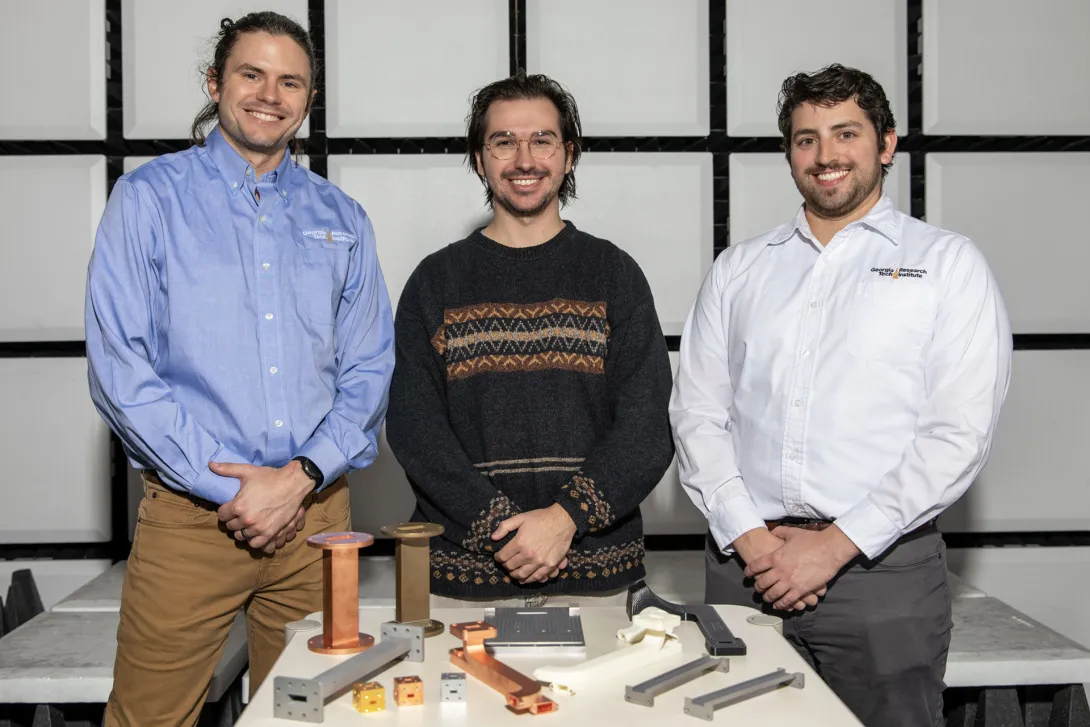
Researchers at the Georgia Tech Research Institute (GTRI) are using additive manufacturing techniques to create unique waveguide structures that would be difficult or impossible to make using conventional fabrication processes. The new techniques are especially useful for integrating updated components into equipment that might otherwise require significant design changes.
In high-powered millimeter wave and microwave radars and antennas, waveguides direct electromagnetic energy from one component to another inside the equipment. Until recently, the waveguides had been fabricated from extruded copper or aluminum tubing, but these traditional manufacturing techniques can’t always accommodate the complex configurations needed for optimal design with minimal energy transmission losses.
“To propagate electromagnetic waves efficiently, the waveguide must have a very precise internal geometry,” explained GTRI Senior Research Engineer Kyle Azevedo. “Yet, the waveguide must also be very smooth in terms of its internal surface finish. The cavity that transmits the energy has to be very well controlled to avoid significant losses. And the waveguides must also fit into confined spaces.”
Additive Techniques Offer Specific RF Advantages
To allow more complex designs, GTRI researchers are evaluating two alternative fabrication techniques: 3D-printed structures fabricated from metal and 3D-printed polymer components that are metal coated. Each has advantages and disadvantages and must be chosen for the specific application. The researchers are testing waveguides made using both techniques for mechanical performance in resisting fatigue damage, thermal performance in dissipating heat, electrical performance – and their RF energy loss.
Flexibility afforded by additive techniques can help designers accommodate waveguides within a crowded design that includes many other components. In one current project, the researchers found that they needed to move a radar’s feed horn several inches to accommodate other design considerations. But that complicated the waveguide design.
“That was a really big challenge, because we had to change some of the existing waveguides, and we couldn’t do that with traditional tubing pieces that were available without coming up with a whole new design,” Azevedo said. “But by using additive processes that allow more customization, we were able to make things smaller and optimize the design in a single iteration.”
In another project – in consideration for use on Army counter-battery radar – researchers at U.S. Army DEVCOM C5ISR Center used additive techniques to accommodate an updated component of a different size and shape than the original to improve RF performance. The researchers designed a 3D-printed waveguide that accommodated the existing connectors and integrated into its legacy systems, then worked with the Army’s Rock Island Arsenal to optimize fabrication and quality control. That new component was successfully tested at Tobyhanna Army Depot and Yuma Proving Ground, and is now being evaluated as an OEM alternative. This may allow additive manufacturing to augment the supply system.
In addition to facilitating designs that might otherwise have been more challenging, the GTRI researchers expect additive manufacturing will allow them to accelerate the iterative development of prototypes by moving some waveguide fabrication in-house.
Overcoming Challenges with New Fabrication Methods
For all-metal waveguides, additive manufacturing can have some disadvantages, but those may not be as significant as they might first appear. To limit transmission losses, inside surfaces of conventional waveguides are smooth, but because of the way metal 3D printing works, smooth internal surfaces can be difficult to fabricate. The design flexibility of additive processes can make up for that.
“In one of our designs, we found that even though we might have some limitations on the roughness of the surface finish, we could gain back the transmission losses by optimizing the waveguide shape,” Azevedo explained. “The final design would not have been possible using traditional waveguide fabrication techniques.”
Though applying metal coatings to waveguides produced from polymers or resins can provide smoother surfaces, this process comes with its own set of challenges.
“One of the issues we are tackling now is that a lot of the resins and polymers that have desirable properties for plating contain silica,” said Max Tannenbaum, a GTRI research engineer. “They are ceramic-like when cured, but when you remove the resin, a lot of the conventional solvents don’t remove the silica, and you end up with a chalky powder on the surface. If you can’t remove that before you try to plate it, the plating won’t adhere.”
Building a Knowledge Base for RF Applications of Additive Processes
To support expanded applications for waveguides fabricated using additive techniques, the researchers are using both simulation and experimentation to develop comprehensive design information.
“The traditional method for making waveguides has been around since World War II, when the original systems got up and running, and those techniques have been refined over the decades since then,” said Azevedo. “As a result, there’s a wealth of detailed data on what works, including the metallurgic properties. We want to develop a comparable depth of understanding for the new additive manufacturing techniques that offer so many advantages.” By putting together what they have learned, the research team plans to share their knowledge with other RF engineers who may be interested in the additive approaches.
“Our effort is focusing on two parallel paths: looking at the mechanical constraints involved with fabrication and the RF limitations,” said GTRI Research Engineer Austin Forgey. “We are merging the new experimental data we’re getting with RF simulations, and combining that with testing mechanical properties. That will give us a full design package that can be used by the designers who need it.”
Beyond waveguides, the GTRI researchers are working on other applications of additive manufacturing to RF design. With researchers in Georgia Tech’s School of Mechanical Engineering, they are fabricating cold plates that are 3D printed from aluminum and used to cool high-powered electronics. The 3D printing allows novel fluid flow in a single part, not possible with conventional fabrication.
Similarly, they are also looking at additive techniques to make shielding needed to protect components from electromagnetic interference.
While they expect to expand their use of additive fabrication approaches to provide new design options for RF applications, the researchers don’t see additive manufacturing doing away with conventional fabrication techniques any time soon.
“My opinion is that there will certainly be a mix because additive manufacturing techniques aren’t the answer for everything,” said Tannenbaum. “But they are solutions to a lot of specific problems that we encounter, allowing us to build parts that are cheaper, lighter, and available more quickly.”
Writer: John Toon
GTRI Communications
Georgia Tech Research Institute
Atlanta, Georgia USA
About GTRI: The Georgia Tech Research Institute (GTRI) is the nonprofit, applied research division of the Georgia Institute of Technology (Georgia Tech). Founded in 1934 as the Engineering Experiment Station, GTRI has grown to more than 2,800 employees, supporting eight laboratories in over 20 locations around the country and performing more than $700 million of problem-solving research annually for government and industry. GTRI's renowned researchers combine science, engineering, economics, policy, and technical expertise to solve complex problems for the U.S. federal government, the state, and industry. For more information, please visit www.gtri.gatech.edu.
News Contact
(Interim) Director of Communications
Michelle Gowdy
Michelle.Gowdy@gtri.gatech.edu
404-407-8060
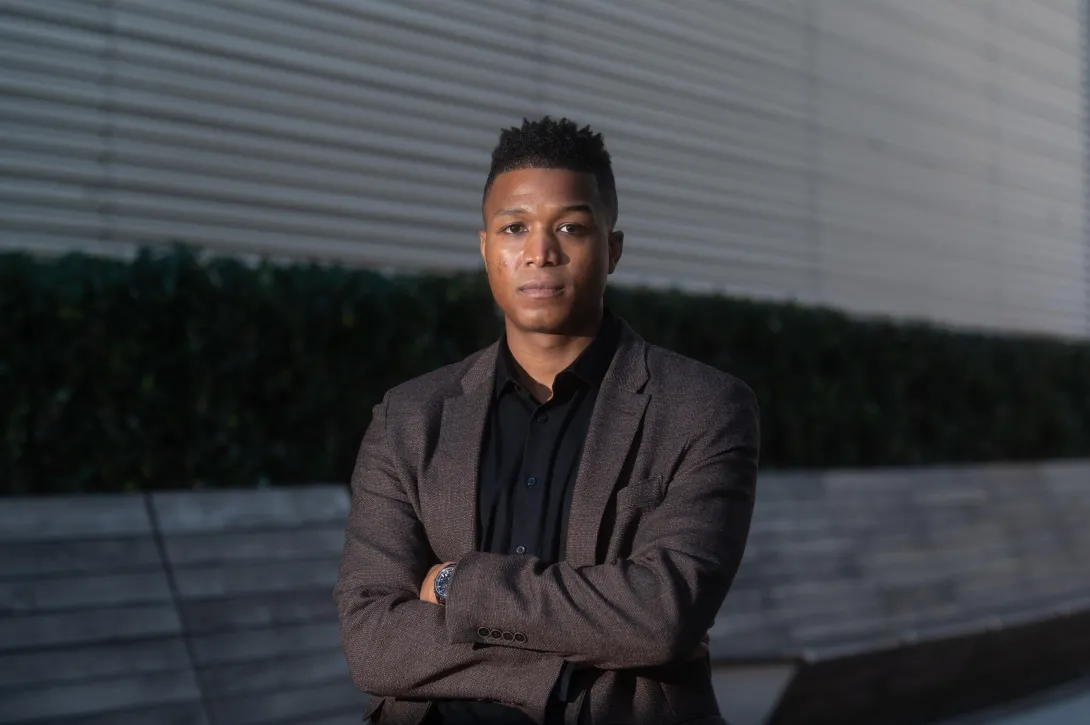
Inclusivity and understanding past policies and their effects on underserved and marginalized communities must be part of urban planning, design, and public policy efforts for cities.
An international coalition of researchers — led by Georgia Tech — have determined that advancements and innovations in urban research and design must incorporate serious analysis and collaborations with scientists, public policy experts, local leaders, and citizens. To address environmental issues and infrastructure challenges cities face, the coalition identified three core focus areas with research priorities for long-term urban sustainability and viability. Those focus areas should be components of any urban planning, design, and sustainability initiative.
The researchers found that the core focus areas included social justice and equity, circularity, and a concept called “digital twins.” The team — which consists of 13 co-authors and scholars based in the U.S., Asia, and Europe — also provided guidance and future research directions for how to address these focus areas. They detailed their findings in the Journal of Industrial Ecology, published in January 2023.
“Climate change has certainly increased the amount and intensity of extreme weather events and because of that, it makes our decision making today critical to the manner in which our economy and our day to day lives can operate,” said Joe F. Bozeman III, the lead author and an assistant professor in Georgia Tech’s School of Civil and Environmental Engineering. He is also the director of Tech’s Social Equity & Environmental Engineering Lab and has a courtesy appointment in the School of Public Policy. “Our quality of life can be negatively affected if we don't make good decisions today.”
Three core areas of focus to achieve urban sustainability
The researchers’ first core focus area, justice and equity, addresses innovations and trends that disproportionately benefit middle and high-income communities. Trends like IoT, “smart cities,” and the urban “green movement” are part of a broader push by cities to become more sustainable and resilient. But communities of color and low-income neighborhoods — the same areas often home to environmental contaminations, infrastructure challenges, and other hazards — have often been overlooked.
The researchers’ findings showed a consistent trend with marginalized communities across several countries, including Canada, the Netherlands, India, and South Africa. They call for mandatory equity analyses which incorporate the experiences and perspectives of these marginalized communities, and, more importantly, ensure members of those communities are actively engaged in decision-making processes.
“Planning, professional, and community stakeholders,” the researchers write in the paper, “should recognize that working together gets cities closer to harmonizing the technological and social dimensions of sustainability.”
The second focus area, circularity, addresses resource consumption of staple commodities including food, water, and energy; the waste and emissions they generate; and the opportunities to increase conservation of those resources by boosting efficiencies.
“What we mean by circularity is basic reuse, remanufacturing, and recycling efforts across the entire urban system — which not only includes cities and under resourced areas within those cities — but also rural communities that supply and take resources from those city hubs,” Bozeman said. The idea is aligned with the circular economy concept which addresses the need to move away from the resource-wasteful and unsustainable cycle of taking, making, and throwing away.
Instead, the researchers argue, cities should look for ways to improve efficiency and maximize local resource use. That has potential benefits not only for urban areas, but rural communities, too. One example, Bozeman said, is the Lifecycle Building Center in Atlanta. It takes old building supplies and sells them locally for reuse.
“By doing that, they’re at the beginning stages of creating an economic system, a regional engine where we share resources between cities and rural areas,” he said. “We can start creating an economic framework, not only where both sides can make money and get what they need, but something that can actually turn into a sustainable economic engine without having to rely on another state or another country's import or export economic pressures.”
To strengthen circularity and make it more robust, the researchers call for more expansive metrics beyond measuring recycling rates and zero waste efforts, to include other parts of the supply chain that may yield new ideas and solutions.
The third focus area, digital twins, addresses the development of automated technologies in smart buildings and infrastructure, such as traffic lights to respond to weather and other environmental factors.
“Let's say there's a heavy rain event and that the rainwater is being stored into retainment,” said Bozeman. “An automated system can open another valve where we can store that water into a secondary support system, so there's less flooding, and that can happen automatically, if we utilize the concept of digital twins.”
Creating a new urban planning model
The research came about as part of the mission of the Sustainable Urban Systems Section of the International Society for Industrial Ecology, which aims to be a conduit for scientists, engineers, policymakers, and others who want to marry environmental concerns and economic activity. Bozeman is a board member of the Sustainable Urban Systems Section.
“In that role, part of we do is set a vision and foundation for how other researchers should operate within the city and urban system space,” he said.
For urban sustainability, engineers and policy makers must come to the table and make collective decisions around social justice and equity, circularity, and the digital twins concepts.
“I think we're at a really critical decision point when it comes to engineers and others being able to do work that is forward looking and human sensitive,” said Bozeman. “Good decision making involves addressing social justice and equity and understanding its root causes, which will enable cities to create solutions that integrate cultural dynamics.”
CITATION: Joe F. Bozeman III, Shauhrat S. Chopra, Philip James, Sajjad Muhammad, Hua Cai, Kangkang Tong, Maya Carrasquillo, Harold Rickenbacker, Destenie Nock, Weslynne Ashton, Oliver Heidrich, Sybil Derrible, Melissa Bilec. “Three research priorities for just and sustainable urban systems: Now is the time to refocus.” (Journal of Industrial Ecology, January 2023)
News Contact
Péralte C. Paul
peralte.paul@comm.gatech.edu
404.316.1210