
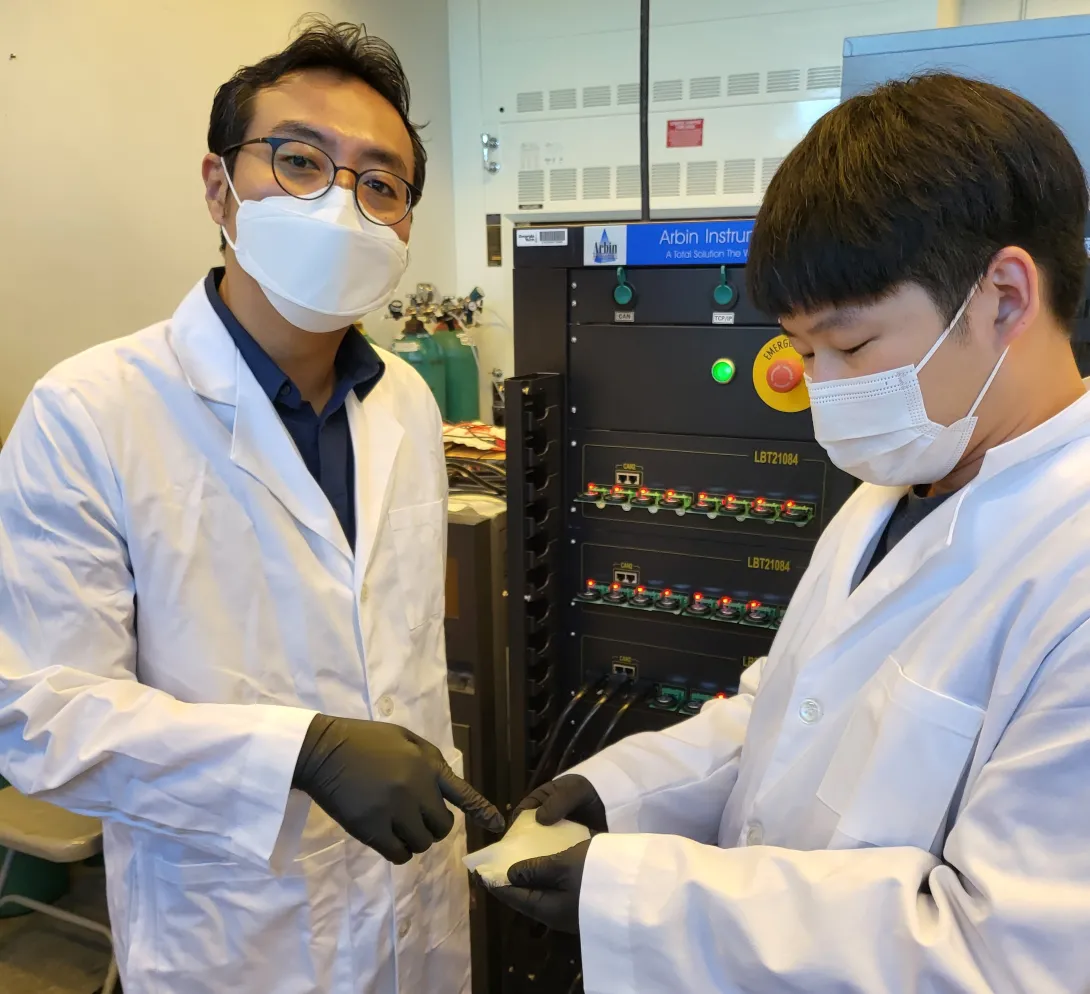
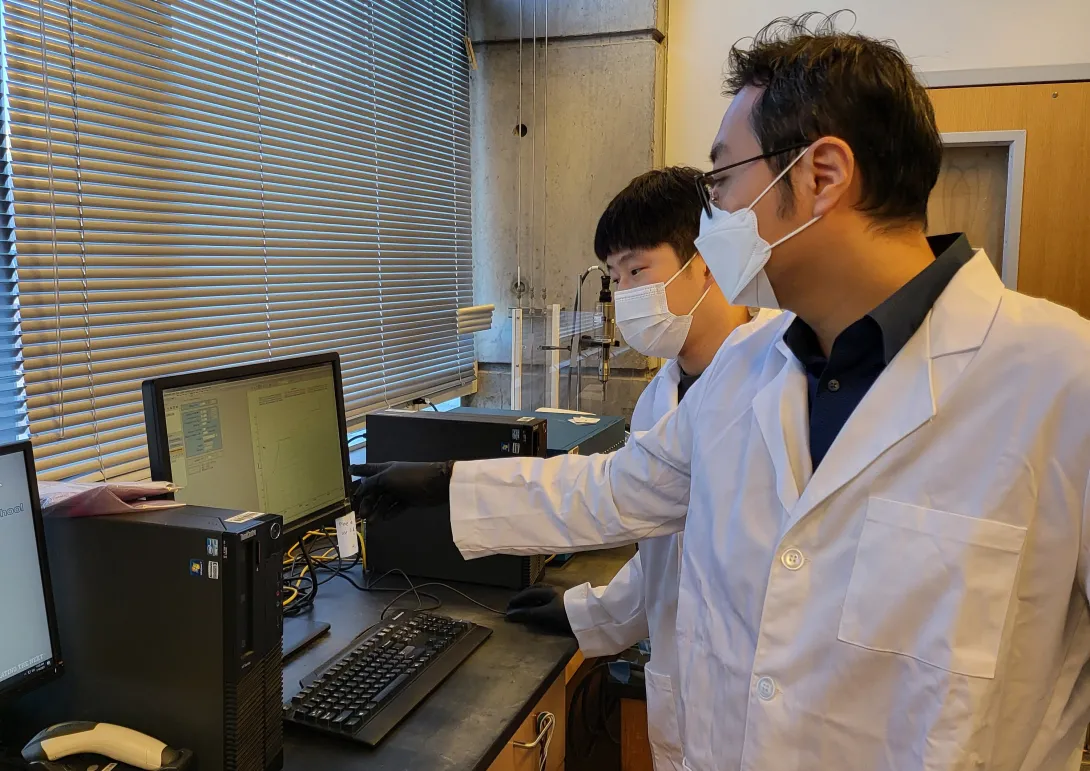
For electric vehicles (EVs) to become mainstream, they need cost-effective, safer, longer-lasting batteries that won’t explode during use or harm the environment. Researchers at the Georgia Institute of Technology may have found a promising alternative to conventional lithium-ion batteries made from a common material: rubber.
Elastomers, or synthetic rubbers, are widely used in consumer products and advanced technologies such as wearable electronics and soft robotics because of their superior mechanical properties. The researchers found that the material, when formulated into a 3D structure, acted as a superhighway for fast lithium-ion transport with superior mechanical toughness, resulting in longer charging batteries that can go farther. The research, conducted in collaboration with the Korea Advanced Institute of Science and Technology, was published Wednesday in the journal Nature.
In conventional lithium-ion batteries, ions are moved by a liquid electrolyte. However, the battery is inherently unstable: even the slightest damage can leak into the electrolyte, leading to explosion or fire. The safety issues have forced the industry to look at solid-state batteries, which can be made using inorganic ceramic material or organic polymers.
“Most of the industry is focusing on building inorganic solid-state electrolytes. But they are hard to make, expensive and are not environmentally friendly,” said Seung Woo Lee, associate professor in the George W. Woodruff School of Mechanical Engineering, who is part of a team of researchers who have uncovered a rubber-based organic polymer superior to other materials. Solid polymer electrolytes continue to attract great interest because of their low manufacturing cost, non-toxicity and soft nature. However, conventional polymer electrolytes do not have sufficient ionic conductivity and mechanical stability for reliable operation of solid-state batteries.
Novel 3D Design Leads to Jump in Energy Density, Performance
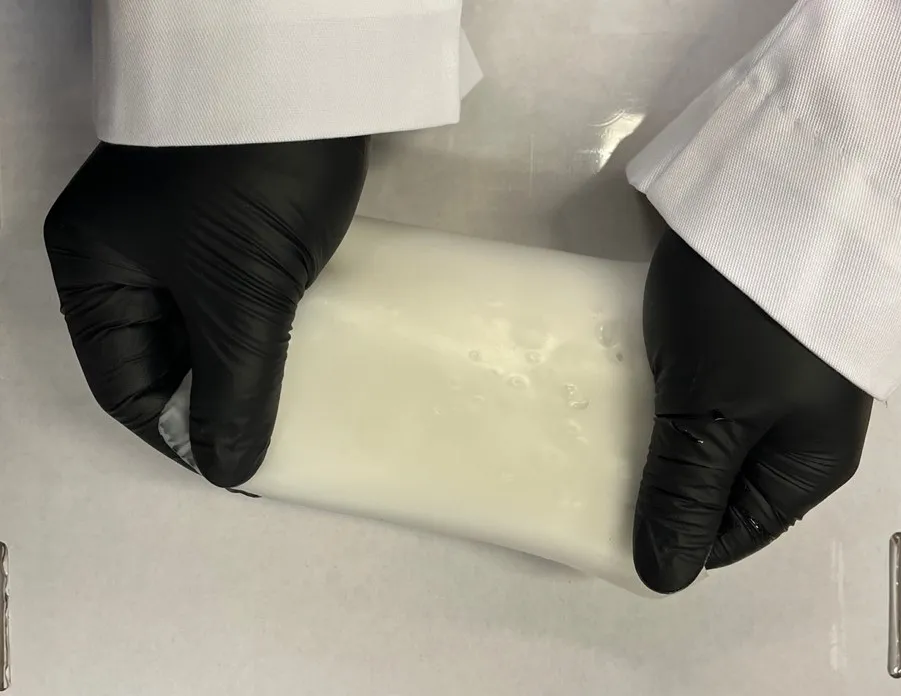
Georgia Tech engineers have solved common problems (slow lithium-ion transport and poor mechanical properties) using the rubber electrolytes. The key breakthrough was allowing the material to form a three-dimensional (3D) interconnected plastic crystal phase within the robust rubber matrix. This unique structure has resulted in high ionic conductivity, superior mechanical properties and electrochemical stability.
This rubber electrolyte can be made using a simple polymerization process at low temperature conditions, generating robust and smooth interfaces on the surface of electrodes. These unique characteristics of the rubber electrolytes prevent lithium dendrite growth and allow for faster moving ions, enabling reliable operation of solid-state batteries even at room temperature.
“Rubber has been used everywhere because of its high mechanical properties, and it will allow us to make cheap, more reliable and safer batteries,” said Lee.
“Higher ionic conductivity means you can move more ions at the same time,” said Michael Lee, a mechanical engineering graduate researcher. “By increasing specific energy and energy density of these batteries, you can increase the mileage of the EV.”
The researchers are now looking at ways to improve the battery performance by increasing its cycle time and decreasing the charging time through even better ionic conductivity. So far, their efforts have seen a two-time improvement in the battery's performance / cycle time.
The work could enhance Georgia’s reputation as a center for EV innovation. SK Innovation, a global energy and petrochemical company, is funding additional research of the electrolyte material as part of its ongoing collaboration with the Institute to build next-generation solid-state batteries that are safer and more energy dense than conventional LI-ion batteries. SK Innovation recently announced construction of a new EV battery plant in Commerce, Georgia, expected to produce an annual volume of lithium-ion batteries equal to 21.5 Gigawatt-hours by 2023.
“All-solid-state batteries can dramatically increase the mileage and safety of electric vehicles. Fast-growing battery companies, including SK Innovation, believe that commercializing all-solid-state batteries will become a game changer in the electric vehicle market,” said Kyounghwan Choi, director of SK Innovation’s next-generation battery research center. “Through the ongoing project in collaboration with SK Innovation and Professor Seung Woo Lee of Georgia Tech, there are high expectations for rapid application and commercialization of all-solid-state batteries."
CITATION: M. Lee, et. al, "Elastomeric electrolytes for high-energy solid-state lithium batteries," (Nature, 2022) https://doi.org/10.1038/s41586-021-04209-4
***
The Georgia Institute of Technology, or Georgia Tech, is a top 10 public research university developing leaders who advance technology and improve the human condition. The Institute offers business, computing, design, engineering, liberal arts, and sciences degrees. Its nearly 44,000 students representing 50 states and 149 countries, study at the main campus in Atlanta, at campuses in France and China, and through distance and online learning. As a leading technological university, Georgia Tech is an engine of economic development for Georgia, the Southeast, and the nation, conducting more than $1 billion in research annually for government, industry, and society.
News Contact
Anne Wainscott-Sargent (404-435-5784)

The global supply chain has been rocked by disruptions triggered largely by the coronavirus pandemic, resulting in a cascade of shortages on a host of products ranging from computer chips to medications.
But supply chain disruptions also highlight the potential vulnerabilities in the U.S. manufacturing sector’s critical segments like defense.
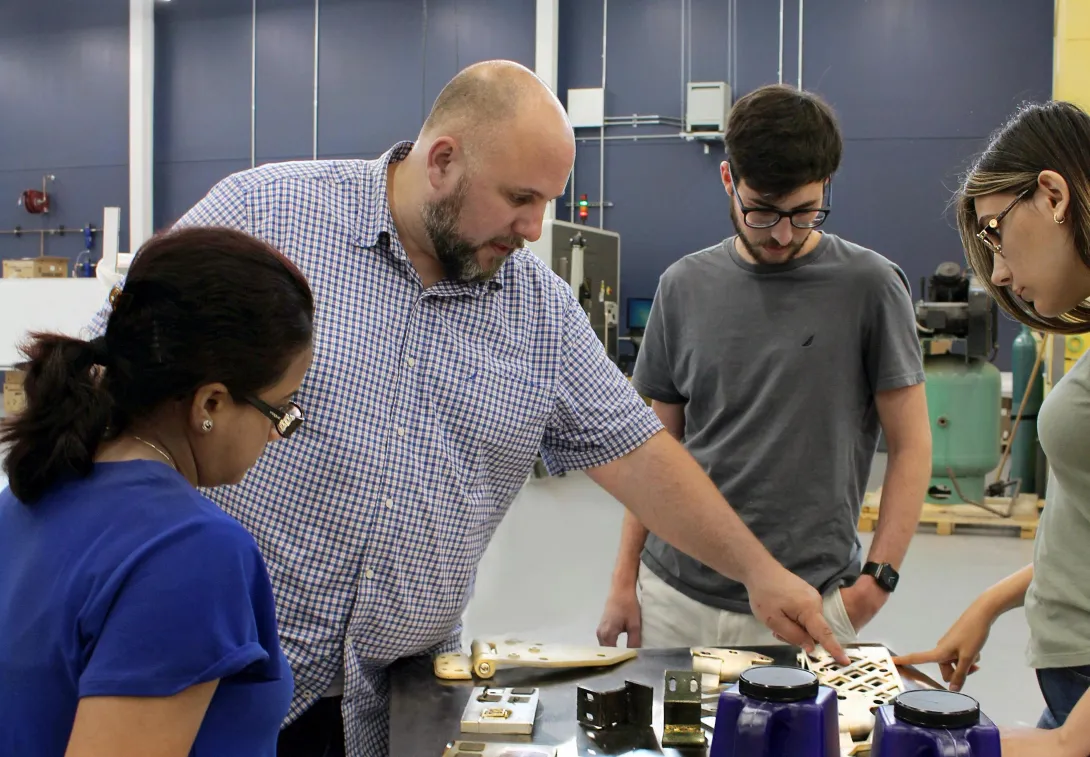
To help manufacturers across the state, the Georgia Institute of Technology has launched the Georgia Manufacturing 4.0 Consortium to work with those businesses in defense and related industries become more resilient and less susceptible to supply chain disruptions. The Consortium, which will begin accepting members in April 2022, will work with Georgia defense manufacturers to incorporate cybersecurity protocols, smart technologies such as sensor packs, machine learning, artificial intelligence, and other best practices under Industry 4.0 technology standards.
Led by Aaron Stebner, associate professor in the George W. Woodruff School of Mechanical Engineering and the School of Materials Science and Engineering, the Consortium is an 18-month pilot funded by a Department of Defense Office of Local Defense Community Cooperation (OLDCC) grant of nearly $1 million. Georgia Tech is working in partnership with Spelman College, the Technical College System of Georgia, and the Georgia Department of Economic Development, under the grant to develop workforce, training manuals, a curriculum, and to support businesses in adapting to economic and technological changes that emerge at a much more rapid pace today.
“It’s a cooperative effort that’s really focused on helping to get modern technologies to these Georgia manufacturers. This is about establishing a community of manufacturers who all want to move forward but don’t have the bandwidth or capabilities do it individually,” Stebner said.
The Consortium has three goals. The first is to increase the manufacturing defense supply chain’s resilience and diversification. That will allow those companies to pivot quickly in response to demand and let non-defense-related industries enter the supply chain at critical junctures. The second goal is to work with Georgia manufacturers in adopting new technologies and address challenges that put those businesses at risk.
Lastly, the Consortium is to be a conduit that helps small- and medium-sized manufacturers test out innovations using Georgia Tech resources such as the Advanced Manufacturing Pilot Facility, connect manufacturers with each other, and potentially unlock new markets and collaboration opportunities.
While the focus is on defense manufacturing, the Consortium is open to all manufacturers.
“We want to help as many manufacturers as we can, to grow a bigger pie that helps everybody, lowers risk, and allows companies to be part of building innovative solutions” Stebner said.
Manufacturing Supports Georgia Economy
National Association of Manufacturers data show that manufacturing accounts for $61.1 billion in economic activity, roughly 10% of Georgia’s total output. The industry includes more than 6,600 firms that employ nearly 400,000.
At $14 billion a year, Georgia is ranked 13th in federal defense spending. Roughly 1,200 manufacturers in the state are in defense or related industries. Those include information technology companies that support cybersecurity, wireless communications, and other innovations that are critically essential to Industry 4.0 in defense manufacturing.
University partners from the Technical College System of Georgia and Spelman College will look to take the Consortium findings and data from the work they do with member companies to create educational programming and workforce training.
Today, there is a need for more workers in machine learning and other aspects of advanced manufacturing, as well as a need to change perceptions of manufacturing, especially in rural parts of the state, Stebner explained.
To that end, the Technical College System of Georgia could develop programming for students within its two-year education curriculum. It also has a mobile manufacturing unit that could be taken to rural parts of the state and used as a tool to highlight opportunities in manufacturing and dispel misconceptions about the industry.
The all-women’s Spelman College, one of the nation’s premier historically black colleges and universities, launched an extended reality program in the fall of 2020. That program aims to integrate art, technology, and narrative on a gaming platform which is familiar and engaging for students. Those students will develop the technical skills to develop games, create immersive virtual experiences, and develop visual simulations for research, education, and training.
For Consortium members, Spelman’s extended reality program can be used to help turn research data gathered from them into workforce training and development modules.
“Spelman has a long history of graduating women in the natural sciences, and that history has recently led the Department of Defense to distinguish the College as a Center of Excellence for educating women in STEM,” said Jerry Volcy, a Spelman professor and co-director of the Spelman Innovation Lab.
The extended reality program furthers Spelman’s goal to increase the technological readiness of its graduates.
“Spelman has a long record of forging pathways for women of color into new spaces. Today, these spaces include extended reality, defense and, to some extent, manufacturing research,” Volcy said. “From the College’s perspective, participation in the Consortium has the dual potential of creating and discovering new pathways into these industries while immediately providing real-world applications laboratory for the developing extended reality program.”
Fulfilling Georgia Tech’s Mission
Within Georgia Tech, the Georgia Manufacturing Extension Partnership and the Georgia Tech Manufacturing Institute will support Consortium efforts.
The Consortium reflects Georgia Tech’s broader mission to further its Advanced Manufacturing Initiative, said George White, Georgia Tech’s interim vice president of Industry Collaboration.
“The anticipated research impact envisioned through the Defense Manufacturing Consortium will strengthen Georgia Tech’s positioning in enabling major public private collaborations,” White said. “The advent of the Consortium represents the opportunity to convene key stakeholders from government, academics, and industry to innovate and solve the most challenging problems in manufacturing.”
News Contact
Writer and media relations contact:
Péralte C. Paul
peralte.paul@comm.gatech.edu
404.316.1210
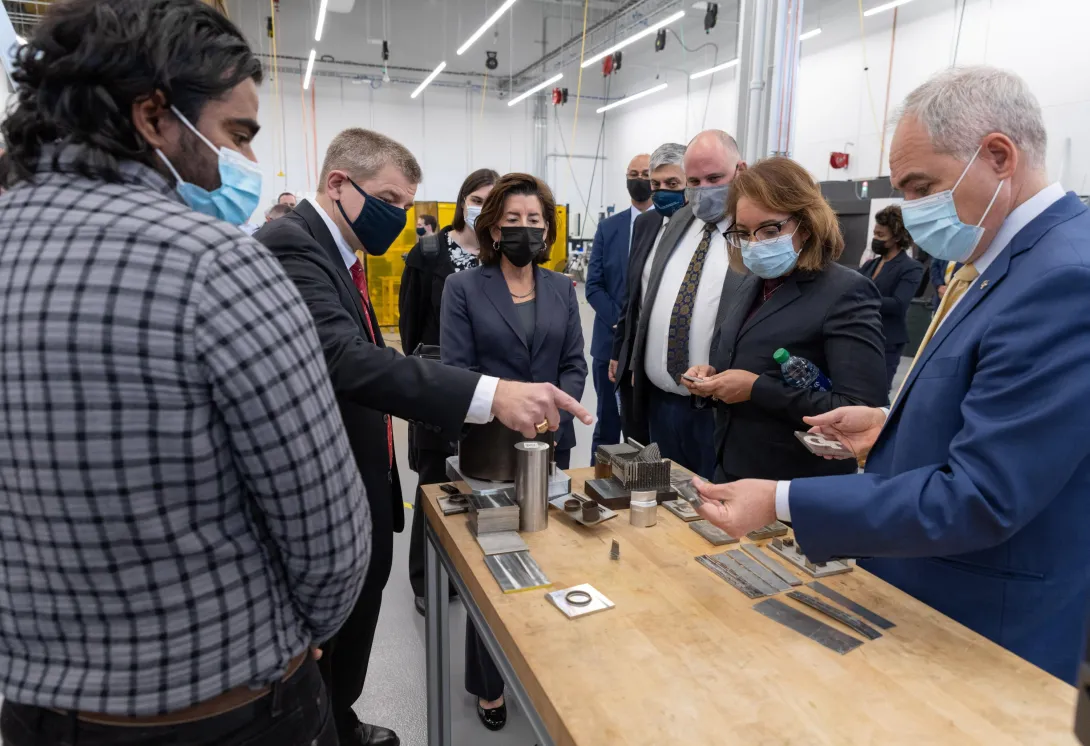
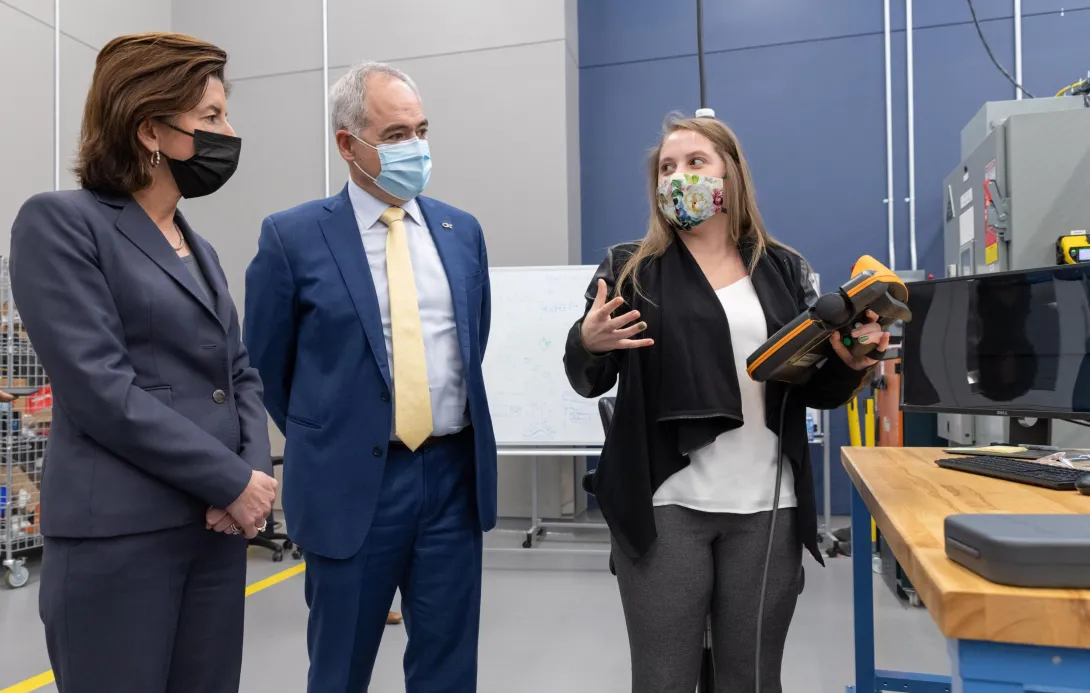
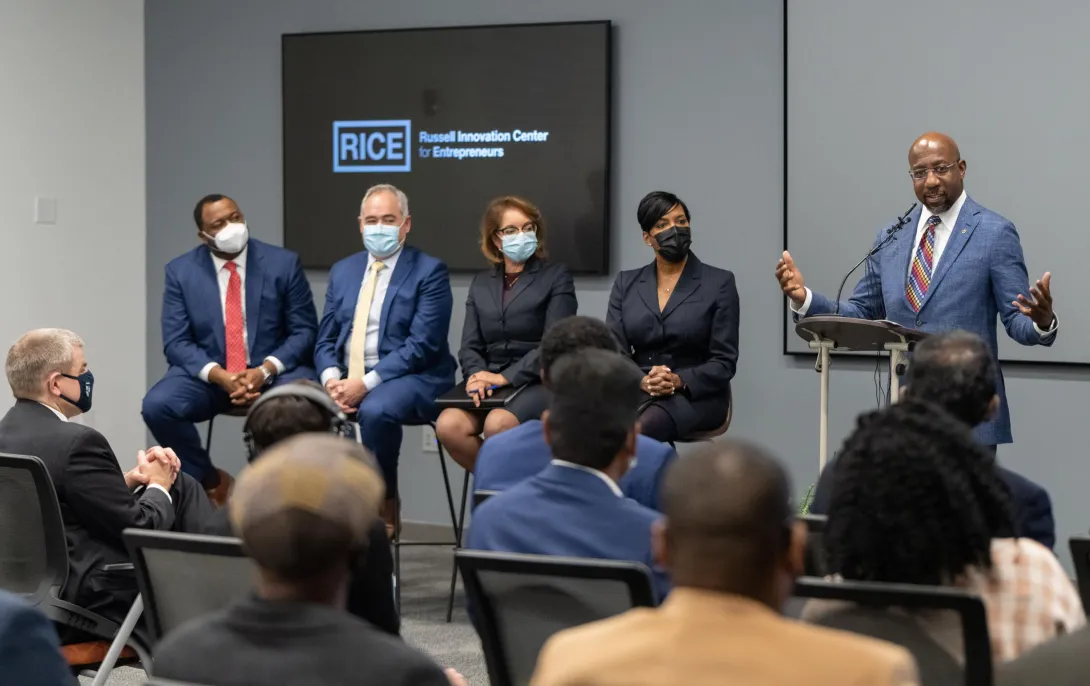
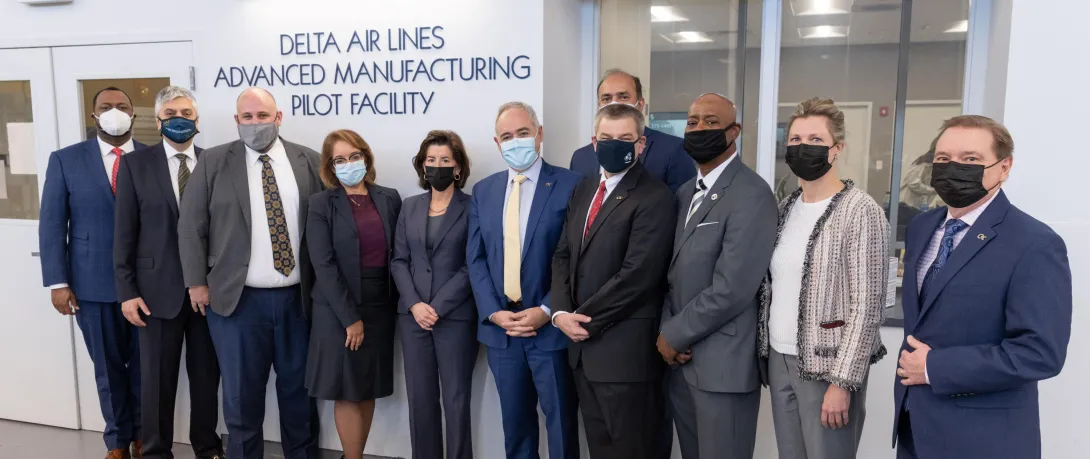
The Georgia Institute of Technology was awarded a grant from the U.S. Department of Commerce’s Economic Development Administration (EDA) as part of its $1 billion Build Back Better Regional Challenge. Georgia Tech is one of 60 entities to be awarded funding to assist communities nationwide in their efforts to accelerate the rebuilding of their economies in the wake of the pandemic.
As a leader in artificial intelligence, manufacturing research, and innovation-led economic development, Georgia Tech will utilize the grant for technical assistance to plan the Georgia Artificial Intelligence Manufacturing Corridor (GA-AIM). Led by Thomas Kurfess and Aaron Stebner in the George W. Woodruff School of Mechanical Engineering and in collaboration with local partners, GA-AIM will fill existing technology gaps, build a technological opportunity framework that includes underrepresented communities and rural Georgia counties, and better secure the state’s manufacturing infrastructure.
Georgia Tech’s partners in the effort include the Russell Innovation Center for Entrepreneurs, Spelman College, the Technical College System of Georgia, and the Georgia Department of Economic Development.
“We are truly honored to be awarded this grant to implement our vision for manufacturing excellence in Georgia with our partners in artificial intelligence research,” said Chaouki T. Abdallah, executive vice president for Research at Georgia Tech. “Alongside these important partners, the grant enables us to collaborate to include diverse backgrounds and perspectives in the process of learning, discovery, and creation, furthering Georgia Tech’s mission to expand access.”
Georgia Tech and its partners will pair artificial intelligence and manufacturing research innovation to better secure the manufacturing ecosystem, expand opportunity to distressed and rural communities and underrepresented groups, and support business growth across the state.
“We are thrilled to help communities work together — in coalitions of government, nonprofits, academia, the private sector, and others — to craft ambitious and regionally unique plans to rebuild their communities,” said Alejandra Y. Castillo, assistant secretary of commerce for the EDA. “These projects will help revitalize local economies and tackle our biggest challenges related to climate change, manufacturing, supply chains, and more. EDA is proud to ignite these plans and help communities nationwide build back better.”
GA-AIM’s partners have created a complementary network of resources that focus on each partner organization’s expertise and mission.
“We have an opportunity to create meaningful impact at the intersection of AI and manufacturing,” said Stebner, who wrote the grant proposal that resulted in the $500,000 grant from EDA.
Kurfess, who serves as the regional economic competitiveness officer for the grant, added, “Bringing together AI and manufacturing will ensure a strong manufacturing base for Georgia that will leverage our well-trained workforce and our strong educational institutions that are participating in this effort. What excites me the most is that AI will augment our workforce, making it more valuable and productive, ensuring job growth for Georgia and the U.S. well into the future.”
The GA-AIM effort takes a multifaceted approach to address its core goals:
Georgia Tech
- Formation of the AI Manufacturing Pilot Facility: Georgia Tech’s Advanced Manufacturing Pilot Facility will be transformed into the AI Manufacturing Pilot Facility. The new facility allows for government pilot trials, cybersecurity games, and workforce training to innovate, transition, and create a workforce for AI manufacturing technologies without exposing the region’s supply chains to risk.
- Center for AI Commercialization: Two of Georgia Tech’s commercialization programs — VentureLab and I-Corps South — will create a center for the commercialization of AI manufacturing technologies into local and regional startups. Those commercialization efforts will occur through a quarterly cohort-based entrepreneurial training program built on the National Science Foundation’s I-Corps curriculum. The center will also provide training for instructors to build a sustainable workforce and will secure investment funding for these startups.
- AI Manufacturing Community Engagement: The Enterprise Innovation Institute, Georgia Tech’s chief economic development arm, will engage in focused outreach and technical assistance to small and mid-sized manufacturers and minority business enterprises through its Georgia Manufacturing Extension Partnership and Georgia Minority Business Development Agency Business Center programs. A third Enterprise Innovation Institute program, the Economic Development Lab, will focus on outreach and engagement in distressed and underserved parts of the state, create workforce development programs and implementation strategies, and attract outside investment.
- AI Manufacturing Rural Supply Chain: The Supply Chain and Logistics Institute will study the impact of automation technologies, build automation solutions tailored for rural manufacturers, and create programs that lower the barrier for rural manufacturers’ access to use the AI Manufacturing Pilot Facility.
- AI InVenture K-12 Experiences: To ensure a technically capable workforce in the coming years, Georgia Tech’s InVenture Prize and the Center for Education Integrating Science, Mathematics, and Computing will expand their emphasis to rural and underserved areas of the state by piloting a rural regional event with a region-specific prize. They will also create supplemental lessons centered on AI and data science that will be part of a K-12 InVenture Prize curriculum website.
Spelman College
- Virtual Reality for AI Workforce Training Innovation: Spelman’s Innovation Lab will develop virtual reality technology for training or retraining the GA-AIM workforce to make workers comfortable with new technologies before deployment in real-world applications.
Russell Innovation Center for Entrepreneurs
- LaunchPad AI Innovation Studio: The Russell Innovation Center for Entrepreneurs will create the 5,000-square-foot LaunchPad AI Innovation Studio to provide prototyping and proof of concept development of physical products. Black entrepreneurs will be given access to equipment, training, and mentoring. LaunchPad AI will also be open to AI InVenture teams from Atlanta’s K-12 public schools, with special programs designed for startup mentoring and seed funding for K-12 entrepreneurs.
Technical College System of Georgia (TCSG)
- AI Manufacturing Technical Workforce Development: As Georgia’s technical college coordinating organization, the TCSG will design, develop, and implement curricula at community colleges that include apprenticeships at AI-MPF and virtual reality modules from Spelman. The TCSG will also provide regional entry points for dual enrollment and traditional students to AI manufacturing technical education at certificate and degree levels. Graduates will have exit points that lead directly to careers in the industry or provide for the continuation of education and higher degree attainment through articulation agreements among GA-AIM members.
With this grant, Tech becomes a finalist for significantly more funding to implement projects that support an industry sector and help communities withstand future economic shocks.
“GA-AIM is in strategic alignment with the EDA’s funding priorities, including manufacturing, workforce development, equity, and technology-based economic development,” said David Bridges, vice president of the Enterprise Innovation Institute at Georgia Tech and co-author of the grant proposal. “With manufacturing employing more than 400,000 people across the state and contributing more than $61 billion in economic activity, it’s critical that we leverage the best ideas and programs through our coalition of partners.”
###
About the Georgia Institute of Technology
The Georgia Institute of Technology, or Georgia Tech, is a top 10 public research university developing leaders who advance technology and improve the human condition. The Institute offers business, computing, design, engineering, liberal arts, and sciences degrees. Its nearly 44,000 students, representing 50 states and 149 countries, study at the main campus in Atlanta, at campuses in France and China, and through distance and online learning. As a leading technological university, Georgia Tech is an engine of economic development for Georgia, the Southeast, and the nation, conducting more than $1 billion in research annually for government, industry, and society.
About the U.S. Economic Development Administration
The mission of the U.S. Economic Development Administration (EDA) is to lead the federal economic development agenda by promoting competitiveness and preparing the nation's regions for growth and success in the worldwide economy. An agency within the U.S. Department of Commerce, EDA makes investments in economically distressed communities in order to create jobs for U.S. workers, promote American innovation, and accelerate long-term sustainable economic growth.
Writer: Péralte C. Paul I peralte.paul@comm.gatech.edu I 404.316.1210
Media contact: Steven Norris | stephen.norris@comm.gatech.edu| 404.281.3343
News Contact
Péralte C. Paul
404.316.1210




Supply chain disruptions are not new, but the current disruptions have not only been persistent but have also impacted several industries – and consumers – at the same time. The result has ranged from empty shelves at retail stores to prolonged lead times for consumer products and automobiles.
We sat down with three Georgia Tech Scheller College of Business faculty experts in operations management: Vinod Singhal, Charles W. Brady Chair; Manpreet Hora, associate professor; and Ravi Subramanian, professor. The discussion centered around overarching causes, financial ramifications, and multi-pronged approaches to mitigate the impact of supply chain disruptions in the coming months and year.
1. What caused the supply chain and logistical issues to arise? What effect did Covid-19 play in all of this? Did the influx of stimulus checks and the extension of additional aid to U.S. citizens (rent deferment, etc.) affect the purchase of goods enough to cause the current situation?
All three experts agree there are several factors on both the supply side and the demand side of the supply chain, and logistical challenges that companies and customers are currently facing.
On the supply side, there are issues in global supply chains that are beyond the control of individual companies. A significant one is the congestion at the ports of Los Angeles and Long Beach in the U.S. Nearly 40 percent of imports into the U.S. flow through these two ports. There are stranded containers that have not been unloaded due to labor shortages, limited unloading capacity, and warehouse space constraints.
For example, a CBS news report on November 11, 2021, indicated that at the ports of Los Angeles and Long Beach, about 80 ships carrying more than half a million containers were waiting to unload. Clearing this backlog will take some time. Another related issue that has added to the congestion is the growing number of empty containers that are sitting on ports to be returned back to exporters.
The congestion at ports is being further exacerbated by trucker shortages that could pose a more persistent and long-term challenge for supply chains.
“Moving products from ports to distribution centers, manufacturing plants, and further downstream to retailers was already a concern for many companies even before the pandemic. Now the combination of port congestion and trucker shortage is further delaying the process of bringing products to the right place at the right time,” said Hora.
Shortages of critical components, such as semiconductor chips, have created additional delays for a range of industries. Shutdowns in chip production during the early stages of the pandemic, coupled with increased demand for products such as computers, smartphones, and automobiles has resulted in fierce competition for acquiring chips across industries. For example, the professors noted that during the initial period of the Covid-19 pandemic, semiconductor companies prioritized chip manufacturing to meet the increasing demand for consumer electronics. This, in turn, diverted supply away from automotive production, resulting in substantial delays in cars rolling off assembly lines
The pandemic either amplified the above-mentioned supply chain and logistical issues or brought in unexpected new ones. It necessitated the closure of borders at the national level, and of plants and warehouses at the company level. These closures, in the initial months of the pandemic, followed by new requirements such as social distancing during the opening of facilities affected and slowed down production, warehousing, distribution, and transportation of products.
On the demand side, explained Subramanian, two phenomena occurred that have led to a surge in demand for goods that were already in short supply.
First, during the pandemic, many people were working from home. This curtailed spending on travel, vacations, and demand for experiential goods and services. People had more disposable income, which they diverted to consumer products that were already in short supply.
Second, the global economy and the US, in particular have been turbocharged by trillions of dollars in stimulus during the pandemic. This stimulus, while necessary to deal with the hardships during the pandemic, enhanced the surge in demand for products.
2. Why are some retailers able to deliver goods without an issue?
“Many large retailers, including Walmart Inc., Home Depot Inc., and Target Corp., do not seem to have supply chain and product shortage issues like their counterparts, because they ordered and took delivery of goods earlier than usual this year. They have not only built-up inventories but have enhanced their inventory management practices. Some retailers have also chartered their own ships to counteract delays in transportation,” said Singhal.
They have also moved the unloading of their goods from the ports on the west coast to other ports in the U.S. that are less congested. These retailers have used their clout and deep pockets to get suppliers and logistics companies to prioritize their orders. Their far-flung supply chain networks can identify and work with several suppliers to find options to source items that are out of stock.
3. What are the financial ramifications to the U.S. and to the world for this supply chain issue?
The professors note that large companies have used their clout to deal with the current supply chain issues. Although their costs of procuring supplies have increased, they may be able to pass on some of the cost increase to customers. Some of these companies may see an increase in total sales and total profits in nominal terms although they may experience thinner profit margins. The stock market seems to have incorporated these factors in the valuations and the rising stock market suggests that large companies are expected to do fine financially. For example, the Dow Jones Index has jumped 18 percent this year, S&P 500 is up 25 percent, and Nasdaq has risen 24 percent.
The financial ramifications to smaller retailers and manufacturing firms may be quite negative. As Subramanian explained, these firms do not have the clout and financial resources to work around the supply issues. Often their sales during the holiday season are critically dependent on receiving a container or two of goods from overseas suppliers. Given the long and uncertain transportation and delivery times, and the high cost of transportation, many small firms may not be able to receive supplies in time for the holiday season and may be left holding unsold inventory or unfinished products. Overall, small firms may take a big hit from the current supply chain issues.
4. Are there any additional issues that consumers may face that they may not be aware of? How will the shortage of goods to retailers affect consumers shopping during the holidays? Is there anything individual consumers can do to help solve the problem?
Consumers can do certain things so that they are not disappointed, said the panel. They should start shopping earlier, expect to pay closer to full price on many products, and not wait for promotions or discounts to make their purchases. They will need to be flexible in their shopping habits and look for substitute products if their desired products are not available. Consumers may also want to prioritize their shopping decisions – for example, ensuring they have the gifts for young children who expect Santa to deliver irrespective of supply chain issues! Likewise, for older parents and relatives, for whom the holiday season is a very special time. For others, they may want to consider giving gift cards.
5. When do you think this issue will be resolved and how?
“Supply chains getting back to normal will be contingent upon the nature of the underlying supply chain issues. Shipping and retail executives indicate that they expect the West Coast port backlogs to clear in early 2022, when the Lunar New Year shuts many factories for a week in February, thus slowing output and shipments from Asia,” said Singhal. However, chip shortages may last until 2022 or even extend into 2023. Many chip manufacturers have announced plans to significantly increase their level of capital expenditure but bringing new capacity online can take several years.
This storm of collective issues has brought the importance of supply chain resilience to the forefront. Companies emerging from the pandemic are revisiting or will have to revisit their past approaches to managing supply chains.
Having flexibility and slack in supply chains has been a persistent strategy for several companies but this strategy will now need to be more holistic. For example, companies will need to re-think where to source their critical and irreplaceable components. Companies are already deliberating to not only near-shore suppliers of their critical components but also expand this supply base. This may also entail carrying more inventory of such components to meet demand variability and hedge against supply chain disruptions. Another development is manufacturers vertically integrating to design and produce critical components in-house.
Even before the pandemic, companies were investing in technology to digitize their supply chains. This long-term imperative will be prioritized even more as companies aspire for more transparency and traceability of products in their supply chains. Moreover, advanced automation in manufacturing plants and warehousing could ease some of the pain of labor shortages.
“Despite the current supply chain issues, we believe that supply chains will remain global and complex, but there will be renewed thinking in companies to recognize that Black Swan events such as the Covid-19 pandemic can create a multitude of interrelated and cascading supply chain issues that have serious financial implications. And companies will need to blend flexibility, adaptability, and efficiency to develop capabilities to mitigate impacts and remain resilient during such supply chain disruptions,” stated Hora.
News Contact
Lorrie Burroughs


Researchers have developed a potential new treatment for the eye disease glaucoma that could replace daily eyedrops and surgery with a twice-a-year injection to control the buildup of pressure in the eye. The researchers envision the injection being done as an office procedure that could be part of regular patient visits.
The possible treatment, which could become the first non-drug, non-surgical, long-acting therapy for glaucoma, uses the injection of a natural and biodegradable material to create a viscous hydrogel — a water-absorbing crosslinked polymer structure — that opens an alternate pathway for excess fluid to leave the eye.
“The holy grail for glaucoma is an efficient way to lower the pressure that doesn’t rely on the patient putting drops in their eyes every day, doesn’t require a complicated surgery, has minimal side effects, and has a good safety profile,” said Ross Ethier, professor and Georgia Research Alliance Lawrence L. Gellerstedt Jr. Eminent Scholar in Bioengineering in the Wallace H. Coulter Department of Biomedical Engineering at Georgia Tech and Emory University. “I am excited about this technique, which could be a game-changer for the treatment of glaucoma.”
The research, which was supported by the National Eye Institute and the Georgia Research Alliance, was published Dec. 7 in the journal Advanced Science. The research was conducted in animals, and shows that the approach significantly lowered the intraocular pressure.
As many as 75 million people worldwide have glaucoma, which is the leading cause of irreversible blindness. Glaucoma damage is caused by excess pressure in the eye that injures the optic nerve. Current treatments attempt to reduce this intraocular pressure through the daily application of eyedrops, or through surgery or implantation of medical devices, but these treatments are often unsuccessful.
To provide an alternative, Ethier teamed up with Mark Prausnitz, professor and J. Erskine Love Jr. Chair in the School of Chemical and Biomolecular Engineering at Georgia Tech, to use a tiny hollow needle to inject a polymer preparation into a structure just below the surface of the eye called the suprachoroidal space (SCS). Inside the eye, the material chemically crosslinks to form the hydrogel, which holds open a channel in the SCS that allows aqueous humor from within the eye to drain out of the eye through the alternative pathway.
There are normally two pathways for the aqueous humor fluid to leave the eye. The dominant path is through a structure known as the trabecular meshwork, which is located at the front of the eye. The lesser pathway is through the SCS, which normally has only a very small gap. In glaucoma, the dominant pathway is blocked, so to lessen pressure, treatments are created to open the lesser pathway enough to let the aqueous humor flow out.
In this research, the hydrogel props open the SCS path. A hollow microneedle less than a millimeter long is used to inject a droplet (about 50 microliters) of the hydrogel-precursor material. That gel structure can keep the SCS pathway open for a period of months.
“We inject a viscous material and keep it at the site of the injection at the interface between the back of the eye and the front of the eye where the suprachoroidal space begins,” Prausnitz said. “By opening up that space, we tap a pathway that would not otherwise be utilized efficiently to remove liquid from the eye.”
The injection would take just a few minutes, and would involve a doctor making a small injection just below the surface of the eye in combination with numbing and cleaning the injection site. In the study, the researchers, including veterinary ophthalmologist and first author J. Jeremy Chae, did not observe significant inflammation resulting from the procedure.
The pressure reduction was sustained for four months. The researchers are now working to extend that time by modifying the polymer material — hyaluronic acid — with a goal of providing treatment benefits for at least six months. That would coincide with the office visit schedule of many patients.
“If we can get to a twice-a-year treatment, we would not disrupt the current clinical process,” Prausnitz said. “We believe the injection could be done as an office procedure during routine exams that the patients are already getting. Patients may not need to do anything to treat their glaucoma until their next office visit.”
Beyond extending the time between treatments, the researchers will need to demonstrate that the injection can be repeated without harming the eye. The procedure will also have to be tested in other animals before moving into human trials.
“The idea of having a ‘one-and-done’ treatment that lasts for six months would be particularly helpful for those whose access to healthcare is non-optimal,” Ethier said. “Having a long-acting therapy would have an additional advantage during times of pandemic or other disruption when access to healthcare is more difficult.”
This research was supported by a grant from the National Eye Institute (R01 EY025286) and by the Georgia Research Alliance. Any opinions, findings, and conclusions or recommendations expressed in this material are those of the authors and do not necessarily reflect the views of the funding agencies.
Mark Prausnitz serves as a consultant to companies, is a founding shareholder of companies, and is an inventor on patents licensed to companies developing microneedle-based products (Clearside Biomedical). These potential conflicts of interest have been disclosed and are being managed by Georgia Tech. J. Jeremy Chae, Jae Hwan Jung, Ethier, and Prausnitz are listed as co-inventors on an IP filing related to this study.
CITATION: J. Jeremy Chae, et al., “Drug-free, Non-surgical Reduction of Intraocular Pressure for Four Months After Suprachoroidal Injection of Hyaluronic Acid Hydrogel.” (Advanced Science, 2020) https://doi.org/10.1002/advs.202001908
Research News
Georgia Institute of Technology
177 North Avenue
Atlanta, Georgia 30332-0181 USA
Media Relations Contact: John Toon (404-894-6986) (jtoon@gatech.edu)
Writer: John Toon
News Contact
John Toon
Research News
(404) 894-6986