
One of the hallmarks of humanity is language, but now, powerful new artificial intelligence tools also compose poetry, write songs, and have extensive conversations with human users. Tools like ChatGPT and Gemini are widely available at the tap of a button — but just how smart are these AIs?
A new multidisciplinary research effort co-led by Anna (Anya) Ivanova, assistant professor in the School of Psychology at Georgia Tech, alongside Kyle Mahowald, an assistant professor in the Department of Linguistics at the University of Texas at Austin, is working to uncover just that.
Their results could lead to innovative AIs that are more similar to the human brain than ever before — and also help neuroscientists and psychologists who are unearthing the secrets of our own minds.
The study, “Dissociating Language and Thought in Large Language Models,” is published this week in the scientific journal Trends in Cognitive Sciences. The work is already making waves in the scientific community: an earlier preprint of the paper, released in January 2023, has already been cited more than 150 times by fellow researchers. The research team has continued to refine the research for this final journal publication.
“ChatGPT became available while we were finalizing the preprint,” Ivanova explains. “Over the past year, we've had an opportunity to update our arguments in light of this newer generation of models, now including ChatGPT.”
Form versus function
The study focuses on large language models (LLMs), which include AIs like ChatGPT. LLMs are text prediction models, and create writing by predicting which word comes next in a sentence — just like how a cell phone or email service like Gmail might suggest what next word you might want to write. However, while this type of language learning is extremely effective at creating coherent sentences, that doesn’t necessarily signify intelligence.
Ivanova’s team argues that formal competence — creating a well-structured, grammatically correct sentence — should be differentiated from functional competence — answering the right question, communicating the correct information, or appropriately communicating. They also found that while LLMs trained on text prediction are often very good at formal skills, they still struggle with functional skills.
“We humans have the tendency to conflate language and thought,” Ivanova says. “I think that’s an important thing to keep in mind as we're trying to figure out what these models are capable of, because using that ability to be good at language, to be good at formal competence, leads many people to assume that AIs are also good at thinking — even when that's not the case.
It's a heuristic that we developed when interacting with other humans over thousands of years of evolution, but now in some respects, that heuristic is broken,” Ivanova explains.
The distinction between formal and functional competence is also vital in rigorously testing an AI’s capabilities, Ivanova adds. Evaluations often don’t distinguish formal and functional competence, making it difficult to assess what factors are determining a model’s success or failure. The need to develop distinct tests is one of the team’s more widely accepted findings, and one that some researchers in the field have already begun to implement.
Creating a modular system
While the human tendency to conflate functional and formal competence may have hindered understanding of LLMs in the past, our human brains could also be the key to unlocking more powerful AIs.
Leveraging the tools of cognitive neuroscience while a postdoctoral associate at Massachusetts Institute of Technology (MIT), Ivanova and her team studied brain activity in neurotypical individuals via fMRI, and used behavioral assessments of individuals with brain damage to test the causal role of brain regions in language and cognition — both conducting new research and drawing on previous studies. The team’s results showed that human brains use different regions for functional and formal competence, further supporting this distinction in AIs.
“Our research shows that in the brain, there is a language processing module and separate modules for reasoning,” Ivanova says. This modularity could also serve as a blueprint for how to develop future AIs.
“Building on insights from human brains — where the language processing system is sharply distinct from the systems that support our ability to think — we argue that the language-thought distinction is conceptually important for thinking about, evaluating, and improving large language models, especially given recent efforts to imbue these models with human-like intelligence,” says Ivanova’s former advisor and study co-author Evelina Fedorenko, a professor of brain and cognitive sciences at MIT and a member of the McGovern Institute for Brain Research.
Developing AIs in the pattern of the human brain could help create more powerful systems — while also helping them dovetail more naturally with human users. “Generally, differences in a mechanism’s internal structure affect behavior,” Ivanova says. “Building a system that has a broad macroscopic organization similar to that of the human brain could help ensure that it might be more aligned with humans down the road.”
In the rapidly developing world of AI, these systems are ripe for experimentation. After the team’s preprint was published, OpenAI announced their intention to add plug-ins to their GPT models.
“That plug-in system is actually very similar to what we suggest,” Ivanova adds. “It takes a modularity approach where the language model can be an interface to another specialized module within a system.”
While the OpenAI plug-in system will include features like booking flights and ordering food, rather than cognitively inspired features, it demonstrates that “the approach has a lot of potential,” Ivanova says.
The future of AI — and what it can tell us about ourselves
While our own brains might be the key to unlocking better, more powerful AIs, these AIs might also help us better understand ourselves. “When researchers try to study the brain and cognition, it's often useful to have some smaller system where you can actually go in and poke around and see what's going on before you get to the immense complexity,” Ivanova explains.
However, since human language is unique, model or animal systems are more difficult to relate. That's where LLMs come in.
“There are lots of surprising similarities between how one would approach the study of the brain and the study of an artificial neural network” like a large language model, she adds. “They are both information processing systems that have biological or artificial neurons to perform computations.”
In many ways, the human brain is still a black box, but openly available AIs offer a unique opportunity to see the synthetic system's inner workings and modify variables, and explore these corresponding systems like never before.
“It's a really wonderful model that we have a lot of control over,” Ivanova says. “Neural networks — they are amazing.”
Along with Anna (Anya) Ivanova, Kyle Mahowald, and Evelina Fedorenko, the research team also includes Idan Blank (University of California, Los Angeles), as well as Nancy Kanwisher and Joshua Tenenbaum (Massachusetts Institute of Technology).
DOI: https://doi.org/10.1016/j.tics.2024.01.011
Researcher Acknowledgements
For helpful conversations, we thank Jacob Andreas, Alex Warstadt, Dan Roberts, Kanishka Misra, students in the 2023 UT Austin Linguistics 393 seminar, the attendees of the Harvard LangCog journal club, the attendees of the UT Austin Department of Linguistics SynSem seminar, Gary Lupyan, John Krakauer, members of the Intel Deep Learning group, Yejin Choi and her group members, Allyson Ettinger, Nathan Schneider and his group members, the UT NLL Group, attendees of the KUIS AI Talk Series at Koç University in Istanbul, Tom McCoy, attendees of the NYU Philosophy of Deep Learning conference and his group members, Sydney Levine, organizers and attendees of the ILFC seminar, and others who have engaged with our ideas. We also thank Aalok Sathe for help with document formatting and references.
Funding sources
Anna (Anya) Ivanova was supported by funds from the Quest Initiative for Intelligence. Kyle Mahowald acknowledges funding from NSF Grant 2104995. Evelina Fedorenko was supported by NIH awards R01-DC016607, R01-DC016950, and U01-NS121471 and by research funds from the Brain and Cognitive Sciences Department, McGovern Institute for Brain Research, and the Simons Foundation through the Simons Center for the Social Brain.
News Contact
Written by Selena Langner
Editor and Press Contact:
Jess Hunt-Ralston
Director of Communications
College of Sciences
Georgia Tech

Energy is everywhere, affecting everything, all the time. And it can be manipulated and converted into the kind of energy that we depend on as a civilization. But transforming this ambient energy (the result of gyrating atoms and molecules) into something we can plug into and use when we need it requires specific materials.
These energy materials — some natural, some manufactured, some a combination — facilitate the conversion or transmission of energy. They also play an essential role in how we store energy, how we reduce power consumption, and how we develop cleaner, efficient energy solutions.
“Advanced materials and clean energy technologies are tightly connected, and at Georgia Tech we’ve been making major investments in people and facilities in batteries, solar energy, and hydrogen, for several decades,” said Tim Lieuwen, the David S. Lewis Jr. Chair and professor of aerospace engineering, and executive director of Georgia Tech’s Strategic Energy Institute (SEI).
That research synergy is the underpinning of Georgia Tech Energy Materials Day (March 27), a gathering of people from academia, government, and industry, co-hosted by SEI, the Institute for Materials (IMat), and the Georgia Tech Advanced Battery Center. This event aims to build on the momentum created by Georgia Tech Battery Day, held in March 2023, which drew more than 230 energy researchers and industry representatives.
“We thought it would be a good idea to expand on the Battery Day idea and showcase a wide range of research and expertise in other areas, such as solar energy and clean fuels, in addition to what we’re doing in batteries and energy storage,” said Matt McDowell, associate professor in the George W. Woodruff School of Mechanical Engineering and the School of Materials Science and Engineering (MSE), and co-director, with Gleb Yushin, of the Advanced Battery Center.
Energy Materials Day will bring together experts from academia, government, and industry to discuss and accelerate research in three key areas: battery materials and technologies, photovoltaics and the grid, and materials for carbon-neutral fuel production, “all of which are crucial for driving the clean energy transition,” noted Eric Vogel, executive director of IMat and the Hightower Professor of Materials Science and Engineering.
“Georgia Tech is leading the charge in research in these three areas,” he said. “And we’re excited to unite so many experts to spark the important discussions that will help us advance our nation’s path to net-zero emissions.”
Building an Energy Hub
Energy Materials Day is part of an ongoing, long-range effort to position Georgia Tech, and Georgia, as a go-to location for modern energy companies. So far, the message seems to be landing. Georgia has had more than $28 billion invested or announced in electric vehicle-related projects since 2020. And Georgia Tech was recently ranked by U.S. News & World Report as the top public university for energy research.
Georgia has become a major player in solar energy, also, with the announcement last year of a $2.5 billion plant being developed by Korean solar company Hanwha Qcells, taking advantage of President Biden’s climate policies. Qcells’ global chief technology officer, Danielle Merfeld, a member of SEI’s External Advisory Board, will be the keynote speaker for Energy Materials Day.
“Growing these industry relationships, building trust through collaborations with industry — these have been strong motivations in our efforts to create a hub here in Atlanta,” said Yushin, professor in MSE and co-founder of Sila Nanotechnologies, a battery materials startup valued at more than $3 billion.
McDowell and Yushin are leading the battery initiative for Energy Materials Day and they’ll be among 12 experts making presentations on battery materials and technologies, including six from Georgia Tech and four from industry. In addition to the formal sessions and presentations, there will also be an opportunity for networking.
“I think Georgia Tech has a responsibility to help grow a manufacturing ecosystem,” McDowell said. “We have the research and educational experience and expertise that companies need, and we’re working to coordinate our efforts with industry.”
Marta Hatzell, associate professor of mechanical engineering and chemical and biomolecular engineering, is leading the carbon-neutral fuel production portion of the event, while Juan-Pablo Correa-Baena, assistant professor in MSE, is leading the photovoltaics initiative.
They’ll be joined by a host of experts from Georgia Tech and institutes across the country, “some of the top thought leaders in their fields,” said Correa-Baena, whose lab has spent years optimizing a semiconductor material for solar energy conversion.
“Over the past decade, we have been working to achieve high efficiencies in solar panels based on a new, low-cost material called halide perovskites,” he said. His lab recently discovered how to prevent the chemical interactions that can degrade it. “It’s kind of a miracle material, and we want to increase its lifespan, make it more robust and commercially relevant.”
While Correa-Baena is working to revolutionize solar energy, Hatzell’s lab is designing materials to clean up the manufacturing of clean fuels.
“We’re interested in decarbonizing the industrial sector, through the production of carbon-neutral fuels,” said Hatzell, whose lab is designing new materials to make clean ammonia and hydrogen, both of which have the potential to play a major role in a carbon-free fuel system, without using fossil fuels as the feedstock. “We’re also working on a collaborative project focusing on assessing the economics of clean ammonia on a larger, global scale.”
The hope for Energy Materials Day is that other collaborations will be fostered as industry’s needs and the research enterprise collide in one place — Georgia Tech’s Exhibition Hall — over one day. The event is part of what Yushin called “the snowball effect.”
“You attract a new company to the region, and then another,” he said. “If we want to boost domestic production and supply chains, we must roll like a snowball gathering momentum. Education is a significant part of that effect. To build this new technology and new facilities for a new industry, you need trained, talented engineers. And we’ve got plenty of those. Georgia Tech can become the single point of contact, helping companies solve the technical challenges in a new age of clean energy.”
News Contact
U.S. News & World Report has ranked the Georgia Institute of Technology as the top public university and No. 3 nationally in energy and fuels research. This is the first year the category has been included in the annual rankings, and Georgia Tech’s dominance reflects the dynamic research and expertise of the Institute.
“I’m thrilled to see Georgia Tech recognized for our leading-edge approach to creating sustainable energy solutions,” said Executive Vice President for Research Chaouki Abdallah. “This achievement reflects the unwavering commitment of our faculty and researchers to conducting groundbreaking research, transformative innovation, and our dedication and focus through our Strategic Energy Institute (SEI) to addressing the world's most pressing energy challenges.”
SEI integrates energy research across Georgia Tech and is one of 10 Interdisciplinary Research Institutes. Headed by Executive Director Tim Lieuwen, Regents’ Professor and David S. Lewis Jr. Chair, SEI helps connect and integrate the large Georgia Tech energy community for engagement with industry, government, communities, and nonprofits.
“Georgia Tech has over 1,000 researchers working on the clean energy transition across every school, college, and unit,” said Lieuwen. “I’m pleased to see the scale of our impact recognized by this ranking but also energized by the real-world impact that we are having on cleaner air, lower cost energy, and a healthier planet.”
U.S. News & World Report ranks 47 subject areas by tabulating academic research performance such as publications and citations, and indicators for regional and global reputation. Georgia Tech was evaluated out of 319 universities, and continues its strong standing in the rankings, claiming the No. 33 spot overall in the nation and No. 10 among public schools.
News Contact
Tess Malone, Senior Research Writer/Editor
tess.malone@gatech.edu

This press release is shared jointly with the Event Horizon Telescope newsroom.
The Event Horizon Telescope (EHT) Collaboration has released new images of M87*, the supermassive black hole at the center of the galaxy Messier 87, using data from observations taken in April 2018.
With the participation of the newly commissioned Greenland Telescope and a dramatically improved recording rate across the array, the 2018 observations give researchers a view of the source independent from the first observations in 2017.
“This persistence is a remarkable confirmation of our earlier interpretation that the EHT images do reveal the shadow of the black hole — and strengthens the tests of Einstein’s theories that we have performed,” says Dimitrios Psaltis, professor in the School of Physics at the Georgia Institute of Technology who served as EHT project scientist at the time of the 2019 announcement.
Psaltis and Georgia Tech School of Physics Chair Feryal Özel are members of the EHT collaboration, and are the scientists who developed many of the theoretical tools to analyze and interpret the images.
“Modeling the image features of this black hole across observations that span many years — and comparing them to the images of the black hole in the center of our Milky Way — already provide powerful checks on our plasma models” says Özel, who led the 2022 announcement of the image of the Milky Way black hole.
New era of black hole imaging
A recent paper published in the journal Astronomy & Astrophysics presents the team’s new images from the 2018 data that reveal a familiar ring the same size as the one observed in 2017. This bright ring surrounds a deep central depression, “the shadow of the black hole,” as predicted by general relativity. Excitingly, the brightness peak of the ring has shifted by about 30º compared to the images from 2017, which is consistent with our theoretical understanding of variability from turbulent material around black holes.
“A fundamental requirement of science is to be able to reproduce results,” says Keiichi Asada, an associate research fellow at Academia Sinica Institute for Astronomy and Astrophysics in Taiwan. “Confirmation of the ring in a completely new data set is a huge milestone for our collaboration and a strong indication that we are looking at a black hole shadow and the material orbiting around it.”
In 2017, the EHT took the first image of a black hole. This object, M87*, is the beating heart of the giant elliptical galaxy Messier 87 and lives 55 million light years away from Earth. The image of the black hole revealed a bright circular ring, brighter in the southern part of the ring. Further analysis of the data also revealed the structure of M87* in polarized light, giving us greater insight into the geometry of the magnetic field and the nature of the plasma around the black hole.
The new era of black hole direct imaging, spearheaded by the extensive analysis of the 2017 observations of M87*, opened a new window that let researchers investigate black hole astrophysics and allow them to test the theory of general relativity at a fundamental level.
“Our theoretical models tell us that the state of the material around M87* should be uncorrelated between 2017 and 2018,” EHT researchers explain. “Thus, multiple observations of M87* will help us place independent constraints on the plasma and magnetic field structure around the black hole and help us disentangle the complicated astrophysics from the effects of general relativity.”
Greenland Telescope
To help accomplish new and exciting science, the EHT is under continuous development. The Greenland Telescope joined the EHT for the first time in 2018, just five months after its construction was completed far above the Arctic Circle. This new telescope significantly improved the image fidelity of the EHT array, improving the coverage, particularly in the North-South direction. The Large Millimeter Telescope also participated for the first time with its full 50 m surface, greatly improving its sensitivity. The EHT array was also upgraded to observe in four frequency bands around 230 GHz, compared to only two bands in 2017.
Repeated observations with an improved array are essential to demonstrate the robustness of our findings and strengthen our confidence in our results. In addition to the groundbreaking science, the EHT also serves as a technology testbed for cutting-edge developments in high-frequency radio interferometry.
"Advancing scientific endeavors requires continuous enhancement in data quality and analysis techniques," says Rohan Dahale, a Ph.D. candidate at the Instituto de Astrofísica de Andalucía (IAA-CSIC) in Spain. "The inclusion of the Greenland Telescope in our array filled critical gaps in our earth-sized telescope. The 2021, 2022, and the forthcoming 2024 observations witness improvements to the array, fueling our enthusiasm to push the frontiers of black hole astrophysics."
Remarkably similar
The analysis of the 2018 data features eight independent imaging and modeling techniques, including methods used in the previous 2017 analysis of M87* and new ones developed from the collaboration’s experience analyzing Sgr A*.
The EHT team explains that the image of M87* taken in 2018 is remarkably similar to what they saw in 2017. “We see a bright ring of the same size, with a dark central region and one side of the ring brighter than the other. The mass and distance of M87* will not appreciably increase throughout a human lifetime, so general relativity predicts that the ring diameter should stay the same from year to year. The stability of the measured diameter in the images from 2017 to 2018 robustly supports the conclusion that M87* is well described by general relativity.”
Mass matters, brightness peak
“One of the remarkable properties of a black hole is that its radius is strongly dependent on only one quantity: its mass,” says Nitika Yadlapalli Yurk, a former graduate student at the California Institute of Technology (Caltech), now a postdoctoral fellow at the NASA Jet Propulsion Laboratory (JPL) in California. “Since M87* is not accreting material (which would increase its mass) at a rapid rate, general relativity tells us that its radius will remain fairly unchanged over human history. It’s pretty exciting to see that our data confirm this prediction.”
While the size of the black hole shadow did not change between 2017 and 2018, the location of the brightest region around the ring did change significantly, the team adds. The bright region rotated about 30º counterclockwise to settle in the bottom right part of the ring at about the 5 o’clock position.
Historical observations of M87* with a less sensitive array and fewer telescopes also indicated that the shadow structure changes yearly (Wielgus 2020, ApJ, 901, 67) but with less precision. While the 2018 EHT array still cannot observe the jet emerging from M87*, the black hole spin axis predicted from the location of the brightest region around the ring is more consistent with the jet axis seen at other wavelengths.
“The biggest change, that the brightness peak shifted around the ring, is actually something we predicted when we published the first results in 2019,” says Britt Jeter, a postdoctoral fellow at Academia Sinica Institute for Astronomy and Astrophysics in Taiwan. “While general relativity says the ring size should stay pretty fixed, the emission from the turbulent, messy accretion disk around the black hole will cause the brightest part of the ring to wobble around a common center. The amount of wobble we see over time is something we can use to test our theories for the magnetic field and plasma environment around the black hole.”
2024 and beyond
“While all the EHT papers published so far have featured an analysis of our first observations in 2017,” the research team adds, “this result represents the first efforts to explore the many additional years of data the EHT collaboration has collected.” In addition to 2017 and 2018, the EHT conducted successful observations in 2021 and 2022 and is scheduled to observe in the first half of 2024. Each year, the EHT array has improved in some way, either through the addition of new telescopes, better hardware, or additional observing frequencies. “Within the collaboration, we are working very hard to analyze all this data and are excited to show you more results in the future.”
###
DOI: https://doi.org/10.1051/0004-6361/202347932
ABOUT EHT
The EHT collaboration involves more than 300 researchers from Africa, Asia, Europe, and North and South America. The international collaboration is working to capture the most detailed black hole images ever obtained by creating a virtual Earth-sized telescope. Supported by considerable international investment, the EHT links existing telescopes using novel systems, creating a fundamentally new instrument with the highest angular resolving power that has yet been achieved.
The individual telescopes involved are ALMA, APEX, the IRAM 30-meter Telescope, the IRAM NOEMA Observatory, the James Clerk Maxwell Telescope (JCMT), the Large Millimeter Telescope (LMT), the Submillimeter Array (SMA), the Submillimeter Telescope (SMT), the South Pole Telescope (SPT), the Kitt Peak Telescope, and the Greenland Telescope (GLT). Data were correlated at the Max-Planck-Institut für Radioastronomie (MPIfR) and MIT Haystack Observatory. The postprocessing was done within the collaboration by an international team at different institutions.
The EHT consortium consists of 13 stakeholder institutes: the Academia Sinica Institute of Astronomy and Astrophysics, the University of Arizona, the University of Chicago, the East Asian Observatory, Goethe-Universitaet Frankfurt, Institut de Radioastronomie Millimétrique, Large Millimeter Telescope, Max Planck Institute for Radio Astronomy, MIT Haystack Observatory, National Astronomical Observatory of Japan, Perimeter Institute for Theoretical Physics, Radboud University, and the Smithsonian Astrophysical Observatory.
ABOUT GEORGIA TECH
The Georgia Institute of Technology, or Georgia Tech, is one of the top public research universities in the U.S., developing leaders who advance technology and improve the human condition.
The Institute offers business, computing, design, engineering, liberal arts, and sciences degrees. Its more than 45,000 undergraduate and graduate students, representing 50 states and more than 148 countries, study at the main campus in Atlanta, at campuses in France and China, and through distance and online learning.
As a leading technological university, Georgia Tech is an engine of economic development for Georgia, the Southeast, and the nation, conducting more than $1 billion in research annually for government, industry, and society.
IMAGE:
The Event Horizon Telescope Collaboration has released new images of M87* from observations taken in April 2018, one year after the first observations in April 2017. The new observations in 2018, which feature the first participation of the Greenland Telescope, reveal a familiar, bright ring of emission of the same size as we found in 2017. This bright ring surrounds a dark central shadow, and the brightest part of the ring in 2018 has shifted by about 30º relative from 2017 to now lie in the 5 o’clock position. (Credit: EHT Collaboration)
News Contact
Jess Hunt-Ralston
Director of Communications
College of Sciences at Georgia Tech


While increasing numbers of people are seeking mental health care, mental health providers are facing critical shortages. Now, an interdisciplinary team of investigators at Georgia Tech, Emory University, and Penn State aim to develop an interactive AI system that can provide key insights and feedback to help these professionals improve and provide higher quality care, while satisfying the increasing demand for highly trained, effective mental health professionals.
A new $2,000,000 grant from the National Science Foundation (NSF) will support the research.
The research builds on previous collaboration between Rosa Arriaga, an associate professor in the College of Computing and Andrew Sherrill, an assistant professor in the Department of Psychiatry and Behavioral Sciences at Emory University, who worked together on a computational system for PTSD therapy.
Arriaga and Christopher Wiese, an assistant professor in the School of Psychology will lead the Georgia Tech team, Saeed Abdullah, an assistant professor in the College of Information Sciences and Technology will lead the Penn State team, and Sherrill will serve as overall project lead and Emory team lead.
The grant, for “Understanding the Ethics, Development, Design, and Integration of Interactive Artificial Intelligence Teammates in Future Mental Health Work” will allocate $801,660 of support to the Georgia Tech team, supporting four years of research.
“The initial three years of our project are dedicated to understanding and defining what functionalities and characteristics make an AI system a 'teammate' rather than just a tool,” Wiese says. “This involves extensive research and interaction with mental health professionals to identify their specific needs and challenges. We aim to understand the nuances of their work, their decision-making processes, and the areas where AI can provide meaningful support.In the final year, we plan to implement a trial run of this AI teammate philosophy with mental health professionals.”
While the project focuses on mental health workers, the impacts of the project range far beyond. “AI is going to fundamentally change the nature of work and workers,” Arriaga says. “And, as such, there’s a significant need for research to develop best practices for integrating worker, work, and future technology.”
The team underscores that sectors like business, education, and customer service could easily apply this research. The ethics protocol the team will develop will also provide a critical framework for best practices. The team also hopes that their findings could inform policymakers and stakeholders making key decisions regarding AI.
“The knowledge and strategies we develop have the potential to revolutionize how AI is integrated into the broader workforce,” Wiese adds. “We are not just exploring the intersection of human and synthetic intelligence in the mental health profession; we are laying the groundwork for a future where AI and humans collaborate effectively across all areas of work.”
Collaborative project
The project aims to develop an AI coworker called TEAMMAIT (short for “the Trustworthy, Explainable, and Adaptive Monitoring Machine for AI Team”). Rather than functioning as a tool, as many AI’s currently do, TEAMMAIT will act more as a human teammate would, providing constructive feedback and helping mental healthcare workers develop and learn new skills.
“Unlike conventional AI tools that function as mere utilities, an AI teammate is designed to work collaboratively with humans, adapting to their needs and augmenting their capabilities,” Wiese explains. “Our approach is distinctively human-centric, prioritizing the needs and perspectives of mental health professionals… it’s important to recognize that this is a complex domain and interdisciplinary collaboration is necessary to create the most optimal outcomes when it comes to integrating AI into our lives.”
With both technical and human health aspects to the research, the project will leverage an interdisciplinary team of experts spanning clinical psychology, industrial-organizational psychology, human-computer interaction, and information science.
“We need to work closely together to make sure that the system, TEAMMAIT, is useful and usable,” adds Arriaga. “Chris (Wiese) and I are looking at two types of challenges: those associated with the organization, as Chris is an industrial organizational psychology expert — and those associated with the interface, as I am a computer scientist that specializes in human computer interaction.”
Long-term timeline
The project’s long-term timeline reflects the unique challenges that it faces.
“A key challenge is in the development and design of the AI tools themselves,” Wiese says. “They need to be user-friendly, adaptable, and efficient, enhancing the capabilities of mental health workers without adding undue complexity or stress. This involves continuous iteration and feedback from end-users to refine the AI tools, ensuring they meet the real-world needs of mental health professionals.”
The team plans to deploy TEAMMAIT in diverse settings in the fourth year of development, and incorporate data from these early users to create development guidelines for Worker-AI teammates in mental health work, and to create ethical guidelines for developing and using this type of system.
“This will be a crucial phase where we test the efficacy and integration of the AI in real-world scenarios,” Wiese says. “We will assess not just the functional aspects of the AI, such as how well it performs specific tasks, but also how it impacts the work environment, the well-being of the mental health workers, and ultimately, the quality of care provided to patients.”
Assessing the psychological impacts on workers, including how TEAMMAIT impacts their day-to-day work will be crucial in ensuring TEAMMAIT has a positive impact on healthcare worker’s skills and wellbeing.
“We’re interested in understanding how mental health clinicians interact with TEAMMAIT and the subsequent impact on their work,” Wiese adds. “How long does it take for clinicians to become comfortable and proficient with TEAMMAIT? How does their engagement with TEAMMAIT change over the year? Do they feel like they are more effective when using TEAMMAIT? We’re really excited to begin answering these questions.
News Contact
Written by Selena Langner
Contact: Jess Hunt-Ralston

The ability for quantum computers to process a large amount of information simultaneously could significantly speed up complex CFD simulations and produce more accurate results (Credit: AI art generator Img2Go.com).
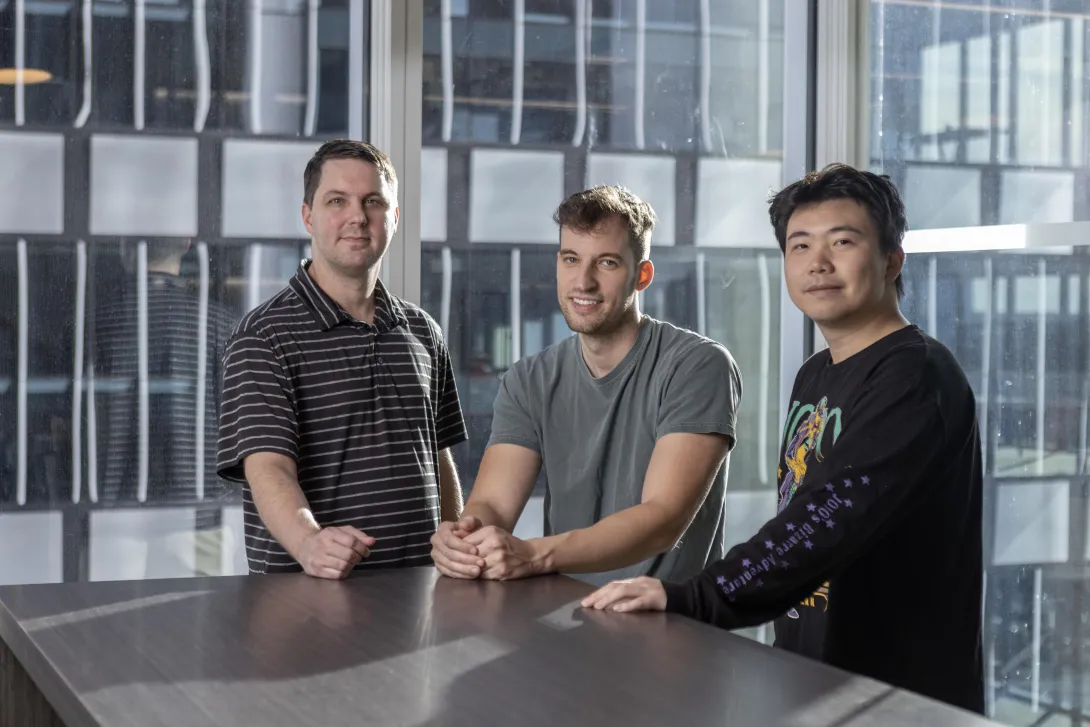
The team leading this project includes, from left to right: Bryan Gard, a GTRI senior research scientist; Spencer Bryngelson, an assistant professor in Georgia Tech's School of Computational Science and Engineering; and Zhixin "Jack" Song, a Georgia Tech graduate student who is researching quantum algorithms for CFD (Photo Credit: Christopher Moore, GTRI).
While quantum computing is still in its early stages, it has the power to unlock unprecedented speed and efficiency in solving complex computational fluid dynamics (CFD) problems that could revolutionize several industries, including the defense space.
The Georgia Tech Research Institute (GTRI) and Georgia Institute of Technology (Georgia Tech) are exploring how the powerful processing capabilities of quantum computers can expedite CFD’s resource-intensive simulations used in aircraft design, weather prediction, nuclear weapons testing and more.
“Through a collaboration between GTRI and Georgia Tech, we are developing an application of quantum computing to solve proof-of-principle problems in computational fluid dynamics that could streamline efficiencies and reduce costs across numerous industries,” said Bryan Gard, a GTRI senior research scientist who is leading this project.
Quantum computing offers a new way of doing computations using the principles of quantum mechanics, a science that explores the behavior of tiny particles such as atoms and photons. Computers and software that are built on the theories of quantum mechanics can process a large amount of information simultaneously and much faster than classical computers. That is because unlike classical computers, which use bits that are either 0 or 1, quantum computers use quantum bits or qubits.
Classical bits are similar to regular on/off switches, which can only exist in one state at a time. Qubits, meanwhile, can exist in multiple states at once thanks to a property in quantum mechanics known as superposition.
Because CFD involves complex simulations of how fluids, such as air or water, move and interact with different surfaces, classical computers often struggle with the immense number of calculations needed for such detailed simulations. The ability for quantum computers to process information in parallel could significantly speed up these simulations and produce more accurate results.
“Say you are examining how air flows over a plane wing and you want to identify the large- and small-scale dynamics of that interaction,” explained Gard. “This type of problem would be very hard for a classical computer to handle because it wouldn’t be able to examine those large- and small-scale aspects simultaneously.”
The team has split its research into two parts. The parts that involve linear differential equations are solved on a quantum computer and the other, non-linear parts are handled conventionally on a classical machine.
The reason for this division is that as the problem scales up on classical supercomputers, the communication between nodes becomes inefficient, creating a bottleneck. Even though quantum computers are not yet large-scale, they can handle certain parts of the problem without facing the same communication challenges, Gard explained.
These principles could help organizations strategically allocate resources and avoid costs associated with manufacturing and testing potentially flawed designs. In the defense realm, an example of this can be seen with designing aircraft.
Instead of the conventional methods of building and testing structures in a wind tunnel, quantum-enhanced CFD would allow engineers to analyze stresses, assess designs and predict performance more efficiently and cost effectively. This becomes particularly relevant at high speeds, where factors such as air flows and turbulence pose additional challenges for running accurate simulations.
“It all comes down to money, as with everything else,” said Gard. “If you could save yourself a lot of time and money by running this simulation, which you couldn't do before, then it would allow you to allocate your resources more effectively.”
For this project, GTRI is collaborating with Spencer Bryngelson, an assistant professor in the School of Computational Science and Engineering who has expertise in computational physics, numerical methods, fluid dynamics and high-performance computing. Zhixin Song, a graduate student at Georgia Tech who is researching quantum algorithms for CFD, has also contributed.
“This project is particularly interesting because although it is challenging, it could have outsize performance gains if one can find the right tools for the job, meaning the right quantum algorithm to solve the right fluid dynamics problem,” Bryngelson said. “GTRI and Georgia Tech have already made progress in this area, and also work well together, so it has been a good experience.”
The project has been supported by GTRI’s Independent Research and Development (IRAD) Program, winning an IRAD of the Year award in fiscal year 2023, and the Defense Advanced Research Projects Agency (DARPA).
Writer: Anna Akins
Photos: Christopher Moore
Art Credit: Img2Go.com, Adobe
GTRI Communications
Georgia Tech Research Institute
Atlanta, Georgia
The Georgia Tech Research Institute (GTRI) is the nonprofit, applied research division of the Georgia Institute of Technology (Georgia Tech). Founded in 1934 as the Engineering Experiment Station, GTRI has grown to more than 2,900 employees, supporting eight laboratories in over 20 locations around the country and performing more than $940 million of problem-solving research annually for government and industry. GTRI's renowned researchers combine science, engineering, economics, policy, and technical expertise to solve complex problems for the U.S. federal government, state, and industry.
News Contact
(Interim) Director of Communications
Michelle Gowdy
Michelle.Gowdy@gtri.gatech.edu
404-407-8060
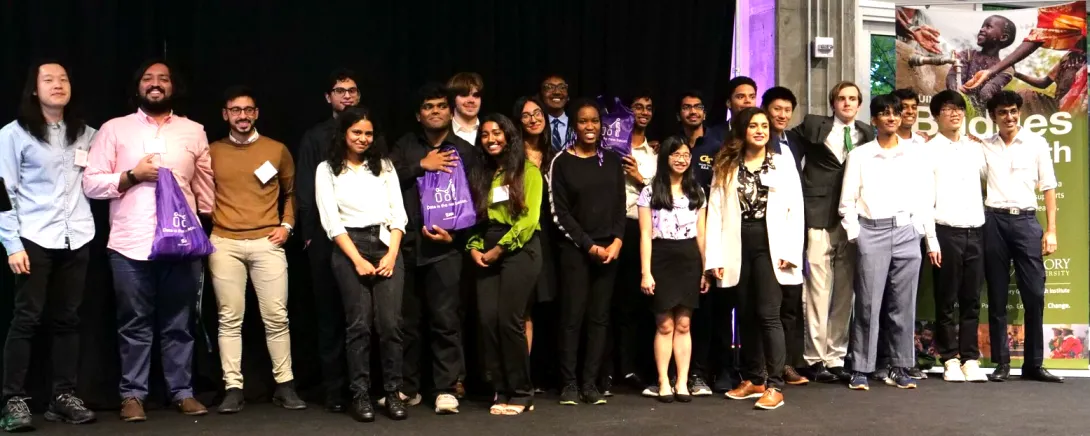
Students tackled climate change in the Fall 2023 Emory Global Health Institute (EGHI) /Georgia Institute of Technology (GT) Global Health Hackathon, Nov. 11, at Tech Square ATL Social. Competing for cash prizes and a spot in GT Startup Launch, first place went to Team iManhole. The team created an integrated system that gathers real-time data from manholes and uses machine learning algorithms to predict flooding to manage traffic and evacuation routes.
“The effects of climate change are felt in every country with the brunt and burden of an unmanaged climate crises threatening to set back global health progress by eroding decades of poverty eradication and health equity efforts worldwide,” said Dr. Rebecca Martin, EGHI director of Emory Global Health Institute. “Students are an important partner in our work as a global community to mitigate the impacts of climate change on health, safety, and security.”
The EGHI/GT Global Health Hackathon is a partner event between EGHI and CREATE-X. It provides multidisciplinary student teams from Emory University and the Georgia Institute of Technology an opportunity to create technology-based product solutions for global health problems. The target for this fall’s event was creating solutions that address urban flooding, urban heat, or global sea level rise in densely populated, low-resource urban settings. Prizes included $4,000 and a golden ticket into CREATE-X Startup Launch for first place winners, $3,000 for second place winners, $2,000 for third place winners, and $500 each for two honorable mention winners.
“This hackathon continues to be a wonderful partnership between our two institutions that gives these talented students the platform and support to put forward solutions to the most pressing issues we face today,” Rahul Saxena, director of CREATE-X, said. “Each hackathon, I’m increasingly impressed with their ingenuity and their dedication to build something of impact.”
Check out the event program on the EGHI website and see photos from the event on the CREATE-X Flickr account. The full list of the winners of this year’s event includes:
1st Place: iManhole
An integrated system that gathers real-time data from manholes and uses machine learning algorithms to predict flooding to manage traffic and evacuation routes
Team Members: Imran Shah, Leonardo Molinari, and Jiaqi Yang
2nd Place: Canopy
A climate-tech software platform for democratizing climate analytics using machine learning for urban development planning.
Team Members: Deesha Panchal, Kruthik Ravikanti, Vaibhav Mishra, Nicholas Swanson, Jennifer Samuel, and Vaishnavi Sanjeev
3rd Place: Floodwise
A package of effective simulations and an informed chatbot that help facilitate wise decisions during floods.
Team Members: Ansh Gupta, Dimi Deju, Mukund Chidambaram, and Sahit Mamidipaka
Honorable Mention
Conquering Heat Islands
Process and hardware that uses excess solar power to mine crypto
Team Members: Rida Akbar, DJ Louis, Edward Zheng, Dmitri Kalinin, and Jade Bondy
Real-Time Computational Modeling of Urban Flooding and Evacuation in Local Atlanta Communities
Integrated system to gather real-time data from manholes and use machine learning algorithms to predict flooding and optimize traffic/evacuation.
Team Members: Imran Shah, Leonardo Molinari, and Jiaqi Yang
News Contact
Breanna Durham
Marketing Strategist
breanna.durham@gatech.edu
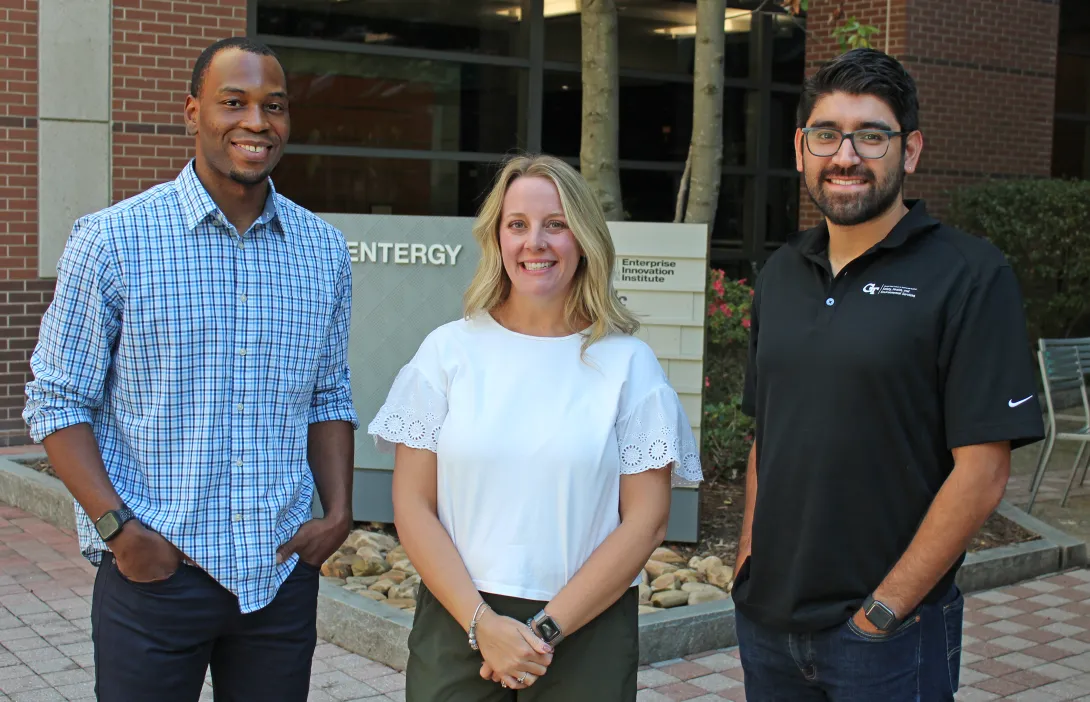
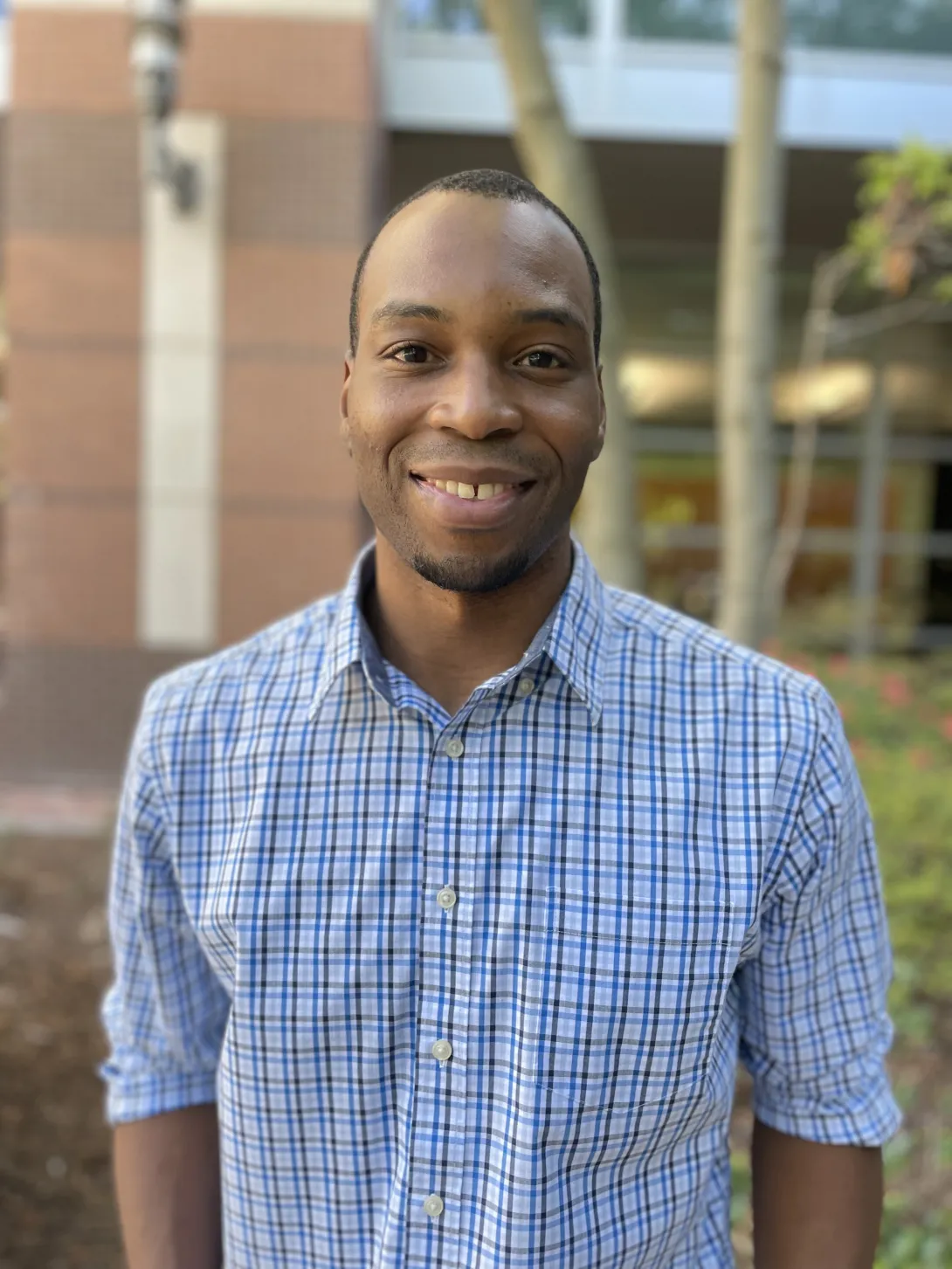
Trey Sawyers, Katie Hines, and Sean Castillo are helping keep Georgia businesses lean and safe.
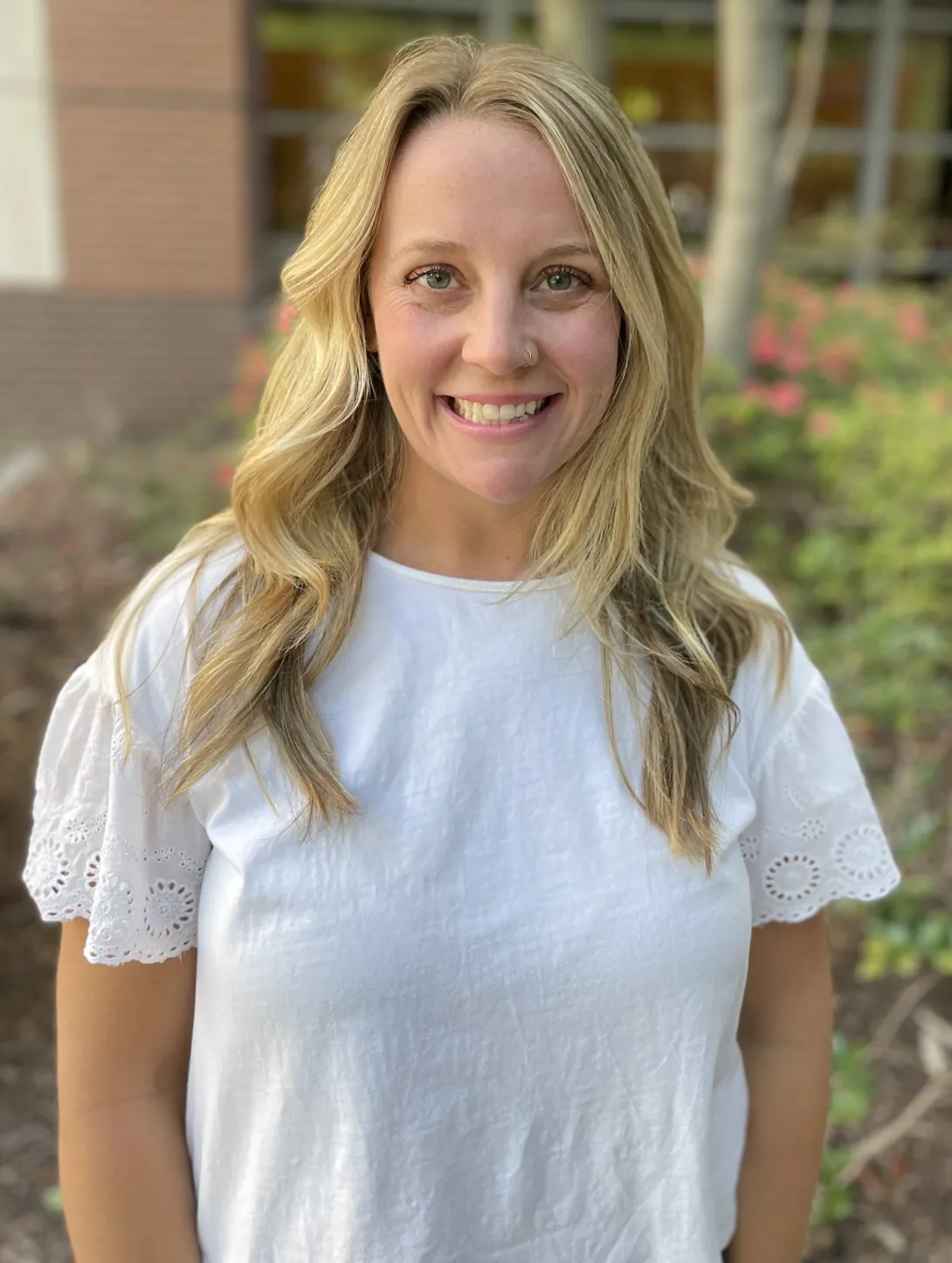
Katie Hines
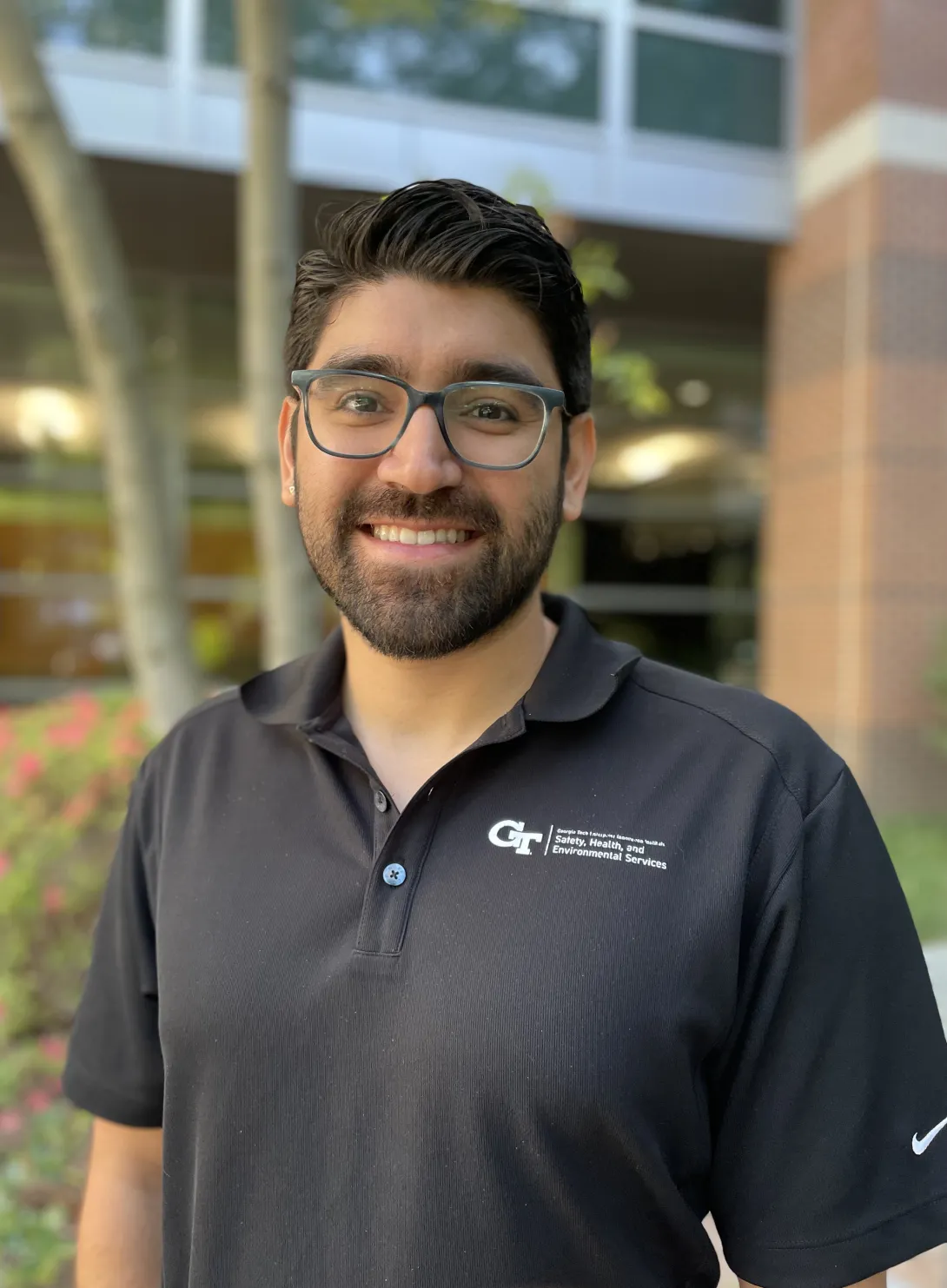
Sean Castillo
Trey Sawyers
Sean Castillo is in the win-win business. As an industrial hygienist in the Georgia Tech Enterprise Innovation Institute (EI2), his job is to ensure that employees are safe in their workspaces, and when he does that, he simultaneously improves a company’s performance.
That’s been a theme for Castillo and his colleagues in the Safety, Health, Environmental Services (SHES) program and their partners in the Georgia Manufacturing Extension Partnership (GaMEP), part of EI2’s suite of programs aimed at helping Georgia businesses thrive.
“A healthier workforce is healthy for business,” said Castillo, part of the SHES team of consultants who often work closely with their GaMEP counterparts to improve safety while also maximizing productivity.
This team of experts from EI2 assist companies trying to reach that critical intersection of both, combining smart ergonomics and safety enhancements with lean manufacturing practices. This can solve human performance gaps due to fatigue, heat, or some other environmental stressor, while helping businesses continue to improve their production processes and, ultimately, their bottom line.
These stressors cost U.S. industry billions of dollars each year — fatigue, for example, is responsible for about $136 billion in lost productivity.
“Protecting your employee — investing in safety now — saves a lot of money later,” Castillo said. “It equates to less money spent on workers compensation and less employee turnover, which means less time training new employees, and that ideally leads to a more efficient process in the workplace.”
It takes careful and intentional collaboration to bring those moving pieces together, and inextricably linked programs like SHES and GaMEP can help orchestrate all of that.
Ensuring Safe Workspaces
SHES is staffed by safety consultants, like Castillo, who provide a free and essential service to Georgia businesses. They help companies ensure that they meet or exceed the standards set by the federal Occupational Health and Safety Administration (OSHA), mainly through SHES’ flagship OSHA 21(d) Consultation Program.
“Our job is to ensure that workspaces and processes are designed so that anybody can perform the work safely,” said Trey Sawyers, a safety, health, and ergonomics consultant on the SHES team, aiding small and mid-sized businesses in Georgia. When a company reaches out to SHES to apply for the free, confidential OSHA consultation program, a consultant like Sawyers gets assigned to the task, “based on our area of expertise,” said Sawyers, an expert in ergonomics, which is the science of designing and adapting a workspace to efficiently suit the physical and mental needs and limitations of workers.
“If a company is having ergonomic issues — maybe they’re experiencing a lot of strains and sprains — then I might get the call because of my knowledge and understanding of anthropometry, and then I’ll go take a close look at the facility,” Sawyers said. Anthropometry is the scientific study of a human’s size, form, and functional capacity.
SHES consultants can identify potential workplace hazards, provide guidance on how to comply with OSHA standards, and establish or improve safety and health programs in the company.
“The caveat is the company has to correct any serious hazards that we find,” said Castillo, who visits a wide range of workspaces in his role. For instance, his job will take him to construction and manufacturing sites, gun ranges, even office settings. “We do noise and air monitoring at all different types of workplaces. I was at a primary care clinic the other day. And over the past few years, we’ve had a significant emphasis on stone fabricators, looking for overexposures to respirable crystalline silica.”
Silica, which is dust residue from the process of creating marble and quartz slabs, can lead to a lung disease called silicosis. OSHA established new limits that cut the permissible exposure limits in half, and that has kept the SHES consultants busy as Georgia manufacturers try to achieve and maintain compliance.
Keeping Companies Cool
Another area of growing emphasis for Georgia Tech’s consultants is heat-related stress in the workplace.
“Currently, there are no standards to address this,” Castillo said. “For example, there are no rules that say a construction site worker should drink this much water. There are suggested guidelines and emphasis programs for inspections for targeted industries where heat stress may be prevalent — but no standards, though that is coming.”
The SHES team is trying to stay ahead of what will likely be new federal rules for heat mitigation. To help develop safe standards and better understand the effects of heat on workers, consultants like Castillo are going to construction sites, plant nurseries, and warehouses, and enlisting volunteers in field studies. Using heat stress monitor armbands, they’re monitoring data on workers’ core body temperatures and heart rates.
“These tools are great because we’re not only gathering some good data, but we can use them proactively to prevent heat events such as heat exhaustion and heatstroke, which can be fatal if left untreated,” Castillo said.
To further help educate Georgia companies about the risks of heat-related problems, SHES applied for and recently won a Susan Harwood Training Grant from the U.S. Department of Labor. The $160,000 award will support SHES consultants’ efforts to further their work in heat stress education so that “companies and workers will understand the warning signs and the potential effects of heat stress, and how they can stay safe,” Castillo said. “We’re sure this will all become part of OSHA standards eventually, and we’d like to help our clients stay ahead of the curve to protect their employees.”
OSHA standards are the law, and while larger corporations routinely hire consulting firms to keep them on the straight and narrow, SHES is providing the same level of expertise for its smaller business clients for free. Most of those clients apply for help through SHES’ online request form. And others find the help they need through the guidance of process improvement specialist Katie Hines and her colleagues in GaMEP.
Lean and Safe
Hines came to her appreciation of ergonomics naturally. After graduating from Auburn University, she entered the workforce as a manufacturing engineer for a building materials company, where “it was just part of our day-to-day work life in that manufacturing environment, on the production floor,” she said.
It took grad school and a deeper focus on lean and continuous improvement processes to formalize that appreciation.
While working toward her master’s degree in chemical engineering at Auburn, Hines earned a certificate in occupational safety and ergonomics (like Sawyers, her SHES colleague). At the same time, Hines was helping to guide her company’s lean and continuous improvement program. And when she joined Proctor and Gamble after completing her degree, “The lean concept and safety best practices were fully ingrained, part of the daily discussion there,” she said.
All those hands-on manufacturing production floor experiences managing people and systems prepared Hines well for her current role as a project manager on GaMEP’s Operational Excellence team, where her focus is entirely on lean and continuous improvement work — that is, helping companies reduce waste and improve production while also enhancing safety and ergonomics.
Hines uses her expertise in knowing how manufacturing processes and people should look when everyone is safe and also productive. She can walk into a GaMEP client’s facility and drive the process improvements and solutions that will help them achieve a leaner, more efficient form of production. And then, when she sees the need, Hines will recommend the client contact SHES, “the people who have their fingers on the data and the expertise to improve safety.”
These were concepts that, for a long time, seemed to be working against each other — the very idea of maximizing production and improving profits while also emphasizing worker safety and comfort.
“But you can have both,” Castillo said. “You should have both.”
News Contact
Writer: Jerry Grillo
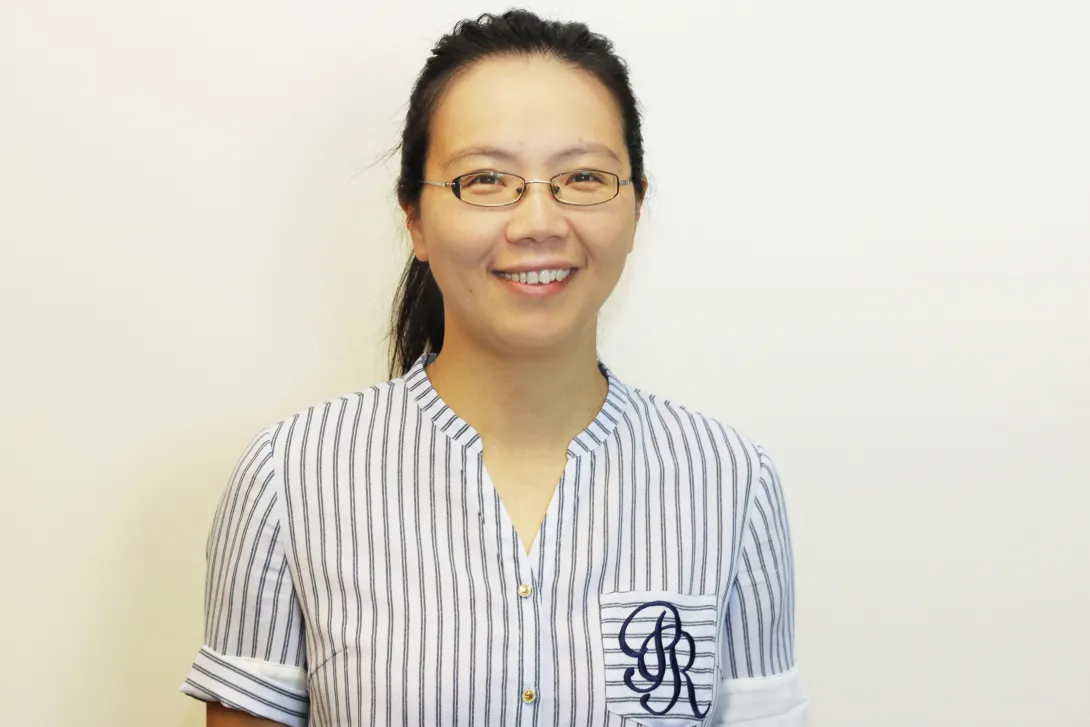
Wenjing Liao, an associate professor in the School of Mathematics, has been awarded a Department of Energy (DOE) Early Career Award for her research into how deep learning might be leveraging to make mathematical advances in achieving more efficient modeling techniques.
Liao was selected as one of the 93 early career scientists from across the country who are receiving a combined $135 million in DOE funding. The awards aim to support the next generation of STEM leaders, and identify early-career scientists whose research will have global impacts.
Earlier this year, Liao was also selected for an National Science Foundation (NSF) Faculty Early Career Development Program (CAREER) Award, one of the most prestigious grants that a scientist can receive early in their profession.
“Supporting America’s scientists and researchers early in their careers will ensure the U.S. remains at the forefront of scientific discovery and develops the solutions to our most pressing challenges,” said U.S. Secretary of Energy Jennifer M. Granholm, adding that the funding “will allow the recipients the freedom to find the answers to some of the most complex questions as they establish themselves as experts in their fields.”
Model simplification; complex problems
Real-world applications of computer modeling often call for large, complex data simulations, which can be time-consuming and expensive, limiting their applications. Liao’s project “Model Reduction by Deep Learning: Interpretability and Mathematical Advances” focuses on a technique called model reduction, which allows researchers to reduce the size of problems computer models must solve to smaller ones that computers can efficiently solve.
Liao notes that while traditional model-reduction methods have been successful, the technique is mostly limited to low dimensional linear models, or those with fewer important features that the model can include. However, many problems found in nature are the opposite. Liao hopes that by identifying the underlying nonlinear structures in natural problems, she can broaden the application of model-reduction techniques.
To do so, her research will focus on three key questions. First, she will investigate how to leverage deep neural networks to extract low-dimensional nonlinear structures in data sets. Next, Liao will investigate how to use the nonlinear structures in model reduction. Finally, in order to better harness deep learning, Liao aims to develop new deep learning-based model reduction methods.
“This project has the potential to drive significant advances in scientific machine learning,” Liao says in her abstract. “The proposed model-reduction methods can be used to analyze large datasets and simulate complex phenomena in physics, biology, and engineering.”
News Contact
Written by Selena Langner
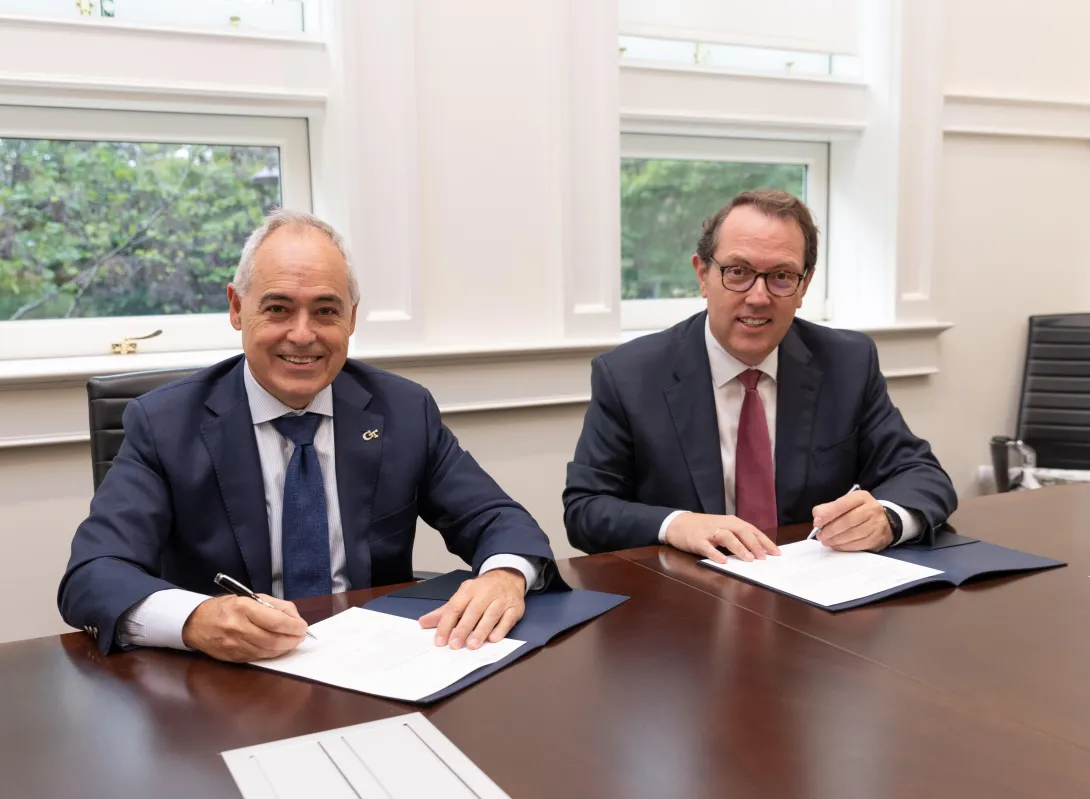
President Cabrera and Andres Sacristan, CEO of Cintra Global, announce a long-term partnership focused on advancing innovation in transport infrastructure.
Ferrovial, a global infrastructure operator, and the Georgia Institute of Technology today announced a long-term partnership focused on advancing innovation in transport infrastructure. The partnership will allow for joint research activities, providing new educational and development opportunities for students and enabling Ferrovial to create a more sustainable future for mobility. The agreement was formally signed at the university’s campus in Atlanta.
"Georgia Tech is globally recognized for its expertise in infrastructure and mobility, research, and development,” said Andres Sacristan, CEO of Cintra Global. “Ferrovial understands our industry must remain agile as transportation continues to evolve. By partnering with universities like Georgia Tech, we can continue to improve the traveler experience and better serve our clients by providing new mobility solutions."
Ferrovial has collaborated with Georgia Tech in research, leveraging its talent for several years. In addition to its expertise in traffic engineering, the Institute has extensive research capabilities in construction, airports, and energy, allowing for a comprehensive and diversified partnership as Ferrovial operates in all these areas.
“Ferrovial is reimagining transportation, and this collaboration will enable Georgia Tech researchers and students to gain a firsthand understanding of the needs of our nation’s infrastructure,” said Ángel Cabrera, president of Georgia Tech. “We are proud to partner with Ferrovial to drive the future of transportation and mobility, which will bring valuable technological innovation and knowledge transfer to our state.”
Ferrovial, through its highways business Cintra, operates five major managed lane projects across the U.S., providing traffic congestion relief to some of the nation’s fastest growing regions. Ferrovial's construction division currently manages several large highway construction projects, including the Transform 285/400 highway improvement project in Atlanta. Subsidiaries Ferrovial Construction and Webber have carried out infrastructure improvements in the state of Georgia that amount to nearly $800 million. Ferrovial Airports is a leading airport investor and operator with key investments in the U.S. Through its vertiports business, the company aims to design, build, and operate the infrastructure required by eVTOL (electric Vertical Take-Off and Landing) aircraft.
“Aligning with Georgia Tech reinforces Ferrovial’s commitment to sustainably advancing mobility, enhancing safety, and connecting communities in the United States and beyond,” said Sacristan.
News Contact
Blair Meeks | blair.meeks@gatech.edu