
Modern artificial intelligence (AI) platforms can summarize reports, analyze documents, and answer questions in seconds. But when information is spread across dozens of slides, charts, and tables, even advanced models can miss important details.
As many organizations and businesses are turning to AI to improve workplace efficiency, risk remains high. Between overlooked footnotes and misread graphics, small mistakes can have expensive consequences.
To address this challenge, researchers from Georgia Tech and J.P. Morgan developed SlideAgent. The new framework helps large language models (LLMs) better understand complex visual documents like presentation slide decks, brochures, and reports.
SlideAgent works by breaking documents into multiple levels, allowing the model to analyze both the big picture and the fine details. This human-inspired approach leads to more accurate and reliable interpretation than existing systems.
Beyond improving workplace tools, SlideAgent also points to a broader shift in AI. Instead of building only larger and more powerful models, the work shows how smarter design and more efficient reasoning can improve performance.
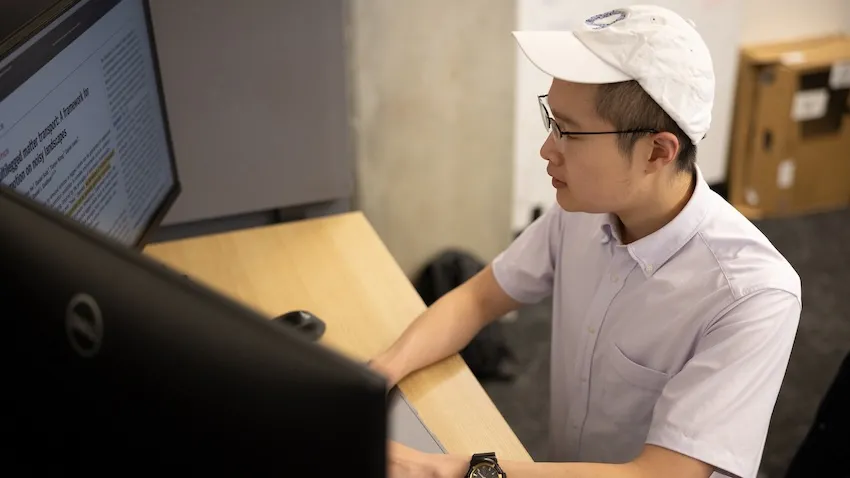
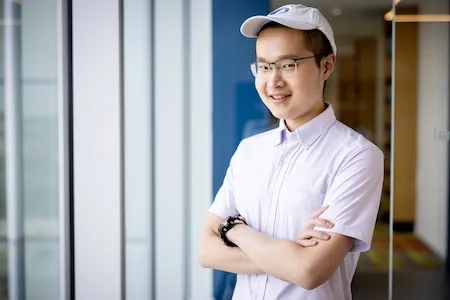
“Multimodal LLMs such as GPT, Gemini, and Claude, can save people time and reduce the mental effort required to understand these documents, but they remain imperfect,” said Yiqiao (Ahren) Jin, a Ph.D. candidate in Georgia Tech’s School of Computational Science and Engineering (CSE).
“In high-stakes fields such as finance, for example, misreading a number, overlooking a footnote, or making an incorrect comparison across pages could affect reporting, risk assessment, or strategic decisions.”
The researchers tested SlideAgent on a wide range of real-world documents, including financial presentations, technical slides, and visual question-answering datasets.
The system consistently outperformed leading commercial models and open-source tools throughout the evaluation. In some cases, it improved accuracy by up to 10%. The gains were especially strong on more complex tasks, such as comparing information across slides or understanding how visuals relate to each other on a page.
“We found the results very encouraging. SlideAgent reaches an improvement of 7.9% over its proprietary base model and 9.8% over the evaluated open-source base models,” said Jin, the project’s lead researcher.
“These are meaningful gains given the strength of the underlying multimodal models and the difficulty of the tasks.”
Current multimodal AI systems often process entire pages at once. This approach can lead to mistakes, such as miscounting items in a chart or overlooking important details in dense visuals.
SlideAgent addresses this by mimicking how people read documents. Instead of treating each page as a single unit, the system looks at information at three levels: the full document, individual pages, and specific elements like charts, tables, and text blocks.
A network of agents, each specialized for a specific level, divides and coordinates analysis. Then, SlideAgent combines outputs to build a structured understanding of the overall document. This allows it to answer questions more accurately and reason across multiple pages.
“The central inspiration was how people naturally read a long presentation,” Jin said.
“We first develop an understanding of the overall narrative, then identify the relevant pages or sections, and finally zoom in on individual charts, tables, or text blocks when precise evidence is needed.”
The work highlights a growing challenge with AI. As systems become more popular and more powerful, users increasingly discover the technology’s limitations. This is especially true for real-world tasks that require structured reasoning and contextual understanding.
SlideAgent shows that better performance does not always come from building bigger models. Instead, it points to smarter ways of organizing how AI processes information that can lead to improvement.
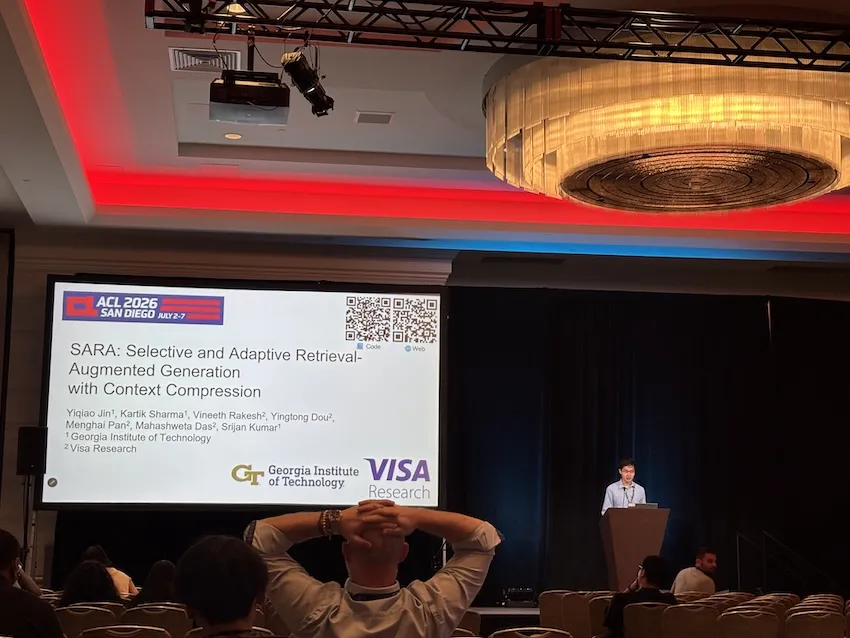
The Association for Computational Linguistics (ACL) accepted SlideAgent for presentation at its annual meeting. The 64th ACL 2026 meeting took place July 2-7 in San Diego.
ACL is a scientific and professional organization for researchers in natural language processing (NLP). Its namesake conference is one of the world’s leading venues for presenting NLP research.
ACL 2026 followed a year after Jin completed an internship at J.P. Morgan AI Research, where he worked on SlideAgent. He interned under Rachneet Kaur, Zhen Zeng, and Sumitra Ganesh, all co-authors of the paper. School of CSE Associate Professor Srijan Kumar advises Jin at Georgia Tech.
Along with SlideAgent, Jin authored two other papers accepted at ACL 2026.
“Conferences such as ACL are valuable not only for sharing results, but also for refining future project ideas with the broader community. Discussions across institutions and research areas can reveal limitations, suggest new evaluations, and spark collaborations that are difficult to develop in isolation,” Jin said.
“For SlideAgent, I was particularly interested in feedback on how we can make the framework more computationally efficient without sacrificing accuracy or interpretability.”
News Contact
Bryant Wine, Communications Officer
bryant.wine@cc.gatech.edu

Anyone who has peeled off a bandage knows that speed matters. Conventional wisdom, and decades of adhesion research, suggest that pulling faster makes adhesive forces stronger. But researchers at Georgia Tech have discovered that soft materials can behave in a far more surprising way.
Instead of becoming steadily stickier as they are pulled apart, soft hydrogels first become less adhesive and then more adhesive as the pulling speed increases, revealing a previously unknown "sweet spot" where detachment is easier. The discovery challenges a long-held assumption in adhesion mechanics and reveals a new physical mechanism that governs how soft materials attach and detach.
"We expected the adhesion to increase continuously with pulling speed, as predicted by classical theories," said Yuhang Hu, associate professor in the George W. Woodruff School of Mechanical Engineering and the School of Chemical and Biomolecular Engineering. "Instead, we found the exact opposite over a broad range of speeds. That told us there had to be a completely different physical process at work."
Read the full story on the George W. Woodruff School of Mechanical Engineering website.
News Contact
Tracie Troha
George W. Woodruff School of Mechanical Engineering
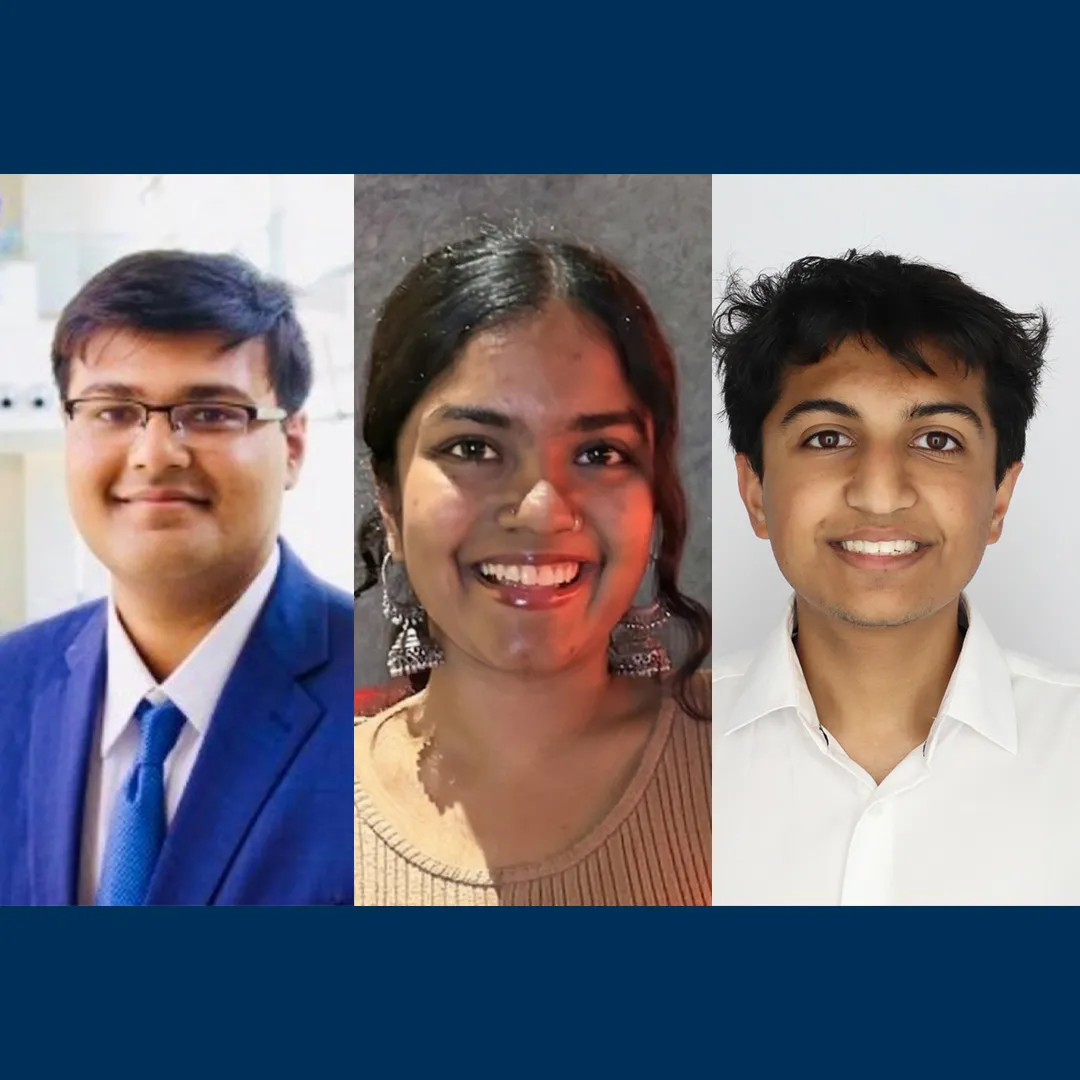
Arnav Hiray, machine learning doctoral student; Vidhyakshaya Kannan, a Georgia Tech Financial Services intern; and Siddharth Lohani, a computer science major ’26 and software engineer at Bloomberg.
For investors trying to make sense of a company going public, one of the most important documents is often the most difficult to understand.
Initial public offering (IPO) filings are dense disclosures submitted to the U.S. Securities and Exchange Commission. They can stretch hundreds of pages and combine legal language, financial data, and visuals like charts and infographics. Even experienced analysts struggle to read them end to end, leaving many everyday investors relying on headlines or summaries.
New research from Georgia Tech’s Financial Services Innovation Lab reveals how artificial intelligence can make these critical documents more accessible and reveals where AI still has room for improvement.
“IPO-Mine: A Toolkit and Dataset for Section-Structured Analysis of Long, Multimodal IPO Documents” authors include Michael Galarnyk, Siddharth Lohani, Vidhyakshaya Kannan, Sagnik Nandi, Aman Patel, Liqin Ye, Arnav Hiray, Rutwik Routu, Prasun Banerjee, Siddhartha Somani, and Sudheer Chava.
Making the Complex Understandable
The authors developed IPO-Mine, an open-source toolkit and dataset designed to break IPO filings into manageable pieces. Instead of treating filings as a single document, IPO-Mine separates them into structured sections and extracts visuals like charts for analysis.
“IPO filings are important public documents, but they are very difficult to work with at scale,” said Siddharth Lohani, a Georgia Tech computer science major ’26, software engineer at Bloomberg, and co-first author of the study. “We wanted to make these filings easier to analyze systematically.”
Why IPO Filings Matter
IPO filings offer investors a detailed look at how a company operates before it goes public.
“IPO filings give investors a clearer look at how a company makes money, what risks it faces, and how it positions itself before entering the public market,” said Arnav Hiray, a Georgia Tech machine learning doctoral student in the Financial Services Innovation Lab, AI for Financial Markets VIP instructor, and co-author. “Even if everyday investors don’t read the full filing, these documents can help them better understand a company’s prospects.”
For retail investors, that insight can help cut through marketing hype and offer a clearer sense of a company’s underlying strengths and risks.
AI’s Strengths
Research shows that large language models and multimodal AI models can use their speed, scale, and pattern-recognition capabilities to offer significant advantages when analyzing IPO filings, including:
- Processing massive documents: IPO filings can exceed hundreds of thousands of words, making manual review difficult. IPO-Mine structures the filings into sections and extracts visuals for analysis.
- Structuring unorganized data: IPO-Mine standardizes inconsistent sections across filings, making comparisons easier across companies and industries.
- Analyzing text and visuals together: By extracting charts and images, AI can evaluate not just what companies say, but how they present information visually.
- Identifying trends at scale: Researchers can analyze patterns in disclosure practices across decades, industries, and thousands of companies.
Together, these capabilities could help democratize financial analysis, giving more investors access to insights that were once limited to professionals.
A Key Finding
One of the study’s most striking findings is that IPO filings are evolving in two different directions.
“What stood out was that the text and visuals appear to be moving in different directions,” Lohani said. “Investors and researchers need to pay attention to both.”
The research shows that written sections are becoming more standardized, while visual elements such as charts and infographics are becoming more complex and varied.
“As text becomes more standardized, more of a company’s distinctive story shifts into its visuals,” said Vidhyakshaya Kannan, a Georgia Tech Financial Services Innovation Lab intern and co-author. “Because boilerplate language often looks the same across filings, charts and infographics are increasingly where companies differentiate themselves and make their case to investors.”
For investors, that means understanding a company requires studying the visuals as carefully as the text; figures can’t simply be skimmed or skipped over.
Where AI Struggles
Despite its promise, AI is not yet a perfect solution.
- IPO filings are long: longer documents can reduce model performance, making it difficult for AI to maintain accuracy across an entire filing.
- IPO filings are visual: AI tools struggle to interpret visual data correctly.
- IPO filings are multimodal: filings combine text, tables, and visuals in inconsistent formats. This makes them difficult for AI models to process reliably.
“Our results show that even strong multimodal models can disagree with expert human judgments on financial charts, especially when they are misleading,” Kannan said.
The Future of Financial Transparency
AI can accelerate analysis and uncover patterns, but human judgment remains essential for interpreting the visuals companies increasingly use to tell their story. Even with these limitations, researchers believe tools like IPO-Mine could play an important role in shaping the future of financial transparency.
“IPO-Mine can help researchers, regulators, and investors analyze IPO disclosures more systematically, revealing patterns in how companies communicate risk, performance, and strategy before entering public markets,” said Hiray.
By making complex financial disclosures more accessible and actionable, AI-powered tools have the potential to broaden access to critical market information and support more informed investment decisions.
--Written by Anne Wainscott-Sargent
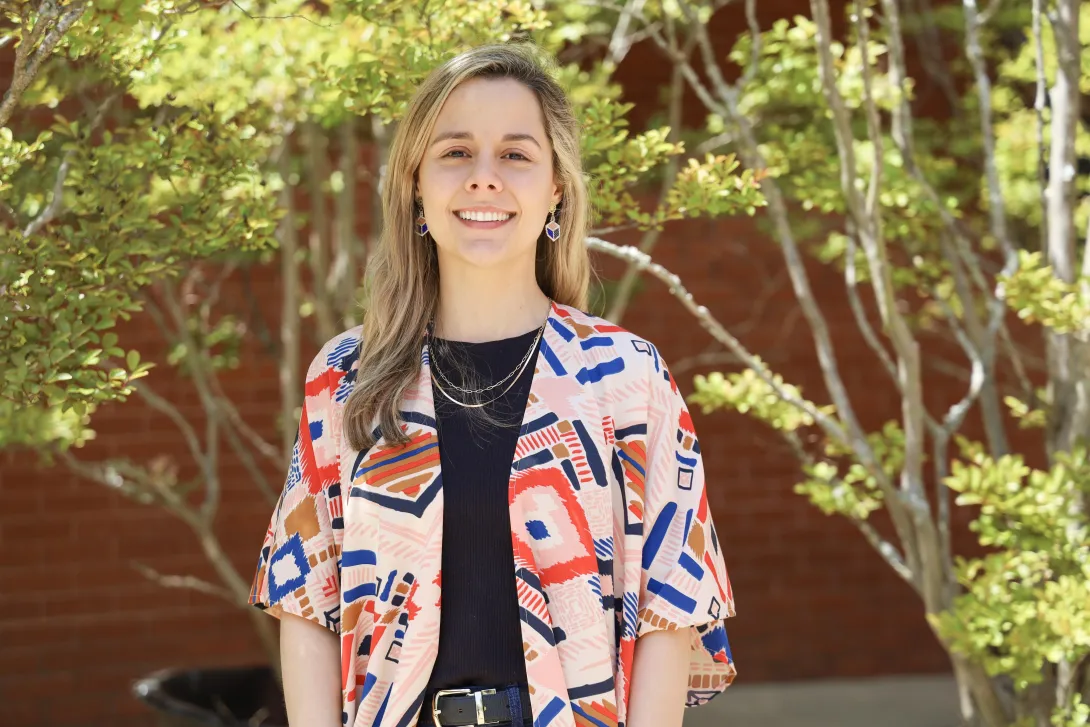
From a single Atlanta church to a growing network across the Southeast, Georgia Tech engineer Sofía Pérez-Guzmán is connecting communities and researchers to support resilience in extreme weather events.
When a West Atlanta church received donated solar panels and battery storage to operate as a community resilience hub, Pérez-Guzmán led an academic-practitioner team that helped the congregation turn that hardware into an operational playbook. She is now using the same model to build a regional network that links community leaders and researchers on resilience, food access, and disaster response.
Pérez-Guzmán, an assistant professor in the School of Civil and Environmental Engineering and a faculty fellow at the Brook Byers Institute for Sustainable Systems (BBISS), focuses on addressing problems within the supply chain and transportation domains. “These challenges often encompass disruptions, human behavior, multiple stakeholders, and sustainability objectives,” she said.
Before joining Georgia Tech in 2023, she was a postdoctoral research associate at Rensselaer Polytechnic Institute’s Center for Infrastructure, Transportation, and the Environment. She also holds a courtesy appointment in the H. Milton Stewart School of Industrial and Systems Engineering at Georgia Tech.
“All of the research that I do always starts with a problem that has some sort of important social impact,” she said, “and then I try to draw from my expertise in different fields to help solve that problem.”
Building a Network, One Pilot at a Time
Through BBISS and its Sustainability Next grant program, Pérez-Guzmán co-leads a community resilience network of roughly 40 to 50 practitioners and researchers working on community-led resilience hubs across Georgia and South Carolina, with plans to expand across the Southeast.
“Neither researchers nor practitioners alone can advance community resilience as they could if they work together,” she said. “The purpose of the network is to facilitate and leverage partnerships.”
Community Church Atlanta is one of the first pilots. The church’s resilience hub, established in 2023, offers weekly support services and on-site solar and battery storage to keep power flowing during outages caused by storms, heat waves, or other disruptions. It is also the launching point for the Westside Resilience Corridor, a partnership of four churches along Cascade Road working to become resilience hubs for their neighborhoods.
Working with church leaders, emergency managers, and community representatives, Pérez-Guzmán and partners held a two-day workshop to map likely hazards, define critical services, and draft activation procedures. Among those partners was Beth Remmes, coastal outreach and climate resiliency coordinator for Georgia Interfaith Power & Light (GIPL), who helped design and facilitate the process. “The whole idea behind resilience hubs is creating social cohesion,” Remmes said. “Social connectivity and relationships in the community are one of the biggest determinants of our ability not only to bounce back, but hopefully to bounce forward in a stronger way.”
She noted that churches like Community Church Atlanta already serve as informal first responders. The resilience hub work makes that role more intentional by focusing on preparedness, programming, and connection well before an emergency. Just as important, in her view, was Tech’s ability to see how lessons from Community Church Atlanta could inform future resilience hubs across the region.
Erica Holloman-Hill, founder and chief envisioning officer of Ayika Solutions Inc. and a member of Community Church Atlanta, sees that impact from inside the congregation. In the resilience hub effort, she provides technical guidance on the solar and battery system, helps shape programming such as workforce development, and helped bring partners like Groundswell and Georgia Tech to the table.
“Georgia Tech uniquely brings the science and academia,” Holloman-Hill said. “Being able to leverage an institution like Georgia Tech gives weight to some of the work that we’re doing, while leaning on the technical expertise of professors like Sofía and partnering with organizations like GIPL to create models and support.”
Looking ahead, Holloman-Hill said Community Church Atlanta is focused on refining how the hub operates and sharing lessons learned with other churches in the Westside Resilience Corridor. That means clarifying how the church will run the hub during emergencies, which partners need to be at the table, and how a third-party technical advisor can help keep the system performing as designed.
For Pérez-Guzmán, those kinds of relationships are the real outcome. “The relationship, the trust, the partnership — it’s probably the most important outcome we’ve seen,” she said.
Jennifer Hirsch, senior director of BBISS’s Center for Sustainable Communities Research and Education (SCoRE) and the network co-lead, sees the same value at an institutional scale.
“Universities are important members of their communities and can be key partners in sustainability and resilience efforts when they mobilize their research capabilities, students, and other resources to partner with and support local leadership and innovations,” Hirsch said. “Networks of universities and communities can serve as multipliers of innovative approaches. With the resilience hubs network, we are excited to incubate new ideas that are community-centric and evidence-based and tailored to the Southeast communities that our partners know best.”
Where Resilience Meets Food Access
This partnership model also shapes what Pérez-Guzmán calls her most immediately actionable project: a decision-support tool connecting local food producers, distributors, and access points in Atlanta. Her team has gathered survey and experimental data from residents in West End and citywide, testing how distance, travel time, price, and a store’s ties to the community shape where people choose to shop. “We’re trying to design tools for logistics and food distribution decisions that bring food closer to people,” she said.
A parallel thread runs through her disaster response work, where she studies how people choose among points of distribution for emergency relief. Proximity matters, she’s found, but it isn’t everything. Many people will travel farther if they believe they’re more likely to receive supplies, or if it lets them move closer to family. In urban freight, she has applied the same lens to city logistics, studying behavior around emerging technologies such as sidewalk delivery robots and autonomous trucks.
“Atlanta’s mix of freight infrastructure, food access challenges, and weather vulnerability makes it fertile ground for that range of work,” she said.
“Across every project, the constant is not only patience but also resilience. Along the way, we realize that the original research idea may no longer make sense, or that different approaches are required. The process is very nonlinear and requires revision, reassessment, and a lot of pivoting,” she said. “It basically requires tons of resilience!”
News Contact
Media Contact: Brent Verrill
Writer: Anne Wainscott-Sargent
Recent cyberattacks on municipal water systems across the United States have renewed concerns about the cybersecurity of the operational technology that supports critical infrastructure.
For researchers in Georgia Tech's Cyber-Physical Security (CPSec) Lab, however, the vulnerabilities behind many of these incidents are far from new.
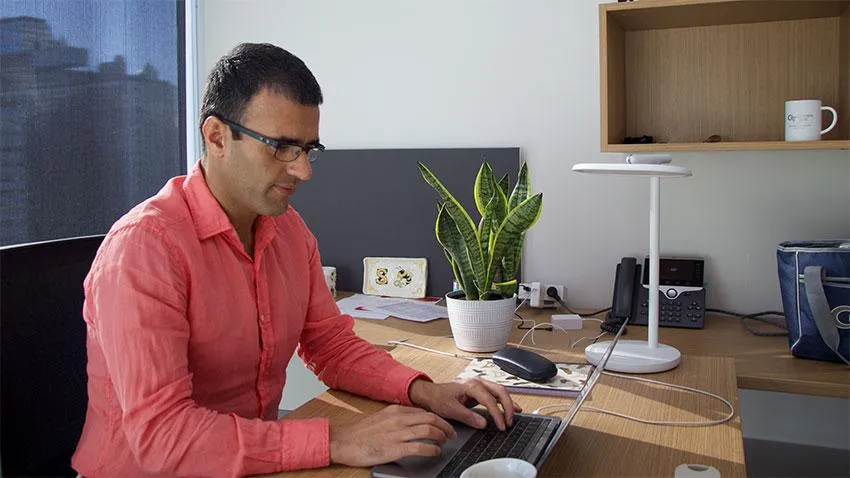
Associate Professor Saman Zonouz leads the CPSec Lab and has studied programmable logic controllers (PLCs) for years. These devices automate critical infrastructure, including water treatment facilities, power grids, manufacturing plants, and transportation systems. The lab’s work has revealed widespread internet exposure and software vulnerabilities that leave many industrial control systems vulnerable to cyberattacks.
"Out of the 16 critical infrastructure sectors defined by the Cybersecurity and Infrastructure Security Agency, four are considered lifelines," Zonouz said. "Of those four, communications, energy, transportation, and water, the water sector is the most vulnerable, which is why it is so often targeted."
PLCs serve as the brains of industrial operations, monitoring sensors and controlling equipment that keep essential services operational.
"Imagine you have a thermostat that controls the temperature of your house. That is a type of controller," Zonouz explained. "The professional version does the same thing in industry."
When these controllers are directly accessible from the internet, attackers can exploit them to disrupt operations, manipulate industrial processes, or interfere with the systems that deliver essential services. Controllers may be intentionally exposed to allow operators to monitor equipment remotely. They can also be unintentionally accessible online because of configuration errors.
However, internet exposure is only part of the problem.
The CPSec Lab maintains a collection of PLCs that researchers reverse engineer to better understand their firmware, communication protocols, and security weaknesses. Their research has found that many controllers contain vulnerabilities that attackers can exploit once they gain access.
"Not only can the attackers see the house they want to rob, but the doors are also left unlocked," Zonouz said.
In 2024, Zonouz and his collaborators presented PLCHound at the ACM Conference on Computer and Communications Security (CCS), introducing an automated system that identifies internet-connected PLCs hidden within massive internet-scale datasets collected by services such as Shodan and Censys. The work was led by Ph.D. student Ryan Pickren. Provost and Executive Vice President for Academic Affairs Raheem Beyah, Assistant Professor Frank Li, and Research Scientist Animesh Chhotaray are co-authors of the study.
Rather than relying on traditional scanning techniques, PLCHound identifies subtle network signatures that reveal industrial devices that prior methods often missed. Using the system, the researchers conducted one of the largest studies of publicly reachable PLCs from major manufacturers.
Their findings showed that previous estimates undercounted the number of internet-accessible industrial controllers by as much as 37 times. Even more concerning, nearly 96% of the identified devices exposed protocols linked to recently disclosed critical vulnerabilities.
The researchers did more than document the problem. After identifying exposed devices, the team launched a large-scale notification campaign, contacting more than 7,000 industrial operators to alert them that their systems appeared vulnerable. The effort enabled many organizations to investigate and address security issues before they could be exploited.
The recent attacks on municipal water systems reinforce concerns researchers have raised for years: many critical infrastructure operators continue to rely on operational technology designed primarily for reliability and performance rather than for cybersecurity.
Improving those defenses, Zonouz said, will require more than simply patching individual vulnerabilities.
The researchers cite the energy sector as a model. Compared with other critical infrastructure sectors, electric utilities generally operate under more mature cybersecurity requirements and undergo routine compliance audits, providing organizations with greater visibility into the devices connected to their networks and the risks they pose.
Implementing those improvements will not be easy. Many municipal water utilities operate with limited budgets and aging infrastructure, leaving little funding available for cybersecurity investments. As attacks on critical infrastructure become more frequent, the researchers argue that gaining visibility into operational technology assets and strengthening oversight are essential first steps to protect the systems communities rely on every day.
The CPSec Lab is a collaborative laboratory within the School of Cybersecurity and Privacy as well as the School of Electrical and Computer Engineering.
News Contact
John Popham
Communications Officer II at the School of Cybersecurity and Privacy

From left, Brett Klosterhoff (cofounder and chief business officer), Brennan Torstrick (cofounder and chief scientific officer), and Chris Lee (cofounder and CEO) of Huxley Medical. All three men are graduates of Georgia Tech and worked as trainees in the Parker H. Petit Institute for Bioengineering and Bioscience.
With a Ph.D. in biomedical engineering and as a former trainee in the Parker H. Petit Institute for Bioengineering and Bioscience (IBB), it’s no surprise that Georgia Tech alumnus and serial entrepreneur Chris Lee loves numbers. One in four. Eighty percent. Five times.
But for him, these numbers are more than just data — they’re people. One in four adults have sleep apnea. Up to eighty percent go undiagnosed. And those who are untreated are five times more likely to die of heart disease. Lee’s latest company, Huxley Medical, aims to change those numbers with one simple patch.
“When you look at sleep apnea, it's probably the highest diagnostic opportunity there is in healthcare that can lead to the most impactful outcome in terms of reducing heart disease,” Lee said.
The company’s point-of-care device, called SANSA, measures nine physiological channels, enabling it to help doctors diagnose sleep apnea and related cardiovascular disease simultaneously. The device can be shipped directly to the patient’s home, adheres to the chest like a Band-aid, and uploads data to a cloud-based system automatically.
“We’re able to detect diseases faster in a very consumer-friendly manner,” Lee said. “More or less, you just wear it and you’re done.”
SANSA has already been tested by more than 30,000 patients, with plans to expand exponentially by the end of the year. For Lee, that growing number is the most important of all.
“I can’t think of a higher calling than coming up with innovations that can improve the health or extend the life of people around the world,” he said. “That's why it's important to understand how to bring what you're working on in the lab to the masses because, at least for me personally, there's no higher calling in life than to be able to do that.”
Turning Ideas into Innovation
Taking his research to market was always the goal for Lee, and something he learned how to do through the TI:GER program during his time at Georgia Tech. TI:GER, which stands for Technology Innovation: Generating Economic Results, is housed in the Scheller College of Business. It connects Ph.D. students from the colleges of Engineering, Computing, and Sciences with MBA students to form teams that turn entrepreneurial ideas into technological innovation.
Lee, who joined the program in 2010 while still a trainee in IBB, was drawn to TI:GER because of the safe space it provided to develop his skills.
“I would say TI:GER was a big part of why I chose this career path. I really enjoyed research, but the aspect I always liked was the potential for translation of that research,” Lee said. “TI:GER gives you direct insight, resources, mentorship, and a network to be able to do that.”
The network that Lee developed through the program has been a constant throughout his career. After earning his Ph.D., he joined his program mentor, Kurt Jacobus, working at Medshape, a startup that Jacobus founded. After that company was acquired, the two co-founded another medtech business together, Vertera, which was also later acquired.
Now, Jacobus sits on the board of Huxley Medical, and the connections don’t stop there. The company’s two co-founders — Brett Klosterhoff, Chief Business Officer; and Brennan Torstrick, Chief Scientific Officer — are also alumni of the TI:GER program and worked as trainees at IBB.
“I think it's the network that's probably the most surprising,” Lee said. “Someone that I met at TI:GER when I completed that program 16 years ago, he's still someone that I work with on a regular basis and he's still an advisor as we continue to scale our businesses together. I would say that is probably the most valuable thing for me about the program.”
For the business-minded researcher, all the data, numbers, and statistics boil down to the human connection. More important than technology and innovation are the problems that they solve for patients, and Lee encourages young researchers to meet those problems with creativity.
“There's never one set path to figuring out how to translate research or starting a business or making an impact toward healthcare,” he said. “But Georgia Tech can give you the tools that you can use to build your own path.”
News Contact
Ashlie Bowman | Communications Manager
Parker H. Petit Institute for Bioengineering and Bioscience
Starting and maintaining a new garden can be daunting. But a new multi-agent conversational system developed at Georgia Tech is taking much of the guesswork out of gardening for beginners.
CultivAgents is a three-agent system that fields gardening questions and creates tailored plans based on a user’s gardening skill level, climate and environment, and cultural background.
The experience agent, environmental agent, and ethnobotanical agent inform one another and work together to guide users through the gardening process.
“Multi-agent systems provide multi-faceted support,” said Diana Wang, a Ph.D. student in Georgia Tech’s School of Interactive Computing who created CultivAgents. “My interest was in how we could provide more personalized and aligned support to individuals trying to grow food themselves while facing unique environmental or cultural factors.”
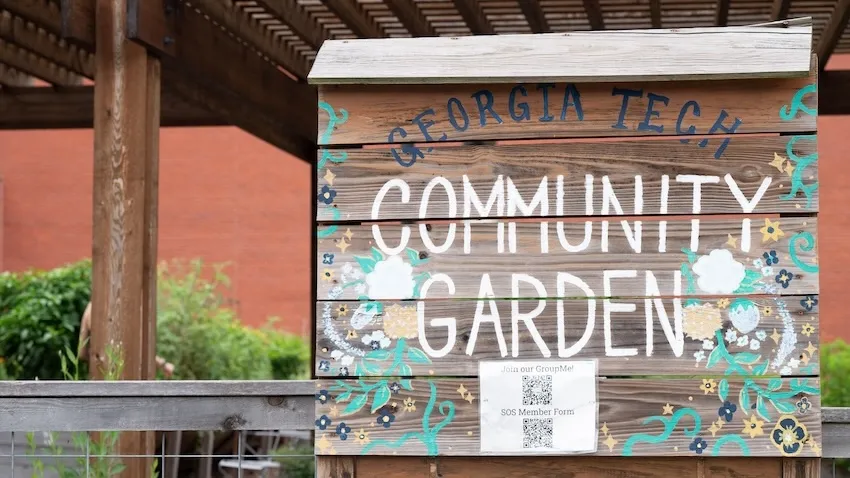
Gardening is a hobby that many people start but give up because of the time and effort it requires to be successful. Ryan Pemberton, a horticulturist at Georgia Tech’s community garden, said the two biggest mistakes he sees novice gardeners make are starting too big and overwatering.
“If you’ve never gardened before, trying to manage a large plot could be overwhelming,” Pemberton said.
“You can start small. You don’t have to have a big garden right away. You can start with one tomato plant and grow from there. See how well you can keep that one plant alive and then expand as you feel comfortable.”
Aside from the built-in health benefits of growing fresh food and working outdoors, Pemberton said gardening can lower your grocery bill and reduce carbon emissions by minimizing food transportation.
It can also be a great way for international students at Tech to grow foods native to their homelands. He said a tool like CultivAgents could be useful for determining whether Atlanta’s climate is suitable.
“People might want to grow a lot of different vegetables in their garden, but if you go too far south of here, it gets a little too hot to grow things like broccoli and strawberries,” he said.
“A little north of here, it gets a little too cold to grow some species of peppers. Having something tell you what grows well in your region means you’re not having to pick and choose or guess.”
That’s one of the reasons Wang designed CultivAgents to feature multiple agents that consider unique environmental and cultural contexts.
“Multiple agents help distribute specific types of support as opposed to the generic support you often get from a single chatbot,” Wang said.
“Another advantage is that they tend to build on each other. The environmental agent builds on the experience agent’s detailed steps. This allows the system to tell you how to grow bush beans, for example, within a specific local community.”
Wang said she surveyed and interviewed new and experienced gardeners who use Tech’s community garden to learn what they would want from a conversational agent. She found that many wanted step-by-step instructions and guidance on what to plant, how to plant it, and a schedule for upkeep.
“All of our users told us they view gardening as something that’s long term, so they wanted this platform to be able to facilitate that kind of relationship,” she said.
The community garden is a shared space with nine garden beds. Pemberton said it’s a great place for new gardeners to learn to grow food before starting their own gardens. Much of the food grown there is donated to Klemis Kitchen, Georgia Tech’s on-campus food bank.
For more information about the community garden and how to get involved, visit https://sustainability.campusservices.gatech.edu/community-garden/
To see a live demo of CultivAgents, visit https://cultivagents.onrender.com.
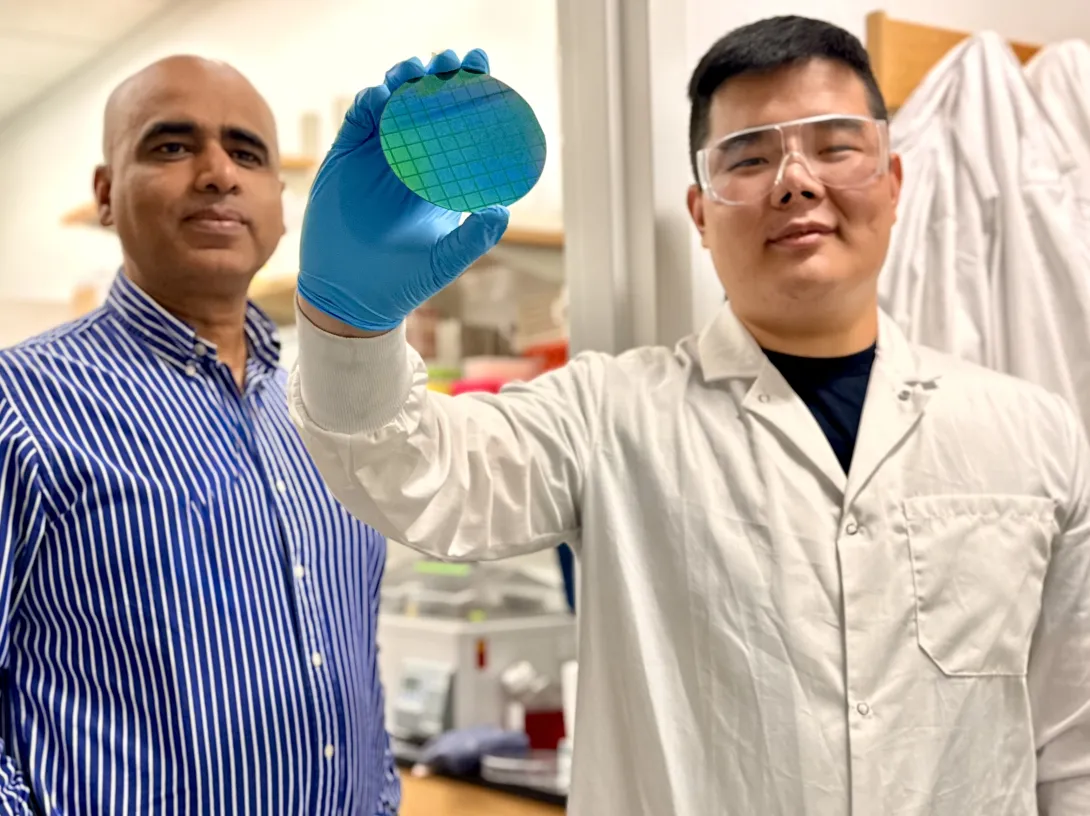
Georgia Tech researchers developed a way to rejuvenate aging immune cells, potentially restoring the body's ability to better fight cancer, infection, and other diseases.
The immune system naturally weakens with age, leaving older adults more vulnerable to infections, cancer, and poor vaccine responses. Georgia Tech biomedical engineer Ankur Singh and his team have developed a technique that restores aging immune cells by delivering new genetic instructions directly into exhausted T cells using microscopic silicon nanowires. The treatment rejuvenated immune cells from healthy older adults, cancer survivors, and patients with cancer, helping them behave more like younger cells without damaging them. Although the research is still in its early stages, it opens the door to therapies that could strengthen aging immune systems and improve the body's ability to fight disease.
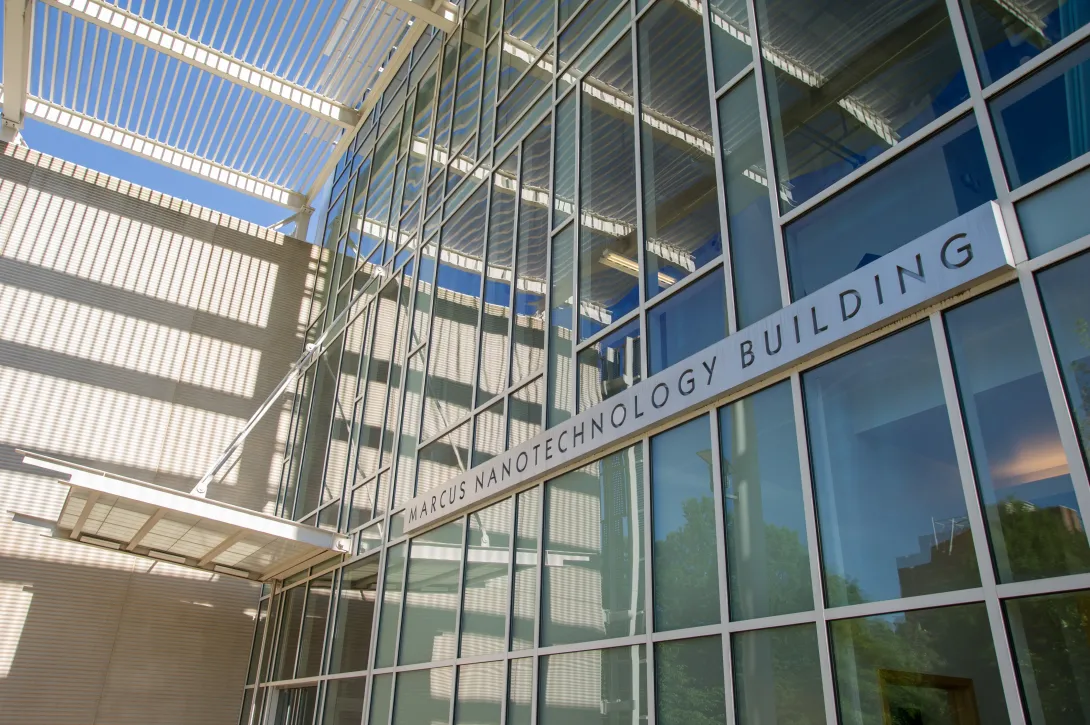
The Institute for Matter and Systems (IMS) has selected seven interdisciplinary research projects for funding, including one new research initiative, one new program, and one new center. IMS will also provide renewed funding to three research initiatives and one program to support their continued growth and impact.
IMS focuses on transformational technologies and societal systems that arise where innovative materials, devices, and processes meet.
“Transformative interdisciplinary research takes time to develop, and a second year of funding gives these teams the opportunity to build on early successes, expand collaborations, and demonstrate the impact of their work,” said Eric Vogel, executive director of IMS. “This continued investment helps researchers establish a strong foundation, achieve key milestones, and position promising initiatives to grow into larger, sustainable research programs capable of attracting significant external support.”
The funded projects come from four colleges and eight schools across Georgia Tech and the Georgia Tech Research Institute (GTRI). IMS selected these projects based on their innovative approaches, potential impact, and alignment with the IMS mission to push the boundaries of science and technology. They will receive funding, access to state-of-the-art facilities, and other support from the institute to bring their research to life.
IMS supports interdisciplinary research both in nationally recognized areas of need and those just emerging. It scaffolds research from the ground up, from seed funding for new initiatives to infrastructure support for research programs and embedded support for research centers.
The 2026 research initiatives and programs include:
Research Initiatives:
Extreme-Environment Microelectronics | Nima Ghalichechian, John Cressler, Farrokh Ayazi, School of Electrical and Computer Engineering
Multifunctional Materials for Efficient Buildings | Akanksha Menon, George W. Woodruff School of Mechanical Engineering
Precision Agriculture in Controlled Environments | Antonio Facchetti, School of Materials Science and Engineering; Yongsheng Cheng, School of Civil and Environmental Engineering; Anju Toor, School of Materials Science and Engineering
Sustainable Thermoregulation Strategies for Climate Change Resilience | Matthew Flavin, School of Electrical and Computer Engineering; Joe Bozeman, School of Civil and Environmental Engineering; Noura Howell, School of Literature, Media and Communication
Research Programs:
Autonomous Research for Materials | Mark Losego, School of Materials Science and Engineering; Shreyas Kousik, George W. Woodruff School of Mechanical Engineering; Animesh Garg, School of Interactive Computing
Georgia Tech Center for Semiconductor and Computing | Asif Khan, School of Electrical and Computer Engineering and the George W. Woodruff School of Mechanical Engineering; Divya Mahajan, School of Computer Science and the School of Electrical and Computer Engineering
Research Center:
Quantum Applications Research Center | Martin Mourigal, School of Physics; Robert Wylie, Georgia Tech Research Institute
News Contact
Amelia Neumeister | Communications Manager
The Institute for Matter and Systems
This press release is shared jointly with the Savannah River National Laboratory (SRNL) newsroom. Georgia Tech faculty Martha Grover and Maggie Kosal also serve as SRNL Joint Appointees.
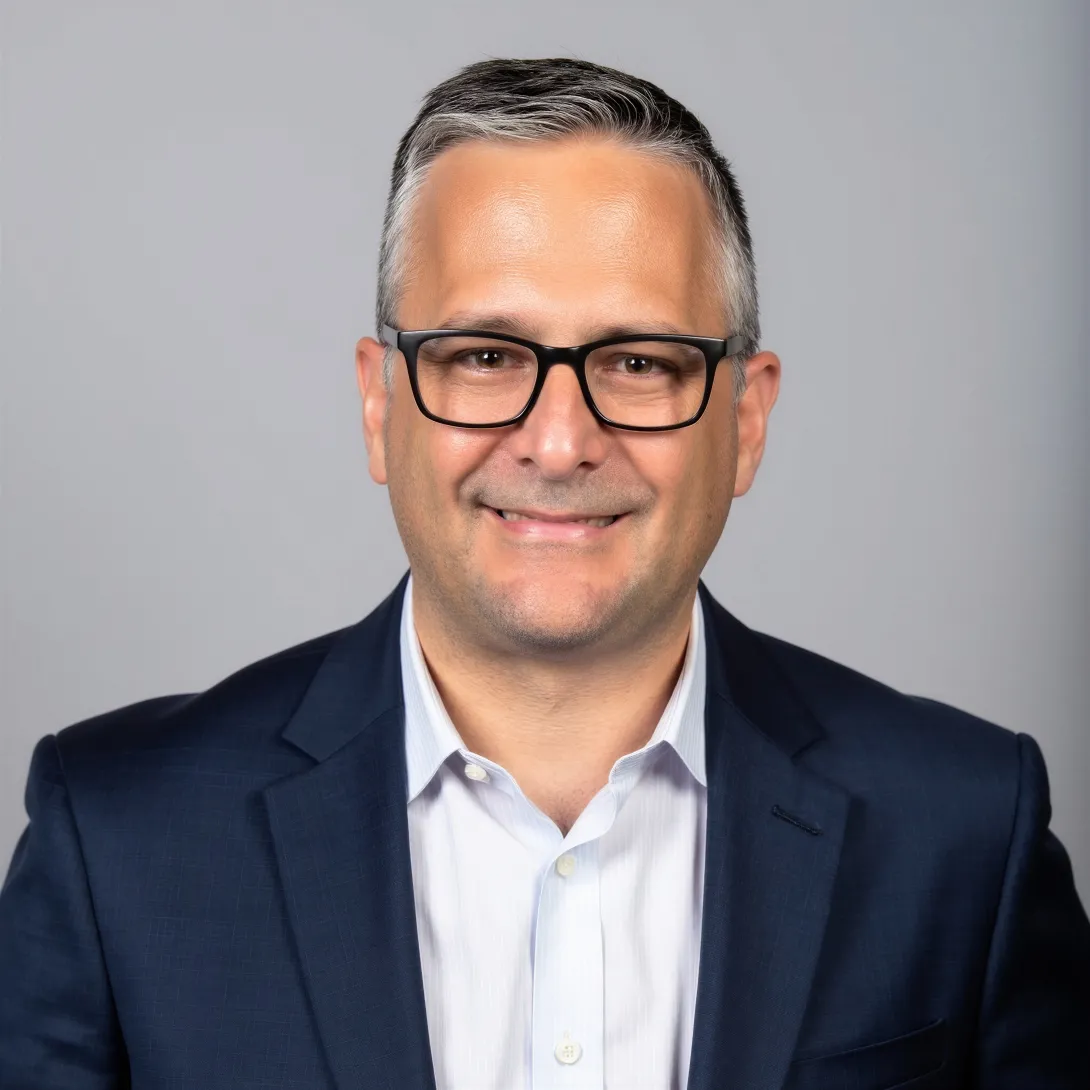
The Georgia Institute of Technology and the Savannah River National Laboratory announced the joint appointment of Facundo M. Fernández to collaborate in research around mass spectrometry, an analytical technique used to measure the mass-to-charge ratio of ions for research.
“Our partnership with Facundo will deepen SRNL’s innovative research in mass spectrometry and its groundbreaking applications,” said Tammy Taylor, SRNL’s deputy director of Science and Technology. “His expertise and collaboration will undoubtedly accelerate our lab’s drive for scientific excellence and impactful discoveries.”
Fernández is renowned internationally for his work in bioanalytical chemistry. His research focuses on developing tools to analyze small-volume samples, tissues and single cells, with applications in understanding diseases such as cancer, cystic fibrosis and inflammatory bowel disease. He has published 234 peer-reviewed papers, given over 230 invited lectures, and supervised 35 doctoral and master’s degree students.
He also directs the Systems Mass Spectrometry Core (SyMS-C) at Georgia Tech’s Parker H. Petit Institute for Bioengineering and Bioscience, managing more than 15 mass spectrometers.
“Being appointed as a joint faculty member with SRNL opens many new opportunities for collaborative research at the intersection of biology, chemistry and engineering,” said Fernández. “This type of collaborative research is what Georgia Tech is renowned for. We aim to address societal questions with global impact. I have been incredibly impressed with the quality of science at SRNL, and I look forward to many joint discoveries in the future.”
Fernández is a Regents’ Professor and the Vasser-Woolley Chair in Bioanalytical Chemistry at Georgia Tech’s School of Chemistry and Biochemistry. He earned his bachelor’s and master’s degrees (Licenciatura) in chemistry from the Facultad de Ciencias Exactas y Naturales, Universidad de Buenos Aires, in 1995, and his doctorate in analytical chemistry from the same university in 1999. From 2000 to 2001, he was a postdoctoral researcher at Stanford University’s Department of Chemistry. He served as a senior postdoctoral researcher and later as a research scientist between 2002 and 2003 with a research group at the University of Arizona.
“Professor Fernández is a renowned expert in the field of mass spectrometry, and it has been a privilege to already have him as a collaborator involved in our Laboratory Directed Research and Development program,” said SRNL’s Christopher Orton, division director for Nuclear Nonproliferation. “This joint appointment will strengthen the relationship between SRNL and Georgia Tech as we continue to work together to improve our understanding of the environmental fate of chemical contaminants in complex matrices.”
SRNL’s Joint Appointment Program provides university faculty opportunities to engage in research and development addressing the nation’s energy related challenges. SRNL staff and joint appointees help ensure America’s security and prosperity through transformative science and technology solutions, and joint appointees serve as a bridge between their university and SRNL researchers to deliver the future workforce for the Department of Energy.
Savannah River National Laboratory is a multi-program federally funded research and development center managed and operated by Battelle Savannah River Alliance for the U.S. Department of Energy’s Office of Environmental Management. EM transforms the nation’s environmental liabilities into opportunities for innovation, job creation, and economic growth, while ensuring safe, secure and prosperous communities across America. For more information, visit energy.gov/em.