


Nov. 03, 2022
Banning scooters may reduce sidewalk congestion and keep would-be riders and pedestrians safer, but it comes at a cost, according to new research from Georgia Tech’s School of Public Policy.
In a study examining the impact of Atlanta's 2019 ban on e-scooters and e-bikes in the city, researchers found that average commute times increased by about 10%. Travel to stadium events such as soccer games increased by almost 12 minutes per trip or 37% increase in travel times while the ban was in effect.
For Atlantans, that adds up to 784,000 extra hours sitting in traffic each year — and that’s just between 9 p.m. and 4 a.m. when the ban was in effect. A moratorium during peak rush hour would cause even more congestion, the study’s principal investigator, Omar Asensio confirmed. Expanding the scope of their study, Asensio and his team in Georgia Tech’s Data Science and Policy Lab estimate that e-scooters, e-bikes, and other micro-mobility options can save an average of 17.4% in travel time for drivers nationally.
“These are fairly significant congestion effects that most travelers will feel and as an unintended consequence of the safety regulation,” said Asensio.
New data settle an old debate
The study, conducted in Georgia Tech’s Data Science and Policy Lab and published in Nature Energy, is the first to definitively show that investing in micro-mobility infrastructure such as e-bikes, e-scooters, and bike lanes can reduce traffic congestion and carbon emissions in cities. The research accounted for the rise in popularity of ride-sharing services and other sources of traffic.
Previous studies on micromobility were controversial and contradictory because they relied on travel surveys, which can be unreliable and are subject to biases resulting from self-reported data, Asensio said. This motivated his search for a more rigorous, data-driven approach to answering the question.
The opportunity arose when Atlanta banned scooters with a geo-fencing policy in 2019. The ban was done with a remote shutdown on all scooters within a certain perimeter, which ensured compliance across the city. Previous moratoriums in other places relied on people to choose to cooperate and follow the rules, so this 100% compliance rate was unique to Atlanta.
“I thought, okay, that's interesting because now we have near-perfect behavioral compliance in response to a policy intervention, which turns out to be extremely rare,” Asensio said. “All of a sudden, if you're without the use of the scooter, what do you do? This created a great natural experiment, to be able to precisely measure the traffic times before and after this policy intervention and in doing so, test behavioral theories of mode substitution.”
In addition, Asensio and his team received early access to the then-new Uber Movement Dataset, which gave them detailed information about commute times across the city that previously had to be collected by surveys as well. In short, the stars aligned in 2019 for the debate over the true impact of micro-mobility on city traffic to finally be settled.
Mary Feeney, program director for the Science of Science Program at the National Science Foundation, which supported the research, said “Asensio and his team are using newly available ‘big data’ sources to tackle practical questions with real policy implications. Bringing the appropriate data and analytical approaches to these problems helps empower decision-makers to enact evidence-based policy.”
Public safety vs. congestion and emissions
The regulation in Atlanta was one of many that U.S. cities put in place in response to increased accidents and hospitalizations from micro-mobility devices.
Reducing congestion also reduces emissions, noted Camila Apablaza, who worked on Asensio’s team along with Savannah Horner, Cade Lawson, and Edward Chen. “I thought this was an important question because the impact of certain modes of transportation, such as scooters, is sometimes overlooked,” she said. “We know that electric mobility will be the main contributor to decarbonizing the passenger transportation sector, therefore we need to understand the interactions between different modes of electric transportation.”
But, “the point of this paper is to present the idea that it’s not just as simple as ‘we should ban the scooters,’ right?” said Chen. “We have found that there are, in fact, trade-offs between banning them for public safety versus allowing them to relieve traffic congestion, and whether or not city governments make the decision does ultimately have an impact on people's daily lives.”
Economic impact
The researchers found that e-scooters and e-bikes do, in fact, reduce congestion on the road by substituting some personal vehicle or ridesharing use rather than only public transit or walking. When the estimated saved time for drivers nationwide is translated into monetary value, Asensio approximates that it adds up to $536 million a year.
“This is also just a personal thing,” Chen added. “I’ve lived around here my whole life. I start seeing these scooters around, and this kind of answers that fundamental question: are people actually using these, and are these actually replacing trips and inherently reducing all these carbon emissions?”
What’s Next?
The Data Science and Policy Lab partners with the private sector and city governments on data innovations in policy analysis and impact evaluation. Follow-up research to this project could dig deeper into the specific transit substitutions people choose and why, Asensio said.
“I think modeling the emissions impacts for those will continue to be an ongoing kind of investigation,” he said. “When it comes to electrification, micro-mobility is just one of many strategies that are aggressively being invested in by both the public and the private sector. It's a really exciting opportunity to meaningfully reduce emissions and to benefit from the public health co-benefit of reduced air pollution.”
The paper, “Impacts of Micromobility on Car Displacement With Evidence From a Natural Experiment and Geofencing Policy” was funded by Asensio’s 2020 NSF Faculty Early Career Development Program (CAREER) (Award No. 1945532). It is available at https://doi.org/10.1038/s41560-022-01135-1.
News Contact
Di Minardi, Communications Officer I - School of Economics, School of History & Sociology
Oct. 04, 2022
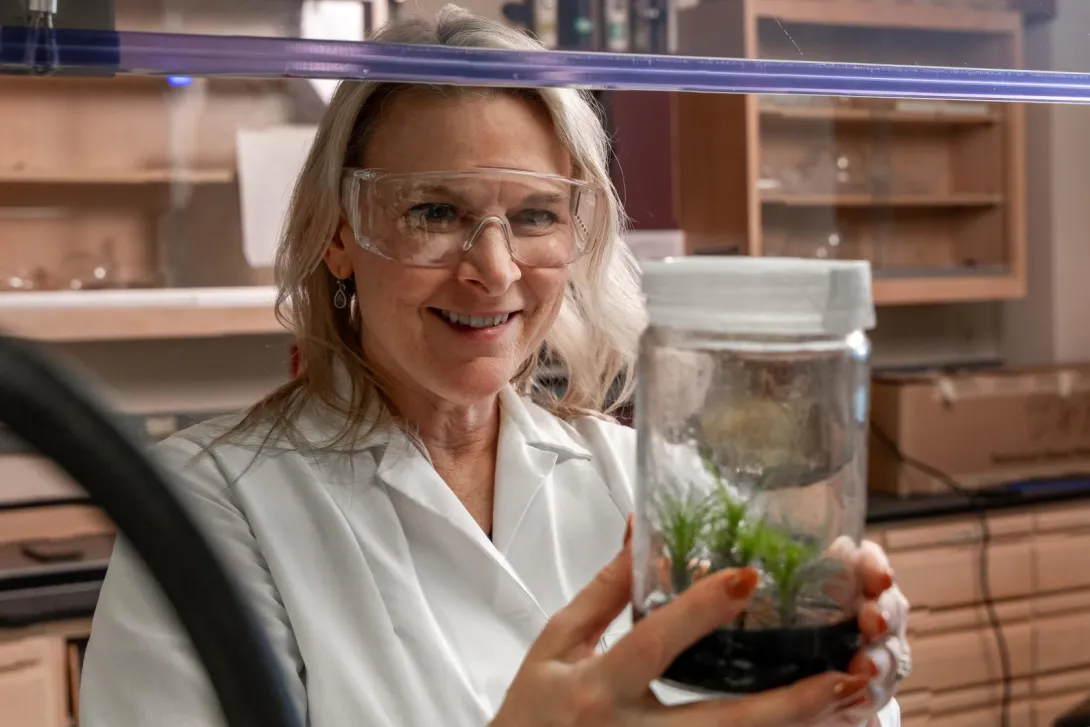
Joel Kostka will soon receive $3.2 million from the Department of Energy (DOE) to build upon research that has ranged from northern Minnesota peat bogs to coastal Georgia wetlands, all to learn how climate change impacts soils and plants that trap greenhouse gasses — and whether some of those plants could end up as eco-friendly biofuels.
Kostka, a professor and associate chair of research in the School of Biological Sciences with a joint appointment in the School of Earth and Atmospheric Sciences, will receive funding as part of a wider $178 million dollar DOE effort to advance sustainable technology breakthroughs that can improve public health, help address climate change, improve food and agricultural production, and create more resilient supply chains. The 37 new projects also include efforts to engineer plants and microbes into bioenergy and improve carbon storage.
Kostka’s wetlands research will continue in the salt marshes off Georgia’s coast, where his team has already conducted studies on the microbial life that benefits Spartina cordgrass in those areas, helping to strengthen resilience of the plant to sea level rise and catastrophic storms.
The DOE’s funding initiative is split into four groups. Kostka’s studies will focus on the role of microbiomes — all the microorganisms living in a particular environment — in the biogeochemical cycling of carbon in terrestrial soils and wetlands by using genomics-based and systems biology.
Other research areas involve renewable bioenergy and biomaterials production; quantum-enabled bioimaging and sensing for bioenergy, and research to characterize gene function in bioenergy crop plants.
“Our project seeks to understand the controls of soil organic matter degradation and the release of greenhouse gasses, both of which are largely mediated by microbes” Kostka said. “And then also, as we've been studying for many years now, how climate drivers — principally the warming of ecosystems and carbon dioxide enrichment in the atmosphere — limit greenhouse gas release to the atmosphere. How might changes in plant and microbial communities lead to climate feedbacks, thereby accelerating the release of greenhouse gasses from soil carbon stores?”
That question has driven much of Kostka’s research team in the past as they focused on how soil microbes break down biomasses like woody plants and peat mosses, at an Oak Ridge National Laboratory facility in northern Minnesota called Spruce and Peatland Responses Under Changing Environments (SPRUCE). Kostka’s team is using genomics to study all the genes that code for microbial enzymes that decompose biomass in soil and how plants, which are also changing with climate, impact microbiomes by providing carbon sources that fuel microbial activities. In particular, the work is focused on lignocellulose or lignin, which gives plants their rigidity or structure and arguably comprises the most abundant renewable carbon source on the planet.
“We're just at the point now where we finally have the tools to unlock the black box of soil microbiology and chemistry,” Kostka said. “Recent advances in sophisticated analytical chemistry methods used to quantify microbial metabolites along with improved metagenome sequencing approaches enable us to better uncover metabolic pathways.”
Kostka will serve as principal investigator of the research team for the grant. That team includes School of Biological Sciences researchers Caitlin Petro, research scientist, and Katherine Duchesneau, a third-year Ph.D. student; co-principal investigator Kostas Konstantinidis, Richard C. Tucker Professor in the School of Civil and Environmental Engineering; Rachel Wilson, research scientist, Florida State University; Malak Tfaily, associate professor, University of Arizona; and Chris Schadt, senior staff scientist, Oak Ridge National Laboratory.
Unlocking the “enzyme latch” hypothesis
As part of his new research, Kostka will revisit what scientists call the “enzyme latch” hypothesis. This could help uncover the mechanisms by which soils and plants capture harmful greenhouse gasses, and what prompts their release into the atmosphere.
The idea behind this hypothesis is that when soils are wet, they lack oxygen, which suppresses a specific class of enzymes, oxidases, that catalyze the beginning steps in the microbial breakdown of organic compounds produced by plants in soil. When oxidases are suppressed, the breakdown products of lignin, phenolic compounds, accumulate and poison the rest of the microbial carbon cycle. Thus a single class of enzymes may be responsible for keeping greenhouse gasses like carbon dioxide and methane captured within the soil.
“The climate linkage here is that it's thought that as the climate warms, we'll get more greenhouse gas production, because simply it'll be warmer, and microbial enzymes work faster at higher temperature. But then also, in wetlands in particular, the hypothesis is that as wetlands warm, they're going to dry out. And so when a wetland dries out, you're going to get more injection of oxygen-rich air into the soil, which would then accelerate the breakdown of organic matter.”
When that happens, it could also mean different plants having an impact on carbon storage and the breakdown of biomass. “As wetlands dry out, plant communities in northern peatlands where most of Earth’s soil carbon is stored, are expected to shift from a dominance of mosses, which do better when it's wet — to woody plants, shrubs, and trees that do better with less water, when it's drier. That would in turn potentially spark the release of more reactive carbon compounds from plant roots — mosses don’t have roots — which would likely accelerate organic matter decomposition and the production of more greenhouse gas in a feedback loop with climate.”
Kostka’s research may also help to develop new approaches for converting woody biomass into potential alternative energy sources. “To make our society more sustainable, we have to basically recycle everything, or reuse as much as we can. And that includes the biomass from plants that can be grown on more arid lands that are less suitable for food crops,” he said, referring to plant-based materials that can be used to produce biofuels and bioenergy. “And so the DOE is leading research efforts to understand the controls of biomass degradation in plants such as switchgrass and poplar.”
Kostka and Konstantinidis will develop a database of genes that code for the breakdown of lignocellulose and lignin, compounds that largely make up plant biomass and for which metabolic pathways of degradation have been elusive. Kostka and his colleagues will also have access to the extensive resources of the DOE Genomic Sciences program, including a collaboration with the agency’s Joint Genome Institute.
“We hope that information generated from our project can be used to improve methods for breaking down woody biomass so that it can be used in a sustainable way to produce biofuels,” Kostka said.
Public abstract of Department of Energy grant DE-SC0023297
About Georgia Tech
The Georgia Institute of Technology, or Georgia Tech, is a top 10 public research university developing leaders who advance technology and improve the human condition. The Institute offers business, computing, design, engineering, liberal arts, and sciences degrees. Its nearly 44,000 students representing 50 states and 149 countries, study at the main campus in Atlanta, at campuses in France and China, and through distance and online learning. As a leading technological university, Georgia Tech is an engine of economic development for Georgia, the Southeast, and the nation, conducting more than $1 billion in research annually for government, industry, and society.
News Contact
Writer: Renay San Miguel
Communications Officer II/Science Writer
College of Sciences
404-894-5209
Editor: Jess Hunt-Ralston
Sep. 27, 2022
The Scalable Asymmetric Lifecycle Engagement Microelectronics Workforce Development program (SCALE) has announced the program will extend another five years and expand with $10.8 million additional Department of Defense (DoD) funding, with a ceiling of $99 million.
SCALE officials said this expansion of the nation’s preeminent program will further its goal to develop a next-generation workforce that can return the United States to prominence in global microelectronics manufacturing.
Georgia Tech participates in the partnership, which is led by Purdue University and managed by NSWC Crane. SCALE facilitates the training of highly skilled U.S. microelectronics engineers, hardware designers and manufacturing experts. SCALE brings together a public-private-academic partnership of 17 universities and 34 partners within the defense industry and government.
“This is an extremely exciting time in the country and at Tech for microchip design and manufacturing,” said Arijit Raychowdhury, the Steve W. Chaddick School Chair of Tech’s School of Electrical and Computer Engineering (ECE). “These newly announced funds for the SCALE program will help Georgia Tech recruit a new, diverse group of students ready to work in defense microelectronics. We’re thrilled to be a SCALE partner university and honored to be leading many of the project’s specialty areas.”
SCALE provides unique courses, mentoring, internship matching and targeted research projects for college students interested in five microelectronics specialty areas. Georgia Tech ECE faculty members will be the primary investigators for three of the areas:
- system on a chip will be led by Raychowdhury;
- radiation-hardening will be led by John Cressler;
- and heterogeneous integration/advanced packaging will be led by Madhavan Swaminathan.
The other two focus areas are embedded system security/trusted AI and supply chain awareness.
Industry and government partners regularly meet and update a list of knowledge, skills, and abilities important for new entrants to the workforce. The SCALE universities then update their curriculum to ensure the students are prepared for upcoming needs in the rapidly advancing microelectronics field.
Peter Bermel, SCALE director and the Elmore Associate Professor of Electrical and Computer Engineering at Purdue, said the United States will need 50,000 trained semiconductor engineers to meet overwhelming and rapidly growing demand.
“The United States is committed to expanding and strengthening its semiconductor industry and workforce rapidly over the next five years,” Bermel said. “SCALE takes a holistic approach to the microelectronics workforce gap by comprehensively addressing system challenges for workforce training and recruiting.”
Goals for the next five years include:
- Expanding student participation in SCALE fivefold to more than 1,000.
- Developing learning models for K-12 classrooms.
- Collaborating with community colleges nationwide to develop microelectronics classes.
The demand for microelectronics increased by 26.2% in 2021. But while the United States consumes about half of the chips produced worldwide, the country only manufactures about 12%, highlighting the pressing need for the U.S. to strengthen its domestic semiconductor supply chains and increase industrial capacity.
The funding announcement is the latest highlight in Georgia Tech’s leadership role in bolstering microelectronics and workforce development. Tech’s large engineering and science faculty bring a broad set of research expertise to strengthen the country’s semiconductor capacity. The Institute is uniquely positioned to train the microelectronics workforce, drive future microelectronics advances, and provide fabrication and packaging facilities for industry, academic and government partners to develop and test new solutions.
###
The Georgia Institute of Technology, or Georgia Tech, is a top 10 public research university developing leaders who advance technology and improve the human condition. The Institute offers business, computing, design, engineering, liberal arts, and sciences degrees. Its nearly 44,000 students, representing 50 states and 149 countries, study at the main campus in Atlanta, at campuses in France and China, and through distance and online learning. As a leading technological university, Georgia Tech is an engine of economic development for Georgia, the Southeast, and the nation, conducting more than $1 billion in research annually for government, industry, and society.
News Contact
Dan Watson
dwatson@ece.gatech.edu
Sep. 15, 2022
When Alexandria Sweeny, better known as Alex, considered what she wanted to accomplish before graduating from Drew Charter School, the then high school junior set two goals: complete her engineering internship and make a positive impact.
She did both while strengthening her coding knowledge during her time as a camper and mentor at the Seth Bonder Camp in Computational and Data Science for Engineering (SBC).
“I did it when it was fully virtual, and it was definitely an experience,” said Sweeny who spent a week being introduced to computing and data science where she performed virtual activities, last June.
The camp, which is offered either as an online course or on-campus summer camp at Georgia Tech, is designed to build students’ problem-solving and analytical skills while furthering their interest in computer science as a potential career. It is also part of AI4OPT’s mission to inspire young Georgians to pursue STEM (science, technology, engineering and mathematics).
AI4OPT hosted its first in-person summer camp at Georgia Tech in June. The camp brought together 60 students from schools across Georgia including Drew Charter, Banneker High School, and Westlake High School.
Sweeny was asked to return to this particular camp—but this time, as a mentor.
“Of course, I said yes, because it was something fun that I could do over the summer preparing for college without it being too hefty,” said Sweeny. “It was something that I felt prepared for from attending the camp.”
Responses like Sweeny’s motivates SBC Site Managers like Reem Khir to introduce more bright minds to the camp centered around computer programming logic, programming language for AI, and teamwork.
“We expose them [high school students] to certain types of education areas like Twitter analysis, how to solve a sudoku, and even computational biology, if they wanted to consider a career in biology,” said Khir, who joined the camp last year to help students with assignments. This year, she took on even bigger leadership role by maintaining and observing two camps and facilitating 50 students and seven teaching assistants (TAs). She worked under a ‘student to student and student to TA’ interactive structure so that each participant took away a useful skill in data science.
“It’s the time where high school students start forming opinions and decisions about the career path they want to pursue,” said Khir. “The steppingstone is their college education, and we can help students in that period.”
AI4OPT Will Acquire and Advance Seth Bonder Camp
AI4OPT is working to adopt a short-term system used to track students after the camp. The institute wants to build up the system to see majors, colleges, and career paths each student has vowed to pursue before they head off to college or the workforce.
“This is a critical period for students,” said Khir. “It’s a time where students start thinking about a major for college and later impacting the next 20 or 30 years of their life. Being a part of that is very unique in terms of creating a positive influence in the next generation.”
AI4OPT is taking the lead over the SBC to offer the initiative more organizational support as the program has seen tremendous growth and has become a much broader initiative. The Seth Bonder Foundation, which first introduced the camp to those ages 10-18, will continue to fund the camp now more targeted towards high school students interested in engineering, but do not have access to computer science and/or data science in their middle and high schools.
“A lot of the different communities are not exposed to this and may never see this opportunity. The Seth Bonder Camp exposes high school students to AI opportunities and gives them skills to successfully enter the field of STEM with confidence,” said Professor Pascal Van Hentenryck, who’s brought his data sciences skills and knowledge to Georgia Tech and leads both AI4OPT and the SBC.
AI4OPT is in transition to lead the SBC to offer more organizational support as the program sees tremendous growth. The research Institute will expand the longitudinal camps to engage middle and high school students in these topics, while also bringing AI education and research programs to HBCU’s and Hispanic-serving colleges throughout the nation, addressing the widening gap in job opportunities.
Though Sweeny has transitioned away from coding and transcended into research, she never stopped setting goals even now as a first-year biomedical engineering major at Georgia Tech.
“Do anything you can to take it [the SBC] even if you don't want to go into coding,” said Sweeny. “It is a good way to meet new people learn new skills, it is something that you don't necessarily have to have a love for coding to have to do it.”
To learn more about the Seth Bonder Camp in Computational and Data Science for Engineering and to partner with the camp, visit sethbondercamp.isye.gatech.edu.
(Writer’s note: This article is part of a series highlighting AI4OPT members, students, education programs and professional development testimonies.)
Sep. 06, 2022
Aaron Stebner outlined an aggressive plan for artificial intelligence and manufacturing when he applied for a faculty position in 2019. In his cover letter, he promised “to establish the Georgia Institute of Technology as a world leader in additive manufacturing of solid materials (ceramics & metals) R&D, especially in the fusion of data sciences and AI to create new, world-leading technologies.”
Stebner thought it would take 10-15 years of incremental steps and funding to achieve the goal. He was wrong.
Thanks to a new $65 million grant from the U.S. Department of Commerce’s Economic Development Administration, announced by President Joe Biden, Stebner’s plan will begin to become a reality — and include the entire state of Georgia and all of its manufacturing sectors from agriculture to airplanes — two years after arriving on campus.
The largest of the nine projects within the larger Georgia AI Manufacturing (GA-AIM) technology corridor grant will allow Stebner and Georgia Tech to transform the Advanced Manufacturing Pilot Facility (AMPF) into the Artificial Intelligence Manufacturing Pilot Facility (AI-MPF). The 24,000 square-foot facility on 14th Street will more than double in size after Georgia Tech and statewide GA-AIM partners were selected as one of 21 Phase II awardees in the $1 billion Build Back Better Regional Challenge (BBB) competition, part of the Investing in America’s Communities initiative under the American Rescue Plan Act of 2021.
AMPF has been a shell waiting for a vision like Build Back Better to fill it out,” said Stebner, associate professor the George W. Woodruff School of Mechanical Engineering and the School of Materials Science and Engineering. “Now we will transform the facility into one of the nation’s first manufacturing labs designed for autonomy with the goal of helping the state and the nation to be world AI manufacturing leaders.”
Read the entire story on the College of Engineering website.
News Contact
Jason Maderer
College of Engineering
maderer@gatech.edu
Aug. 11, 2022
Along with the Georgia Tech faculty tapped and reappointed as Regents’ Professors and Researchers at the Aug. 9 University System of Georgia (USG) Board of Regents meeting were five Georgia Tech professors named to the new distinction of Regents’ Entrepreneur.
Georgia Tech faculty named as the first Regents' Entrepreneurs in the USG include Farrokh Ayazi, Ken Byers Professor in Microsystems, School of Electrical and Computer Engineering; Kirk Bowman, professor, Sam Nunn School of International Affairs; Andrei Fedorov, Neely Chair and professor, George W. Woodruff School of Mechanical Engineering and the Petit Institute for Bioengineering and Bioscience; Mark Prausnitz, Regents’ Professor, J. Erskine Love Jr. Chair, School of Chemical and Biomolecular Engineering; and Gleb Yushin, professor, School of Materials Science and Engineering.
Regents’ Professor First-Time Appointments
The Board of Regents approved the title of Regents’ Professor to Facundo Fernández, professor and Vasser Woolley Foundation Chair in Bioanalytical Chemistry, School of Chemistry and Biochemistry; Willie Pearson, professor, School of History and Sociology; Krishnendu Roy, professor, Robert A. Milton Endowed Chair, NSF Engineering Research Center for Cell Manufacturing Technologies, Wallace H. Coulter Department of Biomedical Engineering; and Beril Toktay, professor of Operations Management and Brady Family Chair, Scheller College of Business.
Regents’ Researcher First-Time Appointments
Those named as Regents’ Researchers include Stephen Balakirsky, principal research scientist, Georgia Tech Research Institute (GTRI); Anton Bryksin, principal research scientist, Petit Institute for Bioengineering and Bioscience; Walter Bradley Fain, principal research scientist, School of Public Policy; and Anita Pavadore, principal research engineer, GTRI.
First-Time Reappointments
Receiving a first-time reappointment as Regents’ Professor was Surya Kalidindi, Regents’ Professor, Rae S. and Frank H. Neely Chair, George W. Woodruff School of Mechanical Engineering. Receiving a first-time reappointment as Regents’ Researcher was Margaret Loper, principal research scientist, GTRI.
Other Reappointments
Regents’ Professor and Researcher designations only require Institute approval for second-time reappointments. Second-time Regents’ Professor appointments at Georgia Tech include Sy Goodman, Regents’ Professor, Sam Nunn School of International Affairs; Nicholas Hud, Regents’ Professor, School of Chemistry and Biochemistry; and Vladimir Tsukruk, Regents’ Professor, School of Materials Science and Engineering. Receiving a second-time Regents’ Researcher reappointment was Alexa Harter, director of the Cybersecurity, Information Protection, and Hardware Evaluation Research Laboratory at GTRI.
New Recognition for Entrepreneurship and Innovation
The board approved the Regents’ Entrepreneur designation in their February 2022 meeting to recognize and support faculty entrepreneurship and innovation. The Regents’ Entrepreneur designation may be granted by the Board of Regents to an outstanding full-time tenured faculty member who has an established reputation as a successful innovator and who has taken their research into a commercial setting. The Regents’ Entrepreneur designation is bestowed by the board only upon the unanimous recommendation of the USG institution president, the chief academic officer, and the chancellor, and upon the approval of the Committee on Academic Affairs.
Farrokh Ayazi
Farrokh Ayazi is director of the Georgia Tech Analog Consortium. His main research interest is in integrated micro and nano electromechanical systems and integrated microsystem design. He is the founder and chief technology officer of Qualtré, which was acquired by Panasonic in 2016. He is currently leading StethX Microsystems, an ATDC company, in commercializing advanced wearable sensors for cardiopulmonary applications.
Kirk Bowman
Kirk Bowman is the Rise Up & Care term chair in Global Development and Identity. In 2014, Bowman founded Rise Up & Care, a nonprofit corporation that employs an innovative model of international community development, combining global development research; high-level performance organizations in the Global South to transform youth; powerful documentary films by top local directors; and children's books illustrated by local street artists. He directs a Georgia Tech Vertically Integrated Project on Global Social Entrepreneurship with 18 undergraduate students.
Andrei G. Fedorov
Andrei G. Fedorov’s research covers atomic scale nanomanufacturing; distributed power generation with carbon dioxide management; instrumentation for biomedical research; and thermal management of electronics and medicine. With his students and collaborators, Fedorov started several technology companies to commercialize his inventions in the space of gene/drug delivery; biomarker discovery and quality control in cell therapy manufacturing; and thermal management of high-power generation devices.
Mark Prausnitz
Mark Prausnitz has co-founded seven companies that have together raised more than $350 million for commercialization of microneedle technologies developed in his lab at Georgia Tech. Three of the companies have products for sale, including an FDA-approved treatment of ocular inflammation. His technologies have been studied in more than 20 human clinical trials. He has almost 80 issued or pending U.S. patents, with additional international filings. Prausnitz has published more than 300 journal articles and supervised 50 Ph.D. students among a total of almost 350 graduate, postdoctoral, or undergraduate researchers in his lab.
Gleb Yushin
Gleb Yushin is a pioneer and globally recognized leader in advanced materials for next-generation Li-ion batteries. He is member of the National Academy of Inventors and fellow of three international professional societies. He has been awarded more than 200 patents, while also being one of the most cited Georgia Tech professors since 2019. He co-founded the most economically successful Georgia Tech startup Sila Nanotechnologies ($3.3B valuation). Yushin has served as a founding faculty advisor for the Entrepreneurs Club at Tech and as an advisor to the Georgia Tech startup CellFE.
Regents’ Professorships and Regents’ Researcher titles may be granted for a period of three years by the Board of Regents to outstanding faculty members of Georgia Tech, Augusta University, Georgia State University, the University of Georgia, and, in special circumstances, other USG institutions.
News Contact
Dawn Baunach, Associate Vice Provost for Faculty
Aug. 03, 2022
A team of researchers at the University of Massachusetts Amherst and the Georgia Institute of Technology has 3D printed a dual-phase, nanostructured high-entropy alloy that exceeds the strength and ductility of other state-of-the-art additively manufactured materials, which could lead to higher-performance components for applications in aerospace, medicine, energy and transportation. The research, led by Wen Chen, assistant professor of mechanical and industrial engineering at UMass, and Ting Zhu, professor of mechanical engineering at Georgia Tech, was published in the August issue of the journal Nature.
Over the past 15 years, high entropy alloys (HEAs) have become increasingly popular as a new paradigm in materials science. Comprised of five or more elements in near-equal proportions, they offer the ability to create a near-infinite number of unique combinations for alloy design. Traditional alloys, such as brass, carbon steel, stainless steel and bronze, contain a primary element combined with one or more trace elements.
Additive manufacturing, also called 3D printing, has recently emerged as a powerful approach of material development. The laser-based 3D printing can produce large temperature gradients and high cooling rates that are not readily accessible by conventional routes. However, “the potential of harnessing the combined benefits of additive manufacturing and HEAs for achieving novel properties remains largely unexplored,” says Zhu.
Chen and his team in the Multiscale Materials and Manufacturing Laboratory combined an HEA with a state-of-the-art 3D printing technique called laser powder bed fusion to develop new materials with unprecedented properties. Because the process causes materials to melt and solidify very rapidly as compared to traditional metallurgy, “you get a very different microstructure that is far-from-equilibrium” on the components created, Chen says. This microstructure looks like a net and is made of alternating layers known as face-centered cubic (FCC) and body-centered cubic (BCC) nanolamellar structures embedded in microscale eutectic colonies with random orientations. The hierarchical nanostructured HEA enables co-operative deformation of the two phases.
“This unusual microstructure’s atomic rearrangement gives rise to ultrahigh strength as well as enhanced ductility, which is uncommon, because usually strong materials tend to be brittle,” Chen says. Compared to conventional metal casting, “we got almost triple the strength and not only didn’t lose ductility, but actually increased it simultaneously,” he says. “For many applications, a combination of strength and ductility is key. Our findings are original and exciting for materials science and engineering alike.”
“The ability to produce strong and ductile HEAs means that these 3D printed materials are more robust in resisting applied deformation, which is important for lightweight structural design for enhanced mechanical efficiency and energy saving,” says Jie Ren, Chen’s Ph.D. student and first author of the paper.
Zhu’s group at Georgia Tech led the computational modeling for the research. He developed dual-phase crystal plasticity computational models to understand the mechanistic roles played by both the FCC and BCC nanolamellae and how they work together to give the material added strength and ductility.
“Our simulation results show the surprisingly high strength yet high hardening responses in the BCC nanolamellae, which are pivotal for achieving the outstanding strength-ductility synergy of our alloy. This mechanistic understanding provides an important basis for guiding the future development of 3D printed HEAs with exceptional mechanical properties,” Zhu says.
In addition, 3D printing offers a powerful tool to make geometrically complex and customized parts. In the future, harnessing 3D printing technology and the vast alloy design space of HEAs opens ample opportunities for the direct production of end-use components for biomedical and aerospace applications.
Additional research partners on the paper include Texas A&M University, the University of California Los Angeles, Rice University, and Oak Ridge and Lawrence Livermore national laboratories.
Story by Melinda Rose, Associate News Editor at UMass Amherst.
News Contact
Catherine Barzler, Georgia Tech
Apr. 15, 2022
Georgians can now track where greenhouse gas emissions come from thanks to a tool that estimates those emissions at the state and county level.
Developed by Georgia Tech professors, the interactive map allows users to filter publicly available greenhouse gas estimates by county, month, year, and energy sector. Users can specify whether the emissions come from transportation, agriculture, commercial, forestry, residential, or industrial sources and counter with how much carbon is absorbed by trees and soils.
“The purpose of the tracker is to bring technology to bear on climate solutions,” said William Drummond, an associate professor in the School of City & Regional Planning and the lead behind the tracker. “This is the first time there has been effort to downscale emissions to the local level in a dynamic way we can update every month.”
The initiative is part of a trifold effort in Drawdown Georgia, a Ray C. Anderson Foundation–funded project across state universities to decrease reliance on carbon inspired by the national program Project Drawdown. As the first stage, the tracker enables Georgians to understand how the state contributes to emissions. Next, the Scheller College of Business will develop a business compact study to assess the economic impact of less carbon, and then the School of Public Policy will lead solutions activation. The tracker ties everything together by letting researchers measure how effective all the efforts are combined.
Ultimately, the researchers hope to inspire everyday Georgians to get involved in combatting climate change. With the public’s familiarity with Covid-19 case trackers, Drummond believes the tracker is accessible to most users, from regular citizens unsure how to help the environment to high school science students.
“This tracker is designed to be a catalyst for a climate movement across the state of Georgia, so it's important that we include ordinary citizens, advocacy groups, and businesses as partners in working toward climate solutions in Georgia,” Drummond said.
The researchers expect the carbon tracker will grow beyond Georgia. The tool is written in the common coding language R, so other states can replicate it. They also hope to track many other climate elements in the next few years.
“We'll progress as the technologies and markets evolve, and will soon turn to where the solutions are — not just where are the emissions are,” said Marilyn Brown, a Regents' and Brook Byers Professor of Sustainable Systems in the School of Public Policy. “We’re going to tie it all together, and it's all going to be facilitated by this geospatial tracking.”
News Contact
Tess Malone, Research Writer/Editor
Mar. 29, 2022
5G+ (5G/Beyond 5G) is the fastest-growing segment and the only significant opportunity for investment growth in the wireless network infrastructure market, according to the latest forecast by Gartner, Inc. But currently 5G+ technologies rely on large antenna arrays that are typically bulky and come only in very limited sizes, making them difficult to transport and expensive to customize.
Researchers from Georgia Tech’s College of Engineering have developed a novel and flexible solution to address the problem. Their additively manufactured tile-based approach can construct on-demand, massively scalable arrays of 5G+ (5G/Beyond 5G)‐enabled smart skins with the potential to enable intelligence on nearly any surface or object. The study, recently published in Scientific Reports, describes the approach, which is not only much easier to scale and customize than current practices, but features no performance degradation whenever flexed or scaled to a very large number of tiles.
“Typically, there are a lot of smaller wireless network systems working together, but they are not scalable. With the current techniques, you can’t increase, decrease, or direct bandwidth, especially for very large areas,” said Manos Tentzeris, Ken Byers Professor in Flexible Electronics in the School of Electrical and Computer Engineering. “Being able to utilize and scale this novel tile-based approach makes this possible.”
Tentzeris says his team’s modular application equipped with 5G+ capability has the potential for immediate, large-scale impact as the telecommunications industry continues to rapidly transition to standards for faster, higher capacity, and lower latency communications.
BUILDING THE TILES
In Georgia Tech’s new approach, flexible and additively manufactured tiles are assembled onto a single, flexible underlying layer. This allows tile arrays to be attached to a multitude of surfaces. The architecture also allows for very large 5G+ phased/electronically steerable antenna array networks to be installed on-the-fly. According to Tentzeris, attaching a tile array to an unmanned aerial vehicle (UAV) is even a possibility to surge broadband capacity in low coverage areas.
In the study, the team fabricated a proof-of-concept, flexible 5×5-centimeter tile array and wrapped it around a 3.5-centimeter radius curvature. Each tile includes an antenna subarray and an integrated, beamforming integrated circuit on an underlying tiling layer to create a smart skin that can seamlessly interconnect the tiles into very large antenna arrays and massive multiple-input multiple-outputs (MIMOs) — the practice of housing two or more antennas within a single wireless device. Tile-based array architectures on rigid surfaces with single antenna elements have been researched before, but do not include the modularity, additive manufacturability, or flexible implementation of the Georgia Tech design.
The proposed modular tile approach means tiles of identical sizes can be manufactured in large quantities and are easily replaceable, reducing the cost of customization and repairs. Essentially, this approach combines removable elements, modularity, massive scalability, low cost, and flexibility into one system.
5G+ IS JUST THE BEGINNING
While the tiling architecture has demonstrated the ability to greatly enhance 5G+ technologies, its combination of flexible and conformal capabilities has the potential to be applied in numerous different environments, the Georgia Tech team says.
“The shape and features of each tile scale can be singular and can accommodate different frequency bands and power levels,” said Tentzeris. “One could have communications capabilities, another sensing capabilities, and another could be an energy harvester tile for solar, thermal, or ambient RF energy. The application of the tile framework is not limited to communications.”
Internet of Things, virtual reality, as well as smart manufacturing/Industry 4.0 — a technology-driven approach that utilizes internet-connected “intelligent” machinery to monitor and fully automate the production process — are additional areas of application the team is excited to explore.
“The tile-architecture’s mass scalability makes its applications particularly diverse and virtually ubiquitous. From structures the size of dams and buildings, to machinery or cars, down to individual health-monitoring wearables,” said Tentzeris. “We’re moving in a direction where everything will be covered in some type of a wireless conformal smart skin encompassing electronically steerable antenna arrays of widely diverse sizes that will allow for effective monitoring.”
The team now looks forward to testing the approach outside the lab on large, real-world structures. They are currently working on the fabrication of much larger, fully inkjet-printed tile arrays (256+ elements) that will be presented at the upcoming International Microwave Symposium (IEEE IMS 2022) – the flagship IEEE conference in RF and microwave engineering. The IMS presentation will introduce a new tile-based large-area architecture version that will allow assembly of customizable tile arrays in a rapid and low-cost fashion for numerous conformal platforms and 5G+ enabled applications.
****
The authors declare no competing interests.
This work was supported in part by the National Science Foundation.
CITATIONS: He, X., Cui, Y. & Tentzeris, M.M. Tile-based massively scalable MIMO and phased arrays for 5G/B5G-enabled smart skins and reconfigurable intelligent surfaces. Sci Rep 12, 2741 (2022). https://doi.org/10.1038/s41598-022-06096-9
K.Hu, G.S.V.Angulo, Y.Cui and M.M.Tentzeris, “Flexible and Scalable Additively Manufactured Tile-Based Phased Arrays for Satellite Communications and 5G mmWave Applications,” accepted for presentation at IEEE International Microwave Symposium (IMS) 2022, Denver, CO, June 2022.
News Contact
Dan Watson
dwatson@ece.gatech.edu
Feb. 21, 2022
A majority of Georgia residents strongly support new solar and wind power capacity over new coal-fired plants and believe the state should set a carbon emissions reduction goal, according to a new survey conducted for researchers at Georgia Tech and the University of Georgia.
The survey, conducted by polling firm Dynata, found that 60% of Georgia residents back the creation of a state carbon emissions reduction goal. That includes 74% of Democrats and Democratic-leaning independents, 52% of independents, and 45% of Republicans and Republican-leaning independents.
The poll also found that 70% of Georgians support new solar power and 64% support new wind power, with new hydroelectric and natural gas capacity also receiving relatively favorable marks.
The survey found only 30% of respondents supported new coal-fired power plants.
“This survey demonstrates that many Georgians across the political spectrum are in favor of green energy solutions that will benefit the state’s environment, create new jobs, and support our economy,” said Marilyn Brown, Regents Professor and Brook Byers Professor of Sustainable Systems in Georgia Tech’s School of Public Policy.
Cory Struthers, assistant professor in the School of Public and International Affairs at the University of Georgia, and Brown designed the survey with help from graduate students in Georgia Tech’s Climate and Energy Policy Lab (CEPL).
Brown and Struthers are affiliated with Drawdown Georgia, a project of the Ray C. Anderson Foundation, which provided funding to universities and stakeholders across Georgia to identify promising climate solutions for the state. The Foundation provided support for this survey, in addition to other activities to translate research into action, including the Drawdown Business Compact.
“This survey provides important new information about how people in Georgia feel about climate solutions,” said Blair Beasley, the Foundation’s director of climate strategies. “We are pleased to see that the results validate Georgians' support of many high-impact solutions that Drawdown Georgia has identified for their potential to reduce emissions in our state this decade.”
The Busbee Endowment at the University of Georgia and Georgia Tech’s Brook Byers Institute for Sustainable Systems also provided support for the survey.
Support for a Range of Climate Solutions
The survey of 1,788 Georgia residents was conducted online from Aug. 20, 2021, to Sept. 5, 2021.
All survey participants answered a set of common questions about their demographics, energy bills, knowledge of climate solutions, values, and more. The respondents were then divided into three groups, with participants in each answering additional questions that focused on one of three transformational climate solutions: rooftop solar, retrofitting, or electric vehicles.
The survey’s margin of error is plus or minus 2 percentage points for questions in the larger, common, sample and plus or minus 4 percentage points for those in the smaller sample.
Overall, 75% of Democrats, 55% of independents, and 49% of Republicans supported development of a climate resiliency plan for Georgia to prepare for the impacts of climate change.
When asked about new energy infrastructure, new solar panels and wind farms received 70% and 64% support, respectively. In contrast, 36% of those surveyed showed support for new nuclear power plants, somewhat higher than for new coal plants. Seventy-one percent of respondents favored energy efficiency strategies and smart-meter infrastructure.
Climate technologies that individuals can adopt at home were also well-viewed. A majority of respondents either already had residential energy-saving technologies or were interested in adopting them. The highest combined level of interest and adoption was for using LED lights at 93%, followed by efficient HVAC systems (80%), rooftop solar (59%), community solar (59%), and electric vehicles (55%).
Many respondents were also willing to support government funding for financial incentives to go green: 50% said they would support $5,000 rebates for electric vehicles, 55% said they would look favorably on up-front financing for heat pumps, and 64% said they would support a similar strategy for rooftop solar projects.
“These high-impact solutions have the potential to both reduce emissions and increase energy efficiency in Georgia,” Struthers said. “A cleaner, more efficient Georgia means increased air and environmental quality, job creation, and gains in public health.”
Survey Also Reveals Details of Energy Poverty, Low Energy Literacy
The survey findings also shed light on the prevalence of “energy poverty” in Georgia. A household is energy-poor when it spends more than 6% of its income on energy. The survey found that while households with incomes greater than $150,000 spent about 2% of their income on energy bills each month, households with incomes less than $20,000 spent, on average, between 14% and 21% of their monthly earnings on energy.
The survey also found low levels of literacy in regard to climate solutions, energy technology, and policy among respondents. Fewer than 35% of respondents knew the correct answer to questions related to energy and climate, including what energy sources are fossil fuels and the relative cost of operating electric and gasoline-powered vehicles. Only 4% of those surveyed correctly answered that solar panels generate energy in full sunlight, in the shade, and on rainy days.
“We want to use this data to continue to answer questions about the diffusion of, and support for, clean and equitable energy technology transition in Georgia,” Brown said. “How can this data help us overcome ambivalence toward clean energy and design programs that make the energy transition work for all Georgians, especially the most vulnerable? How can it help us to raise knowledge and awareness about the promise of high-impact climate solutions?”
A PowerPoint of the full findings can be downloaded from the CEPL website.
About Georgia Tech
The Georgia Institute of Technology, or Georgia Tech, is a top-10 public research university developing leaders who advance technology and improve the human condition.
The Institute offers business, computing, design, engineering, liberal arts, and sciences degrees. Its nearly 44,000 students, representing 50 states and 149 countries, study at the main campus in Atlanta, at campuses in France and China, and through distance and online learning.
As a leading technological university, Georgia Tech is an engine of economic development for Georgia, the Southeast, and the nation, conducting more than $1 billion in research annually for government, industry, and society.
The Ivan Allen College of Liberal Arts, home of the School of Public Policy, provides innovative, human-centered perspectives at the intersections of humanities, social sciences, arts, and STEM, developing leaders who advance technology and improve the human condition. Nearly 350 tenured, tenure-track, non-tenure track, and permanent research faculty, prepare students to be leaders capable of balancing a richly defined base of expertise with a well-grounded sense of responsibility. Our programs encompass traditional fields as well as unique and professional disciplines. Many of our faculty members engage in ground-breaking, interdisciplinary research to solve complex issues of the world.
About the University of Georgia
Chartered by the state of Georgia in 1785, the University of Georgia is the birthplace of public higher education in America. What began as a commitment to inspire the next generation grows stronger today through global research, hands-on learning, and extensive outreach. A top value in public higher education and research, the University of Georgia tackles some of the world’s grand challenges, from combating infectious diseases and creating a dependable food supply to advancing economic growth and strengthening cyber and global security.
As Georgia’s flagship institution, the university is recognized for its commitment to student excellence through an emphasis on rigorous learning experiences both inside and outside the classroom, including hands-on research and leadership opportunities. These experiences contribute to the university’s exceptional rates in retention, graduation, and career placement. Among public universities, the University of Georgia has been one of the nation’s top three producers of Rhodes Scholars over the past two decades. The university is also home to the Peabody Awards, the most prestigious prize in electronic media.
Since 2001, the School of Public and International Affairs has been dedicated to enhancing civic engagement, public leadership, scholarship on political institutions and policy, and effective governance. Now, more than ever, the nation and the world require scholars and students to focus their attention on the pressing policy and governance issues of the day. Guided by an award-winning teaching faculty and innovative research, the School offers critical training to future public servants and a deep understanding of national and international politics.
News Contact
Michael Pearson
michael.pearson@iac.gatech.edu
Pagination
- Previous page
- Page 55
- Next page