
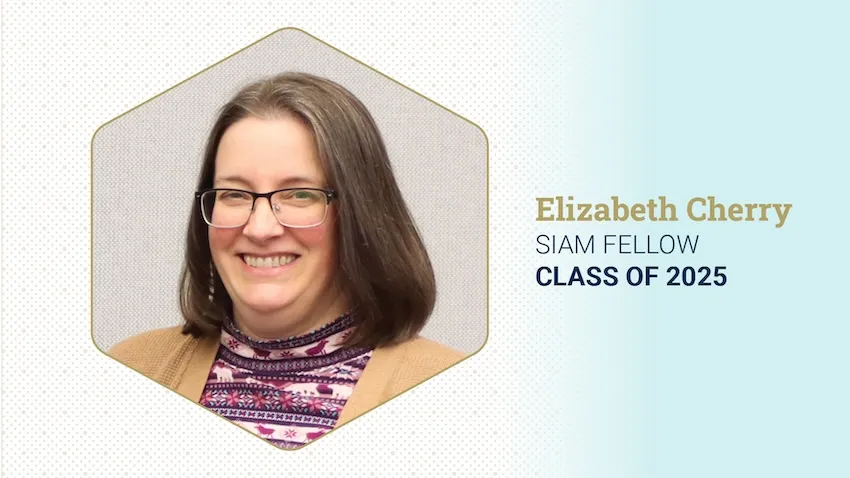
Two faculty members represented Georgia Tech as new fellows to the world’s leading organization dedicated to applied mathematics, computational science, and data science.
The Society for Industrial and Applied Mathematics (SIAM) selected Elizabeth Cherry and Katya Scheinberg as Class of 2025 fellows. The two Georgia Tech faculty join an illustrious class of 23 other researchers from around the globe in this year’s class.
SIAM selected Cherry to recognize her contributions to mathematical and computational modeling and extensive service to the SIAM community. She studies the electrical behavior of cardiac cells and tissue.
Cherry’s computer models and simulations improve understanding of cardiac dynamics in normal and diseased states. Using these tools, she designs advanced strategies for preventing and treating arrhythmias.
“SIAM has played a huge role in my professional development—the first conference I attended as a graduate student was a SIAM conference, and I’ve attended at least one SIAM conference almost every year since then,” Cherry said.
“Given this long history, it means a lot to me for SIAM to acknowledge my contributions in this way.”
Scheinberg, from Georgia Tech’s College of Engineering, was selected for her foundational contributions to derivative-free optimization and optimization applications in data science and her dedicated service to the optimization community.
[Related: Coca-Cola Foundation Chair Katya Scheinberg selected for 2025 Class of SIAM Fellows]
Cherry is the fifth faculty member from the School of Computational Science and Engineering (CSE) to be selected as a SIAM Fellow.
Cherry’s announcement as a SIAM Fellow comes weeks after serving in a leadership role at a SIAM conference. She co-chaired the organizing committee of the SIAM Conference on Computational Science and Engineering (CSE25).
In 2023, SIAM members reelected Cherry to a second term as a council member-at-large. She began her three-year term in January 2024.
"SIAM Fellows are selected for deep mathematical contributions. Receiving Fellow status is a high honor for any applied mathematician," said Regents’ Professor Srinivas Aluru, senior associate dean of the College of Computing and Class of 2020 SIAM Fellow.
"Not only are Elizabeth's contributions technically outstanding, but her work also provides deep insights into the functioning of the heart and its abnormalities."
Cherry’s leadership and service extends outside of SIAM, influencing students and faculty across Georgia Tech.
In December, the College of Computing appointed Cherry as associate dean for graduate education. Before this appointment, she served as associate chair for academic affairs of the School of CSE.
With her new role as associate dean, Cherry continues serving as director of CSE programs at Georgia Tech.
In March 2024, Cherry was among five Georgia Tech faculty members selected for the ACC Academic Leaders Network (ACC ALN) Fellows program. The ALN program fosters cross-institutional networking and collaboration between ACC schools, increasing each institution’s academic leadership capacity.
Cherry was part of a team of Georgia Tech and Emory University researchers who won a Georgia Clinical and Translational Science Alliance award in 2023. The group earned the Team Science Award of Distinction for Early Stage Research Teams award for work that captures high-resolution visualizations of spiral waves that create heart arrhythmias.
SIAM will recognize Cherry, Scheinberg, and Class of 2025 fellows during a reception at the SIAM/CAIMS Annual Meetings this July in Montréal.
“It is such an honor to be recognized as a SIAM Fellow,” Cherry said. “I’m thrilled to join my CSE colleagues who have also received this recognition.”
News Contact
Bryant Wine, Communications Officer
bryant.wine@cc.gatech.edu
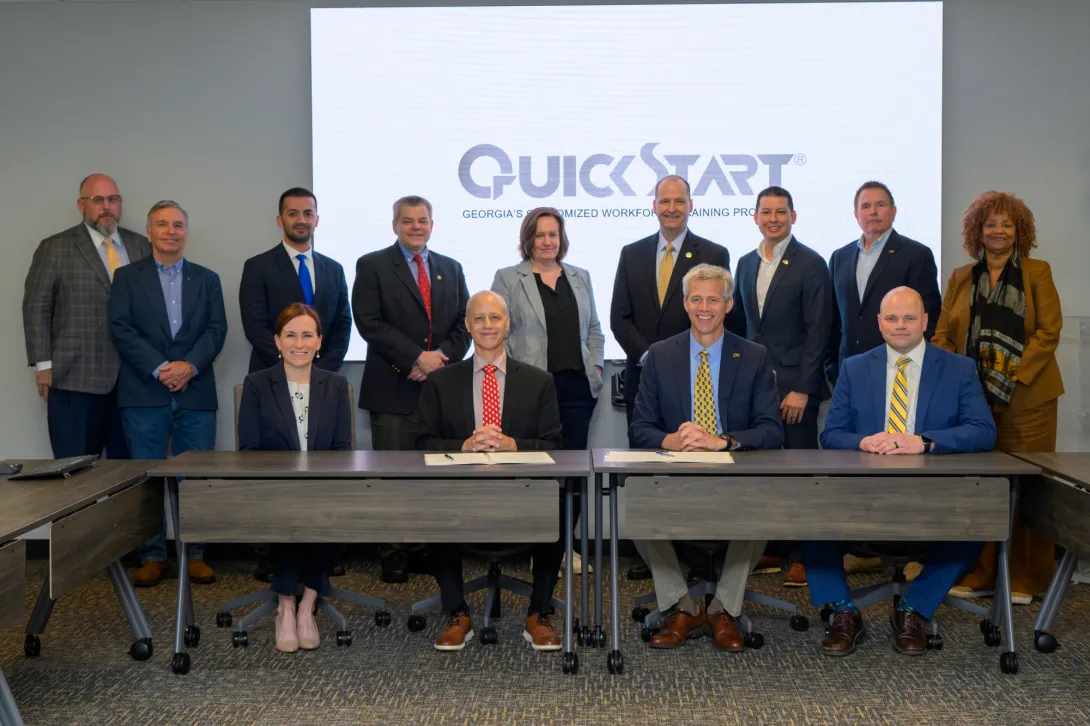
Georgia Quick Start Deputy Commissioner Scott McMurray (center left) and Georgia Tech Executive Vice President for Research Tim Lieuwen (center right) gathered with members of the Georgia Tech Manufacturing Institute, Georgia AIM, and more to officially commemorate the partnership on April 8.
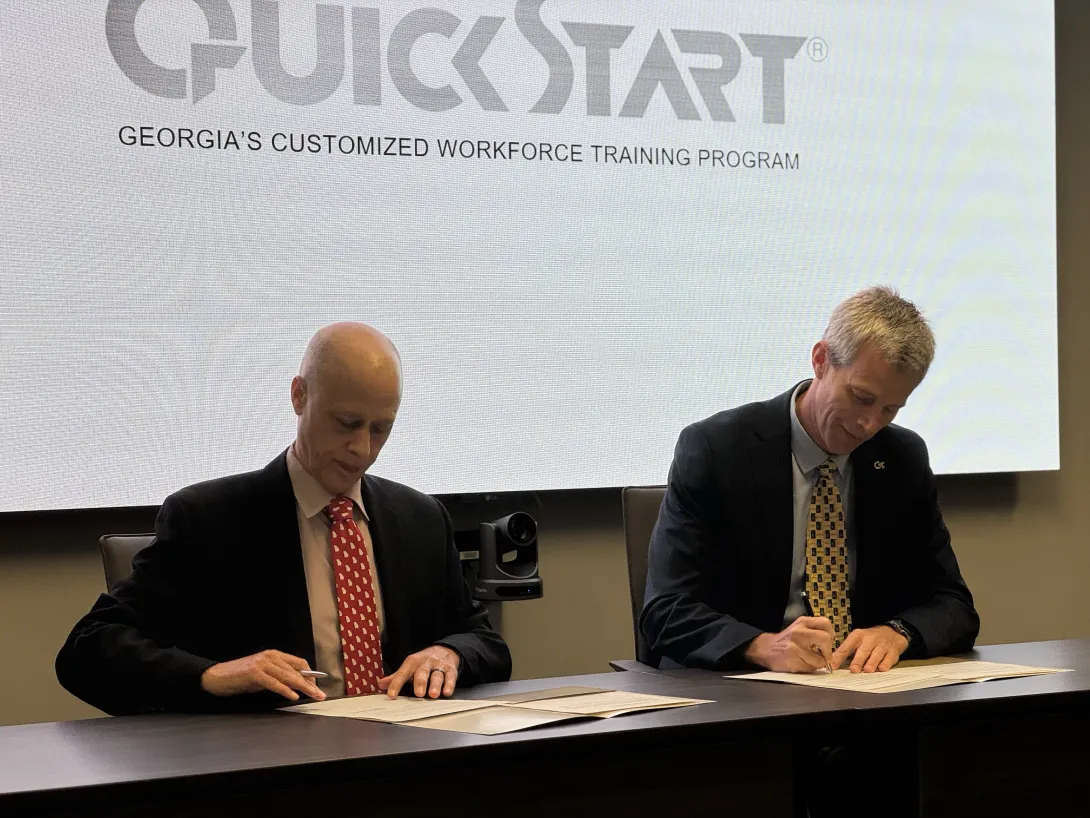
McMurray and Lieuwen signed a Memorandum of Understanding to mark the collaboration.
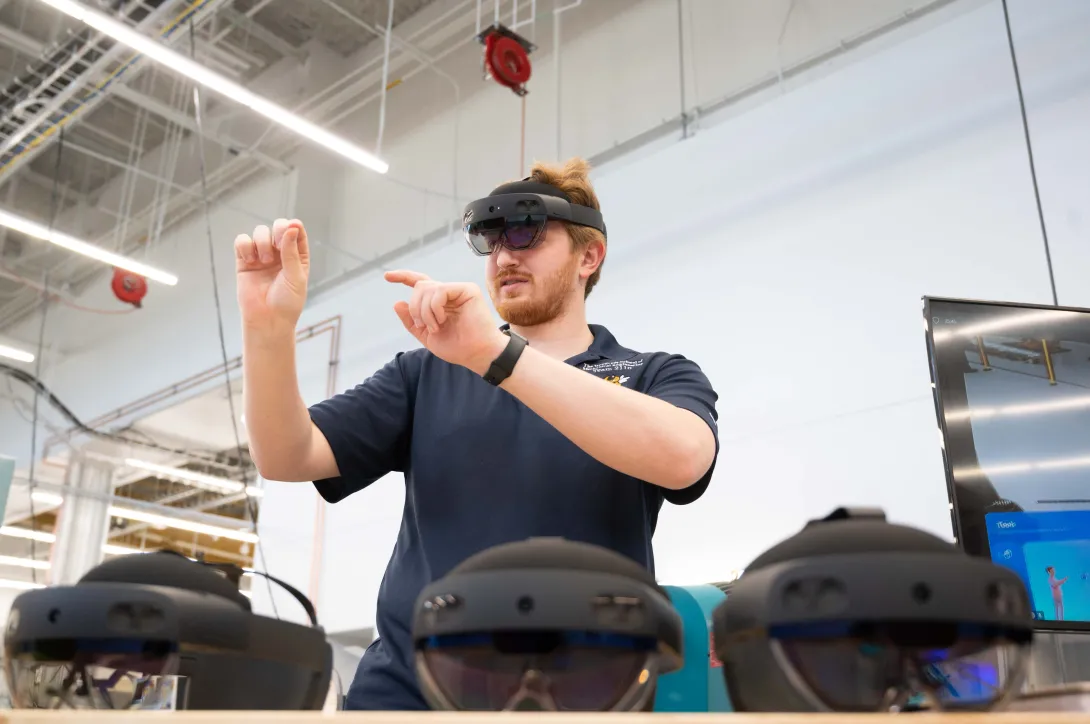
Georgia Tech researchers will work with Georgia Quick Start to develop extended reality training programs for manufacturing workers to make training more consistent and efficient.
In a significant move to bolster Georgia's workforce, Georgia Tech has partnered with Georgia Quick Start to advance manufacturing training and skill development. This collaboration, formalized by the signing of a Memorandum of Understanding on April 8, aims to elevate the quality and efficiency of manufacturing workforce training across the state.
“At Georgia Tech, innovation isn’t just about discovery — it’s about solving real-world challenges,” said Executive Vice President for Research Tim Lieuwen. “Georgia Quick Start ensures that cutting-edge research in advanced manufacturing translates into practical training solutions. Together, we are equipping Georgia’s workforce with the skills needed to drive economic growth and industry advancement.”
As manufacturing technologies and artificial intelligence continue to evolve, U.S. manufacturers increasingly require skilled workers experienced in advanced manufacturing. For decades, Georgia Quick Start, administered by the Technical College System of Georgia, has been addressing this need and has been recognized as the country’s top workforce training program for 15 years.
Now, researchers at Georgia Tech will collaborate with Georgia Quick Start to enhance these efforts by developing Extended Reality (XR) training programs, providing a scalable and experiential solution to meet the growing demand for training.
“We have been so successful for so many years because we stay focused on relevance, flexibility, and responsiveness,” said Scott McMurray, deputy commissioner for Georgia Quick Start. “This partnership is an example of how Quick Start is able to develop and deliver effective training even for companies working on the leading edge of advanced manufacturing technologies.”
Extended Reality, Scaled Training
XR technologies use a combination of virtual and augmented reality to create immersive, interactive experiences. By simulating real-world manufacturing environments and processes, XR has the potential to allow trainees to practice and refine their skills in a controlled, risk-free setting through standardized training experiences. This not only enhances the learning experience but also ensures consistency in training quality across a large workforce.
“Virtual reality scales training by gamifying complex tasks and removing the need for costly or hazardous physical equipment. Augmented reality scales on-the-job training by providing adaptive, context-aware guidance exactly when and where it’s needed, reducing the need for expert supervision,” said manufacturing XR researcher Mohsen Moghaddam, Gary C. Butler Family associate professor in the H. Milton Stewart School of Industrial and Systems Engineering and the George W. Woodruff School of Mechanical Engineering. “Together, they make training more consistent, up-to-date, accessible, and safe, especially for workers who may hesitate to ask for assistance from peers or supervisors out of fear of judgment.”
The collaboration will leverage Moghaddam’s research and the AR/VR training space within the expanded Advanced Manufacturing Pilot Facility, providing a state-of-the-art environment for developing and deploying XR training technologies. Researchers from the Georgia Tech Manufacturing Institute (GTMI) and Georgia AIM(Artificial Intelligence in Manufacturing) will also play pivotal roles in the development of these training programs.
“Partnerships like these highlight the power of the integrated University of Georgia and Technical College System of Georgia’s workforce development ecosystem,” said Thomas Kurfess, Regents’ Professor and GTMI executive director. “Our country not only needs the creation of new jobs but also the skilled workforce to fill them. At Georgia Tech and GTMI, we are serving as an enabler of innovation in that workforce development.”
News Contact
Writer: Audra Davidson
Research Communications Program Manager
Georgia Tech Manufacturing Institute
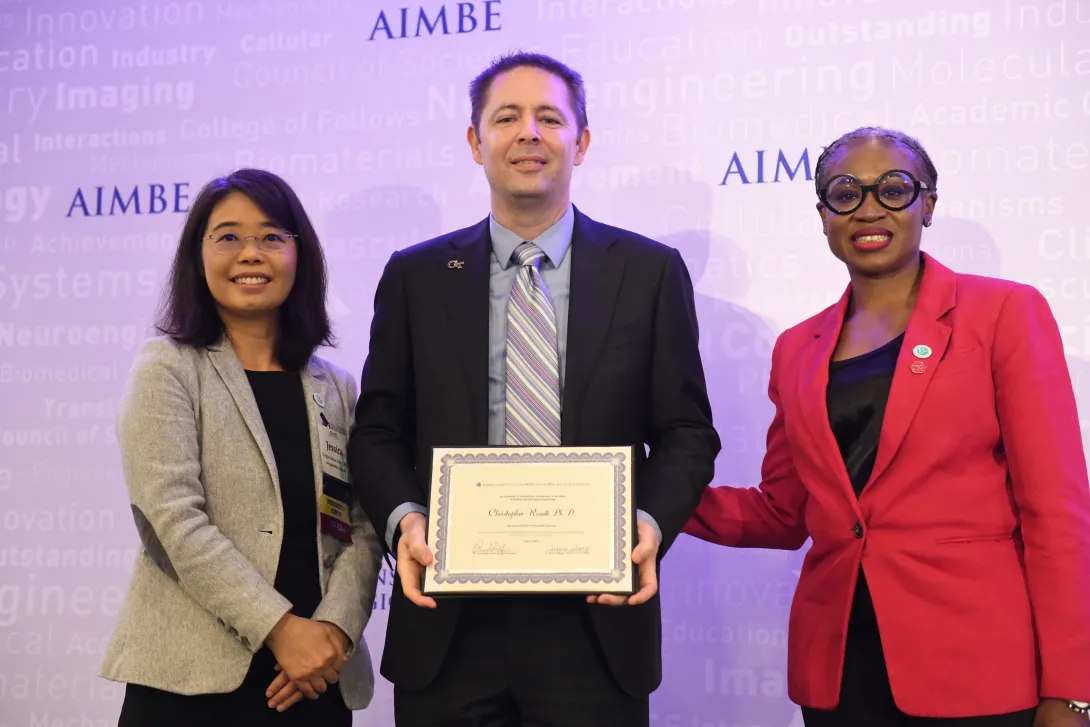
Georgia Tech School of Electrical and Computer Engineering (ECE) Professor Christopher Rozell was inducted into the American Institute for Medical and Biological Engineering (AIMBE) College of Fellows at the AIMBE Annual Event on March 31 in Arlington, Va.
College membership honors those, “who have made outstanding contributions to engineering and medicine research, practice, or education,” and “to the pioneering of new and developing fields of technology, making major advancements in traditional fields of medical and biological engineering or developing/implementing innovative approaches to bioengineering education.”
The distinction is among the highest professional distinctions given to medical and biological engineers, comprised of the top two percent of engineers in these fields.
He was nominated and inducted for outstanding contributions to computational neuroengineering, psychiatric neuromodulation, and international leadership in accessible biomedical education.
Rozell's research interests are in computational neuroengineering, an intersection of neuroscience, data science, neurotechnology and computational modeling that advances the understanding of brain function and the design of effective interventions.
His research has a particular focus on advancing our understanding and novel brain stimulation therapies for psychiatric disorders such as treatment resistant depression.
Recently, he was part of a team that identified a unique pattern in brain activity that reflects the recovery process in patients with treatment-resistant depression. This pattern, known as a biomarker, represented a significant advance in treatment for the most severe and untreatable forms of depression.
His work also includes research that takes a creative approach to advancing the understanding of the societal impacts of emerging technologies such as neurotechnology and AI.
Rozell especially takes pride in being a first-generation scholar who is committed to accessibility in scientific communities. In pursuit of this goal, he co-founded and serves on the Board of Directors of Neuromatch, Inc., a global nonprofit increasing access to scientific knowledge.
His scholarly efforts have resulted in many published works in top publications, such as Nature, and a number of awards, including the NSF CAREER Award.
Before joining the ECE faculty in 2008 as an assistant professor, Rozell received a B.S.E. degree in computer engineering and a B.F.A. degree in music in 2000 from the University of Michigan. He then received M.S. and Ph.D. degrees in electrical engineering in 2002 and 2007 from Rice University and was a postdoctoral scholar at the Redwood Center for Theoretical Neuroscience at the University of California, Berkeley.
News Contact
Zachary Winiecki

Hedwig Oldendorff vessel at the start of its emission monitoring voyage
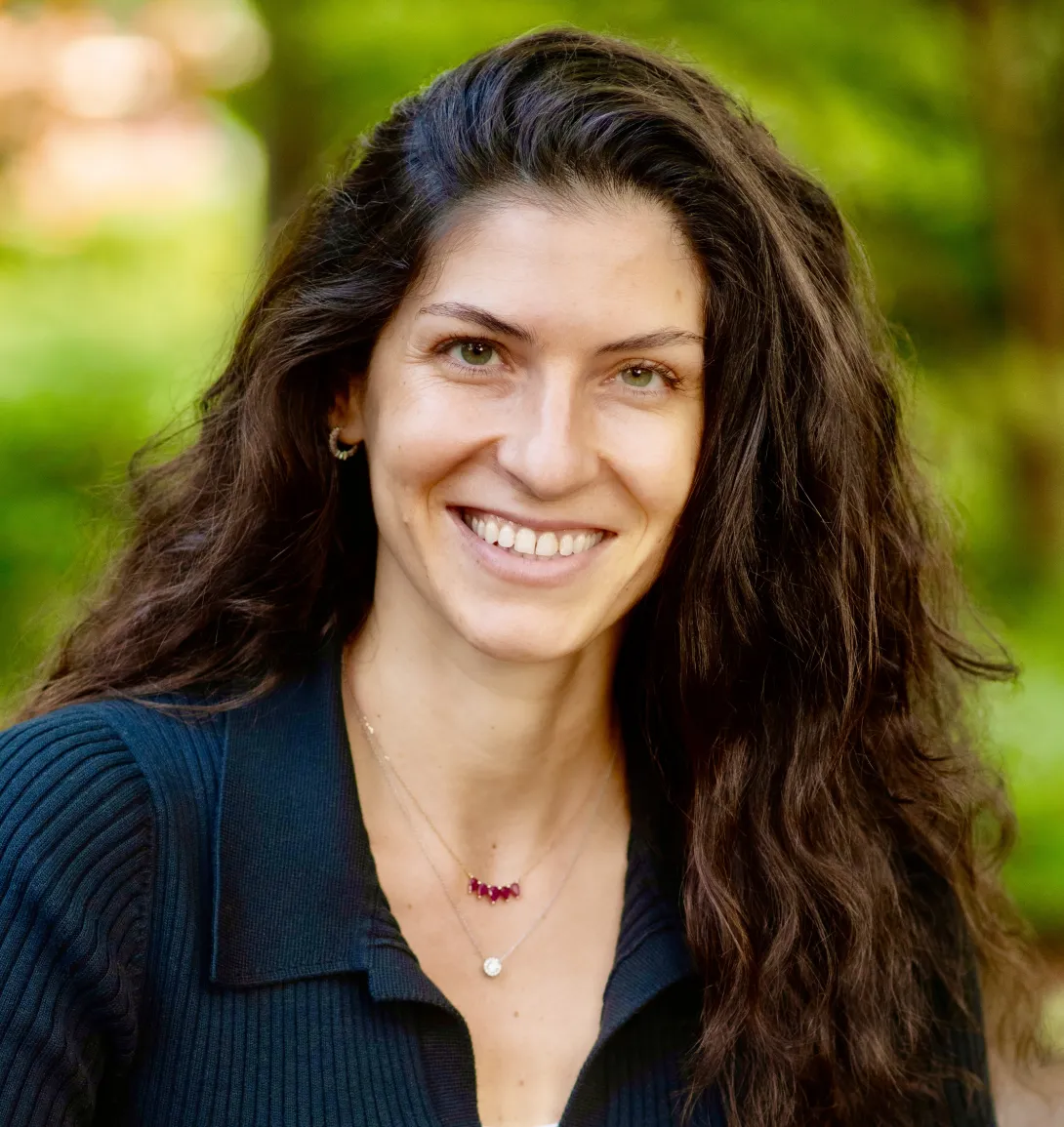
The study's lead author Patricia Stathatou is now an assistant professor at Georgia Tech. She began this study as a postdoc in MIT's Center for Bits and Atoms.
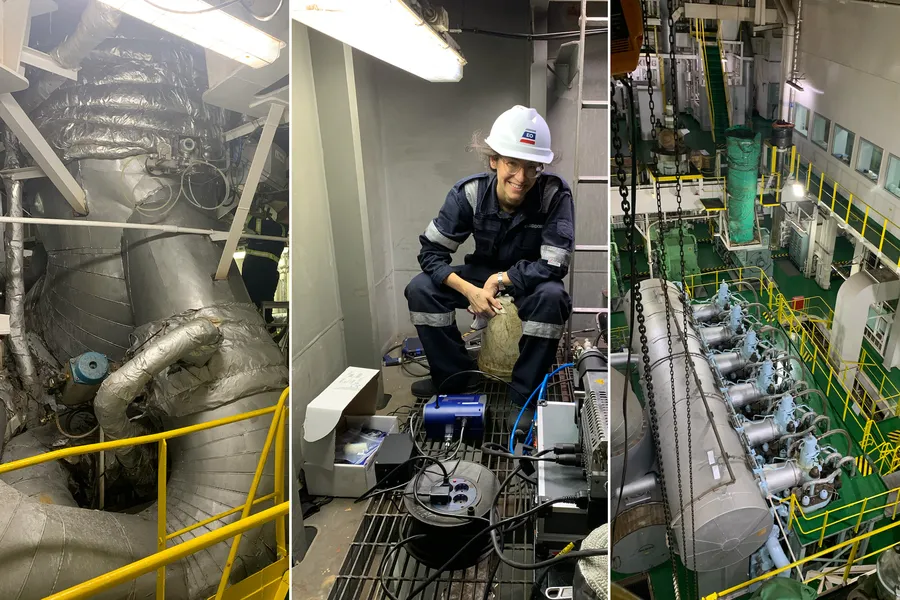
Patricia Stathatou onboard a bulk carrier vessel to measure emissions and gather seawater and washwater samples. The image shows (from left to right) measuring emissions upstream of the scrubber, Stathatou downsteam of the scrubber, and the enginer room aboard the bulk carrier vessel.
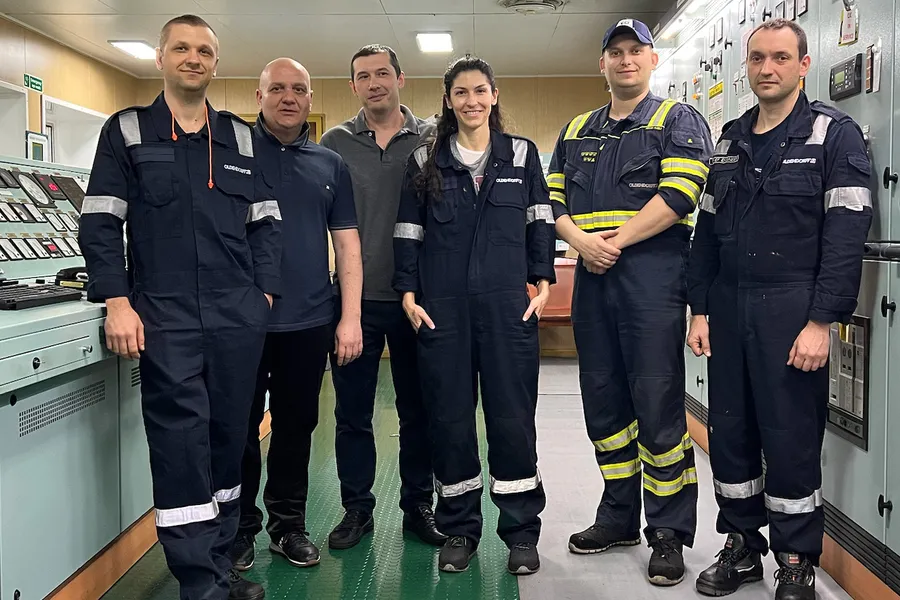
Stathatou (center) onboard the Hedwig Oldendorff vessel with crew members.
When the International Maritime Organization enacted a mandatory cap on the sulfur content of marine fuels in 2020, with an eye toward reducing harmful environmental and health impacts, it left shipping companies with three main options.
They could burn low-sulfur fossil fuels, like marine gas oil, or install cleaning systems to remove sulfur from the exhaust gas produced by burning heavy fuel oil. Biofuels with lower sulfur content offer another alternative, though their limited availability makes them a less feasible option.
While installing exhaust gas cleaning systems, known as scrubbers, is the most feasible and cost-effective option, there has been a great deal of uncertainty among firms, policymakers, and scientists as to how “green” these scrubbers are.
Through a novel lifecycle assessment, researchers from MIT, Georgia Tech, and elsewhere have now found that burning heavy fuel oil with scrubbers in the open ocean can match or surpass using low-sulfur fuels, when a wide variety of environmental factors is considered.
The scientists combined data on the production and operation of scrubbers and fuels with emissions measurements taken onboard an oceangoing cargo ship.
They found that, when the entire supply chain is considered, burning heavy fuel oil with scrubbers was the least harmful option in terms of nearly all 10 environmental impact factors they studied, such as greenhouse gas emissions, terrestrial acidification, and ozone formation.
“In our collaboration with Oldendorff Carriers to broadly explore reducing the environmental impact of shipping, this study of scrubbers turned out to be an unexpectedly deep and important transitional issue,” says Neil Gershenfeld, an MIT professor, director of the Center for Bits and Atoms (CBA), and senior author of the study.
“Claims about environmental hazards and policies to mitigate them should be backed by science. You need to see the data, be objective, and design studies that take into account the full picture to be able to compare different options from an apples-to-apples perspective,” adds lead author Patricia Stathatou, an assistant professor at Georgia Tech's School of Chemical and Biomolecular Engineering, who began this study as a postdoc in the CBA.
Stathatou is joined on the paper by Michael Triantafyllou and others at the National Technical University of Athens in Greece and the maritime shipping firm Oldendorff Carriers. The research appears today in Environmental Science and Technology.
Slashing sulfur emissions
Heavy fuel oil, traditionally burned by bulk carriers that make up about 30 percent of the global maritime fleet, usually has a sulfur content around 2 to 3 percent. This is far higher than the International Maritime Organization’s 2020 cap of 0.5 percent in most areas of the ocean and 0.1 percent in areas near population centers or environmentally sensitive regions.
Sulfur oxide emissions contribute to air pollution and acid rain, and can damage the human respiratory system.
In 2018, fewer than 1,000 vessels employed scrubbers. After the cap went into place, higher prices of low-sulfur fossil fuels and limited availability of alternative fuels led many firms to install scrubbers so they could keep burning heavy fuel oil.
Today, more than 5,800 vessels utilize scrubbers, the majority of which are wet, open-loop scrubbers.
“Scrubbers are a very mature technology. They have traditionally been used for decades in land-based applications like power plants to remove pollutants,” Stathatou says.
A wet, open-loop marine scrubber is a huge, metal, vertical tank installed in a ship’s exhaust stack, above the engines. Inside, seawater drawn from the ocean is sprayed through a series of nozzles downward to wash the hot exhaust gases as they exit the engines.
The seawater interacts with sulfur dioxide in the exhaust, converting it to sulfates — water-soluble, environmentally benign compounds that naturally occur in seawater. The washwater is released back into the ocean, while the cleaned exhaust escapes to the atmosphere with little to no sulfur dioxide emissions.
But the acidic washwater can contain other combustion byproducts like heavy metals, so scientists wondered if scrubbers were comparable, from a holistic environmental point of view, to burning low-sulfur fuels.
Several studies explored toxicity of washwater and fuel system pollution, but none painted a full picture.
The researchers set out to fill that scientific gap.
A “well-to-wake” analysis
The team conducted a lifecycle assessment using a global environmental database on production and transport of fossil fuels, such as heavy fuel oil, marine gas oil, and very-low sulfur fuel oil. Considering the entire lifecycle of each fuel is key, since producing low-sulfur fuel requires extra processing steps in the refinery, causing additional emissions of greenhouse gases and particulate matter.
“If we just look at everything that happens before the fuel is bunkered onboard the vessel, heavy fuel oil is significantly more low-impact, environmentally, than low-sulfur fuels,” she says.
The researchers also collaborated with a scrubber manufacturer to obtain detailed information on all materials, production processes, and transportation steps involved in marine scrubber fabrication and installation.
“If you consider that the scrubber has a lifetime of about 20 years, the environmental impacts of producing the scrubber over its lifetime are negligible compared to producing heavy fuel oil,” she adds.
For the final piece, Stathatou spent a week onboard a bulk carrier vessel in China to measure emissions and gather seawater and washwater samples. The ship burned heavy fuel oil with a scrubber and low-sulfur fuels under similar ocean conditions and engine settings.
Collecting these onboard data was the most challenging part of the study.
“All the safety gear, combined with the heat and the noise from the engines on a moving ship, was very overwhelming,” she says.
Their results showed that scrubbers reduce sulfur dioxide emissions by 97 percent, putting heavy fuel oil on par with low-sulfur fuels according to that measure. The researchers saw similar trends for emissions of other pollutants like carbon monoxide and nitrous oxide.
In addition, they tested washwater samples for more than 60 chemical parameters, including nitrogen, phosphorus, polycyclic aromatic hydrocarbons, and 23 metals.
The concentrations of chemicals regulated by the IMO were far below the organization’s requirements. For unregulated chemicals, the researchers compared the concentrations to the strictest limits for industrial effluents from the U.S. Environmental Protection Agency and European Union.
Most chemical concentrations were at least an order of magnitude below these requirements.
In addition, since washwater is diluted thousands of times as it is dispersed by a moving vessel, the concentrations of such chemicals would be even lower in the open ocean.
These findings suggest that the use of scrubbers with heavy fuel oil can be considered as equal to or more environmentally friendly than low-sulfur fuels across many of the impact categories the researchers studied.
“This study demonstrates the scientific complexity of the waste stream of scrubbers. Having finally conducted a multiyear, comprehensive, and peer-reviewed study, commonly held fears and assumptions are now put to rest,” says Scott Bergeron, managing director at Oldendorff Carriers and co-author of the study.
“This first-of-its-kind study on a well-to-wake basis provides very valuable input to ongoing discussion at the IMO,” adds Thomas Klenum, executive vice president of innovation and regulatory affairs at the Liberian Registry, emphasizing the need “for regulatory decisions to be made based on scientific studies providing factual data and conclusions.”
Ultimately, this study shows the importance of incorporating lifecycle assessments into future environmental impact reduction policies, Stathatou says.
“There is all this discussion about switching to alternative fuels in the future, but how green are these fuels? We must do our due diligence to compare them equally with existing solutions to see the costs and benefits,” she adds.
This study was supported, in part, by Oldendorff Carriers.
- Written by Adam Zewe, MIT News Office
News Contact
braddixon@gatech.edu
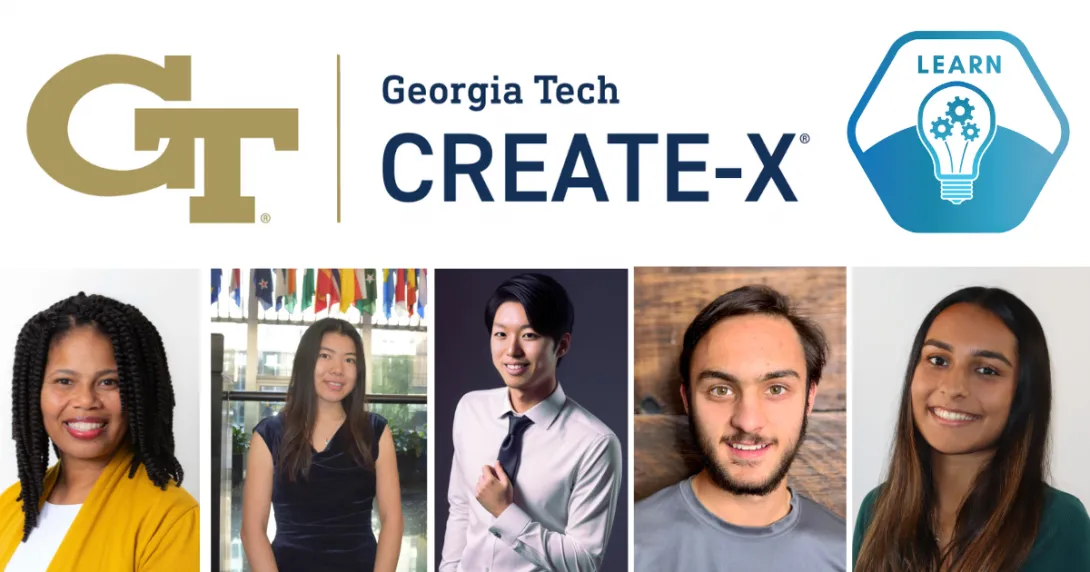
Left to right: Yolanda Payne, Christie Peng, Shinhai Chen, Alex Aridgides, and Varuni Chopra. Four Georgia Tech students from Startup Lab—Alex Aridgides, Shinhai Chen, Varuni Chopra, and Christie Peng—have been selected for the 2025 immersive cohort at South by Southwest (SXSW) in Austin, Texas. This weeklong, all-expenses-paid program allows university-affiliated innovators to refine their innovations, engage in customer discovery, and network with industry leaders.
Four students from Startup Lab have been selected to join the 2025 immersive cohort at South by Southwest (SXSW) in Austin, Texas. Alex Aridgides (mechanical engineering and economics), Shinhai Chen (industrial engineering), Varuni Chopra (industrial engineering), and Christie Peng (computer science) are the first Georgia Tech students to be invited to the program.
The weeklong, all-expenses-paid program offers university-affiliated innovators the chance to refine their innovations, engage in customer discovery, and network with industry leaders and peers at SXSW. The annual festival celebrates technology, film, music, education, and culture. Students participated in a competitive application process, which involved submitting applications, meeting specific evaluation criteria, and being selected by a panel of industry experts, mentors, and SXSW organizers.
Yolanda Payne, the students’ Startup Lab instructor, presented the SXSW opportunity in class.
"My goal is to be their biggest cheerleader,” she explained. “I had great teachers who helped me get to where I am today, and I strive to emulate their support. I’m always willing to guide students toward new opportunities."
She learned about the SXSW immersive cohort from Nakia Melecio, director of the National Science Foundation I-Corps Southeast Hub. The $15 million initiative crosses nine major research universities in the southern U.S. and accelerates the translation of deep tech research into commercial ventures. The hub works closely with entrepreneurial faculty, students, and researchers to equip them with the tools, networks, and support to bring their innovations to market.
Melecio plays a central role in identifying and advancing strategic opportunities for university partners and their entrepreneurial teams. “When the opportunity to participate in SXSW arose, I recognized it as an ideal platform to showcase the talent and innovation coming out of our region.”
Melecio added that Startup Lab is ideal for amplifying NSF I-Corps’ goals because of the course’s proven track record of fostering hands-on learning and commercialization readiness. “Startup Lab helps prepare students not just to think entrepreneurially, but to act on their ideas with confidence and a structured path forward. It was a natural fit for this opportunity.”
Payne says the experience students gained in Startup Lab helped prepare them for the immersive cohort. “The knowledge is being solidified by an experience you’re having in my class and the real world.”
Chopra agrees that Startup Lab teaches essential business development fundamentals and customer discovery principles, skills that are relevant to the SXSW program. She recommends the course to other students and emphasizes the value of combining engineering or technical backgrounds with entrepreneurship skills.
“We take a lot of classes that are directly related to our major, and they're very technical. But when it comes to wanting to start something of your own or even understanding how startups work, it's completely different than the rest of our coursework.”
Startup Lab is a three-credit course that focuses on evidence-based entrepreneurship. This hands-on class covers ideation, teamwork, customer discovery, minimum viable products, the business model canvas, and other topics. Students learn how to launch a startup by integrating in-class lectures with practical, out-of-class activities, including interviewing potential customers and refining their startup ideas based on real-world feedback.
The program provides access to valuable resources, mentorship from seasoned entrepreneurs, and a supportive community to help students develop their startups. Startup Lab and NSF I-Corps are also exploring other industry showcases for student entrepreneurs like SXSW.
Chen chose Startup Lab to pursue his entrepreneurial interests. “I knew that Georgia Tech had a really good startup culture, so I researched what they had to offer, and Startup Lab was the first step." He also noted Payne's impact as an instructor. "The best part is how much she cares about the topic. She has a lot of background knowledge and is passionate.”
Startup Lab is unique because it "de-risks the business model,” Payne says. Many entrepreneurs first build their products and then talk to potential customers. However, Startup Lab students perform customer discovery, sharing their ideas with potential end users, listening to their needs and feedback, and then building the product.
Peng recalls a powerful moment of pitching an idea for an app to streamline MARTA operations. “I had a fun time coming up with this idea. We learned a lot about interviewing, coming up with possible solutions, and refining our idea,” she says. "Being surrounded by so many brilliant individuals at Georgia Tech makes it easy to get idea formation or networking connections you need for your idea to succeed."
Aridgides has ambitious post-program goals, envisioning creating change through entrepreneurship. "I want to start a company to change the world for the better and make a big impact. That's my life goal. I think through a company, I can achieve that."
Payne reminds students that they possess something many adults lack: time to explore different ideas. She also says Startup Lab can help students value and see their ideas in new ways.
“They don't recognize that the product they're working on could be pursued through entrepreneurship or think of themselves as entrepreneurs. And even if they don't pursue it, it helps them in all aspects of life because business and capitalism are part of what we do every day.”
If you’re a student interested in adding entrepreneurship to your course schedule, registration for the summer and fall semesters opens on April 15. In addition to Startup Lab, students also have the opportunity to build a prototype with support through Idea to Prototype and CREATE-X Capstone Design.
News Contact
Contact
Article by Alyson Key
CREATE-X Contact:
Breanna Durham
Marketing Strategist
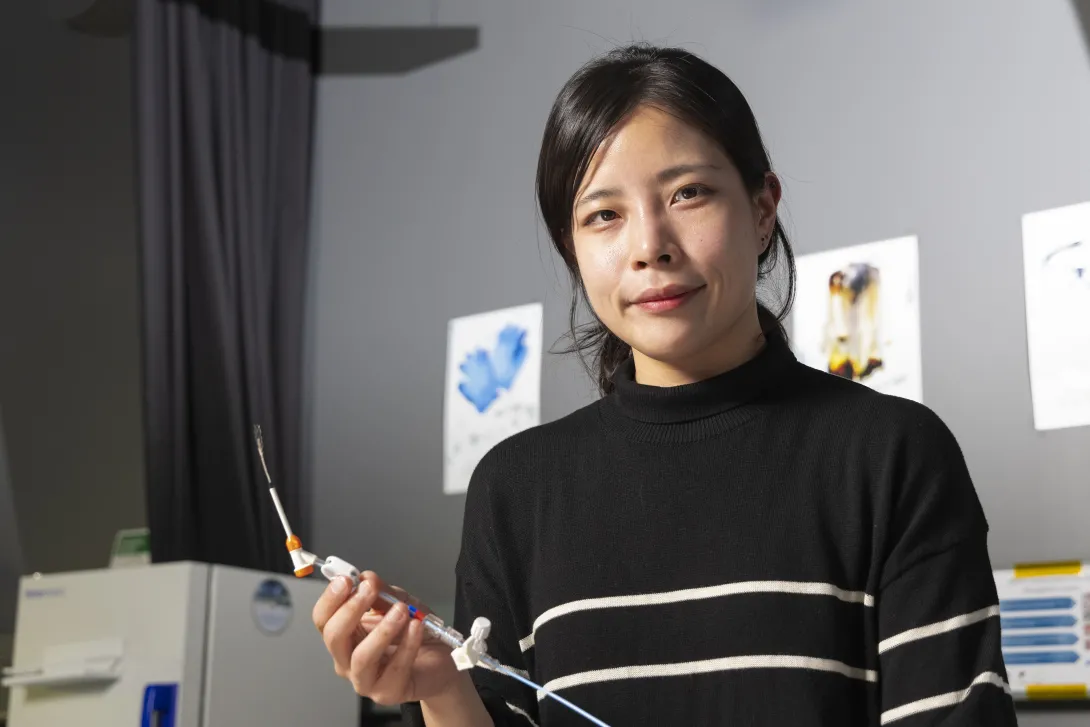
Annually, traumatic brain injuries (TBI) cause half a million permanent disabilities and 50,000 deaths. Monitoring pressure inside the skull is key to treating TBI and preventing long-lasting complications. Most of these monitoring devices are large and invasive, requiring surgical emplacement. But Georgia Tech researchers have recently created a sensor smaller than a dime. The miniature size offers huge benefits.
Kinaxis, a global leader in supply chain orchestration, and the NSF AI Institute for Advances in Optimization (AI4OPT) at Georgia Tech today announced a new co-innovation partnership. This partnership will focus on developing scalable artificial intelligence (AI) and optimization solutions to address the growing complexity of global supply chains. AI4OPT operates under Tech AI, Georgia Tech’s AI hub, bringing together interdisciplinary expertise to advance real-world AI applications.
This particular collaboration builds on a multi-year relationship between Kinaxis and Georgia Tech, strengthening their shared commitment to turn academic innovation into real-world supply chain impact. The collaboration will span joint research, real-world applications, thought leadership, guest lectures, and student internships.
“In collaboration with AI4OPT, Kinaxis is exploring how the fusion of machine learning and optimization may bring a step change in capabilities for the next generation of supply chain management systems,” said Pascal Van Hentenryck, the A. Russell Chandler III Chair and professor at Georgia Tech, and director of AI4OPT and Tech AI at Georgia Tech.
Kinaxis’ AI-infused supply chain orchestration platform, Maestro™, combines proprietary technologies and techniques to deliver real-time transparency, agility, and decision-making across the entire supply chain — from multi-year strategic orchestration to last-mile delivery. As global supply chains face increasing disruptions from tariffs, pandemics, extreme weather, and geopolitical events, the Kinaxis–AI4OPT partnership will focus on developing AI-driven strategies to enhance companies’ responsiveness and resilience.
“At Kinaxis, we recognize the vital role that academic research plays in shaping the future of supply chain orchestration,” said Chief Technology Officer Gelu Ticala. “By partnering with world-class institutions like Georgia Tech, we’re closing the gap between AI innovation and implementation, bringing cutting-edge ideas into practice to solve the industry’s most pressing challenges.”
With more than 40 years of supply chain leadership, Kinaxis supports some of the world’s most complex industries, including high-tech, life sciences, industrial, mobility, consumer products, chemical, and oil and gas. Its customers include Unilever, P&G, Ford, Subaru, Lockheed Martin, Raytheon, Ipsen, and Santen.
About Kinaxis
Kinaxis is a global leader in modern supply chain orchestration, powering complex global supply chains and supporting the people who manage them, in service of humanity. Our powerful, AI-infused supply chain orchestration platform, Maestro™, combines proprietary technologies and techniques that provide full transparency and agility across the entire supply chain — from multi-year strategic planning to last-mile delivery. We are trusted by renowned global brands to provide the agility and predictability needed to navigate today’s volatility and disruption. For more news and information, please visit kinaxis.com or follow us on LinkedIn.
About AI4OPT
The NSF AI Institute for Advances in Optimization (AI4OPT) is one of the 27 National Artificial Intelligence Research Institutes set up by the National Science Foundation to conduct use-inspired research and realize the potential of AI. The AI Institute for Advances in Optimization (AI4OPT) is focused on AI for Engineering and is conducting cutting-edge research at the intersection of learning, optimization, and generative AI to transform decision making at massive scales, driven by applications in supply chains, energy systems, chip design and manufacturing, and sustainable food systems. AI4OPT brings together over 80 faculty and students from Georgia Tech, UC Berkeley, University of Southern California, UC San Diego, Clark Atlanta University, and the University of Texas at Arlington, working together with industrial partners that include Intel, Google, UPS, Ryder, Keysight, Southern Company, and Los Alamos National Laboratory. To learn more, visit ai4opt.org.
About Tech AI
Tech AI is Georgia Tech's hub for artificial intelligence research, education, and responsible deployment. With over $120 million in active AI research funding, including more than $60 million in NSF support for five AI Research Institutes, Tech AI drives innovation through cutting-edge research, industry partnerships, and real-world applications. With over 370 papers published at top AI conferences and workshops, Tech AI is a leader in advancing AI-driven engineering, mobility, and enterprise solutions. Through strategic collaborations, Tech AI bridges the gap between AI research and industry, optimizing supply chains, enhancing cybersecurity, advancing autonomous systems, and transforming healthcare and manufacturing. Committed to workforce development, Tech AI provides AI education across all levels, from K-12 outreach to undergraduate and graduate programs, as well as specialized certifications. These initiatives equip students with hands-on experience, industry exposure, and the technical expertise needed to lead in AI-driven industries. Bringing AI to the world through innovation, collaboration, and partnerships. Visit tech.ai.gatech.edu.
News Contact
Angela Barajas Prendiville | Director of Media Relations
aprendiville@gatech.edu
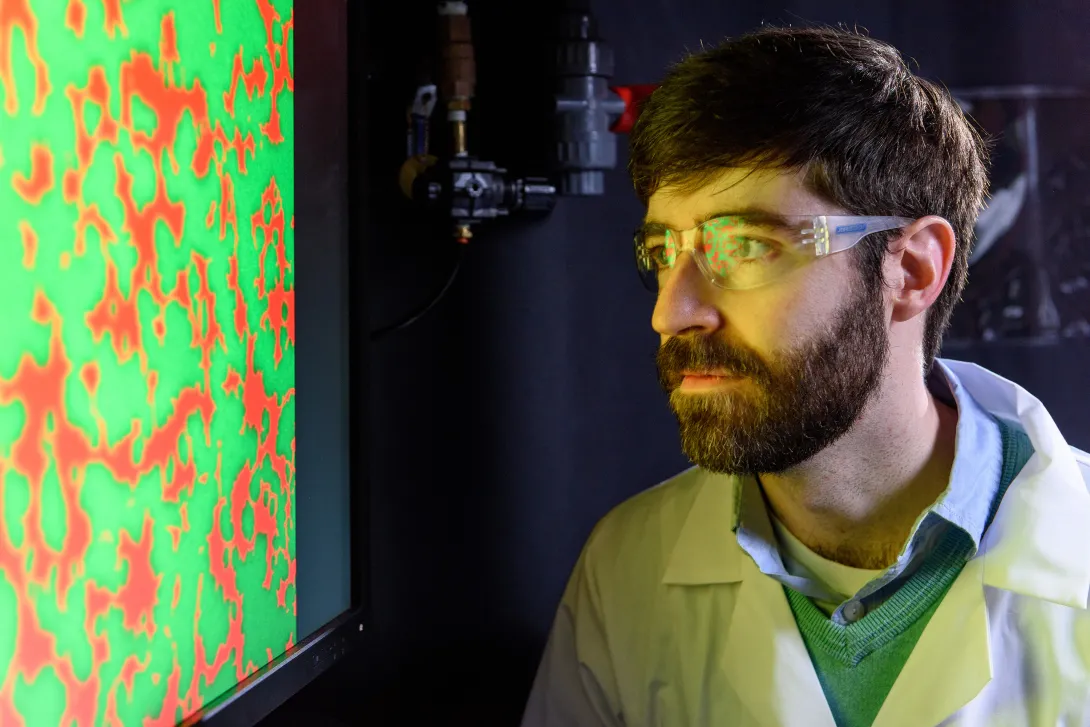
Peter Yunker boils down his advice for researchers wanting to commercialize their lab advances.
“You can’t go it alone,” said Yunker, an associate professor of physics at Georgia Tech.
In January, Yunker co-founded the biotechnology startup TopoDx LLC, with David Weiss, an Emory University School of Medicine researcher and director of the Emory Antibiotic Resistance Center, and Yogi Patel, a Georgia Tech alumnus with a background in business development and bioengineering.
“Researchers often think that they have a good commercialization idea to help people, but that alone does not guarantee success,” said Yunker. “Look for partners with complementary skills who understand aspects of the commercialization process that you don’t. Find mentors with business and scientific backgrounds in the specific industry you want to enter.”
TopoDx has developed a microbial test to identify antibiotic resistance and susceptibility rapidly and accurately. Current tests produce a result in three to five days. TopoDx’s approach can gain a result within four hours. Every hour counts in treating serious infections. Delays in accurate treatment can increase antibiotic resistance, which is a global challenge, causing up to 1 million deaths a year.
The company’s testing method was inspired by a fundamental biophysics project in Yunker’s lab. His team was interested in understanding how bacterial colonies behave. They tested white-light interferometry, a technology that can measure bacterial colonies down to the nanometer level.
“White-light interferometry allowed us to identify changes in the topography of a colony that indicated larger changes in the volume of cells in the entire colony,” said Yunker. “We thought this might have practical applications.”
The next step was giving research talks at meetings and looking for collaborators. “I wanted to find someone with expertise on the bacteriology side, and I was very fortunate to meet David Weiss,” Yunker said, noting his proficiency in heteroresistance, a phenomenon where a small subset of a bacterial colony resists an antibiotic.
“If you have just one antibiotic-resistant cell in a hundred cells, it can cause treatments to fail,” said Yunker.
The two collaborators hoped to commercialize their technology, identifying heteroresistance in microbial samples. However, they needed guidance in creating a business model. They consulted Harold Solomon, an entrepreneur with Georgia Tech VentureLab and a principal in the Quadrant-i program, a specialized program helping Georgia Tech faculty and students commercialize research.
Solomon became a key mentor. He guided them away from an ill-advised partnership and instead introduced them to Yogi Patel, who became a co-founder and the company CEO.
This new collaboration provided the team with an important lesson — one that Yunker passes along to other researchers looking to commercialize their discoveries. “Seek expertise outside your field, be humble about your knowledge limitations, and view collaboration as a strategic partnership,” he says.
When Patel came on board, he conducted extensive interviews with more than 15 clinical professionals.
“You need to interview end users or purchasers of whatever solution you want to build,” said Patel. “Ask them if the problem you think you may have solved is a problem with scale, with a market need.”
Clinicians, Patel learned, did not see heteroresistance as a significant issue. Instead, the slow pace of antibiotic testing was identified as a major problem. Faster testing could allow clinicians to prescribe targeted drugs more quickly and accurately, reducing unnecessary antibiotic use and the risk of multi-resistant infections.
With this survey information, Patel asked Yunker and Weiss to rethink how their technology could be commercialized.
“A company must solve a real-world problem,” said Patel. “I recommended that we switch from heteroresistance to solving slow antibiotic testing. We could keep heteroresistance as something we can still do as a second or third priority.”
TopoDx’s new technology can measure, with single-nanometer accuracy, how bacterial colonies are responding to antibiotics in real time. This method could revolutionize how antibiotics are tested and prescribed. Testing would be conducted on a countertop device about the size of a large microwave. The co-founders envision the device as eventually being used by urgent care facilities and hospitals.
“We want to make microbial testing susceptibility accessible anywhere and everywhere,” said Patel.
Adam Krueger, once a Ph.D. student in Yunker's lab, has continued to refine the technology. Now a post-doctoral researcher, Krueger joined TopoDx in a technical leadership role to expand the technology’s capabilities for microbiological diagnostics.
“We will keep pushing the envelope forward scientifically while we try to commercialize the accomplishments that we have already made,” Yunker said. “We hope that some fundamental studies we are doing now out of scientific curiosity could lead to further commercial applications.”
Georgia Tech faculty members and graduate students, join the Quadrant-i Startup Launch Program to commercialize your research this summer: Over 12 weeks, you'll receive comprehensive support including guidance from experienced mentors, a $10,000 commercialization grant, and $150,000 worth of in-kind services. Showcase your innovation at Demo Day, where you'll have the opportunity to present to over 1,500 attendees, including industry leaders and investors. Apply today! Applications close April 11.
News Contact
Written By John H. Tibbetts
Internal Contact:
Breanna Durham
Marketing Strategist
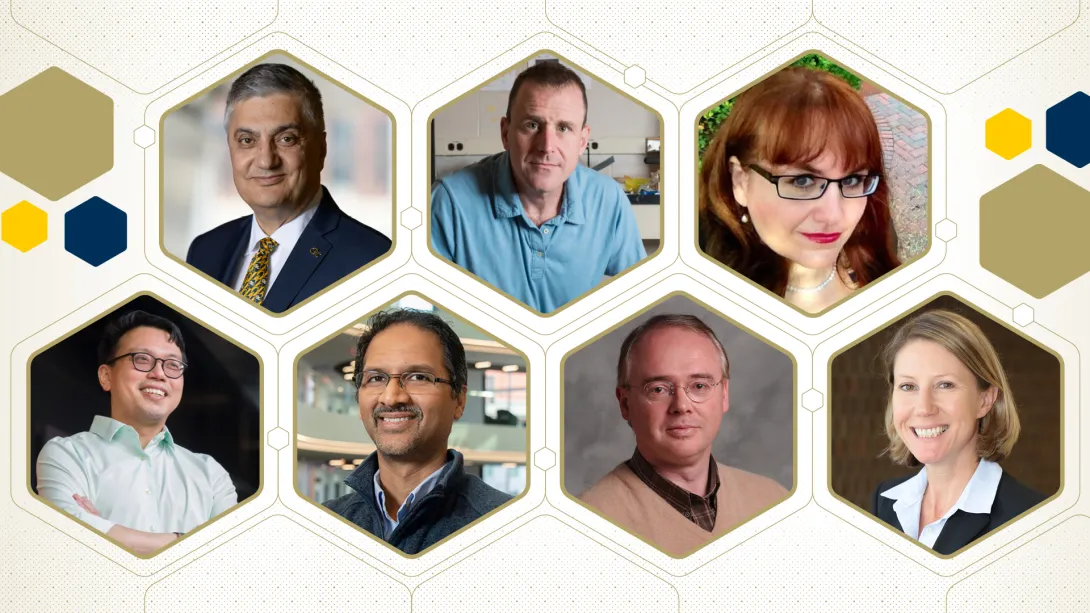
Georgia Tech's 2024 AAAS Fellows include (from top left) Chaouki Abdallah, Daniel Goldman, Margaret Kosal, Wilbur Lam, Anant Madabhushi, Juan Rogers, and Krista Walton. (Design: Daniel Mableton)
Seven faculty members at the Georgia Institute of Technology have been elected 2024 Fellows of the American Association for the Advancement of Science (AAAS), the world’s largest general scientific society and publisher of the Science family of journals.
Chaouki Abdallah, Daniel Goldman, Wilbur Lam, Margaret Kosal, Anant Madabhushi, Juan Rogers, and Krista Walton are among the 471 scientists, engineers, and innovators who have been recognized for their scientifically and socially distinguished achievements.
“The AAAS Fellowship is among the highest and most respected honors in the scientific community,” said Tim Lieuwen, executive vice president for Research at Georgia Tech. “These celebrated Yellow Jackets reflect the exceptional contributions of our faculty and their sustained commitment to Progress and Service. We are incredibly proud of their achievements and excited about the continued impact of their groundbreaking work.”
Election to the AAAS is a lifetime honor, and all fellows are expected to meet commonly held standards of professional ethics and scientific integrity.
This year’s fellows are now among the more than 100 individuals who have been elected from Georgia Tech throughout the Institute’s history.
2024 AAAS Fellows:
- Chaouki Abdallah, professor in the School of Electrical and Computer Engineering currently on leave, serving as president of the Lebanese American University: for distinguished contributions in control, communications, and computing systems, and for leadership in higher education.
- Daniel Goldman, professor in the School of Physics: for distinguished contributions to the field of biological physics and nonlinear dynamics at the interface of biomechanics, robotics, and granular physics.
- Margaret Kosal, associate professor and director of graduate studies in the Sam Nunn School of International Affairs: for distinguished contributions in the development of testable frameworks to explore the relationships between science, technology, and security, and to explain their impact on geopolitics.
- Wilbur Lam, professor in the School of Biomedical Engineering at Georgia Tech and Emory and co-director of the Pediatric Technology Center: for novel advances in the field of hematologic biophysics, and the development of point-of-care diagnostics that have a global impact.
- Anant Madabhushi, professor in the School of Biomedical Engineering at Georgia Tech and Emory: for seminal contributions in the innovation and translation of machine vision, digital pathology, machine learning, and artificial intelligence technologies in medical imaging and their application to problems in precision medicine.
- Juan Rogers, professor and associate chair in the School of Public Policy: for distinguished scholarship in research assessment and for the development of new models and tools for impact assessment of R&D programs.
- Krista Walton, associate vice president for Research Operations and Infrastructure, and professor and Robert “Bud” Moeller Faculty Fellow in the School of Chemical and Biomolecular Engineering: for distinguished contributions in the design, synthesis, and characterization of functional porous materials for use in adsorption applications.
To learn more about the newest AAAS Fellows, please see individual announcements from the College of Sciences, the College of Engineering, and the Ivan Allen College of Liberal Arts.
AAAS is the world’s largest general scientific society. The nonprofit was founded in 1848 and includes more than 250 affiliated societies and academies of science, serving 10 million individuals. It is open to all and fulfills its mission to “advance science and serve society” through initiatives such as science policy, international programs, science education, and public engagement.
News Contact
Catherine Barzler, Senior Research Writer/Editor
A researcher in the Marcus Center of Excellence for Cell Biomanufacturing removes cultured cells from an incubator for further characterization and testing.
Georgia Tech stands on the brink of a medical revolution, fueled by a monumental award from the Marcus Foundation. This transformative $40 million endeavor, with a principal investment of $20 million from the Marcus Foundation, promises to make high-quality, life-saving cell therapies more affordable, reliable, and accessible than ever before.
This was among the final initiatives personally directed by Bernie Marcus, the philanthropist, entrepreneur, and The Home Depot co-founder, before his passing in November 2024. Marcus invited Georgia Tech President Ángel Cabrera to his home in Boca Raton, Florida, to discuss Georgia Tech’s capability to usher in a new era of regenerative medicine.
“I’ll never forget my conversation with Bernie,” Cabrera said. “His challenge to Georgia Tech was clear: Use our engineering expertise to make cell therapies more accessible and cost-effective and develop cures for incurable diseases.
“This generous award is a testament to our shared belief in the power of innovation and technology to improve lives, and it’s an honor for Georgia Tech to fulfill Bernie’s vision for the future of healthcare,” he added.
The funding will ignite innovation at Georgia Tech’s Marcus Center of Excellence for Cell Biomanufacturing, formerly named the Marcus Center for Therapeutic Cell Characterization and Manufacturing, which has been bioengineering potential cellular cures for more than seven years. It will enable Georgia Tech engineers to advance work at the center and within the National Science Foundation-funded Engineering Research Center in Cell Manufacturing Technologies (CMaT), to develop automated bioreactor systems that eliminate the need for costly cleanrooms.
Marcus/CMaT Director Johnna Temenoff compared the current state of cell therapies to the early days of the automobile industry. She explained this new injection of funds will allow her team to shift from handcrafted production to an assembly-line approach.
“I firmly believe that for us to make good on the promises of these biotechnologies to improve healthcare worldwide, we must be able to manufacture them in a more reproducible and cost-effective manner. Georgia Tech’s distinctive strength lies in our engineering expertise, allowing us to tackle difficult biological problems,” Temenoff said.
The impact of this award extends beyond the laboratory. It has the potential to significantly boost Georgia's bioeconomy, making the state a hub for advanced therapy development and biomanufacturing. It will attract jobs and top-tier talent to the region.
Dr. Jonathan Simons, chief science officer and medical director of the Marcus Foundation, said Bernie Marcus liked to think of cells as “living drugs.”
Simons explained, “This is life-extending, lifesaving, and life-changing material. It's not like making a drug like penicillin or Tylenol. This is not like a little blister pack of pills. This is a whole new frontier for pharmacology and the pharmaceutical industry.”
Simons emphasized this is the latest chapter of both the Marcus Foundation’s investment in biomedical engineering at Georgia Tech and Bernie Marcus’s enduring biomedical research philanthropy.
“I think Bernie would say, ‘I’m not interested in my legacy. I’m interested in how many patients in five years will benefit from this $40 million effort. It’s all about lives changed, lives saved, and diseases ended,’” he said.
To learn more about Georgia Tech’s research in cell and gene therapy biomanufacturing, visit cellmanufacturing.gatech.edu.
News Contact
Shelley Wunder-Smith
Director of Research Communications