

As Georgia positions itself as a hub for digital infrastructure, communities across the state are facing a growing challenge: how to welcome the economic benefits of data centers while managing their significant environmental and infrastructure impacts. These facilities, essential for powering artificial intelligence, cloud computing, and everyday internet use, are also among the most resource-intensive buildings in the modern economy.
While companies like Microsoft and Google have pledged to reach net-zero emissions, experts say more transparency and smarter policy are needed to ensure that data center development aligns with community and environmental priorities. That means ensuring adequate energy infrastructure, investing in renewables, training local workers, and mitigating water and carbon impacts through innovation.
A New Kind of Energy Crunch
The rapid rise of AI is fueling explosive demand for computing power — and in turn, energy.
“The proliferation of AI workloads has significantly increased data center energy requirements,” says Divya Mahajan, assistant professor in the School of Electrical and Computer Engineering. “Large-scale AI training, especially for language models, leads to elevated and sustained power draw, often nearing the thermal and power envelopes of graphics processing units systems.”
This sustained demand is particularly challenging in hot, humid regions like Georgia, where cooling systems must work harder. “Training these models can cause thermal instability that directly affects cooling efficiency and power provisioning,” Mahajan explains. “This amplifies reliance on external cooling infrastructure, increasing water consumption and grid strain.”
Environmental and Economic Pressure
“Each new data center could lead to greenhouse gas emissions equivalent to a small town,” says Marilyn Brown, Regents’ and Brook Byers Professor of Sustainable Systems in the School of Public Policy. “In Georgia, the growth of data centers has already led to plans for new gas plants and the extension of aging coal plants.”
There’s an environmental cost to this growth: electricity and water. A single large data center can consume up to 5 million gallons of water per day.
Rising demand has a price. “It’s simple supply and demand,” says Ahmed Saeed, assistant professor at the School of Computer Science. “As overall power demand increases, if supply doesn’t keep up, costs will rise and the most affected will be lower-income consumers.”
Still, experts are optimistic that policy and technology can help mitigate these impacts.
Innovation May Hold the Key
Despite the challenges, experts see opportunities for innovation. “Technologies like direct-to-chip cooling and liquid cooling are promising,” says Mahajan. “But they’re not yet widespread.”
Saeed notes that some companies are experimenting with radical ideas, like Microsoft’s underwater Project Natick or locating data centers in Nordic countries where ambient air can be used for cooling. These approaches challenge conventional infrastructure norms by placing servers underwater or in remote, cold regions. “These are exciting, but we need scalable solutions that work in places like Georgia,” he emphasizes.
What Communities Should Ask For
As communities compete to attract data centers, experts say they should push for commitments that go beyond job creation.
“Communities should ensure that their power infrastructure can handle the added load without compromising resilience or increasing costs,” Saeed advises. “They should also require that data centers use renewable energy or invest in local clean energy projects.”
Training and hiring local workers is another key benefit communities can demand. “Deployment and maintenance of data centers require skilled workers,” Saeed adds. “Operators should invest in technical training and hire locally.”
Policy Can Make the Difference
Stronger policy frameworks can ensure growth doesn’t come at the expense of Georgia’s most vulnerable communities. “We need more transparency from companies about their energy and water use,” says Brown. “And we need policies that prevent the costs of supporting large consumers from being passed on to residential ratepayers.”
Some states are already taking action. Texas passed a bill to give regulators more control over large power consumers. In Georgia, a bill that would have paused tax breaks for data centers until their community impact was assessed was vetoed — but experts say the conversation is far from over.
“Data centers are here to stay,” says Saeed. “The question is whether we can make them sustainable — before their footprint becomes too large to manage.”
News Contact

Nuclear fuel pellets are primarily made of uranium dioxide (UO2), a ceramic material. They are typically enriched with uranium-235, an isotope that undergoes nuclear fission to produce energy. (Credit: U.S. Nuclear Regulatory Commission)
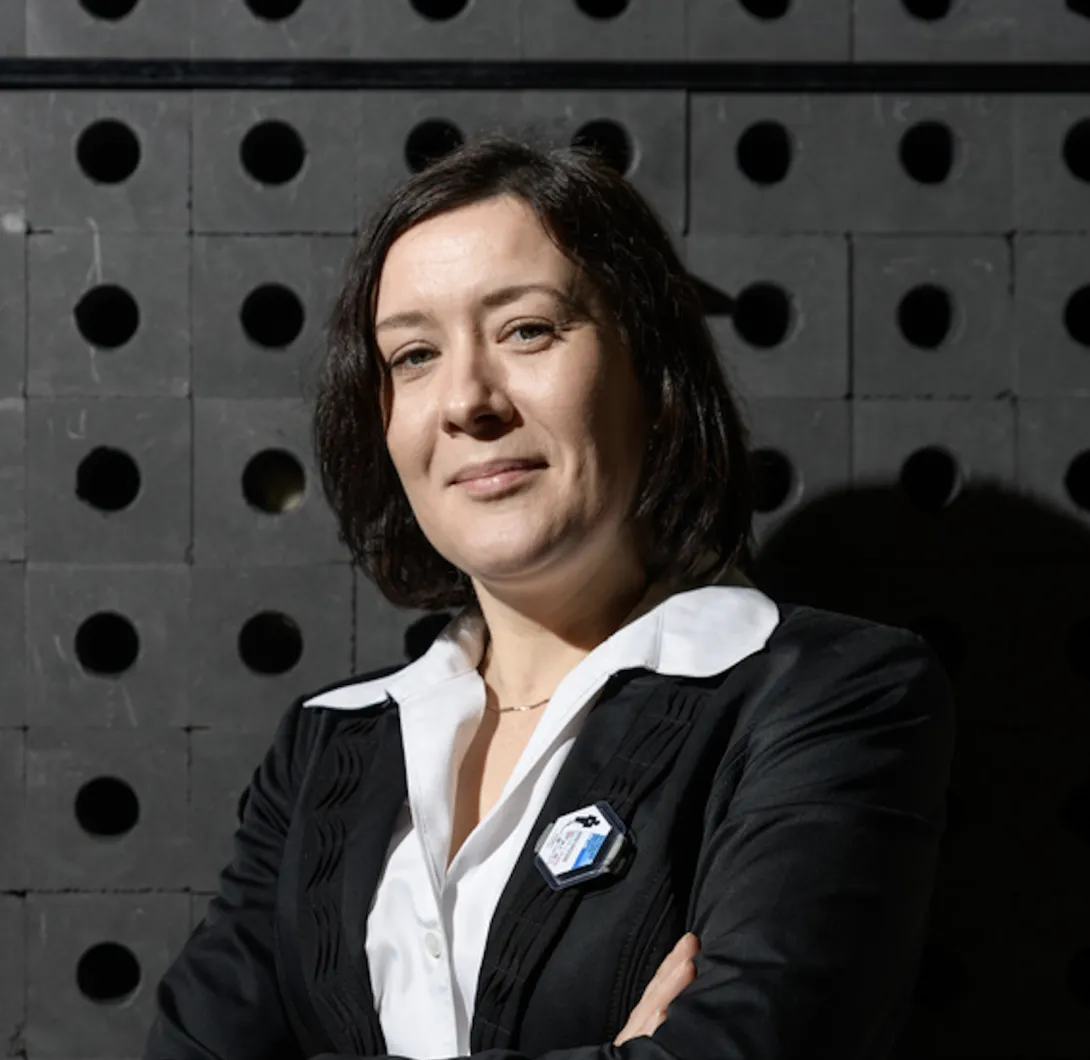
Anna Erickson

Steven Biegalski
“Nuclear” is a loaded, highly charged word. It can conjure images — both real and imagined — of explosive destruction.
Nuclear is also a loaded, highly charged technology. A single fuel pellet the size of a pencil eraser contains as much energy as a metric ton of coal, 150 gallons of oil, or 17,000 cubic feet of natural gas.
The technology’s complex history, along with its vast potential, is why nuclear scientists and engineers often find themselves moonlighting as myth busters. Georgia Tech experts are eager to untangle fact from fiction so nuclear can shine — safely.
“I am really excited about nuclear, but this is a technology that has a lot of myths and misinformation around it,” said Anna Erickson, Woodruff Professor in the George W. Woodruff School of Mechanical Engineering (ME), and leader of the Consortium for Enabling Technologies and Innovation (ETI), which is focused on nuclear technology.
“Concerns about nuclear weapons, accidents, and waste have overshadowed nuclear energy’s potential as a clean, carbon-free technology,” she added.
Here, Georgia Tech researchers share what nuclear is, why it’s important, and why its moment is now.
What Is Nuclear?
“Nuclear, as indicated by its name, is focused on the nucleus within an atom, but also the atom as a whole,” said Steve Biegalski, ME professor and chair of the Nuclear and Radiological Engineering and Medical Physics Program. “From an engineering perspective, we're looking at how we can use the physics of an atom — and the physics of a nucleus — to solve different scientific and societal problems.”
In 1938, German and Austrian scientists discovered that breaking apart an atom’s nucleus creates energy through fission. Many aspects of nuclear science, however, were advanced through the Manhattan Project during World War II, in which the U.S. developed the atomic bombs it later dropped on Hiroshima and Nagasaki, Japan. This historical association has likely played a significant role in shaping the negative perception of nuclear technology.
But nuclear science isn’t only about international power and weapons, Biegalski said. Advances in nuclear science have contributed to life-saving cancer therapies, cutting-edge heart scans, and on-demand X-ray technologies.
Safe levels of radiation are all around us — for example, our imported fruits and vegetables are treated with radiation when they enter the country. Even kitty litter is radioactive — not very, but detectable by modern sensors.
“You might have slightly elevated radioactivity for a short while after you eat a banana in the morning,” Erickson said. “Our bodies have evolved to live with radiation.”
AI Has Entered the Chat
Lately, Erickson has been getting calls from major technology companies with questions about how to power data centers. She isn’t surprised — nuclear energy is widely being discussed as the way to power the AI revolution.
“Today’s energy needs are very different than they were in the past, and consistent, reliable, and independent electricity production is necessary — especially for the technology sector,” Erickson explained.
“At this stage, it’s not a question of whether nuclear energy can meet those demands, but how quickly we can make it a reality,” she added.
One of nuclear’s most distinguishing features is its power density, or how much power is produced by volume of raw material. Another defining feature is its reliability. Wind and solar are weather-dependent and provide power intermittently. Nuclear can supply power around the clock, and data centers require that level of consistency.
“There are discussions about developing a number of data centers just outside of Atlanta, and those will require full-size nuclear power plants to power them,” Biegalski said. “When we look at electricity production, these facilities need power 24/7, 365 days a year. Nuclear power can supply that, and wind and solar simply cannot.”
Great Power, Great Responsibility
According to Erickson, the nuclear reactors in use today are far more advanced than those associated with past disasters like Chernobyl and Three Mile Island.
New nuclear plants are designed with great efficiency in mind. Coal must be supplied continuously, whereas nuclear can be loaded once and run for years.
In addition to dispelling misinformation, nuclear experts are also knowledgeable about nuclear nonproliferation and nuclear security. Georgia Tech is a leader in these areas. Experts like Erickson and Biegalski are regularly tapped to help design new reactors that are popping up across the country.
The Georgia Tech-led nuclear consortium, ETI, assesses how emerging technologies help or hurt nuclear nonproliferation efforts. Nuclear nonproliferation is the global effort to minimize the spread of nuclear weapons, technology, and development.
“One of our main missions is to understand expansion of civilian nuclear power through the lens of nuclear safeguards and nonproliferation,” Erickson said. “Specifically, we want to know how we can best prevent misuse and mishandling of nuclear materials and keep nuclear facilities safe, while also investing in advancing nuclear technology.”
A Shift in Public Opinion
Despite the popular culture — think Homer Simpson’s nuclear plant job handling green slime — the public is also becoming better informed about nuclear power’s relative safety, especially compared with other energy sources.
In early 2025, nearly 6 out of 10 Americans supported increased development of nuclear energy. But why are Americans gradually coming around to the idea?
Erickson may have the answer. “The technology’s potential is catching on across the globe,” she said. “In France, 70% of their electricity comes from nuclear energy.”
For one of her first research projects as a young student, Erickson analyzed what went wrong with the Chernobyl reactors. She understands why people can be wary of nuclear technology.
“Despite the uptick in support for nuclear, people still have concerns we need to answer, rather than just telling people to trust the experts,” Erickson said. “Talking to people is critical in promoting this technology and making sure we keep the public’s trust in this.”
News Contact
Catherine Barzler, Senior Research Writer/Editor
Institute Communications
catherine.barzler@gatech.edu
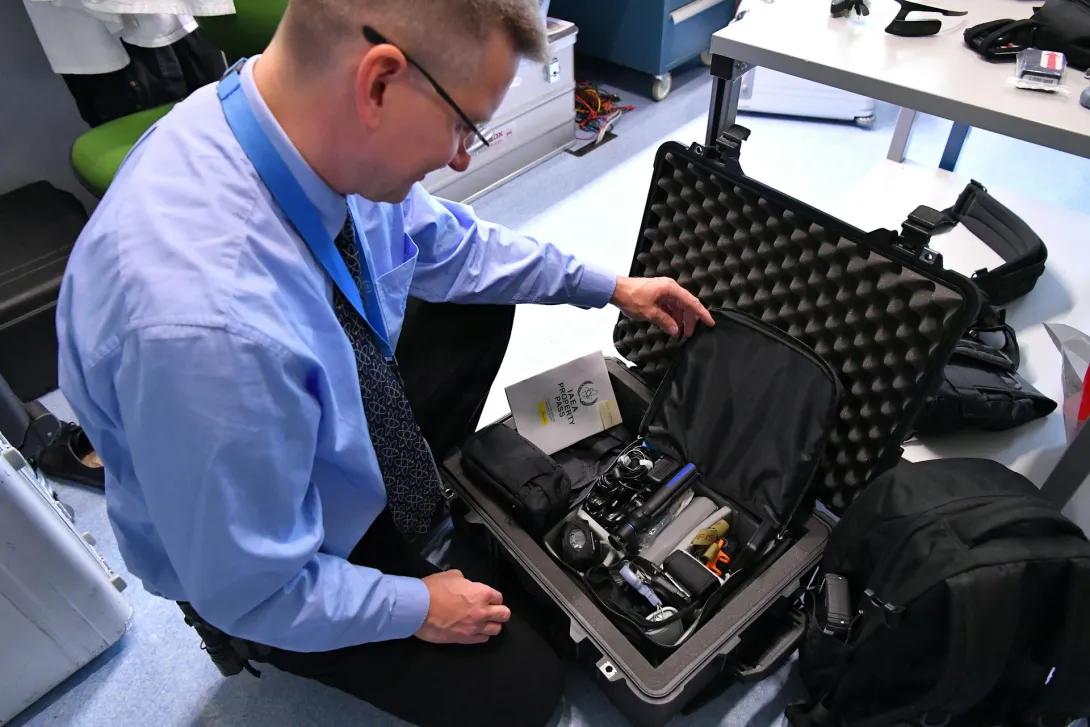
This travel case holds a toolkit containing equipment for inspecting nuclear facilities. Dean Calma/IAEA, CC BY
What happens when a country seeks to develop a peaceful nuclear energy program? Every peaceful program starts with a promise not to build a nuclear weapon. Then, the global community verifies that stated intent via the Treaty on the Non-Proliferation of Nuclear Weapons.
Once a country signs the treaty, the world’s nuclear watchdog, the International Atomic Energy Agency, provides continuous and technical proof that the country’s nuclear program is peaceful.
The IAEA ensures that countries operate their programs within the limits of nonproliferation agreements: low enrichment and no reactor misuse. Part of the agreement allows the IAEA to inspect nuclear-related sites, including unannounced surprise visits.
These are not just log reviews. Inspectors know what should and should not be there. When the IAEA is not on site, cameras, tamper-revealing seals on equipment and real-time radiation monitors are working full-time to gather or verify inside information about the program’s activities.
Safeguards Toolkit
The IAEA safeguards toolkit is designed to detect proliferation activities early. Much of the work is fairly technical. The safeguards toolkit combines physical surveillance, material tracking, data analytics and scientific sampling. Inspectors are chemists, physicists and nuclear engineers. They count spent fuel rods in a cooling pond. They check tamper seals on centrifuges. Often, the inspectors walk miles through hallways and corridors carrying heavy equipment.
That’s how the world learned in April 2021 about Iran pushing uranium enrichment from reactor-fuel-grade to near-weapons-grade levels. IAEA inspectors were able to verify that Iran was feeding uranium into a series of centrifuges designed to enrich the uranium from 5%, used for energy programs, to 60%, which is a step toward the 90% level used in nuclear weapons.
Around the facilities, whether for uranium enrichment or plutonium processing, closed-circuit surveillance cameras monitor for undeclared materials or post-work activities. Seals around the facilities provide evidence that uranium gas cylinders have not been tampered with or that centrifuges operate at the declared levels. Beyond seals, online enrichment monitors allow inspectors to look inside of centrifuges for any changes in the declared enrichment process.
Seals verify whether nuclear equipment or materials have been used between onsite inspections.
When the inspectors are on-site, they collect environmental swipes: samples of nuclear materials on surfaces, in dust or in the air. These can reveal if uranium has been enriched to levels beyond those allowed by the agreement. Or if plutonium, which is not used in nuclear power plants, is being produced in a reactor. Swipes are precise. They can identify enrichment levels from a particle smaller than a speck of dust. But they take time, days or weeks. Inspectors analyze the samples at the IAEA’s laboratories using sophisticated equipment called mass spectrometers.
In addition to physical samples, IAEA inspectors look at the logs of material inventories. They look for diversion of uranium or plutonium from normal process lines, just like accountants trace the flow of finances, except that their verification is supported by the ever-watching online monitors and radiation sensors. They also count items of interest and weigh them for additional verification of the logs.
Beyond accounting for materials, IAEA inspectors verify that the facility matches the declared design. For example, if a country is expanding centrifuge halls to increase its enrichment capabilities, that’s a red flag. Changes to the layout of material processing laboratories near nuclear reactors could be a sign that the program is preparing to produce unauthorized plutonium.
Losing Access
Iran announced on June 28, 2025, that it has ended its cooperation with the IAEA. It removed the monitoring devices, including surveillance cameras, from centrifuge halls. This move followed the news by the IAEA that Iran’s enrichment activities are well outside of allowed levels. Iran now operates sophisticated uranium centrifuges, like models IR-6 and IR-9.
Removing IAEA access means that the international community loses insight into how quickly Iran’s program can accumulate weapon-grade uranium, or how much it has produced. Also lost is information about whether the facility is undergoing changes for proliferation purposes. These processes are difficult to detect with external surveillance, like satellites, alone.

A satellite view of Iran’s Arak Nuclear Complex, which has a reactor capable of producing plutonium. Satellite image (c) 2025 Maxar Technologies via Getty Images
An alternative to the uranium enrichment path for producing nuclear weapons material is plutonium. Plutonium can’t be mined, it has to be produced in a nuclear reactor. Iran built a reactor capable of producing plutonium, the IR-40 Heavy Water Research Reactor at the Arak Nuclear Complex.
Iran modified the Arak reactor under the now-defunct Joint Comprehensive Plan of Action to make plutonium production less likely. During the June 2025 missile attacks, Israel targeted Arak’s facilities with the aim of eliminating the possibility of plutonium production.
With IAEA access suspended, it won’t be possible to see what happens inside the facility. Can the reactor be used for plutonium production? Although a lengthier process than the uranium enrichment path, plutonium provides a parallel path to uranium enrichment for developing nuclear weapons.
Continuity of Knowledge
North Korea expelled IAEA inspectors in 2009. Within a few years, they restarted activities related to uranium enrichment and plutonium production in the Yongbyon reactor. The international community’s information about North Korea’s weapons program now relies solely on external methods: satellite images, radioactive particles like xenon – airborne fingerprints of nuclear activities – and seismic data.
What is lost is the continuity of the knowledge, a chain of verification over time. Once the seals are broken or cameras are removed, that chain is lost, and so is confidence about what is happening at the facilities.
When it comes to IAEA inspections, there is no single tool that paints the whole picture. Surveillance plus sampling plus accounting provide validation and confidence. Losing even one weakens the system in the long term.
The existing safeguards regime is meant to detect violations. The countries that sign the nonproliferation treaty know that they are always watched, and that plays a deterrence role. The inspectors can’t just resume the verification activities after some time if access is lost. Future access won’t necessarily enable inspectors to clarify what happened during the gap.
This article is republished from The Conversation under a Creative Commons license. Read the original article.
News Contact
Author:
Anna Erickson, professor of Nuclear and Radiological Engineering, Georgia Institute of Technology
Media Contact:
Shelley Wunder-Smith
shelley.wunder-smith@research.gatech.edu

A groundbreaking new medical dataset is poised to revolutionize healthcare in Africa by improving chatbots’ understanding of the continent’s most pressing medical issues and increasing their awareness of accessible treatment options.
AfriMed-QA, developed by researchers from Georgia Tech and Google, could reduce the burden on African healthcare systems.
The researchers said people in need of medical care file into overcrowded clinics and hospitals and face excruciatingly long waits with no guarantee of admission or quality treatment. There aren’t enough trained healthcare professionals available to meet the demand.
Some healthcare question-answer chatbots have been introduced to treat those in need. However, the researchers said there’s no transparent or standardized way to test or verify their effectiveness and safety.
The dataset will enable technologists and researchers to develop more robust and accessible healthcare chatbots tailored to the unique experiences and challenges of Africa.
One such new tool is Google’s MedGemma, a large-language model (LLM) designed to process medical text and images. AfriMed-QA was used for training and evaluation purposes.
AfriMed-QA stands as the most extensive dataset that evaluates LLM capabilities across various facets of African healthcare. It contains 15,000 question-answer pairs culled from over 60 medical schools across 16 countries and covering numerous medical specialties, disease conditions, and geographical challenges.
Tobi Olatunji and Charles Nimo co-developed AfriMed-QA and co-authored a paper about the dataset that will be presented at the Association for Computational Linguistics (ACL) conference next week in Vienna.
Olatunji is a graduate of Georgia Tech’s Online Master of Science in Computer Science (OMSCS) program and holds a Doctor of Medicine from the College of Medicine at the University of Ibadan in Nigeria. Nimo is a Ph.D. student in Tech’s School of Interactive Computing, where he is advised by School of IC professors Michael Best and Irfan Essa.
Focus on Africa
Nimo, Olatunji, and their collaborators created AfriMed-QA as a response to MedQA, a large-scale question-answer dataset that tests the medical proficiency of all major LLMs. That includes Google’s Gemini, OpenAI’s ChatGPT, and Anthropic’s Claude, among others.
However, because MedQA is trained solely on the U.S. Medical License Exams, Nimo said it is not adequate to serve patients in underdeveloped African countries nor the Global South at-large.
“AfriMed-QA has the contextualized and localized understanding of African medical institutions that you don’t get from Med-QA,” Nimo said. “There are specific diseases and local challenges in our dataset that you wouldn't find in any U.S.-based dataset.”
Olatunji said one problem African users may encounter using LLMs trained on MedQA is that they may advise unfeasible treatments or unaffordable prescription drugs.
“You consider the types of drugs, diagnostics, procedures, or therapies that exist in the U.S. that are quite advanced. These treatments are much more accessible, for example in the US, and Europe,” Olatunji said. “But in Africa, they’re too expensive and many times unavailable. They may cost over $100,000, and many people have no health insurance. Why recommend such treatments to someone who can’t obtain them?”
Another problem may be that the LLM doesn’t take a medical condition seriously if it isn’t predominant in the U.S.
“We tested many of these models, for example, on how they would manage sickle-cell disease signs and symptoms, and they focused on other “more likely” causes and did not rank or consider sickle cell high enough as a possible cause,” he said. “They, for example, don’t consider sickle-cell as important as anemia and cancer because sickle-cell is less prevalent in the U.S.”
In addition to sickle-cell disease, Olatunji said some of the healthcare issues facing Africa that can be improved through AfriMed-QA include:
- HIV treatment and prevention
- Poor maternal healthcare
- Widespread malaria cases
- Physician shortage
- Clinician productivity and operational efficiency
Google Partnership
Mercy Asiedu, senior author of the AfriMed-QA paper and research scientist at Google Research, has dedicated her career to improving healthcare in Africa. Her work began as a Ph.D. student at Duke University, where she invented the Callascope, a groundbreaking non-invasive tool for gynecological examinations
With her current focus on democratizing healthcare through artificial intelligence (AI), Asiedu, who is from Ghana, helped create a research consortium to develop the dataset. The consortium consists of Georgia Tech, Google, Intron, Bio-RAMP Research Labs, the University of Cape Coast, the Federation of African Medical Students Association, and Sisonkebiotik.
Sisonkebiotik is an organization of researchers that drives healthcare initiatives to advance data science, machine learning, and AI in Africa.
Olatunji leads the Bio-RAMP Research Lab, a community of healthcare and AI researchers, and he is the founder and CEO of Intron, which develops natural-language processing technologies for African communities.
In May, Google released MedGemma, which uses both the MedQA and Afri-MedQA datasets to form a more globally accessible healthcare chatbot. MedGemma has several versions, including 4-billion and 27-billion parameter models, which support multimodal inputs that combine images and text.
“We are proud the latest medical-focused LLM from Google, MedGemma, leverages AfriMed-QA and improves performance in African contexts,” Asiedu said.
“We started by asking how we could reduce the burden on Africa’s healthcare systems. If we can get these large-language models to be as good as experts and make them more localized with geo-contextualization, then there’s the potential to task-shift to that.”
The project is supported by the Gates Foundation and PATH, a nonprofit that improves healthcare in developing countries.

Researchers at Georgia Tech have developed a new approach to cancer imaging and therapy.
The study, led by Costas Arvanitis, associate professor in the George W. Woodruff School of Mechanical Engineering and the Wallace H. Coulter Department of Biomedical Engineering, explores a noninvasive method for tracking immune cells in real time using ultrasound. The study was recently published in the journal Nature Communications.
Read the full story on the George W. Woodruff School of Mechanical Engineering website.
News Contact
Ashley Ritchie
George W. Woodruff School of Mechanical Engineering
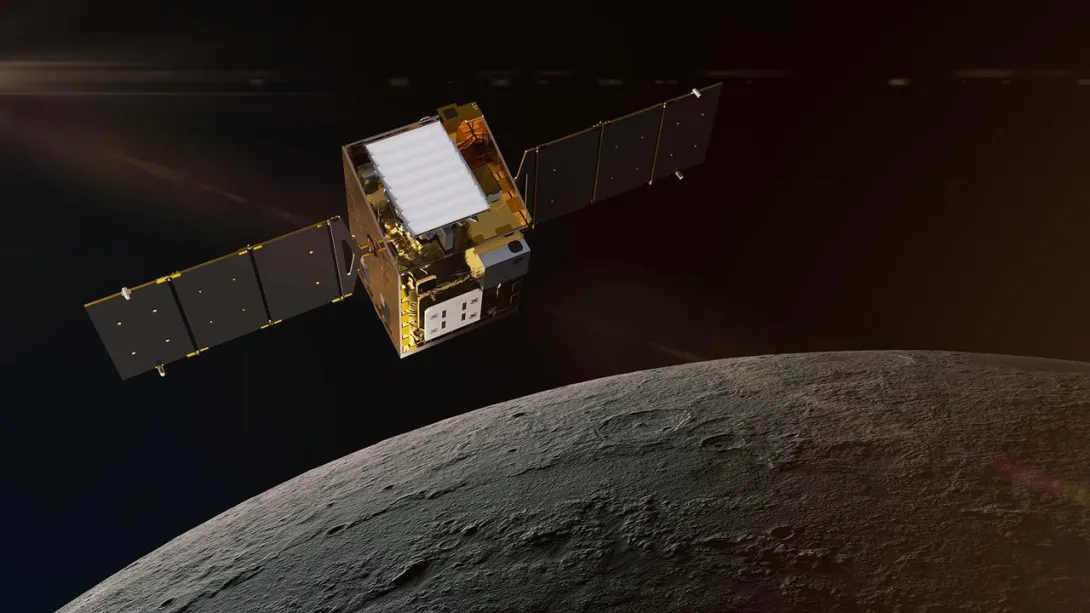
NASA's Lunar Trailblazer in Orbit Around the Moon (Artist's Concept). Image furnished by NASA.
As more satellites launch into space, the satellite industry has sounded the alarm about the danger of collisions in low Earth orbit (LEO). What is less understood is what might happen as more missions head to a more targeted destination: the moon.
According to The Planetary Society, more than 30 missions are slated to launch to the moon between 2024 and 2030, backed by the U.S., China, Japan, India, and various private corporations. That compares to over 40 missions to the moon between 1959 and 1979 and a scant three missions between 1980 and 2000.
A multidisciplinary team at Georgia Tech has found that while collision probabilities in orbits around the moon are very low compared to Earth orbit, spacecraft in lunar orbit will likely need to conduct multiple costly collision avoidance maneuvers each year. The Journal of Spacecraft and Rockets published the Georgia Tech collision-avoidance study in March.
“The number of close approaches in lunar orbit is higher than some might expect, given that there are only tens of satellites, rather than the thousands in low Earth orbit,” says paper co-author Mariel Borowitz, associate professor in the Sam Nunn School of International Affairs in the Ivan Allen College of Liberal Arts.
Borowitz and other researchers attribute these risky approaches in part to spacecraft often choosing a limited number of favorable orbits and the difficulty of monitoring the exact location of spacecraft that are more than 200,000 miles away.
“There is significant uncertainty about the exact location of objects around the moon. This, combined with the high cost associated with lunar missions, means that operators often undertake maneuvers even when the probability is very low — up to one in 10 million,” Borowitz explains.
The Georgia Tech research is the first published study showing short- and long-term collision risks in cislunar orbits. Using a series of Monte Carlo simulations, the researchers modeled the probability of various outcomes in a process that cannot be easily predicted because of random variables.
“Our analysis suggests that satellite operators must perform up to four maneuvers annually for each satellite for a fleet of 50 satellites in low lunar orbit (LLO),” said one of the study’s authors, Brian Gunter, associate professor in the Daniel Guggenheim School of Aerospace Engineering.
He noted that with only 10 satellites in LLO, a satellite might still need a yearly maneuver. This is supported by what current cislunar operators have reported.
Favored Orbits
Most close encounters are expected to occur near the moon’s equator, an intersection point between the orbit planes of commonly used “frozen” and low lunar orbits, which are preferred by many operators. Other possible regions of congestion can occur at the Lagrangian points, or regions where the gravitational forces of Earth and the moon balance out. Stable orbits in these regions have names such as Halo and Lyapunov orbits.
“Lagrangian points are an interesting place to put a satellite because it can maintain its orbit for long periods with very little maneuvering and thrusting. Frozen orbits, too. Anywhere outside these special areas, you have to spend a lot of fuel to maintain an orbit,” he said.
Gunter and other researchers worry that if operators aren’t coordinated about how they plan lunar missions, opportunities for collision will increase in these popular orbits.
“The close approaches were much more common than I would have intuitively anticipated,” says lead study author Stef Crum.
The 2024 graduate of Georgia Tech’s aerospace engineering doctoral program notes that, considering the small number of satellites in lunar orbit, the need for multiple maneuvers was “really surprising.”
Crum, who is also co-founder of Reditus Space, a startup he founded in 2024 to provide reusable orbital re-entry services, adds that the cislunar environment is so challenging because “it’s incredibly vast.”
His research also examines ways to improve object monitoring in cislunar space. Maintaining continuous custody of these objects is difficult because a target’s position must be monitored over the entire duration of its trajectory.
“That wasn’t feasible for translunar orbits, given the vast volume of cislunar orbit, which stretches multiple millions of kilometers in three dimensions,” he says.
By estimating a satellite’s orbit using observed data and constraining the presumed location and direction of the satellite, rather than continuous tracking (a process known as continuous custody), Crum greatly simplified the process.
“You no longer need thousands of satellites or a set of enormous satellites to cover all potential trajectories,” he explains. “Instead, one or a few satellites are required, and operators can lose custody for a time as long as the connection is reacquired later.”
Since the team started their study, there has been a lot of interest in the moon and cislunar activity — both NASA and China’s National Space Administration are planning to send humans to the moon. In the last two years, India, Japan, the U.S., China, Russia, and four private companies have attempted missions to the moon.
Why the Moon
Spacefaring nations’ intense interest in exploring the lunar surface comes as no surprise given that the moon offers a variety of resources, including solar power, water, oxygen, and metals like iron, titanium, and uranium. It also contains Helium-3, a potential fuel for nuclear fusion, and rare earth metals vital for modern technology. With the recent discovery of water ice, it could be a plentiful source for rocket fuel that can be created from liquifying oxygen and hydrogen needed to launch deep space missions to destinations like Mars. In February, Georgia Tech announced that researchers have developed new algorithms to help Intuitive Machines’ lunar lander find water ice on the moon.
Commercial space companies like Axiom Space and Redwire Space, as well as space agencies, are actively building lunar infrastructure, from satellite constellations to orbital platforms to support communication, navigation, scientific research, and eventually space tourism.
A key project involves the Lunar Gateway, a joint venture of NASA and international space agencies like ESA, JAXA, and CSA, as well as commercial partners. Humanity’s first space station around the moon will serve as a central hub for human exploration of the moon and is considered a stepping stone for future deep space missions.
Getting Ahead of a Gold Rush to the Moon
All this activity underscores the urgency to get out in front of potential crowding issues — something that hasn’t occurred in LEO, where near-miss collisions, or conjunctions, are frequent. LEO, which is 100 to 1,200 miles above the Earth’s surface, is host to more than 14,000 satellites and 120 million pieces of debris from launches, collisions, and wear and tear, reports Reuters.
“Using the near-Earth environment as an example, the space object population has gone from approximately 6,000 active satellites in the early 2020s to an anticipated 60,000 satellites in the coming decade if the projected number of large satellite constellations currently in the works gets deployed. That poses many challenges in terms of how we can manage that sustainably,” observed Gunter. “If something similar happens in the lunar environment, say if Artemis (NASA’s program to establish the first long-term presence on the moon) is successful and a lunar base is established, and there is discovery of volatiles or water deposits, it could initiate a kind of gold rush effect that might accelerate the number of actors in cislunar space.”
For this reason, Borowitz argues for the need to begin working on coordination, either in the planning of the orbits for future missions or by sharing information about the location of objects operating in lunar orbit. She pointed out that spacecraft outfitted for moon missions are expensive, making a collision highly costly. Also, debris from such a scenario would spread in an unpredictable way, which could be problematic for other objects.
Gunter agreed, noting, “If we’re not careful, we could be putting a lot of things in this same path. We must ensure we build out the cislunar orbital environment in a smart way, where we’re not intentionally putting spacecraft in the same orbital spaces. If we do that, everyone should be able to get what they want and not be in each other’s way.”
Borowitz says some coordination efforts are underway with the UN Committee on the Peaceful Uses of Outer Space and the creation of an action team on lunar activities; however, international diplomacy is a time-consuming process, and it can be a challenge to keep pace with advancements in technology.
She contends that the Georgia Tech study could provide baseline data that “could be helpful for international coordination efforts, helping to ensure that countries better understand potential future risks.”
Gunter and Borowitz say that follow-on research for the team could involve looking into the Lunar Gateway orbit and other special orbits to see how crowded that space will likely get, and then do an end-to-end simulation of these orbits to determine the most effective way to build them out to avoid collision risks. Ultimately, they intend to develop guidelines to help ensure that future space actors headed to the moon can operate safely.
News Contact
News Contact: Laurie Haigh
Writer: Anne Wainscott-Sargent

Candace Washington, Jim Pope Fellow

Jim Pope Fellow Candace Washington and mentee Vivianne Akerman
Candace Washington never thought she’d one day run her own business or teach the next generation of project management leaders in construction and engineering. But that’s exactly what she’s doing thanks to Georgia Tech.
In 2012, Washington, a seasoned construction veteran with 25 years of expertise and a master’s degree in building construction from Georgia Tech, noticed a shortage of project managers. She oversaw capital improvements and construction buildouts nationally and was consistently getting asked by clients to oversee the construction buildouts. This would spark the idea to start her business and launch Cancave Management & Engineering.
Over the next decade, Washington built a successful company and yet she continued to see this recurring shortage of project managers. According to Associated Builders and Contractors, the construction sector still grapples with a significant talent shortage that extends beyond the skilled trades to include construction management positions, with a projected need for nearly half a million additional workers in 2025 alone.
“We have fewer people entering the industry. With the pandemic, we had a great exodus where a lot of people decided to get out of the industry and retire early, and then you have the emerging housing market and infrastructure needs, creating demand for construction in general — the perfect storm,” Washington said.
Determined to find more ways to address the problem, she joined Georgia Tech’s School of Building Construction as a part-time instructor and, in 2024, began pursuing her Ph.D. at Tech, where she learned about the Jim Pope Fellowship.
“Being a Pope Fellow has been transformational to my experience as an entrepreneur,” Washington said. “When I started my company, I wish I had something like this. Through this fellowship, I was able to dig deeper into my idea, validate assumptions, and shape it into a solution that addresses the pain points of labor shortages and compliance bottlenecks in the underutilization or over-utilization of resources.”
As a fellow, Washington was also awarded $15,000 in discretionary funds to support her teaching and entrepreneurial efforts. With the resources from Jim Pope, Washington has been able to make meaningful impacts for students and her company.
Over the last year, she has worked on the next evolution of her business by building Extend the Ladder®, a workforce resource and compliance platform built around an industrywide shared resource model for construction professionals. One application of her platform would allow general contractors to share resources by enabling them to find and coordinate talent from a single database.
In addition to helping her pursue a construction job-matching platform, the fellowship has reinforced her love of teaching and mentoring entrepreneurial-minded students. As a part of the fellowship, Washington taught CREATE-X’s Startup Lab, which teaches the fundamentals of evidence-based entrepreneurship.
One student, Vivianne Akerman, a rising junior in industrial engineering, became Washington’s mentee after her spring Startup Lab class. Bitten by the entrepreneurial bug, Akerman decided to continue her entrepreneurial journey in CREATE-X’s Idea-to-Prototype (I2P) course. She turned an idea into action with guidance from Washington, building a solution for a problem she identified during Startup Lab.
“Candace is an amazing mentor who pushes students to be their best selves,” said Akerman, who is developing a makeup platform designed “to make makeup practical and less overwhelming.” The platform will enable consumers to compare and review products and ultimately find what brands work best for them, given their skin type and desired look.
“I love how positive she is,” adds Akerman. “This is new for me — it’s very exciting but also very overwhelming. She helps me stay focused on my priorities and what’s most important.”
Washington emphasizes that there is no guidebook to becoming an entrepreneur; rather, the path must be discovered through conversations, relationship-building, and learning from the experiences of others.
“This experience deepened my appreciation for the spirit of entrepreneurship — it’s been invaluable for me,” she says. “I would tell anybody who's trying to start a business, you need to go through this process.”
Now, as a mentor herself, Washington credits her fellowship in CREATE-X for giving her the confidence and framework to help others. And she credits her path as a mentor and teacher of entrepreneurship to the home she’s found at Georgia Tech.
Drawing from her own experiences, both the challenges and the triumphs, she offers a piece of advice that she believes aspiring entrepreneurs should carry with them.
“Start now — you don’t need all the answers. Focus on the process, stay committed, and be open to real-world feedback.”
Applications are now open for the 2025 Jim Pope Fellowship until Sept. 2. Interested faculty can learn more at https://create-x.gatech.edu/faculty/jim-pope-fellowship.
News Contact
Written by Anne Wainscott-Sargent
Internal Contact
Breanna Durham
Marketing Strategist
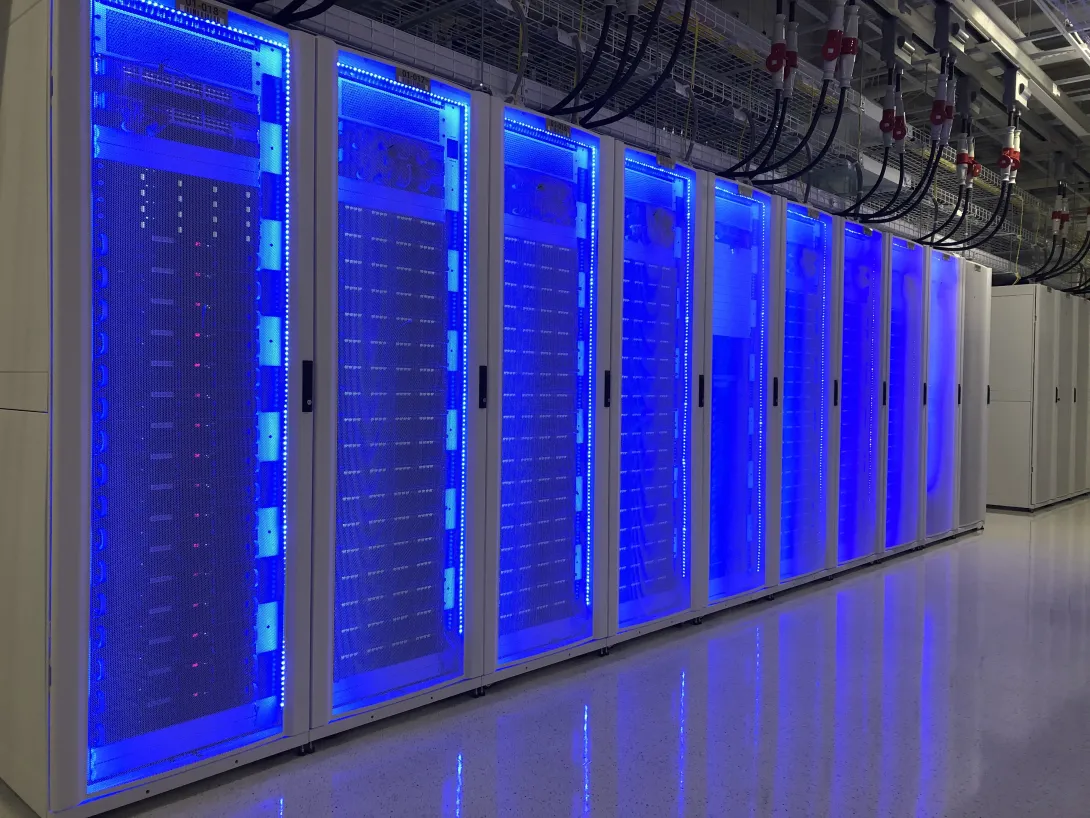
Georgia Tech is also a host to the PACE Hive Gateway supercomputer (above). Nexus will use AI to accelerate scientific breakthroughs.
The National Science Foundation (NSF) has awarded Georgia Tech and its partners $20 million to build a powerful new supercomputer that will use artificial intelligence (AI) to accelerate scientific breakthroughs.
Called Nexus, the system will be one of the most advanced AI-focused research tools in the U.S. Nexus will help scientists tackle urgent challenges such as developing new medicines, advancing clean energy, understanding how the brain works, and driving manufacturing innovations.
“Georgia Tech is proud to be one of the nation’s leading sources of the AI talent and technologies that are powering a revolution in our economy,” said Ángel Cabrera, president of Georgia Tech. “It’s fitting we’ve been selected to host this new supercomputer, which will support a new wave of AI-centered innovation across the nation. We’re grateful to the NSF, and we are excited to get to work.”
Designed from the ground up for AI, Nexus will give researchers across the country access to advanced computing tools through a simple, user-friendly interface. It will support work in many fields, including climate science, health, aerospace, and robotics.
“The Nexus system's novel approach combining support for persistent scientific services with more traditional high-performance computing will enable new science and AI workflows that will accelerate the time to scientific discovery,” said Katie Antypas, National Science Foundation director of the Office of Advanced Cyberinfrastructure. “We look forward to adding Nexus to NSF's portfolio of advanced computing capabilities for the research community.”
Nexus Supercomputer — In Simple Terms
- Built for the future of science: Nexus is designed to power the most demanding AI research — from curing diseases, to understanding how the brain works, to engineering quantum materials.
- Blazing fast: Nexus can crank out over 400 quadrillion operations per second — the equivalent of everyone in the world continuously performing 50 million calculations every second.
- Massive brain plus memory: Nexus combines the power of AI and high-performance computing with 330 trillion bytes of memory to handle complex problems and giant datasets.
- Storage: Nexus will feature 10 quadrillion bytes of flash storage, equivalent to about 10 billion reams of paper. Stacked, that’s a column reaching 500,000 km high — enough to stretch from Earth to the moon and a third of the way back.
- Supercharged connections: Nexus will have lightning-fast connections to move data almost instantaneously, so researchers do not waste time waiting.
- Open to U.S. researchers: Scientists from any U.S. institution can apply to use Nexus.
Why Now?
AI is rapidly changing how science is investigated. Researchers use AI to analyze massive datasets, model complex systems, and test ideas faster than ever before. But these tools require powerful computing resources that — until now — have been inaccessible to many institutions.
This is where Nexus comes in. It will make state-of-the-art AI infrastructure available to scientists all across the country, not just those at top tech hubs.
“This supercomputer will help level the playing field,” said Suresh Marru, principal investigator of the Nexus project and director of Georgia Tech’s new Center for AI in Science and Engineering (ARTISAN). “It’s designed to make powerful AI tools easier to use and available to more researchers in more places.”
Srinivas Aluru, Regents’ Professor and senior associate dean in the College of Computing, said, “With Nexus, Georgia Tech joins the league of academic supercomputing centers. This is the culmination of years of planning, including building the state-of-the-art CODA data center and Nexus’ precursor supercomputer project, HIVE."
Like Nexus, HIVE was supported by NSF funding. Both Nexus and HIVE are supported by a partnership between Georgia Tech’s research and information technology units.
A National Collaboration
Georgia Tech is building Nexus in partnership with the National Center for Supercomputing Applications at the University of Illinois Urbana-Champaign, which runs several of the country’s top academic supercomputers. The two institutions will link their systems through a new high-speed network, creating a national research infrastructure.
“Nexus is more than a supercomputer — it’s a symbol of what’s possible when leading institutions work together to advance science,” said Charles Isbell, chancellor of the University of Illinois and former dean of Georgia Tech’s College of Computing. “I'm proud that my two academic homes have partnered on this project that will move science, and society, forward.”
What’s Next
Georgia Tech will begin building Nexus this year, with its expected completion in spring 2026. Once Nexus is finished, researchers can apply for access through an NSF review process. Georgia Tech will manage the system, provide support, and reserve up to 10% of its capacity for its own campus research.
“This is a big step for Georgia Tech and for the scientific community,” said Vivek Sarkar, the John P. Imlay Dean of Computing. “Nexus will help researchers make faster progress on today’s toughest problems — and open the door to discoveries we haven’t even imagined yet.”
News Contact
Siobhan Rodriguez
Senior Media Relations Representative
Institute Communications
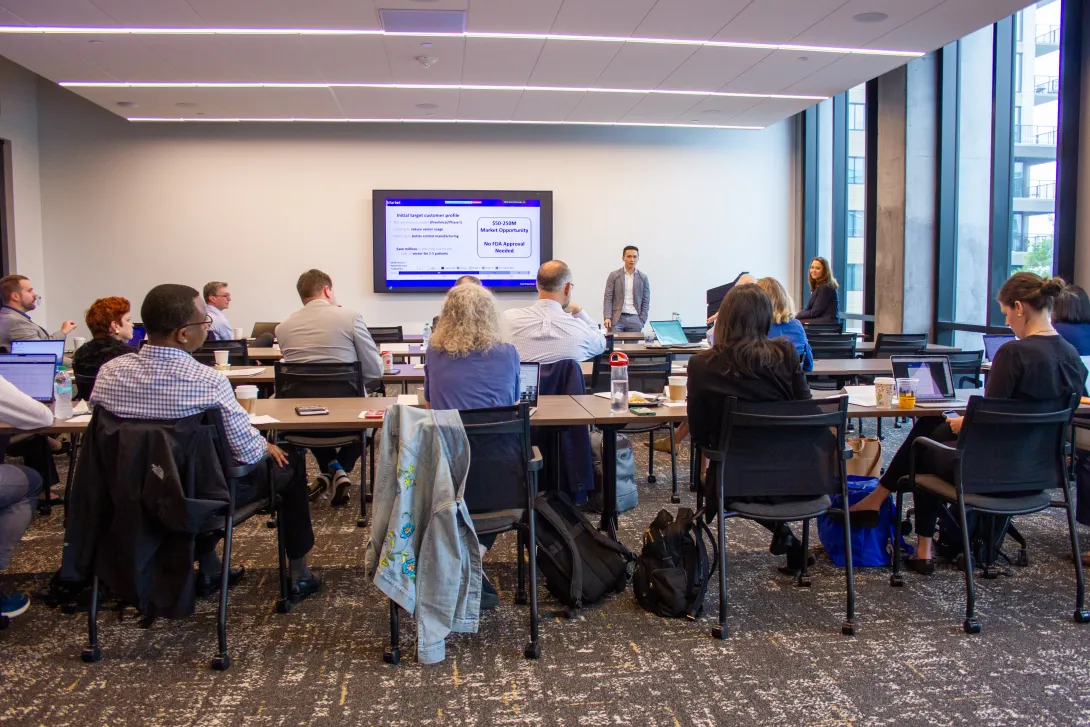
Commercialization program in Coulter BME announces project teams who will receive support to get their research to market.
Five teams of researchers from Georgia Tech and Emory University were selected to accelerate their journey from lab to market. Projects include improved cancer detection and therapies, a precise surgical tool and better MRI imaging. Teams will receive funding and commercialization support during the year. Read more about each project here.
News Contact
Kelly Petty
Communications
Wallace H. Coulter Department of Biomedical Engineering
Georgia Tech is also a host to the PACE Hive Gateway supercomputer (above). Nexus will use AI to accelerate scientific breakthroughs.
The National Science Foundation (NSF) has awarded Georgia Tech and its partners $20 million to build a powerful new supercomputer that will use artificial intelligence (AI) to accelerate scientific breakthroughs.
Called Nexus, the system will be one of the most advanced AI-focused research tools in the U.S. Nexus will help scientists tackle urgent challenges such as developing new medicines, advancing clean energy, understanding how the brain works, and driving manufacturing innovations.
“Georgia Tech is proud to be one of the nation’s leading sources of the AI talent and technologies that are powering a revolution in our economy,” said Ángel Cabrera, president of Georgia Tech. “It’s fitting we’ve been selected to host this new supercomputer, which will support a new wave of AI-centered innovation across the nation. We’re grateful to the NSF, and we are excited to get to work.”
Designed from the ground up for AI, Nexus will give researchers across the country access to advanced computing tools through a simple, user-friendly interface. It will support work in many fields, including climate science, health, aerospace, and robotics.
“The Nexus system's novel approach combining support for persistent scientific services with more traditional high-performance computing will enable new science and AI workflows that will accelerate the time to scientific discovery,” said Katie Antypas, National Science Foundation director of the Office of Advanced Cyberinfrastructure. “We look forward to adding Nexus to NSF's portfolio of advanced computing capabilities for the research community.”
Nexus Supercomputer — In Simple Terms
- Built for the future of science: Nexus is designed to power the most demanding AI research — from curing diseases, to understanding how the brain works, to engineering quantum materials.
- Blazing fast: Nexus can crank out over 400 quadrillion operations per second — the equivalent of everyone in the world continuously performing 50 million calculations every second.
- Massive brain plus memory: Nexus combines the power of AI and high-performance computing with 330 trillion bytes of memory to handle complex problems and giant datasets.
- Storage: Nexus will feature 10 quadrillion bytes of flash storage, equivalent to about 10 billion reams of paper. Stacked, that’s a column reaching 500,000 km high — enough to stretch from Earth to the moon and a third of the way back.
- Supercharged connections: Nexus will have lightning-fast connections to move data almost instantaneously, so researchers do not waste time waiting.
- Open to U.S. researchers: Scientists from any U.S. institution can apply to use Nexus.
Why Now?
AI is rapidly changing how science is investigated. Researchers use AI to analyze massive datasets, model complex systems, and test ideas faster than ever before. But these tools require powerful computing resources that — until now — have been inaccessible to many institutions.
This is where Nexus comes in. It will make state-of-the-art AI infrastructure available to scientists all across the country, not just those at top tech hubs.
“This supercomputer will help level the playing field,” said Suresh Marru, principal investigator of the Nexus project and director of Georgia Tech’s new Center for AI in Science and Engineering (ARTISAN). “It’s designed to make powerful AI tools easier to use and available to more researchers in more places.”
Srinivas Aluru, Regents’ Professor and senior associate dean in the College of Computing, said, “With Nexus, Georgia Tech joins the league of academic supercomputing centers. This is the culmination of years of planning, including building the state-of-the-art CODA data center and Nexus’ precursor supercomputer project, HIVE."
Like Nexus, HIVE was supported by NSF funding. Both Nexus and HIVE are supported by a partnership between Georgia Tech’s research and information technology units.
A National Collaboration
Georgia Tech is building Nexus in partnership with the National Center for Supercomputing Applications at the University of Illinois Urbana-Champaign, which runs several of the country’s top academic supercomputers. The two institutions will link their systems through a new high-speed network, creating a national research infrastructure.
“Nexus is more than a supercomputer — it’s a symbol of what’s possible when leading institutions work together to advance science,” said Charles Isbell, chancellor of the University of Illinois and former dean of Georgia Tech’s College of Computing. “I'm proud that my two academic homes have partnered on this project that will move science, and society, forward.”
What’s Next
Georgia Tech will begin building Nexus this year, with its expected completion in spring 2026. Once Nexus is finished, researchers can apply for access through an NSF review process. Georgia Tech will manage the system, provide support, and reserve up to 10% of its capacity for its own campus research.
“This is a big step for Georgia Tech and for the scientific community,” said Vivek Sarkar, the John P. Imlay Dean of Computing. “Nexus will help researchers make faster progress on today’s toughest problems — and open the door to discoveries we haven’t even imagined yet.”
News Contact
Siobhan Rodriguez
Senior Media Relations Representative
Institute Communications