
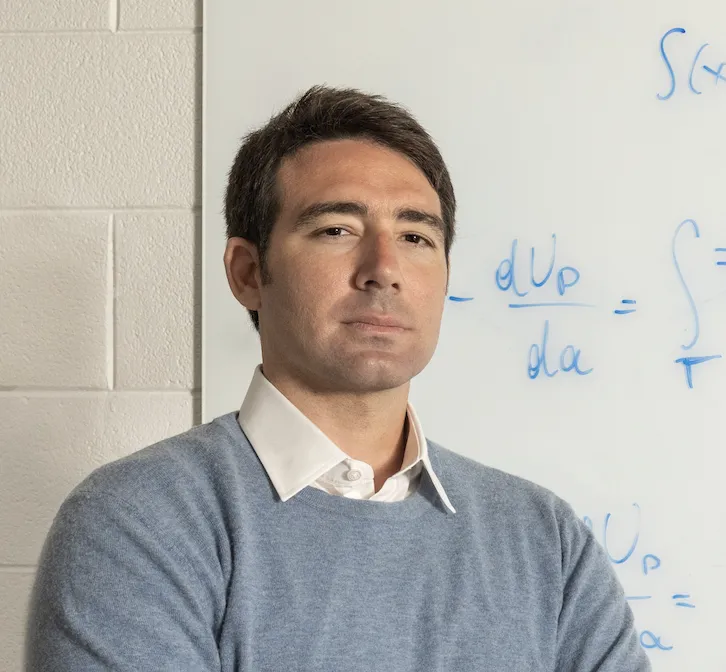
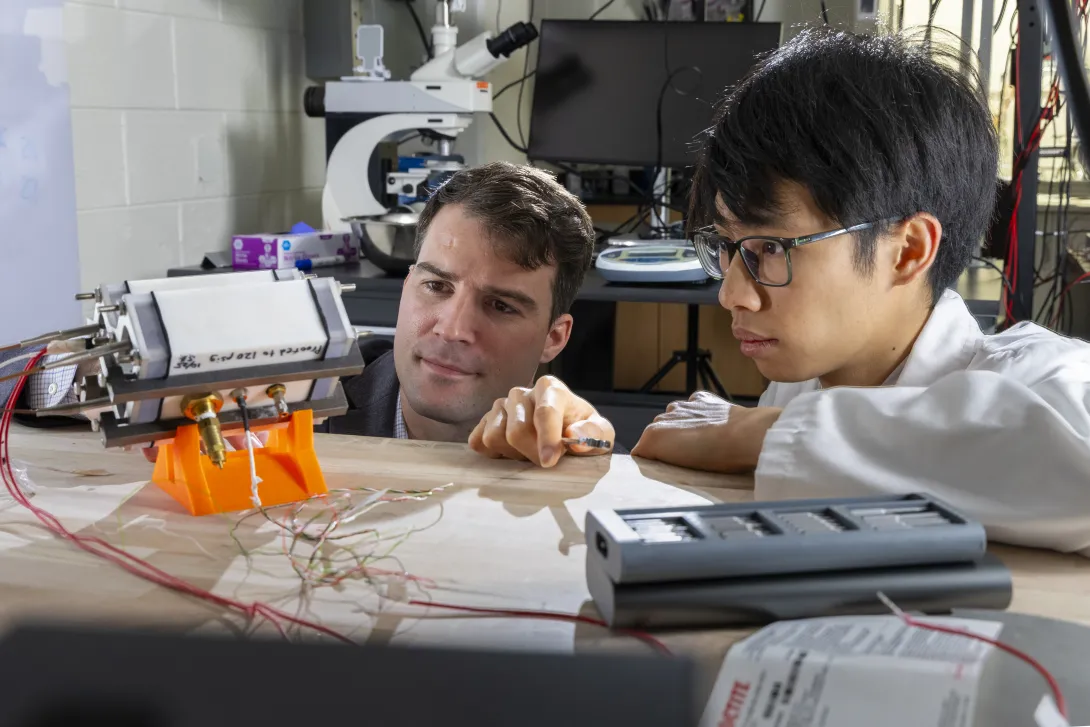
Christos Athanasiou, assistant professor in the Daniel Guggenheim School of Aerospace Engineering, has been selected to receive the 2025 Eshelby Mechanics Award for Young Faculty. Presented annually by the American Society of Mechanical Engineers (ASME), the award recognizes rapidly emerging junior faculty who exemplify originality, depth, and impact in the development and application of mechanics.
The Eshelby Mechanics Award was established in 2012 in memory of Professor John Douglas Eshelby to promote the field of mechanics, among young researchers. The award will be formally presented at the 2026 Applied Mechanics Division Awards Banquet during the ASME International Mechanical Engineering Congress and Exposition in November.
Athanasiou and his team advance the fundamental mechanics and physics of materials and translates these insights into systems-level design strategies that address global challenges in resource efficiency and sustainable development. His research integrates advanced experimental methods capable of capturing material behavior under realistic operational conditions, mechanics-based design principles, and tailored AI- and physics-informed modeling frameworks.
Together, these efforts enable the development of life-cycle-efficient, cost-effective materials and structures for applications ranging from sustainable packaging to aerospace systems and space construction. His recent work published in Proceedings of the National Academy of Sciences (PNAS) introduced a bioinspired framework to improve plastic recycling while addressing a foundational mechanics question: how can we build reliable structures from inherently variable materials?
Athanasiou is also the recipient of the 2024 NSF CAREER Award and the ASME Orr Early Career Award, and is a Climate Tech Fellow at the New York Climate Exchange.
News Contact
Monique Waddell
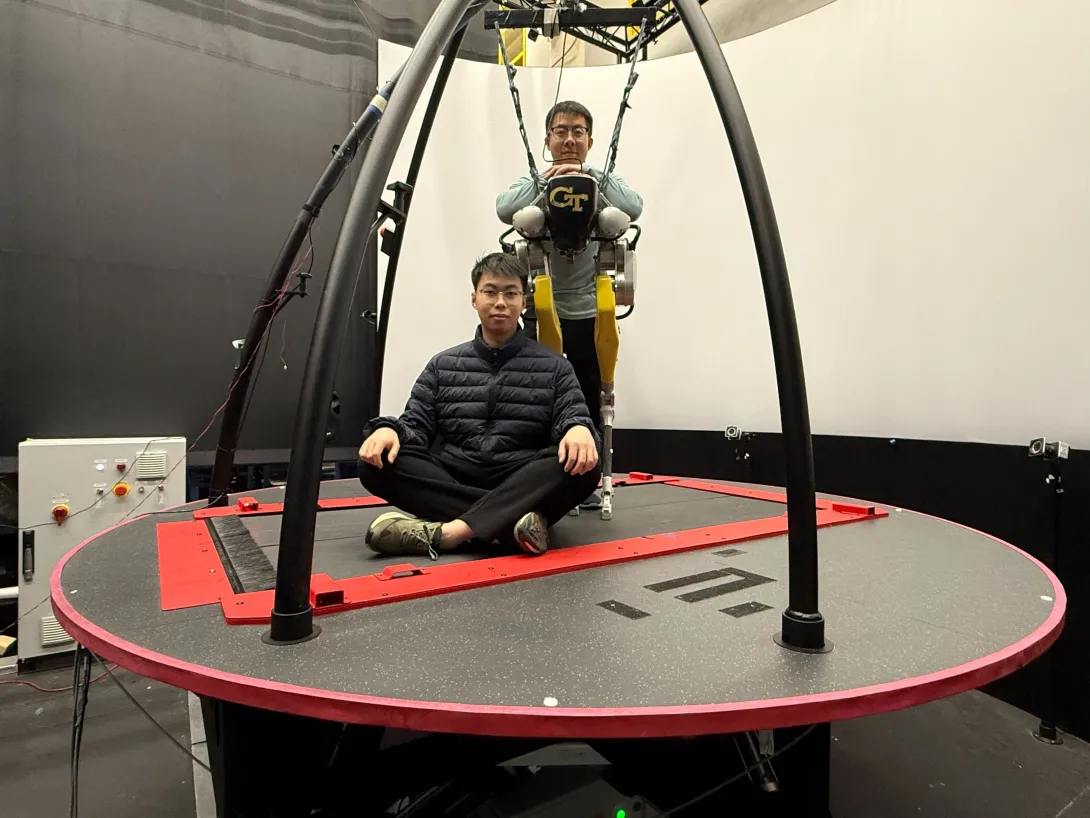
Yipu Chen (seated) and Zhaoyuan Gu (standing) on the CAREN treadmill system
“Humanoid robots are coming.”
While this statement might cause anxiety for some, for one Georgia Tech research team, working with humanlike robots couldn’t be more exciting.
Bipedal — or two-legged — autonomous robots can be quite agile. This makes them useful for performing tasks on uneven terrain, such as carrying equipment through outdoor environments or performing maintenance on an ocean-going ship. However, unstable or unpredictable conditions also increase the possibility of a robot wipeout.
The researchers, led by Ye Zhao, director of the Georgia Tech Laboratory for Intelligent Decision and Autonomous Robots (LIDAR), and Zhaoyuan Gu, a robotics Ph.D. student, wanted to develop a real-time planning and control framework that guarantees a robot's safety and recovery when traversing difficult terrain. The autonomous nature of this framework means the robots can make their own decisions without direct assistance from a human. For example, if an unexpected obstacle appears in its path, a robot equipped with this new framework could catch itself instead of falling.
Until now, there’s been a significant lack of research into how a robot recovers when its direction shifts — for example, a robot losing balance when a truck makes a quick turn. The team aims to fix this research gap.
Putting the Project Pieces Together
In an IEEE Transactions on Robotics paper, the researchers describe a first-of-its-kind strategy that gives robots a clear set of rules for reacting when something changes in its path. These rules help the robot make quicker decisions and take more confident steps. When the robot senses that its current plan might not keep it stable, it uses these rules to adjust its next few steps, so it can continue moving safely. In earlier experiments, which lacked this framework, two-legged robots struggled to identify a solution for stability and were prone to falling.
The researchers implemented the new framework with Cassie, a two-legged robot. Inside Tech’s 3,000-square-foot Human Augmentation Core Facility, the Cassie robot confidently walks on a Computer-Aided Rehabilitation Environment (CAREN) — a treadmill system that can be programmed to move in any direction at different times. When the team realized CAREN is limited in how much force it can inflict, they added a BumpEm system, which creates a stronger jerk to further stress-test Cassie’s gait.
The Results
Through these experiments, the researchers found that their new programming framework outperforms state-of-the-art methods with more certainty, faster decision-making, higher collision avoidance, and the ability to reliably walk on moving platforms and varying types of terrain.
Zhao said, “The results we got through this project are very impressive. They’re the most comprehensive and extensive hardware results we’ve published so far.”
Though significant, the real-world results weren’t perfect. The robot doesn’t perform as well when moving downhill, which requires it to take riskier steps and walk less efficiently. However, the only time Cassie completely failed to recover its gait was during a difficult scenario involving a very wide step and a cross-legged maneuver. Recovery simply wasn’t feasible given the spatial limits of the narrow treadmill.
Next Steps for Walking Robots
Overall, the researchers’ framework increases by 81% Cassie’s ability to recover from instability. The team noted that bipedal stability in robotics needs further research. If these walking robots are to be fully integrated into our society, they must be reliable.
“This paper may serve as a foundation for continued work on walking robots,” said Zhao. “Our work may inspire further research that can imitate or learn from the framework we’ve created.”
Other ways of walking recovery are yet to be tested. For example, humans often hop to counteract instability or uneven footing; mirroring this with two-legged robots could be the next step in the team’s research.
They would like to eventually enable the use of autonomous two-legged robots in marine environments, where ship maintenance and operations require risky, strenuous labor. Ideally, these robots could reliably, safely, and efficiently perform these kinds of tasks.
The project will be tested at sea through the Office of Naval Research in Arlington, Virginia.
“Humanoid robots are coming to your homes, coming to the factories, coming to logistics. They're going to show up on the street. It’s exciting,” said Gu.
Robotics engineers should consider not only a robot’s mechanical design, but also its algorithms, intelligence, and brain. Being able to safely and regularly interact with these robots requires this foundational work.
— By Chloe Morris
“Robust-Locomotion-By-Logic: Perturbation-Resilient Bipedal Locomotion via Signal Temporal Logic Guided Model Predictive Control.” https://doi.org/10.1109/TRO.2025.3582820
Funding for this research is provided by the Office of Naval Research Young Investigator Program and the National Science Foundation CAREER Program.
Researchers on this project include LIDAR Director Ye Zhao, Ph.D. student Zhaoyuan Gu, and master’s students Yuntian Zhao, Yipu Chen, and Rongming Guo. Other contributors from the Physiology of Wearable Robotics Lab include Gregory Sawicki, director, and Jennifer Leestma (Ph.D. ROBO, 2024).
This research is also supported by the Agile Locomotion and Manipulation team, part of Georgia Tech’s Vertically Integrated Projects program.
News Contact
Media contact:
Shelley Wunder-Smith
Director of Research Communications
Georgia Institute of Technology
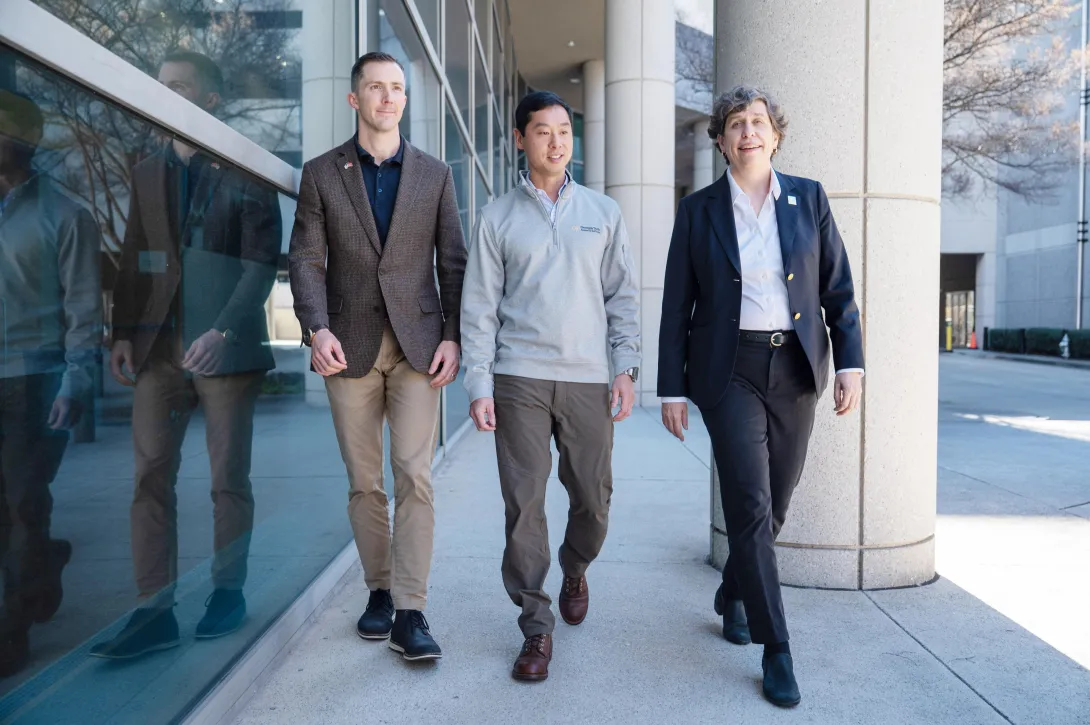
GTRI's Kyle Blond, Andrew Change, and Anne Clark
The Georgia Tech Research Institute (GTRI) conducts groundbreaking research for national defense, cybersecurity, and advanced technologies, making it a natural fit for veterans who want to keep serving. At GTRI, veterans aren’t merely continuing their careers; they’re shaping the future of defense and ensuring that those still in uniform have the tools needed for success. Together, their work creates a stronger military — and nation.
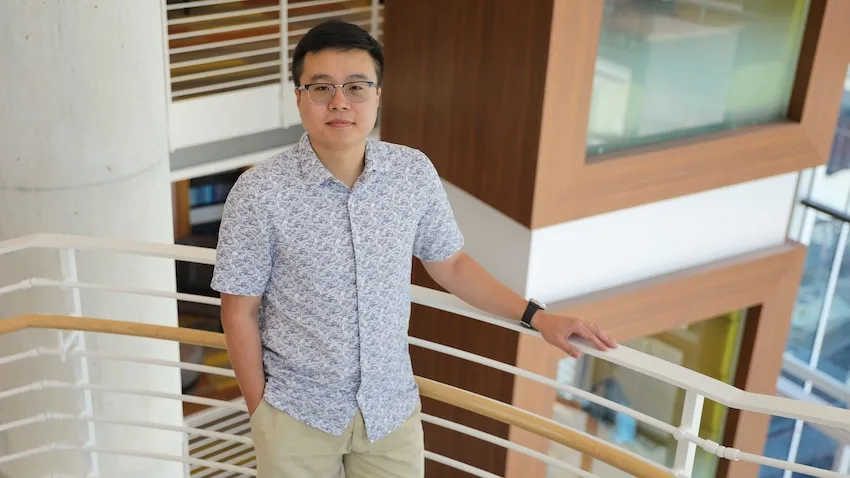
The future of clean energy depends on algorithms as much as it does atoms.
Georgia Tech’s Qi Tang is building machine learning (ML) models to accelerate nuclear fusion research, making it more affordable and more accurate. Backed by a grant from the U.S. Department of Energy (DOE), Tang’s work brings clean, sustainable energy closer to reality.
Tang has received an Early Career Research Program (ECRP) award from the DOE Office of Science. The grant supports Tang with $875,000 disbursed over five years to craft ML and data processing tools that help scientists analyze massive datasets from nuclear experiments and simulations.
Tang is the first faculty member from Georgia Tech’s College of Computing and School of Computational Science and Engineering (CSE) to receive the ECRP. He is the seventh Georgia Tech researcher to earn the award and the only GT awardee among this year’s 99 recipients.
More than a milestone, the award reflects a shift in how nuclear research is done. Today, progress depends on computing and data science as much as on physics and engineering.
“I am honored and excited to receive the ECRP award through DOE’s Advanced Scientific Computing Research program, an organization I care about deeply,” said Tang, an assistant professor in the School of CSE.
“I am grateful to my former colleagues at Los Alamos National Laboratory and collaborators at other national laboratories, including Lawrence Livermore, Sandia, and Argonne. I am also thankful for my Ph.D. students at Georgia Tech, whose dedication and creativity make this award possible.”
A problem in nuclear research is that fusion simulations are challenging to understand and use. These simulations generate enormous datasets that are too large to store, move, and analyze efficiently.
In his ECRP proposal to DOE, Tang introduced new ML methods to improve the analysis and storage of particle data.
Tang’s approach balances shrinking data so it is easier to store and transfer while preserving the most important scientific features. His multiscale ML models are informed by physics, so the reduced data still reflects how fusion systems really behave.
With Tang’s research, scientists can run larger, more realistic fusion models and analyze results more quickly. This accelerates progress toward practical fusion energy.
“In contrast to generic black-box-type compression tools, we aim at preserving the intrinsic structures of the particle dataset during the data reduction processes,” Tang said.
“Taking this approach, we can meet our goal of achieving high-fidelity preservation of critical physics with minimum loss of information.”
Computing is essential in modern research because of the amount of data produced and captured from experiments and simulations. In the era of exascale supercomputers, data movement is a greater bottleneck than actual computation.
DOE operates three of the world’s four exascale supercomputers. These machines can calculate one quintillion (a billion billion) operations per second.
The exascale era began in 2022 with the launch of Frontier at Oak Ridge National Laboratory. Aurora followed in 2023 at Argonne National Laboratory. El Capitan arrived in 2024 at Lawrence Livermore National Laboratory.
With Tang’s data reduction approaches, all of DOE’s supercomputers spend more time on science and less time waiting for data transfers.
“Qi’s work in computational plasma physics and nuclear fusion modeling has been groundbreaking,” said Haesun Park, Regents’ Professor and Chair of the School of CSE.
“We are proud of Qi and what this award means for him, Georgia Tech, and the Department of Energy toward leveraging computation to solve challenges in science and engineering, such as sustainable energy."
Previous Georgia Tech recipients of DOE Early Career Research Program awards include:
Itamar Kimchi, assistant professor, School of Physics
Sourabh Saha, assistant professor, George W. Woodruff School of Mechanical Engineering
Wenjing Lao, associate professor, School of Mathematics
Ryan Lively, Thomas C. DeLoach Professor, School of Chemical & Biomolecular Engineering
Josh Kacher, associate professor, School of Materials Science and Engineering
Devesh Ranjan, Eugene C. Gwaltney Jr. School Chair and professor, Woodruff School of Mechanical Engineering
News Contact
Bryant Wine, Communications Officer
bryant.wine@cc.gatech.edu
ATLANTA (Feb. 12, 2026) -- The National Academy of Inventors (NAI) has ranked Georgia Tech among the top 20 universities worldwide for U.S. utility patents granted in 2025. The Institute climbed to No. 19 internationally and 13 nationally as a result of its technology licensing office generating 128 patents. The recognition underscores the Institute’s success in moving research breakthroughs from the laboratory into the commercial marketplace, reflecting a coordinated intellectual property (IP) strategy that supports faculty, staff, and student inventors.
“Our global ranking is a testament to the culture of research innovation we are fostering at Georgia Tech,” said Raghupathy “Siva” Sivakumar, Georgia Tech’s vice president of Commercialization and chief commercialization officer. “Our goal is to ensure that every breakthrough in the lab has a clear, protected pathway to become a startup or product that changes lives. Breaking into the top 20 for the first time demonstrates the impact of our commercialization ecosystem in taking IP to market.”
Over the past five years, Georgia Tech has shown steady growth in its patent output, issuing more than double the number of patents as in 2020. With utility patents as a key indicator of bench-to-market success, they serve as the legal foundation for licensing agreements, industry partnerships, and the launch of new ventures. Through Technology Licensing at Georgia Tech, researchers receive guidance on disclosure, patent strategy, and protection pathways that help translate research outcomes into real-world applications.
“Our team’s mission is to serve as the gateway to smoothly transfer technologies from the lab to the real world,” said Mary Albertson, director of Technology Licensing at Georgia Tech. “By partnering with researchers early in the discovery process and navigating the complexities of patent protection, we help ensure Georgia Tech innovations are positioned for meaningful economic and societal impact.”
Released annually since 2013, the Top 100 Worldwide Universities Granted U.S. Utility Patents ranking highlights the critical role academic institutions play in the global innovation ecosystem. Through the translation of research into protected technologies, these institutions advance societal progress, while strengthening national and global economies.
News Contact

Advancing the frontiers of regenerative medicine means more than pushing scientific boundaries — it means improving and extending human life. The Regenerative Engineering and Medicine Center (REM) is a partnership with Georgia Tech, Emory University, and the University of Georgia (UGA) that supports this mission through inter-institutional collaborations in research in regenerative medicine.
Since 2010, competitive peer-reviewed seed grants have been awarded annually to interdisciplinary teams with representation from at least two of the three institutions, leading to clinical trials, licensed technologies, start-up companies, and external funding for additional research. The Parker H. Petit Institute for Bioengineering and Bioscience (IBB) is excited to announce the 2026 REM Collaborative Seed Grant awardees: Melissa Kemp (Georgia Tech) and Rabindra Tirouvanziam (Emory); Yang Liu (UGA) and Yong Teng (Emory); and Steven Stice (UGA) and Zhexing Wen (Emory).
Kemp and Tirouvanziam were awarded funding for their proposal, “Predicting Personalized Extracellular Vesicle (EV) Responses for Directed Myeloid‑Targeted Immunotherapy.” Their project combines computer modeling and lab‑grown lung tissue to better understand how immune cells communicate during lung infections and inflammation in different people. This research could help scientists design more precise, patient‑specific therapies for respiratory diseases, potentially improving treatments for conditions ranging from viral infections to chronic inflammation.
"We are grateful for the support from REM that allows us to extend our labs into new, interdisciplinary research,” Kemp said. “This pilot project will allow us to develop and experimentally validate multicellular models of the lung environment. Our goal is to use our platforms to test potential therapeutics that operate by controlling communication between cell types."
“It is wonderful to be supported by REM for this collaboration between Georgia Tech and Emory labs,” Tirouvanziam agreed. “We hope to turn this pilot into a large extramural project with a focus on novel immunotherapy.”
Liu and Teng were awarded funding for their proposal, “AI‑Guided Profiling of Migratory Cancer Stem Cell Communication in Head and Neck Cancer.” Their project aims to uncover how the most aggressive cancer stem cells move and “talk” to nearby immune and tissue cells, using advanced microfluidic tools and artificial intelligence to study how these cells help cancer spread and resist treatment. Understanding these hidden communication pathways could lead to earlier detection of dangerous cancer cell types and inspire new therapies that prevent recurrence and improve survival for patients with head and neck cancer.
“We combine microfluidic tools with artificial intelligence to monitor individual cancer cells in action and study how they interact with the immune microenvironment — capturing behaviors that are missed in bulk experiments and shedding light on how aggressive cancer cells escape therapy,” Liu said of the project.
Stice and Wen were awarded funding for their application, “Use of Alzheimer’s Disease Organoids to Assess Mesenchymal Stromal Cell–Derived Extracellular Vesicles Mechanism of Action.” Their project uses lab‑grown human brain organoids to study how tiny therapeutic particles called extracellular vesicles that are released by stem cells might reduce brain inflammation and protect neurons affected by Alzheimer’s disease. Revealing how these vesicles work at a molecular level could help advance new treatments that go beyond symptom management and move toward slowing or preventing Alzheimer’s progression.
“Extracellular vesicles (EVs) are used in the body to communicate with cells around an injury and are known to repair brain tissue in Alzheimer’s animal models,” Stice said. “Understanding the signaling mechanisms used by EVs in Alzheimer’s brain organoids will directly lead to better EV manufacturing processes and potency for neurodegenerative diseases, and ultimately better therapies.”
This year’s funded work illustrates how collaboration across institutions accelerates discoveries. Together, these teams are pushing healing technologies closer to real‑world impact, where they can make a tangible difference for patients affected by serious illness.
News Contact
Ashlie Bowman | Communications Program Manager
Parker H. Petit Institute for Bioengineering and Bioscience

“Cracks are complex — they interact with the material, change shape, and respond dynamically," says Kolvin. "All of this affects the overall toughness, and that impacts safety.” (Adobe Stock)

Itamar Kolvin
Imagine a material cracking — now imagine what happens if there are small inclusions in the material. Do they create an obstacle course for the crack to navigate, slowing it down? Or do they act as weak points, helping the crack spread faster?
Historically, most engineers believed the former, using heterogeneities, or differences, in materials to make materials stronger and more resilient. However, research from Georgia Tech is showing that, in some cases, heterogeneities make materials weaker and can even accelerate cracks.
Led by School of Physics Assistant Professor Itamar Kolvin, the study, “Dual Role for Heterogeneity in Dynamic Fracture,” was published in Physical Review Letters this fall.
While Kolvin’s work is theoretical, the results of the research are widely applicable. “Predicting this type of toughening effect helps engineers decide how much reinforcement to add to a material, and the best way to do so,” he says. “Cracks are complex — they interact with the material, change shape, and respond dynamically. All of this affects the overall toughness, which impacts safety.”
Building Strong Materials
The study found that the key to crack behavior starts at the microscopic level where the material’s microscopic structure influences how it resists cracks running at different speeds.
“Cracks propagate by breaking bonds, and that costs energy,” he explains. “On top of this, materials experience extreme deformations close to where the crack runs, which costs additional energy. In some materials, the amount of this energy cost can depend on the crack’s speed because of microscopic friction between molecules.”
Other materials, like window glass, are mostly indifferent to the crack speed. These materials are made of simple molecules, allowing a crack to propagate slowly or quickly using the same amount of energy. The researchers found that including heterogeneities can help strengthen these materials.
Materials made of more complex molecules, like polymer plastics and gels, on the other hand, are velocity dependent: it takes more energy for a crack to propagate faster. In these materials, heterogeneities are less effective at toughening, and if the crack is fast enough, heterogeneities could help it advance. “That’s something we didn’t expect when we started,” Kolvin says.
Disorder Versus Design
After discovering which types of materials can benefit from heterogeneities, Kolvin wanted to investigate the best way to add them. “Natural materials like rocks are usually very messy and disordered,” he explains, “but in engineering, heterogenous materials tend to be patterned.” For example, imagine a manufactured material: heterogeneities may be added in a grid-like or other patterned way. Now, contrast that with the irregular freckles and inclusions you might see in a rock found in a streambed.
Kolvin’s question was simple: which material was stronger? The results, again, were surprising. The disordered case — similar to what is found in nature — created the toughest material.
Among the patterned materials the team tested, only one was as tough as the disordered case — and every other pattern tested made the material weaker.
From Lab to Landscape
At Georgia Tech, Kolvin’s lab focuses on the mechanics of materials — both solid and fluid. “We are using our expertise in physics to explore questions across different fields,” he says. “A common concept is treating materials as continua — zooming out from molecular detail to look at how materials deform and flow at the large scale.”
This current research follows suit with applications ranging from investigating the smallest material microstructures to predicting earthquake fractures. “Earthquake faults are highly disordered, and simulating these ruptures is a major challenge, usually requiring supercomputers to solve crack propagation in three dimensions,” Kolvin says. “But with the tools our study has developed, we can simulate similar conditions and large systems using just a desktop computer.”
“This opens the doors for scientists, engineers, physicists, and geologists to explore problems right from their own computer, allowing more researchers access to more tools,” he adds. “And new tools often lead to new discoveries.”
News Contact
Written by Selena Langner
College of Sciences
Georgia Institute of Technology
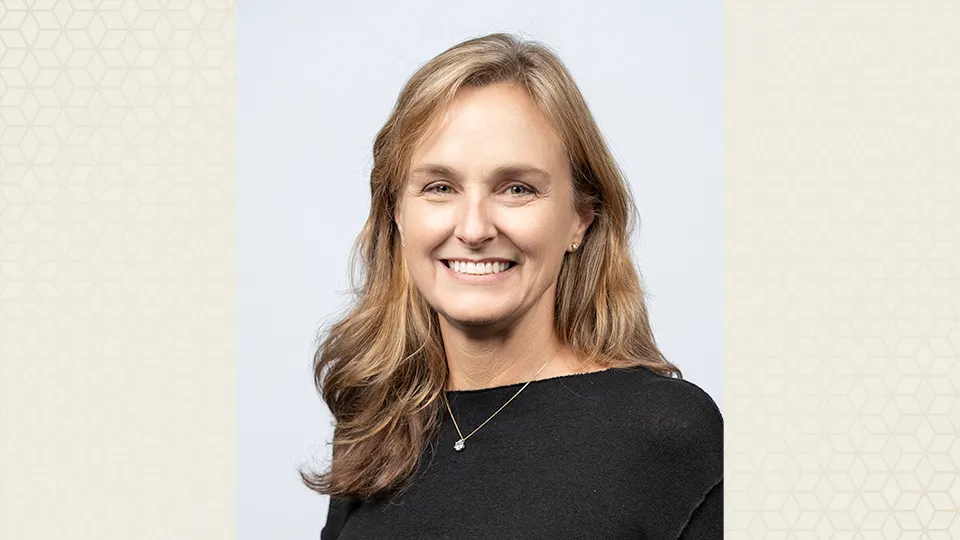
Leanne West, chief engineer of pediatric technologies at Georgia Tech and a national leader in pediatric health innovation, has been honored as a 2026 Innovator of the Year in Pediatric Health by the Atlanta Business Chronicle and selected as one of Titan CEO’s 2026 Georgia Titan 100 Honorees. These recognitions celebrate West’s leadership and impact in pediatric health innovation at both the local and national level. In January, West was also named chief research and innovation officer at Shriners Children’s, a role that expands her longstanding commitment to pediatric innovation.
For more than a decade, West has been instrumental in the partnership between Georgia Tech and Children’s Healthcare of Atlanta, working through the Pediatric Technology Center (PTC) to translate clinical needs into engineered solutions for children. In this role, she has worked alongside Children’s clinicians, nurses, and researchers to identify unmet needs, form multidisciplinary teams, and guide projects from early concepts through prototyping, validation, funding, and regulatory pathways. The Children’s Healthcare of Atlanta PTC established Atlanta as a nationally recognized hub for pediatric technology innovation enabling clinician-driven research, accelerating translational projects, and fostering a culture in which engineering solutions are shaped directly by real clinical experience.
In 2019, West began building a relationship with Shriners, working to understand their most pressing clinical needs. She then connected clinicians with researchers at Georgia Tech, Emory University, and Kennesaw State University to foster collaborations focused on real-world clinical challenges. She also supported teams with promising prototypes by helping them navigate national funding opportunities and pathways at the Federal Drug Administration (FDA), accelerating the transition from lab discoveries to patient care.
Over time, this steady engagement evolved into a strong research partnership. In June 2025, Shriners announced they are joining the robust pediatric innovation ecosystem in Atlanta by establishing the Shriners Children’s Research Institute (SCRI). SCRI will be co-located with Georgia Tech as the anchor tenant at Science Square. This investment will be transformational for the future of pediatric research and innovation in the state of Georgia.
“What excites me most is what we can accomplish together when we combine our strengths to align around a children-first mindset to improve the healthcare of children everywhere,” said West. “Kids will benefit in ways no one organization could achieve alone.”
West’s leadership in pediatric innovation doesn’t stop there. In November 2025, she consolidated three major gatherings into the first International Pediatric Healthcare Innovation Summit, combining the Pediatric Innovation Day, the International Society for Pediatric Innovation’s (iSPI) biennial PEDS2040 event, and the joint meeting of the FDA-funded Pediatric Device Consortia. The Summit highlighted the work of Children’s Healthcare of Atlanta, bringing together more than 150 representatives from children’s hospitals, startups, venture capitalists, clinicians, patients, and leaders from across the Georgia innovation ecosystem, strengthening the region’s global presence in pediatric health innovation.
As president of the International Children’s Advisory Network (iCAN), West continues to elevate the voices of young people with chronic and rare conditions and their caregivers. Under her leadership, iCAN partners with industry, regulators, and the FDA to ensure pediatric patients are included in device and drug development, clinical trials, healthcare education, and regulatory conversations. She also champions opportunities that train and inspire youth and early career professionals to pursue roles across healthcare and life sciences — from clinicians and innovators to public health leaders and patient advocates.
West served as an invited speaker at the 2025 World Health Organization’s World Children’s Health Day on the Importance of Clinical Trials for the Safety of Children, and at the FDA’s meeting on the Implementation of the Best Pharmaceuticals for Children Act and Pediatric Research Equity Act. She continues to contribute nationally through service on the Medical Device Innovation Consortium’s (MDIC) NEST executive committee to advance use of real-world evidence in regulatory submissions, particularly for pediatric devices, and the MDIC Patient Value committee. In addition, she serves on the iSPI executive team, the Patient Focused Medicines Development board, the Pediatric Trials Network steering committee, and as a judge for MedTech Innovator.
West’s awards and new role reflect the cumulative impact of more than a decade of leadership, partnership-building, and translational work across the worldwide pediatric ecosystem. West and her fellow honorees will be officially recognized at the 2026 Health Care Champion Awards on March 19 and at the Titan 100 Awards on May 7.
News Contact
Laurie Haigh
Institute Communications
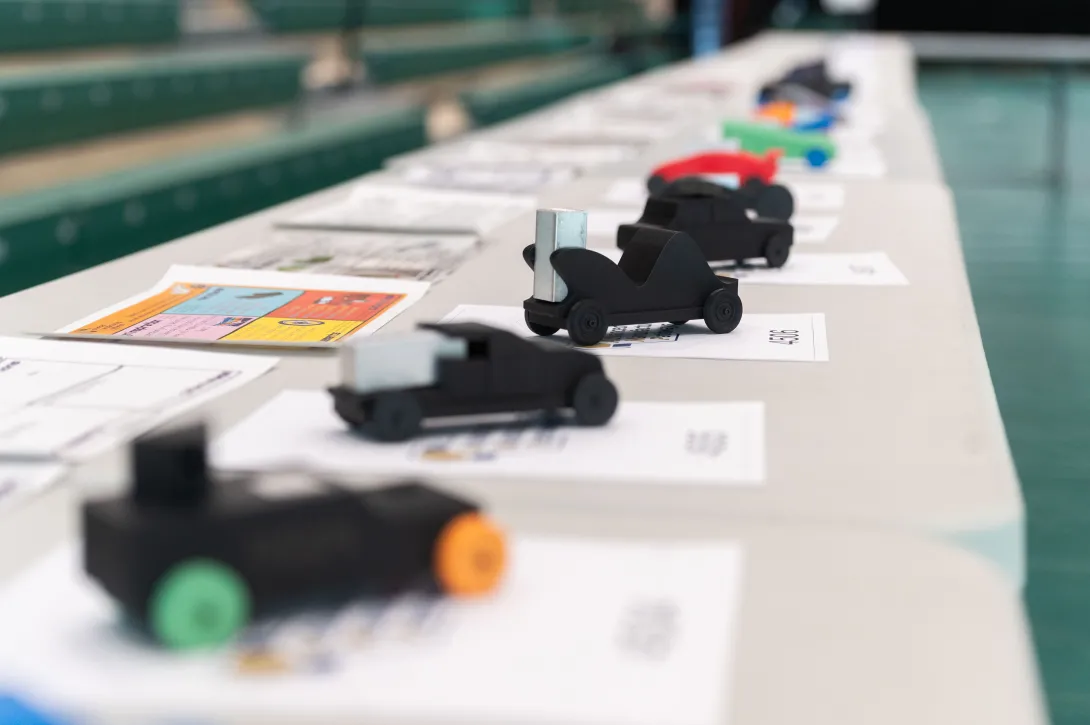
Students from three Southwest Georgia high schools put their engineering skills to the test at the Advanced Manufacturing Program’s first tri‑district race, showcasing custom cars they designed and built. With strong support from educators, industry partners, and local leaders, the program is fostering homegrown technical talent.
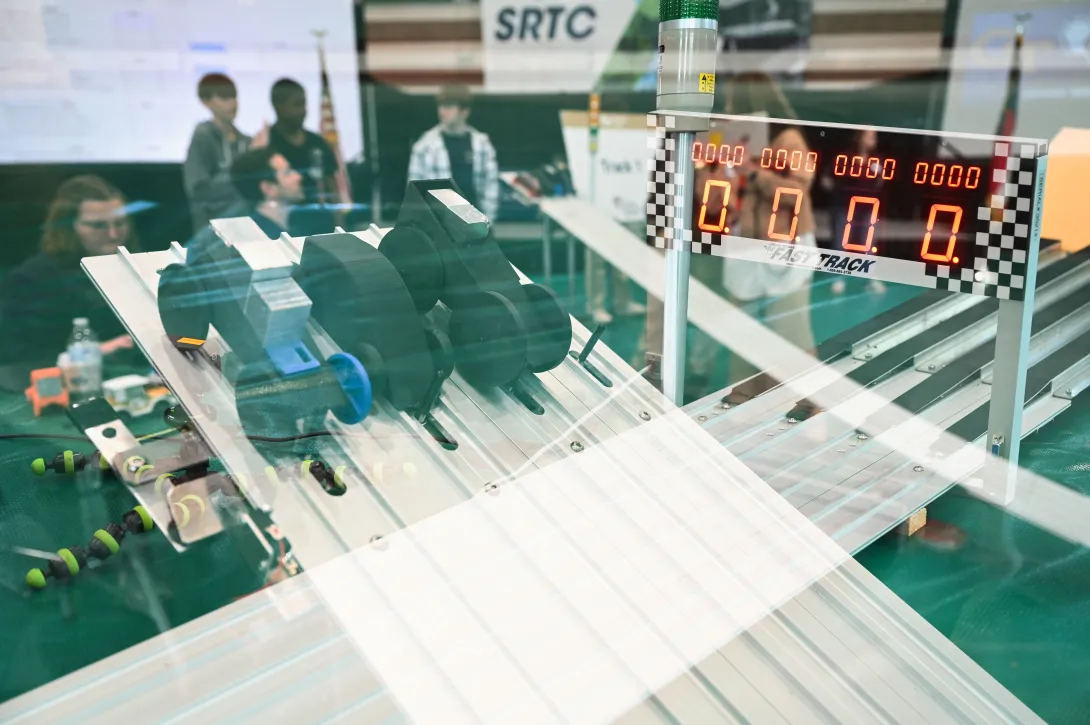
Each car on the track represents hours of programming, 3D printing, machining, and iterative design completed by students in the AMP program.
Students from three Southwest Georgia high schools put their engineering skills to the test at the Advanced Manufacturing Program’s first tri‑district race, showcasing custom cars they designed and built. With strong support from educators, industry partners, and local leaders, the program is fostering homegrown technical talent. As AMP expands to six schools, communities are beginning to imagine new possibilities for their future workforce.
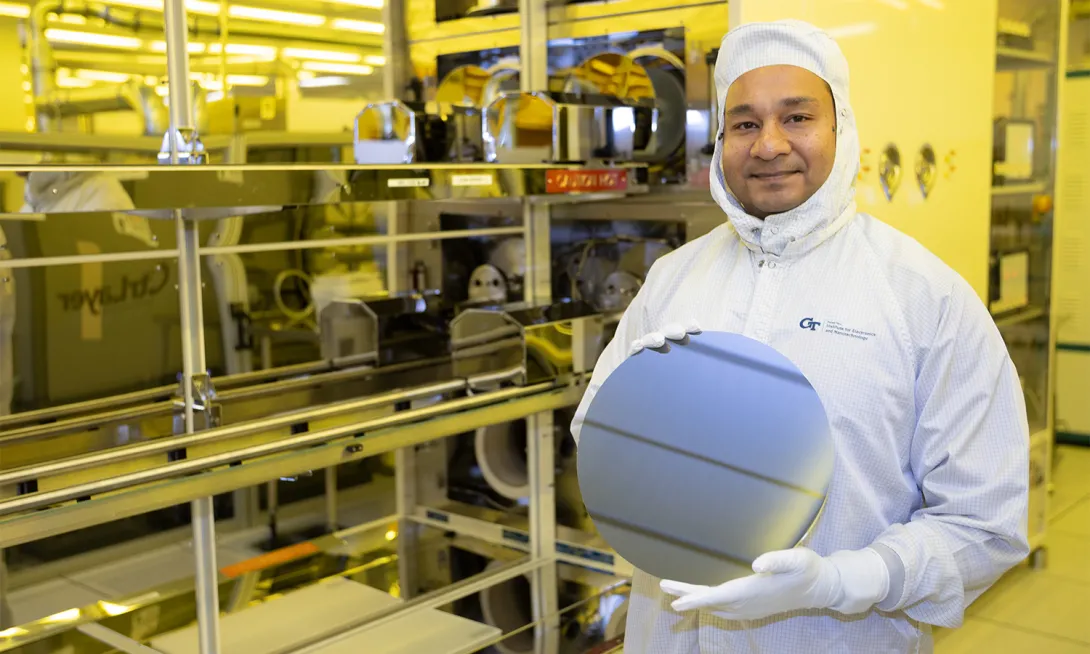
Asif Khan holds a silicon wafer in Georgia Tech’s cleanroom facility. Khan is trying to build new kinds of computer memory using fundamentally different mechanisms to store data. (Photo: Candler Hobbs)
The power of modern computing is hard to overstate.
Your smartphone has more than 100,000 times the power of the computer that guided Apollo 11 to the moon. It’s about 5,000 times faster than 1980s supercomputers. And that’s just processing power.
Apple’s original iPod promised “1,000 songs in your pocket” in 2001. Today’s average smartphone has enough memory to store 25,000, along with thousands more photos, apps, and videos.
This exponential leap in capability traces a prediction made in 1965 by Intel co-founder Gordon Moore. He suggested the number of transistors — tiny electronic switches — on a computer chip would double roughly every two years. Moore’s Law, as it became known, has served as a benchmark and guiding principle for the tech industry, influencing the trajectory of innovation for nearly six decades.
But now miniaturizing transistors has slowed. Headlines regularly declare Moore’s Law dead.
Arijit Raychowdhury sees it differently.
He said Moore’s Law was never just about shrinking transistors. It was about making computing better.
“Moore’s Law is fundamentally economic,” said Raychowdhury, Steve W. Chaddick School Chair of Electrical and Computer Engineering (ECE). “It’s not about the physics of making transistors smaller. It’s about the business imperative to deliver better performance, lower power consumption, smaller form factors, or reduced costs.”
News Contact
Dan Watson
School of Electrical and Computer Engineering