

The Parker H. Petit Institute for Bioengineering and Bioscience (IBB) at Georgia Tech has launched the Spatial Omics and Data Analytics (SODA) Center, a new interdisciplinary research hub advancing the next frontier of biomedical discovery.
The center is co-directed by Ahmet Coskun, Bernie-Marcus Early-Career Professor and Associate Professor in the Wallace H. Coulter Department of Biomedical Engineering, and Xiuwei Zhang, J.Z. Liang Early Career Associate Professor in the School of Computational Science and Engineering.
The rapidly growing field of spatial omics is a way to study lipids, genes, proteins, and other biological molecules while keeping track of where they are in tissue. This can allow researchers to determine how cells interact with their native environment, providing potentially critical information for the treatment of cancer and other diseases.
The SODA Center envisions a future where spatial omics is used to help researchers understand biological function through their precise spatial and temporal relationships within tissues and organs, rather than solely through molecular components. By integrating expertise in biomedical engineering and computational science, the center seeks to transform raw spatial omics data into predictive models of health and disease.
Through the development of next-generation analytical methods, computational tools, and open-source resources, SODA aims to empower researchers to map the cellular and molecular architecture of life with unprecedented resolution and translational impact. The center’s broader goal is to establish Georgia Tech as a global leader in spatial omics research.
To build community and foster collaboration, the center is launching the SODA Synergy Seminar Series, beginning May 15 from 12–1 p.m. in the Krone Engineered Biosystems Building, CHOA Seminar Room. This series will bring together researchers across disciplines to share emerging discoveries and accelerate innovation in spatial omics and data analytics.
The SODA Center represents a major step forward in uniting data science and bioengineering to unlock new insights into complex biological systems.
News Contact
Ashlie Bowman | Communications Manager
Parker H. Petit Institute for Bioengineering and Bioscience
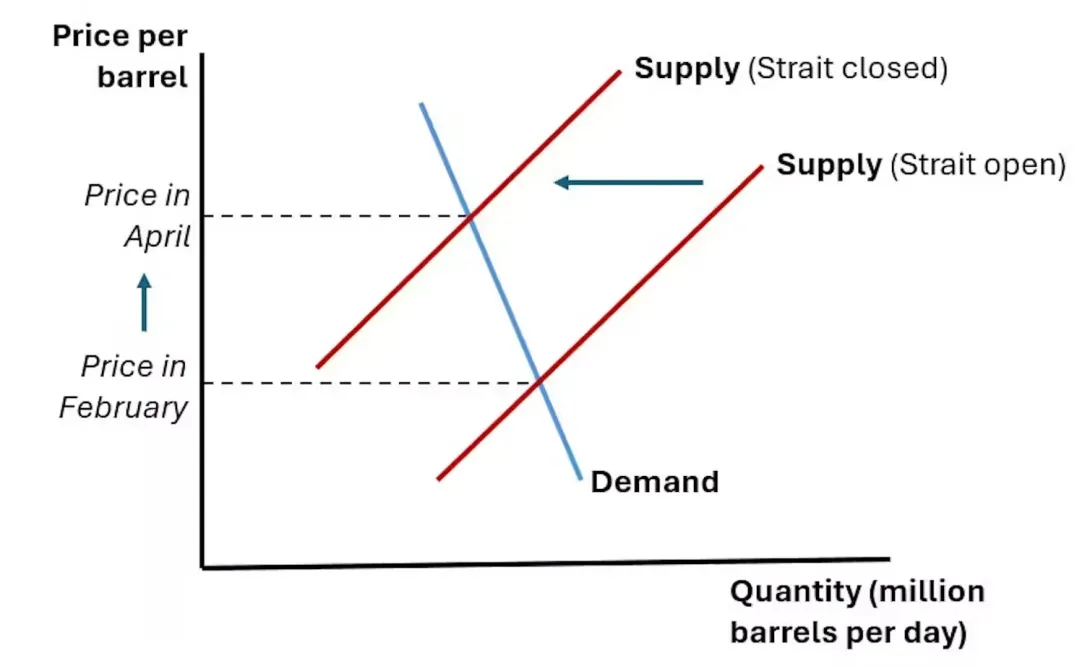
In general, when supply of a product is reduced, prices rise. As a result, even when demand remains stable, the quantity consumers buy decreases because of higher prices. Matthew E. Oliver and Tibor Besedeš, CC BY-NC-ND

A satellite photo shows damage from the war at Saudi Arabia’s Ras Tanura oil refinery, which must be repaired before full operations can resume. Satellite image (c) 2026 Vantor via Getty Images

Drilling rigs in the North Sea are still operating and shipping oil. AP Photo/James Brooks
The market for oil is global, which is why events like the war in Iran affect oil prices – and prices of the wide range of products made from oil – literally everywhere. Federal data shows that the price at the primary crude oil hub in the U.S. was US$66 a barrel in late February 2026 – before the U.S. and Israel attacked Iran – and $101 a barrel on April 13. Similar price increases have reverberated around the globe.
As an energy economist and an international trade economist, we field a lot of questions during such episodes, because when oil prices go up, manufacturers, businesses and ultimately consumers pay more.
Some basic economics
Crude oil may be the most important commodity in the global economic system.
It’s a literal fuel for the industrial economy. It powers the engines that drive transportation and paves the roads vehicles drive on. It’s a source for plastics from which the world’s products get made and packaged, and a key ingredient at some point in almost every supply chain. Even fertilizers that boost the food supply are made from it. In short, it is difficult to imagine modern life without oil and its derivatives.
And when its supply changes, its price changes. Economists explain this using a fundamental model of our field: the supply-demand diagram. When there’s less of something to go around, competition among consumers who want it and companies that need it can drive the price up.
Sometimes this process can play out over time, allowing people to adjust their purchasing or activities to dampen price shocks. But when a significant source of the world’s oil is effectively blocked without much advance notice, such as when the the U.S. and Israeli attacks on Iran closed the Strait of Hormuz, prices can rise sharply in a short period of time.
A natural question many people ask when oil prices spike is: Where does all that additional money go, and who benefits from it?
Some people have written entire books dissecting all the places that money goes when it leaves consumers’ pockets. But ultimately, the bulk of the money heads in the direction of the source of the oil itself – the oil companies.
What they do with the money varies widely, depending on where in the world an oil company is operating and who owns it. What also matters is the business environment – the set of laws and regulations – in which the company operates.
Middle East faces danger
Oil producers in the Middle East face significant new risk because of the war in Iran, including threats to production, processing locations and shipping routes. These risks raise their costs for insurance, security and transportation.
But production costs in the region are relatively low, so higher global oil prices typically still translate into strong profits.
For a major exporter such as Saudi Arabia, the government owns and controls nearly all oil production, so high prices generally benefit the government’s finances and investments, even during a war. In Saudi Arabia, oil revenue has historically been used to fund public spending.
West Texas gets a windfall
The Permian Basin, the largest oil field in the U.S., is a long way from the Persian Gulf. When global oil prices rise because of the war in Iran, oil companies operating in West Texas effectively get a windfall gain: Prices rise more quickly than costs, at least in the short run.
The immediate effect is more income from higher prices. The money largely goes to company owners – meaning shareholders – through dividends, debt reduction, company-backed purchases of its own stock, and reinvestment in drilling and production. Over time, companies may decide to spend some of that windfall on building more production capacity or pipelines to get more oil and gas to market.
North Sea boosts government revenue
In the North Sea, between the island of Great Britain and Scandinavia, a mix of multinational and government-owned companies produce most of the oil.
In the U.K., private shareholders are the primary beneficiaries of higher profits from increased oil prices, though an additional tax on oil and gas companies’ profits means the government also collects a significant share of the money, which it uses to help pay public expenses.
In Norway, oil revenues flow into the Government Pension Fund Global, the world’s largest sovereign wealth fund, valued at over $2 trillion. Laws govern how much, and for what purposes, money can be withdrawn from the fund, supporting public spending and preserving wealth for future generations. This is a similar model to Alaska’s state-owned program, funded by oil revenue, that pays for government services and sends an annual dividend to every permanent resident.
Russian oligarchs get rich
Russian oil is subject to stringent economic sanctions imposed by major industrial countries as a response to the Russian invasion and occupation of parts of Ukraine. While the U.S. cannot control how much Russia charges for its oil, it can control services needed to move Russian oil around the world. Under current price sanctions, Western shipping, insurance and financing can be used to ship and sell Russian crude oil only if the price is below $60 per barrel.
Russia’s oil industry is dominated by government-controlled companies whose leaders maintain close ties to President Vladimir Putin. The dealings of those shadowy figures are often shrouded in secrecy, but it is likely that they and Putin’s military-industrial complex – not the Russian people – are the main beneficiaries of high oil prices.
What this means for you
Everyday U.S. consumers may not like the idea of their hard-earned cash going into the already deep pockets of any of these groups. But in the short run, there’s not much to do but pay the price. For the long run, however, people around the world are already thinking and talking about, and opting for, sources of energy that don’t depend on fossil fuels.
This article is republished from The Conversation under a Creative Commons license. Read the original article.
News Contact
Authors
Matthew E. Oliver
Associate Professor of Economics, Georgia Institute of Technology
Tibor Besedeš
Professor of Economics, Georgia Institute of Technology
Media Contact
Shelley Wunder-Smith
shelley.wunder-smith@research.gatech.edu

Gas prices were well over $4 a gallon on April 28, 2026, in Brooklyn, N.Y. Spencer Platt/Getty Images
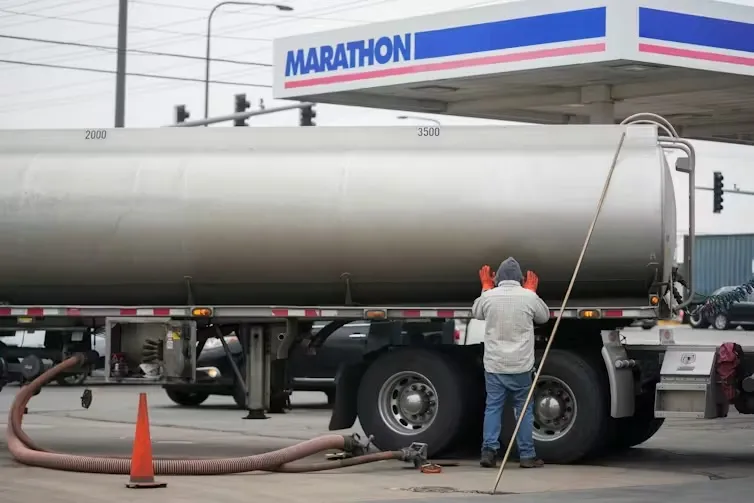
A tanker truck delivers fuel to a gas station. AP Photo/Erin Hooley

Suspending the Jones Act allows foreign-based oil tankers to sail between U.S. ports. AP Photo/Eric Gay
The U.S. Energy Information Administration expects nationwide retail gasoline prices to average near $4.30 a gallon for April 2026 – the highest monthly average of the year. The political response has been familiar. Georgia has suspended its state gas tax, other states are weighing their own tax holidays, and the White House has issued a temporary waiver of a law known as the Jones Act in hopes of moving more domestic fuel to East Coast ports.
As an energy economist, I am often asked about what contributes to gas prices and what different policies can do to affect them.
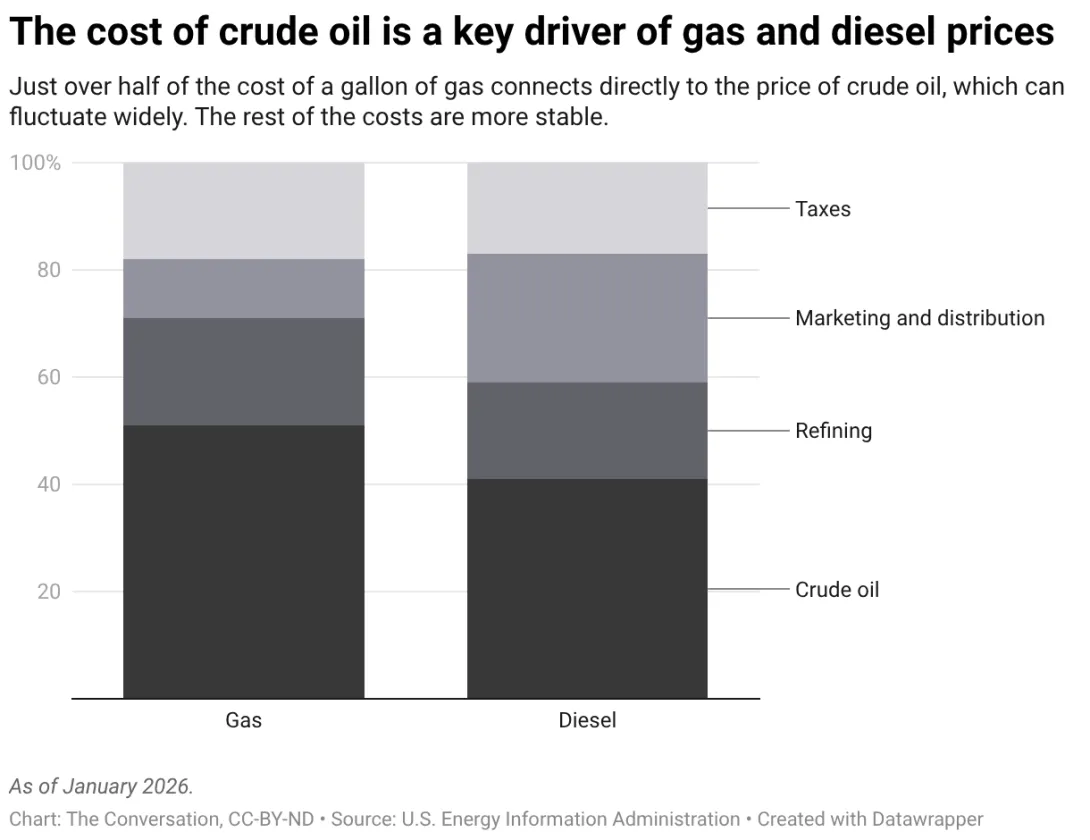
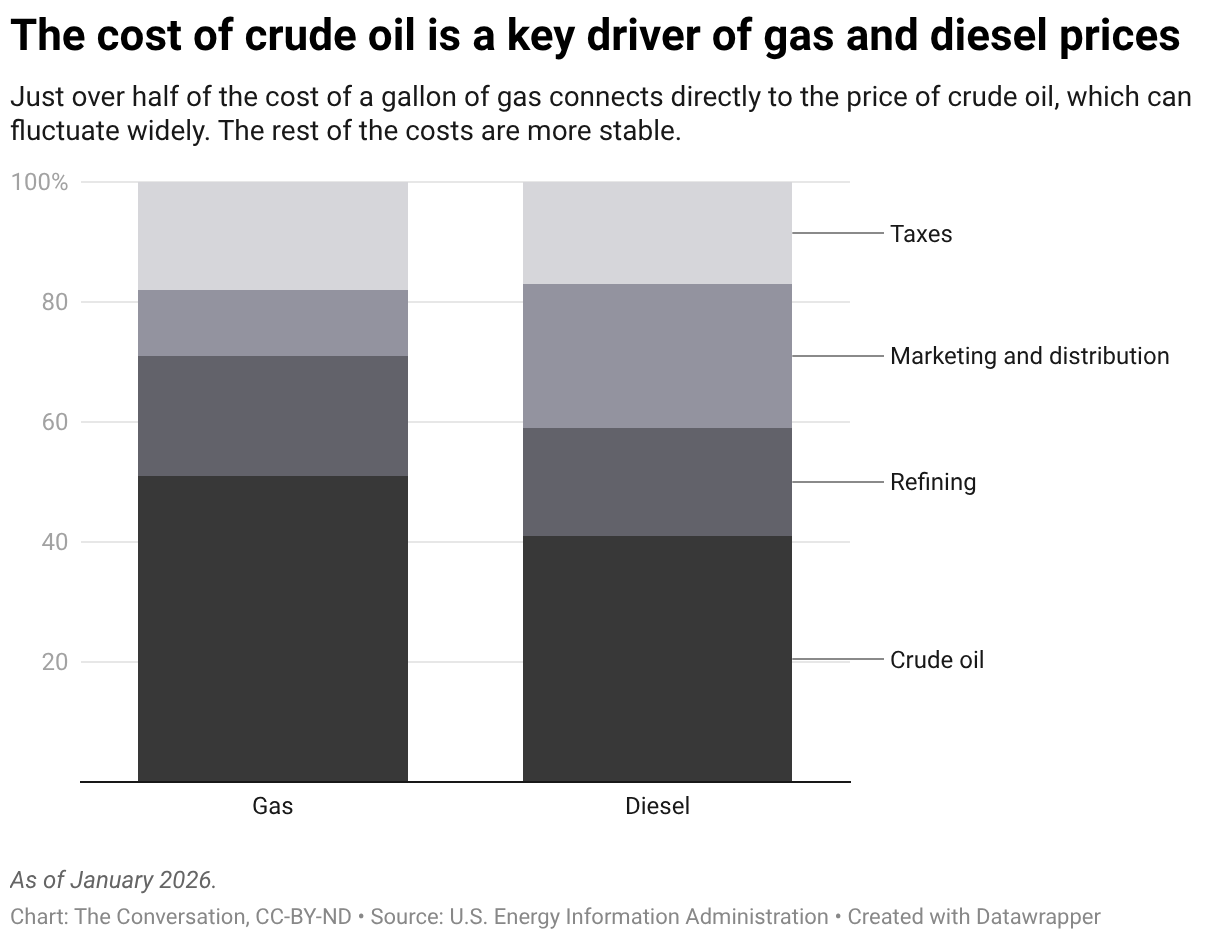
The price of a retail gallon of gas is the sum of four things: the cost of crude oil, refining, distribution and marketing, and taxes.
In nationwide figures from January 2026, crude oil accounted for about 51% of the pump price, refining roughly 20%, distribution and marketing about 11% and taxes about 18%. That mix shifts with conditions: When crude oil prices spike, that can drive more than 60% of the price; when the price drops, taxes and logistics are larger shares of the cost.
Crude Oil is the Biggest Ingredient
Because the price of crude oil is the largest element, most of the price at the pump is derived from the global oil market.
Usually, big swings in crude prices come mainly from shifts in global demand and expectations – not from supply disruptions, according to widely cited research in 2009 by the economist Lutz Kilian.
But what is happening in early 2026 with the war in Iran is one of the exceptions: a classic supply shock. Severe disruptions to shipping through the Strait of Hormuz and attacks on Middle East oil infrastructure have taken millions of barrels a day off the global market.
Most drivers generally can’t quickly reduce how much they drive or how much gas they use when prices rise, so gasoline demand doesn’t change much in the short run. That means a jump in crude costs tends to result in people paying more rather than driving less.
Refining, Regulations, and the California Puzzle
Refining turns crude into gasoline at industrial scale. The U.S. doesn’t have a single gasoline market, though. Roughly a quarter of U.S. gasoline is a cleaner-burning blend of petroleum-derived chemicals called “reformulated gasoline,” which is required in urban areas across 17 states and the District of Columbia to reduce smog.
California uses an even stricter formulation that few out-of-state refineries make. California is also geographically isolated: No pipelines bring gasoline in from other U.S. refining regions.
California’s gasoline prices have long run above the national average, explained in part by higher state taxes and stricter environmental rules. But since a refinery fire in Torrance, California, in 2015 reduced production capacity, the state’s prices have been about 20 to 30 cents a gallon higher than what those factors would indicate.
Energy economist and University of California, Berkeley, professor Severin Borenstein has called this the “mystery gasoline surcharge” and attributes it to the fact that there isn’t as much competition between refineries or gas stations in California as in other states. California’s own Division of Petroleum Market Oversight says the surcharge cost the state’s drivers about $59 billion from 2015 to 2024. It’s not exactly clear who is getting that money, but it could be gas stations themselves or refineries, through complex contracts with gas stations.
Getting the Gas Into Your Car
The distribution and marketing category covers the costs of everything involved in getting the gasoline from the refinery gate to your tank.
Gasoline moves by pipeline, ship, rail and truck to wholesale terminals, and then by local delivery truck to service stations.
At the retailer’s end, the key factors are station rent and labor, the cost to buy gasoline in bulk to be able to sell it, credit card fees of as much as 6 to 10 cents a gallon at current prices, and franchise fees paid to the national brand, such as Sunoco or ExxonMobil, for permission to put their branding on the gas station.
Most gas station operators net only a few cents per gallon on fuel itself – which is why many gas stations are really convenience stores with pumps out front. Borenstein and some of his collaborators have also documented that retail gas prices rise quickly when wholesale costs climb but fall slowly when wholesale costs drop.
The Question of Gas Tax Holidays
The federal government charges a tax on fuel, of 18.4 cents a gallon for gasoline and 24.3 cents a gallon for diesel. States charge their own taxes, ranging from 70.9 cents a gallon for gas in California to 8.95 cents in Alaska.
When gas prices rise, many politicians start talking about temporarily suspending their state’s gas tax. That does reduce prices, but not as much as politicians – or consumers – might hope. Research on past gas tax holidays has found that consumers get about 79% of the reduction in gas taxes. That means oil companies and fuel retailers keep about one-fifth of the tax cut for themselves rather than passing that savings to the public.
Gas tax holidays also reduce funding for what the taxes are designed to pay for, typically roads and bridges. That pushes road and bridge upkeep costs onto future drivers and general taxpayers.
There is an additional problem, too: Taxes on gasoline are supposed to charge drivers for some of the costs their driving imposes on everyone else – carbon emissions, local air pollution, congestion and crashes. But Borenstein has found that U.S. fuel tax levels are already far below the true cost to society. Removing the tax on drivers effectively raises the costs for everyone else.
The Jones Act: A Small Number That Adds Up
The 1920 Jones Act is a federal law that requires cargo moving between U.S. ports to travel on vessels built and registered in the U.S., owned by U.S. citizens, and crewed primarily by U.S. citizens and permanent residents. Of the world’s 7,500 oil tankers, only 54 meet this requirement. Only 43 of these can transport refined fuels such as gasoline.
So, despite significant refining capacity on the Gulf Coast, some U.S. gasoline is exported overseas even as the Northeast imports fuel, in part reflecting the relatively high cost of moving fuel between U.S. ports.
Economists Ryan Kellogg and Rich Sweeney estimate that the law raises East Coast gasoline prices by about a penny and a half per gallon on average, costing drivers roughly $770 million a year. In light of the war’s effect on gas prices, the Trump administration has temporarily suspended the Jones Act requirements – an action more commonly taken when hurricanes knock out Gulf Coast refineries and pipeline networks.
What Moves the Number
The result of all these factors is that the price that drivers see at the pump mostly reflects the global price of crude, plus a stack of domestic costs, only some of which are inefficient.
Tax holidays give a partial, short-lived rebate. Jones Act waivers trim pennies, though permanent repeal may cause more fundamental changes, such as reduced rail and truck transport of all goods, which could lower costs, emissions and infrastructure damage associated with cargo transportation. Harmonizing fuel blends across states and seasons may lower prices somewhat, but likely at the expense of increased emissions.
Ultimately, the best protection against oil price shocks is a more efficient gas-burning vehicle, or one that doesn’t burn gasoline at all. In the meantime, the best I can offer as an economist is clarity about what that $4.30 actually buys.
This article is republished from The Conversation under a Creative Commons license. Read the original article.
News Contact
Author:
Assistant Professor of Economics, Georgia Institute of Technology
Media Contact:
Shelley Wunder-Smith
Director of Research Communications
Georgia Institute of Technology
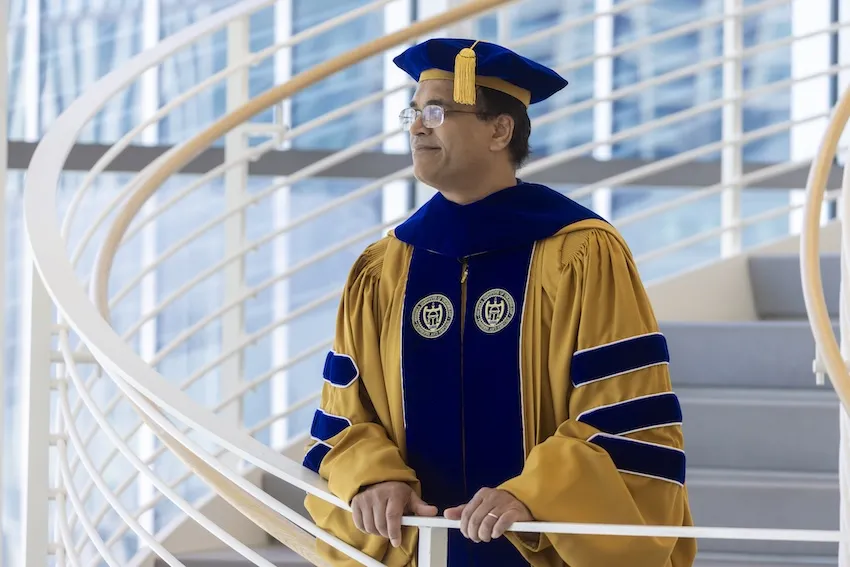
52-Year-Old Entrepreneur Has New Outlook After Completing Ph.D.
Mizan Rahman knows there’s much that academia and industry can learn from each other.
He’s living proof of it.
The 52-year-old entrepreneur will receive his Ph.D. in human-centered computing (HCC) as he walks across the stage on Thursday at Georgia Tech’s Spring 2026 Ph.D. Commencement.
When Rahman was accepted into the HCC Ph.D. program, he’d already founded three successful tech startups and was an angel investor in numerous others. He also earned a master’s in computational science and engineering from Georgia Tech in 2013.
Rahman took on the challenge of a Ph.D. because he’s always been in pursuit of a holistic view of technology. One perspective he said he needed to understand was that of the end user.
“I’d already done computer science and computational science and engineering, so I wanted to look at the human dimension, the user’s perspectives, and society,” Rahman said. “You’ve got to build technology that fits into our human dynamics.”
Rahman’s journey began as an undergraduate in chemical engineering at Miami Dade College and Florida Atlantic University. He switched to computer science after his roommate, also a CS major, showed him some programming he had been working on.
“I couldn’t sleep after that,” Rahman said. “I was writing software all night. I loved solving problems through technology.”
Early Success
Rahman invented BayBuilder, a strategic sourcing automation technology, in 1999. The software was adopted by major Fortune 500 companies. Rahman estimates it has saved these companies $1 billion in procurement spending.
Baybuilder was acquired by a NASDAQ-listed firm in 2001, and he was ready to start his next company.
“I’ve been an entrepreneur as far back as I can remember,” Rahman said. “I was born with it. If I saw something that didn’t exist, I created it.”
After relocating to Atlanta, Rahman founded a new company, M2SYS Technology. Governments around the world used the company’s innovative identity technology to automate processes and deliver efficient services to citizens. M2SYS also worked with the CDC to treat HIV in Haiti and Zambia, as well as many U.S. hospitals, including Grady Memorial in Atlanta, to protect patients from fraud and receiving the wrong treatment.
Rahman’s most recent startup, CloudApper AI, introduced a new system architecture that generates secure software requiring minimal ongoing maintenance. His non-biased algorithm, which he created during his Ph.D. for CloudApper, is now used by major companies to streamline automated resume analysis and candidate scoring.
Living in Two Worlds
Rahman began his Ph.D. in 2021, but he kept his new venture to himself and his family. He didn’t tell his employees he was pursuing a Ph.D., and he didn’t disclose his industry background to his fellow doctoral students.
“I kept the other side of me far away,” he said. “The people who knew, they knew, but I purposefully didn’t discuss my outside activities and experience. I wanted to fit in, and I think I was able to do that.”
When Rahman was at his company, he was a CEO and entrepreneur, and when he was at Georgia Tech, he was a researcher. But what he was learning as a researcher began to change how he perceived his business.
“I wanted to be a researcher and think like a researcher and not just always think about sales and marketing,” he said. “I started bringing in more ideas about how the user should be thought of in our products. I’m sure they were wondering why I was emphasizing that so much, but it was because I was applying what I was learning in my Ph.D.
“Now I’ve been on both sides, I want to be connected to both in the future, applying research principles and practices in product development and innovation.”
Building Community Through Makerspaces
When it came time for Rahman to choose a subject for his dissertation, he returned to his roots and looked for ways technology can support young entrepreneurs and their startups. That’s when he began conducting research in makerspaces.
“I wanted to find out how we can bring innovation to a scale where anybody can participate,” he said. “I saw this happening in makerspaces where regular people learn, collaborate, and build products and companies from scratch. I saw that the community at large is facing a sustainability crisis.”
Rahman argued in his dissertation that makerspaces can play a significant role in local innovation. When people struggle to survive, it disrupts communities in numerous ways.
Rahman details four studies conducted over three-and-a-half years that show how socio-technical factors drive organizational sustainability in makerspaces and how AI tools can foster an innovative culture within them.
“The compelling thing about his research is that he shows that people come to makerspaces for the tools, but they stay for the people,” said Rosa Arriaga, associate professor and Rahman’s advisor.
“He has plenty of work from his ethnographic research that shows that a makerspace can have all the tech and resources, but if there isn’t cohesion among the people, there’s a problem.”
It Takes a Village
Rahman is the first to admit that it’s not possible for one man to run a company while pursuing a Ph.D. He needed a community. This starts with his family. His wife, Mohu Sultana, now serves as interim CEO of M2SYS and has supported Rahman throughout his Ph.D. research.
The Georgia Tech community has been part of Rahman’s life in some way since he started his career.
Sultana holds a bachelor’s degree in computer science from Tech, and their daughter, Malisha Rahman, is graduating this week with a bachelor’s in economics and international affairs. Malisha Rahman has also been accepted into the HCC program and will begin her Ph.D. in the fall.
Rahman said that any student who wants to create a tech startup will have an advantage from access to Georgia Tech’s network.
“The Georgia Tech startup community is fantastic,” he said. “There is a tremendous amount of knowledge here, and the research community can help shape the next big thing. We have CREATE-X, a place where you can find mentorship from faculty who started in industry. You’ll learn things I wish I knew before I started.”
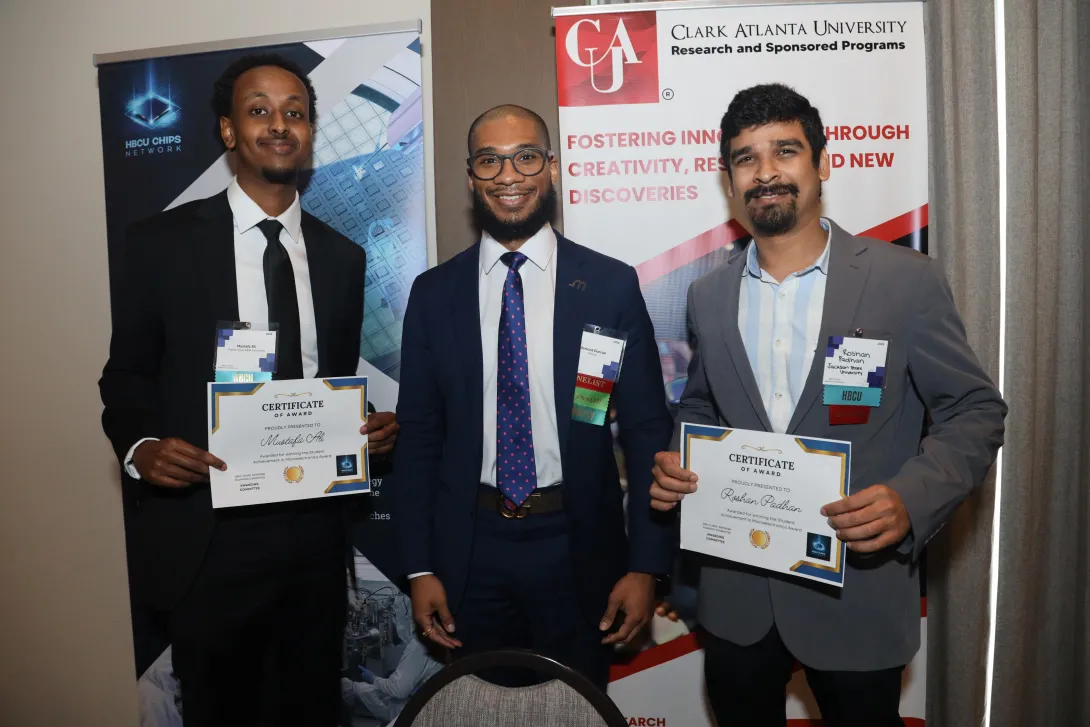
Pictured (left to right): Mustafa Ali, Armond Duncan, and Roshan Padhan
The 2026 HBCU CHIPS Network Conference, co-hosted by Georgia Tech and held April 1-2 at the Renaissance Atlanta Midtown Hotel, brought together students, faculty, researchers, industry leaders, and federal partners to advance innovation and workforce development in the U.S. semiconductor ecosystem. By pairing technical programming with a dedicated career fair, the event emphasized both learning and direct access to opportunities.
Now in its second year, the conference continues to grow as a national platform for collaboration across more than 30 Historically Black Colleges and Universities (HBCUs), all working to strengthen diversity and talent pipelines in microelectronics and semiconductor industries. Centered on the theme of Championing New Approaches to Reestablishing U.S. Dominance in Semiconductors and Microelectronics, the event featured technical sessions, panel discussions, poster presentations, and networking opportunities.
“This conference provides a national platform to showcase the depth of talent within the HBCU community, including leading edge research and innovation,” said George White, executive director of strategic partnerships and chief CHIPS strategy officer at Georgia Tech. “It also raises awareness of public and private funding opportunities and promotes collaboration across academia, industry, and government.”
Attendance reflected strong interest across the network. The conference drew approximately 180 participants, including representatives from 26 HBCUs, 17 industry and nonprofit organizations, five government agencies, and the Technical College System of Georgia. The career fair attracted 231 students from the same 26 institutions.
The addition of the career fair this year, which created space for more focused interaction between students and employers, gave students opportunities to speak one-on-one with recruiters and industry professionals. These conversations gave them a clearer understanding of career pathways, available roles, and how to enter the field.
“This experience strengthened my interest in pursuing a career in the semiconductor industry, particularly in fabrication, validation, and reliability,” said Mustafa Ali, a student at Prairie View A&M University and a Student Achievement in Microelectronics Award recipient. “Engaging with both industry professionals and the academic community showed me the importance of connecting research with real-world applications.”
The addition of the career fair also reflects the broader mission of the HBCU CHIPS Network: not only to advance research, but also to build a robust, diverse talent pipeline ready to meet the nation’s growing demand for semiconductor professionals. With the U.S. projected to need tens of thousands of new workers in this sector in the coming years, integrating a career fair directly into the conference experience ensures that students are not just participants in conversations, but active candidates in the future workforce.
Six employers participated in the career fair: Savannah River National Laboratory, Sandia National Laboratories, Teradyne, GlobalFoundries, Synopsys, and Micron. They offered internships and full-time positions, while also connecting with students interested in long-term career development. Graduate programs from Clark Atlanta University, Norfolk State University, Georgia Tech, and North Carolina A&T State University were also represented, highlighting academic pathways alongside industry roles.
“At Teradyne, we believe that innovation thrives when our teams reflect the full spectrum of talent and perspectives that exist across the engineering landscape,” said Danielle S. Ferguson-Macklin, talent communities program manager at Teradyne. “HBCUs have a proven legacy of cultivating exceptional STEM talent, and partnering with these institutions allows us to connect with students who bring both technical rigor and a deep sense of purpose to their work. Strengthening our HBCU recruiting pipeline is not a diversity initiative; it is a strategic investment in the future of our workforce and the semiconductor industry.”
“We look for students with strong technical foundations, intellectual curiosity, and the adaptability to thrive in fast-moving, complex environments,” added Armond Duncan, staff program manager, MSI network collaboration, at Micron. “Collaboration, communication, and a willingness to continuously learn are just as critical as technical acumen. Students who demonstrate hands-on experience and a clear sense of purpose are best positioned to make an immediate and lasting impact.”
Beyond recruitment, the event placed a strong emphasis on mentorship and networking. Many students sought guidance in addition to job opportunities, and the format of the career fair, supported by shared meals and informal spaces, encouraged natural conversations and relationship-building. For some students, the experience highlighted the value of connecting research to industry trends.
“Attending the conference was an extremely enriching experience,” said Roshan Padhan, a student at Jackson State University and another Student Achievement in Microelectronics Award recipient. “It further motivated me toward the advancement of next-generation semiconductor devices and provided a broader understanding of how academic research translates into real-world technological innovations.”
Sustained engagement throughout the event highlighted the demand for career-focused programming within the HBCU CHIPS Network. Organizers expect that demand to continue growing. “In the coming years, we expect the conference to expand in scope and impact,” White said. “Ultimately, our goal is for many — if not all — HBCUs to have awareness of, representation at, and meaningful participation in the conference.”
News Contact
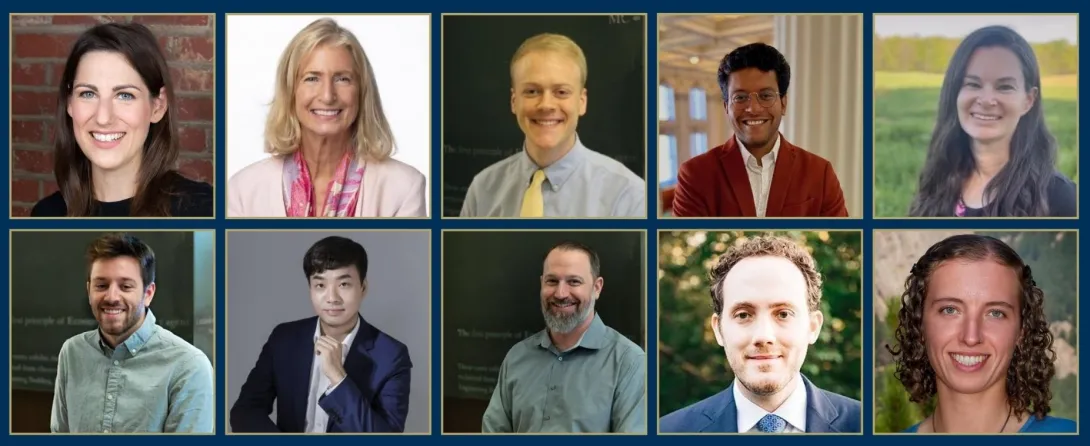
EPIcenter ACCELERATE Program Recipients: Top (Left to Right) - Clio Andris, Marilyn Brown, Dylan Brewer, Gaurav Doshi, Michelle Graff; Bottom (Left to Right) - Tony Harding, Brian An, Matt Oliver, Micah Ziegler, Constance Crozier
The Energy Policy and Innovation Center (EPIcenter) at Georgia Tech has awarded funding to a new cohort of faculty through its ACCELERATE program, an initiative designed to strengthen Georgia Tech’s thought leadership and real‑world impact in energy policy, decision‑making, and innovation across the Southeast.
Eight faculty members received funding for projects that advance Georgia Tech energy research by generating early insights, expanding shared research tools, and exploring solutions related to energy policy, grid reliability, clean energy incentives, and industry‑driven innovation shaping Georgia’s energy future.
By supporting timely, policy-relevant research and engagement that connect Georgia Tech expertise with pressing regional energy challenges, the ACCELERATE program encourages collaboration across the Institute and with external partners, supports graduate student involvement, and amplifies research outputs that inform policy, regulatory, and market decisions.
“ACCELERATE is designed to help early- and mid-career faculty move quickly on ideas that can shape energy policy and practice,” said Laura Taylor, director of EPIcenter. “By supporting both early‑stage collaboration and more developed policy research, the program enables Georgia Tech researchers to engage decision‑makers and stakeholders when it matters most.”
Proposals considered for funding were grounded in policy and behavioral research, including studies that examined how past or potential policies and regulations worked, and analyses of current market and behavioral outcomes that revealed management, policy, or regulatory gaps and opportunities.
Funded projects span a range of disciplines and policy‑focused topics aligned with EPIcenter’s mission, with a strong emphasis on challenges facing Georgia and the Southeast. Collectively, the awards support research development, data creation, stakeholder engagement, and public-facing thought leadership intended to inform energy policy and implementation.
"As electricity demand grows, it is increasingly important to understand how industrial processes could use energy flexibly to enable efficient use of renewable resources like solar and wind,” said Micah Ziegler, assistant professor in the School of Chemical and Biomolecular Engineering and the Jimmy and Rosalynn Carter School of Public Policy. “Support from the EPIcenter ACCELERATE program enables us to ask fundamental questions about how to design flexible systems and supply chains."
Awards ranged from $5,000 to $75,000. Projects that received ACCELERATE funding include:
Measuring the Alignment Between Legislators’ Energy Bill Votes and Their District Characteristics in the Georgia House of Representatives
Faculty Researcher: Clio Andris, Associate Professor, School of City and Regional Planning and School of Interactive Computing
Strengthening Georgia Tech’s National Energy Modeling of Priority Research Areas
Faculty Researcher: Marilyn Brown, Regents' Professor and Brook Byers Professor of Sustainable Systems, Jimmy and Rosalynn Carter School of Public Policy
Protecting Consumers From Price Volatility: Evidence and Policy Lessons From Georgia's Natural Gas Market
Faculty Researcher: Dylan Brewer, Assistant Professor, School of Economics
Can Place-Based Incentives Accelerate the Energy Transition?
Faculty Researcher: Gaurav Doshi, Assistant Professor, School of Economics
The Revolving Door in Utility Regulation
Faculty Researcher: Michelle Graff, Assistant Professor, Jimmy and Rosalynn Carter School of Public Policy
How Do Data Centers Affect Tradeoffs Between Reliability and Decarbonization?
Faculty Researchers: Tony Harding, Assistant Professor, Jimmy and Rosalynn Carter School of Public Policy, and Brian An, Assistant Professor, Jimmy and Rosalynn Carter School of Public Policy
Calculating the Emissions Cost of the Solar Rebound for the United States
Faculty Researcher: Matt Oliver, Associate Professor, School of Economics
Evaluating Long-Duration Flexibility of Industrial Demand in Electric Power Systems
Faculty Researchers: Micah Ziegler, assistant professor, School of Chemical and Biomolecular Engineering and the Jimmy and Rosalynn Carter School of Public Policy, and Constance Crozier, Assistant Professor, H. Milton Stewart School of Industrial and Systems Engineering
ACCELERATE is an annual program open to all Georgia Tech faculty, focusing on policy‑ and decision‑relevant research that advances energy affordability, reliability, resilience, and decarbonization in the region.
More information about EPIcenter’s research areas and programs is available at epicenter.energy.gatech.edu.
News Contact
Priya Devarajan || SEI Communications Program Manager
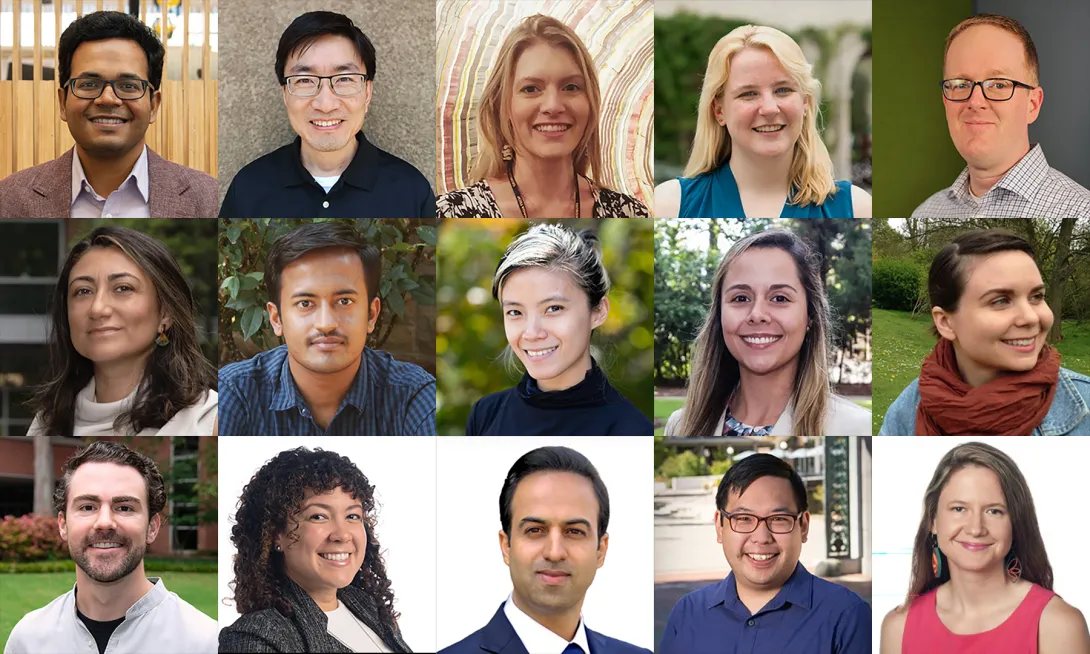
2026 Sustainability Next Seed Grant Principal Investigators: (R to L, Top to Bottom) Rounaq Basu, Sheng Dai, Anna Doll, Lilian Dove, Scott Duncan, Paula Gomez, Suhas S. Jain, Cindy Kaiying Lin, Sofía Pérez Guzmán, Caitlin Petro, Gregory Randolph, Rosemarie Santa Gonzalez, Ali Sarhadi, Richmond Wong, and Ruth C. Yow.
The most recent round of Sustainability Next Research Seed Grants has been awarded to 15 transdisciplinary teams featuring 36 collaborators from across Georgia Tech and beyond. The teams span 21 units from six of Georgia Tech’s seven Colleges, including Schools, research centers, and Interdisciplinary Research Institutes, as well as organizations external to Georgia Tech.
The seed grant program, administered by the Brook Byers Institute for Sustainable Systems (BBISS), reaches faculty members from a diverse array of disciplines due to the generous support provided by broad-based partnerships in addition to the funds provided by the Sustainability Next committee. This year’s partners are the School of Civil and Environmental Engineering, the College of Design, BBISS, the Renewable Bioproducts Institute, the Georgia Tech Research Institute, and the Institute for Data Engineering and Science.
The goal of the program is to nurture promising research areas for future large-scale collaborative sustainability research, research translation, and/or high-impact outreach; to provide mid-career faculty with leadership and community-building opportunities; and to broaden and strengthen the Georgia Tech sustainability community as a whole. The call for proposals was modeled after the Office of the Executive Vice President for Research’s Moving Teams Forward and Forming Teams programs.
This year’s seed grant awards align with the four main thematic areas in which BBISS aims to enhance Georgia Tech’s research to address some of our most pressing sustainability challenges:
- AI and Sustainability, and the Sustainability of AI Infrastructure.
- Climate Science, Technology, and Solutions.
- Healthy Environments and Sustainable Resource Use.
- Resilience and Regeneration.
The 2026 Sustainability Next Seed Grant awards are:
Forming Teams:
- Actualize Shallow Geothermal Systems for Decentralized Heating. Principal Investigator (PI): Sheng Dai.
- Building Community University Research Capacity for PFAS Testing and Treatment. PI: Ruth C. Yow. Co-Principal Investigators (Co-PIs): Joe Bozeman, Yongsheng Chen, and Ahmed Ibrahim Yunus.
- A Global Sustainability Analysis of Places “Urbanizing from Within.” PI: Gregory Randolph. Co‑PIs: Sabina Dewan, Yiyi He, John Taylor, and Celine Vacchiani‑Marcuzzo.
- Creating a Refusal Taxonomy to Explore Alternate Computing Practices. PI: Richmond Wong. Co‑PIs: Heidi Biggs and Carl DiSalvo.
- Demystifying Data Centers: Examining Georgia Tech’s Coda HPCC in the Context of Sustainability and Resilience. PI: Scott Duncan. Co-PIs: Jung-Ho Lewe and David Solano Sarmiento.
- Physical Transport of Sunlight‑Exposed Dissolved Organic Carbon in the New Arctic. PI: Lilian Dove. Co‑PI: Jennifer Bowen.
Moving Teams Forward:
- Agentic AI Digital Twins for Hurricane Resilience in Coastal Georgia. PI: Ali Sarhadi.
- CLEAR‑SE: Co‑Creating a Center‑Scale Network for Advancing Collaborative, Long‑Term Action Research on Community‑Led Resilience and Disaster Risk Reduction in the Southeast. PI: Sofía Pérez‑Guzmán. Co‑PI: Jennifer Hirsch.
- Data Center Effects on Communities in Georgia’s Black Belt. PI: Cindy Kaiying Lin. Co‑PIs: Joe Bozeman, Anthony Harding, Allen Hyde, Nicole Kennard, Jung-Ho Lewe, and Ahmed Saeed.
- Reimagining Southern Forests: Enabling Cost‑Effective Sustainable Production of High‑Value Climate‑Ready Southern Pines. PI: Caitlin Petro. Co‑PIs: Lucas Clay, Ulrika Egertsdotter, and Joel Kostka.
- Human‑Technology Collaborations: Towards Sustainable and Inclusive Food Systems. PI: Rosemarie Santa Gonzalez. Co‑PIs: Ashutosh Dhekne, Sylivia Janicki, Nicole Kennard, Yaman Sangar, and Abigale Stangl.
- Guiding Transportation with Community Action through Research, Education, and Service (GT‑CARES). PI: Rounaq Basu. Co-PIs: Sofía Pérez‑Guzmán, Jennifer Hirsch, and Scott Moffat.
- Instability‑Resolved Ocean Mixing for Climate Prediction and Climate Solutions. PI: Suhas S. Jain. Co‑PIs: Mohammad Mohaghar, and Donald Webster.
- Buildings Next: Forming a Transdisciplinary Consortium for Sustainable Building Innovation. PI: Paula Gomez. Co‑PI: Allison Bridges.
- Paper and Natural Dye Living Exhibition. PI: Anna Doll. Co‑PI: Virginia Howell.
News Contact
Brent Verrill, Research Communications Program Manager, BBISS
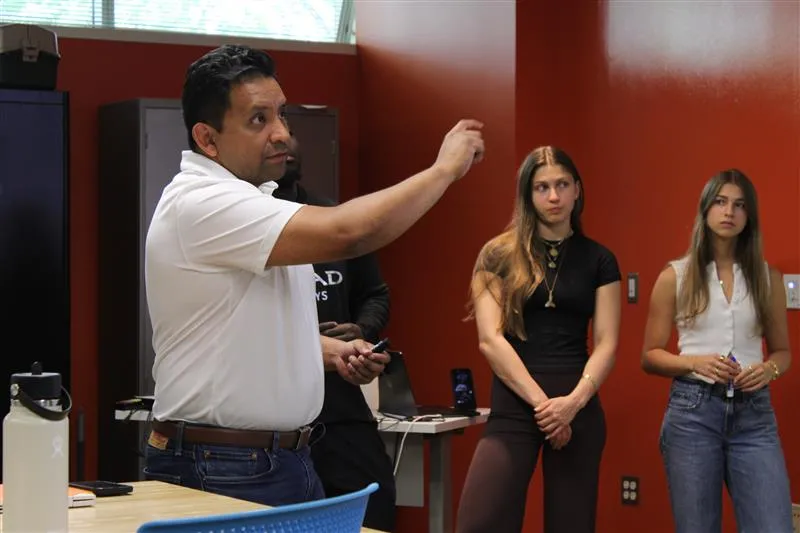
Omar Garcia, associate director of CREATE-X Learn, teaches Startup Lab.
You don’t need an idea to begin. You don’t need a co‑founder, a pitch deck, or a perfect plan. What you need is curiosity, a willingness to talk to real people, and a place where it’s safe to learn by doing. That’s exactly what CREATE‑X Startup Lab delivers.
Omar Garcia Urdiales, CREATE‑X’s associate director of Learn, brings a global entrepreneurial experience to Georgia Tech: founder and CEO of a startup operating in the AWS Accelerator Loft, longtime startup coach in Europe’s major innovation hubs, lecturer across multiple universities, and an external doctoral researcher in entrepreneurship and digitalization. He brings this background to his teaching of Startup Lab’s latest iteration – a significant redesign developed by VentureLab’s Director Keith McGreggor. McGreggor created the course and has evolved it over many years, building on its initial success.
“This new iteration of Startup Lab allows us to meet students exactly where they are,” said McGreggor. “By doing this, we give them the strongest foundation possible, providing them with the tools to grapple with uncertainty and build their confidence.”
Startup Lab has long anchored the Institute’s entrepreneurial pathway with clearer structure, a unified language, and a deeper focus on reflective growth, so more Georgia Tech students can discover (and trust) their own entrepreneurial judgment.
Startup Lab is expanding responsibly, with six sections in Atlanta and additional global sections in France and Asia-Pacific taught by faculty trained in the curriculum. Students here benefit from a program that’s learning across borders and bringing that learning back to campus.
“Startup Lab is not about becoming an entrepreneur, but about engaging in the unknown and adopting entrepreneurial behavior, which can be applied to all career paths,” Urdiales said. “Students become better equipped to identify problem spaces and solve them through evidence-based building.”
Start Where You Are
Urdiales emphasized that Startup Lab is built for students who are still exploring, uncertain, or are simply curious.
“Many students tell us they’re curious about entrepreneurship but feel not ready,” he said. “They worry they’re too introverted for customer interviews or assume Startup Lab is only for people with fully formed ideas. In fact, those are the most common misconceptions.”
The course’s first few weeks focus on training students to see struggles and patterns in the world. Then, they apply those skills on a team, exploring, designing, and testing a concept with real people. The nonnegotiable outcome isn’t the best idea; it’s a more confident, evidence-driven version of you.
“Startup Lab is strengthening that self-awareness. All of us who are entrepreneurs, we don’t grow linearly. We have various iterations of how we see things,” Urdiales said. “This ability to see patterns or to see problems with customer discovery, it’s a learning process and a growth process.”
Building Muscle Memory
Urdiales said that students won’t have a passive experience in the lab.
“To become an entrepreneur, you need to do it. You need to engage with customers. You need to get out of the building,” he said. “It gives you the ability to incorporate theoretical frameworks into practical solutions and then understand these more practical outcomes.”
Aligning with CREATE-X’s culture of continuous iteration, Startup Lab is tightening the hands-on core of the course around four simple, repeatable tools so that entrepreneurial thinking becomes muscle memory, not a one-off assignment. The new iteration of the curriculum, developed by McGreggor, helps students learn to:
- Elicit grounded problem stories from real people (and separate observations from interpretations).
- Make explicit strategic decisions — who you serve, what you offer, how you deliver, how you get paid — and back them with discovery evidence.
- Externalize your logic with clear Business Model Canvas snapshots (hypotheses ≠ decisions ≠ open questions).
- Design minimum viable experiments (MVEs) that can falsify assumptions, not just confirm them.
“What we have is a frontier model in entrepreneurial education,” said McGreggor. “The result is a course that teaches sound decision making and builds entrepreneurial confidence that rewards authentic discovery and iteration over performative polish. It creates a more solid foundation for entrepreneurial thinking and sets students up to engage more deeply with everything that follows in their CREATE-X pathway.”
Reflection as a Feature
As a part of Startup Lab, instructors integrate reflection throughout the semester, which helps students notice patterns of work, make small experiments, and adjust based on what’s learned. Students often worry they’re not the founder type or that their introversion will hold them back; Startup Lab reframes those worries as raw material for growth, including communication skill building and one-on-one interactions you won’t always get in higher-level courses.
Startup Lab integrates HaradaLite — McGreggor's adaptation of the Japanese Harada Method — as a weekly reflection practice in which students keep a reflection log, helping them notice patterns of work, run small experiments, and adjust based on what's learned. With this approach, educators are able to measure the growth of entrepreneurial confidence by self-report, leading to a more quantitative approach to teaching.
A Common Language Across CREATE‑X
There’s no mandated order for CREATE-X courses. Startup Lab simply makes the next steps clearer by providing a shared language and milestone structure across sections and instructors, so whatever comes next (I2P, Capstone, Launch, or an internship), you can carry forward a coherent, evidence- aware story of your work.
“All CREATE‑X Learn sections will work with the same milestone objectives,” Urdiales said. “Students trained in Startup Lab are already trained in the muscles of entrepreneurship. They’re more equipped to go into Make and Launch or be a leader within their industry.”
Built To Be Inclusive Across Disciplines and Needs
Startup Lab is about becoming the kind of person who can see opportunities, reason from evidence, and make better decisions when the path isn’t obvious.
- You do not need an idea or a pre‑built team — curiosity is enough.
- You do not need special permits to enroll. Startup Lab is open to anyone ready to explore.
- You can benefit from the course before or after I2P or Capstone, since there’s no fixed order to the CREATE‑X pathway.
- Introverts are welcome. The course intentionally builds communication skills through structured, low-pressure interviews and guided interaction.
“Startup Lab helps students see the world’s problems and fill the gaps with fresh ideas, teaching them to see and understand the important difference between evidence and inference,” said McGreggor. “This lays the foundation that leads to good founders, and builds the entrepreneurial confidence needed to succeed.”
What You’ll Actually Do
Students in Startup Lab can expect a workshop-heavy, conversation-rich semester with weekly artifacts, scenario-based decision prompts, startup reports, and quizzes that keep you honest about what you’re learning. You’ll assemble a Continuity Pack near the end: a compact bundle of your best discovery evidence, decisions, MVEs, economics, and final story slides so your future self (or your I2P/Launch application) can pick up right where you left off.
The course also sets norms for modern tool use. AI is welcomed as a coach and organizer, after your own baseline thinking and research, and as an enhancement of the real conversations you have. That matters because Startup Lab’s promise is that you build solid judgment under the test of uncertainty, critical to the world of today and the future that is being built.
Jump Into Startup Lab
You don’t have to have it all figured out. If you’re a first-year student still exploring, a junior craving real-world projects, or a senior looking to stand out in interviews, Startup Lab is for you.
Seats fill quickly across all sections — and for good reason.
This course gives you the clearest, most supportive on‑ramp into CREATE‑X, with a global methodology, a unified curriculum, and instructors who believe deeply in your potential to grow. Learn how to think entrepreneurially. See the world differently. Build the confidence that will follow you long after the semester ends.
News Contact
Breanna Durham
Marketing Strategist
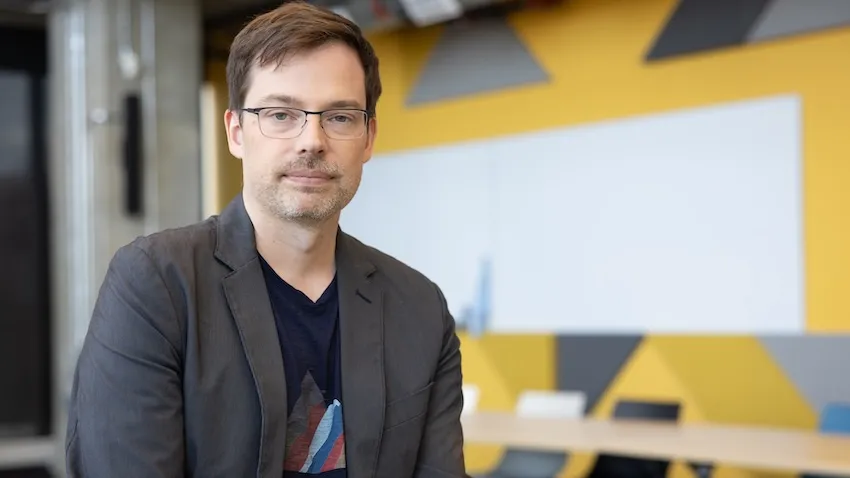
A Georgia Tech School of Interactive Computing professor and his Ph.D. student have been named to the 2026 list of Microsoft Research Fellows and Fellowship Advisors.
Associate Professor Alan Ritter and Ph.D. student Ethan Mendes were awarded fellowships for their work on creating artificial intelligence (AI) agents that function as teammates.
Mendes was named a fellow, while Ritter will serve as his fellowship advisor.
The Microsoft Research Fellowship is open to faculty, students, and postdocs. Ritter said that if Microsoft sees alignment in a project, it gives recipients the opportunity to work even closer with their collaborators by inviting them to join as additional fellows.
That turned out to be the case with Mendes after Ritter listed him as a collaborator in his fellowship proposal.
“I’m delighted to serve as Ethan Mendes’ fellowship advisor,” Ritter said. “He is an exceptionally strong researcher, and I’m excited to see his work recognized through the Microsoft Research Fellowship.”
Through the fellowship, Ritter and Mendes will design AI systems that better support collaboration and decision-making within organizations.
“The goal is to move beyond AI as a tool for a single user and instead study how AI can help groups make more informed, transparent, and coordinated decisions,” Ritter said. “We will focus on methods that bring together information from many different sources, help people reason under uncertainty, and generate analyses that support collective problem-solving in complex work settings.”
Professor Named to Sustainability Cohort
The Purple Mai’a Foundation has selected Associate Professor Josiah Hester to join its Eahou Global Immersion Cohort.
The Purple Mai’a Foundation is a technology education nonprofit headquartered in Aiea, Hawaii, that teaches coding and computer science to Native Hawaiian students.
The 29 members of the Eahou Global Immersion Cohort from 15 countries are leaders from indigenous communities recognized for their contributions to sustainability.
Hester is a Native Hawaiian whose research centers on sustainable and battery-free technology.
The cohort will gather on O’ahu May 1-3 for Eahou Fest, where they will share stories and solutions from research around the world.
“I’m honored to be selected for the Eahou Global Immersion Cohort and to learn alongside such an inspiring group of resilience leaders who come from around the globe,” Hester said.
“Participants are selected for their significant leadership over the past decade and their ability to bring what they learn back to their communities and integrate it into ongoing work and partnerships. I’m excited to connect these experiences with my work and bring these lessons back into research and teaching at Georgia Tech.”
Jill Watson Creator Receives AAAI Lecture Award
Professor Ashok Goel received one of the most distinguished awards from the Association for the Advancement of Artificial Intelligence (AAAI).
Goel was selected as the 20th recipient of the AAAI Robert S. Engel Memorial Lecture Award. Established in 2003, the award is given to those who have demonstrated excellence in AI scholarship, outstanding applications of AI, and extraordinary service to AAAI and the AI community.
Goel received the award in January during the AAAI Conference on Artificial Intelligence in Singapore. According to the awards program, Goel was recognized for contributions to biologically inspired design, case-based reasoning, and application of AI in virtual teaching.
Goel is the inventor of Jill Watson, one of the first AI virtual teaching assistants used in higher education classrooms.
AAAI is also the publisher of AI Magazine, which Goel served as editor-in-chief from 2016 to 2021.
“I am both honored and humbled to receive AAAI's Robert Engelmore Award,” Goel said. “Bob was a long-time editor of AAAI's AI Magazine, and many years after he retired, I became the editor of the magazine. This makes the Engelmore Award special to me.”
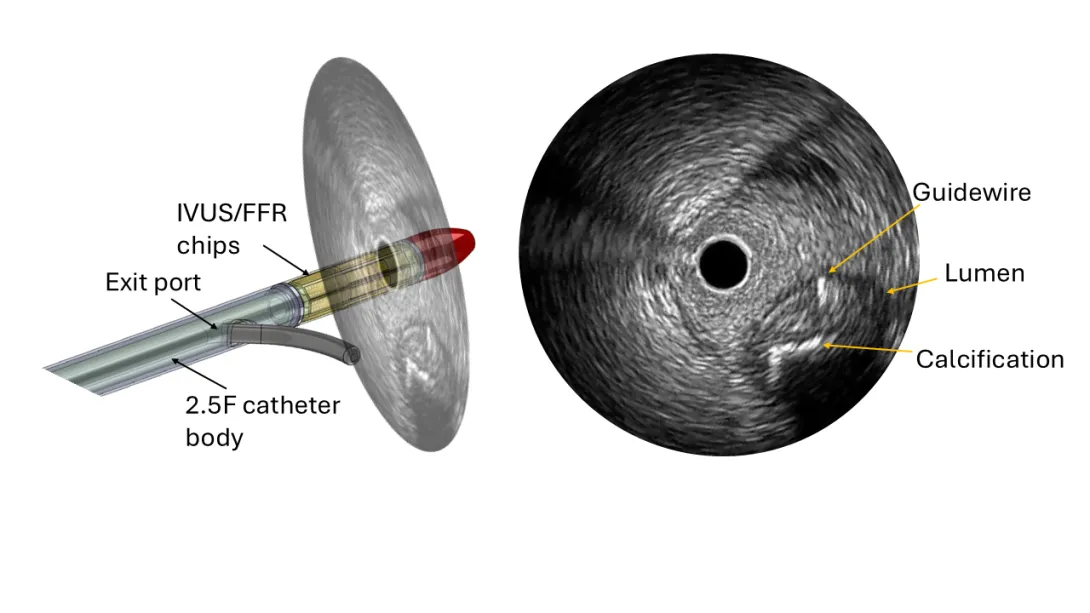
When patients undergo procedures to open blocked heart arteries, precision matters. Even small imperfections in placing a stent can affect blood flow and long-term health. Now, a research team led by F. Levent Degertekin, Regents’ Entrepreneur, George W. Woodruff Chair in Mechanical Systems, and professor in the George W. Woodruff School of Mechanical Engineering, is working to change that with a new kind of catheter designed to give doctors clearer, real-time insight during these life-saving procedures.
Backed by a four-year, $2.2 million National Institutes of Health Research Project (R01) grant, the project aims to develop a microcatheter that combines high-resolution imaging with precise pressure sensing in a single device.
Read the full story on the George W. Woodruff School of Mechanical Engineering website.
News Contact
Ashley Ritchie
George W. Woodruff School of Mechanical Engineering