
Nov. 11, 2024


A first-of-its-kind algorithm developed at Georgia Tech is helping scientists study interactions between electrons. This innovation in modeling technology can lead to discoveries in physics, chemistry, materials science, and other fields.
The new algorithm is faster than existing methods while remaining highly accurate. The solver surpasses the limits of current models by demonstrating scalability across chemical system sizes ranging from large to small.
Computer scientists and engineers benefit from the algorithm’s ability to balance processor loads. This work allows researchers to tackle larger, more complex problems without the prohibitive costs associated with previous methods.
Its ability to solve block linear systems drives the algorithm’s ingenuity. According to the researchers, their approach is the first known use of a block linear system solver to calculate electronic correlation energy.
The Georgia Tech team won’t need to travel far to share their findings with the broader high-performance computing community. They will present their work in Atlanta at the 2024 International Conference for High Performance Computing, Networking, Storage and Analysis (SC24).
[MICROSITE: Georgia Tech at SC24]
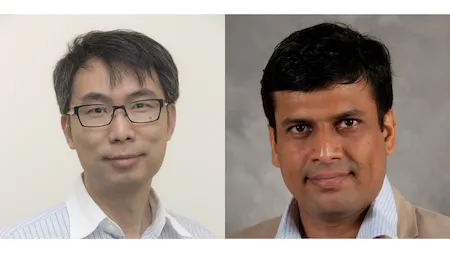
“The combination of solving large problems with high accuracy can enable density functional theory simulation to tackle new problems in science and engineering,” said Edmond Chow, professor and associate chair of Georgia Tech’s School of Computational Science and Engineering (CSE).
Density functional theory (DFT) is a modeling method for studying electronic structure in many-body systems, such as atoms and molecules.
An important concept DFT models is electronic correlation, the interaction between electrons in a quantum system. Electron correlation energy is the measure of how much the movement of one electron is influenced by presence of all other electrons.
Random phase approximation (RPA) is used to calculate electron correlation energy. While RPA is very accurate, it becomes computationally more expensive as the size of the system being calculated increases.
Georgia Tech’s algorithm enhances electronic correlation energy computations within the RPA framework. The approach circumvents inefficiencies and achieves faster solution times, even for small-scale chemical systems.
The group integrated the algorithm into existing work on SPARC, a real-space electronic structure software package for accurate, efficient, and scalable solutions of DFT equations. School of Civil and Environmental Engineering Professor Phanish Suryanarayana is SPARC’s lead researcher.
The group tested the algorithm on small chemical systems of silicon crystals numbering as few as eight atoms. The method achieved faster calculation times and scaled to larger system sizes than direct approaches.
“This algorithm will enable SPARC to perform electronic structure calculations for realistic systems with a level of accuracy that is the gold standard in chemical and materials science research,” said Suryanarayana.
RPA is expensive because it relies on quartic scaling. When the size of a chemical system is doubled, the computational cost increases by a factor of 16.
Instead, Georgia Tech’s algorithm scales cubically by solving block linear systems. This capability makes it feasible to solve larger problems at less expense.
Solving block linear systems presents a challenging trade-off in solving different block sizes. While larger blocks help reduce the number of steps of the solver, using them demands higher computational cost per step on computer processors.
Tech’s solution is a dynamic block size selection solver. The solver allows each processor to independently select block sizes to calculate. This solution further assists in scaling, and improves processor load balancing and parallel efficiency.
“The new algorithm has many forms of parallelism, making it suitable for immense numbers of processors,” Chow said. “The algorithm works in a real-space, finite-difference DFT code. Such a code can scale efficiently on the largest supercomputers.”
Georgia Tech alumni Shikhar Shah (Ph.D. CSE 2024), Hua Huang (Ph.D. CSE 2024), and Ph.D. student Boqin Zhang led the algorithm’s development. The project was the culmination of work for Shah and Huang, who completed their degrees this summer. John E. Pask, a physicist at Lawrence Livermore National Laboratory, joined the Tech researchers on the work.
Shah, Huang, Zhang, Suryanarayana, and Chow are among more than 50 students, faculty, research scientists, and alumni affiliated with Georgia Tech who are scheduled to give more than 30 presentations at SC24. The experts will present their research through papers, posters, panels, and workshops.
SC24 takes place Nov. 17-22 at the Georgia World Congress Center in Atlanta.
“The project’s success came from combining expertise from people with diverse backgrounds ranging from numerical methods to chemistry and materials science to high-performance computing,” Chow said.
“We could not have achieved this as individual teams working alone.”
News Contact
Bryant Wine, Communications Officer
bryant.wine@cc.gatech.edu
Nov. 05, 2024
Y Combinator, known for launching over 5,000 startups including Airbnb, Coinbase, DoorDash, Dropbox, and Zapier, is coming to Georgia Tech’s campus on Tuesday, Nov. 12, at 5 p.m. in the John Lewis Student Center’s Walter G. Ehmer Theater for a panel event hosted by CREATE-X. The panel will feature Y Combinator Group Partner Brad Flora and the founders of Greptile, all Georgia Tech alumni, who will discuss their experiences with the startup accelerator.
Since tickets are limited, students are encouraged to RSVP for Y Combinator @ Georgia Tech. As a part of the event, students can apply for Office Hours With Flora, which will be held earlier in the day, by answering optional questions in the RSVP form. Y Combinator will notify selected students. The sessions enable students to discuss side projects or startups, startup idea development, finding co-founders, and monetizing products. Confirmed RSVPs are required to attend the event and office hours.
Y Combinator offers an intensive, three-month program designed to help startups succeed. It provides startups with seed funding, mentorship, and access to a network of investors, industry experts, and alumni.
In 2022, Daksh Gupta and SooHoon Choi participated in CREATE-X Startup Launch and developed Tabnam, which became Greptile after several iterations. Initially, the startup was promoted as an AI shopping assistant that scrapes the internet to tell users what people think about their product.
In 2023, after they graduated from Georgia Tech, Choi, Gupta, and Vaishant Kameswaran launched the latest version of the startup. Now the AI platform focuses on entire codebases and allows users to query via an API. Through the platform, users chat with their codebases, generate descriptions for tickets, automate PR reviews, and build custom internal tools and automations on top of the API. Over 800 software teams, including Wombo, Metamask, Warp, Exa AI, Bland, and Leya, use Greptile. In June, it had a $4 million seed round. Greptile was part of Y Combinator’s Winter 2024 cohort.
For those inspired by Greptile’s success and interested in launching their own startup, CREATE-X is currently accepting applications for Summer 2025 Startup Launch. The priority deadline is Sunday, Nov. 17. Early applicants have a higher chance of acceptance, the opportunity for more feedback, and more opportunities to apply if one idea isn’t accepted.
Startup Launch provides mentorship, $5,000 in optional funding, and $150,000 in services to help Georgia Tech students, alumni, faculty, and researchers launch businesses over 12 weeks in the summer. Teams can be interdisciplinary, made up of co-founders even outside of Georgia Tech, and solopreneurs. CREATE-X, as a whole, has had more than 34,000 participants, launched 560 startups, and has generated a total startup portfolio valuation exceeding $2 billion.
News Contact
Breanna Durham
Marketing Strategist
Oct. 28, 2024
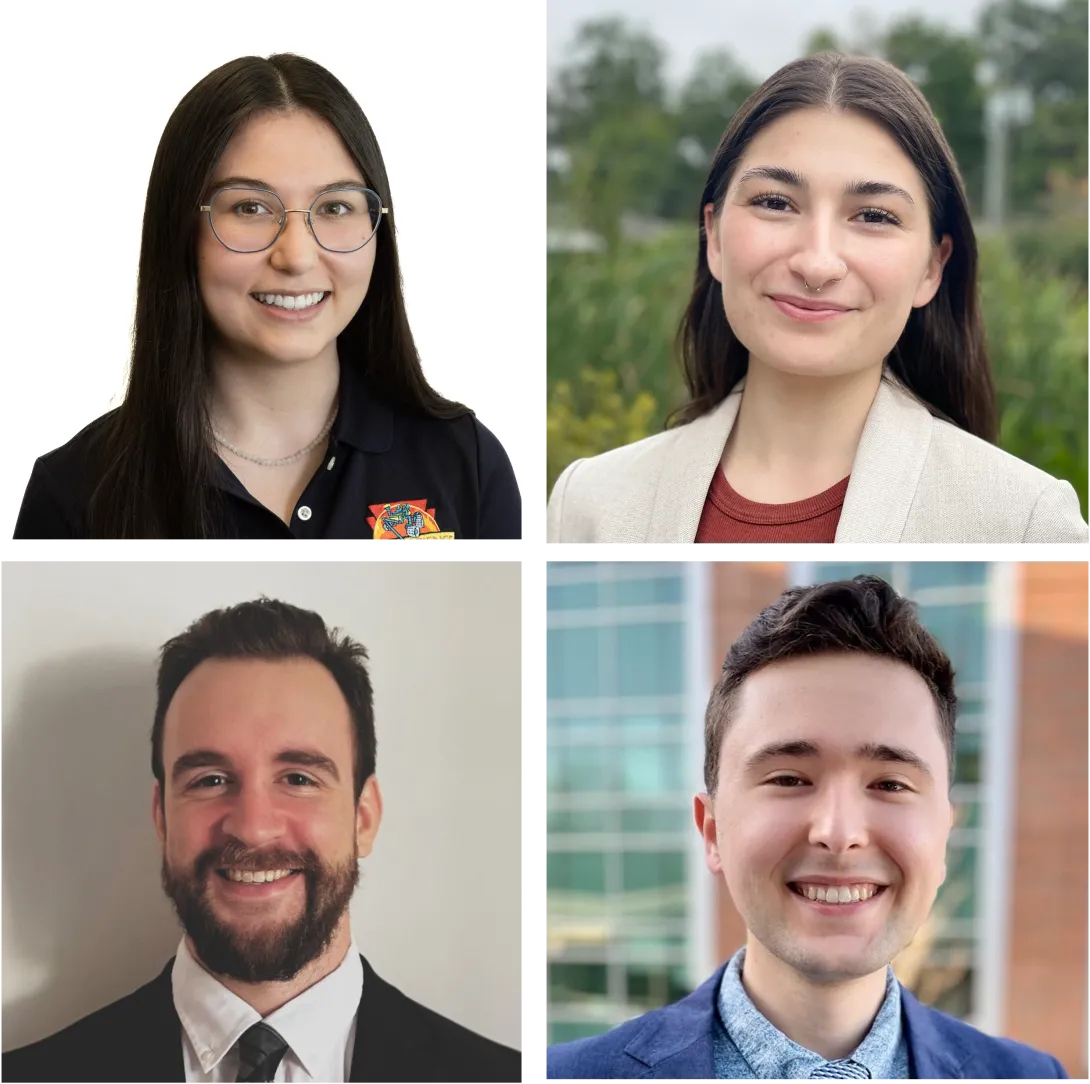
New College of Sciences ARCS Scholars (from left to right): Alivia Eng, Marrissa Izykowicz, Zach Mobille, and John Pederson.
Four Ph.D. candidates from the College of Sciences have been selected as new recipients of the Achievement Rewards for College Scientists (ARCS) Foundation Scholar Award. The award recognizes doctoral students who show exceptional promise in making a significant contribution to the worldwide advancement of science and technology. The new recipients join three returning scholars from the College of Sciences. To view all of the current Georgia Tech ARCS Scholars, visit: 2024-25 ARCS Atlanta Scholars
Meet the 2024-25 ARCS Scholars
Alivia Eng, School of Earth and Atmospheric Sciences
Eng is a Future Investigators in NASA Earth and Space Science and Technology (FINESST) Fellow. Her research compares rover and orbital datasets of Mars to increase the spatial resolution of quantitative geologic mapping.
“I am excited to receive this award as it validates the importance of my research and my abilities as a scientist,” says Eng.
Nominated by her advisor, School of Earth and Atmospheric Sciences Assistant Professor Frances Rivera-Hernández, Eng is also a part of Georgia Tech's Solar System Exploration Research Virtual Institute and Center for Lunar Environment and Volatile Exploration Research.
“Alivia is an exceptional graduate student and planetary scientist,” says Rivera-Hernández. “Her curiosity, passion, and question-driven approach have sparked multiple new projects at Georgia Tech and led my research group in exciting new directions. Beyond her research, Alivia is deeply committed to community engagement, aiming to inspire future generations to pursue careers in planetary geology. I am grateful for the opportunity to work with her.”
Marrissa Izykowicz, School of Chemistry and Biochemistry
Izykowicz’s research focuses on synthesizing nanoparticles designed to target and retain anti-cancer drugs in both primary and metastatic tumors of various cancers. Her research tackles the challenge of treating metastatic lesions, which are difficult to target due to their small size and abundance.
“I am deeply passionate about my work because it addresses an issue that has plagued humanity for centuries,” says Izykowicz. “My research investigates the complexities of metastatic cancer, building on the knowledge of those who came before me to pave the way toward a potential cure.”
She was nominated for the award by M.G. Finn, who serves as a professor in the School of Chemistry and Biochemistry and the James A. Carlos Family Chair for Pediatric Technology.
“Marrissa is a wonderful student and colleague — always willing to do whatever is needed to advance her studies,” says Finn. “Her research is tremendously exciting, working with collaborator Stephen Housley on nanoparticles that can deliver medications directly to cancerous tumors. The project involves chemistry, cell biology, immunology, and analytical biochemistry, and Marrissa does it all with great dedication and expertise.”
Zach Mobille, School of Mathematics
Mobille is pursuing a Ph.D. in Quantitative Biosciences, specializing in computational neuroscience.
“I am passionate about my research because it sheds light on how the brain’s structure and abilities are related quantitatively,” says Mobille. “It targets a deeper understanding of how information is processed in networks of neurons, which may influence how computational devices are designed in the future.”
Mobille serves as chair of the community impact committee of the Georgia Tech/Emory Computational Neural-engineering Training Program (CNTP) and is a past recipient of Georgia Tech’s InQuBATE Training grant.
School of Mathematics Assistant Professor Hannah Choi, who advises Mobille, states: “Zach is driven by curiosity and determined to solve complex research problems. He has consistently impressed me with his creativity and motivation in computational neuroscience. Zach proposes innovative ideas, is never afraid of learning new techniques, and takes initiative in his research. I am thrilled that the ARCS fellowship has recognized his qualities as an independent and creative researcher.”
John Pederson, School of Chemistry and Biochemistry
Pederson uses computer simulations to study chemistry at solid/liquid interfaces at the molecular scale.
“Computational modeling across length- and time-scales is a powerful technique for gaining insight into chemical and physical processes,” says Pederson. “With my research, I hope to promote wider adoption of these multi-scale computational techniques to enable the design of cleaner and safer chemical processes.”
In addition to his research work, Pederson helped organize and run ComSciCon-ATL 2024, an interdisciplinary science communications conference for Southeast STEM graduate students.
“John is an outstanding researcher and problem-solver,” says Jessie McDaniel, associate professor in the School of Chemistry and Biochemistry who nominated Pederson. ”He has contributed substantially to software and method development efforts that form the core of our group’s work on studying chemical reaction mechanisms in complex environments related to electrochemistry and surface chemistry. John exemplifies excellence in all facets of research, scholarship, and service.”
News Contact
Writer: Laura Smith, College of Sciences
Sep. 18, 2024
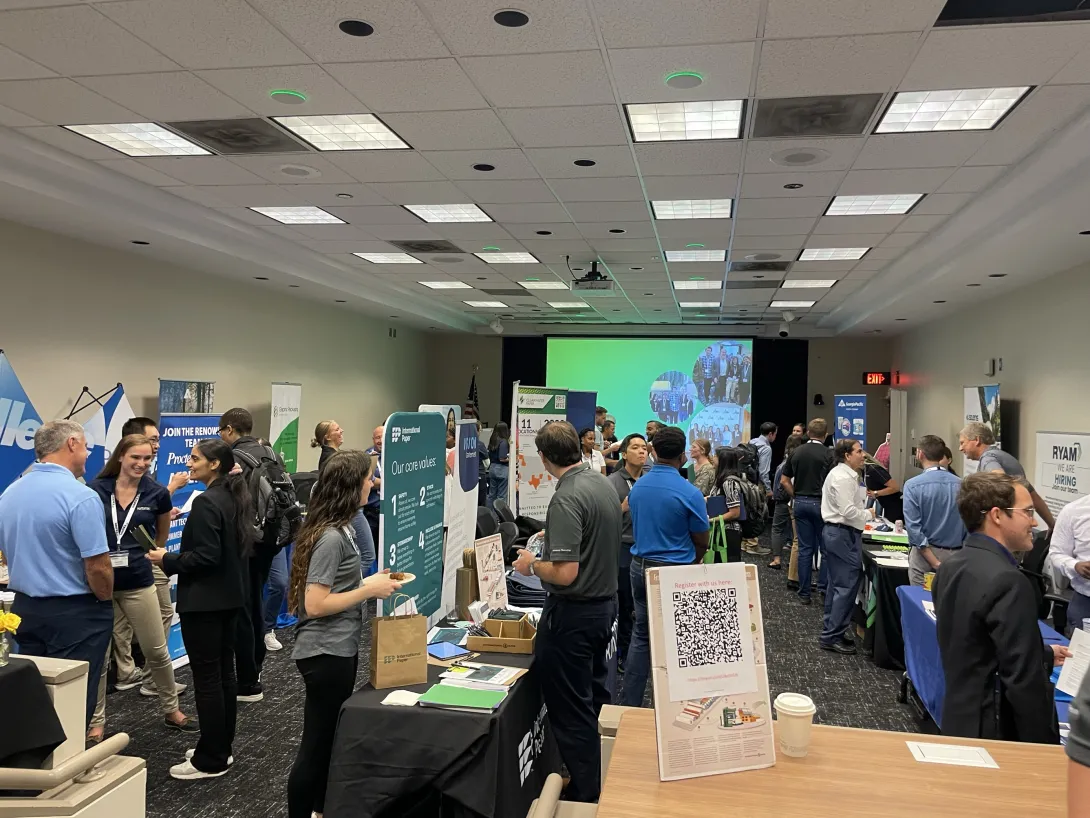
The TAPPI Student Chapter hosted a career fair on Thursday, September 12 at the Georgia Tech Renewable Bioproducts Institute. With nearly 100 students in attendance, the event provided an excellent opportunity for students as well as professionals in the pulp and paper industry, to connect, network, and explore career opportunities. The fair attracted 45 representatives from 15 leading companies in the industry who offered internships, full-time and co-ops for both graduates and undergraduates.
“The TAPPI Student Chapter Career Fair was an incredible opportunity for students to engage directly with industry leaders, explore diverse career paths, and secure valuable internships and job offers. The enthusiasm and participation from both students and companies truly highlighted the strength and potential of our future workforce,” said Chris Luettgen, faculty advisor of the TAPPI Student Chapter and the initiative lead for process efficiency & intensification of pulp, paper packaging, and tissue manufacturing at the Renewable Bioproducts Institute.
News Contact
Priya Devarajan || RBI Communications Program Manager
Oct. 18, 2024

The U.S. Department of Energy (DOE) has awarded Georgia Tech researchers a $4.6 million grant to develop improved cybersecurity protection for renewable energy technologies.
Associate Professor Saman Zonouz will lead the project and leverage the latest artificial technology (AI) to create Phorensics. The new tool will anticipate cyberattacks on critical infrastructure and provide analysts with an accurate reading of what vulnerabilities were exploited.
“This grant enables us to tackle one of the crucial challenges facing national security today: our critical infrastructure resilience and post-incident diagnostics to restore normal operations in a timely manner,” said Zonouz.
“Together with our amazing team, we will focus on cyber-physical data recovery and post-mortem forensics analysis after cybersecurity incidents in emerging renewable energy systems.”
As the integration of renewable energy technology into national power grids increases, so does their vulnerability to cyberattacks. These threats put energy infrastructure at risk and pose a significant danger to public safety and economic stability. The AI behind Phorensics will allow analysts and technicians to scale security efforts to keep up with a growing power grid that is becoming more complex.
This effort is part of the Security of Engineering Systems (SES) initiative at Georgia Tech’s School of Cybersecurity and Privacy (SCP). SES has three pillars: research, education, and testbeds, with multiple ongoing large, sponsored efforts.
“We had a successful hiring season for SES last year and will continue filling several open tenure-track faculty positions this upcoming cycle,” said Zonouz.
“With top-notch cybersecurity and engineering schools at Georgia Tech, we have begun the SES journey with a dedicated passion to pursue building real-world solutions to protect our critical infrastructures, national security, and public safety.”
Zonouz is the director of the Cyber-Physical Systems Security Laboratory (CPSec) and is jointly appointed by Georgia Tech’s School of Cybersecurity and Privacy (SCP) and the School of Electrical and Computer Engineering (ECE).
The three Georgia Tech researchers joining him on this project are Brendan Saltaformaggio, associate professor in SCP and ECE; Taesoo Kim, jointly appointed professor in SCP and the School of Computer Science; and Animesh Chhotaray, research scientist in SCP.
Katherine Davis, associate professor at the Texas A&M University Department of Electrical and Computer Engineering, has partnered with the team to develop Phorensics. The team will also collaborate with the NREL National Lab, and industry partners for technology transfer and commercialization initiatives.
The Energy Department defines renewable energy as energy from unlimited, naturally replenished resources, such as the sun, tides, and wind. Renewable energy can be used for electricity generation, space and water heating and cooling, and transportation.
News Contact
John Popham
Communications Officer II
College of Computing | School of Cybersecurity and Privacy
Oct. 24, 2024

Eight Georgia Tech researchers were honored with the ACM Distinguished Paper Award for their groundbreaking contributions to cybersecurity at the recent ACM Conference on Computer and Communications Security (CCS).
Three papers were recognized for addressing critical challenges in the field, spanning areas such as automotive cybersecurity, password security, and cryptographic testing.
“These three projects underscore Georgia Tech's leadership in advancing cybersecurity solutions that have real-world impact, from protecting critical infrastructure to ensuring the security of future computing systems and improving everyday digital practices,” said School of Cybersecurity and Privacy (SCP) Chair Michael Bailey.
One of the papers, ERACAN: Defending Against an Emerging CAN Threat Model, was co-authored by Ph.D. student Zhaozhou Tang, Associate Professor Saman Zonouz, and College of Engineering Dean and Professor Raheem Beyah. This research focuses on securing the controller area network (CAN), a vital system used in modern vehicles that is increasingly targeted by cyber threats.
"This project is led by our Ph.D. student Zhaozhou Tang with the Cyber-Physical Systems Security (CPSec) Lab," said Zonouz. "Impressively, this was Zhaozhou's first paper in his Ph.D., and he deserves special recognition for this groundbreaking work on automotive cybersecurity."
The work introduces a comprehensive defense system to counter advanced threats to vehicular CAN networks, and the team is collaborating with the Hyundai America Technical Center to implement the research. The CPSec Lab is a collaborative effort between SCP and the School of Electrical and Computer Engineering (ECE).
In another paper, Testing Side-Channel Security of Cryptographic Implementations Against Future Microarchitectures, Assistant Professor Daniel Genkin collaborated with international researchers to define security threats in new computing technology.
"We appreciate ACM for recognizing our work," said Genkin. “Tools for early-stage testing of CPUs for emerging side-channel threats are crucial to ensuring the security of the next generation of computing devices.”
The third paper, Unmasking the Security and Usability of Password Masking, was authored by graduate students Yuqi Hu, Suood Al Roomi, Sena Sahin, and Frank Li, SCP and ECE assistant professor. This study investigated the effectiveness and provided recommendations for implementing password masking and the practice of hiding characters as they are typed and offered.
"Password masking is a widely deployed security mechanism that hasn't been extensively investigated in prior works," said Li.
The assistant professor credited the collaborative efforts of his students, particularly Yuqi Hu, for leading the project.
The ACM Conference on Computer and Communications Security (CCS) is the flagship annual conference of the Special Interest Group on Security, Audit and Control (SIGSAC) of the Association for Computing Machinery (ACM). The conference was held from Oct. 14-18 in Salt Lake City.
News Contact
John Popham
Communications Officer II
College of Computing | School of Cybersecurity and Privacy
Oct. 15, 2024
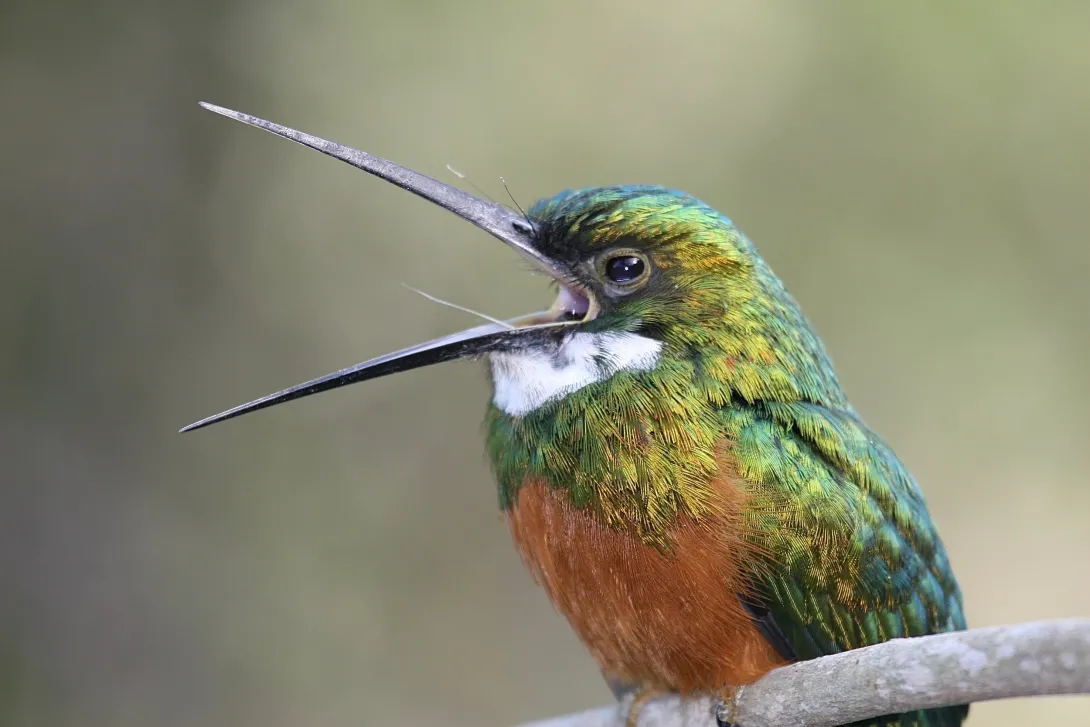
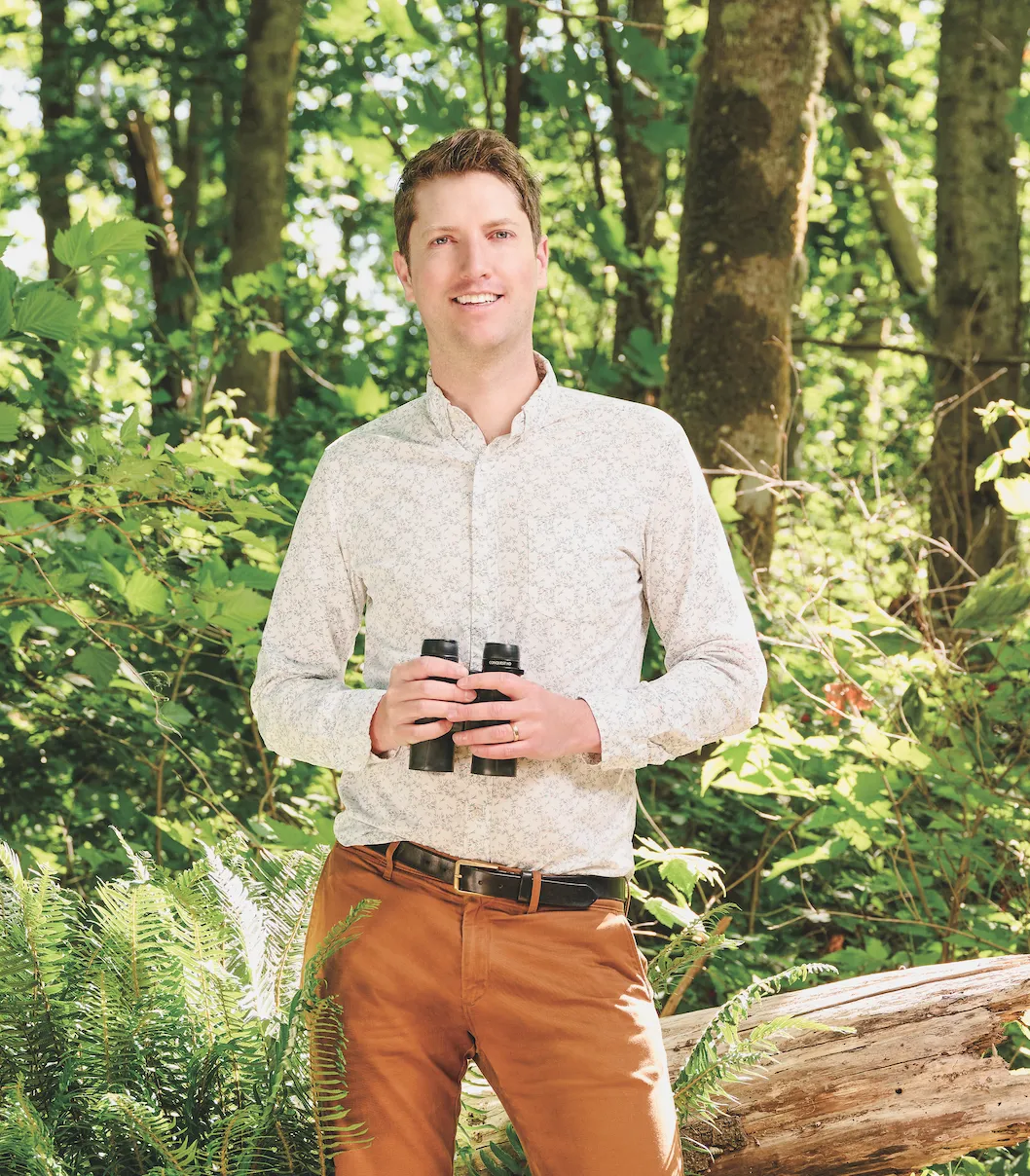
Benjamin Freeman has been named a 2024 Packard Fellow for groundbreaking research in climate change and bird ecology. Freeman, an assistant professor in the School of Biological Sciences, will receive $875,000 to fund his work.
“From all of us in Biological Sciences, we’re thrilled to see Ben Freeman named a Packard Fellow,” says School Chair Jeffrey (Todd) Streelman. “Ben’s research is important, compelling, and creative — a triple-threat combination that justifies this recognition.”
Awarded annually to only 20 individuals by the David and Lucile Packard Foundation, Packard Fellows are known for pursuing cutting-edge research, never-before-done projects, and ambitious goals.
“These scientists and engineers are the architects of tomorrow, leading innovation with bold ideas and unyielding determination,” shares Nancy Lindborg, President and Chief Executive Officer of the Packard Foundation. “Their work today will be the foundation for the breakthroughs of the future, inspiring the next wave of discovery and invention.”
“I'm flabbergasted to receive this prestigious award,” says Freeman. “Packard support will be transformative. It will give me the freedom to do the sorts of risky projects that I've dreamed about, and will support the intense fieldwork that I'm convinced is necessary to understand big questions in climate change ecology.”
The Packard funding will support Freemans most ambitious project to date: developing “Tech Mountain” in the tropics, a long-term field project focused on surveying thousands of individual birds. From mountain slope to summit, he will track their motions, their nests and predators, where they live, eat, move, and die — and how this changes as temperatures warm.
The pioneer study will shape a window into how birds and other organisms are responding to our changing climate, while developing technology and methodology that could revolutionize the fields of ecology and biology.
The escalator to extinction
Freeman’s previous research has shown that, in general, birds are moving to higher elevations as our climate changes.
“I found that as it's gotten warmer in the tropics, it's set in motion what I call an escalator to extinction,” he explains. “Birds are living at higher and higher elevations, and those that were common on a mountain top when I was a toddler in Peru are now gone from that mountain.”
While this previous research has shown that tropical birds are on this escalator, it hasn’t been possible to determine the specifics: which birds might be most vulnerable and what the key stressors are.
Freeman explains that “Tech Mountain” will be a first-of-its-kind field site, equipped with innovative sensors and trackers — think cameras placed on nets, recording equipment, climatic sensors, and small individual trackers on each bird.
“I want to figure out what drives their birth rates, where they're dying, and where they're moving during the course of their life,” he shares. “That will help us unravel how this escalator to extinction works.”
Building ‘Tech Mountain’
Several thousand meters tall, encompassing lowland rainforest, foothill rainforest, and cloud forest, Freeman’s field site will feature dense vegetation, steep grades, and encompass several different climatic zones — each with unique species.
Along its slopes, Freeman’s team will find, catch, mark, and follow the lives of thousands of individual birds across hundreds of species — for a minimum of five years, but potentially for decades. It’s never been done before.
Currently, most GPS trackers are too large for small birds, and smaller trackers capture limited information. Additionally, these smaller trackers cannot wirelessly transfer data — in order to download and access the data, each bird must be recaptured.
“The conditions are tough. It’s rugged. It’s humid. It’s cloudy and wet. We’ll need to put resources into developing technology that fits our needs, and experiment with different ways of tracking individuals in these difficult conditions,” Freeman says.
Freeman will also leverage eBird, an online hub where community scientists can upload their observations. “Millions upon millions of observations are uploaded by community scientists, citizen scientists, birders — people,” he adds. “And using this data, we can estimate the vulnerability of mountain bird species — which species seem to be shrinking their ranges and declining in abundance.”
This builds on Freeman’s current work creating the Mountain Bird Network, which supports community scientists in conducting bird surveys on their local mountains.
Georgia Tech and global connections
Freeman’s tools and methodologies could revolutionize fieldwork for ecologists and biologists, opening the door for rigorous new field studies.
It will also provide opportunities to deepen collaborations abroad. “I'm planning on working closely with Dr. Elisa Bonaccorso's lab at the University of San Francisco, Quito (USFQ Ecuador),” Freeman says, “and I’m looking forward to that collaboration. The Packard funding will also support work in Ecuador conducted by an Ecuadorian graduate student who is studying at Georgia Tech.”
Throughout the research, students will be at the heart of the projects. “I take mentoring scientists very seriously,” Freeman shares. “Undergraduates will have the opportunity to get involved on the biology side of this research, the computational side, and on the engineering side of the research. They’ll even help develop new tracking technologies.
The Packard Fellowship will not only support my research — but help me provide these opportunities in the coming years to Georgia Tech’s future scientists.”
News Contact
Written by Selena Langner
Contact: Jess Hunt-Ralston
Oct. 01, 2024
The Institute for Robotics and Intelligent Machines (IRIM) launched a new initiatives program, starting with several winning proposals, with corresponding initiative leads that will broaden the scope of IRIM’s research beyond its traditional core strengths. A major goal is to stimulate collaboration across areas not typically considered as technical robotics, such as policy, education, and the humanities, as well as open new inter-university and inter-agency collaboration routes. In addition to guiding their specific initiatives, these leads will serve as an informal internal advisory body for IRIM. Initiative leads will be announced annually, with existing initiative leaders considered for renewal based on their progress in achieving community building and research goals. We hope that initiative leads will act as the “faculty face” of IRIM and communicate IRIM’s vision and activities to audiences both within and outside of Georgia Tech.
Meet 2024 IRIM Initiative Leads
Stephen Balakirsky; Regents' Researcher, Georgia Tech Research Institute & Panagiotis Tsiotras; David & Andrew Lewis Endowed Chair, Daniel Guggenheim School of Aerospace Engineering | Proximity Operations for Autonomous Servicing
Why It Matters: Proximity operations in space refer to the intricate and precise maneuvers and activities that spacecraft or satellites perform when they are in close proximity to each other, such as docking, rendezvous, or station-keeping. These operations are essential for a variety of space missions, including crewed spaceflights, satellite servicing, space exploration, and maintaining satellite constellations. While this is a very broad field, this initiative will concentrate on robotic servicing and associated challenges. In this context, robotic servicing is composed of proximity operations that are used for servicing and repairing satellites in space. In robotic servicing, robotic arms and tools perform maintenance tasks such as refueling, replacing components, or providing operation enhancements to extend a satellite's operational life or increase a satellite’s capabilities.
Our Approach: By forming an initiative in this important area, IRIM will open opportunities within the rapidly evolving space community. This will allow us to create proposals for organizations ranging from NASA and the Defense Advanced Research Projects Agency to the U.S. Air Force and U.S. Space Force. This will also position us to become national leaders in this area. While several universities have a robust robotics program and quite a few have a strong space engineering program, there are only a handful of academic units with the breadth of expertise to tackle this problem. Also, even fewer universities have the benefit of an experienced applied research partner, such as the Georgia Tech Research Institute (GTRI), to undertake large-scale demonstrations. Georgia Tech, having world-renowned programs in aerospace engineering and robotics, is uniquely positioned to be a leader in this field. In addition, creating a workshop in proximity operations for autonomous servicing will allow the GTRI and Georgia Tech space robotics communities to come together and better understand strengths and opportunities for improvement in our abilities.
Matthew Gombolay; Assistant Professor, Interactive Computing | Human-Robot Society in 2125: IRIM Leading the Way
Why It Matters: The coming robot “apocalypse” and foundation models captured the zeitgeist in 2023 with “ChatGPT” becoming a topic at the dinner table and the probability occurrence of various scenarios of AI driven technological doom being a hotly debated topic on social media. Futuristic visions of ubiquitous embodied Artificial Intelligence (AI) and robotics have become tangible. The proliferation and effectiveness of first-person view drones in the Russo-Ukrainian War, autonomous taxi services along with their failures, and inexpensive robots (e.g., Tesla’s Optimus and Unitree’s G1) have made it seem like children alive today may have robots embedded in their everyday lives. Yet, there is a lack of trust in the public leadership bringing us into this future to ensure that robots are developed and deployed with beneficence.
Our Approach: This proposal seeks to assemble a team of bright, savvy operators across academia, government, media, nonprofits, industry, and community stakeholders to develop a roadmap for how we can be the most trusted voice to guide the public in the next 100 years of innovation in robotics here at the IRIM. We propose to carry out specific activities that include conducting the activities necessary to develop a roadmap about Robots in 2125: Altruistic and Integrated Human-Robot Society. We also aim to build partnerships to promulgate these outcomes across Georgia Tech’s campus and internationally.
Gregory Sawicki; Joseph Anderer Faculty Fellow, School of Mechanical Engineering & Aaron Young; Associate Professor, Mechanical Engineering | Wearable Robotic Augmentation for Human Resilience
Why It Matters: The field of robotics continues to evolve beyond rigid, precision-controlled machines for amplifying production on manufacturing assembly lines toward soft, wearable systems that can mediate the interface between human users and their natural and built environments. Recent advances in materials science have made it possible to construct flexible garments with embedded sensors and actuators (e.g., exosuits). In parallel, computers continue to get smaller and more powerful, and state-of-the art machine learning algorithms can extract useful information from more extensive volumes of input data in real time. Now is the time to embed lean, powerful, sensorimotor elements alongside high-speed and efficient data processing systems in a continuous wearable device.
Our Approach: The mission of the Wearable Robotic Augmentation for Human Resilience (WeRoAHR) initiative is to merge modern advances in sensing, actuation, and computing technology to imagine and create adaptive, wearable augmentation technology that can improve human resilience and longevity across the physiological spectrum — from behavioral to cellular scales. The near-term effort (~2-3 years) will draw on Georgia Tech’s existing ecosystem of basic scientists and engineers to develop WeRoAHR systems that will focus on key targets of opportunity to increase human resilience (e.g., improved balance, dexterity, and stamina). These initial efforts will establish seeds for growth intended to help launch larger-scale, center-level efforts (>5 years).
Panagiotis Tsiotras; David & Andrew Lewis Endowed Chair, Daniel Guggenheim School of Aerospace Engineering & Sam Coogan; Demetrius T. Paris Junior Professor, School of Electrical and Computer Engineering | Initiative on Reliable, Safe, and Secure Autonomous Robotics
Why It Matters: The design and operation of reliable systems is primarily an integration issue that involves not only each component (software, hardware) being safe and reliable but also the whole system being reliable (including the human operator). The necessity for reliable autonomous systems (including AI agents) is more pronounced for “safety-critical” applications, where the result of a wrong decision can be catastrophic. This is quite a different landscape from many other autonomous decision systems (e.g., recommender systems) where a wrong or imprecise decision is inconsequential.
Our Approach: This new initiative will investigate the development of protocols, techniques, methodologies, theories, and practices for designing, building, and operating safe and reliable AI and autonomous engineering systems and contribute toward promoting a culture of safety and accountability grounded in rigorous objective metrics and methodologies for AI/autonomous and intelligent machines designers and operators, to allow the widespread adoption of such systems in safety-critical areas with confidence. The proposed new initiative aims to establish Tech as the leader in the design of autonomous, reliable engineering robotic systems and investigate the opportunity for a federally funded or industry-funded research center (National Science Foundation (NSF) Science and Technology Centers/Engineering Research Centers) in this area.
Colin Usher; Robotics Systems and Technology Branch Head, GTRI | Opportunities for Agricultural Robotics and New Collaborations
Why It Matters: The concepts for how robotics might be incorporated more broadly in agriculture vary widely, ranging from large-scale systems to teams of small systems operating in farms, enabling new possibilities. In addition, there are several application areas in agriculture, ranging from planting, weeding, crop scouting, and general growing through harvesting. Georgia Tech is not a land-grant university, making our ability to capture some of the opportunities in agricultural research more challenging. By partnering with a land-grant university such as the University of Georgia (UGA), we can leverage this relationship to go after these opportunities that, historically, were not available.
Our Approach: We plan to build collaborations first by leveraging relationships we have already formed within GTRI, Georgia Tech, and UGA. We will achieve this through a significant level of networking, supported by workshops and/or seminars with which to recruit faculty and form a roadmap for research within the respective universities. Our goal is to identify and pursue multiple opportunities for robotics-related research in both row-crop and animal-based agriculture. We believe that we have a strong opportunity, starting with formalizing a program with the partners we have worked with before, with the potential to improve and grow the research area by incorporating new faculty and staff with a unified vision of ubiquitous robotics systems in agriculture. We plan to achieve this through scheduled visits with interested faculty, attendance at relevant conferences, and ultimately hosting a workshop to formalize and define a research roadmap.
Ye Zhao; Assistant Professor, School of Mechanical Engineering | Safe, Social, & Scalable Human-Robot Teaming: Interaction, Synergy, & Augmentation
Why It Matters: Collaborative robots in unstructured environments such as construction and warehouse sites show great promise in working with humans on repetitive and dangerous tasks to improve efficiency and productivity. However, pre-programmed and nonflexible interaction behaviors of existing robots lower the naturalness and flexibility of the collaboration process. Therefore, it is crucial to improve physical interaction behaviors of the collaborative human-robot teaming.
Our Approach: This proposal will advance the understanding of the bi-directional influence and interaction of human-robot teaming for complex physical activities in dynamic environments by developing new methods to predict worker intention via multi-modal wearable sensing, reasoning about complex human-robot-workspace interaction, and adaptively planning the robot’s motion considering both human teaming dynamics and physiological and cognitive states. More importantly, our team plans to prioritize efforts to (i) broaden the scope of IRIM’s autonomy research by incorporating psychology, cognitive, and manufacturing research not typically considered as technical robotics research areas; (ii) initiate new IRIM education, training, and outreach programs through collaboration with team members from various Georgia Tech educational and outreach programs (including Project ENGAGES, VIP, and CEISMC) as well as the AUCC (World’s largest consortia of African American private institutions of higher education) which comprises Clark Atlanta University, Morehouse College, & Spelman College; and (iii) aim for large governmental grants such as DOD MURI, NSF NRT, and NSF Future of Work programs.
-Christa M. Ernst
Sep. 30, 2024
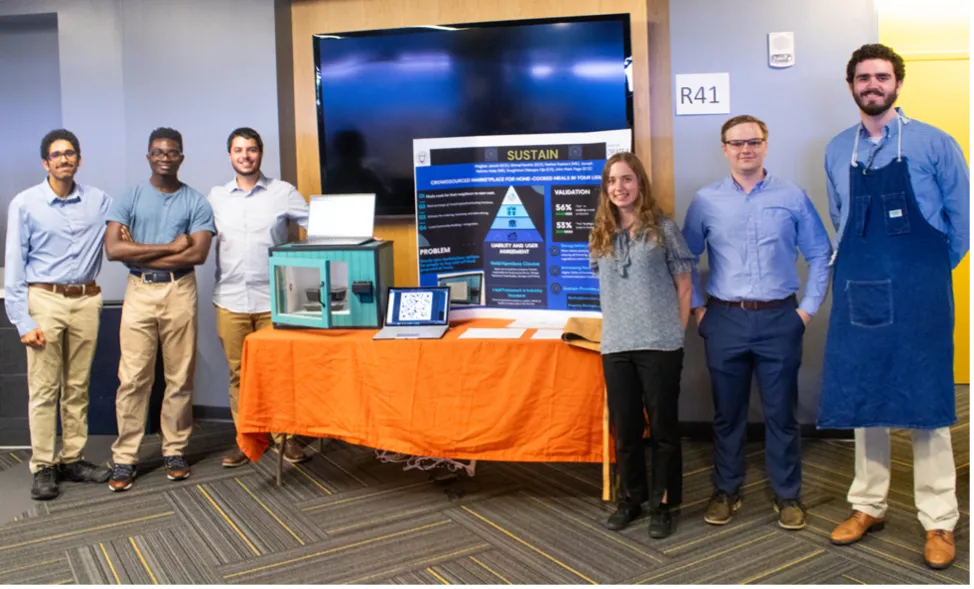
Team Sustain poses with their lock box for home cooked meals at the 2024 Spring Capstone Expo.
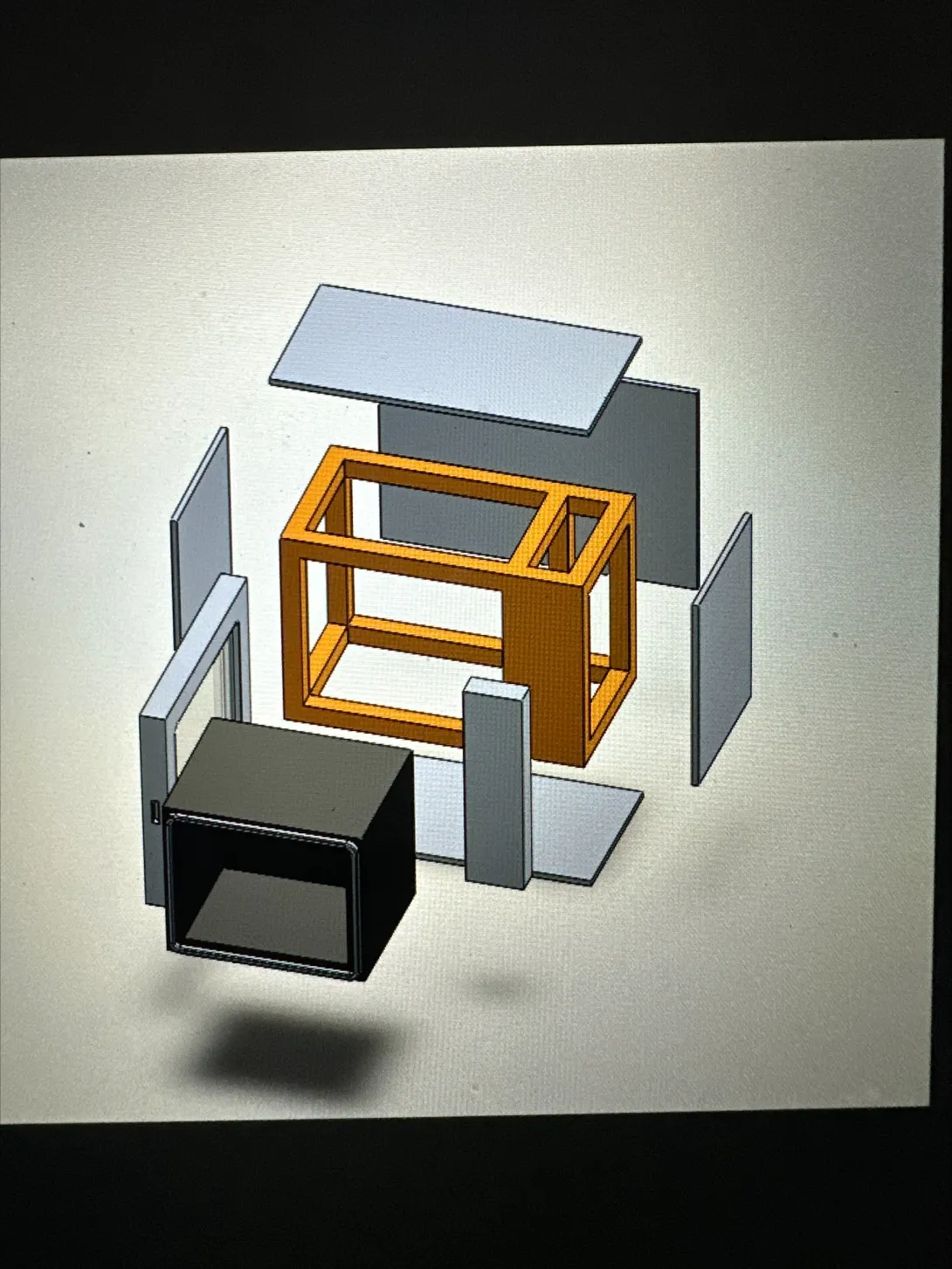
Model image of Team Sustain lock box for home cooked meals
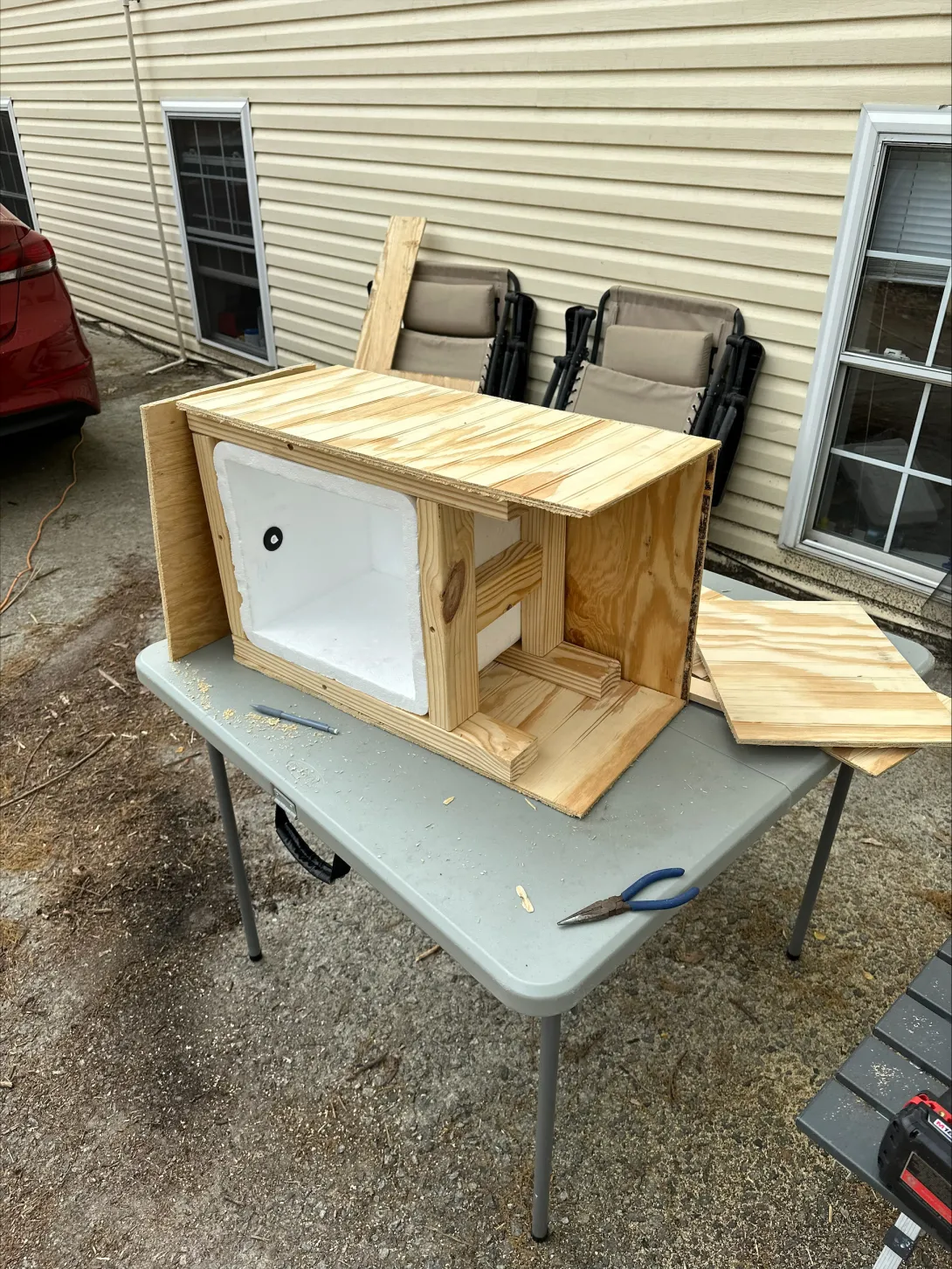
Wooden components make up the initial draft of the lock box for home cooked meals, made by Team Sustain
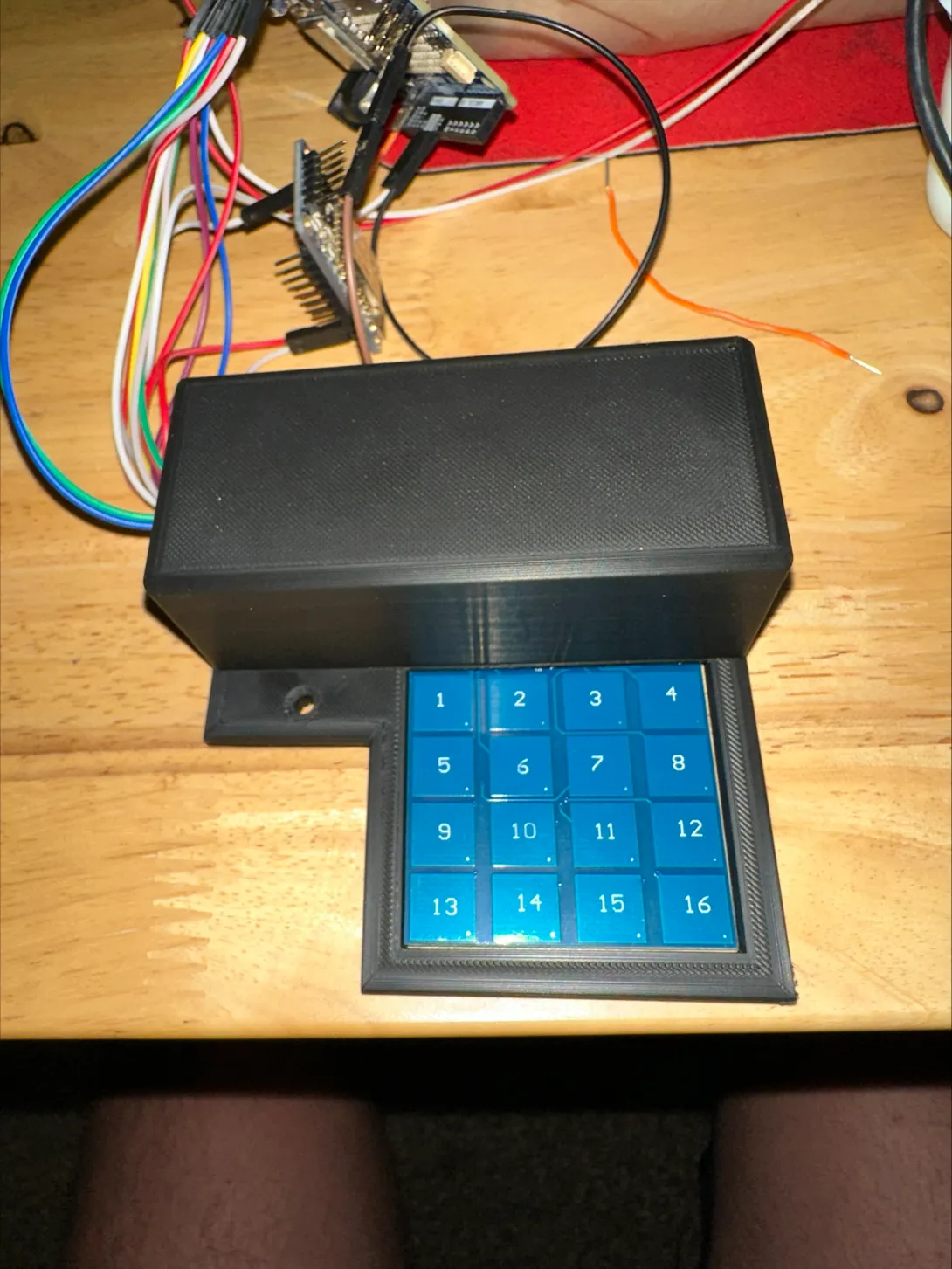
Team Sustain printer with components their lock box for home cooked meals
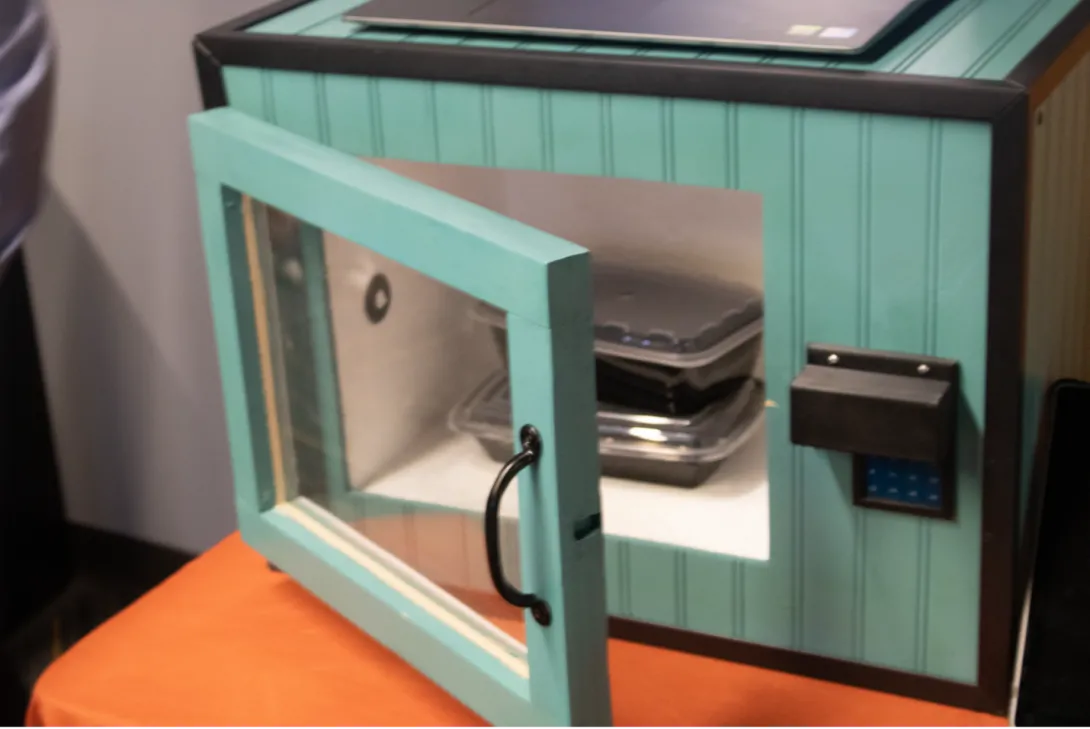
A lock box for home cooked meals is presented at the 2024 Spring Capstone Expo.
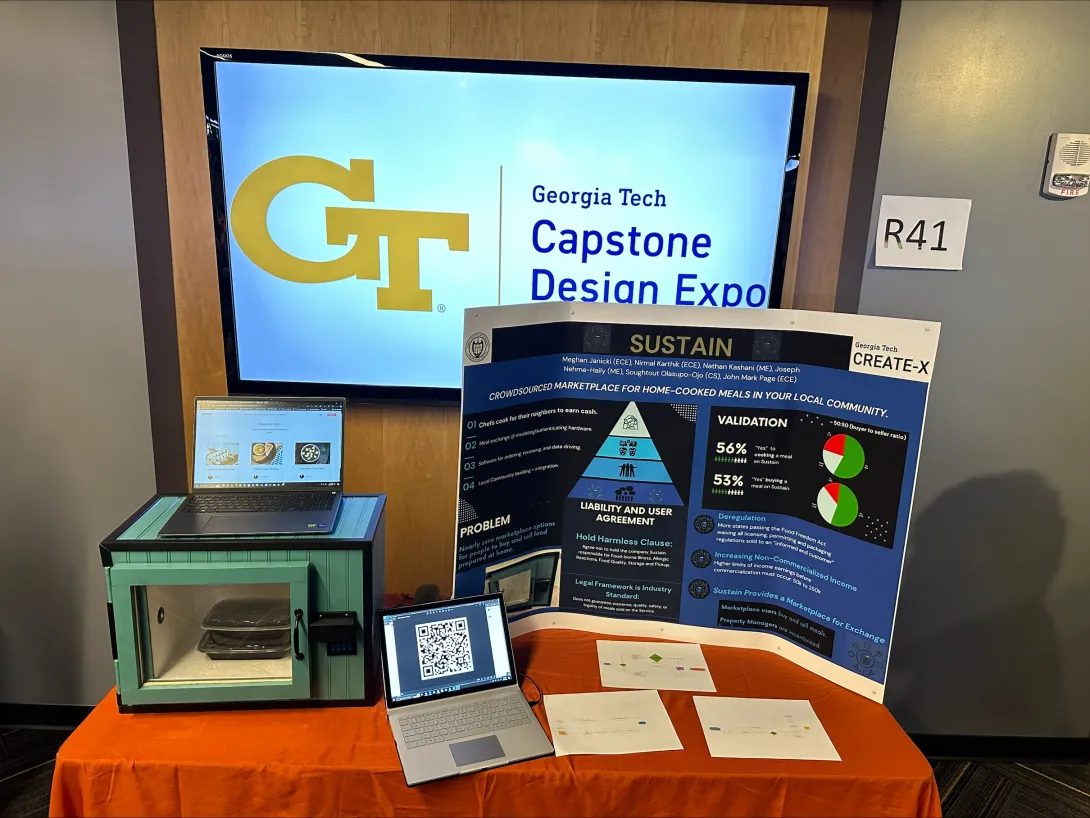
Team Sustain lock box for home cooked meals sits with a tri-fold explainer and a laptop with a QR code at the Spring 2024 Capstone Expo
CREATE-X Capstone Design offers students a unique opportunity to blend their technical skills with entrepreneurial ambitions. In this interdisciplinary program, teams of students identify real-world problems and develop innovative solutions through customer discovery and hands-on experience. Below we spotlight Team Sustain, a group of students who participated in the Spring 2024 Capstone Expo. Their project focused on bringing convenience to home-cooked meals, showcasing the practical application of their engineering and entrepreneurial skills. Read on to learn about their journey, their challenges, and how you can get involved in CREATE-X Capstone Design.
Team Sustain
Sustain offers a way to crowdsource meals and provide home cooks with a cash incentive. The system includes software for ordering, reviewing, and collecting data and hardware for meal exchange.
Nirmal Karthik, electrical and computer engineering
Soughtout Olasupo-Ojo, computer science
Nathan Kashani, mechanical engineering
Meghan Janicki, electrical and computer engineering
Joseph Nehme-Haily, mechanical engineering
John Mark Page, electrical engineering
Why did you all choose this project?
“One of the main things CREATE-X Capstone encourages us to do is customer discovery. Through our discussions, we realized that many people enjoy home-cooked meals but find them inconvenient to prepare. While most things in life are just a click away, home-cooked meals still require a personal touch. CREATE-X challenged us to find a problem and create a solution, so we focused on making home-cooked meals more convenient,” Page said.
Why CREATE-X Capstone?
“After graduation, I wanted to try my hand at entrepreneurship later. I thought CREATE-X was a good way for me to try and learn entrepreneurship skills: how to run a business, what it looks like, the timeline, and so on. Either way, if it went well or badly, I could say with my heart that I have an idea of how to do entrepreneurship,” Olasupo-Ojo said.
“You can go into a big city like Atlanta and actually feel like you can do something to help people. It is a great benefit, as opposed to being in the technical weeds of an engineering project. Mixing them together has been a great experience,” Janicki said.
“CREATE-X empowers students to think independently and explore projects they’re passionate about. We get to drive our projects and businesses, learning skills firsthand rather than just in theory,” Kashani said.
What was your biggest struggle?
“As engineers, we’re classically, especially in school, already given the problem. So, the challenge was figuring out what the problem was, and if our solution really solves the root cause of the problem. We figured out how to find the problem,” Page said.
“Figuring out the idea was our biggest struggle. We delved into markets to find opportunities and ways to help people,” Kashani said.
What has been your favorite part of this experience?
“The team. Make sure you surround yourself with good people, and I think each of us has done that. That’s what I’m proudest about — our team,” Page said.
What advice would you give to someone considering entrepreneurship?
“Develop the skill sets to see problems and be able to think about them. At the beginning of the semester, we were thinking about solar design and building solar design for farms, and now we are in a completely different space. But we’re still applying the same skills and building something up from it that matters. The most important skill is adaptability,” Janicki said.
“Be ready to make mistakes. You won’t get it right the first, second, or even third time. Customer discovery is a continuous process — don’t let setbacks discourage you,” Olasupo-Ojo said.
“Don’t be afraid to get started. If you’re feeling nervous or unsure, there’s only one way to find out, so I’d say go full force into it,” Kashani said.
CREATE-X Capstone Design is open to senior undergraduate students in mechanical engineering, electrical and computer engineering, industrial and systems engineering, and computer science. Course registration is available for the fall and spring semesters, and the current sections are ME4723-X/X01, CS4723-X/X01, ECE4853 X/LX, BME4723-X/X01, and ISYE4106.
CREATE-X also offers other programs like Startup Lab and Idea to Prototype, providing students with a foundational entrepreneurial education. For those interested in launching their own ventures, CREATE-X’s 12-week summer accelerator, Startup Launch, offers mentorship, $5,000 in seed funding, and $150,000 of in-kind services. The priority deadline for the accelerator is Nov. 17. Apply for Startup Launch to maximize your chances of acceptance and receive early feedback.
Making Sustain: The Gallery
News Contact
Breanna Durham
Marketing Strategist
Oct. 02, 2024
Congratulations to the 2024 - 25 O'Hara Fellows!
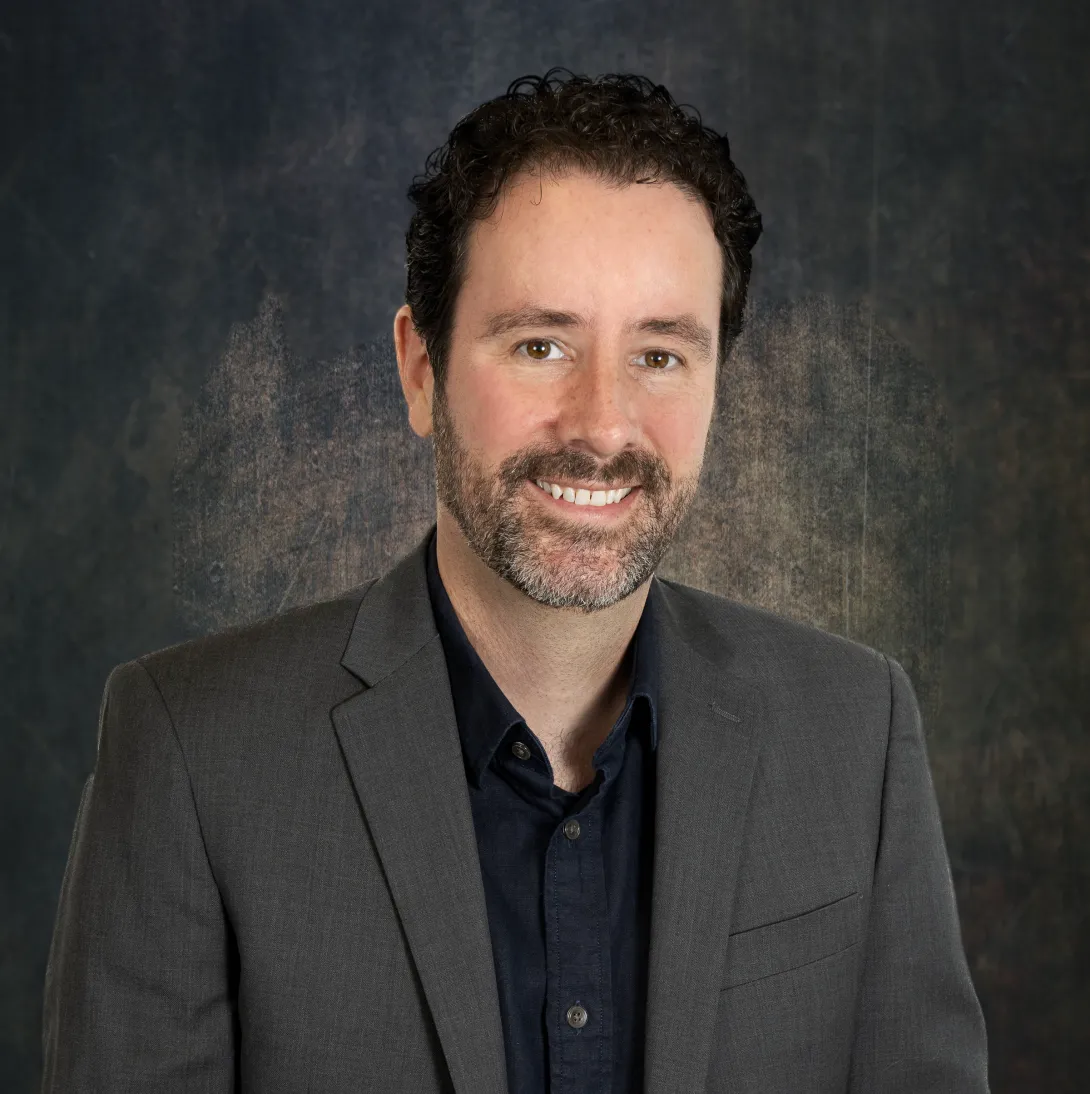
Anthony Boever
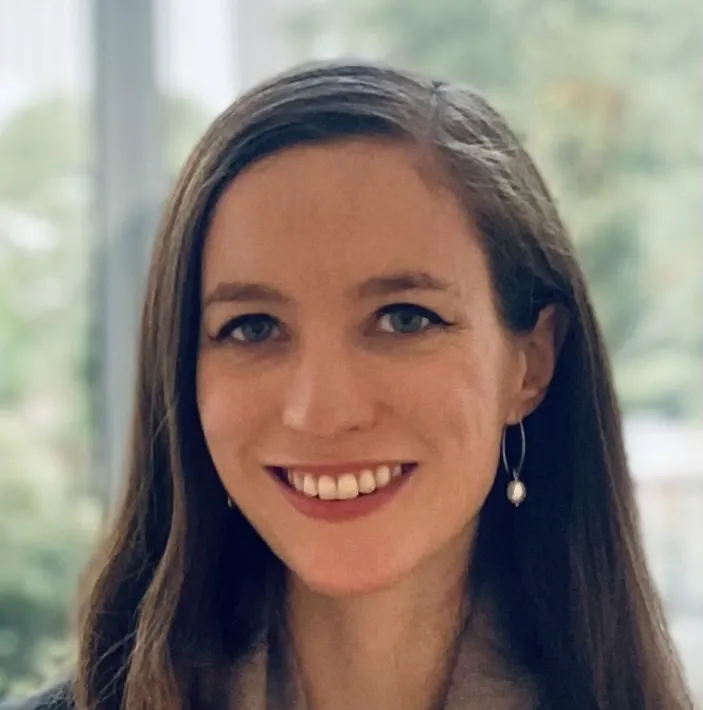
Erin Connolly
Sierra Knavel
Xing Xu

Kai Xue
Congratulations to the students awarded the Larry S. O’Hara Graduate Scholarship for the 2024-25 academic year. The early career fellowship from the College of Sciences recognizes outstanding doctoral students scheduled to graduate in the calendar year following their nominations.
“We are proud and excited to honor this year’s recipients of the O’Hara Fellowships,” says College of Sciences Senior Associate Dean David Collard. “They represent the best of our amazing Ph.D. students with impressive research, teaching, service, and leadership accomplishments.”
Meet the 2024-25 O’Hara Fellows
Anthony (Tony) Boever, School of Earth and Atmospheric Sciences
Boever is a fifth-year EAS student, conducting research for Martial Taillefert’s Group. His research spans the land-to-ocean continuum and includes studies on how groundwater fluctuations control the fate and transport of uranium in stream sediments, how wetland changes affect methane emissions, and how river pulses influence carbon transformations in low-oxygen ocean sediments. Boever has been extremely active in field research, participating in six research cruises and leading the field component of a Department of Energy-funded project at the Savannah River National Laboratory that included more than six research trips in two years. As a result of his extensive field work, Boever is working on three first-author publications and co-authoring three additional articles.
“I play in the mud, using sensors to monitor chemical changes that affect the environment,” says Boever. “Field studies are tough, but what we learn is invaluable not only for improving our current understanding of these processes but also informing us of their potential influence on future ecosystem function and global climate impacts.”
Erin Connolly, School of Biological Sciences
Connolly will earn her Ph.D. in bioinformatics. As a member of the Gibson Lab, she studies single-cell genomics, data visualization, gene regulation, autoimmunity, cancer, and personalized medicine. In addition to her research activities, Connolly has presented posters or presentations at five national and international meetings, was active in the Women-in-Science promotion, and has mentored high school and undergraduate students.
“My research focuses on understanding how our immune system differs between sexes, changes with age, and responds to treatments such as radiation and immunotherapy,” says Connolly. “By studying these differences, I aim to uncover details that can lead to more personalized and effective therapies for cancer and age-related diseases. This work can potentially make healthcare more effective, improving patient outcomes across diverse populations.”
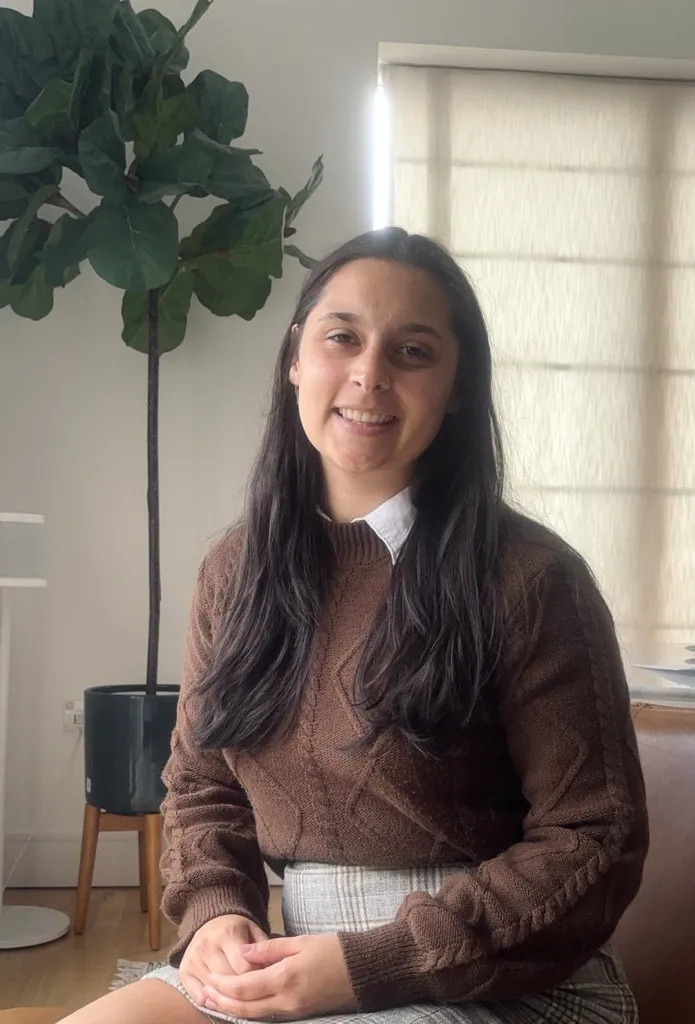
Sierra Knavel, School of Mathematics
Knavel, whose research focuses on symplectic topology and is advised by John Etnyre, is an avid mentor and teacher. She served on the Graduate Council and runs the Directed Reading Program for the School of Mathematics, pairing undergraduate students with graduate students to pursue advanced topics in mathematics. She also developed a Research Experience for Undergraduates (REU) based on her Ph.D. research. As a teaching assistant, she has been recognized with an Outstanding Student Evaluation Award and numerous Thank-a-Teacher certificates.
“My time at Georgia Tech grows more enriching each year,” says Knavel. “The community is welcoming, with abundant mentorship. I've received support at every level for my decisions to attend conferences, teach abroad, and help organize activities in the School of Mathematics. Because of the supportive community, I’ve gained the skills and knowledge necessary to teach and motivate undergraduate students in both classroom and research settings.”
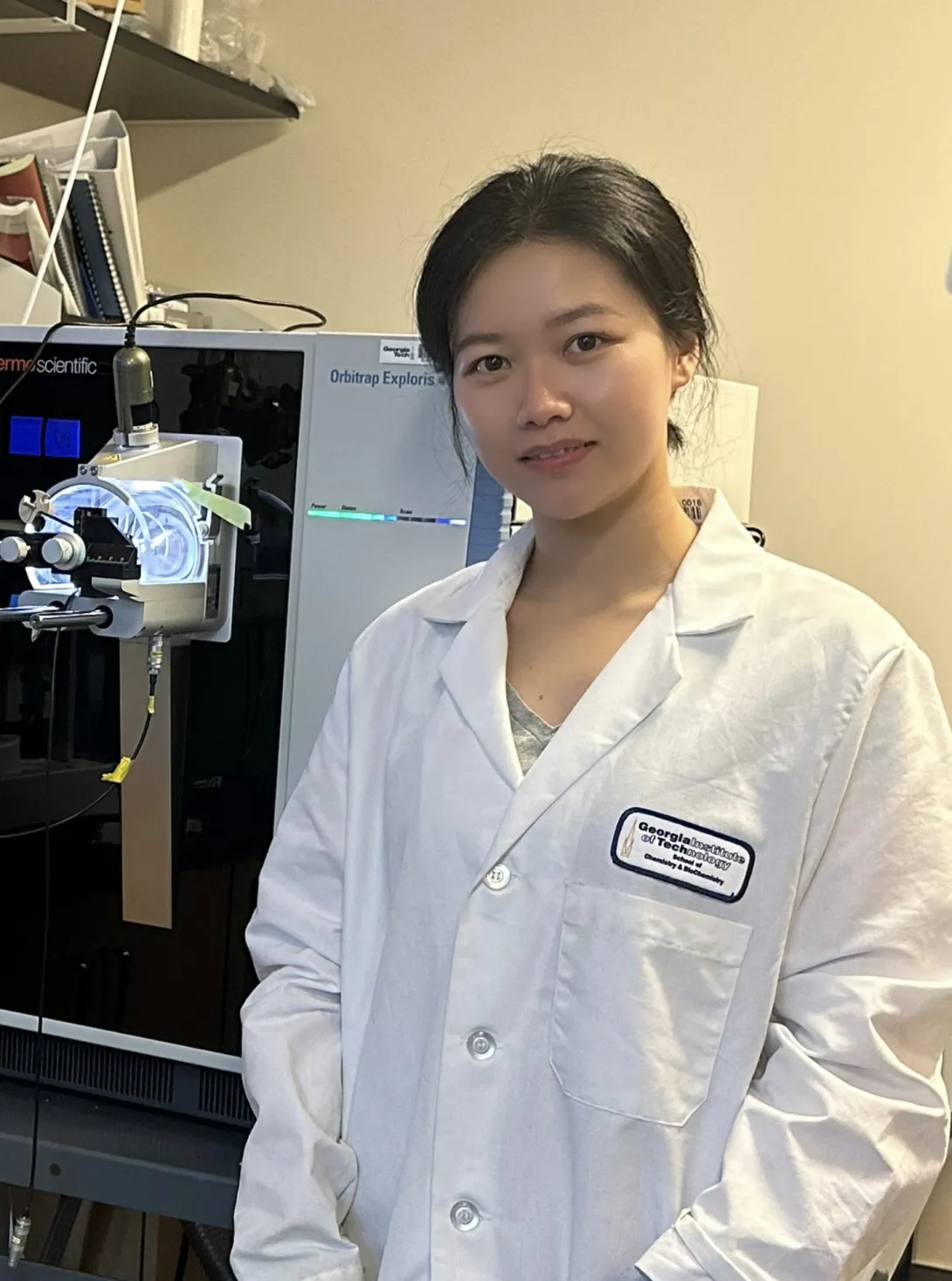
Xing Xu, School of Chemistry and Biochemistry
Xu will receive her Ph.D. in chemistry and has published two first-author papers, with three more in preparation. She has contributed to four additional publications as a second or third author. Additionally, she mentored several undergraduate and first-year graduate students within the Wu Research Group and served as a mentor for the Summer 2023 National Science Foundation Research Experience for Undergraduates Program.
"My research focuses on identifying glycoprotein alterations in human cancer,” says Xu. “I’m particularly fascinated by how I can use chemical probes and mass spectrometry to 'visualize' changes in glycoproteins within clinical cancer models. This area of study interests me because glycoproteins play a crucial role in cancer progression and metastasis, and understanding these alterations could lead to new therapeutic strategies."
Kai Xue, School of Psychology
Xue specializes in cognition and brain science. Although she has been a part of the Ph.D. program for only two years, she has published three scientific papers and has several others submitted and under review. She has also served as a highly ranked teaching assistant.
"My research centers on perceptual decision-making and metacognition, focused on using computational modeling and transcranial magnetic stimulation (TMS) to advance our understanding of how confidence is computed,” says Xue. “This exploration into the mechanisms of human confidence computation deeply fascinates me; I am incredibly grateful to my supervisor, Dobromir Rahnev, whose unwavering support and guidance have been invaluable throughout this journey."
News Contact
Writer: Laura S. Smith
Communications Officer II
College of Sciences
laura.smith@cos.gatech.edu