
Jan. 09, 2023

A new eBook, "Climate Change and the Design of the Built Environment," written by Michael Gamble, Academic and Research Council Chair at the Kendeda Building for Innovative Sustainable Design and associate professor in the College of Design at Georgia Tech is now available!
Written as a series of dialogues with leaders from various disciplines, the book positions design as an essential component of entrepreneurial approaches which explore the sociocultural and eco-political dimensions of climate change. Economist, Architects, Planners, Sociologist, Lawyers, Policy Makers, Landscape Architects, and MBA’s contribute to a spirited discussion around climate change and design.
Global climate change has already resulted in a wide range of impacts across every region of the country. Many sectors of the economy are expected to grow related to climate and health in the coming decades. The design and retrofit of buildings, infrastructure and cities will be a major part of future efforts.
All interviews are Kendeda Building based on Georgia Tech’s Atlanta campus with experts participating from around the world.
Jul. 29, 2022
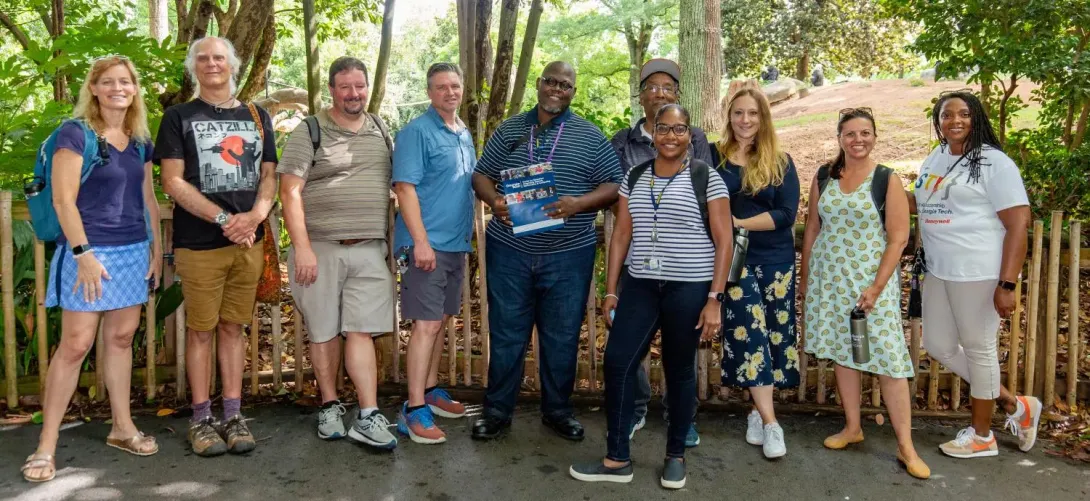
For decades, engineers and scientists have looked to nature for inspiration. One of the most famous examples is Swiss electrical engineer George de Mestral. In 1955, he invented the hook and loop fastener (which he later named Velcro) after studying burdock burrs that kept sticking to his clothes during a hunting trip. For the birth of flight, the Wright brothers studied how birds change the angle of their wings to roll right or left while in the air. They would use the example to refine their control systems in the world’s first successful motor-operated airplane.
A number of Georgia Tech researchers are also focused on biologically inspired design, ranging from the study of how honey bees transport pollen pellets to how small, snakelike lizards move.
With the assistance of a $3 million National Science Foundation grant, Georgia Tech’s Center for Education Integrating Science, Mathematics, and Computing (CEISMC) and the Center for Biologically Inspired Design (CBID) are partnering on a three year research project that introduces biologically inspired design to high school students throughout metro Atlanta.
Read the Full Story at the College of Engineering Website
News Contact
Candler Hobbs, Communications Officer, College of Engineering
Jul. 18, 2022
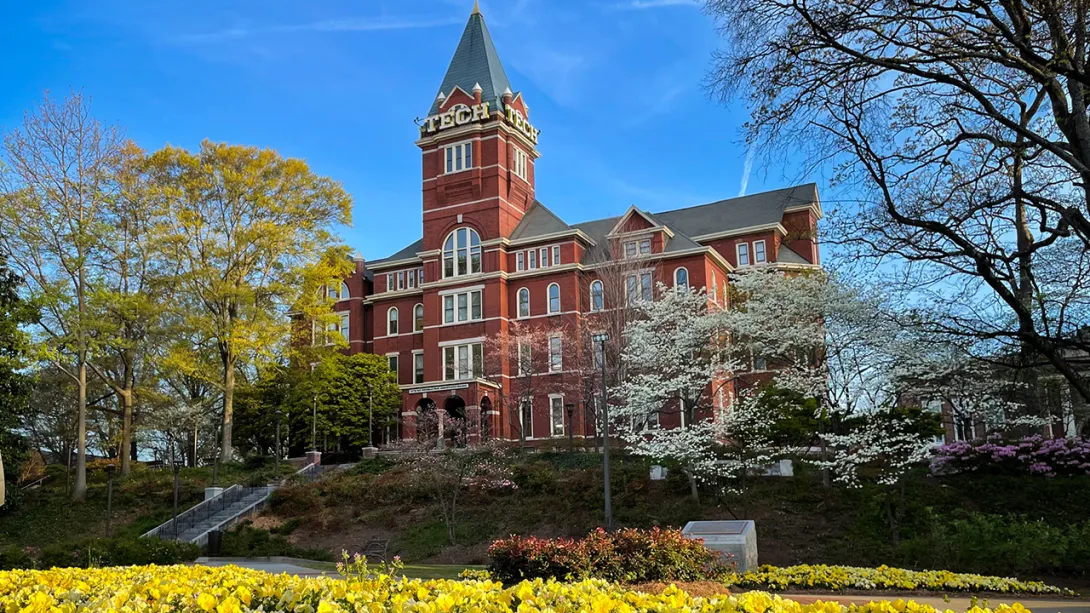
The American Society of Mechanical Engineers (ASME) has honored Georgia Tech aerospace engineering professor George Kardomateas with the Spirit of St. Louis Medal for exemplary work in the progress of aeronautics and astronautics. He is in great company as Daniel Guggenheim, Neil A. Armstrong, John E. Northrup, John W. Young (AE 1952), George W. Lewis, Charles S. Draper, Robert G. Lowey, Michael Collins, and the late Dewey Hodges have also received this premier medal. ASME will present Kardomateas with the medal at the International Mechanical Engineering Congress & Exposition in Columbus, Ohio, October 30-November 3, 2022.
Kardomateas has spent over thirty years improving aircrafts from a structural standpoint. More specifically he investigates ways to ensure that aerospace structures retain their structural integrity. He focuses on the special part of mechanics called fracture mechanics, which studies the conditions for the initiation and propagation of cracks and debonds. “Fracture mechanics and damage tolerance have been very successful in that, nowadays, airplanes don’t usually come down because of structural failure,” explained Kardomateas.
He credits his lifelong scientific triumphs to his education in the United States and Greece, his collaboration with past and present colleagues at Georgia Tech, and the academic system in America. “The environment at Georgia Tech fosters collaboration and innovation. The higher education system provides opportunities through the collegial network in scientific forums where ideas can be exchanged with those inside and outside of your institution.” Former AE School professors, including the late Bob Carlson, and George Simitses, inspired him as colleagues and also acted as mentors to him.
Kardomateas earned a diploma from the National Technical University of Athens in Greece and both his master’s and doctoral degrees from the Massachusetts Institute of Technology. In 1989, he joined the School of Aerospace Engineering's faculty at the Georgia Tech. He has authored three books, An Introduction to Fatigue in Metals and Composites, Structural and Failure Mechanics of Sandwich Composites, and Mechanics of Failure Mechanisms in Structures. He is also the editor of six volumes on the topic of failure mechanics of composite and sandwich structures, an associate editor of the Handbook of Damage Mechanics: Nano to Macro Scale for Materials and Structures, as well as the author of about 200 papers published in refereed journals or as parts of books.
In addition to his work at Georgia Tech, he has served the discipline in several capacities. The ASME Fellow has operated as an Associate Editor of the Journal of Applied Mechanics, and the AIAA Journal, as a Contributing Editor of the International Journal of Non-Linear Mechanics and as a guest editor of the International Journal of Solids and Structures and the Journal of Mechanics of Materials and Structures. In addition, he has served as the technical chair of the 2014 ASME Congress, general chair of the 2015 ASME Congress, and the steering committee chair of the 2017 ASME Congress. He was the elected chairman of the Applied Mechanics Division Composites Committee and the program representative of the Aerospace Division Structures and Materials Committee. Kardomateas has also served in many other panels and committees including as the Chair of the Daniel Guggenheim Medal Award Board, and on the Organizing Committee of the sixth, seventh, tenth and eleventh Institute for Advanced Composites Manufacturing’s International Conferences on Sandwich Structures; he has also served on external evaluation committees for many academic programs.
Currently, the medal winner is working on his next book that focuses on the fracture and fatigue of metallic and composite aerospace structures, which will include his latest research advances in the field.
News Contact
Monique Waddell
Jul. 12, 2022
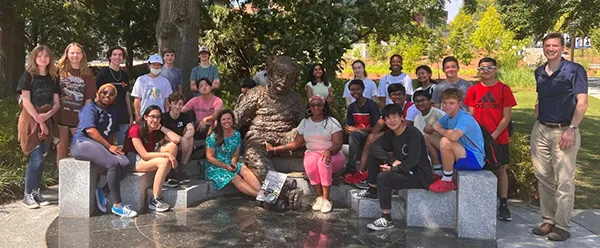
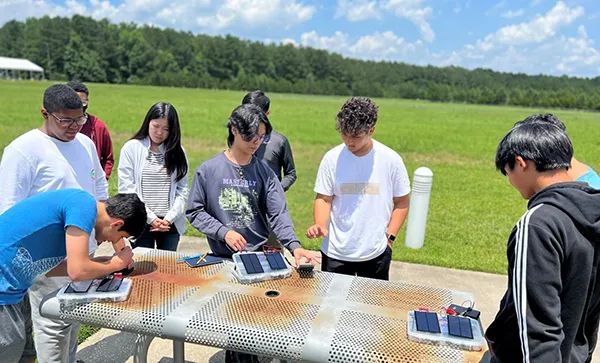
The Summer of 2022 is off to an energetic start! The Energy, Policy, and Innovation Center (EPICenter) hosted two week-long cohorts of "Energy Unplugged," an energy-themed STEAM camp for 35 high school students. Dr. Rich Simmons and Strategic Energy Institute fellow Azell Francis engaged with collaborators from around the state, and led the campers in hands-on interactive demonstrations and experiments involving solar panels, batteries, catapults, water rockets, and remote-control cars. The first camp was held on the Georgia Tech Savannah campus, and the second on the Georgia Tech main campus in Atlanta. Both camps covered both renewable and non-renewable energy sources, energy production and delivery, environmental impacts, and global electricity access. Campers gained insights into how a STEAM-oriented education can be a path that leads to an exciting and successful career in energy.
During the week of June 13 - 17, 2022, GT Savannah was host to a very engaged group of campers. Launching right into activities, the students built and tested catapults, integrating important physics and math concepts into hands-on fun. Next up was the water rocket design challenge, where they showcased their creativity to achieve maximum height and distance. The City of Savannah’s Office of Sustainability displayed their electric vehicle, and shared perspectives on local sustainability initiatives. A highlight of both summer camps was field trip day! The campers visited Georgia Power’s Plant McIntosh, which is a combined cycle gas turbine plant, and the Gulfstream Aerospace Corporation, where the G6 and G7 aircraft are assembled. The week ended too soon, but not before the camp students raced to the finish line driving a re-engineered remote-control electric car, and in true Georgia Tech fashion, hearing the steam engine whistle blow.
Simmons and Francis brought the Energy Unplugged fun to GT Atlanta during the week of June 21 – 24, 2022. The Kendeda Building for Innovative Sustainable Design served as an ideal instructional backdrop for the camp. The Living Building, as it is often called, is certified to generate more energy than it consumes, collect, capture, and process more water than it consumes, and, to the greatest extent possible, be regenerative, rather than consumptive. Hands-on learning remained a key pillar of the camp, conducting experiments with micro-grids and solar panels. The group also had the opportunity to visit Georgia Power’s Morgan Falls Hydroelectric Plant which began commercial operations in 1904, and GE Power’s Monitoring and Diagnostics Center, where more than 500 GW of gas turbine power plants are monitored. The week wrapped up with “shark-tank” style team presentations where campers took an entrepreneurial approach to delivering basic energy services to off-grid communities in the developing world.
Energy Unplugged is administered by Georgia Tech Summer P.E.A.K.S. (Program for Enrichment and Accelerated Knowledge in STEAM) at CEISMC (the Center for Education Integrating Science, Mathematics, and Computing). CEISMC serves as the primary connection point between Georgia Tech faculty and students and the preK-12 STEAM education community, reducing the barriers between kids and higher education. Annually, CEISMC programs impact more than 39,000 students, 1,700 teachers, 200 schools in over 75 school districts throughout the state of Georgia.
News Contact
Brent Verrill, Research Communications Program Manager, SEI
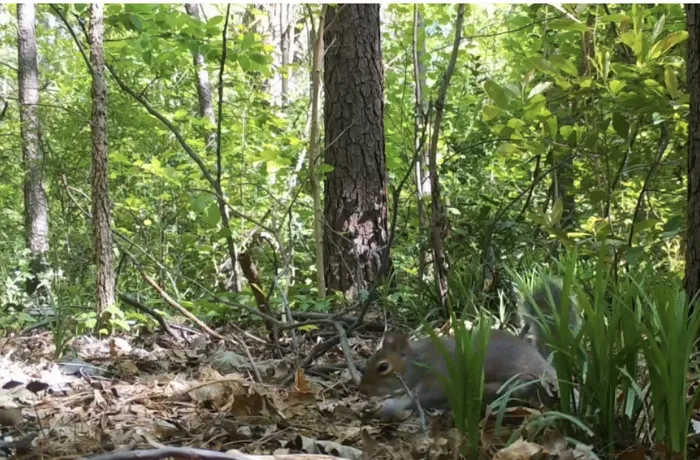
Since June, Lalith Polepeddi and Akhil Chavan have been using their skills in computer science and machine learning to help study biodiversity in Georgia Tech’s new EcoCommons.
Both research staff at the Georgia Tech Global Change Program, Polepeddi and Chavan teamed up to apply for a micro research grant from the Kendeda Living Building last summer. The grants empower research and innovation at a student, staff, and faculty level through small, accessible, amounts of seed funding.
Dec. 20, 2021
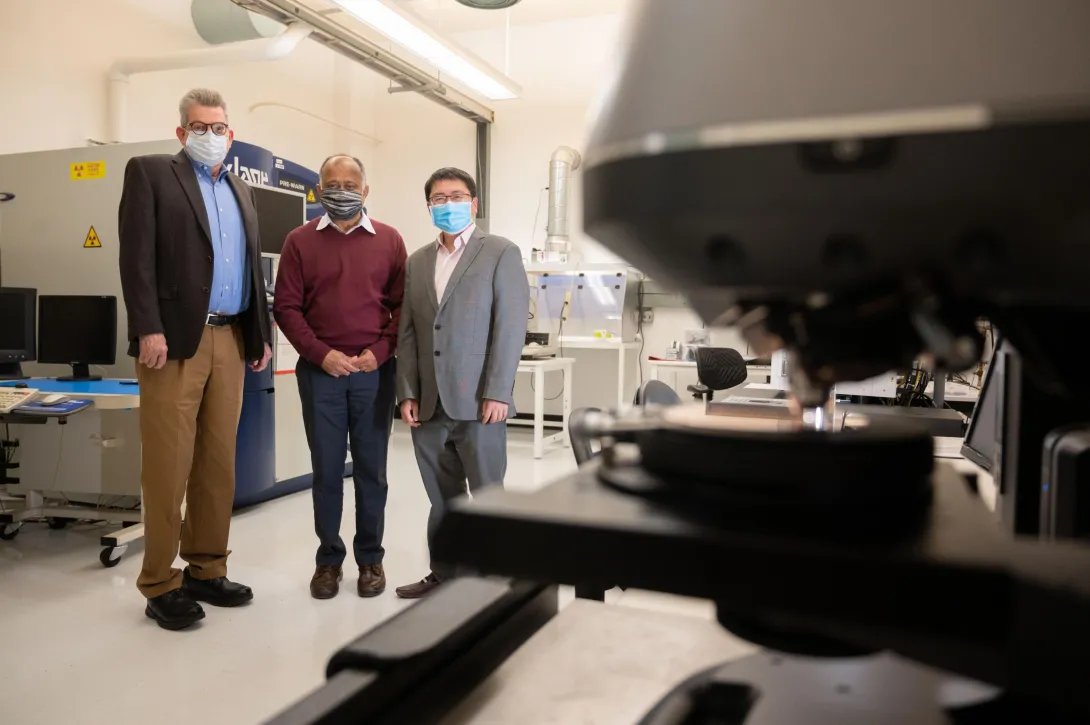
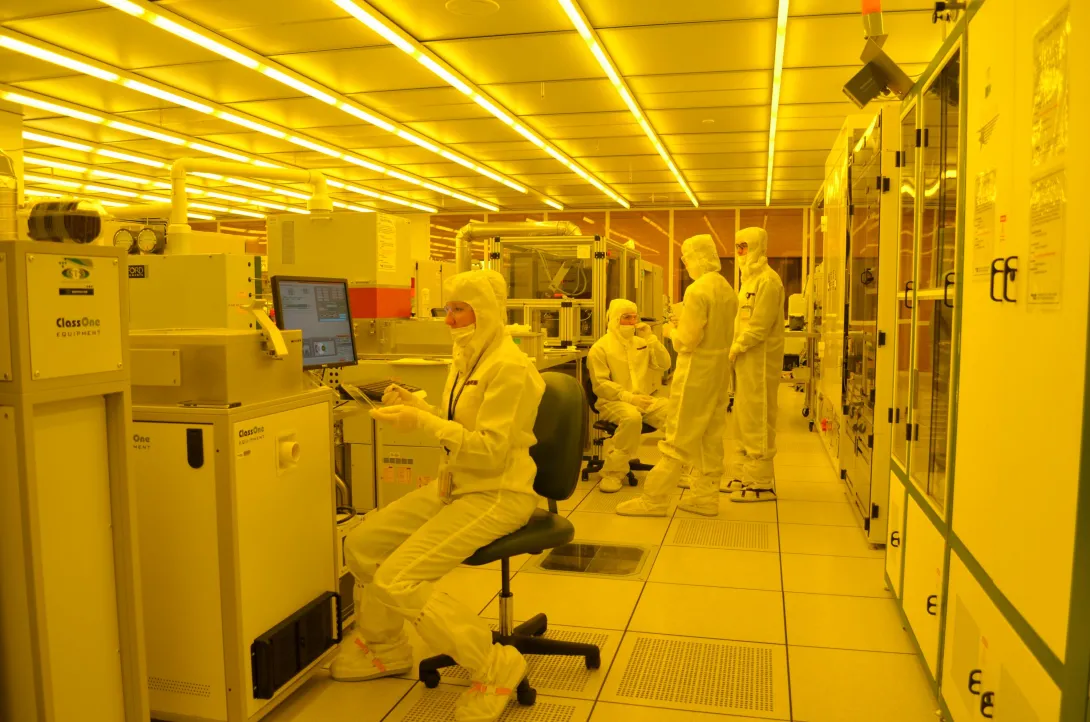
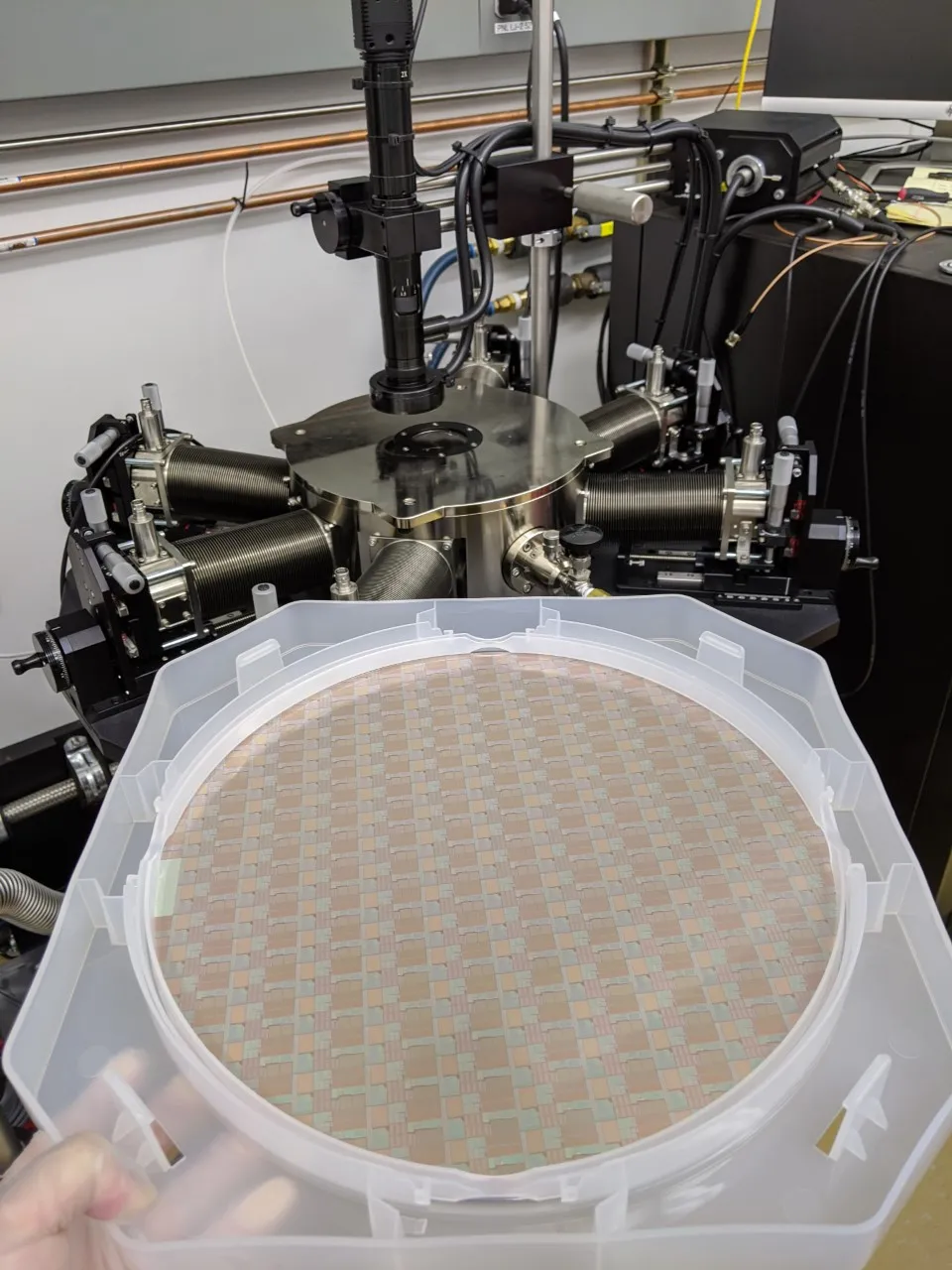
The world’s dependence on semiconductors came into sharp focus in 2021, when automotive manufacturing ground to a halt because of massive computer chip shortages – as Asian suppliers couldn’t keep up with demand for microelectronics – miniaturized electronic circuits and components that drive everything from smartphones to new vehicle components to hypersonics weapons systems.
The culprit was global supply chain disruptions caused by the Covid-19 pandemic. The crisis has highlighted the pressing need for the U.S. to bolster its domestic semiconductor supply chains and industrial capacity, after three decades of decline as a semiconductor producer. The U.S. share of global semiconductor fabrication has dropped to 12% today, compared to 37% in 1990, according to the Semiconductor Industry Association (SIA). In addition, the semiconductor industry today only accounts for 250,000 direct U.S. jobs.
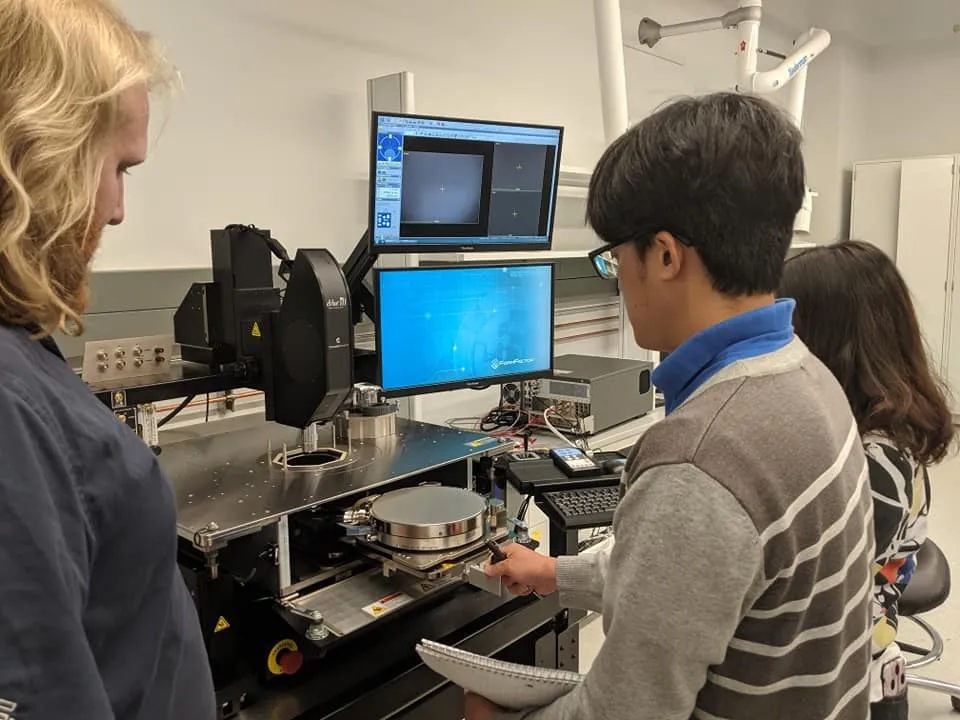
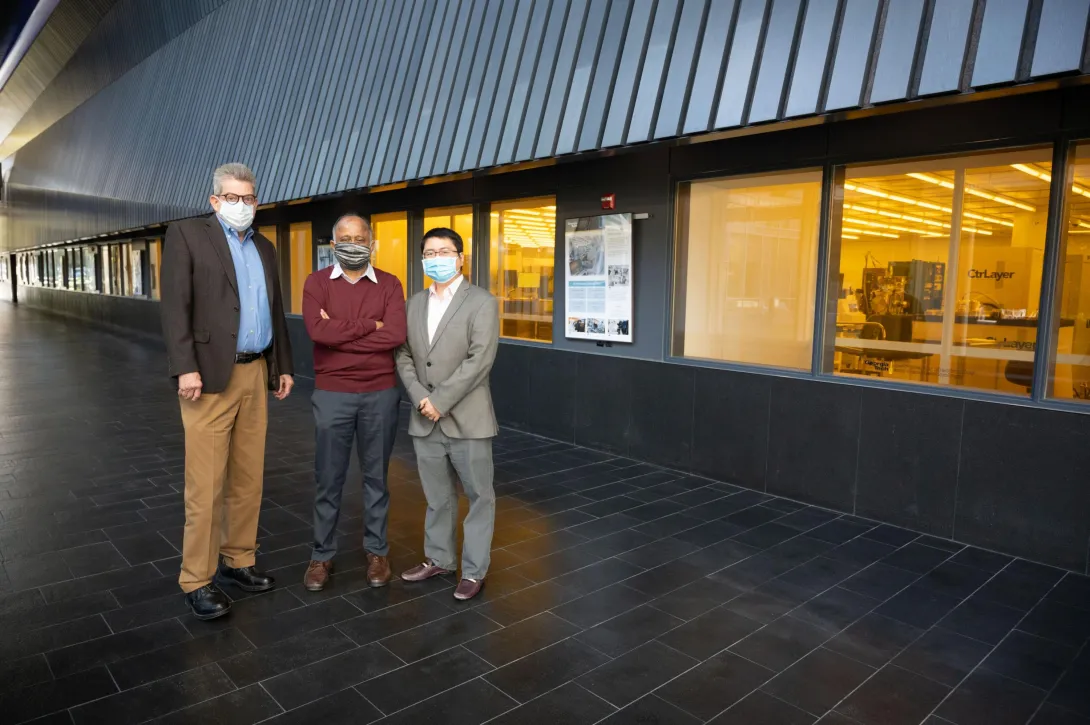
As the country rebuilds its semiconductor infrastructure at home, Georgia Tech serves as a vital partner – to train the microelectronics workforce, drive future microelectronics advances, and provide unique fabrication and packaging facilities for industry, academic and government partners to develop and test new solutions.
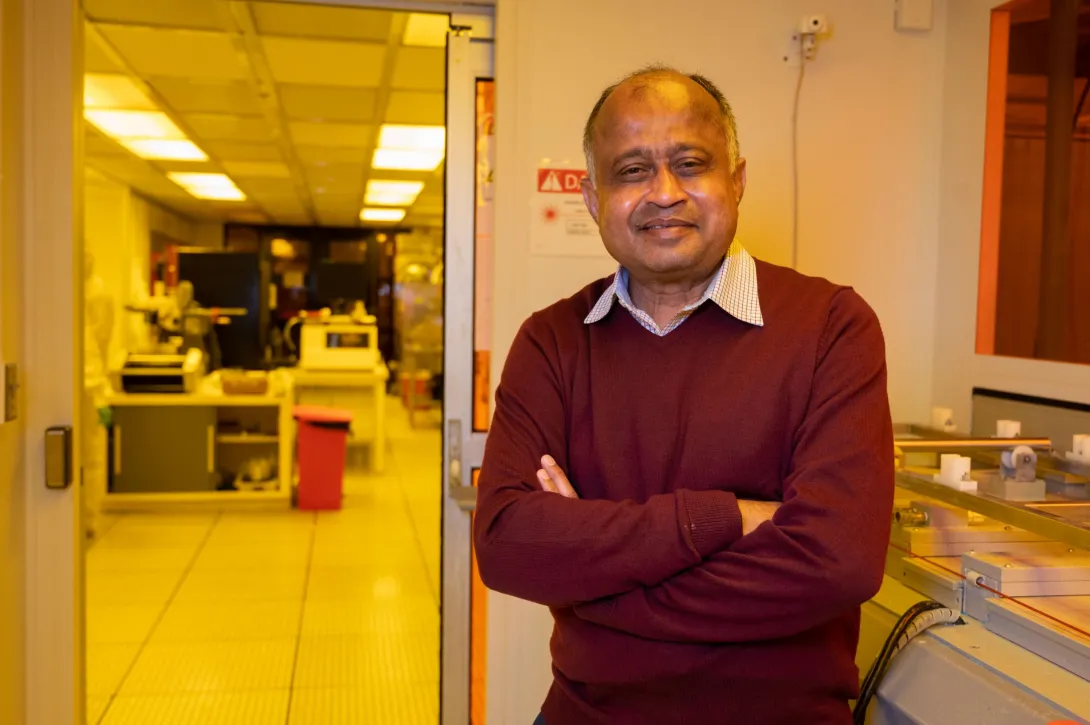
“We’re one of the only universities that can support the whole microelectronics stack – from new materials and devices to packaging and systems,” said Madhavan Swaminathan, the John Pippin Chair in Microsystems Packaging in the School of Electrical and Computer Engineering and director of the 3D Systems Packaging Research Center.
Nov. 30, 2021
By Frida Carrera
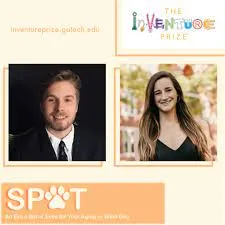
After almost a year since the completion of the 2021 InVenture Prize Competition, we caught up with Matt McMullen and Emma Bivings who competed as finalists on the SPOT Harness team, a harness that uses sensors and vibrators to help blind dogs navigate. Their experience in the competition exposed them to multiple experiences, environments, and demands necessary for startups for the first time. As a result, they were able to distinguish their areas of growth, gain valuable insights, and make potential changes in the direction of their product.
Today, Matt is currently a graduate student seeking a master’s in music technology and Emma is a full-time operations management trainee at McMaster-Carr. The team is still developing the SPOT Harness and has even grown its team to five members. Through funding and participating in Georgia Tech’s CREATE-X Startup Launch program, they have been able to launch their company Saving Grace Pet Solutions LLC. They plan to launch SPOT Harness under this company as well as develop other future products.
To future InVenture participants, Matt advises, “Don’t give up on your idea! The most important part of making it the distance is having a team with a passion for your product.”
The SPOT Harness team will be launching a kick-starter soon for preorders ahead of the official market launch of the SPOT Harness for blind dogs. They also advise anyone who has or knows someone who has a dog suffering from vision loss to visit their website to sign up for their newly refined prototype!
Visit their website here: www.savinggrace.tech
To learn more about the upcoming InVenture Prize Competition visit https://inventureprize.gatech.edu/ . Registration closes on Jan. 19.
Nov. 16, 2021

By Frida Carrera
Several months after the completion of the 2021 InVenture Prize Competition, we caught up with John Wooten to see what he’s been up to! In 2021’s competition, John’s innovation Block Transfer, a decentralized stock transfer agent protocol for global financial markets, placed as a finalist.
Today, John Wooten has been actively working to grow Block Transfer by securing final SEC approval, acquiring funding by US Bank, and submitting utility patents. He believes that by combining blockchain tech with traditional financial markets, we can fundamentally change the world. John describes his experience as a finalist in the competition as being invaluable and advises, “We didn't know we could partake given prior admission to CX. Biggest advice is to just TRY!”
You can learn more about Block Transfer here: https://www.blocktransfer.io/consult
To learn more about the upcoming InVenture Prize Competition visit https://inventureprize.gatech.edu/ . Registration closes on Jan. 19.
Nov. 01, 2021

By Frida Carrera
After almost a year since the completion of the 2021 InVenture Prize Competition, we caught up with finalist Sammie Hasen to see what she’s been up to over the past couple of months! For 2021’s competition, Sammie’s invention, BCase, placed as a finalist for its accessible, discreet, and secure birth control storage that attaches directly to the back of your phone.
Today, Sammie successfully launched BCase in New York City on World Contraception Day as one of five brands featured by Medsur Inc, the consumer goods company founded by Sammie. On September 26th, Medsur was even invited by The Pill Club, a leading contraceptive company, to participate in the launch of their uterus-shaped vending machines in New York. Medsur now continues to garner the attention from many leading health companies in the birth control space and this is just the beginning for Sammie.
“I plan to keep growing Medsur and follow our vision of creating a suite of innovative products for uterus owners. I am slowly growing the team, and I have now added the incredible Alexa Graham as COO. She is a rockstar, and she will help me grow Medsur to be all that we envision it to be!”, she explained.
Sammie adds that Medsur is always looking for new ambassadors to join the team and encourages anyone passionate about the femtech space and building innovative products to consider signing up!
You can learn more about Medsur and BCase on their website here: https://www.medsurinc.com/
To learn more about the upcoming InVenture Prize Competition visit https://inventureprize.gatech.edu/ . Registration closes on Jan. 19.
Aug. 18, 2021

The Goldia Mae Burchfield Memorial Scholarship is open for contributions again this year. It was established last year to support students in pursuit of their undergraduate degree. Ms. Burchfield, mother to Brook Byers Institute for Sustainable Systems Financial Manager, Gay Burchfield, died of COVID-19 on June 8th, 2020, at the age of 80, in Starkville, Mississippi. She lived a life of service to those in her community, with a particular emphasis on education.
The Burchfield family selected sophomore Catherine Shamanski in the College of Psychology to receive a $200 scholarship. Shamanski will serve as a Team Leader in a section of the GT-1000 class, helping incoming first year students to find their footing on campus.
Ms. Goldia was years ahead of her time. During the segregation era, her family moved from rural Mississippi to a larger town where she could pursue her high school education, which she completed in 1958. She wanted to join the military only to discover that women of color were not eligible to serve. She worked as a part-time custodian in a local bank for 35 years, as well as numerous odd jobs to care for her family and her community. She and her husband had several small businesses in their hometown, one of which was “Burchfield Recreation,” aka “The Pool Hall.” The pool hall also served as an ad-hoc after-school care for many families with working parents. Ms. Goldia provided meals, advice, and discipline, sometimes working extra odd jobs to finance those additional expenses. She would also put together care packages with stipends for the young people of her community who were college bound. If asked what her greatest achievements were, she would say that she was a great mom, provided free meals to many, greeted everyone with a heartfelt smile, and genuinely cared for everyone she encountered.
Donations by check should be made payable to the Georgia Tech Foundation, Inc., with "Goldia Mae Burchfield Memorial Scholarship" noted on the check or in a separate note, and should be mailed to: Georgia Tech Foundation, Inc., 760 Spring Street, NW, Suite 400, Atlanta, GA 30308.
On-line gifts can be made at https://development.gatech.edu, using the ‘GIVE NOW’ button and following directions provided. In the ‘Other Designation’ box, enter “Goldia Mae Burchfield Memorial Scholarship.” Each donor will be acknowledged by the Georgia Tech Foundation, and a list of all donors will be shared with the Burchfield family.
News Contact
Brent Verrill, Research Communications Program Manager, BBISS