
May. 06, 2026

In recognition of her extraordinary teaching, outreach, and mentoring activities, Emily Weigel has been awarded the Eugene P. Odum Award for Excellence in Ecology Education by the Ecological Society of America (ESA). Each year, the award celebrates a singleone individual’s sustained, outstanding work in ecology education.
“I’m honored to receive the 2026 Odum Award,” says Weigel, who is a senior academic professional in the School of Biological Sciences. “Georgia Tech is widely recognized for its research excellence, but teaching is mission-critical to the ways we serve the public good. This award reflects the incredible work happening in our classes and communities that drives science, and science education, forward.”
Weigel is among 10 individuals selected nationwide for annual ESA awards. “This year’s award recipients have each contributed something important to ecology, often in very different ways,” says ESA President Peter Groffman. “These are ecologists whose efforts have shaped the field, supported colleagues and created opportunities for others. I’m glad to see that kind of work acknowledged.”
About Emily Weigel
Weigel’s work focuses on improving biology education by examining how student backgrounds, values, and instructional practices shape learning outcomes. Her impact spans K–12 students, undergraduates, graduates, and members of the Atlanta community.
Known for her teaching innovations, she has pioneered new courses in biology, ecology, and statistics, and is also a leader in the Vertically Integrated Projects program at Georgia Tech.
From studying the dynamics of flu, to using drone aerial footage to monitor Georgia Tech’s changing landscape, to a long-term project monitoring the trees of the Campus Arboretum, Weigel shares that “students thrive when they develop skills through real-world experiences."
Weigel has also creatively infused the traditional “nature” topics and fieldwork found in ecology curricula with modern technology and programming skills used in research. “Effectively introducing professional skills, like programming in the language R, is innovative nationally,” she says. By making R, an open-source programming language, more accessible, “we’re preparing undergraduates for success in graduate school and their careers, and empowering them to learn other programming languages in the future.”
In addition to teaching, Weigel plays a central role in mentoring and supporting students across the Institute. She serves as the undergraduate academic advisor for around one-sixth of Georgia Tech’s Biology majors, mentors graduate and undergraduate teaching assistants, and is an instructor for the “Tech to Teaching” capstone course in the Center for Teaching and Learning.
Apr. 30, 2026
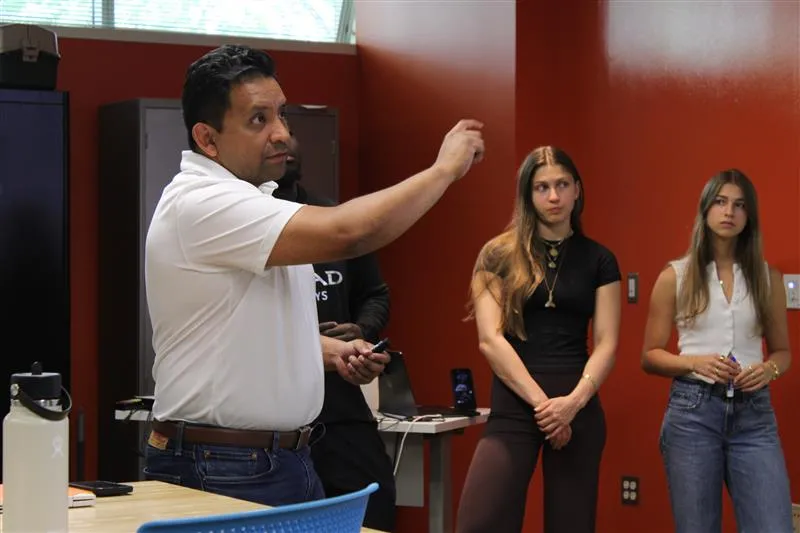
You don’t need an idea to begin. You don’t need a co‑founder, a pitch deck, or a perfect plan. What you need is curiosity, a willingness to talk to real people, and a place where it’s safe to learn by doing. That’s exactly what CREATE‑X Startup Lab delivers.
Omar Garcia Urdiales, CREATE‑X’s associate director of Learn, brings a global entrepreneurial experience to Georgia Tech: founder and CEO of a startup operating in the AWS Accelerator Loft, longtime startup coach in Europe’s major innovation hubs, lecturer across multiple universities, and an external doctoral researcher in entrepreneurship and digitalization. He brings this background to his teaching of Startup Lab’s latest iteration – a significant redesign developed by VentureLab’s Director Keith McGreggor. McGreggor created the course and has evolved it over many years, building on its initial success.
“This new iteration of Startup Lab allows us to meet students exactly where they are,” said McGreggor. “By doing this, we give them the strongest foundation possible, providing them with the tools to grapple with uncertainty and build their confidence.”
Startup Lab has long anchored the Institute’s entrepreneurial pathway with clearer structure, a unified language, and a deeper focus on reflective growth, so more Georgia Tech students can discover (and trust) their own entrepreneurial judgment.
Startup Lab is expanding responsibly, with six sections in Atlanta and additional global sections in France and Asia-Pacific taught by faculty trained in the curriculum. Students here benefit from a program that’s learning across borders and bringing that learning back to campus.
“Startup Lab is not about becoming an entrepreneur, but about engaging in the unknown and adopting entrepreneurial behavior, which can be applied to all career paths,” Urdiales said. “Students become better equipped to identify problem spaces and solve them through evidence-based building.”
Start Where You Are
Urdiales emphasized that Startup Lab is built for students who are still exploring, uncertain, or are simply curious.
“Many students tell us they’re curious about entrepreneurship but feel not ready,” he said. “They worry they’re too introverted for customer interviews or assume Startup Lab is only for people with fully formed ideas. In fact, those are the most common misconceptions.”
The course’s first few weeks focus on training students to see struggles and patterns in the world. Then, they apply those skills on a team, exploring, designing, and testing a concept with real people. The nonnegotiable outcome isn’t the best idea; it’s a more confident, evidence-driven version of you.
“Startup Lab is strengthening that self-awareness. All of us who are entrepreneurs, we don’t grow linearly. We have various iterations of how we see things,” Urdiales said. “This ability to see patterns or to see problems with customer discovery, it’s a learning process and a growth process.”
Building Muscle Memory
Urdiales said that students won’t have a passive experience in the lab.
“To become an entrepreneur, you need to do it. You need to engage with customers. You need to get out of the building,” he said. “It gives you the ability to incorporate theoretical frameworks into practical solutions and then understand these more practical outcomes.”
Aligning with CREATE-X’s culture of continuous iteration, Startup Lab is tightening the hands-on core of the course around four simple, repeatable tools so that entrepreneurial thinking becomes muscle memory, not a one-off assignment. The new iteration of the curriculum, developed by McGreggor, helps students learn to:
- Elicit grounded problem stories from real people (and separate observations from interpretations).
- Make explicit strategic decisions — who you serve, what you offer, how you deliver, how you get paid — and back them with discovery evidence.
- Externalize your logic with clear Business Model Canvas snapshots (hypotheses ≠ decisions ≠ open questions).
- Design minimum viable experiments (MVEs) that can falsify assumptions, not just confirm them.
“What we have is a frontier model in entrepreneurial education,” said McGreggor. “The result is a course that teaches sound decision making and builds entrepreneurial confidence that rewards authentic discovery and iteration over performative polish. It creates a more solid foundation for entrepreneurial thinking and sets students up to engage more deeply with everything that follows in their CREATE-X pathway.”
Reflection as a Feature
As a part of Startup Lab, instructors integrate reflection throughout the semester, which helps students notice patterns of work, make small experiments, and adjust based on what’s learned. Students often worry they’re not the founder type or that their introversion will hold them back; Startup Lab reframes those worries as raw material for growth, including communication skill building and one-on-one interactions you won’t always get in higher-level courses.
Startup Lab integrates HaradaLite — McGreggor's adaptation of the Japanese Harada Method — as a weekly reflection practice in which students keep a reflection log, helping them notice patterns of work, run small experiments, and adjust based on what's learned. With this approach, educators are able to measure the growth of entrepreneurial confidence by self-report, leading to a more quantitative approach to teaching.
A Common Language Across CREATE‑X
There’s no mandated order for CREATE-X courses. Startup Lab simply makes the next steps clearer by providing a shared language and milestone structure across sections and instructors, so whatever comes next (I2P, Capstone, Launch, or an internship), you can carry forward a coherent, evidence- aware story of your work.
“All CREATE‑X Learn sections will work with the same milestone objectives,” Urdiales said. “Students trained in Startup Lab are already trained in the muscles of entrepreneurship. They’re more equipped to go into Make and Launch or be a leader within their industry.”
Built To Be Inclusive Across Disciplines and Needs
Startup Lab is about becoming the kind of person who can see opportunities, reason from evidence, and make better decisions when the path isn’t obvious.
- You do not need an idea or a pre‑built team — curiosity is enough.
- You do not need special permits to enroll. Startup Lab is open to anyone ready to explore.
- You can benefit from the course before or after I2P or Capstone, since there’s no fixed order to the CREATE‑X pathway.
- Introverts are welcome. The course intentionally builds communication skills through structured, low-pressure interviews and guided interaction.
“Startup Lab helps students see the world’s problems and fill the gaps with fresh ideas, teaching them to see and understand the important difference between evidence and inference,” said McGreggor. “This lays the foundation that leads to good founders, and builds the entrepreneurial confidence needed to succeed.”
What You’ll Actually Do
Students in Startup Lab can expect a workshop-heavy, conversation-rich semester with weekly artifacts, scenario-based decision prompts, startup reports, and quizzes that keep you honest about what you’re learning. You’ll assemble a Continuity Pack near the end: a compact bundle of your best discovery evidence, decisions, MVEs, economics, and final story slides so your future self (or your I2P/Launch application) can pick up right where you left off.
The course also sets norms for modern tool use. AI is welcomed as a coach and organizer, after your own baseline thinking and research, and as an enhancement of the real conversations you have. That matters because Startup Lab’s promise is that you build solid judgment under the test of uncertainty, critical to the world of today and the future that is being built.
Jump Into Startup Lab
You don’t have to have it all figured out. If you’re a first-year student still exploring, a junior craving real-world projects, or a senior looking to stand out in interviews, Startup Lab is for you.
Seats fill quickly across all sections — and for good reason.
This course gives you the clearest, most supportive on‑ramp into CREATE‑X, with a global methodology, a unified curriculum, and instructors who believe deeply in your potential to grow. Learn how to think entrepreneurially. See the world differently. Build the confidence that will follow you long after the semester ends.
News Contact
Breanna Durham
Marketing Strategist
Apr. 28, 2026
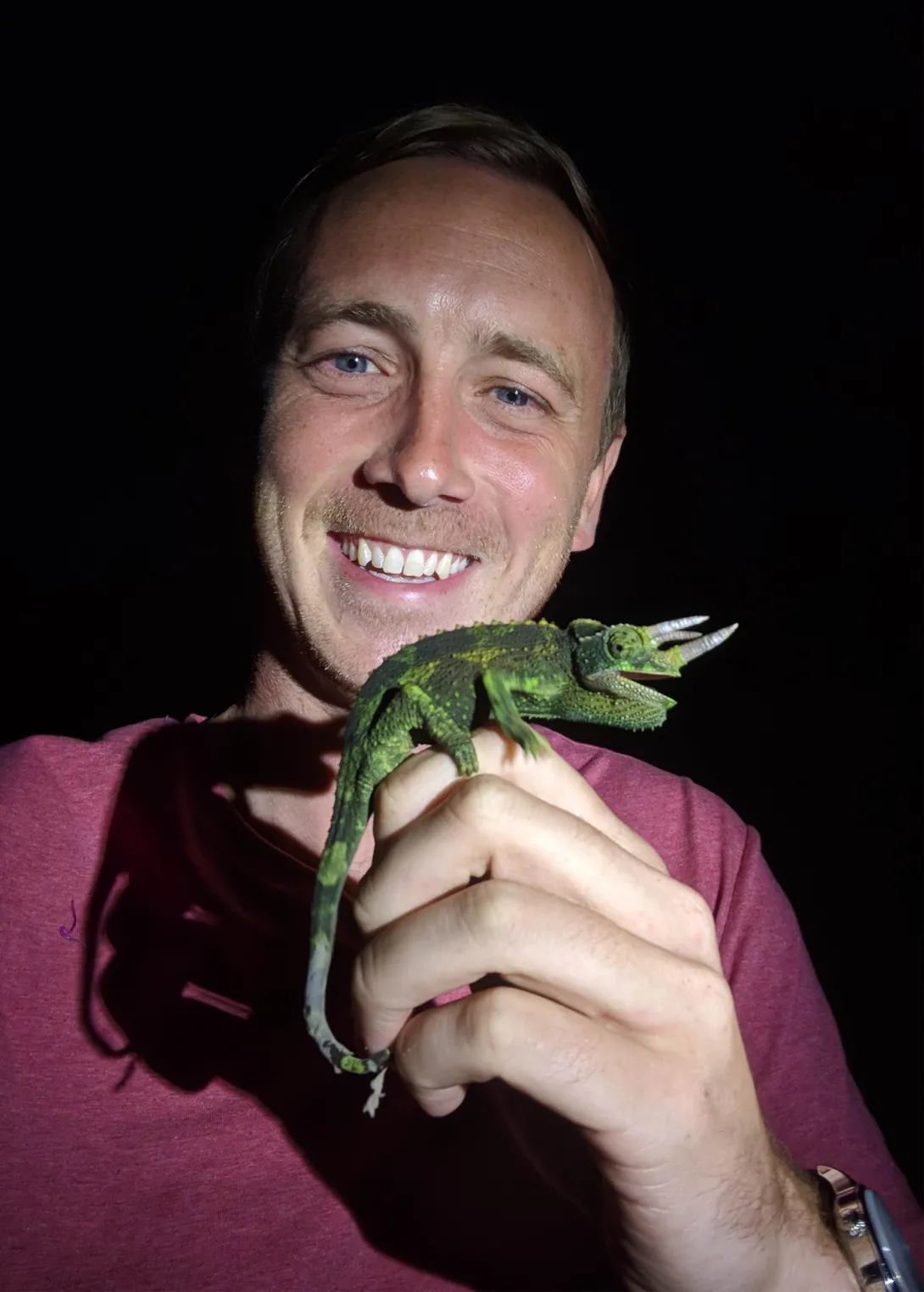
Evolutionary ecologist James Stroud has been awarded the Bicentenary Medal by the Linnean Society of London in recognition of his pioneering work in evolutionary ecology and community contributions. Stroud serves as an Elizabeth Smithgall-Watts Early Career Assistant Professor in the School of Biological Sciences.
One the oldest existing biological societies in the world, the Linnean Society of London is renowned as the venue where, in July 1858, Charles Darwin and Alfred Russel Wallace first publicly announced the theory of evolution by natural selection — more than a year before Darwin published On the Origin of Species. The annual Bicentenary Medal is considered one of the most prestigious awards for researchers studying natural history.
“This honor is profoundly meaningful to me — both as an evolutionary biologist and a Londoner,” says Stroud. “To be recognized here, at the very heart of evolutionary biology’s history, is deeply personal, incredibly exciting, and very special.”
Stroud is one of 10 exemplary researchers to be recognized by the Linnean Society this year with a medal or award.
“We are thrilled to celebrate the 2026 Linnean Society medal and award recipients, whose work advances our vision of a world where nature is understood, valued and protected,” says Mark Watson, who serves as president of the Linnean Society. “At a time when the importance of biodiversity and conservation has never been clearer, their achievements show the power of curiosity, dedication and scientific endeavor.”
Understanding Lizards — and Life on Earth
At Georgia Tech, Stroud investigates the ecological and evolutionary processes of lizards in order to understand patterns of biological diversity at a larger scale. “Studying lizards in their natural habitats allows us to directly investigate how species adapt and evolve in real time,” he explains, “and this helps us understand how ecological and evolutionary processes shape life on Earth."
For over 10 years, he has run one of the longest-running evolutionary studies of its kind: catching, documenting, and releasing each of the 1,000 lizards who reside on “Lizard Island,” Stroud’s living lab in Florida.
In 2025, he was awarded a Packard Fellowship to further develop the project by equipping each lizard with a tiny sensor backpack to document their behaviors and movements in real time — with the goal of creating evolution’s first high-definition map.
In 2014, Stroud also founded a community science project called “Lizards on the Loose” to introduce middle school students to ecological science. A collaboration with Fairchild Tropical Botanic Garden, the program now reaches students from over 100 schools across South Florida.
News Contact
Selena Langner
College of Sciences
Georgia Institute of Technology
Apr. 24, 2026
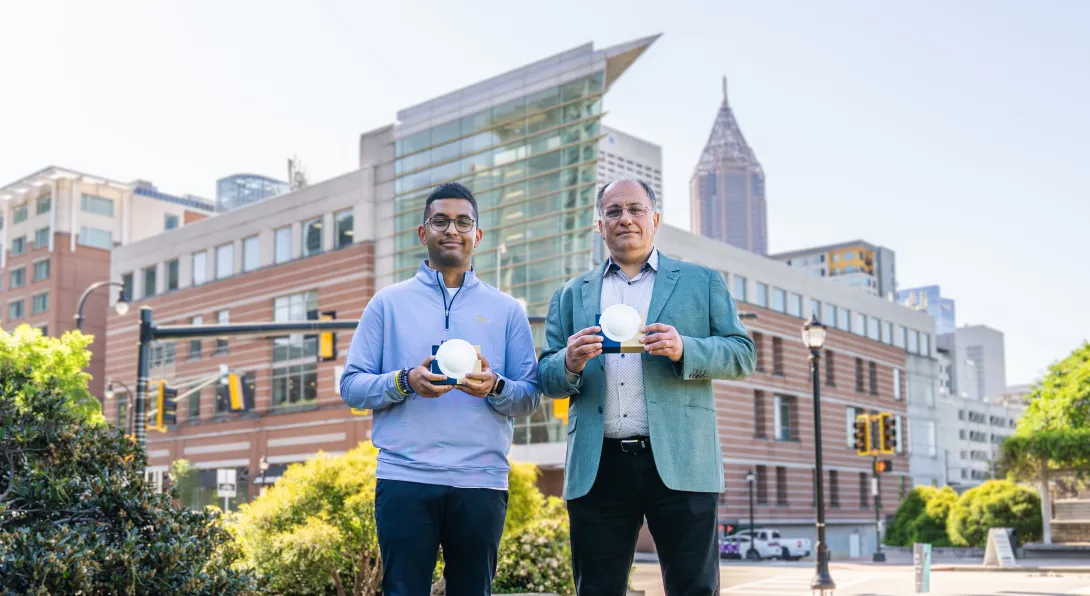
Professor Emmanouil “Manos” Tentzeris and Ph.D. student Marvin Joshi hold a lens‑enabled backscatter system that could support battery‑free wireless communication across future smart city infrastructure.
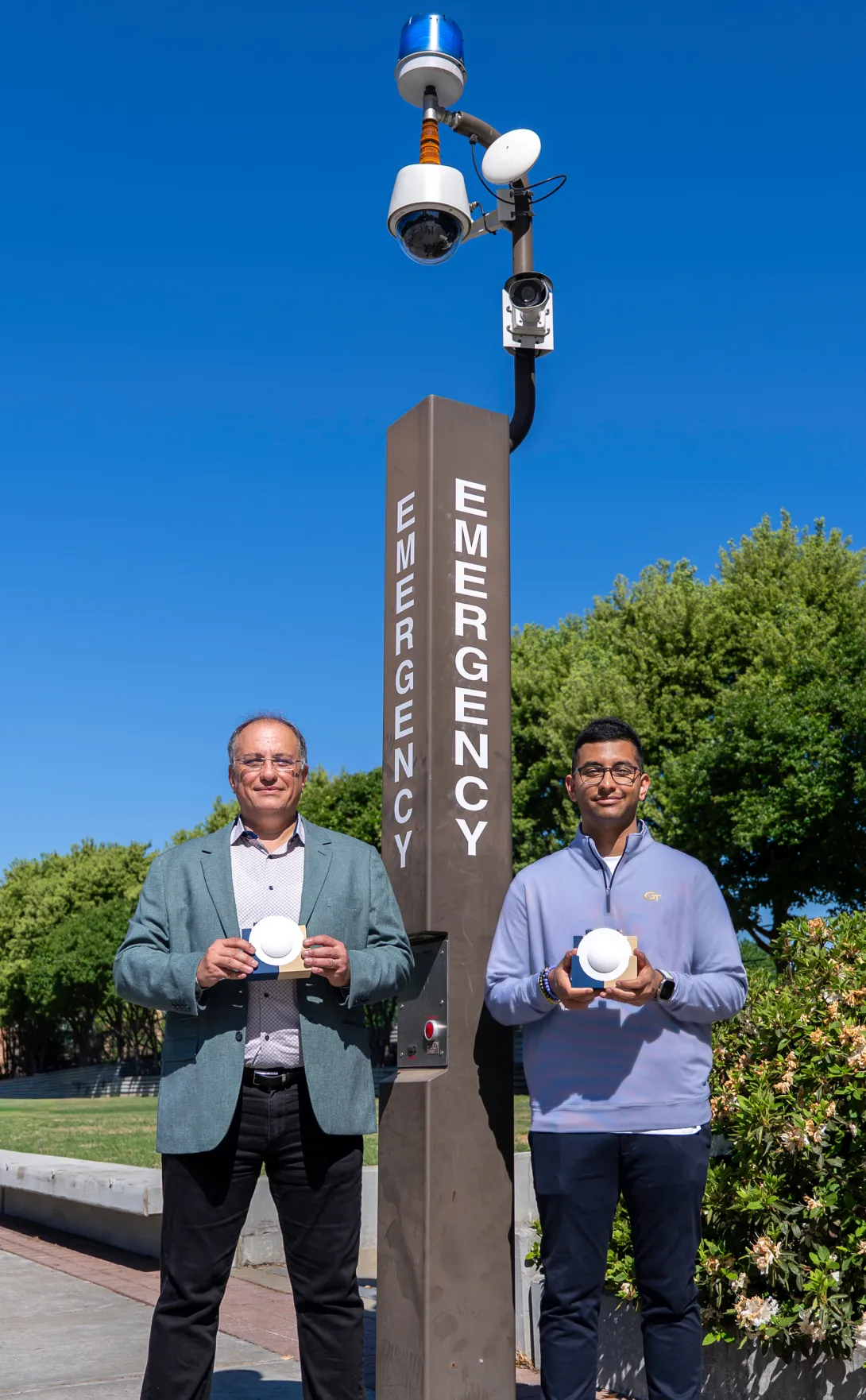
Shown near existing campus emergency infrastructure, the lens‑enabled backscatter device highlights how ultra‑low‑power wireless systems could be integrated directly into everyday infrastructure without relying on batteries or wired power.

A close‑up view of the device displays an array of tiny antenna elements positioned behind the lens, each modulating reflected wireless signals to enable high‑speed communication with minimal energy use.
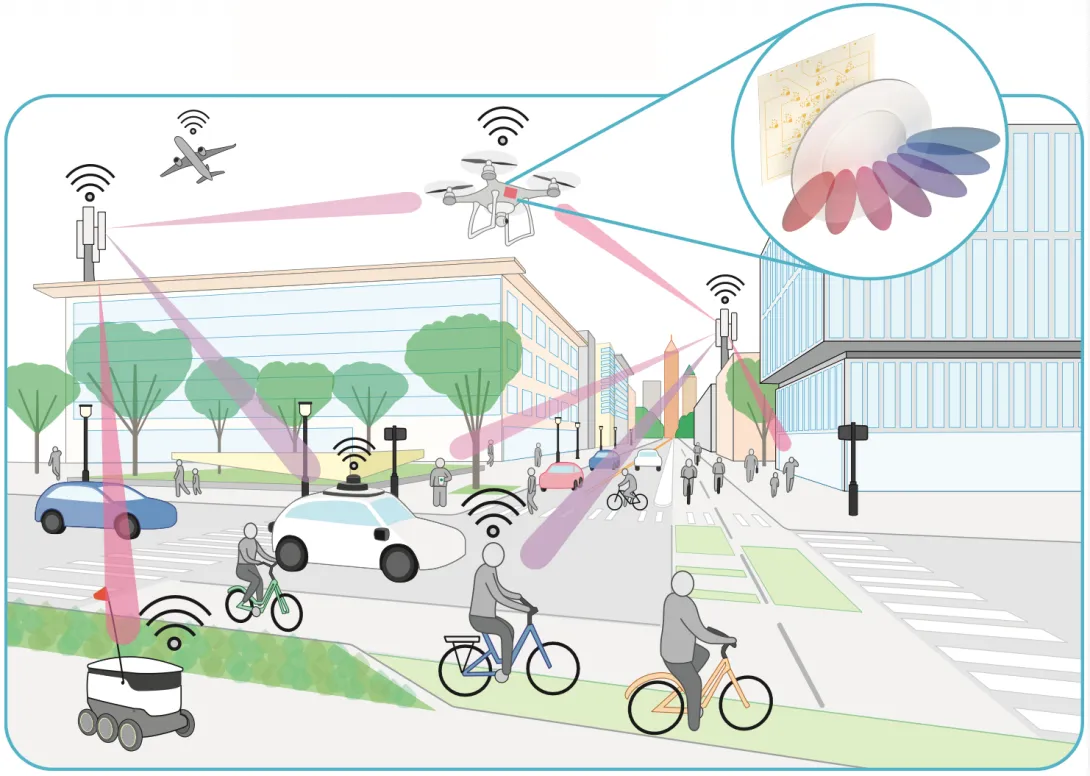
A concept illustration shows how the lens-enabled system’s wide angular coverage and passive backscatter communication enable flexible deployment on moving platforms such as drones and aircraft, as well as fixed smart city infrastructure and personal devices.
Earlier this year, Georgia Tech researchers showed that specially designed lenses could harvest energy from ambient wireless signals, pointing toward a future of battery-free sensors embedded throughout smart cities and digital infrastructure.
But powering devices is only part of the challenge. Enabling those same systems to communicate at modern data rates is a much harder. That’s the leap the team is now making. The same lens-based approach is being used to unlock high-speed communication once considered out of reach for ultra-low-power systems.
In a study published in Nature Communications, researchers in Professor Manos (Emmanouil) Tentzeris’ Agile Technologies for High-performance Electromagnetic Novel Applications (ATHENA) lab demonstrated a first-of-its-kind lens-enabled backscatter system capable of multi-gigabit data rates, reaching up to 4 gigabits per second (Gbps). At the same time, it operates using only a fraction of the power required by conventional wireless devices — bringing high-speed connectivity to systems that were never meant to support it.
For years, backscatter has been treated as a tradeoff: extremely low power, but extremely limited performance. Rather than generating its own radio signal, a backscatter device modulates and reflects existing wireless transmissions to communicate, allowing it to operate with minimal energy.
As a result, backscatter has typically been used only to send small amounts of data, most often in simple identification and sensing systems.
“What we’ve shown is that backscatter doesn’t have to be slow,” said Marvin Joshi, the research lead and Ph.D. candidate in the School of Electrical and Computer Engineering. “With the right architecture, it can operate at gigabit‑per‑second speeds while remaining ultra‑low power.”
The Lens That Makes It Possible
The Georgia Tech team’s dielectric lens — similar in spirit to an optical lens — focuses incoming millimeter-wave energy onto an array of tiny antenna elements, enabling both wireless energy capture and high‑speed backscatter communication within the same system.
The system reshapes and reflects existing wireless signals, with each element modulating the reflected signal to enable high-speed data transmission without requiring a traditional transmitter.
At millimeter-wave frequencies, used by 5G and future 6G systems, there is plenty of available bandwidth, but signals at these frequencies are highly directional and sensitive to alignment.
In practice, that means even small misalignment can break the link. This has been a major limitation for real-world deployment. The lens overcomes that constraint by enabling high gain and wide angular coverage simultaneously, without the need for active beam steering.
“Think of it like a camera lens for wireless signals,” Tentzeris said, who is a Ed and Pat Joy Chair Professor in ECE. “It captures energy coming from many different directions and focuses it efficiently onto the device.”
The result is a system that can communicate over a ±55-degree field of view, maintaining strong performance even when the device and the reader are not perfectly aligned.
Fiber-Level Speeds, Nearly Zero Power
In controlled experiments, the researchers achieved data rates of up to four Gbps, with sustained gigabit communication at distances of up to 20 meters, using high-order modulation schemes like those used in modern cellular networks.
For a system that doesn’t generate its own signal, those numbers are unexpectedly efficient. The system operates at just 0.08 picojoules per bit — approaching million-fold improvements compared to conventional wireless radios.
“To put that in perspective,” Tentzeris said, “a typical wireless transmitter burns milliwatts of power. This system operates at essentially near-zero power while pushing the data rates 1,000 times higher than what traditional backscatter could do.”
Taken together, the results point to a fundamentally different class of wireless system, according to Tentzeris, one that combines high data rates with ultra-low power in a way that hasn’t been demonstrated before.
Based on standard wireless modeling, the team estimates the technology could support Gbps communication over distances of kilometers when paired with existing 5G millimeter-wave infrastructure, extending high-speed, ultra-low-power links far beyond what has been achievable with backscatter systems.
“That combination is exactly what future wireless networks are moving toward. This capability aligns naturally with next‑generation 6G systems,” said Tentzeris, pointing to the growing importance of Integrated Sensing and Communication (ISAC) and Joint Communication and Sensing (JCAS) frameworks that require simultaneous communication, sensing, and localization.
From Smart Cities to Disaster Response
But speed and efficiency are only part of the story. Because the devices are low-cost, lightweight, and printable, they could be deployed at massive scale on buildings, roads, vehicles, drones, or wearable systems.
In a smart city, thousands of these tags could continuously exchange information about traffic, air quality, or structural health without ever needing batteries. That means dense, always-on sensing and communication without worrying about power or upkeep.
In disaster zones, temporary high-speed networks could be set up almost instantly, without cables or power infrastructure.
“Imagine an ambulance transmitting high-resolution medical images in real time, or first responders building a live digital map of a disaster area,” Joshi said. “You get fiber-like performance, but completely wireless and energy-efficient.”
What’s Next
The architecture also lends itself to intelligent optimization, where AI-based control can be enabled to dynamically enhance signal capture and system efficiency, further expanding performance in large-scale deployments.
“This is really about adding intelligence to anything, anywhere,” Tentzeris said. “When communication becomes this fast, efficient, and scalable, entirely new applications become possible.”
With the core architecture now demonstrated, the ATHENA Lab team is shifting focus from proof‑of‑concept to deployment. That means moving out of the lab and into real-world environments. The next phase includes testing the system outdoors, integrating it onto drones and mobile platforms, and exploring flatter, more compact lens designs that could be easier to mount on real-world infrastructure.
“We’re thinking about how this fits into the broader wireless ecosystem,” Joshi said. “We’ve shown what’s possible. Now the question is how far we can push it in the real world."
News Contact
Dan Watson
Apr. 09, 2026
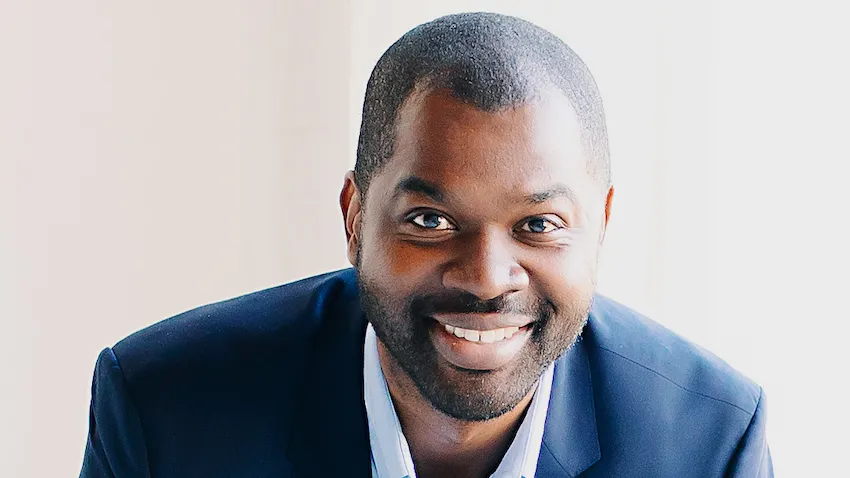
When Olufisayo “Fisayo” Omojokun joined Georgia Tech, his teaching followed a familiar cadence. His courses were highly structured and consistent. Lectures, exams, office hours, and semester breaks were always known months in advance. The goals were clear, the outcomes known, and the educational journey largely mapped. Then, he heard about CREATE-X.
A Spark of Curiosity
In 2017, faculty conversations began circulating about a new kind of capstone experience, one driven by student discovery and entrepreneurial thinking rather than predetermined client requirements. The idea intrigued Omojokun.
“I remember thinking, this is really different from anything I’ve ever taught,” he said.
In his previous courses, Omojokun took pride in providing the structured, rigorous framework students needed to master complex concepts. While those interactions were dynamic, the curriculum required a specific, focused trajectory. CREATE-X offered a different kind of challenge: the "X" of the program, representing undefined, endless potential.
“CREATE-X is full of unknowns. You don’t know what industry the students are diving into, what roadblocks they’ll run into and navigate out of, or what small- to large-scale successes they’ll achieve throughout the semester. It really had my blood pumping,” he said. As someone who loves the challenge of academia, it was an invigorating way to help the next generation apply what they’ve learned in a new context.
Omojokun co-taught the first CREATE-X Capstone section with College of Computing students in fall 2018 alongside Craig Forest, associate director of the Invention Studio. While the initial computer science cohort was small, the experience was immediately powerful.
“It was humble beginnings but deeply eye-opening,” he said.
In this new environment, students weren't just solving problems; they were seeking them and sometimes pivoting. Traditional client-driven capstones offer students invaluable experiences in delivering high-quality products, responding to clients’ often evolving needs, and adhering to professional standards. CREATE-X added a layer of venture-validation, requiring students to identify a gap in the market and build something with commercial viability.
As the semesters continued, CREATE-X grew from a program with an interesting capstone course Omojokun enthusiastically co-taught to a professional inflection point for him. He found himself talking about it frequently, with colleagues, with students, even with prospective undergraduates who may not see a capstone for years.
He began encouraging prospective and incoming students to take CREATE-X pathways.
“I would tell students, down to first-year students, when you get that opportunity to engage with CREATE-X, take it. You don’t even have to wait until capstone, as there are multiple pathways; in fact, Startup Lab has no prerequisites. Whatever path you take, you’ll remember it for years to come. Whether you officially take a problem solution to market or not, the entrepreneurial confidence gained is priceless.”
Spreading CREATE-X Into the College of Computing
By 2020, when the first Jim Pope Faculty Fellowship cohort opened, applying felt natural. He had already become an unofficial ambassador for CREATE-X, helping students navigate options, promoting programs in classes, and rallying colleagues to engage.
“It was an opportunity to become more connected to this thing that I felt was changing the game on campus,” he said. “It cemented my affiliation with CREATE-X.”
The fellowship gave name and weight to the work he was already doing, while also expanding what was possible.
The Jim Pope Faculty Fellowship provides faculty with $15,000 in discretionary funding, which can support a one-semester break from teaching, along with structured training in evidence‑based entrepreneurship, dedicated mentorship, and the opportunity to work closely with students launching startups.
The fellowship also equips faculty to become entrepreneurial instructors and mentors through the CREATE‑X ecosystem, giving them tools to integrate entrepreneurship into their coursework and curricula. Each cohort of fellows is trained to embed entrepreneurial methods, develop new innovation‑focused assignments, and serve as advisors within programs like Startup Lab, Idea‑to‑Prototype, and Startup Launch.
For faculty across Georgia Tech, the fellowship offers something rare: institutional backing, resources, and formal recognition for bringing entrepreneurship into their teaching and shaping how students learn to become problem‑solvers.
Omojokun said he sees CREATE-X as the apex of applying technical fundamentals.
As part of the fellowship, Omojokun brought the program’s ethos into his courses, even a foundational course like CS 1331: Introduction to Object Oriented Programming, where he created a CREATE-X–branded final project. Students built a “problem database” application as their final homework assignment, cataloging real issues they encountered in daily life, assessing their skills to solve them, evaluating markets and metrics, and then deciding potential pathways forward.
“It’s an innovation diary,” he said. “A tool that can get them closer to thinking like a founder.”
The response from students, including many non-computing majors who take his section each semester, has been overwhelmingly positive. While the project is challenging, the open-ended nature and real-world relevance motivate deeper engagement.
“When students believe their work will solve a meaningful problem for a meaningful population, they bring passion to it,” he said. “They start observing the world differently.”
The more Omojokun saw, the deeper his enthusiasm grew.
Shaping the College of Computing
Even as he stepped into the role of inaugural chair of the School of Computing Instruction in 2022, CREATE-X remained at the forefront of Omojokun’s conversations. Interest in the program continued to grow significantly. Students stopped him in the hallways to talk about their ideas. Faculty reached out to ask about mentorship opportunities. And he continued championing the program in the many settings he entered.
“It turns out that the most engaged group of students in CREATE-X is computing undergraduates,” Omojokun said. “I wanted to make sure that high involvement continued, no matter what size we are,” he said.
Over time, Omojokun strengthened the partnership between the College of Computing and CREATE-X, weaving entrepreneurship deeper into the College's curricular fabric.
Last January, Omojokun was appointed as the associate dean for Undergraduate Education in the College of Computing. One of his priorities was highlighting CREATE-X’s curricular impact. In coordination with key stakeholders — including Kelly Ann Fitzpatrick (computing), Craig Forest (mechanical engineering), and Raul Saxena (CREATE-X) — he nominated the program for the ABET Innovation Award. The award honors programs that challenge the status quo in technical education and demonstrate a measurable impact on student learning in ABET-accredited disciplines, such as natural sciences, computing, engineering, and engineering technology. CREATE-X won.
The CREATE-X Advantage With Faculty
When faculty are considering something like the Jim Pope Fellowship, Omojokun said the biggest barrier he hears about from them is time. With courses that can enroll 300 students per section and extensive responsibilities beyond the classroom, time is a scarce resource.
He could relate.
“There are always lots of things on my physical and virtual desktop. I always warn people before they enter my office,” he said.
However, Omojokun argued that participating in the fellowship program was time well spent because it helps them rediscover the most exciting parts of teaching.
“It’s worth the time. One of the goals of teaching is to see students passionate about what they’re learning, and CREATE-X makes that happen consistently,” he said.
The Future With Technology
As AI reshapes industries, Omojokun believes that CREATE-X equips students to navigate the unknown and forge new paths as existing ones shift, providing a versatile skill set that transfers to employment, potentially self-employment, and beyond.
“There’s a lot of uncertainty with AI in the workspace, but CREATE-X gives students the confidence and skills to succeed at whatever comes,” he said. “We are putting students through this process of finding a problem that’s meaningful and matters to the world; mastering that allows them to lead in any environment.”
Applications Now Open: Become a Jim Pope Faculty Fellow
The 2026 Jim Pope Faculty Fellowship is now accepting applications. For faculty who want to explore integrating entrepreneurship into their teaching, mentoring student founders, and helping shape a culture of innovation across campus, this fellowship offers resources and a supported pathway to begin. Faculty from all disciplines are encouraged to apply to the Jim Pope Fellowship. Priority deadline: July 1; final deadline: Aug. 11.
News Contact
Breanna Durham
Marketing Strategist
Georgia Tech
Apr. 06, 2026
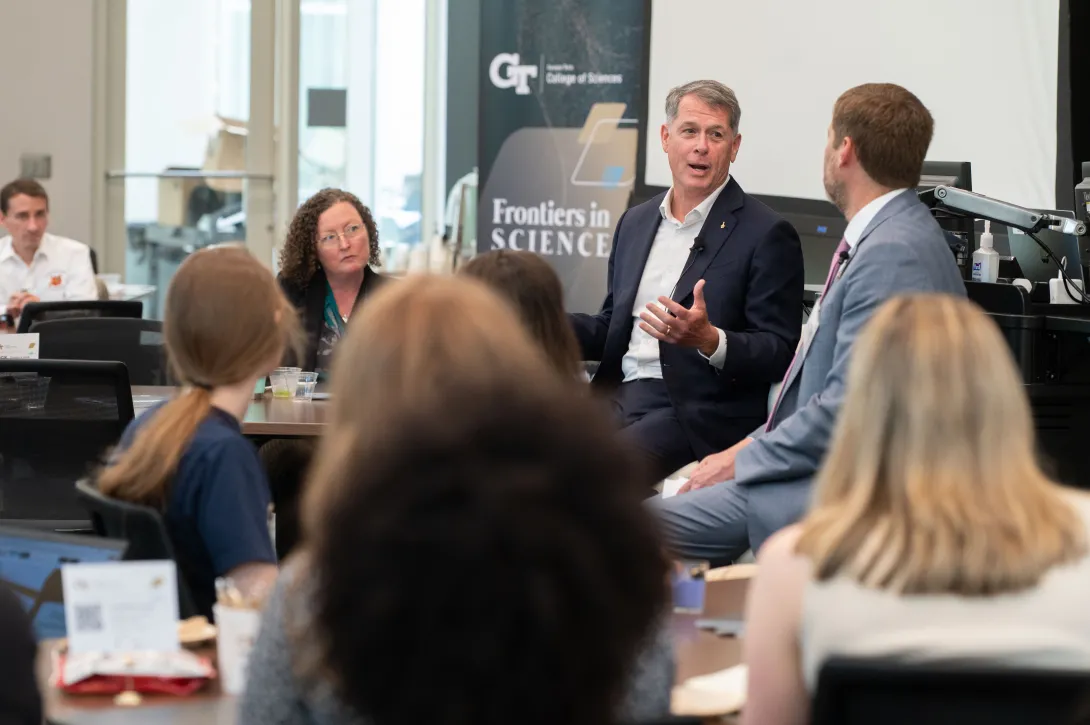
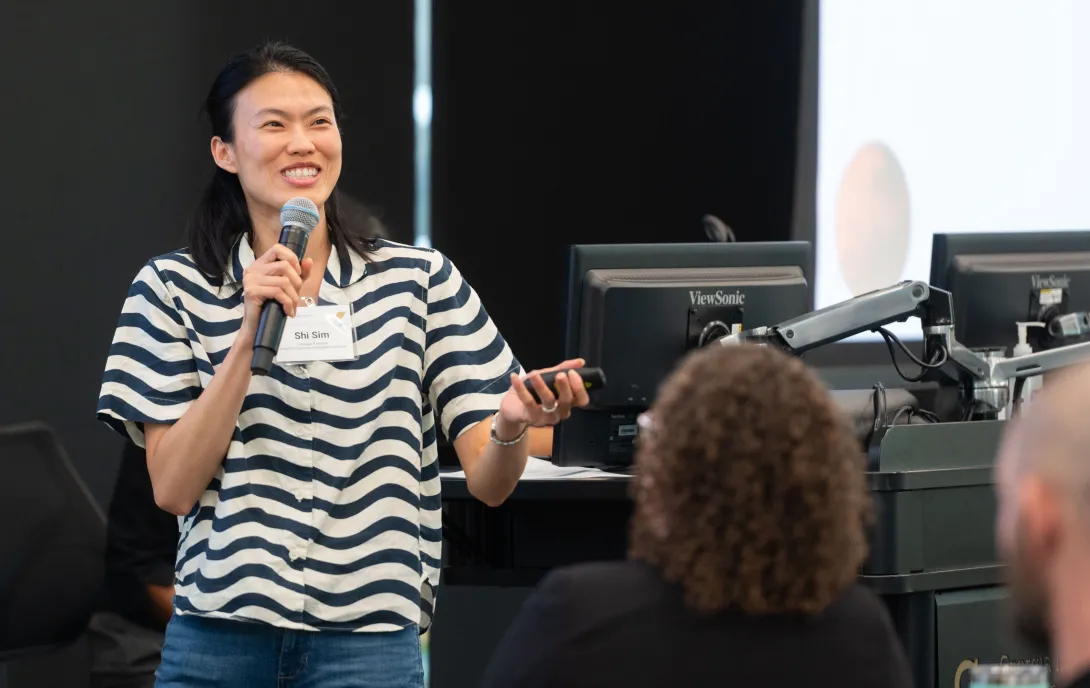
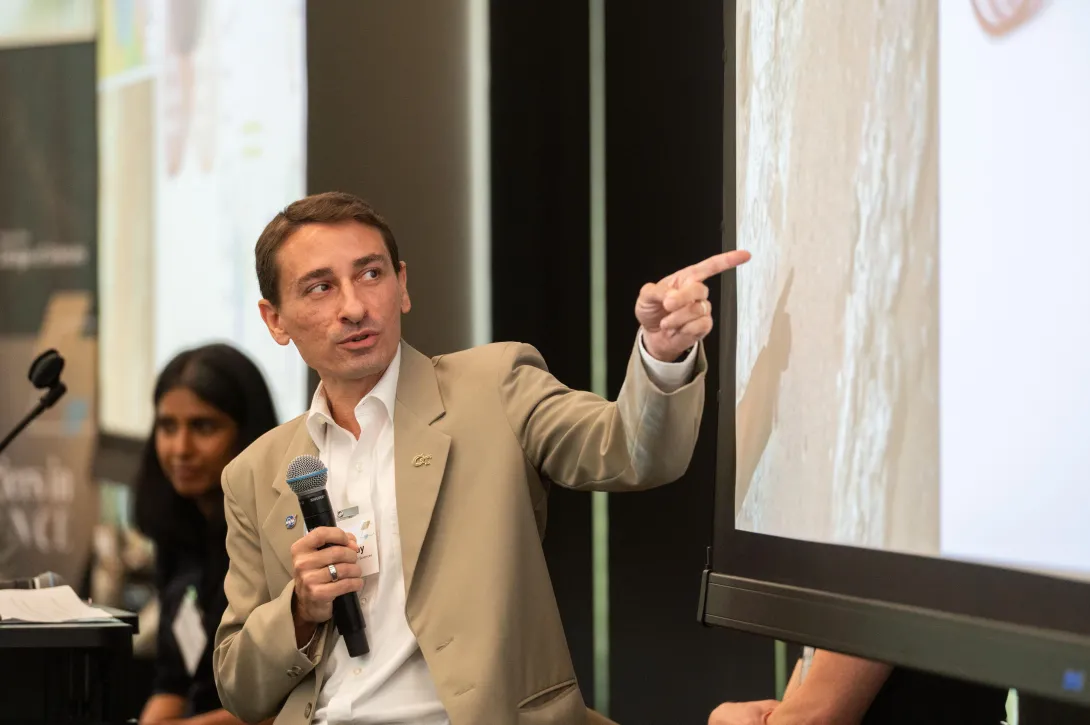
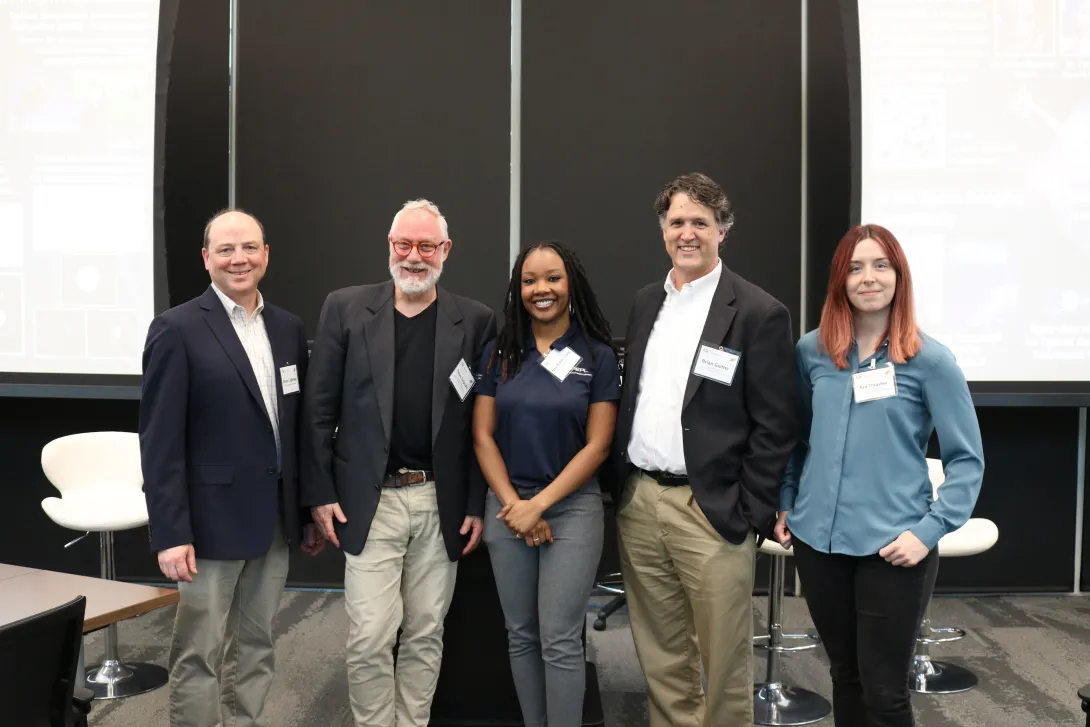
One day after the historic Artemis II launch, the College of Sciences welcomed more than 150 researchers, students, and community members to its signature Frontiers in Science conference. Held on April 2, the full-day event focused on space research guiding discovery and innovation.
As during previous editions, this year’s conference featured more than two dozen scientists, engineers, policy experts, and thought leaders from Georgia Tech and beyond, illustrating how collaboration across fields – from science and engineering to public policy and international affairs – helps to advance strategic research priorities.
“Frontiers is about discovery and connections across disciplines and generations,” says Susan Lozier, dean of the College of Sciences and Betsy Middleton and John Clark Sutherland Chair. “This edition provided an inspiring glimpse into the future of space exploration and the many ways Georgia Tech is contributing to research and missions seeking answers to what lies beyond our planet.”
Commitment to Space
Space research is a key institutional priority at Georgia Tech, which is home to numerous academic and research programs in planetary sciences, robotics, mission design, space policy, and other areas.
The recently established Space Research Institute (SRI) serves as the central hub connecting the broad range of space-related research across campus. Led by Jud Ready, who also serves as principal research engineer at the Georgia Tech Research Institute, SRI has expanded support for space research and commercialization through initiatives such as the CreationsVC Space Fellows Program and Centers, Programs, and Initiatives seed grant program.
SRI’s efforts are in line with Georgia Tech’s long-standing contribution to space exploration. Hundreds of Yellow Jacket alumni work in the space sector, including several graduates who are playing key roles in the Artemis program. To date, more than a dozen Georgia Tech alumni have traveled to space.
Exploring the Final Frontier
The conference featured a series of panels and discussions led by faculty and researchers from the Colleges of Sciences and Engineering as well as the Ivan Allen College of Liberal Arts.
Sessions explored how researchers are studying the processes and conditions that support planetary habitability, seeking to answer one of humanity’s greatest questions: Does life exist beyond Earth? Speakers also examined how analog fieldwork in Earth’s extreme environments can inform space exploration, and how space research, in turn, can deepen our understanding of our own world.
Additional conversations centered on building better space missions through improved understanding of team and individual resilience, data collection, navigation, and the development of advanced technologies like the robots developed through the NASA LASSIE Project.
Frontiers also highlighted Georgia Tech’s commitment to preparing the next generation of space scientists, engineers, and leaders. Student training and engagement were recurring themes throughout the day, with speakers emphasizing opportunities for student-led and student-run missions and research. A panel of Georgia Tech alumni shared their own STEM career journeys, challenging the idea of “one right path” to success — and acknowledging the resources and opportunities available at the Institute.
A highlight of the conference was a fireside chat with Atlanta-native, retired U.S. Army Colonel and NASA Astronaut R. Shane Kimbrough (M.S. Operations Research 1998). Kimbrough, who spent a total of 388 days in space and performed nine spacewalks across three missions, reflected on his career and the evolution of spaceflight. He emphasized the expanding role of public-private and international partnerships in advancing ambitious goals, such as creating a permanent human outpost on the Moon.
Policy and Public
The conference also explored how policy influences space discovery and innovation, with discussions touching on such issues as space security, access, governance, sustainability — and the influence of technology and science fiction on public perception and policy.
Panelists described current policy frameworks governing outer space as struggling to keep pace with rapidly advancing technologies and expanding activities. According to these experts, increasing tensions among commercial, research, and recreational uses of space call for greater coordination among private and government entities to balance competing priorities while maximizing opportunities for innovation and exploration.
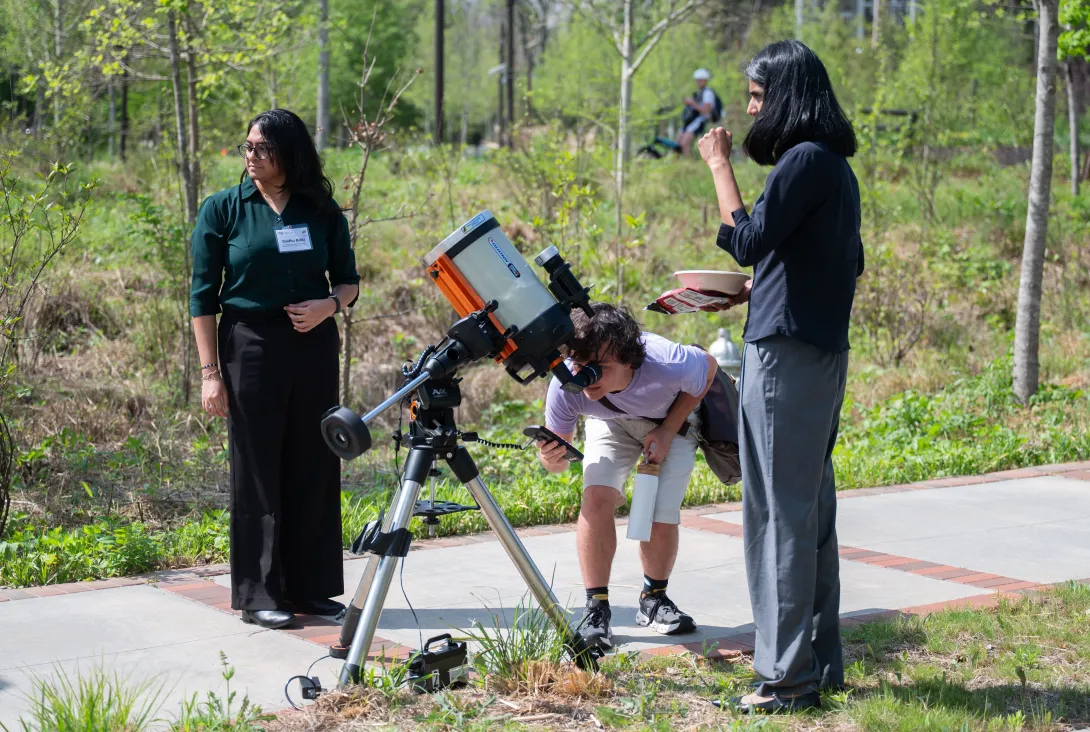
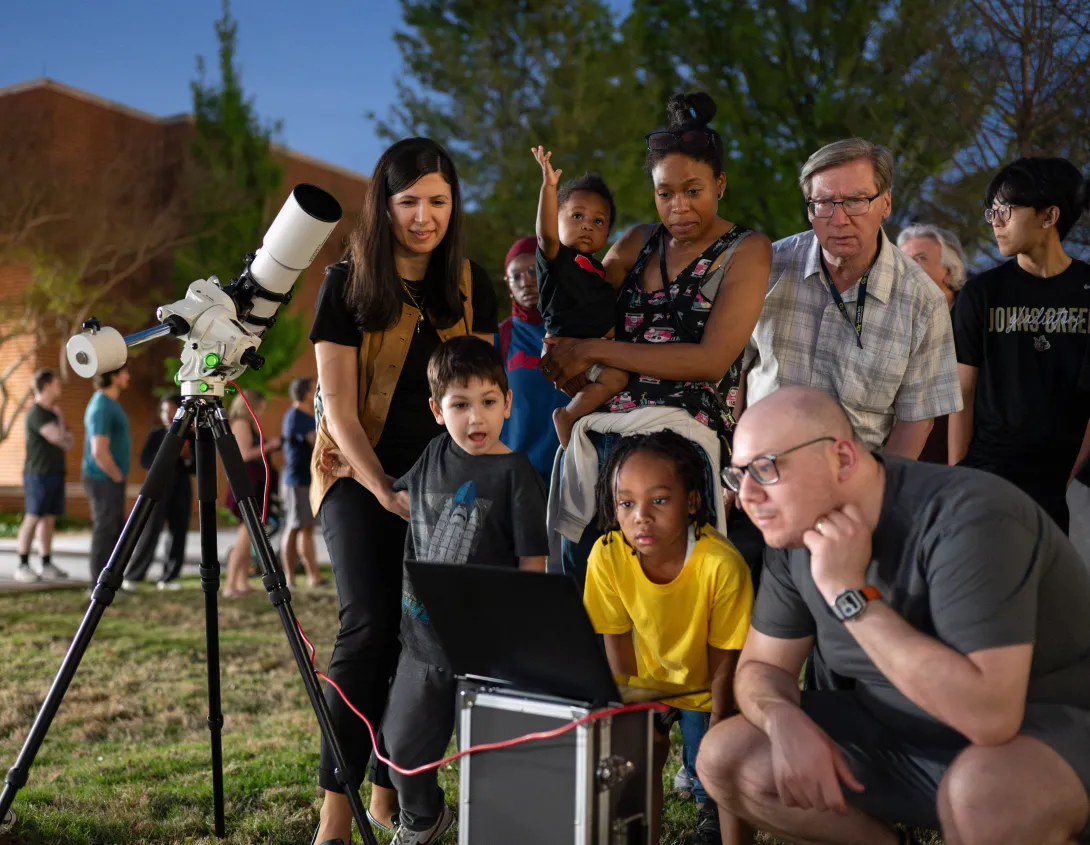
The conference was punctuated by a networking lunch connecting attendees with Atlanta’s public astronomy community – including partners at several universities and the Georgia Tech Astronomy Club, which set up telescopes for attendees to safely observe the sun. Later that evening, the Georgia Tech Observatory hosted its Public Night, welcoming the broader Atlanta community to campus for telescope views of Jupiter, the Orion Nebula, and other celestial bodies.
The Observatory Night was a fitting conclusion to a full day focused on Georgia Tech’s commitment and contributions to inspiring future generations of space explorers through research, education, and outreach.
Experience the Frontiers conference in pictures on the College of Sciences’ Flickr account.
News Contact
Writer: Lindsay C. Vidal
Mar. 31, 2026
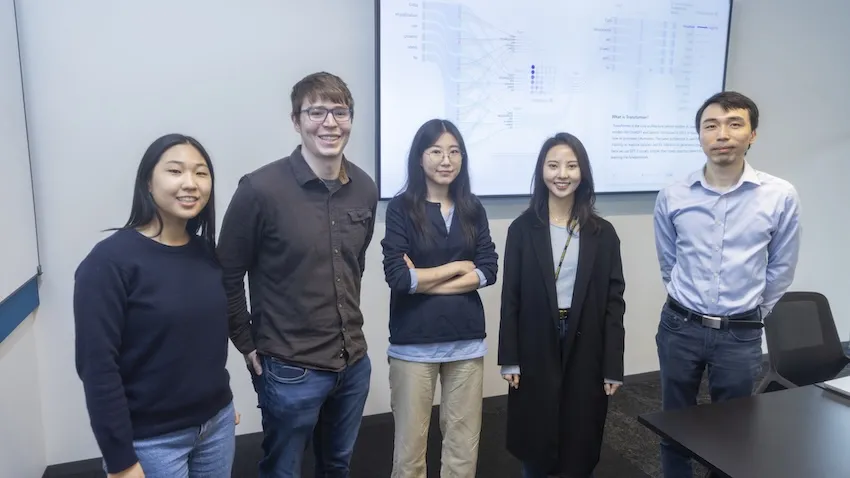
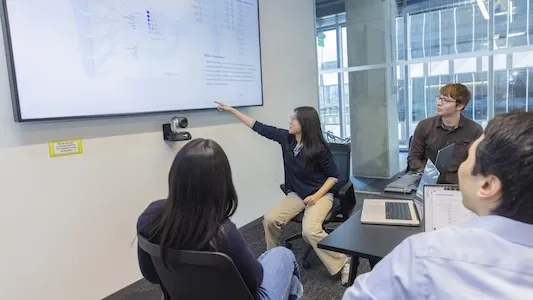
While people use search engines, chatbots, and generative artificial intelligence tools every day, most don’t know how they work. This sets unrealistic expectations for AI and leads to misuse. It also slows progress toward building new AI applications.
Georgia Tech researchers are making AI easier to understand through their work on Transformer Explainer. The free, online tool shows non-experts how ChatGPT, Claude, and other large language models (LLMs) process language.
Transformer Explainer is easy to use and runs on any web browser. It quickly went viral after its debut, reaching 150,000 users in its first three months. More than 563,000 people worldwide have used the tool so far.
Global interest in Transformer Explainer continues when the team presents the tool at the 2026 Conference on Human Factors in Computing Systems (CHI 2026). CHI, the world’s most prestigious conference on human-computer interaction, will take place in Barcelona, April 13-17.
“There are moments when LLMs can seem almost like a person with their own will and personality, and that misperception has real consequences. For example, there have been cases where teenagers have made poor decisions based on conversations with LLMs,” said Ph.D. student Aeree Cho.
“Understanding that an LLM is fundamentally a model that predicts the probability distribution of the next token helps users avoid taking its outputs as absolute. What you put in shapes what comes out, and that understanding helps people engage with AI more carefully and critically.”
A transformer is a neural network architecture that changes data input sequence into an output. Text, audio, and images are forms of processed data, which is why transformers are common in generative AI models. They do this by learning context and tracking mathematical relationships between sequence components.
Transformer Explainer demystifies how transformers work. The platform uses visualization and interaction to show, step by step, how text flows through a model and produces predictions.
Using this approach, Transformer Explainer impacts the AI landscape in four main ways:
- It counters hype and misconceptions surrounding AI by showing how transformers work.
- It improves AI literacy among users by removing technical barriers and lowering the entry for learning about AI.
- It expands AI education by helping instructors teach AI mechanisms without extensive setup or computing resources.
- It influences future development of AI tools and educational techniques by providing a blueprint for interpretable AI systems.
“When I first learned about transformers, I felt overwhelmed. A transformer model has many parts, each with its own complex math. Existing resources typically present all this information at once, making it difficult to see how everything fits together,” said Grace Kim, a dual B.S./M.S. computer science student.
“By leveraging interactive visualization, we use levels of abstraction to first show the big picture of the entire model. Then users click into individual parts to reveal the underlying details and math. This way, Transformer Explainer makes learning far less intimidating.”
Many users don’t know what transformers are or how they work. The Georgia Tech team found that people often misunderstand AI. Some label AI with human-like characteristics, such as creativity. Others even describe it as working like magic.
Furthermore, barriers make it hard for students interested in transformers to start learning. Tutorials tend to be too technical and overwhelm beginners with math and code. While visualization tools exist, these often target more advanced AI experts.
Transformer Explainer overcomes these obstacles through its interactive, user-focused platform. It runs a familiar GPT model directly in any web browser, requiring no installation or special hardware.
Users can enter their own text and watch the model predict the next word in real time. Sankey-style diagrams show how information moves through embeddings, attention heads, and transformer blocks.
The platform also lets users switch between high-level concepts and detailed math. By adjusting temperature settings, users can see how randomness affects predictions. This reveals how probabilities drive AI outputs, rather than creativity.
“Millions of people around the world interact with transformer-driven AI. We believe that it is crucial to bridge the gap between day-to-day user experience and the models' technical reality, ensuring these tools are not misinterpreted as human-like or seen as sentient,” said Ph.D. student Alex Karpekov.
“Explaining the architecture helps users recognize that language generated by models is a product of computation, leading to a more grounded engagement with the technology.”
Cho, Karpekov, and Kim led the development of Transformer Explainer. Ph.D. students Alec Helbling, Seongmin Lee, Ben Hoover, and alumni Zijie (Jay) Wang (Ph.D. ML-CSE 2024) and Minsuk Kahng (Ph.D. CS-CSE 2019) assisted on the project.
Professor Polo Chau supervised the group and their work. His lab focuses on data science, human-centered AI, and visualization for social good.
Acceptance at CHI 2026 stems from the team winning the best poster award at the 2024 IEEE Visualization Conference. This recognition from one of the top venues in visualization research highlights Transformer Explainer’s effectiveness in teaching how transformers work.
“Transformer Explainer has reached over half a million learners worldwide,” said Chau, a faculty member in the School of Computational Science and Engineering.
“I'm thrilled to see it extend Georgia Tech's mission of expanding access to higher education, now to anyone with a web browser.”
News Contact
Bryant Wine, Communications Officer
bryant.wine@cc.gatech.edu
Mar. 25, 2026
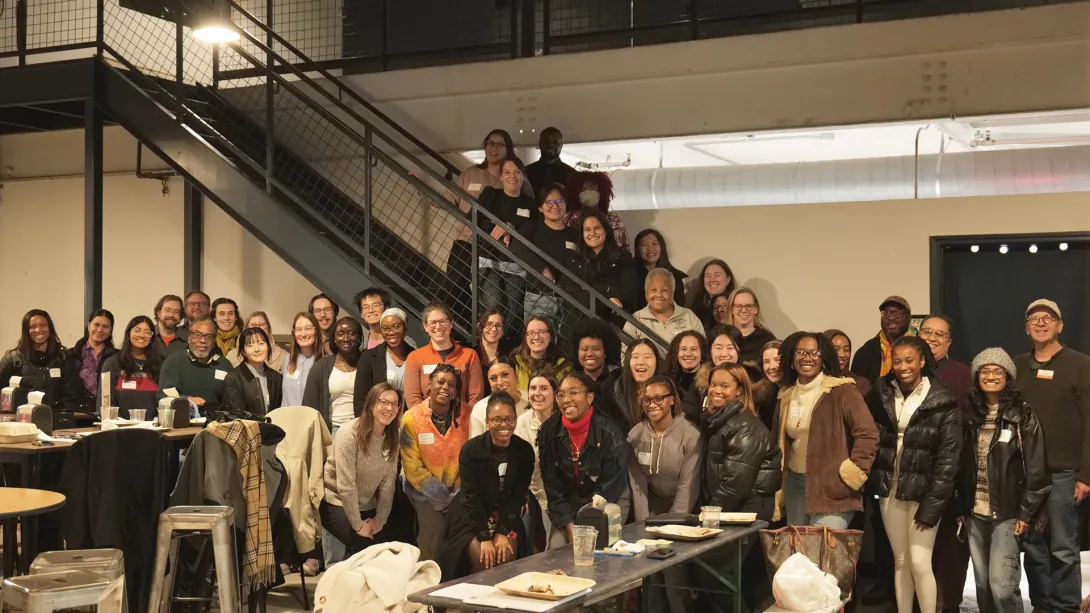
The Atlanta Community-Engaged Research Student Network launched this semester. The program is co-led by Nicole Kennard, assistant director for Community-Engaged Research with the Brook Byers Institute for Sustainable Systems (BBISS), along with Associate Professor Richard Milligan and Associate Professor Sarah Ledford from Georgia State University, Associate Professor Emily Burchfield and Associate Teaching Professor Carolyn Keogh from Emory University, and Iesha Baldwin from Spelman College. The program also partners with several community-based organizations to co-develop strategic direction and provide training. They are Science for Georgia, Historic Westside Gardens, HBCU Green Fund, South River Watershed Alliance, and Food Well Alliance.
The primary aim of the Atlanta Student Community-Engaged Research (CER) Network is to use a peer learning approach to train graduate students with the skills to co-lead community-engaged and locally focused research, while at the same time building relationships with local community organizations. This approach will help address local sustainability and societal challenges, lay the foundation for community-engaged research programs, and enable young researchers interested in this work to thrive in the Atlanta area. Initial funding for the pilot program was provided by the Atlanta Global Studies Center and the Georgia Tech Provost's Excellence in Graduate Studies fund.
The program received a total of 41 applications from graduate students from Georgia Tech, Georgia State University, and Emory University. Thirty-five master’s and Ph.D. students were accepted into the cohort, spanning a wide range of disciplines, from the humanities, sciences, design, public health, engineering, and computing. The program has additionally engaged eight senior-level undergraduates from Spelman College to learn about graduate school tracks with community-engaged research opportunities.
This program provides a unique opportunity to learn engagement and leadership skills not typically taught in graduate programs. Students are attending one training a month over the course of the Spring 2026 semester. Here, they learn about the diversity of sustainability-focused, community-based organizations in the area, develop skills to engage meaningfully with community partners in research projects, and improve the ways they communicate to the public about research.
The Georgia Tech Provost's Excellence in Graduate Studies fund will provide a $2,500 stipend to five Georgia Tech students who will work on a research project with a community partner organization. These projects will take place over the spring and summer semesters this year, providing opportunities for graduate students to apply their newly acquired community-engagement skills to on-the-ground research, while also opening a new pathway for Georgia Tech’s engagement with community partners.
Fellows and projects include:
- Irene Jacob, M.S., city and regional planning, will work with the Food Well Alliance to update the implementation strategy for their 10-year community garden survey.
- Ethan Zhao, M.S., human-computer interaction, will work with Historic Westside Gardens to integrate new technologies into their community garden spaces and assess the benefits to the communities they serve.
- Virginia Cason, M.S., sustainable energy and environmental management, will work with Science for Georgia to translate data gathering and analysis into community-centered narratives.
- Sharon Rachel, Ph.D., history and sociology of technology and science, will work with the HBCU Green Fund to examine the environmental and community impacts of data center projects in Atlanta.
- Ella Neumann, Ph.D., interactive computing, will work with the South River Watershed Alliance to document and communicate the history and impact of the City of Atlanta's combined sewer consent decree, and assess if the intended results of the decree have been met.
Applicants expressed their passion for community-engaged research projects and working directly with local community members and organizations:
“Lived experience is just as valuable as academic expertise, and meaningful change only occurs when both work together. I think that this takes approaching problems with a lot of humility, care, and a genuine desire to listen to communities and their needs.” -Virginia Cason, M.S., sustainable energy and environmental management
“I want to do research that stems from a theoretical question, but is feasible in reality and benefits the community. One of the most efficient ways to achieve this goal is through doing research WITH the community.” -Keke Li, M.S., analytics
“Community-engaged research is not only a methodology, but a commitment to partnership, humility, and shared power.” -Grace Fraser, M.S., city and regional planning
“To me, community-engaged research means working with people, not just for them. CER is not only a method but also a mindset. True impact comes when research and community experience grow together.” -Bingjie Lu, Ph.D., civil engineering
The community partners involved in the program are equally enthusiastic about community-engaged research. As Fred Conrad of Food Well Alliance put it, “Food Well has been intentional about engaging our constituents since we began, and this is not only a continuation of that effort, but a significant refinement of how we accomplish that. I think all of us have deepened our understanding of the CER process since we began this journey.”
News Contact
Brent Verrill, Research Communications Program Manager, BBISS
Mar. 17, 2026
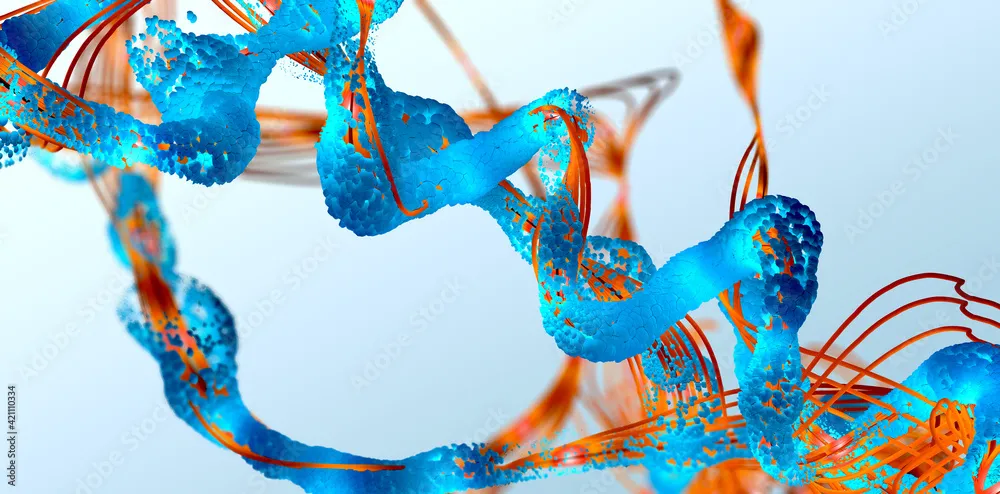
The building blocks of proteins, amino acids are essential for all living things. Twenty different amino acids build the thousands of proteins that carry out biological tasks. While some are made naturally in our bodies, others are absorbed through the food we eat.
Amino acids also play a critical role commercially where they are manufactured and added to pharmaceuticals, dietary supplements, cosmetics, animal feeds, and industrial chemicals — an energy-intensive process leading to greenhouse gas emissions, resource consumption, and pollution.
A landmark new system developed at Georgia Tech could lead to an alternative: a commercially scalable, environmentally sustainable method for amino acid production that is carbon negative, using more carbon than it emits.
The breakthrough builds on a method that the team pioneered in 2024 and solves a key issue – increasing efficiency to an unprecedented 97% and reducing the bioprocess cost by over 40%. It’s the highest reported conversion of CO2 equivalents into amino acids using any synthetic biology system to date.
Published in the journal ACS Synthetic Biology, the study, “Cell-Free-Based Thermophilic Biocatalyst for the Synthesis of Amino Acids From One-Carbon Feedstocks,” was led by Bioengineering Ph.D. student Ray Westenberg and Professor Pamela Peralta-Yahya, who holds joint appointments in the School of Chemistry and Biochemistry and School of Chemical and Biomolecular Engineering. The team also included Shaafique Chowdhury (Ph.D. ChBE 25) and Kimberly Wennerholm (ChBE 23); alongside University of Washington collaborators Ryan Cardiff, then a Ph.D. student and now a Chain Reaction Innovations Fellow at Argonne National Laboratory, and Charles W. H. Matthaei Endowed Professor in Chemical Engineering James M. Carothers; in addition to Pacific Northwest National Laboratory Synthetic Biology Team Leader Alexander S. Beliaev.
"This work shifts the narrative from simply reducing carbon emissions to actually consuming them to create value,” says Peralta-Yahya. “We are taking low-cost carbon sources and building essential ingredients in a truly carbon-negative process that is efficient, effective, and scalable.”
Heat-Loving Organisms
The work builds on the cell-free technology the team used in their earlier study. “Previously, we discovered that a system that uses the machinery of cells, without using actual living cells, could be used to create amino acids from carbon dioxide,” Peralta-Yahya explains. “But to create a commercially viable system, we needed to increase the system’s efficiency and reduce the cost.”
The team discovered that bits of leftover cells were consuming starting materials, and — like a machine with unnecessary gears or parts — this limited the system’s efficiency. To optimize their “machine,” the team would need to remove the extra background machinery.
"Leftover cell parts were using key resources without helping produce the amino acids we were looking for,” says Peralta-Yahya. “We knew that heating the system could be one way to purify it because heat can denature these components.”
The challenge was in how to protect the essential system components from the high temperatures, she adds. “We wondered if introducing enzymes produced by a heat-loving bacterium, Moorella thermoacetica, might protect our system, while still allowing us to denature and remove that inefficient background machinery.”
The results were astounding: after introducing the enzymes, heating and “cleaning” the system, and letting it cool to room temperature, synthesis of the amino acids serine and glycine leaped to 97% yield — nearly three times that of the team’s previous system.
Scaling for Sustainability
To make the system viable for large-scale use, the team also needed to reduce costs. “One of the most costly components in this system is the cofactor tetrahydrofolate (THF),” Peralta-Yahya shares. “Reducing the amount of THF needed to start the process was one way to make the system more inexpensive and ultimately more commercially viable.”
By linking reaction steps so waste from one step fueled the next, the team devised a method to recycle THF within the system that reduces the amount of THF needed by five-fold — lowering bioprocessing costs by 42%.
“This decrease in cost and increase in yield is a critical step forward in creating a method with real potential for use in industry and manufacturing,” Peralta-Yahya says. “This system could pave the way for moving this carbon-negative technology out of the lab and onto the continuous, industrial scale."
Funding: The Advanced Research Project Agency-Energy (ARPA-E); U.S. Department of Energy; and the U.S. Department of Energy, Office of Science, Biological and Environmental Research Program.
Mar. 16, 2026
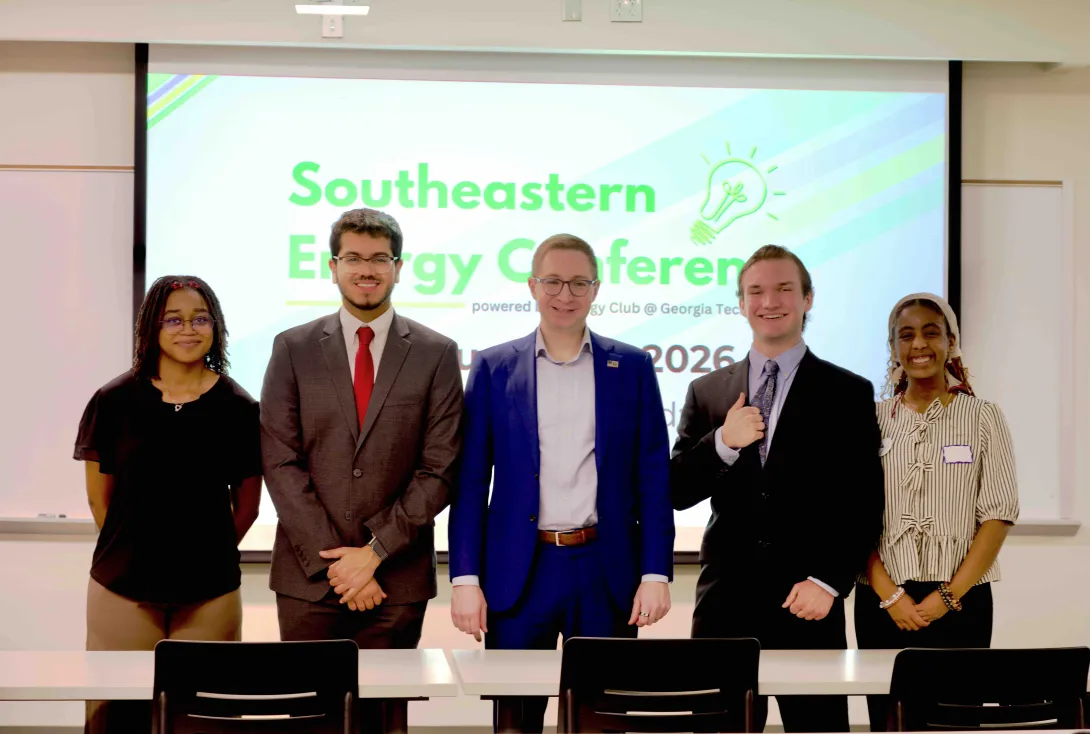
Georgia Tech Energy Club student members with Alex Fitzsimmons (middle), Under Secretary of Energy (Acting) at U.S. Department of Energy
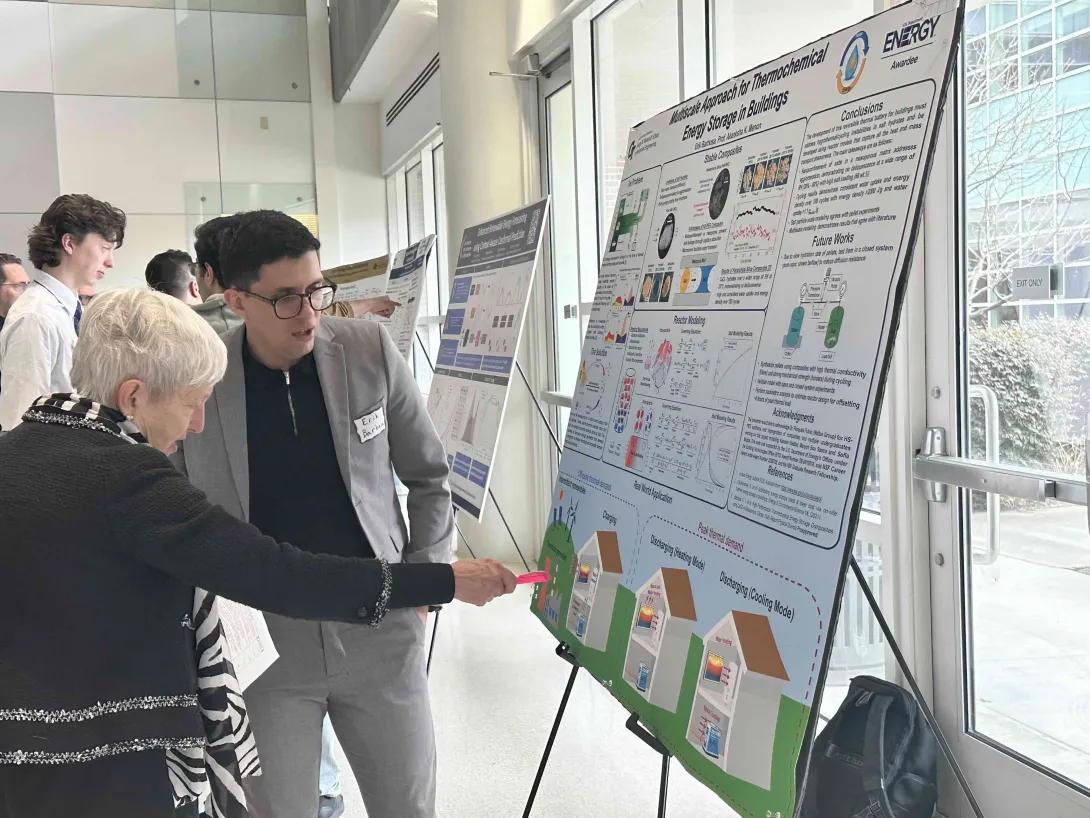
Poster Session at the 2026 Southeastern Energy Conference
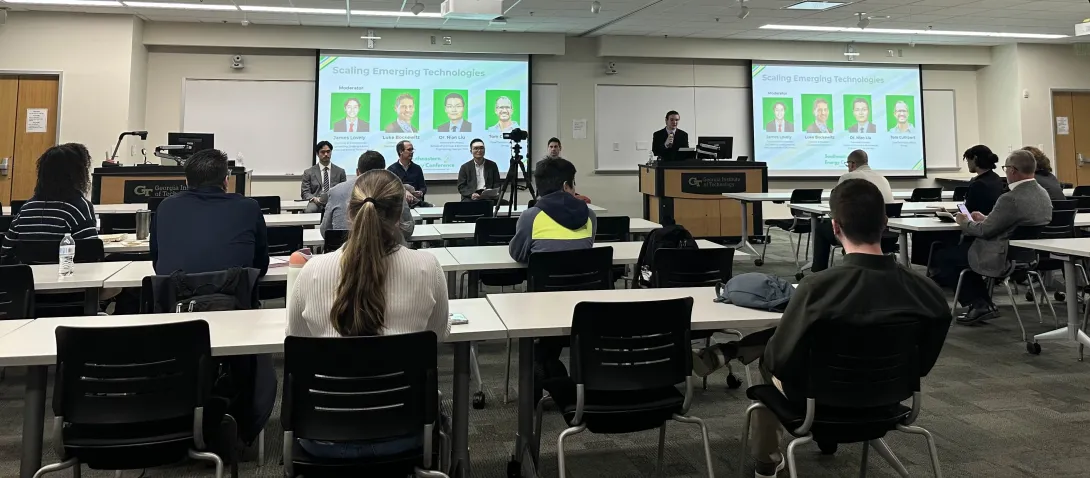
Panel Discussion at the Georgia Tech Energy Club's Southeastern Energy Conference 2026.
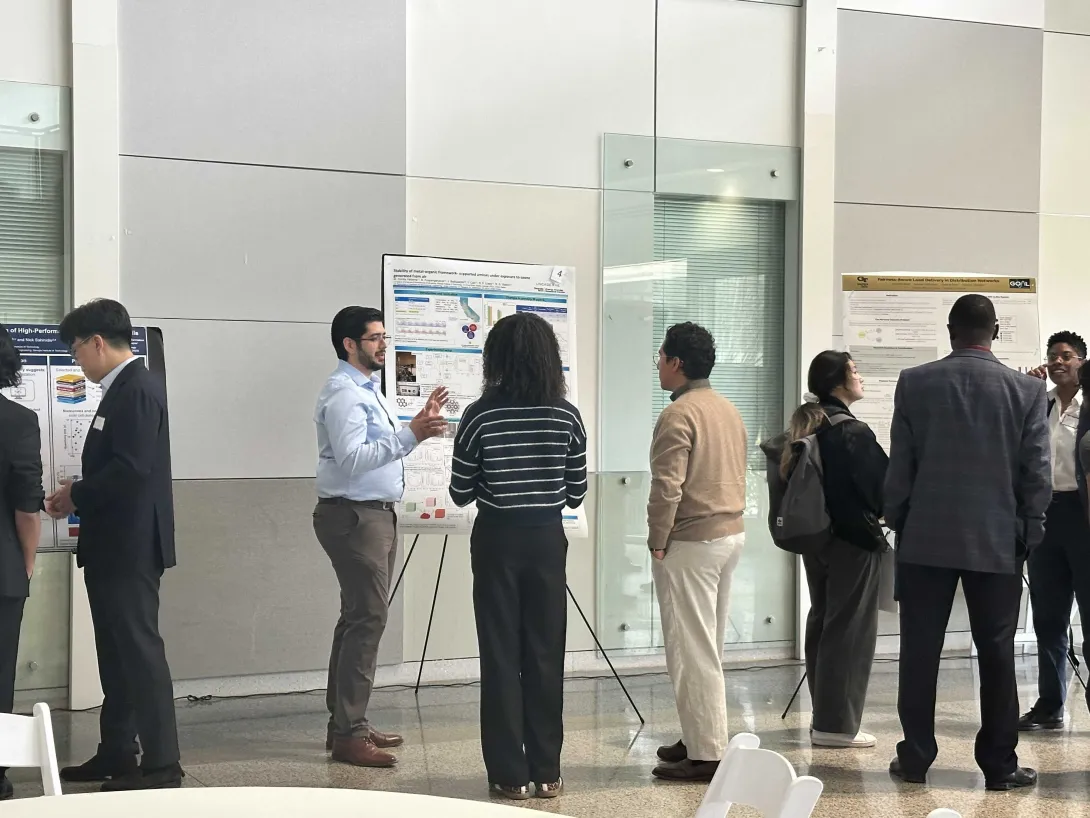
Poster Session at the 2026 Southeastern Energy Conference
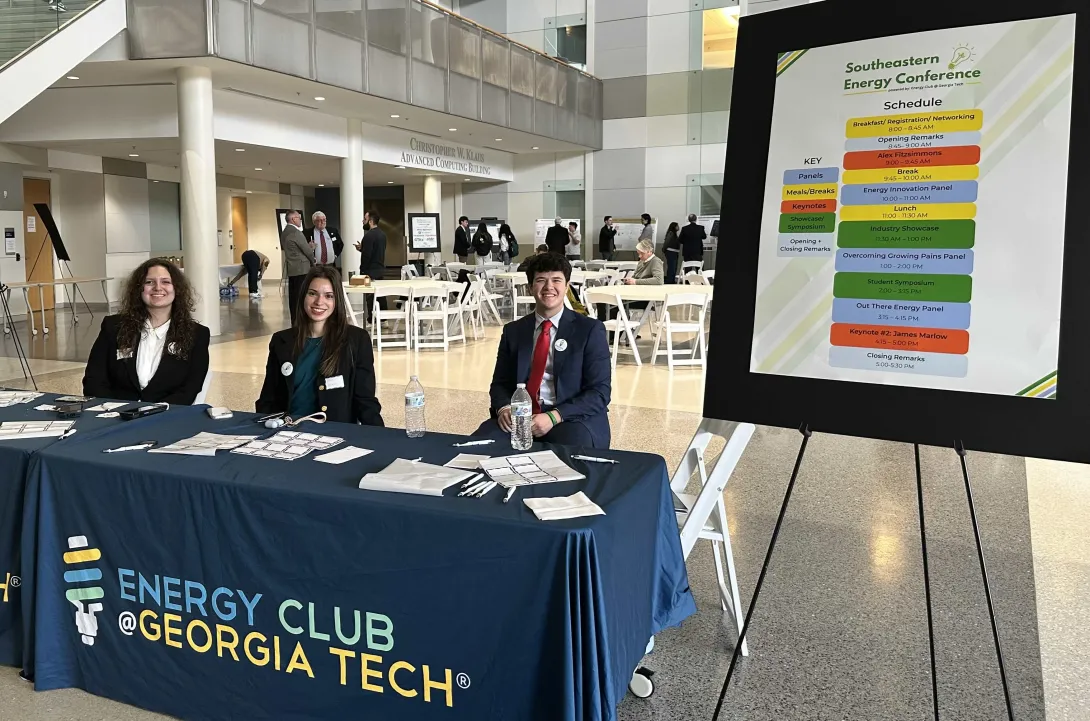
Energy Club Team at the Southeastern Energy Conference
The 2026 Southeastern Energy Conference, Georgia Tech’s annual student-led energy and sustainability conference, took place on Feb. 18. Organized by the Energy Club at Georgia Tech, the conference welcomed more than 150 attendees, including industry leaders, policymakers, researchers, and students, featuring dynamic discussions on the future of energy. The theme, "Future Focused: Advancing the Energy of Tomorrow," highlighted the industry’s commitment to innovation, sustainability, and collaboration as participants explored emerging technologies, evolving policies, and strategies shaping the energy landscape of tomorrow.
The event kicked off with a keynote address from Alex Fitzsimmons, acting undersecretary of the Office of Cybersecurity, Energy Security, and Emergency Response (CESER) at the U.S. Department of Energy. He shared insights into the administration’s work at the intersection of cybersecurity and the rapidly evolving U.S. energy sector. The first panel of the day, “Energy Innovation,” explored leaders’ perspectives on organizational innovation within the industry. With Tech undergraduate Neil Ghosh moderating the panel, Roderick Jackson, Jamie Barber, and Mark Tozzi discussed emerging energy technologies and their potential impact on the industry.
Later, the Industry Showcase featured representatives from energy companies such as GE Vernova, Cherry Street Energy, Orion, GTA, Kimley Horn, and E4E Solutions, providing valuable networking and career development opportunities for students and professionals. A panel on “Overcoming Growing Pains” followed, with Josh Stallings, vice president of Power Delivery Strategy and Support at Georgia Power; Daniel Molzahn, associate professor in the School of Electrical and Computer Engineering (ECE); and Lisa Berry, GE Vernova’s technical director for Decarbonization and Data Centers for the Americas region. The discussion was moderated by Radhika Sharma, co-president of the Energy Club and a graduate student in ECE, and focused on current challenges facing the rapidly growing energy industry.
One of the standout moments of the conference was the Student Symposium, where 16 student researchers presented their work while competing for $1,000 in prize money sponsored by Cobb EMC. Projects ranged from residential demand management optimization studies to the challenges and viability of hydrogen combustion engines. Erik Barbosa earned first place for his research on a multiscale approach to thermochemical energy storage within buildings. Daksh Adhikari received second place for examining the mitigation of flow boiling instabilities with active flow control, and William Schertzer placed third for work using machine learning and neural networks to model anion exchange membrane degradation.
The final event of the day, “Scaling Emergent Energy Technologies,” focused on growing the newest energy technologies within the industry. Moderated by Georgia Tech undergraduate James Lovely, the panel included Luke Bockewitz, director of business development at Kinetics; Nian Liu, associate professor and Robert G. Miller Faculty Fellow in the School of Chemical and Biomolecular Engineering; and Thomas Cuthbert, chief technology officer at Emrgy. The conference closed with a keynote speech from James Marlow, president and CEO of Southface Institute, who provided a framework for thinking through innovation and tactical advice for aspiring energy innovators and leaders.
"The level of organization and vision demonstrated by the students was outstanding,” Molzahn said. “By focusing on the evolving energy landscape and inviting experts from across the field, they created an event that sparked important conversations for our campus.”
“It was an honor to serve as the Energy Club’s 2026 conference chair and work alongside the strong energy community at Georgia Tech,” said Jonathan Acree. “Meaningful innovation in energy depends on collaboration, and it was truly encouraging to see such an interdisciplinary group of talented students, researchers, and industry leaders come together around the shared goal of advancing our energy future.”
The conference also highlighted Georgia Tech’s role as a hub for forward-thinking dialogue on global energy challenges — and the importance of collaboration and innovation in shaping the evolving energy landscape and fostering the next generation of leaders in the field.
Written by Georgia Tech students: Braden Queen, Orit Endalk, Eli Acree, Radhika Sharma
News Contact
Priya Devarajan || Communications Program Manager, Strategic Energy Institute