
Sep. 20, 2010
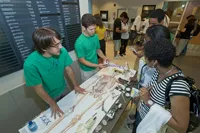
Georgia Tech's largest graduate student organization, Bioengineering and Bioscience Unified Graduate Students (BBUGS), with the support of the Parker H. Petit Institute for Bioengineering and Bioscience (IBB), hosted its annual Buzz on Biotechnology High School Open House.
Open to all Atlanta area high school students, parents and teachers, this year's event drew a record 400+ attendees from 56 different schools. Visitors came to engage in a wide variety of hands-on, innovative science and engineering demonstrations such as "Edible Cells," "Virtual Stomach Surgery," "Acids and Bases," "Electromyography Recordings of Muscles," "Protein Folding." They were able to tour the state-of-the-art laboratories of IBB such as neuroengineering, robotics, atomic force microscopy and biomedical engineering labs. Many guests also attended bioengineering and stem cell seminars and even had the opportunity to take Georgia Tech campus tours and talk with an admissions representative.
The day wrapped up with the always-popular "Egg Drop" contest to find the safest, and lightest, "egg helmet" by dropping all those constructed throughout the day from the atrium's third floor.
The open house event was created in 2003 by BBUGS to reach out to area high school students to indulge their curiosity by introducing them to the world of science and engineering in a fun and accessible way.
News Contact
Colly Mitchell
Parker H. Petit Institute for Bioengineering and Bioscience
Contact Colly Mitchell
404-894-5982
Sep. 21, 2010

Essentially arrays of tiny test tubes, microplates have been used for decades to simultaneously test multiple samples for their responses to chemicals, living organisms or antibodies. Fluorescence or color changes in labels associated with compounds on the plates can signal the presence of particular proteins or gene sequences.
The researchers hope to replace these microplates with modern microelectronics technology, including disposable arrays containing thousands of electronic sensors connected to powerful signal processing circuitry. If they're successful, this new electronic biosensing platform could help realize the dream of personalized medicine by making possible real-time disease diagnosis - potentially in a physician's office - and by helping select individualized therapeutic approaches.
Aug. 31, 2010

Professor Greg Gibson (Biology) has received a 1 year pilot grant from the AFLAC Cancer Center for “Genomic profiling of late outcomes in survivors of childhood cancer". The study involves a collaboration with Drs. Ann Mertens and Karen Wasilewski in the Department of Hematology/Oncology at Emory University, and Dr. Ken Brigham, Director of the Center for Health Discovery and Well Being (CHDWB) at Emory. The objective of the project is to use a systems biology approach to try to understand why so many survivors of early childhood cancers begin to have a range of serious health problems as they reach adulthood, and to see if the CHDWB health care model might be an effective intervention. More information about the Emory childhood cancer survivor program can be found at http://www.choa.org/default.aspx?id=399
Sep. 01, 2010
Professors Wendy Kelly and Jake Soper both received Defense Advanced Research Projects Agency (DARPA) Young Faculty Awards. This program selects rising research stars from around the country and exposes them to the needs of the Department of Defense. DARPA’s goal is to fund researchers who will focus a significant portion of their careers on Department of Defense and National Security issues. Only 33 awards were made nationally in 2009, with two awarded to faculty in Georgia Tech’s School of Chemistry and Biochemistry. DARPA is funding Dr. Kelly’s research on “Biosynthetic engineering of thiopeptide antibiotics” and Dr. Soper’s research on “Redox-Active Ligand-Mediated Radical Coupling at Terminal Metal Oxo Ligands: Reactions Relevant to Water Oxidation for Artificial Photosynthesis”.
Sep. 01, 2010
Reproduction can be pressing business, fraught with challenges. But two University of Georgia scientists made a breakthrough discovery in reproduction and regeneration that has thrown open the doors to wide-ranging possibilities, including new therapies for devastating human diseases and the preservation of endangered animal species.
Steve Stice and Franklin West won what amounted to a hotly contested race to become the first scientists to produce induced pluripotent stem (iPS) cells from adult livestock
Aug. 24, 2010

Eva Lee Joins Interdisciplinary Team at Emory's New Center for Systems Vaccinology
Eva K. Lee, professor in the H. Milton Stewart School of Industrial and Systems Engineering at Georgia Tech and director of the Center for Operations Research in Medicine and HealthCare, joins a highly integrated and interdisciplinary team conducting research in the newly established Center for Systems Vaccinology at Emory University.
The National Institute of Allergy and Infectious Diseases of the National Institutes of Health awarded a five-year, $15.5 million grant to the Emory Vaccine Center at Yerkes National Primate Research Center in Atlanta. Scientists in the new Center will employ the modern analytic tools of systems biology to understand the immune responses vaccines stimulate in humans and will use this knowledge to guide design of vaccines against HIV, malaria and other global pandemics
Bali Pulendran, the Charles Howard Candler professor in the Department of Pathology and Laboratory Medicine at Emory University, the Emory Vaccine Center, and Yerkes Research Center, is principal investigator of the center. Rafi Ahmed, director of the Emory Vaccine Center and a Georgia Research Alliance Eminent Scholar, will serve as co-principal investigator.
Lee and other researchers at the center will address a major challenge thus far in the development of vaccines - that the effectiveness of vaccination can only be ascertained after vaccinated individuals have been exposed to infection. To study vaccine-induced immunity in humans, they will use a multidisciplinary approach Pulendran developed, which involves immunology, genomics and bioinformatics to predict the immunity of a vaccine without exposing individuals to infection.
Researchers working in the new Center for Systems Vaccinology will determine whether Pulendran's approach can be used to predict the effectiveness of other vaccines, including common vaccines against influenza, pneumococcal disease and shingles. The ability to successfully predict the immunity and efficacy of vaccines would facilitate the rapid evaluation of new and emerging vaccines and the identification of individuals who are unlikely to be protected by a vaccine.
The team's initial work will focus on two major projects on innate immunity and adaptive immunity that ultimately will facilitate vaccine development in several ways: (1) by enabling a strategy to prospectively predict the immunogenicity of vaccines; (2) by offering new and fundamental insights into the genes, cells and networks that orchestrate vaccine-induced immunity in the young and elderly; and (3) by facilitating the generation of an open access database of vaccine-induced molecular signatures.
The Center's interdisciplinary team comprises researchers and clinicians in areas as diverse as immunology, vaccinology, clinical medicine, computational modeling, and mathematics. In addition to Lee, the team includes Nick Haining (Dana Farber Cancer Institute, Boston), Shankar Subramaniam (University of California, San Diego), Alex Sette (La Jolla Institute for Allergy and Immunology, La Jolla), Mark Mulligan (Hope Clinic, Emory Vaccine Center,; and Myron Levine and Adriana Weinberg (University of Colorado, Denver).
Lee, along with Haining and Subramaniam, co-direct the "Genomics and Computational Biology" core of the initiative. The Core will provide expertise, analysis, and experimental platforms to systematically interrogate the immune response to the inactivated trivalent influenza vaccine, the pneumococcal polysaccharide vaccine, and the live attenuated varicella-zoster vaccine. Two major goals in this Core involve development of gene expression-based predictors of vaccine response in humans and use of genomic techniques as discovery tools to better understand the innate and adaptive immune response to vaccines.
Support for the first year of the Center initiative will come from the American Recovery and Reinvestment Act (ARRA).
News Contact
Barbara ChristopherIndustrial and Systems Engineering
Contact Barbara Christopher
404.385.3102
Aug. 18, 2010
Researchers have developed an improved coating technique that could strengthen the connection between titanium joint-replacement implants and a patient's own bone. The stronger connection - created by manipulating signals the body's own cells use to encourage growth - could allow the implants to last longer.
Implants coated with "flower bouquet" clusters of an engineered protein that mimics the body's own cell-adhesion material fibronectin made 50 percent more contact with the surrounding bone than implants coated with protein pairs or individual strands. The cluster-coated implants were fixed in place more than twice as securely as plugs made from bare titanium - which is how joints are currently attached.
Researchers believe the biologically-inspired material improves bone growth around the implant and strengthens the attachment and integration of the implant to the bone. This work also shows for the first time that biomaterials presenting biological sequences clustered together at the nanoscale enhance cell adhesion signals. These enhanced signals result in higher levels of bone cell differentiation in human stem cells and promote better integration of biomaterial implants into bone.
"By clustering the engineered fibronectin pieces together, we were able to create an amplified signal for attracting integrins, receptors that attached to the fibronectin and directed and enhanced bone formation around the implant," said Andres Garcia, professor in Georgia Tech's Woodruff School of Mechanical Engineering and the Petit Institute for Bioengineering and Bioscience.
Details of the new coating were reported in the August 18 issue of the journal Science Translational Medicine. The research was supported by the National Institutes of Health, the Arthritis Foundation, and the Atlanta Clinical and Translational Science Institute through the Georgia Tech/Emory Center for the Engineering of Living Tissues.
Total knee and hip replacements typically last about 15 years until the components wear down or loosen. For many younger patients, this means a second surgery to replace the first artificial joint. With approximately 40 percent of the 712,000 total hip and knee replacements in the United States in 2004 performed on younger patients 45-64 years old, improving the lifetime of the titanium joints and creating a better connection with the bone becomes extremely important.
In this study, Georgia Tech School of Chemistry and Biochemistry professor David Collard and his students coated clinical-grade titanium with a high density of polymer strands - akin to the bristles on a toothbrush. Then, Garcia and Tim Petrie - formerly a graduate student at Georgia Tech and currently a postdoctoral fellow at the University of Washington - modified the polymer to create three or five self-assembled tethered clusters of the engineered fibronectin, which contained the arginine-glycine-aspartic acid (RGD)sequence to which integrins binds.
To evaluate the in vivo performance of the coated titanium in bone healing, the researchers drilled two-millimeter circular holes into a rat's tibia bone and pressed tiny clinical-grade titanium cylinders into the holes. The research team tested coatings that included individual strands, pairs, three-strand clusters and five-strand clusters of the engineered fibronectin protein.
"To investigate the function of these surfaces in promoting bone growth, we quantified osseointegration, or the growth of bone around the implant and strength of the attachment of the implant to the bone," explained Garcia, who is also a Woodruff Faculty Fellow at Georgia Tech.
Analysis of the bone-implant interface four weeks later revealed a 50 percent enhancement in the amount of contact between the bone and implants coated with three- or five-strand tethered clusters compared to implants coated with single strands. The experiments also revealed a 75 percent increase in the contact of the three- and five-strand clusters compared to the current clinical standard for replacement-joint implants, which is uncoated titanium.
The researchers also tested the fixation of the implants by measuring the amount of force required to pull the implants out of the bone. Implants coated with three- and five-strand tethered clusters of the engineered fibronectin fragment displayed 250 percent higher mechanical fixation over the individual strand and pairs coatings and a 400 percent improvement compared to the unmodified polymer coating. The three- and five-cluster coatings also exhibited a twofold enhancement in pullout strength compared to uncoated titanium.
Georgia Tech bioengineering graduate students Ted Lee and David Dumbauld, chemistry graduate students Subodh Jagtap and Jenny Raynor, and research technician Kellie Templeman also contributed to this study.
This work was partly funded by Grant No. R01 EB004496-01 from the National Institutes of Health (NIH) and PHS Grant UL1 RR025008 from the Clinical and Translational Science Award program, NIH, National Center for Research Resources. The content is solely the responsibility of the principal investigator and does not necessarily represent the official view of the NIH.
News Contact
Abby Vogel RobinsonResearch News and Publications
Contact Abby Vogel Robinson
404-385-3364
Aug. 16, 2010

The National Science Foundation (NSF) has awarded $3 million to the Georgia Institute of Technology to fund a unique research program on stem cell bio-manufacturing. The program is specifically focused on developing engineering methods for stem cell production, in order to meet the anticipated demand for stem cells. The award comes through the NSF's Integrative Graduate Education and Research Traineeship (IGERT) Program, which supports innovation in graduate education in fields that cross academic disciplines and have broad societal impact.
While stem cell research is on the verge of broadly impacting many elements of the medical field - regenerative medicine, drug discovery and development, cell-based diagnostics and cancer - the bio-process engineering that will be required to manufacture sufficient quantities of functional stem cells for these diagnostic and therapeutic purposes has not been rigorously explored.
"Successfully integrating knowledge of stem cell biology with bioprocess engineering and process development into single individuals is the challenging goal of this program," said Todd McDevitt, an associate professor in the Wallace H. Coulter Department of Biomedical Engineering at Georgia Tech and Emory University and a Petit Faculty Fellow in the Parker H. Petit Institute for Bioengineering and Biosciences at Georgia Tech.
McDevitt is leading the IGERT with Robert M. Nerem, professor emeritus of the George W. Woodruff School of Mechanical Engineering at Georgia Tech. Nerem is also director of the Georgia Tech/Emory Center (GTEC) for Regenerative Medicine, which will administer this award.
Ph.D. students funded by Georgia Tech's stem cell bio-manufacturing IGERT will receive interdisciplinary educational training in the biology, engineering, enabling technologies, commercialization and public policy related to stem cells. Their research efforts will focus on developing innovative engineering approaches to bridge the gap between basic discoveries made in stem cell biology and therapeutic stem cell-based technologies.
"This program provides a unique opportunity for engineers to generate standardized and quantitative methods for stem cell isolation, characterization, propagation and differentiation," said Nerem. "These techniques must be developed in a scalable manner to efficiently produce sufficient numbers of stem cells and derivatives in accessible formats in order to yield a spectrum of novel therapeutic and diagnostic applications of stem cells."
The Georgia Tech program is centered around three main research thrusts, which focus on several critical technologies that must be developed to enable the application and use of stem cell-based products:
* Creating reproducible, controlled and scalable methods to expand and differentiate stem cells with defined phenotypes and epigenetic states.
* Developing reliable, rapid and quantifiable methods to characterize the composition and function of stem cells to be generated.
* Designing low-cost systems capable of producing large populations of defined stem cells and derivatives.
Students in the program will be able to take advantage of the core facilities provided by the new Stem Cell Engineering Center at Georgia Tech, which is directed by McDevitt. Technologies developed by the students supported through this IGERT will be rapidly integrated into academic and industrial stem cell practices and cell-based products.
The award will support 30 new Ph.D. students over the next five years and brings together more than two dozen faculty members from Georgia Tech, Emory University, the University of Georgia and the Morehouse School of Medicine. In addition, plans are being made for students to participate in international research collaborations with the National University of Ireland at Galway, Imperial College London, the University of Cambridge and the University of Toronto.
"We anticipate this program will produce the future leaders and innovators in the field of stem cell bio-manufacturing who will contribute significantly at the interface of stem cell engineering, biology and therapy," added McDevitt.
News Contact
Abby Vogel RobinsonResearch News and Publications
Contact Abby Vogel Robinson
404-385-3364
Aug. 11, 2010
Scientists at the Georgia Institute of Technology have attained very promising results on their initial investigations of a new test for ovarian cancer. Using a new technique involving mass spectrometry of a single drop of blood serum, the test correctly identified women with ovarian cancer in 100 percent of the patients tested. The results can be found online in the journal Cancer Epidemiology, Biomarkers, & Prevention Research.
"Because ovarian cancer is a disease of relatively low prevalence, it's essential that tests for it be extremely accurate. We believe we may have developed such a test," said John McDonald, chief research scientist at the Ovarian Cancer Institute (Atlanta) and professor of biology at Georgia Tech.
The measurement step in the test, developed by the research group of Facundo Fernandez, associate professor in the School of Chemistry and Biochemistry at Tech, uses a single drop of blood serum, which is vaporized by hot helium plasma. As the molecules from the serum become electrically charged, a mass spectrometer is used to measure their relative abundance. The test looks at the small molecules involved in metabolism that are in the serum, known as metabolites. Machine learning techniques developed by Alex Gray, assistant professor in the College of Computing and the Center for the Study of Systems Biology, were then used to sort the sets of metabolites that were found in cancerous plasma from the ones found in healthy samples. Then, McDonald's lab mapped the results between the metabolites found in both sets of tissue to discover the biological meaning of these metabolic changes.
The assay did extremely well in initial tests involving 94 subjects. In addition to being able to generate results using only a drop of blood serum, the test proved to be 100 percent accurate in distinguishing sera from women with ovarian cancer from normal controls. In addition it registered neither a single false positive nor a false negative
The group is currently in the midst of conducting the next set of assays, this time with 500 patients.
"The caveat is we don't currently have 500 patients with the same type of ovarian cancer, so we're going to look at other types of ovarian cancer," said Fernandez. "It's possible that there are also signatures for other cancers, not just ovarian, so we're also going to be using the same approach to look at other types of cancers. We'll be working with collaborators in Atlanta and elsewhere."
In addition to having a relatively low prevalence ovarian cancer is also asymptomatic in the early stages. Therefore, if further testing confirms the ability to accurately detect ovarian cancer by analyzing metabolites in the serum of women, doctors will be able detect the disease early and save many lives.
News Contact
Georgia Tech Media Relations
Laura Diamond
laura.diamond@comm.gatech.edu
404-894-6016
Jason Maderer
maderer@gatech.edu
404-660-2926
Aug. 10, 2010
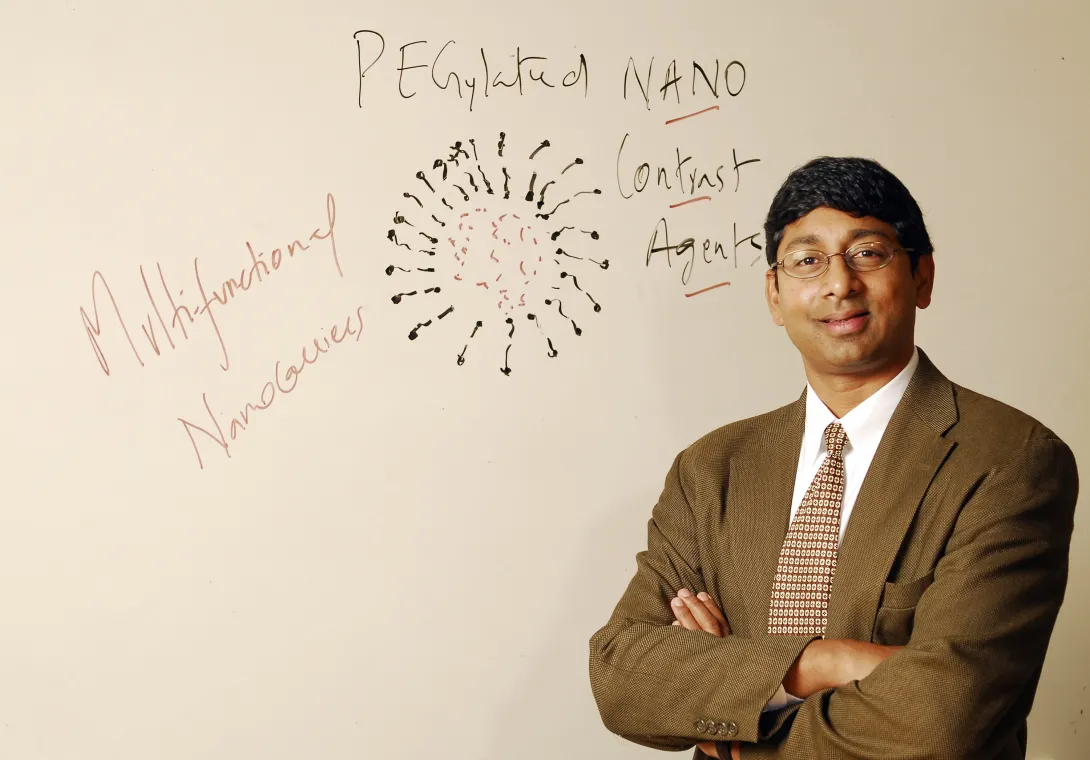
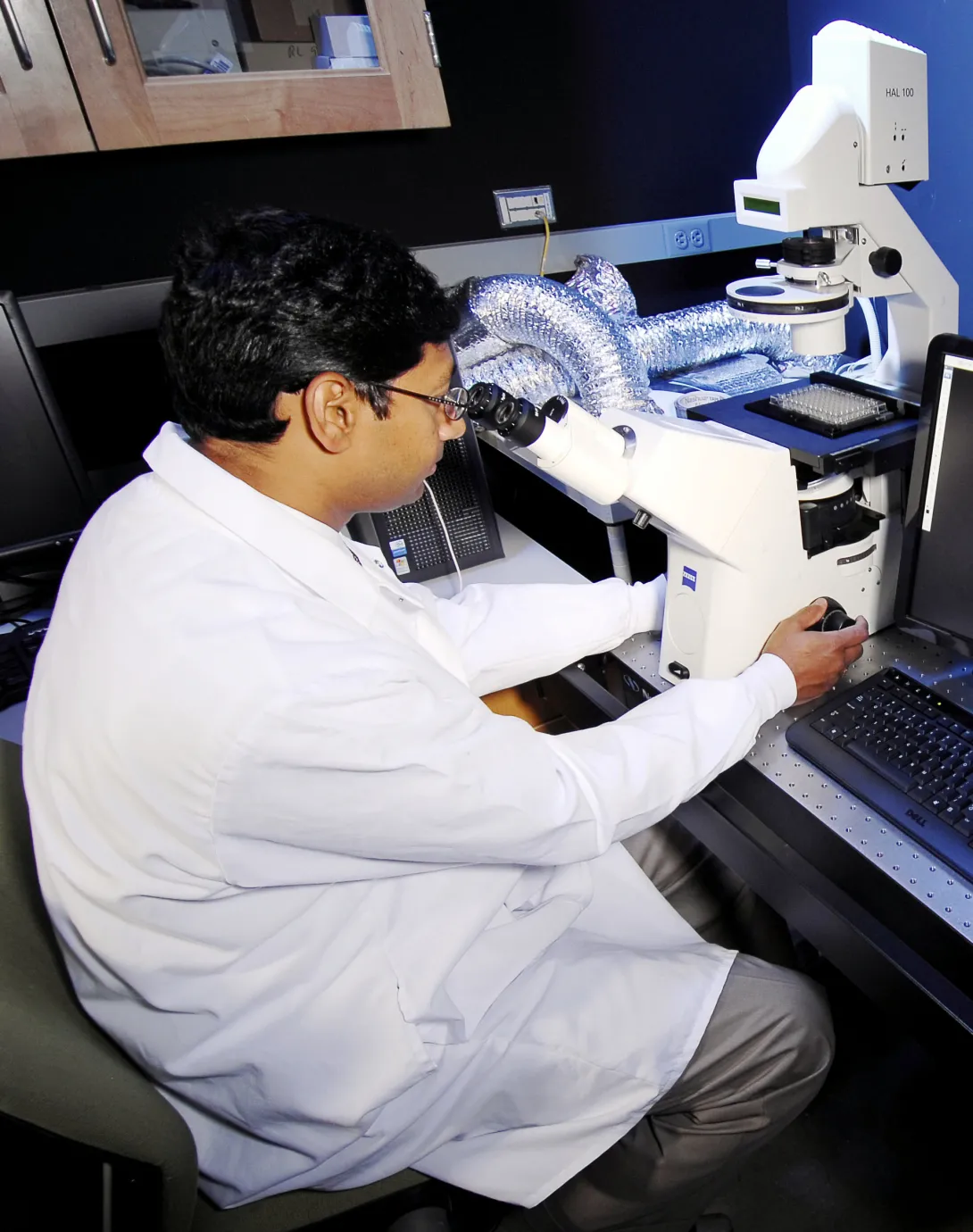

The Georgia Institute of Technology has received a EUREKA grant from the National Institutes of Health (NIH) to design a new way to treat invasive brain tumors by capturing the migrating cells that spread the disease. The EUREKA -- Exceptional, Unconventional Research Enabling Knowledge Acceleration -- program helps scientists test new, unconventional ideas or tackle major methodological or technical challenges.
The research team plans to develop a system that will excavate brain tumor cells by directing them away from their location in the interior of the brain to a more external location where they can be removed or killed. Nanofiber-based polymer thin films coated with biochemical cues will be aligned in the brain to provide a corridor for tumor cells to follow to a gel-based ‘sink’ where they will be captured and safely removed or encouraged to die through chemical signaling.
“We believe this is the first attempt to exploit the invasive, migrating properties of brain tumors by engineering a path for the tumors to move away from the primary site to a location where treatment can occur,” said lead investigator Ravi Bellamkonda, a professor in the Wallace H. Coulter Department of Biomedical Engineering at Georgia Tech and Emory University.
Collaborating with Bellamkonda on this project are Tobey MacDonald, director of the pediatric neuro-oncology program at the Aflac Cancer Center and Blood Disorders Service of Children’s Healthcare of Atlanta and an associate professor of pediatrics at the Emory University School of Medicine; and Barun Brahma, a pediatric neurosurgeon at Children’s Healthcare of Atlanta. The initial partnership between the researchers began with seed funding from the Georgia Cancer Coalition and Ian’s Friends Foundation.
The National Cancer Institute is providing more than $1 million for the EUREKA grant. For the project, Bellamkonda, MacDonald and Brahma are focusing on treating medulloblastomas -- highly malignant brain tumors that account for more than 20 percent of pediatric brain tumors.
“Medulloblastoma is the most common malignant brain tumor we see in children, but unfortunately the five-year survival rates for children with this cancer only range from 50 to 70 percent and the majority of survivors have a significantly reduced quality of life as a result of treatment-related toxicities,” said MacDonald, who is also a Georgia Cancer Coalition Distinguished Scholar. “An increasing number of survivors are also at risk for developing secondary malignancies as a result of the treatment we now administer. Clearly we have to do a much better job at treating these tumors; however, improving survival while reducing the toxic effects of treatment will require a highly innovative approach.”
Medulloblastoma treatment currently involves surgery followed by radiation therapy to the entire brain and spine and up to one year of intensive intravenous chemotherapy. However, radiation is often delayed or omitted altogether in young children due to its debilitating long-term side effects on the developing central nervous system.
These changes to the timing of radiation administration can adversely impact survival. And while surgery is a mainstay of treatment, it too can cause a significant loss of cognitive and neurological function due to the critical areas of the brain that may be involved by the tumor’s spread but require an extensive surgical area to remove as much of the tumor as possible.
This EUREKA grant aims to address the urgent need to develop therapies to safely treat invasive medulloblastomas in children.
“Our plan is to deliver the tumor to the drug -- by directing tumor cells to a specially engineered gel that can be removed or designed to kill the cells -- rather than the current strategy of delivering the drug to the tumor, which is problematic due to the irregular vasculature and poor diffusivity of the tumor tissue,” explained Bellamkonda, who is also a Georgia Cancer Coalition Distinguished Scholar.
The researchers plan to design a polymer thin film system that will include topographical and biochemical cues similar to those that guide the initial brain tumor invasion. The thin films will be rolled up and deployed with minimally invasive catheters. Because neural tissue will not be suctioned and the films are very thin, there should be minimal tissue and tumor disruption.
The films will also be non-toxic to the patient because they will be engineered with biocompatible, stable polymers. In previous studies, the polymers have been implanted in the nervous systems of small animals for more than 16 weeks with no adverse tissue reactions.
“This research represents a radical approach to treating invasive tumors that is based on the universal properties and mechanics of cell motility and the migration characteristic of metastasis, regardless of the molecular and genetic origins of the tumor,” added Bellamkonda.
If successful, this approach would identify a new and innovative way to treat pediatric medulloblastomas and has the potential to open a new avenue for the treatment of other invasive solid tumors, such as brain stem tumors. These cancers are incurable because they are located in an inoperable region and/or they are resistant or inaccessible to the delivery of chemotherapy agents.
Research News & Publications Office
Georgia Institute of Technology
75 Fifth Street, N.W., Suite 314
Atlanta, Georgia 30308 USA
Media Relations Contacts: Abby Vogel Robinson (404-385-3364; abby@innovate.gatech.edu) or John Toon (404-894-6986; jtoon@gatech.edu)
Writer: Abby Vogel Robinson
News Contact
Abby Vogel Robinson
Research News and Publications
Contact Abby Vogel Robinson
404-385-3364