
Apr. 29, 2024
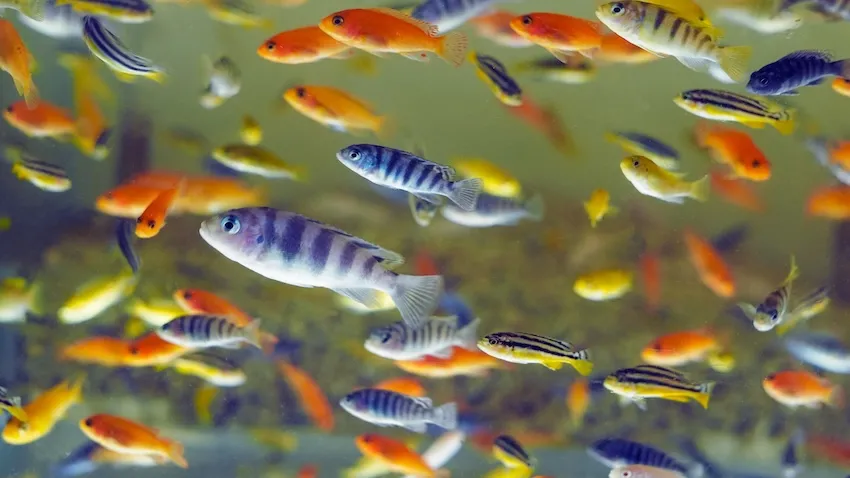
An Adobe Stock image of a variety of brightly colored Lake Malawi cichlids sharing a freshwater aquarium.

Georgia Tech OMSCS student Jasmine Tata volunteers with the campus research group FishStalkers

From her home more than 800 miles away, Georgia Tech online master's student Jasmine Tata is monitoring fish in aquariums at Georgia Tech.
Tata is a New York-based QA analyst and project manager. She started the Online Master of Science in Computer Science (OMSCS) program in Fall 2022 and joined FishStalkers last year.
The student-led research program is part of the School of Biological Sciences' McGrath Lab. Its researchers use machine learning, computer vision, and other technologies to better understand the evolution of animal behaviors.
One of the lab's research projects studies Lake Malawi cichlids to explore connections between observed behavior and brain function.
The FishStalkers are vital to the project. They collect video, depth, and other data from individual fish using Raspberry Pi single-board computers. This information, coupled with open-source code they developed, allows the group to track, monitor, and classify the behaviors of a fish as it builds and maintains its bower, which is a sand structure these cichlids use to attract mates.
Along with monitoring the research tanks, Tata's contributions include improving the automated collection and analysis of data streaming from the Pis. She's also helping to adapt the data pipeline to work with yellow-head, orange-cap, and other cichlid species.
[RELATED: Georgia Tech's OMSCS Program Celebrates 10th Anniversary]
"I've enjoyed learning more about new problems in a relatively unfamiliar field. In a pure computer science-focused lab, I never would experience the frustrations of data collection that come with biological subjects," said Tata.
"The fish builds bowers on its own schedule, and data collection must accurately capture this, regardless of weekends or holidays."
Tata says her experience with FishStalkers has given her new ideas about presenting data to non-technical team members. The team uses a spreadsheet integrated with data collection scripts running on the Raspberry Pis. The spreadsheet allows someone without technical knowledge to pause, upload data, or start new trials simply by toggling a dropdown.
"This has given me a lot of ideas about how to meet people where they are in terms of technical skills when it comes to user interface design and has encouraged me to learn more about human-computer interaction," said Tata.
Tata learned about the FishStalkers research group when its founder, Breanna Shi, reached out through the OMSCS Slack study channel. Shi developed the group through Georgia Tech's Vertically Integrated Projects (VIP) program as a mentorship program.
"Given their real-world computer science experience, I wanted to see if there were OMSCS students interested in collaborating on FishStalkers projects and assisting in the mentorship of undergraduate researchers," said Shi.
Shi is a third-year Ph.D. student studying bioinformatics with minors in machine learning and higher education. She created FishStalkers as a mentorship program because she recognized that undergraduate and masters-level students could feel less valued or isolated in research environments.
"The FishStalkers model empowers all its researchers with the respect and responsibility as a full team member. Whether it's your first week as a FishStalker or your last, you will complete tasks that benefit the research team and yourself," said Shi.
[RELATED: Women-Centered Mentorship Provides Empowerment to Conquer Ph.D.]
Tata's experience in the business world made her a good fit for the FishStalkers program. Shi says Tata contributes valuable insight to the group as a mentor because most students approach the program from a purely academic viewpoint.
"Jasmine, like other OMSCS students, works full-time and attends the OMSCS program part-time. Her roles as a project manager and a software QA analyst allow her to contribute a unique perspective to the FishStalkers group," said Shi.
In addition to sharing her experience mentoring two OMSCS students this semester, Tata has helped Shi overcome some of the inherent challenges of long-distance collaboration. These include creating a sense of interpersonal connection among in-person and remote research team members.
Group meetings host a virtual link to enhance the online research experience. Every member provides progress updates during the sessions. The researchers also virtually check in and out of their research hours in a shared group chat and describe the work completed during their check-out.
"FishStalkers also runs a monthly lab-buddy program where a researcher is paired with a new buddy each month to schedule a 30-minute meeting to chat and learn about each other's work," said Shi.
"These strategies benefit OMSCS students in our group and provide a positive research environment for junior researchers. We seek to incorporate innovative strategies to create an accessible research environment for all students interested in participating in our research," said Shi.
FishStalkers has been such a success that Shi is expanding the model. This fall, Shi will work with OMSCS Executive Director David Joyner and OMSCS Associate Director of Research Nick Lytle to connect OMSCS students with interdisciplinary research projects in labs across campus.
"My role will be to establish relationships between data collectors and data analyzers to provide a service to non-technical labs across campus and a valuable research experience for OMSCS students," said Shi.
"We will be building from my existing work in image processing in the McGrath Lab and expanding to other labs with data analysis needs. I am very excited to have the experience of growing as a collaborator."
News Contact
Ben Snedeker, Communications Manager
Georgia Tech College of Computing
Apr. 23, 2024

The College of Sciences is funding two research centers through a new seed grant program.
Selected from a finalist pool of nine proposals, Associate Professors Yuanzhi Tang and Thackery Brown’s ideas were chosen for their high potential for novel interdisciplinary research and impact.
Tang’s center will focus on sustainable mineral research, and Brown’s on spatial computation and navigation. Applications for the research will span the development of more sustainable batteries, as well as seeking to improve human health and well-being.
“Improving the human condition, fostering community, and pursuing research excellence are at the forefront of Georgia Tech’s mission, and these new centers will play a critical role in furthering that goal,” says Laura Cadonati, associate dean for Research in the College of Sciences and a professor in the School of Physics. “The College of Sciences is thrilled to support these new initiatives, and is excited to continue to develop the seed grant program.”
A second call for research center proposals is planned for January 2025, with funding to start in July 2025.
The new Center for Sustainable and Decarbonized Critical Energy Mineral Solutions (CEMS), to be led by Yuanzhi Tang, an associate professor in the School of Earth and Atmospheric Sciences, will serve as a hub for sustainable procurement solutions for critical energy mineral resources, including rare earth elements and metals used for battery production.
Thackery Brown, an associate professor in the School of Psychology, will lead the second center, the Center for Research and Education in Navigation (CRaNE). CRaNE will investigate problems related to spatial computation, cognition, and navigation — which has implications for human health, animal conservation, smart architecture and urban design.
“This generous support from the College of Sciences will enable us to host a conference on spatial cognition, computation, design, and navigation; to provide collaborative multi-lab seed grants; and to establish the first of a series of explicitly co-mentored, interdisciplinary graduate student Fellowships,” Brown says. “Collectively, these are the seeds of a high-impact and self-sustaining center.”
About the Center for Sustainable and Decarbonized Critical Energy Mineral Solutions (CEMS)
Yuanzhi Tang, School of Earth and Atmospheric Sciences
Co-sponsored by the College of Sciences, Strategic Energy Institute (SEI), Brook Byers Institute for Sustainable Systems (BBISS), Institute for Electronics and Nanotechnology (IEN), and Institute for Materials (iMat), CEMS began as a joint BBISS-SEI initiative lead project that has since grown into a joint center focused on critical elements and materials for sustainable energy.
Sustainably sourcing these materials provides a critical foundation for both high-tech industry and green economy. “Rare earth elements and battery metals like lithium, copper, and nickel are in high demand, but low domestic resources and production have resulted in a heavy reliance on imports,” Tang explains. “How can we domestically produce these resources, and how can we do this sustainably?
Georgia Tech and the College of Sciences are at a unique position for developing a large regional research umbrella to connect these dots.”
CEMS will leverage on three key pillars: science and technology development, strengthening collaboration among the University System of Georgia (USG) universities, and developing regional resources and economy, Tang says. “By leveraging collaboration among Georgia universities, and fostering engagement with regional industries, the Center will develop new science and technology, leading the way in research on how to procure these ‘essential vitamins’ for clean energy transition in a sustainable and decarbonized manner.”
About the Center for Research and Education in Navigation (CRaNE)
Thackery Brown, School of Psychology
CRaNE will focus on solving problems related to spatial computation, cognition, and navigation. “How do we treat catastrophic loss of one’s ability to get from A to B in Alzheimer's disease? How do we build smarter cities that are easier and more carbon efficient to navigate? How can we develop robots,” Brown says, “which navigate with the flexibility and efficiency of our own minds? CRaNE will bring together experts from many different fields to help address these problems with truly creative and integrative scientific and technological solutions.”
CRaNE will support interdisciplinary collaborative research, including developing a graduate student fellowship program, and conducting K-12 outreach.
“Our goal for CRaNE is to position the College of Sciences, Georgia Tech, and our extended network of collaborator institutions as a center of gravity for cutting-edge work on how the mind, brain, and artificial systems process space — how they can be made better at it, and how we can engineer our world around us in ways that support the humans and animals that need to navigate it to survive,” Brown says.
Emphasizing the collaborative nature of CRaNE, Brown adds that “by targeting collaborative grants, research, and education, and by promoting outreach and education earlier in the STEM pipeline, we hope to accelerate progress at the frontiers of these fields — and to invest in future science that cannot be easily addressed by a single lab or discipline.”
News Contact
Written by Selena Langner
Contact:
Jess Hunt-Ralston
Director of Communications
College of Sciences
Georgia Tech
Apr. 23, 2024
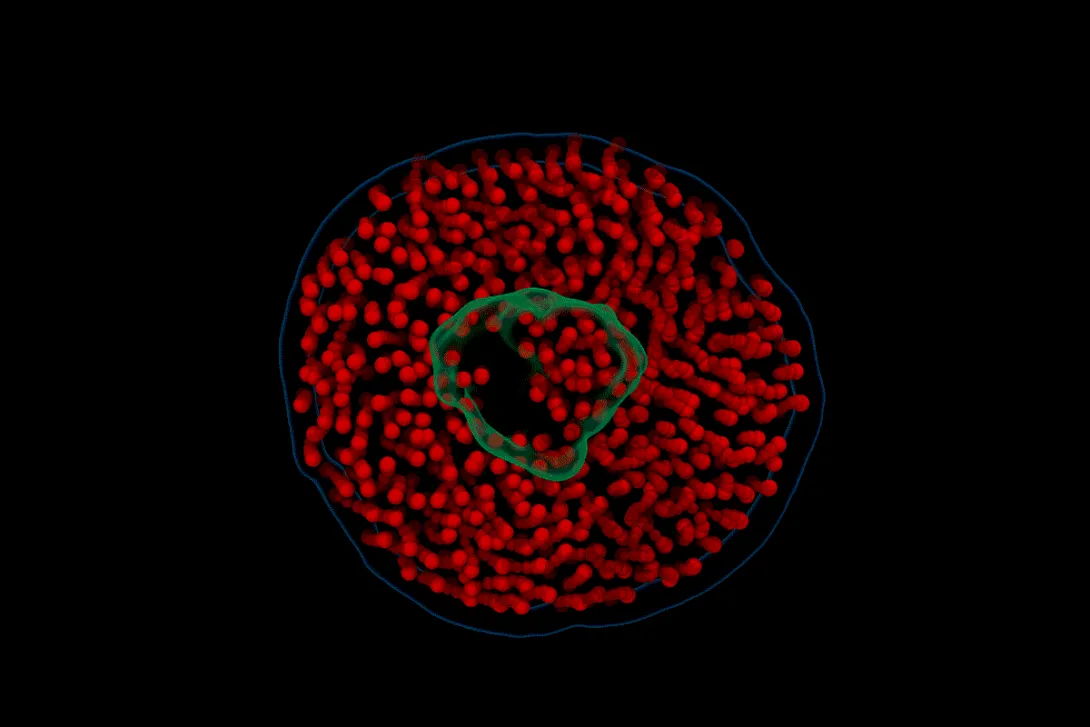
A computational model, based on raw video from electron videography, showing the motion of a nanodisc composed of lipids (red) and a membrane protein (green) in water.
GIF courtesy of John W. Smith
This article was first published in the University of Illinois Urbana-Champaign newsroom. Read the full story here.
Researchers at Georgia Institute of Technology and the University of Illinois Urbana-Champaign have developed a first-of-its-kind technique called electron videography to capture moving images at the molecular scale. In the first demonstration of the technique, the team took a microscopic moving picture of the delicate dance between proteins and lipids found in cell membranes. The study, “Electron videography of a lipid–protein tango” was published last week in the journal Science Advances.
"This is the first time we are looking at a protein on an individual scale and haven't frozen it or tagged it," says Aditi Das, a corresponding author and associate professor in the School of Chemistry and Biochemistry at Georgia Tech.
Electron microscopy techniques image at the molecular or atomic scale, yielding detailed, nanometer-scale pictures. However, they often rely on samples that have been frozen or fixed in place, leaving scientists to try to infer how molecules move and interact — like trying to map the choreography of a dance sequence from a single frame of film.
"Usually, we have to crystalize or freeze a protein, which poses challenges in capturing high-resolution images of flexible proteins. Alternately, some techniques use a molecular tag that we track, rather than watching the protein itself,” Das says. “In this study we are seeing the protein as it is, behaving how it does in a liquid environment, and seeing how lipids and proteins interact with each other."
The technique can be used to study the dynamics of other biomolecules, breaking free of constraints that have limited microscopy to still images of fixed molecules. In this study, the team examined nanoscale discs of lipid membranes and how they interacted with proteins normally found on the surface of or embedded in cell membranes.
These membrane proteins are significant for medical treatments, and are involved in processes including muscle contraction, brain function, and immune system functions. Moving forward, the researchers plan to use their electron videography technique to study other types of membrane proteins and other classes of molecules and nanomaterials.
News Contact
Contact:
Jess-Hunt Ralston
Director of Communications
College of Sciences
Georgia Tech
Apr. 22, 2024
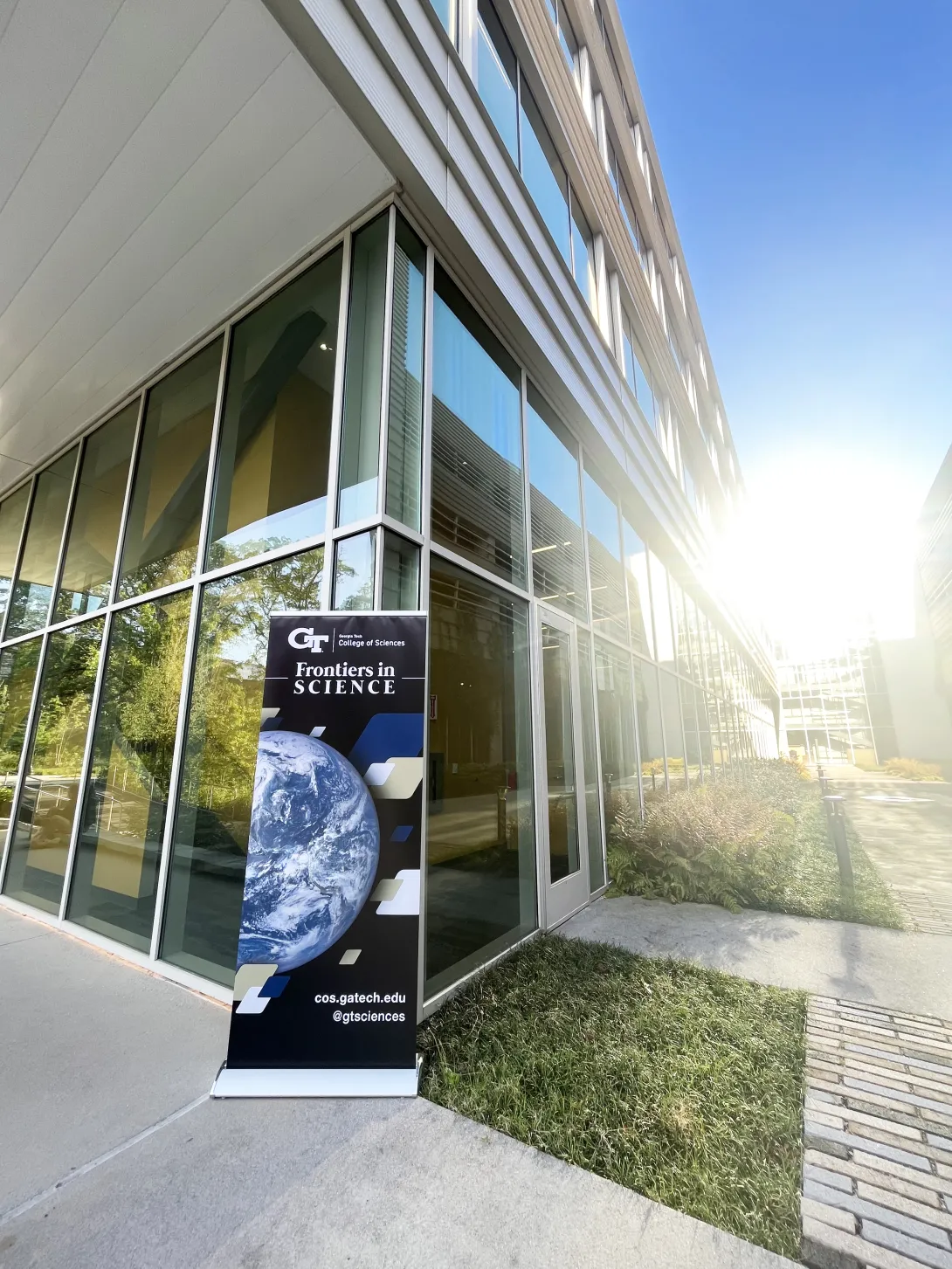
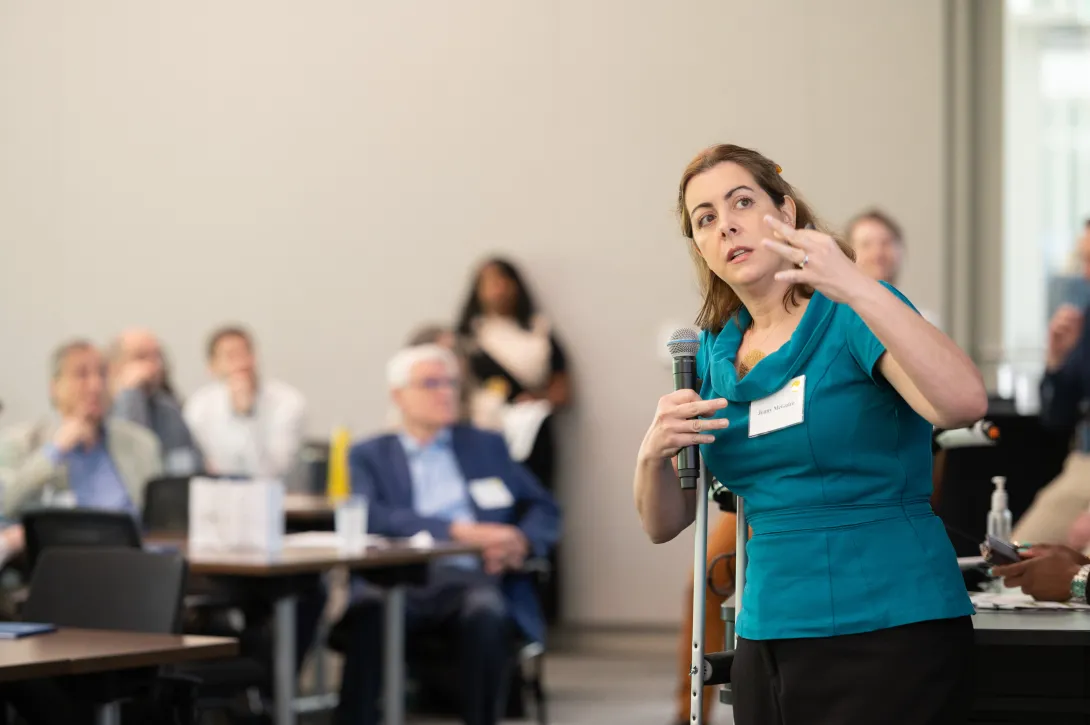
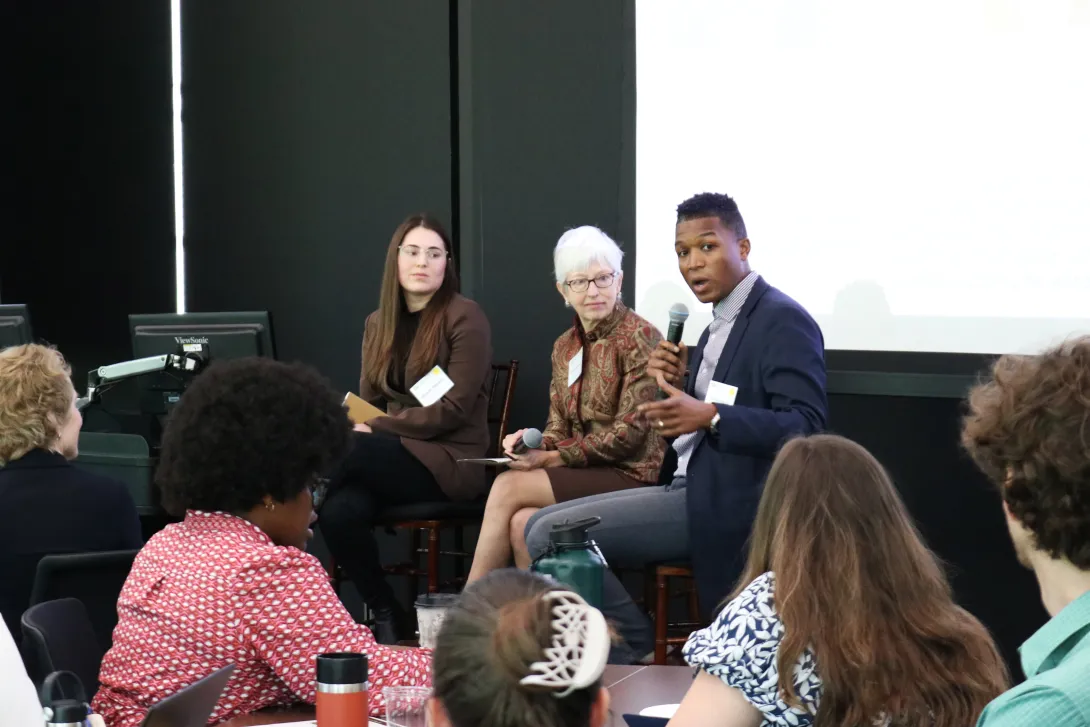
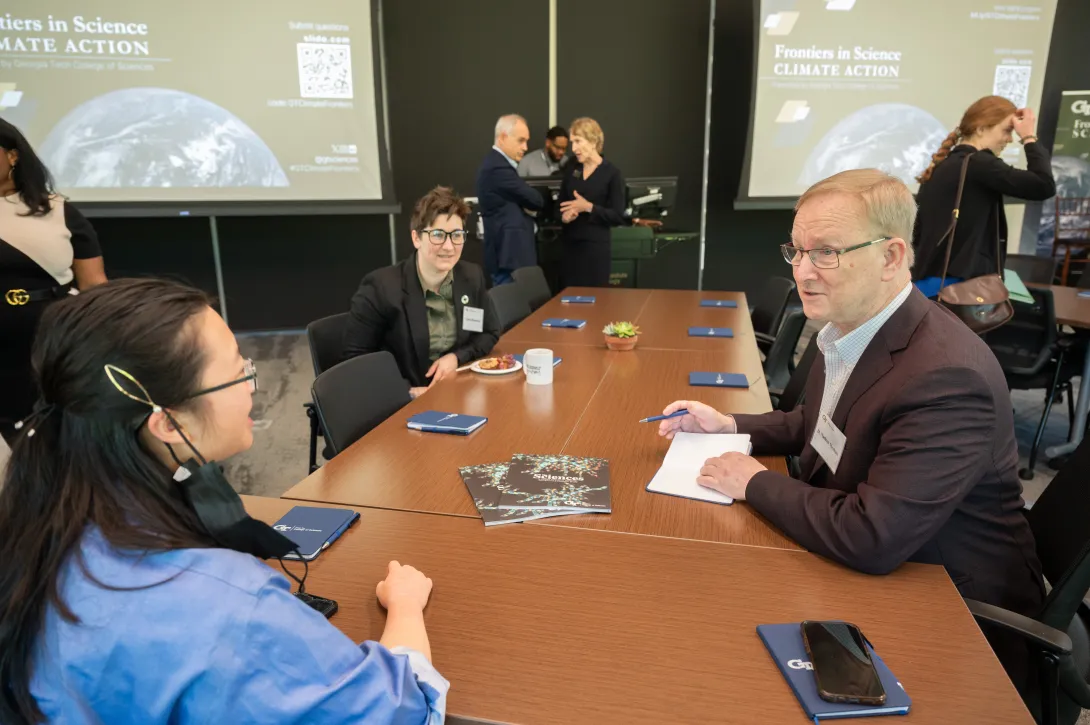
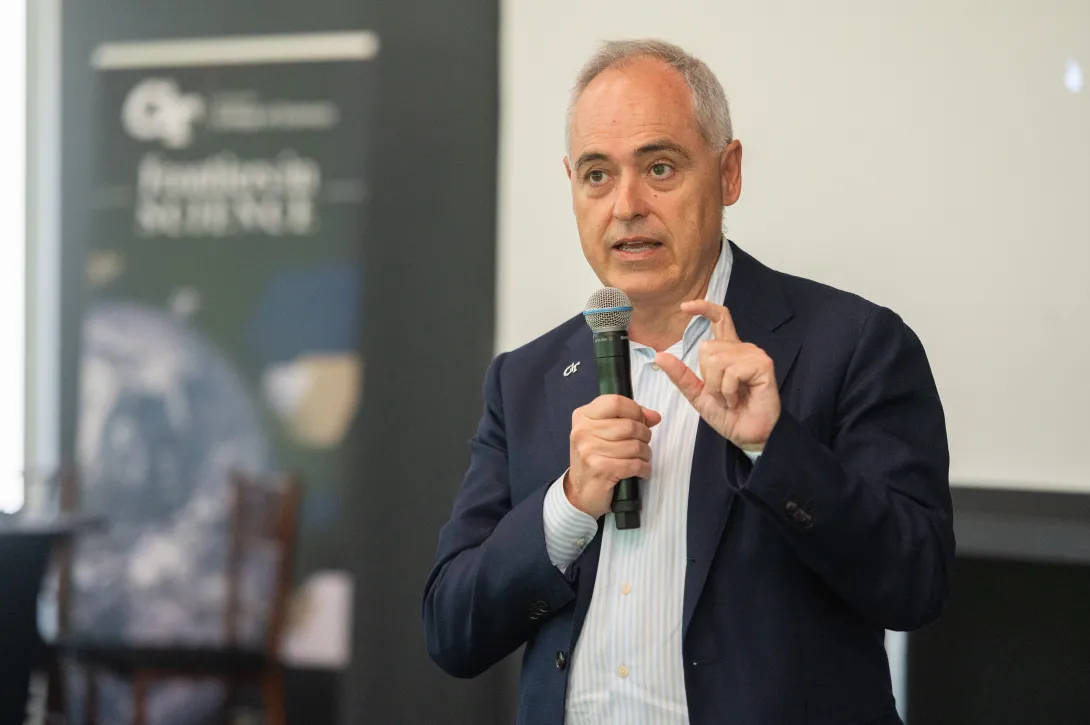
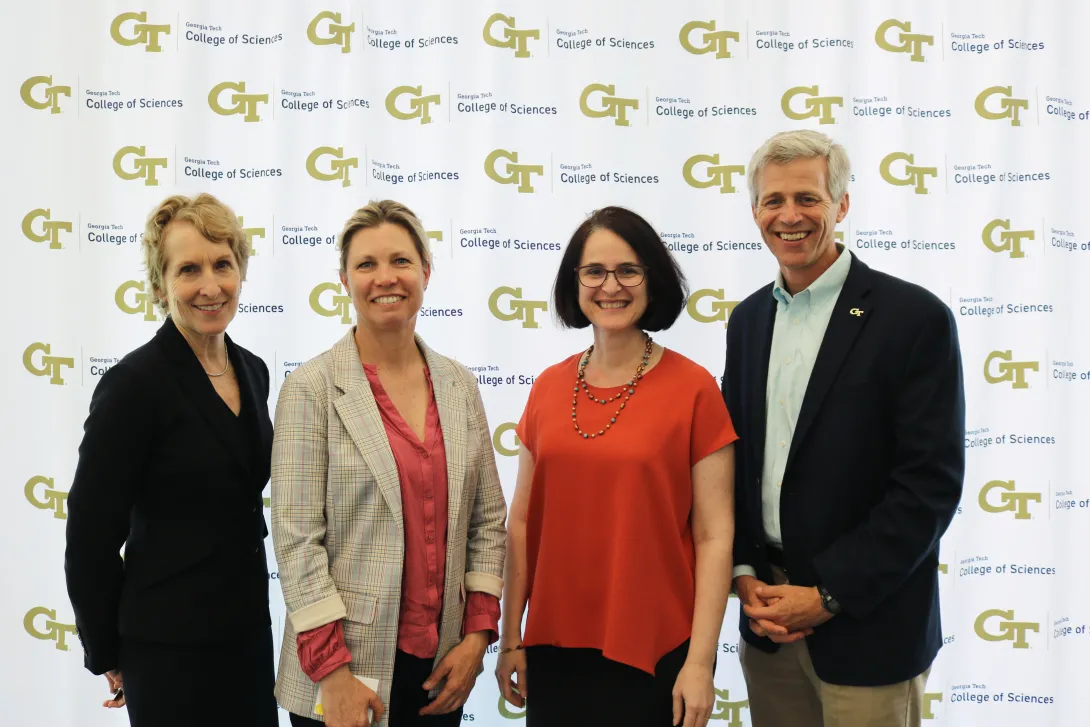
This Earth Month more than 100 campus and community stakeholders gathered near the Georgia Tech EcoCommons for the 2024 Frontiers in Science: Climate Action Conference and Symposium.
On April 18, the College of Sciences hosted more than 20 speakers and panelists from across the Institute and Atlanta community presenting groundbreaking research and discussing innovations and ideas in climate change, challenges, and solutions.
Georgia Tech President Ángel Cabrera (M.S. PSY 1993, Ph.D. PSY 1995) kicked off the morning sessions by highlighting the Institute’s new Climate Action Plan, which outlines the pathway to achieve net-zero emissions by 2050. Cabrera’s remarks focused on Georgia Tech’s role on the frontlines of research and education informing how we respond to climate challenges — and noted that the Institute’s work must extend beyond our laboratories and classrooms.
“It is essential that we not only do the science, but that we also tell that science to the world,” Cabrera says.
Interdisciplinary inquiry
This year, Frontiers in Science featured an array of climate research and initiatives led by the College of Sciences, fellow colleges across Georgia Tech, and the wider Atlanta community.
Following a three-year hiatus of the Frontiers series, the 2024 edition re-envisioned the signature annual event as a research conference and symposium to convene campus experts — and to incubate seed grant proposals to support the work of early career faculty.
Frontiers previously hosted Nobel laureates and invited thought leaders for individual talks across the College’s six schools, and celebrated milestones like the International Year of the Periodic Table of the Chemical Elements.
“This year, we wanted to showcase what we are doing right here in the College of Sciences and throughout the Institute,” says Susan Lozier, dean of the College of Sciences, Betsy Middleton and John Clark Sutherland Chair and professor in the School of Earth and Atmospheric Sciences. “Our faculty are at the forefront of broadening our knowledgebase and uncovering solutions in areas critical to the planet and our well-being. We wanted to uplift that work and see what sort of connections could be made.”
Connections and collaboration were key themes of the day as faculty, staff, students, and alumni participants representing all six Georgia Tech colleges shared research results and ongoing work and discussed collaborative ideas for horizons ahead.
“Scientists alone cannot [create accurate models],” noted Annalisa Bracco, professor in the School of Earth and Atmospheric Sciences and associate chair for Research, who shared her own research alongside Lozier, who presented a version of her 2024 TED Talk on ocean overturning. “Engineers alone cannot do it. We need social scientists, policy makers, communicators.”
The importance of an interdisciplinary approach was reinforced by the Strategic Energy Institute at Georgia Tech (SEI) and Brook Byers Institute for Sustainable Systems (BBISS), which announced an interdisciplinary seed grant funding opportunity for assistant professors with ideas for new climate solutions.
Frontiers in focus
Across three themed sessions, faculty and leadership from the Colleges of Sciences, Engineering, and Design spearheaded talks on the ocean and cryosphere, biodiversity, carbon cycling, coastal wetlands, biofuels production, and beyond.
Panels on climate challenges across community, technological, and policy initiatives were hosted by Georgia Tech Vice President for Interdisciplinary Research and Professor in the School of Biological Sciences and the School of Chemistry and Biochemistry Julia Kubanek.
Following a networking lunch with climate table topics, Georgia Tech Executive Vice President for Research and Professor in the School of Electrical and Computer Engineering Chaouki T. Abdallah (M.S. ECE 1982, Ph.D. ECE 1988) kicked off the afternoon sessions — which also announced the scholarship recipients of a student video competition and featured videos with a pair of alumnae working in meteorology, climate research, and policy.
Afternoon highlights also included discussions on the Georgia Tech Climate Action Plan and Sustainability Next initiative, led by Jennifer Chirico (B.S. MGMT 1997, Ph.D. PUBP 2011), associate vice president of Sustainability for Georgia Tech Infrastructure and Sustainability, and Jennifer Leavey (B.S. CHEM 1995), assistant dean for Faculty Mentoring in the College of Sciences and interim assistant director for Interdisciplinary Education in the Brook Byers Institute for Sustainable Systems.
Although many of the presentations provided a stern outlook of the state of our ecosystems, the conference concluded with a sense of hope. This optimism was grounded in the range of opportunities that exist to address climate challenges — thanks, in part, to the body of knowledge and solutions being tested and explored by Georgia Tech researchers.
At the end of the day, Katie Griffin, a first year undergraduate student in Environmental Science, read Amanda Gorman’s poem Earthrise and provided this reminder:
All of us bring light to exciting solutions never tried before
For it is our hope that implores us, at our uncompromising core,
To keep rising up for an earth more than worth fighting for.
Experience the event in pictures with the College of Sciences’ Flickr account, and discover the highlights through the day’s live tweets on College of Sciences’ X account.
News Contact
By: Lindsay Vidal
Jess Hunt-Ralston
Director of Communications
College of Sciences at Georgia Tech
Apr. 22, 2024
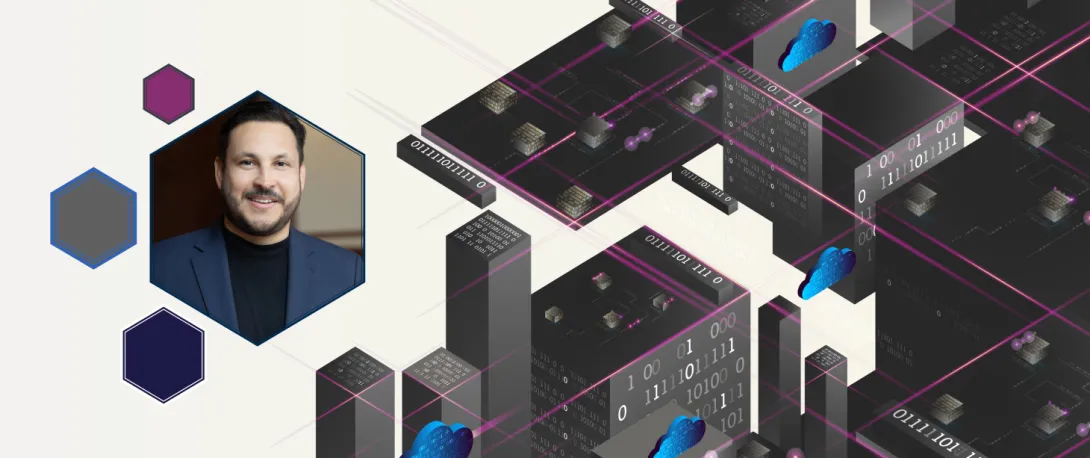
Omar Asensio is Associate Professor at Georgia Institute of Technology and Climate Fellow, Harvard Business School
With new vehicle models being developed by major brands and a growing supply chain, the electric vehicle (EV) revolution seems well underway. But, as consumer purchases of EVs have slowed, car makers have backtracked on planned EV manufacturing investments. A major roadblock to wider EV adoption remains the lack of a fully realized charging infrastructure. At just under 51,000 public charging stations nationwide, and sizeable gaps between urban and rural areas, this inconsistency is a major driver of buyer hesitance.
How do we understand, at a large scale, ways to make it easier for consumers to have confidence in public infrastructure? That is a major issue holding back electrification for many consumer segments.
- Omar Asensio, Associate Professor at Georgia Institute of Technology and Climate Fellow, Harvard Business School | Director, Data Science & Policy Lab
Omar Asensio, associate professor in the School of Public Policy and director of the Data Science and Policy Lab at the Georgia Institute of Technology, and his team have been working to solve this trust issue using the Microsoft CloudHub partnership resources. Asensio is also currently a visiting fellow with the Institute for the Study of Business in Global Society at the Harvard Business School.
The CloudHub partnership gave the Asensio team access to Microsoft’s Azure OpenAI to sift through vast amounts of data collected from different sources to identify relevant connections. Asensio’s team needed to know if AI could understand purchaser sentiment as negative within a population with an internal lingo outside of the general consumer population. Early results yielded little. The team then used specific example data collected from EV enthusiasts to train the AI for a sentiment classification accuracy that now exceeds that of human experts and data parsed from government-funded surveys.
The use of trained AI promises to expedite industry response to consumer sentiment at a much lower cost than previously possible. “What we’re doing with Azure is a lot more scalable,” Asensio said. “We hit a button, and within five to 10 minutes, we had classified all the U.S. data. Then I had my students look at performance in Europe, with urban and non-urban areas. Most recently, we aggregated evidence of stations across East and Southeast Asia, and we used machine learning to translate the data in 72 detected languages.”
We are excited to see how access to compute and AI models is accelerating research and having an impact on important societal issues. Omar's research sheds new light on the gaps in electric vehicle infrastructure and AI enables them to effectively scale their analysis not only in the U.S. but globally.
- Elizabeth Bruce, Director, Technology for Fundamental Rights, Microsoft
Asensio's pioneering work illustrates the interdisciplinary nature of today’s research environment, from machine learning models predicting problems to assisting in improving EV infrastructure. The team is planning on applying the technique to datasets next, to address access concerns and reduce the number of “charging deserts.” The findings could lead to the creation of policies that help in the adoption of EVs in infrastructure-lacking regions for a true automotive electrification revolution and long-term environmental sustainability in the U.S.
- Christa M. Ernst
Source Paper: Reliability of electric vehicle charging infrastructure: A cross-lingual deep learning approach - ScienceDirect
News Contact
Christa M. Ernst
Research Communications Program Manager
Topic Expertise: Robotics | Data Sciences| Semiconductor Design & Fab
Research @ the Georgia Institute of Technology
christa.ernst@research.gatech.edu
Apr. 19, 2024
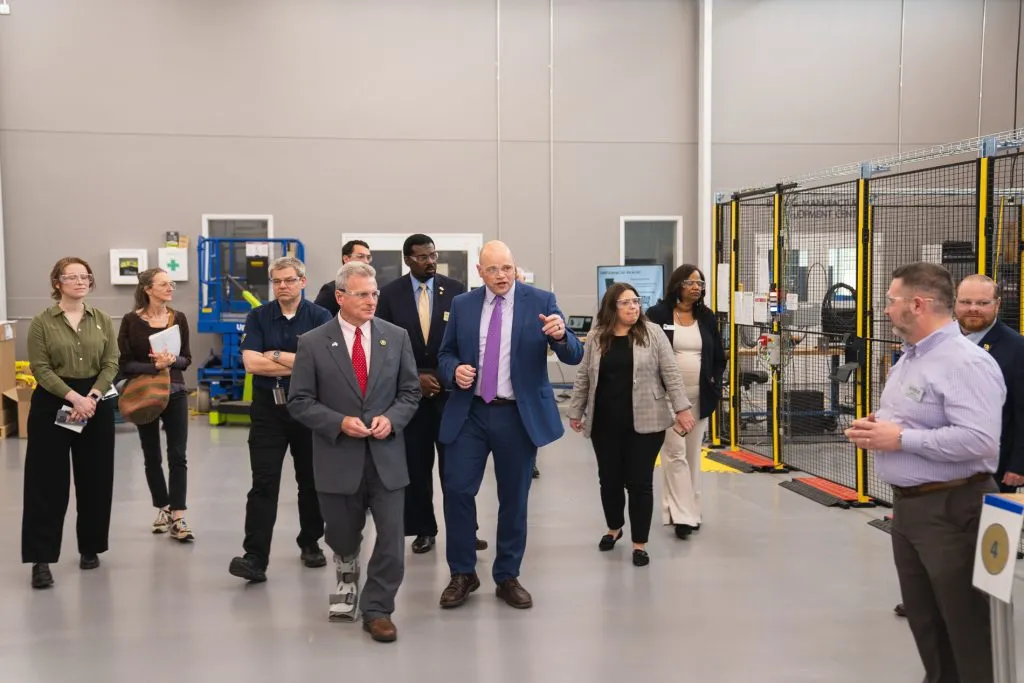
Congressman Carter toured the facility on April 1, seeing live demonstrations and hearing presentations on the Institute's manufacturing research and workforce development projects.
When U.S. Rep. Earl L. “Buddy” Carter from Georgia’s 1st District visited Atlanta recently, one of his top priorities was meeting with the experts at Georgia Tech’s 20,000-square-foot Advanced Manufacturing Pilot Facility (AMPF).
Carter was recently named the House Energy and Commerce Committee’s chair of the Environment, Manufacturing, and Critical Materials Subcommittee, a group that concerns itself primarily with contamination of soil, air, noise, and water, as well as emergency environmental response, whether physical or cybersecurity.
Because AMPF’s focus dovetails with subcommittee interests, the facility was a fitting stop for Carter, who was welcomed for an afternoon tour and series of live demonstrations. Programs within Georgia Tech’s Enterprise Innovation Institute — specifically the Georgia Artificial Intelligence in Manufacturing (Georgia AIM) and Georgia Manufacturing Extension Partnership (GaMEP) — were well represented.
“Innovation is extremely important,” Carter said during his April 1 visit. “In order to handle some of our problems, we’ve got to have adaptation, mitigation, and innovation. I’ve always said that the greatest innovators, the greatest scientists in the world, are right here in the United States. I’m so proud of Georgia Tech and what they do for our state and for our nation.”
Carter’s AMPF visit began with an introduction by Thomas Kurfess, Regents' Professor and HUSCO/Ramirez Distinguished Chair in Fluid Power and Motion Control in the George W. Woodruff School of Mechanical Engineering and executive director of the Georgia Tech Manufacturing Institute; Steven Ferguson, principal research scientist and managing director at Georgia AIM; research engineer Kyle Saleeby; and Donna Ennis, the Enterprise Innovation Institute’s director of community engagement and program development, and co-director of Georgia AIM.
Ennis provided an overview of Georgia AIM, while Ferguson spoke on the Manufacturing 4.0 Consortium and Kurfess detailed the AMPF origin story, before introducing four live demonstrations.
The first of these featured Chuck Easley, Professor of the Practice in the Scheller College of Business, who elaborated on supply chain issues. Afterward, Alan Burl of EPICS: Enhanced Preparation for Intelligent Cybermanufacturing Systems and mechanical engineer Melissa Foley led a brief information session on hybrid turbine blade repair.
Finally, GaMEP project manager Michael Barker expounded on GaMEP’s cybersecurity services, and Deryk Stoops of Central Georgia Technical College detailed the Georgia AIM-sponsored AI robotics training program at the Georgia Veterans Education Career Transition Resource (VECTR) Center, which offers training and assistance to those making the transition from military to civilian life.
The topic of artificial intelligence, in all its subtlety and nuance, was of particular interest to Carter.
“AI is the buzz in Washington, D.C.,” he said. “Whether it be healthcare, energy, [or] science, we on the Energy and Commerce Committee look at it from a sense [that there’s] a very delicate balance, and we understand the responsibility. But we want to try to benefit from this as much as we can.”
“I heard something today I haven’t heard before," Carter continued, "and that is instead of calling it artificial intelligence, we refer to it as ‘augmented intelligence.’ I think that’s a great term, and certainly something I’m going to take back to Washington with me.”
“It was a pleasure to host Rep. Carter for a firsthand look at AMPF," shared Ennis, "which is uniquely positioned to offer businesses the opportunity to collaborate with Georgia Tech researchers and students and to hear about Georgia AIM.
“At Georgia AIM, we’re committed to making the state a leader in artificial intelligence-assisted manufacturing, and we’re grateful for Congressman Carter’s interest and support of our efforts."
News Contact
Eve Tolpa
Senior Writer/Editor
Enterprise Innovation Institute (EI2)
Apr. 19, 2024
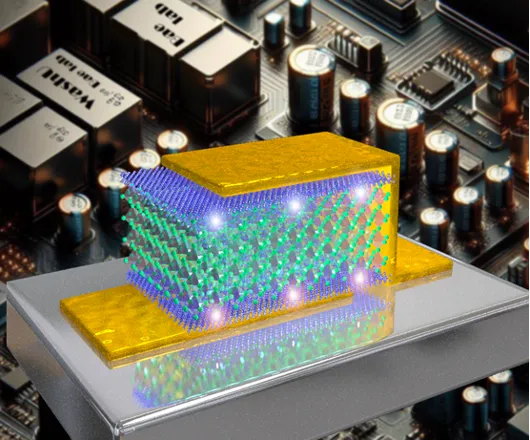
Electrostatic capacitors realized with ferroelectric single crystalline BaTiO3 (BTO) sandwiched by 2D materials (including h-BN).
Metz, France
Three-dimensional (3D) hetero-integration technology is set to transform the field of electronics. Vertically stacking functional layers, creates novel 2D-3D circuit architectures with high integration density and unprecedented multifunctionality.
Three researchers at Georgia Tech-CNRS IRL 2958, a joint international research laboratory based at Georgia Tech-Europe in Metz, France, were among a team that demonstrated cutting-edge 2D/single-crystalline 3D/2D (2D/C-3D/2D) Integration using a precise layer splitting technique to overcome drawbacks in ferroelectric materials use in electrostatic capacitors.
Abdallah Ougazzaden, professor of Electrical and Computer Engineering at Georgia Tech, and president of Georgia Tech-Europe, Phuong Vuong, Georgia Tech-CNRS IRL 2958 researcher, and Suresh Sundaram, adjunct faculty in Georgia Tech’s School of Electrical and Computer Engineering, are co-authors on an April 19, 2024 research article in the journal, Science, entitled “High energy density in artificial heterostructures through relaxation time modulation.”
Ferroelectric materials used in electrostatic capacitors have unique advantages such as maximum polarization due to their higher electric susceptibilities related to dielectric constants, or permittivity, a measure of a material’s ability to store electrical energy. However, their high remnant polarization, the amount of polarization that remains in the material after the electric field is removed, limits how well they can store and release energy during the discharging process.
In the Science article, researchers demonstrated an innovative approach that sandwiches a single crystalline BTO (C-BTO) layer with 2D materials in the form of a freestanding membrane and effectively suppresses the remnant polarization of ferroelectric materials while maintaining the maximum polarization.
This ultra-thin vertical stacking technology was achieved using three different two-dimensional materials in combination with single crystalline BTO (C-BTO). Hexagonal boron nitride semiconductor was developed in the International Research Laboratory at GT-Europe, while graphene, and Molybdenum disulfide (MoS2) were developed at MIT.
These new 2D material technologies have a special type of bonding called van der Waals forces. On account of this, the layers can be easily separated to create components without needing any chemical etching or cutting processes.
“The 2D hexagonal boron nitride (h-BN) material that we are developing at Georgia Tech-CNRS IRL 2958 on large surfaces using the MOCVD epitaxial growth technique has demonstrated its significant potential in emerging technologies across various domains such as future quantum computers, biotechnology, flexible electronics, sensors, energy, and optogenetics.” said Ougazzaden, head of the h-BN project at Georgia Tech-CNRS IRL 2958,” adding, “We are currently working on some of these applications, and we hope to produce even more results and demonstrate new achievements."
Electrostatic capacitors, with their ability to store and release electrical energy quickly, find a wide range of applications across various fields of electronics and electrical engineering for energy storage, power conditioning etc.
In a similar collaboration, the same research team from Georgia Tech-CNRS IRL 2958 published a paper in December 2023, showing the first demonstration of the monolithic 3D integration of an artificial intelligence (AI) processor using two-dimensional (2D) materials.
This innovative integration approach combined six layers of transistor and memristor networks into a 3D nano-system. By stacking nanoscale materials made from 2D materials using bottom-up technology, the team created a fully integrated AI system.
The monolithic 3D method significantly improved processing efficiency by reducing time, voltage drops, latency, and footprint. In addition to offering a solution for electronic hetero-integration with 2D materials, broke new ground for advanced multifunctional processors and systems for AI applications and complex computing.
The team’s results on vertical hetero-integration were published in the scientific journal, Nature Materials, entitled, "Monolithic 3D Integration of 2D Materials-Based Electronics towards Ultimate Edge Computing Solutions.”
The researchers who contributed to the Science article discovered that when ferroelectric materials are combined in special structures (like 2D/C-3D/2D layers), it affects how much leftover charge a capacitor has and how well it can store energy. These insights will advance designs of high-energy capacitors using these materials. In the future, this could lead to more efficient and powerful energy storage systems.
Apr. 11, 2024
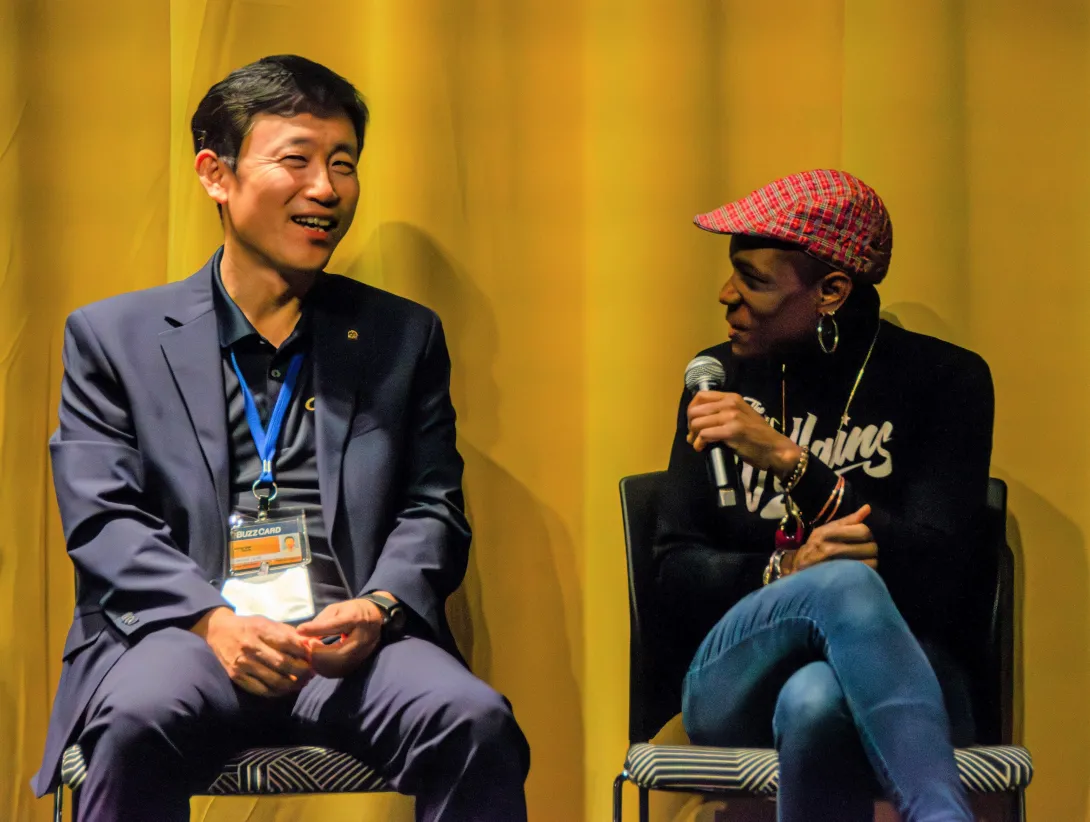
Faculty Fellow Sofia Perez-Guzman (third from right) joins SCoRE staff on a site visit to the ArtsXchange in East Point to explore mutual interests related to community resiliency (April 5, 2024)
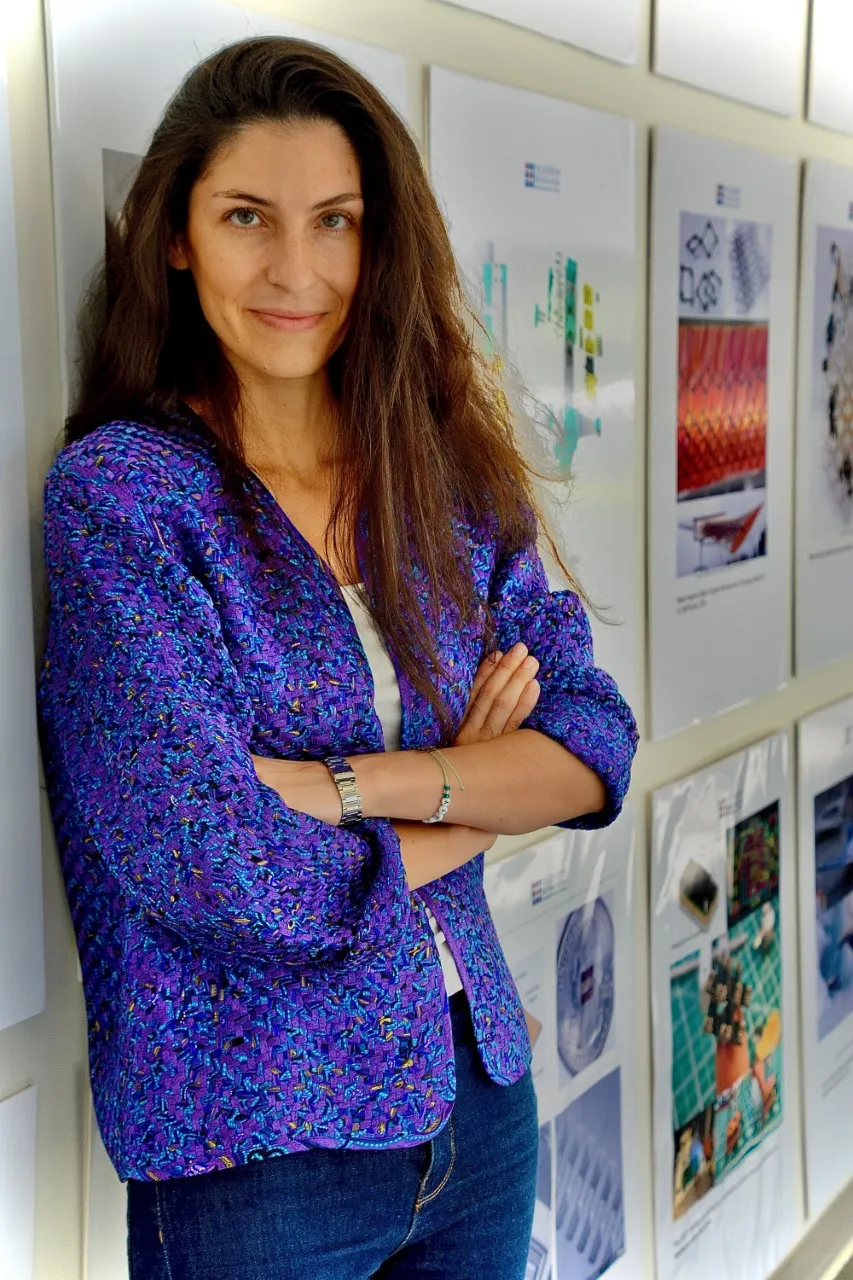
Jung-ho (John) Lewe (left) of the Georgia Tech Aerospace Systems Design Laboratory at Georgia Tech and Erica Holloman-Hill (right), a SCoRE adviser and chief envisioning officer/chief scientific officer of Ayika Solutions, a family-run environmental consulting firm that uplifts community-based climate change strategies, discuss their new partnership at the Georgia Tech Sustainability Showcase (March 2024) in a panel focused on community-engaged research, curated by the Faculty Fellows Program.
The Center for Sustainable Communities Research and Education (SCoRE — formerly SLS), in collaboration with the Strategic Energy Institute (SEI), the Brook Byers Institute for Sustainable Systems (BBISS), the Renewable Bioproducts Institute (RBI), and the Social Equity and Environmental Engineering Lab (SEEEL), launched the Energy Equity, Environmental Justice, and Community Engagement Faculty Fellows Program in November 2023. In this program, Georgia Tech faculty learn how to work with communities, bringing together their academic knowledge and the local expertise of communities that has been developed through lived experience and long-standing social action.
The inaugural fellows include 24 Georgia Tech faculty from five Colleges, as well as a faculty colleague from Georgia Gwinnett College and a partner from the Southeast Energy Efficiency Alliance, who are building relationships with each other and with community partners in the areas of energy equity and environmental justice. Since the launch, they have engaged in a wide array of events, including community benefit and development workshops, site visits to community-based organizations across the Atlanta region, and university-community gatherings and symposia.
The program is expected to result in both collective and individual deliverables. Collective deliverables include the development of network mapping tools to facilitate collaborations inside and outside Georgia Tech, a set of principles for conducting community-engaged research, a reflective essay on faculty training for community-engaged research, and ideas for future activities to facilitate university-community and interdisciplinary team formation. Fellows individually determine their deliverables, which run the gamut from exploring partnerships for a specific research project to writing a societal impact statement for a tenure package.
More broadly, the program aims to grow Georgia Tech’s collaborative expertise in community-engaged research by forming a supportive network of faculty interested in community-engaged sustainability research and education.
Faculty Affiliate: Patritsia Stathatou, Research Scientist, Renewable Bioproducts Institute, Georgia Tech
Sustainable energy sources and environmental justice go hand in hand. Although such technologies aim to minimize environmental impacts of modern societies, without considering issues of environmental justice and energy equity, these solutions can inadvertently perpetuate disparities by disproportionately benefiting certain communities while harming others. Bridging the gap between technological advancements and community benefits is paramount to creating an equitable energy future for all.
This program provides a unique opportunity to explore these interconnections, enhancing my knowledge in integrating community values and concerns into my research on alternative fuels and renewable energy sources. I am particularly excited about the hands-on approach of the program, which emphasizes listening sessions and workshops, allowing fellows to gain direct insights from various stakeholders. I hope that, through active participation in these sessions, I can further my understanding of the challenges faced by local communities and incorporate these insights into actionable solutions in my research.
In my project, I'm in a group crafting a reflective essay about our experiences with Community Engaged Research training. Our goal is to translate the insights gained from this pilot program into a publishable piece. Additionally, I'm acquiring valuable insights into the development of Broader Impact Statements and Community Benefits Plans, crucial parts of proposals for securing federal funding from NSF and DoE, respectively.
Faculty Affiliate: Sofia Perez-Guzman, Assistant Professor, School of Civil and Environmental Engineering, Georgia Tech
The fellowship program has been a fantastic experience. I never imagined how much I would learn from this program about properly engaging with communities. As researchers, we might think we want to hear the needs that communities face to provide them with solutions. That is different than the way community-driven research should work. I’ve learned that researchers need to gain the communities’ trust, be present and participate in their events, and, more importantly, work at their pace and for their interests rather than push our research agendas for our professional benefit. I know there is still a lot more I must continue learning, but what I’ve learned so far has been an eye-opener that is making me rethink how to approach my research and its social aspect.
My project focuses on the social performance of supply chains, and I am seeking to put more emphasis on the “social” part of my research by making it more community-driven. That is why I applied for the fellowship. I am advancing two current projects as part of the fellowship. One relates to increasing food accessibility to vulnerable populations via community-driven freight transportation solutions. I want to bring food closer to people and do it by co-designing solutions with the communities. The second project relates to forming a team to pursue research on enhancing community resilience to extreme weather events for the mobility of people and goods. The fellowship and a Sustainability Next seed grant from BBISS are helping me move forward with this project.
News Contact
Priya Devarajan
Research Communications Program Manager || SEI | RBI
Mar. 28, 2024
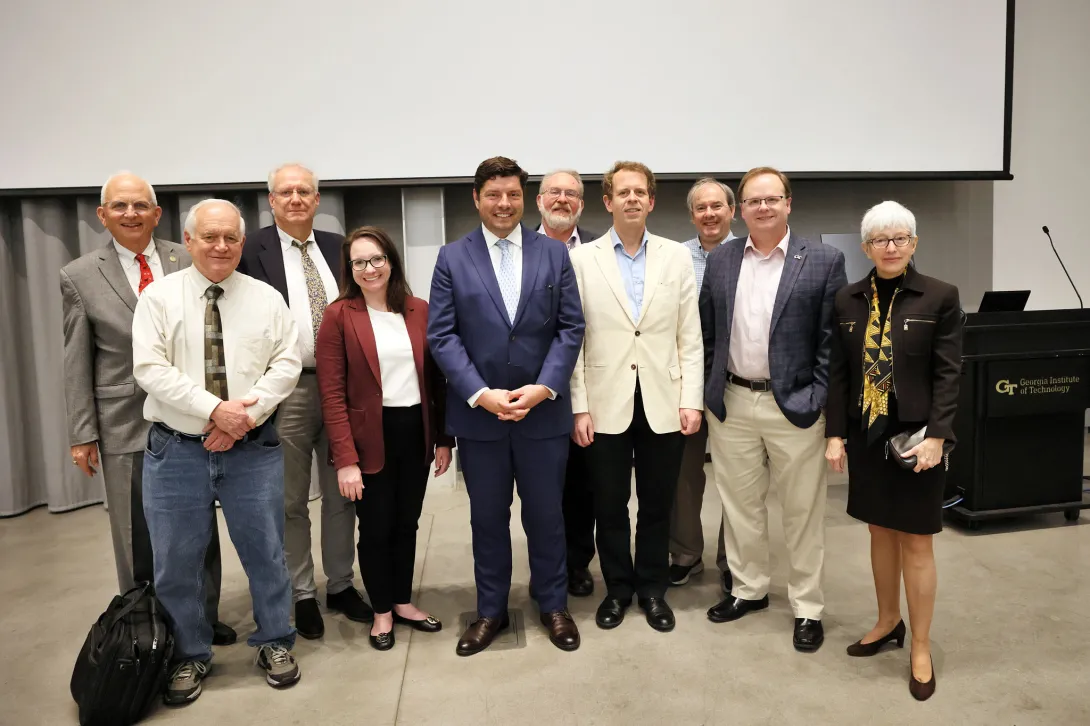
From Left to Right: Gary Black, Bo Arduengo, and Andy Bommarius (RBI Strategic Initiative Lead) from the ReWOOD Initiative, Larissa Fenn from RYAM, Andreas Villegas, President of the Georgia Forrest Association and Keynote Speaker, Chris Luettgen RBI Strategic Initiative Lead & Professor of the Practice, Carsten Sievers, RBI Strategic Initiative Lead, Matthew Realff RBI Strategic Initiative Lead, Carson Meredith RBI Executive Director, and Valerie Thomas RBI Strategic Initiative Lead.
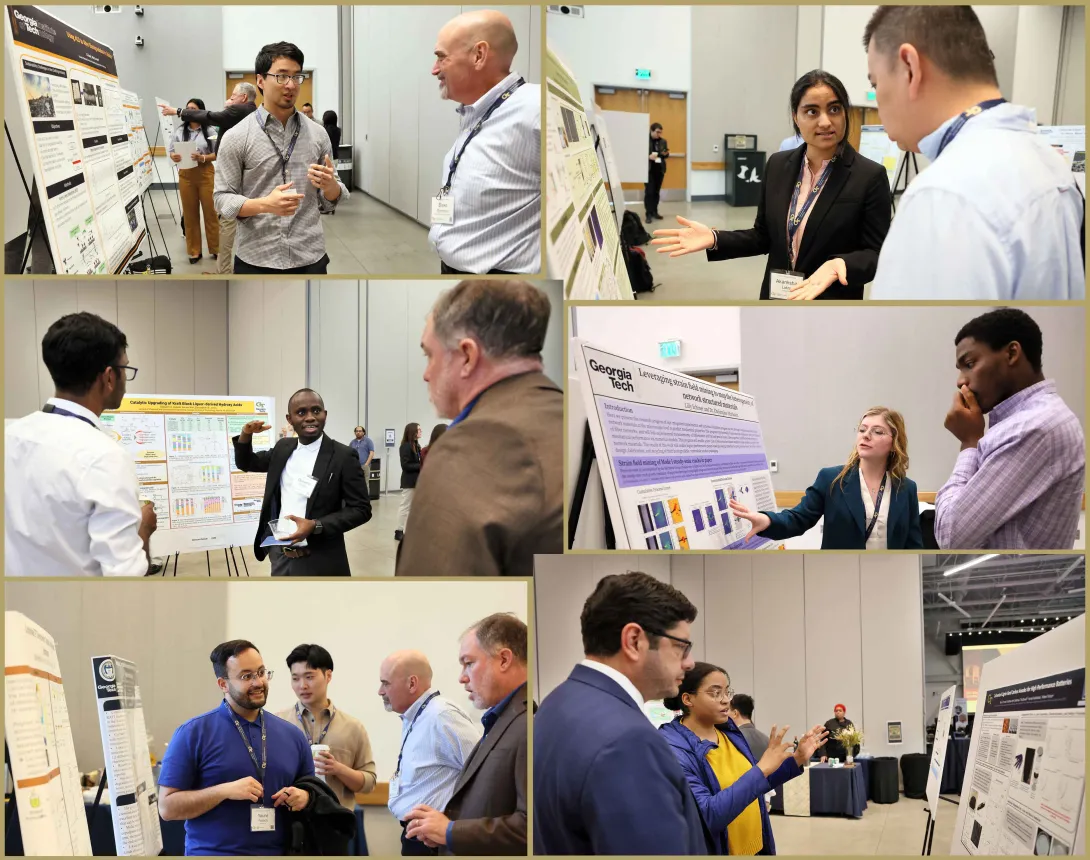
RBI Fellows Discussing Their Research with the 2024 RBI Spring Workshop Participants
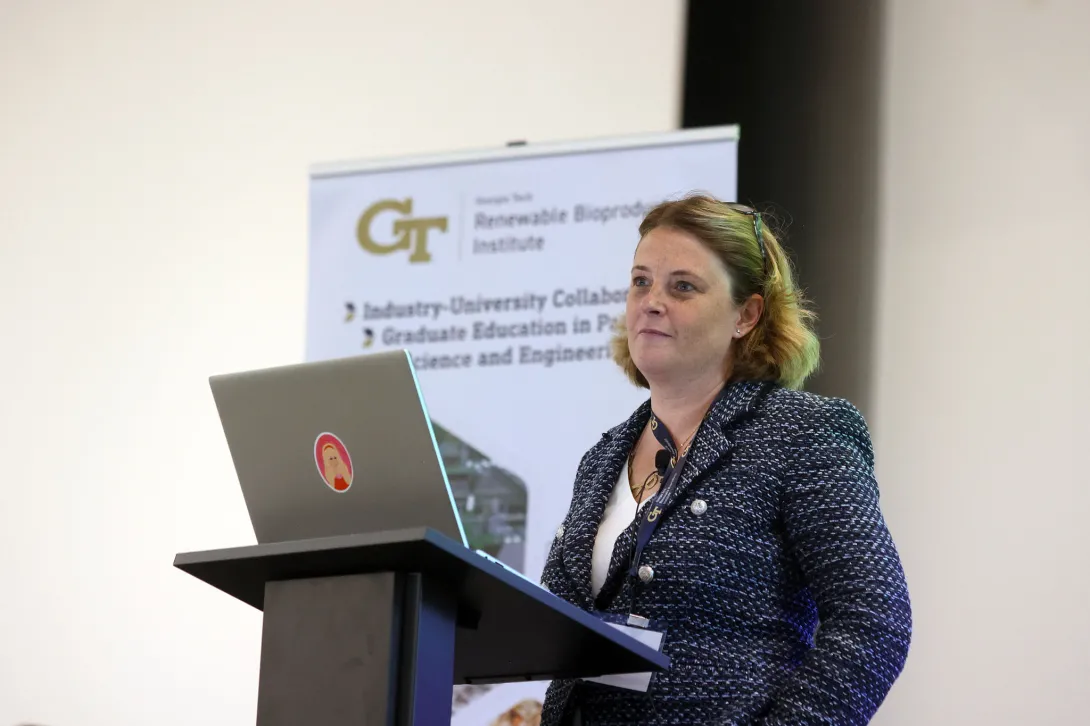
Kim Nelson, CTO of GranBio and Georgia Tech Alumnus at the 2024 RBI Spring Workshop
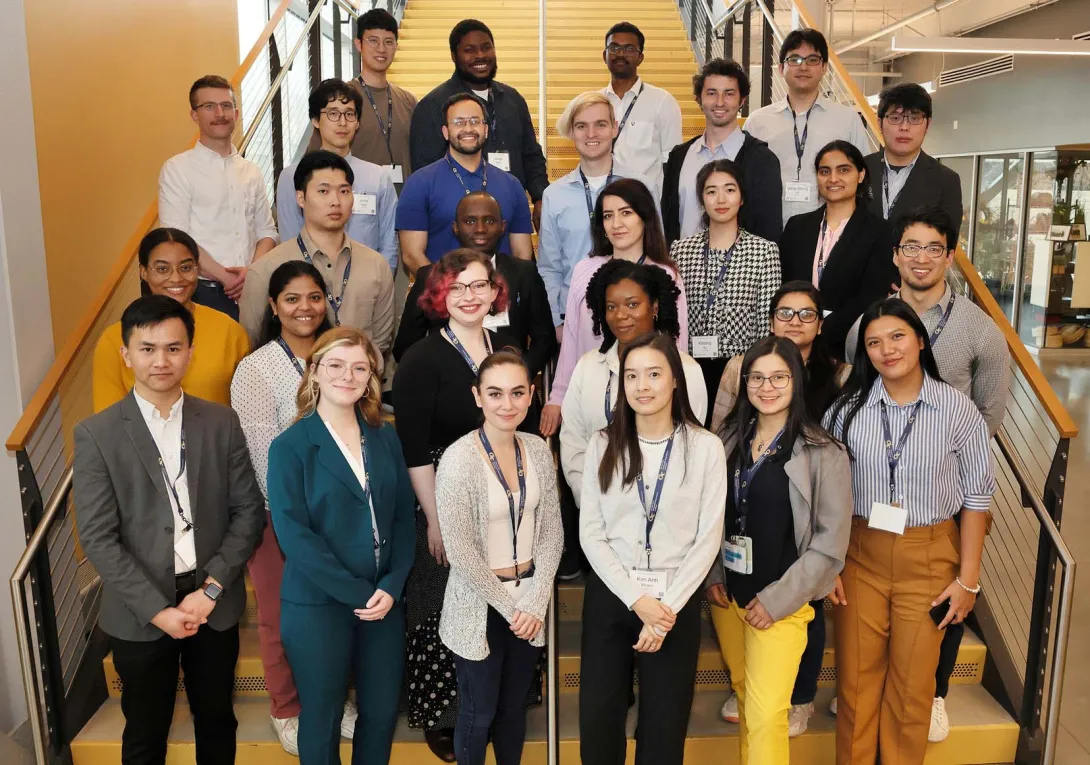
2024 RBI Student Fellows at the Workshop
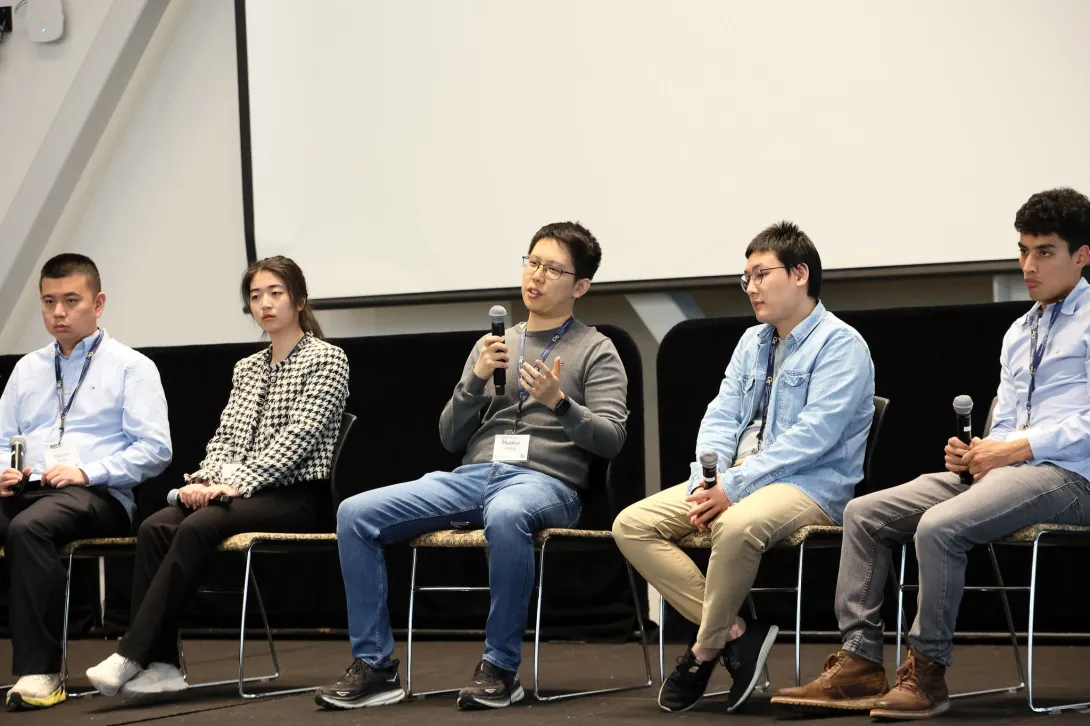
Student Panel at the RBI Spring Workshop
With the nation’s goals to net zero well underway and the world moving toward sustainable production methods, biorefineries play a crucial role in our transition to a greener future. These multifaceted facilities convert biomass into biofuels, biochemicals, and bioproducts; foster a circular economy; and reduce reliance on fossil fuels while promoting environmentally friendly industrial practices.
The Renewable Bioproducts Institute (RBI) at Georgia Tech recently hosted a workshop on the Emerging Bioeconomy and the Future of Biorefining. The event cultivated new partnerships as more than 75 attendees from academia, national laboratories, and industry shared and learned about the cutting-edge developments in the emerging field.
Carson Meredith, executive director of RBI, said, “The workshop provided an immersive experience for the attendees with access to knowledge, opportunities to network, and a platform for collaboration to positively impact their understanding and involvement in this rapidly evolving field. I saw a lot of human connections being made, a lot of people shaking hands, and having conversations off to the side. That’s exactly why we hold such workshops — to exchange ideas within the Institute as well as between researchers in universities, industry, and national labs.”
The program started with a keynote by B. Frank Gupton, professor of chemical and life science engineering at Virginia Commonwealth University, on creating resilient national supply chains for essential medicines and the need for waste reduction through process chemistry improvements to reduce the carbon footprint in the pharmaceutical industry.
Various presentations from RBI’s research faculty demonstrated the depth of research in the field of bioeconomy and biorefineries. Topics included integrated biorefining processes by multicomponent separations and catalytic conversion, lignin-derived phenol as the new platform of biorefineries, catalytic conversion of organic acids, data-driven biorefinery process control, hot topics in lifecycle assessment, and more.
A highlight of the annual workshop was the student poster session that showcased the diversity of research happening in the renewable bioproducts field. Over 25 RBI Fellows, spanning chemical and biomolecular engineering, mechanical engineering, materials science and engineering, civil and environmental engineering, and chemistry and biochemistry presented their research to a highly engaged audience.
Andreas Villegas, president of the Georgia Forestry Association and the dinner keynote speaker, addressed the need for educating the community about working forests and their potential to create carbon-neutral products and reduce greenhouse gas emissions. Working forests in the state of Georgia are managed with a growth-over-harvest-rate of 50% and are a natural solution to the major challenges in sustainable forests and communities.
Blake Simmons, keynote speaker from the Lawrence Berkeley National Laboratory, discussed the importance of intellectual property models and licensing technology models that will allow companies to access new processes emerging in the field.
Mi Li, assistant professor of biorefinery and sustainable materials from the University of Tennessee, presented his research on the modification of plant cell walls, while Bronson P. Bollock, professor of forest biometrics and quantitative timber management at the University of Georgia, presented the current issues and factors in the quantification of forest biomass feedstocks.
Kim Nelson, the chief technology officer of GranBio, addressed the opportunities and challenges in meeting the global demand for sustainable aviation fuel (SAF) and low-carbon bioproducts. Nelson presented GranBio’s patented AVAP technology that uses woody biomass to produce SAF, renewable diesel, electricity, and other byproducts like BioPlus nanocellulose for tires in the process.
“At this moment, there is a tremendous federal, state, and industrial focus on developing the U.S. bioeconomy,” Meredith said. “RBI's vision is that pulp producers and users of wood extractives and byproducts have an opportunity to develop higher margin products from woody biomass residues, including plastics, pharmaceuticals, and fuels, without disrupting current paper and lumber markets. Traditional petrochemical producers of these products have an opportunity to substitute more carbon-neutral sources as feedstocks. Our workshop sought a conversation around the opportunities and challenges from feedstock to the marketplace.
News Contact
Priya Devarajan || RBI Communications Program Manager
Apr. 03, 2024

Georgia Tech Launches Quadrant-i, a New Unit to Enhance Research Commercialization
Georgia Tech's Office of Commercialization introduces Quadrant-i, a new unit dedicated to helping faculty, researchers, and students translate their research into startups.
The name is inspired by Pasteur’s quadrant in the Daniel Stokes innovation-impact model and will emphasize the translation of deep scientific research into products. (See more information about Pasteur’s quadrant here.)
Quadrant-i will join the other units in commercialization — the Office of Technology Licensing, VentureLab, and CREATE-X — in making Georgia Tech the premier campus for startups and commercialization.
“As we grow our efforts toward delivering impact through commercialization, creating a unit that is solely focused on helping our faculty, students, and researchers launch startups based on their research is essential,” said Raghupathy “Siva” Sivakumar, vice president of Commercialization and chief commercialization officer.
The functions of Quadrant-i have historically been supported by VentureLab, a national leader in entrepreneurship training and research. The reorganization will also allow VentureLab to amplify its impact in making Georgia Tech a thought leader for entrepreneurship.
Quadrant-i will be a comprehensive resource for the thriving research community on campus, facilitating the journey from innovations to impact. The unit will offer programs, resources, and services tailored to expedite and enhance the commercialization process, including:
- Advocating for policy changes and incentive structures to foster a culture of impact.
- Securing non-dilutive grant funding.
- Navigating conflicts of interest to maintain research integrity.
- Providing mentorship on the business aspects of innovation.
- Interfacing with customers, investors, and mentors.
- Launching startups with essential resources and support.
A search is currently underway for a director, who will report to Sivakumar.
The Office of Commercialization invites faculty, researchers, students, investors, mentors, industry leaders, and innovators to collaborate with Quadrant-i and learn more about its programs and services.
For more information, visit: commercialization.gatech.edu/quadrant-i
News Contact
Lacey Cameron, Marketing Manager
lacey.cameron@gatech.edu
News Contact
Lacey Cameron
Marketing Communications Manager