
Oct. 21, 2024
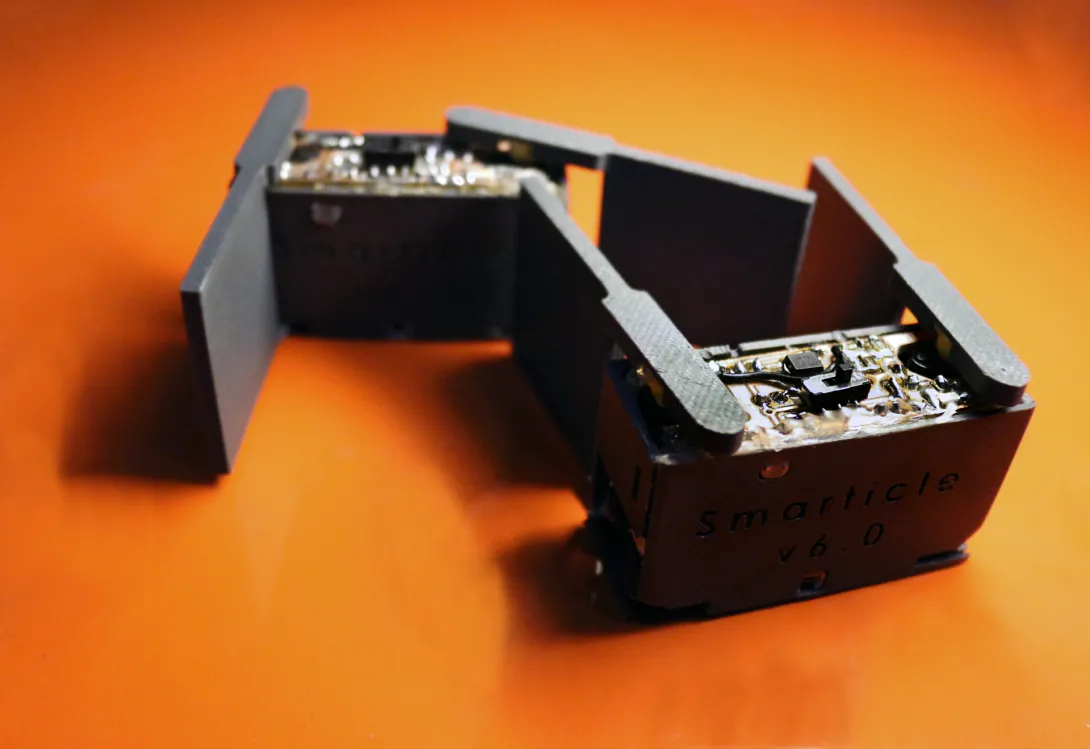
A pair of Smarticle robots from the lab of Prof. Dan Goldman. Earlier research from his group observed the arise of order in active matter from the physics of low rattling. (Photo Credit: Christa M. Ernst)
If you’ve ever watched a large flock of birds on the wing, moving across the sky like a cloud with various shapes and directional changes appearing from seeming chaos, or the maneuvers of an ant colony forming bridges and rafts to escape floods, you’ve been observing what scientists call self-organization. What may not be as obvious is that self-organization occurs throughout the natural world, including bacterial colonies, protein complexes, and hybrid materials. Understanding and predicting self-organization, especially in systems that are out of equilibrium, like living things, is an enduring goal of statistical physics.
This goal is the motivation behind a recently introduced principle of physics called rattling, which posits that systems with sufficiently “messy” dynamics organize into what researchers refer to as low rattling states. Although the principle has proved accurate for systems of robot swarms, it has been too vague to be more broadly tested, and it has been unclear exactly why it works and to what other systems it should apply.
Dana Randall, a professor in the School of Computer Science, and Jacob Calvert, a postdoctoral fellow at the Institute for Data Engineering and Science, have formulated a theory of rattling that answers these fundamental questions. Their paper, “A Local-Global Principle for Nonequilibrium Steady States,” published last week in Proceedings of the National Academy of Sciences, characterizes how rattling is related to the amount of time that a system spends in a state. Their theory further identifies the classes of systems for which rattling explains self-organization.
When we first heard about rattling from physicists, it was very hard to believe it could be true. Our work grew out of a desire to understand it ourselves. We found that the idea at its core is surprisingly simple and holds even more broadly than the physicists guessed.
Dana Randall Professor, School of Computer Science & Adjunct Professor, School of Mathematics
Georgia Institute of Technology
Beyond its basic scientific importance, the work can be put to immediate use to analyze models of phenomena across scientific domains. Additionally, experimentalists seeking organization within a nonequilibrium system may be able to induce low rattling states to achieve their desired goal. The duo thinks the work will be valuable in designing microparticles, robotic swarms, and new materials. It may also provide new ways to analyze and predict collective behaviors in biological systems at the micro and nanoscale.
The preceding material is based on work supported by the Army Research Office under award ARO MURI Award W911NF-19-1-0233 and by the National Science Foundation under grant CCF-2106687. Any opinions, findings, and conclusions or recommendations expressed in this material are those of the authors and do not necessarily reflect the views of the sponsoring agencies.
Jacob Calvert and Dana Randall. A local-global principle for nonequilibrium steady states. Proceedings of the National Academy of Sciences, 121(42):e2411731121, 2024.
Oct. 16, 2024
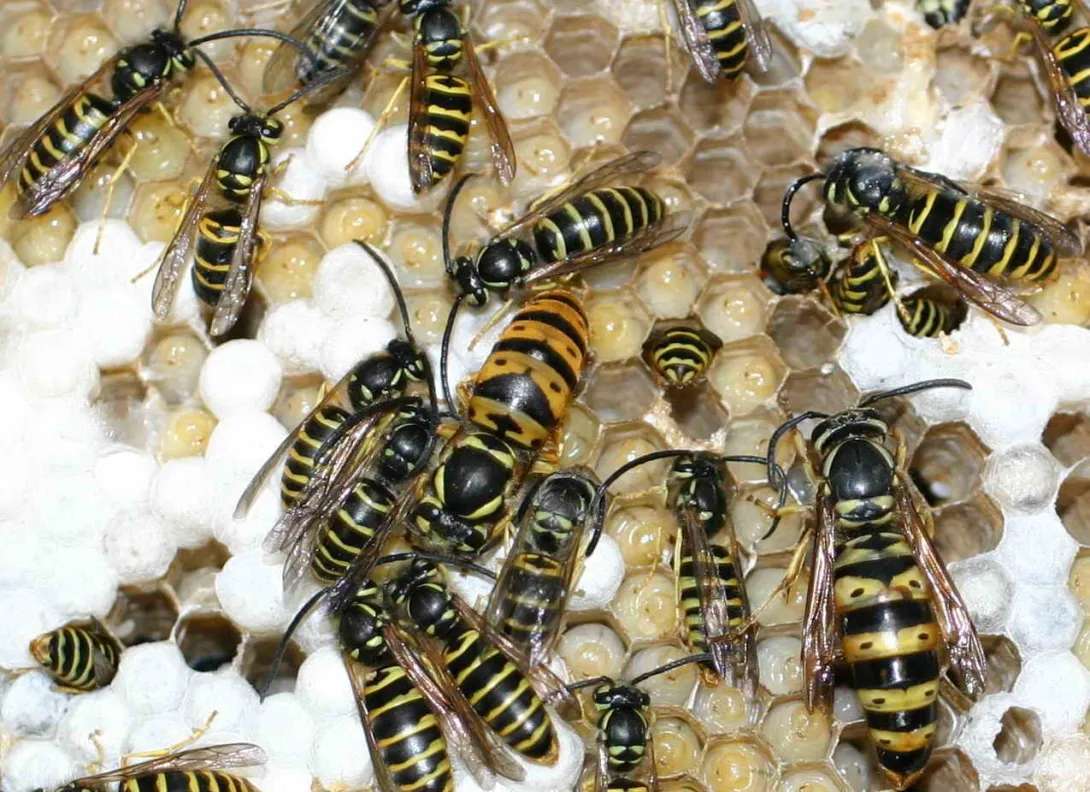
The most recognizable yellow jacket at Georgia Tech is made of fabric and foam, but Professor Mike Goodisman and a team of researchers revealed a far more complex cellular structure by successfully sequencing the genome of two local species of yellow jacket wasps — Vespula squamosa (the southern yellow jacket) and Vespula maculifrons (the eastern yellow jacket).
Having the genome sequences of yellow jacket wasps expands biologists' understanding of the behaviors and evolution of social insects, including the intricacies of the caste system made up of queens, males, and workers.
"The genome is fundamental for a lot of questions that we ask," Goodisman said.
The research, published in Annals of the Entomological Society of America, identifies rates of gene evolution among the different species, which Goodisman says could offer explanations for the various roles each wasp plays in their colonies as well as their ability to adapt and thrive in different environments. Variations in the genomes will also help scientists dissect the interactions between the two local species.
Southern and eastern yellow jacket queens produce all caste members in the colony, and while mated queens from both species hibernate in the winter following the decline of their colonies, V. squamosa will stay in hibernation slightly longer. Southern queens then actively seek out established eastern yellow jacket nests, kill the resident queen, and take over her colony. Goodisman and his research team hope the genome provides insight into the southern queens’ parasitic behavior.
The typical colony will survive six to eight months, but in certain climates, colonies can outlast the winter months to become "supercolonies." These larger colonies take on multiple queens as they grow to the size of a couch or a car. Goodisman's team will use the genome to look for clues as to how these supercolonies thrive for multiple years and how natural selection operates in the two species.
Throughout the study, Goodisman relied on the Georgia Tech community's shared interest in the social insect to gather the necessary samples. Through ads in The Whistle and other campus publications, he collected yellow jacket wasps’ nests from faculty, staff, and alumni, in addition to samples from around the region. DNA was extracted from individual wasp samples and then sent to the University of Georgia for DNA sequencing. The resulting genomes, which are about 200 million base pairs in length, were then jointly analyzed by scientists at Georgia Tech and the University of Georgia.
“When you get the data back, you get these long sequences of the building blocks of DNA. Part of the game is putting that together like a puzzle, and then we analyze the sequence to figure out what it means,” he said.
With the genome sequenced, the team can then compare the local species to each other and all species of yellow jacket wasps worldwide. Unlike honeybees, yellow jacket wasps are not considered significant pollinators, but because their diet consists of insects and carrion, Goodisman explains that understanding their place in the ecosystems they inhabit is equally important.
He is enthused to be on a campus that shares his interest in the group of social insects known as Hymenoptera. That interest led him to study insects like fruit flies at Cornell University and fire ants at the University of Georgia before beginning his postdoctoral research on other members of the Hymenoptera order.
Now, when discussing his research with members of the Georgia Tech community, he finds himself answering one question more than any other. His response is always the same. "Because of the stinger, Buzz is anatomically female."
And while he can't definitively say which species of yellow jacket the mascot would be, Goodisman said Buzz's feisty nature would lean toward the more aggressive and charismatic southern yellow jacket, V. squamosa.
News Contact
Steven Gagliano - Institute Communications
Oct. 16, 2024
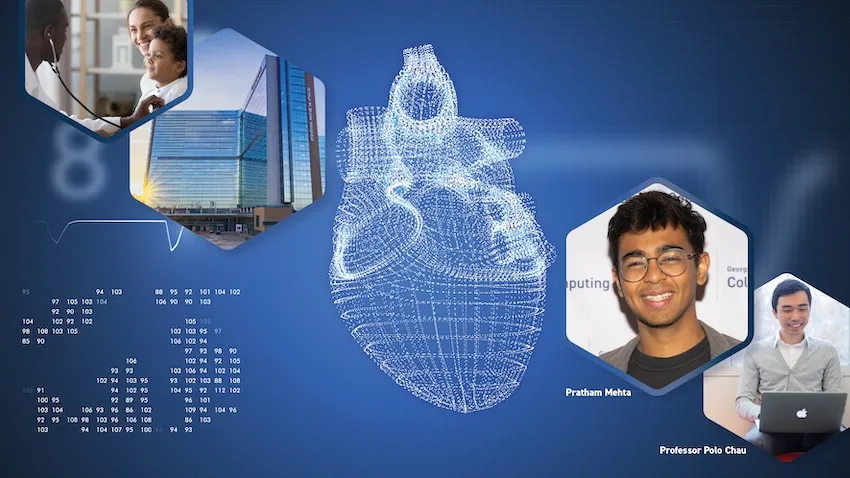
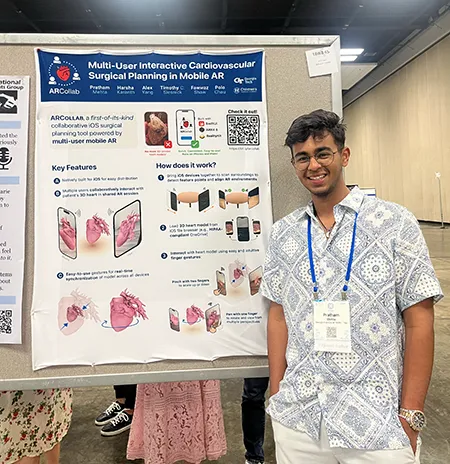
A new surgery planning tool powered by augmented reality (AR) is in development for doctors who need closer collaboration when planning heart operations. Promising results from a recent usability test have moved the platform one step closer to everyday use in hospitals worldwide.
Georgia Tech researchers partnered with medical experts from Children’s Healthcare of Atlanta (CHOA) to develop and test ARCollab. The iOS-based app leverages advanced AR technologies to let doctors collaborate together and interact with a patient’s 3D heart model when planning surgeries.
The usability evaluation demonstrates the app’s effectiveness, finding that ARCollab is easy to use and understand, fosters collaboration, and improves surgical planning.
“This tool is a step toward easier collaborative surgical planning. ARCollab could reduce the reliance on physical heart models, saving hours and even days of time while maintaining the collaborative nature of surgical planning,” said M.S. student Pratham Mehta, the app’s lead researcher.
“Not only can it benefit doctors when planning for surgery, it may also serve as a teaching tool to explain heart deformities and problems to patients.”
Two cardiologists and three cardiothoracic surgeons from CHOA tested ARCollab. The two-day study ended with the doctors taking a 14-question survey assessing the app’s usability. The survey also solicited general feedback and top features.
The Georgia Tech group determined from the open-ended feedback that:
- ARCollab enables new collaboration capabilities that are easy to use and facilitate surgical planning.
- Anchoring the model to a physical space is important for better interaction.
- Portability and real-time interaction are crucial for collaborative surgical planning.
Users rated each of the 14 questions on a 7-point Likert scale, with one being “strongly disagree” and seven being “strongly agree.” The 14 questions were organized into five categories: overall, multi-user, model viewing, model slicing, and saving and loading models.
The multi-user category attained the highest rating with an average of 6.65. This included a unanimous 7.0 rating that it was easy to identify who was controlling the heart model in ARCollab. The scores also showed it was easy for users to connect with devices, switch between viewing and slicing, and view other users’ interactions.
The model slicing category received the lowest, but formidable, average of 5.5. These questions assessed ease of use and understanding of finger gestures and usefulness to toggle slice direction.
Based on feedback, the researchers will explore adding support for remote collaboration. This would assist doctors in collaborating when not in a shared physical space. Another improvement is extending the save feature to support multiple states.
“The surgeons and cardiologists found it extremely beneficial for multiple people to be able to view the model and collaboratively interact with it in real-time,” Mehta said.
The user study took place in a CHOA classroom. CHOA also provided a 3D heart model for the test using anonymous medical imaging data. Georgia Tech’s Institutional Review Board (IRB) approved the study and the group collected data in accordance with Institute policies.
The five test participants regularly perform cardiovascular surgical procedures and are employed by CHOA.
The Georgia Tech group provided each participant with an iPad Pro with the latest iOS version and the ARCollab app installed. Using commercial devices and software meets the group’s intentions to make the tool universally available and deployable.
“We plan to continue iterating ARCollab based on the feedback from the users,” Mehta said.
“The participants suggested the addition of a ‘distance collaboration’ mode, enabling doctors to collaborate even if they are not in the same physical environment. This allows them to facilitate surgical planning sessions from home or otherwise.”
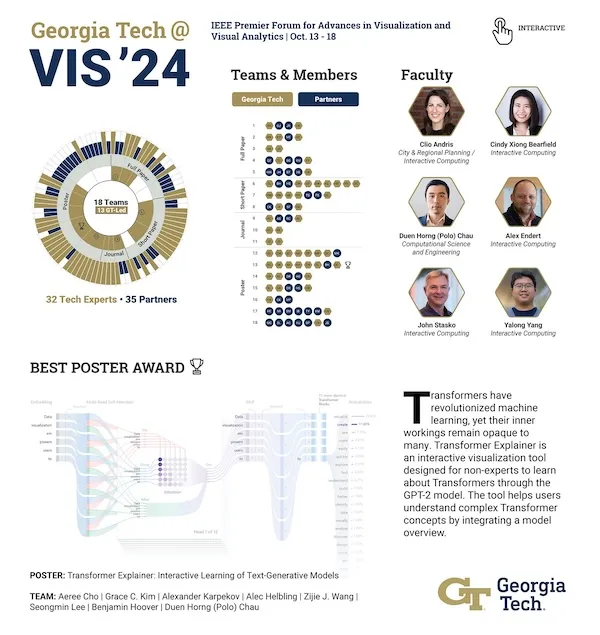
The Georgia Tech researchers are presenting ARCollab and the user study results at IEEE VIS 2024, the Institute of Electrical and Electronics Engineers (IEEE) visualization conference.
IEEE VIS is the world’s most prestigious conference for visualization research and the second-highest rated conference for computer graphics. It takes place virtually Oct. 13-18, moved from its venue in St. Pete Beach, Florida, due to Hurricane Milton.
The ARCollab research group's presentation at IEEE VIS comes months after they shared their work at the Conference on Human Factors in Computing Systems (CHI 2024).
Undergraduate student Rahul Narayanan and alumni Harsha Karanth (M.S. CS 2024) and Haoyang (Alex) Yang (CS 2022, M.S. CS 2023) co-authored the paper with Mehta. They study under Polo Chau, a professor in the School of Computational Science and Engineering.
The Georgia Tech group partnered with Dr. Timothy Slesnick and Dr. Fawwaz Shaw from CHOA on ARCollab’s development and user testing.
"I'm grateful for these opportunities since I get to showcase the team's hard work," Mehta said.
“I can meet other like-minded researchers and students who share these interests in visualization and human-computer interaction. There is no better form of learning.”
News Contact
Bryant Wine, Communications Officer
bryant.wine@cc.gatech.edu
Oct. 15, 2024
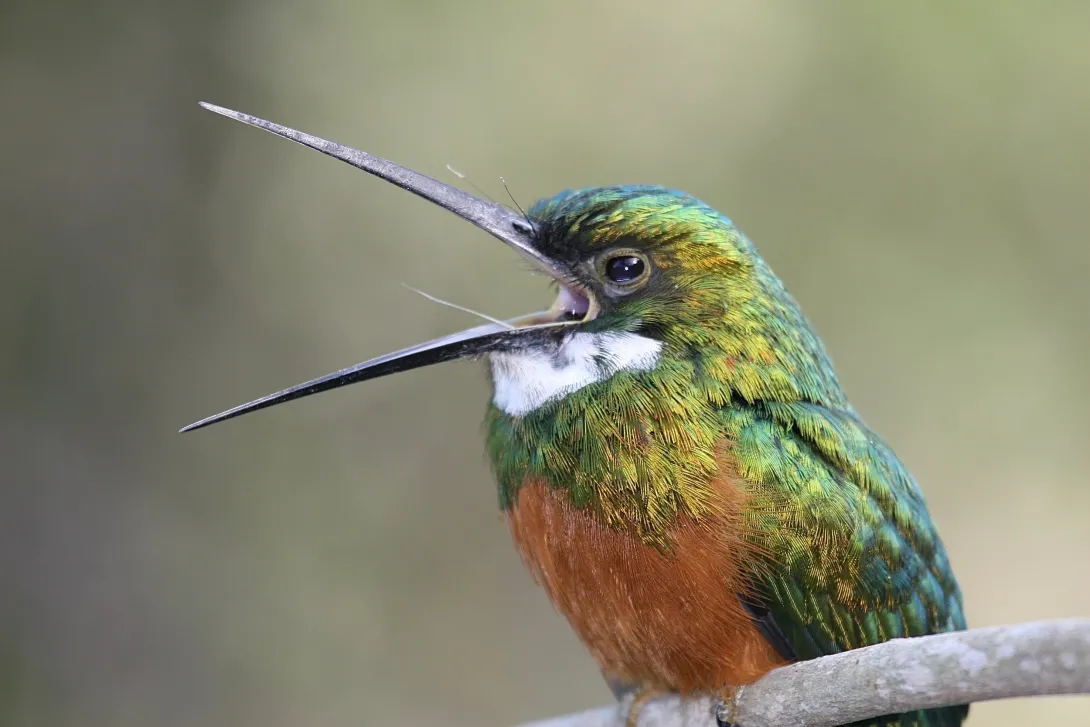
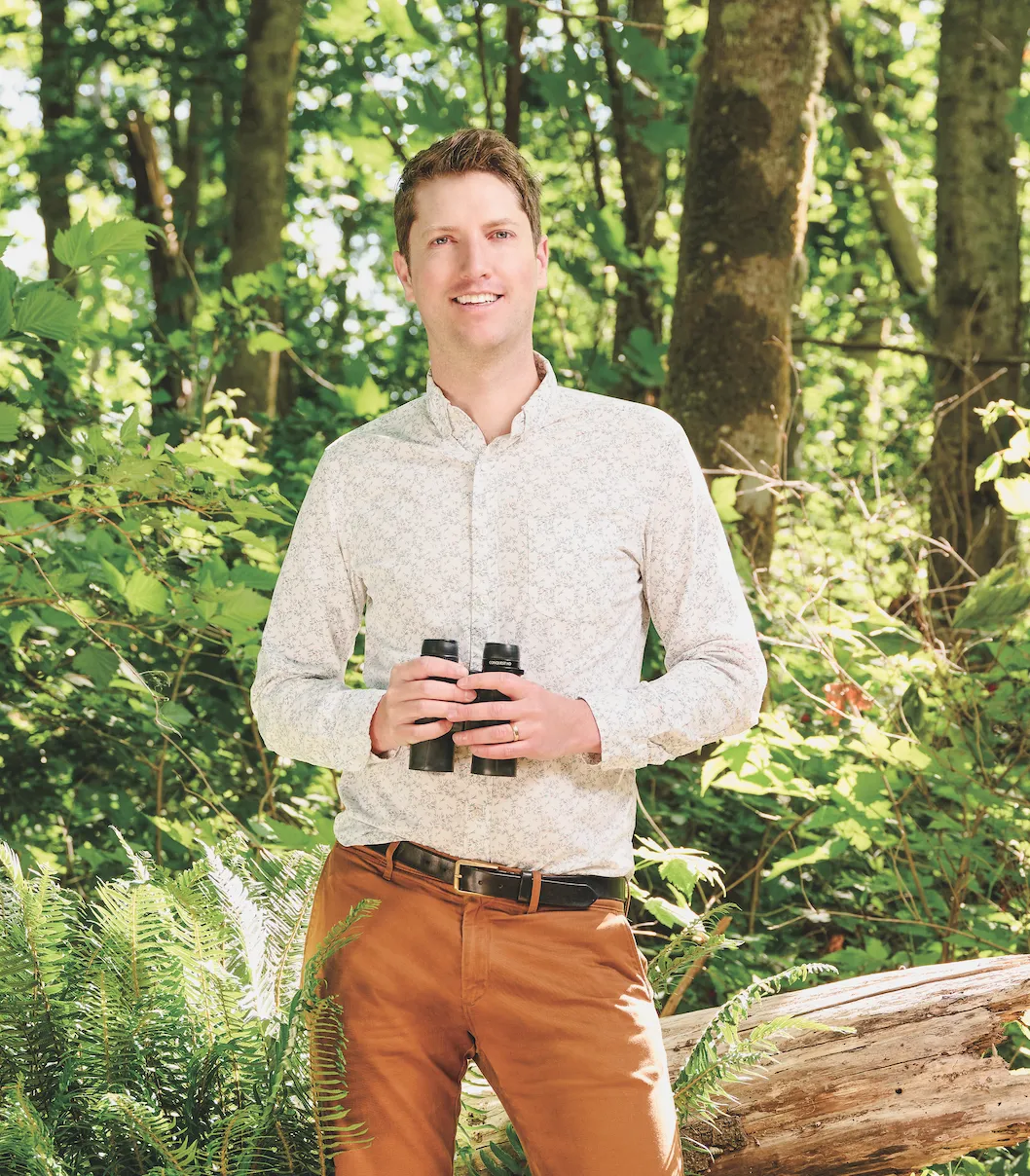
Benjamin Freeman has been named a 2024 Packard Fellow for groundbreaking research in climate change and bird ecology. Freeman, an assistant professor in the School of Biological Sciences, will receive $875,000 to fund his work.
“From all of us in Biological Sciences, we’re thrilled to see Ben Freeman named a Packard Fellow,” says School Chair Jeffrey (Todd) Streelman. “Ben’s research is important, compelling, and creative — a triple-threat combination that justifies this recognition.”
Awarded annually to only 20 individuals by the David and Lucile Packard Foundation, Packard Fellows are known for pursuing cutting-edge research, never-before-done projects, and ambitious goals.
“These scientists and engineers are the architects of tomorrow, leading innovation with bold ideas and unyielding determination,” shares Nancy Lindborg, President and Chief Executive Officer of the Packard Foundation. “Their work today will be the foundation for the breakthroughs of the future, inspiring the next wave of discovery and invention.”
“I'm flabbergasted to receive this prestigious award,” says Freeman. “Packard support will be transformative. It will give me the freedom to do the sorts of risky projects that I've dreamed about, and will support the intense fieldwork that I'm convinced is necessary to understand big questions in climate change ecology.”
The Packard funding will support Freemans most ambitious project to date: developing “Tech Mountain” in the tropics, a long-term field project focused on surveying thousands of individual birds. From mountain slope to summit, he will track their motions, their nests and predators, where they live, eat, move, and die — and how this changes as temperatures warm.
The pioneer study will shape a window into how birds and other organisms are responding to our changing climate, while developing technology and methodology that could revolutionize the fields of ecology and biology.
The escalator to extinction
Freeman’s previous research has shown that, in general, birds are moving to higher elevations as our climate changes.
“I found that as it's gotten warmer in the tropics, it's set in motion what I call an escalator to extinction,” he explains. “Birds are living at higher and higher elevations, and those that were common on a mountain top when I was a toddler in Peru are now gone from that mountain.”
While this previous research has shown that tropical birds are on this escalator, it hasn’t been possible to determine the specifics: which birds might be most vulnerable and what the key stressors are.
Freeman explains that “Tech Mountain” will be a first-of-its-kind field site, equipped with innovative sensors and trackers — think cameras placed on nets, recording equipment, climatic sensors, and small individual trackers on each bird.
“I want to figure out what drives their birth rates, where they're dying, and where they're moving during the course of their life,” he shares. “That will help us unravel how this escalator to extinction works.”
Building ‘Tech Mountain’
Several thousand meters tall, encompassing lowland rainforest, foothill rainforest, and cloud forest, Freeman’s field site will feature dense vegetation, steep grades, and encompass several different climatic zones — each with unique species.
Along its slopes, Freeman’s team will find, catch, mark, and follow the lives of thousands of individual birds across hundreds of species — for a minimum of five years, but potentially for decades. It’s never been done before.
Currently, most GPS trackers are too large for small birds, and smaller trackers capture limited information. Additionally, these smaller trackers cannot wirelessly transfer data — in order to download and access the data, each bird must be recaptured.
“The conditions are tough. It’s rugged. It’s humid. It’s cloudy and wet. We’ll need to put resources into developing technology that fits our needs, and experiment with different ways of tracking individuals in these difficult conditions,” Freeman says.
Freeman will also leverage eBird, an online hub where community scientists can upload their observations. “Millions upon millions of observations are uploaded by community scientists, citizen scientists, birders — people,” he adds. “And using this data, we can estimate the vulnerability of mountain bird species — which species seem to be shrinking their ranges and declining in abundance.”
This builds on Freeman’s current work creating the Mountain Bird Network, which supports community scientists in conducting bird surveys on their local mountains.
Georgia Tech and global connections
Freeman’s tools and methodologies could revolutionize fieldwork for ecologists and biologists, opening the door for rigorous new field studies.
It will also provide opportunities to deepen collaborations abroad. “I'm planning on working closely with Dr. Elisa Bonaccorso's lab at the University of San Francisco, Quito (USFQ Ecuador),” Freeman says, “and I’m looking forward to that collaboration. The Packard funding will also support work in Ecuador conducted by an Ecuadorian graduate student who is studying at Georgia Tech.”
Throughout the research, students will be at the heart of the projects. “I take mentoring scientists very seriously,” Freeman shares. “Undergraduates will have the opportunity to get involved on the biology side of this research, the computational side, and on the engineering side of the research. They’ll even help develop new tracking technologies.
The Packard Fellowship will not only support my research — but help me provide these opportunities in the coming years to Georgia Tech’s future scientists.”
News Contact
Written by Selena Langner
Contact: Jess Hunt-Ralston
Oct. 15, 2024
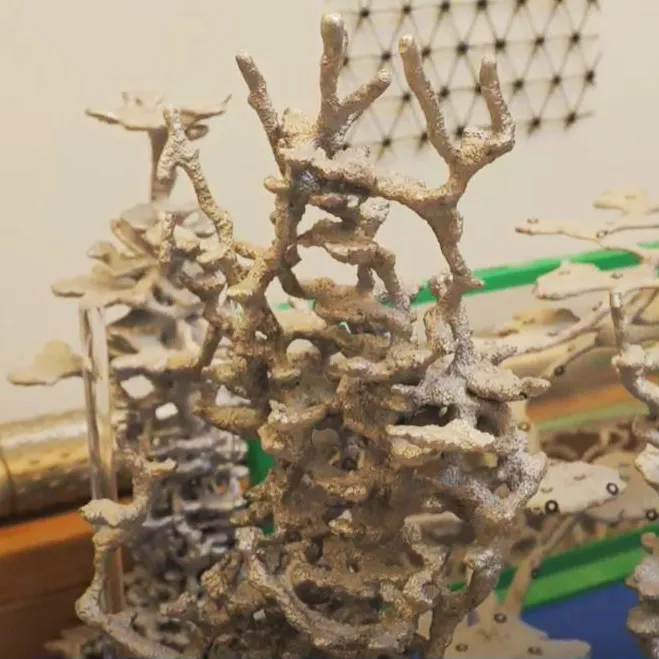
Ant hill cast in molten aluminum to show intricate underground structure of tunnels and chambers, much like the branches of coral.
- Written by Benjamin Wright -
Nature doesn’t waste energy, and nature finds ways to adapt to a changing world. Understanding those two principles led David Frost to his interest in bio-inspired design. Frost, the Elizabeth and Bill Higginbotham Professor in Georgia Tech’s School of Civil and Environmental Engineering, has spent the last dozen years searching for ways to use nature’s efficiency and ingenuity to improve the civil engineering field. His efforts are paying off. In the last year alone, research from his lab has resulted in multiple patent filings, licensing agreements, and product launches — all of which take their inspiration from the biological world.
Many of those research projects have been the subjects of doctoral research by Frost’s students, with support and advisement from Michael Helms, co-director of Georgia Tech’s Center for Biologically Inspired Design (CBID) and the Brook Byers Institute for Sustainable Systems lead for biologically inspired design. The CBID mandate is to encourage researchers to find inspiration in the biological world, where design solutions have been in development for three-and-a-half billion years as life has on Earth has evolved. Building on the concept that nature isn’t wasteful, one of the goals of bio-inspired design is to develop products that are both energy and materially efficient, and therefore more sustainable.
As the subsurface exploration and excavation thrust leader for the National Science Foundation (NSF) Center for Bio-mediated and Bio-inspired Geotechnics (CBBG), Frost focuses on what’s going on below the planet’s surface. His inspiration comes from things like tree roots, earthworms, spider webs, and ant colonies. In fact, ants are what first got him interested in bio-inspired design.
“There are many organism systems that have not been thought of as necessarily the most intelligent systems. But in fact, they are following a set of rules, approaches, or guidelines and are producing things that, in the end, are both energy- and resource-efficient and adaptive,” said Frost. “One of these is ant colonies. We see the hills above ground, but what’s going on below the ground, with the tunnels and chambers, is fascinating.”
Early in his time with CBBG, Frost came across a Florida artist who made metal castings of ant colony structures. Frost acquired some, made more castings of his own, and then built digital models of ant colonies to understand how the structures maintain their strength. He also studied exactly how ants build such complex structures so efficiently.
“They take advantage of capillarity, arching effects, and the strength of spirals,” explained Frost.
Ants dig by carefully and quickly probing each grain of sand or dirt, in the same way a human might test a Jenga piece, before deciding whether it can be safely removed without damaging the tunnel. As a result, ants are extremely energy efficient as they dig, continually removing the least encumbered pieces of material. Based on this information, Frost and his team are exploring ways to improve the effectiveness and energy usage of tunnel-boring machines.
Other bio-inspired projects from Frost’s research that are further along in the development process include building anchors inspired by tree roots, a ground heat-exchange system based on spirals and plant xylem, a geogrid (or stabilization mesh) design based on spiderwebs, a worm-inspired soil probe, and another probe design influenced by a vortex and centipedes that would displace a minimum amount of soil.
“I'm convinced that just about any system in nature we look at will help us think about analogs for things that, as human engineers, we’d like to do — and do better,” said Frost. “The opportunities for inspiration and improvement are endless.”
Take the Root-Inspired Ground Anchor (RIGA), for example. Anchors are an essential element in construction, stabilizing retaining walls and other foundation structures. Traditionally, anchors are straight poles inserted into the ground. Looking at tree roots, Frost wondered if there was a better way. That thought led him to inventing an anchor that can be driven into the ground and then expanded under the surface, similar to the structure of tree roots. The expandable anchor improves load capacity by up to 75% and is about two-thirds as long as a conventional anchor. After years of refinement, the device has been patented, licensed, and is the basis of a startup founded by Ph.D. student John Huntoon.
Frost takes the most pride in the real-world impact of his bio-inspired designs. Since 2023, Georgia Tech has filed, or is in the process of filing, utility patents for five of them. Like the RIGA system, those patents will be available for licensing for commercial use. Companies have already contacted Frost about his heat-exchange and geogrid concepts.
“Civil engineering doesn’t traditionally have a culture of patent-producing research,” noted Frost. “It’s exciting to see these filings and how they can generate energy and enthusiasm for studying natural systems and using what we learn to improve the world. Practical application has always been very important to me.”
Frost is finding that practical application also appeals to the next generation of civil engineers — specifically K-12 students interested in the profession who tour the CBID affiliated labs on campus. The students study nature’s designs and figure out how to apply them, rather than learn traditional construction methods.
“Ants, spiders, and worms are immediately relatable for middle- and high-school students,” Frost said. “They think engineering is all math and science, and that doesn’t sound fun to them. Instead, we show them they can be inspired by anything and then use that to make it about conservation and adaptation and energy minimization. Those are things they are interested in.”
Frost is hopeful that the students of today and tomorrow will continue to take inspiration from nature, enabling humans to adapt to a changing world as effectively as nature has.
News Contact
Brent Verrill, Research Communications Program Manager, BBISS
Oct. 03, 2024
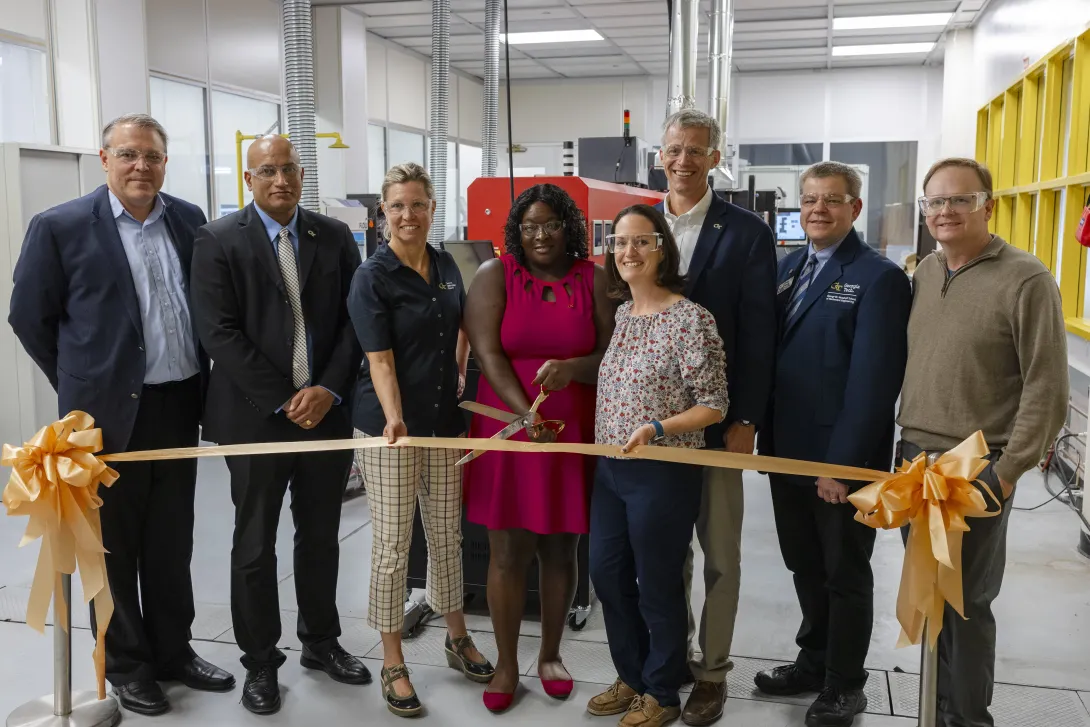
Partners of the facility gathered for an official ribbon cutting ceremony. From left to right: Eric Vogel, Hightower Professor in MSE, and executive director for the Institute for Matter and Systems; Devesh Ranjan, Eugene C. Gwaltney, Jr. school chair and professor in the George W. Woodruff School of Mechanical Engineering; Julia Kubanek, Vice President of Interdisciplinary Research; Tequila Harris, professor in the Woodruff School and facility leader; Christine Conwell, interim executive director for the Strategic Energy Institute; Tim Liewen, interim executive vice president for Research; Thomas Kurfess, Regent's Professor in the Woodruff School and executive director of the Georgia Tech Manufacturing Institute; J. Carson Meredith, professor and James Preston Harris Faculty Fellow in the School of Chemical and Biomolecular Engineering, executive director of the Renewable Bioproducts Institute. Photo: Christopher McKenney.
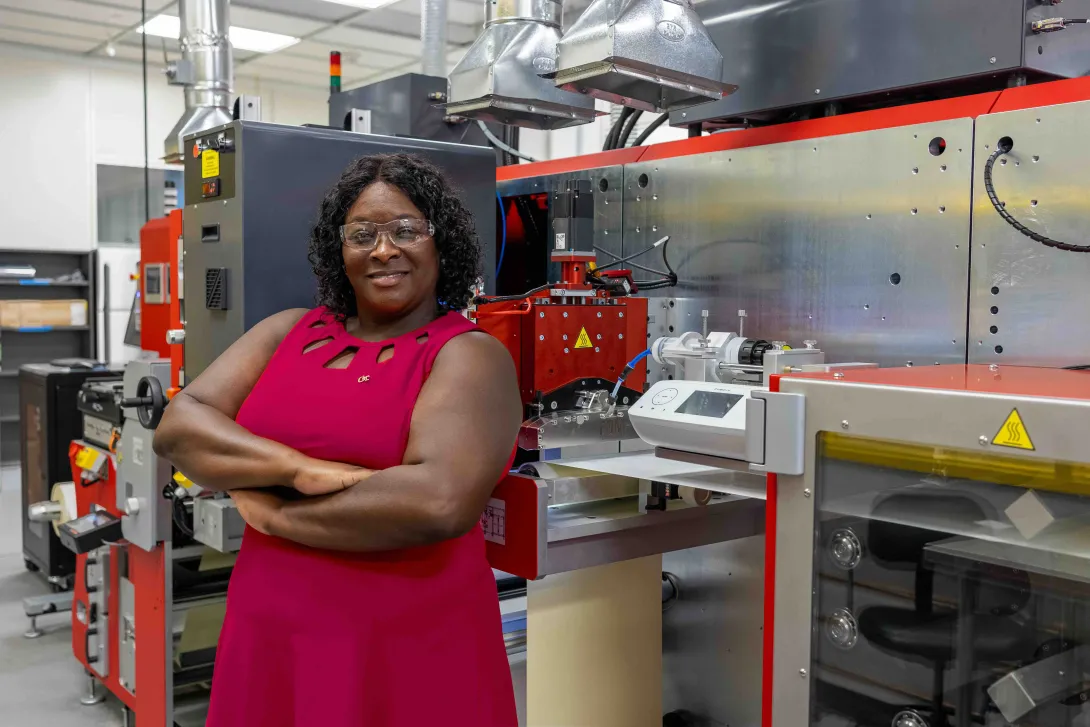
Tequila Harris, professor in the George W. Woodruff School of Mechanical Engineering, next to the modular R2R equipment. Photo: Christopher McKenney.
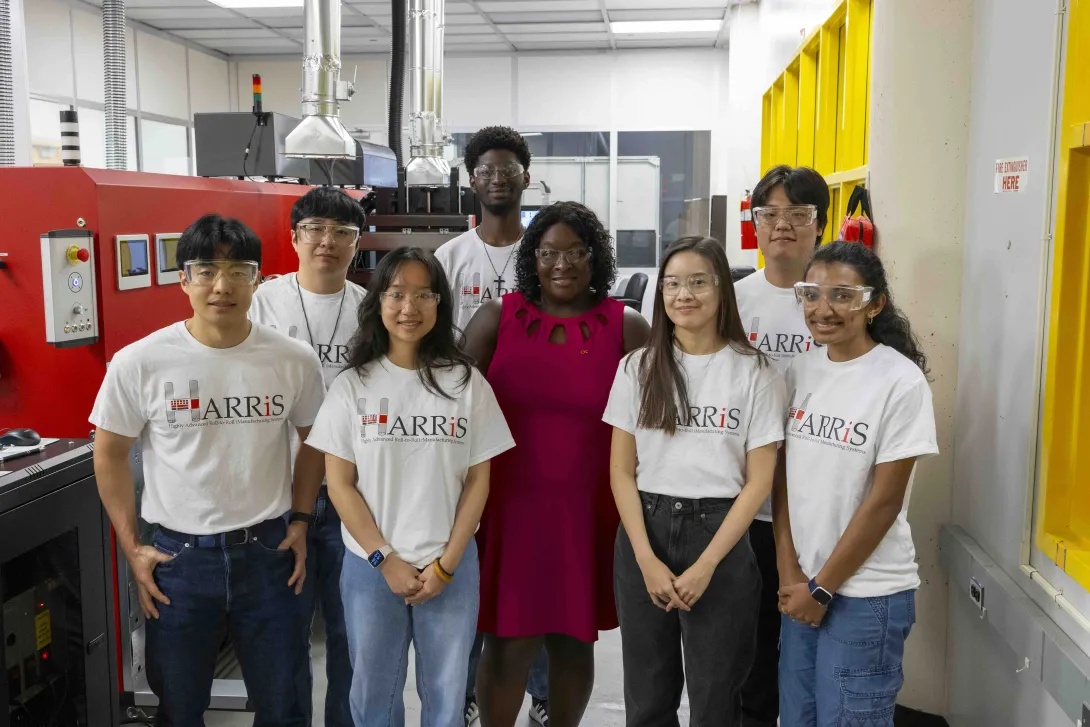
The Highly Advanced Roll-to-Roll iManufacturing Systems (HARRiS) research group in the new R2R facility. Photo: Christopher McKenney.
Whether it’s developing new products, reducing costs, or increasing accessibility, innovations in manufacturing stand to improve the lives of companies and consumers alike. Georgia Tech recently took another step toward ensuring those innovations make it from lab to market with the launch of a Modular Pilot Scale Roll-to-Roll Manufacturing Facility.
“As researchers develop new materials, one of the key aspects we’re missing is how to make them at scale. This is a major oversight because if we can’t make them at scale, we can’t transition from basic research to commercialization,” said Tequila Harris, a professor in the George W. Woodruff School of Mechanical Engineering. “With this new facility, we can prove our discoveries beyond lab-scale studies — and can go from materials innovation to product development at scale.”
Led by Harris, the new facility is the result of a partnership between the Georgia Tech Manufacturing Institute(GTMI), the Strategic Energy Institute, and the Woodruff School. As a pilot facility, it will serve as a testbed for scaling up manufacturing research open for Georgia Tech researchers as well as academic, government, and industry partners around the world.
“The larger vision I see at Georgia Tech involves innovation in manufacturing for large-scale industries,” said Georgia Tech’s Interim Executive Vice President for Research Tim Lieuwen at the facility’s unveiling event on Sept. 19. “It’s crucial that we’re innovating in basic science and technology, but we also need to be innovating in large-scale manufacturing.”
Roll-to-roll (R2R) manufacturing transforms flexible rolls of substrate materials, such as paper, metal foils, and plastics, into more complex, transportable rolls upon coating the surface with one or more fluids, such as inks, suspensions, and solutions, which are subsequently dried or cured on the base substrate. Its high yield and efficiency make R2R an ideal method for the sustainable, large-scale production of components for solar cells, batteries, flexible electronics, and separations — all industries that have expanded in Georgia in recent years.
“As a state institution, we’re ultimately here to serve our state,” said Lieuwen, who is also Regents’ Professor and David S. Lewis Jr. Chair in the Daniel Guggenheim School of Aerospace Engineering. “We’re seeing Georgia emerge as the national leader in terms of recruiting corporate investments in this space and in industries that will be served by this facility.”
Roll-to-Roll Innovations
The R2R process is similar to the production of newspapers, where a large roll of blank paper goes through a series of rollers printing text and photos. “The roll-to-roll aspect is the process of using a specialized tool to force fluid onto a moving surface,” says Harris. It’s one of the fastest-growing methods for producing thin film materials — photovoltaics used in solar cells, transistors in flexible electronics, and micro-batteries, for example — at a large scale.
Harris’s group works to develop novel manufacturing tools, with a particular focus on understanding and improving the dynamics of thin film manufacturing to increase efficiency and minimize waste. Her group is particularly interested in slot die coating, an R2R technique where a liquid material is precisely deposited onto a substrate through a narrow slot. With the new pilot facility, researchers like Harris will be able to take their work to the next level.
“Slot die coating on a roll-to-roll can handle the broadest viscosity range of most coating methods. Therefore, you can process a lot of different materials very quickly and easily,” says Harris. “It’s one of the fastest-growing technologies in the U.S. — and currently, this is the most advanced modular pilot scale facility at an academic university in the United States.”
“Georgia Tech is way ahead of the curve in terms of our facilities,” says GTMI Executive Director and Regents’ Professor Thomas Kurfess. “This will grow our capability in the battery area, membranes, flexible electronics, and more to allow us to support the development of new technologies.”
“As technologies around cleantech continue to advance at an unprecedented pace, pilot manufacturing facilities provide a critical bridge between innovative benchtop research and commercial-scale production and manufacturing,” says Christine Conwell, interim executive director of the Strategic Energy Institute. “We are excited about the opportunities this R2R facility will provide to the Georgia Tech energy community and our industry partners.”
News Contact
Audra Davidson
Research Communications Program Manager
Georgia Tech Manufacturing Institute
Sep. 10, 2024
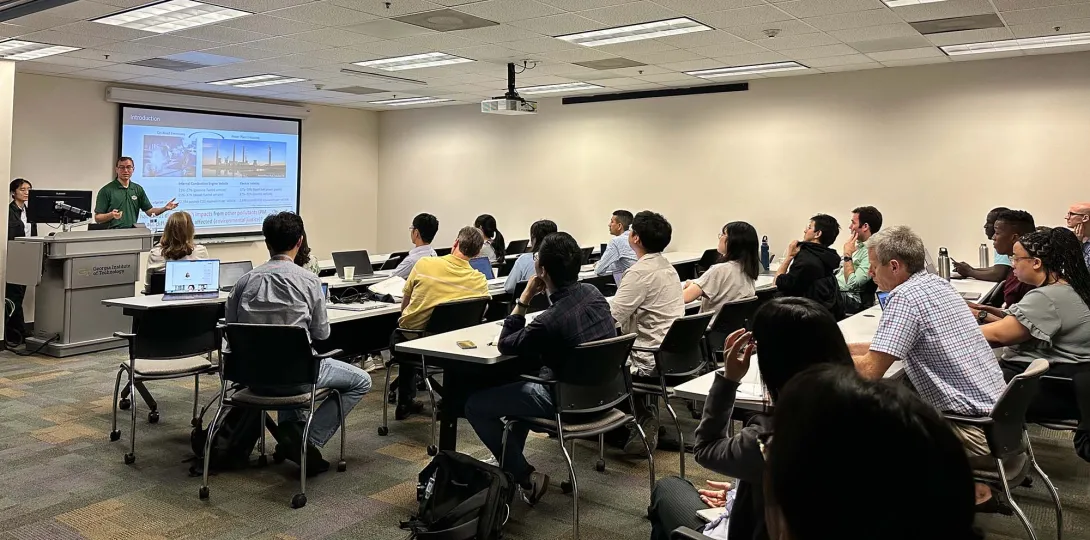
On Friday, May 10th, four Georgia Tech research teams, supported through the Energy, Policy, and Innovation Center ’s seed grant program presented their research findings to an engaged audience of fellow researchers and students.
The research teams included Georgia Tech faculty from across three colleges who presented their interdisciplinary research findings at the intersection of human health and energy systems.
The event began with a welcome address by Laura Taylor, the interim director of EPIcenter followed by EPIcenter’s director of Research Studies, Rich Simmons, who provided an overview of the vision behind the seed grant program. The seed grants were a culmination of a June 2020 workshop that invited researchers to proactively identify and mitigate new energy-health intersections and challenges by developing the knowledge to respond effectively to the interrelated challenges of public health and our current, and future energy infrastructure. The symposium included presentations from:
- Pengfei Liu, professor in the School of Earth and Atmospheric Sciences, on climate-induced air quality deterioration and its health risks in the Southeastern United States.
- Dan Molzahn, assistant professor in Electrical and Computer Engineering, and Xin Xie, professor in Civil Engineering on assessing the impacts of electric vehicle adoption and charging on air pollution and health
- Shuichi Takayama, professor in Biomedical Engineering on improving toxicology models that measure the impact of particulate matter on lung functioning to enhance energy and environmental policy-making
- Laura Taylor, on linking transit-related air pollution to health outcomes using the causal inference framework.
News Contact
Priya Devarajan || SEI Communications Program Manager
Sep. 25, 2024
Scheller Business Insights is a dynamic video series that highlights the innovative thought leadership of the esteemed faculty at the Georgia Tech Scheller College of Business. At Scheller, we are committed to exploring ideas that educate and inform others about the profound impact of business on our lives and the world.
In this episode, Beril Toktay, Regents' Professor and faculty director of the Ray C. Anderson Center for Sustainable Business, defines net zero and discusses some ways to alleviate climate change by reducing carbon emissions to the point of net zero emissions.
Globally, most major polluters, such as China, the U.S., India, and the EU, are among over 140 nations with net-zero goals, which encompasses roughly 88 percent of global emissions. Meeting the Paris Agreement's 1.5°C climate threshold requires 45 percent emissions cut by 2030 and net-zero emissions by 2050 (United Nations Climate Action).
Toktay describes ways this can be accomplished in different business sectors. For example, in the energy sectors, this means moving from fossil fuels to renewable technologies, and in the transportation sector, moving to electrification and innovative battery technologies as well as developing the infrastructure to support these initiatives. These efforts help move businesses towards achieving net zero as well as providing cleaner air and water, and better health outcomes to the global population.
Listen as Toktay discusses what net zero means, the importance of getting to net zero, and how businesses can help reduce carbon emissions.
News Contact
Lorrie Burroughs
Sep. 25, 2024
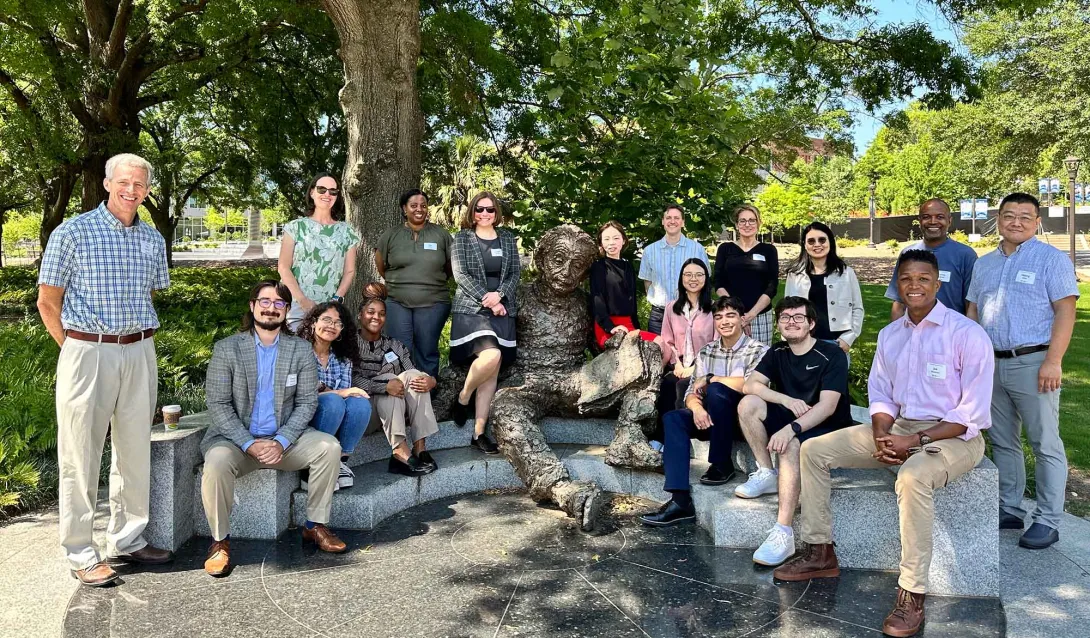
2024 Cohort of the Strategic Energy Institute Summer External Faculty Fellows
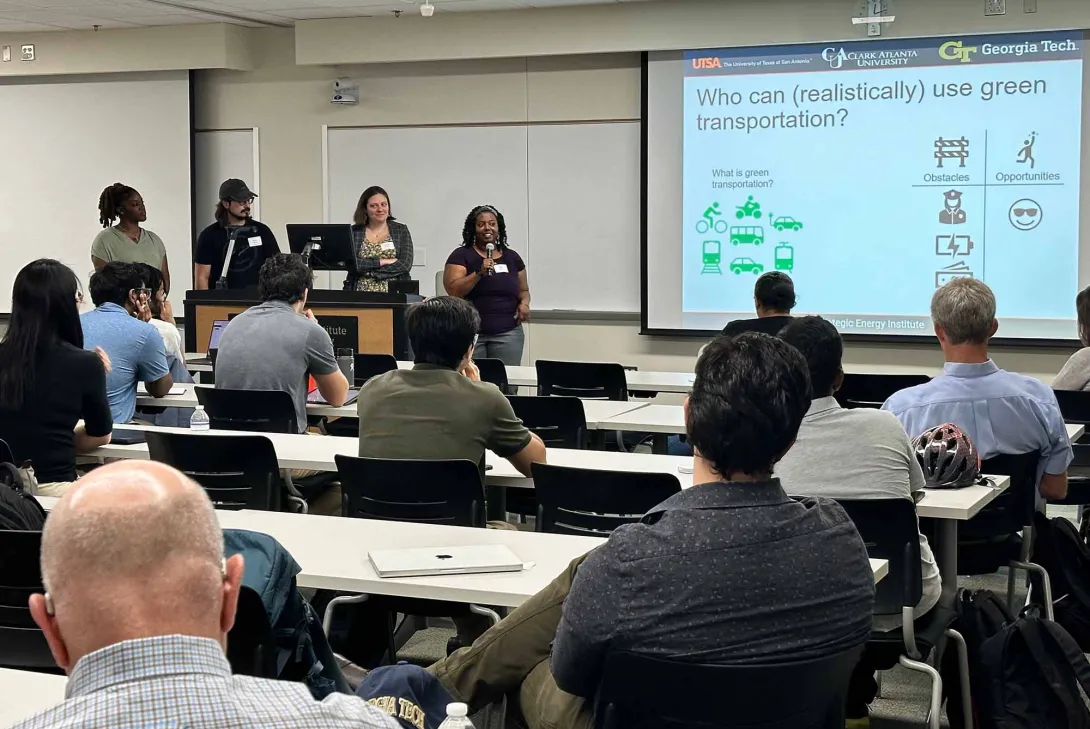
Mila Turner (CAU), and Kristen Brown (UTSA), present their summer research with students Dom Forza and Janiyah White.
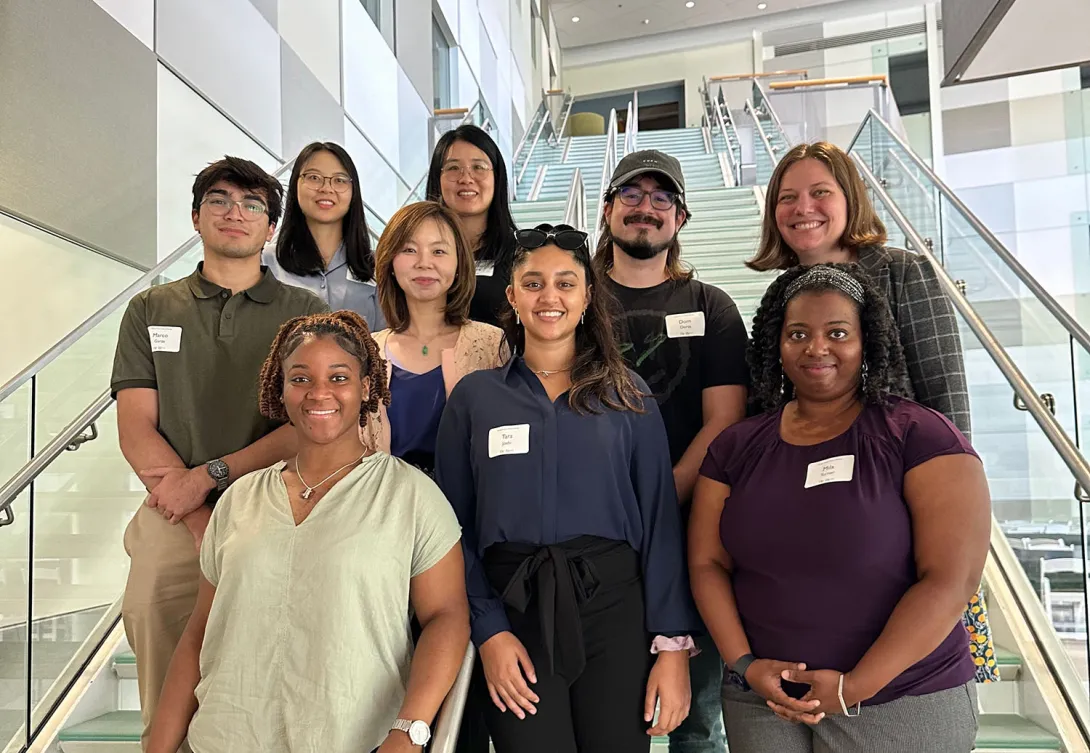
2024 SEI Summer Faculty Fellows along with their students
After completing a 10-week, on-campus fellowship, the members of this year’s Summer Energy Faculty Fellows Program gathered to present their research and discuss their future plans for continuing their research at their home campus.
The fellowship program, sponsored by the Strategic Energy Institute, is designed to connect faculty and students from historically Black colleges and universities and minority-serving institutions with energy research faculty at Georgia Tech and give them an immersive learning experience tailored to their specific interests. The fellows were competitively selected from a nationwide pool of applicants, and this year, the cohort expanded to include 10 participants. Each of the Fellows brought a student and was hosted by a Georgia Tech energy researcher.
The 2024 Faculty Fellows and their students included:
- Kristen Brown and Dom Forza also of the University of Texas at San Antonio (Host: Joe Bozeman III).
- Guenevere Qian Chen with Marco Garza of the University of Texas at San Antonio (Host: Saman Zonouz).
- Beibei Jiang with Tara Joshi of Kennesaw State University (Host: Hailong Chen).
- Milanika S. Turner with Janiyah White of Clark Atlanta University (Host: Joe Bozeman III).
In addition, the cohort also included a collaborator, Zufen Wang from Tennessee State University, with Veronica Kamel (Host: Comas Haynes).
Below is a Q&A about their experiences at Georgia Tech.
Kristen Brown, Assistant Professor, Civil and Environmental Engineering, and Construction Management
How was your overall experience at Georgia Tech?
I had a wonderful time. The team was welcoming, and the facilities were incredibly nice. Atlanta was an enjoyable city to spend time in with tons of great restaurants, and most of the summer wasn't as hot and humid as I had feared.
What would you like to share about your collaborations with Professor Joe Bozeman, Mila Turner, and the team during the past 10 weeks?
It was great to throw around research ideas with the faculty and I enjoyed chatting with the students at Georgia Tech. The students we brought enjoyed Georgia Tech and achieved so much in a short time. The professors who worked together had similar interests and goals for research, which made discussions engaging, and project selection easy.
What are your key takeaways from this program and any work products that you’d like to elaborate on?
The biggest takeaways aren't necessarily surprising — if you focus on something, you can get a lot done in a short amount of time, but you need to start moving quickly and have lots of progress checks.
What would you like to tell your fellow faculty about this program, and will you encourage them to pursue this opportunity?
I would recommend the program to any faculty considering applying. It is an excellent way to make connections and spur new ideas. It also forces you to act on research ideas, rather than having a great discussion and then lacking progress as other projects take priority.
Guenevere (Qian) Chen, Associate Professor, Cloud Technology Endowed Fellow, Electrical and Computer Engineering
How was your overall experience at Georgia Tech?
My experience at Georgia Tech was truly exceptional! The research environment, the amazing people (host and leaders), and the abundant opportunities made it an incredibly rewarding time.
What would you like to share about your collaborations with Professor Saman Zonouz and the student team during the 10 weeks you were in Atlanta?
It was an exceptional experience. Professor Zonouz is one of the most renowned and successful SCADA/PLC researchers both nationally and internationally. I had the privilege of joining their group meetings, and I was thoroughly impressed by the students' motivation, talent, and productivity. The lab consistently produces high-quality publications and fosters a collaborative and welcoming environment. Zonouz’s leadership and mentorship are outstanding, guiding a team of creative, hard-working, and remarkable students. It was an inspiring and enriching experience to work with such an amazing team.
What are your key takeaways from this program and any work products that you’d like to elaborate on?
My key takeaways from this program include the importance of collaboration, innovation, and the impact of strong mentorship. Working alongside such a talented team has reinforced the value of diverse perspectives and the power of collective effort in driving research forward. The hands-on experience with SCADA and 3D printer security has deepened my technical expertise and broadened my understanding of the challenges and opportunities in this field.
In terms of work products, my student Marco Garza, an incoming sophomore, co-authored a paper with Zonouz’s team, which has been submitted to NDSS-25. Furthermore, Zonouz and I are working on proposals for future collaborative projects.
What would you like to tell your fellow faculty at UTSA about this program and will you encourage them to pursue this opportunity?
I highly recommend this program. Midtown Atlanta is a beautiful place with its own unique charm, and the afternoon rains offer a refreshing break — perfect if you're looking to escape the Texas heat. Beyond the pleasant weather, Georgia Tech provides an outstanding research environment where you can engage in cutting-edge work and collaborate with some of the brightest minds in the field. If you're seeking a personally and professionally rewarding experience, this opportunity at Georgia Tech is one you shouldn’t miss!
Beibei Jiang, Assistant Professor of Innovative Materials, Department of Electrical and Computer Engineering
How was your overall experience at Georgia Tech?
Fantastic. I am impressed by the leadership roles of the program team. They have hosted lots of events, including regular faculty meetings, weekly professional training opportunities for undergraduate students, end-of-program presentation opportunities, and more.
What would you like to share about your collaborations with Professor Hailong Chen and the student team during the 10 weeks you were in Atlanta?
The collaboration with Chen’s team was eye-opening and inspiring. We learned a lot of positive lessons through working with his team. One specific lesson is the research team’s management skills, which involve managing research projects and team members, including undergraduate, graduate, and postdoc students. We also learned a lot of practical experimental skills related to battery fabrication and battery testing. We want to establish a long-term collaboration with Chen’s team in the future.
What are your key takeaways from this program and any work products that you’d like to elaborate on?
The key takeaways from the program can be summarized into three aspects:
- We can propose multiple research ideas based on the interdisciplinary techniques between our team and our collaborators’ team at Georgia Tech
- Considering the close geographic distance between KSU and Georgia Tech, many research opportunities at Georgia Tech can be leveraged by KSU students, including research internships at GTRI and graduate programs at Georgia Tech.
- KSU and Georgia Tech can team up on a lot of educational proposals for workforce development by combining the benefits of the two universities.
Is there any other personal information or experience or any feedback that you’d like to share?
As a Georgia Tech alumnus, I am very proud to see the achievements that Georgia Tech has made in the energy field.
What would you like to tell your fellow faculty at KSU about this program and will you encourage them to pursue this opportunity?
Definitely! I am excited to share all the positive feedback about this collaboration experience with my fellow faculty at KSU. I will tell them about the support and professional development opportunities we received from the SEI team and the program. I will also share my experience working with my collaborator at Georgia Tech, including how the project proceeded efficiently through frequent discussions with their team. Finally, I would like to share the wonderful training opportunities and professional development opportunities for our undergraduate students.
Milanika Turner, Associate Professor, Sociology and Criminal Justice
How was your overall experience at Georgia Tech?
I had such a positive experience! This was my first time visiting the campus, and I was impressed. I want to return when it’s buzzing with the energy of the academic year. I regret not visiting the Library this summer. Plus the facilities at CODA were modern, smart, and aesthetically pleasing. Everyone from Georgia Tech that I’ve met has been helpful, professional, and excited about our institutions working together.
What would you like to share about your collaborations with Professor Joe Bozeman, Professor Kristen Brown, and the student team during the past 10 weeks?
This was the smoothest interdisciplinary collaboration I’ve ever engaged in, because we all started from the common point of centering ethics and justice in our work. We all had a lot of fun thinking together and ideated numerous possible projects.
What are your key takeaways from this program and any work products that you’d like to elaborate on?
A key takeaway is that there is still so much work to be done in the pursuit of clean energy, environmental justice, and sustainable climate solutions. We have a lot more good work to do together.
Is there any other personal information or experience or any feedback that you’d like to share?
My program highlight was witnessing the undergraduate students learn and grow into budding researchers. They truly made me proud.
What would you like to tell your fellow faculty at Clark Atlanta about this program and will you encourage them to pursue this opportunity?
I’d tell my fellow faculty that we should get to know our neighbors! Tech is only two miles from CAU so we could easily get together. Plus we’re already working in some of the same local communities. It would be silly for us not to engage more deeply across universities. It’s beneficial for all of us — especially our students — to work together.
Zufen Wang, Assistant Professor, Civil and Architectural Engineering
How was your overall experience at Georgia Tech?
The overall experience was both inspiring and enriching! It was fantastic to connect with numerous outstanding researchers and learn about their remarkable initiatives and intriguing projects.
What would you like to share about your collaborations with Professor Comas Haynes and the student team during the 10 weeks you were in Atlanta?
Professor Haynes has been incredibly supportive throughout our collaboration. He helped connect me with the researchers for current projects and potential collaborations in the future. Additionally, my student conducted research within Comas' team, and I was impressed by the quality of the student's presentation. The most exciting thing is the IAC program that Comas introduced to me. Together with him and my student, we formed a team with a “train the trainer” approach to learn the IAC process!
What are your key takeaways from this program and any work products that you’d like to elaborate on?
Expand research horizons and valuable connections for interdisciplinary collaborations.
Is there any other personal information or experience or any feedback that you’d like to share?
The team at Georgia Tech is exceptionally welcoming and supportive. They generously share their research and project experiences. Their insights have been incredibly valuable to me, especially as I’m in the early stages of my career.
What would you like to tell your fellow faculty at TSU about this program and will you encourage them to pursue this opportunity?
I will highly encourage them to pursue this opportunity. The program goes beyond just the summer experience. It is a crucial foundation for building strong, long-term collaborations.
Dom Dorsa, Undergraduate Student
Working this summer at Georgia Tech greatly informed my decision to attend the institution for graduate school. My work with Bozeman, Turner, and Brown brought me out of my comfort zone and introduced me to areas of my field (namely GIS) that I was otherwise unfamiliar with. Additionally, I was able to make contacts with SEI and with other researchers such as Matthew Realff, with whom I hope to work someday. My biggest takeaway from this program is that research is a team effort. No one researcher uncovers the world. At best, they identify pieces of a larger puzzle. I hope to come back to Georgia Tech, whether for this program or another, and I am eternally grateful to SEI and to the SURE program for having me.
News Contact
Priya Devarajan || SEI Communications Program Manager
Sep. 24, 2024

The inaugural ATL CleanTech Connect held at the CODA building; Panelists include Tim Lieuwen, Executive Director, Strategic Energy Institute, Bill Nussey, Partner, Engage and Tech Square Ventures, Anthony Oni, Managing Partner, EIP Elevate Future Fund, and Andrea Pinabell, Vice President, RE Tech Advisors
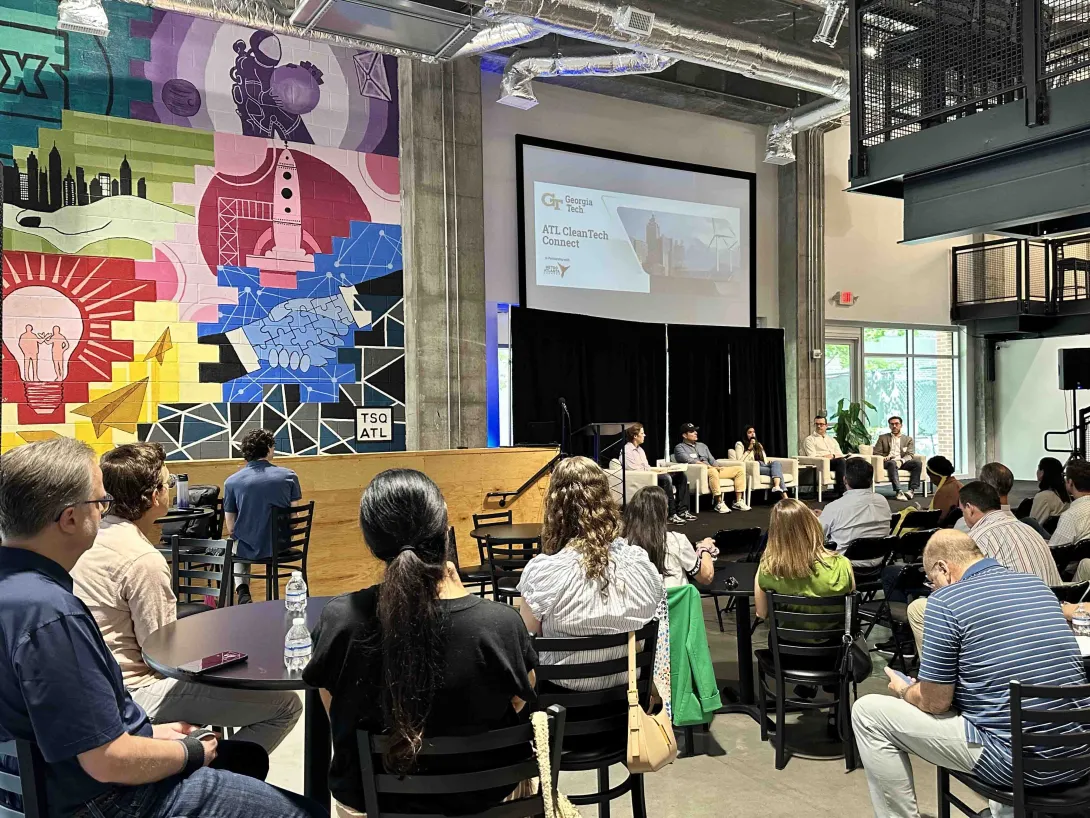
ATL CleanTech Connect Social at the Clubhouse in the heart of Tech Square in Atlanta - July 17, 2024
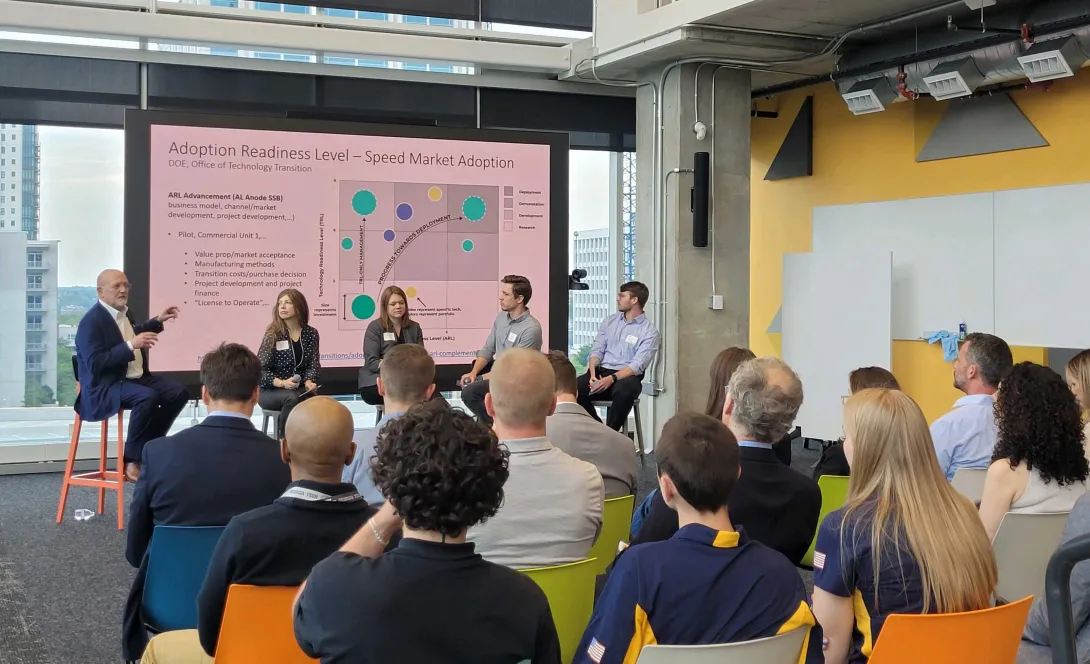
The April ATL CleanTech Connect brought in speakers to discuss the topic "Financing Cleantech Hardtech Startups." Speakers include Will Thorburn, AVP, Cleantech Strategy and Investments, Cox Enterprises, Henk Both, Investment Director, Anzu Partners, Carie Davis, Partnerships Principal, Third Derivative, and Nick Fragnito, Partner, Shorewind Capital
Atlanta's Surge in Clean Tech: A Model for National Leadership
When the City of Atlanta adopted the Clean Energy Atlanta resolution in 2019, setting an ambitious goal to achieve 100% clean energy by 2035, few could have predicted the rapid progress the city would make toward becoming a national leader in clean tech innovation. By 2023, the Atlanta clean energy community had coalesced into a powerhouse of innovation, driving the city closer to its clean energy goals.
In January 2024, the launch of the Atlanta CleanTech Connect social marked a pivotal moment in this journey. Co-sponsored by the Metro Atlanta Chamber (MAC) and Georgia Tech’s Strategic Energy Institute (SEI), this event has quickly become a must-attend gathering for Atlanta’s clean energy leaders. Drawing participants from the startup and VC ecosystem, industry, government, academia, and the nonprofit sector, the social serves as a hub for those eager to learn about and contribute to Atlanta’s clean energy future.
Past socials have been well-received, selling out weeks in advance. Attendees have requested a monthly rather than quarterly social. The event format encourages in-depth discussion about clean energy topics and cleantech startup avenues and fosters valuable networking opportunities among professionals united by a common goal: achieving a 100% clean energy future enabled by starting and rapidly growing successful cleantech companies in Atlanta.
“Atlanta CleanTech Connect is a direct result of SEI’s strategic priority to facilitate conversations that result in trusted relationships between innovators, proven entrepreneurs, potential customers, and cleantech investors, all of whom are critical to speed Atlanta startups’ time-to-market. The ultimate goal is for Atlanta to be recognized globally as a top cleantech startup hub, which we can only achieve by rapidly building and scaling more exceptional cleantech companies here at home,” said Richard Gruber, SEI’s senior fellow. Along with Cynthia Curry, senior director of Cleantech Ecosystem Expansion with the Metro Atlanta Chamber, Gruber plays an integral role in creating the social — from choosing the topics to assembling the moderators and panels that have made the event a great success.
The topics covered at these socials have been both timely and important. Discussions have ranged from "Financing Cleantech Hardtech Startups" and "Decarbonization of the Built Environment" to “Innovations in Sustainable Aviation,” offering insights that are crucial for the advancement of clean technologies. These events, held quarterly, will continue into 2025, and the next gathering is scheduled for Wednesday, Oct. 16.
Atlanta is rapidly evolving into a national leader in electric vehicles, next-generation batteries, sustainable fuels, and advanced solar technologies. Since 2018, companies have invested over $11.5 billion in these sectors across Georgia, with the greater Atlanta region at the epicenter of this activity. By facilitating opportunities for the region’s cleantech experts to connect, network, and share knowledge, the Atlanta CleanTech Connect socials are helping to forge the relationships that will support the continued growth of Atlanta’s cleantech startups.
Miguel Granier, managing director of the new Cox Cleantech Accelerator, explained the importance of these gatherings. “Before the ATL CleanTech Connect events, there wasn’t a regular platform where I could connect with other leaders and supporters of cleantech innovation in Atlanta. Cleantech spans multiple industries, so many of us don’t cross paths regularly. We need events like these to bring us together, building relationships that strengthen the entire ecosystem.”
Atlanta CleanTech Connect stands out among the city’s clean technology initiatives for its emphasis on relationship-building as a tool for supporting and expanding the cleantech ecosystem. Other major initiatives, such as the Georgia Cleantech Innovation Hub and the Cox Cleantech Accelerator, have focused on helping individual businesses overcome barriers to success. Together, these complementary approaches have cultivated a robust clean energy ecosystem in Atlanta, making it an attractive destination for clean energy startups and capital investment firms.
Written by: Sharon Murphy, Research Associate at the Strategic Energy Institute
News Contact
Priya Devarajan || SEI Communications Program Manager