
Nov. 05, 2024
The aviation industry’s commitment to meaningful carbon reduction underscores the need for investing in Sustainable Aviation Fuel (SAF), which provides the most promising solution to achieving net-zero carbon by 2050. According to the International Air Transport Association (IATA), with the right policy measures and financial instruments in place, SAF could help the industry achieve 65% of this reduction. As a key transportation center in the U.S., the Southeast holds immense potential to become a hub for SAF production and adoption.
This prospect was the focus of a recent workshop organized by three Georgia Tech units – the Ray C. Anderson Center for Sustainable Business and its initiative, the Drawdown Georgia Business Compact; the School of Public Policy; and the Strategic Energy Institute; along with the U.S. Department of Energy Bioenergy Technologies Office. The workshop gathered together multiple stakeholder groups representing federal, state, and local government, industry, academia, and the aviation sector to chart a path forward for the Southeast.
News Contact
Titiksha Fernandes | Ray C Anderson Center for Sustainable Business
Oct. 30, 2024
Southern Company, Georgia Institute of Technology (Georgia Tech), Smart Wires, and other partners have announced that they are collaborating on a new U.S. Department of Energy-funded project. Scheduled for 2025, the project will jointly implement advanced power flow control (APFC) and dynamic line rating (DLR) technologies to support the connection of renewable energy sources and new demand more quickly.
This project, led by the Georgia Tech Center for Distributed Energy with professor Deepak Divan as Principal Investigator, was selected by the U.S. Department of Energy in November 2021 as one of four projects to receive funding for grid enhancing technologies (GETs) that improve grid reliability, optimize existing grid infrastructure, and support the connection of renewable energy. It will use Smart Wires’ APFC solution— SmartValve™—in a mobile deployment combined with its DLR software—SUMO—and also develop control algorithms that improve and fine-tune how these solutions can work in synergy to optimize use of the grid.
“The launch of this innovative project represents an important step toward more efficient and reliable integration of cleaner energy sources,” said Tim Lieuwen, interim executive vice president for Research at Georgia Institute of Technology. “This collaboration allows us to identify, develop and test new ways to manage the power grid in Georgia by co-deploying APFC and DLR technologies.”
While the effectiveness of these solutions is well documented in multiple third-party reports, such as RMI’s GETting Interconnected in PJM, this project will be the first large-scale implementation of both technologies together. It will specifically examine their combined impact and result in the development of design control algorithms to unlock the combined power of these solutions and maximize their efficiency.
SUMO identifies when lines have spare capacity based on real-time weather conditions, while SmartValves can redirect power flows to quickly utilize this spare capacity. This also applies in reverse, with SUMO identifying when the dynamic ratings of lines are less than the static rating. If it’s a hot day, for example, SmartValves can redirect power flows away from these circuits to others with capacity, reducing the risk of system faults while improving operational safety.
The mobile deployment of SmartValves can be installed and in-service within one week. This provides a rapidly deployable solution that avoids extended outages and can be easily moved between sites as system needs evolve over time.
“We’re delighted to provide both SmartValves and SUMO in this project to move the dial in terms of deploying multiple GETs in synergy and optimizing their use,” said Joaquin Peirano, General Manager for the Americas at Smart Wires. “The commitment of utilities like Southern Company to get the most from their existing grid with GETs, combined with the positive regulatory developments such as FERC’s recent Order 1920, positions the U.S. to capture the full value these technologies can provide on transmission grids.”
The project will be delivered in 2025 and will involve a one-year performance period to provide Southern Company with operational experience that can be shared with other utilities and pave the way for greater use of GETs in the U.S.
About Georgia Institute of Technology
The Georgia Institute of Technology is a leading research university, committed to improving the human condition through advanced science and technology. Georgia Tech’s engineering and computing colleges are the largest and among the highest-ranked in the nation. The Institute also offers outstanding programs in business, design, liberal arts, and sciences.
With $1.37 billion annually in research, development, and sponsored activities across all six colleges and the Georgia Tech Research Institute, Georgia Tech is an engine of economic development for the state of Georgia, the Southeast, and the nation. Georgia Tech routinely ranks among the top U.S. universities in volume of research conducted; In 2023, the Institute ranked 17th among U.S. academic institutions in research and development expenditures, according to the National Science Foundation’s Higher Education Research and Development Survey.
About Smart Wires
Smart Wires is the world’s leading grid enhancing technology and services provider. We help electric utilities unlock capacity and solve their critical grid issues, using our solutions to create a more flexible, reliable and affordable grid. This enables a faster, more cost-efficient path to meet growing electricity demand with clean energy generation, at lowest cost to consumers. Headquartered in the Research Triangle of North Carolina, Smart Wires has a global workforce of passionate and visionary industry-leading experts across four continents, who work every day to transform grids globally. In collaboration with our customers and partners, we’ve unlocked over 3.5 Gigawatts capacity—enough to power over 2.5 million homes—supporting the faster integration of clean energy and new demand, enhancing security of supply and delivering cost savings to consumers.
Together, we are reimagining the grid for net zero.
News Contact
Priya Devarajan | SEI Communications Program Manager
Oct. 30, 2024

From left, Georgia Tech’s Nakia Melecio, Keith McGreggor, and Raghupathy “Siva” Sivakumar, are the NSF I-Corps Southeast Hub director, faculty lead, and principal investigator, respectively.
National Science Foundation Awards $15M to Georgia Tech-Led Consortium
of Universities for Societal-Oriented Innovation and Commercialization Effort
Multi-state I-Corps Hubs project designed to strengthen regional innovation ecosystem and address inequities in access to capital and commercialization opportunities
ATLANTA — The National Science Foundation (NSF) awarded a syndicate of 8eight Southeast universities — with Georgia Tech as the lead — a $15 million grant to support the development of a regional innovation ecosystem with a focus on addressing underrepresentation and increasing entrepreneurship and technology-oriented workforce development.
The NSF Innovation Corps (I-Corps) Southeast Hub, as the project is called, is a five-year project and is based on the I-Corps model, which assists academics in moving their research from the lab and into the market.
Led by Georgia Tech’s Office of Commercialization and Enterprise Innovation Institute, the NSF I-Corps Southeast Hub encompasses four states — Georgia, Florida, South Carolina, and Alabama.
Its member schools include:
- Clemson University
- Morehouse College
- University of Alabama
- University of Central Florida
- University of Florida
- University of Miami
- University of South Florida
In January 2025, when the NSF I-Corps Southeast Hub officially launches, the consortium of schools will expand to also include the University of Puerto Rico. Additionally, through Morehouse College’s activation, Spelman College and the Morehouse School of Medicine will also participate in supporting the project.
With a combined economic output of more than $3.2 trillion, the NSF I-Corps Southeast Hub region represents more than 11% of the entire U.S. economy. As a region, those states and Puerto Rico have a larger economic output than France, Italy, or Canada.
“This is a great opportunity for us to engage in regional collaboration to drive innovation across the Southeast to strengthen our regional economy and that of Puerto Rico,” said the Enterprise Innovation Institute’s Nakia Melecio, director of the NSF I-Corps Southeast Hub. As director, Melecio will oversee strategic management, data collection, and overall operations.
Additionally, Melecio serves as a national faculty instructor for the NSF I-Corps program.
“This also allows us to collectively tackle some of the common challenges all four of our states face, especially when it comes to being intentionally inclusive in reaching out to communities that historically haven’t always been invited to participate,” he said.
That means not just bringing solutions to market that not only solve problems but is intentional about including researchers from a diversity of schools that are inclusive of Black and Hispanic serving institutions, Melecio said.
Keith McGreggor, director of Georgia Tech’s VentureLab, is the faculty lead and charged with designing the curriculum and instruction for the NSF I-Corps Southeast Hub’s partners.
McGreggor has extensive I-Corps experience. In 2012, Georgia Tech was among the first institutions in the country selected to teach the I-Corps curriculum, which aims to further research commercialization. McGreggor served as the lead instructor for I-Corps-related efforts and led training efforts across the Southeast, as well as for teams in Puerto Rico, Mexico and the Republic of Ireland.
Raghupathy “Siva” Sivakumar, Georgia Tech’s vice president of commercialization, is the project’s principal investigator.
The NSF I-Corps Southeast Hub is one of three — the others being in the Northwest and New England regions, led by the University of California, Berkeley and the Massachusetts Institute of Technology, respectively — announced by the NSF. The three I-Corps Hubs are part of the NSF’s planned expansion of its National Innovation Network, which now includes 128 colleges and universities across 48 states.
As designed, the NSF I-Corps Southeast Hub will leverage its partner institutions’ strengths to break down barriers to researchers’ pace of lab to market commercialization.
“Our Hub member schools collectively have brought transformative technologies to market in advanced manufacturing, renewable energy, cybersecurity, and the biomedical sectors,” Sivakumar said. “Our goal is to accomplish two things. It builds and expands a scalable model to translate research into viable commercial ventures. It also addresses societal needs, not just from the standpoint of bringing solutions that solve them but building a diverse pipeline of researchers and innovators and interest in STEM [science, technology, engineering, and math]-related fields.”
U.S. Rep. Nikema Williams (D-Atlanta) is a proponent of the Hub’s STEM component.
“As a biology major-turned-Congresswoman, I know firsthand that STEM education and research open doors far beyond the lab or classroom.,” Williams said. “This National Science Foundation grant means Georgia Tech will be leading the way in equipping researchers and grad students to turn their discoveries into real-world impact — as innovators, entrepreneurs, and business leaders.
“I’m especially excited about the partnership with Morehouse College and other Minority Serving Institutions through this Innovation Hub, expanding pathways to innovation and entrepreneurship for historically marginalized communities and creating one more tool to close the racial wealth gap.”
That STEM aspect, coupled with supporting growth of a regional ecosystem, will speed commercialization, increase higher education-industry collaborations, and boost the network of diverse entrepreneurs and startup founders, said David Bridges, vice president of the Enterprise Innovation Institute.
“This multi-university, regional approach is a successful model because it has been proven that bringing a diversity of stakeholders together leads to unique solutions to very difficult problems,” Bridges said. “And while the Southeast faces different challenges that vary from state to state and Puerto Rico has its own needs, they call for a more comprehensive approach to solving them. Adopting a region-oriented focus allows us to understand what these needs are, customize tailored solutions and keep not just our hub but our nation economically competitive.”
News Contact
Péralte Paul
Oct. 30, 2024

From left, Georgia Tech's Nakia Melecio, Keith McGreggor, and Raghupathy "Siva" Sivakumar, are the NSF I-Corps Southeast Hub director, faculty lead, and principal investigator, respectively.
The National Science Foundation (NSF) awarded a syndicate of eight Southeast universities — with Georgia Tech as the lead — a $15 million grant to support the development of a regional innovation ecosystem that addresses underrepresentation and increases entrepreneurship and technology-oriented workforce development.
The NSF Innovation Corps (I-Corps) Southeast Hub is a five-year project based on the I-Corps model, which assists academics in moving their research from the lab to the market.
Led by Georgia Tech’s Office of Commercialization and Enterprise Innovation Institute, the NSF I-Corps Southeast Hub encompasses four states — Georgia, Florida, South Carolina, and Alabama.
Its member schools include:
- Clemson University
- Morehouse College
- University of Alabama
- University of Central Florida
- University of Florida
- University of Miami
- University of South Florida
In January 2025, when the NSF I-Corps Southeast Hub officially launches, the consortium of schools will expand to include the University of Puerto Rico. Additionally, through Morehouse College’s activation, Spelman College and the Morehouse School of Medicine will also participate in supporting the project.
With a combined economic output of more than $3.2 trillion, the NSF I-Corps Southeast Hub region represents more than 11% of the entire U.S. economy. As a region, those states and Puerto Rico have a larger economic output than France, Italy, or Canada.
“This is a great opportunity for us to engage in regional collaboration to drive innovation across the Southeast to strengthen our regional economy and that of Puerto Rico,” said the Enterprise Innovation Institute’s Nakia Melecio, director of the NSF I-Corps Southeast Hub. As director, Melecio will oversee strategic management, data collection, and overall operations.
Additionally, Melecio serves as a national faculty instructor for the NSF I-Corps program.
“This also allows us to collectively tackle some of the common challenges all four of our states face, especially when it comes to being intentionally inclusive in reaching out to communities that historically haven’t always been invited to participate,” he said.
That means bringing solutions to market that not only solve problems but are intentional about including researchers from Black and Hispanic-serving institutions, Melecio said.
Keith McGreggor, director of Georgia Tech’s VentureLab, is the faculty lead charged with designing the curriculum and instruction for the NSF I-Corps Southeast Hub’s partners.
McGreggor has extensive I-Corps experience. In 2012, Georgia Tech was among the first institutions in the country selected to teach the I-Corps curriculum, which aims to further research commercialization. McGreggor served as the lead instructor for I-Corps-related efforts and led training efforts across the Southeast, as well as for teams in Puerto Rico, Mexico, and the Republic of Ireland.
Raghupathy “Siva” Sivakumar, Georgia Tech’s vice president of Commercialization and chief commercialization officer, is the project’s principal investigator.
The NSF I-Corps Southeast Hub is one of three announced by the NSF. The others are in the Northwest and New England regions, led by the University of California, Berkeley, and the Massachusetts Institute of Technology, respectively. The three I-Corps Hubs are part of the NSF’s planned expansion of its National Innovation Network, which now includes 128 colleges and universities across 48 states.
As designed, the NSF I-Corps Southeast Hub will leverage its partner institutions’ strengths to break down barriers to researchers’ pace of lab-to-market commercialization.
"Our Hub member institutions have successfully commercialized transformative technologies across critical sectors, including advanced manufacturing, renewable energy, cybersecurity, and biomedical fields,” said Sivakumar. “We aim to achieve two key objectives: first, to establish and expand a scalable model that effectively translates research into viable commercial ventures; and second, to address pressing societal needs.
"This includes not only delivering innovative solutions but also cultivating a diverse pipeline of researchers and innovators, thereby enhancing interest in STEM fields — science, technology, engineering, and mathematics.”
U.S. Rep. Nikema Williams, D-Atlanta, is a proponent of the Hub’s STEM component.
“As a biology major-turned-congresswoman, I know firsthand that STEM education and research open doors far beyond the lab or classroom.,” Williams said. “This National Science Foundation grant means Georgia Tech will be leading the way in equipping researchers and grad students to turn their discoveries into real-world impact — as innovators, entrepreneurs, and business leaders.
“I’m especially excited about the partnership with Morehouse College and other minority-serving institutions through this Hub, expanding pathways to innovation and entrepreneurship for historically marginalized communities and creating one more tool to close the racial wealth gap.”
That STEM aspect, coupled with supporting the growth of a regional ecosystem, will speed commercialization, increase higher education-industry collaborations, and boost the network of diverse entrepreneurs and startup founders, said David Bridges, vice president of the Enterprise Innovation Institute.
“This multi-university, regional approach is a successful model because it has been proven that bringing a diversity of stakeholders together leads to unique solutions to very difficult problems,” he said. “And while the Southeast faces different challenges that vary from state to state and Puerto Rico has its own needs, they call for a more comprehensive approach to solving them. Adopting a region-oriented focus allows us to understand what these needs are, customize tailored solutions, and keep not just our hub but our nation economically competitive.”
News Contact
Péralte C. Paul
peralte@gatech.edu
404.316.1210
Oct. 28, 2024
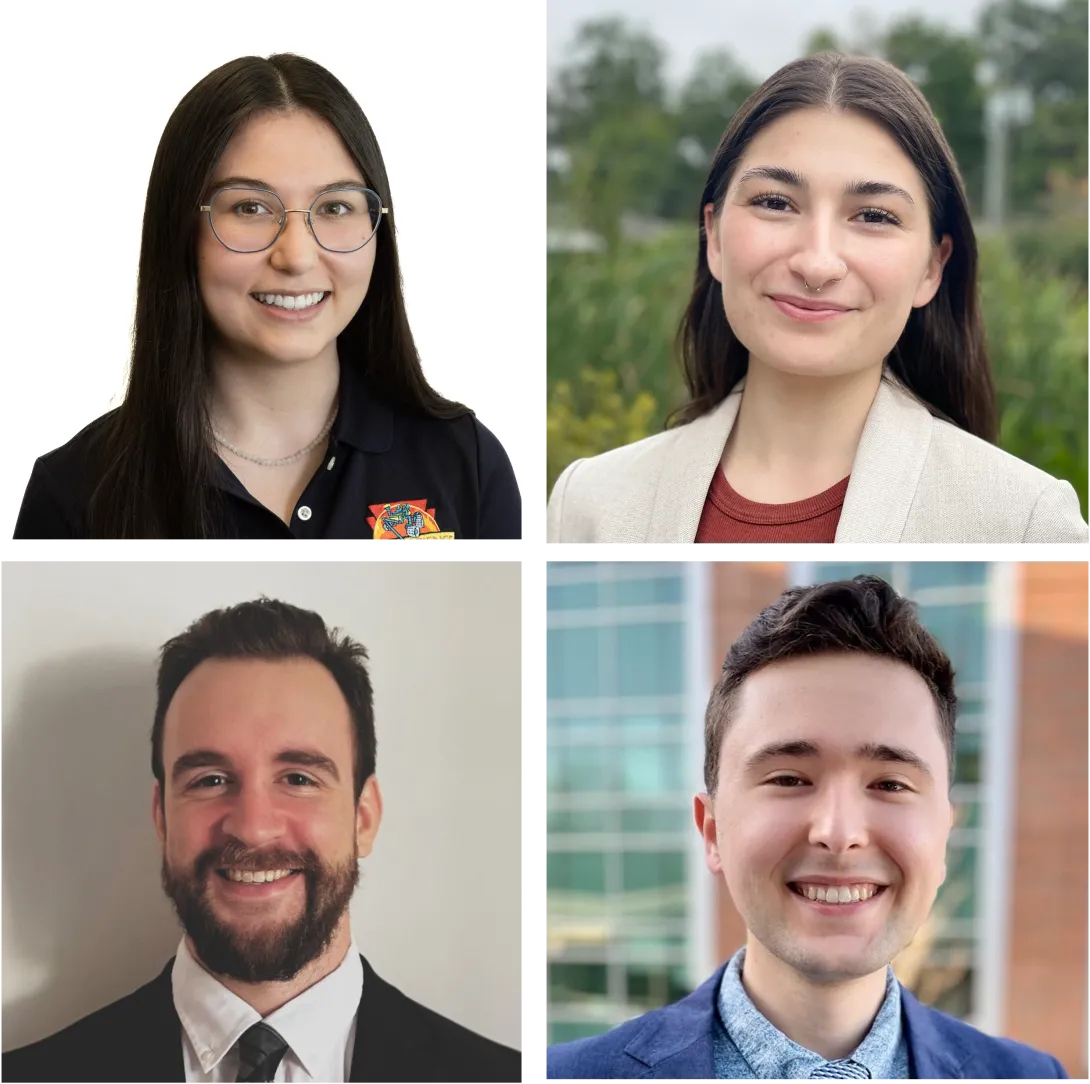
New College of Sciences ARCS Scholars (from left to right): Alivia Eng, Marrissa Izykowicz, Zach Mobille, and John Pederson.
Four Ph.D. candidates from the College of Sciences have been selected as new recipients of the Achievement Rewards for College Scientists (ARCS) Foundation Scholar Award. The award recognizes doctoral students who show exceptional promise in making a significant contribution to the worldwide advancement of science and technology. The new recipients join three returning scholars from the College of Sciences. To view all of the current Georgia Tech ARCS Scholars, visit: 2024-25 ARCS Atlanta Scholars
Meet the 2024-25 ARCS Scholars
Alivia Eng, School of Earth and Atmospheric Sciences
Eng is a Future Investigators in NASA Earth and Space Science and Technology (FINESST) Fellow. Her research compares rover and orbital datasets of Mars to increase the spatial resolution of quantitative geologic mapping.
“I am excited to receive this award as it validates the importance of my research and my abilities as a scientist,” says Eng.
Nominated by her advisor, School of Earth and Atmospheric Sciences Assistant Professor Frances Rivera-Hernández, Eng is also a part of Georgia Tech's Solar System Exploration Research Virtual Institute and Center for Lunar Environment and Volatile Exploration Research.
“Alivia is an exceptional graduate student and planetary scientist,” says Rivera-Hernández. “Her curiosity, passion, and question-driven approach have sparked multiple new projects at Georgia Tech and led my research group in exciting new directions. Beyond her research, Alivia is deeply committed to community engagement, aiming to inspire future generations to pursue careers in planetary geology. I am grateful for the opportunity to work with her.”
Marrissa Izykowicz, School of Chemistry and Biochemistry
Izykowicz’s research focuses on synthesizing nanoparticles designed to target and retain anti-cancer drugs in both primary and metastatic tumors of various cancers. Her research tackles the challenge of treating metastatic lesions, which are difficult to target due to their small size and abundance.
“I am deeply passionate about my work because it addresses an issue that has plagued humanity for centuries,” says Izykowicz. “My research investigates the complexities of metastatic cancer, building on the knowledge of those who came before me to pave the way toward a potential cure.”
She was nominated for the award by M.G. Finn, who serves as a professor in the School of Chemistry and Biochemistry and the James A. Carlos Family Chair for Pediatric Technology.
“Marrissa is a wonderful student and colleague — always willing to do whatever is needed to advance her studies,” says Finn. “Her research is tremendously exciting, working with collaborator Stephen Housley on nanoparticles that can deliver medications directly to cancerous tumors. The project involves chemistry, cell biology, immunology, and analytical biochemistry, and Marrissa does it all with great dedication and expertise.”
Zach Mobille, School of Mathematics
Mobille is pursuing a Ph.D. in Quantitative Biosciences, specializing in computational neuroscience.
“I am passionate about my research because it sheds light on how the brain’s structure and abilities are related quantitatively,” says Mobille. “It targets a deeper understanding of how information is processed in networks of neurons, which may influence how computational devices are designed in the future.”
Mobille serves as chair of the community impact committee of the Georgia Tech/Emory Computational Neural-engineering Training Program (CNTP) and is a past recipient of Georgia Tech’s InQuBATE Training grant.
School of Mathematics Assistant Professor Hannah Choi, who advises Mobille, states: “Zach is driven by curiosity and determined to solve complex research problems. He has consistently impressed me with his creativity and motivation in computational neuroscience. Zach proposes innovative ideas, is never afraid of learning new techniques, and takes initiative in his research. I am thrilled that the ARCS fellowship has recognized his qualities as an independent and creative researcher.”
John Pederson, School of Chemistry and Biochemistry
Pederson uses computer simulations to study chemistry at solid/liquid interfaces at the molecular scale.
“Computational modeling across length- and time-scales is a powerful technique for gaining insight into chemical and physical processes,” says Pederson. “With my research, I hope to promote wider adoption of these multi-scale computational techniques to enable the design of cleaner and safer chemical processes.”
In addition to his research work, Pederson helped organize and run ComSciCon-ATL 2024, an interdisciplinary science communications conference for Southeast STEM graduate students.
“John is an outstanding researcher and problem-solver,” says Jessie McDaniel, associate professor in the School of Chemistry and Biochemistry who nominated Pederson. ”He has contributed substantially to software and method development efforts that form the core of our group’s work on studying chemical reaction mechanisms in complex environments related to electrochemistry and surface chemistry. John exemplifies excellence in all facets of research, scholarship, and service.”
News Contact
Writer: Laura Smith, College of Sciences
Sep. 18, 2024
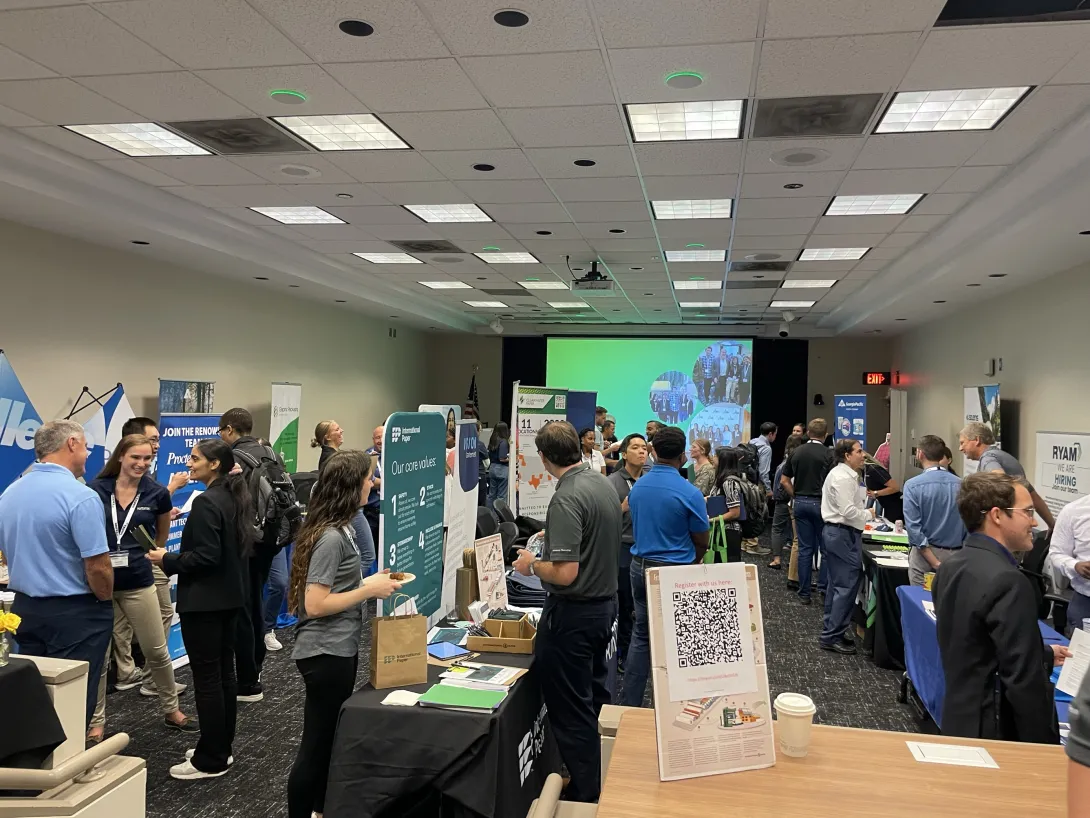
The TAPPI Student Chapter hosted a career fair on Thursday, September 12 at the Georgia Tech Renewable Bioproducts Institute. With nearly 100 students in attendance, the event provided an excellent opportunity for students as well as professionals in the pulp and paper industry, to connect, network, and explore career opportunities. The fair attracted 45 representatives from 15 leading companies in the industry who offered internships, full-time and co-ops for both graduates and undergraduates.
“The TAPPI Student Chapter Career Fair was an incredible opportunity for students to engage directly with industry leaders, explore diverse career paths, and secure valuable internships and job offers. The enthusiasm and participation from both students and companies truly highlighted the strength and potential of our future workforce,” said Chris Luettgen, faculty advisor of the TAPPI Student Chapter and the initiative lead for process efficiency & intensification of pulp, paper packaging, and tissue manufacturing at the Renewable Bioproducts Institute.
News Contact
Priya Devarajan || RBI Communications Program Manager
Sep. 24, 2024
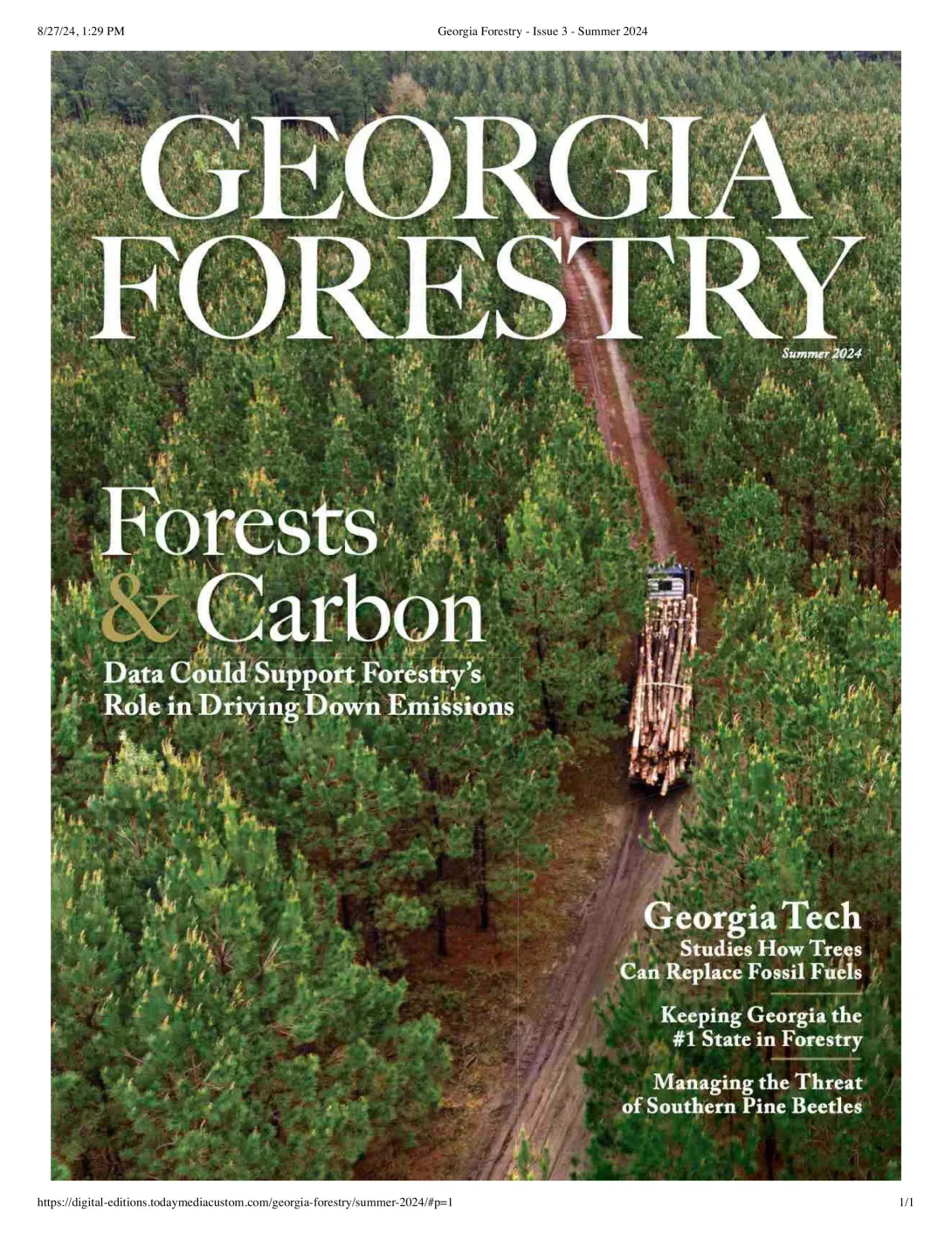
Georgia Forestry Association members receive Georgia Forestry Magazine four times per year. The magazine brings together writers and leaders from the Georgia Forestry Association, Georgia Forestry Commission, and Georgia Sustainable Forestry Initiative. The magazine’s dynamic content is focused on keeping its audience connected to resources and empowered to make good decisions about their forestland asset.
In the Summer 2024 issue, the magazine has featured the Georgia Tech Renewable Bioproducts Institute and its faculty researchers Anthony J. “Bo” Arduengo, professor of practice in the School of Chemistry and Biochemistry, Matt McDowell, Carter N. Paden, Jr. Distinguished Chair and associate professor in the School of Materials Science and Engineering, and Meisha Shofner, professor in the School of Materials Science and Engineering. The feature titled ‘The Green Gusher: How Wood-Based Innovations Are Revolutionizing Sustainability and Technology,’ was written by John Casey and discussed how wood-based innovations are revolutionizing sustainability and technology in the forestry industry and included Georgia Tech’s forestry in focus video that included interviews with the three researchers.
News Contact
Priya Devarajan || RBI Communications Program Manager
Oct. 18, 2024

The U.S. Department of Energy (DOE) has awarded Georgia Tech researchers a $4.6 million grant to develop improved cybersecurity protection for renewable energy technologies.
Associate Professor Saman Zonouz will lead the project and leverage the latest artificial technology (AI) to create Phorensics. The new tool will anticipate cyberattacks on critical infrastructure and provide analysts with an accurate reading of what vulnerabilities were exploited.
“This grant enables us to tackle one of the crucial challenges facing national security today: our critical infrastructure resilience and post-incident diagnostics to restore normal operations in a timely manner,” said Zonouz.
“Together with our amazing team, we will focus on cyber-physical data recovery and post-mortem forensics analysis after cybersecurity incidents in emerging renewable energy systems.”
As the integration of renewable energy technology into national power grids increases, so does their vulnerability to cyberattacks. These threats put energy infrastructure at risk and pose a significant danger to public safety and economic stability. The AI behind Phorensics will allow analysts and technicians to scale security efforts to keep up with a growing power grid that is becoming more complex.
This effort is part of the Security of Engineering Systems (SES) initiative at Georgia Tech’s School of Cybersecurity and Privacy (SCP). SES has three pillars: research, education, and testbeds, with multiple ongoing large, sponsored efforts.
“We had a successful hiring season for SES last year and will continue filling several open tenure-track faculty positions this upcoming cycle,” said Zonouz.
“With top-notch cybersecurity and engineering schools at Georgia Tech, we have begun the SES journey with a dedicated passion to pursue building real-world solutions to protect our critical infrastructures, national security, and public safety.”
Zonouz is the director of the Cyber-Physical Systems Security Laboratory (CPSec) and is jointly appointed by Georgia Tech’s School of Cybersecurity and Privacy (SCP) and the School of Electrical and Computer Engineering (ECE).
The three Georgia Tech researchers joining him on this project are Brendan Saltaformaggio, associate professor in SCP and ECE; Taesoo Kim, jointly appointed professor in SCP and the School of Computer Science; and Animesh Chhotaray, research scientist in SCP.
Katherine Davis, associate professor at the Texas A&M University Department of Electrical and Computer Engineering, has partnered with the team to develop Phorensics. The team will also collaborate with the NREL National Lab, and industry partners for technology transfer and commercialization initiatives.
The Energy Department defines renewable energy as energy from unlimited, naturally replenished resources, such as the sun, tides, and wind. Renewable energy can be used for electricity generation, space and water heating and cooling, and transportation.
News Contact
John Popham
Communications Officer II
College of Computing | School of Cybersecurity and Privacy
Oct. 24, 2024

Eight Georgia Tech researchers were honored with the ACM Distinguished Paper Award for their groundbreaking contributions to cybersecurity at the recent ACM Conference on Computer and Communications Security (CCS).
Three papers were recognized for addressing critical challenges in the field, spanning areas such as automotive cybersecurity, password security, and cryptographic testing.
“These three projects underscore Georgia Tech's leadership in advancing cybersecurity solutions that have real-world impact, from protecting critical infrastructure to ensuring the security of future computing systems and improving everyday digital practices,” said School of Cybersecurity and Privacy (SCP) Chair Michael Bailey.
One of the papers, ERACAN: Defending Against an Emerging CAN Threat Model, was co-authored by Ph.D. student Zhaozhou Tang, Associate Professor Saman Zonouz, and College of Engineering Dean and Professor Raheem Beyah. This research focuses on securing the controller area network (CAN), a vital system used in modern vehicles that is increasingly targeted by cyber threats.
"This project is led by our Ph.D. student Zhaozhou Tang with the Cyber-Physical Systems Security (CPSec) Lab," said Zonouz. "Impressively, this was Zhaozhou's first paper in his Ph.D., and he deserves special recognition for this groundbreaking work on automotive cybersecurity."
The work introduces a comprehensive defense system to counter advanced threats to vehicular CAN networks, and the team is collaborating with the Hyundai America Technical Center to implement the research. The CPSec Lab is a collaborative effort between SCP and the School of Electrical and Computer Engineering (ECE).
In another paper, Testing Side-Channel Security of Cryptographic Implementations Against Future Microarchitectures, Assistant Professor Daniel Genkin collaborated with international researchers to define security threats in new computing technology.
"We appreciate ACM for recognizing our work," said Genkin. “Tools for early-stage testing of CPUs for emerging side-channel threats are crucial to ensuring the security of the next generation of computing devices.”
The third paper, Unmasking the Security and Usability of Password Masking, was authored by graduate students Yuqi Hu, Suood Al Roomi, Sena Sahin, and Frank Li, SCP and ECE assistant professor. This study investigated the effectiveness and provided recommendations for implementing password masking and the practice of hiding characters as they are typed and offered.
"Password masking is a widely deployed security mechanism that hasn't been extensively investigated in prior works," said Li.
The assistant professor credited the collaborative efforts of his students, particularly Yuqi Hu, for leading the project.
The ACM Conference on Computer and Communications Security (CCS) is the flagship annual conference of the Special Interest Group on Security, Audit and Control (SIGSAC) of the Association for Computing Machinery (ACM). The conference was held from Oct. 14-18 in Salt Lake City.
News Contact
John Popham
Communications Officer II
College of Computing | School of Cybersecurity and Privacy
Oct. 23, 2024
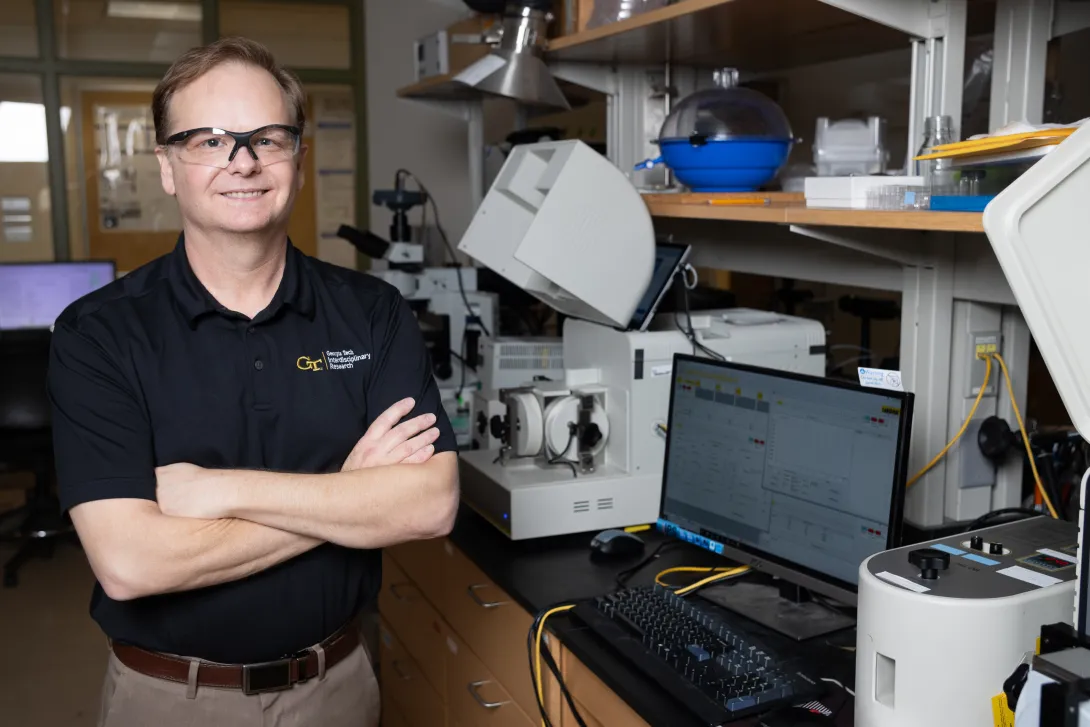
J. Carson Meredith, Executive Director of the Renewable Bioproducts Institute and Professor in Georgia Tech's School of Chemical and Biomolecular Engineering.
J. Carson Meredith, a professor in Georgia Tech’s School of Chemical and Biomolecular Engineering, is the 2024 recipient of the Andrew Chase Award from the American Institute of Chemical Engineers (AIChE) Forest and Plant Bioproducts Division.
Meredith will receive the award at the Annual AIChE Meeting in San Diego California, later this month.
The award recognizes Meredith’s research in nanocellulose chemical modification, composites, and cellulose-based renewable barrier coatings, which has resulted in seven patent applications, one commercial license, and ongoing research projects with six companies, reflecting the impact these advancements are making. His group recently reported the first successful recycling and reuse of nanocellulose gas barrier films and achieved one of the lowest water vapor barrier coatings derived from cellulose to date.
Meredith, ChBE’s James Preston Harris Faculty Fellow, is executive director of Georgia Tech’s Renewable Bioproducts Institute, which aims for future where plant biomass will enable a carbon neutral society and manufacturing infrastructure through traditional and emerging products.
News Contact
Brad Dixon || braddixon@gatech.edu