
Dec. 05, 2024
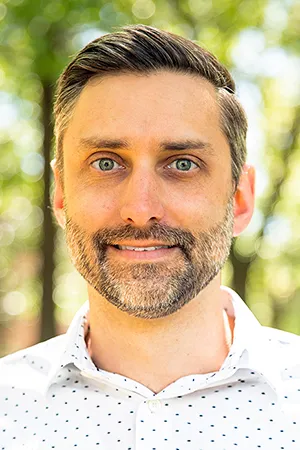
Matthew McDowell, Associate Professor, Woodruff School of Mechanical Engineering and Strategic Energy Institute Initiative Lead for Energy Storage
Associate Professor Matthew McDowell has been selected as the next Associate Chair for Research in the George W. Woodruff School of Mechanical Engineering. He will step into the role on January 1, 2025.
The Associate Chair for Research is responsible for working with the Woodruff School’s faculty to develop a strategic research plan for future growth and investments in the School, as well as identifying new research opportunities, helping to foster strategic relationships with government, industry, and foundations, and synergizing research efforts with other units in the College of Engineering and across the Institute.
“I am thrilled to be chosen for this role, and I look forward to working with the faculty, students, researchers, and staff of the Woodruff School to enhance and support our world-class research program,” said McDowell.
McDowell joined Georgia Tech in the fall of 2015 as an assistant professor with a joint appointment in the Woodruff School and the School of Materials Science and Engineering (MSE). He was named Carter N. Paden, Jr. Distinguished Chair earlier this year and serves as co-director of the Georgia Tech Advanced Battery Center (GTABC). Through this center, McDowell and Professor Gleb Yushin (MSE) are building community at the Institute, enhancing research and educational relationships with industry partners, and creating a new battery manufacturing facility on Georgia Tech’s campus.
“I am excited to work with Matt in advancing the research priorities and goals of the Woodruff School,” said Devesh Ranjan, Eugene C. Gwaltney Jr. School Chair and professor. “Through his exceptional leadership of the Georgia Tech Advanced Battery Center, Matt has demonstrated a deep commitment to excellence in scholarship and to fostering partnerships that drive innovative, collaborative research across the Institute. I am confident in the positive transformation he will bring to our program in this new role.”
Read More on the ME Newspage
News Contact
Dec. 17, 2024

Johney Green Jr., M.S. ME 1993, Ph.D. ME 2000, has been chosen to serve as the new laboratory director for Savannah River National Laboratory (SRNL). A proud Yellow Jacket, Green received both his master’s and doctoral degrees in mechanical engineering from Georgia Tech and currently serves on the Strategic Energy Institute’s (SEI) External Advisory Board. He also served on the board of the George W. Woodruff School of Mechanical Engineering from 2017 to 2022.
“SRNL has truly found an exceptional leader in Johney. His vision and dedication are inspiring, and I am genuinely excited to see the remarkable contributions he will make in advancing SRNL,” said Christine Conwell, SEI interim executive director. “We look forward to his continued partnership with SEI and the positive impact he will bring to the energy community in 2025 and beyond.”
The Battelle Savannah River Alliance (SRNL’s parent organization) selected Green for this role, describing him as “a dynamic leader who brings deep, wide-ranging scientific expertise to this new position.”
With an annual operating budget of about $400 million, SRNL is a multiprogram national lab leading research and development for the Department of Energy’s (DOE) Offices of Environmental Management and Legacy Management and the National Nuclear Security Administration’s weapons and nonproliferation programs.
Green currently serves as associate laboratory director for mechanical and thermal engineering sciences at the National Renewable Energy Laboratory (NREL). In this position, he oversees a diverse portfolio of research programs including transportation, buildings, wind, water, geothermal, advanced manufacturing, concentrating solar power, and Arctic research. His leadership impacts a workforce of about 750 and involves managing a budget of more than $300 million.
At NREL, Green transformed the lab’s wind site into the innovative Flatirons Campus and transitioned the campus from a single-program wind research site to a multiprogram research campus that serves as the foundational experimental platform for the DOE’s Advanced Research on Integrated Energy Systems (ARIES) initiative.
"We are immensely proud to call Johney a Woodruff School alumnus. His achievements and service to Tech through advisory board engagement inspires us, and we are excited to see him step into this prestigious role at SRNL. We look forward to deepening our collaboration with him as he continues to make a powerful impact,” said Devesh Ranjan, Eugene C. Gwaltney, Jr. School Chair and professor in the Woodruff School.
Prior to his role at NREL, Green held several key leadership roles at Oak Ridge National Laboratory (ORNL). As director of the Energy and Transportation Science Division and group leader for fuels, engines, and emissions research, he managed a broad science and technology portfolio and user facilities that made significant science and engineering advances in building technologies; sustainable industrial and manufacturing processes; fuels, engines, emissions, and transportation analysis; and vehicle systems integration. While Green was the division director, ORNL developed the Additive Manufacturing Integrated Energy (AMIE) demonstration project, a model of innovative vehicle-to-grid integration technologies and next-generation manufacturing processes.
Early in his career, Green conducted combustion research to stabilize gasoline engine operation under extreme conditions. During the course of that research, he joined a team working with Ford Motor Co., seeking ways to simultaneously extend exhaust gas recirculation limits in diesel engines and reduce nitrogen oxide and particulate matter emissions. He continued this collaboration as a visiting scientist at Ford's Scientific Research Laboratory, conducting modeling and experimental research for advanced diesel engines designed for light-duty vehicles. On assignment to the DOE’s Vehicle Technologies Office, Green also served as technical coordinator for the 21st Century Truck Partnership. He also contributed to a dozen of ORNL's 150-plus top scientific discoveries.
Green was the recipient of a National GEM Consortium Master’s Fellowhip sponsored by Georgia Tech and ORNL, and he served as the National GEM Consortium chairperson from 2022-2024. He is a Fellow of the American Association for the Advancement of Science and an SAE International Fellow. He has received several awards during his career and holds two U.S. patents in combustion science.
News Contact
Priya Devarajan || SEI Communications Program Manager
Dec. 18, 2024
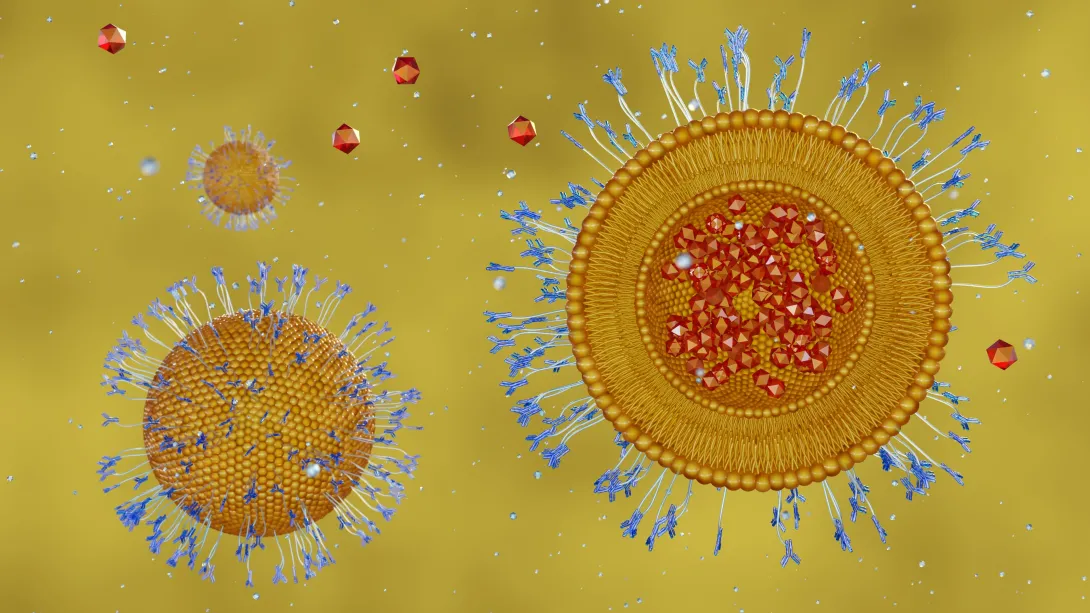
Lipids can be powerful tools to help deliver drugs and treatments through their interactions with proteins. (Adobe Stock)
From combating cancer and infections to storing energy, lipid-protein interactions are critical to biological processes in cells. But the mechanisms that drive these interactions have historically been difficult to map and understand.
A study led by Georgia Tech is showcasing a new resource to help researchers understand the structure and function of these interactions — called assemblies — at both molecular and functional levels. The work is published in the Nature-family journal Communications Chemistry.
Called BioDolphin — short for Biological Database of Lipid-Protein Highly Inclusive Interactions — the resource is the first comprehensive, annotated database of protein-lipid interactions. Integrated into a user-friendly web server, BioDolphin is freely accessible to all. Users can easily view and download interaction data and systematically analyze lipid-protein assemblies.
“Understanding lipid-protein interactions is crucial in advancing our understanding of human health and disease treatment,” says the study’s corresponding author, Andrew McShan. “BioDolphin is the first resource to collect this type of information for all kinds of proteins, not just those found in membranes. And because it is publicly available, this information is now at the tips of researchers’ fingertips.”
“BioDolphin as a comprehensive database of lipid–protein binding interactions” is led by McShan, an assistant professor in the School of Chemistry and Biochemistry at Georgia Tech, alongside first author Li-Yen (Zoey) Yang, Bioinformatics Ph.D. student; School of Computational Science and Engineering Assistant Professor Yunan Luo; and Kaike Ping, a Ph.D. student at Virginia Tech.
Diving into accessible data
A curated database with richly annotated information, BioDolphin contains over 127,000 lipid-protein binding interactions. And while most databases of lipid-protein assemblies have focused solely on a specific type of protein — membrane proteins — BioDolphin expands beyond that.
“BioDolphin enables us to globally define the structural features of lipid-protein assemblies across the eight different classes of lipid compounds to understand their cellular function and roles in disease,” says McShan, adding that the database also provides information on paired lipid-protein annotation, experimental binding affinities, intermolecular interactions, and atomic structures across a wide range of lipid-protein interactions — all available to anyone with an internet connection.
A molecular blueprint for research — and teaching
“In the past, this research has been limited because lipids are notoriously difficult to study in the lab,” McShan says. "BioDolphin changes the paradigm. It is the first time that anyone has collected, annotated, and analyzed the known structural universe of lipid-protein interactions across all organisms.”
It’s a rapidly developing field. McShan was recently awarded a prestigious Curci grant for cutting-edge cancer research into lipid-based universal immunotherapies and vaccines.
Beyond research applications, the team hopes that BioDolphin will be a resource for biochemistry students.
“The database can serve as a tool for teachers and students studying these protein-lipid interactions, which is often an underdeveloped topic in biology and biochemistry courses,” McShan says. “I hope that BioDolphin is a valuable resource for the researchers of today — and that it can also be a building block for the researchers of tomorrow.”
Funding: Shurl and Kay Curci Foundation, NSF Advanced Cyberinfrastructure Coordination Ecosystem: Services & Support (ACCESS) program, NIH National Institute of General Medical Sciences (NIGMS), Partnership for an Advanced Computing Environment (PACE) at the Georgia Institute of Technology, and Taiwan Ministry of Education Government Scholarship to Study Abroad program.
Dec. 13, 2024
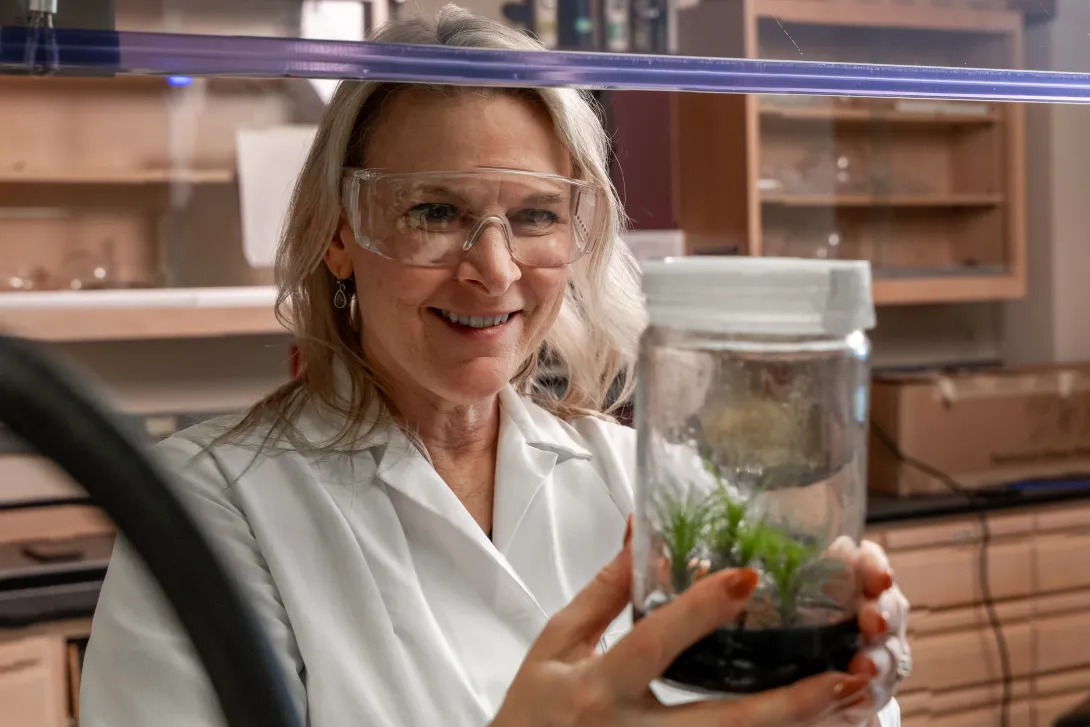
The National Science Foundation has released the results of its annual Higher Education Research and Development Survey (HERD), and Georgia Tech has once again moved up again in the rankings.
The survey of U.S. university research and development expenditures places Georgia Tech as No. 16, up from No. 17 last year, and No. 1 among universities without a medical school. The Institute ranks No. 3 for federally funded research, up from No. 5, and is No. 7 for all externally funded research, up from No. 9.
“Georgia Tech's continued ascension in research rankings is a testament to the exceptional dedication and collaboration of our faculty, staff, and research sponsors,” said Tim Lieuwen, interim executive vice president for Research. “This trajectory, particularly our rise in federally and externally funded research, amplifies the confidence our partners have in Georgia Tech tackle society’s biggest challenges.”
The annual survey compiles R&D expenditure data from U.S. colleges and universities with more than $150,000 in research expenditures during a fiscal year. For fiscal year 2023 (July 1, 2022 – June 30, 2023), that included 914 institutions. Overall, U.S. higher-education R&D spending rose by 11.2%, exceeding $108 billion in fiscal year 2023. This is the largest increase since 2003.
Georgia Tech’s R&D spending of $1.45 billion in fiscal year 2023 reflects an impressive 17.9% increase — $219 million more — from the previous year for the entire research enterprise, which includes the Georgia Tech Research Institute (GTRI). GTRI remains the largest contributor to Georgia Tech’s growth and continues to play a major role in the Institute’s research enterprise and in national defense research.
Additionally, Georgia Tech’s R&D expenditures contributed a monumental $1.45 billion to the state of Georgia’s economy, along with continued growth in commercialization efforts that bring technologies out of the lab and into to the world.
Lieuwen said, “I am proud of these standings and even more excited about the possibilities ahead as we continue to drive innovation that benefits our state, the nation, and the world.”
About Georgia Tech’s Office of the Executive Vice President for Research
The Office of the Executive Vice President for Research (EVPR) directs Georgia Tech’s $1.37 billion (FY 2024) portfolio of research, development, and sponsored activities. This includes leadership of the Georgia Tech Research Institute (GTRI), the Enterprise Innovation Institute, nine interdisciplinary research institutes (IRIs) plus research centers, and related research administrative support units: commercialization, corporate engagement, research development and operations, and research administration. Georgia Tech routinely ranks among the top U.S. universities in volume of research conducted.
News Contact
Shelley Wunder-Smith | shelley.wunder-smith@research.gatech.edu
Director of Research Communications
Dec. 13, 2024

Two Cuban brown anoles, Anolis sagrei (Credit: Day's Edge Productions)

A Cuban brown anole (Anolis sagrei) in Miami (Credit: Day's Edge Productions)

A Puerto Rican crested anole, Anolis cristatellus (Credit: Day's Edge Productions)
In South Florida, two Caribbean lizard species met for the first time. What followed provided some of the clearest evidence to date of evolution in action.
Lead author James Stroud, an assistant professor in the School of Biological Sciences, was studying Cuban brown anoles (Anolis sagrei) in South Florida when the Puerto Rican crested anole (Anolis cristatellus), suddenly appeared in the region.
Published in Nature Communications, the study documents what happens as the two Anolis lizards adapted in response to the new competitor, while helping to resolve a longstanding challenge in evolutionary biology — directly observing the role of natural selection in character displacement: how similar animals adapt in response to competition.
"Most of what we know about how animals change in response to this process comes from studying patterns that evolved long ago,” Stroud says. “This was a rare opportunity where we could watch evolution as it happened."
Competition from coexistence
While these two small, brown lizards diverged evolutionarily between 40-60 million years ago and evolved on completely separate Caribbean islands, the two species are nearly identical, and fill similar ecological niches.
So, when the Puerto Rican crested anole suddenly appeared in Cuban brown anole habitat at Fairchild Tropical Botanic Garden in 2018, the two were competing for similar habitats and food sources.
“When two similar species compete for the same resources, like food and territory, they often evolve differences that allow them to coexist,” Stroud says. But, while scientists have found many examples of similar species developing different traits to ease this overlap, “scientists have rarely been able to observe this process as it unfolds in nature.”
Stroud’s team had already been studying Cuban brown anoles at the Fairchild Tropical Botanic Gardens in Miami, Florida, two years prior to when the crested anoles invaded. The team was able to quickly pivot to observe how the invasion changed both species, analyzing the lizards’ changing diets, measuring if the lizards were moving through foliage or on the forest floor, and recording the different species’ locations relative to each other. For over a thousand lizards, they also measured perch height — the distance from the ground that the lizard is perching — a primary marker of how Anolis lizards divvy up habitat.
“We not only observed how these lizards changed their habitat use and behavior when they encountered each other,” says Stroud, “but we also documented the natural selection pressures driving their physical evolution in real-time."
Human-made habitats and natural experiments
The research team found that when these lizard species occur together, they divide up their habitat in predictable ways — the Cuban brown anole shifted to spend more time on the ground, and evolved longer legs to run faster in this habitat, while the slightly larger Cuban crested anole lived in vegetation above the ground.
"We found that brown anoles with longer legs had higher survival after crested anoles showed up," says Stroud. "This matches perfectly with the physical differences we see in populations where these species have been living together for many generations."
Stroud adds that while the research provides some of the strongest observations of evolution in action to date, it also demonstrates how human activities can create natural experiments that help us understand fundamental evolutionary processes — both species of Anolis lizard in the study were originally non-native to South Florida.
“As species increasingly come into contact due to human-mediated introductions and climate change, these studies may be important for predicting how communities will respond,” he says. "By studying these non-native lizards who are meeting each other for the first time in their existence, we had a unique opportunity to see the actual process unfold and connect it to the patterns we observe in nature."
Oct. 14, 2024
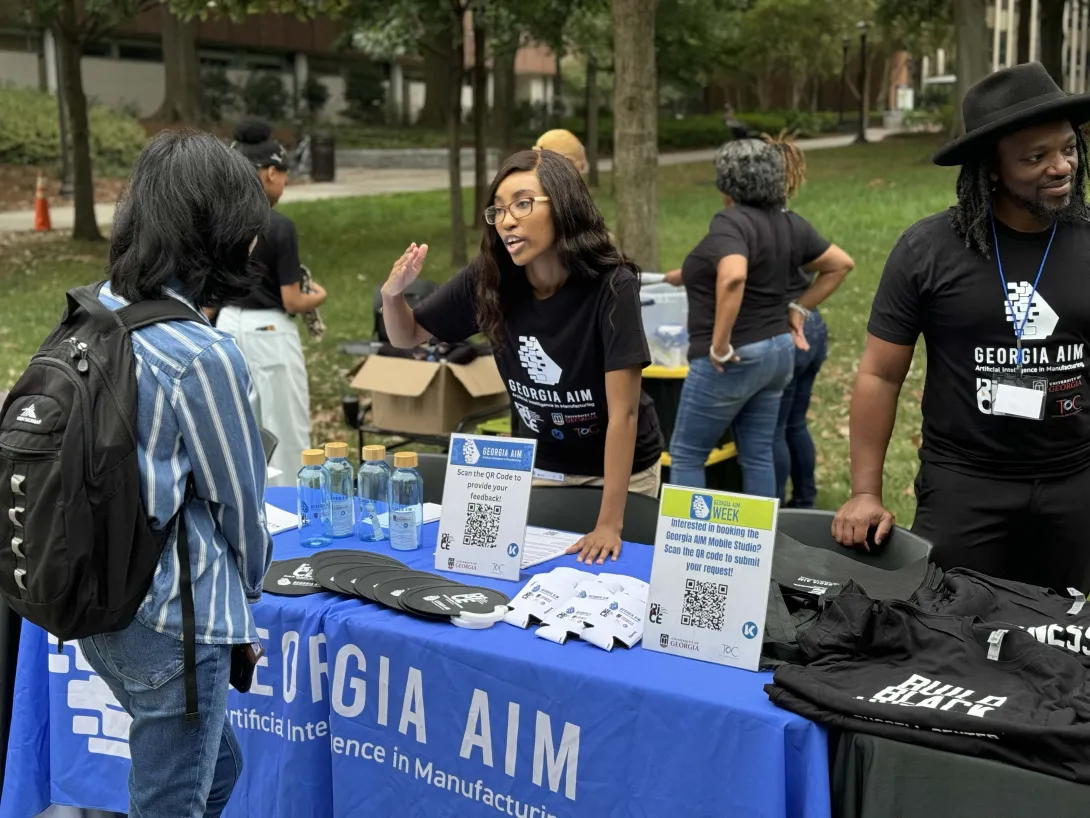
Georgia AIM representatives talk with students on Georgia Tech's campus during the launch event for their new mobile labs.
Gold and white pompoms fluttered while Buzz, the official mascot of the Georgia Institute of Technology, danced to marching band music. But the celebration wasn’t before a football or basketball game — instead, the cheers marked the official launch of Georgia AIM Week, a series of events and a new mobile lab designed to bring technology to all parts of Georgia
Organized by Georgia Artificial Intelligence in Manufacturing (Georgia AIM), Georgia AIM Week kicked off September 30 with a celebration on the Georgia Institute of Technology campus and culminated with another celebration on Friday at the University of Georgia in Athens and aligned with National Manufacturing Day.
In between, the Georgia AIM Mobile Studio made stops at schools and community organizations to showcase a range of technology rooted in AI and smart technology.
“Georgia AIM Week was a statewide opportunity for us to celebrate Manufacturing Day and to launch our Georgia AIM Mobile Studio,” said Donna Ennis, associate vice president, community-based engagement, for Georgia Tech’s Enterprise Innovation Institute and Georgia AIM co-director. “Georgia AIM projects planned events in cities around the state, starting here in Atlanta. Then we headed to Warner Robins, Southwest Georgia, and Athens. We’re excited about the opportunity to bring this technology to our communities and increase access and ideas related to smart technology.”
Georgia AIM is a collaboration across the state to provide the tools and knowledge to empower all communities, particularly those that have been underserved and overlooked in manufacturing. This includes rural communities, women, people of color, and veterans. Georgia AIM projects are located across the state and work within communities to create a diverse AI manufacturing workforce. The federally funded program is a collaborative project administered through Georgia Tech’s Enterprise Innovation Institute and the Georgia Tech Manufacturing Institute.
A cornerstone of Georgia AIM Week was the debut of the Georgia AIM Mobile Studio, a 53-foot custom trailer outfitted with technology that can be used in manufacturing — but also by anyone with an interest in learning about AI and smart technology. Visitors to the mobile studio can experience virtual reality, 3-D printing, drones, robots, sensors, computer vision, and circuits essential to running this new tech.
There’s even a dog — albeit a robotic one — named Nova.
The studio was designed to introduce students to the possibilities of careers in manufacturing and show small businesses some of the cost-effective ways they can incorporate 21st century technology into their manufacturing operations.
“We were awarded about $7.5 million to build this wonderful studio here,” said Kenya Asbill, who works at the Russell Innovation Center for Entrepreneurs (RICE) as the Economic Development Administration project manager for Georgia AIM. “We will be traveling around the state of Georgia to introduce artificial intelligence in manufacturing to our targeted communities, including underserved rural and urban residents.”
Some technology on the Georgia AIM Mobile Studio was designed in consultation with project partners Kitt Labs and Technologists of Color. An additional suite of “technology vignettes” were developed by students at the University of Georgia College of Engineering. RICE and UGA served as project leads for the mobile studio development, and RICE will oversee its deployment across the state in the coming months.
To request a mobile studio visit, please visit the Georgia AIM website.
During Monday’s kickoff, the Georgia Tech cheerleaders and Buzz fired up the crowd before an event that featured remarks by Acting Assistant Secretary of the U.S. EDA Christina Killingsworth; Jay Bailey, president and CEO of RICE; Beshoy Morkos, associate professor of mechanical engineering at the University of Georgia; Aaron Stebner, co-director of Georgia AIM; David Bridges, vice president of Georgia Tech’s Enterprise Innovation Institute; and lightning presentations by Georgia AIM project leads from around the state.
Following the presentations, mobile studio tours were led by Jon Exume, president and executive director, and Mark Lawson, director of technology, for Technologists of Color. The organization works to create a cohesive and thriving community of African Americans in tech.
“I’m particularly excited to witness the launch of the Georgia AIM Mobile Studio. It really will help demystify AI and bring its promise to underserved rural areas across the state,” Killingsworth said. “AI is the defining technology of our generation. It’s transforming the global economy, and it will continue to have tremendous impact on the global workforce. And while AI has the potential to democratize access to information, enhance efficiency, and allow humans to focus on the more complex, creative, and meaningful aspects of work, it also has the power to exacerbate economic disparity. As such, we must work together to embrace the promise of AI while mitigating its risks.”
Other events during Georgia AIM week included the Middle Georgia Innovation Corridor Manufacturing Expo in Warner Robins, West Georgia Manufacturing Day – Student Career Expo in LaGrange, and a visit to Colquitt County High School in Moultrie. The week wrapped on Friday, Oct. 4, at the University of Georgia in Athens with a National Manufacturing Day celebration.
“We’re focused on growing our manufacturing economy,” Ennis said. “We’re also focused on the development and deployment of innovation and talent in the manufacturing industry as it relates to AI and other technologies. Manufacturing is cool. It is a changing industry. We want our students and younger people to understand that this is a career.”
News Contact
Dec. 02, 2024

U.S. Secretary of the Navy Carlos Del Toro during his remarks at the John Lewis Student Center.
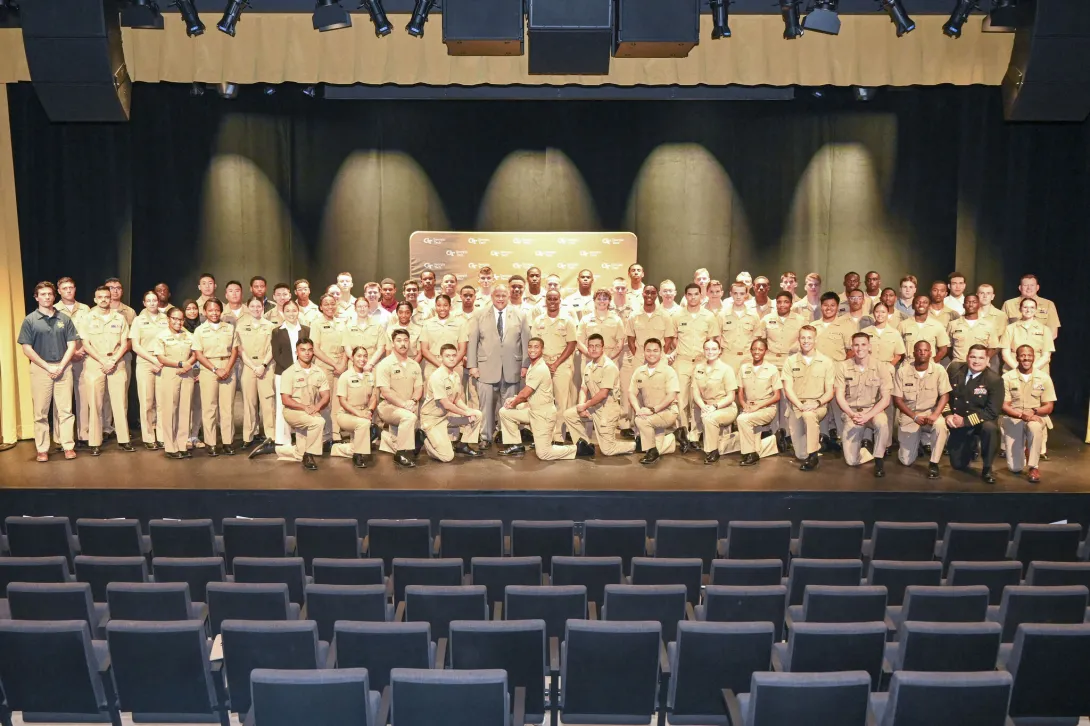
The Secretary provided an update on science and technology research to the Atlanta Region Naval Reserve Officer Training Corps unit, comprised of midshipmen from Georgia Tech, Georgia State University, Kennesaw State University, Morehouse College, Spelman College, and Clark Atlanta University.
The Georgia Tech Research Institute (GTRI) proudly hosted U.S. Secretary of the Navy Carlos Del Toro during his recent campus visit. Del Toro's visit underscored the critical role of innovation and technology in national security and highlighted Georgia Tech's significant contributions to this effort.
“Our Navy-Marine Corps Team remains at the center of global and national security — maintaining freedom of the seas, international security, and global stability,” he explained in his remarks at the John Lewis Student Center. “To win the fight of the future, we must embrace and implement emerging technologies.”
The Secretary provided an update on science and technology research to the Atlanta Region Naval Reserve Officer Training Corps unit, comprised of midshipmen from Georgia Tech, Georgia State University, Kennesaw State University, Morehouse College, Spelman College, and Clark Atlanta University. Del Toro has worked to establish a new Naval Science and Technology Strategy to address current and future challenges faced by the Navy and Marine Corps. The strategy serves as a global call to service and innovation for stakeholders in academia, industry, and government.
“The Georgia Tech Research Institute has answered this call,” he said.
A key pillar of the new strategy, says Del Toro, was the establishment of the Department of the Navy’s Science and Technology Board in 2023, “with the intent that the board provide independent advice and counsel to the department on matters and policies relating to scientific, technical, manufacturing, acquisition, logistics, medicine, and business management functions.”
The board, which includes Georgia Tech Manufacturing Institute (GTMI) Executive Director Thomas Kurfess, has conducted six studies in its inaugural year to identify new technologies for rapid adoption and provide near-term, practical recommendations for quick implementation by the Navy.
“I recently led the team for developing a strategy for integrating additive manufacturing into the Navy’s overall shipbuilding and repair strategy,” says Kurfess. “We just had final approval of our recommendations — we are making a significant impact on the Navy with respect to additive manufacturing.”
Del Toro's visit to Georgia Tech reaffirms the Institute's role as a leader in research and innovation, particularly in areas critical to national security. The collaboration between Georgia Tech and the Department of the Navy continues to drive advancements that ensure the safety and effectiveness of the nation's naval forces.
“Innovation is at the heart of our efforts at Georgia Tech and GTMI,” says Kurfess. “It is an honor to put that effort toward ensuring our country’s safety and national security in partnership with the U.S. Navy.”
“As our department continues to reimagine and refocus our innovation efforts,” said Del Toro, “I encourage all of you — our nation’s scientists, engineers, researchers, and inventors — to join us.”
News Contact
Audra Davidson
Research Communications Program Manager
Georgia Tech Manufacturing Institute
Dec. 05, 2024
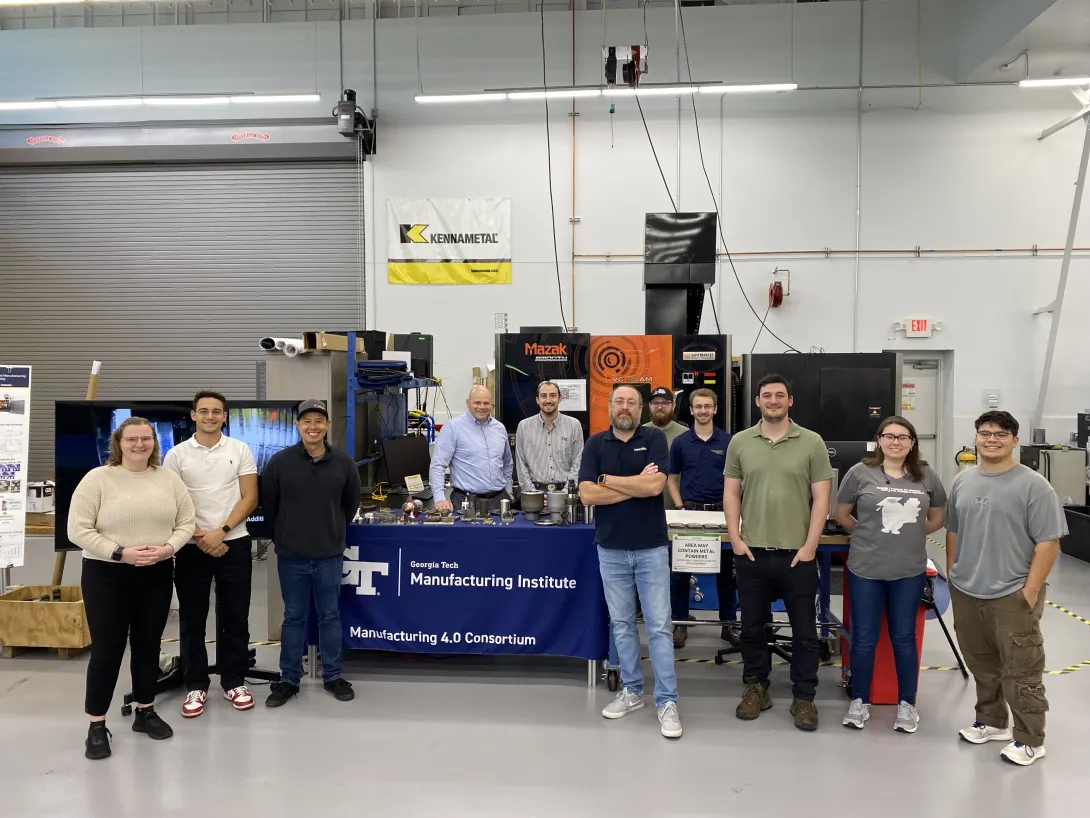
Georgia Tech students and staff members gathered at the Advanced Manufacturing Pilot Facility with members of OPEN MIND for the training.
As automation and AI continue to transform the manufacturing industry, the need for seamless integration across all production stages has reached an all-time high. By digitally designing products, controlling the machinery that builds them, and collecting precise data at each step, digital integration streamlines the entire manufacturing process — cutting down on waste materials, cost, and production time.
Recently, the Georgia Tech Manufacturing Institute (GTMI) teamed up with OPEN MIND Technologies to host an immersive, weeklong training session on hyperMILL, an advanced manufacturing software enabling this digital integration.
OPEN MIND, the developer of hyperMILL, has been a longtime supporter of research operations in Georgia Tech’s Advanced Manufacturing Pilot Facility (AMPF). “Our adoption of their software solutions has allowed us to explore the full potential of machines and to make sure we keep forging new paths,” said Steven Ferguson, a principal research scientist at GTMI.
Software like hyperMILL helps plan the most efficient and accurate way to cut, shape, or 3D print materials on different machines, making the process faster and easier. Hosted at the AMPF, the immersive training offered 10 staff members and students a hands-on platform to use the software while practicing machining and additive manufacturing techniques.
“The number of new features and tricks that the software has every year makes it advantageous to stay current and get a refresher course,” said Alan Burl, a Ph.D. student in the George W. Woodruff School of Mechanical Engineering who attended the training session. “More advanced users can learn new tips and tricks while simultaneously exposing new users to the power of a fully featured, computer-aided manufacturing software.”
OPEN MIND Technologies has partnered with Georgia Tech for over five years to support digital manufacturing research, offering biannual training in their latest software to faculty and students.
“Meeting the new graduate students each fall is something that I look forward to,” said Brad Rooks, an application engineer at OPEN MIND and one of the co-leaders of the training session. “This particular group posed questions that were intuitive and challenging to me as a trainer — their inquisitive nature drove me to look at our software from fresh perspectives.”
The company is also a member of GTMI’s Manufacturing 4.0 Consortium, a membership-based group that unites industry, academia, and government to develop and implement advanced manufacturing technologies and train the workforce for the market.
“The strong reputation of GTMI in the manufacturing industry, and more importantly, the reputation of the students, faculty, and researchers who support research within our facilities, enables us to forge strategic partnerships with companies like OPEN MIND,” says Ferguson, who also serves as executive director of the consortium. “These relationships are what makes working with and within GTMI so special.”
News Contact
Audra Davidson
Research Communications Program Manager
Georgia Tech Manufacturing Institute
Dec. 03, 2024
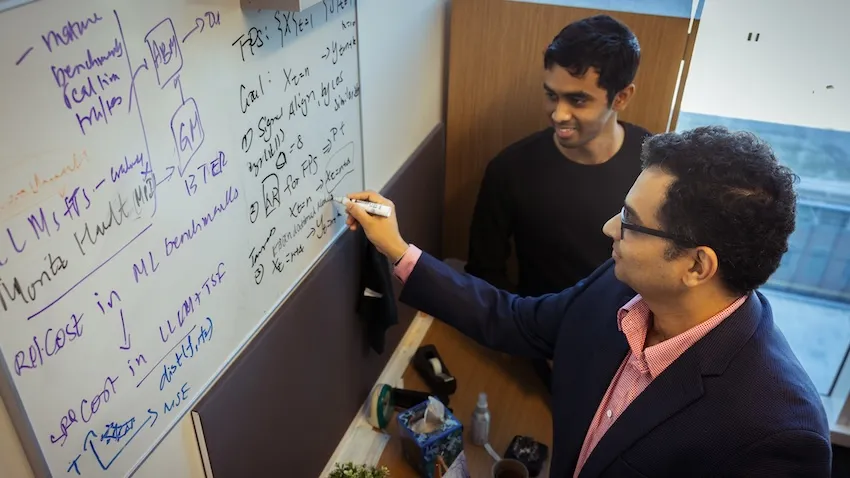
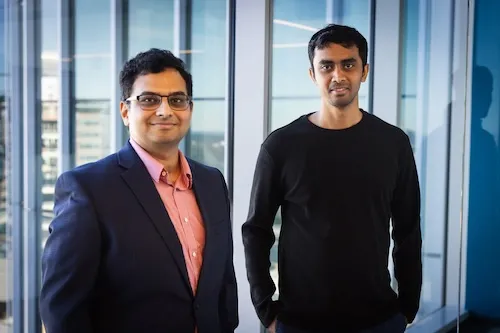
A new machine learning (ML) model from Georgia Tech could protect communities from diseases, better manage electricity consumption in cities, and promote business growth, all at the same time.
Researchers from the School of Computational Science and Engineering (CSE) created the Large Pre-Trained Time-Series Model (LPTM) framework. LPTM is a single foundational model that completes forecasting tasks across a broad range of domains.
Along with performing as well or better than models purpose-built for their applications, LPTM requires 40% less data and 50% less training time than current baselines. In some cases, LPTM can be deployed without any training data.
The key to LPTM is that it is pre-trained on datasets from different industries like healthcare, transportation, and energy. The Georgia Tech group created an adaptive segmentation module to make effective use of these vastly different datasets.
The Georgia Tech researchers will present LPTM in Vancouver, British Columbia, Canada, at the 2024 Conference on Neural Information Processing Systems (NeurIPS 2024). NeurIPS is one of the world’s most prestigious conferences on artificial intelligence (AI) and ML research.
“The foundational model paradigm started with text and image, but people haven’t explored time-series tasks yet because those were considered too diverse across domains,” said B. Aditya Prakash, one of LPTM’s developers.
“Our work is a pioneer in this new area of exploration where only few attempts have been made so far.”
[MICROSITE: Georgia Tech at NeurIPS 2024]
Foundational models are trained with data from different fields, making them powerful tools when assigned tasks. Foundational models drive GPT, DALL-E, and other popular generative AI platforms used today. LPTM is different though because it is geared toward time-series, not text and image generation.
The Georgia Tech researchers trained LPTM on data ranging from epidemics, macroeconomics, power consumption, traffic and transportation, stock markets, and human motion and behavioral datasets.
After training, the group pitted LPTM against 17 other models to make forecasts as close to nine real-case benchmarks. LPTM performed the best on five datasets and placed second on the other four.
The nine benchmarks contained data from real-world collections. These included the spread of influenza in the U.S. and Japan, electricity, traffic, and taxi demand in New York, and financial markets.
The competitor models were purpose-built for their fields. While each model performed well on one or two benchmarks closest to its designed purpose, the models ranked in the middle or bottom on others.
In another experiment, the Georgia Tech group tested LPTM against seven baseline models on the same nine benchmarks in zero-shot forecasting tasks. Zero-shot means the model is used out of the box and not given any specific guidance during training. LPTM outperformed every model across all benchmarks in this trial.
LPTM performed consistently as a top-runner on all nine benchmarks, demonstrating the model’s potential to achieve superior forecasting results across multiple applications with less and resources.
“Our model also goes beyond forecasting and helps accomplish other tasks,” said Prakash, an associate professor in the School of CSE.
“Classification is a useful time-series task that allows us to understand the nature of the time-series and label whether that time-series is something we understand or is new.”
One reason traditional models are custom-built to their purpose is that fields differ in reporting frequency and trends.
For example, epidemic data is often reported weekly and goes through seasonal peaks with occasional outbreaks. Economic data is captured quarterly and typically remains consistent and monotone over time.
LPTM’s adaptive segmentation module allows it to overcome these timing differences across datasets. When LPTM receives a dataset, the module breaks data into segments of different sizes. Then, it scores all possible ways to segment data and chooses the easiest segment from which to learn useful patterns.
LPTM’s performance, enhanced through the innovation of adaptive segmentation, earned the model acceptance to NeurIPS 2024 for presentation. NeurIPS is one of three primary international conferences on high-impact research in AI and ML. NeurIPS 2024 occurs Dec. 10-15.
Ph.D. student Harshavardhan Kamarthi partnered with Prakash, his advisor, on LPTM. The duo are among the 162 Georgia Tech researchers presenting over 80 papers at the conference.
Prakash is one of 46 Georgia Tech faculty with research accepted at NeurIPS 2024. Nine School of CSE faculty members, nearly one-third of the body, are authors or co-authors of 17 papers accepted at the conference.
Along with sharing their research at NeurIPS 2024, Prakash and Kamarthi released an open-source library of foundational time-series modules that data scientists can use in their applications.
“Given the interest in AI from all walks of life, including business, social, and research and development sectors, a lot of work has been done and thousands of strong papers are submitted to the main AI conferences,” Prakash said.
“Acceptance of our paper speaks to the quality of the work and its potential to advance foundational methodology, and we hope to share that with a larger audience.”
News Contact
Bryant Wine, Communications Officer
bryant.wine@cc.gatech.edu
Dec. 02, 2024
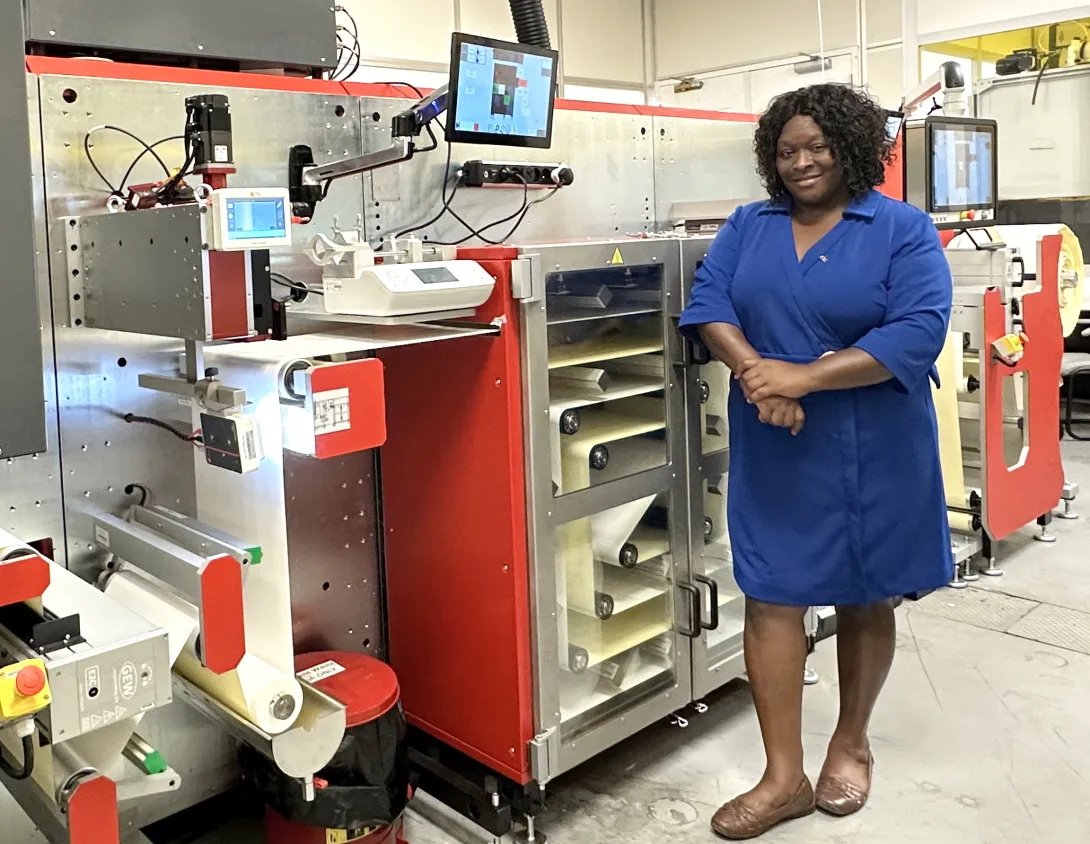
Tequila A.L. Harris, a professor in the George W. Woodruff School of Mechanical Engineering at Georgia Tech, leads energy and manufacturing initiatives at the Strategic Energy Institute. Her research explores the connectivity between the functionality of nano- to macro-level films, components, and systems based on their manufacture or design and their life expectancy, elucidating mechanisms by which performance or durability can be predicted. She uses both simulations and experimentation to better understand this connectivity.
By addressing complex, fundamental problems, Harris aims to make an impact on many industries, in particular energy (e.g., polymer electrolyte membrane fuel cells), flexible electronics (e.g., organic electronics), and clean energy (e.g., water), among others.
Harris has experience in developing systematic design and manufacturing methodologies for complex systems that directly involve material characterization, tooling design and analysis, computational and analytical modeling, experimentation, and system design and optimization. Currently, her research projects focus on investigating the fundamental science associated with fluid transport, materials processing, and design issues for energy/electronic/environmental systems. Below is a brief Q&A with Harris, where she discusses her research and how it influences the energy and manufacturing initiatives at Georgia Tech.
- What is your field of expertise and at what point in your life did you first become interested in this area?
In graduate school, I aimed to become a roboticist but shifted my focus after realizing I was not passionate about coding. This led me to explore manufacturing, particularly scaled manufacturing processes that transform fluids into thin films for applications in energy systems. Subsequently, my expertise is in coating science and technology and manufacturing system development.
- What questions or challenges sparked your current energy research? What are the big issues facing your research area right now?
We often ask how we can process materials more cost-effectively and create complex architectures that surpass current capabilities. In energy systems, particularly with fuel cells, reducing the number of manufacturing steps is crucial, as each additional step increases costs and complexity. As researchers, we focus on understanding the implications of minimizing these steps and how they affect the properties and performance of the final devices. My group studies these relationships to find innovative manufacturing solutions. A major challenge in the manufacture of materials lies in scaling efficiently while maintaining performance and keeping costs low enough for commercial adoption. This is a pressing issue, especially for enabling technologies such as batteries, fuel cells, and flexible electronics needed for electric vehicles, where the production volumes are on the order of billions per year.
- What interests you the most in leading the research initiative on energy and manufacturing? Why is your initiative important to the development of Georgia Tech’s energy research strategy?
What interests me most is the inherent possibility of advancing energy technologies holistically, from materials sourcing and materials production to public policy. More specifically, my interests are in understanding how we can scale the manufacture of burgeoning technologies for a variety of areas (energy, food, pharmaceuticals, packaging, and flexible electronics, among others) while reducing cost and increasing production yield. In this regard, we aim to incorporate artificial intelligence and machine learning in addition to considering limitations surrounding the production lifecycle. The challenges that exist to meet these goals cannot be done in a silo but rather as part of interdisciplinary teams who converge on specific problems. Georgia Tech is uniquely positioned to make significant impacts in the energy and manufacturing ecosystem, thanks to our robust infrastructure and expertise. With many manufacturers relocating to Georgia, particularly in the "energy belt" for EVs, batteries, and recycling facilities, Georgia Tech can serve as a crucial partner in advancing these industries and their technologies.
- What are the broader global and social benefits of the research you and your team conduct on energy and manufacturing?
The global impact of advancing manufacturing technologies is significant for processing at relevant economy of scales. To meet such demands, we cannot always rely on existing manufacturing know-how. The Harris group holds the intellectual property on innovative processes that allow for the faster fabrication of individual or multiple materials, and that exhibit higher yields and improved performance than existing methods. Improvements in manufacturing systems often result in reduced waste, which is beneficial to the overall materials development ecosystem. Another global and societal benefit is workforce development. The students on my team are well-trained in the manufacture of materials using tools that are amenable to the most advanced and scalable manufacturing platform, roll-to-roll manufacturing, with integrated coating and printing tools. This unique skill set equips our students to thrive and become leaders in their careers.
- What are your plans for engaging a wider Georgia Tech faculty pool with the broader energy community?
By leveraging the new modular pilot-scale roll-to-roll manufacturing facility that integrates slot die coating, gravure/flexography printing, and inkjet printing, I plan to continue reaching out to faculty and industrial partners to find avenues for us to collaborate on a variety of interdisciplinary projects. The goal is to create groups that can help us advance materials development more rapidly by working as a collective from the beginning, versus considering scalable manufacturing pathways as an afterthought. By bringing interdisciplinary groups (chemists, materials scientists, engineers, etc.) together early, we can more efficiently and effectively overcome traditional delays in getting materials to market or, worse, the inability to push materials to market (which is commonly known as the valley of death). This can only be achieved by dismantling barriers that hinder early collaboration. This new facility aims to foster collaborative work among stakeholders, promoting the integrated development and characterization of various materials systems and technologies, and ultimately leading to more efficient manufacturing practices.
- What are your hobbies?
I enjoy cooking and exploring my creativity in this space by combining national and international ingredients to make interesting and often delicious fusion cuisines. I also enjoy roller skating, cycling, and watching movies with my family and friends.
- Who has influenced you the most?
From a professional standpoint, my research team influences me the most. After I present them with a problem, they are encouraged and expected to think beyond our initial starting point. This ability to freely think and conceive of novel solutions sparks many new ideas on which to build future ideas. The best cases have kept me up at night, inspiring me to think about how to approach new problems and funding opportunities. I carry their experiences and challenges with me. Their influence on me is profound and is fundamentally why I am a professor.
News Contact
Priya Devarajan || SEI Communications Program Manager