
Jan. 24, 2025
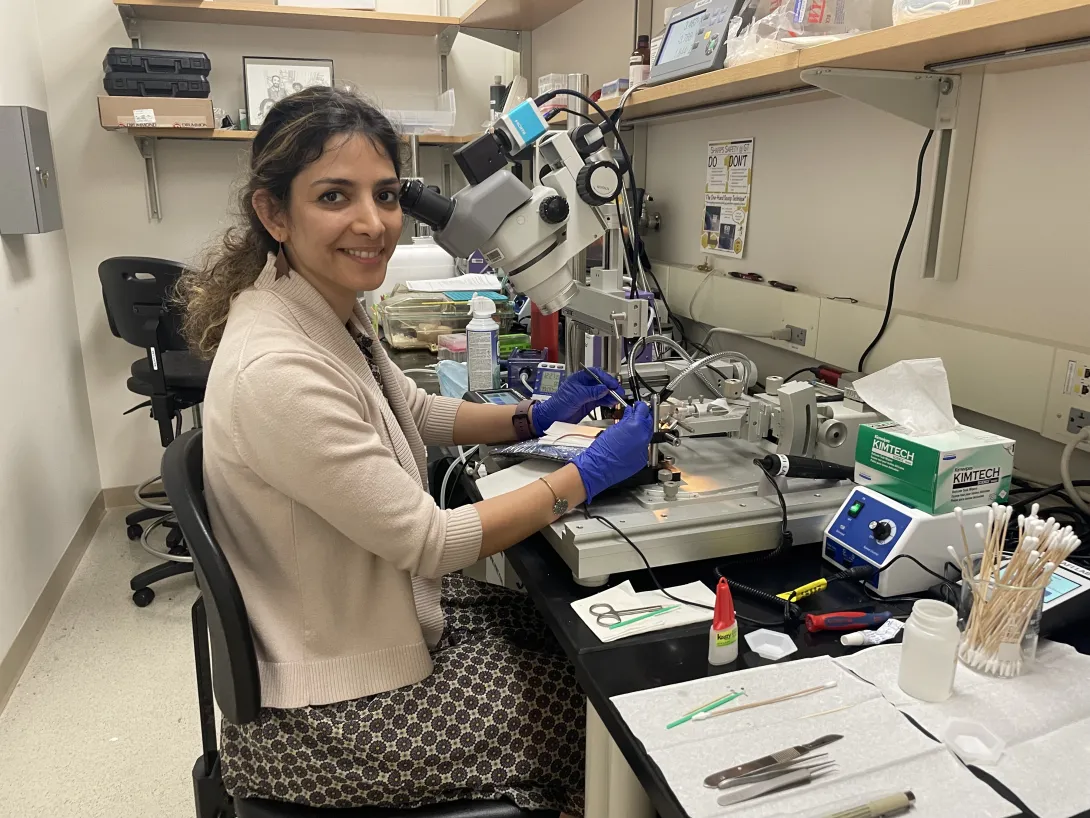
Farzaneh Najafi, assistant professor in the School of Biological Sciences at Georgia Tech, conducting research in her lab.
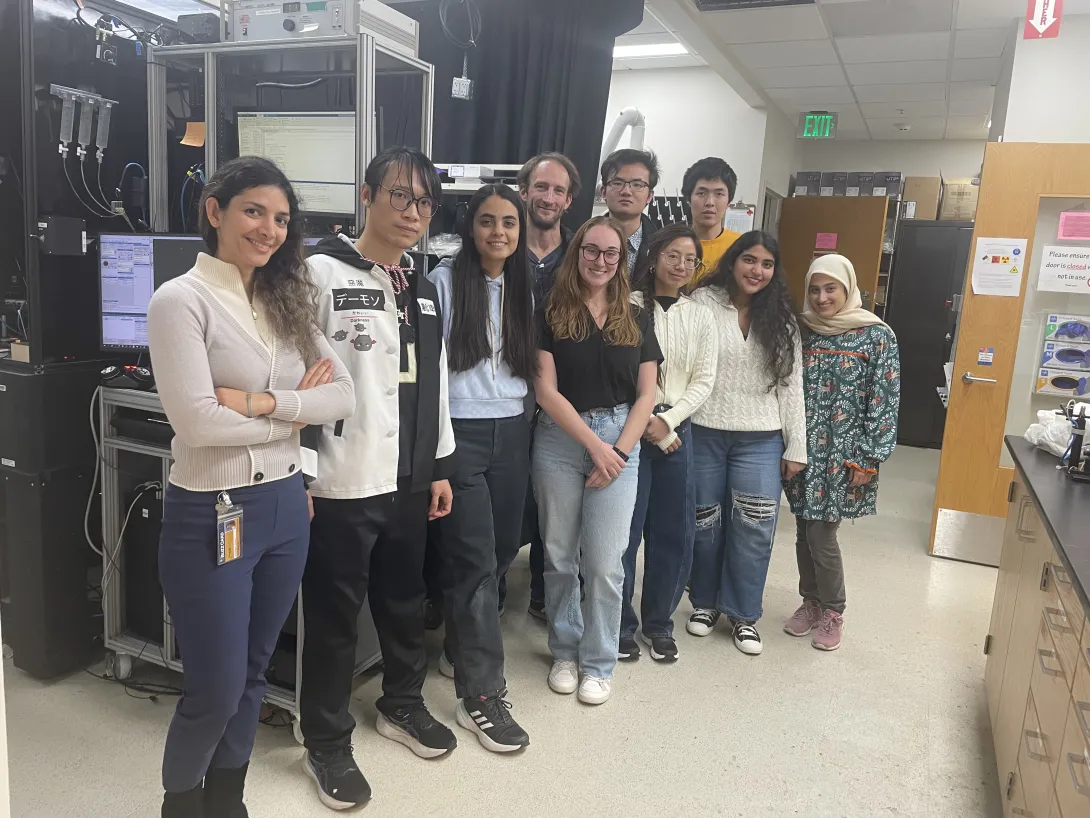
Farzaneh Najafi, who is affiliated with the Parker H. Petit Institute for Bioengineering and Bioscience and the Neuro Next Initiative, with her research group.
In psychology and neuroscience research, a host of behaviors fall under the cognitive umbrella: learning, perceiving the environment, storing memories, and making decisions are just a few. Much like binary code underpins complex computational processes, researchers have long been searching for the molecular mechanisms that enable cognition.
Farzaneh Najafi, an assistant professor in Georgia Tech’s School of Biological Sciences(SBS) , recently received multiple awards that will enable her to dig deeper into the molecular origins of cognitive processes, with the help of interdisciplinary teams.
“If we want to understand cognition, we really have to start small: at the level of molecules, genes, and the genome, and then work our way up to systems, behavior, and cognition,” says Najafi. “Impactful discoveries happen when people from different disciplines come together and collaborate. That’s how we make real breakthroughs.”
Two of her recent awards stem from the third and final year of the Scialog: Molecular Basis of Cognition initiative. Funded by the Research Corporation for Science Advancement (RCSA), the Frederick Gardner Cottrell Foundation, and the Walder Foundation, this initiative has provided 48 multidisciplinary teams with more than $2.4 million to advance this area of research.
“It’s exciting that Farzaneh has won not just one, but two team-based Scialog awards,” said SBS School Chair Jeffrey (Todd) Streelman. “Solving big problems in neuroscience often requires teams, and Farzaneh is well-placed to apply this in her research program.”
With additional funding from the Whitehall Foundation and Chan Zuckerberg Initiative, Najafi is set to lead several interdisciplinary projects to uncover the role of the cerebellum and neocortex (the brain’s outer layer) across distinct cognitive processes.
“At the end of the day, the goal is to develop effective therapeutics,” says Najafi, whose work has long aimed to better understand and treat psychiatric and neurological disorders. “To develop targeted treatments, we have to identify the molecules that are at the core of these cognitive processes.”
Deeper than thought
Throughout her career, Najafi has focused on how the brain makes and uses predictions to influence learning and behavior, with a particular focus on an area in the back of the brain called the cerebellum.
“Without those predictions, our perceptions and actions would be significantly delayed, which could impact our survival,” explains Najafi. “Learning happens when we update those predictions to better align with the world around us.”
Najafi will bring that cerebellar expertise to two collaborative teams with the Scialog initiative.
Working with researchers from Stanford University and Case Western Reserve University, one of Najafi’s Scialog projects will focus on how sleep deprivation alters the 3D structure of genetic material in different species’ cerebellum— and investigate potential mechanisms to reverse those changes.
Her second project, in collaboration with researchers from University of California San Francisco and Duke University, explores how the brain chemical norepinephrine affects cerebellar activity across species. This research aims to understand the cerebellum's role in behavioral flexibility and adaptation, revealing how these chemical signals influence various brain functions.
Working across disciplines
Formed at the October 2024 Scialog meeting, Najafi’s two collaborative teams are part of an RCSA initiativethat unites early career scientists in advancing basic science and developing high-risk, high-reward research projects. The Scialog: Molecular Basis of Cognition initiative, begun in 2022, annually gathered around 50 early career researchers to create collaborative proposals.
“The best part of the Scialog meeting was connecting with people from all kinds of disciplines. They worked with different species, used a variety of experimental and computational tools, and some attendees came from non-neuroscience backgrounds,” says Najafi. “I had no idea that these were the topics I was going to write about — they only came about because of the inspiring conversations I had at the meeting. I really loved the experience.”
Both Scialog teams are highly interdisciplinary, with researchers bringing expertise in different techniques and species to the team. Even within her own lab, Najafi attributes impactful research to interdisciplinary teams.
“The only way to solve big questions in neuroscience is through an interdisciplinary approach,” says Najafi, who is affiliated with two Interdisciplinary Research Institutes (IRI) at Georgia Tech: the Parker H. Petit Institute for Bioengineering and Bioscience and the Neuro Next Initiative, a nascent IRI in neuroscience and society. “What’s great about Georgia Tech is its strong emphasis on interdisciplinary collaboration. With these research institutes, the infrastructure is already in place, and they're actively working to expand it.”
News Contact
Audra Davidson
Research Communications Program Manager
Neuro Next Initiative
Jan. 22, 2025
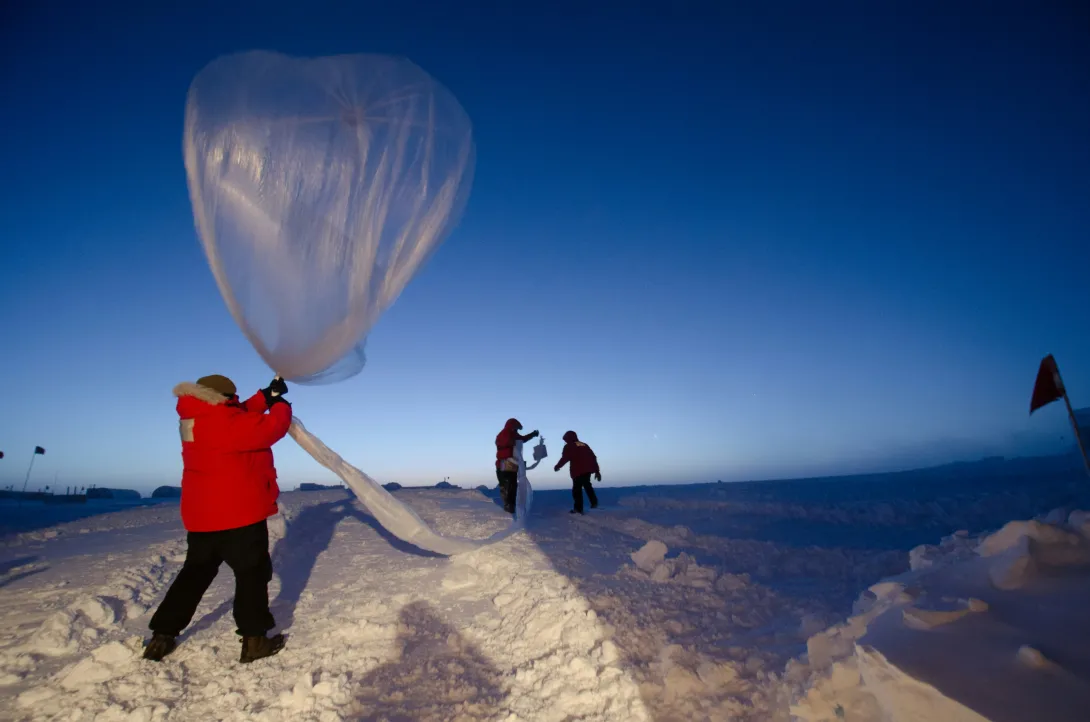
Researchers launch a a lightweight, balloon-borne instrument to collect data. "To keep advancing, we need scientists who can determine what data we need, collect that data, and solve problems," Bracco says. (NOAA)
Exponential growth in big data and computing power is transforming climate science, where machine learning is playing a critical role in mapping the physics of our changing climate.
“What is happening within the field is revolutionary,” says School of Earth and Atmospheric Sciences Associate Chair and Professor Annalisa Bracco, adding that because many climate-related processes — from ocean currents to melting glaciers and weather patterns — can be described with physical equations, these advancements have the potential to help us understand and predict climate in critically important ways.
Bracco is the lead author of a new review paper providing a comprehensive look at the intersection of AI and climate physics.
The result of an international collaboration between Georgia Tech’s Bracco, Julien Brajard (Nansen Environmental and Remote Sensing Center), Henk A. Dijkstra (Utrecht University), Pedram Hassanzadeh (University of Chicago), Christian Lessig (European Centre for Medium-Range Weather Forecasts), and Claire Monteleoni (University of Colorado Boulder), the paper, ‘Machine learning for the physics of climate,’ was recently published in Nature Reviews Physics.
“One of our team’s goals was to help people think deeply on how climate science and AI intersect,” Bracco shares. “Machine learning is allowing us to study the physics of climate in a way that was previously impossible. Coupled with increasing amounts of data and observations, we can now investigate climate at scales and resolutions we’ve never been able to before.”
Connecting hidden dots
The team showed that ML is driving change in three key areas: accounting for missing observational data, creating more robust climate models, and enhancing predictions, especially in weather forecasting. However, the research also underscores the limits of AI — and how researchers can work to fill those gaps.
“Machine learning has been fantastic in allowing us to expand the time and the spatial scales for which we have measurements,” says Bracco, explaining that ML could help fill in missing data points — creating a more robust record for researchers to reference. However, like patching a hole in a shirt, this works best when the rest of the material is intact.
“Machine learning can extrapolate from past conditions when observations are abundant, but it can’t yet predict future trends or collect the data we need,” Bracco adds. “To keep advancing, we need scientists who can determine what data we need, collect that data, and solve problems.”
Modeling climate, predicting weather
Machine learning is often used when improving climate models that can simulate changing systems like our atmosphere, oceans, land, biochemistry, and ice. “These models are limited because of our computing power, and are run on a three-dimensional grid,” Bracco explains: below the grid resolution, researchers need to approximate complex physics with simpler equations that computers can solve quickly, a process called ‘parameterization’.
Machine learning is changing that, offering new ways to improve parameterizations, she says. “We can run a model at extremely high resolutions for a short time, so that we don’t need to parameterize as many physical processes — using machine learning to derive the equations that best approximate what is happening at small scales,” she explains. “Then we can use those equations in a coarser model that we can run for hundreds of years.”
While a full climate model based solely on machine learning may remain out of reach, the team found that ML is advancing our ability to accurately predict weather systems and some climate phenomena like El Niño.
Previously, weather prediction was based on knowing the starting conditions — like temperature, humidity, and barometric pressure — and running a model based on physics equations to predict what might happen next. Now, machine learning is giving researchers the opportunity to learn from the past. “We can use information on what has happened when there were similar starting conditions in previous situations to predict the future without solving the underlying governing equations,” Bracco says. “And all while using orders-of-magnitude less computing resources.”
The human connection
Bracco emphasizes that while AI and ML play a critical role in accelerating research, humans are at the core of progress. “I think the in-person collaboration that led to this paper is, in itself, a testament to the importance of human interaction,” she says, recalling that the research was the result of a workshop organized at the Kavli Institute for Theoretical Physics — one of the team’s first in-person discussions after the Covid-19 pandemic.
“Machine learning is a fantastic tool — but it's not the solution to everything,” she adds. “There is also a real need for human researchers collecting high-quality data, and for interdisciplinary collaboration across fields. I see this as a big challenge, but a great opportunity for computer scientists and physicists, mathematicians, biologists, and chemists to work together.”
Funding: National Science Foundation, European Research Council, Office of Naval Research, US Department of Energy, European Space Agency, Choose France Chair in AI.
DOI: https://doi.org/10.1038/s42254-024-00776-3
News Contact
Written by Selena Langner
Jan. 21, 2025
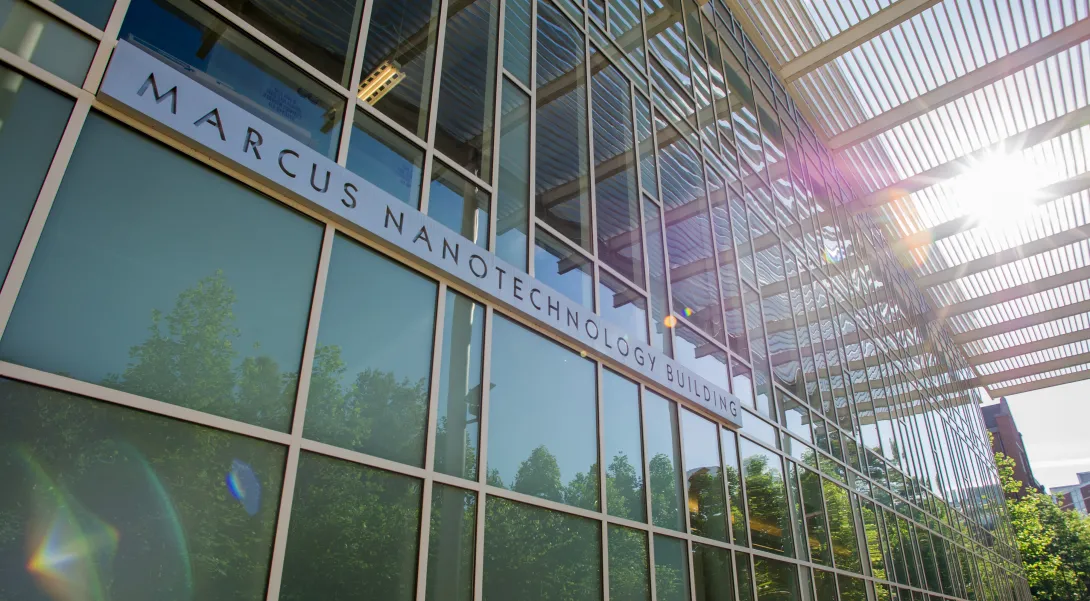
Georgia Institute of Technology is set to play a crucial role in a strategic effort funded by the Defense Advanced Research Project Agency (DARPA) to help bolster America’s national security and global military leadership.
The project, led by the Texas Institute for Electronics (TIE) at The University of Texas at Austin, represents a total investment of $1.4 billion. The $840 million award from DARPA, announced by TIE in 2024, aims to develop the next generation of high-performing semiconductor microsystems for the Department of Defense (DoD).
“We are honored to collaborate with TIE and its broader team on this far reaching and strategic program to enable best in class 3D heterogeneous integration (3DHI) processes and technologies in the United States,” said Muhannad S. Bakir, the Dan Fielder Professor in the School of Electrical and Computer Engineering and director of the 3D Systems Packaging Research Center, who is heading the project for Georgia Tech.
3DHI is a semiconductor manufacturing process that incorporates different materials and components into microsystems with precision assembly. The use of 3DHI allows for the creation of high-performance, compact, and energy-efficient systems.
The investment is part of DARPA’s Next Generation Microelectronics Manufacturing (NGMM) Program comprised of 32 defense electronics and leading commercial semiconductor companies and 18 nationally recognized academic institutions.
Under the agreement, TIE will establish a national open access R&D and prototyping fabrication facility. The facility will enable the DoD to create higher performance, lower power, lightweight, and compact defense systems. The advancements are expected to have wide-ranging applications, including radar, satellite imaging, and unmanned aerial vehicles.
Georgia Tech will provide a wide range of expertise in 3DHI including design, fabrication and assembly processes, and characterization to support the NGMM national open-access R&D and prototyping facility at TIE.
Regents' Professor and Morris M. Bryan, Jr. Professor Suresh K. Sitaraman in the George W. Woodruff School of Mechanical Engineering will be a key contributor to Georgia Tech’s efforts on the project.
“We are delighted to be partnering with UT/TIE on the establishment of a 3D Heterogeneous Integration Microsystem prototyping facility,” said Sitaraman. “In addition to advancing fundamental science, this project is a great opportunity for Georgia Tech to demonstrate and integrate our ground-breaking and innovative 3DHI research approaches and technology solutions into TIE’s prototyping facility, and understand the challenges involved when translating lab-scale research work to a large industry-strength fabrication facility.”
ECE Professors Saibal Mukhopadhyay, Arijit Raychowdhury, Visvesh Sathe, and Shimeng Yu will be working alongside Bakir and Sitaraman.
A significant portion of the research will be conducted at the Institute for Matter and Systems (IMS), which operates Georgia Tech’s state-of-the-art electronics and nanotechnology core facilities.
Read the press release from TIE and view the project’s team and partners.
News Contact
Dan Watson
Dec. 09, 2024
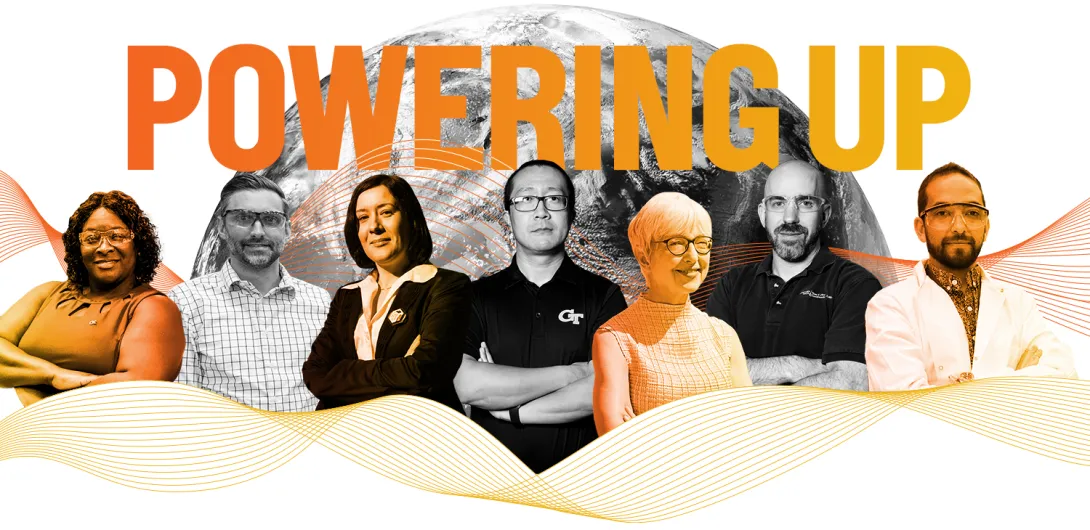
Image with GT researchers Tequila Harris, Matt McDowell, Anna Erickson, Wenting Sun, Valerie Thomas, Adam Steinberg, and Juan-Pablo Correa-Baena
For 20 years, Georgia Tech’s Strategic Energy Institute (SEI) has brought together campus researchers who collectively develop better ways to meet the energy needs of today and tomorrow.
These days, that amounts to more than 1,000 people. Georgia Tech faculty are creating advanced communications and information systems, sensing and control approaches, and transmission and energy storage technologies that will make the nation’s power distribution systems more efficient and cost-effective. Their research also focuses on integrating renewable energy sources and electric vehicles.
“As the nation’s largest technologically focused university, Georgia Tech is playing an integral role in developing solutions that enable more equitable, lower cost, and cleaner generation, storage, distribution, and utilization of energy,” said Tim Lieuwen, Georgia Tech’s interim executive vice president for research. Lieuwen knows SEI better than anyone: he had been its executive director since 2012 until stepping in this summer as interim leader of Tech’s entire research enterprise.
“Georgia Tech researchers are not just helping to create cleaner, more efficient fuel options or mitigate the environmental impact of conventional energy supplies. They also are creating better performing, more economically viable energy options,” he said.
The work at SEI and across Georgia Tech has helped make the state of Georgia one of the nation’s leaders in clean energy, battery technology, and energy sustainability. It’s attracting numerous companies to invest in research and development in the state, including Hyundai, SK Battery America, and solar panel maker Qcells.
News Contact
Jason Maderer (maderer@gatech.edu)
Director of Communications, College of Engineering
Jan. 16, 2025
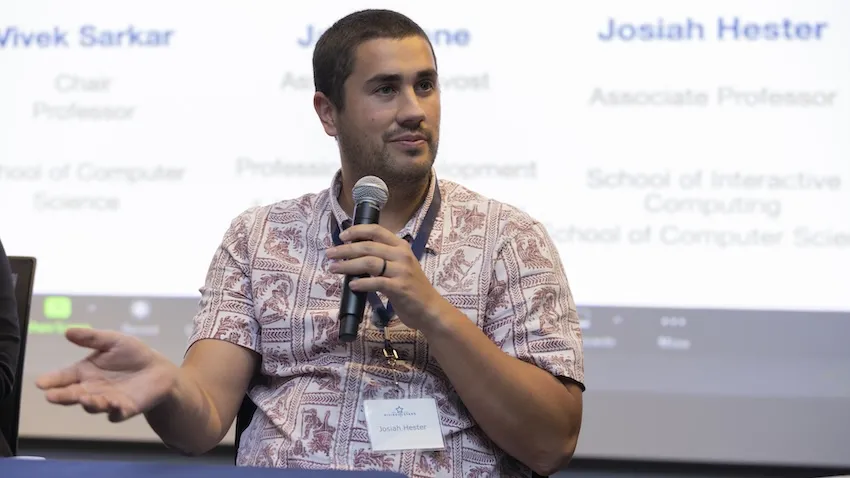
A researcher in Georgia Tech’s School of Interactive Computing has received the nation’s highest honor given to early career scientists and engineers.
Associate Professor Josiah Hester was one of 400 people awarded the Presidential Early Career Award for Scientists and Engineers (PECASE), the Biden Administration announced in a press release on Tuesday.
The PECASE winners’ research projects are funded by government organizations, including the National Science Foundation (NSF), the National Institutes of Health (NIH), the Centers for Disease Control and Prevention (CDC), and NASA. They will be invited to visit the White House later this year.
Hester joins Associate Professor Juan-Pablo Correa-Baena from the School of Materials Science and Engineering as the two Tech faculty who received the honor.
Hester said his nomination was based on the NSF Faculty Early Career Development Program (CAREER) award he received in 2022 as an assistant professor at Northwestern University. He said the NSF submits its nominations to the White House for the PECASE awards, but researchers are not informed until the list of winners is announced.
“For me, I always thought this was an unachievable, unassailable type of thing because of the reputation of the folks in computing who’ve won previously,” Hester said. “It was always a far-reaching goal. I was shocked. It’s something you would never in a million years think you would win.”
Hester is known for pioneering research in a new subfield of sustainable computing dedicated to creating battery-free devices powered by solar energy, kinetic energy, and radio waves. He co-led a team that developed the first battery-free handheld gaming device.
Last year, Hester co-authored an article published in the Association of Computing Machinery’s in-house journal, the Communications of the ACM, in which he coined the term “Internet of Battery-less Things.”
The Internet of Things is the network of physical computing devices capable of connecting to the internet and exchanging data. However, these devices eventually die. Landfills are overflowing with billions of them and their toxic power cells, harming our ecosystem.
In his CAREER award, Hester outlined projects that would work toward replacing the most used computing devices with sustainable, battery-free alternatives.
“I want everything to be an Internet of Batteryless Things — computational devices that could last forever,” Hester said. “I outlined a bunch of different ways that you could do that from the computer engineering side and a little bit from the human-computer interaction side. They all had a unifying theme of making computing more sustainable and climate-friendly.”
Hester is also a Sloan Research Fellow, an honor he received in 2022. In 2021, Popular Sciene named him to its Brilliant 10 list. He also received the Most Promising Engineer or Scientist Award from the American Indian Science Engineering Society, which recognizes significant contributions from the indigenous peoples of North America and the Pacific Islands in STEM disciplines.
President Bill Clinton established PECASE in 1996. The White House press release recognizes exceptional scientists and engineers who demonstrate leadership early in their careers and present innovative and far-reaching developments in science and technology.
News Contact
NATHAN DEEN
COMMUNICATIONS OFFICER
SCHOOL OF INTERACTIVE COMPUTING
Dec. 01, 2024

Associate Professor Marta Hatzell has been appointed interim deputy director of the Georgia Tech Strategic Energy Institute (SEI).
Hatzell currently leads the industrial decarbonization and clean catalysis initiative at SEI and holds joint appointments in the George W. Woodruff School of Mechanical Engineering and the School of Chemical and Biomolecular Engineering. Most recently, she led the Materials for Carbon-Neutral Fuel Production track at this year’s Energy Materials Day, which attracted over 400 participants from academia and industry.
“Marta has been an outstanding addition to SEI’s initiative lead program, where her contributions have already made a significant impact. I am excited to see her further engage with the Georgia Tech energy community in this role,” said Christine Conwell, SEI interim executive director.
Hatzell’s research group focuses on exploring sustainable catalysis and separations to enable clean energy, water, and food production. She serves as the site principal investigator and research thrust leader for CASFER, the National Science Foundation Engineering Research Center (NSF-ERC) with funding of $26 million for advancing sustainable fertilizer production. She is also a principal investigator in the Department of Energy’s $100 million National Alliance for Water Innovation project.
Hatzell is the recipient of the NSF Early CAREER Award for her work on distributed solar fertilizers and received the Gordon and Betty Moore Inventor fellowship to work on a low-cost, photocatalytic air-breathing system that converts air into liquid, ammonia-based fertilizer. She also received the 2020 Sloan Research Fellowship in Chemistry and the American Chemical Society’s (ACS) Sustainable Chemistry Lectureship Award in 2024. Hatzell serves as a senior editor of the ACS Energy Letters journal.
Before her role at Georgia Tech, she was a postdoctoral researcher in the Department of Materials Science and Engineering at the University of Illinois Urbana-Champaign. She holds a Ph.D. in mechanical engineering from Penn State University.
“I’m looking forward to working with the SEI staff and faculty to continue to grow Georgia Tech’s impact on the rapidly changing energy sector,” says Hatzell.
News Contact
Priya Devarajan || SEI Communications Program Manager
Jan. 09, 2025
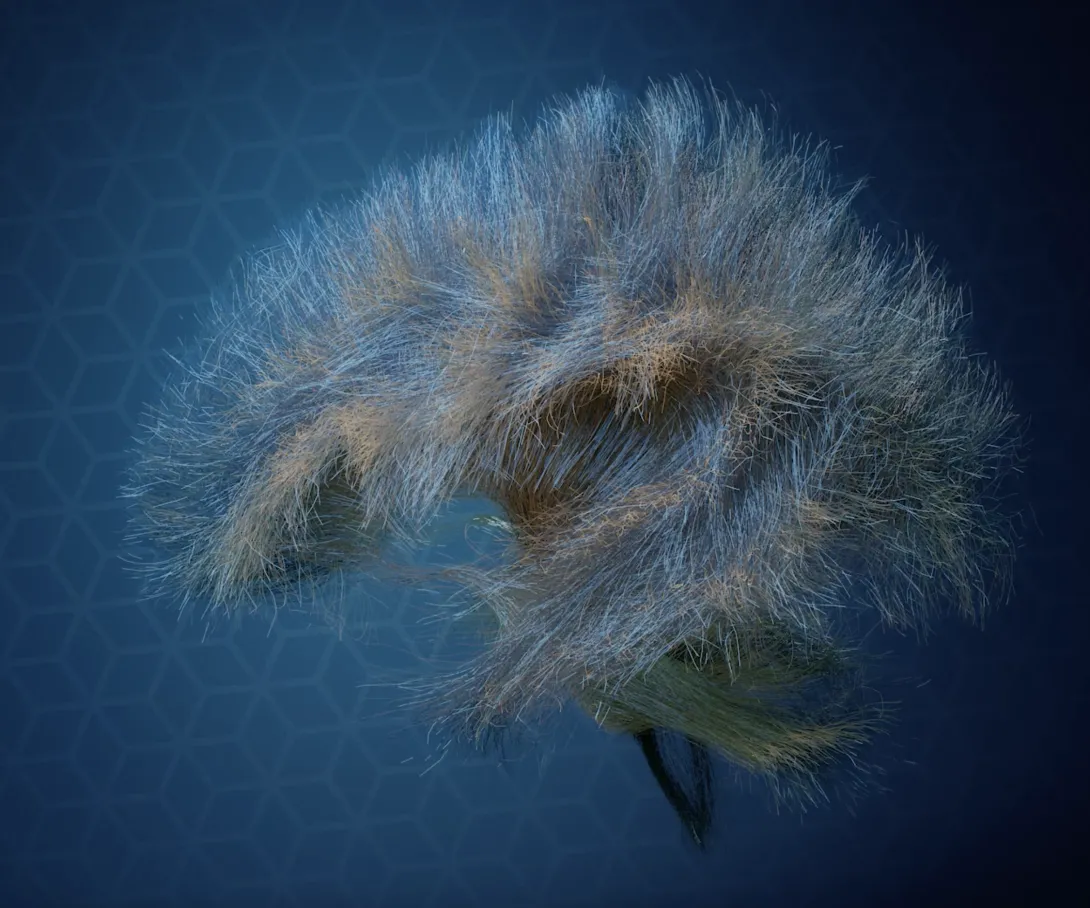
The Institute for Neuroscience, Neurotechnology, and Society (INNS) at Georgia Tech has initiated an internal search for its inaugural executive director. This new Interdisciplinary Research Institute (IRI) will build upon the foundation laid by the Neuro Next Initiative, fostering cutting-edge research and innovation at the intersection of neuroscience, neurotechnology, and societal impact.
At the newly established IRI, the executive director will profoundly shape a unifying vision for neuroscience research and innovation at Georgia Tech, integrating various disciplines and fostering collaboration across campus. They will translate research into practical applications, engage students, and connect them to industry networks. The ideal candidate will have a visionary, innovative, and entrepreneurial leadership style, with experience in leading large-scale, interdisciplinary research initiatives, securing external funding, and promoting large-scale initiatives both internally and externally.
INNS aims to advance our understanding of the brain and nervous system, develop transformative technologies, and address critical societal challenges through interdisciplinary collaboration and engagement. INNS is dedicated to advancing innovative research and educational programs in neuroscience, neurotechnology, and society; fostering a broad and engaged community; and empowering society through public engagement and responsible technology deployment.
Click here to learn more about this position and how to apply.
News Contact
Jan. 07, 2025
Georgia Tech’s Executive Vice President for Research search committee has selected three finalists. Each candidate will visit campus and present a seminar sharing their broad vision for the Institute's research enterprise.
The seminars are open to all faculty, students, and staff across the campus community. Interested individuals can attend in person or register to participate via Zoom (pre-registration is required).
All seminars will take place at 11 a.m. on the following dates:
- Candidate 1: Monday, January 13, Scholars Event Theater, Price Gilbert 1280 (register for webinar)
- Candidate 2: Tuesday, January 21, Bill Moore Student Success Center, Press Rooms A&B (register for webinar)
- Candidate 3: Monday, January 27, Scholars Event Theater, Price Gilbert 1280 (register for webinar)
Each candidate’s bio and curriculum vitae, along with further details, will be accessible through the EVPR search site 48 hours prior to each visit. Georgia Tech credentials are required to access all materials. Information is being made available in this manner to protect the confidentiality of the finalists. Following each candidate’s visit, is the campus community is invited to share their comments via a survey that will be posted on the candidate’s webpage
The search committee is chaired by Susan Lozier, dean of the College of Sciences. Search committee members include a mix of faculty and staff representing colleges and units across campus. Georgia Tech has retained the services of the executive search firm WittKieffer for the search.
News Contact
Shelley Wunder-Smith | shelley.wunder-smith@research.gatech.edu
Director of Research Communications
Jan. 06, 2025
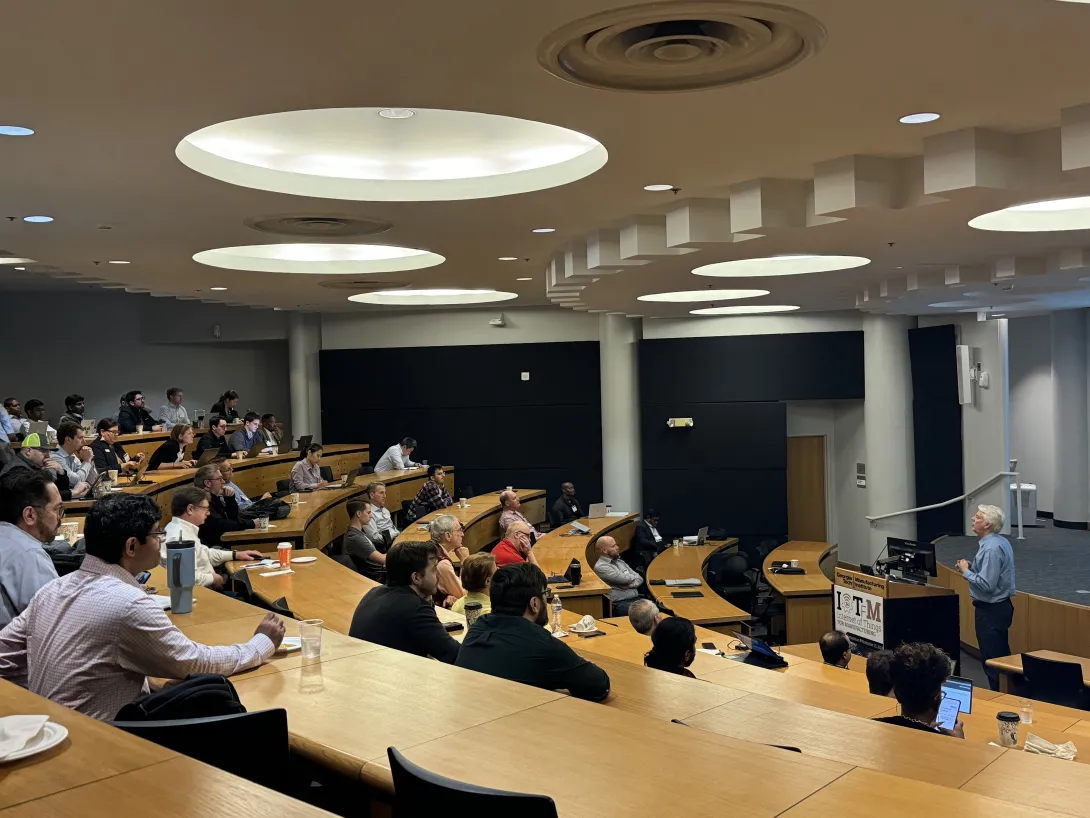
Andrew Dugenske, a principal research engineer at GTMI and symposium organizer, delivering a talk at the symposium's tenth annual gathering.
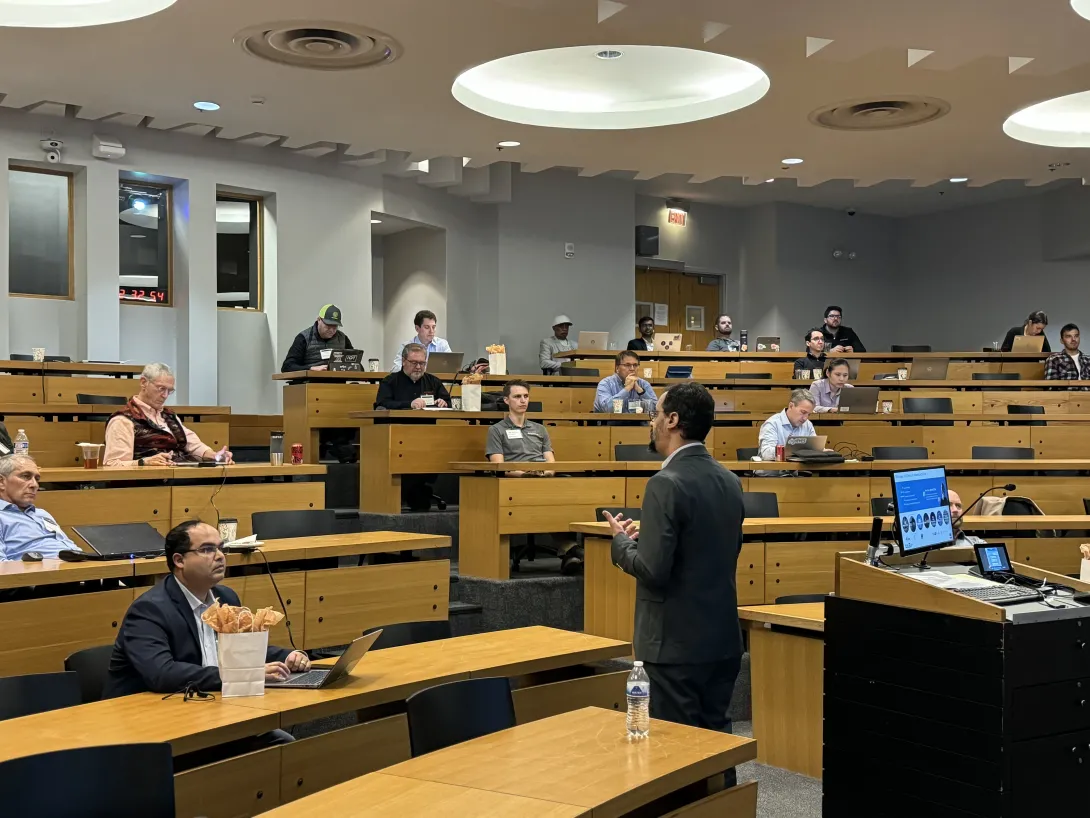
Dago Mata, regional director of business development at Tata Consultancy Services (TCS) and one of the event’s speakers.
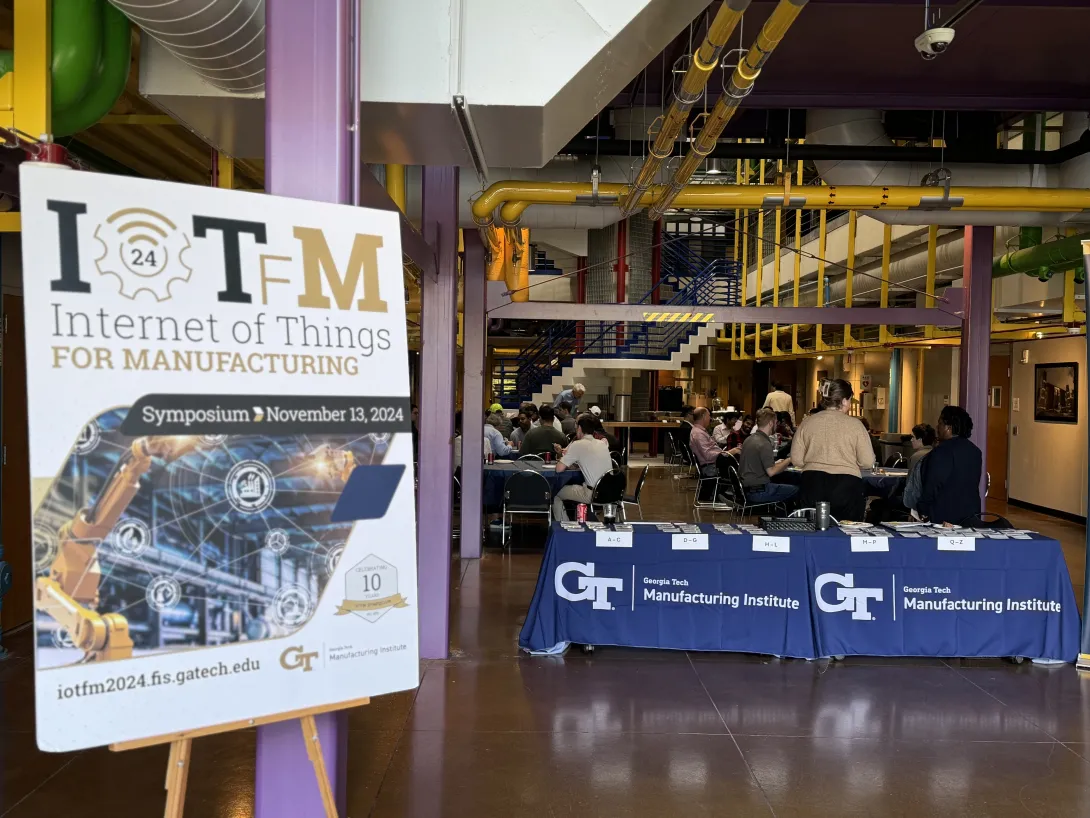
The event was held in the Callaway Research Building on November 13, 2024.
In the rapidly evolving world of manufacturing, embracing digital connectivity and artificial intelligence is crucial for optimizing operations, improving efficiency, and driving innovation. Internet of Things (IoT) is a key pillar of that process, enabling seamless communication and data exchange across the manufacturing process by connecting sensors, equipment, and applications through internet protocols.
The Georgia Tech Manufacturing Institute (GTMI) recently hosted the 10th annual Internet of Things for Manufacturing (IoTfM) Symposium, a flagship event that continues to set the standard for innovation and collaboration in the manufacturing sector. Held on Nov. 13, the symposium brought together industry leaders, researchers, and practitioners to explore the latest advancements and applications of IoT in manufacturing.
"The purpose is to bring the voice of manufacturers directly to the university community," explained Andrew Dugenske, a principal research engineer and director of the Factory Information Systems Center at GTMI. "It's about learning from industry to guide our research, education, and knowledge base, which is inherent to Georgia Tech."
Initiated over a decade ago, the IoTfM Symposium has grown into a premier event that highlights Georgia Tech's commitment to advancing manufacturing technologies.
"This symposium provides a unique platform to share and learn from cutting-edge advancements in IoT and now AI for manufacturing,” said Dago Mata, regional director of business development at Tata Consultancy Services (TCS) and one of the event’s speakers. “The opportunity to engage with industry leaders and showcase practical, real-world implementations was highly motivating."
This year’s symposium welcomed over 100 attendees from across the country. Speakers from TCS, Amazon Web Services, Southwire, and more shared insights on the latest advancements, use cases, current challenges, and future directions for IoT in manufacturing processes.
“My favorite aspect was the case studies presented by major manufacturers, highlighting successful IoT and AI implementations," said Mata, who has attended the symposium since 2018. "These provided actionable takeaways and inspiration for driving similar innovation in my projects — the blend of exclusive learning from real-world applications and the presence of diverse experts made it a truly practical and inspiring event."
A distinctive feature of the IoTfM Symposium is its commitment to providing a platform for industry partners to voice their perspectives on powerful manufacturing research, says Dugenske. "We ask our industry partners to tell us about their experiences, challenges, and future predictions. This way, we can guide our research with the real-world needs of the manufacturing sector to form stronger collaborations and better prepare our students."
This unique format not only enhances the relevance of the symposium but also fosters a collaborative environment where industry leaders can learn from each other and from Georgia Tech's academic community.
As GTMI looks to the future, the symposium will continue to evolve, incorporating new elements and expanding its reach. Dugenske envisions even greater integration with other GTMI initiatives and broader industry engagement.
"Our goal is to create an event that highlights our capabilities and builds deeper connections within the manufacturing community.”
News Contact
Audra Davidson
Research Communications Program Manager
Georgia Tech Manufacturing Institute
Dec. 21, 2024

Lipid nanoparticles in their element: This computer generated image shows lipid nanoparticles, which are used to transport payloads to targets inside the body.
Middlemen get a bad rap for adding cost and complications to an operation. So, eliminating the go-betweens can reduce expense and simplify a process, increasing efficiency and consumer happiness.
James Dahlman and his research team have been thinking along those same lines for stem cell treatments. They’ve created a technique that eliminates noisome middlemen and could lead to new, less-invasive treatments for blood disorders and genetic diseases. It sidesteps the discomfort and risks of current treatments, making life easier for patients.
“This would be an alternative to invasive hematopoietic stem cell therapies — we could just give you an IV drip,” said Dahlman, McCamish Early Career Professor in the Wallace H. Coulter Department of Biomedical Engineering. “It simplifies the process and reduces the risks to patients. That’s why this work is important.”
Dahlman and a team of investigators from Georgia Tech, Emory University, and the University of California, Davis, published their approach in the journal Nature Biotechnology.
Minding the Parents
Hematopoietic stem cells (HSCs) are like parent cells. Residing in the bone marrow, they produce all types of cells needed to sustain the blood and immune systems. Their versatility makes HSCs a valuable therapeutic tool in treating genetic blood diseases, such as sickle cell anemia, immune deficiencies, and some cancers.
HSC therapies usually involve extracting cells from the patient’s bone marrow and re-engineering them in a lab. Meanwhile, the patient endures chemotherapy to help prepare their body to receive the modified HSCs.
“These therapies are effective but also hard on the patients,” Dahlman said. “Patients undergo chemotherapy to wipe out their immune systems so the body will accept the therapeutic cells without a fight. The procedure can be life-threatening. We’re hoping to change that.”
HSCs can also be modified directly inside the body. The procedure uses lipid nanoparticles (LNPs) to carry genetic instructions to the stem cells. The LNPs have targeting ligands attached — molecules designed to find specific target cells. Precisely engineering them adds layers of time, complexity, and cost to the process. They are, like extraction from bone marrow and chemotherapy, another middleman.
The researchers wanted something simpler. They found it in a specific nanoparticle called LNP67.
“Unlike other nanoparticle designs, this one doesn’t require a targeting ligand,” Dahlman said. “It’s chemically simple, which means it’s easier to manufacture and opens the door to eventually scaling production, like mRNA vaccines.”
Overcoming the Liver
The key to LNP67’s success is its ability to dodge the liver, the body’s primary blood filter. Foreign invaders, even helpful invaders delivered through an IV as medicine, can be captured by a healthy liver.
“The liver absorbs almost everything,” Dahlman said. “But, by reducing what it captures by even as little as 10 percent, we can double delivery to other tissues where the nanoparticles and their payloads are needed.”
The researchers developed 128 unique nanoparticles, narrowing the list down to 105 LNPs that didn’t have targeting ligands. These were ultimately screened and evaluated for their performance in delivering genetic instructions (in the form of mRNA) effectively and safely.
LNP67 emerged as the best performer thanks to its stealthy design. For example, the surface is designed to repel proteins and other molecules that would mark the LNP for capture by the liver. This feature helped the particles circulate more evenly in the body and reach the HSCs.
“We achieved low-dose delivery without a target ligand, which is exciting,” Dahlman said. “This is something we’ve been working toward for years, and I’m very happy we got there.”
Citation: Hyejin Kim, Ryan Zenhausern, Kara Gentry, Liming Lian, Sebastian G. Huayamares, Afsane Radmand, David Loughrey, Ananda Podilapu, Marine Z. C. Hatit, Huanzhen Ni, Andrea Li, Aram Shajii, Hannah E. Peck, Keyi Han, Xuanwen Hua, Shu Jia, Michele Martinez, Charles Lee, Philip J. Santangelo, Alice Tarantal, James E. Dahlman. Lipid Nanoparticle Study, Nov. 2024, Nature Biotechnology.
Funding: This research was supported by the National Institutes of Health grants UL1TR002378, UH3-TR002855, U42 OD027094, and TL1DK136047; National Science Foundation grant 0923395. Any opinions, findings, and conclusions or recommendations expressed in this material are those of the authors and do not necessarily reflect the views of any funding agency.
Competing Interests: James Dahlman, Marine Z. C. Hatit, and Huanzhen Ni have filed a provisional patent related to this manuscript (US patent application number 63/632,354).