
Apr. 15, 2025
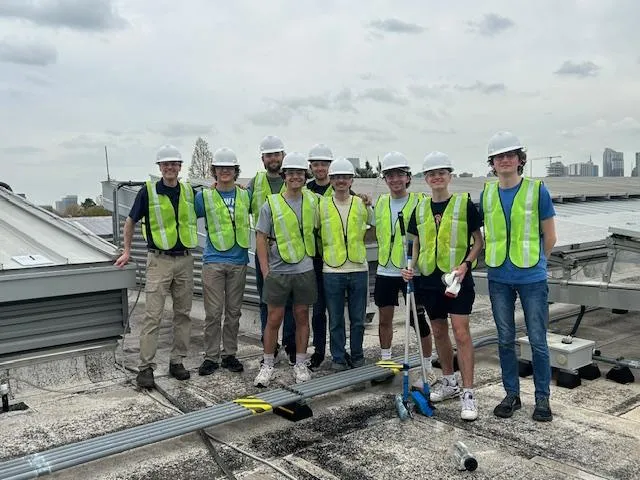
Georgia Tech Beautification Day student volunteers along with Rich Simmons, SEI's director of research and studies, on the rooftop of CNES building with the solar panels in the background
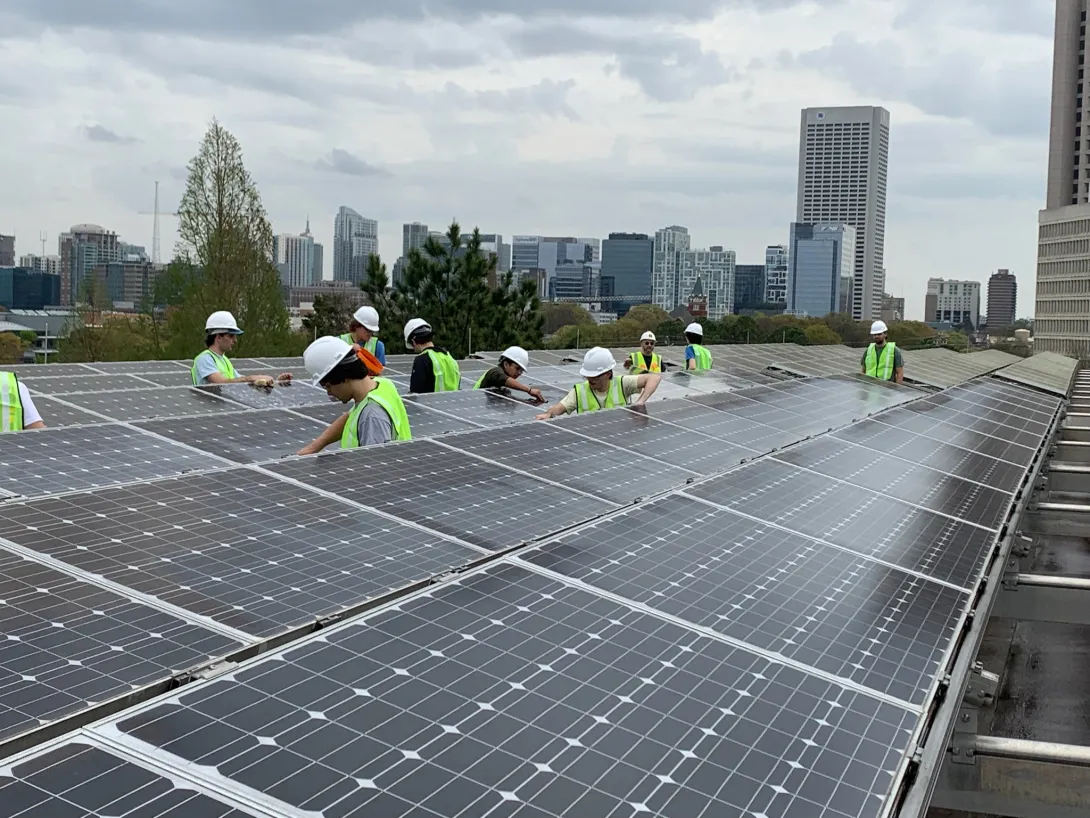
Georgia Tech students busy cleaning the solar PV arrays on the rooftop of the carbon neutral energy solutions building during Georgia Tech Beautification Day
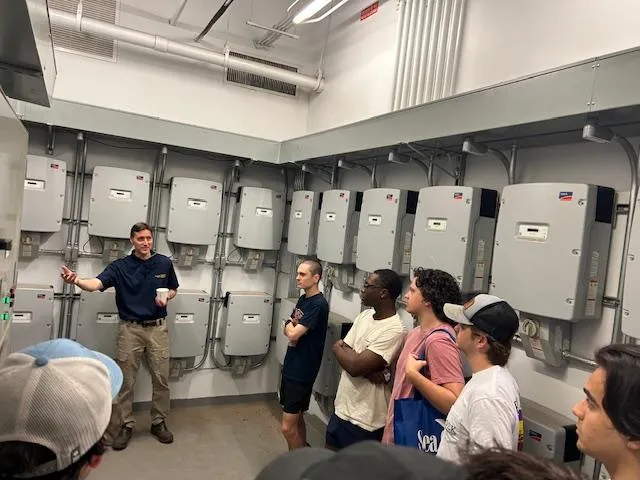
Rich Simmons, providing a tour of the inverter room in the CNES building to the student volunteers
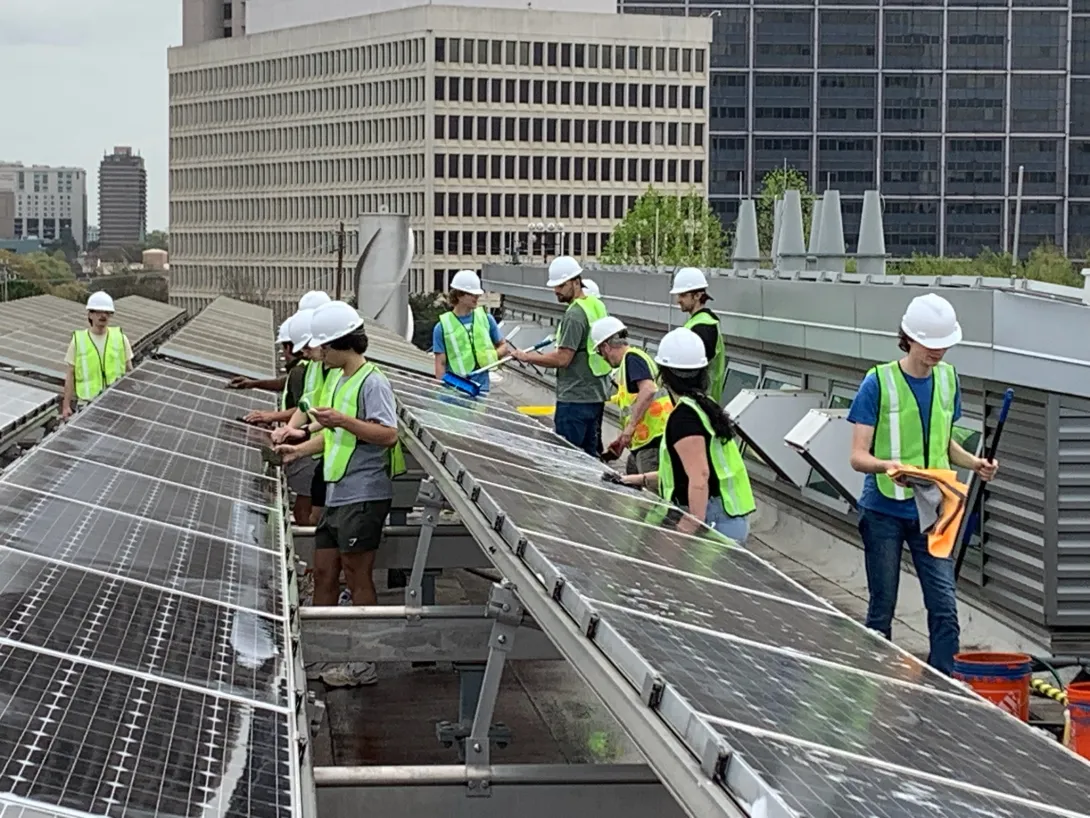
Student volunteers busy at work cleaning the solar panels
On a cloudy spring day in Atlanta, Rich Simmons, director of research and studies at the Georgia Tech Strategic Energy Institute (SEI), led a group of a dozen student volunteers to the roof of the Carbon Neutral Energy Solutions Laboratory (CNES). The students were part of the nearly 300 student volunteers participating in Georgia Tech Beautification Day and visited CNES to clean the building’s rooftop solar array made of photovoltaic (PV) panels. The CNES building entered operation in 2011 and its panels have accumulated grime over the years, impacting their efficiency.
Simmons explained the importance of this project, emphasizing how cleaning the panels restores their efficiency and contributes to ongoing research. "We've used this project to better understand PV efficiency in an urban environment and have instrumented the newly cleaned arrays to continue monitoring. An initial study last year suggested efficiency could increase by 10-20% just from a thorough cleaning. This project is both a handy research tool, an educational conduit, and a means of campus engagement related to sustainability," he shared.
Safety was paramount, and proactive communication between the research, health and safety, and infrastructure and sustainability teams ensured a successful event. Equipped with hard hats, eye protection, and high-visibility safety vests, the students scrubbed the panels with sponges and bristle brushes. The hands-on experience was both educational and rewarding.
After cleaning, Simmons led the group to the inverter room, where the DC electricity generated by the panels is converted into AC so that it can be consumed within the building or exported to the campus grid. He explained that excess solar power can also be stored in the newly installed 150-kWh Stryten battery system or used to charge campus vehicles through the newly installed EV chargers in the building’s parking lot. He demonstrated how magnetic monitoring devices measure the electricity produced by the arrays, allowing for a comparison of the efficiency of panels that were just cleaned, to those that were cleaned last year, and those that have never been cleaned in the 13 years since their installation.
Through initiatives like this, Georgia Tech continues to lead in research and education, inspiring the next generation of innovators and problem-solvers.
This article was written with the assistance of Microsoft Copilot (Apr. 9, 2025) and edited by Georgia Tech EPIcenter's Gilbert X. Gonzalez and Rich Simmons.
News Contact
Priya Devarajan | Research Communications Program Manager
Written by: Gilbert Gonzalez, Rich Simmons, EPIcenter
Apr. 04, 2025
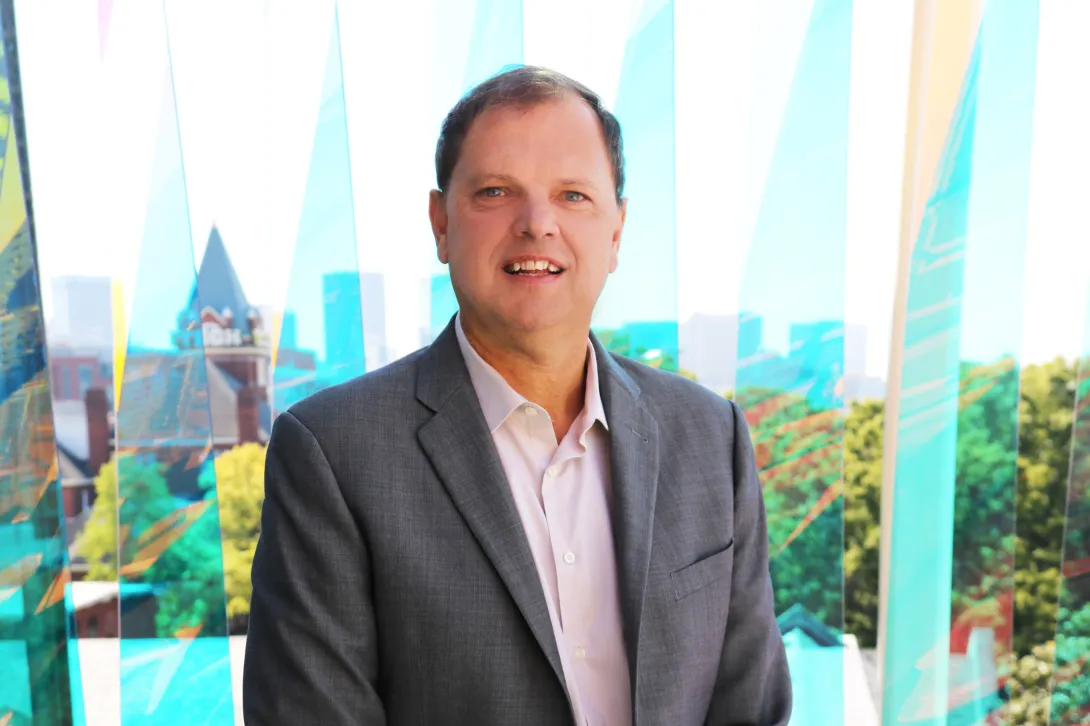
The College of Sciences has named Professor Joel Kostka the inaugural faculty director of Georgia Tech for Georgia's Tomorrow. The new center, announced by the College in December 2024, will drive research aimed at improving life across the state of Georgia.
“Joel is perfectly suited to lead this new initiative, especially since his research for a number of years has focused on Georgia and the vulnerability of both humans and ecosystems to climate change,” says Susan Lozier, dean of the College of Sciences, Betsy Middleton and John Clark Sutherland Chair, and professor in the School of Earth and Atmospheric Sciences. “I look forward to seeing how Science for Georgia’s Tomorrow takes shape and evolves under his thoughtful leadership.”
“I believe that my experience in research administration and in leading multidisciplinary research programs, along with the focus of my research on the vulnerability of Georgia’s communities to climate change, have prepared me well for this role,” says Kostka, who is the Tom and Marie Patton Distinguished Professor and associate chair for Research in the School of Biological Sciences with a joint appointment in the School of Earth and Atmospheric Sciences. “I am excited about the opportunity to lead the center as its inaugural director.”
Kostka’s appointment will begin on May 1, 2025.
Championing science in Georgia
Georgia's Tomorrow was created to foster research related to the health and resilience of Georgia’s people, ecosystems, and communities. Specifically, it will serve to boost research collaboration across the Institute, pave the way for public-private partnerships, and expand opportunities for Georgia students and communities to engage with Institute research.
Among Kostka’s first tasks as faculty director will be the development of the center’s strategic plan and the completion of two dedicated cluster hires from within the College of Sciences’ six schools.
Meet Joel Kostka
Kostka is known for bridging biogeochemistry and microbiology to elucidate the role of microorganisms in ecosystem function. He has emerged as an international leader in ecosystem biogeoscience, providing a quantitative predictive understanding of how ecosystems function as well as determining the mechanisms by which climate change alters ecosystem resilience. He partners with a variety of stakeholders to conduct research on the restoration and adaptive management of coastal ecosystems in Georgia.
Kostka has also served as the PI of a range of multidisciplinary research projects focused on environmental change as well as scientific advisory boards including Georgia Tech’s Strategic Energy Institute, the NSF-funded Plum Island Estuary Long-term Ecological Research program, and the Johnston Center for Coastal Sustainability on Bald Head Island.
Kostka received a B.S. in Biology from Western Illinois University and a Ph.D. in Marine Science from the University of Delaware. Prior to joining Georgia Tech in 2011, he was a professor at the Department of Oceanography and Associate Director of the Institute of Energy Systems, Economics, and Sustainability at Florida State University.
Initial support for Georgia Tech for Georgia’s Tomorrow is generously provided by the College of Sciences Betsy Middleton and John Clark Sutherland Dean's Chair fund. Cluster hire funding has been awarded by Provost Steven W. McLaughlin. The initiative will also seek funding from state, national and international organizations, private foundations, and government agencies to expand impact. Philanthropic support will also be sought in the form of professorships, programmatic support for the center, and seed funding.
Georgia Tech for Georgia's Tomorrow initially launched under the working name Science for Georgia's Tomorrow (Sci4GT).
News Contact
Writer: Lindsay C. Vidal
Mar. 14, 2025
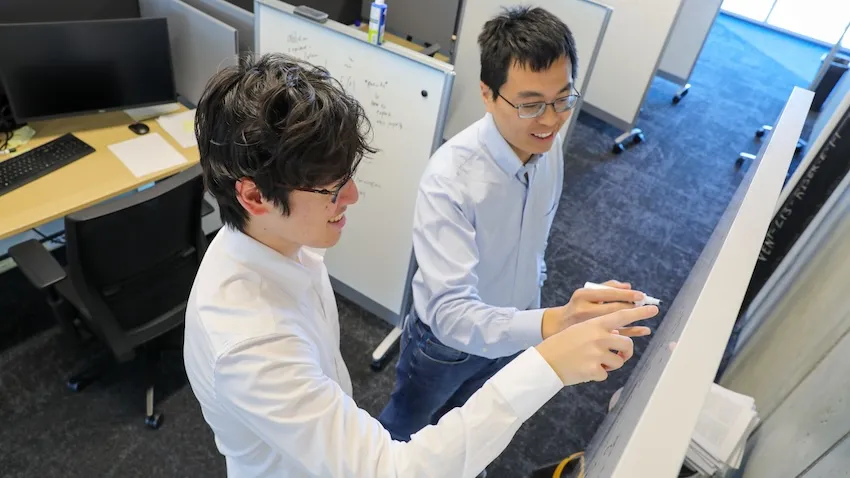
Successful test results of a new machine learning (ML) technique developed at Georgia Tech could help communities prepare for extreme weather and coastal flooding. The approach could also be applied to other models that predict how natural systems impact society.
Ph.D. student Phillip Si and Assistant Professor Peng Chen developed Latent-EnSF, a technique that improves how ML models assimilate data to make predictions.
In experiments predicting medium-range weather forecasting and shallow water wave propagation, Latent-EnSF demonstrated higher accuracy, faster convergence, and greater efficiency than existing methods for sparse data assimilation.
“We are currently involved in an NSF-funded project aimed at providing real-time information on extreme flooding events in Pinellas County, Florida,” said Si, who studies computational science and engineering (CSE).
“We're actively working on integrating Latent-EnSF into the system, which will facilitate accurate and synchronized modeling of natural disasters. This initiative aims to enhance community preparedness and safety measures in response to flooding risks.”
Latent-EnSF outperformed three comparable models in assimilation speed, accuracy, and efficiency in shallow water wave propagation experiments. These tests show models can make better and faster predictions of coastal flood waves, tides, and tsunamis.
In experiments on medium-range weather forecasting, Latent-EnSF surpassed the same three control models in accuracy, convergence, and time. Additionally, this test demonstrated Latent-EnSF's scalability compared to other methods.
These promising results support using ML models to simulate climate, weather, and other complex systems.
Traditionally, such studies require employment of large, energy-intensive supercomputers. However, advances like Latent-EnSF are making smaller, more efficient ML models feasible for these purposes.
The Georgia Tech team mentioned this comparison in its paper. It takes hours for the European Center for Medium-Range Weather Forecasts computer to run its simulations. Conversely, the ML model FourCastNet calculated the same forecast in seconds.
“Resolution, complexity, and data-diversity will continue to increase into the future,” said Chen, an assistant professor in the School of CSE.
“To keep pace with this trend, we believe that ML models and ML-based data assimilation methods will become indispensable for studying large-scale complex systems.”
Data assimilation is the process by which models continuously ingest new, real-world data to update predictions. This data is often sparse, meaning it is limited, incomplete, or unevenly distributed over time.
Latent-EnSF builds on the Ensemble Filter Scores (EnSF) model developed by Florida State University and Oak Ridge National Laboratory researchers.
EnSF’s strength is that it assimilates data with many features and unpredictable relationships between data points. However, integrating sparse data leads to lost information and knowledge gaps in the model. Also, such large models may stop learning entirely from small amounts of sparse data.
The Georgia Tech researchers employ two variational autoencoders (VAEs) in Latent-EnSF to help ML models integrate and use real-world data. The VAEs encode sparse data and predictive models together in the same space to assimilate data more accurately and efficiently.
Integrating models with new methods, like Latent-EnSF, accelerates data assimilation. Producing accurate predictions more quickly during real-world crises could save lives and property for communities.
To share Latent-EnSF to the broader research community, Chen and Si presented their paper at the SIAM Conference on Computational Science and Engineering (CSE25). The Society of Industrial and Applied Mathematics (SIAM) organized CSE25, held March 3-7 in Fort Worth, Texas.
Chen was one of ten School of CSE faculty members who presented research at CSE25, representing one-third of the School’s faculty body. Latent-EnSF was one of 15 papers by School of CSE authors and one of 23 Georgia Tech papers presented at the conference.
The pair will also present Latent-EnSF at the upcoming International Conference on Learning Representations (ICLR 2025). Occurring April 24-28 in Singapore, ICLR is one of the world’s most prestigious conferences dedicated to artificial intelligence research.
“We hope to bring attention to experts and domain scientists the exciting area of ML-based data assimilation by presenting our paper,” Chen said. “Our work offers a new solution to address some of the key shortcomings in the area for broader applications.”
News Contact
Bryant Wine, Communications Officer
bryant.wine@cc.gatech.edu
Oct. 14, 2024
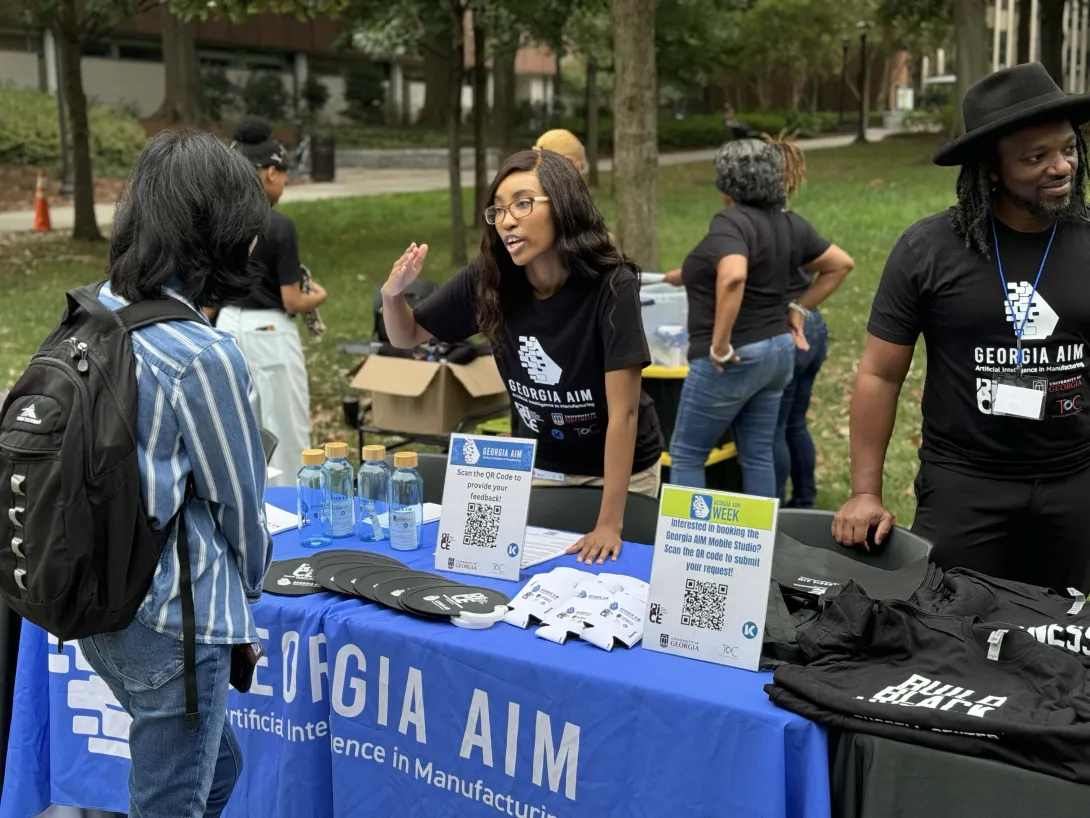
Georgia AIM representatives talk with students on Georgia Tech's campus during the launch event for their new mobile labs.
Gold and white pompoms fluttered while Buzz, the official mascot of the Georgia Institute of Technology, danced to marching band music. But the celebration wasn’t before a football or basketball game — instead, the cheers marked the official launch of Georgia AIM Week, a series of events and a new mobile lab designed to bring technology to all parts of Georgia
Organized by Georgia Artificial Intelligence in Manufacturing (Georgia AIM), Georgia AIM Week kicked off September 30 with a celebration on the Georgia Institute of Technology campus and culminated with another celebration on Friday at the University of Georgia in Athens and aligned with National Manufacturing Day.
In between, the Georgia AIM Mobile Studio made stops at schools and community organizations to showcase a range of technology rooted in AI and smart technology.
“Georgia AIM Week was a statewide opportunity for us to celebrate Manufacturing Day and to launch our Georgia AIM Mobile Studio,” said Donna Ennis, associate vice president, community-based engagement, for Georgia Tech’s Enterprise Innovation Institute and Georgia AIM co-director. “Georgia AIM projects planned events in cities around the state, starting here in Atlanta. Then we headed to Warner Robins, Southwest Georgia, and Athens. We’re excited about the opportunity to bring this technology to our communities and increase access and ideas related to smart technology.”
Georgia AIM is a collaboration across the state to provide the tools and knowledge to empower all communities, particularly those that have been underserved and overlooked in manufacturing. This includes rural communities, women, people of color, and veterans. Georgia AIM projects are located across the state and work within communities to create a diverse AI manufacturing workforce. The federally funded program is a collaborative project administered through Georgia Tech’s Enterprise Innovation Institute and the Georgia Tech Manufacturing Institute.
A cornerstone of Georgia AIM Week was the debut of the Georgia AIM Mobile Studio, a 53-foot custom trailer outfitted with technology that can be used in manufacturing — but also by anyone with an interest in learning about AI and smart technology. Visitors to the mobile studio can experience virtual reality, 3-D printing, drones, robots, sensors, computer vision, and circuits essential to running this new tech.
There’s even a dog — albeit a robotic one — named Nova.
The studio was designed to introduce students to the possibilities of careers in manufacturing and show small businesses some of the cost-effective ways they can incorporate 21st century technology into their manufacturing operations.
“We were awarded about $7.5 million to build this wonderful studio here,” said Kenya Asbill, who works at the Russell Innovation Center for Entrepreneurs (RICE) as the Economic Development Administration project manager for Georgia AIM. “We will be traveling around the state of Georgia to introduce artificial intelligence in manufacturing to our targeted communities, including underserved rural and urban residents.”
Some technology on the Georgia AIM Mobile Studio was designed in consultation with project partners Kitt Labs and Technologists of Color. An additional suite of “technology vignettes” were developed by students at the University of Georgia College of Engineering. RICE and UGA served as project leads for the mobile studio development, and RICE will oversee its deployment across the state in the coming months.
To request a mobile studio visit, please visit the Georgia AIM website.
During Monday’s kickoff, the Georgia Tech cheerleaders and Buzz fired up the crowd before an event that featured remarks by Acting Assistant Secretary of the U.S. EDA Christina Killingsworth; Jay Bailey, president and CEO of RICE; Beshoy Morkos, associate professor of mechanical engineering at the University of Georgia; Aaron Stebner, co-director of Georgia AIM; David Bridges, vice president of Georgia Tech’s Enterprise Innovation Institute; and lightning presentations by Georgia AIM project leads from around the state.
Following the presentations, mobile studio tours were led by Jon Exume, president and executive director, and Mark Lawson, director of technology, for Technologists of Color. The organization works to create a cohesive and thriving community of African Americans in tech.
“I’m particularly excited to witness the launch of the Georgia AIM Mobile Studio. It really will help demystify AI and bring its promise to underserved rural areas across the state,” Killingsworth said. “AI is the defining technology of our generation. It’s transforming the global economy, and it will continue to have tremendous impact on the global workforce. And while AI has the potential to democratize access to information, enhance efficiency, and allow humans to focus on the more complex, creative, and meaningful aspects of work, it also has the power to exacerbate economic disparity. As such, we must work together to embrace the promise of AI while mitigating its risks.”
Other events during Georgia AIM week included the Middle Georgia Innovation Corridor Manufacturing Expo in Warner Robins, West Georgia Manufacturing Day – Student Career Expo in LaGrange, and a visit to Colquitt County High School in Moultrie. The week wrapped on Friday, Oct. 4, at the University of Georgia in Athens with a National Manufacturing Day celebration.
“We’re focused on growing our manufacturing economy,” Ennis said. “We’re also focused on the development and deployment of innovation and talent in the manufacturing industry as it relates to AI and other technologies. Manufacturing is cool. It is a changing industry. We want our students and younger people to understand that this is a career.”
News Contact
Dec. 03, 2024
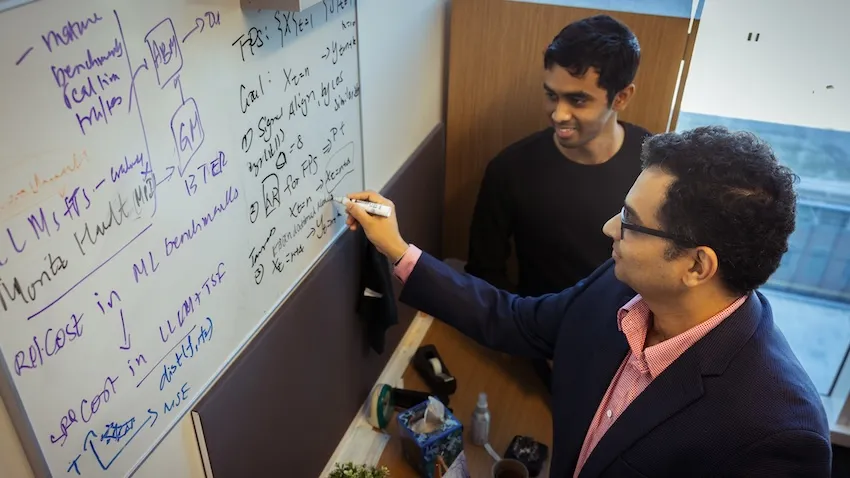
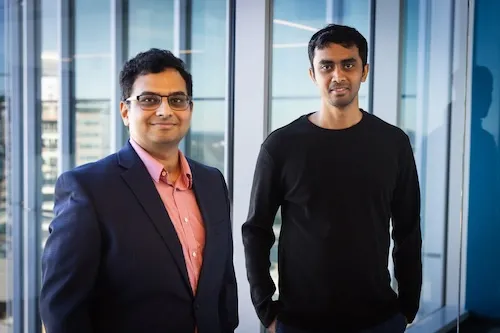
A new machine learning (ML) model from Georgia Tech could protect communities from diseases, better manage electricity consumption in cities, and promote business growth, all at the same time.
Researchers from the School of Computational Science and Engineering (CSE) created the Large Pre-Trained Time-Series Model (LPTM) framework. LPTM is a single foundational model that completes forecasting tasks across a broad range of domains.
Along with performing as well or better than models purpose-built for their applications, LPTM requires 40% less data and 50% less training time than current baselines. In some cases, LPTM can be deployed without any training data.
The key to LPTM is that it is pre-trained on datasets from different industries like healthcare, transportation, and energy. The Georgia Tech group created an adaptive segmentation module to make effective use of these vastly different datasets.
The Georgia Tech researchers will present LPTM in Vancouver, British Columbia, Canada, at the 2024 Conference on Neural Information Processing Systems (NeurIPS 2024). NeurIPS is one of the world’s most prestigious conferences on artificial intelligence (AI) and ML research.
“The foundational model paradigm started with text and image, but people haven’t explored time-series tasks yet because those were considered too diverse across domains,” said B. Aditya Prakash, one of LPTM’s developers.
“Our work is a pioneer in this new area of exploration where only few attempts have been made so far.”
[MICROSITE: Georgia Tech at NeurIPS 2024]
Foundational models are trained with data from different fields, making them powerful tools when assigned tasks. Foundational models drive GPT, DALL-E, and other popular generative AI platforms used today. LPTM is different though because it is geared toward time-series, not text and image generation.
The Georgia Tech researchers trained LPTM on data ranging from epidemics, macroeconomics, power consumption, traffic and transportation, stock markets, and human motion and behavioral datasets.
After training, the group pitted LPTM against 17 other models to make forecasts as close to nine real-case benchmarks. LPTM performed the best on five datasets and placed second on the other four.
The nine benchmarks contained data from real-world collections. These included the spread of influenza in the U.S. and Japan, electricity, traffic, and taxi demand in New York, and financial markets.
The competitor models were purpose-built for their fields. While each model performed well on one or two benchmarks closest to its designed purpose, the models ranked in the middle or bottom on others.
In another experiment, the Georgia Tech group tested LPTM against seven baseline models on the same nine benchmarks in zero-shot forecasting tasks. Zero-shot means the model is used out of the box and not given any specific guidance during training. LPTM outperformed every model across all benchmarks in this trial.
LPTM performed consistently as a top-runner on all nine benchmarks, demonstrating the model’s potential to achieve superior forecasting results across multiple applications with less and resources.
“Our model also goes beyond forecasting and helps accomplish other tasks,” said Prakash, an associate professor in the School of CSE.
“Classification is a useful time-series task that allows us to understand the nature of the time-series and label whether that time-series is something we understand or is new.”
One reason traditional models are custom-built to their purpose is that fields differ in reporting frequency and trends.
For example, epidemic data is often reported weekly and goes through seasonal peaks with occasional outbreaks. Economic data is captured quarterly and typically remains consistent and monotone over time.
LPTM’s adaptive segmentation module allows it to overcome these timing differences across datasets. When LPTM receives a dataset, the module breaks data into segments of different sizes. Then, it scores all possible ways to segment data and chooses the easiest segment from which to learn useful patterns.
LPTM’s performance, enhanced through the innovation of adaptive segmentation, earned the model acceptance to NeurIPS 2024 for presentation. NeurIPS is one of three primary international conferences on high-impact research in AI and ML. NeurIPS 2024 occurs Dec. 10-15.
Ph.D. student Harshavardhan Kamarthi partnered with Prakash, his advisor, on LPTM. The duo are among the 162 Georgia Tech researchers presenting over 80 papers at the conference.
Prakash is one of 46 Georgia Tech faculty with research accepted at NeurIPS 2024. Nine School of CSE faculty members, nearly one-third of the body, are authors or co-authors of 17 papers accepted at the conference.
Along with sharing their research at NeurIPS 2024, Prakash and Kamarthi released an open-source library of foundational time-series modules that data scientists can use in their applications.
“Given the interest in AI from all walks of life, including business, social, and research and development sectors, a lot of work has been done and thousands of strong papers are submitted to the main AI conferences,” Prakash said.
“Acceptance of our paper speaks to the quality of the work and its potential to advance foundational methodology, and we hope to share that with a larger audience.”
News Contact
Bryant Wine, Communications Officer
bryant.wine@cc.gatech.edu
Nov. 22, 2024
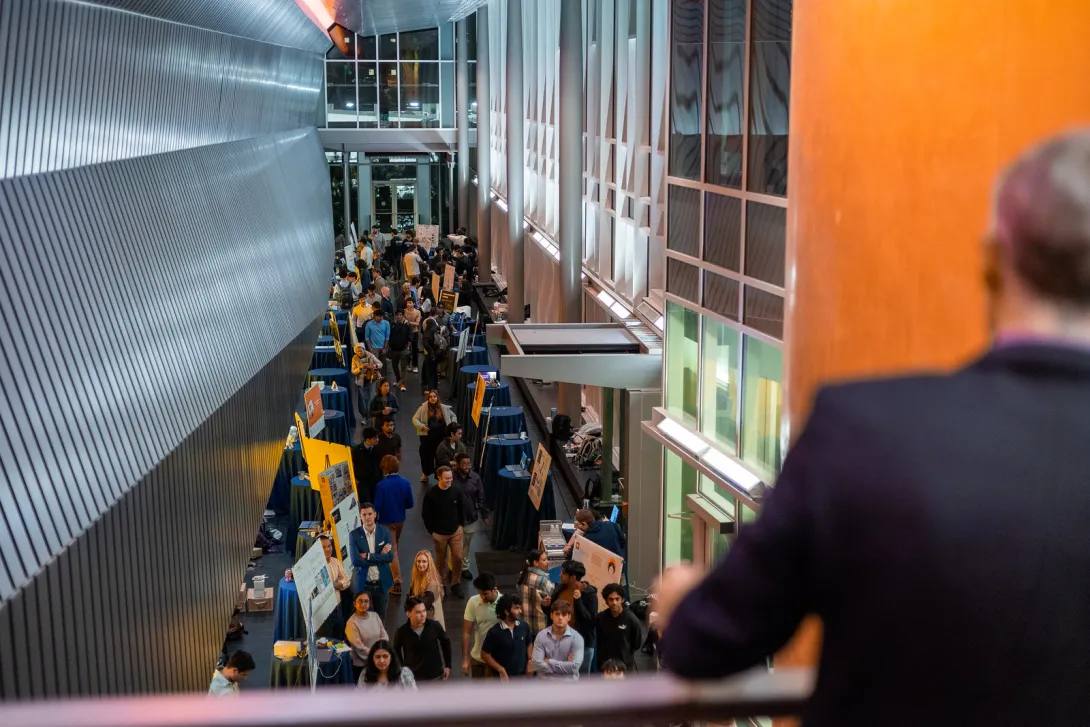
Georgia Tech is days away from the Fall 2024 Idea to Prototype (I2P) Showcase, set to take place on Dec. 3 at 5 p.m. in the Exhibition Hall. This event offers students a platform to present solutions built over the semester to tackle real-world problems and compete for rewards, including a golden ticket into the CREATE-X summer startup accelerator, Startup Launch. The program offers optional seed funding, workspace, entrepreneurial education, and continued mentorship to help students turn their prototypes into viable startups. Over 50 teams will present their prototypes at the showcase.
The event is open to all Georgia Tech students, faculty, staff, and the local community. Tickets are available now but are limited, so register for the I2P Showcase today.
Each semester, students in the Idea-to-Prototype course take time out of their schedules, similar to undergraduate research, to build prototypes. Teams accepted into I2P receive a reimbursement of up to $500 for physical expenses, course credit (undergraduate students only), and mentorship from a Georgia Tech faculty member.
During the showcase, participants and judges interact with the projects and give feedback. The criteria for judging are centered on innovation and overall market and impact potential. Judges can include industry professionals, faculty members, and alumni.
Throughout I2P Showcase history, many winning projects have gone on to achieve significant success. One is CaseDocker, which provides an end-to-end workflow management system. The startup now has a user base of over 400 global clients, including Fortune 500 companies. Other winners of the showcase include a blockchain-based music application, Radiochain, a personal financial management platform, Dolfin Solutions, and an EEG monitoring device for pediatric seizure detection, NeuroChamp.
This semester, the I2P cohort includes a digital twin using individual data and AI for health screenings and early detection, an active shooter detection and tracking tool, an AR tool that turns walls into interactive canvases, a device that detects overdosages, 3D-printed circuit boards, an AI detector for digital media, and more.
Whether you're a student with a passion for entrepreneurship, a faculty member interested in the latest student innovations, or a community member looking to support local talent, the I2P Showcase is a perfect opportunity to explore student innovations, mingle, and enjoy refreshments. Register for the I2P Showcase today and join us at the Exhibition Hall for an evening of creativity and community.
Students interested in participating in I2P can do so in the spring, summer, or fall semesters. The registration process involves providing a brief description of the project, the team members involved, and the current stage of development. The deadline for applications is Jan. 6 for Spring 2025 and May 12 for Summer 2025.
News Contact
Breanna Durham
Marketing Strategist
Oct. 15, 2024
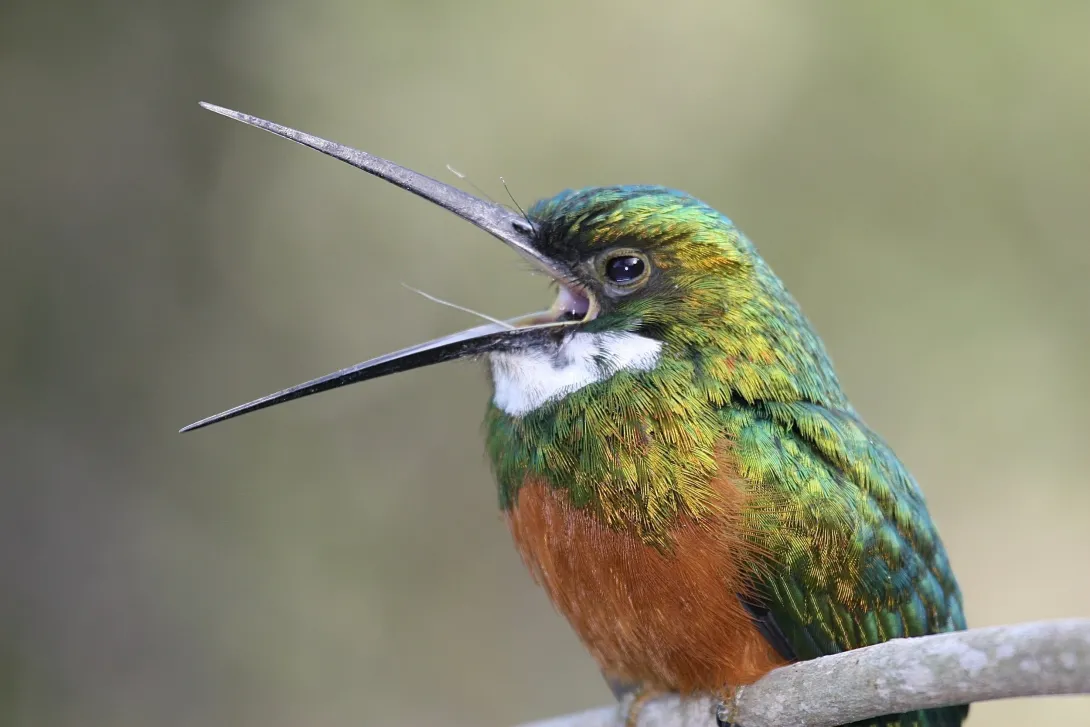
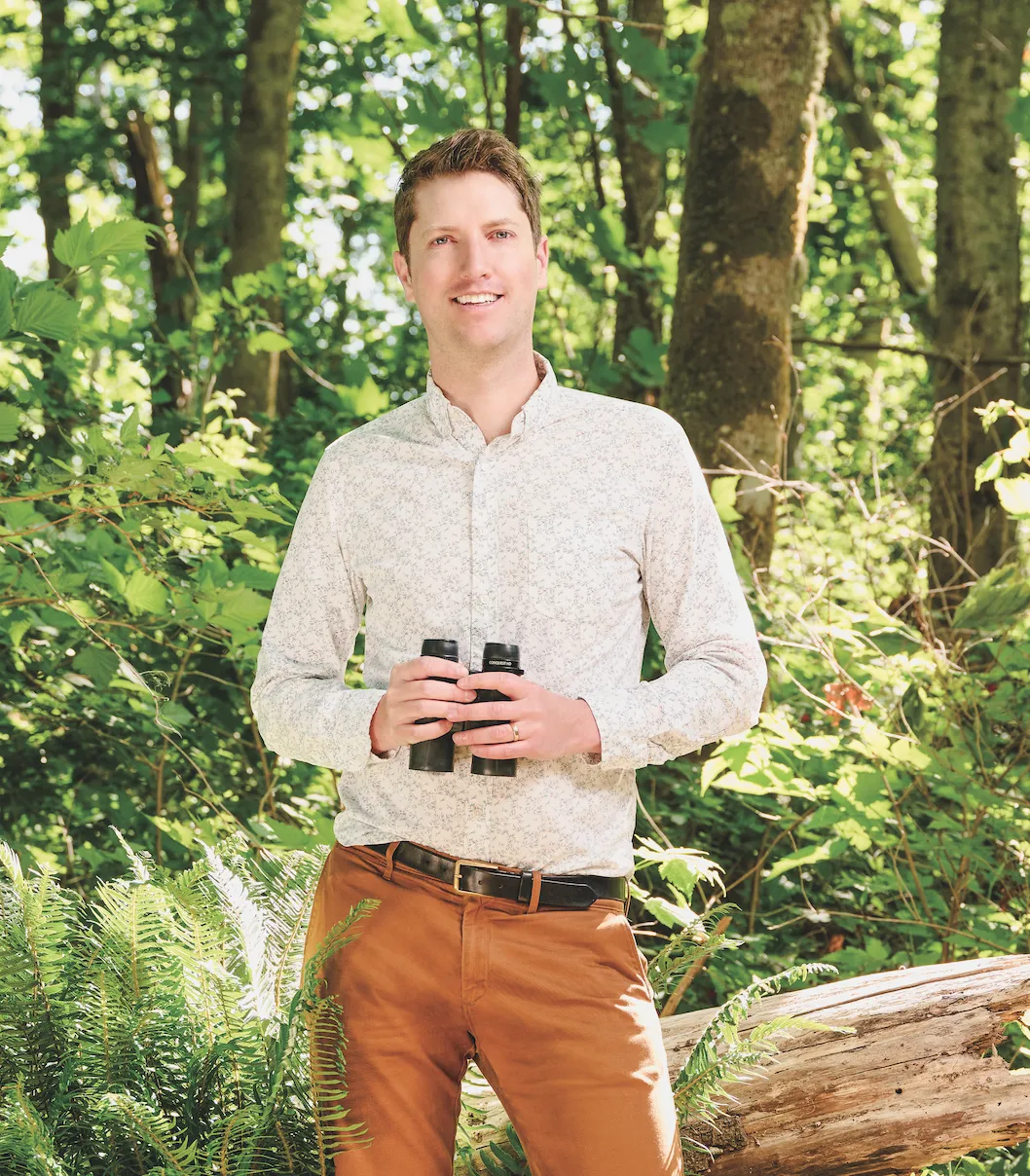
Benjamin Freeman has been named a 2024 Packard Fellow for groundbreaking research in climate change and bird ecology. Freeman, an assistant professor in the School of Biological Sciences, will receive $875,000 to fund his work.
“From all of us in Biological Sciences, we’re thrilled to see Ben Freeman named a Packard Fellow,” says School Chair Jeffrey (Todd) Streelman. “Ben’s research is important, compelling, and creative — a triple-threat combination that justifies this recognition.”
Awarded annually to only 20 individuals by the David and Lucile Packard Foundation, Packard Fellows are known for pursuing cutting-edge research, never-before-done projects, and ambitious goals.
“These scientists and engineers are the architects of tomorrow, leading innovation with bold ideas and unyielding determination,” shares Nancy Lindborg, President and Chief Executive Officer of the Packard Foundation. “Their work today will be the foundation for the breakthroughs of the future, inspiring the next wave of discovery and invention.”
“I'm flabbergasted to receive this prestigious award,” says Freeman. “Packard support will be transformative. It will give me the freedom to do the sorts of risky projects that I've dreamed about, and will support the intense fieldwork that I'm convinced is necessary to understand big questions in climate change ecology.”
The Packard funding will support Freemans most ambitious project to date: developing “Tech Mountain” in the tropics, a long-term field project focused on surveying thousands of individual birds. From mountain slope to summit, he will track their motions, their nests and predators, where they live, eat, move, and die — and how this changes as temperatures warm.
The pioneer study will shape a window into how birds and other organisms are responding to our changing climate, while developing technology and methodology that could revolutionize the fields of ecology and biology.
The escalator to extinction
Freeman’s previous research has shown that, in general, birds are moving to higher elevations as our climate changes.
“I found that as it's gotten warmer in the tropics, it's set in motion what I call an escalator to extinction,” he explains. “Birds are living at higher and higher elevations, and those that were common on a mountain top when I was a toddler in Peru are now gone from that mountain.”
While this previous research has shown that tropical birds are on this escalator, it hasn’t been possible to determine the specifics: which birds might be most vulnerable and what the key stressors are.
Freeman explains that “Tech Mountain” will be a first-of-its-kind field site, equipped with innovative sensors and trackers — think cameras placed on nets, recording equipment, climatic sensors, and small individual trackers on each bird.
“I want to figure out what drives their birth rates, where they're dying, and where they're moving during the course of their life,” he shares. “That will help us unravel how this escalator to extinction works.”
Building ‘Tech Mountain’
Several thousand meters tall, encompassing lowland rainforest, foothill rainforest, and cloud forest, Freeman’s field site will feature dense vegetation, steep grades, and encompass several different climatic zones — each with unique species.
Along its slopes, Freeman’s team will find, catch, mark, and follow the lives of thousands of individual birds across hundreds of species — for a minimum of five years, but potentially for decades. It’s never been done before.
Currently, most GPS trackers are too large for small birds, and smaller trackers capture limited information. Additionally, these smaller trackers cannot wirelessly transfer data — in order to download and access the data, each bird must be recaptured.
“The conditions are tough. It’s rugged. It’s humid. It’s cloudy and wet. We’ll need to put resources into developing technology that fits our needs, and experiment with different ways of tracking individuals in these difficult conditions,” Freeman says.
Freeman will also leverage eBird, an online hub where community scientists can upload their observations. “Millions upon millions of observations are uploaded by community scientists, citizen scientists, birders — people,” he adds. “And using this data, we can estimate the vulnerability of mountain bird species — which species seem to be shrinking their ranges and declining in abundance.”
This builds on Freeman’s current work creating the Mountain Bird Network, which supports community scientists in conducting bird surveys on their local mountains.
Georgia Tech and global connections
Freeman’s tools and methodologies could revolutionize fieldwork for ecologists and biologists, opening the door for rigorous new field studies.
It will also provide opportunities to deepen collaborations abroad. “I'm planning on working closely with Dr. Elisa Bonaccorso's lab at the University of San Francisco, Quito (USFQ Ecuador),” Freeman says, “and I’m looking forward to that collaboration. The Packard funding will also support work in Ecuador conducted by an Ecuadorian graduate student who is studying at Georgia Tech.”
Throughout the research, students will be at the heart of the projects. “I take mentoring scientists very seriously,” Freeman shares. “Undergraduates will have the opportunity to get involved on the biology side of this research, the computational side, and on the engineering side of the research. They’ll even help develop new tracking technologies.
The Packard Fellowship will not only support my research — but help me provide these opportunities in the coming years to Georgia Tech’s future scientists.”
News Contact
Written by Selena Langner
Contact: Jess Hunt-Ralston
Jun. 30, 2024
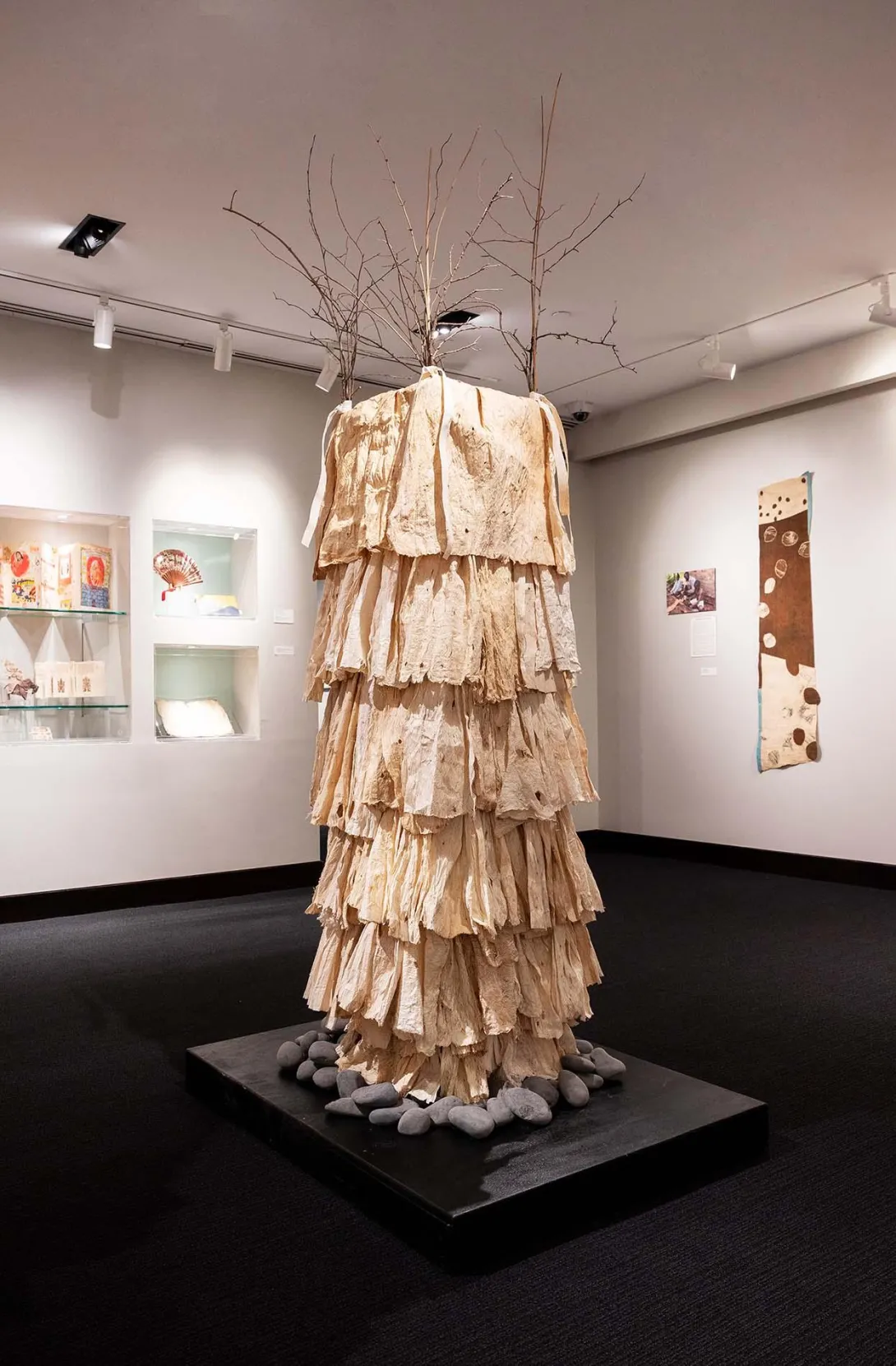
Bark Rhythms Exhibit
Credits
Photography: Allison Carter, Joya Chapman, and Rob Felt
Writing/Editing: Kristen Bailey, Stacy Braukma
The Bark Rhythms exhibit continues at the Robert C. Williams Museum of Papermaking through August. It features historical examples of hand-beaten bark papers, barkcloths, and traditional beaters, paired with the work of contemporary artists from global communities who use bark fiber materials and techniques. Photos taken June 24 by Joya Chapman.
Credits
Photography: Allison Carter, Joya Chapman, and Rob Felt
Writing/Editing: Kristen Bailey, Stacy Braukma
News Contact
Credits
Photography: Allison Carter, Joya Chapman, and Rob Felt
Writing/Editing: Kristen Bailey, Stacy Braukma
Sep. 04, 2024
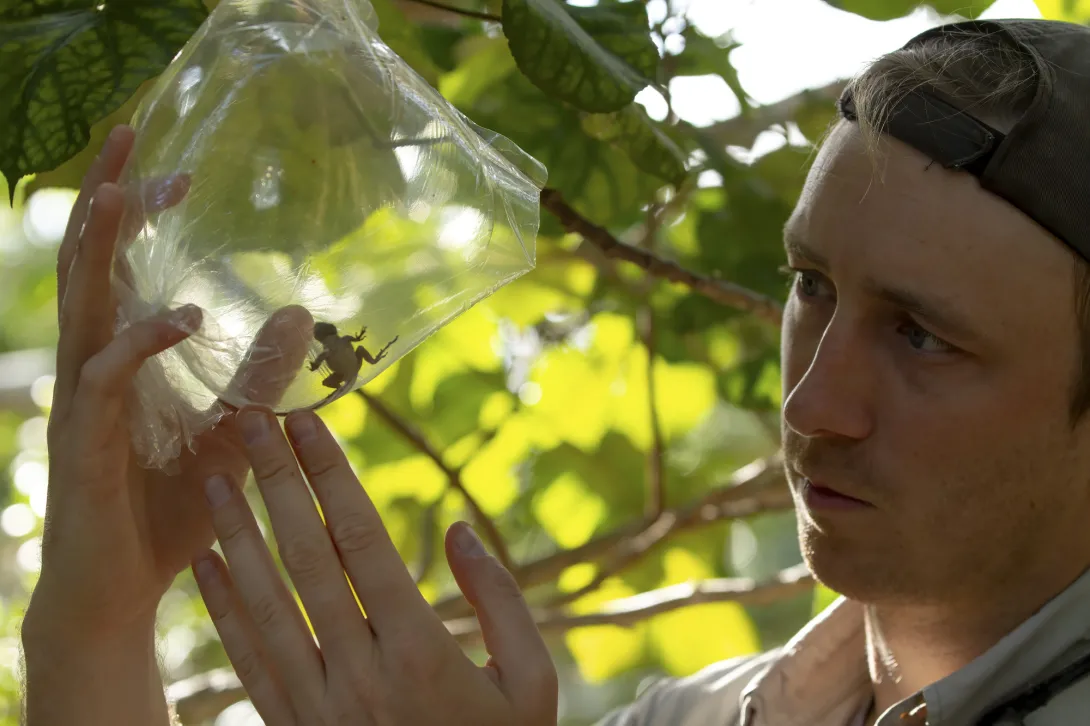
James T. Stroud, Elizabeth Smithgall Watts Early Career Assistant Professor in the School of Biological Sciences at Georgia Tech, has been awarded the prestigious Founder's Prize by the British Ecological Society (BES), the largest scientific society for ecologists in Europe.
Commemorating the enthusiasm and vision of the organization’s founders, the Founder's Prize is awarded to an outstanding early career ecologist who is beginning to make a significant contribution to the science of ecology.
Stroud is being recognized for his groundbreaking research as an integrative evolutionary ecologist, investigating how ecological and evolutionary processes may underlie patterns of biological diversity at the macro-scale.
Earlier this year, Stroud was also named an Early Career Fellow by the Ecological Society of America (ESA). He is the first person to win both seminal early career researcher awards from ESA and BES — the two largest and most influential ecological societies in the world — in the same year.
“The British Ecological Society could not have selected a more deserving recipient of this prestigious award,” says David Collard, senior associate dean in the College of Sciences and professor in the School of Chemistry and Biochemistry. “James is a model of faculty excellence in his innovative research, commitment to education, and leadership in the field. We look forward to his continued impact in driving forward the field of ecology.”
Stroud's highly multidisciplinary research combines field studies with macro-ecological and evolutionary comparative analyses, primarily studying lizards. His current interests focus on measuring natural selection in the wild, often leveraging non-native lizards as natural experiments in ecology and evolution.
"I am completely overwhelmed and honored to receive this award,” Stroud says, “and especially from a society very close to my heart. My first ever scientific conference was a BES meeting.”
Stroud will be presented with an honorarium prize during a ceremony at the BES Annual Meeting in Liverpool this December. The meeting brings together over 1,000 ecologists to discuss the latest advances in ecological research. For more than a century, the BES has been championing ecology through its journals, meetings, grants, education, and policy work.
“This award really symbolizes the amazing support and guidance I have received throughout my career from an incredible network of mentors and colleagues,” Stroud adds, “and now, the amazing people I get to work with in my own research group, as well.”
###
About the British Ecological Society
The British Ecological Society (BES), founded in 1913, is the oldest ecological society in the world, championing the study of ecology for over a century. With over 7,000 members in more than 120 countries, the BES is the largest scientific society for ecologists in Europe and promotes the study of ecology through its six academic journals, conferences, grants, education initiatives and policy work.
About Georgia Tech
The Georgia Institute of Technology, or Georgia Tech, is one of the top public research universities in the U.S., developing leaders who advance technology and improve the human condition. The Institute offers business, computing, design, engineering, liberal arts, and sciences degrees. Its more than 47,000 undergraduate and graduate students represent 54 U.S. states and territories and more than 143 countries. They study at the main campus in Atlanta, at instructional sites around the world, or through distance and online learning. As a leading technological university, Georgia Tech is an engine of economic development for Georgia, the Southeast, and the nation, conducting more than $1 billion in research annually for government, industry, and society.
News Contact
Jess Hunt-Ralston
Director of Communications
College of Sciences
Georgia Institute of Technology
Davy Falkner
Media Relations Officer
British Ecological Society
Aug. 20, 2024
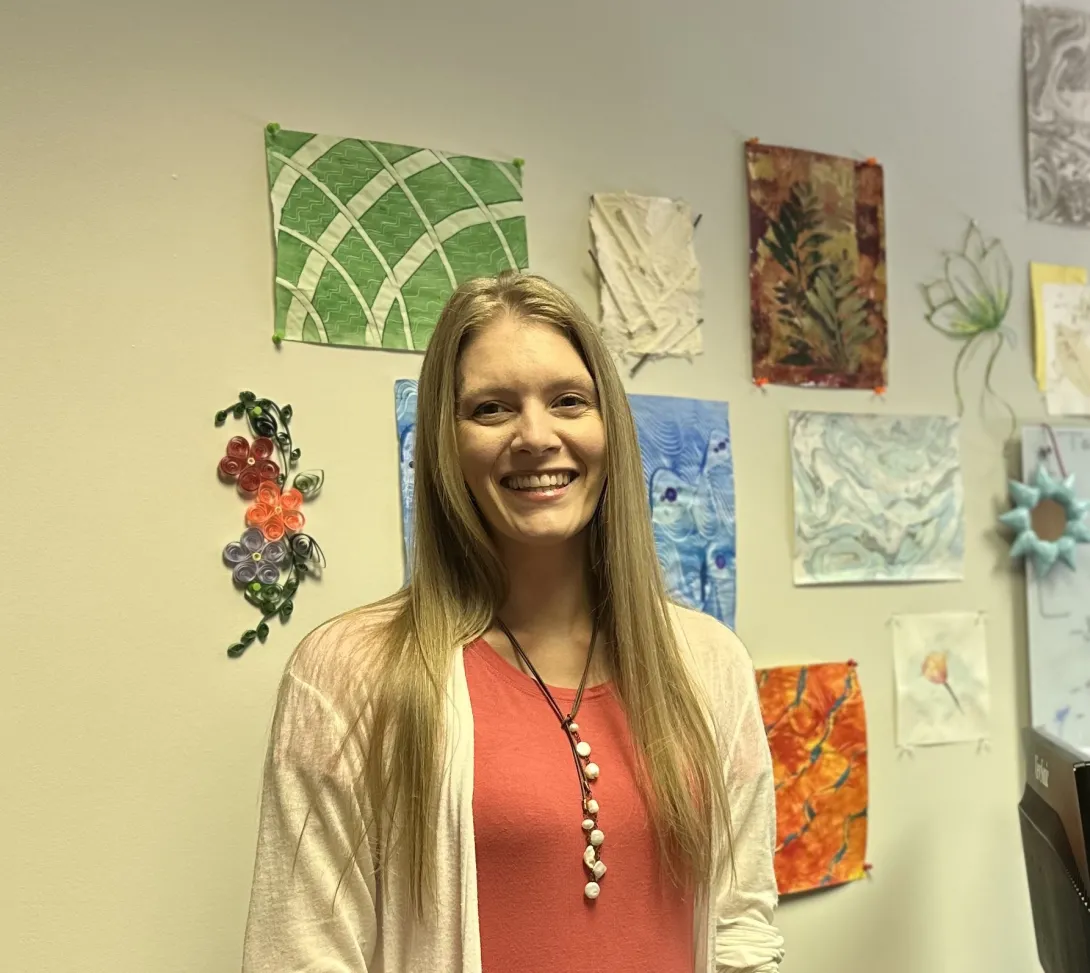
Anna Doll
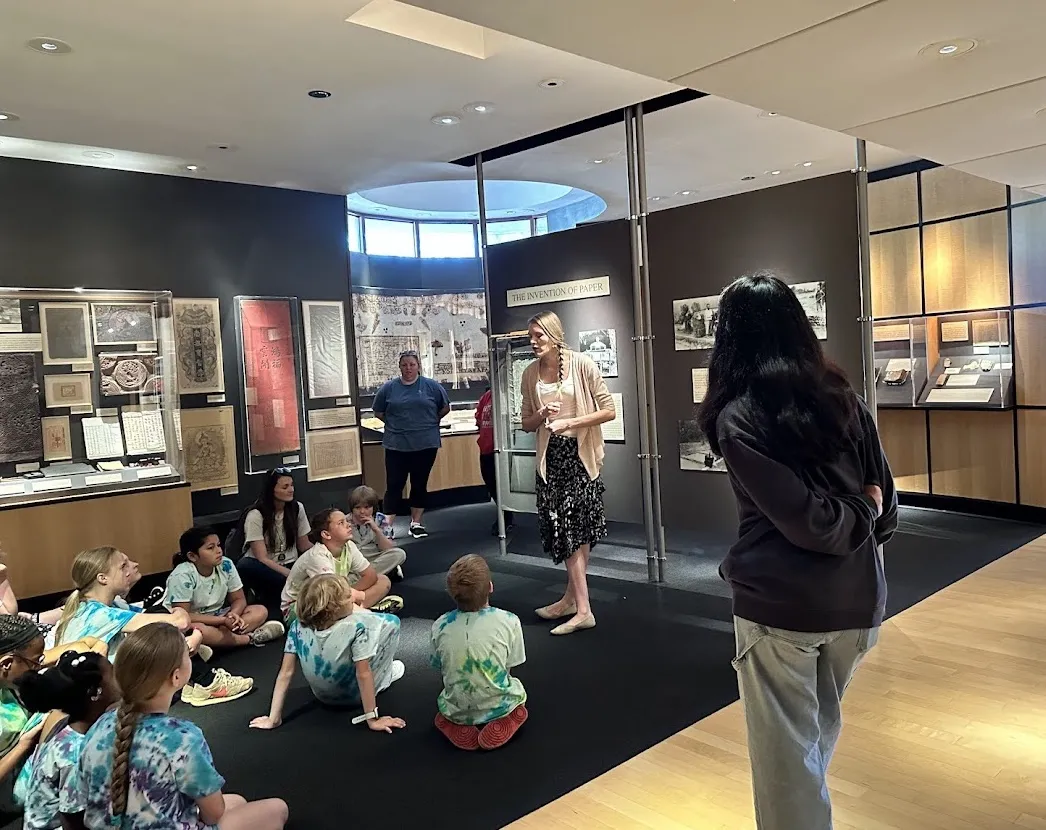
Doll giving a tour of the Robert C. Williams Museum of Papermaking to K-12 Students
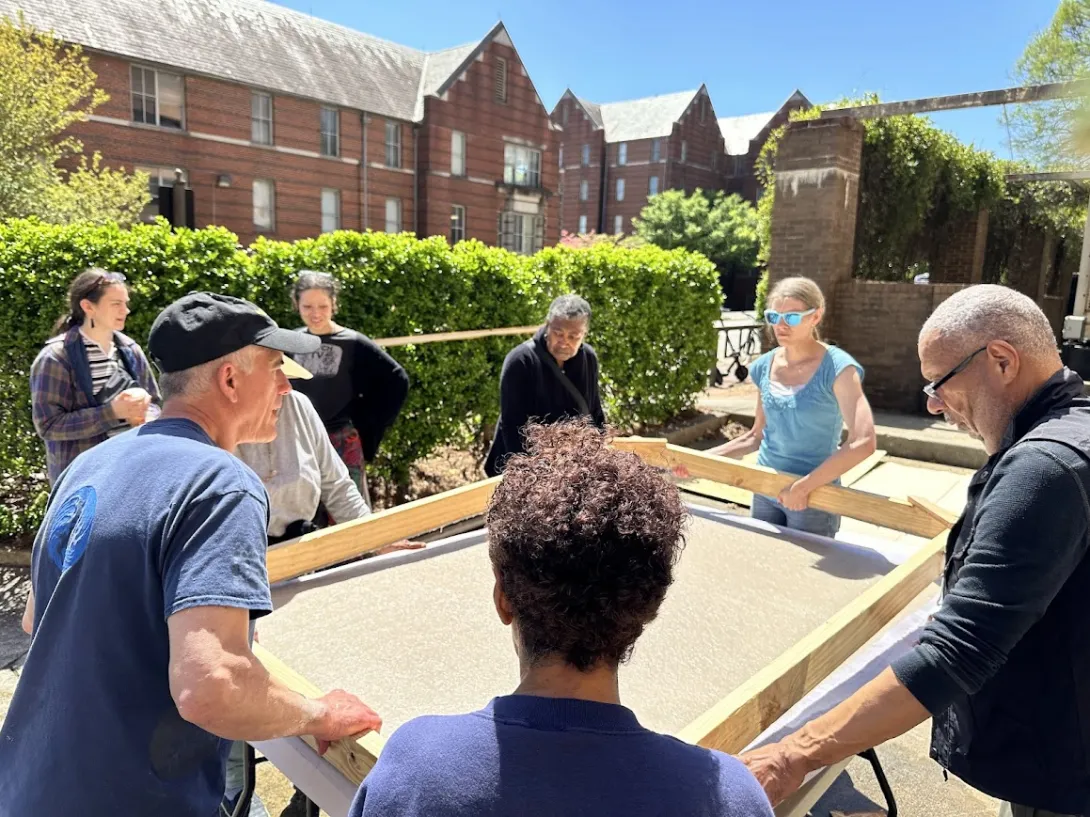
Anna Doll, Tom Balbo and workshop participants during the Big Paper Workshop
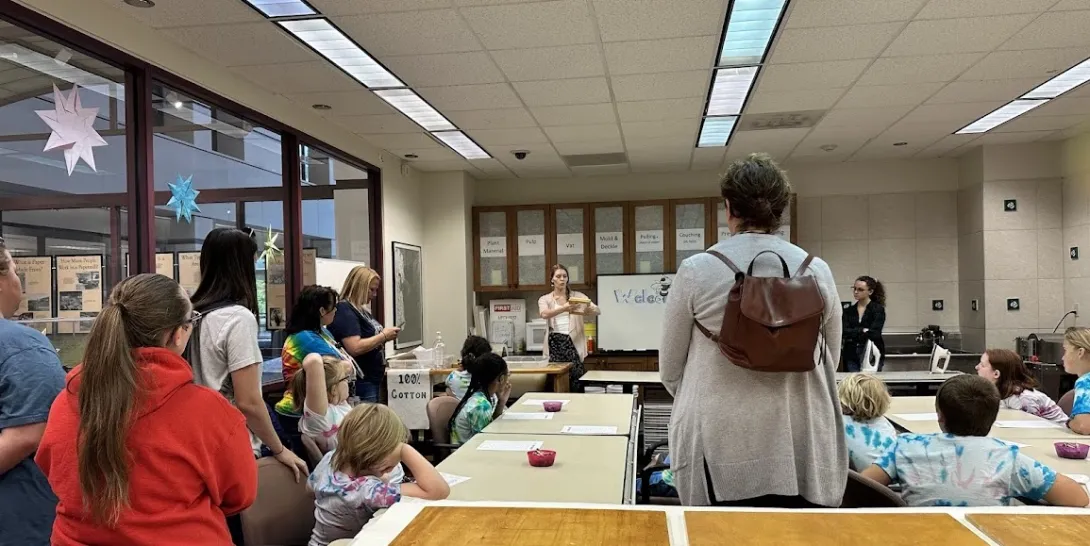
Doll during a paper-making session with K-12 Students
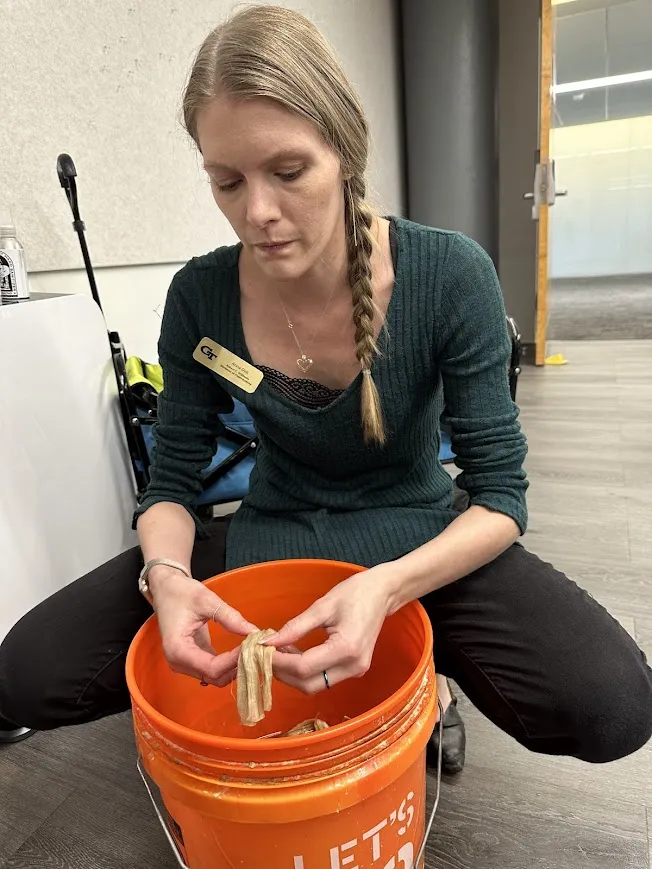
Doll prepping the fiber during Tech's Tactile Thursdays
Anna Doll is the education curator at the Robert C. Williams Museum of Papermaking, located in Georgia Tech’s Renewable Bioproducts Institute. Doll’s day-to-day responsibilities, and the many projects she handles at the museum, bring tremendous value not only to the Georgia Tech community, but also to the papermaking community around the world.
With a degree in art education and a minor in art history, Doll began her career as an elementary school art teacher in Pinellas County, Florida. She then became the director of Museums for the Folk Pottery Museum of Northeast Georgia and the Sautee Nacoochee Cultural Center History Museum and Heritage Site.
In 2019, Doll joined the Robert C. Williams Museum of Papermaking team as its education curator. At the museum, she creates and manages programs that include educational tours, private and public workshops on papermaking, specialized workshops through creative collaborations with artists, collaborations with other campus units for STEAM activities, and community events for kindergarten through senior adult audiences.
"I didn't know a whole lot about papermaking when I first started here," admits Doll, "but I knew how to be an education curator." Her ability to swiftly absorb the history and concept of papermaking and translate it into engaging educational experiences has been instrumental in her success. Below are a few highlights of Doll’s projects.
Museum Tours
Doll’s daily activities include educational tours of the papermaking museum for groups of all ages. The tours range from introducing the papermaking process to elementary and middle school students to sharing the history and heritage of papermaking with adults. In addition, she conducts virtual programs for groups interested in the history of paper and the technological advances of the papermaking process since its invention many centuries ago.
Workshops
Doll is the point of contact for public and private workshop bookings. She also develops the concepts for these sessions, catering to groups with various interests (e.g., Girl Scouts, Boy Scouts, people with disabilities, teachers, artists, college students, and public groups). This spring, Doll’s workshops included Suminagashi, Production Papermaking, Petal Fold Book, Paper Casting, and Magic Box: Jacob’s Ladder.
In addition to conceptualizing and conducting tours and workshops, she designs curricula and other resources involving paper art and science for K-12 teachers to integrate into their art classes.
Big Paper Workshop – Convening Artists, Educators, and Community Members for a Transformative Experience in Papermaking
This spring, Doll and her colleague Jerushia Graham created a communal workshop called “Big Paper.” Offered on multiple days, this project included five college groups from Georgia and Alabama and community groups from metro Atlanta who got to create a large sheet of paper from pulp. Participants beat plant material by hand to prepare the fiber and worked with Tom Balbo, founding director of the Morgan Conservatory, to create a huge 4’x6’ sheet of paper that was mailed back to them once it was dry.
Through her work at the museum, Doll has cultivated relationships with various artists, all of whom collaborate with the museum to conduct workshops and create and showcase art exhibits.
Additional Collaborations Across Campus
Doll partners with other units on campus to create programs. She collaborated with the Georgia Tech Library on a program called “Tech's Tactile Thursdays.” Hosted on the first Thursday of each month, it allows students, faculty, and staff to work on hands-on projects related to paper and provides an opportunity for the largely technology-focused participants to take a break from their routine, relax, and explore their creative side and enhance their well-being.
Doll also has been an active educator at Georgia Tech Science and Engineering Day, which is part of the Atlanta Science Festival. This year, more than 3,000 K-12 students and parents visited Georgia Tech’s campus to engage in hands-on STEAM activities. Representing the museum, Doll worked with families to make prints on a clamshell printing press featuring a custom-designed Buzz image (designed by Doll) on a postcard for the kids to take home. The activity showcased the rich history of the printing press and modern technology with a photopolymer printing plate.
Through these diverse projects and initiatives at the museum, Doll continues to make a difference in the world of papermaking. Looking ahead, she hopes to expand the museum’s educational initiatives as well as the education team and its resources, and she envisions broadening the museum’s reach and impact by offering free programs to schools through grants. She is also working with Georgia Tech faculty and researchers on museum research into the art of nano cellulose and plans to establish a paper and natural dye garden for teaching.
News Contact
Priya Devarajan | RBI Communications Program Manager