
May. 15, 2026
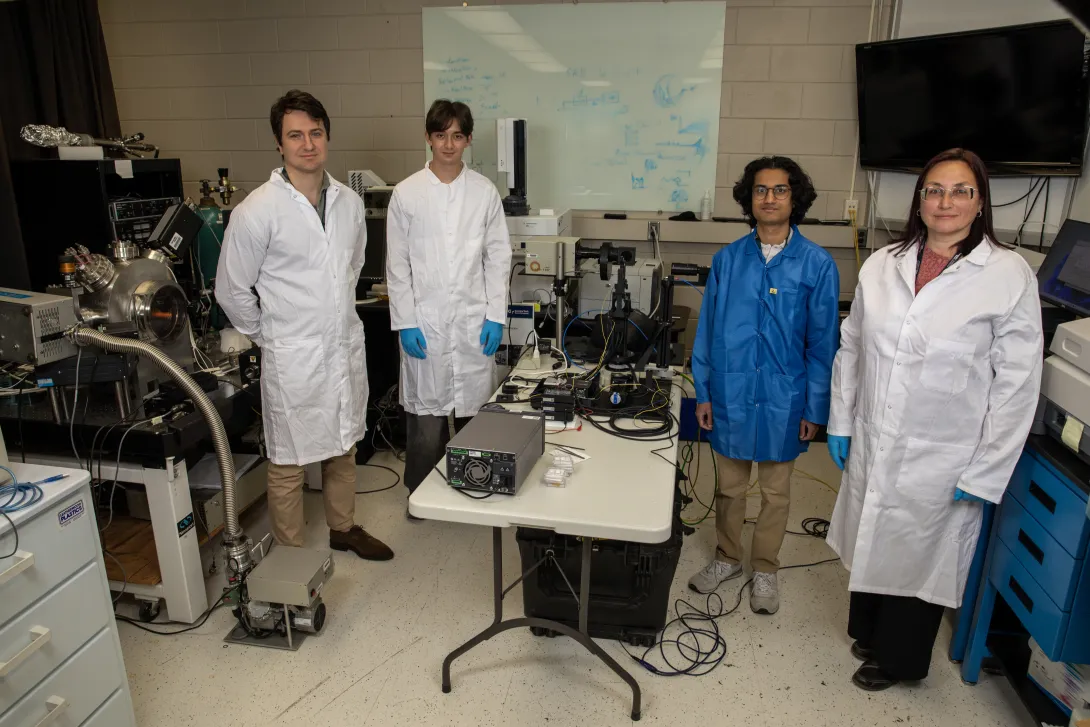
Members of the GTRI research team who helped develop and qualify materials that will be tested on the ISS during the MISSE-22 mission (Photo Credit: Sean McNeil, GTRI).
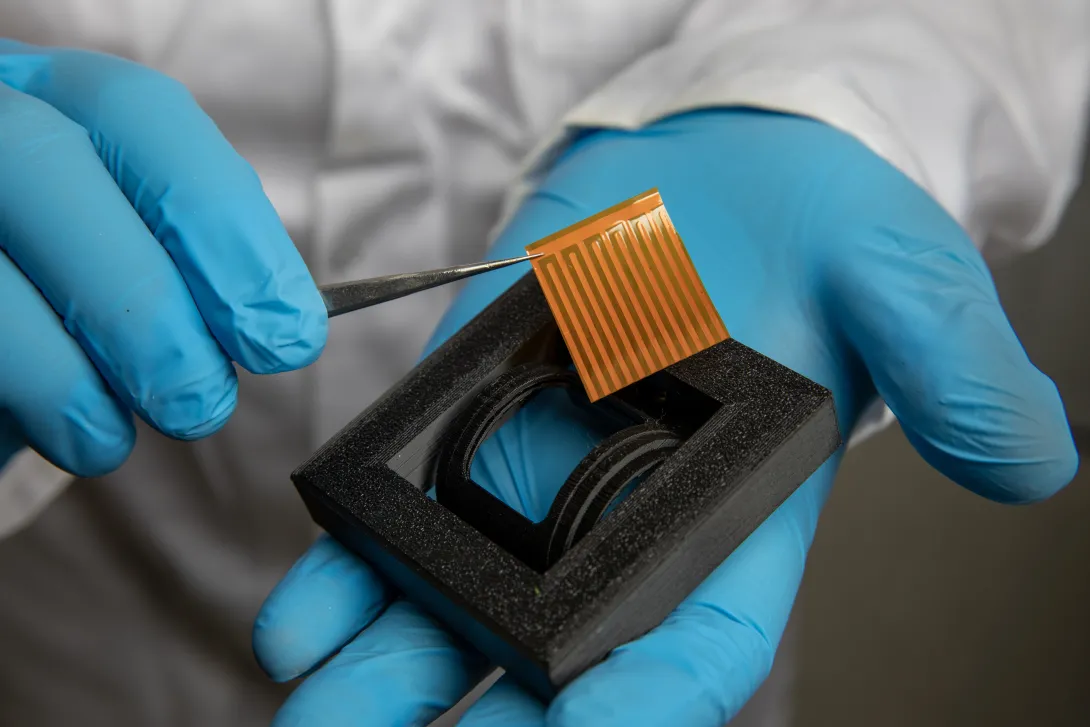
Close-up of a sample similar to those that will be sent to the ISS to study their durability in harsh space conditions (Photo Credit: Sean McNeil, GTRI).
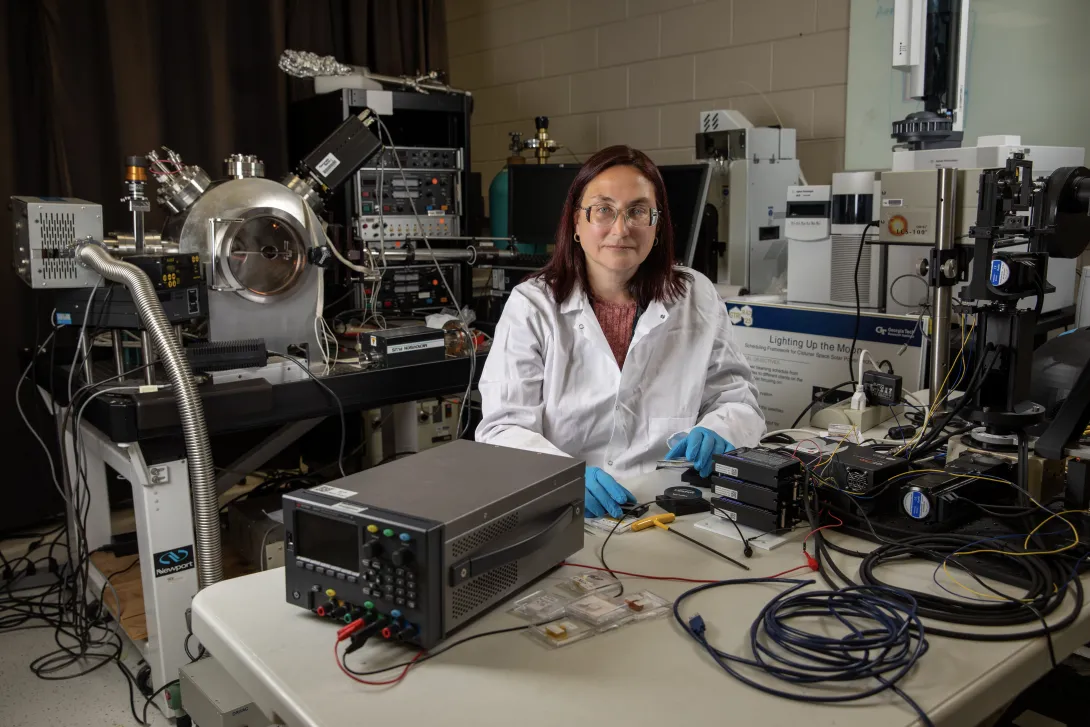
Plis and her team are sending new lightweight, research-grade polymers to the ISS for months of in-orbit exposure and later testing on Earth. Here, she is pictured in a laboratory at a GTRI facility in Atlanta, GA (Photo Credit: Sean McNeil, GTRI).
Researchers have come close to simulating space environments in Earth labs, but the combination of extreme thermal swings, complex cosmic radiation, and sustained microgravity that spacecraft experience make it impossible to capture the real thing perfectly.
Now, in a project led by the Georgia Tech Research Institute (GTRI) in collaboration with the Georgia Institute of Technology (Georgia Tech) researchers are closing the gap between Earth-based simulations and the true space environment by sending experimental materials to the International Space Station (ISS) for several months of in-orbit exposure. In a rare chance for space research, where most hardware is either left in orbit or burns up on reentry, they are getting those samples back for detailed analysis on Earth.
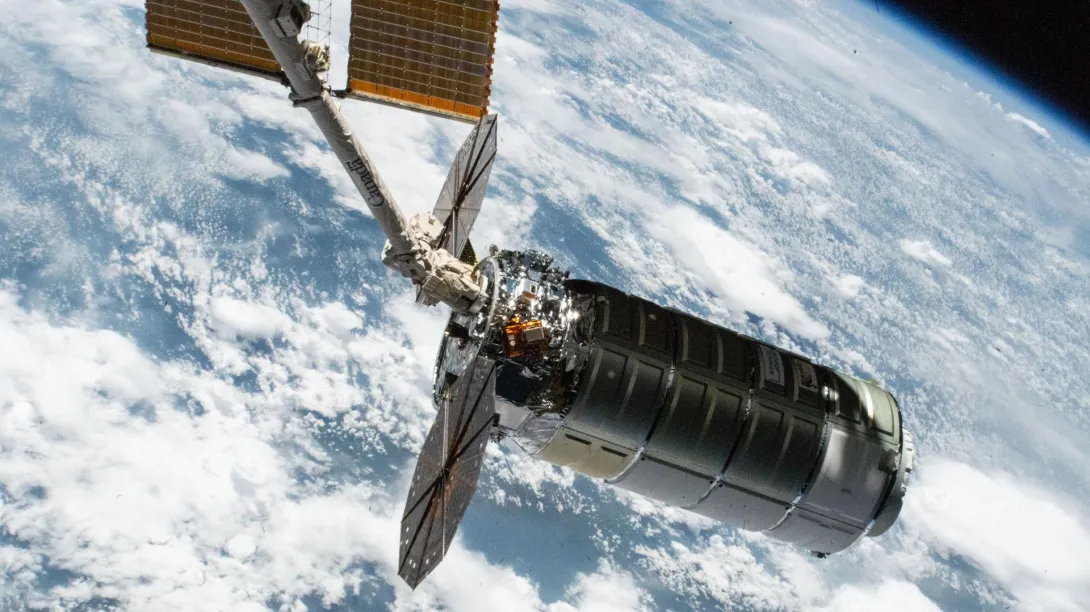
The materials are set to launch to the ISS in the near future as part of the Materials International Space Station Experiment 22 (MISSE-22), a testbed attached to the outside of the station. Mounted on the forward-facing side of the ISS to ensure predominant exposure to highly corrosive atomic oxygen, the test samples will spend several months enduring the extreme temperatures, radiation, and reactive environment of low Earth orbit. The team is testing a selection of lightweight, research-grade polymers designed to survive these harsh conditions. Once the samples return to Earth, engineers will examine how they held up and use that data to enhance the strategic of future satellite constellations.
This project represents a collaboration across government, academia, and industry, bringing together GTRI, Georgia Tech, the Air Force Research Laboratory (AFRL), the University of Texas at El Paso (UTEP), a California-based R&D firm Hedgefog Research Inc., and DuPont de Nemours, Inc. The research is also supported by Aegis Aerospace, which owns and operates the MISSE Flight Facility platform aboard the ISS.
Why Space is So Hard on Satellites
Harsh conditions in low Earth orbit — the region of space extending from approximately 100 miles to over 1,000 miles above Earth, where many satellites and the ISS travel — can darken, roughen, and weaken spacecraft surfaces over time. That damage shortens satellite lifetimes and requires engineers to add extra layers of protection, increasing overall logistical burden and mission costs.
Optimizing material durability is a strategic necessity, explained Elena Plis, a GTRI senior research engineer and principal investigator for the project, because every additional unit of shielding increases the cost of getting to orbit. To design lighter, more resilient materials, researchers need to examine how they degrade in a true space environment. However, most hardware is built for a one-way trip — designed to operate in orbit and then burn up on reentry, taking that valuable material data with it.
“The beauty of this type of experiment is that the materials return to Earth,” said Plis, who is also an affiliate of the Georgia Tech Space Research Institute. “For many missions, stuff is sent up and never seen again. Being able to test returned samples from real space conditions is unique, and I can’t stress enough how exciting that is for us.”
A New Generation of Polymers Head for Space
Instead of relying on familiar spacecraft materials like DuPont’s Kapton — a tough, heat-resistant polyimide plastic film that has coated spacecraft exteriors since the Apollo era — the team is sending up a set of new, lightweight, research-grade polymers. These materials are designed to improve the survivability of assets against space’s unforgiving elements.
Plis and her collaborators started with dozens of candidate materials they developed. To earn a spot on the MISSE-22, a sample has to be transparent or translucent, so light can pass through it, and researchers can examine how its optical properties change in orbit. The materials also have to be tough enough to withstand intense atomic oxygen exposure without fragmenting, which would create debris near the ISS. In the end, only a select number of the team’s materials made the cut.
The MISSE-22 testbed holds multiple experimental polymers. Instead of standard illumination, the team constructed a custom on-orbit polariscope: LEDs beneath each sample shine polarized light up through the material. A small camera system then slides over the top to capture these highly specific optical changes on a set schedule over the course of several months in space.
Using Light to Reveal Space Strain
Using polarized light and machine learning to rapidly analyze color patterns in the images they receive from orbit, the researchers can track how stress inside each sample changes over time. Periodically, the system will cycle through the materials, and the images will be downlinked to Earth.
When the extended mission ends and the samples return, the team will compare those in-orbit measurements with detailed lab tests on the actual pieces that flew. Without returned materials, they would only have images and sensor data to work from. By testing the same samples in the lab, they can check how accurate the remote measurements really are and refine their methods.
If the materials perform as expected, the results could help engineers design satellites that last longer in orbit without carrying so much protective weight —providing a significant technological advantage in space domain awareness and asset longevity.
About the Space Research Institute
The Space Research Institute (SRI) at the Georgia Institute of Technology is an interdisciplinary hub that unites faculty, staff, and students to advance research, education, and collaboration in space science and technology. Bringing together expertise across engineering, science, policy, and the humanities, SRI drives innovative projects in areas such as astrophysics, aerospace systems, astrobiology, and space policy while fostering partnerships with academia, industry, and government. As Georgia Tech’s central nexus for space-related initiatives, SRI is committed to advancing discovery, developing the future workforce, and expanding humanity’s understanding of space and its impact on life on Earth. Learn more at space.gatech.edu.
News Contact
Author:
Communications Officer II
Georgia Tech Research Institute
Media Contact:
Apr. 06, 2026
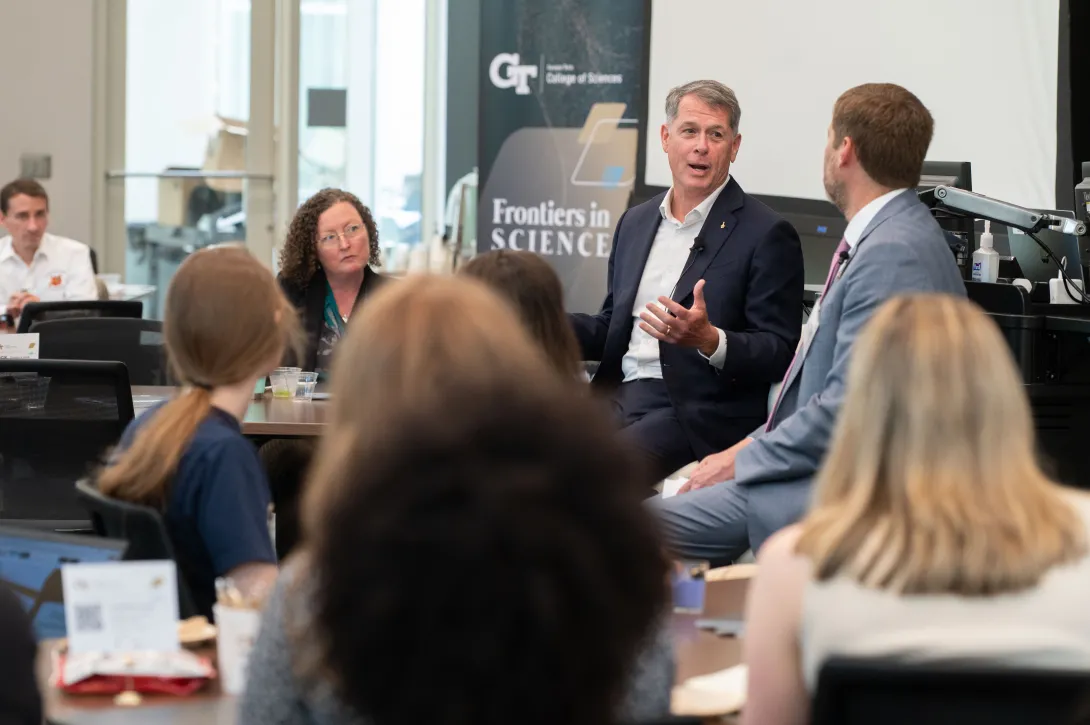
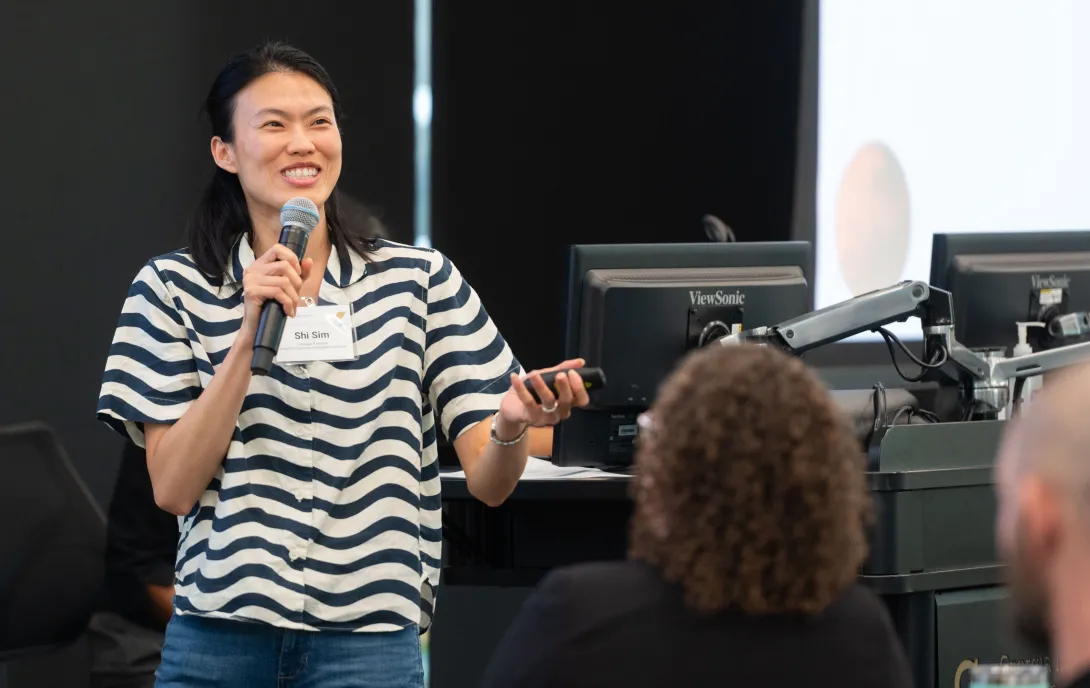
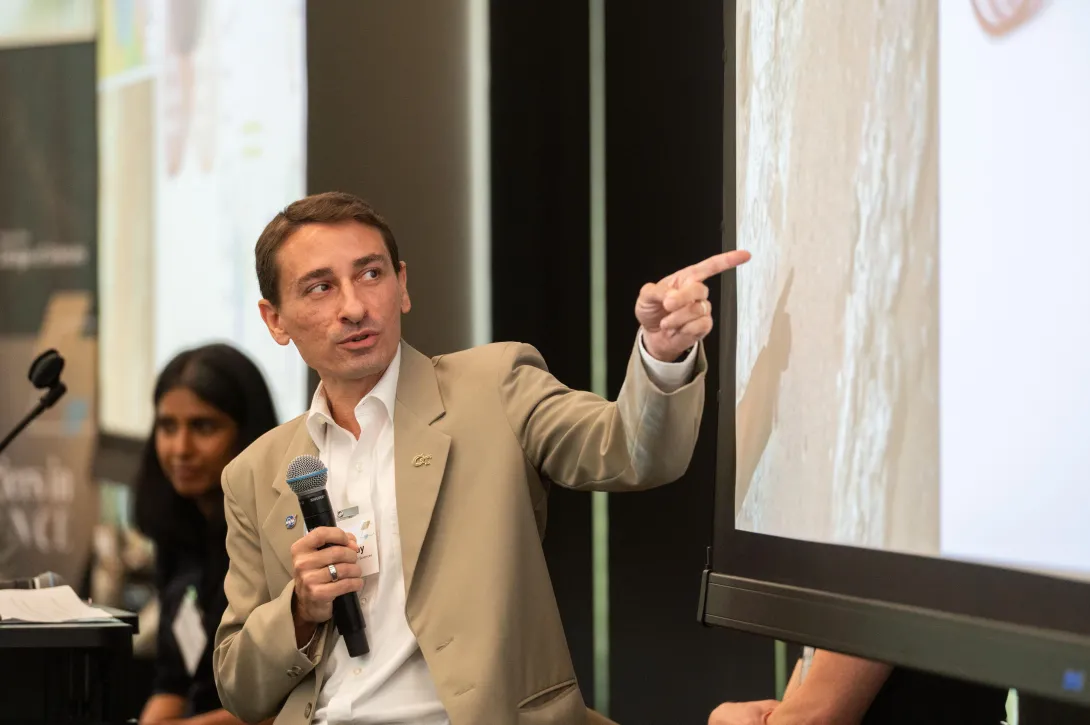
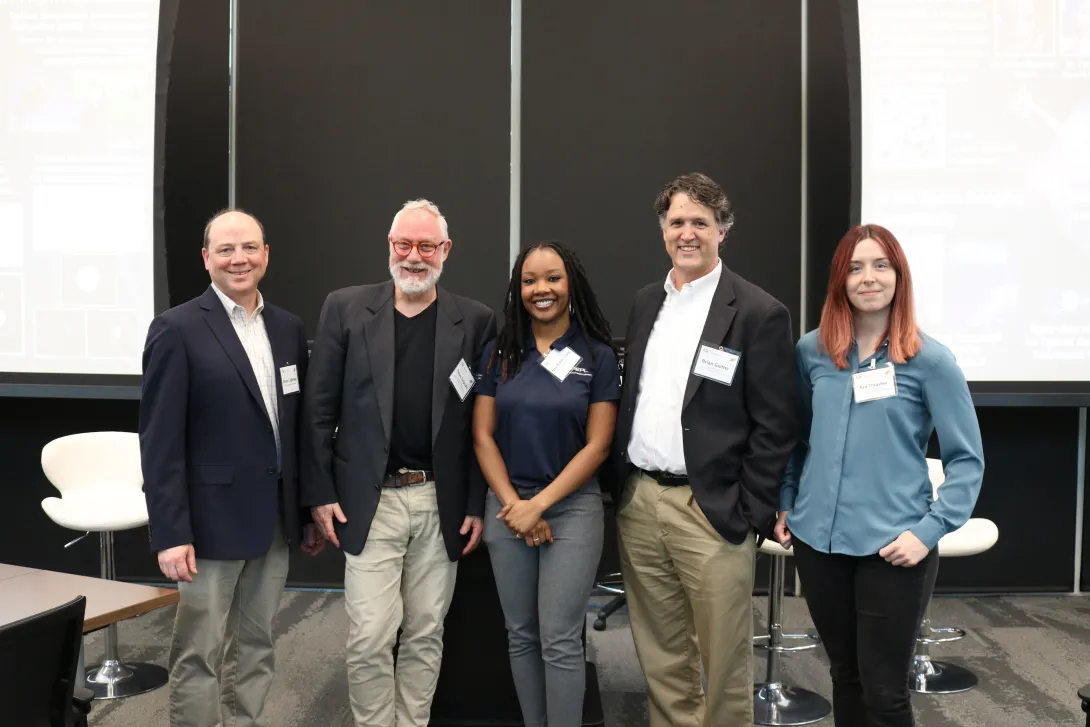
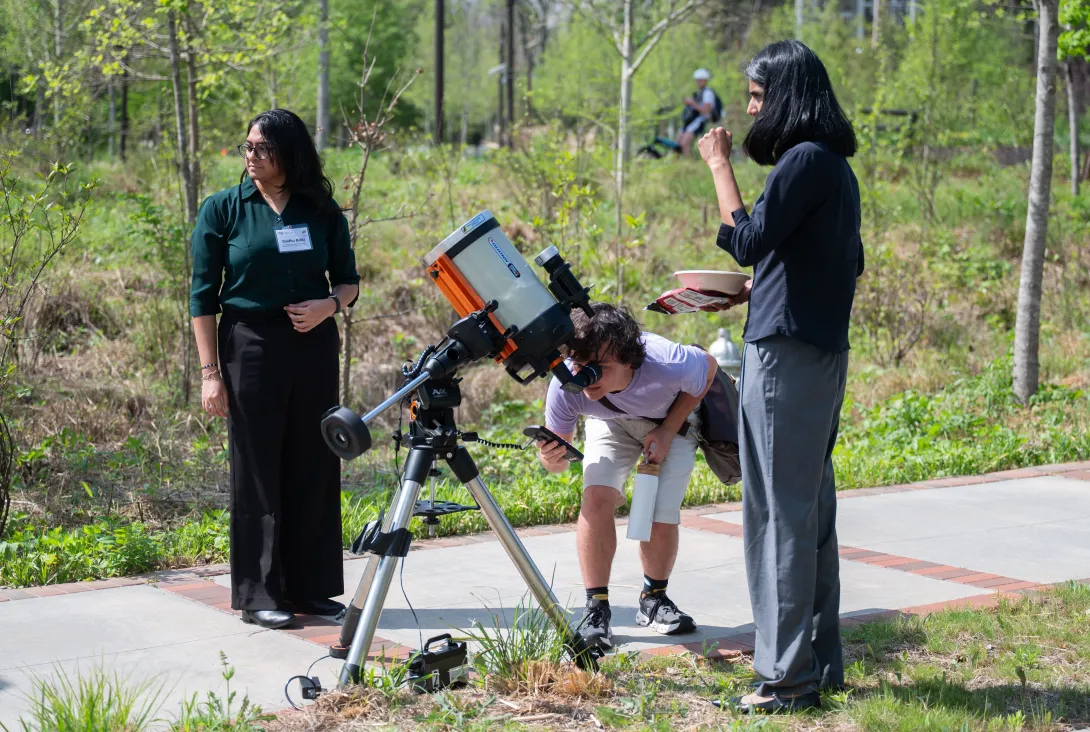
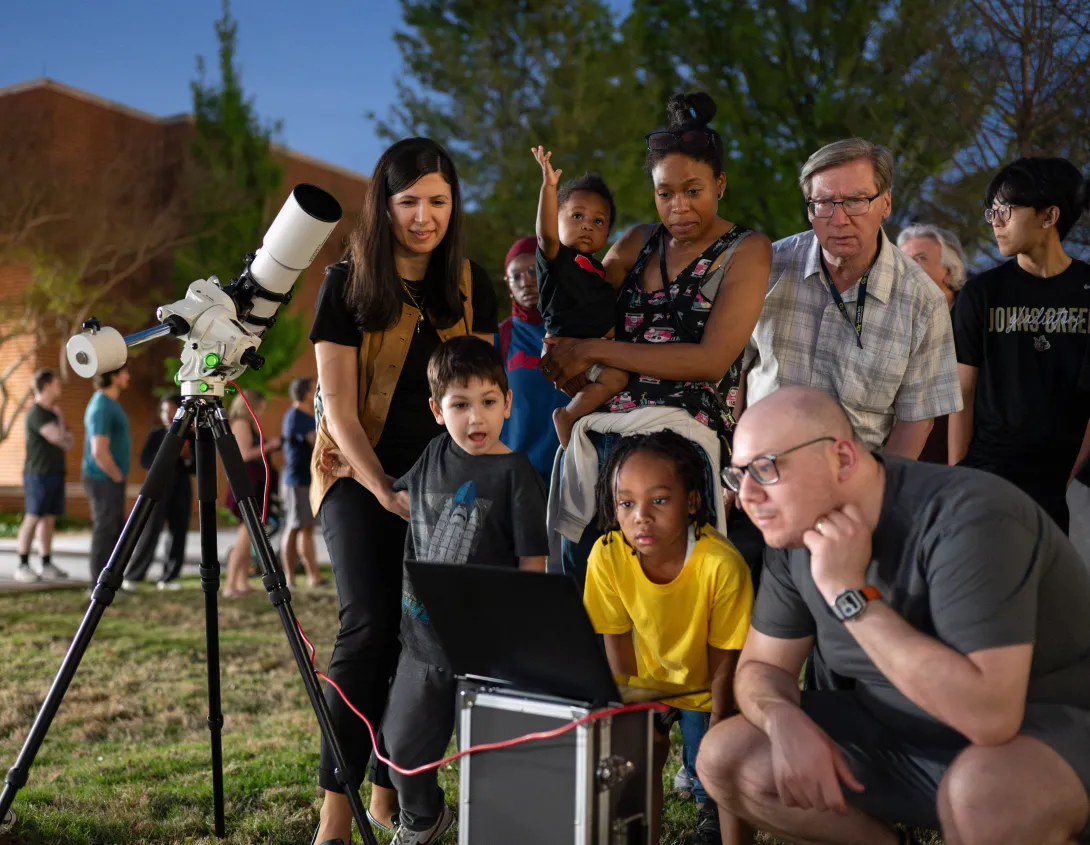
One day after the historic Artemis II launch, the College of Sciences welcomed more than 150 researchers, students, and community members to its signature Frontiers in Science conference. Held on April 2, the full-day event focused on space research guiding discovery and innovation.
As during previous editions, this year’s conference featured more than two dozen scientists, engineers, policy experts, and thought leaders from Georgia Tech and beyond, illustrating how collaboration across fields – from science and engineering to public policy and international affairs – helps to advance strategic research priorities.
“Frontiers is about discovery and connections across disciplines and generations,” says Susan Lozier, dean of the College of Sciences and Betsy Middleton and John Clark Sutherland Chair. “This edition provided an inspiring glimpse into the future of space exploration and the many ways Georgia Tech is contributing to research and missions seeking answers to what lies beyond our planet.”
Commitment to Space
Space research is a key institutional priority at Georgia Tech, which is home to numerous academic and research programs in planetary sciences, robotics, mission design, space policy, and other areas.
The recently established Space Research Institute (SRI) serves as the central hub connecting the broad range of space-related research across campus. Led by Jud Ready, who also serves as principal research engineer at the Georgia Tech Research Institute, SRI has expanded support for space research and commercialization through initiatives such as the CreationsVC Space Fellows Program and Centers, Programs, and Initiatives seed grant program.
SRI’s efforts are in line with Georgia Tech’s long-standing contribution to space exploration. Hundreds of Yellow Jacket alumni work in the space sector, including several graduates who are playing key roles in the Artemis program. To date, more than a dozen Georgia Tech alumni have traveled to space.
Exploring the Final Frontier
The conference featured a series of panels and discussions led by faculty and researchers from the Colleges of Sciences and Engineering as well as the Ivan Allen College of Liberal Arts.
Sessions explored how researchers are studying the processes and conditions that support planetary habitability, seeking to answer one of humanity’s greatest questions: Does life exist beyond Earth? Speakers also examined how analog fieldwork in Earth’s extreme environments can inform space exploration, and how space research, in turn, can deepen our understanding of our own world.
Additional conversations centered on building better space missions through improved understanding of team and individual resilience, data collection, navigation, and the development of advanced technologies like the robots developed through the NASA LASSIE Project.
Frontiers also highlighted Georgia Tech’s commitment to preparing the next generation of space scientists, engineers, and leaders. Student training and engagement were recurring themes throughout the day, with speakers emphasizing opportunities for student-led and student-run missions and research. A panel of Georgia Tech alumni shared their own STEM career journeys, challenging the idea of “one right path” to success — and acknowledging the resources and opportunities available at the Institute.
A highlight of the conference was a fireside chat with Atlanta-native, retired U.S. Army Colonel and NASA Astronaut R. Shane Kimbrough (M.S. Operations Research 1998). Kimbrough, who spent a total of 388 days in space and performed nine spacewalks across three missions, reflected on his career and the evolution of spaceflight. He emphasized the expanding role of public-private and international partnerships in advancing ambitious goals, such as creating a permanent human outpost on the Moon.
Policy and Public
The conference also explored how policy influences space discovery and innovation, with discussions touching on such issues as space security, access, governance, sustainability — and the influence of technology and science fiction on public perception and policy.
Panelists described current policy frameworks governing outer space as struggling to keep pace with rapidly advancing technologies and expanding activities. According to these experts, increasing tensions among commercial, research, and recreational uses of space call for greater coordination among private and government entities to balance competing priorities while maximizing opportunities for innovation and exploration.
The conference was punctuated by a networking lunch connecting attendees with Atlanta’s public astronomy community – including partners at several universities and the Georgia Tech Astronomy Club, which set up telescopes for attendees to safely observe the sun. Later that evening, the Georgia Tech Observatory hosted its Public Night, welcoming the broader Atlanta community to campus for telescope views of Jupiter, the Orion Nebula, and other celestial bodies.
The Observatory Night was a fitting conclusion to a full day focused on Georgia Tech’s commitment and contributions to inspiring future generations of space explorers through research, education, and outreach.
Experience the Frontiers conference in pictures on the College of Sciences’ Flickr account.
News Contact
Writer: Lindsay C. Vidal
Mar. 31, 2026
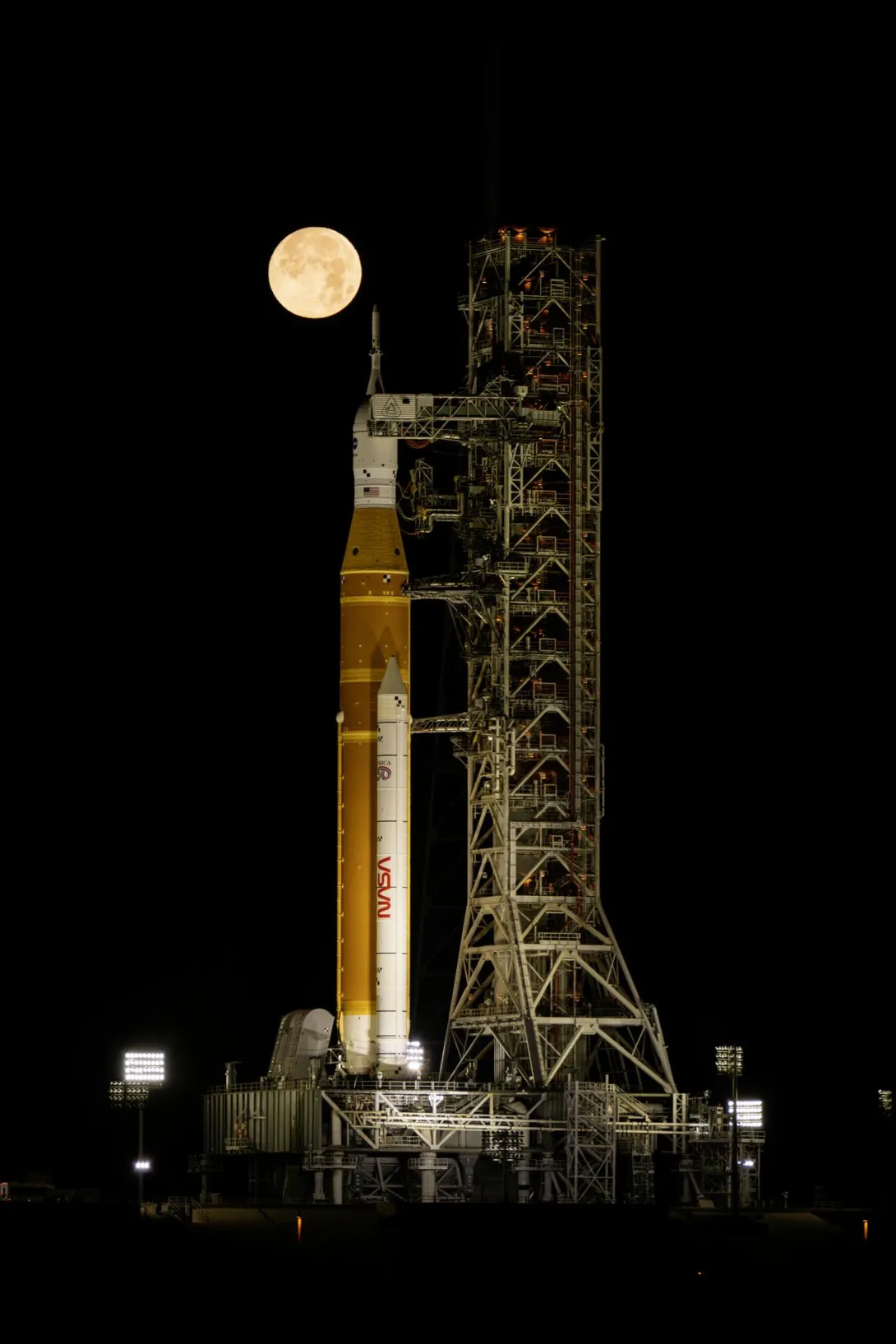
If all goes according to plan, humans will head toward the moon this week for the first time since 1972.
NASA’s Artemis II is set to launch from Cape Canaveral, Florida, on Wednesday, April 1, at 6:24 p.m. Four astronauts will slingshot around the moon before landing in the Pacific Ocean after a 10-day mission.
The launch has captivated the Georgia Tech space community, both here on campus and within the alumni base. Several Georgia Tech graduates have key roles in the Artemis program.
On the eve of this next chapter of lunar exploration, several current and former Yellow Jackets discuss why Artemis II matters, what excites them about the mission, and what happens next.
Read the entire story on the College of Engineering website.
News Contact
Jason Maderer
College of Engineering
Georgia Institute of Technology
maderer@gatech.edu
Mar. 27, 2026

Taken aboard Apollo 8 by Bill Anders, this iconic picture shows Earth peeking out from beyond the lunar surface as the first crewed spacecraft circumnavigated the Moon, with astronauts Anders, Frank Borman, and Jim Lovell aboard. (Credit: NASA)

Advik Vira
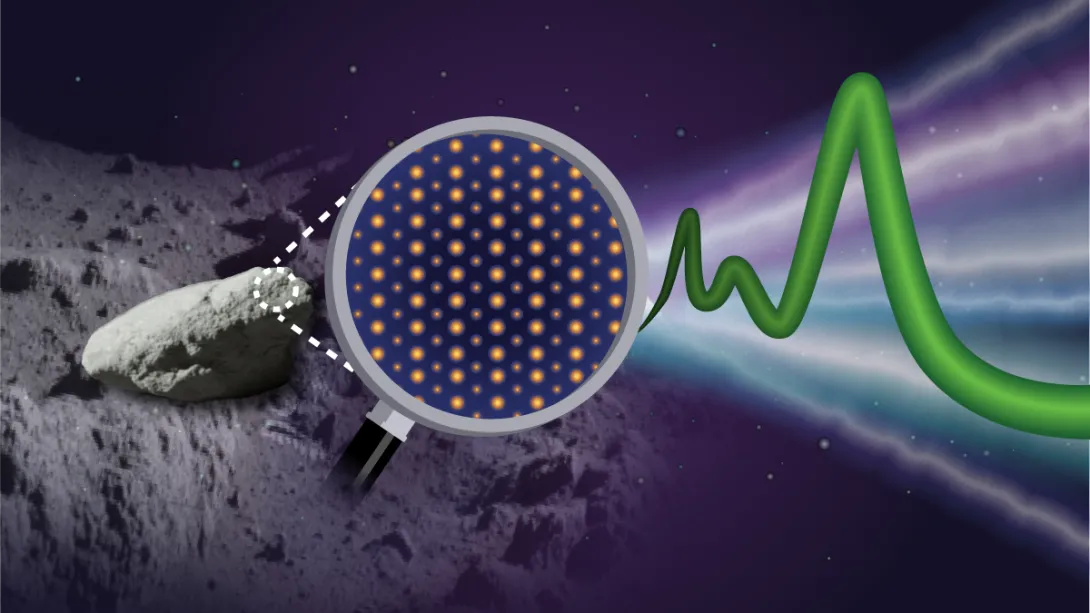
An illustration of the Apollo rock 75035 on the Moon, an atomic image of the sample, and its spectral signature. (Credit: August Davis)

An optical image of the chip from the lunar rock the team investigated.
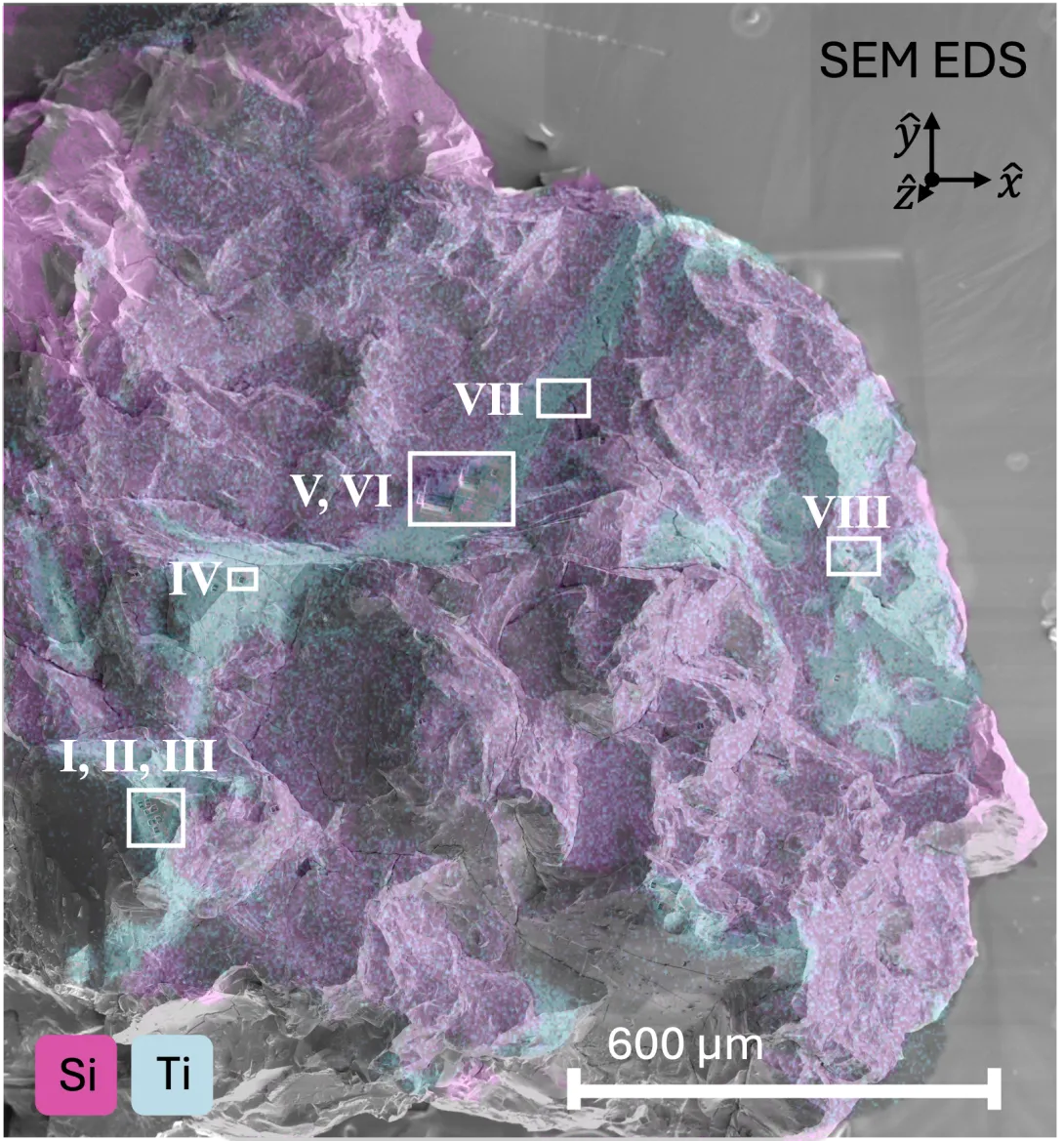
An image of the chip from the sample, imaged using scanning electron microscopy. Titanium is shown in light blue, and white boxes show areas where samples were extracted to analyze the ilmenite crystal.
A chemical signature hidden in a 3.8‑billion‑year‑old lunar rock is offering new insights into the availability of oxygen within the young Moon.
Published today in the journal Nature Communications, the paper “Trivalent Titanium in High-Titanium Lunar Ilmenite” confirms titanium in a reduced, trivalent state in a black, metal-rich lunar mineral called ilmenite. It’s a state only possible in low-oxygen environments, conditions researchers refer to as “reducing.”
“Models have suggested that these reducing conditions may have varied at different locations and times across the surface of the Moon,” says lead author Advik Vira, a graduate student in the School of Physics who recently earned his doctoral degree. “We hope our microscopy technique can be a valuable step in mapping and understanding the Moon’s 4.5-billion-year history.”
The team anticipates that their technique could be used on many of the lunar samples collected more than 50 years ago by the Apollo missions in addition to the Apollo Next Generation Samples — a group of lunar samples that have been stored under pristine conditions — and new samples from the planned Artemis missions, with Artemis II slated for launch this spring. The technique might also be applicable to samples collected from the far side of the Moon and returned in 2024 by the Chang’e-6 mission.
“The Moon holds clues not only to its own past, but also to the earliest eras of Earth’s evolution — history that has long since been erased from our planet,” Vira says. “This study is a step toward understanding the history of both and a reminder that there is still so much left to learn from the lunar rocks we’ve brought back to Earth.”
The School of Physics research team included corresponding authors Vira and Professor Phillip First; in addition to graduate student Roshan Trivedi; undergraduate students Gabriella Dotson, Keyes Eames, Dean Kim, and Emma Livernois; and Professor Zhigang Jiang, along with Institute for Matter and Systems Materials Characterization Facility Senior Research Scientist Mengkun Tian; School of Chemistry and Biochemistry Senior Research Scientist Brant Jones and Thom Orlando, Regents' Professor in the School of Chemistry and Biochemistry with a joint appointment in the School of Physics.
The Georgia Tech team was joined by Addis Energy Senior Geochemist Katherine Burgess; Macalester College Assistant Professor of Geology Emily First; along with Lawrence Berkeley National Laboratory Research Scientist Harrison Lisabeth, Senior Scientist Nobumichi Tamura, and Postdoctoral Fellow Tyler Farr, who recently earned a Ph.D. from Georgia Tech’s George W. Woodruff School of Mechanical Engineering.
CLEVER research
The investigation began with a dark gray rock called a lunar basalt. Formed when ancient magma erupted on the Moon’s surface, minerals crystallized as it cooled — preserving key information in their structures. Billions of years later, the rock was brought to Earth by the 1972 Apollo 17 mission, where a small piece is now stored at Georgia Tech’s Center for Lunar Environment and Volatile Exploration Research (CLEVER), a NASA Solar System Exploration Research Virtual Institute (SSERVI) center led by Orlando.
As a NASA virtual institute, CLEVER supports researchers exploring lunar conditions and developing tools for the upcoming crewed Artemis missions, and provided the lunar samples for this research. The SSERVI also plays a critical role in training the next generation of planetary researchers: both Vira and Farr earned their Ph.D.s while on the CLEVER team.
“At CLEVER, we are very interested in understanding the impacts of space weathering,” Vira says. “We implemented modern sample preparation and advanced microscopy techniques to image samples at the atomic level, and were curious to apply it more broadly to the collection of Apollo rocks in the Orlando Lab. This sample caught our attention.”
“When we imaged an ilmenite crystal from the lunar basalt, what struck us first was how uniform and perfect the crystal structure was,” he recalls. “We found no defects from space weathering and instead saw an undamaged, pristine crystal — undisturbed for 3.8 billion years.”
To investigate further, the team analyzed small chips of the rock with Burgess, a member of the RISE2 SSERVI team and then a geologist at the U.S. Naval Research Laboratory. Using state-of-the-art electron microscopy and spectroscopy techniques, Vira determined the oxidation state of the elements in the ilmenite present.
In spectroscopy measurements, each element leaves a distinct ‘signature,’ Vira explains. “When we brought our results back to Georgia Tech’s Materials Characterization Facility, Mengkun (Tian) noticed something unusual: the signature showed titanium might be present in the trivalent state.”
The presence of trivalent titanium had long been suspected in this lunar mineral. The team was intrigued.
A new window into old rocks
With funding from Georgia Tech’s Center for Space Technology and Research (CSTAR), Vira returned to the U.S. Naval Research Laboratory to analyze additional samples. The results confirmed that more titanium was present than the mineral’s formula (FeTiO₃) predicts — indicating a portion of the titanium present was trivalent.
“That led me to place our measurements in terms of the broader geological context,” Vira shares. Working with First, Vira explored how ilmenite with trivalent titanium could help reconstruct the nature of ancient magmas from the Moon, especially the chemical availability of oxygen.
“Because its location on the Moon was noted during the Apollo mission, we know exactly where this rock is from, and we can determine how old the rock is,” he explains. “When coupled with our trivalent titanium measurements, we can use that information to estimate the reducing conditions for this specific region at the specific time our rock formed.”
If the upcoming Artemis missions return samples suitable for the team’s technique, these rocks could provide a new window into ancient lunar geology. The research also highlights that many lunar samples already on Earth could be reexamined to look for trivalent titanium.
“There is still so much to learn from the lunar samples we have already brought to Earth,” Vira says. “It’s a testament to the long-term value of each sample return mission. As technology continues to advance, this type of work will continue to give us critical insights into our planet and our place in the universe for years to come.”
DOI: 10.1038/s41467-026-69770-w
Funding: This work was directly supported by the NASA SSERVI under CLEVER. Researchers were also supported by the NASA RISE2 SSERVI and the Heising-Simons Foundation. Funding for collaborations between the U.S. Naval Research Laboratory and Georgia Tech for the investigation of lunar minerals was provided by the Georgia Tech Center for Space Technology and Research. Sample preparation was performed at the Georgia Tech Institute for Matter and Systems, which is supported by the National Science Foundation. This work utilized the resources of the Advanced Light Source, a user facility supported by the U.S. Department of Energy, Office of Science, Office of Basic Energy Sciences, and was supported in part by previous breakthroughs obtained through the Laboratory Direct.
Feb. 26, 2026
Georgia Tech’s faculty startup engine Quadrant-i, together with the Space Research Institute (SRI), launched the first cohort of the CreationsVC Space Fellows Program. Funded by space technology venture capital firm CreationsVC, the program enables faculty to explore promising early-stage innovations and their potential for future commercial impact.
“This first set of CreationsVC Fellows offers an exciting cross-section of innovative hardware and software technologies built on Georgia Tech’s legacy of space exploration, hardware development, and product commercialization,” said Jud Ready, SRI executive director.
In the first year of the three-year program, CreationsVC provides $125,000 to promote and accelerate innovations that have both space and terrestrial applications. The series offers participants training focused on customer discovery, engaging and compelling storytelling, value proposition design and quantification, and lean/agile project/product management.
“CreationsVC is centered on a deep appreciation for innovation and big thinking,” said Steve Braverman, co-founder and managing partner of CreationsVC. “We felt this was the right time to align our efforts in sourcing and supporting dual-value technologies that will have an impact on both Earth and space.”
The six startups tackle real-world space research problems like supply chain management, how artificial intelligence works in space, and navigation.
“We are excited CreationsVC is providing us with an opportunity to try new approaches to accelerate deep tech development,” said Jonathan Goldman, Quadrant-i’s director. “These are the toughest kinds of startups to build, and we look forward to the learning we will gain from forcing our innovators out of their comfort zones to embrace some new and valuable skills.”
Meet the cohort:
Company: CIMTech.ai
Founders: Shimeng Yu, James Read
School: School of Electrical and Computer Engineering (ECE)
Objective: To develop energy-efficient, radiation-tolerant artificial intelligence processors using a persistent type of ferroelectric memory. The startup aims to improve applications requiring high power efficiency, such as battery-powered devices and space-based systems.
Why Q-i: “The advantage of Q-i is in helping technical founders turn their research into products that solve customers’ problems,” noted James Read. “For us, that means talking with potential customers and hearing their pain points directly from the source. Now we’re use that information to build a convincing narrative around our startup’s value for stakeholders and investors.”
Company: SkyCT
Founders: Morris Cohen, Matthew Strong
School: ECE
Objective: To provide up-to-date mapping of the electrical properties of the upper atmosphere, with applications to GPS-free navigation, long-range communication, and satellite and launch vehicle viability. The startup uses the radio energy released by lightning strikes to create this map.
Why Q-i: “This weird region about 50 miles up from Earth’s surface is both really hard to track and measure, and also impacts a surprising array of applications,” said Cohen. “It’s sometimes called the `ignorosphere’ because of how difficult it is to measure, and it’s time we change that.”
Company: Penumbra Autonomy
Founders: Panagiotis Tsiotras, Juan Diego Florez-Castillo, Iason Velentzas
School: Daniel Guggenheim School of Aerospace Engineering (AE)
Objective: To commercialize algorithms that help spacecraft maneuver when they have limited information on their environment. The algorithms use state-of-the-art computer vision and localization techniques. This could benefit manufacturing, assembly, and refueling in orbit, as well as enable monitoring, situational awareness, and debris removal.
Why Q-i: “The program offers a conduit to entrepreneurship opportunities and spinoff companies in the space domain by providing guidance and commercialization ‘know-how,’” said Panagiotis Tsiotras.
Company: TerraMorph
Founders: Yashwanth Kumar Nakka, Sadhana Kumar, Vincent Griffo, Sachin Kelkar
School: AE
Objective: To create an autonomous rover platform with adaptive, reconfigurable mobility. The rover will implement software and sensing algorithms to automatically detect terrain type and improve traction and energy usage. This could be used on the moon or Mars, or even terrestrial search and rescue.
Why Q-i: “TerraMorph was developed to address fundamental challenges in mobility and autonomy across uncertain terrain, but successfully translating that work into impact requires creative guidance, critical feedback, and experienced perspectives beyond the lab,” said Yashwanth Kumar Nakka. “Q-i’s culture of leading by example and fostering strong, ethical teams aligns closely with how we want to build TerraMorph: iteratively, thoughtfully, and with a focus on real-world deployment.”
Company: OpenWerks
Founders: Shreyes Melkote, Mike Yan
School: George W. Woodruff School of Mechanical Engineering
Objective: To deliver real-time manufacturing supply chain visibility for the space and national security industries. OpenWerks technology aims to dramatically reduce current sourcing cycles from eight months down to weeks by connecting corporate buyers directly with verified supplier manufacturing capability and capacity data.
Why Q-i: “From the very beginning, principals at VentureLab and Q-i offered a clear pathway to translate academic research into a viable business,” said Mike Yan. “Their reputation for guiding Georgia Tech startups through both business and technology derisking, combined with their comprehensive ecosystem of programs and coaches, made them the natural partner for our entrepreneurial journey.”
Company: 8Seven8
Founders: Chandra Raman
School: School of Physics
Objective: To manufacture quantum hardware in Georgia. 8Seven8 aims to put high-precision atomic clocks and gyroscopes on a chip for applications ranging from aircraft navigation to industrial automation.
Why Q-i: “They have mentored me and my students through the commercialization process, providing opportunities such as the Space Fellows Cohort,” Chandra Raman said. “One of my former students, Alexandra Crawford, gained valuable business experience through a Q-i entrepreneur’s assistantship, and is now working at 8Seven8 full-time. They have also guided me through the process of obtaining funding through the Georgia Research Alliance for our commercialization effort.”
News Contact
Tess Malone
Senior Research Writer/Editor
Georgia Tech
Feb. 10, 2026
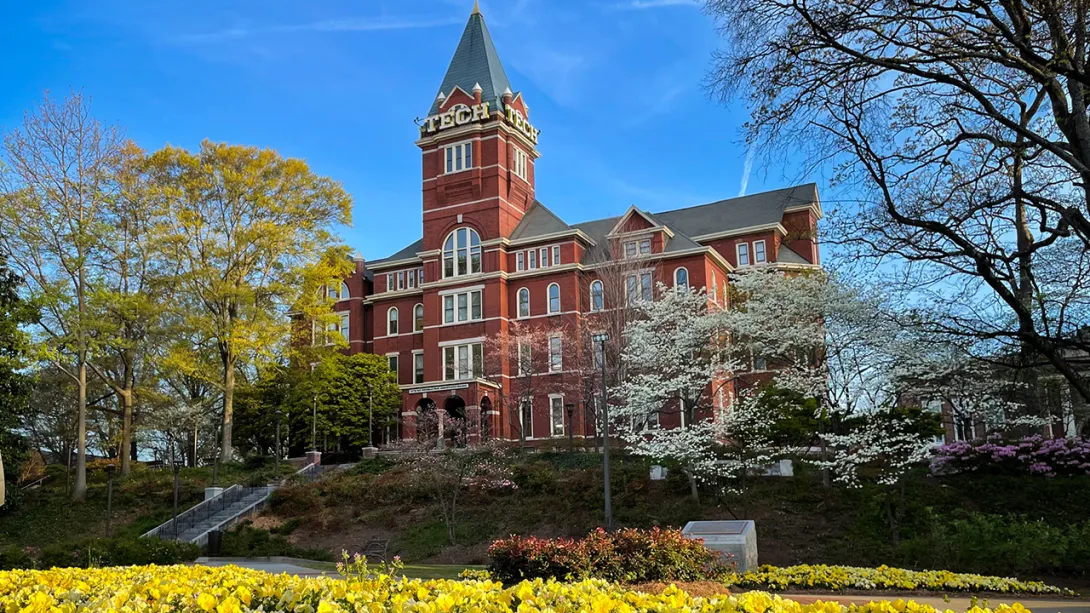
The Georgia Institute of Technology’s Vertical Lift Research Center of Excellence (VLRCOE) and RMS Aerospace have entered into a strategic partnership to develop an AI-enabled unmanned aerial vehicle (UAV) for the U.S. Army and federal government.
RMS is an engineering firm highly specialized in aerial and maritime combat systems, with offices in Texas and Georgia. This partnership combines VLRCOE’s strengths in rotorcraft aeromechanics and advanced configurations with RMS’ operational defense and applied systems engineering expertise to address a critical need for the U.S. Army.
The military has phased out or retired other drone vehicles, including the MQ-1 Gray Eagle, RQ-7 Shadow, and OH-58 Kiowa Warrior. Deploying a new AI-powered UAV can take over the intelligence, surveillance, and reconnaissance missions typically flown by those older UAVs.
News Contact
Kelsey Gulledge || AE Communications Manager
Feb. 17, 2026
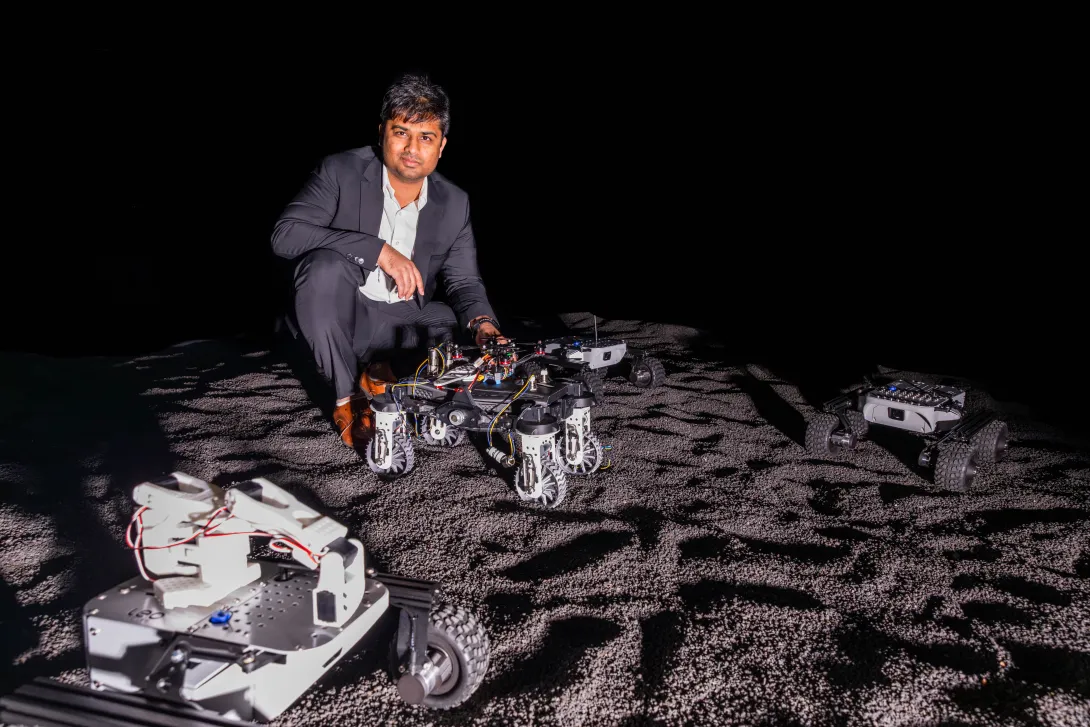
Traveling to the moon for scientific discovery is expensive. And even once you get there, operating a rover on the moon is nothing like driving on Earth — the uneven terrain, deep shadows, and unpredictable soil make autonomy essential.
So, what do you do if you want to design robots and their controlling algorithms for future moon visits? If you’re Yashwanth Nakka, you bring the moon to you.
Nakka has recreated the moon in a research lab at Georgia Tech, hauling in seven tons of basalt rock to mimic the look and feel of the lunar surface. With dark black walls and a bright light that simulates the sun’s glare, the Aerospace Robotics Lab (ARL) is the only one of its kind in a university setting.
This lab will help Nakka’s team of researchers understand how robotic rovers interact with the environment on the moon — how they perceive the terrain in different sunlight conditions, for example, and how they navigate across a surface that can easily swallow a rover wheel.
“From a research perspective, many of today’s space mobility solutions still build upon algorithms developed two decades ago. This new lab positions us to pioneer the next generation of autonomous mobility technologies that can overcome unstructured terrain, environmental, and operational challenges. Advancing autonomous systems is critical to enabling deep-space exploration, supporting resource utilization, and empowering scientists to investigate new frontiers such as icy moons that may harbor subsurface oceans,” said Nakka, assistant professor in the Daniel Guggenheim School of Aerospace Engineering.
Unlike the Moon’s ultra-fine, clingy regolith that can coat equipment and cause severe wear and damage, Nakka’s lab uses carefully selected, gem-sized basalt rocks. This material allows researchers to realistically study how robots interact with granular terrain while avoiding the need for extensive protective equipment, making experimentation safer, more efficient, and easier to conduct. When robots are driving on the surface, they experience the same shifts and movements they would in the moondust.
Algorithms that Help Rovers Think and Decide on Their Wheels
The lab uses specialized lights that mimic the sun because lighting conditions can significantly impact rover operations. A typical rover relies on cameras to identify objects — such as determining whether something is a rock and whether the rover should drive around or over it.
The rover also must assess slopes and evaluate whether the terrain is stable enough to traverse. These decisions are usually made with a human in the loop; Nakka is developing control systems that would allow the rovers to operate without that human intervention.
“Lighting conditions make this process challenging,” Nakka said. “For instance, direct sunlight on the camera can distort what the rover sees. One of the greatest obstacles is developing algorithms that remain robust and reliable despite these varying environmental factors.”
The team’s algorithms will empower vehicles to independently assess their surroundings, identify safe paths, and select scientifically intriguing targets, all on their own. They also will allow the rovers to work together to explore or achieve other objectives.
"Developing effective algorithms requires more than simply studying a standard vehicle and attempting to adapt autonomy solutions from there. That approach limits performance, particularly when driving at high speeds,” Nakka said. “To achieve truly dynamic and responsive autonomous control, our algorithms must understand how the vehicle interacts with the terrain, control for uncertainty, and incorporate that surface to wheel contact information in real time.”
Next-Gen Robots for the Moon’s Hidden Extremes
Alongside control algorithms, Nakka and his team are crafting new robots capable of exploring harsh moon terrain and accessing challenging environments, such as lunar vents and caves. These shape changing robots, inspired by Nakka’s previous work at NASA’s Jet Propulsion Laboratory (JPL), will cover territory that conventional rovers simply can’t reach.
"We aim to integrate robot design with algorithm development to create systems that are adaptive and capable of changing shape. For example, a rover that can crawl, lift a leg to clear debris when stuck, and continue moving—demonstrating the importance of built-in adaptability."
Nakka’s long-term vision for autonomy is to develop a rover capable of understanding both its environmental context and its own internal state. This includes recognizing available resources as well as interpreting external conditions. Achieving this level of autonomous self and environmental awareness is expected to take approximately a decade.
Ultimately, the work being done in the ARL will shape the next decade of space robotic exploration, making it possible for rovers to go farther, think faster, and survive in places no human or robot has ever gone.
News Contact
Monique Waddell
Dec. 11, 2025

The National Academy of Inventors is honoring two Georgia Tech faculty members for their contributions to technology and society: Deepakraj “Deepak” Divan and Arijit Raychowdhury. Both are in the School of Electrical and Computer Engineering.
Raychowdhury is a semiconductor pioneer whose patented circuit and system-on-chip designs have advanced computing efficiency and commercialization. Divan is a global leader in power electronics and grid modernization, whose innovations and ventures have transformed how electricity is delivered and managed worldwide.
“Congratulations to Deepakraj and Arijit on earning one of the most esteemed accolades in technology and discovery. Their groundbreaking work, with nearly 100 patents between them, advances solutions to global challenges,” said Raghupathy “Siva” Sivakumar, chief commercialization officer at Georgia Tech. “Their success exemplifies how research commercialization drives real-world impact, and we’re proud to see them honored as academy fellows.”
Election to NAI is the highest professional distinction specifically awarded to inventors. With this recognition, Georgia Tech’s roster of NAI Fellows grows to 24. Divan and Raychowdhury join a 2025 class of 169 new fellows representing university, government, and nonprofit organizations worldwide. They will be inducted at the NAI 15th Annual Conference on June 4, 2026, in Los Angeles.
Deepakraj “Deepak” Divan
Professor Emeritus (2004-2025)
Georgia Research Alliance Eminent Scholar
School of Electrical and Computer Engineering
Founder, Georgia Tech Center for Distributed Energy
Deepakraj “Deepak” Divan is a globally recognized innovator in power electronics and grid transformation. He was awarded the IEEE Medal in Power Engineering in 2024.
He holds over 85 U.S. and international patents and has authored 400 refereed publications. His pioneering work on soft‑switching converters—integral for efficient energy storage, EV charging, and industrial controls—has spurred a global $70 billion power electronics industry.
Divan laid the groundwork for grid‑forming inverter control, enabling high-renewables integration. He is the co-author of Energy 2040: Aligning Innovation, Economics and Decarbonization, named by Forbes as one of the “10 Essential Books and Podcasts Every Leader Needs in 2025”.
“Being named an NAI Fellow is a tremendous honor,” said Divan. “It reflects years of effort to rethink how electricity is delivered and managed to solve real problems and to drive practical innovations that matter.”
As the founder of Georgia Tech’s Center for Distributed Energy, he led research that transforms electricity delivery through analytics, monitoring, and optimization.
An entrepreneur, Divan co-founded Varentec (backed by Bill Gates and Khosla Ventures) and seeded ventures including GridBlock, Soft Switching Technologies, Innovolt, and Smart Wires—raising over $500 million. A National Academy of Engineering member and IEEE Fellow, he champions scalable energy-access solutions worldwide.
Arijit Raychowdhury
Professor and Steve W. Chaddick School Chair
School of Electrical and Computer Engineering
Director, Center for the Co-Design of Cognitive Systems
Arijit Raychowdhury has been the Steve W. Chaddick School Chair of ECE since 2021. He is a leading innovator in semiconductor technologies, holding more than 27 U.S. and international patents and authoring over 350 publications.
His work spans low-power circuits, specialized accelerators, and system-on-chip design, with breakthroughs widely adopted in industry.
“This recognition reflects the collective effort of students, colleagues, and partners who share a vision for advancing microelectronics,” said Raychowdhury. “I am honored that NAI champions the same mission to lead through research, education, and innovation."
At Texas Instruments, he developed the world’s first adaptive echo-cancellation network for integrated Digital Subscriber Lines (DSL)—a patented technology that enabled high-speed internet over traditional phone lines that received the EDN Innovation of the Year award. At Intel, he developed and incorporated foundational memory and logic technologies that shaped commercial products across global markets for more than a decade.
His research on fine-grain power management of systems-on-chip at Georgia Tech has been licensed and widely adopted by the semiconductor industry.
He directs Georgia Tech’s Center for the Co-Design of Cognitive Systems and leads initiatives to advance microelectronics design with applications to AI. Over the years, he has served as a founding advisor and board member to multiple startups in the areas of edge-computing and low power design.
Raychowdhury’s research bridges invention and real-world impact, earning him numerous honors, including IEEE Fellow, Semiconductor Research Corporation Technical Excellence Award, and multiple industry awards. Through pioneering designs and mentorship, he continues to drive innovation in computing systems, influencing both academic research and industrial commercialization.
News Contact
Dan Watson
Dec. 01, 2025
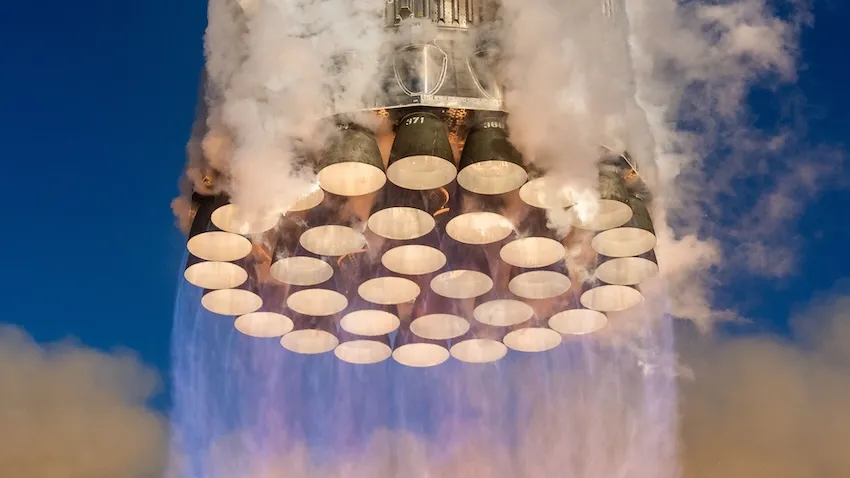
Spaceflight is becoming safer, more frequent, and more sustainable thanks to the largest computational fluid flow simulation ever ran on Earth.
Inspired by SpaceX’s Super Heavy booster, a team led by Georgia Tech’s Spencer Bryngelson and New York University’s Florian Schäfer modeled the turbulent interactions of a 33-engine rocket. Their experiment set new records, running the largest ever fluid dynamics simulation by a factor of 20 and the fastest by over a factor of four.
The team ran its custom software on the world’s two fastest supercomputers, as well as the eighth fastest, to construct such a massive model.
Applications from the simulation reach beyond rocket science. The same computing methods can model fluid mechanics in aerospace, medicine, energy, and other fields. At the same time, the work advances understanding of the current limits and future potential of computing.
The team finished as runners-up for the 2025 Gordon Bell Prize for its impactful, multi-domain research. Referred to as the Nobel Prize of supercomputing, the award was presented at the world’s top conference for high-performance computing (HPC) research.
“Fluid dynamics problems of this style, with shocks, turbulence, different interacting fluids, and so on, are a scientific mainstay that marshals our largest supercomputers,” said Bryngelson, an assistant professor with the School of Computational Science and Engineering (CSE).
“Larger and faster simulations that enable solutions to long-standing scientific problems, like the rocket propulsion problem, are always needed. With our work, perhaps we took a big dent out of that issue.”
The Super Heavy booster reflects the space industry’s move toward reusable multi-engine first-stage rockets that are easier to transport and more economical overall.
However, this shift creates research and testing challenges for new designs.
Each of Super Heavy’s 33 thrusters expels propellant at ten times the speed of sound. As individual engines reach extreme temperatures, pressures, and densities, their combined interactions with the airframe make such violent physics even more unpredictable.
Frequent physical experiments would be expensive and risky, so scientists rely on computer models to supplement the engineering process.
Bryngelson’s flagship Multicomponent Flow Code (MFC) software anchored the experiment. MFC is an open-source computer program that simulates fluid dynamic models. Bryngelson’s lab has been modifying MFC since 2022 to run on more powerful computers and solve larger problems.
In computing terms, this MFC-enhanced model simulated fluid flow resolution at 200 trillion grid points and one quadrillion degrees of freedom. These metrics exceeded previous record-setting benchmarks that tallied 10 trillion and 30 trillion grid points.
This means MFC simulations provide greater detail and capture smaller-scale features than previous approaches. The rocket simulation also ran four times faster and achieved 5.7 times the energy efficiency of comparable methods.
Integrating information geometric regularization (IGR) into MFC played a key role in attaining these results. This new approach improved the simulation’s computational efficiency and overcame the challenge of shock dynamics.
In fluid mechanics, shock waves occur when objects move faster than the speed of sound. Along with hampering the performance of airframes and propulsion systems, shocks have historically been difficult to simulate.
Computational scientists have used empirical models based on artificial viscosity to account for shocks. Although these approaches mimic the physical effects of shock waves at the microscopic scale, they struggle to effectively capture the large-scale features of the flow.
Information geometry uses curved spaces to study concepts of statistics and information. IGR uses these tools to modify the underlying geometry in fluid dynamics equations. When traveling in the modified geometry, fluid in the model preserves the shocks in a more natural way.
“When regularizing shocks to much larger scales relevant in these numerical simulations, conventional methods smear out important fine-scale details,” said Schäfer, an assistant professor at NYU’s Courant Institute of Mathematical Sciences.
“IGR introduces ideas from abstract math to CFD that allow creating modified paths that approach the singularity without ever reaching it. In the resulting fluid flow, shocks never become too spiky in simulations, but the fine-scale details do not smear out either.”
Simulating a model this large required the Georgia Tech researchers to run MFC on El Capitan and Frontier, the world's two fastest supercomputers.
The systems are two of four exascale machines in existence. This means they can solve at least one quintillion (“1” followed by 18 zeros) calculations per second. If a person completed a simple math calculation every second, it would take that person about 30 billion years to reach one quintillion operations.
Frontier is housed at Oak Ridge National Laboratory and debuted as the world’s first exascale supercomputer in 2022. El Capitan surpassed Frontier when Lawrence Livermore National Laboratory launched it in 2024.
To prepare MFC for performance on these machines, Bryngelson’s lab followed a methodical approach spanning years of hardware acquisition and software engineering.
In 2022, Bryngelson attained an AMD MI210 GPU accelerator. Optimizing MFC on the component played a critical step toward preparing the software for exascale machines.
AMD hardware underpins both El Capitan and Frontier. The MI300A GPU powers El Capitan while Frontier uses the MI250X GPU.
After configuring MFC on the MI210 GPU, Bryngelson’s lab ran the software on Frontier for the first time during a 2023 hackathon. This confirmed the code was ready for full-scale deployment on exascale supercomputers based on AMD hardware.
In addition to El Capitan and Frontier, the simulation ran on Alps, the world’s eight-fastest supercomputer based at the Swiss National Supercomputing Centre. It is the largest available system that features the NVIDIA GH200 Grace Hopper Superchip.
Like with AMD GPUs, Bryngelson acquired four GH200s in 2024 and began configuring MFC to the latest hardware innovation powering New Age supercomputers. Later that year, the Jülich Research Centre accepted Bryngelson’s group into an early access program to test JUPITER, a developing supercomputer based on the NVIDIA superchip.
The group earned a certificate for scaling efficiency and node performance on the way toward validating that their code worked on the GH200. The early access project proved successful for JUPITER, which launched in 2025 as Europe’s fastest supercomputer and fourth fastest in the world.
“Getting the level of hands-on experience with world-leading supercomputers and computing resources at Georgia Tech through this project has been a fantastic opportunity for a grad student,” said CSE Ph.D. student Ben Wilfong.
“To leverage these machines, I learned more advanced programming techniques that I’m glad to have in my tool belt for future projects. I also enjoyed the opportunity to work closely with and learn from industry experts from NVIDIA, AMD, and HPE/Cray.”
El Capitan, Frontier, JUPITER, and Alps maintained their rankings at the 2025 International Conference for High Performance Computing Networking, Storage and Analysis (SC25). Of note, the TOP500 announced at SC25 that JUPITER surpassed the exaflop threshold.
The SC Conference Series is one of two venues where the TOP500 announces updated supercomputer rankings every June and November. The TOP500 ranks and details the 500 most powerful supercomputers in the world.
The SC Conference Series serves as the venue where the Association for Computing Machinery (ACM) presents the Gordon Bell Prize. The annual award recognizes achievement in HPC research and application. The Tech-led team was among eight finalists for this year’s award.
Along with Bryngelson, Georgia Tech members included Ph.D. students Anand Radhakrishnan and Wilfong, postdoctoral researcher Daniel Vickers, alumnus Henry Le Berre (CS 2025), and undergraduate student Tanush Prathi.
Schäfer’s partnership with the group stems from his previous role as an assistant professor at Georgia Tech from 2021 to 2025.
Collaborators on the project included Nikolaos Tselepidis and Benedikt Dorschner from NVIDIA, Reuben Budiardja from ORNL, Brian Cornille from AMD, and Stephen Abbot from HPE. All were co-authors of the paper and named finalists for the Gordon Bell Prize.
“I’m elated that we have been nominated for such a prestigious award. It wouldn't have been possible without the combined and diligent efforts of our team,” Radhakrishnan said.
“I’m looking forward to presenting our work at SC25 and connecting with other researchers and fellow finalists while showcasing seminal work in the field of computing.”
News Contact
Bryant Wine, Communications Officer
bryant.wine@cc.gatech.edu
Nov. 04, 2025
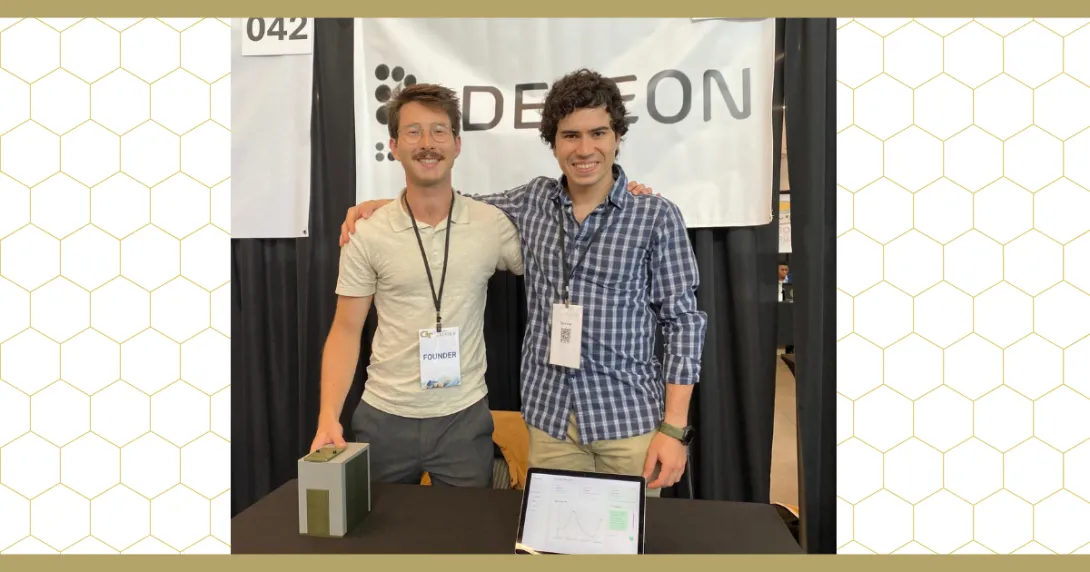
In the startup world, existing research often helps uncover a problem that needs a solution. For two Georgia Tech graduates, studying metabolomics, the exploration of the body’s chemical processes, and an existing NASA chemical analysis technology inspired a company that hopes to change the face of preventative healthcare.
Tech College of Engineering alumni Chad Pozarycki, Ph.D., CHBE, 2022, and José Andrade, AE, 2025, are on a mission to make biochemical monitoring more accessible — with a focus on preventing disease. Today, their startup Deleon, using NASA’s technology (originally designed to search for life on Mars) and metabolomics, provides a system that uses daily urine sampling to track metabolites related to overtraining, stress, and recovery. Future applications will be aimed at early disease detection.
“Something that frustrated me about metabolomics was its lack of focus on preventive care,” said Andrade. “We created Deleon by combining these ideas and tracking the human metabolome to optimize for healthy lifestyles.”
The Deleon founders began the company shortly after Pozarycki completed his graduate studies at Georgia Tech, with Andrade moonlighting and Pozarycki working a part-time job at Georgia Tech’s bike shop to keep the project afloat. In the beginning, funding was a major challenge.
“I finished my Ph.D., was working on Deleon, and didn’t have any income. CREATE-X gave us $5,000 in funding, which motivated us to keep going on this project,” said Pozarycki.
CREATE-X, Georgia Tech’s campus-wide initiative to instill entrepreneurial confidence and help students launch startups, provided more than funding. Through the program, Deleon received guidance on finding potential customers.
“The one-on-one advice from expert CREATE-X entrepreneurs and organizers like Rahul [CREATE-X director] and Margaret [LAUNCH associate director] was super valuable and helped us focus on launching our minimum viable product and getting our first customers,” said Andrade.
The program’s culminating event, Demo Day, gave Deleon a platform to present to investors and the public. Among dozens of student-led startups, Deleon’s data-driven approach attracted strong interest. The exposure led to an eventual $850,000 investment, partially funded by Georgia Tech's early-stage fund, GTF Ventures. This investment allowed the founders to work full-time on the company, hire a team, and build a lab space.
“I would recommend the CREATE-X program to anyone,” Pozarycki said. “Even if you don’t think you want to start a company, there’s a lot you can learn about commercialization in this program that may change your mind and give you more control over your own fate.”
Deleon’s path from concept to launch highlights the growing role of Georgia Tech’s entrepreneurial ecosystem in supporting student innovation. Programs like CREATE-X not only help students build companies but also contribute to regional economic growth by keeping talent and investment in the Southeast.
“CREATE-X is the best environment on campus to learn by doing,” Pozarycki said. “You are encouraged to build something real, not just talk about it. You’ll leave knowing how to talk to customers, how to pitch, and how to think like a founder.”
Opportunities for Entrepreneurs
Students, faculty, researchers, and alumni interested in developing their own startups are encouraged to apply to CREATE-X’s Startup Launch. The early admission deadline to apply for Startup Launch is Nov. 17. Spots are limited. Apply now for a higher chance of acceptance and early feedback.
News Contact
Written by Amanda Dudley
Internal Contact:
Breanna Durham
Marketing Strategist