
Nov. 11, 2024
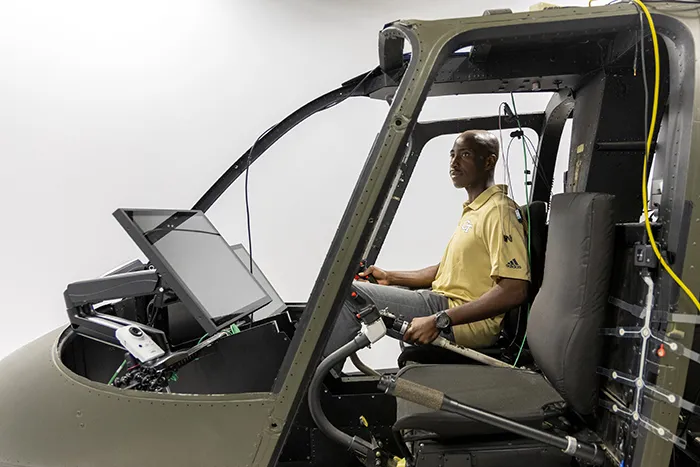
Many people dream of flying into space for NASA, but few achieve it. Georgia Tech has produced 14 astronauts, inspiring current students to pursue this challenging path. Despite long odds, aspiring astronauts apply repeatedly, driven by passion and determination. Their journey, whether successful or not, pushes them to excel and grow personally and professionally.
Oct. 21, 2024
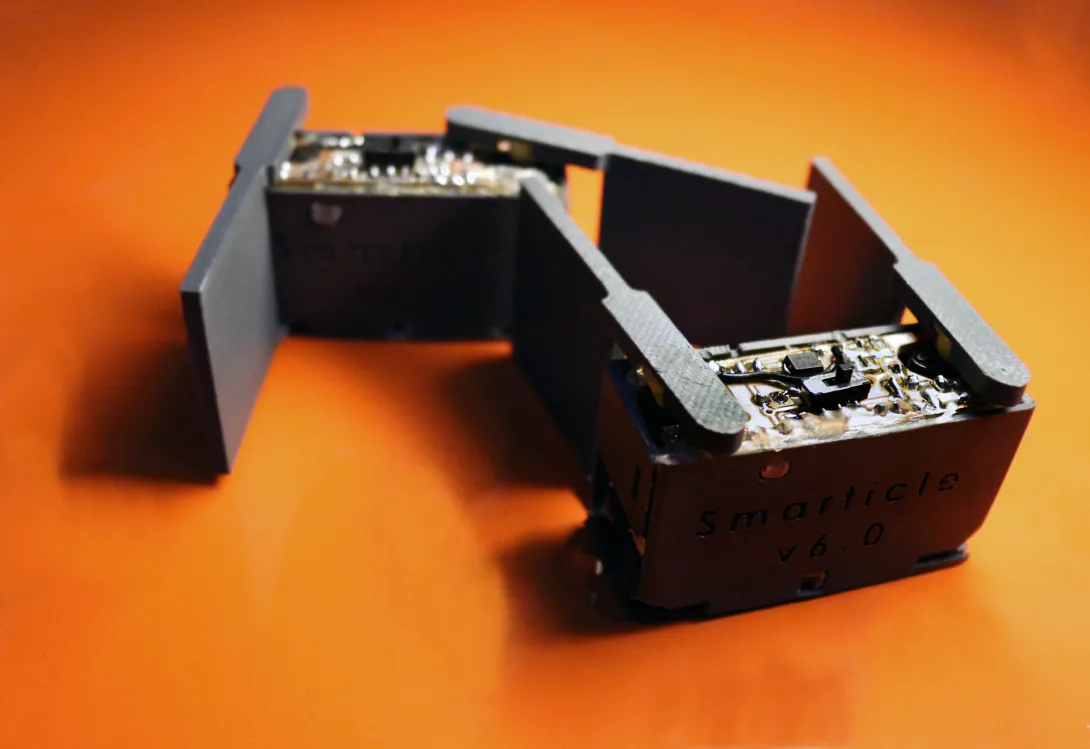
A pair of Smarticle robots from the lab of Prof. Dan Goldman. Earlier research from his group observed the arise of order in active matter from the physics of low rattling. (Photo Credit: Christa M. Ernst)
If you’ve ever watched a large flock of birds on the wing, moving across the sky like a cloud with various shapes and directional changes appearing from seeming chaos, or the maneuvers of an ant colony forming bridges and rafts to escape floods, you’ve been observing what scientists call self-organization. What may not be as obvious is that self-organization occurs throughout the natural world, including bacterial colonies, protein complexes, and hybrid materials. Understanding and predicting self-organization, especially in systems that are out of equilibrium, like living things, is an enduring goal of statistical physics.
This goal is the motivation behind a recently introduced principle of physics called rattling, which posits that systems with sufficiently “messy” dynamics organize into what researchers refer to as low rattling states. Although the principle has proved accurate for systems of robot swarms, it has been too vague to be more broadly tested, and it has been unclear exactly why it works and to what other systems it should apply.
Dana Randall, a professor in the School of Computer Science, and Jacob Calvert, a postdoctoral fellow at the Institute for Data Engineering and Science, have formulated a theory of rattling that answers these fundamental questions. Their paper, “A Local-Global Principle for Nonequilibrium Steady States,” published last week in Proceedings of the National Academy of Sciences, characterizes how rattling is related to the amount of time that a system spends in a state. Their theory further identifies the classes of systems for which rattling explains self-organization.
When we first heard about rattling from physicists, it was very hard to believe it could be true. Our work grew out of a desire to understand it ourselves. We found that the idea at its core is surprisingly simple and holds even more broadly than the physicists guessed.
Dana Randall Professor, School of Computer Science & Adjunct Professor, School of Mathematics
Georgia Institute of Technology
Beyond its basic scientific importance, the work can be put to immediate use to analyze models of phenomena across scientific domains. Additionally, experimentalists seeking organization within a nonequilibrium system may be able to induce low rattling states to achieve their desired goal. The duo thinks the work will be valuable in designing microparticles, robotic swarms, and new materials. It may also provide new ways to analyze and predict collective behaviors in biological systems at the micro and nanoscale.
The preceding material is based on work supported by the Army Research Office under award ARO MURI Award W911NF-19-1-0233 and by the National Science Foundation under grant CCF-2106687. Any opinions, findings, and conclusions or recommendations expressed in this material are those of the authors and do not necessarily reflect the views of the sponsoring agencies.
Jacob Calvert and Dana Randall. A local-global principle for nonequilibrium steady states. Proceedings of the National Academy of Sciences, 121(42):e2411731121, 2024.
Oct. 01, 2024
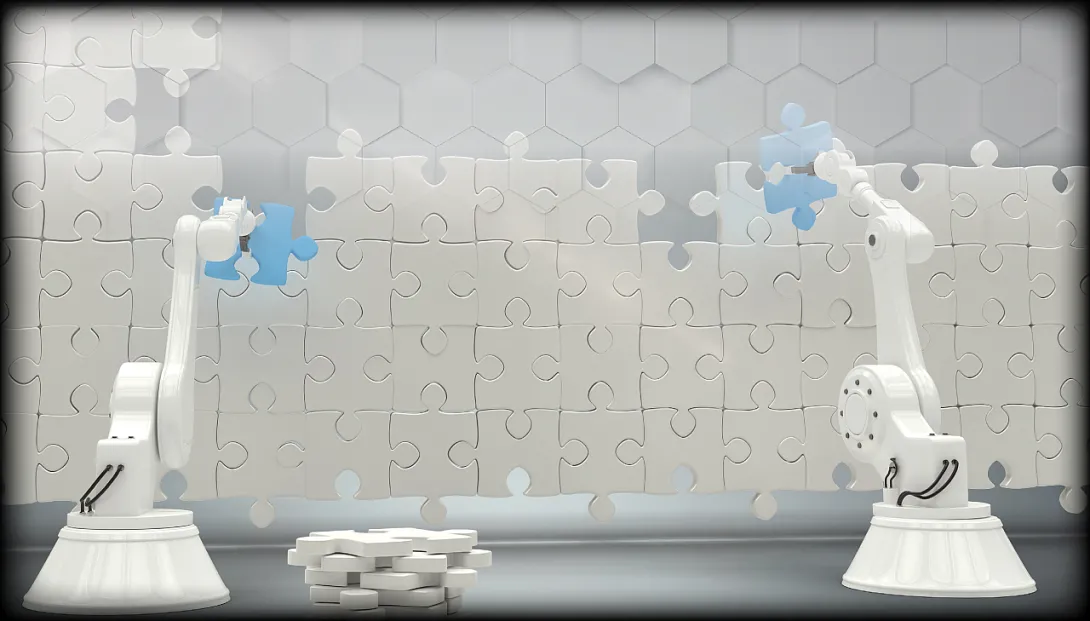
The Institute for Robotics and Intelligent Machines (IRIM) launched a new initiatives program, starting with several winning proposals, with corresponding initiative leads that will broaden the scope of IRIM’s research beyond its traditional core strengths. A major goal is to stimulate collaboration across areas not typically considered as technical robotics, such as policy, education, and the humanities, as well as open new inter-university and inter-agency collaboration routes. In addition to guiding their specific initiatives, these leads will serve as an informal internal advisory body for IRIM. Initiative leads will be announced annually, with existing initiative leaders considered for renewal based on their progress in achieving community building and research goals. We hope that initiative leads will act as the “faculty face” of IRIM and communicate IRIM’s vision and activities to audiences both within and outside of Georgia Tech.
Meet 2024 IRIM Initiative Leads
Stephen Balakirsky; Regents' Researcher, Georgia Tech Research Institute & Panagiotis Tsiotras; David & Andrew Lewis Endowed Chair, Daniel Guggenheim School of Aerospace Engineering | Proximity Operations for Autonomous Servicing
Why It Matters: Proximity operations in space refer to the intricate and precise maneuvers and activities that spacecraft or satellites perform when they are in close proximity to each other, such as docking, rendezvous, or station-keeping. These operations are essential for a variety of space missions, including crewed spaceflights, satellite servicing, space exploration, and maintaining satellite constellations. While this is a very broad field, this initiative will concentrate on robotic servicing and associated challenges. In this context, robotic servicing is composed of proximity operations that are used for servicing and repairing satellites in space. In robotic servicing, robotic arms and tools perform maintenance tasks such as refueling, replacing components, or providing operation enhancements to extend a satellite's operational life or increase a satellite’s capabilities.
Our Approach: By forming an initiative in this important area, IRIM will open opportunities within the rapidly evolving space community. This will allow us to create proposals for organizations ranging from NASA and the Defense Advanced Research Projects Agency to the U.S. Air Force and U.S. Space Force. This will also position us to become national leaders in this area. While several universities have a robust robotics program and quite a few have a strong space engineering program, there are only a handful of academic units with the breadth of expertise to tackle this problem. Also, even fewer universities have the benefit of an experienced applied research partner, such as the Georgia Tech Research Institute (GTRI), to undertake large-scale demonstrations. Georgia Tech, having world-renowned programs in aerospace engineering and robotics, is uniquely positioned to be a leader in this field. In addition, creating a workshop in proximity operations for autonomous servicing will allow the GTRI and Georgia Tech space robotics communities to come together and better understand strengths and opportunities for improvement in our abilities.
Matthew Gombolay; Assistant Professor, Interactive Computing | Human-Robot Society in 2125: IRIM Leading the Way
Why It Matters: The coming robot “apocalypse” and foundation models captured the zeitgeist in 2023 with “ChatGPT” becoming a topic at the dinner table and the probability occurrence of various scenarios of AI driven technological doom being a hotly debated topic on social media. Futuristic visions of ubiquitous embodied Artificial Intelligence (AI) and robotics have become tangible. The proliferation and effectiveness of first-person view drones in the Russo-Ukrainian War, autonomous taxi services along with their failures, and inexpensive robots (e.g., Tesla’s Optimus and Unitree’s G1) have made it seem like children alive today may have robots embedded in their everyday lives. Yet, there is a lack of trust in the public leadership bringing us into this future to ensure that robots are developed and deployed with beneficence.
Our Approach: This proposal seeks to assemble a team of bright, savvy operators across academia, government, media, nonprofits, industry, and community stakeholders to develop a roadmap for how we can be the most trusted voice to guide the public in the next 100 years of innovation in robotics here at the IRIM. We propose to carry out specific activities that include conducting the activities necessary to develop a roadmap about Robots in 2125: Altruistic and Integrated Human-Robot Society. We also aim to build partnerships to promulgate these outcomes across Georgia Tech’s campus and internationally.
Gregory Sawicki; Joseph Anderer Faculty Fellow, School of Mechanical Engineering & Aaron Young; Associate Professor, Mechanical Engineering | Wearable Robotic Augmentation for Human Resilience
Why It Matters: The field of robotics continues to evolve beyond rigid, precision-controlled machines for amplifying production on manufacturing assembly lines toward soft, wearable systems that can mediate the interface between human users and their natural and built environments. Recent advances in materials science have made it possible to construct flexible garments with embedded sensors and actuators (e.g., exosuits). In parallel, computers continue to get smaller and more powerful, and state-of-the art machine learning algorithms can extract useful information from more extensive volumes of input data in real time. Now is the time to embed lean, powerful, sensorimotor elements alongside high-speed and efficient data processing systems in a continuous wearable device.
Our Approach: The mission of the Wearable Robotic Augmentation for Human Resilience (WeRoAHR) initiative is to merge modern advances in sensing, actuation, and computing technology to imagine and create adaptive, wearable augmentation technology that can improve human resilience and longevity across the physiological spectrum — from behavioral to cellular scales. The near-term effort (~2-3 years) will draw on Georgia Tech’s existing ecosystem of basic scientists and engineers to develop WeRoAHR systems that will focus on key targets of opportunity to increase human resilience (e.g., improved balance, dexterity, and stamina). These initial efforts will establish seeds for growth intended to help launch larger-scale, center-level efforts (>5 years).
Panagiotis Tsiotras; David & Andrew Lewis Endowed Chair, Daniel Guggenheim School of Aerospace Engineering & Sam Coogan; Demetrius T. Paris Junior Professor, School of Electrical and Computer Engineering | Initiative on Reliable, Safe, and Secure Autonomous Robotics
Why It Matters: The design and operation of reliable systems is primarily an integration issue that involves not only each component (software, hardware) being safe and reliable but also the whole system being reliable (including the human operator). The necessity for reliable autonomous systems (including AI agents) is more pronounced for “safety-critical” applications, where the result of a wrong decision can be catastrophic. This is quite a different landscape from many other autonomous decision systems (e.g., recommender systems) where a wrong or imprecise decision is inconsequential.
Our Approach: This new initiative will investigate the development of protocols, techniques, methodologies, theories, and practices for designing, building, and operating safe and reliable AI and autonomous engineering systems and contribute toward promoting a culture of safety and accountability grounded in rigorous objective metrics and methodologies for AI/autonomous and intelligent machines designers and operators, to allow the widespread adoption of such systems in safety-critical areas with confidence. The proposed new initiative aims to establish Tech as the leader in the design of autonomous, reliable engineering robotic systems and investigate the opportunity for a federally funded or industry-funded research center (National Science Foundation (NSF) Science and Technology Centers/Engineering Research Centers) in this area.
Colin Usher; Robotics Systems and Technology Branch Head, GTRI | Opportunities for Agricultural Robotics and New Collaborations
Why It Matters: The concepts for how robotics might be incorporated more broadly in agriculture vary widely, ranging from large-scale systems to teams of small systems operating in farms, enabling new possibilities. In addition, there are several application areas in agriculture, ranging from planting, weeding, crop scouting, and general growing through harvesting. Georgia Tech is not a land-grant university, making our ability to capture some of the opportunities in agricultural research more challenging. By partnering with a land-grant university such as the University of Georgia (UGA), we can leverage this relationship to go after these opportunities that, historically, were not available.
Our Approach: We plan to build collaborations first by leveraging relationships we have already formed within GTRI, Georgia Tech, and UGA. We will achieve this through a significant level of networking, supported by workshops and/or seminars with which to recruit faculty and form a roadmap for research within the respective universities. Our goal is to identify and pursue multiple opportunities for robotics-related research in both row-crop and animal-based agriculture. We believe that we have a strong opportunity, starting with formalizing a program with the partners we have worked with before, with the potential to improve and grow the research area by incorporating new faculty and staff with a unified vision of ubiquitous robotics systems in agriculture. We plan to achieve this through scheduled visits with interested faculty, attendance at relevant conferences, and ultimately hosting a workshop to formalize and define a research roadmap.
Ye Zhao; Assistant Professor, School of Mechanical Engineering | Safe, Social, & Scalable Human-Robot Teaming: Interaction, Synergy, & Augmentation
Why It Matters: Collaborative robots in unstructured environments such as construction and warehouse sites show great promise in working with humans on repetitive and dangerous tasks to improve efficiency and productivity. However, pre-programmed and nonflexible interaction behaviors of existing robots lower the naturalness and flexibility of the collaboration process. Therefore, it is crucial to improve physical interaction behaviors of the collaborative human-robot teaming.
Our Approach: This proposal will advance the understanding of the bi-directional influence and interaction of human-robot teaming for complex physical activities in dynamic environments by developing new methods to predict worker intention via multi-modal wearable sensing, reasoning about complex human-robot-workspace interaction, and adaptively planning the robot’s motion considering both human teaming dynamics and physiological and cognitive states. More importantly, our team plans to prioritize efforts to (i) broaden the scope of IRIM’s autonomy research by incorporating psychology, cognitive, and manufacturing research not typically considered as technical robotics research areas; (ii) initiate new IRIM education, training, and outreach programs through collaboration with team members from various Georgia Tech educational and outreach programs (including Project ENGAGES, VIP, and CEISMC) as well as the AUCC (World’s largest consortia of African American private institutions of higher education) which comprises Clark Atlanta University, Morehouse College, & Spelman College; and (iii) aim for large governmental grants such as DOD MURI, NSF NRT, and NSF Future of Work programs.
-Christa M. Ernst
Sep. 19, 2024
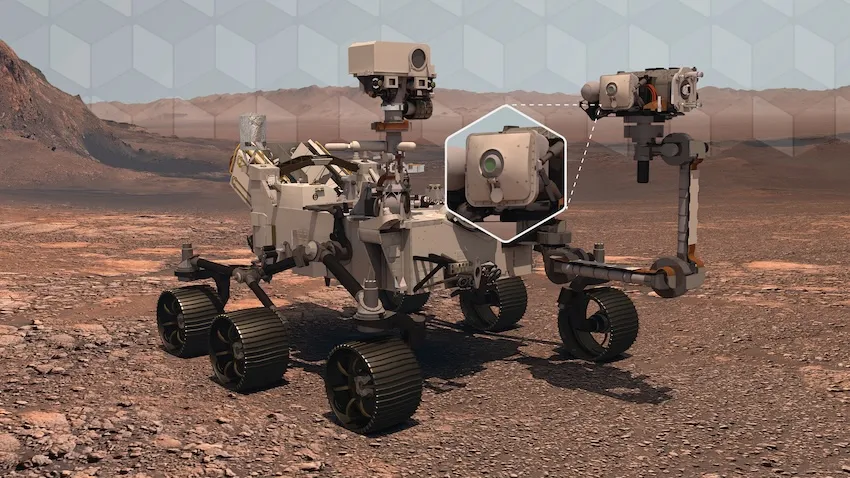
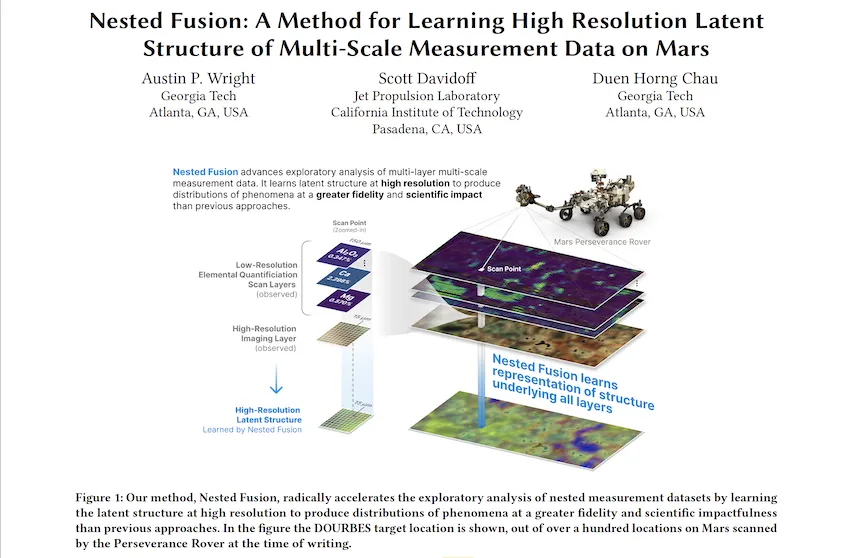
A new algorithm tested on NASA’s Perseverance Rover on Mars may lead to better forecasting of hurricanes, wildfires, and other extreme weather events that impact millions globally.
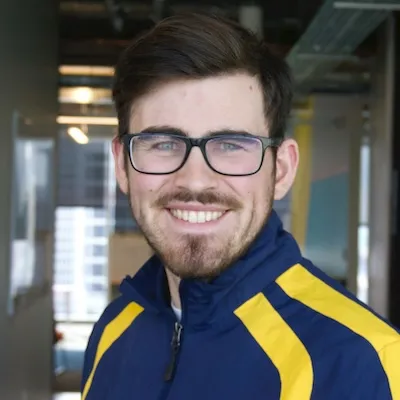
Georgia Tech Ph.D. student Austin P. Wright is first author of a paper that introduces Nested Fusion. The new algorithm improves scientists’ ability to search for past signs of life on the Martian surface.
In addition to supporting NASA’s Mars 2020 mission, scientists from other fields working with large, overlapping datasets can use Nested Fusion’s methods toward their studies.
Wright presented Nested Fusion at the 2024 International Conference on Knowledge Discovery and Data Mining (KDD 2024) where it was a runner-up for the best paper award. KDD is widely considered the world's most prestigious conference for knowledge discovery and data mining research.
“Nested Fusion is really useful for researchers in many different domains, not just NASA scientists,” said Wright. “The method visualizes complex datasets that can be difficult to get an overall view of during the initial exploratory stages of analysis.”
Nested Fusion combines datasets with different resolutions to produce a single, high-resolution visual distribution. Using this method, NASA scientists can more easily analyze multiple datasets from various sources at the same time. This can lead to faster studies of Mars’ surface composition to find clues of previous life.
The algorithm demonstrates how data science impacts traditional scientific fields like chemistry, biology, and geology.
Even further, Wright is developing Nested Fusion applications to model shifting climate patterns, plant and animal life, and other concepts in the earth sciences. The same method can combine overlapping datasets from satellite imagery, biomarkers, and climate data.
“Users have extended Nested Fusion and similar algorithms toward earth science contexts, which we have received very positive feedback,” said Wright, who studies machine learning (ML) at Georgia Tech.
“Cross-correlational analysis takes a long time to do and is not done in the initial stages of research when patterns appear and form new hypotheses. Nested Fusion enables people to discover these patterns much earlier.”
Wright is the data science and ML lead for PIXLISE, the software that NASA JPL scientists use to study data from the Mars Perseverance Rover.
Perseverance uses its Planetary Instrument for X-ray Lithochemistry (PIXL) to collect data on mineral composition of Mars’ surface. PIXL’s two main tools that accomplish this are its X-ray Fluorescence (XRF) Spectrometer and Multi-Context Camera (MCC).
When PIXL scans a target area, it creates two co-aligned datasets from the components. XRF collects a sample's fine-scale elemental composition. MCC produces images of a sample to gather visual and physical details like size and shape.
A single XRF spectrum corresponds to approximately 100 MCC imaging pixels for every scan point. Each tool’s unique resolution makes mapping between overlapping data layers challenging. However, Wright and his collaborators designed Nested Fusion to overcome this hurdle.
In addition to progressing data science, Nested Fusion improves NASA scientists' workflow. Using the method, a single scientist can form an initial estimate of a sample’s mineral composition in a matter of hours. Before Nested Fusion, the same task required days of collaboration between teams of experts on each different instrument.
“I think one of the biggest lessons I have taken from this work is that it is valuable to always ground my ML and data science problems in actual, concrete use cases of our collaborators,” Wright said.
“I learn from collaborators what parts of data analysis are important to them and the challenges they face. By understanding these issues, we can discover new ways of formalizing and framing problems in data science.”
Wright presented Nested Fusion at KDD 2024, held Aug. 25-29 in Barcelona, Spain. KDD is an official special interest group of the Association for Computing Machinery. The conference is one of the world’s leading forums for knowledge discovery and data mining research.
Nested Fusion won runner-up for the best paper in the applied data science track, which comprised of over 150 papers. Hundreds of other papers were presented at the conference’s research track, workshops, and tutorials.
Wright’s mentors, Scott Davidoff and Polo Chau, co-authored the Nested Fusion paper. Davidoff is a principal research scientist at the NASA Jet Propulsion Laboratory. Chau is a professor at the Georgia Tech School of Computational Science and Engineering (CSE).
“I was extremely happy that this work was recognized with the best paper runner-up award,” Wright said. “This kind of applied work can sometimes be hard to find the right academic home, so finding communities that appreciate this work is very encouraging.”
News Contact
Bryant Wine, Communications Officer
bryant.wine@cc.gatech.edu
Sep. 03, 2024
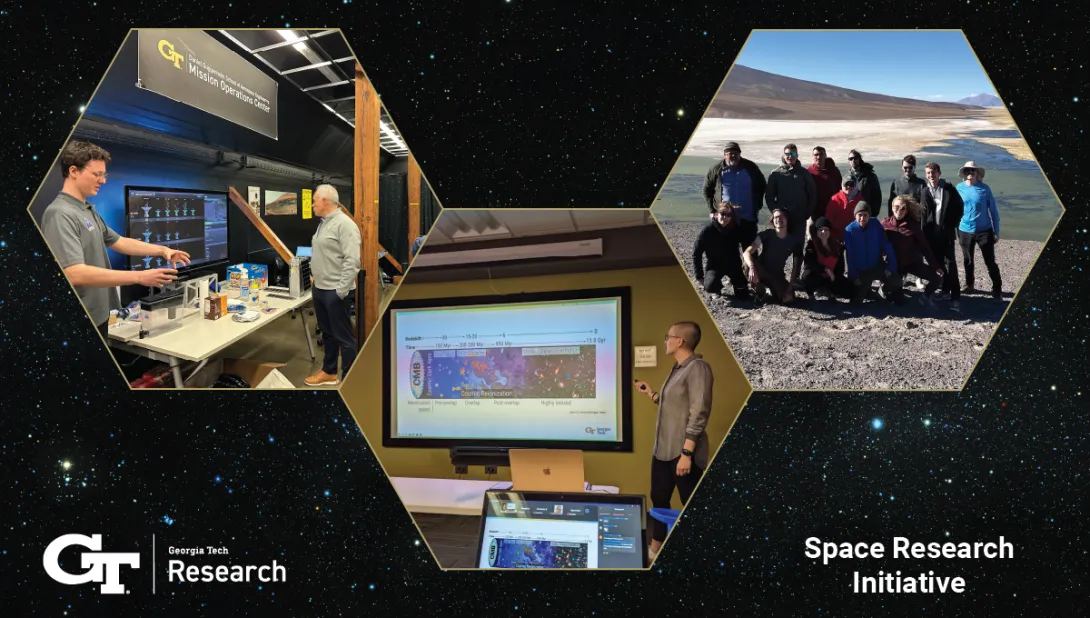
Across Georgia Tech, researchers are exploring the universe — its origins, possible futures, and humanity and Earth’s place in it. These investigations are the efforts of hundreds of astrobiologists, astrophysicists, aerospace engineers, astronomers, and experts in space policy and science fiction — and all of this work is brought together under the Institute’s new Space Research Initiative (SRI).
The SRI is the hub of all things space-related at Georgia Tech. It connects research institutes, labs, facilities, Schools, and Colleges to foster the conversation about space across Georgia and beyond. As a budding Interdisciplinary Research Institute (IRI), the SRI currently encompasses three core centers that contribute distinct interdisciplinary perspectives to space exploration.
Center for Space Technology and Research
The Center for Space Technology and Research (CSTAR) is a hub dedicated to furthering the expansion of Georgia’s aerospace industry, which is already the state’s No. 1 economic driver. The center's team at Georgia Tech conducts cutting-edge research in fields such as astrophysics, Earth science, planetary science, robotics, space policy, space technology, materials science, and space systems engineering.
CSTAR boasts a collaborative network of more than 100 Georgia Tech faculty members and research staff, supported by annual funding exceeding $20 million. Its contribution to space research is highlighted by its active multiyear research grants totaling over $100 million. Each year, CSTAR also contributes to the academic community with around 100 peer-reviewed journal articles and provides mentorship to dozens of graduate and undergraduate students, shaping the next generation of space research.
Members of CSTAR have contributed to a variety of spaceflight projects, from observing the atmosphere of Jupiter, to creating carbon nanotube-based technology on CubeSats, to building an innovative, dual-use antenna that is simultaneously a critical life-saving handrail and a radio emitter inside an airlock on the International Space Station. Several examples of this research will soon be part of a new permanent display in the National Air and Space Museum in Washington, D.C.
“The work done by the Georgia Tech research community in space is phenomenal,” said CSTAR Director Jud Ready. “We have worked on the International Space Station, launched numerous free-flying CubeSats in low Earth orbit, as well as our current crowning achievement, the Lunar Flashlight CubeSat, which is the world’s only heliocentric spacecraft currently owned and operated by an academic institution that recently demonstrated planetary optical navigation techniques for the first time, by any organization — including NASA.” Future missions include materials demonstrations on a lunar lander, as well as additional orbital activities of both the Earth and moon.
“The SRI will increase our reach and impact over and above these prior activities by at least an order of magnitude,” he said. “I am excited for what the future holds for Georgia Tech students, faculty, and research partners as a result of this new organization.”
Director: Jud Ready
Associate Directors: Morris Cohen and Jennifer Glass
Center for Relativistic Astrophysics
The Center for Relativistic Astrophysics (CRA) is housed within the College of Sciences’ School of Physics. The center’s mission is to provide students with education and training in the key research areas of astroparticle physics, theoretical astrophysics, and gravitational wave astrophysics.
CRA researchers study the breadth of space, ranging from the early universe’s large-scale structure to particle interactions. They also study black holes and the merger of compact objects, the potential outcome of the evolution of stellar binary systems, and — closer to home — exoplanets and stars found in the Milky Way. Of particular strength are computational astrophysics and multi-messenger astrophysical studies with neutrinos, photons, and gravitational waves.
In addition, CRA researchers actively participate in major international collaborations, such as the operations and development of existing and future detectors, including the IceCube Neutrino Observatory, the LIGO and LISA gravitational wave observatories, X-ray observatories NuSTAR and Athena, and gamma-ray detectors VERITAS and CTA.
“Bringing together all space research under a single umbrella will be a huge boon to the CRA’s research efforts and visibility,” said John Wise, CRA director. “I am excited about the opportunities the SRI will bring forth within such a collaborative environment, especially the prospect of Georgia Tech leading a space mission that can test the theoretical work performed within the CRA.”
Director: John Wise
Associate Director: Tamara Bogdanović
Astrobiology research at Georgia Tech, which includes experts in biochemistry, physics, aerospace engineering, planetary science, and astronomy, as well as others, seeks to answer these age-old questions: What is the origin of life? Does life exist on other worlds?
Georgia Tech’s astrobiology community includes students, staff, and faculty across campus, the educational curriculum, the Exploring Origins student-run group, an astrobiology fellows program, and keystone events.
Many globally recognized researchers in this field are at Georgia Tech, and their recent discoveries hint at the potential for life on Mars and ocean worlds like Europa. Astrobiology at Tech brings together these faculty with scholars in the humanities and social sciences to share their research with the public and give it a broader cultural context.
The Georgia Tech Astrobiology Graduate Certificate Program, an interdisciplinary initiative across several Schools and Colleges, is designed to broaden student participation in astrobiology. An undergraduate minor is in development. The purpose of these programs is to expand opportunities for both undergraduate and graduate students in the interdisciplinary field of astrobiology.
“One of the main reasons I came to Georgia Tech in 2020 is its vibrant astrobiology program,” said Christopher E. Carr, co-director of Georgia Tech Astrobiology. “It’s a true pleasure to have such amazing colleagues.”
Co-directors: Frances Rivera Hernández and Christopher E. Carr
News Contact
Laurie Haigh
Research Communications
Jul. 31, 2024
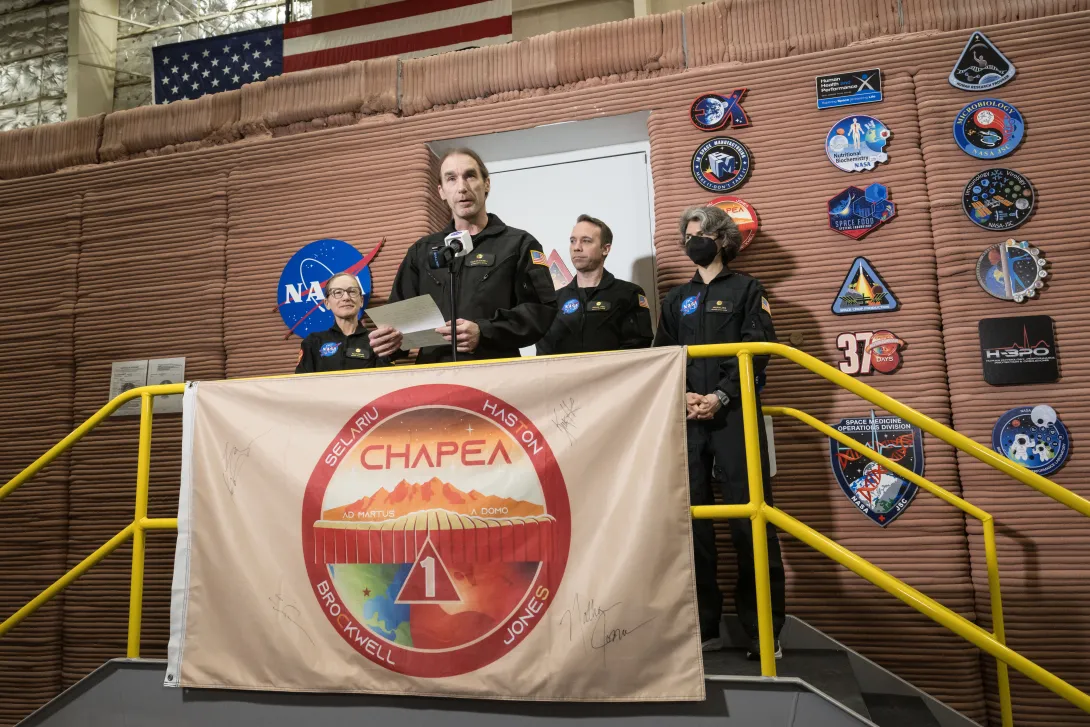
Ross Brockwell exiting the Mars Dune Alpha habitat at NASA's Johnson Space Center in Houston, Texas. Photo credit: NASA/CHAPEA
When the door to the Mars Dune Alpha habitat at NASA's Johnson Space Center in Houston, Texas, closed behind the crew members of the first Crew Health and Performance Exploration Analog (CHAPEA) mission, Georgia Tech graduate Ross Brockwell was transported 152 million simulated miles to the Red Planet.
For the next 378 days, Brockwell, a 1999 civil engineering graduate, and three other crew members participated in the study designed to gain insights into the challenges of deep space exploration and its effects on human health and performance. The crew performed robotic operations, habitat maintenance, agricultural activities, and simulated surface walks in the "sandbox" with the assistance of virtual reality while enduring intentional resource limitations, isolation, and confinement.

A structural engineer by day, he has always dreamed of space travel, and when a fellow Yellow Jacket alerted Brockwell to the application for the CHAPEA mission, he seized the opportunity.
"Sometimes, you get chances in your lifetime, and if I don't get a chance to actually go to Mars, if I can take this chance to help us get there as a planet, I'm honored," he said.
Once inside the 1,700-square-foot habitat, Brockwell's role as the CHAPEA mission's flight engineer focused on infrastructure, building design, and organizational leadership. As much as he learned from his tasks throughout the mission, like anticipating possible failure points and contingency planning, NASA learned even more through physical and cognitive monitoring.
"There was a lot of science, but some of the science was focused on us as the participants — our physiology and our performance — to make the mission as realistic as possible," he said.
Communication is a key element in space travel. Getting a message from Mars back to family and friends or mission control on Earth took 20 minutes on average for the crew inside the habitat, testing their ability to isolate. Without constant communication with the outside world, the crew fostered camaraderie through team activities and celebrated birthdays and holidays together. Brockwell's ingenuity wasn't limited to official tasks; he used a 3D printer to create a bracket for mounting a mini-basketball hoop.
Meals inside the habitat mirrored the shelf-stable food system of the International Space Station. While cultivated crops like tomatoes supplemented their main supply, Brockwell says there is a common misconception about astronaut food.
"I say with all sincerity, it was delicious." His favorite dish was a peanut chicken and wild rice mix, but the crew often got creative by mixing soups and proteins to create new dishes.
Other than the food, the biggest surprise to Brockwell was how quickly the mission was completed.
"I hoped and thought it would be that way, but we proved that a well-comprised crew can have a good time while doing this. There were a lot of clichéd expectations that there would be issues that we just didn't have. I think we demonstrated that a mission like this can be a huge success and an enjoyable, positive experience, not just something to be endured," he said.
Brockwell says that his time at Georgia Tech allowed him to learn the fundamentals of engineering principles and taught him to keep an open mind when exploring how things work. After receiving a master's degree in aeronautics from the California Institute of Technology and completing the CHAPEA mission, he believes systems engineering can aid deep space exploration efforts for the next generation.
"Thinking about the effect of every component on every other component and the emergent properties from complex systems is crucial. I think that systems thinking is going to become increasingly important. Ecology and ecological thinking need to be part of it, especially for aerospace. If you're thinking about deep space exploration, an understanding of ecological principles and closed-loop systems will be key," he said.
At the end of the mission, Brockwell savored the sights and smells of Earth for the first time in over a year, saying that's what he missed the most. But if the opportunity arose to take the 152-million-mile flight to Mars, he'd be on the first ship out.
News Contact
Steven Gagliano - Institute Communications
Jun. 27, 2024
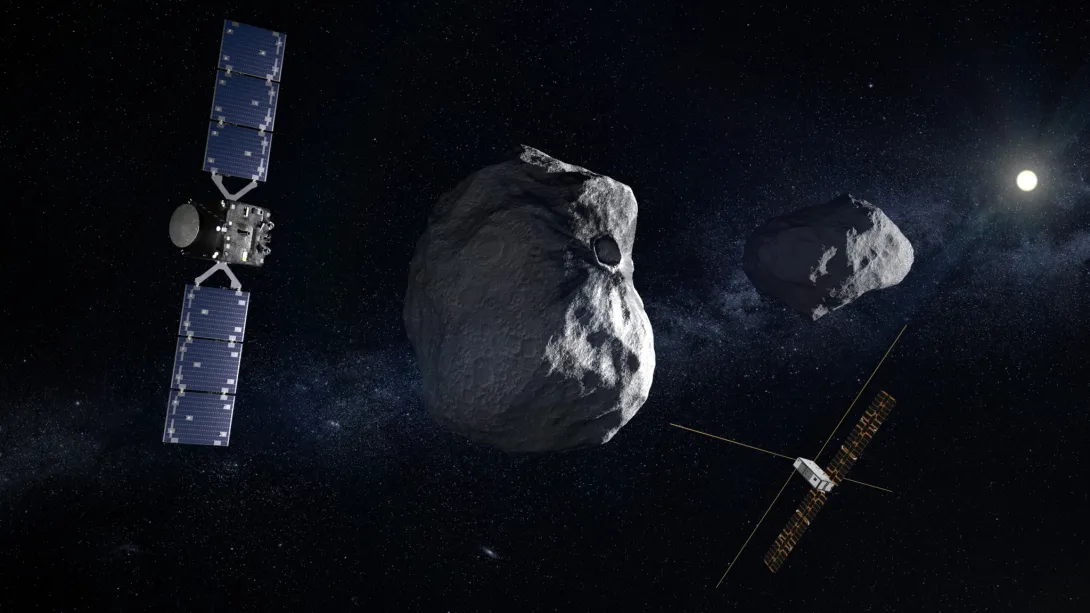
Masatoshi (Toshi) Hirabayashi, an associate professor in the Daniel Guggenheim School of Aerospace Engineering, has been selected by NASA’s Hera Participating Scientist Program (HERA-PSP) to join the European Space Agency’s (ESA) Hera mission. Together, with an international consortium of 11 other scientists, Hirabayashi will perform a multi-faceted, detailed, post-impact study of NASA’s Double Asteroid Redirection Test (DART) mission. The DART mission was led by the Johns Hopkins University’s Applied Physics Laboratory.
The DART mission targeted the binary asteroid system where Dimorphos (the smaller secondary) orbits Didymos (the larger primary), to intentionally cause a spacecraft crash on Dimorphos. The collision, which occurred on September 26, 2022, was the first to demonstrate asteroid deflection by changing the asteroid's motion in space through kinetic impact. Astronomers monitored this event using ground- and space-based telescopes like the Hubble Telescope (HST). A recent Nature article, “Ejecta, From the DART-Produced Active Asteroid Dimorphos,” on which Hirabayashi is a co-author, documented HST’s detailed observations of the intense dust ejection generated by the impact.
The Hera mission, launching in October 2024, will analyze the post-DART impact conditions of Didymos and Dimorphos by performing remote sensing observations and employing two CubeSats from its parent spacecraft, Hera. Hera will arrive at the asteroid in 2026. The Planetary Science Journal article, “The ESA Hera Mission: Detailed Characterization of the DART Impact Outcome and the Binary Asteroid Didymos, highlights the project's developments.
Planetary defense is the primary reason for studying near-Earth asteroids (NEAs), particularly potentially hazardous objects (PHOs). While Didymos does not threaten the Earth, scientists want to prepare for the possibility that PHOs could hit the planet. Hera mission researchers can learn valuable information about the system's impact behavior.
Hirabayashi, a co-investigator for the DART mission, said, “I was thrilled to apply my experience in the DART mission, and I’m honored to now be part of the Hera mission.”
Specifically, Hirabayashi will analyze the mutual motion of the two asteroids in the Didymos binary system and provide detailed forecasts of the asteroids’ locations and velocities. During this investigation, he will use Georgia Tech’s high-performance computing system, Partnership for an Advanced Computing Environment (PACE). His results will also be used to quantify the system's post-DART impact behavior and develop new knowledge about planetary defense.
“Dinosaurs were completely wiped out by an asteroid about 66 million years ago. There are many possible threats, and we need the capability to defend the Earth properly,” Hirabayashi explained. “Such capability includes performing detailed potential risk assessment in a limited time span and, if necessary, deflecting and disrupting PHOs with proper measurements.”
Hirabayashi joined Georgia Tech in August 2023. His research concentration is in space operations, celestial mechanics, planetary science, and design and navigation. He works across the campus to explore lunar science at Georgia Tech’s Center for Lunar Environment and Volatile Exploration, one of the NASA/SSERVI nodes led by Thom Orlando in the College of Science’s School of Chemistry and Biochemistry.
News Contact
Monique Waddell
Apr. 30, 2024
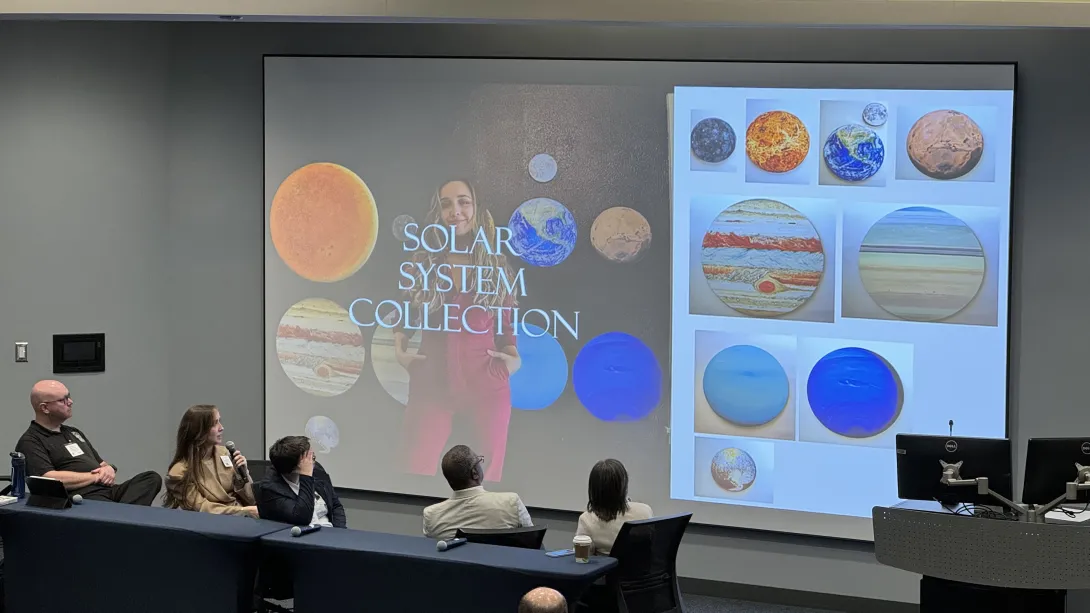
April 12 is a significant date in the history of exploration, as it marks the first space flight of a human, Yuri Gagarin, in 1961. This year on April 12, the Georgia Tech Space Research Initiative (Space RI) hosted an event highlighting the Institute’s interdisciplinary space research. The Yuri’s Day Symposium was Space RI’s first public event.
A multidisciplinary initiative, the Space RI brings together faculty, researchers, and students from across campus who share a passion for space exploration. Their combined research explores a broad array of space-related topics, all considered from a human perspective.
“Launching Georgia Tech’s Space Research Initiative reinforces our commitment to advancing our understanding of space and our universe,” said Executive Vice President for Research Chaouki Abdallah. “It is also a testament to Georgia Tech's unwavering dedication to pushing the limits of what is possible and to fostering innovations that benefit humankind.”
The symposium was organized by Glenn Lightsey, interim executive director of the Space RI, and the Space RI steering committee, which consists of representatives from the Georgia Tech Research Institute (GTRI) and the Colleges of Engineering, Computing, and Sciences, the Ivan Allen College of Liberal Arts, and the Scheller College of Business. The day began with remarks from Research leadership and an overview of the Space RI and its mission. “This is an exciting time for space exploration at Georgia Tech and across the world,” Lightsey said. “Space research is a critical part of solving our world’s most challenging problems and improving life for everyone on Earth.”
Space research and exploration yield many societal benefits that improve life on Earth and even foster economic growth. These advances include rapidly evolving technologies, improvements in medicine, and the development of enhanced materials — such as self-healing materials and those designed for extreme environments. Additionally, space research provides essential tools, data, and insights for climate scientists.
Sessions and panels throughout the day covered space science, space media, NASA’s Moon to Mars program, GTRI’s space research program, commercial space initiatives, and space in popular culture. A.C. Charania, NASA’s chief technologist and a Georgia Tech alumnus, delivered the keynote address. He shared insights into his work at NASA and Moon to Mars.
Following the symposium, the Space RI hosted a “star party” at the Georgia Tech Observatory. People of all ages gathered at the event, where they could use the observatory’s telescope to observe the moon, Jupiter, and the Orion Nebula, an immense cloud of dust and gas from which new stars are born.
“It was a clear night, and we were able to view the lunar terminator — the boundary where the sun is setting on the moon — which accentuates craters and mountains,” said Lightsey. “It was exciting to officially launch our initiative on a day when the world celebrated space exploration and the star party was a fantastic way to end our event.”
In July 2025, the Space RI will transition into one of Georgia Tech’s Interdisciplinary Research Institutes. Learn more about the initiative at space.gatech.edu.
Sign up to receive space news and event updates from the Space RI.
News Contact
Laurie Haigh
Research Communications