
Apr. 14, 2025
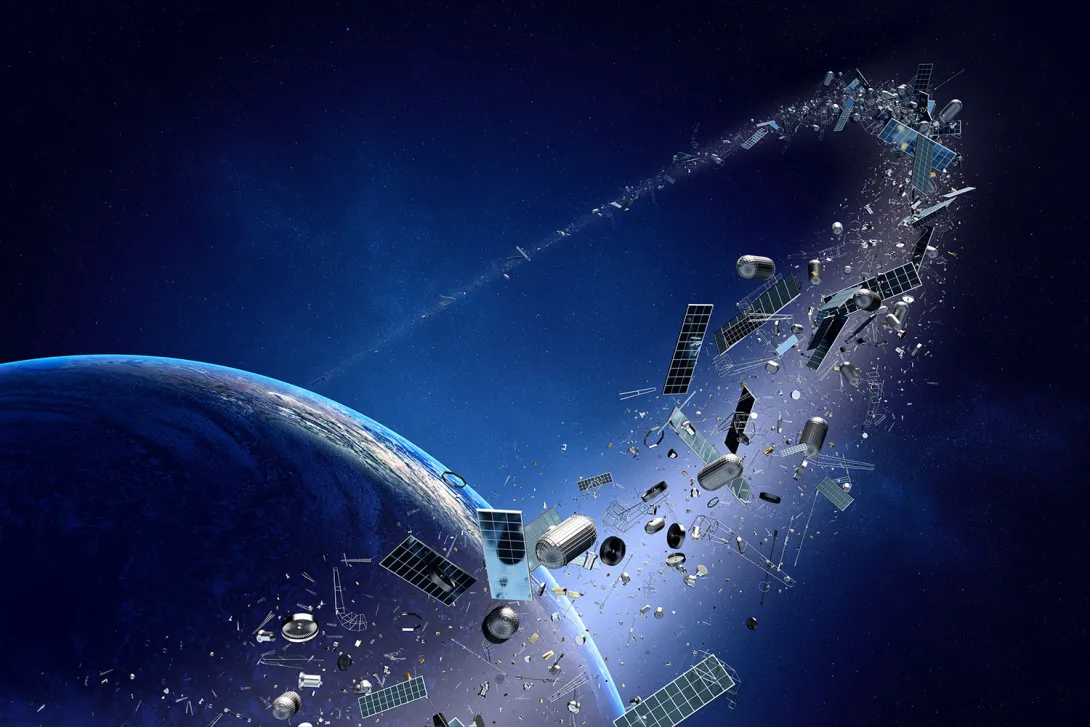
Debris presents not only a physical hazard but also a complex issue for satellite operators trying to navigate these invisible threats. (Credit: Adobe Stock)
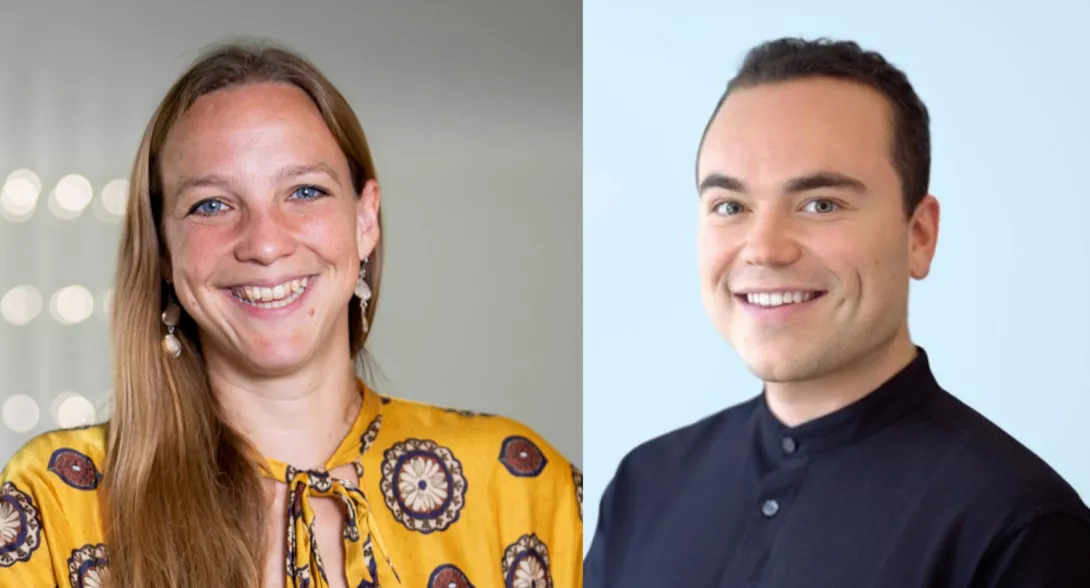
Mariel Borowitz and Thomas González Roberts
In 1957, the Soviet Union launched Sputnik. Several months later, the U.S. sent Explorer I into space. With two small objects, the space race began.
As of March 2025, more than 11,000 satellites are orbiting Earth. According to some estimates, there could be as many as 60,000 by 2030.
“In the Space Age, space activity was overtly geopolitical, and that’s never really gone away,” said Mariel Borowitz, associate professor in the Sam Nunn School of International Affairs and director of the recently launched Center for Space Policy and International Relations. “But the major shift now is the rapid rise of commercial activity and the number of actors in space.”
Space traffic is global by nature — satellites cross over myriad countries while orbiting. Thanks to the Outer Space Treaty, every country has the right to access space. More actors in space, though, mean more trash and more potential collisions.
Borowitz and her colleagues in the Nunn School analyze and help develop policies on protecting space so it remains safe and usable in the future. In other words, they’re doing everything they can to make sure things don’t blow up.
Taking Out the (Space) Trash
Thomas González Roberts, a postdoctoral fellow in the Nunn School, has a research portfolio that unites his background in astrodynamics with space governance. One area he specializes in is space debris and its impact on the sustainability of space operations.
"We define space debris as objects in Earth orbit that are no longer actively being controlled," Roberts said. "A satellite that has run out of fuel, for example, becomes a piece of floating garbage.”
The issue, he notes, isn't just the large pieces of debris but also the many tiny fragments that go undetected.
"We can track objects the size of a softball, but anything smaller is more challenging to spot with current technology," he explained. "These small pieces can still destroy satellites because of their velocity, like a bullet can harm a human."
As such, debris presents not only a physical hazard but also a complex issue for satellite operators trying to navigate these invisible threats. Roberts also highlights the rising number of satellites in popular orbital regimes. Low Earth orbit (LEO) is the closest orbital regime to Earth. Beginning at the upper reaches of the Earth’s atmosphere, it hosts communication and observational satellites and is by far the most congested region of all.
"There are only a few spots in the near-Earth space environment where satellite operators want to be, effectively making these regions limited natural resources,” he said. “Without proper coordination, these valuable spaces will be overcrowded, making it harder to avoid collisions and creating more debris."
To address these issues, Roberts advocates for better international coordination and the development of more effective space policies. "How operators choose to control their satellites is a form of space policy," he noted. "We need transparent, collaborative policies that encourage more responsible space operations. When a satellite mission is completed, operators should clean up after themselves, ensuring the long-term viability of these orbital regions."
Space Situational Awareness
Space situational awareness (SSA) involves tracking objects in space, predicting their movements, and identifying potential collisions. If a potential collision is detected, the next step is determining whether to issue a warning. Currently, the U.S. military operates the most globally advanced SSA system, providing collision warnings free of charge to spacecraft operators worldwide. However, there is an ongoing effort to shift this mission to a civil agency, the Office of Space Commerce (OSC), because so much of space activity is now international and commercial.
In 2022, Borowitz testified before Congress on transitioning from a military to a civilian SSA system. A few months later, she was invited to join the OSC on a detail to help implement this transition. Currently, she spends half her time there as head of International SSA Engagement. Her work bridges the gap between research and government operations, ensuring that advances in academia inform policy and operations.
Borowitz and Brian Gunter, a professor in the Daniel Guggenheim School of Aerospace Engineering, launched a joint project tackling the complex issue of space traffic coordination, supported by a grant from NASA.
Their detailed simulation model — the Georgia Tech Virtual Environment for Space Traffic Analysis (VESTA) — incorporates real satellite data from military space situational awareness systems to test out possible space traffic coordination rules.
“One question we’re trying to answer is whether, when we see the possibility of a collision in space, we should have right-of-way rules,” Borowitz said. “We have them on the ground for cars, and we have them in the air and at sea. In space, we have no real concept of right of way.”
Through this approach, Borowitz and Gunter can test different traffic rules and collision scenarios over months and even years. Their model also assesses the impact of these rules on different countries and companies, and what might happen if some actors choose not to follow them.
“The results of these simulations are crucial for shaping international agreements; they provide concrete data on the potential costs and benefits of unilateral versus multilateral approaches to space governance,” Borowitz said. “This kind of research not only brings technical astrodynamics into policy discussions but also offers valuable insights for negotiating space traffic coordination at a global scale.”
By combining cutting-edge research with real-world policy work, Borowitz, Roberts, and their colleagues are helping ensure that space remains usable for everyone. With their work, the path to a safer space environment is becoming clearer.
News Contact
Catherine Barzler, Senior Research Writer/Editor
Institute Communications
catherine.barzler@gatech.edu
Apr. 11, 2025
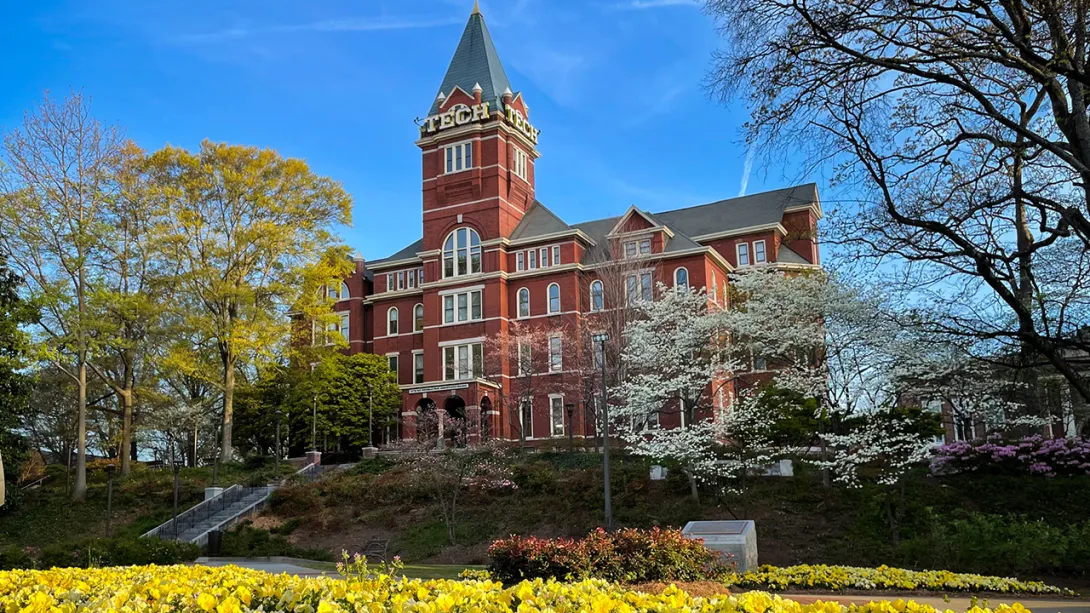
For centuries, innovations in structural materials have prioritized strength and durability — often at a steep environmental price. Today, the construction industry accounts for approximately 10% of global greenhouse gas emissions, with cement, steel, and concrete responsible for more than two-thirds of that total. As the world presses for a sustainable future, scientists are racing to reinvent the very foundations of our built environment.
Paradigm Shift in Construction
Now, researchers at Georgia Tech have developed a novel class of modular, reconfigurable, and sustainable building blocks — a new construction paradigm as well-suited for terrestrial homes as it is for extraterrestrial habitats. Their study, published in Matter, demonstrates that these innovative units, dubbed eco-voxels, can reduce carbon footprints by up to 40% compared to traditional construction materials. These units also maintain the structural performance needed for applications ranging from load-bearing walls to aircraft wings.
“We created sustainable structures using these eco-friendly building blocks, combining our knowledge of structural mechanics and mechanical design with industry-relevant manufacturing practices and environmental assessments,” said Christos Athanasiou, assistant professor at the Daniel Guggenheim School of Aerospace Engineering.
Housing Affordability Solutions
Their work offers a potential solution to the growing housing affordability crisis. As climate-driven disasters such as hurricanes, wildfires, and floods increase, homes are damaged at higher rates, and insurance costs are skyrocketing. This crisis is fueled by rising land prices and restrictive development regulations. Meanwhile, the growing demand for housing places an increasing strain on global resources and the environment. The modularity and circularity of the developed approach can effectively address these issues.
The New Building Blocks
Eco-voxels — short for eco-friendly voxels, the 3D equivalent of pixels — are made from polytrimethylene terephthalate (PTT). PTT is a partially bio-based polymer derived from corn sugar and reinforced with recycled carbon fibers from aerospace waste (scrap material lost during the manufacturing of aerospace components). Eco-voxels can be easily assembled into large, load-bearing structures and then disassembled and reconfigured, all without generating waste. Consequently, they offer a highly adaptable, sustainable approach to construction.
The team tested eco-voxels and found they can handle the pressure that buildings usually face. They also used computer simulations to show that changing the shape of eco-voxels makes them suitable for many different building needs.
The researchers compared the eco-voxel approach to other emerging construction methods like 3D-printed concrete and cross-laminated timber (CLT), finding that eco-voxels offer significant environmental advantages. While traditional and alternative materials are often heavy and carbon-intensive, the eco-voxel wall had the lowest carbon footprint: 30% lower than concrete and 20% lower than CLT.
These results highlight eco-voxels as a promising low-carbon, high-performance solution for sustainable and affordable construction, opening new possibilities for faster, more sustainable building solutions. In addition to residential uses, emergency shelters built with eco-voxels could be used for disaster-relief scenarios, where quick assembly, modularity, and minimal environmental impact are crucial.
“This study exemplifies how advances in structural mechanics, sustainable composite development, and sustainability analysis can yield transformative solutions when coupled. Eco-voxels — our modular, reconfigurable building blocks — provide a scalable, low-carbon alternative that redefines our approach to building in both terrestrial and extraterrestrial environments," said Athanasiou.
Building in Space
Beyond their terrestrial potential, eco-voxels can also offer a promising solution for off-world construction where traditional building methods are unfeasible. Their lightweight, rapid assembly — structures can be erected in less than an hour — and reliance on sustainable or locally sourced materials make them ideal candidates for future Martian or lunar shelters.
“The ability to build these structures quickly is a significant advantage for space construction,” said Athanasiou. “In space, we need lightweight units made from locally sourced materials.”
Perhaps most importantly, the researchers envision a future where the built environment not only minimizes harm but actively contributes to the preservation of planetary health.
This research was led by Georgia Tech, in collaboration with teams from the Massachusetts Institute of Technology, the University of Guelph in Ontario, Canada, and the National University of Singapore.
News Contact
Monique Waddell
Mar. 04, 2025
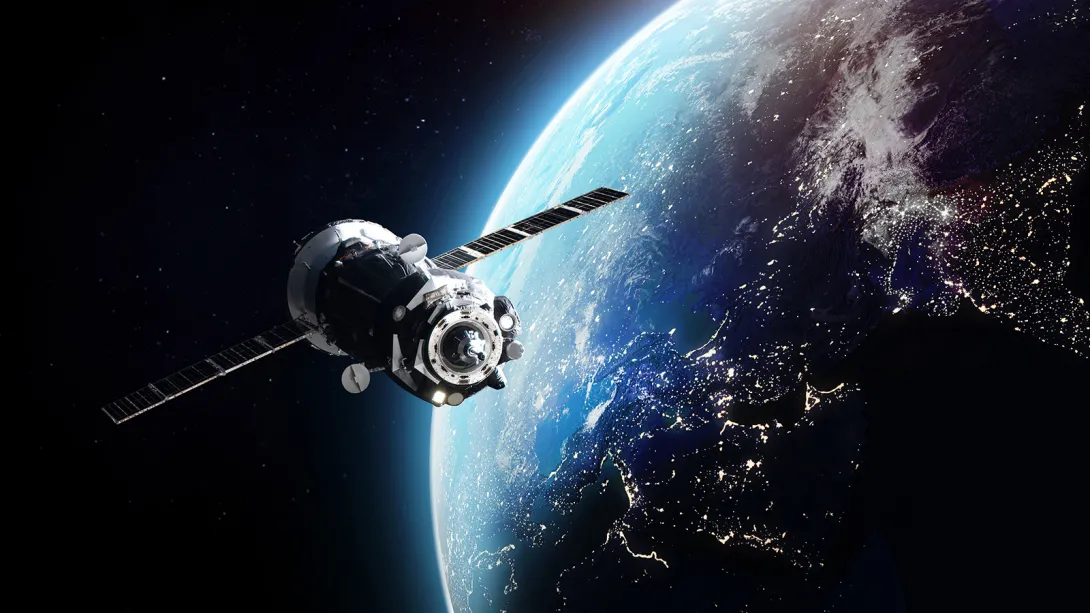
The space around Earth is central to life on the surface, encompassing myriad economic, technological, political, and even military considerations that affect the lives of millions. A new center devoted to space policy in the Sam Nunn School of International Affairs seeks to support the School’s increasingly robust research and teaching in the area.
"Space is becoming an increasingly important domain for our economy and our national security in the United States, as well as worldwide,” said Mariel Borowitz, associate professor in the Nunn School and director of the new Center for Space Policy and International Relations, which holds its first event next week in Washington. “This center can be a hub that brings researchers together and makes progress on these key research issues.”
The Center, which counts six Nunn School researchers among its initial faculty, seeks to advance research in space governance, space security, and the development of space programs internationally, as well as in areas related to international cooperation and diplomacy.
Space Research at Georgia Tech
Already, Nunn School researchers are tackling a variety of interdisciplinary space policy projects, including work on the value of satellite data to improving life on Earth, papers assessing space program developments in China and the Middle East, the international political dimensions of developing a global navigation system for the Moon, creating fair rules around access to resources in space, and understanding just what conflict in space might look like.
Their work reaches across the Georgia Tech campus. For instance, the School partners with four other schools across three colleges to offer a graduate certificate in Astrobiology, and with the College of Engineering, the College of Sciences, and the Scheller College of Business on a graduate certificate in Space Entrepreneurship.
The new Center will also complement the work of Georgia Tech’s Space Research Initiative, announced last year and slated to transition into an Interdisciplinary Research Institute this year, according to Adam N. Stulberg, Sam Nunn School Chair and Professor in the Nunn School.
“With researchers pursuing answers to difficult space policy, security, and governance questions from viewpoints and backgrounds as varied as aeronautics, astrophysics, emerging technologies, and political science, we’re embodying the interdisciplinary spirit that will help drive new discoveries that could make humanity’s future in space, and here on Earth, more productive and peaceful,” Stulberg said.
Lawrence Rubin, a Nunn School associate professor affiliated with the new Center, said Georgia Tech and the Nunn School are in a unique position to surge forward as a widely recognized center for space policy research.
“Few universities can match Georgia Tech’s leadership in both scientific research and space policy. That’s the distinction we are building on,” said Rubin, a Middle East expert with U.S. Defense Department experience who has studied the rise of regional space programs in that part of the world.
Another affiliated researcher, Assistant Professor R. Lincoln Hines, said Georgia Tech is already a great place to study space policy, and the Center will only make it better.
Hines, who studies China’s space program, noted that students have access to training in the Daniel Guggenheim School of Aerospace Engineering and opportunities to engage in applied research at the Georgia Tech Research Institute. They can also learn from respected researchers who also have practical experience in the field.
For instance, Borowitz is widely cited in the media on space policy issues, has testified before Congress, and is currently tasked part-time to the U.S. Office of Space Commerce, where she is working on a project to move space debris tracking to a civilian agency from the Department of Defense. Another Center affiliate, postdoctoral researcher Thomas González Roberts, will soon start an appointment at the International Telecommunications Union as an academic in residence studying how satellite operators follow international rules.
“Compared to other universities, we already have one of the largest concentrations of scholars on space policy and security,” Roberts said. “Our research footprint and real-world impact is expanding, and our interdisciplinary program has extraordinary competitive advantages for students seeking a career in this field.”
Learn More
The Nunn School and the Center will officially launch programming for the Center on March 11 with events in Washington, including a discussion on the future of space policy at the International Institute for Strategic Studies, a dinner discussing the challenges of space traffic management, and an event for Georgia Tech alumni in Washington.
For more information on the Center, visit its website.
News Contact
Michael Pearson
Ivan Allen College of Liberal Arts
Feb. 19, 2025
Small rocks and debris fly near Earth, many just passing by. Some, however, come too close to Earth, with a potential threat of collision. Defending Earth from these unwanted objects is a growing concern globally. Planetary defense explores threat characterization, risk mitigation, and policy to defend Earth. One mitigation approach is sending an impactor to collide with the target object to deflect its trajectory from the original course toward Earth. This approach, known as kinetic deflection, is practical for intruders with a diameter up to a few hundred meters.
NASA’s Double Asteroid Redirection Test (DART), led by Johns Hopkins University’s Applied Physics Laboratory, was the first full-scale kinetic deflection mission to test how kinetic deflection could effectively push an asteroid measuring 150 meters in diameter. The 580-kg spacecraft (impactor) collided with the target asteroid, Dimorphos, at a speed of 6.1 km/second on September 26, 2022, making the target’s speed 2.7 mm/s. This speed change could gradually make the course deviate from the original one. The more time that elapses after impact, the further it moves away from the Earth. Even though Dimorphos was not a threat before the impact, it was chosen as a test target for DART’s kinetic deflection test.
Georgia Tech Professor Masatoshi Hirabayashi’s critical contribution to DART was recently published in Nature Communications. The study, “Elliptical ejecta of asteroid Dimorphos is due to its surface curvature” analyzed the behavior of fragments coming out by the high-speed DART impact and their push of the asteroid. This work was in collaboration with Professor Fabio Ferrari from Politecnico di Milano, who jointly published the study, “Morphology of ejecta features from the impact on asteroid Dimorphos.”
Imagine a cannonball flying through the air and hitting a concrete wall. The wall shutters and fragmented pieces disperse at high speeds. Those smaller fragments, called ejecta, are known to be a key factor in controlling the asteroid push.
The study found that the ejecta from the impact site on Dimorphos highly depends on the asteroid’s shape. As a rule of thumb, a cannonball hitting a flat concrete wall creates ejecta departing from the wall at an angle of about 45 degrees from the wall’s surface. The cloud of ejecta thus looks like a waffle cone. However, if the concrete wall’s surface is tilted against the impact direction, the fragment ejection changes, making the ejecta structure differ even if the impactor has the same mass and speed.
“This changes the asteroid push dramatically. Dimorphos has a squashed round shape, like an M&M,” Hirabayashi explained, “If the impact is large, more ejecta fly out of the surface but are more affected by surface tilts. This process makes the ejecta deviate from the ideal direction, reducing the asteroid push.”
For the DART impact on Dimorphos, the study identified the impact scale and the asteroid’s rounded surface lowered the asteroid push by 56% compared to when Dimorphos was tested as an entirely flat wall. Thus, sending a large impactor does not mean a big push, and considering how to send impactors strategically is necessary. One way to keep the asteroid push effective is to send multiple small impactors rather than a single large impactor. This way, each small impactor may avoid the target’s rounded shape, and the net asteroid push by multiple impacts can be more efficient than the single impactor.
“Sending multiple smaller impactors not only results in a higher asteroid push but also potentially saves operational cost and increases tactical flexibility for deflection," Hirabayashi said.
Ferrari’s study offered crucial information for Hirabayashi’s conclusions. “We used Hubble Space Telescope’s images and numerical simulations to quantify a viable mechanism of the ejecta evolution and successfully estimated ejected particles’ mass, velocity, and size. We also found complex interactions of such particles with the asteroid system and solar radiation pressure, i.e., sunlight pushing ejecta particles,” Ferrari said. “Documenting how ejecta looks over time offers crucial insights into how the DART impact acted on ejecta, giving tight constraints on the target asteroid’s properties.”
NASA’s DART mission was a success, and Hirabayashi’s study discovered an innovative approach to kinetic deflection, offering new potential for its future demonstration in space. He is building a new capability of characterizing a target’s properties beneficial for planetary defense, such as mass, size, composition, etc., at limited observational conditions. This is aligned with the fast reconnaissance concept, a new community effort that develops planetary defense strategies to identify these properties within a limited time and resources. This work continues to evolve Georgia Tech into a key player in planetary defense, connecting international communities.
News Contact
Monique Waddell
Feb. 28, 2025
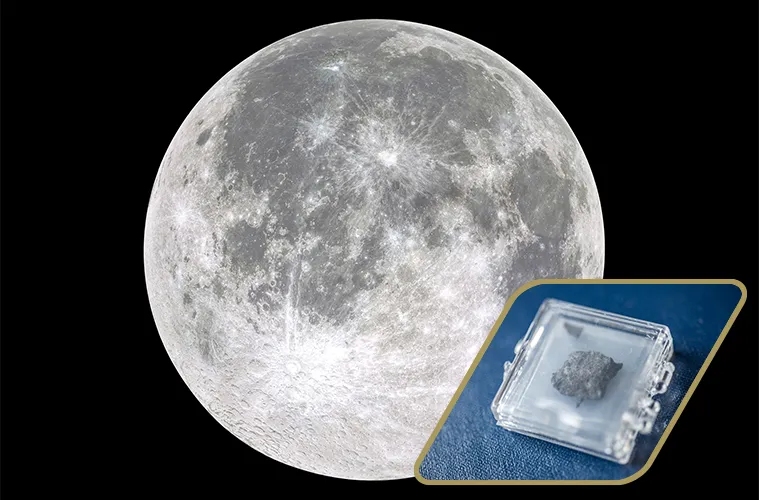
Dust and rocks residing on the surface of the moon take a beating in space. Without a protective magnetosphere and atmosphere like Earth’s, the lunar surface faces continual particle bombardment from solar wind, cosmic rays, and micrometeoroids. This constant assault leads to space weathering.
New NASA-funded research by Georgia Tech offers fresh insights into the phenomenon of space weathering. Examining Apollo lunar samples at the nanoscale, Tech researchers have revealed risks to human space missions and the possible role of space weathering in forming some of the water on the moon.
Most previous studies of the moon involved instruments mapping it from orbit. In contrast, this study allowed researchers to spatially map a nanoscale sample while simultaneously analyzing optical signatures of Apollo lunar samples from different regions of the lunar surface — and to extract information about the chemical composition of the lunar surface and radiation history.
The researchers recently published their findings in Scientific Reports.
“The presence of water on the moon is critical for the Artemis program. It’s necessary for sustaining any human presence and it’s a particularly important source for oxygen and hydrogen, the molecules derived from splitting water,” said Thomas Orlando, Regents’ Professor in the School of Chemistry and Biochemistry, co-founder and former director of the Georgia Tech Center for Space Technology and Research, and principal investigator of Georgia Tech’s Center for Lunar Environment and Volatile Exploration Research (CLEVER).
Building on a Decade of Lunar Science Research
As a NASA SSERVI (Solar System Exploration Research Virtual Institute), CLEVER is an approved NASA laboratory for analysis of lunar samples and includes investigators from multiple institutes and universities across the U.S. and Europe. Research areas include how solar wind and micrometeorites produce volatiles, such as water, molecular oxygen, methane, and hydrogen, which are all crucial to supporting human activity on the moon.
Georgia Tech has built a large portfolio in human exploration and lunar science over the last decade with two NASA Solar System Exploration Research Virtual Institutes: CLEVER and its predecessor, REVEALS (Radiation Effects on Volatiles and Exploration of Asteroids and Lunar Surfaces).
Studying Moon Samples at the Nanoscale Level
Georgia Tech’s labs are world-renowned, particularly for analyzing surfaces and semiconductor materials. For this work, the Georgia Tech team also tapped the University of Georgia (UGA) Nano-Optics Laboratory run by Professor Yohannes Abate in the Department of Physics and Astronomy. While UGA is a member of CLEVER, its nano-FTIR spectroscopy and nanoscale imaging equipment was historically used for semiconductor physics, not space science.
“This is the first time these tools have been applied to space-weathered lunar samples, and it’s the first we’ve been able to see good signatures of space weathering at the nanoscale,” says Orlando.
Normal spectrometers are at a much larger scale, with the ability to see more bulk properties of the soil, explains Phillip Stancil, professor and head of the UGA physics department.
The UGA equipment enabled the study of samples “in tens of nanometers.” To illustrate how small nanoscale is, Stancil says a hydrogen atom is .05 nanometers, so 1 nm is the size of 20 atoms if placed side by side. The spectrometers provide high-resolution details of the lunar grains down to hundreds of atoms.
“We can look at an almost atomistic level to understand how this rock was formed, its history, and how it was processed in space,” Stancil says.
“You can learn a lot about how the atom positions change and how they are disrupted due to radiation by looking at the tiny sample at an atomistic level,” says Orlando, noting that a lot of damage is done at the nanoscale level. They can determine if the culprit is space weathering or from a process left over during the rock’s formation and crystallization.
Finding Radioactive Damage, Evidence of Water
The researchers found damage on the rock samples, including changes in the optical signatures. That insight helped them understand how the lunar surface formed and evolved but also provided “a really good idea of the rocks’ chemical composition and how they changed when irradiated,” says Orlando.
Some of the optical signatures also showed trapped electron states, which are typically missing atoms and vacancies in the atomic lattice. When the grains are irradiated, some atoms are removed, and the electrons get trapped. The types of traps and how deep they are, in terms of energy, can help determine the radiation history of the moon. The trapped electrons can also lead to charging, which can generate an electrostatic spark. On the moon, this could be a problem for astronauts, exploration vehicles, and equipment.
“There is also a difference in the chemical signatures. Certain areas had more neodymium (a chemical element also found in the Earth’s crust) or chromium (an essential trace mineral), which are made by radioactive decay,” Orlando says. The relative amounts and locations of these atoms imply an external source like micrometeorites.
Translating Research to Human Risks on the Moon
Radiation and its effects on the dust and lunar surface pose dangers to people, and the main protection is the spacesuit.
Orlando sees three key risks. First, the dust could interfere with spacesuits’ seals. Second, micrometeorites could puncture a spacesuit. These high-velocity particles form after breaking off from larger chunks of debris. Like solar storms, they are hard to predict, and they’re dangerous because they come in at high-impact velocities of 5 kilometers per second or higher. “Those are bullets, so they will penetrate the spacesuits,” Orlando says. Third, astronauts could breathe in dust left on the suits, causing respiratory issues. NASA is studying many approaches for dust removal and mitigation.
Mapping the Moon: Going from Nanoscale to Macroscale
The next research phase will involve combining the UGA analysis tools with a new tool from Georgia Tech that will be used to analyze Apollo lunar samples that have been in storage for over 50 years.
“We will combine two very sophisticated analysis tools to look at these samples in a level of detail that I don’t think has been done before,” Orlando says.
The goal is to build models that can feed into orbital maps of the moon. To get there, the Georgia Tech and UGA team will need to go from nanoscale to the full macro scale to show what’s happening on the lunar surface and the location of water and other key resources, including methane, needed to support humanity’s moon and deep-space exploration goals.
Feb. 14, 2025
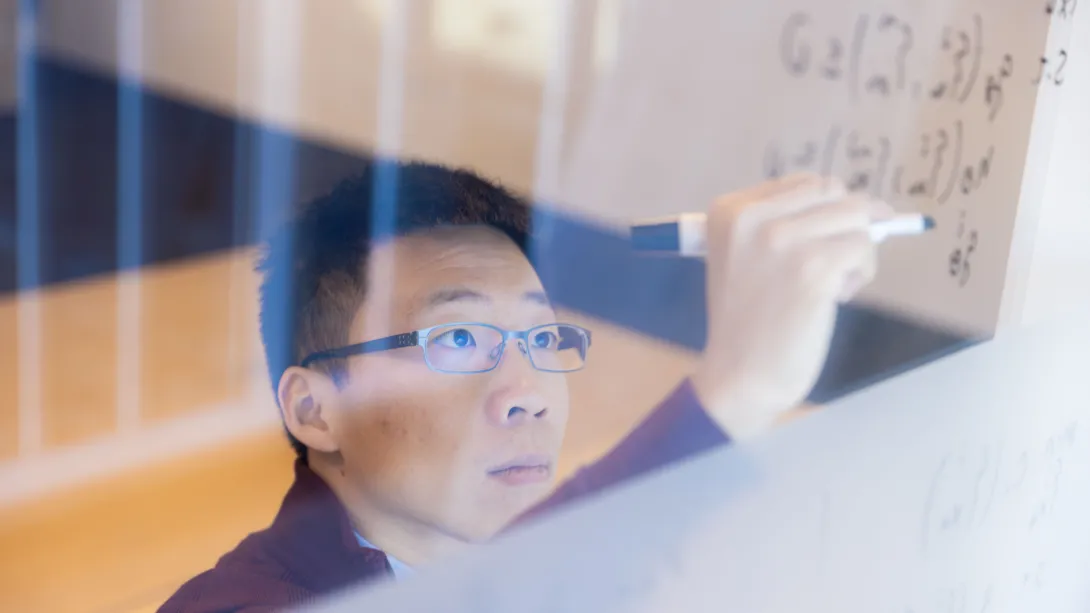
Men and women in California put their lives on the line when battling wildfires every year, but there is a future where machines powered by artificial intelligence are on the front lines, not firefighters.
However, this new generation of self-thinking robots would need security protocols to ensure they aren’t susceptible to hackers. To integrate such robots into society, they must come with assurances that they will behave safely around humans.
It begs the question: can you guarantee the safety of something that doesn’t exist yet? It’s something Assistant Professor Glen Chou hopes to accomplish by developing algorithms that will enable autonomous systems to learn and adapt while acting with safety and security assurances.
He plans to launch research initiatives, in collaboration with the School of Cybersecurity and Privacy and the Daniel Guggenheim School of Aerospace Engineering, to secure this new technological frontier as it develops.
“To operate in uncertain real-world environments, robots and other autonomous systems need to leverage and adapt a complex network of perception and control algorithms to turn sensor data into actions,” he said. “To obtain realistic assurances, we must do a joint safety and security analysis on these sensors and algorithms simultaneously, rather than one at a time.”
This end-to-end method would proactively look for flaws in the robot’s systems rather than wait for them to be exploited. This would lead to intrinsically robust robotic systems that can recover from failures.
Chou said this research will be useful in other domains, including advanced space exploration. If a space rover is sent to one of Saturn’s moons, for example, it needs to be able to act and think independently of scientists on Earth.
Aside from fighting fires and exploring space, this technology could perform maintenance in nuclear reactors, automatically maintain the power grid, and make autonomous surgery safer. It could also bring assistive robots into the home, enabling higher standards of care.
This is a challenging domain where safety, security, and privacy concerns are paramount due to frequent, close contact with humans.
This will start in the newly established Trustworthy Robotics Lab at Georgia Tech, which Chou directs. He and his Ph.D. students will design principled algorithms that enable general-purpose robots and autonomous systems to operate capably, safely, and securely with humans while remaining resilient to real-world failures and uncertainty.
Chou earned dual bachelor’s degrees in electrical engineering and computer sciences as well as mechanical engineering from University of California Berkeley in 2017, a master’s and Ph.D. in electrical and computer engineering from the University of Michigan in 2019 and 2022, respectively. He was a postdoc at MIT Computer Science & Artificial Intelligence Laboratory prior to joining Georgia Tech in November 2024. He is a recipient of the National Defense Science and Engineering Graduate fellowship program, NSF Graduate Research fellowships, and was named a Robotics: Science and Systems Pioneer in 2022.
News Contact
John (JP) Popham
Communications Officer II
College of Computing | School of Cybersecurity and Privacy
Feb. 13, 2025
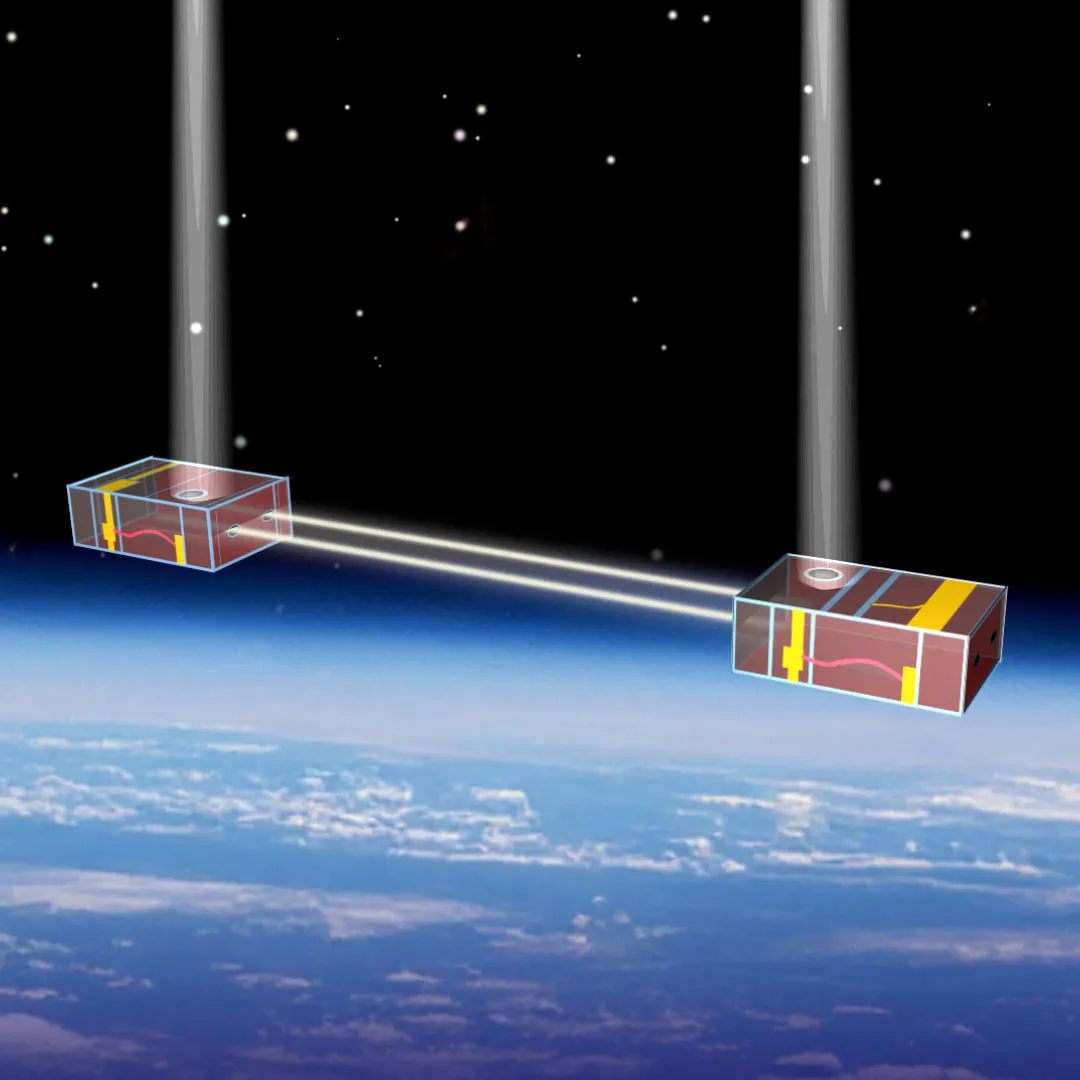
A new NASA-funded project will have Georgia Tech aerospace engineers developing new technology to one day study planets outside our solar system.
It's a $10 million joint mission led by the University of Michigan called STARI — STarlight Acquisition and Reflection toward Interferometry. Georgia Tech’s engineers will build the propulsion systems for a pair of briefcase-sized CubeSats that will fly in orbit a few hundred yards away from one another, bouncing starlight back and forth.
The technology could be used someday to better understand if any known exoplanets are capable of supporting life as we know it.
Interferometry is already used to study stars, gas clouds, and galaxies. Instead of using one large telescope, several smaller telescopes work as a team. The machines swap starlight to create higher resolution images than are possible from a single telescope.
Scientists and engineers have recently proposed using interferometry to locate exoplanets.
STARI will determine if the same type of coordination and light transmission can be done using less expensive CubeSats.
Read the entire story on the College of Engineering website.
News Contact
Jason Maderer
College of Engineering
maderer@gatech.edu
Jan. 23, 2025

The Space Research Institute (SRI) at Georgia Tech has initiated an internal search for its inaugural executive director. This new Interdisciplinary Research Institute (IRI) will build upon the foundation laid by the Space Research Initiative.
The SRI is dedicated to advancing cutting-edge research in space-related fields, fostering interdisciplinary collaborations, and establishing strong partnerships with industry, government, academic, and international organizations. As leader of the newly established IRI, the executive director will lead the Institute's strategic vision, nurture a culture of innovation, and champion initiatives that position Georgia Tech, via the SRI, as a global leader in space research and exploration.
The SRI is composed of faculty and staff across campus who have a common interest in space exploration and discovery. Collectively, SRI will research a wide range of topics on space and how it relates to human perspective and be an ultimate hub of all things space related at Georgia Tech. It will connect all the research institutes, labs, facilities, and colleges to pioneer the conversation about space in the state of Georgia. By working hand-in-hand with academics, business partners, and students we are committed to staying at the cutting edge of innovation.
Click here to learn more about this position and how to apply.
News Contact
For any further details, please contact Rob Kadel at Rob Kadel.
Dec. 06, 2024
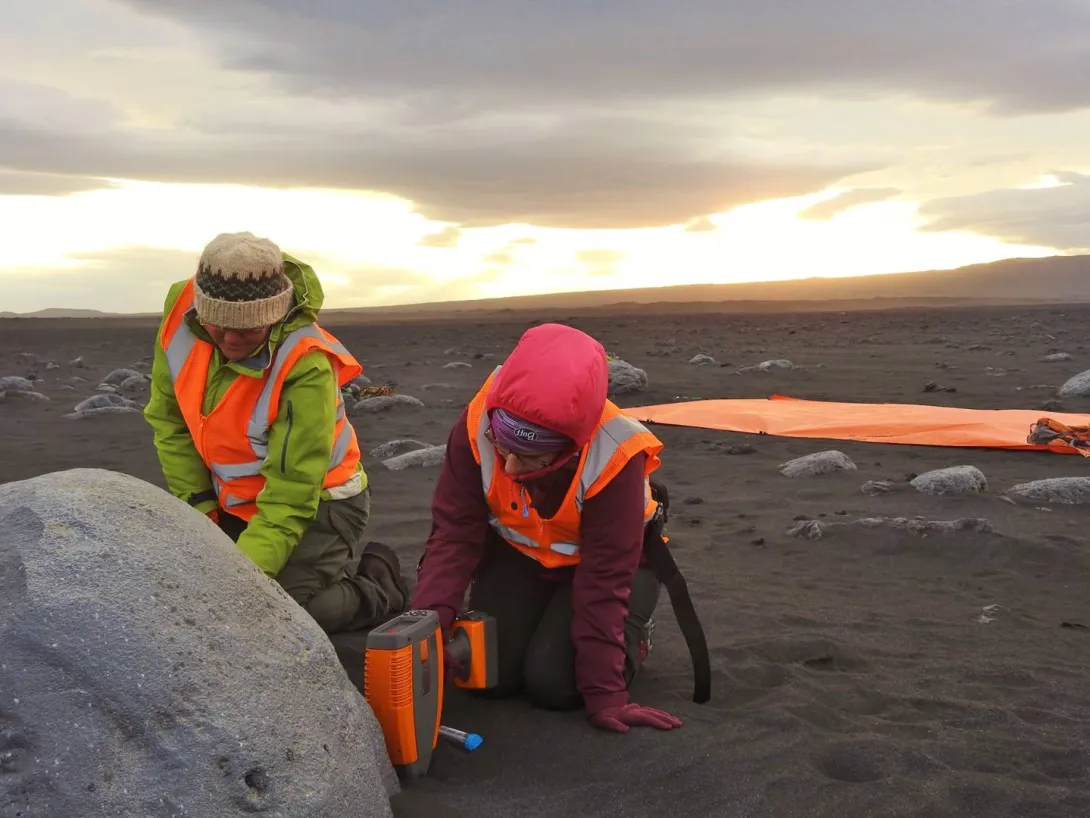
The surface is covered with fine ash. The lava fields stretch for miles, punctuated only by basalt mountains. But life could be found here if you look hard enough.
This barren land isn't Mars or Pluto, but volcanic deserts in Iceland. The environment is so comparable to Mars' arid landscape that researchers can use it as an analog. From Earth, they can extrapolate how planets in our galaxy and beyond could sustain life and what tools humans might need to make homes on these planets.
Georgia Tech researchers explore everywhere from Oregon's mountaintops to Arizona's deserts to better understand space — and life on this planet.
Nov. 22, 2024
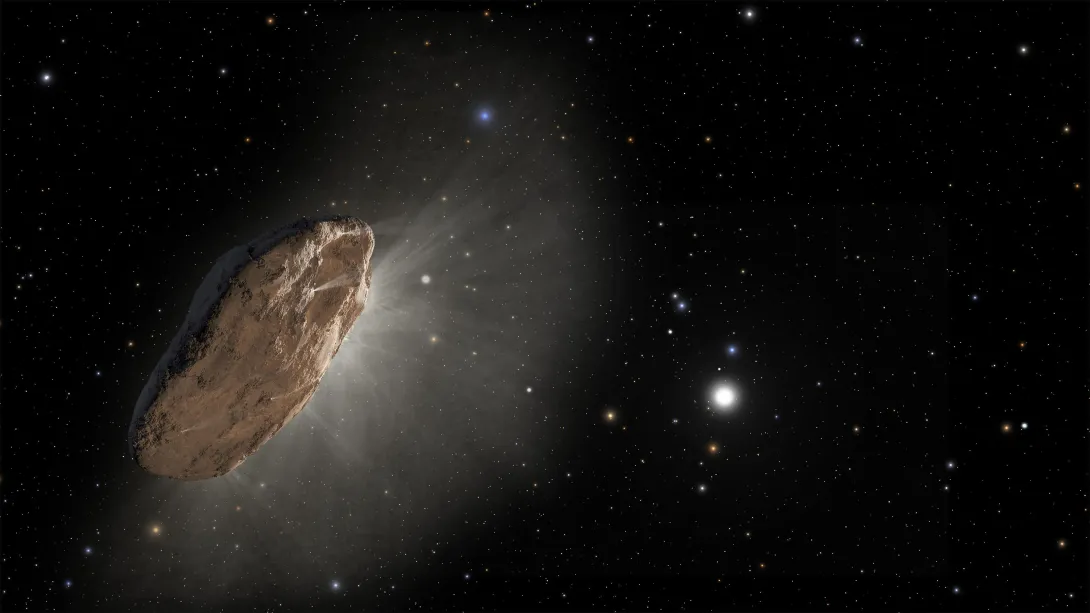
In 2017, a long, oddly shaped asteroid passed by Earth. Called ‘Oumuamua, it was the first known interstellar object to visit our solar system, but it wasn’t an isolated incident — less than two years later, in 2019, a second interstellar object (ISO) was discovered.
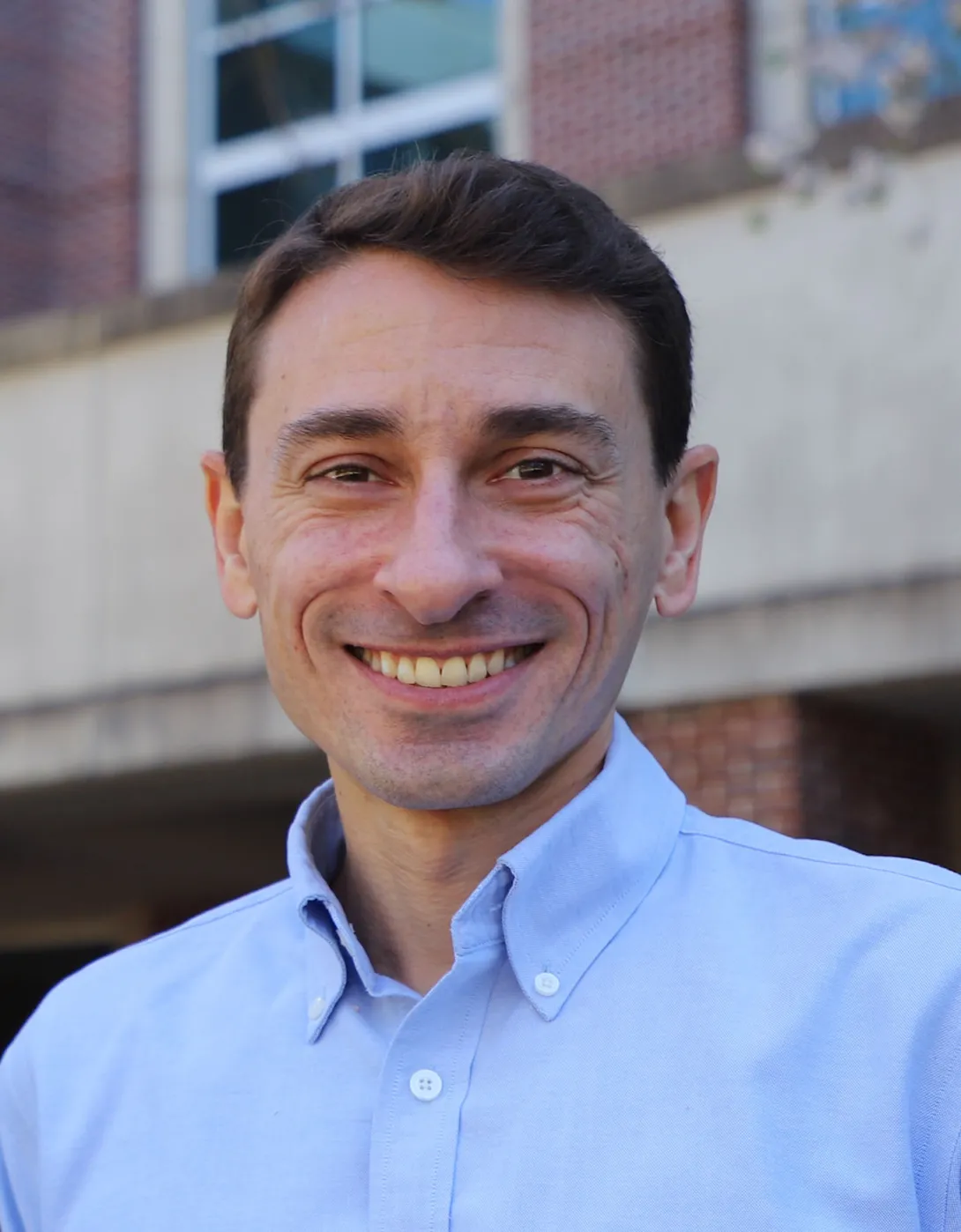
“‘Oumuamua was found passing just 15 million miles from Earth — that’s much closer than Mars or Venus,” says James Wray. “But it was formed in an entirely different solar system. Studying these objects could give us incredible insight into extrasolar planets, and how our planet fits into the universe.”
Wray, a professor in the School of Earth and Atmospheric Sciences at Georgia Tech, has just been awarded a Simons Foundation Pivot Fellowship to do just that. Pivot Fellowships are among the most prestigious sources of funding for cutting-edge research, and support leading researchers who have the deep interest, curiosity and drive to make contributions to a new discipline.
Wray has primarily studied the geoscience of Mars. He will leverage knowledge of nearby planets to understand ISOs and planets much farther away. “I want to understand how planets got to be the way they are, and if they could have ever hosted life,” he explains. “Extrasolar planets give us many more places to ask those questions than our solar system does, but they're too distant to visit with spacecraft. ISOs provide a unique opportunity to explore other solar systems without leaving our own.”
The Fellowship will provide salary support as well as funding for research, travel, and professional development. “Seed funds like this are so valuable,” says Wray. “I’m incredibly grateful to the Simons Foundation. I’d also like to thank Georgia Tech for its support,” he adds, sharing that the Center for Space Technology and Research supported a related research effort at the University of Hawaii earlier this year. “My mentor and I were able to spend some of that time improving our Pivot Fellowship proposal, which played a critical role in securing this Fellowship.”
In search of ISOs
Wray will study small solar system bodies like asteroids and comets to decode the processes of planet formation and space weathering, and will analyze data from the 2017 and 2019 ISOs.
He will also work alongside collaborators including Karen Meech of the University of Hawaii, who led the paper characterizing ‘Oumuamua, to conceptualize what an intercept mission might look like.
“We still have a lot of questions regarding ISOs,” he says. “Hundreds of papers have already been written about them, but we still don't know the answers.” One key mystery is the composition of the bodies: both the 2017 and 2019 objects were compositionally different from those in our solar system.
“Are they inherently different from the bodies in our solar system, or did the long journey to our solar system make them that way? Is our solar system different from others?” Wray asks. “We could answer so many questions with even a simple picture of the next ISO that comes close enough for us to intercept with spacecraft.”
A cosmic timeline
While there is no guarantee that another ISO might be spotted in our solar system, the timing is opportune — upcoming telescope surveys are poised to detect such interstellar objects. “In mid-2025, when I will start this Fellowship, the new Rubin Observatory will begin scanning the entire sky,” Wray says. “It has the potential to discover up to several new ISOs per year.”
“ISO visits are always brief,” he adds, “so the research needs to be in place for when one is spotted.” If an interstellar object is detected, Wray and Meech will be poised to leverage specialized telescopes in Hawaii, along with others worldwide, to better understand it, studying its size, shape, and composition — and potentially sending spacecraft to image it.
“We might never find another ISO — or they might be the key to imminent breakthroughs in understanding our place in the galaxy,” Wray adds. “I'm extremely grateful to the Simons Foundation for the flexibility to pursue this research at whatever pace the cosmos allows.”
News Contact
Written by Selena Langner