
Aug. 28, 2024
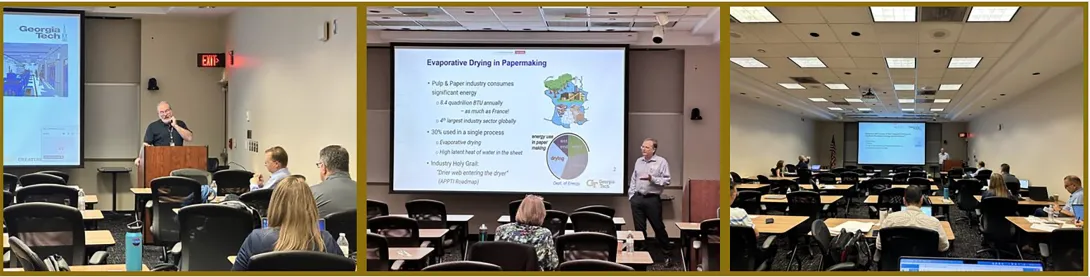
From the Left: Presentations by Chris Luettgen, Carson Meredith and Cyrus Aidun during the 2024 APPTI Net Zero Workshop
The Georgia Tech Renewable Bioproducts Institute (RBI) hosted the APPTI Net Zero Workshop on Decarbonizing the Pulp & Paper Sector during the second week of August.
Over 40 participants from more than 20 organizations participated in the event aimed to educate the pulp, paper, and tissue manufacturing community on current decarbonization technologies ready for immediate deployment, while also exploring the investments needed for future breakthrough innovations.
The workshop kicked off with an overview of APPTI by Chris Luettgen, managing director of APPTI and RBI's lead for process efficiency and intensification of pulp paper packaging & tissue manufacturing. Presentations and discussions revolved around three focus areas for decarbonization--Carbon Capture and Beneficial Use; Biogas Generation from Waste Streams; and Lime Kiln Alternatives to Fossil Fuels. Presenters and panelists consisted of members from the Department of Energy’s Industrial Efficiency and Decarbonization Office (IEDO), academia (North Carolina State University, Abo Academy, University of Toronto, University of Minnesota), and industry (Veolia, Valmet, Metso, FPInnovations, Nexight, Beck and Associates).
RBI’s Carson Meredith, Valerie Thomas, and Cyrus Aidun were among the presenters. Meredith presented his research on felt design to prevent re-wet, while Thomas’ talk was on the topic, life cycle assessment: meeting policy benchmarks for decarbonization, and Aidun presented his work on multi-phase forming.
The workshop concluded with the net zero committee discussing key takeaways from the workshop and potential for a life cycle assessment on the paper industry.
“The outcome of this two-day workshop is a strong feeling about the work RBI and APPTI are doing for the industry. The feedback I received was all very positive,” said Luettgen.
News Contact
Priya Devarajan || RBI Communications Program Manager
Nov. 13, 2024

Julene Tong, Associate Professor and RBI's Lead for the Waste Valorization in Food-Energy-Water Initiative
Zhaohui (Julene) Tong is an associate professor in the School of Chemical and Biomolecular Engineering at Georgia Tech and leads the waste valorization in food-energy-water initiative at the Renewable Bioproducts Institute. Her research addresses challenges in the interdisciplinary fields of bioresource engineering and sustainable chemistry, focusing on developing innovative technologies for producing chemicals, materials, energy, and fuels from renewable resources.
Tong’s current research interests include functional biomaterials for a high-efficiency circular economy, platform chemicals and hydrocarbon fuels from renewable resources, sustainable process control and modeling, nano-biomaterial synthesis and self-assembly, and polymer degradation and recycling.
She earned her bachelor’s degree in chemical engineering from Changsha University of Science and Technology in China and her doctoral degree in chemical engineering from the Georgia Institute of Technology. Her research spans multiple disciplines, including materials, nanotechnology, energy, and sustainability.
Below is a brief Q&A with Tong, where she discusses her research focus areas and how they contribute to maximizing the waste valorization in the food-energy-water initiative at Georgia Tech.
- What is your field of expertise and at what point in your life did you first become interested in this area?
My expertise lies in sustainable materials and catalytical conversion, with a focus on transforming abundant and low-cost bioresources into functional biomaterials, biochemicals, and biofuels. Driven by a strong desire to conduct meaningful research, I aim to contribute to advancements in human health, food security, and environmental sustainability, addressing critical issues such as climate change, water scarcity, and the circular economy.
- What questions or challenges sparked your current renewable bioproducts research? What are the big issues facing your research area right now?
The current economy faces significant challenges, including depleting resources, expensive raw materials, energy-intensive processes, and severe environmental impacts. Research in renewable bioproducts is crucial for addressing these issues. However, renewable bioproducts are still not competitive with petroleum-based products. Therefore, it is of paramount importance to minimize energy and material input during the processing and maximize product value without compromising environmental health.
- What interests you the most in leading the research initiative on waste valorization in food-energy-water? Why is your initiative important to the development of Georgia Tech’s Renewable Bioproducts research strategy?
I am interested in valorizing low-cost and underutilized biomass waste (lignocellulose, lignin, hemicellulose, etc.) into value-added functional products for applications in the food, water, and energy sectors, such as bio-based membranes for contaminant removal and detection. My initiative aims to build connections among multidisciplinary experts from chemical engineering, environmental engineering, agricultural engineering, industrial and systems engineering, and other fields. Polymer chemistry, nanotechnology, and data science all play roles in achieving our goal. My research topic aligns very well with RBI’s central strategic research areas, including the development of a bioeconomy, industrial decarbonization, and sustainable development goals.
- What are the broader global and social benefits of the research you and your team conduct on waste valorization in food-energy-water initiative?
We work on increasing the value of bio-based waste for bioproducts to provide clean water, improve food security, and minimize energy input. First, this promotes the efficient use of biomass resources and minimizes waste generation to form a circular economy. Second, it contributes to industrial decarbonization by providing alternative, renewable sources of energy and materials. Third, the utilization of bio-based waste supports several aspects of sustainable development by simultaneously addressing challenges such as waste variability, technological limitations, and economic viability.
- What are your plans for engaging a wider Georgia Tech faculty pool with the broader renewable bioproducts community?
I plan to leverage symposia from RBI and other sources, as well as existing sustainable centers like the Brook Byers Institute for Sustainable Systems, social events, and established networks. Additionally, I will reach out to other faculty through collaborations on integrated proposals from RBI and external sources.
- What are your hobbies?
In my leisure time, I enjoy baking and cooking. I also enjoy traveling with my family.
- Who has influenced you the most?
I have been influenced by several of my professors during my undergraduate and graduate studies and my first department chair at the University of Florida. Their continuous encouragement and support have been instrumental in shaping my academic career in sustainable chemistry and engineering.
News Contact
News Contact: Priya Devarajan || RBI Communications Program Manager
Nov. 21, 2024
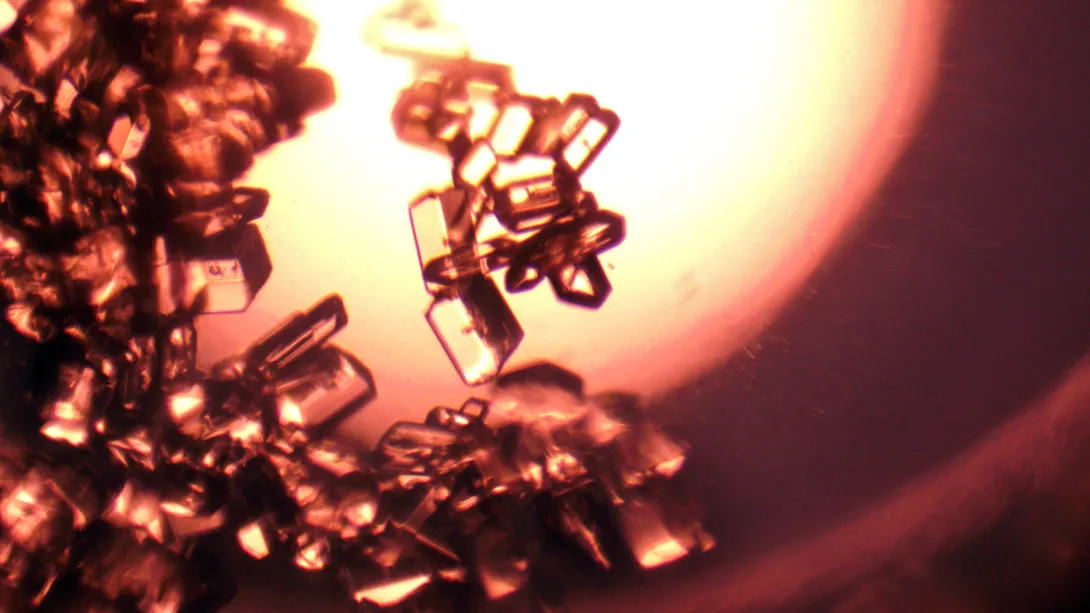
Glycine, one of the critical amino acids that the system coverts carbon dioxide into. (Image Credit: NASA)

Professor Pamela Peralta-Yahya

Ph.D. Student Shaafique Chowdhury, first author of the study.

Ph.D. Student Ray Westerberg
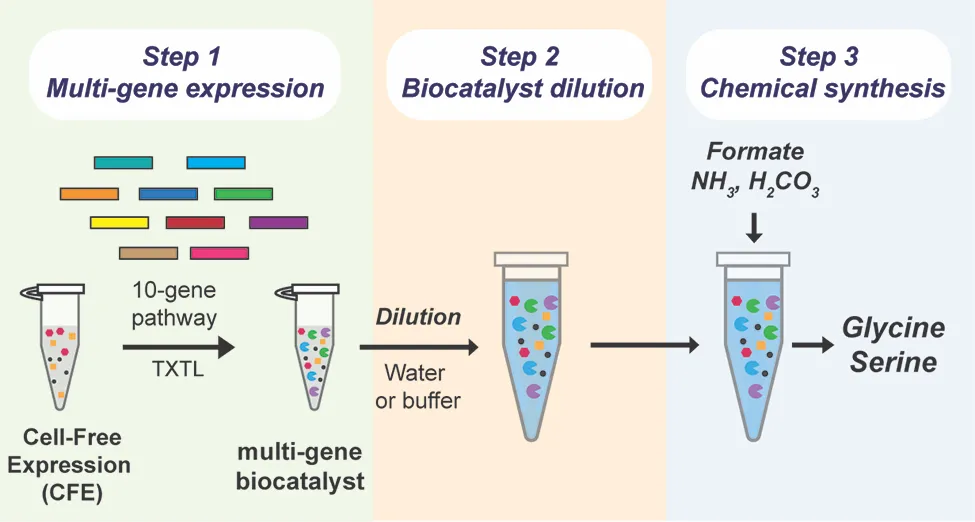
“Part of what makes a cell-free system so efficient,” Westenberg says, “is that it can use cellular enzymes without needing the cells themselves. By generating the enzymes and combining them in the lab, the system can directly convert carbon dioxide into the desired chemicals.”
Amino acids are essential for nearly every process in the human body. Often referred to as ‘the building blocks of life,’ they are also critical for commercial use in products ranging from pharmaceuticals and dietary supplements, to cosmetics, animal feed, and industrial chemicals.
And while our bodies naturally make amino acids, manufacturing them for commercial use can be costly — and that process often emits greenhouse gasses like carbon dioxide (CO2).
In a landmark study, a team of researchers has created a first-of-its kind methodology for synthesizing amino acids that uses more carbon than it emits. The research also makes strides toward making the system cost-effective and scalable for commercial use.
“To our knowledge, it’s the first time anyone has synthesized amino acids in a carbon-negative way using this type of biocatalyst,” says lead corresponding author Pamela Peralta-Yahya, who emphasizes that the system provides a win-win for industry and environment. “Carbon dioxide is readily available, so it is a low-cost feedstock — and the system has the added bonus of removing a powerful greenhouse gas from the atmosphere, making the synthesis of amino acids environmentally friendly, too.”
The study, “Carbon Negative Synthesis of Amino Acids Using a Cell-Free-Based Biocatalyst,” published today in ACS Synthetic Biology, is publicly available. The research was led by Georgia Tech in collaboration with the University of Washington, Pacific Northwest National Laboratory, and the University of Minnesota.
The Georgia Tech research contingent includes Peralta-Yahya, a professor with joint appointments in the School of Chemistry and Biochemistry and School of Chemical and Biomolecular Engineering (ChBE); first author Shaafique Chowdhury, a Ph.D. student in ChBE; Ray Westenberg, a Ph.D student in Bioengineering; and Georgia Tech alum Kimberly Wennerholm (B.S. ChBE ’23).
Costly chemicals
There are two key challenges to synthesizing amino acids on a large scale: the cost of materials, and the speed at which the system can generate amino acids.
While many living systems like cyanobacteria can synthesize amino acids from CO2, the rate at which they do it is too slow to be harnessed for industrial applications, and these systems can only synthesize a limited number of chemicals.
Currently, most commercial amino acids are made using bioengineered microbes. “These specially designed organisms convert sugar or plant biomass into fuel and chemicals,” explains first author Chowdhury, “but valuable food resources are consumed if sugar is used as the feedstock — and pre-processing plant biomass is costly.” These processes also release CO2 as a byproduct.
Chowdhury says the team was curious “if we could develop a commercially viable system that could use carbon dioxide as a feedstock. We wanted to build a system that could quickly and efficiently convert CO2 into critical amino acids, like glycine and serine.”
The team was particularly interested in what could be accomplished by a ‘cell-free’ system that leveraged some process of a cellular system — but didn’t actually involve living cells, Peralta-Yahya says, adding that systems using living cells need to use part of their CO2 to fuel their own metabolic processes, including cell growth, and have not yet produced sufficient quantities of amino acids.
“Part of what makes a cell-free system so efficient,” Westenberg explains, “is that it can use cellular enzymes without needing the cells themselves. By generating the enzymes and combining them in the lab, the system can directly convert carbon dioxide into the desired chemicals. Because there are no cells involved, it doesn’t need to use the carbon to support cell growth — which vastly increases the amount of amino acids the system can produce.”
A novel solution
While scientists have used cell-free systems before, one of the necessary chemicals, the cell lysate biocatalyst, is extremely costly. For a cell-free system to be economically viable at scale, the team needed to limit the amount of cell lysate the system needed.
After creating the ten enzymes necessary for the reaction, the team attempted to dilute the biocatalyst using a technique called ‘volumetric expansion.’ “We found that the biocatalyst we used was active even after being diluted 200-fold,” Peralta-Yahya explains. “This allows us to use significantly less of this high-cost material — while simultaneously increasing feedstock loading and amino acid output.”
It’s a novel application of a cell-free system, and one with the potential to transform both how amino acids are produced, and the industry’s impact on our changing climate.
“This research provides a pathway for making this method cost-effective and scalable,” Peralta-Yahya says. “This system might one day be used to make chemicals ranging from aromatics and terpenes, to alcohols and polymers, and all in a way that not only reduces our carbon footprint, but improves it.”
Funding: Advanced Research Project Agency-Energy (ARPA-E), U.S. Department of Energy and the U.S. Department of Energy, Office of Science, Biological and Environmental Research Program.
News Contact
Written by Selena Langner
Sep. 18, 2024
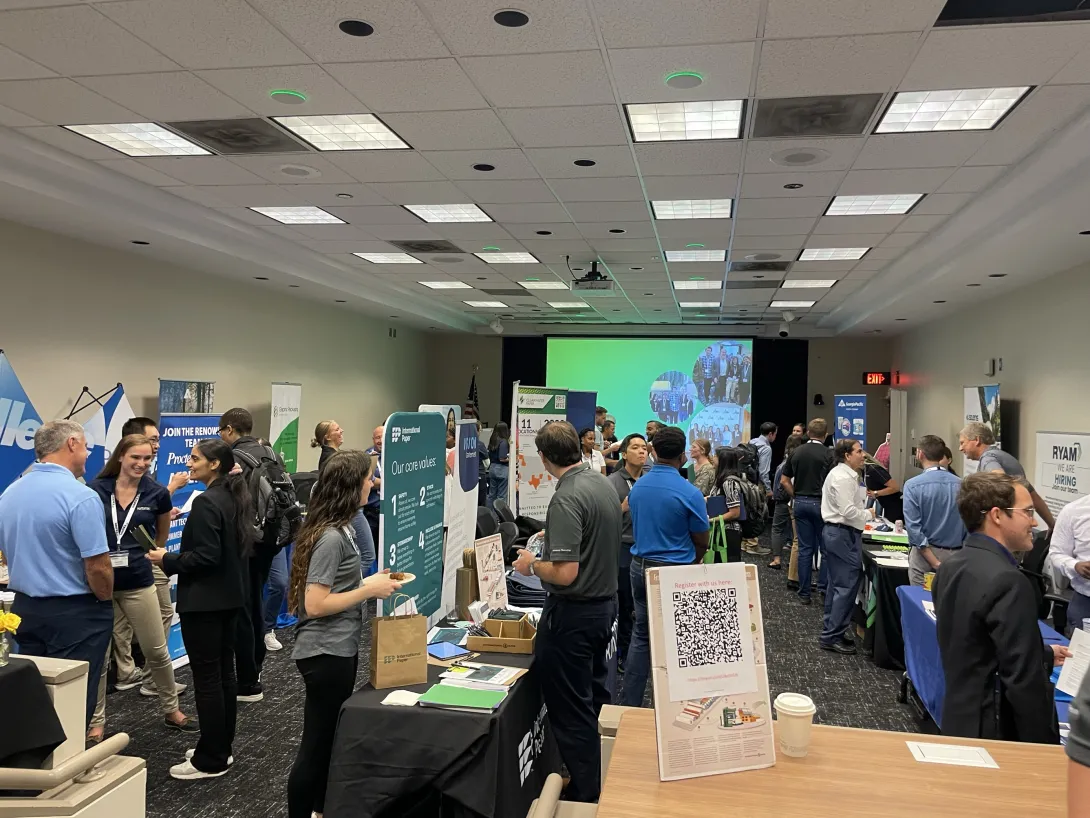
The TAPPI Student Chapter hosted a career fair on Thursday, September 12 at the Georgia Tech Renewable Bioproducts Institute. With nearly 100 students in attendance, the event provided an excellent opportunity for students as well as professionals in the pulp and paper industry, to connect, network, and explore career opportunities. The fair attracted 45 representatives from 15 leading companies in the industry who offered internships, full-time and co-ops for both graduates and undergraduates.
“The TAPPI Student Chapter Career Fair was an incredible opportunity for students to engage directly with industry leaders, explore diverse career paths, and secure valuable internships and job offers. The enthusiasm and participation from both students and companies truly highlighted the strength and potential of our future workforce,” said Chris Luettgen, faculty advisor of the TAPPI Student Chapter and the initiative lead for process efficiency & intensification of pulp, paper packaging, and tissue manufacturing at the Renewable Bioproducts Institute.
News Contact
Priya Devarajan || RBI Communications Program Manager
Sep. 24, 2024
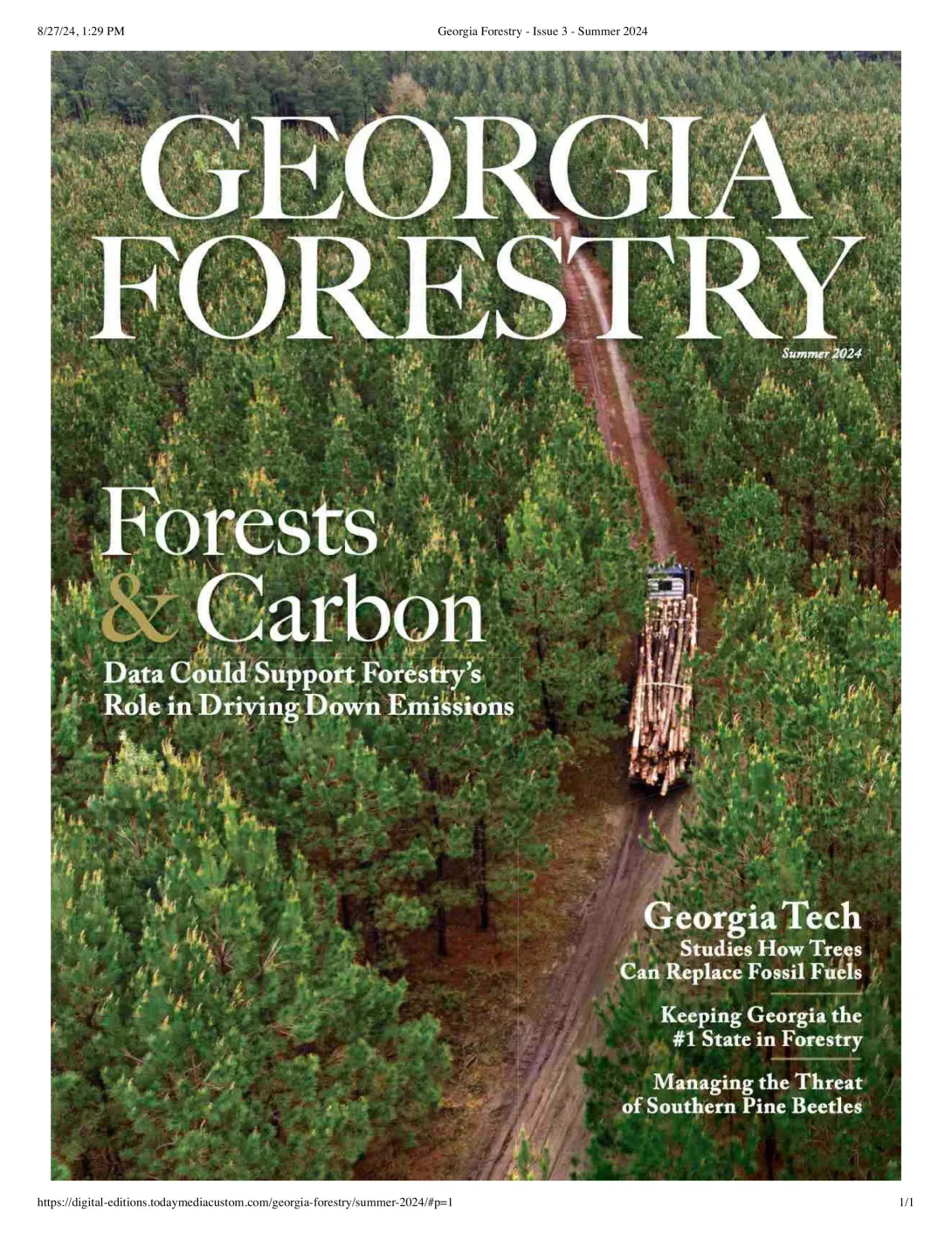
Georgia Forestry Association members receive Georgia Forestry Magazine four times per year. The magazine brings together writers and leaders from the Georgia Forestry Association, Georgia Forestry Commission, and Georgia Sustainable Forestry Initiative. The magazine’s dynamic content is focused on keeping its audience connected to resources and empowered to make good decisions about their forestland asset.
In the Summer 2024 issue, the magazine has featured the Georgia Tech Renewable Bioproducts Institute and its faculty researchers Anthony J. “Bo” Arduengo, professor of practice in the School of Chemistry and Biochemistry, Matt McDowell, Carter N. Paden, Jr. Distinguished Chair and associate professor in the School of Materials Science and Engineering, and Meisha Shofner, professor in the School of Materials Science and Engineering. The feature titled ‘The Green Gusher: How Wood-Based Innovations Are Revolutionizing Sustainability and Technology,’ was written by John Casey and discussed how wood-based innovations are revolutionizing sustainability and technology in the forestry industry and included Georgia Tech’s forestry in focus video that included interviews with the three researchers.
News Contact
Priya Devarajan || RBI Communications Program Manager
Oct. 18, 2024

The U.S. Department of Energy (DOE) has awarded Georgia Tech researchers a $4.6 million grant to develop improved cybersecurity protection for renewable energy technologies.
Associate Professor Saman Zonouz will lead the project and leverage the latest artificial technology (AI) to create Phorensics. The new tool will anticipate cyberattacks on critical infrastructure and provide analysts with an accurate reading of what vulnerabilities were exploited.
“This grant enables us to tackle one of the crucial challenges facing national security today: our critical infrastructure resilience and post-incident diagnostics to restore normal operations in a timely manner,” said Zonouz.
“Together with our amazing team, we will focus on cyber-physical data recovery and post-mortem forensics analysis after cybersecurity incidents in emerging renewable energy systems.”
As the integration of renewable energy technology into national power grids increases, so does their vulnerability to cyberattacks. These threats put energy infrastructure at risk and pose a significant danger to public safety and economic stability. The AI behind Phorensics will allow analysts and technicians to scale security efforts to keep up with a growing power grid that is becoming more complex.
This effort is part of the Security of Engineering Systems (SES) initiative at Georgia Tech’s School of Cybersecurity and Privacy (SCP). SES has three pillars: research, education, and testbeds, with multiple ongoing large, sponsored efforts.
“We had a successful hiring season for SES last year and will continue filling several open tenure-track faculty positions this upcoming cycle,” said Zonouz.
“With top-notch cybersecurity and engineering schools at Georgia Tech, we have begun the SES journey with a dedicated passion to pursue building real-world solutions to protect our critical infrastructures, national security, and public safety.”
Zonouz is the director of the Cyber-Physical Systems Security Laboratory (CPSec) and is jointly appointed by Georgia Tech’s School of Cybersecurity and Privacy (SCP) and the School of Electrical and Computer Engineering (ECE).
The three Georgia Tech researchers joining him on this project are Brendan Saltaformaggio, associate professor in SCP and ECE; Taesoo Kim, jointly appointed professor in SCP and the School of Computer Science; and Animesh Chhotaray, research scientist in SCP.
Katherine Davis, associate professor at the Texas A&M University Department of Electrical and Computer Engineering, has partnered with the team to develop Phorensics. The team will also collaborate with the NREL National Lab, and industry partners for technology transfer and commercialization initiatives.
The Energy Department defines renewable energy as energy from unlimited, naturally replenished resources, such as the sun, tides, and wind. Renewable energy can be used for electricity generation, space and water heating and cooling, and transportation.
News Contact
John Popham
Communications Officer II
College of Computing | School of Cybersecurity and Privacy
Oct. 23, 2024
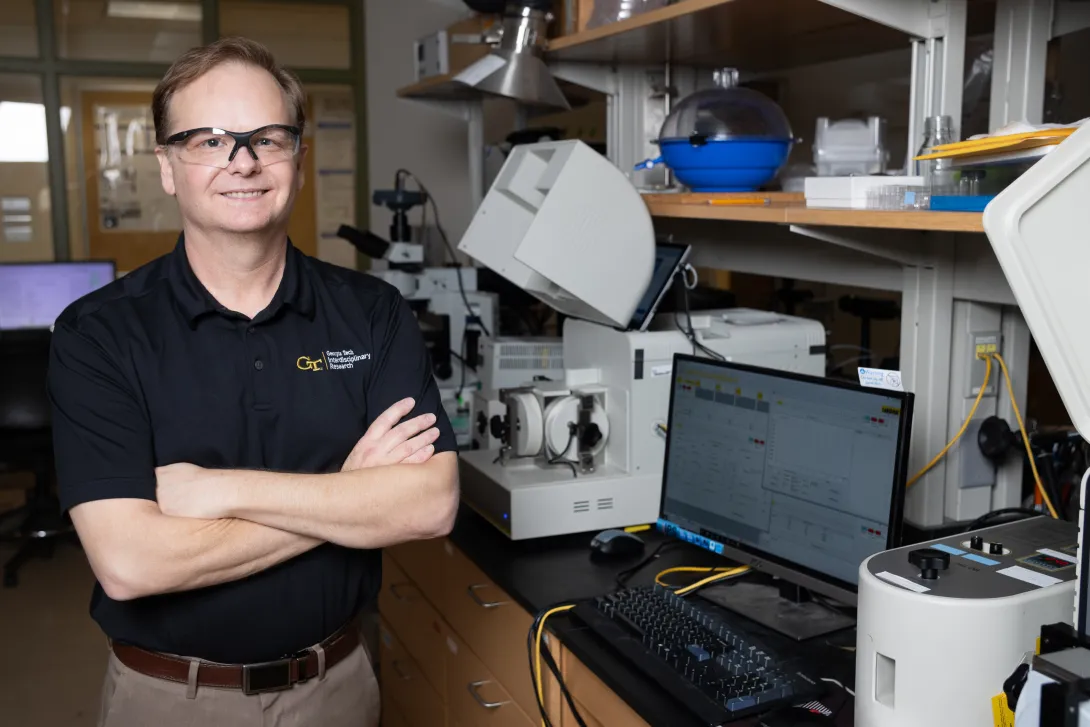
J. Carson Meredith, Executive Director of the Renewable Bioproducts Institute and Professor in Georgia Tech's School of Chemical and Biomolecular Engineering.
J. Carson Meredith, a professor in Georgia Tech’s School of Chemical and Biomolecular Engineering, is the 2024 recipient of the Andrew Chase Award from the American Institute of Chemical Engineers (AIChE) Forest and Plant Bioproducts Division.
Meredith will receive the award at the Annual AIChE Meeting in San Diego California, later this month.
The award recognizes Meredith’s research in nanocellulose chemical modification, composites, and cellulose-based renewable barrier coatings, which has resulted in seven patent applications, one commercial license, and ongoing research projects with six companies, reflecting the impact these advancements are making. His group recently reported the first successful recycling and reuse of nanocellulose gas barrier films and achieved one of the lowest water vapor barrier coatings derived from cellulose to date.
Meredith, ChBE’s James Preston Harris Faculty Fellow, is executive director of Georgia Tech’s Renewable Bioproducts Institute, which aims for future where plant biomass will enable a carbon neutral society and manufacturing infrastructure through traditional and emerging products.
News Contact
Brad Dixon || braddixon@gatech.edu
Oct. 03, 2024
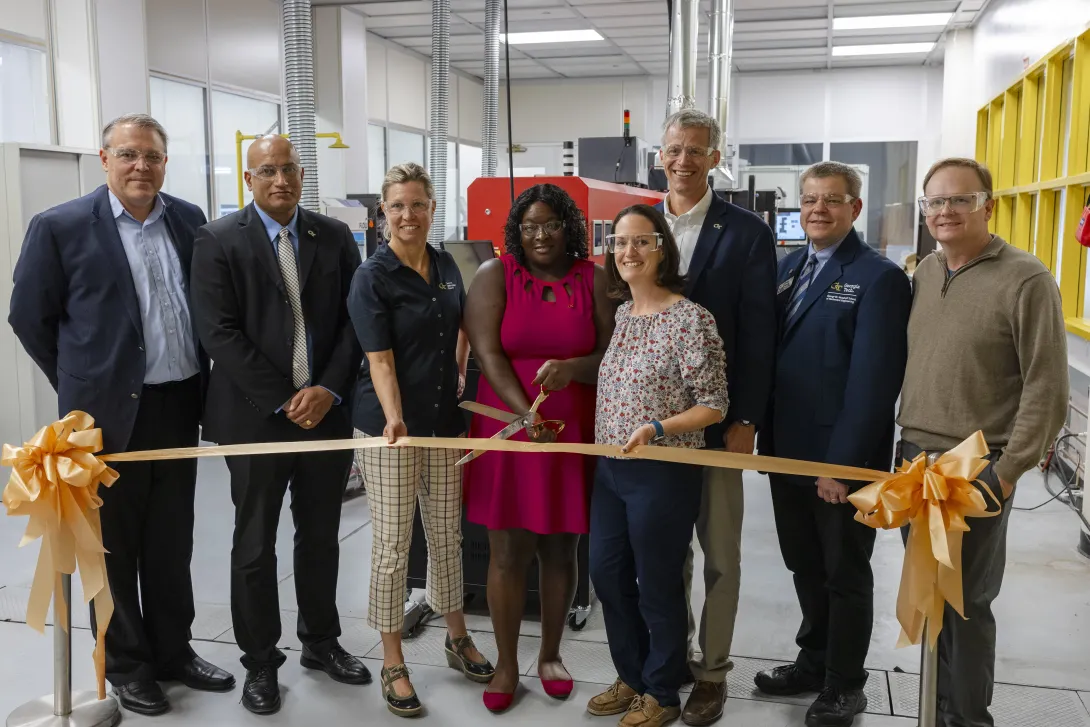
Partners of the facility gathered for an official ribbon cutting ceremony. From left to right: Eric Vogel, Hightower Professor in MSE, and executive director for the Institute for Matter and Systems; Devesh Ranjan, Eugene C. Gwaltney, Jr. school chair and professor in the George W. Woodruff School of Mechanical Engineering; Julia Kubanek, Vice President of Interdisciplinary Research; Tequila Harris, professor in the Woodruff School and facility leader; Christine Conwell, interim executive director for the Strategic Energy Institute; Tim Liewen, interim executive vice president for Research; Thomas Kurfess, Regent's Professor in the Woodruff School and executive director of the Georgia Tech Manufacturing Institute; J. Carson Meredith, professor and James Preston Harris Faculty Fellow in the School of Chemical and Biomolecular Engineering, executive director of the Renewable Bioproducts Institute. Photo: Christopher McKenney.
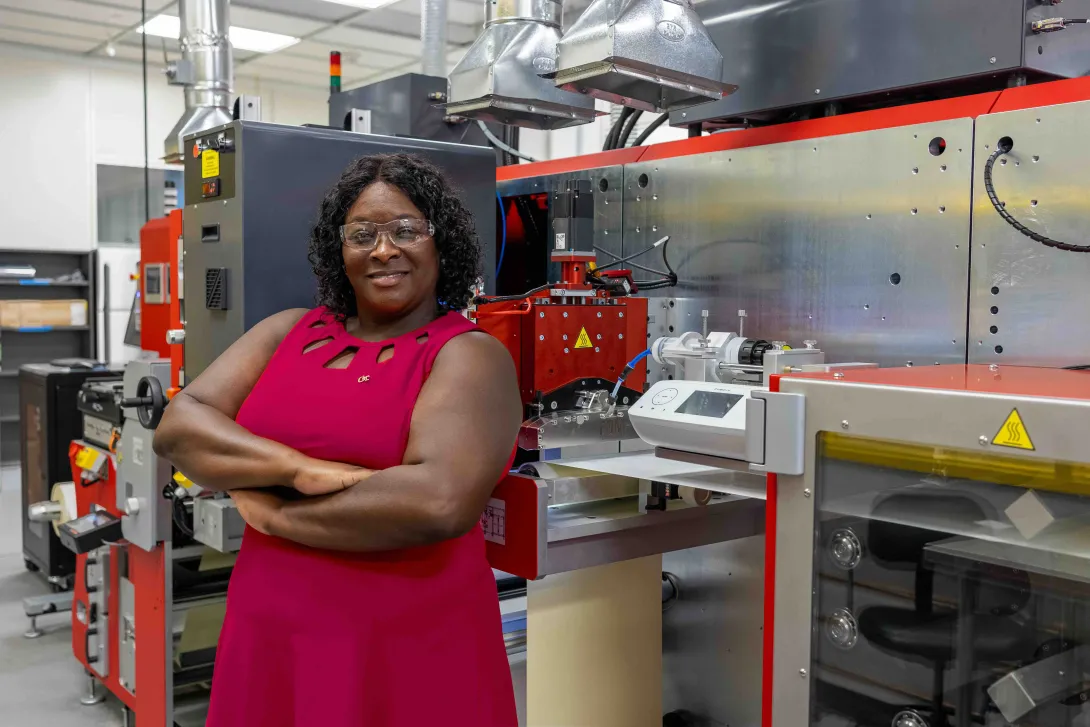
Tequila Harris, professor in the George W. Woodruff School of Mechanical Engineering, next to the modular R2R equipment. Photo: Christopher McKenney.
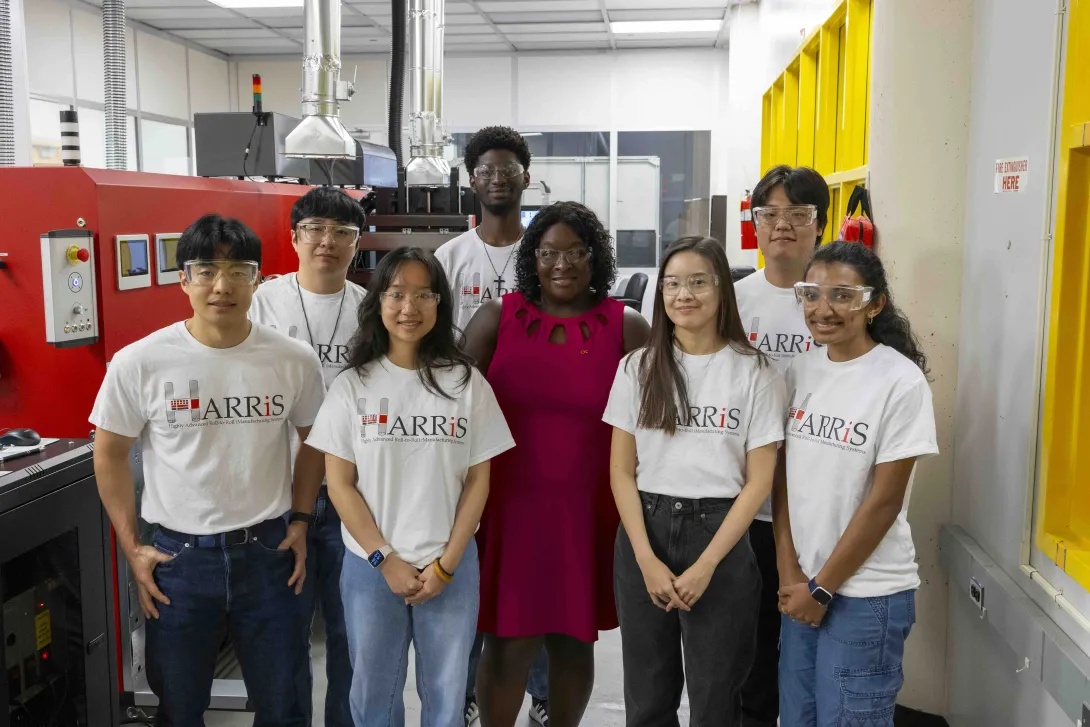
The Highly Advanced Roll-to-Roll iManufacturing Systems (HARRiS) research group in the new R2R facility. Photo: Christopher McKenney.
Whether it’s developing new products, reducing costs, or increasing accessibility, innovations in manufacturing stand to improve the lives of companies and consumers alike. Georgia Tech recently took another step toward ensuring those innovations make it from lab to market with the launch of a Modular Pilot Scale Roll-to-Roll Manufacturing Facility.
“As researchers develop new materials, one of the key aspects we’re missing is how to make them at scale. This is a major oversight because if we can’t make them at scale, we can’t transition from basic research to commercialization,” said Tequila Harris, a professor in the George W. Woodruff School of Mechanical Engineering. “With this new facility, we can prove our discoveries beyond lab-scale studies — and can go from materials innovation to product development at scale.”
Led by Harris, the new facility is the result of a partnership between the Georgia Tech Manufacturing Institute(GTMI), the Strategic Energy Institute, and the Woodruff School. As a pilot facility, it will serve as a testbed for scaling up manufacturing research open for Georgia Tech researchers as well as academic, government, and industry partners around the world.
“The larger vision I see at Georgia Tech involves innovation in manufacturing for large-scale industries,” said Georgia Tech’s Interim Executive Vice President for Research Tim Lieuwen at the facility’s unveiling event on Sept. 19. “It’s crucial that we’re innovating in basic science and technology, but we also need to be innovating in large-scale manufacturing.”
Roll-to-roll (R2R) manufacturing transforms flexible rolls of substrate materials, such as paper, metal foils, and plastics, into more complex, transportable rolls upon coating the surface with one or more fluids, such as inks, suspensions, and solutions, which are subsequently dried or cured on the base substrate. Its high yield and efficiency make R2R an ideal method for the sustainable, large-scale production of components for solar cells, batteries, flexible electronics, and separations — all industries that have expanded in Georgia in recent years.
“As a state institution, we’re ultimately here to serve our state,” said Lieuwen, who is also Regents’ Professor and David S. Lewis Jr. Chair in the Daniel Guggenheim School of Aerospace Engineering. “We’re seeing Georgia emerge as the national leader in terms of recruiting corporate investments in this space and in industries that will be served by this facility.”
Roll-to-Roll Innovations
The R2R process is similar to the production of newspapers, where a large roll of blank paper goes through a series of rollers printing text and photos. “The roll-to-roll aspect is the process of using a specialized tool to force fluid onto a moving surface,” says Harris. It’s one of the fastest-growing methods for producing thin film materials — photovoltaics used in solar cells, transistors in flexible electronics, and micro-batteries, for example — at a large scale.
Harris’s group works to develop novel manufacturing tools, with a particular focus on understanding and improving the dynamics of thin film manufacturing to increase efficiency and minimize waste. Her group is particularly interested in slot die coating, an R2R technique where a liquid material is precisely deposited onto a substrate through a narrow slot. With the new pilot facility, researchers like Harris will be able to take their work to the next level.
“Slot die coating on a roll-to-roll can handle the broadest viscosity range of most coating methods. Therefore, you can process a lot of different materials very quickly and easily,” says Harris. “It’s one of the fastest-growing technologies in the U.S. — and currently, this is the most advanced modular pilot scale facility at an academic university in the United States.”
“Georgia Tech is way ahead of the curve in terms of our facilities,” says GTMI Executive Director and Regents’ Professor Thomas Kurfess. “This will grow our capability in the battery area, membranes, flexible electronics, and more to allow us to support the development of new technologies.”
“As technologies around cleantech continue to advance at an unprecedented pace, pilot manufacturing facilities provide a critical bridge between innovative benchtop research and commercial-scale production and manufacturing,” says Christine Conwell, interim executive director of the Strategic Energy Institute. “We are excited about the opportunities this R2R facility will provide to the Georgia Tech energy community and our industry partners.”
News Contact
Audra Davidson
Research Communications Program Manager
Georgia Tech Manufacturing Institute
Sep. 13, 2024

Professor Christopher W. Jones, the John F. Brock III School Chair of Georgia Tech’s School of Chemical and Biomolecular Engineering (ChBE), is winner of the American Chemical Society’s 2025 E. V. Murphree Award in Industrial and Engineering Chemistry.
Jones will receive the award at the American Chemical Society (ACS) meeting in San Diego, in March 2025. The ACS National Awards encourage the advancement of chemistry in all its branches, support research endeavors, and promote the careers of chemists.
The Murphree Award (including $5,000) won by Jones recognizes fundamental research in industrial and engineering chemistry, the development of chemical engineering principles, and its application to industrial processes.
Aug. 28, 2024

Meisha Shofner, professor in the School of Materials Science and Engineering (MSE), has been selected for the 2024-2025 class of Drexel University’s Executive Leadership in Academic Technology, Engineering and Science (ELATES) program.
The ELATES program is a national leadership development program designed to promote women in academic STEM fields and faculty allies of all genders into institutional leadership roles.
“I am excited to be selected as an ELATES Fellow. I am grateful for the support from Georgia Tech’s College of Engineering that made this opportunity possible and especially support from Dean Raheem Beyah, Associate Dean Kim Kurtis, and MSE School Chair Natalie Stingelin. I am looking forward to learning from this amazing community of women leaders in higher education,” Shofner said.
“I was drawn to the ELATES program because of its focus on developing the skills needed to lead university initiatives with an operational focus, and I will be putting that knowledge into practice as I develop an institutional action project as part of the program.”