
Mar. 10, 2026

Georgia Tech is pleased to partner with the Georgia Forestry Commission on the approved $8.9 million Georgia Forestry Innovation Initiative included in Gov. Brian Kemp’s amended FY 2026 budget.
Georgia’s forest industry has long been a pillar of the state’s rural economy. But in recent years, mill closures and shifting markets have put pressure on landowners, workers, and entire communities, particularly in south Georgia. A recently approved $8.9 million Georgia Forestry Innovation Initiative will help chart a new path forward, creating more value from Georgia’s abundant forest resources and expanding opportunities for the people and regions depending on them.
Georgia Tech is pleased to partner with the Georgia Forestry Commission on the approved $8.9 million Georgia Forestry Innovation Initiative included in Gov. Brian Kemp’s amended FY 2026 budget. This effort aims to transform low-value wood and mill byproducts into high-value materials, strengthening Georgia’s forest-based economy and supporting new commercial opportunities across the state. The initiative will establish pilot facilities and accelerate technology to business transfer in partnership with industry, with the long-term goal of enabling multiple manufacturing sites across Georgia.
“We appreciate the state’s investment in helping move these innovations from the lab to Georgia businesses,” said Carson Meredith, executive director of Tech’s Renewable Bioproducts Institute (RBI). “We also acknowledge the critical support of industry collaborators and partners like the Georgia Forestry Association and Georgia Forestry Foundation.”
The work builds on collaborative interdisciplinary research at Georgia Tech involving School of Chemical and Biomolecular Engineering Professors Andreas Bommarius, Chris Luettgen and Meredith; School of Chemistry and Biochemistry Professor Stefan France and Professor of the Practice A.J. “Bo” Arduengo; and H. Milton Stewart School of Industrial Systems and Engineering Professor Valerie Thomas. Gary Black, RBI program manager, has also contributed to this effort. It is led by RBI’s Center for a Renewables-Based Economy from Wood (ReWOOD.) The effort reflects years of cross-disciplinary collaboration among faculty and staff committed to advancing sustainable, wood-based technologies.
News Contact
Media Contact:
Jennifer Martin
jennifer.martin@research.gatech.edu
Mar. 03, 2026

The Renewable Bioproducts Institute (RBI) has appointed two additional Strategic Initiative Leaders (SILs) to help shape the next phase of its research and engagement strategy: Joel Kostka and Titiksha Fernandes.
SILs serve on RBI’s leadership team and play a strategic role in expanding interdisciplinary collaboration, strengthening Georgia Tech’s leadership in the bioeconomy, and catalyzing new research and education initiatives across campus.
“RBI’s work has always been about connecting strong science and engineering to the needs of Georgia’s forestry and renewable materials industries,” said Carson Meredith, director of RBI. “Joel and Titiksha bring leadership that strengthens both sides of that work — advancing the biological foundations of renewable systems while building the business and entrepreneurship capacity needed to translate discovery into durable impact.”
Advancing Microbial Biotechnology for the Forest Bioeconomy
Joel Kostka, Tom and Marie Patton Distinguished Professor and Associate Chair for Research in the School of Biological Sciences, will lead a strategic initiative focused on microbial biotechnology in renewable bioproducts. His initiative leverages microbiology and microbiome engineering in a systems approach to address woody biomass utilization, biorefining, microbial contamination in pulp and paper processing, and the development of forest and plant feedstocks.
The effort complements RBI’s existing strengths in chemistry and engineering, including initiatives such as the Center for a Renewables-Based Economy from Wood (ReWOOD), by bringing cutting-edge microbial science into the modernization of the forest industry.
The initiative centers on two core areas: improving biomass deconstruction and bioconversion, and engineering plant and soil microbiomes to support the development of climate-resilient biomass feedstocks.
“Natural microbiomes, those microbes that are intimately associated with plants and soils, already drive the natural cycles that break down organic matter, recycle nutrients, and help plants to grow better,” said Kostka. “If we understand and engineer those systems more intentionally, we can unlock more efficient bioconversion pathways and help build a forest bioeconomy that is both productive and climate resilient.”
Kostka’s research studies the role of microbes in the functioning of ecosystems ranging from oceans to terrestrial subsurface environments. Through this initiative, he aims to connect that foundational microbial science to use-inspired solutions in renewable bioproducts.
Bridging Business and Bioproducts
Titiksha Fernandes will lead RBI’s initiative to develop structured collaboration with the Scheller College of Business. Her effort will establish a strategic framework for exploring deeper RBI–Scheller engagement across research, education, and entrepreneurship.
The initiative will explore integrating business training into RBI fellowship programs, engaging business graduate students in RBI research, strengthening industry partnerships, and advancing joint entrepreneurship activities that translate scientific discoveries into ventures.
“Scientific innovation alone doesn’t create impact,” said Fernandes. “We need the strategy, entrepreneurship, and systems thinking that allow discoveries to move from the lab into markets and communities. This initiative is about building those pathways intentionally.”
Fernandes currently serves as extension professional for the Drawdown Georgia Business Compact, an initiative of the Ray C. Anderson Center for Sustainable Business. In this role, she advances initiatives in materials circularity and food and agriculture. She holds a Ph.D. in Public Policy and is a Certified Circular Economy Manager, with experience designing sustainability and resource efficiency policy at national and state levels, including work on e-waste reform in India and circular economy implementation in the U.S.
RBI’s Strategic Initiative Leaders are appointed for renewable 12-month terms and are expected to foster new interdisciplinary collaborations that extend beyond their home units. Leaders participate in shaping research directions, reviewing fellowship proposals, developing workshops and symposia, and connecting faculty, students, industry, and national laboratories.
News Contact
Yanet Chernet
Communications Officer I
Georgia Tech
Jan. 05, 2026
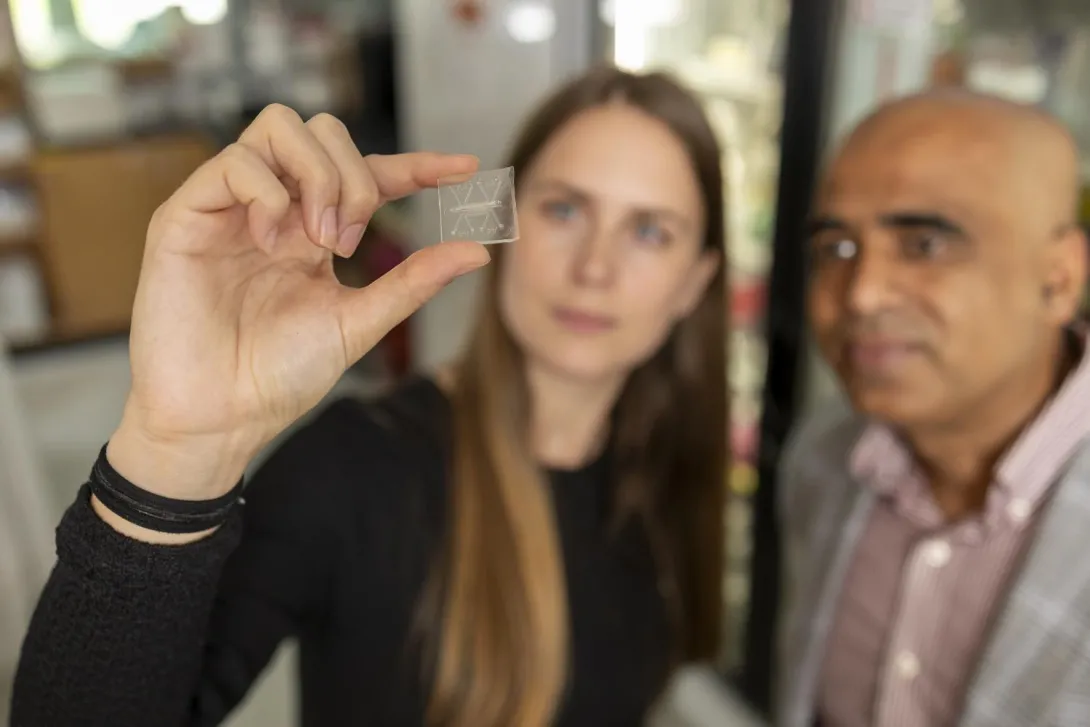
University research drives U.S. innovation, and Georgia Institute of Technology is leading the way.
The latest Higher Education Research and Development (HERD) Survey from the National Science Foundation (NSF) places Georgia Tech as No. 2 nationally for federally sponsored research expenditures in 2024. This is Georgia Tech’s highest-ever ranking from the NSF HERD survey and a 70% increase over the Institute's 2019 numbers.
In total expenditures from all externally funded dollars (including the federal government, foundations, industry, etc.), Georgia Tech is ranked at No. 6.
Tech remains ranked No. 1 among universities without a medical school — a major accomplishment, as medical schools account for a quarter of all research expenditures nationally.
“Georgia Tech’s rise to No. 2 in federally sponsored research expenditures reflects the extraordinary talent and commitment of our faculty, staff, students, and partners. This achievement demonstrates the confidence federal agencies have in our ability to deliver transformative research that addresses the nation’s most critical challenges,” said Tim Lieuwen, executive vice president for Research.
Overall, the state of Georgia maintained its No. 8 position in university research and development, and for the first time, the state topped the $4 billion mark in research expenditures. Georgia Tech provides $1.5 billion, the largest state university contribution. In the last five years, federal funding for higher education research in the state of Georgia has grown an astounding 46% — 10 points higher than the U.S. rate.
Lieuwen said, “Georgia Tech is proud to lead the state in research contributions, helping Georgia surpass the $4 billion mark for the first time. Our work doesn’t just advance knowledge — it saves lives, creates jobs, and strengthens national security. This growth reflects our commitment to drive innovation that benefits Georgia, our country, and the world.”
About the NSF HERD Survey
The NSF HERD Survey is an annual census of U.S. colleges and universities that expended at least $150,000 in separately accounted for research and development (R&D) in the fiscal year. The survey collects information on R&D expenditures by field of research and source of funds and also gathers information on types of research, expenses, and headcounts of R&D personnel.
About Georgia Tech's Research Enterprise
The research enterprise at Georgia Tech is led by the Executive Vice President for Research, Tim Lieuwen, and directs a portfolio of research, development, and sponsored activities. This includes leadership of the Georgia Tech Research Institute (GTRI), the Enterprise Innovation Institute, 11 interdisciplinary research institutes (IRIs), Office of Commercialization, Office of Corporate Engagement, plus research centers, and related research administrative support units. Georgia Tech routinely ranks among the top U.S. universities in volume of research conducted.
News Contact
Angela Ayers
Assistant Vice President of Research Communications
Georgia Tech
Dec. 18, 2025
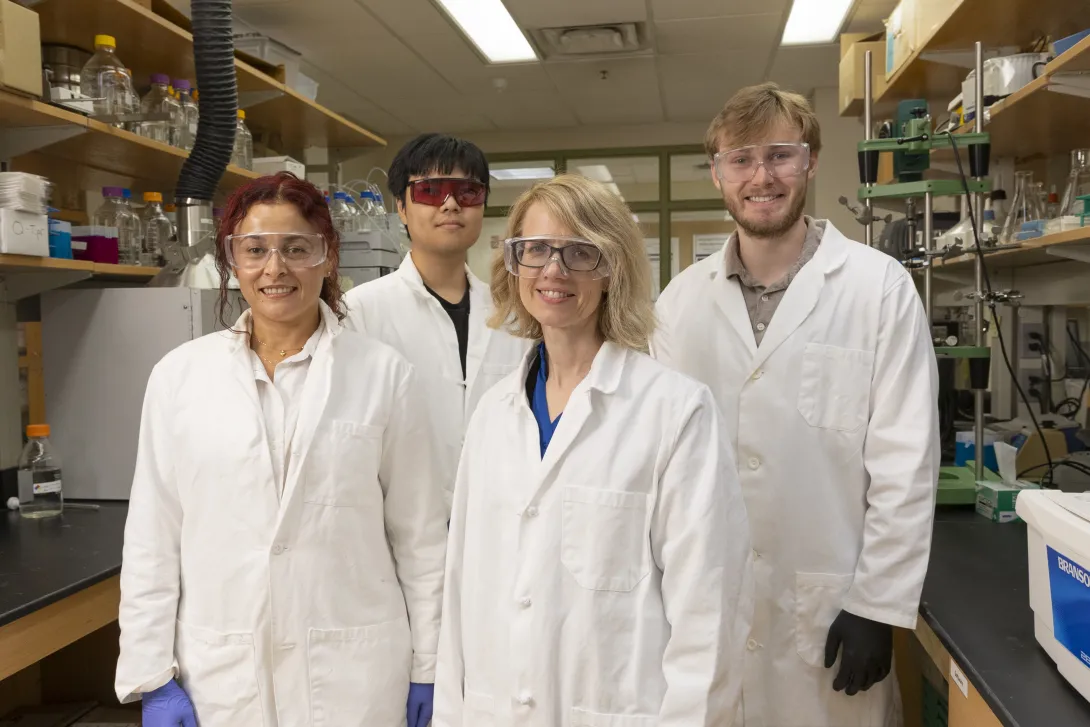
Martha Grover, professor in the School of Chemical and Biomolecular Engineering, with her research team. [Photo by Christopher McKenney]
When people hear “nuclear waste,” they often imagine glowing green sludge leaking into the ground — a scene straight out of science fiction. The truth is far less dramatic and far more manageable. In fact, all the civilian nuclear waste produced by U.S. power plants so far could fit on a single football field stacked just 10 yards high. Managed under strict safety protocols, this byproduct of nuclear energy poses manageable risk compared to the billions of tons of greenhouse gases from fossil fuels. Today, researchers at Georgia Tech and around the world are working on safer reactor designs, advanced monitoring, and innovative recycling methods to turn nuclear waste into new opportunities — from clean energy to ultra-long-lasting batteries and even power for space missions.
News Contact
Priya Devarajan || SEI Communications Program Manager
Dec. 18, 2025
Thank you to the entire RBI community for participating in a transformative 2025. Please enjoy reviewing the accomplishments we made together. We look forward to partnering with you in 2026.
Nov. 20, 2025
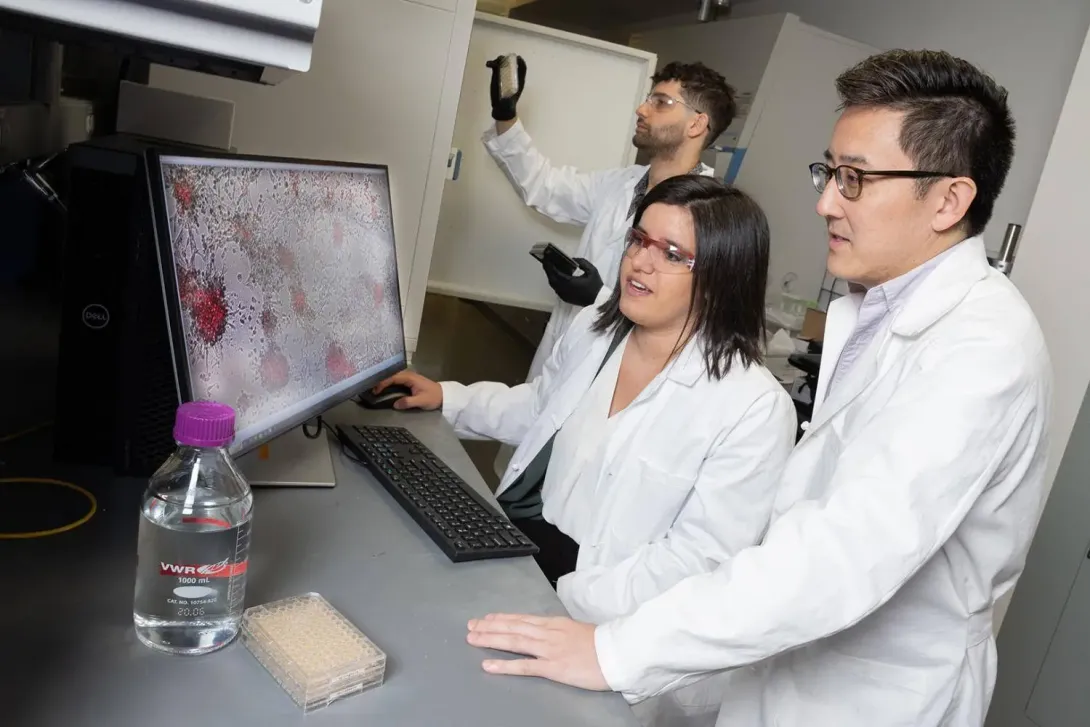
Georgia Institute of Technology has been ranked 7th in the world in the 2026 Times Higher Education Interdisciplinary Science Rankings, in association with Schmidt Science Fellows. This designation underscores Georgia Tech’s leadership in research that solves global challenges.
“Interdisciplinary research is at the heart of Georgia Tech’s mission,” said Tim Lieuwen, executive vice president for Research. “Our faculty, students, and research teams work across disciplines to create transformative solutions in areas such as healthcare, energy, advanced manufacturing, and artificial intelligence. This ranking reflects the strength of our collaborative culture and the impact of our research on society.”
As a top R1 research university, Georgia Tech is shaping the future of basic and applied research by pursuing inventive solutions to the world’s most pressing problems. Whether discovering cancer treatments or developing new methods to power our communities, work at the Institute focuses on improving the human condition.
Teams from all seven Georgia Tech colleges, 11 interdisciplinary research institutes, the Georgia Tech Research Institute, Enterprise Innovation Institute, and hundreds of research labs and centers work together to transform ideas into real results.
News Contact
Angela Ayers
Nov. 04, 2025
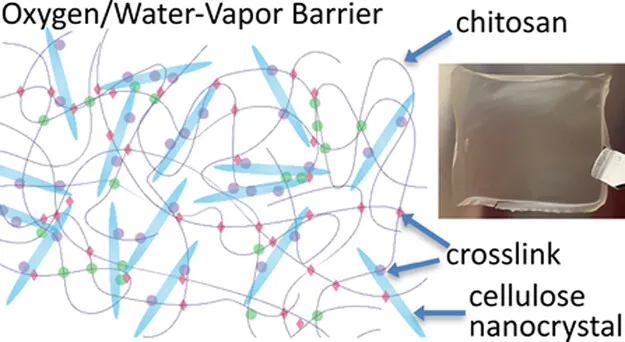
A biologically based film made from natural ingredients found in plants, mushrooms, and food waste

Professor Carson Meredith

Professor Natalie Stingelin
Plastic packaging is ubiquitous in our world, with its waste winding up in landfills and polluting oceans, where it can take centuries to degrade.
To ease this environmental burden, industry has worked to adopt renewable biopolymers in place of traditional plastics. However, developers of sustainable packaging have faced hurdles in blocking out moisture and oxygen, a barrier critical for protecting food, pharmaceuticals, and sensitive electronics.
Now, researchers at the Georgia Institute of Technology have developed a biologically based film made from natural ingredients found in plants, mushrooms, and food waste that can block moisture and oxygen as effectively as conventional plastics. Their findings were recently published in ACS Applied Polymer Materials.
“We’re using materials that are already abundant in and degrade in nature to produce packaging that won’t pollute the environment for hundreds or even thousands of years,” said Carson Meredith, a professor in Georgia Tech’s School of Chemical and Biomolecular Engineering (ChBE@GT) and executive director of the Renewable Bioproducts Institute. “Our films, composed of biodegradable components, rival or exceed the performance of conventional plastics in keeping food fresh and safe.”
Meredith’s research team has worked for more than a decade to develop environmentally friendly oxygen and water barriers for packaging. While earlier research using biopolymers showed promise, high humidity continued to weaken the barrier properties.
However, Meredith and his collaborators found a fix using a blend of these natural ingredients: cellulose (which gives plants their structure), chitosan (derived from crustacean-based food waste or mushrooms), and citric acid (from citrus fruits).
“By crosslinking these materials and adding a heat treatment, we created a thin film that reduced both moisture and oxygen transmission, even in hot, humid conditions simulating the tropics,” said lead author Yang Lu, a former postdoctoral researcher in ChBE@GT.
The barrier technology developed by the researchers consists of three primary components: a carbohydrate polymer for structure, a plasticizer to maintain flexibility, and a water-repelling additive to resist moisture. When cast into thin films, these ingredients self-organize at the molecular level to form a dense, ordered structure that resists swelling or softening under high humidity.
Even at 80 percent relative humidity, the films showed extremely low oxygen permeability and water vapor transmission, matching or outperforming common plastics such as poly(ethylene terephthalate) (PET) and poly(ethylene vinyl alcohol) (EVOH).
“Our approach creates barriers that are not only renewable, but also mechanically robust, offering a promising alternative to conventional plastics in packaging applications,” said Natalie Stingelin, professor and chair of Georgia Tech’s School of Materials Science and Engineering (MSE) and a professor in ChBE@GT.
The research team has filed for patent protection for the technology (patent pending). The research was supported by Mars Inc., Georgia Tech’s Renewable Bioproducts Institute, and the U.S. Department of Defense through the National Defense Science and Engineering Graduate Fellowship Program. Eric Klingenberg, a co-author of the study, is an employee of Mars, a manufacturer of packaged foods.
Citation: Yang Lu, Javaz T. Rolle, Tanner Hickman, Yue Ji, Eric Klingenberg, Natalie Stingelin, and Carson Meredith, “Transforming renewable carbohydrate-based polymers into oxygen and moisture-barriers at elevated humidity,” ACS Applied Polymer Materials, 2025.
News Contact
Brad Dixon, braddixon@gatech.edu
Oct. 16, 2025
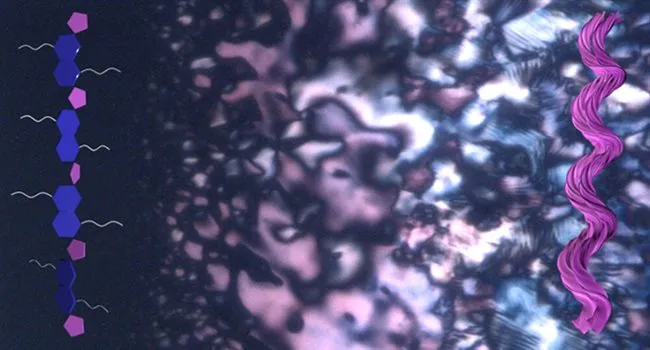
Certain materials can spontaneously form spiral-shaped structures, even when they start out without any 'handedness.' These tiny helices emerge during a phase separation process, offering clues about how life's building blocks may have first developed a preference for one 'handed' form over another. (Credit: Jong-Hoon Lee, Ziming Wang, Ying Diao)
This story is shared with the University of Illinois Urbana-Champaign newsroom. John R. Reynolds is a professor in the School of Chemistry and Biochemistry and School of Materials Science and Engineering at Georgia Tech. He served as founder of the Georgia Tech Polymer Network (GTPN) and is a member of the Center for Organic Photonics and Electronics (COPE).
Chirality, a property where structures have a distinct left- or right- “handedness,” allows natural semiconductors to move charge and convert energy with high efficiency by controlling electron spin and the angular momentum of light. A new study has revealed that many conjugated polymers, long considered structurally neutral, can spontaneously twist into chiral shapes. This surprising behavior, overlooked for decades, could pave the way for development of a new class of energy-efficient electronics inspired by nature.
The research, a collaborative project that included researchers from the University of Illinois Urbana-Champaign, Georgia Institute of Technology, University of North Carolina, and Purdue University was recently published in the Journal of the American Chemical Society.
“Many molecules essential to life are chiral,” said Ying Diao, professor of chemical and biomolecular engineering at Illinois, who led the project. “The question that has remained a really a big fascination across the field is how chiral symmetry breaking happens in the first place: that is how life selects one handedness over the other. Our work mainly focuses on the origin of chirality: why chirality spontaneously emerges in absence of any chiral sources.”
To answer this question, the team tested 34 different conjugated polymers. Each polymer was dissolved in a solvent, then the researchers gradually increased the polymer concentration to observe whether liquid–liquid phase separation (LLPS) occurred. When LLPS was detected, they used circular dichroism spectroscopy to analyze the samples, revealing a strong correlation between phase separation and the emergence of chirality. The researchers refer to this phenomenon as spontaneous chiral symmetry breaking.
They found that approximately two-thirds of the polymers spontaneously formed chiral structures when their concentration in the solution increased.
“That took our community by surprise, because conjugated polymers have been studied for half a century,” Diao said. “These new chiral helical states of matter have basically been hiding in plain sight.”
To understand why some of the polymers developed chirality while others did not, Illinois chemistry professor and senior co-author Nicholas E. Jackson applied machine learning to analyze molecular features across the polymer library. The analysis, later backed up by additional testing, revealed that polymers with longer molecular chains were more likely to form chiral assemblies. Unexpectedly, the researchers also found that the presence of oxygen atoms in the side chains was a strong predictor of chiral behavior.
“Machine learning uncovered hidden patterns across dozens of conjugated polymers, relating subtle chemical details to chiral phase formation,” Jackson said. “Such insights would have been very difficult to derive by human intuition alone.”
Diao noted that the discovery not only deepens our fundamental understanding of chiral emergence but also holds significant technological promise. In nature, chiral systems – such as those involved in photosynthesis – enable highly efficient electron transport. Looking ahead, Diao said that mimicking this behavior could lead to major performance gains in electronic devices and innovation of new device types.
“We are thinking about using chirality to control conductivity – for example, in transparent conductors for phones or in solar cells that could be more stable and efficient,” she said. “In our computers, electrons bounce around and heat is a big problem. But if we make chiral versions, we think charge transfer could be extremely efficient, just like in nature.”
“What’s nice about this is, this is not the end of the story,” said Georgia Institute of Technology chemistry professor John Reynolds, a senior co-author on the study. “This work provides guidance to polymer scientists in the field for studying the many, many conjugated polymers that have been synthesized over the years, and for designing new polymers with enhanced properties.”
This study was supported by the U.S. Office of Naval Research, the Air Force Office of Scientific Research, the Molecule Maker Lab Institute, and the National Science Foundation. Polymers for the study were provided by Reynolds, University of North Carolina chemistry professor Wei You, University of Illinois chemistry professor Jeff Moore, and Purdue University chemistry professor Jianguo Mei.
In addition to her appointment in Chemical & Biomolecular Engineering, Diao is a full-time faculty member at the Beckman Institute for Advanced Science and Technology, holds a faculty appointment with Chemistry in the College of Liberal Arts & Sciences, and is affiliated with Materials Science & Engineering in The Grainger College of Engineering. In addition to his appointment in Chemistry, Jackson is a group leader at the Beckman Institute and affiliate faculty member in the departments of Chemical & Biomolecular Engineering and Materials Science & Engineering.
The paper, "Ubiquitous Chiral Symmetry Breaking of Conjugated Polymers via Liquid Liquid Phase Separation," is available online at https://pubs.acs.org/doi/abs/10.1021/jacs.5c07995
News Contact
Jess Hunt-Ralston
Director of Communications
College of Sciences at Georgia Tech
To reach Ying Diao: yingdiao@illinois.edu
Oct. 07, 2025
The 2025 round of Sustainability Next Research Seed Grants has been awarded to 17 transdisciplinary research teams representing a vibrant network of 51 collaborators from across Georgia Tech. These teams span 21 unique units from six of the seven Colleges, including Schools, research centers, and Interdisciplinary Research Institutes.
The seed grant program, administered by the Brook Byers Institute for Sustainable Systems (BBISS), reaches many faculty members from a diverse array of disciplines due to the generous support provided by broad-based partnerships in addition to the Sustainability Next funds. This year’s partners are the Georgia Tech Arts Initiative, BBISS, Walter H. Coulter Department of Biomedical Engineering, School of Civil and Environmental Engineering, College of Design, School of City and Regional Planning, School of Computer Science, Ray C. Anderson Center for Sustainable Business, Energy Policy and Innovation Center, Parker H. Petit Institute for Bioengineering and Bioscience, Institute for Matter and Systems, Institute for People and Technology, Institute for Robotics and Intelligent Machines, Strategic Energy Institute, and Center for Sustainable Communities Research and Education.
The goal of the program is to nurture promising research areas for future large-scale collaborative sustainability research, research translation, and/or high-impact outreach; to provide mid-career faculty with leadership and community-building opportunities; and to broaden and strengthen the Georgia Tech sustainability community as a whole. The call for proposals was modeled after the Office of the Executive Vice President for Research’s Moving Teams Forward and Forming Teams programs.
Looking ahead, BBISS will support and nurture these projects in collaboration with the relevant funding partners. Beginning in October, BBISS will host a series of focused workshops designed to foster collaboration and provide additional support to help advance these initiatives. Projects have been grouped into five thematic clusters, each of which will be the focus of an upcoming workshop:
- Circularity Programs
- Adaptation to the Changing Environment
- Community Engagement and Education
- Climate Science and Solutions
- Environmental and Health Impacts
BBISS faculty fellows, past seed grant recipients, and other interested Georgia Tech faculty are invited to participate. If you are interested in participating in the workshops, please email kristin.janacek@gatech.edu. The first session on Circularity Programs is Oct. 16 at 1 p.m. in the Peachtree Room (3rd floor) of the John Lewis Student Center.
The 2025 Sustainability Next Seed Grant awards are:
Forming Teams:
- Developing a Sustainable and Ethical Electric Vehicle Ecosystem Workforce for the Future Through Cross-Sector Partnerships. Principal Investigators (PI): Joe Bozeman. Co-Principal Investigator (Co-PI): Jennifer Hirsch.
- Unlocking Circularity at Scale: Platform-Based Solutions for Advancing Material Reuse and Supply Chain Resilience. Principal Investigator: Marco Ceccagnoli. Co-PIs: Matthew Realff, Patricia Stathatou, Christos Athanasiou.
- OpenGUARD: Geospatial Utility Aggregations with Robust Differential Privacy. PI: Patrick Kastner. Co-PI: Juba Ziani.
- Regenerative Framework: A Transdisciplinary Model for Urban Climate Resilience and Soil Health. PI: Jenny McGuire. Co-PI: Nicole Kennard.
- Guiding Transportation With Community Action Through Research, Education, and Service (GT-CARES). PI: Rounaq Basu. Co-PIs: Ruthie Yow, Sofía Pérez-Guzmán, Rebecca Watts Hull.
- Co-optimizing Design and Coordination for Sustainable Multi-Robot Construction. PI: Edvard Bruun. Co-PI: Harish Ravichanda.
- Campus as Material Ecology: Building Transdisciplinary Circular Systems for Plastic Tracking, Transformation, and Community Engagement. PI: Hyojin Kwon. Co-PIs: Michael Best, Russ Clark, Tim Trent, Meisha Shofner.
- Sonifying Climate Infrastructures: Community Outreach and Education With Shade Synthesizer. PI: Heidi Biggs. Co-PIs: Clint Zeagler, Alexandria Smith.
- Building a Georgia Tech Research Partnership for Community-Based Food System Resilience. PI: Johannes Milz. Co-PIs: Xin Chen, Inge Rocker, Sofía Pérez-Guzmán, Nicole Kennard.
Moving Teams Forward:
- Are Data Centers the New Landfills? Social, Economic, and Environmental Tradeoffs. PI: Allen Hyde. Co-PIs: Josiah Hester, Cindy Lin, Nicole Kennard, Joe Bozeman, Elora Raymond, Tony Harding, Jung-Ho Lewe.
- Game-Based Learning in Energy Systems: A Rigorous Evaluation of Current Crisis. PI: Jessica Roberts. Co-PI: Daniel Molzahn.
- Strategic Application of Antibiotic-Independent Therapy to Treat Coral Disease Outbreaks. PI: Lauren Speare.
- Advancing Water Reuse Through Research, Education, and Community Partnerships in Atlanta, Georgia. PI: Katherine Graham. Co-PIs: Amanda Nolen, Yeqing Kong.
- Assessing the Accuracy and Reliability of Low-Cost Particulate Matter (PM) Sensors Across Diverse Ambient Environments. PI: Nga Lee (Sally) Ng. Co-PI: Ted Russell.
- Developing a Georgia Community Center Into a Sustainability Hub. PI: Ashutosh Dhekne, Co-PIs: Umakishore Ramachandran, Danielle Willkens, Ruthie Yow.
- What, When, Where of Air Pollution: PM2.5 and How It Impacts Health. PI: Shuichi Takayama. Co-PI: Nga Lee (Sally) Ng.
- Enabling Communities to Baseline the Performance of Energy Systems. PI: Jung-Ho Lewe. Co-PIs: Scott Duncan, David Solano Sarmiento, Danielle Willkens, Anna Tinoco-Santiago.
This round of funding was highly competitive, with 45 proposals submitted. BBISS extends its gratitude to all the individuals and groups who applied, as well as to the faculty and staff who contributed their time and expertise to evaluate the proposals. Their thoughtful input was essential to achieving a fair and collaborative selection process, ensuring that the awarded proposals align strongly with the BBISS’ strategy and show promise for long-term impact and future research opportunities.
According to BBISS Executive Director Beril Toktay, and Brady Family Chair in Management, “The high level of participation demonstrates the enduring commitment to sustainability research and engagement by the Georgia Tech community. BBISS honors this commitment by looking for collaboration opportunities with all who are driving sustainability efforts at Georgia Tech.”
News Contact
Brent Verrill, Research Communications Program Manager, BBISS
Sep. 09, 2025

Two Georgia Tech researchers in the College of Engineering have been named finalists for the 2025 Blavatnik National Awards for Young Scientists. Their discoveries, which could create cleaner industrial processes and safer, more reliable batteries, have important potential impacts for daily life.
The Blavatnik Awards are presented by the Blavatnik Family Foundation and are administered by the New York Academy of Sciences. They honor the most promising early-career researchers in the U.S., across life sciences, chemistry, and physical sciences, and engineering. The awards are among the most prestigious and competitive in science.
This dual recognition underscores Georgia Tech’s growing national leadership in high-impact, interdisciplinary research.
Ryan Lively, Thomas C. DeLoach Jr. Endowed Professor in the School of Chemical and Biomolecular Engineering, is recognized in the Chemical Sciences category for pioneering scalable technologies that will reduce industrial carbon emissions and energy use. He develops new materials that can capture carbon and separate chemicals, using much less energy than conventional methods. His innovations could make industry cleaner and play a key role in addressing climate change.
Matthew McDowell, Carter N. Paden Jr. Distinguished Chair in the George W. Woodruff School of Mechanical Engineering holds a joint appointment in the School of Materials Science and Engineering. Recognized in the Physical Sciences and Engineering category for groundbreaking battery research, he and his team develop new materials to make batteries last longer and store more energy. He has discovered ways to visualize how battery materials change during use — insights that help improve the performance and safety of future energy technologies.
This year’s 18 finalists were selected from 310 nominees. On Oct. 7, 2025, three laureates will be announced at a gala at New York City’s American Museum of Natural History. Each laureate will receive $250,000, the largest unrestricted scientific prize for early-career researchers in the U.S.
News Contact
Shelley Wunder-Smith shelley.wunder-smith@research.gatech.edu