
Mar. 01, 2022
By Frida Carrera
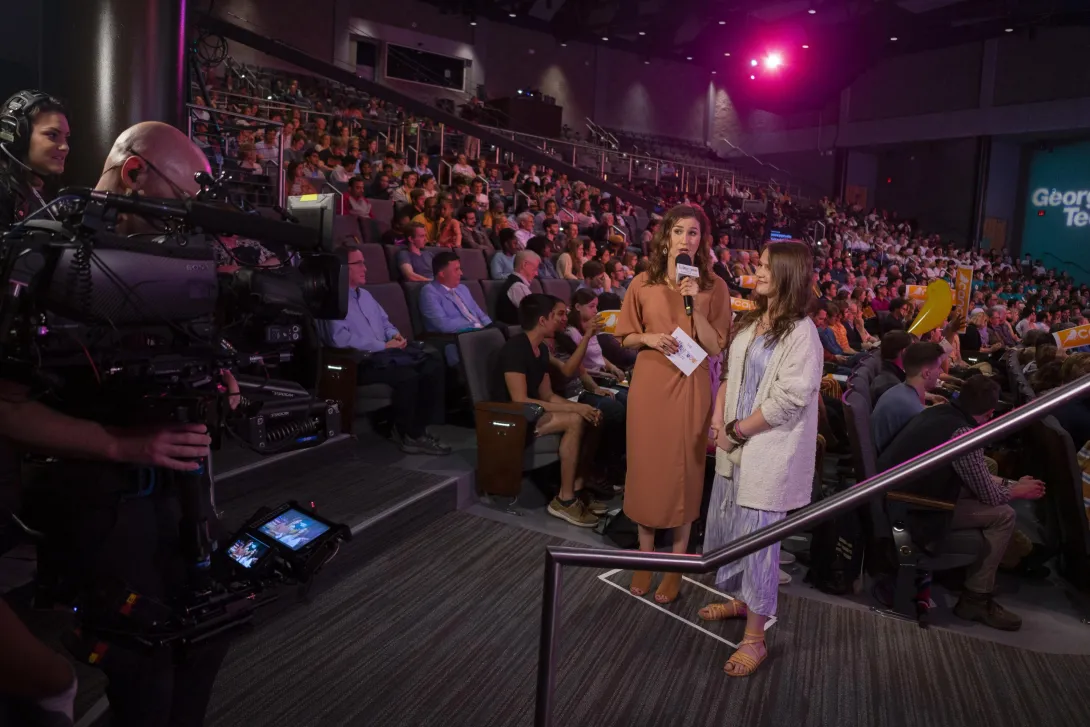
After almost a year of preparation, practice, and refinement, Georgia Tech’s annual InVenture Prize is down to six finalists competing in the final round on March 16th. In this televised round, the final teams will pitch their inventions to a panel of judges and compete for the top prize of $20,000, assistance in patent-filing, and a spot in CREATE-X’s Startup Launch program.
In its 14th year, the InVenture Prize competition features different innovations created by Georgia Tech students from all disciplines and backgrounds. For months prior to the final round, the finalists received coaching and assistance from mentors and coaches on building their prototypes, developing business models, and rehearsing their pitches to investors. The final six teams were chosen from previous preliminary and semifinal rounds that included a broad range of competitors.
The finals of the InVenture Prize will air live from Georgia Tech’s Ferst Center for the Arts at 7:30 p.m. on March 16th on Georgia Public Broadcasting.
The 2022 finalist teams are:
The Foambuster: The Foambuster is a unique handheld tool that allows construction contractors to drastically cut down on the mess, hassle, and money spent that comes with installing exterior insulation.
Edward Diller, Mechanical Engineering, Los Angeles, CA
Davis Waln, Mechanical Engineering, Atlanta, GA
Christophe Senghor, Mechanical Engineering, Peachtree City, GA
Katelyn Sand, Mechanical Engineering, Westlake Village, CA
Jaime Paris Meseguer, Mechanical Engineering, Spain
Magic Crop: An application that uses the power of Artificial Intelligence and the rule of thirds to format any number of inputted pictures into the perfect headshot within seconds and without ever sending any images to the cloud or to a third-party server.
Megan Dass, Computer Science, Woodbridge, VA
Reflex: Emergency Medical Drone Response System to deliver life-saving medical equipment.
Nevin Gilbert, Computer Science, Boulder, CO
Usman Jamal, Computer Science, Tucker, GA
Sola: Sola provides a data-driven supplemental insurance plan which covers immediate out-of-pocket expenses for US homeowners following losses from tornadoes.
Brayden Drury, Mechanical Engineering, Park City, Utah
Wesley Pergament, Mechanical Engineering, Old Westbury, NY
StrideLink: Accessible gait analysis wearable for remote monitoring of walking asymmetry.
Marzeah (Zea) Khorramabadi, Computer Engineering, Birmingham, AL
Cassandra (Cassie) McIltrot, Biomedical Engineering, Sykesville, MD
Neel Narvekar, Computer Engineering, Arcadia, CA
Tony Wineman, Electrical Engineering, Woodstock, GA
Tabnam: AI-powered shopping assistant that leverages the knowledge of user experience data.
SooHoon Choi, Computer Science, South Korea
Daksh Gupta, Computer Science, Noida, India
Robert (Davis) Liddell, Computer Science, Lutherville, MD
Ethan Perry, Computer Science, Wellesley, MA
To request tickets for the event visit: https://inventureprize.gatech.edu/form/inventure-prize-ticket-request-f
To learn more about InVenture Prize visit: https://inventureprize.gatech.edu/
Feb. 18, 2022
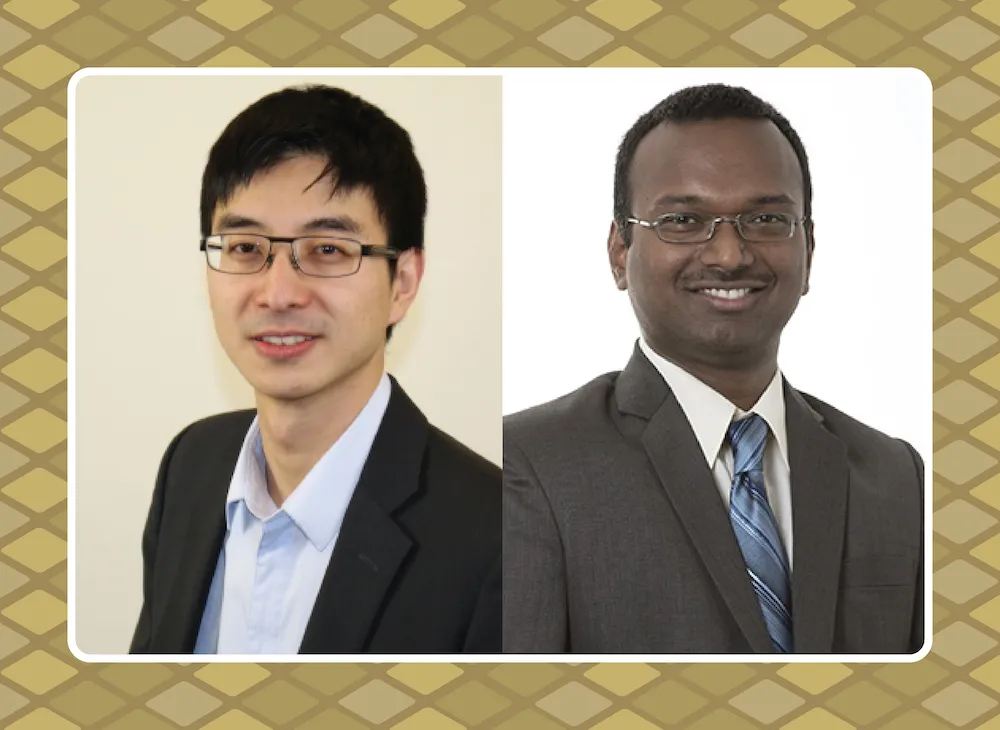
Two faculty members from the H. Milton Stewart School of Industrial and Systems Engineering received CAREER awards from the National Science Foundation (NSF), recognizing early-career contributions in both research and education. Assistant Professors He Wang and Siva Theja Maguluri received the award, the most prestigious of its kind awarded by the NSF, which carries a five-year term.
In addition to $500,000 in funding, which will help support the faculty member as well as their team of Ph.D. students, Wang said it provided recognition and validation for their respective research agendas.
“It’s great because it helps fund our work and will provide opportunities to support our students in this continued research,” he said. “But it also helps us to build connections with industry partners, who see the importance of our work, and allow us to implement some of it into the real world.”
Wang’s research focuses on supply chain and logistics in transportation. This particular award will fund research that seeks to design digital marketplaces for the freight industry. Describing it as a rideshare, like Uber, for trucking, Wang said that the goal of the research is to design online digital marketplaces that help truckers connect with shippers, eliminating a brokerage process plagued by inefficiency that can cost drivers both time and money.
“The idea here is to improve supply chain efficiencies and also the earning reliability of these truck drivers,” he said.
For an industry that is among the largest in the country, and indeed the most popular in more than half the country’s states, the research could have far-reaching implications.
Maguluri’s research, meanwhile, addresses optimization challenges in reinforcement learning and cloud computing, both of which are key areas of progress in the ongoing artificial intelligence revolution. The revolution is powered by the development of novel algorithms and breakthroughs in cloud computing infrastructure that can collect, store, and process large amounts of data.
“Even though neural networks were known about 50 years ago, AI breakthroughs only happened in the last 15 years,” Maguluri said. “This is because computers weren’t powerful enough earlier, and it was hard to get access to large computing power.”
Now, AI researchers can utilize massive data centers run by companies like Amazon, Microsoft, or Google.
Despite the progress, however, there are tradeoffs that affect optimal performance, and theory often lags behind practice. With this award, Maguluri and his lab will pursue studies in both reinforcement learning and cloud computing to develop optimal scheduling algorithms for cloud computing data centers that make both more efficient and, thus, further advancement in the field.
To read more about Wang’s and Maguluri’s research, follow the links below:
He Wang: Marketplace Design for Freight Transportation and Logistics Platforms
Siva Theja Maguluri: Lyapunov Drift Methods for Stochastic Recursions: Applications in Cloud Computing and Reinforcement Learning
Jan. 21, 2022

Even a global pandemic cannot slow the acceleration of new technologies and evolving technologies that has become the disruptive norm of our lives over the past decade.
Big data, global connectedness and the digitization of almost everything are driving a whirlwind of change that touches every aspect of our lives.
Georgia Tech continues to be at the center of that of that maelstrom of progress, pushing the cutting edge, developing and influencing advances and being an insistent voice for ensuring those advances are shared as broadly as possible.
Five faculty members share what they see as major forces impacting the coming year and beyond.
Microchip shortage will drive manufacturing to US and other supply chain changes
One of the big technology and supply chain stories of 2021 was the global shortage of microchips that impacted huge parts of the business world. One of the more visible impacts of that shortage was in the automotive field.
According to industry experts, the microchip shortage cost the automotive business $210 billion in revenue in 2020 driving prices up for new and especially used vehicles throughout the year. Dr. Madhavan Swaminathan, Georgia Tech’s John Pippin Chair in Microsystems Packaging and Electromagnetics, says the industry’s focus on finding solutions will bring noticeable change in the coming year.
He says early word of a trend in moving chip manufacturing to the United States will become a big focus in the coming year as well as auto manufacturers and other industries re-examining just-in-time supply decisions as they build inventory.
Advances in addressing bias in AI bolsters inclusion
In computer science circles, it is no longer any sort of surprise that there can be bias in certain applications of artificial intelligence and machine learning. Bias can stem from a range of factors from the data used to software design to the situation where AI is being used.
How to know what to show each user with different world views in search or newsfeeds is quite different than making sure that software used for healthcare works for everyone. For example, sometimes a data set, even a quite large one, may not be representative.
There are close to 100,000 cases of skin cancer in the U.S. a year, and it is difficult to detect, especially the darker someone's skin tone is.
Machine learning researchers are making huge advances in detecting skin cancer, but a big limit is that the data they are using comes from light-skinned populations.
Knowing this problem exists opens the door to using data and artificial intelligence to improve detection for all. Dr. Deven Desai, a law and ethics professor in Georgia Tech’s Scheller College of Business, says in the coming year, because this potential for bias is known, we will become much better at identifying bias from wherever it may come and addressing it to limit harm.
The focus in the coming year will be on making the searching and sifting tools of AI and machine learning more attuned to potentially skewed results. This focus will bring better, more inclusive results.
Watch the video: A Good Challenge: The Future of AI
Digital twins drive safety, efficiency and savings in construction
Think of them as the ultimate in interactive blueprints that can actually communicate to owners about building performance. The idea of a digital twin is not new. Building an exact match, digital version of a construction project is commonplace in construction now and has been for years. Architectural drawings, CAD images, or BIM images would all be considered “twins” in a way.
The advances that are happening now with true digital twins and that will be taking off in the coming year are in what you can do with and learn from a much more robust digital twin.
"Digital twinning is about the building and all the components that are in the building. Where they are, what condition they're in, all kinds of qualities," says Russell Gentry director of the Digital Building Lab at Georgia Tech.
In the coming year, Gentry expects the idea of using a digital twin will grow as its uses expand - monitoring for maintenance needs, identifying potential problems like leaks or water damage, dialing in HVAC system efficiencies - just a few of the changes that are happening or soon will be. Digital twins will be used to improve building safety, efficiency and even retrofitting existing buildings with new and improved technologies.
The automation and improvements that can be achieved will be a powerful force in construction and building management.
Technology led up-skilling drives job agility that will increase worker satisfaction and productivity
In the U.S. alone, November 2021 saw more than four and a half million people quit their jobs, the biggest spike on record and continuing a streak of transition and upheaval. As the pace of change continues to increase, we need to be able to rapidly reconfigure workforces to address new challenges.
Ashok Goel, professor of computer science and human-centered computing in the School of Interactive Computing, has been watching the rapid changes in the job market. He sees technology as a solution to reskilling employees.
“It is critical that we leverage technology to develop better tools to sync up employers and educators so that job seekers have clear paths to reskilling,” Goel says.
Using AI to match workers to jobs, to improve job performance and satisfaction are just a few of the efforts in the coming year that will ultimately result in improved worker well-being and productivity as well.
Covid public health crisis leads to public policy evolution
The pandemic has defined very clearly a strain in the relationship between scientists and some segments of the general public.
Some public policy makers, as a reflection of that divide, have made decisions related to public health that do not always match generally accepted science. For academic leaders in public policy like Dr. Cassidy Sugimoto, the Marie Patton School Chair in the School of Public Policy at Georgia Tech, this is one of the biggest challenges our society and people making public policy will face in the coming years.
Bridging the divide made clear by Covid and building the relationships that will result in better policy will be an effort that will have impact for decades.
“In many ways we’re setting the stage for the other looming global crises that we’re being faced with like climate change, like issues around social justice.
All of those are going to take the same kind of navigation in communication between the public between science and between policy makers and not just within regions but globally,” said Sugimoto.
It’s a challenge that she and her colleagues have dedicated their careers to taking on.
Watch: Public Policy and the Pandemic
For more trends and in-depth predictions, read: The Year Ahead: Trends to Watch in 2022
News Contact
Blair Meeks
Assistant Vice President External Communications
wmeeks7@gatech.edu
404-894-9793
Dec. 10, 2021
By Frida Carrera
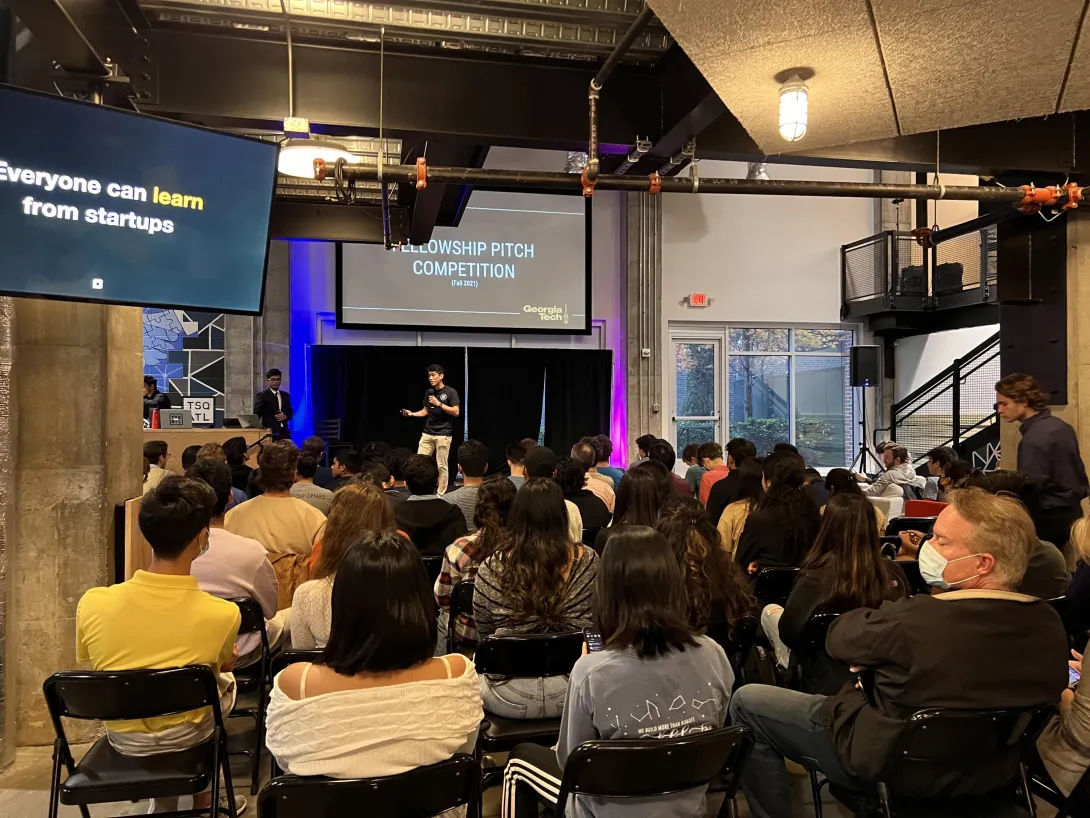
On December 3, 2021, Startup Exchange presented the Fall 2021 Fellowship Pitch Competition sponsored by the Georgia Tech Student Innovation Program, Office of Undergraduate Education. The event took place at ATL Social Club in Tech Square, a major startup hub situated on Georgia Tech’s campus and perfect for those eager for innovation at GT. The event also welcomed partner companies and recruiters such as NCR and Stord.
At this pitch-style event, six founder teams presented their innovative pitches and competed for first, second, and third place, each with a cash prize to aid in the advancement of their ideas. The first and second place winners of the competition were determined by three guest judges: Kathryn Petralia, co-founder of Kabbage and Drum; Thomas Suarez, co-founder of Teleport and Thiel Fellow; and Evan Jarecki, serial entrepreneur and BM at Startup Atlanta. The event commenced with a brief introduction by Startup Exchange executive board members, followed by presentations from the 6 teams including Fino, InSite, Jargon, and Tokenstack. After hearing each team’s pitch, the judges had time to deliberate and select the top two winners while the audience voted for the People’s Choice winner. Meanwhile, attendees were also able to hear from the partner companies and network while enjoying free perks such as food and beverages.
“There are students everywhere across campus really starting on their start-ups and pursuing their dreams. Atlanta is a growing city and Georgia Tech is the perfect hub for that. These teams, we’re introducing them to entrepreneurship and giving those resources and intro-connections. By doing so, we’re inspiring them in a way. It’s just a great learning experience for them,” explained Startup Exchange’s Director of Fellowship Revanth Tiruveedhi.
Following the intermission, the judges presented the first-place award of $750 to Jargon, a browser extension that points out red flags in user contract agreements, as pitched by team members Kaleb Rasmussen and Devansh Khunteta. Second place of $500 was awarded to Eartheal by team members Colin Burnett, Philip Colt, Neal Austensen, and Brandon Sherrard. People's Choice of $250 was awarded to Tokenstack by team members Nitin Paul, Samrat Sahoo, Yatharth Bhargava, and Mohit Sahoo. The event then closed with remarks by Startup Exchange’s board members and photos with the participants.
To learn more about student innovation at Georgia Tech visit https://innovation.gatech.edu/
Nov. 30, 2021
By Frida Carrera
After almost a year since the completion of the 2021 InVenture Prize Competition, we caught up with Matt McMullen and Emma Bivings who competed as finalists on the SPOT Harness team, a harness that uses sensors and vibrators to help blind dogs navigate. Their experience in the competition exposed them to multiple experiences, environments, and demands necessary for startups for the first time. As a result, they were able to distinguish their areas of growth, gain valuable insights, and make potential changes in the direction of their product.
Today, Matt is currently a graduate student seeking a master’s in music technology and Emma is a full-time operations management trainee at McMaster-Carr. The team is still developing the SPOT Harness and has even grown its team to five members. Through funding and participating in Georgia Tech’s CREATE-X Startup Launch program, they have been able to launch their company Saving Grace Pet Solutions LLC. They plan to launch SPOT Harness under this company as well as develop other future products.
To future InVenture participants, Matt advises, “Don’t give up on your idea! The most important part of making it the distance is having a team with a passion for your product.”
The SPOT Harness team will be launching a kick-starter soon for preorders ahead of the official market launch of the SPOT Harness for blind dogs. They also advise anyone who has or knows someone who has a dog suffering from vision loss to visit their website to sign up for their newly refined prototype!
Visit their website here: www.savinggrace.tech
To learn more about the upcoming InVenture Prize Competition visit https://inventureprize.gatech.edu/ . Registration closes on Jan. 19.
Nov. 16, 2021

By Frida Carrera
Several months after the completion of the 2021 InVenture Prize Competition, we caught up with John Wooten to see what he’s been up to! In 2021’s competition, John’s innovation Block Transfer, a decentralized stock transfer agent protocol for global financial markets, placed as a finalist.
Today, John Wooten has been actively working to grow Block Transfer by securing final SEC approval, acquiring funding by US Bank, and submitting utility patents. He believes that by combining blockchain tech with traditional financial markets, we can fundamentally change the world. John describes his experience as a finalist in the competition as being invaluable and advises, “We didn't know we could partake given prior admission to CX. Biggest advice is to just TRY!”
You can learn more about Block Transfer here: https://www.blocktransfer.io/consult
To learn more about the upcoming InVenture Prize Competition visit https://inventureprize.gatech.edu/ . Registration closes on Jan. 19.
Nov. 01, 2021

By Frida Carrera
After almost a year since the completion of the 2021 InVenture Prize Competition, we caught up with finalist Sammie Hasen to see what she’s been up to over the past couple of months! For 2021’s competition, Sammie’s invention, BCase, placed as a finalist for its accessible, discreet, and secure birth control storage that attaches directly to the back of your phone.
Today, Sammie successfully launched BCase in New York City on World Contraception Day as one of five brands featured by Medsur Inc, the consumer goods company founded by Sammie. On September 26th, Medsur was even invited by The Pill Club, a leading contraceptive company, to participate in the launch of their uterus-shaped vending machines in New York. Medsur now continues to garner the attention from many leading health companies in the birth control space and this is just the beginning for Sammie.
“I plan to keep growing Medsur and follow our vision of creating a suite of innovative products for uterus owners. I am slowly growing the team, and I have now added the incredible Alexa Graham as COO. She is a rockstar, and she will help me grow Medsur to be all that we envision it to be!”, she explained.
Sammie adds that Medsur is always looking for new ambassadors to join the team and encourages anyone passionate about the femtech space and building innovative products to consider signing up!
You can learn more about Medsur and BCase on their website here: https://www.medsurinc.com/
To learn more about the upcoming InVenture Prize Competition visit https://inventureprize.gatech.edu/ . Registration closes on Jan. 19.
Oct. 14, 2021
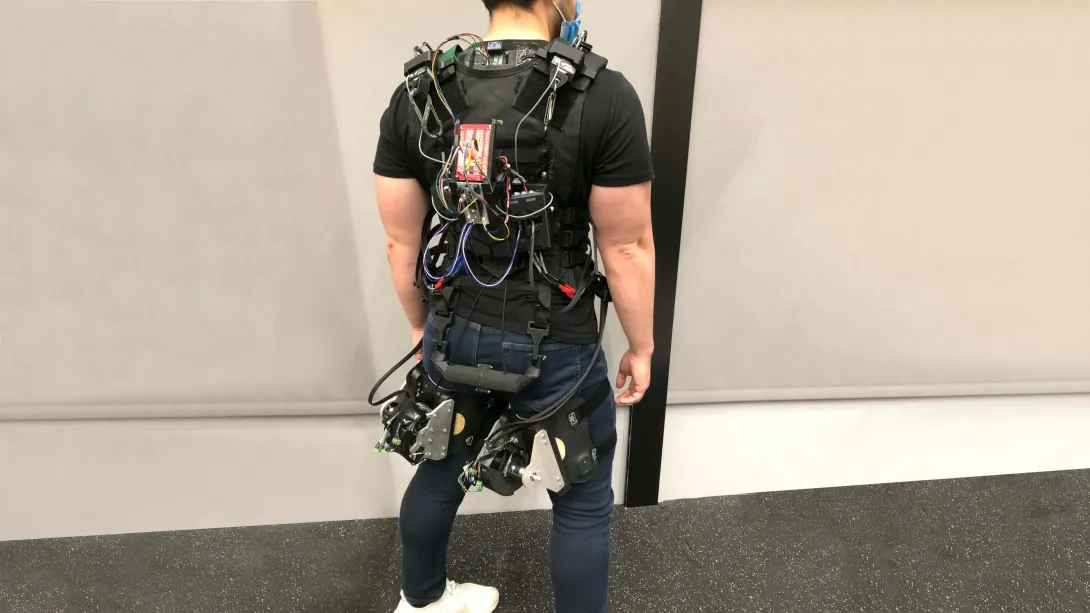
In the last few years, mechanically assistive exosuits, long depicted in works of popular science fiction and film, have finally started to see commercial deployment, according to Aaron Young, professor in the George W. Woodruff School of Mechanical Engineering at Georgia Tech. Most of these exosuits have a so-called passive design, assisting the wearer with unpowered elements like springs.
Active exosuits that incorporate electronics and powered motors are yet to be broadly applied. They tend to be big and heavy, and rely on rigid exoskeletons to transfer weight from body to ground. Exoskeletons add a great deal of stiffness, as well, Young said. Putting on most active exosuits is a little like becoming one with a forklift, restricting a wearer to lifting weights in a vertical plane.
For all these reasons, Young’s Asymmetric Back eXosuit (ABX) described in the October 5 issue of IEEE Transactions on Robotics is highly non-standard. There’s no exoskeleton, no rigid structure, nothing that makes contact with the floor. If the wearer is just standing there, it does nothing except for adding 14 pounds to their legs. But if they raise their body from a leaning over position, it makes a somewhat frantic noise: that is the sound of the ABX helping them rotate their torso, helping them twist.
Although most active exosuits support vertical lifts, rotating and twisting movements are also ubiquitous, especially in certain fields of manual labor like garbage collection and baggage handling. In many cases, these motions can be awkward and strenuous, leading to work-related injuries as well as back pain, according to Young. Back pain, in turn, is directly correlated with the strength of compressive forces and shear forces that are applied to the spine.
In designing their exosuit, the researchers sought a way to reduce these loads on the spinal joints. Putting it on looks a little like donning a futuristic backpack. Two motors are first strapped onto the back of each upper thigh. These motors are then connected to the back of the opposite shoulders, each with their own cable, making for two cables that diagonally overlap. The exosuit provides assistance by applying tension to the cables when it detects a wearer rise from a bending posture.
“It's definitely a different sensation than a sort of standard exoskeleton. It's not your standard design,” said Young.
Because the diagonal cables have a component of motion that is horizontal, they exert a pull on the torso that can aid in twisting it from side to side. In tests, the researchers showed that when a wearer of the ABX swung a weight from the ground to one side, the exosuit reduced their back muscle activations by an average of 16%, as measured by electromyography (EMG) sensors. The exosuit also provided a 37% reduction in back muscle exertion when a wearer lifted weights symmetrically, straight off the ground – an assistance level comparable to more rigid designs.
“People definitely felt like the technology is assisting them, which is great. And we did see the concurrent EMG reduction,” said Young. “I think it’s a great first step.”
In a sense, wearing the exosuit is almost like strapping two additional muscles onto the body – unconventional muscles, which run directly from back to leg. Interestingly, it is the positioning of these muscles rather than their brute strength that makes them functional, said Young.
The motors pull the cables with much less power than the muscles in the body. However, the cables are positioned much further away from the joints. Through this positioning, the cables obtain greater leverage and mechanical advantage, allowing the wearer to reduce their overall muscular output and hence the load that they place on their spine. (Spinal loading was not directly measured in the study.)
Aside from its overall performance, it is the flexible, asymmetric nature of the suit that really makes it unique, Young said. There are currently no other active exosuits that provide assistance for twisting and rotating through a comparable range of motion. While other exosuits also use cables, none have arranged them along diagonal lines.
Young is currently seeking collaborations with industry partners to further develop the exosuit. In future work, he sees its control system as a point to improve. Currently, when a person raises their torso from a lowered position, the cables simply pull with constant tension. But it should be possible to make the system detect different actions of the wearer and adjust its pull in response.
References
J. M. Li, D. D. Molinaro, A. S. King, A. Mazumdar and A. J. Young, "Design and Validation of a Cable-Driven Asymmetric Back Exosuit," in IEEE Transactions on Robotics, doi: 10.1109/TRO.2021.3112280.
About Georgia Tech
The Georgia Institute of Technology, or Georgia Tech, is a top 10 public research university developing leaders who advance technology and improve the human condition. The Institute offers business, computing, design, engineering, liberal arts, and sciences degrees. Its nearly 40,000 students representing 50 states and 149 countries, study at the main campus in Atlanta, at campuses in France and China, and through distance and online learning. As a leading technological university, Georgia Tech is an engine of economic development for Georgia, the Southeast, and the nation, conducting more than $1 billion in research annually for government, industry, and society.
News Contact
Mordechai Rorvig
Senior Science Writer
Georgia Institute of Technology
Jun. 02, 2021
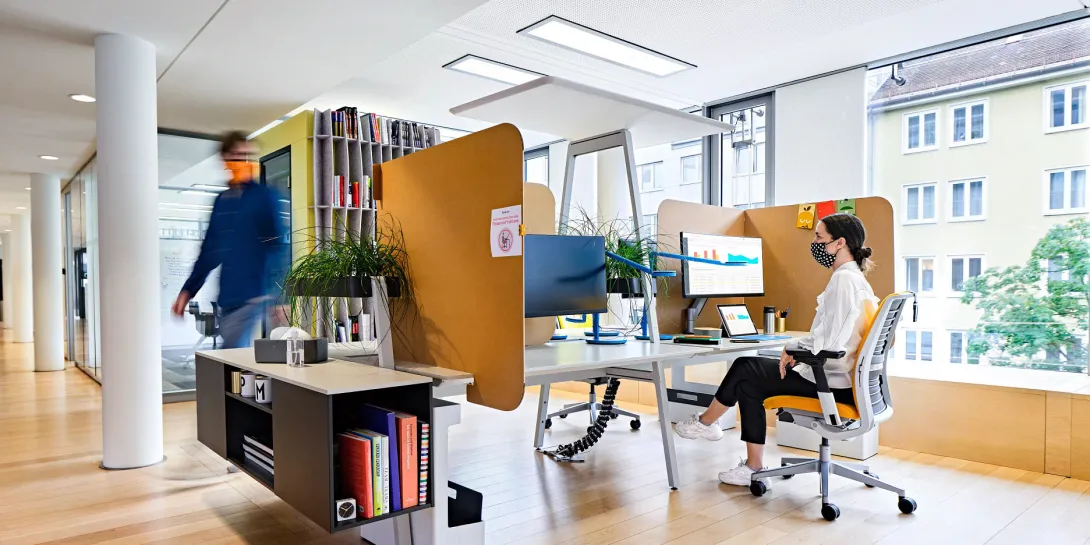
A stellar product can only get a company so far in today’s global marketplace. A truly successful enterprise needs to be able to make quick adaptations to its manufacturing lines so it can respond as the market changes. It’s a tricky process requiring a deep understanding of the data and the organization’s systems and culture, which is why firms seek the guidance of the Georgia Tech Manufacturing Institute (GTMI).
“We help companies overcome barriers by applying researched technology and Georgia Tech's expertise to the problem,” said Andrew Dugenske, director of the Factory Information Systems Center and principal research engineer at GTMI. He just completed a major effort with Steelcase, a century-plus-old company that designs workspaces around the people who use them.
“We like to say we are students of the workplace,” said Paul Noll, senior researcher at Steelcase. “We watch how people work. We study their behaviors. We study the activity. We learn, and then we build our products and services to support what we see.”
Steelcase approached GTMI, Noll said, not only because of the Institute’s superior reputation in manufacturing but also because they’ve found everyone at Tech has a natural curiosity for both the task and the culture of their partners.
“It was very much the professional work environment at Tech as well as the expertise,” added Edward Vander Bilt, who leads the partnership at Steelcase.
Merging Expertise with Technology
Fundamental to their relationship is the Industrial Internet of Things, a term for using the information from the various sensors, computers, and robotic devices a company uses in manufacturing, to refine, even redefine the way the assembly line operates.
GTMI worked with Steelcase on an array of projects designed to improve the intelligence, responsiveness, and adaptability of their manufacturing lines. In one endeavor, they improved assembly lines by embedding them with Georgia Tech’s digital architecture. The digital systems move information from the lines into the cloud, where it can be processed. Then Steelcase uses the data to decide how to alter manufacturing processes.
“One of the big challenges of manufacturing is that some companies have legacy equipment, so it can't easily transfer the information about its activities into the cloud," said GTMI’s Dugenske. “We have developed a method to retrofit these lines so companies can use the Industrial Internet of Things to their advantage.”
Now the company has expanded this capability to all its lines throughout North America.
“We’ve been using our digital architecture with several companies, and it’s worked really well for them,” added Dugenske.
Collaboration is the Name of the Game
Helping a firm improve elements as indelible as production processes isn’t something that can be accomplished after just a few high-level meetings. It’s a mission that requires understanding the wisdom of employees working on the lines.
“It was extremely collaborative,” said Vander Bilt. “Andrew Dugenske visited all of our factories in North America, observing and talking with the plant managers and leaders in a whole variety of disciplines to better understand how we operate as a company.”
And when it came time to implement the findings, Dugenske headed back on the road to help put those recommendations into practice.
“It was quite intense,” added Vander Bilt, who said that one of the most valuable elements came from working with the graduate and undergraduate students.
Students built and installed prototypes in the factories and worked with Steelcase’s engineers to adjust to the conditions of each location. Vander Bilt said this gave the company high confidence that the solutions were the right ones.
Working at the Intersection of People and Technology
Steelcase and Georgia Tech have been working together since 2005 on projects around working environments and merging the physical and digital worlds.
“From the beginning of our relationship, they've described themselves as designing the future of how people interact with each other,” said Beth Mynatt, executive director of Tech’s Institute for People and Technology (IPaT).
Now, at the tail end of the COVID-19 pandemic, that future looks a little different than it did at the start of 2020, and remote working looks like it will be part of everyday life, added Mynatt.
Siva Jayaraman, IPaT’s strategic partnerships director, introduced Steelcase to GTMI. He has been working with the company for years on combining the physical and digital worlds through projects like telemedicine booths and spaces fostering collaboration and anonymity to help workers avoid the sometimes stultifying norms of business hierarchies.
“They’re trying to understand the evolving needs of workers and the new modalities, whether that’s remote, in the office, or both," said Jayaraman. “Nobody knows clearly what that is going to look like, but we are helping them to understand it.”
Noll said he values the opportunity to explore the emerging thinking around human-centered technology that happens at GTMI, IPaT, and elsewhere at the Institute.
“Technology is integral to the work, but at the end of the day, we're still human, and we want to be sure the decisions we make about bringing technology into our work are smart, responsible, and human-centered,” said Noll. “That’s why we like working with Tech.”
And when Noll says he likes working with Tech, he means it. Steelcase is also collaborating with the Scheller School of Business, the Supply Chain and Logistics Institute, the Institute for Robotics and Intelligent Machines, the School of Materials Science and Engineering, and the School of Aerospace Engineering, to name a few.
It may be the Institute’s exceptional reputation that brings some companies to engage. Still, in the end, it's the quality of the people that solidifies those relationships for years to come.
“We’ve found the more we invest in our relationships, the collaboration, the cooperation, the energy, expertise, and engagement, the more we value that partnership,” said Vander Bilt.
In this case, Steelcase had a hunch their manufacturing lines held information that would help them become more agile and efficient. And from their history working with Georgia Tech, they had a hunch that GTMI had the best people to do it. They were right.
Writer: David Terraso
Media Contact:
Walter Rich
Research Communications, Georgia Tech
walter.rich@research.gatech.edu
News Contact
Apr. 05, 2021
By Jessica Barber
On April 21, 2021, biomedical engineering student Michael Pullen will serve as Georgia Tech’s representative in the fifth annual ACC InVenture Prize. Here he will compete with teams from twelve other universities for the chance to take home $30,000 in prizes.
Pullen’s invention first took root when he experienced the struggle of getting turf burn while playing football. While most players seek protection through regular compression sleeves, this often leads to decreased grip, more fumbles, and difficulty in maneuvering plays.
While working in sports medicine with the Atlanta Falcons, Pullen found a way to directly avoid this problem. LZRD Sleeve is a compressive sleeve that integrates gripping and moisture-wicking technology to deliver protection and control without sacrificing mobility nor comfort.
Since then, LZRD Sleeve has secured its place in non-athletic arenas. A year ago, the world of sports halted due to COVID-19 shutdowns. It was then that Pullen sought other applications for his innovative sleeve — LZRD Sleeve has expanded its market to delivery drivers, gardeners, and maintenance workers seeking better performance and protection from harm.
LZRD Sleeve is now being used by the largest U.S. courier service, and it has also been featured in Neil DeGrasse Tyson’s podcast StarTalk. On the same hand, Pullen has been in contact with a whopping five Fortune 500 companies. He ultimately hopes that InVenture Prize will show that with hard work, nothing is impossible.
“Never in a million years would I have thought I would be representing Georgia Tech in the ACC InVenture Prize. Getting out of your comfort zone and trying new things is important, and by winning, I hope to set an example so that others might do the same,” Pullen stated.
Overall, winning the ACC InVenture Prize would allow LZRD Sleeve to expand even further through capital investments, uptakes in production, and coverage of associated legal fees.
The Georgia Tech community is encouraged to show Pullen its support through voting for the People’s Choice Award of $5,000. Voting is open from 8 a.m. on Monday, April 5 until midnight on Tuesday, April 6.
To vote, please text GATech to win the ACC InVenture Prize People’s Choice Award to 415-965-7445.
Winners will be announced on Wednesday, April 21 at 7 p.m. on PBS stations throughout the ACC region.
More information about LZRD Sleeve can be found at lzrdtech.com.
News Contact
Recha Reid
Office of Undergraduate Education