
Mar. 21, 2023

Idling at a crossroads no longer, the automotive industry is embracing electrification like never before. With more electric vehicles purchased in 2022 than any year prior, consumers are beginning to follow their lead. Yet, while opportunity abounds, new challenges will require an innovative approach to ensure a sustainable and accessible electric future for all.
With historic investments from major players in the EV space, including Rivian, Kia, and Hyundai, the state of Georgia is uniquely positioned to serve as a leader in this effort. As the state's leading research institute, Georgia Tech is on the cutting edge of the movement.
The transportation sector is the largest greenhouse gas emitter in the U.S. at nearly 30%, with passenger vehicles accounting for around 80% of the sector's total output1 as of 2019. Electric vehicles are widely regarded as a budding solution to reduce emissions, but even as both demand and production continue to increase, EVs currently account for around 1% of the cars on America's roadways.
From the supply chain to the infrastructure needed to support alternative-fuel vehicles alongside consumer hesitancy, achieving the goals set by both the public and private sectors — including the Biden Administration's target of EVs making up at least 50% of new car sales by 2030 — will not be easy. Through research and development, policy, and collaboration, Tech experts are working toward finding solutions that will serve as catalysts during this transitionary period for the environment and the way Americans drive.
News Contact
Steven Gagliano - Communications Officer
Institute Communications
Dec. 13, 2022

In the decade since Professor Gleb Yushin’s battery materials startup participated in Georgia Tech’s Advanced Technology Development Center, investments in the company have rolled in — along with the first customers.
Now the U.S. Department of Energy (DOE) is getting on board with Yushin’s Georgia Tech startup as part of federal efforts to reinvigorate tech manufacturing in the United States.
DOE awarded Sila Nanotechnologies $100 million this fall to support the company’s new factory in Moses Lake, Washington, and help Sila hire and train up to 300 workers for the facility. It was one of 21 projects funded in domestic battery materials processing and manufacturing.
“It’s our mission to help move America away from being energy dependent and become a leader in the energy transformation,” said Yushin, the company’s chief technology officer and a faculty member in the Georgia Tech School of Materials Science and Engineering. “With this funding, Sila will deliver proven, clean energy technology and world-scale manufacturing to revitalize the industry and gain independence.”
Birthed from Yushin’s research on lithium-ion batteries, Sila manufactures next-generation materials and a silicon anode technology that boosts battery energy density by 20%. The silicon anodes are a drop-in replacement for graphite anodes in lithium-ion batteries. The new facility is projected to produce enough capacity to power 200,000 electric vehicles by 2026. Sila has inked a deal with Mercedes-Benz to use the company’s technology, starting with G-Class vehicles.
News Contact
Joshua Stewart
College of Engineering
Sep. 27, 2022
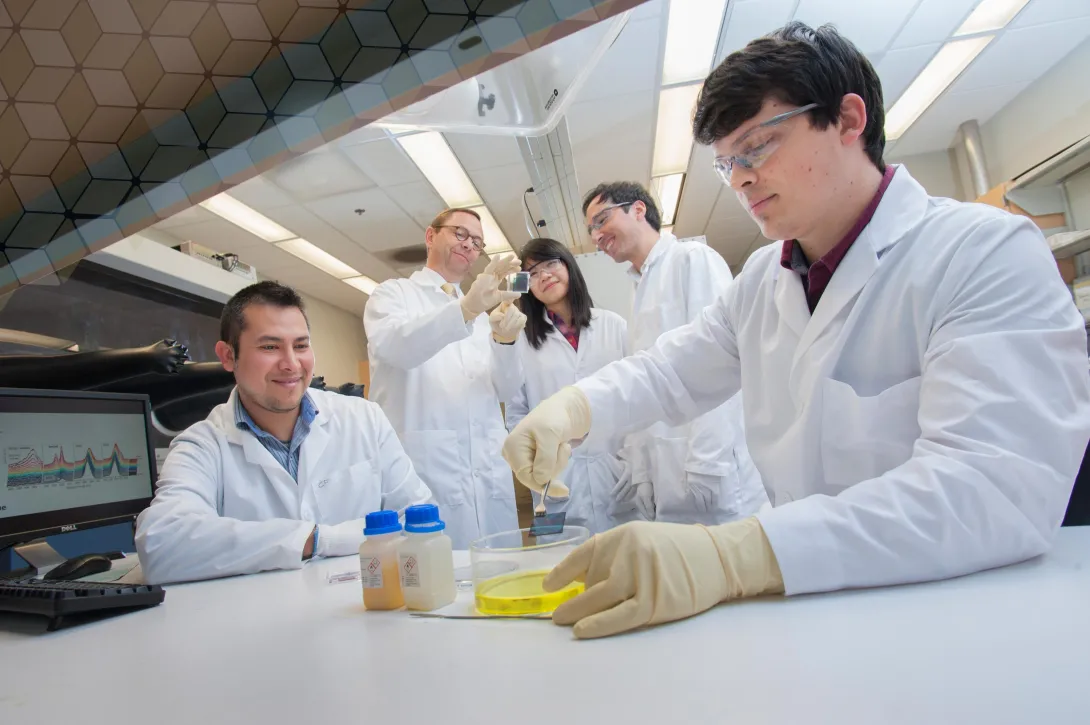
The Scalable Asymmetric Lifecycle Engagement Microelectronics Workforce Development program (SCALE) has announced the program will extend another five years and expand with $10.8 million additional Department of Defense (DoD) funding, with a ceiling of $99 million.
SCALE officials said this expansion of the nation’s preeminent program will further its goal to develop a next-generation workforce that can return the United States to prominence in global microelectronics manufacturing.
Georgia Tech participates in the partnership, which is led by Purdue University and managed by NSWC Crane. SCALE facilitates the training of highly skilled U.S. microelectronics engineers, hardware designers and manufacturing experts. SCALE brings together a public-private-academic partnership of 17 universities and 34 partners within the defense industry and government.
“This is an extremely exciting time in the country and at Tech for microchip design and manufacturing,” said Arijit Raychowdhury, the Steve W. Chaddick School Chair of Tech’s School of Electrical and Computer Engineering (ECE). “These newly announced funds for the SCALE program will help Georgia Tech recruit a new, diverse group of students ready to work in defense microelectronics. We’re thrilled to be a SCALE partner university and honored to be leading many of the project’s specialty areas.”
SCALE provides unique courses, mentoring, internship matching and targeted research projects for college students interested in five microelectronics specialty areas. Georgia Tech ECE faculty members will be the primary investigators for three of the areas:
- system on a chip will be led by Raychowdhury;
- radiation-hardening will be led by John Cressler;
- and heterogeneous integration/advanced packaging will be led by Madhavan Swaminathan.
The other two focus areas are embedded system security/trusted AI and supply chain awareness.
Industry and government partners regularly meet and update a list of knowledge, skills, and abilities important for new entrants to the workforce. The SCALE universities then update their curriculum to ensure the students are prepared for upcoming needs in the rapidly advancing microelectronics field.
Peter Bermel, SCALE director and the Elmore Associate Professor of Electrical and Computer Engineering at Purdue, said the United States will need 50,000 trained semiconductor engineers to meet overwhelming and rapidly growing demand.
“The United States is committed to expanding and strengthening its semiconductor industry and workforce rapidly over the next five years,” Bermel said. “SCALE takes a holistic approach to the microelectronics workforce gap by comprehensively addressing system challenges for workforce training and recruiting.”
Goals for the next five years include:
- Expanding student participation in SCALE fivefold to more than 1,000.
- Developing learning models for K-12 classrooms.
- Collaborating with community colleges nationwide to develop microelectronics classes.
The demand for microelectronics increased by 26.2% in 2021. But while the United States consumes about half of the chips produced worldwide, the country only manufactures about 12%, highlighting the pressing need for the U.S. to strengthen its domestic semiconductor supply chains and increase industrial capacity.
The funding announcement is the latest highlight in Georgia Tech’s leadership role in bolstering microelectronics and workforce development. Tech’s large engineering and science faculty bring a broad set of research expertise to strengthen the country’s semiconductor capacity. The Institute is uniquely positioned to train the microelectronics workforce, drive future microelectronics advances, and provide fabrication and packaging facilities for industry, academic and government partners to develop and test new solutions.
###
The Georgia Institute of Technology, or Georgia Tech, is a top 10 public research university developing leaders who advance technology and improve the human condition. The Institute offers business, computing, design, engineering, liberal arts, and sciences degrees. Its nearly 44,000 students, representing 50 states and 149 countries, study at the main campus in Atlanta, at campuses in France and China, and through distance and online learning. As a leading technological university, Georgia Tech is an engine of economic development for Georgia, the Southeast, and the nation, conducting more than $1 billion in research annually for government, industry, and society.
News Contact
Dan Watson
dwatson@ece.gatech.edu
Aug. 05, 2022
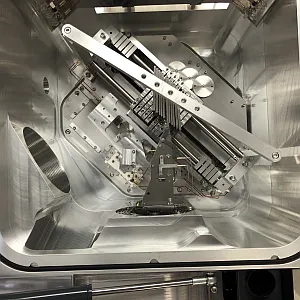
The Materials Characterization Facility (MCF) at Georgia Tech has installed a new inorganic m spectrometry facility. The facility includes two new inductively couple plasma mass spectrometry (ICP-MS) systems: a Thermo iCAP RQ quadrupole ICP-MS for streamlined and high-throughput determinations of elemental concentrations and a Thermo Neoma multicollector ICP-MS with collision cell technology for the precise determinations of isotope ratios within a given sample.
Each instrument can measure elemental variability in both dissolved aqueous samples as well as solids/minerals via laser ablation microsampling from a Teledyne Iridia laser ablation system. Together the system can measure isotopes at precision in elemental systems from Li and U.
Planned applications include: (1) high-resolution measurements of Ca, Sr, Ba, Mg, and B elemental and isotopic variability in seawater and marine and terrestrial carbonates for paleoclimate reconstructions, (2) (U-Th)/Pb dating and Hf isotope measurements to study the origin of critical mineral deposits, with a potential engineering application and the development of novel methods for increasing precision/accuracy and minimizing sample consumption during routine analyses of water quality and environmental contamination.
The MCF welcomes users interested in these and other potential applications of this new facility to their scientific and engineering research to contact David Tavakoli (atavakoli6@gatech.edu).
News Contact
David Tavakoli (atavakoli6@gatech.edu).
Aug. 03, 2022
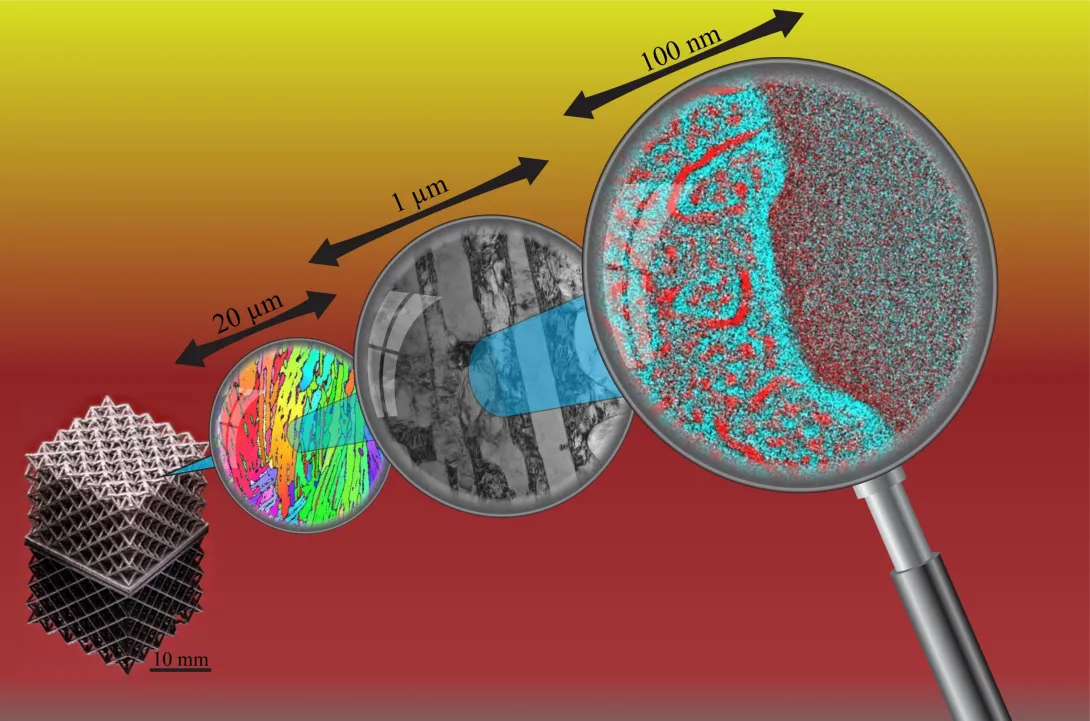

A team of researchers at the University of Massachusetts Amherst and the Georgia Institute of Technology has 3D printed a dual-phase, nanostructured high-entropy alloy that exceeds the strength and ductility of other state-of-the-art additively manufactured materials, which could lead to higher-performance components for applications in aerospace, medicine, energy and transportation. The research, led by Wen Chen, assistant professor of mechanical and industrial engineering at UMass, and Ting Zhu, professor of mechanical engineering at Georgia Tech, was published in the August issue of the journal Nature.
Over the past 15 years, high entropy alloys (HEAs) have become increasingly popular as a new paradigm in materials science. Comprised of five or more elements in near-equal proportions, they offer the ability to create a near-infinite number of unique combinations for alloy design. Traditional alloys, such as brass, carbon steel, stainless steel and bronze, contain a primary element combined with one or more trace elements.
Additive manufacturing, also called 3D printing, has recently emerged as a powerful approach of material development. The laser-based 3D printing can produce large temperature gradients and high cooling rates that are not readily accessible by conventional routes. However, “the potential of harnessing the combined benefits of additive manufacturing and HEAs for achieving novel properties remains largely unexplored,” says Zhu.
Chen and his team in the Multiscale Materials and Manufacturing Laboratory combined an HEA with a state-of-the-art 3D printing technique called laser powder bed fusion to develop new materials with unprecedented properties. Because the process causes materials to melt and solidify very rapidly as compared to traditional metallurgy, “you get a very different microstructure that is far-from-equilibrium” on the components created, Chen says. This microstructure looks like a net and is made of alternating layers known as face-centered cubic (FCC) and body-centered cubic (BCC) nanolamellar structures embedded in microscale eutectic colonies with random orientations. The hierarchical nanostructured HEA enables co-operative deformation of the two phases.
“This unusual microstructure’s atomic rearrangement gives rise to ultrahigh strength as well as enhanced ductility, which is uncommon, because usually strong materials tend to be brittle,” Chen says. Compared to conventional metal casting, “we got almost triple the strength and not only didn’t lose ductility, but actually increased it simultaneously,” he says. “For many applications, a combination of strength and ductility is key. Our findings are original and exciting for materials science and engineering alike.”
“The ability to produce strong and ductile HEAs means that these 3D printed materials are more robust in resisting applied deformation, which is important for lightweight structural design for enhanced mechanical efficiency and energy saving,” says Jie Ren, Chen’s Ph.D. student and first author of the paper.
Zhu’s group at Georgia Tech led the computational modeling for the research. He developed dual-phase crystal plasticity computational models to understand the mechanistic roles played by both the FCC and BCC nanolamellae and how they work together to give the material added strength and ductility.
“Our simulation results show the surprisingly high strength yet high hardening responses in the BCC nanolamellae, which are pivotal for achieving the outstanding strength-ductility synergy of our alloy. This mechanistic understanding provides an important basis for guiding the future development of 3D printed HEAs with exceptional mechanical properties,” Zhu says.
In addition, 3D printing offers a powerful tool to make geometrically complex and customized parts. In the future, harnessing 3D printing technology and the vast alloy design space of HEAs opens ample opportunities for the direct production of end-use components for biomedical and aerospace applications.
Additional research partners on the paper include Texas A&M University, the University of California Los Angeles, Rice University, and Oak Ridge and Lawrence Livermore national laboratories.
Story by Melinda Rose, Associate News Editor at UMass Amherst.
News Contact
Catherine Barzler, Georgia Tech
Apr. 13, 2022
By Frida Carrera
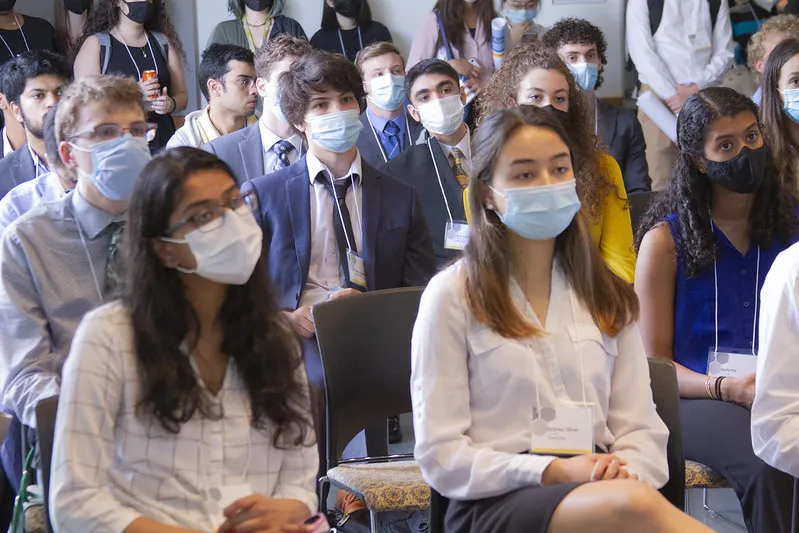
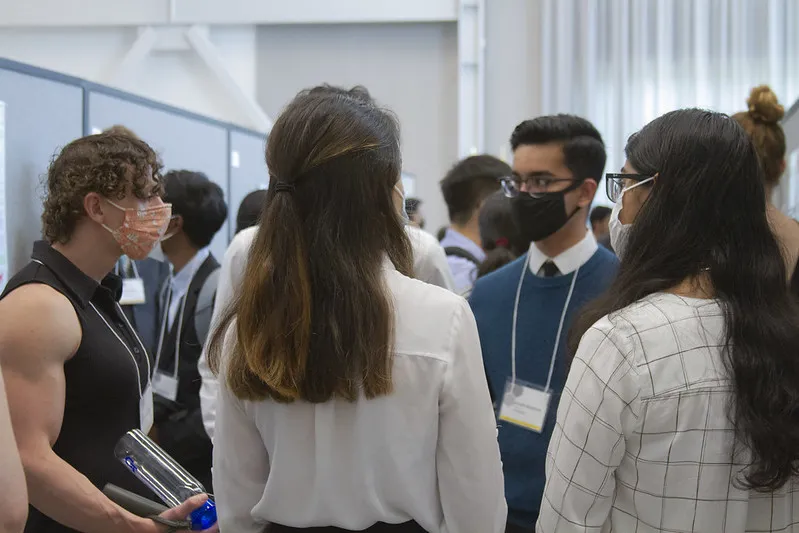
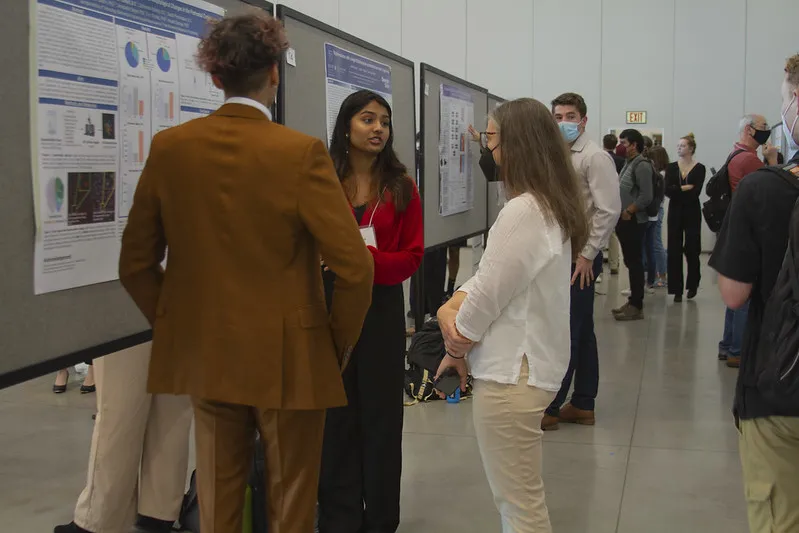
On Wednesday, April 13th 2022, the Undergraduate Research Opportunities Program (UROP) hosted the 16th annual Spring Undergraduate Research Symposium. UROP’s annual symposium is Georgia Tech’s largest undergraduate research colloquium and allows students to present their research and gain valuable skills and presentation experience. Each year the symposium also presents awards to the top poster and oral presentation from each college and honors the Outstanding Undergraduate Researcher (OUR) from each college. And with over 40 oral presentations and nearly 90 poster presentations, this year’s symposium proved to be another success for UROP and Georgia Tech.
This year the symposium was held in Exhibition Hall and opened with an introduction and keynote address to students, faculty, and other non-presenters. Shortly after, the event moved into the poster presentations segment where undergraduate students displayed their research to judges, faculty, and other attendees. The oral presentations followed soon after and gave student researchers the opportunity to go more in-depth with their research and findings and answer any questions the judges and attendees had. To end the event, sponsoring colleges and departments recognized Outstanding Undergraduate Researchers from their respective colleges. Additionally, the symposium judges were tasked with selecting the top student researchers having exceptional poster and oral presentations.
Any Georgia Tech undergraduate student interested in presenting their research is encouraged to apply for future symposiums and to build on research presentation skills, connect with other undergraduate researchers and faculty, and the chance to be recognized with awards by members of the Georgia Tech research community. UROP also hosts other research-related events and workshops throughout the school year to assist undergraduate students interested in research and build on their passions!
To view the list of awardees and pictures from the event visit: https://symposium.urop.gatech.edu/awards/
To learn more about undergraduate research at Georgia Tech visit: https://urop.gatech.edu/
Apr. 06, 2022

ECE Ph.D. student Nujhat Tasneem has won the Ed Nicollian Award for best student paper at the Institute of Electrical and Electronics Engineers (IEEE) Semiconductor Interface Specialist Conference (SISC). The event was held in early December 2021 with awards being announced in March 2022.
Tasneem’s presentation, “Charge Trapping Effects on Memory Window in Ferroelectric Field Effect Transistors,” was the highest rated presentation based on the feedback of SISC committee members and invited speakers. She is the first Georgia Tech student to receive the award.
The award-winning paper introduced a novel electrical characterization method to track carrier capture and emission dynamics during write operations in n-type ferroelectric-field-effect transistors (FEFETs). FEFETs are a candidate for high-density, non-volatile, embedded memory applications due to their promise of having low operating voltages and write energies combined with low-leakage, and high-density integration. While significant work has been done to explain the operation and endurance of FEFETs, this research details a superior method of measurement because it provides an understanding of the transport and the status of the ferroelectric.
“This novel characterization method sheds a light on the underlying device physics of FEFETs, which is necessary to optimize its design, especially as a non-volatile memory (NVM) element” said Tasneem.
Tasneem is currently part of the The Khan Lab headed by ECE Assistant Professor Asif Khan. The work presented was supported by the ASCENT project (Applications and Systems-driven Center for Energy-Efficient integrated Nano Technologies), one of six centers supported by SRC’s Joint University Microelectronics Program (JUMP). Fabrication at Tech was done at the Institute for Electronics and Nanotechnology (IEN), supported by the National Science Foundation- National Nanotechnology Coordinated Infrastructure (NSF-NNCI) program.
The SISC Ed Nicollian Award for best student paper was established in 1995 in honor of Professor E.H. Nicollian, University of North Carolina at Charlotte. Nicollian was a pioneer in the exploration of the metal-oxide-semiconductor system, particularly in the area of electrical measurements. His efforts were fundamental to establishing the SISC in its early years.
News Contact
Dan Watson
dwatson@ece.gatech.edu
Mar. 29, 2022
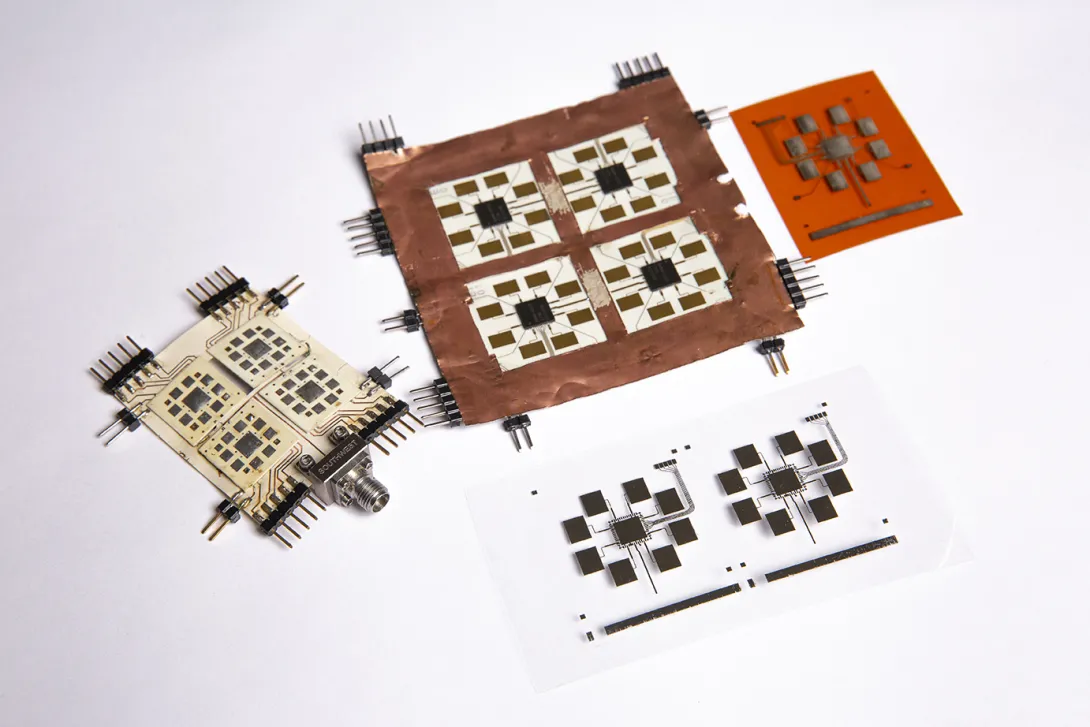
5G+ (5G/Beyond 5G) is the fastest-growing segment and the only significant opportunity for investment growth in the wireless network infrastructure market, according to the latest forecast by Gartner, Inc. But currently 5G+ technologies rely on large antenna arrays that are typically bulky and come only in very limited sizes, making them difficult to transport and expensive to customize.
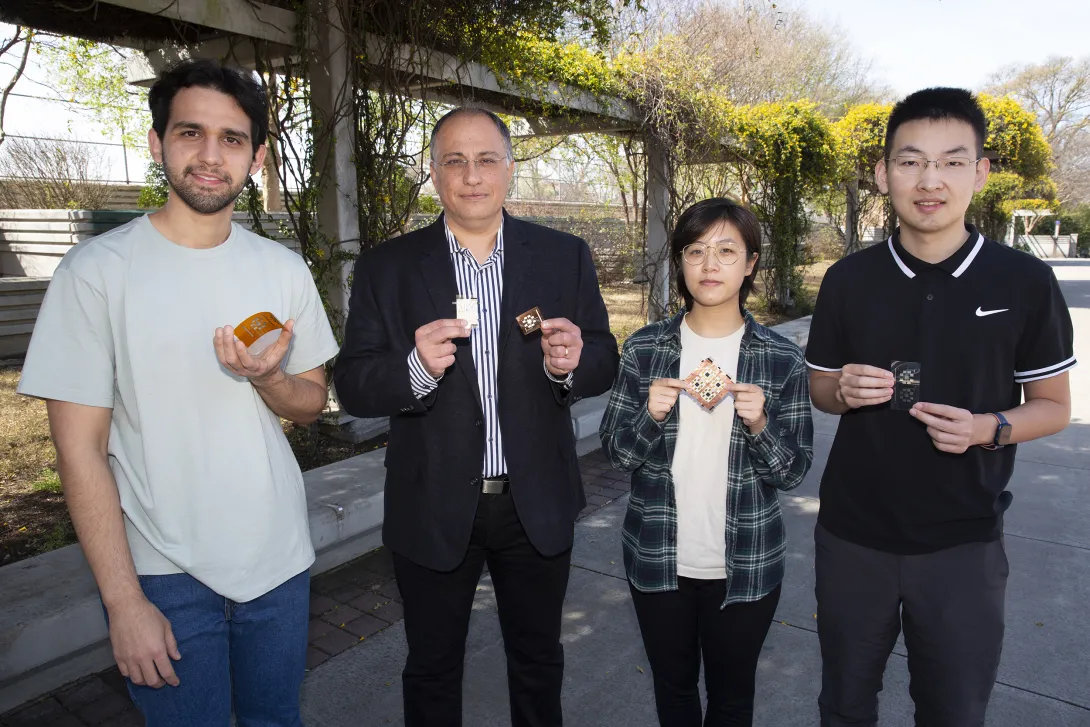
Researchers from Georgia Tech’s College of Engineering have developed a novel and flexible solution to address the problem. Their additively manufactured tile-based approach can construct on-demand, massively scalable arrays of 5G+ (5G/Beyond 5G)‐enabled smart skins with the potential to enable intelligence on nearly any surface or object. The study, recently published in Scientific Reports, describes the approach, which is not only much easier to scale and customize than current practices, but features no performance degradation whenever flexed or scaled to a very large number of tiles.
“Typically, there are a lot of smaller wireless network systems working together, but they are not scalable. With the current techniques, you can’t increase, decrease, or direct bandwidth, especially for very large areas,” said Manos Tentzeris, Ken Byers Professor in Flexible Electronics in the School of Electrical and Computer Engineering. “Being able to utilize and scale this novel tile-based approach makes this possible.”
Tentzeris says his team’s modular application equipped with 5G+ capability has the potential for immediate, large-scale impact as the telecommunications industry continues to rapidly transition to standards for faster, higher capacity, and lower latency communications.
BUILDING THE TILES
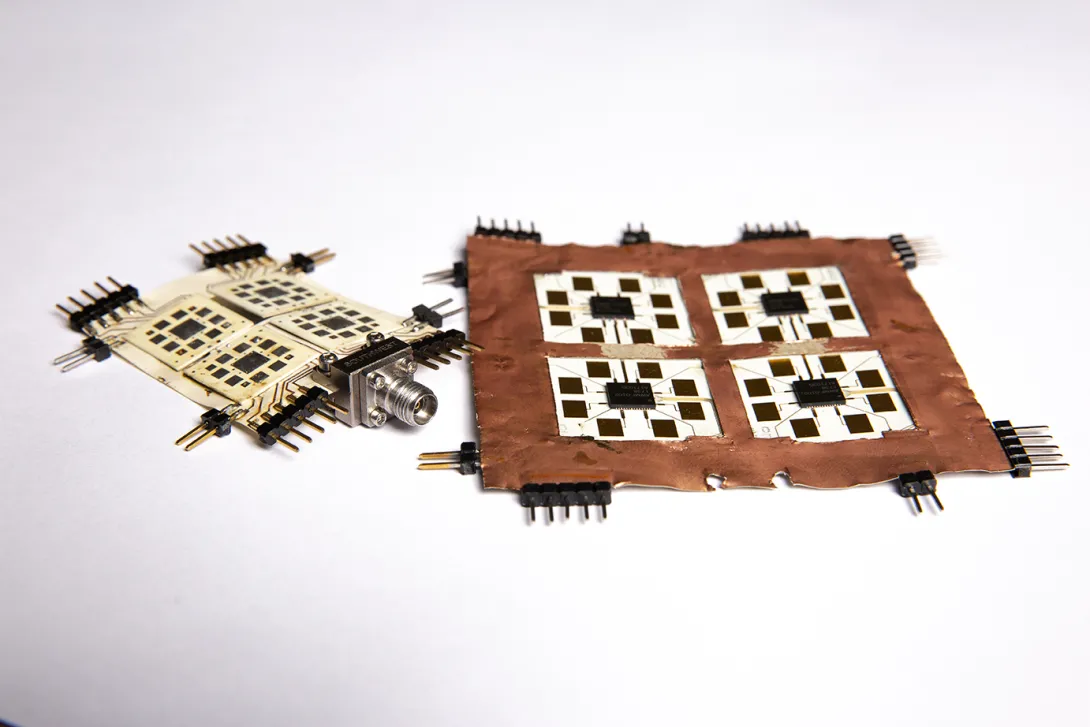
In Georgia Tech’s new approach, flexible and additively manufactured tiles are assembled onto a single, flexible underlying layer. This allows tile arrays to be attached to a multitude of surfaces. The architecture also allows for very large 5G+ phased/electronically steerable antenna array networks to be installed on-the-fly. According to Tentzeris, attaching a tile array to an unmanned aerial vehicle (UAV) is even a possibility to surge broadband capacity in low coverage areas.
In the study, the team fabricated a proof-of-concept, flexible 5×5-centimeter tile array and wrapped it around a 3.5-centimeter radius curvature. Each tile includes an antenna subarray and an integrated, beamforming integrated circuit on an underlying tiling layer to create a smart skin that can seamlessly interconnect the tiles into very large antenna arrays and massive multiple-input multiple-outputs (MIMOs) — the practice of housing two or more antennas within a single wireless device. Tile-based array architectures on rigid surfaces with single antenna elements have been researched before, but do not include the modularity, additive manufacturability, or flexible implementation of the Georgia Tech design.
The proposed modular tile approach means tiles of identical sizes can be manufactured in large quantities and are easily replaceable, reducing the cost of customization and repairs. Essentially, this approach combines removable elements, modularity, massive scalability, low cost, and flexibility into one system.
5G+ IS JUST THE BEGINNING
While the tiling architecture has demonstrated the ability to greatly enhance 5G+ technologies, its combination of flexible and conformal capabilities has the potential to be applied in numerous different environments, the Georgia Tech team says.
“The shape and features of each tile scale can be singular and can accommodate different frequency bands and power levels,” said Tentzeris. “One could have communications capabilities, another sensing capabilities, and another could be an energy harvester tile for solar, thermal, or ambient RF energy. The application of the tile framework is not limited to communications.”
Internet of Things, virtual reality, as well as smart manufacturing/Industry 4.0 — a technology-driven approach that utilizes internet-connected “intelligent” machinery to monitor and fully automate the production process — are additional areas of application the team is excited to explore.
“The tile-architecture’s mass scalability makes its applications particularly diverse and virtually ubiquitous. From structures the size of dams and buildings, to machinery or cars, down to individual health-monitoring wearables,” said Tentzeris. “We’re moving in a direction where everything will be covered in some type of a wireless conformal smart skin encompassing electronically steerable antenna arrays of widely diverse sizes that will allow for effective monitoring.”
The team now looks forward to testing the approach outside the lab on large, real-world structures. They are currently working on the fabrication of much larger, fully inkjet-printed tile arrays (256+ elements) that will be presented at the upcoming International Microwave Symposium (IEEE IMS 2022) – the flagship IEEE conference in RF and microwave engineering. The IMS presentation will introduce a new tile-based large-area architecture version that will allow assembly of customizable tile arrays in a rapid and low-cost fashion for numerous conformal platforms and 5G+ enabled applications.
****
The authors declare no competing interests.
This work was supported in part by the National Science Foundation.
CITATIONS: He, X., Cui, Y. & Tentzeris, M.M. Tile-based massively scalable MIMO and phased arrays for 5G/B5G-enabled smart skins and reconfigurable intelligent surfaces. Sci Rep 12, 2741 (2022). https://doi.org/10.1038/s41598-022-06096-9
K.Hu, G.S.V.Angulo, Y.Cui and M.M.Tentzeris, “Flexible and Scalable Additively Manufactured Tile-Based Phased Arrays for Satellite Communications and 5G mmWave Applications,” accepted for presentation at IEEE International Microwave Symposium (IMS) 2022, Denver, CO, June 2022.
News Contact
Dan Watson
dwatson@ece.gatech.edu
Mar. 17, 2022



By Frida Carrera
During the summer of 2021, computer science student Neil Sanghavi and computer science recent grad Ahan Shah, both from Fairfax, VA, reconnected to catch up with one another and discuss the projects they were working on. In doing so they discovered a mutual resolve to create something using innovative technology and solve a problem relating to intellectual property, specifically patents. Both Neil and Ahan had just started to get into crypto trading and realized that NFT technology had more to offer than its collectible aspect. Here the idea of PatentX was created: to use NFT technology to provide utility in an antiquated space that lacked efficiency.
“It is estimated that we have $1 trillion in unused IP in the United States currently. Additionally, it is reported that there is $25.6 billion worth of patent monetization available today. This is why we created PatentX, a blockchain-backed marketplace to facilitate intellectual property transactions. We built this to make sure the little man innovators and entrepreneurs have an outlet to monetize and connect their patents with the world. Not only that, we are creating tools for large businesses, law firms, venture capitals to manage all of their IP on the blockchain that can handle transactions in seconds.”
Neil and Ahan describe their product launch process as a great learning experience and are firm believers that there can never be too much help. They are currently supported by DXPartners and have received help from various mentors and blockchain professionals. They have been able to traverse obstacles and learn about the marketing, finance, and business aspects behind building a startup despite coming from a technical background.
Their vision for PatentX is to disrupt the traditional way intellectual property is being transacted and to become the World’s Next Web3 Patent Office. PatentX will be releasing an NFT collection of the most historic patent innovations this early March and encourage interested individuals to stay tuned for their launch.
To learn more about PatentX visit their social media:
Twitter: @PatentXNFT
Instagram: @PatentX.io
To learn more about student innovation at Georgia Tech visit: https://innovation.cae.gatech.edu/
Mar. 28, 2022
By Frida Carrera
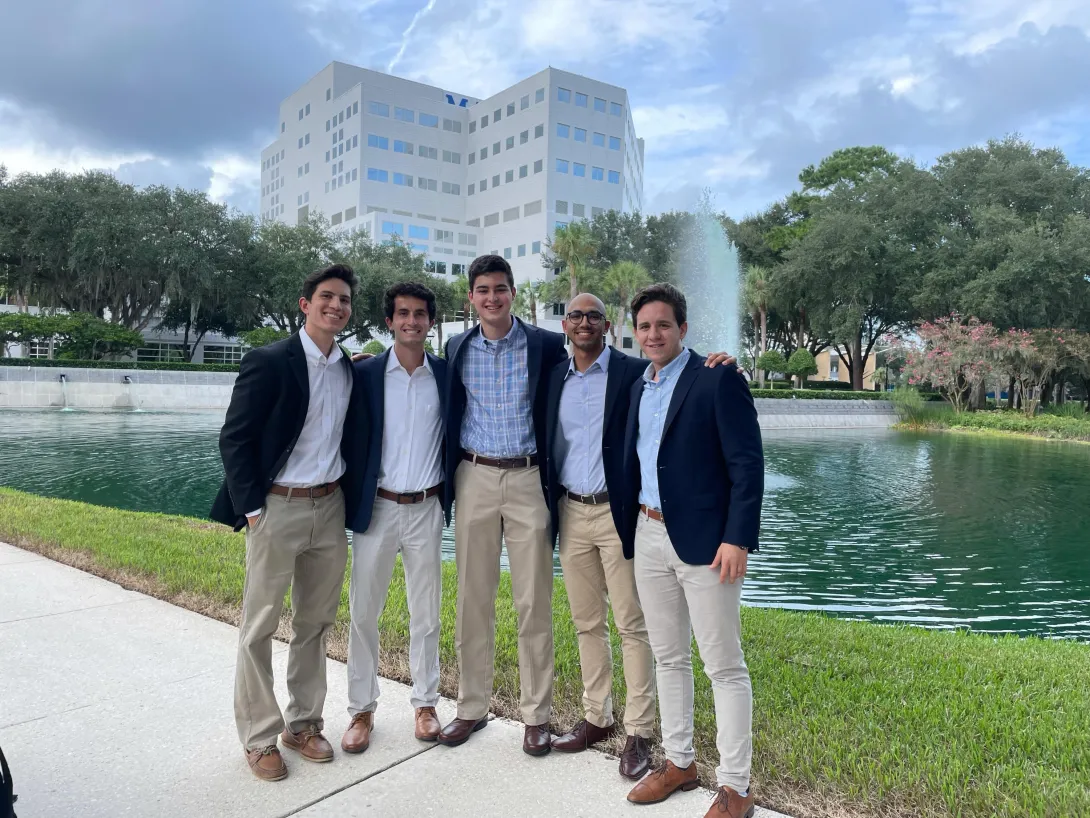
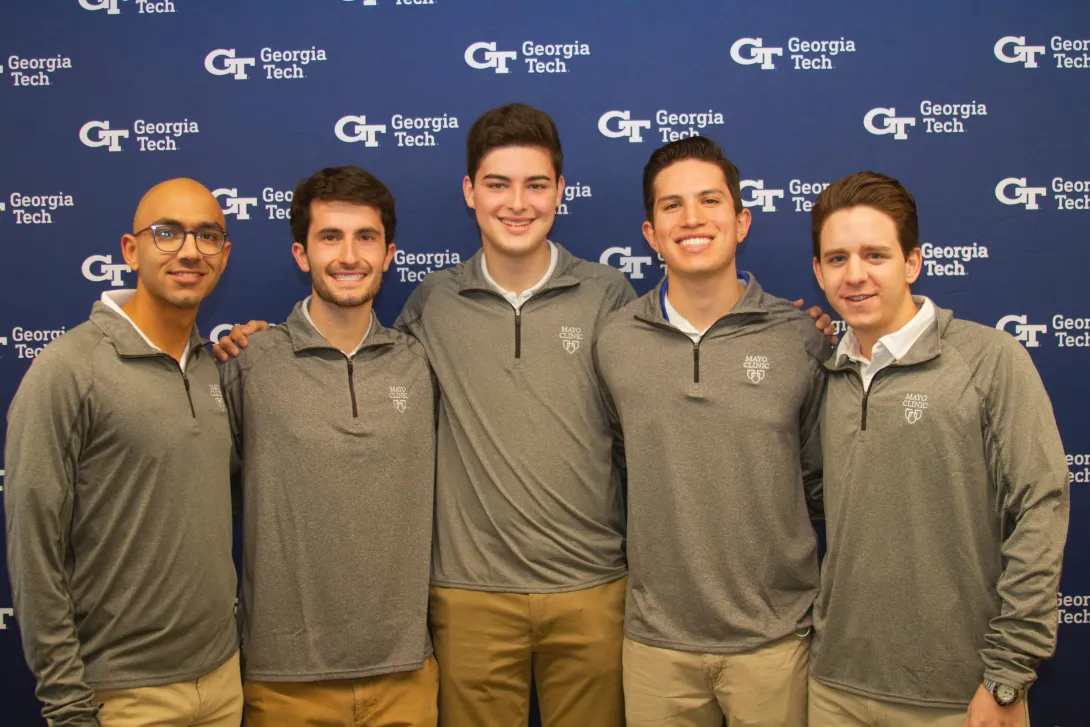
On April 2, 2022, Team carSEAL will represent Georgia Tech in the 6th annual ACC InVenture Prize Competition hosted this year by Florida State University. Team members Shovan Bhatia, Joshua Cruz, Nicholas Lima, Derek Prusener, and Giancarlo Riccobono will compete against other teams in the ACC Conference for a chance to win up to $30,000 in prizes.
carSEAL began with five biomedical engineering students collaborating on a capstone project. After being accepted into the highly sought-after Mayo Clinic Capstone Project, they received mentorship from Dr. Rabih Tawk, a world-renowned neurosurgeon. With his guidance, they learned that surgeons currently lack the tools to close the carotid artery after endovascular procedures. Through a pragmatic approach, the team developed 100+ conceptual designs and iterations. After numerous discussions with attending surgeons across the nation and preliminary testing, they developed carSEAL – a vascular closure device for the carotid artery.
So far, the team has found the InVenture Prize process to be exhilarating.
“Through each round of this process, we have seen incredible teams working on impactful projects and it is exciting to be surrounded by such brilliant minds from numerous backgrounds. It has been especially rewarding working with so many supportive advisors from Georgia Tech, who have been through the startup process and have freely offered their expertise. Along each step of this process, we have learned something new to refine our pitch and ensure we are presenting our most competitive self at the ACC.”
Currently, aside from preparing for the ACC InVenture Prize, the carSEAL team is performing benchtop lab testing to evaluate its efficacy in animal models. Soon after, the team will be moving to pre-clinical studies on their path to obtaining FDA clearance before carSEAL is commercialized. Winning the ACC InVenture Prize would help them gain more traction and gather sufficient funds to help them with this process.
“I am extremely proud of our team’s achievements in the short 6 months that we have worked together. carSEAL has gained a lot of traction already and we are excited to see how far we can take this, hopefully bringing carSEAL to clinical practice within a few years,” Bhatia stated.
The Georgia Tech community can support carSEAL in the competition by voting for them for the People’s Choice Awards by visiting: https://accinventureprize.com/peoples-choice-voting. Online voting begins March 28.
To learn more about the ACC InVenture Prize visit https://accinventureprize.com.