
Dec. 13, 2023

Samuel Litchfield, research engineer at the Cybersecurity, Information Protection, and Hardware Evaluation Research (CIPHER) lab of the Georgia Tech Research Institute (GTRI), leads the Cybersecurity of Critical Infrastructure Research Initiative at the Strategic Energy Institute. Litchfield serves as the associate director of research initiatives at the Institute for Cybersecurity and Resilient Infrastructure Studies (ICARIS), a joint research collaboration between Georgia Tech and the U.S. Department of Energy’s Pacific Northwest National Laboratory whose mission is to deliver the technologies, test beds, and talent necessary to secure the nation’s critical infrastructure.
Litchfield received his bachelor’s and master’s degrees from Georgia Tech in computer engineering. Focused on cybersecurity since 2012, he has worked in cyber-physical system security, network protocol reverse engineering, and large-scale systems vulnerability assessments. Below is a brief Q&A with Litchfield where he discusses his research focus areas and how it influences the cybersecurity initiatives at Georgia Tech.
- What is your field of expertise and at what point in your life did you first become interested in this area?
My field of expertise is cybersecurity of critical infrastructure and embedded systems. I started getting into it first in my undergraduate coursework when I learned about overlaps between control theory, computer architecture, and networking. These overlaps create critical infrastructure.
- What questions or challenges sparked your current energy research? What are the big issues facing your research area right now?
A lot of my day-to-day at work is focused on national security. That comes from both being at GTRI and generally looking at cybersecurity questions.
When you start applying cybersecurity to critical infrastructure, you very quickly run into national security questions like how to keep the lights on and how to keep water flowing and keep people living their lives — basically how to prevent devices or pieces from getting compromised and how to keep these systems moving/working despite people trying to break them. How do we keep the overall infrastructure working in the face of threats even if some elements are compromised? What modifications do we need to make to these sometimes decades-old systems, and what new security primitives can we invent to minimize those modifications? An example is a water system supplying water to your municipality — it is dependent on unobstructed electricity to keep its pumps moving — figuring out how to model those cross-system dependencies is an active area of my research topics as well.
- What interests you the most leading the research initiative on cybersecurity of critical infrastructure? Why is your initiative important to the development of Georgia Tech’s energy research strategy?
In addition to the above questions and figuring out how we approach this sort of research topics, one thing I always find super interesting is coming to a new domain, energy in this case, and figuring out how to use existing domain-specific tools to augment system security, or how those tools might find application in cybersecurity. Aiding PI to PI interactions to get real impacts on systems as a whole and convening researchers whose topic areas don’t traditionally overlap together and identifying projects that can come out of that interaction keeps me going.
Georgia Tech is already a leader in power engineering and cybersecurity separately. Bringing those two large pieces of campus together is going to be truly pivotal for Georgia Tech as an institution. There are other domains with leaders in those fields that we can hopefully bring more to the forefront as we combine them with security.
- What are the broader global and social benefits of the research you and your team conduct on the cybersecurity of critical infrastructure?
There are two basic benefits — one from the United States national security perspective — to keep the infrastructure secure and raise the bar on the effort and cost it takes to compromise systems or use them as a lever in international conflicts. The next one is increasing the security of systems by increasing their resilience for run of the mill things like storms, wildfires, and large climate events. This will become more relevant as climate change increases severe weather events. Another global benefit I could think of is removing energy security from the field of national security levers — see Germany’s natural gas dependence during the Russian invasion of Ukraine.
- What are your plans for engaging a wider Georgia Tech faculty pool with the broader energy community?
Cybersecurity touches on multiple domains and increasing faculty engagement by getting domain experts to talk to security experts is important. Internally, I’m hoping to build an infrastructure security community across schools that’s invested in forming collaborations between areas and subjects that might not traditionally overlap. Externally, I am planning to build a portfolio of events that engages and brings together community members around Georgia, from manufacturers to utility asset owners to external policymakers and regulators.
- What are your hobbies?
Physically, when I'm not sitting at a desk, I like to go climbing in gyms or hike through the Appalachians when it’s not July in Georgia . Outside of that, I do a lot of recreational programming at home, and I play some tabletop games with friends.
- Who has influenced you the most?
My graduate advisor Raheem Beyah set a good example of how to be passionate about my research, both in terms of technical expertise on how to formulate research questions in a tangible and approachable way and engaging with the people doing the research.
Another is one of my current bosses, Anita Pavadore, in terms of raising the bar on the quality of what I do, from interacting with others to executing research.
News Contact
Priya Devarajan || Research Communications Program Manager || SEI || RBI
Oct. 20, 2023

In keeping with a strong strategic focus on AI for the 2023-2024 Academic Year, the Institute for Data Engineering and Science (IDEaS) has announced the winners of its 2023 Seed Grants for Thematic Events in AI and Cyberinfrastructure Resource Grants to support research in AI requiring secure, high-performance computing capabilities. Thematic event awards recipients will receive $8K to support their proposed workshop or series and Cyberinfrastructure winners will receive research support consisting of 600,000 CPU hours on the AMD Genoa Server as well as 36,000 hours of NVIDIA DGX H-100 GPU server usage and 172 TB of secure storage.
Congratulations to the award winners listed below!
Thematic Events in AI Awards
Proposed Workshop: “Foundation of scientific AI (Artificial Intelligence) for Optimization of Complex Systems”
Primary PI: Peng Chen, Assistant Professor, School of Computational Science and Engineering
Proposed Series: “Guest Lecture Seminar Series on Generative Art and Music”
Primary PI: Gil Weinberg, Professor, School of Music
Cyber-Infrastructure Resource Awards
Title: Human-in-the-Loop Musical Audio Source Separation
Topics: Music Informatics, Machine Learning
Primary PI: Alexander Lerch, Associate Professor, School of Music
Co-PIs: Karn Watcharasupat, Music Informatics Group | Yiwei Ding, Music Informatics Group | Pavan Seshadri, Music Informatics Group
Title: Towards A Multi-Species, Multi-Region Foundation Model for Neuroscience
Topics: Data-Centric AI, Neuroscience
Primary PI: Eva Dyer, Assistant Professor, Biomedical Engineering
Title: Multi-point Optimization for Building Sustainable Deep Learning Infrastructure
Topics: Energy Efficient Computing, Deep Learning, AI Systems OPtimization
Primary PI: Divya Mahajan, Assistant Professor, School of Electrical and Computer Engineering, School of Computer Science
Title: Neutrons for Precision Tests of the Standard Model
Topics: Nuclear/Particle Physics, Computational Physics
Primary PI: Aaron Jezghani - OIT-PACE
Title: Continual Pretraining for Egocentric Video
Primary PI: : Zsolt Kira, Assistant Professor, School of Interactive Computing
Co-PI: Shaunak Halbe, Ph.D. Student, Machine Learning
Title: Training More Trustworthy LLMs for Scientific Discovery via Debating and Tool Use
Topics: Trustworthy AI, Large-Language Models, Multi-Agent Systems, AI Optimization
Primary PIs: Chao Zhang, School of Computational Science and Engineering & Bo Dai, College of Computing
Title: Scaling up Foundation AI-based Protein Function Prediction with IDEaS Cyberinfrastructure
Topics: AI, Biology
Primary PI: Yunan Luo, Assistant Professor, School of Computational Science and Engineering
- Christa M. Ernst
News Contact
Christa M. Ernst - Research Communications Program Manager
Robotics | Data Engineering | Neuroengineering
Sep. 28, 2022

Advancement in technology brings about plenty of benefits for everyday life, but it also provides cyber criminals and other potential adversaries with new opportunities to cause chaos for their own benefit.
As researchers begin to shape the future of artificial intelligence in manufacturing, Georgia Tech recognizes the potential risks to this technology once it is implemented on an industrial scale. That’s why Associate Professor Saman Zonouz will begin researching ways to protect the nation’s newest investment in manufacturing.
The project is part of the $65 million grant from the U.S. Department of Commerce’s Economic Development Administration to develop the Georgia AI Manufacturing (GA-AIM) Technology Corridor. While main purpose of the grant is to develop ways of integrating artificial intelligence into manufacturing, it will also help advance cybersecurity research, educational outreach, and workforce development in the subject as well.
“When introducing new capabilities, we don’t know about its cybersecurity weaknesses and landscape,” said Zonouz. “In the IT world, the potential cybersecurity vulnerabilities and corresponding mitigation are clear, but when it comes to artificial intelligence in manufacturing, the best practices are uncertain. We don’t know what all could go wrong.”
Zonouz will work alongside other Georgia Tech researchers in the new Advanced Manufacturing Pilot Facility (AMPF) to pinpoint where those inevitable attacks will come from and how they can be repelled. Along with a team of Ph.D. students, Zonouz will create a roadmap for future researchers, educators, and industry professionals to use when detecting and responding to cyberattacks.
“As we increasingly rely on computing and artificial intelligence systems to drive innovation and competitiveness, there is a growing recognition that the security of these systems is of paramount importance if we are to realize the anticipated gains,” said Michael Bailey, Inaugural Chair of the School of Cybersecurity and Privacy (SCP). “Professor Zonouz is an expert in the security of industrial control systems and will be a vital member of the new coalition as it seeks to provide leadership in manufacturing automation.”
Before coming to Georgia Tech, Zonouz worked with the School of Electrical and Computer Engineering (ECE) and the College of Engineering on protecting and studying the cyber-physical systems of manufacturing. He worked with Raheem Beyah, Dean of the College of Engineering and ECE professor, on several research papers including two that were published at the 26th USENIX Security Symposium, and the Network and Distributed System Security Symposium.
“As Georgia Tech continues to position itself as a leader in artificial intelligence manufacturing, interdisciplinarity collaboration is not only an added benefit, it is fundamental,” said Arijit Raychowdhury, Steve W. Chaddick School Chair and Professor of ECE. “Saman’s cybersecurity expertise will play a crucial role in the overall protection and success of GA-AIM and AMPF. ECE is proud to have him representing the school on this important project.”
The research is expected to take five years, which is typical for a project of this scale. Apart from research, there will be a workforce development and educational outreach portion of the GA-AIM program. The cyber testbed developed by Zonouz, and his team will live in the 24,000 square-foot AMPF facility.
News Contact
JP Popham
Communications Officer | School of Cybersecurity and Privacy
Georgia Institute of Technology
jpopham3@gatech.edu | scp.cc.gatech.edu
Apr. 13, 2022
By Frida Carrera
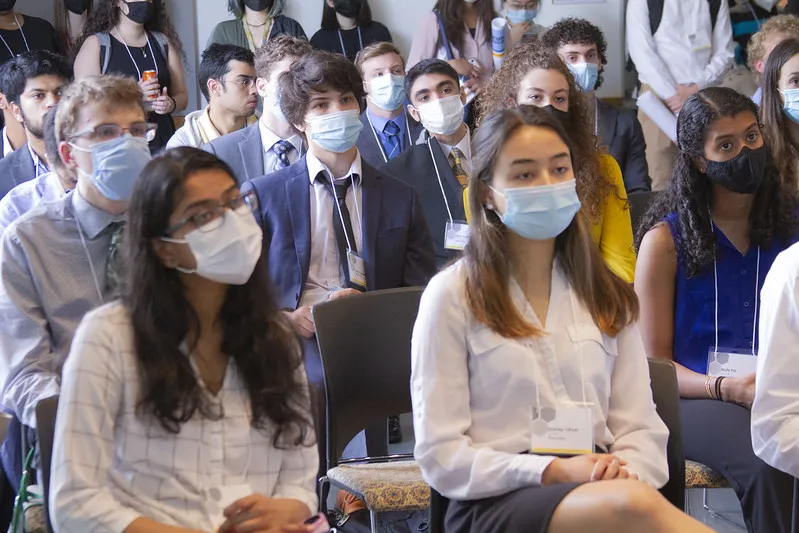
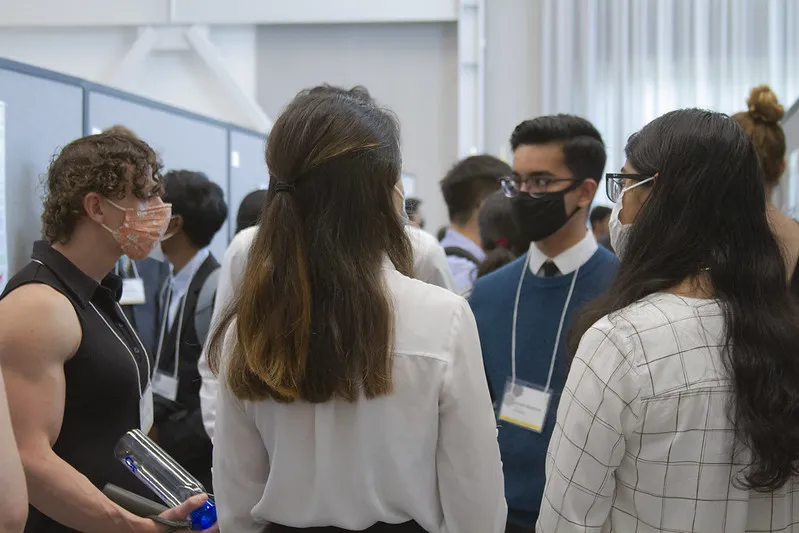
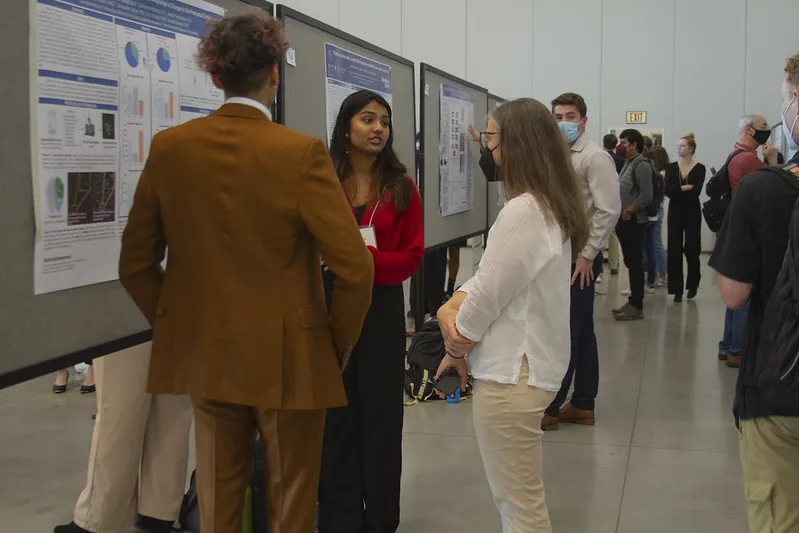
On Wednesday, April 13th 2022, the Undergraduate Research Opportunities Program (UROP) hosted the 16th annual Spring Undergraduate Research Symposium. UROP’s annual symposium is Georgia Tech’s largest undergraduate research colloquium and allows students to present their research and gain valuable skills and presentation experience. Each year the symposium also presents awards to the top poster and oral presentation from each college and honors the Outstanding Undergraduate Researcher (OUR) from each college. And with over 40 oral presentations and nearly 90 poster presentations, this year’s symposium proved to be another success for UROP and Georgia Tech.
This year the symposium was held in Exhibition Hall and opened with an introduction and keynote address to students, faculty, and other non-presenters. Shortly after, the event moved into the poster presentations segment where undergraduate students displayed their research to judges, faculty, and other attendees. The oral presentations followed soon after and gave student researchers the opportunity to go more in-depth with their research and findings and answer any questions the judges and attendees had. To end the event, sponsoring colleges and departments recognized Outstanding Undergraduate Researchers from their respective colleges. Additionally, the symposium judges were tasked with selecting the top student researchers having exceptional poster and oral presentations.
Any Georgia Tech undergraduate student interested in presenting their research is encouraged to apply for future symposiums and to build on research presentation skills, connect with other undergraduate researchers and faculty, and the chance to be recognized with awards by members of the Georgia Tech research community. UROP also hosts other research-related events and workshops throughout the school year to assist undergraduate students interested in research and build on their passions!
To view the list of awardees and pictures from the event visit: https://symposium.urop.gatech.edu/awards/
To learn more about undergraduate research at Georgia Tech visit: https://urop.gatech.edu/
Mar. 17, 2022



By Frida Carrera
During the summer of 2021, computer science student Neil Sanghavi and computer science recent grad Ahan Shah, both from Fairfax, VA, reconnected to catch up with one another and discuss the projects they were working on. In doing so they discovered a mutual resolve to create something using innovative technology and solve a problem relating to intellectual property, specifically patents. Both Neil and Ahan had just started to get into crypto trading and realized that NFT technology had more to offer than its collectible aspect. Here the idea of PatentX was created: to use NFT technology to provide utility in an antiquated space that lacked efficiency.
“It is estimated that we have $1 trillion in unused IP in the United States currently. Additionally, it is reported that there is $25.6 billion worth of patent monetization available today. This is why we created PatentX, a blockchain-backed marketplace to facilitate intellectual property transactions. We built this to make sure the little man innovators and entrepreneurs have an outlet to monetize and connect their patents with the world. Not only that, we are creating tools for large businesses, law firms, venture capitals to manage all of their IP on the blockchain that can handle transactions in seconds.”
Neil and Ahan describe their product launch process as a great learning experience and are firm believers that there can never be too much help. They are currently supported by DXPartners and have received help from various mentors and blockchain professionals. They have been able to traverse obstacles and learn about the marketing, finance, and business aspects behind building a startup despite coming from a technical background.
Their vision for PatentX is to disrupt the traditional way intellectual property is being transacted and to become the World’s Next Web3 Patent Office. PatentX will be releasing an NFT collection of the most historic patent innovations this early March and encourage interested individuals to stay tuned for their launch.
To learn more about PatentX visit their social media:
Twitter: @PatentXNFT
Instagram: @PatentX.io
To learn more about student innovation at Georgia Tech visit: https://innovation.cae.gatech.edu/
Mar. 28, 2022
By Frida Carrera
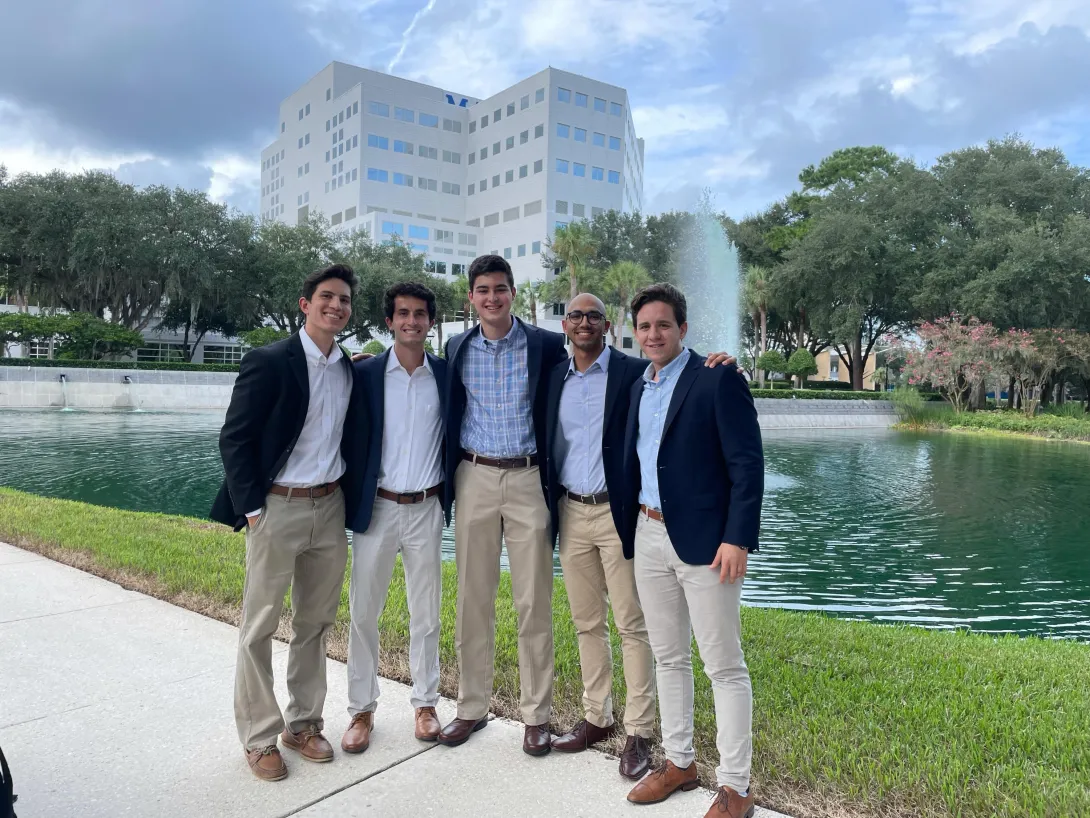
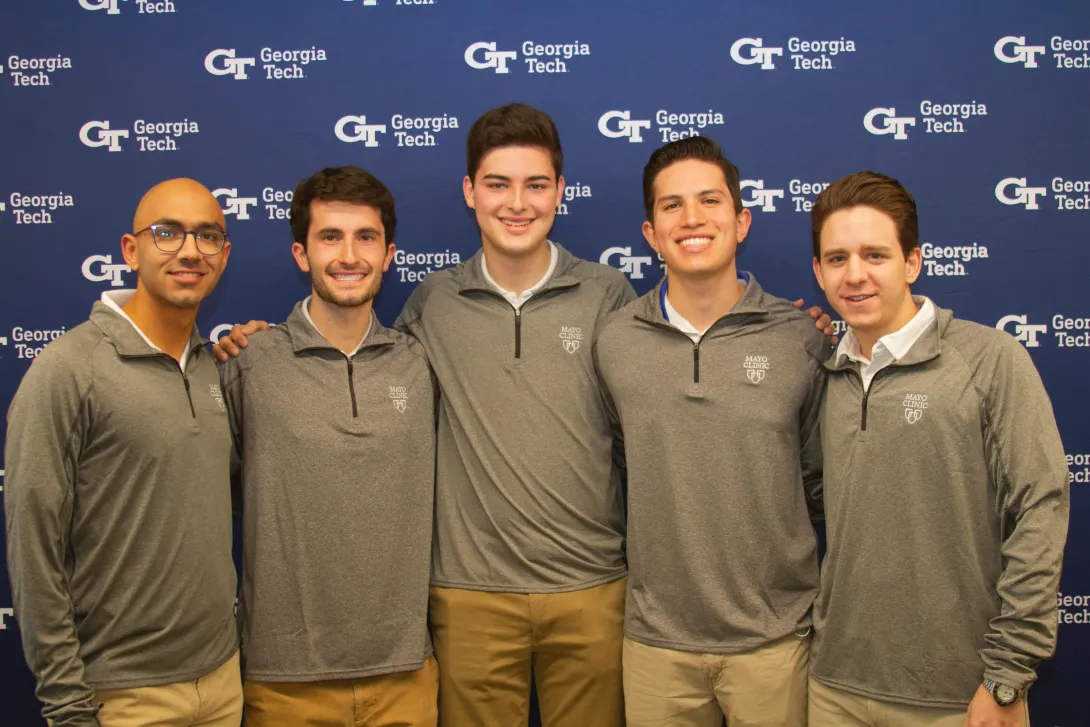
On April 2, 2022, Team carSEAL will represent Georgia Tech in the 6th annual ACC InVenture Prize Competition hosted this year by Florida State University. Team members Shovan Bhatia, Joshua Cruz, Nicholas Lima, Derek Prusener, and Giancarlo Riccobono will compete against other teams in the ACC Conference for a chance to win up to $30,000 in prizes.
carSEAL began with five biomedical engineering students collaborating on a capstone project. After being accepted into the highly sought-after Mayo Clinic Capstone Project, they received mentorship from Dr. Rabih Tawk, a world-renowned neurosurgeon. With his guidance, they learned that surgeons currently lack the tools to close the carotid artery after endovascular procedures. Through a pragmatic approach, the team developed 100+ conceptual designs and iterations. After numerous discussions with attending surgeons across the nation and preliminary testing, they developed carSEAL – a vascular closure device for the carotid artery.
So far, the team has found the InVenture Prize process to be exhilarating.
“Through each round of this process, we have seen incredible teams working on impactful projects and it is exciting to be surrounded by such brilliant minds from numerous backgrounds. It has been especially rewarding working with so many supportive advisors from Georgia Tech, who have been through the startup process and have freely offered their expertise. Along each step of this process, we have learned something new to refine our pitch and ensure we are presenting our most competitive self at the ACC.”
Currently, aside from preparing for the ACC InVenture Prize, the carSEAL team is performing benchtop lab testing to evaluate its efficacy in animal models. Soon after, the team will be moving to pre-clinical studies on their path to obtaining FDA clearance before carSEAL is commercialized. Winning the ACC InVenture Prize would help them gain more traction and gather sufficient funds to help them with this process.
“I am extremely proud of our team’s achievements in the short 6 months that we have worked together. carSEAL has gained a lot of traction already and we are excited to see how far we can take this, hopefully bringing carSEAL to clinical practice within a few years,” Bhatia stated.
The Georgia Tech community can support carSEAL in the competition by voting for them for the People’s Choice Awards by visiting: https://accinventureprize.com/peoples-choice-voting. Online voting begins March 28.
To learn more about the ACC InVenture Prize visit https://accinventureprize.com.
Mar. 01, 2022
By Frida Carrera
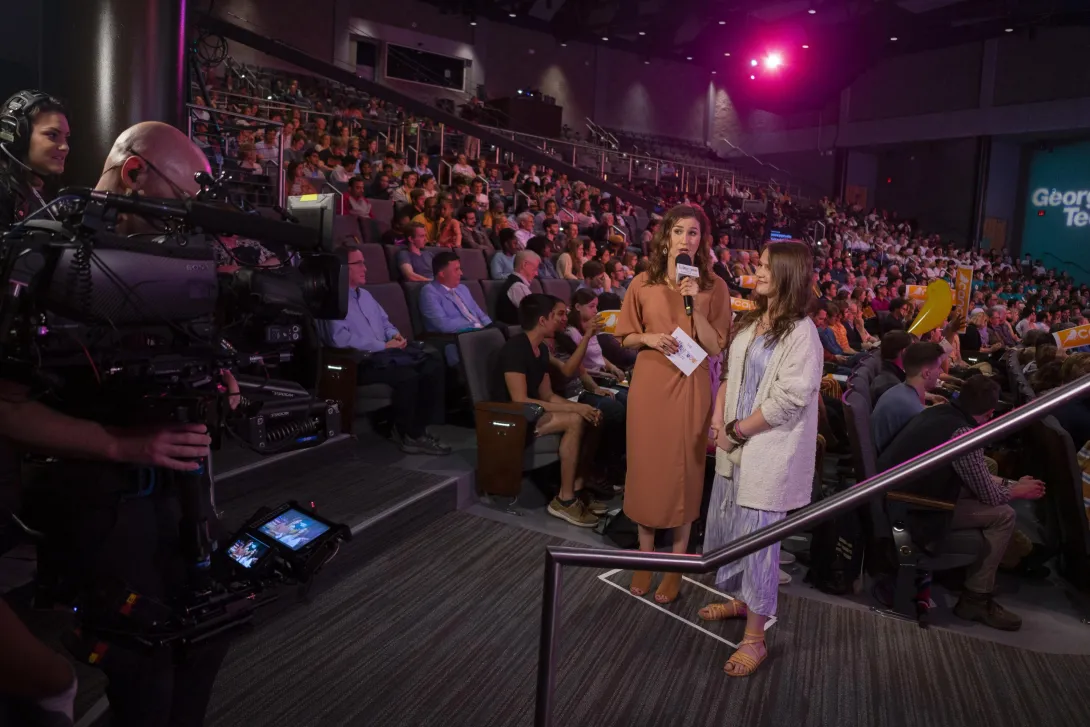
After almost a year of preparation, practice, and refinement, Georgia Tech’s annual InVenture Prize is down to six finalists competing in the final round on March 16th. In this televised round, the final teams will pitch their inventions to a panel of judges and compete for the top prize of $20,000, assistance in patent-filing, and a spot in CREATE-X’s Startup Launch program.
In its 14th year, the InVenture Prize competition features different innovations created by Georgia Tech students from all disciplines and backgrounds. For months prior to the final round, the finalists received coaching and assistance from mentors and coaches on building their prototypes, developing business models, and rehearsing their pitches to investors. The final six teams were chosen from previous preliminary and semifinal rounds that included a broad range of competitors.
The finals of the InVenture Prize will air live from Georgia Tech’s Ferst Center for the Arts at 7:30 p.m. on March 16th on Georgia Public Broadcasting.
The 2022 finalist teams are:
The Foambuster: The Foambuster is a unique handheld tool that allows construction contractors to drastically cut down on the mess, hassle, and money spent that comes with installing exterior insulation.
Edward Diller, Mechanical Engineering, Los Angeles, CA
Davis Waln, Mechanical Engineering, Atlanta, GA
Christophe Senghor, Mechanical Engineering, Peachtree City, GA
Katelyn Sand, Mechanical Engineering, Westlake Village, CA
Jaime Paris Meseguer, Mechanical Engineering, Spain
Magic Crop: An application that uses the power of Artificial Intelligence and the rule of thirds to format any number of inputted pictures into the perfect headshot within seconds and without ever sending any images to the cloud or to a third-party server.
Megan Dass, Computer Science, Woodbridge, VA
Reflex: Emergency Medical Drone Response System to deliver life-saving medical equipment.
Nevin Gilbert, Computer Science, Boulder, CO
Usman Jamal, Computer Science, Tucker, GA
Sola: Sola provides a data-driven supplemental insurance plan which covers immediate out-of-pocket expenses for US homeowners following losses from tornadoes.
Brayden Drury, Mechanical Engineering, Park City, Utah
Wesley Pergament, Mechanical Engineering, Old Westbury, NY
StrideLink: Accessible gait analysis wearable for remote monitoring of walking asymmetry.
Marzeah (Zea) Khorramabadi, Computer Engineering, Birmingham, AL
Cassandra (Cassie) McIltrot, Biomedical Engineering, Sykesville, MD
Neel Narvekar, Computer Engineering, Arcadia, CA
Tony Wineman, Electrical Engineering, Woodstock, GA
Tabnam: AI-powered shopping assistant that leverages the knowledge of user experience data.
SooHoon Choi, Computer Science, South Korea
Daksh Gupta, Computer Science, Noida, India
Robert (Davis) Liddell, Computer Science, Lutherville, MD
Ethan Perry, Computer Science, Wellesley, MA
To request tickets for the event visit: https://inventureprize.gatech.edu/form/inventure-prize-ticket-request-f
To learn more about InVenture Prize visit: https://inventureprize.gatech.edu/
Jan. 21, 2022

Even a global pandemic cannot slow the acceleration of new technologies and evolving technologies that has become the disruptive norm of our lives over the past decade.
Big data, global connectedness and the digitization of almost everything are driving a whirlwind of change that touches every aspect of our lives.
Georgia Tech continues to be at the center of that of that maelstrom of progress, pushing the cutting edge, developing and influencing advances and being an insistent voice for ensuring those advances are shared as broadly as possible.
Five faculty members share what they see as major forces impacting the coming year and beyond.
Microchip shortage will drive manufacturing to US and other supply chain changes
One of the big technology and supply chain stories of 2021 was the global shortage of microchips that impacted huge parts of the business world. One of the more visible impacts of that shortage was in the automotive field.
According to industry experts, the microchip shortage cost the automotive business $210 billion in revenue in 2020 driving prices up for new and especially used vehicles throughout the year. Dr. Madhavan Swaminathan, Georgia Tech’s John Pippin Chair in Microsystems Packaging and Electromagnetics, says the industry’s focus on finding solutions will bring noticeable change in the coming year.
He says early word of a trend in moving chip manufacturing to the United States will become a big focus in the coming year as well as auto manufacturers and other industries re-examining just-in-time supply decisions as they build inventory.
Advances in addressing bias in AI bolsters inclusion
In computer science circles, it is no longer any sort of surprise that there can be bias in certain applications of artificial intelligence and machine learning. Bias can stem from a range of factors from the data used to software design to the situation where AI is being used.
How to know what to show each user with different world views in search or newsfeeds is quite different than making sure that software used for healthcare works for everyone. For example, sometimes a data set, even a quite large one, may not be representative.
There are close to 100,000 cases of skin cancer in the U.S. a year, and it is difficult to detect, especially the darker someone's skin tone is.
Machine learning researchers are making huge advances in detecting skin cancer, but a big limit is that the data they are using comes from light-skinned populations.
Knowing this problem exists opens the door to using data and artificial intelligence to improve detection for all. Dr. Deven Desai, a law and ethics professor in Georgia Tech’s Scheller College of Business, says in the coming year, because this potential for bias is known, we will become much better at identifying bias from wherever it may come and addressing it to limit harm.
The focus in the coming year will be on making the searching and sifting tools of AI and machine learning more attuned to potentially skewed results. This focus will bring better, more inclusive results.
Watch the video: A Good Challenge: The Future of AI
Digital twins drive safety, efficiency and savings in construction
Think of them as the ultimate in interactive blueprints that can actually communicate to owners about building performance. The idea of a digital twin is not new. Building an exact match, digital version of a construction project is commonplace in construction now and has been for years. Architectural drawings, CAD images, or BIM images would all be considered “twins” in a way.
The advances that are happening now with true digital twins and that will be taking off in the coming year are in what you can do with and learn from a much more robust digital twin.
"Digital twinning is about the building and all the components that are in the building. Where they are, what condition they're in, all kinds of qualities," says Russell Gentry director of the Digital Building Lab at Georgia Tech.
In the coming year, Gentry expects the idea of using a digital twin will grow as its uses expand - monitoring for maintenance needs, identifying potential problems like leaks or water damage, dialing in HVAC system efficiencies - just a few of the changes that are happening or soon will be. Digital twins will be used to improve building safety, efficiency and even retrofitting existing buildings with new and improved technologies.
The automation and improvements that can be achieved will be a powerful force in construction and building management.
Technology led up-skilling drives job agility that will increase worker satisfaction and productivity
In the U.S. alone, November 2021 saw more than four and a half million people quit their jobs, the biggest spike on record and continuing a streak of transition and upheaval. As the pace of change continues to increase, we need to be able to rapidly reconfigure workforces to address new challenges.
Ashok Goel, professor of computer science and human-centered computing in the School of Interactive Computing, has been watching the rapid changes in the job market. He sees technology as a solution to reskilling employees.
“It is critical that we leverage technology to develop better tools to sync up employers and educators so that job seekers have clear paths to reskilling,” Goel says.
Using AI to match workers to jobs, to improve job performance and satisfaction are just a few of the efforts in the coming year that will ultimately result in improved worker well-being and productivity as well.
Covid public health crisis leads to public policy evolution
The pandemic has defined very clearly a strain in the relationship between scientists and some segments of the general public.
Some public policy makers, as a reflection of that divide, have made decisions related to public health that do not always match generally accepted science. For academic leaders in public policy like Dr. Cassidy Sugimoto, the Marie Patton School Chair in the School of Public Policy at Georgia Tech, this is one of the biggest challenges our society and people making public policy will face in the coming years.
Bridging the divide made clear by Covid and building the relationships that will result in better policy will be an effort that will have impact for decades.
“In many ways we’re setting the stage for the other looming global crises that we’re being faced with like climate change, like issues around social justice.
All of those are going to take the same kind of navigation in communication between the public between science and between policy makers and not just within regions but globally,” said Sugimoto.
It’s a challenge that she and her colleagues have dedicated their careers to taking on.
Watch: Public Policy and the Pandemic
For more trends and in-depth predictions, read: The Year Ahead: Trends to Watch in 2022
News Contact
Blair Meeks
Assistant Vice President External Communications
wmeeks7@gatech.edu
404-894-9793
Dec. 16, 2021
The global supply chain has been rocked by disruptions triggered largely by the coronavirus pandemic, resulting in a cascade of shortages on a host of products ranging from computer chips to medications.
But supply chain disruptions also highlight the potential vulnerabilities in the U.S. manufacturing sector’s critical segments like defense.
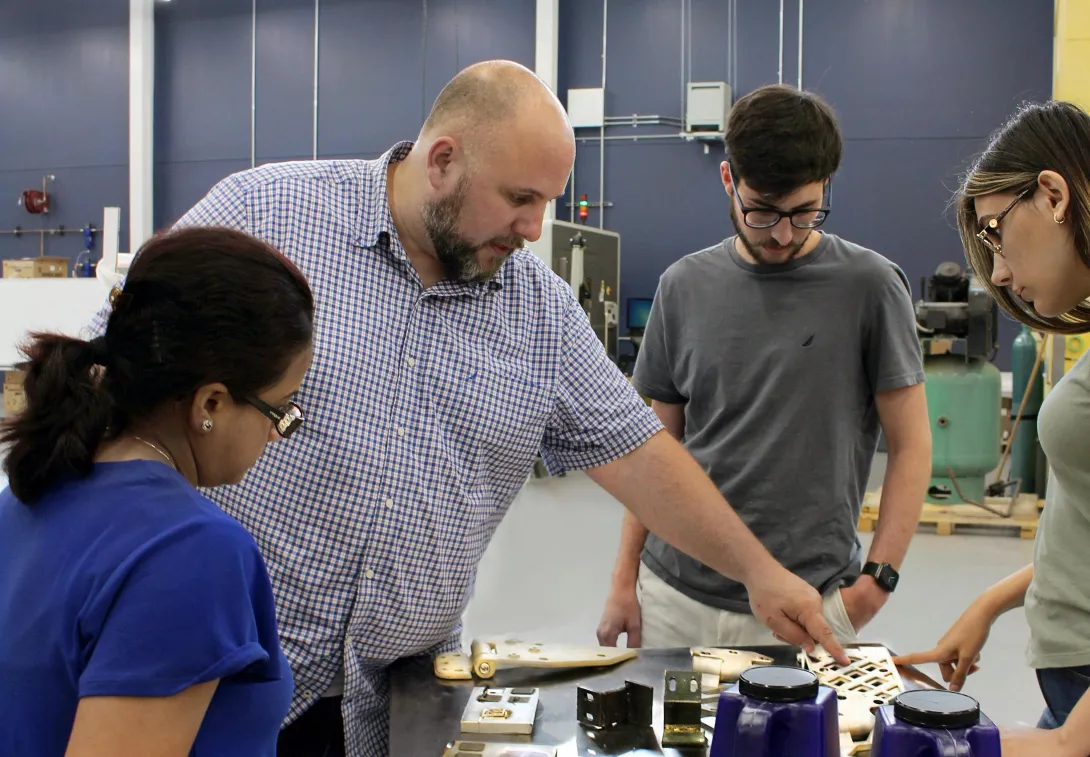
To help manufacturers across the state, the Georgia Institute of Technology has launched the Georgia Manufacturing 4.0 Consortium to work with those businesses in defense and related industries become more resilient and less susceptible to supply chain disruptions. The Consortium, which will begin accepting members in April 2022, will work with Georgia defense manufacturers to incorporate cybersecurity protocols, smart technologies such as sensor packs, machine learning, artificial intelligence, and other best practices under Industry 4.0 technology standards.
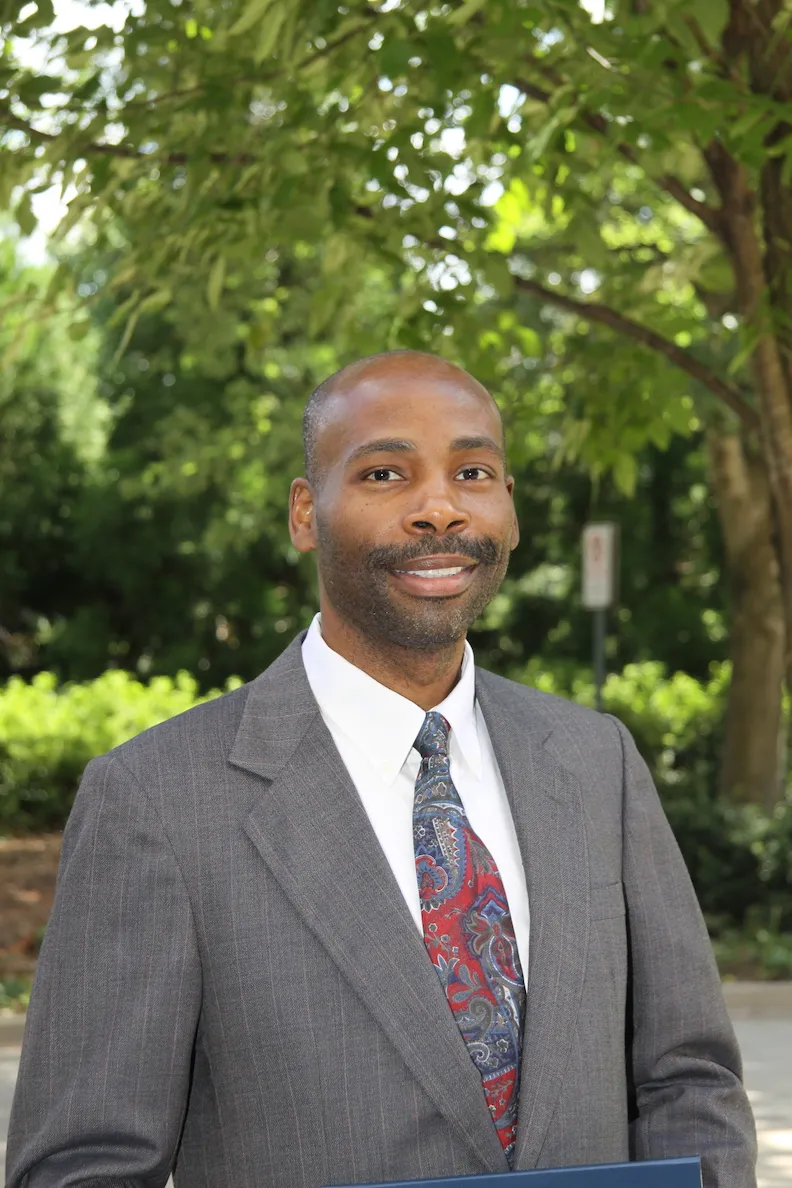
Led by Aaron Stebner, associate professor in the George W. Woodruff School of Mechanical Engineering and the School of Materials Science and Engineering, the Consortium is an 18-month pilot funded by a Department of Defense Office of Local Defense Community Cooperation (OLDCC) grant of nearly $1 million. Georgia Tech is working in partnership with Spelman College, the Technical College System of Georgia, and the Georgia Department of Economic Development, under the grant to develop workforce, training manuals, a curriculum, and to support businesses in adapting to economic and technological changes that emerge at a much more rapid pace today.
“It’s a cooperative effort that’s really focused on helping to get modern technologies to these Georgia manufacturers. This is about establishing a community of manufacturers who all want to move forward but don’t have the bandwidth or capabilities do it individually,” Stebner said.
The Consortium has three goals. The first is to increase the manufacturing defense supply chain’s resilience and diversification. That will allow those companies to pivot quickly in response to demand and let non-defense-related industries enter the supply chain at critical junctures. The second goal is to work with Georgia manufacturers in adopting new technologies and address challenges that put those businesses at risk.
Lastly, the Consortium is to be a conduit that helps small- and medium-sized manufacturers test out innovations using Georgia Tech resources such as the Advanced Manufacturing Pilot Facility, connect manufacturers with each other, and potentially unlock new markets and collaboration opportunities.
While the focus is on defense manufacturing, the Consortium is open to all manufacturers.
“We want to help as many manufacturers as we can, to grow a bigger pie that helps everybody, lowers risk, and allows companies to be part of building innovative solutions” Stebner said.
Manufacturing Supports Georgia Economy
National Association of Manufacturers data show that manufacturing accounts for $61.1 billion in economic activity, roughly 10% of Georgia’s total output. The industry includes more than 6,600 firms that employ nearly 400,000.
At $14 billion a year, Georgia is ranked 13th in federal defense spending. Roughly 1,200 manufacturers in the state are in defense or related industries. Those include information technology companies that support cybersecurity, wireless communications, and other innovations that are critically essential to Industry 4.0 in defense manufacturing.
University partners from the Technical College System of Georgia and Spelman College will look to take the Consortium findings and data from the work they do with member companies to create educational programming and workforce training.
Today, there is a need for more workers in machine learning and other aspects of advanced manufacturing, as well as a need to change perceptions of manufacturing, especially in rural parts of the state, Stebner explained.
To that end, the Technical College System of Georgia could develop programming for students within its two-year education curriculum. It also has a mobile manufacturing unit that could be taken to rural parts of the state and used as a tool to highlight opportunities in manufacturing and dispel misconceptions about the industry.
The all-women’s Spelman College, one of the nation’s premier historically black colleges and universities, launched an extended reality program in the fall of 2020. That program aims to integrate art, technology, and narrative on a gaming platform which is familiar and engaging for students. Those students will develop the technical skills to develop games, create immersive virtual experiences, and develop visual simulations for research, education, and training.
For Consortium members, Spelman’s extended reality program can be used to help turn research data gathered from them into workforce training and development modules.
“Spelman has a long history of graduating women in the natural sciences, and that history has recently led the Department of Defense to distinguish the College as a Center of Excellence for educating women in STEM,” said Jerry Volcy, a Spelman professor and co-director of the Spelman Innovation Lab.
The extended reality program furthers Spelman’s goal to increase the technological readiness of its graduates.
“Spelman has a long record of forging pathways for women of color into new spaces. Today, these spaces include extended reality, defense and, to some extent, manufacturing research,” Volcy said. “From the College’s perspective, participation in the Consortium has the dual potential of creating and discovering new pathways into these industries while immediately providing real-world applications laboratory for the developing extended reality program.”
Fulfilling Georgia Tech’s Mission
Within Georgia Tech, the Georgia Manufacturing Extension Partnership and the Georgia Tech Manufacturing Institute will support Consortium efforts.
The Consortium reflects Georgia Tech’s broader mission to further its Advanced Manufacturing Initiative, said George White, Georgia Tech’s interim vice president of Industry Collaboration.
“The anticipated research impact envisioned through the Defense Manufacturing Consortium will strengthen Georgia Tech’s positioning in enabling major public private collaborations,” White said. “The advent of the Consortium represents the opportunity to convene key stakeholders from government, academics, and industry to innovate and solve the most challenging problems in manufacturing.”
News Contact
Writer and media relations contact:
Péralte C. Paul
peralte.paul@comm.gatech.edu
404.316.1210
Dec. 10, 2021
By Frida Carrera
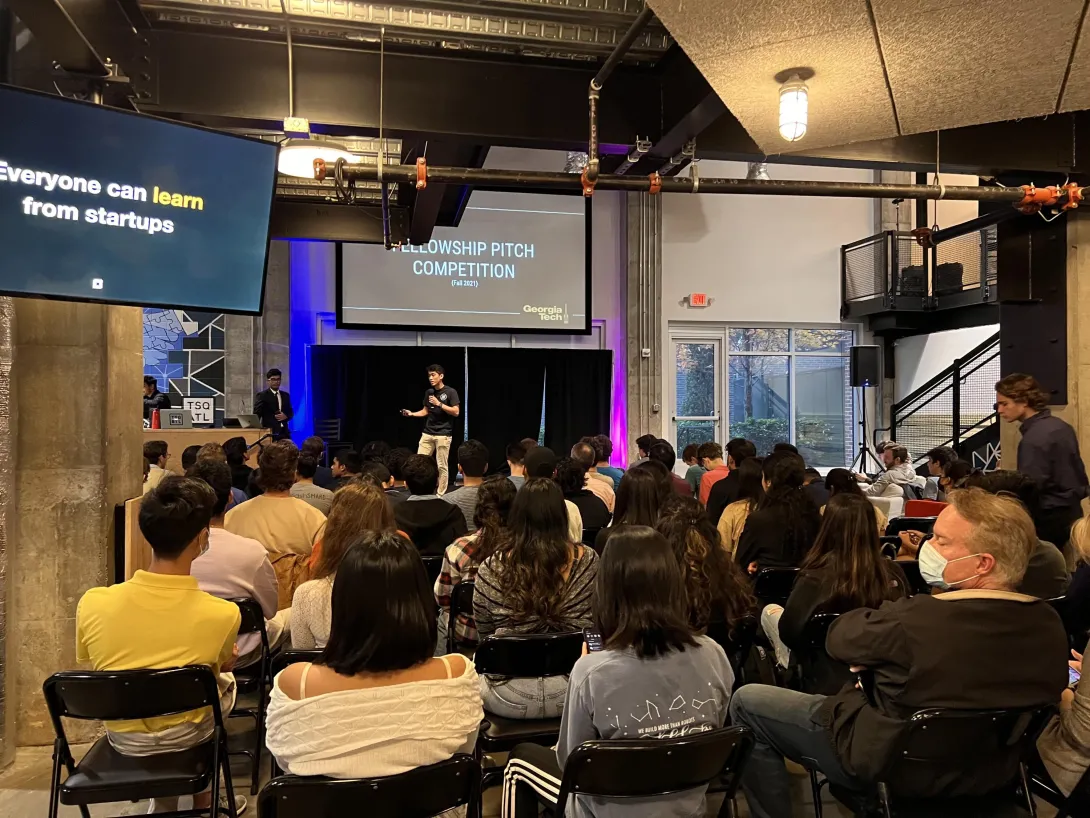
On December 3, 2021, Startup Exchange presented the Fall 2021 Fellowship Pitch Competition sponsored by the Georgia Tech Student Innovation Program, Office of Undergraduate Education. The event took place at ATL Social Club in Tech Square, a major startup hub situated on Georgia Tech’s campus and perfect for those eager for innovation at GT. The event also welcomed partner companies and recruiters such as NCR and Stord.
At this pitch-style event, six founder teams presented their innovative pitches and competed for first, second, and third place, each with a cash prize to aid in the advancement of their ideas. The first and second place winners of the competition were determined by three guest judges: Kathryn Petralia, co-founder of Kabbage and Drum; Thomas Suarez, co-founder of Teleport and Thiel Fellow; and Evan Jarecki, serial entrepreneur and BM at Startup Atlanta. The event commenced with a brief introduction by Startup Exchange executive board members, followed by presentations from the 6 teams including Fino, InSite, Jargon, and Tokenstack. After hearing each team’s pitch, the judges had time to deliberate and select the top two winners while the audience voted for the People’s Choice winner. Meanwhile, attendees were also able to hear from the partner companies and network while enjoying free perks such as food and beverages.
“There are students everywhere across campus really starting on their start-ups and pursuing their dreams. Atlanta is a growing city and Georgia Tech is the perfect hub for that. These teams, we’re introducing them to entrepreneurship and giving those resources and intro-connections. By doing so, we’re inspiring them in a way. It’s just a great learning experience for them,” explained Startup Exchange’s Director of Fellowship Revanth Tiruveedhi.
Following the intermission, the judges presented the first-place award of $750 to Jargon, a browser extension that points out red flags in user contract agreements, as pitched by team members Kaleb Rasmussen and Devansh Khunteta. Second place of $500 was awarded to Eartheal by team members Colin Burnett, Philip Colt, Neal Austensen, and Brandon Sherrard. People's Choice of $250 was awarded to Tokenstack by team members Nitin Paul, Samrat Sahoo, Yatharth Bhargava, and Mohit Sahoo. The event then closed with remarks by Startup Exchange’s board members and photos with the participants.
To learn more about student innovation at Georgia Tech visit https://innovation.gatech.edu/