
Sep. 18, 2025
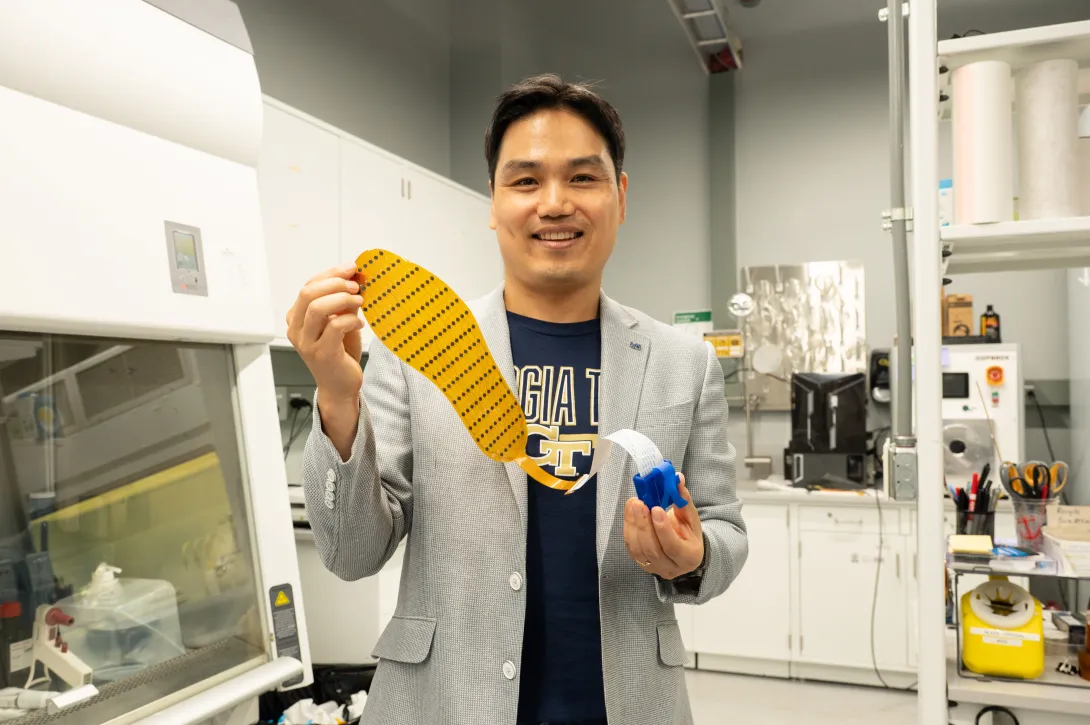
Hong Yeo holds the wearable electronic device made of more than 170 thin, flexible sensors that measure foot pressure — a key metric for determining whether someone is off-balance. [Photos by Joya Chapman]
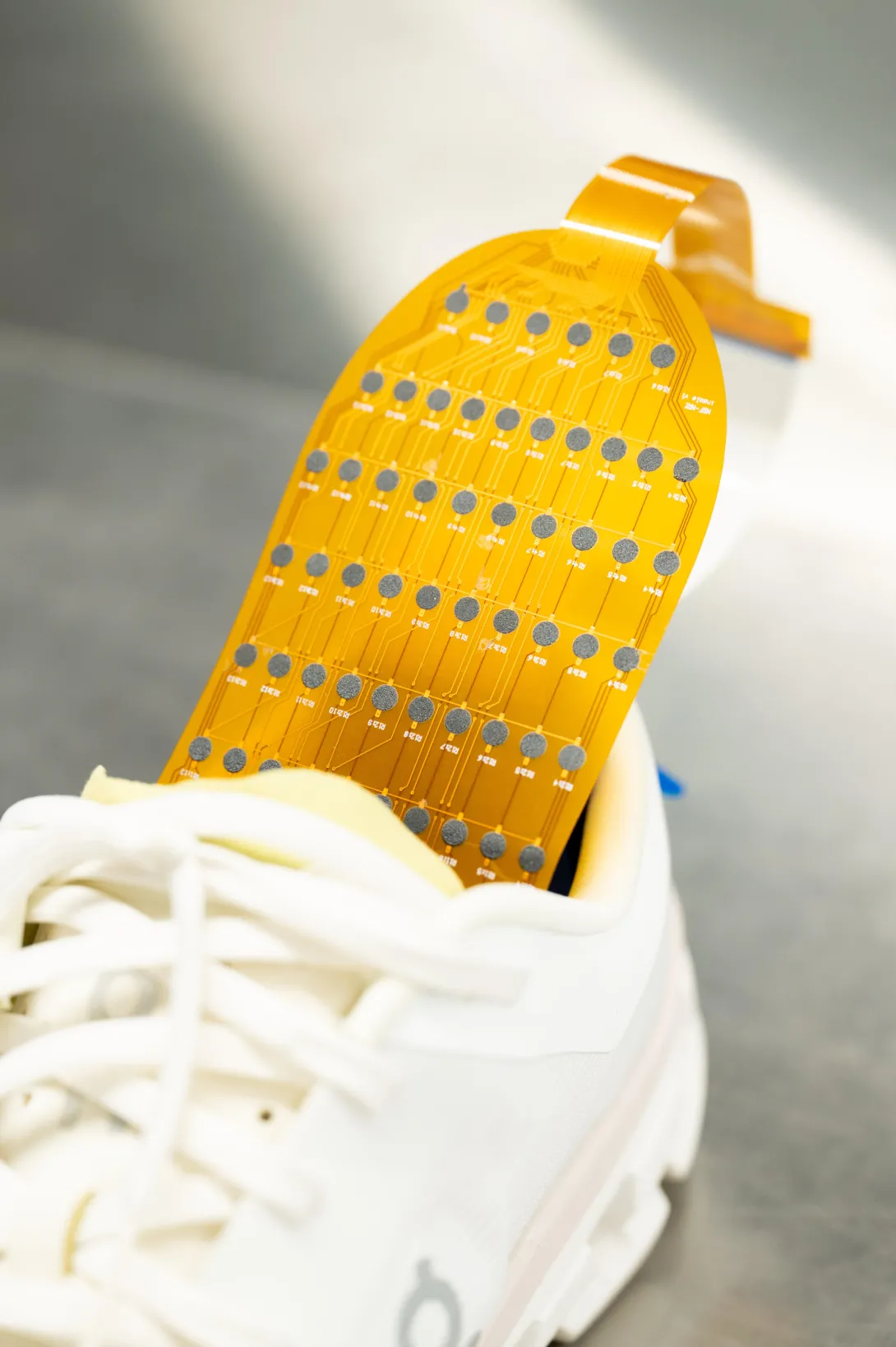
The wearable electronic device, developed by Georgia Tech researchers, is made of more than 170 thin, flexible sensors that measure foot pressure — a key metric for determining whether someone is off-balance.
Maintaining balance while walking may seem automatic — until suddenly it isn’t. Gait impairment, or difficulty with walking, is a major liability for stroke and Parkinson’s patients. Not only do gait issues slow a person down, but they are also one of the top causes of falls. And solutions are often limited to time-intensive and costly physical therapy.
A new wearable electronic device that can be inserted inside any shoe may be able to address this challenge. The device, developed by Georgia Tech researchers, is made of more than 170 thin, flexible sensors that measure foot pressure — a key metric for determining whether someone is off-balance. The sensor collects pressure data, which the researchers could eventually use to predict which changes lead to falls.
The researchers presented their work in the paper, “Flexible Smart Insole and Plantar Pressure Monitoring Using Screen-Printed Nanomaterials and Piezoresistive Sensors.” It was the cover paper in the August edition of ACSApplied Materials & Interfaces.
Pressure Points
Smart footwear isn’t new — but making it both functional and affordable has been nearly impossible. W. Hong Yeo’s lab has made its reputation on creating malleable medical devices. The researchers rely on the common commercial practice of screen-printing electronics to screen-print sensors. They realized they could apply this printing technique to address walking difficulties.
“Screen-printing is advantageous for developing medical devices because it's low-cost and scalable,” said Yeo, the Peterson Professor and Harris Saunders Jr. Professor in the George W. Woodruff School of Mechanical Engineering. “So, when it comes to thinking about commercialization and mass production, screen-printing is a really good platform because it's already been used in the electronics industry.”
Making the device accessible to the everyday user was paramount for Yeo’s team. A key innovation was making sure the wearable is thin enough to be comfortable for the wearer and easy to integrate with other assistive technologies. The device uses Bluetooth, enabling a smartphone to collect data and offer the future possibility of integrating with existing health monitoring applications.
Possibilities for real-world adaptation are promising, thanks to these innovations. Lightweight and small, the wearable could be paired with robotics devices to help stroke and Parkinson’s patients and the elderly walk. The high number of sensors could make it easier for researchers to apply a machine learning algorithm that could predict falls. The device could even enable professional athletes to analyze their performance.
Regardless of how the device is used, Yeo intends to keep its cost under $100. So far, with funding from the National Science Foundation, the researchers have tested the device on healthy subjects. They hope to expand the study to people with gait impairments and, eventually, make the device commercially available.
“I'm trying to bridge the gap between the lack of available devices in hospitals or medical practices and the lab-scale devices,” Yeo said. “We want these devices to be ready now — not in 10 years.”
With its low-cost, wireless design and potential for real-time feedback, this smart insole could transform how we monitor and manage walking difficulties — not just in clinical settings, but in everyday life.
News Contact
Tess Malone, Senior Research Writer/Editor
tess.malone@gatech.edu
Sep. 15, 2025

Georgia Tech’s Office of Commercialization announces a gift from CreationsVC of $375,000 to accelerate the development of space-related and space-adjacent startup companies based on Georgia Tech intellectual property.
Georgia Tech’s Office of Commercialization’s new Quadrant-i unit focuses on the commercialization of Georgia Tech intellectual property. In combination with Georgia Tech’s consistently top-ranked Daniel Guggenheim School of Aerospace Engineering and its newly formed interdisciplinary Space Research Institute (SRI), Quadrant-i is positioned to dramatically boost the output of space-related spin-offs into a burgeoning Atlanta startup ecosystem. A strategic gift from CreationsVC will support these efforts by creating a pilot program that provides funding for the startup projects of five CreationsVC Fellows per year for three years.
CreationsVC is a venture capital firm that specializes in investing in space tech, AI, and related technologies. CreationsVC sponsors Creation-Space, an Israeli-based global innovation hub that is fostering innovation to enable humanity’s expansion beyond Earth. Steve Braverman, who heads CreationsVC, said the gift is focused on "identifying innovative technologies that support research on life in space, combined with a focus on climate efficiency. This will help improve both expansion of space-centric industry as well as efforts that address challenges on Earth.”
Braverman said he was attracted to Georgia Tech’s focus on entrepreneurship and its track record in aerospace innovation. “I am impressed with the depth and breadth of technical expertise and energized by the passionate commitment of faculty and students to see their innovations have real-world impact. This gift is intended to supercharge efforts over the next three years to launch several startups that can grow quickly and have impact in Atlanta and Israel.”
Quadrant-i has worked closely with the SRI in its formation and made space commercialization an important and embedded pillar of the new activity. “We are thrilled to work with Steve and the CreationsVC team in identifying and accelerating nascent technologies that will have dual-use value propositions in space, climate, and AI applications,” said Quadrant-i’s director Jonathan Goldman. “We have a fantastic well of innovation from our faculty and graduate students and an amazing fountain of entrepreneurial talent from our CREATE-X program for our undergrads. We are excited to see this relationship blossom.”
News Contact
Anne Stanford
anne.stanford@dev.gatech.edu
Sep. 02, 2025

Georgia Tech’s Georgia Manufacturing Extension Partnership (GaMEP) helped transform The Chai Box—a family‑run business born in Marietta—into a nationally recognized brand by guiding them through rigorous food safety audits for retailers like Costco, streamlining production, and boosting their revenue by 20 %. This collaboration not only enabled larger scale success and a feature in Forbes, but vividly illustrated how applied research can turn cultural legacy into commercial opportunities.
Learn more.
Sep. 02, 2025
Georgia Tech’s Georgia Manufacturing Extension Partnership (GaMEP) helped transform The Chai Box—a family‑run business born in Marietta—into a nationally recognized brand by guiding them through rigorous food safety audits for retailers like Costco, streamlining production, and boosting their revenue by 20 %. This collaboration not only enabled larger scale success and a feature in Forbes, but vividly illustrated how applied research can turn cultural legacy into commercial opportunities.
Learn more.
Aug. 20, 2025
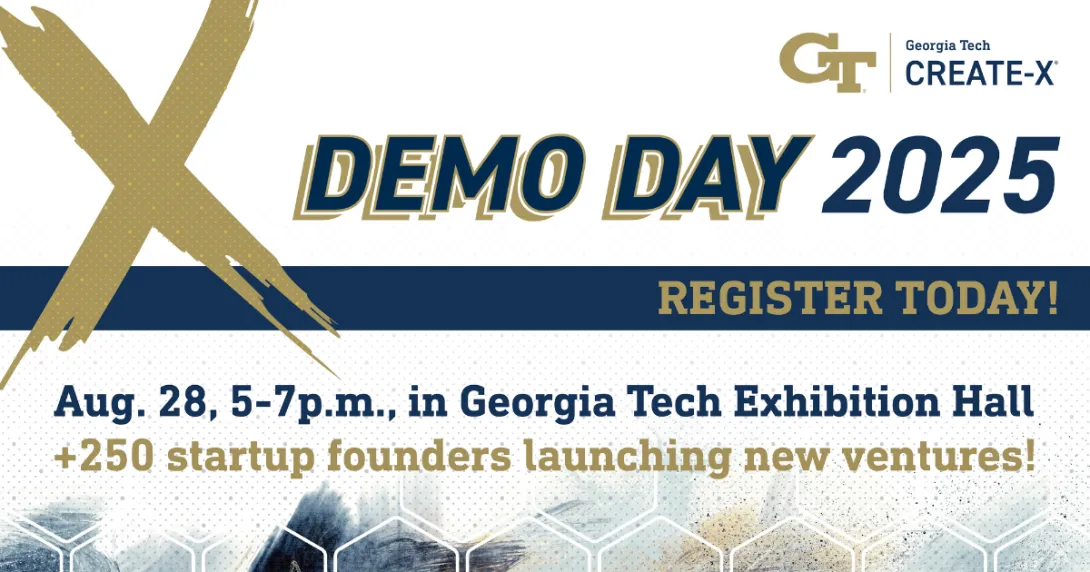
What does the future look like? On Aug. 28, from 5 – 7 p.m., more than 1,500 attendees will gather at Georgia Tech’s Exhibition Hall to find out at Demo Day, where CREATE-X will showcase over 100 startups coming out of Georgia Tech. Tickets are free but limited — early registration is strongly encouraged.
At Demo Day, founders bring solutions that tackle some of today’s most urgent challenges across industries. Expect to see startups tackling global challenges with bold new solutions, such as: providing mRNA therapies that could transform vaccine access, using ultra-efficient AI chips that run on a fraction of the power, and building innovative inspection tools that are already helping companies like Tesla catch defects in seconds. Demo Day provides attendees an opportunity to gain hands-on experience with new products, meet the founders behind them, and experience the momentum of a startup ecosystem in full swing.
Donnie Beamer, the City of Atlanta’s senior technology advisor, attended the last Demo Day and spoke about moments that impressed him most.
“The founders of NeuroChamp had a headband that reads brainwaves. It makes me call into question what I was doing in college!” Beamer said.
Founders showcasing at Demo Day have spent 12 weeks working on their startups during the CREATE-X accelerator, Startup Launch.
“Every founder in that room will have spent the summer chasing the right problem and building a solution to solve it,” Rahul Saxena, director of CREATE-X, said. “Demo Day is proof that entrepreneurship can be taught and developed, from ideation to customer discovery.”
Beamer said that the program pushes people to be creative.
“Georgia Tech is a safe place to try and fail and innovate, which is invaluable. Instead of just telling students to do X and expecting them to execute on it, CREATE-X allows for creativity and discovery,” Beamer said. “That can be transformative for students, the Institute, and the city of Atlanta.”
Unlike other startup exhibitions, there are no on-stage pitches — just direct connection in a casual, interactive format. Attendees and investors can test the tech out themselves. Past Demo Days have led to venture funding, strategic partnerships, media coverage, and more. It’s an energetic atmosphere with the exchange of ideas, an opening of doors, and a community building the future together.
“There are a few kinds of naysayers; for example, some who think Atlanta doesn’t have much entrepreneurial activity and others who feel isolated from communities like this one,” Beamer said. “Demo Day lets them look behind the curtain and see the vibrant, innovative ecosystem that they can be a part of in our city as we look to become a top-five tech hub in the nation. Georgia Tech is a huge part of that.”
Register for Demo Day today! The future is waiting for you to discover it.
News Contact
Breanna Durham
Marketing Strategist
Aug. 15, 2025
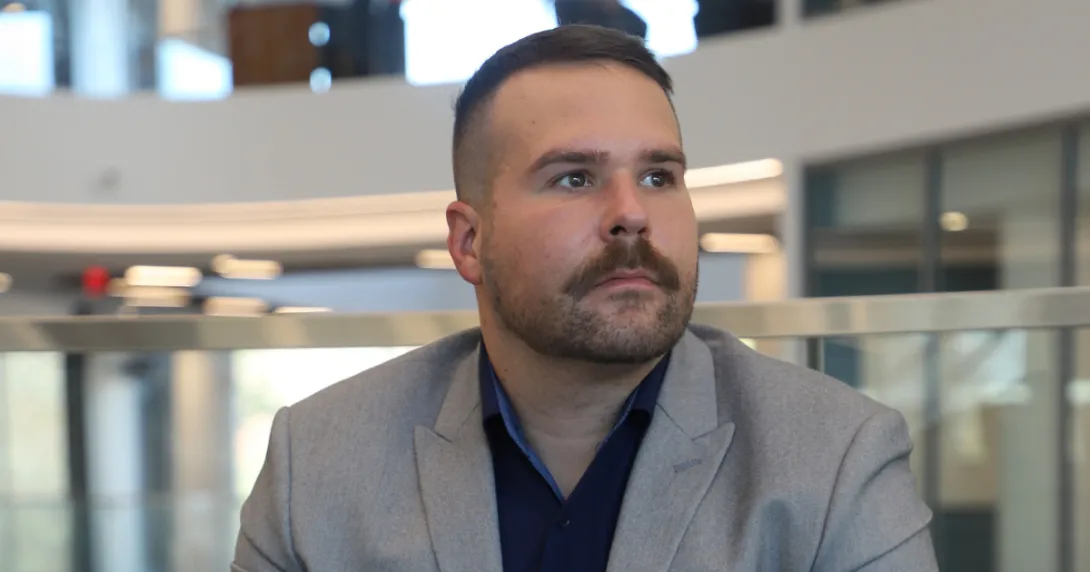
Adam-MacCallum, Jim Pope Fellow and translational research advocate in Georgia Tech’s Wallace H. Coulter Department of Biomedical Engineering
Epilepsy, Parkinson’s, Alzheimer’s, Huntington’s disease — as a Jim Pope Fellow, Adam McCallum is dedicated to helping students search for solutions to these and other devastating diseases. McCallum is a translational research advocate in the Wallace H. Coulter Department of Biomedical Engineering at Georgia Tech and Emory University, currently ranked No. 2 in the nation by U.S. News & World Report. He hopes to accelerate the commercialization of the most promising biotech advances.
When McCallum learned about the Jim Pope Fellowship, he saw it as a tremendous opportunity. “Biomedical engineering research has so much potential to be translated into products and solutions that tackle unmet clinical needs, that could be shaped to enhance society in general,” he says. “It’s a collaboration between biology, medicine, and engineering. The Pope Fellowship is a unique opportunity to explore new projects dedicated to entrepreneurship.”
McCallum is one of five faculty members to receive the Jim Pope Fellowship, which supports faculty in becoming entrepreneurial instructors and mentors in CREATE-X. He hopes to leverage this fellowship to instill entrepreneurial confidence in biomedical engineering graduate students and faculty and help them translate their research into IP and healthcare-focused products to be used in and out of the clinic.
Since being named a fellow, McCallum has applied the funding to attend conferences to learn more about new methods for teaching commercialization and entrepreneurship, develop programming to enhance the student experience, increase student understanding and interest in entrepreneurship, and explore creative new projects he has envisioned while at Georgia Tech.
Establishing a New Commercialization Course
Beginning in the fall, he will teach a new course, Fundamentals of Biotechnology Commercialization, targeting BME graduate students. McCallum developed the curriculum, which begins with an overview of technology commercialization and the commercialization process, followed by modules on IP — how to protect one’s inventions; financing, with a focus on early-stage commercialization funding opportunities; and choosing a commercialization path.
“In the second part of the course, students will simulate a patent filing,” says McCallum. “It’s a really important step in the commercialization process. In future iterations of the course, I would love to have students file real disclosures and provisional patent applications with our Tech Transfer Office and have a licensing associate talk to them about managing the IP.”
BME Innovations Pivotal to Georgia Tech’s IP Ecosystem
McCallum sees Georgia Tech BME researchers as an important driver of innovation, and the Institute’s patent track record reflects their critical role: More than 21% of U.S.-issued patents to Georgia Tech have at least one BME inventor listed, according to the Office of Commercialization.
In the past year, he has already seen the value of infusing an entrepreneurial spirit into his curriculum. Annabelle Singer (BME) and Levi Wood (ME) were mentored by McCallum while they were developing an audiovisual device to help stimulate brain activity in patients with Alzheimer’s disease and epilepsy. Through this mentorship, Singer and Wood recognized possible use cases and commercialization pathways for their technology.
“Their device has potential applications in a wide range of other neurological conditions — to lessen the impact of these disorders on people in their everyday life,” says McCallum, adding, “I’m excited about Georgia Tech and Emory’s commitment to developing programs to enhance neuroscience and neural engineering research. There’s so much potential in that space, especially for being able to significantly impact diseases like Alzheimer’s, Parkinson’s, and Huntington’s disease, as well as strokes and epilepsy. We are moving in the right direction with being able to improve the efficacy of the modalities to diagnose and treat these conditions.”
According to McCallum, his close connection to CREATE-X has given him a unique opportunity to see the impact of the program on the entrepreneurial endeavors of students and even faculty members.
“Previous fellows have been very successful with developing new educational programs and courses, as well as creating new spaces to spawn innovation, to instill entrepreneurial confidence in undergraduate students, and I want to use those successes as inspiration to make an impact on graduate student entrepreneurial confidence in BME, with much more to come,” he said.
As one of President Ángel Cabrera's four Big Bets, the drive for entrepreneurial education and opportunities has accelerated at Georgia Tech. In 2023, over a third of all Georgia Tech applicants selected entrepreneurship as an interest. Pope Fellows have a unique opportunity to help students tap into entrepreneurial pathways with CREATE-X, access an abundance of resources, and solve real-world problems. For faculty interested in joining, applications are open for the 2025 Jim Pope Fellowship until Sept. 2. For more information, visit https://create-x.gatech.edu/faculty/jim-pope-fellowship.
News Contact
Written by Anne Wainscott-Sargent
Internal Contact
Breanna Durham
Marketing Strategist
Jul. 23, 2025
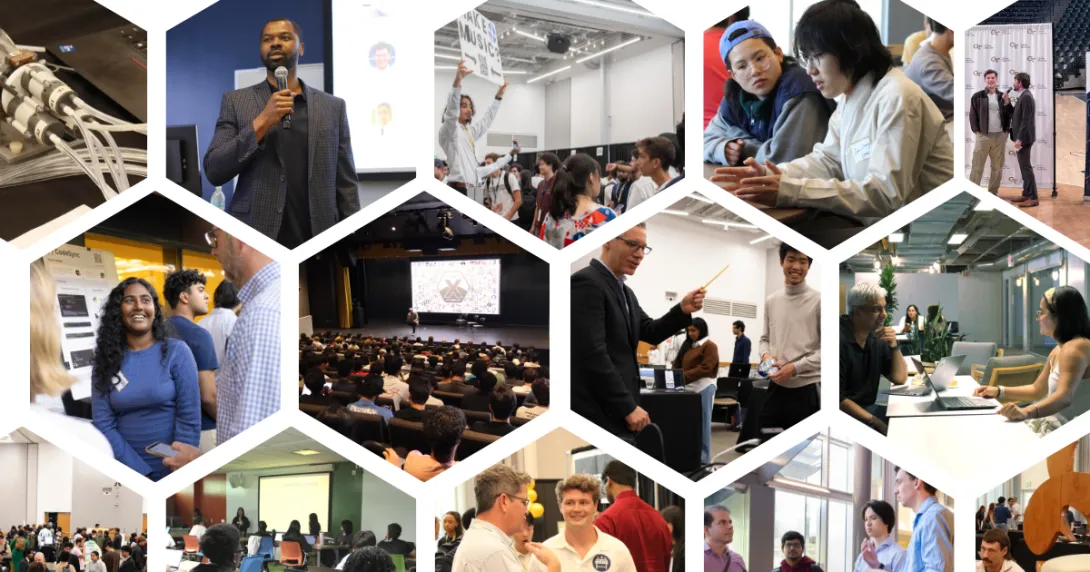
The CREATE-X program at Georgia Tech has been honored with the 2025 ABET Innovation Award, recognizing its groundbreaking impact on technical education and student entrepreneurship. Since its founding in 2014, CREATE-X has helped over 4,000 students launch more than 650 startups, collectively valued at over $2.4 billion. The program’s unique model emphasizes experiential learning, problem definition, and cross-disciplinary collaboration through courses like Startup Lab and Capstone Design. This award highlights CREATE-X’s role as a national leader in entrepreneurial education and its growing influence beyond Georgia Tech.
Aug. 06, 2025
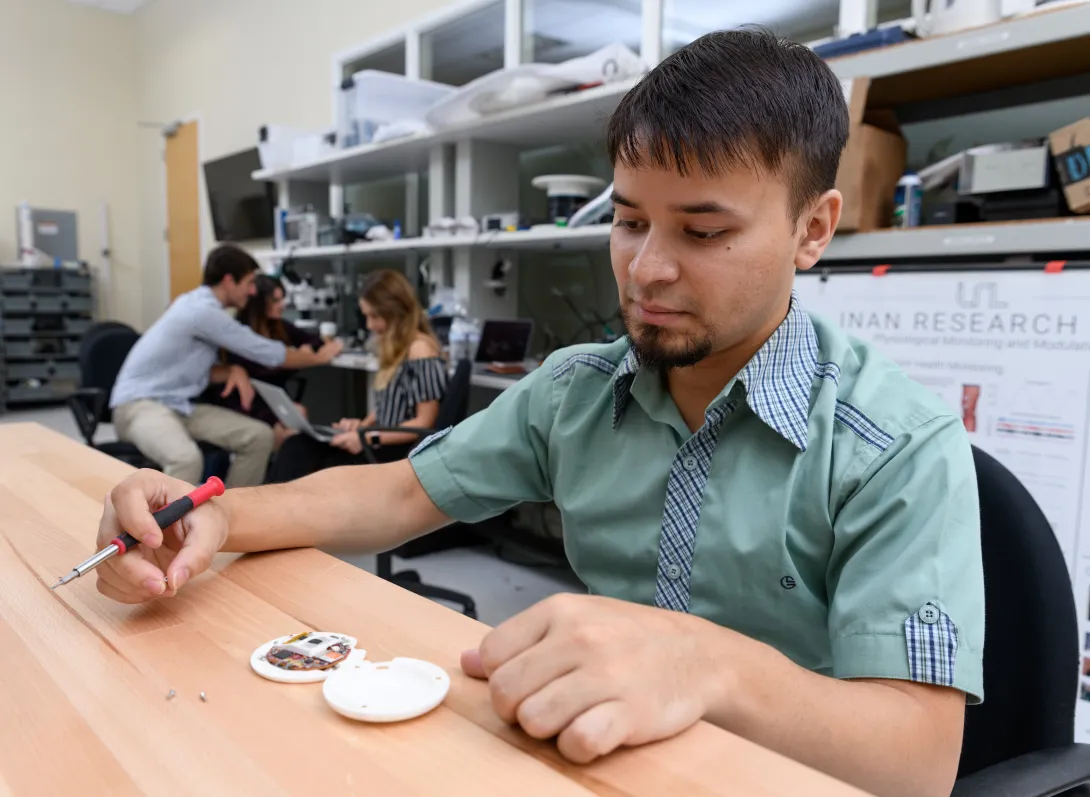
CardioTag, a device developed in Omer Inan’s lab, is now FDA-cleared and on the path to market through Cardiosense. Georgia Tech supported the technology’s transition from research to real-world application.
Georgia Tech has posted its strongest year ever in research commercialization, breaking multiple records for invention disclosures, issued patents, and licensed technologies — clear indicators of the Institute’s expanding role in delivering research-driven innovation to the marketplace.
“Invention is only the beginning. What sets Georgia Tech apart is our ability to move our ideas out of the lab and into the marketplace, where they can make a tangible impact on human life and contribute to our economy,” said Ángel Cabrera, president of Georgia Tech. “This year’s record results show that our researchers aren’t just pushing the boundaries of knowledge — they’re creating marketable solutions with the power to improve everyday lives.”
For fiscal year 2025, Georgia Tech reported:
- More than 460 new invention disclosures — a 30% increase over the previous year and the highest ever recorded by the Institute.
- 70 invention disclosures for the Georgia Tech Research Institute, marking a 70% increase year over year.
- A 210% increase in technologies licensed, and 140% in total licenses executed, reflecting unprecedented industry interest, with 65 licenses in total.
- 124 U.S. patents were issued, representing a 20% increase compared to the prior year.
- According to the most recent rankings from the National Academy of Inventors, Georgia Tech is in the top 15 public universities for U.S. utility patents filed.
This momentum strengthens Atlanta’s position as one of the nation’s fastest-growing innovation economies. Georgia Tech plays a leading role in advancing the region’s ambition to become a top 5 tech hub by connecting world-class research with industry, supporting a thriving startup ecosystem, and fueling talent pipelines that serve emerging sectors like AI, cybersecurity, and clean energy.
Omer Inan, a Georgia Tech researcher and faculty member, has launched multiple companies with the support of the Institute’s commercialization resources. Cardiosense is a medical AI company that leverages sensors to provide better management of cardiovascular disease. Having just achieved FDA 501(k) clearance, its latest device — CardioTag — is the first multimodal, wearable sensor that simultaneously captures three cardio signals to provide noninvasive solutions for heart health.
"The med tech research I conduct at Georgia Tech delivers new technologies to keep patients with heart failure out of the hospital and enables them to monitor their health status at home,” said Inan. “Now, we are commercializing the technology our lab helped develop, so that this dream of improving the quality of care and life for millions of Americans with heart failure can one day become reality."
“As we look to solidify Georgia Tech’s status as a national innovation hub, we are moving research into the marketplace so it can truly make a difference in people’s lives,” said Raghupathy “Siva” Sivakumar, vice president of Commercialization and chief commercialization officer at Georgia Tech. “We are at a pivotal moment to put Atlanta on the map as a leader in research commercialization and have an opportunity to capitalize on our $1.4 billion in research expenditures that drive meaningful inventions, IP, and industry partnerships.”
To learn more about the licensing and commercialization process at Georgia Tech, visit licensing.research.gatech.edu.
Available for Media Interviews
Raghupathy "Siva" Sivakumar
Vice President of Commercialization and
Chief Commercialization Officer
Georgia Tech
Omer Inan
Professor and Regents’ Entrepreneur
School of Electrical and Computer Engineering at Georgia Tech
Media Contact:
Lauren Schiffman
PressFriendly
lauren@pressfriendly.com
Angela Barajas Prendiville
Director of Media Relations
Georgia Institute of Technology
aprendiville@gatech.edu
Aug. 06, 2025
CardioTag, a device developed in Omer Inan’s lab, is now FDA-cleared and on the path to market through Cardiosense. Georgia Tech supported the technology’s transition from research to real-world application.
Recording-Breaking Year for Commercialization: Bringing IP to Market
Before a company can go to market and see success, research must transition into a real-world application. Meaningful translation of research happens when a startup goes to market and sees success. And the first step at Georgia Tech is for researchers to disclose their inventions to the Office of Technology Licensing (OTL). As the 2025 fiscal year comes to a close, OTL is celebrating a record-breaking year that solidifies Georgia Tech’s position as a national leader in tech transfer and research commercialization.
With industries across the country turning to Georgia Tech for innovative solutions, the numbers tell a powerful story:
- 464 new invention disclosures — a 31% increase over the previous year and the highest ever recorded by the Institute.
- 70 invention disclosures for the Georgia Tech Research Institute, marking a 70% increase year over year.
- A 210% increase in technologies licensed, and 140% in total licenses executed, reflecting unprecedented industry interest.
- 124 U.S. patents were issued, representing a 20% increase compared to the prior year.
These numbers are the highest ever recorded, which highlights the growing success of research and innovation happening at Georgia Tech.
“This record year of growth isn’t just a win for Georgia Tech — it’s a win for industry and proves that Georgia Tech is a leader in research that is transformative and meaningful,” said Mary Albertson, director of the Office of Licensing Technology at Georgia Tech. “Our office is at the forefront of guiding and managing the licensing process, so that we can grow invention disclosures and move the products out into the marketplace.”
OTL is a vital part of Georgia Tech’s Office of Commercialization, which drives the transition of the Institute’s leading-edge research into real-world applications. The Office aims to accelerate innovation and improve the human condition, solidifying Georgia Tech’s leadership in technology and entrepreneurship. Made up of four units, it empowers students and faculty to launch startups, manage intellectual property, and transform research ideas into positive societal impact.
“The Office of Commercialization is fully mobilized as a national hub to support Georgia Tech faculty, staff, and students for innovation, creativity, and entrepreneurship, and is stronger than ever. This record year for the Office of Technology Licensing proves that,” said Raghupathy "Siva" Sivakumar, vice president of Commercialization and chief commercialization officer at Georgia Tech. “With this complete ecosystem of the four units, we can support ideas and ventures from inception to launch and beyond at any stage of commercialization or ideation.”
Omer Inan, a researcher, faculty member, and entrepreneur at Georgia Tech, has launched multiple companies with the support of the Institute’s commercialization resources. Cardiosense is a medical AI company that leverages sensors to provide better management of cardiovascular disease. Having just achieved FDA 510(k) clearance, its latest device — CardioTag — is the first multimodal, wearable sensor that simultaneously captures three cardio signals to provide noninvasive solutions for heart health.
“One of the main reasons I joined Georgia Tech as a faculty member was to play a role in leading the development and launch of new technologies, moving all the way from concept through commercialization,” said Inan. “Great ideas are only beneficial to society when they impact people’s lives through the products that result from them; I am thankful for our commercialization ecosystem that helps us as inventors at each stage of that process, from patent filing to licensing.”
The four units within Georgia Tech Commercialization:
- Technology Licensing: Manages intellectual property, facilitating the transfer of groundbreaking inventions from the lab to the marketplace.
- CREATE-X: Empowers students and faculty to launch their startups through guidance, funding, and resources, fostering a culture of innovation and entrepreneurship.
- Quadrant-i: The newest addition to the Office of Commercialization helps faculty, researchers, and students translate their research into startups.
- VentureLab : Provides comprehensive commercialization support, transforming Georgia Tech's research into viable businesses.
OTL is pivotal in helping to coordinate work within the Office of Commercialization and advancing Atlanta’s entrepreneurial ecosystem. Through OTL’s role in assisting companies around the world in exploring the groundbreaking work being done at Georgia Tech, it collaborates with researchers to move technologies and data out by licensing Georgia Tech technologies. The role of OTL is critical in helping researchers establish licensing agreements that will bring important Georgia Tech innovations into the marketplace.
To learn more about the licensing process, visit licensing.research.gatech.edu.
Jul. 17, 2025


Candace Washington never thought she’d one day run her own business or teach the next generation of project management leaders in construction and engineering. But that’s exactly what she’s doing thanks to Georgia Tech.
In 2012, Washington, a seasoned construction veteran with 25 years of expertise and a master’s degree in building construction from Georgia Tech, noticed a shortage of project managers. She oversaw capital improvements and construction buildouts nationally and was consistently getting asked by clients to oversee the construction buildouts. This would spark the idea to start her business and launch Cancave Management & Engineering.
Over the next decade, Washington built a successful company and yet she continued to see this recurring shortage of project managers. According to Associated Builders and Contractors, the construction sector still grapples with a significant talent shortage that extends beyond the skilled trades to include construction management positions, with a projected need for nearly half a million additional workers in 2025 alone.
“We have fewer people entering the industry. With the pandemic, we had a great exodus where a lot of people decided to get out of the industry and retire early, and then you have the emerging housing market and infrastructure needs, creating demand for construction in general — the perfect storm,” Washington said.
Determined to find more ways to address the problem, she joined Georgia Tech’s School of Building Construction as a part-time instructor and, in 2024, began pursuing her Ph.D. at Tech, where she learned about the Jim Pope Fellowship.
“Being a Pope Fellow has been transformational to my experience as an entrepreneur,” Washington said. “When I started my company, I wish I had something like this. Through this fellowship, I was able to dig deeper into my idea, validate assumptions, and shape it into a solution that addresses the pain points of labor shortages and compliance bottlenecks in the underutilization or over-utilization of resources.”
As a fellow, Washington was also awarded $15,000 in discretionary funds to support her teaching and entrepreneurial efforts. With the resources from Jim Pope, Washington has been able to make meaningful impacts for students and her company.
Over the last year, she has worked on the next evolution of her business by building Extend the Ladder®, a workforce resource and compliance platform built around an industrywide shared resource model for construction professionals. One application of her platform would allow general contractors to share resources by enabling them to find and coordinate talent from a single database.
In addition to helping her pursue a construction job-matching platform, the fellowship has reinforced her love of teaching and mentoring entrepreneurial-minded students. As a part of the fellowship, Washington taught CREATE-X’s Startup Lab, which teaches the fundamentals of evidence-based entrepreneurship.
One student, Vivianne Akerman, a rising junior in industrial engineering, became Washington’s mentee after her spring Startup Lab class. Bitten by the entrepreneurial bug, Akerman decided to continue her entrepreneurial journey in CREATE-X’s Idea-to-Prototype (I2P) course. She turned an idea into action with guidance from Washington, building a solution for a problem she identified during Startup Lab.
“Candace is an amazing mentor who pushes students to be their best selves,” said Akerman, who is developing a makeup platform designed “to make makeup practical and less overwhelming.” The platform will enable consumers to compare and review products and ultimately find what brands work best for them, given their skin type and desired look.
“I love how positive she is,” adds Akerman. “This is new for me — it’s very exciting but also very overwhelming. She helps me stay focused on my priorities and what’s most important.”
Washington emphasizes that there is no guidebook to becoming an entrepreneur; rather, the path must be discovered through conversations, relationship-building, and learning from the experiences of others.
“This experience deepened my appreciation for the spirit of entrepreneurship — it’s been invaluable for me,” she says. “I would tell anybody who's trying to start a business, you need to go through this process.”
Now, as a mentor herself, Washington credits her fellowship in CREATE-X for giving her the confidence and framework to help others. And she credits her path as a mentor and teacher of entrepreneurship to the home she’s found at Georgia Tech.
Drawing from her own experiences, both the challenges and the triumphs, she offers a piece of advice that she believes aspiring entrepreneurs should carry with them.
“Start now — you don’t need all the answers. Focus on the process, stay committed, and be open to real-world feedback.”
Applications are now open for the 2025 Jim Pope Fellowship until Sept. 2. Interested faculty can learn more at https://create-x.gatech.edu/faculty/jim-pope-fellowship.
News Contact
Written by Anne Wainscott-Sargent
Internal Contact
Breanna Durham
Marketing Strategist